Thanks-doing

I knew—we all knew—we had to do it. We had to go, single-file, through the turn-style and meet, individually, with the control officer. The ticket attendant would then scan the barcode on our paper copy or our smartphone before letting us in.

It started out a large crowd—a mass of people walking together across the cordoned-off streets, parking lots and plazas like a tsunami racing towards the stadium. But then it eventually, ultimately, bottle-necked to one person at a time through the gate.

IMG_8943

It was my first time at Mosaic Stadium in Regina, Saskatchewan. At game time it is probably the largest gathering of Canadians I will ever see together in one place—some thirty-thousand mostly screaming Rough Rider fans cheering their beloved football team. In all, watching that game in the stands was for me an exercise in social conformity, or fighting against it.

However, each football fan, regardless of our stripe, had to pass one-at-a-time through the entrance gate. In places where lots of people normally gather, whether it be the security line at the airport or the gate into a sporting event, each of us has to make a reckoning, an accounting.

And it can cause some anxiety, some fear. It does for me. Even though this fear is largely irrational. After all, I have my ticket. I purchased it. I have every right to be there.

And yet, that moment of passing through the gate has a kind of self-consciousness attributed to it. The spotlight now falls on me, not us as a whole. I have to put myself on the line. I can’t be anonymous any longer, melting into the perceived security of the crowd. I have to stand out, be vulnerable, if but for a moment.

Thanksgiving is about doing. It’s already a word constructed for doing something. It is ‘giving’ something, an action word: Thanks-giving. That is why we practice today. We bring food to the altar—our gifts—that will then be given to a world in need.

But doing something in our practice of faith is risky. We put ourselves on the line. We have to make a move. Declare ourselves. Make an account for ourselves. Thanksgiving has to mean something personal to each of us, individually and perhaps differently.

My mother tells the story of her home church in Poland when she was a child. Every Sunday morning during the gathering of the gifts, everyone would line up and go single-file to the altar to deposit their offering. In front of everyone to see!

For fifteen chapters in Deuteronomy (11-26), Moses gives the Lord’s instruction to the people of Israel upon arriving in the Promised Land. In the Hebrew text assigned for Thanksgiving this year, we read the first section of the concluding, last chapter (26:1-11), in this long oration.

In looking at the translated words into English we can’t see the distinction between singular and plural. In other words we can’t tell whether Moses calls the people into faithful commitment together or individually. But in the Hebrew language you would notice the distinction. So, while the early chapters in Moses’ speech are predominantly addressed to the community—as the verbs are in the plural—in chapter 26 the writer has noticeably shifted to singular verbs and personal pronouns.

In our pilgrimage of faith, there are times we have to walk by ourselves. When we can’t hide behind options any longer. When we can’t melt into the crowd. And simply observe. When we can’t be an anonymous fan any longer. When we can’t find excuses nor justifications for not doing anything about something we know needs some doing. When we can’t just be spectators any longer.

We have to go through the gate ourselves. Individually. We have to participate, and get into the arena of life and make some moves, some waves.

It’s scary to do so. To take a risk. We may not have done this kind of thing before. Because we know that in doing something for our faith, anything, we will likely make a mistake or two. It may not be pretty. In fact it may be downright messy for a while. We may at times fail, as in trying different things, things we’ve never done before—Christians have never done before—in mission with others.

The ticket we hold in our hands represents our efforts, our attempts at giving something of what we have—to show the attendant at the gate. At Thanksgiving, not every one of us may feel thankful, especially if you are going through some grief. So then, let your tears be the ‘ticket’ you bring. The ticket an also represent your financial gift, or your volunteer hours, or your gift of expertise knowledge or skills that you offer. Wherever you are at, whatever you have, you bring to the altar and lay it down.

Maybe the irrational fear we have (all fear is irrational) suggests that the ticket is not good enough, that somehow it will not register, that we will be turned away and denied the experience of what we have come to celebrate.

The ticket we bring may be for the cheapest seats high up in the nosebleeds. However we may have acquired our ticket, or whatever its value, we may suffer the anxiety of thinking it is all up to us. That our entrance fee is based on “I deserve it,” or, “I earned it”, or “I accomplished this.”

The risk of doing something brings both the pinch of vulnerability and the fulfilment of the promise. The pinch of vulnerability because in exposing our hearts we realize it’s not all perfect with us. In truth, we must acknowledge we do not do it on our own. We are limited. We are also weak. And, for a moment, this awareness—this confession—hurts.

But the ticket was already purchased. Weeks ago. Months ago. The moment we cross by the gate is after-the-fact. Our participation in the party is already guaranteed. And nothing can change that. The justification for our being there had been already long ago determined. The moment we must make an accounting of ourselves, the moment of fear and uncertainty, is also the moment we celebrate something already accomplished.

By Another. For us.

Thanks be to God!

Happy Thanksgiving!

IMG_8946

Grace first

Over the past six weeks I’ve transited through nine different airports on two different continents. One of the expectations of travellers is that when you are in an airport waiting for your flight, you can access free Wi-Fi.

But, more often than not, it isn’t really free. When your device locates the airport network, and before you can access the internet, you are directed to a page that requires you to give your email. And, be careful to click that box that says you do not wish to receive promotional material.

Even if you are not an airplane traveller, this marketing strategy infests so many of our common life activities. I had my car at the service department this summer a couple of times, and each time I received a ticket to enter into a draw: first prize, a new car! But first I have to go to a website to register the number on my ticket. And, of course, give my email. And, remember to check that box declining promotional material!

In any case, companies are finding ways of expanding their reach into our lives and pocket books. Restaurants, as well, if you want to use their ‘free’ Wi-Fi. What may on the surface appear ‘free’ is merely a way to hook you in. This culture of doing business so infects our way of thinking.

The internet access is merely a modern day example. And yet, it is built on the way human beings have always tended to relate with one another at a more base level. A way of life and inter-relating that screams loudly: “Nothing in life is free!”

What is alarming, from a Christian point of view, is that we seem to be ok with that, and go about living in this tit-for-tat culture we have largely created.

Yet, I continue believing that it is in giving grace that describes best our journey as (Lutheran) Christians. I place ‘Lutheran’ in parenthesis because I believe all Christians today need to put grace first and foremost in our practice of faith and life.

Stories are a great way of conveying the deepest truths. This story is about a rooster in a chicken farm. And I heard it told at the National Convention of the Evangelical Lutheran Church in Canada, in Regina, last month, by the General Secretary of the Lutheran World Federation, Martin Junge. Here is my adaptation:

Every morning when it was still dark the rooster went out to crow. He did so with amazing commitment, crowing from the depth of his heart and making use of all available resources and art. Actually, he was convinced that it was because of his crowing that the sun rose every morning. When he had finished his daily job and went back to the farm he used to look around with a sense of paternalistic pride at the hens. “There you go, darlings, I’ve made the sun rise for you”, he even said once. “I am the chosen one.”

One morning the sunrise was really wonderful. The rooster got so enthusiastic that he couldn’t stop crowing. The sun had long risen, but he continued crowing, just wanting to make the whole scenery even more perfect.

When he went back to the chicken farm he noticed that he had crowed too long. His throat was aching. Laryngitis. He was only able to produce a weak croaking noise. The rooster panicked. “What will happen tomorrow, if I can’t crow anymore? What will happen to the chicken farm and to all these chickens and hens, which depend so much on my power to make the sun rise…?” He went to sleep very early, just hoping that next morning he would be in good health again.

But he was not! The pain had worsened overnight, and he could not even croak but make only a ridiculously weak squeak. Yet, he went out, like every morning, just pushed by the awareness of his plight and the panic that otherwise the sun wouldn’t rise, and they would all perish. He tried his best, he tried hard… yet there was nothing resembling real crowing coming out of his throat.

Great was his surprise when he suddenly realized that the sun seemed to be rising anyway! Slowly but surely it came up behind the hills, like every morning. Actually, it was again one of those wonderful mornings. But this time, it came without his doing! He turned slowly and looked back to the chicken farm. He couldn’t believe what he saw there: the chickens and hens had come out like every morning as well!

Terribly depressed he went back to the chicken farm. What could be his place there? Didn’t he lose his role and reason to be? And why should he go out the next morning, if the sun rose anyway, without his help? Oh, and he felt so embarrassed and ashamed. He didn’t even dare to look into the hens’ eyes.

“Hey, don’t worry”, said one of the hens. “You can continue crowing”, she said. “Just go out tomorrow as usual. But don’t crow in order to make the sun rise. Just crow because the sun rises!”

This story explains how we understand grace. Grace is like the rising sun. It is there, just because God wants grace to be there. As nobody can prevent the sun from rising, nobody can stop God from being gracious either. That was – in a nutshell – what Jesus revealed about God. That is in all its powerful simplicity the Good News of our Lord and Savior Jesus Christ!

Good works are an expression of faith, to be sure. Yet, good works are a response to God’s grace. This is how we understand the relationship between justification by grace and sanctification of our lives. Sanctification arises from hearts overflowing with joy and love because of God’s wonderful gifts. It is out of the gift of freedom, which God has acquired for us that we respond with good works.

God’s relationship to us is not conditional on anything we say or do. We don’t first become Christian in order to go to church. We come to church in order to become Christian—over time, even a life time! God doesn’t love us because we are ‘good’. God loves us because God is good. Do you hear the difference between those statements? I hope you do. A subtle difference, maybe yes. But huge implications for how we live our lives. It doesn’t hinge on us.

Because of the culture in the world that operates NOT according to grace, it is a huge challenge for Christians to live out of grace-first principles—such as forgiveness, mercy, and showing compassion unconditionally. It is a huge challenge for us not to put conditions on others before we deem them worthy. It is a huge challenge not to place any expectations on others and ourselves before we can justify helping them or loving them.

No wonder many young people today are cynical about the message that comes from ‘The Church’. “Your mercy is great,” we Sunday Christians pray to God. “But,” they ask, “Is it, really? What’s the catch? What do you want from me?” This cynicism is rampant. We have been infused with, and grown into, a transactional culture: I do something for you (in order that) you do something for me; I do something for God (in order that) God does something for me.

In this world, so anti-grace, we are called to become more fluent in the language and lifestyle of grace-first. We are challenged to give grace, first. Grace first, not judgement. Grace first, not fear. Grace first, not condemnation:

In our relationships with family members whose behaviour or lifestyle we may not be inclined to approve. In our relationships with others outside our circles who represent politics and opinions we are not inclined towards. In our relationships with those marginalized and the poor, Indigenous people and their plight. In our relationship with the land, water and air. Even, in our relationship with God and religion. Maybe most importantly.

The Gospel stories abound with examples of the way Jesus embodies this grace-first approach of God. In the story today (Luke 13:10-17), it’s not about deserving God’s grace first. It’s not about the woman earning Jesus’ favour first, before she is healed. We really know nothing about her — whether she deserves Jesus’ attention. But, you see, that’s not the point. It’s not even about following the rules of religion, which the Pharisees defend at all costs.

Jesus simply ‘sees’ her, and heals her. Jesus exposes the sin of a culture that places rules before grace, a culture which values conformity over the truth of what the sabbath represents: A holy day when the best of what God offers to us is actually demonstrated and given. No matter the rules. Grace first.

Images of water permeate the scriptures. These verses from Isaiah about water stand out. Water, like the sun, is like grace. Water gives sustenance: “The Lord will guide you continually, and satisfy your needs in parched places and make your bones strong; and you shall be like a watered garden, like a spring of water, whose waters never fail” (Isaiah 58:11).

A last-minute addition to the itinerary of my family’s western Canada road trip this summer was a visit to Radium Hot Springs in British Columbia. There, visitors can sink into a natural hot water soaking pool, then slip into a cool water pool. This is hydrotherapy, like the Scandinavian tradition of hot and cold water-immersion cycles. People come here for healing.

We know the stats: 71% of the earth’s surface covered by water. The human body is composed of over 60% water. Water provides a place for renewal, reconnection and rejuvenation. Water is essential for life. We all need it to live.

It is there before we do anything. Whether or not we choose to step into the healing waters of God’s presence and love and mercy—it’s still there for us. Ever present, despite us. The prophet Isaiah in the same text expresses this truth: “You shall cry for help, and God will say: ‘Here I am’” (v.9). I hear in these words the sense that God is saying, “If you want help, I am here. I’ve always been here right beside you! Hello!”

Christians of old have written about life as a journey of becoming more aware of how we block the flow of God’s love and grace. Blockages, such as fear, greed, selfishness. And then, doing what we can to ‘unblock’ and ‘allow’ divine love to flow more freely through us. Of letting go and allowing the current of divine energy, creativity and love to carry us downstream through life.

Whether or not we respond to the sunrise, as the rooster had to learn, whether or not we choose to participate in the action of God’s grace, the ever-flowing stream of God’s love is already there. It has been flowing from the beginning of time, continues to be the most powerful force in the universe, and is an ever-present reality in the world today.

Whether we know it or not, we’re continually immersed and surrounded by Divine Love, by Sacred, Holy Presence. This is our ultimate confidence and security. “Here I am,” God says to us. “Come to me. I am always by your side to show you mercy, forgiveness, and love.”

And that is why we pray and affirm repeatedly this summer in the petitionary prayers: “Your mercy is great!”

Because it is.

The raising of Love

If I told you that during this past week I bumped into a bunch of little, green aliens that landed in my backyard in their saucer-shaped UFO, I doubt you would believe me.[1]  I also doubt anyone would believe it if you or I brought someone back from death to life.

Yet, that is what the story from Acts implies. Following the resurrection of Jesus, Peter raises from actual death the woman named Tabitha. It isn’t Jesus that is now raising dead people. It isn’t Jesus alone performing such miracles. These are common men and women, like you and me.

How can we accept the miracle of resurrection? How can we believe that ordinary human beings can experience such an incredible degree of change within themselves and others? Death to life is probably the most radical change we can imagine. And yet, this is the very proposition of the resurrection.

On the one hand, we know that nothing is the same forever. So says modern science: ninety-eight percent of our bodies’ atoms are replaced every year; Geologists can prove with good evidence that no landscape is permanent. And, apparently so do people of faith: In the introduction to a mainline liturgy for a funeral service it says: “Life is not ended but merely changed.”[2]

In the short term any change can look and feel like a death. Perhaps that is why we tend to be change-averse. What we really are is death-averse, even though dying must precede any kind of resurrection and new life. The challenge of the Easter message for us is to accept our part in the very natural yet incredible change that is happening in our lives.

Perhaps that is the miracle: to believe change to this degree is possible. And happening, already. So, we affirm the Easter proclamation: Christ is risen! Christ is risen indeed!

How do we live Christ’s resurrection in our lives?

First of all, I believe we must confess the limits of words alone to describe the meaning of resurrection. We need to go beyond words to describe the truth surrounding the mystery of Christ’s resurrection. Apparently, it was too great a mystery for artists in the first centuries as well.

Until the 6thcentury, the moment of Jesus’ resurrection was deemed unpaintable or uncarvable.[3] Trying to capture, as we would today with a camera, how Jesus appeared and what resurrection looked like is a task too difficult to pin down in a one-time, concrete way. Understanding ‘resurrection’ is not easy but easily can bewilder us as it did those early Christians.

Eventually, certain symbols emerged as telltale signs identifying the Christ-like way and understanding. We know, for example, that before the cross became the central symbol for empire Christians, the fish identified followers of the Way[4] especially during times of persecution. These symbols helped non-literate early century people identify with the profound and ineffable meaning of Christ’s resurrection.

Another symbol that circulated among early Christians was the gazelle. Yes, the gazelle. The symbol of the gazelle became the all-inclusive mark of Christ-like love.

Where the early Christians struggled, for example, with how, or whether, to welcome Jewish people into the Way, the gazelle incorporated and communicated the love of God to do so. Should they include the circumcised? Or not? Could you be ritually impure, and still belong? The image of the gazelle communicated the emphatic ‘yes’ to the questions that Paul would later put in words.

The image of the gazelle pre-dates Christianity. In Jewish art the gazelle was used as a symbol for YAHWEH/God. Even more specifically, the gazelle was used to illustrate the life-giving character of YAHWEH. Why is this important for our discussion of the text from Acts?

Well, the author of this raising-to-life scripture story from Acts introduces the woman named Tabitha in both the Aramaic and Greek languages. That, in and of itself, is significant, in casting the message of the life-giving God to include more than just one group in early-century Palestine. At the same time, the bilingual reference may very well be a writing technique to draw our attention into the meaning of this woman’s name.

In Greek and Jewish culture, everything is in the name. So, let’s go with it. Back to Tabitha. Dorcas, in Greek, literally means ‘gazelle’. Now, bear with me, ‘gazelle’ is a word that literally comes from an older Arabic word for LOVE. We sometimes call this splendid creature an antelope.

I know that we don’t often encounter gazelles in Canada. But they are very common in the Middle East especially the variety that has become known as the Dorcas antelope, which literally means the “love love”. This is why in a culture where the majority could not read, images of the gazelle were used to represent the details of the faith and life-giving character of YAHWEH who is LOVE.

The woman—Tabitha/Dorcas—symbolizes something far greater than we can even begin to imagine at first. For she bears the name of YAHWEH who is LOVE. This story carries us beyond the physical resuscitation of the body of a first century woman. This story carries us beyond the mechanics of a resurrection ‘miracle.’

Clearly, the author here has set his listeners up for a story that expresses more than words can tell. Should we pay attention to it. And go there.

This is the story of the raising of love in the lives of those who follow Christ. This, alone, is a miracle when it happens. The life and love of Christ being raised in us and in the world around us! Can we see it? Can we perceive it? Can we hear the voice of Christ whispering in our hearts to ‘love love’?

Last year at this time when I spent a week in Algonquin Park, I didn’t meet any aliens. But I do recall talking to you about the ice on the lake. In the span of the few days I was there, the lake went from being ice-covered, to completely ice-free. It was incredible to witness such a significant change in the life of the lake, in such a short time frame. In fact, it came as a surprise.

You might call it, the resurrection of the lake. A couple warmer days strung together and a day of rain and wind, and … voilà! When I hiked out of the bush on the last day I could not detect one chunk of ice. If it weren’t for the budding leaves on trees around the lake and the still-cool temperatures you would think we were in the middle of summer the way the lake looked.

How different it was on the first day of that week! A sheet of white ice had locked the waters in its icy grip. It looked like that that ice wasn’t going anywhere for a long time! To suggest the ice would be completely gone in a few days — I wouldn’t believe it. The radical change was imperceptible. Or, was it?

I sat on the banks of the lake shore on the second day, surveying the field of drifting snow and glimmering ice stretching across the entire surface of the lake. It was quiet, except for the occasional chirping of a bird and the sound of the wind through the pines above. But when everything was still, I heard it.

First, it was subtle, barely detectible. A cracking, a knocking, a whining and groaning. Things were shifting below the surface. The ice was beginning to break up!

Although I couldn’t notice it with my eyes, I could hear it. Just. The change was happening. But only by hearing it, being open to it, paying attention to it. And giving myself a chance, in the first place, to be present to it.

Jesus said, “My sheep hear my voice … and they follow me.”[5] It’s not easy nor always quick to recognize God’s call amid the cacophony of sounds and distractions in our world. It’s not easy to discern the will of God in a complex society with moral questions and conundrums that can leave us spinning with confusion and mental paralysis . The noise can be enough to burn us out and leave us despairing.

The noise of delusion, false aspiration, needless worry; the allure of addiction, distraction and material comfort. It’s hard to hear that “still, small voice” of God’s resurrection change in the world and in our life. To recognize it, we must practice and learn how to pay attention, again, to the melting of the ice in God’s love.

Maybe, now that Christ is alive, it’s about a power that permeates all things. Maybe that power is a love that includes Jesus as much as it includes Peter, Tabitha, you and me. Maybe resurrection is about experiencing God’s love in all my relationships.

What a wonder to behold! What a love to live into!

No wonder so many are seeking solace in the practice of meditation—a safe place being in silence and stillness to practice paying attention, and listening to the voice of Jesus. Christians have meditated together since the early church in the form of the “Jesus Prayer”, for example. I encourage you to try it if you haven’t already.[6]

We all need starting points. The melting ice on the lake needed to start melting and breaking apart. Prayer in this way is a good starting point from which to live into the resurrection we share with all people and all of creation in the risen Christ Jesus. This prayer involves me in the life of Christ in the world that God so loved. I don’t have to worry whether or not I have the power to do these things—it is the life of Christ who works these miracles in me and in the world!

Christ is risen! Christ is risen indeed! Alleluia! Thanks be to God!


[1]Please read the comprehensive and insightful sermon by the Rev. Dawn Hutchings, The Raising of LOVE: the ‘more-than-literal’ meaning of the Raising of Tabitha – a sermon on Acts 9:36-41 (www.pastordawn.wordpress.com). I gratefully draw on her alien illustration, her research on the meaning of Tabitha’s name, and the reference to the dorcas antelope/gazelle. Thank you, Dawn, for your words.

[2]Richard Rohr, Raised from the Dead; Jesus’ Resurrection(Daily Meditation, www.cac.org), April 24, 2019

[3]Richard Rohr, From Darkness to Light; Jesus’ Resurrection(Daily Meditation, www.cac.org), April 25, 2019

[4]Acts 18:26; 19:9; 24:14

[5]John 10:27

[6]Faith has a weekly Christian Meditation group, which meets at 5pm on Wednesdays. See www.faithottawa.ca/calendarfor details.

The loved migrant: a ‘washing feet’ analogy

The disciples need to have their feet washed.

It was not only customary in ancient times to wash the feet of guests into your home, but necessary. Calloused and muddy feet were the norm in an age of open-toed sandals and pedestrian highways. Providing this service was a kind and appreciated gesture offered to the weary pilgrim.

But no one else had volunteered to do it. The disciples had followed all the Lord’s instructions to prepare for a meal in the upper room. They had bought what they needed in preparation for the Passover. They had gathered the bread and wine. Check. Check. Check.

So, what made them miss this important act of hospitality, friendship and welcome? What blinders did they have on?

Perhaps, we can’t underestimate the state of affairs among the disciples. Recall, they were arguing about which one of them was the greatest.[1]And for any one of them to volunteer to wash feet would be to lose the argument. Because only servants and slaves washed the feet of their superiors.

So Jesus got up to do it—shocking them all by his disregard for social and cultural convention.[2]

And then, as if that wasn’t shock enough to the system, Jesus looks up at the disciples, looks them square in the eyes and says:

“If I, your Lord and Teacher, have washed your feet, you also ought to wash one another’s feet.” (v.14)

How good are we at ‘washing one another’s feet’? We’re not doing it in worship tonight on Maundy Thursday. I don’t believe we’ve ever done it here at Faith. But maybe we need the practice.

Since my father’s death earlier this year, I’ve been reviewing his life story, going over certain details. Especially in his formative days when he migrated from Poland to London, England, in the mid-1960s, I see a pattern emerge.

The small town in southern Poland where he was born and raised was and has been the largest concentration of Lutherans in a predominantly Roman Catholic nation. They called themselves the Lutheran Church of the Augsburg Confession. And, the church whose bishop he assisted later in London was the Lutheran church ‘in exile’ from Poland. This church was taken care of by the Missouri Synod Lutheran church.

Even though commissioned to serve ELCIC congregations when he and my mother immigrated to Canada in 1967, Dad was still called upon to serve Polish-speaking Lutherans once a month in an independent Lutheran Church in Toronto during the 1980s. This congregation has since become part of the Missouri Synod.

When our long-time family friend from Toronto visited us here in Ottawa a couple weeks ago, I was reminded again of this pattern: My father had been, in the first part of his life certainly, born and bred in the culture and beliefs of the Missouri Synod/Confessional Lutheran Church, worldwide, you could say.

The question I’ve pondered is: What made him change his allegiance? Why not continue to remain serving the denomination and church culture of his childhood and youth—even in North America? Why did he change? What made the difference?

It wasn’t doctrinal, by and large. I remember several debates we had around the kitchen table over the hot button issues in the church during the past few decades. And he usually tended towards the more conservative stance. It wasn’t doctrinal. It wasn’t about beliefs and confessions of faith. It was something else.

When he was serving the Missouri Synod church in London, he met someone over lunch after worship one day. This man, William Dase, had been a pilot in the war. A Canadian flying with the British Airforce, he had made many runs over London. And, after the war, decided to make London his home.

He was also a major benefactor of Waterloo Lutheran Seminary. In conversation over lunch, my Dad expressed a desire to learn English, and not anywhere people knew him. Somewhere far away from any Polish-speaking Lutherans, he felt he could master the English language. Following the Soviet invasion of Czechoslovakia in 1968, he also didn’t believe he could ever return to Poland a free person.

And so Dase posed a simple question, with significant consequence: Why not spend a study year at Waterloo Lutheran Seminary in Canada? Dase would sponsor my Dad’s study and booked passage for both my parents on the ocean liner, Maasdam, to set sail from Southampton to Quebec.

Before my parents landed in Waterloo, the Dean of the Seminary at the time, Professor Dr. Hauser, had already arranged an apartment in student housing and a job in the cafeteria kitchen for my mother which paid $75 a month. This was just enough to cover the rent for the apartment.

After completing his master’s degree at Waterloo, my Dad was appointed to serve a small rural parish north of Stratford, Ontario. He needed a car. So, Assistant to the Bishop, Dr. Berner, of the Eastern Canada Synod, went with my Dad to the bank to arrange a loan to buy a VW Beetle. Dr. Berner used his standing with the bank as collateral for the loan.

However, after the year was up, my parents’ temporary student and visitor VISAs were expiring. And so, the Dean of the Seminary, Dr. Hauser, promptly took my parents to the immigration office in Kitchener to vouch for an upgrade to landed immigrant status— ‘my parents would make excellent citizens in Canada’, he told the immigration officer without hesitation. They received their immigrant status on the spot.

When my brother and I came along a couple of years later—twin boys—thus creating an instant family that doubled in size literally overnight, my parents experienced a sudden strain on the household budget.

The bishop of the Eastern Canada Synod, then Bishop Lotz, immediately arranged for a changed call to the three-point parish in Maynooth, Raglan and Denbigh—because these parishes were able to offer a higher wage.

That was then, this is now. I understand. Nevertheless, I am impressed in reviewing this history how church people who were in a position to do so could make such a positive difference in the lives of those in need. No just once. But consistently. Over time. And in response to various needs.

I can say with certainty that it was the love shown in practical, simple, ordinary ways to my parents when they immigrated and settled into Canada, that made all the difference.

The disciples needed their feet washed, after all. Despite all their debating and power struggles and determining who was right and who was wrong. Jesus showed his disciples, and shows us, that to help another is to put oneself on the same level as the other. Not to ‘lord it over’ in a condescending manner, but to recognize the common humanity we all share.

Jesus shows us what it means to fulfill the ‘new commandment’ of love.[3]If the world will know that ‘you are my disciples’, it has nothing to do with agreeing on doctrine, creedal statements, confessions of faith. In fact, arguing about these things, as the disciples tended to do, hinder this expression of true discipleship.

In the Gospel of John, the disciples do not and cannot understand the significance of Jesus’ actions until after Easter.[4]Even then, their faith still falters.[5]In John, “the disciples’ divine election and sustenance do not depend on how much they understand. Their faith is perfected, not in knowledge, but in how much they love their fellow lambs (21:15-19; cf. 1 Cor 13:12-13).”[6]

Jesus tells his disciples after washing their feet, “If you know these things, blessed are you if you do them.”[7]

It’s about loving action, not knowledge/understanding.

St John of the Cross wrote: “In the evening of life, we will be judged on love alone.” I concur. When all is said and done, at the end of the road, we will be asked: “How have you loved your neighbor?” not “Did you believe the right things?”

Just like washing one’s feet is messy, and uncomfortable, so at first it may feel out-of-sorts to be so vulnerable to one another. There are boundary issues when it comes to feet, to be sure.

We are not used to small and ordinary acts of self-giving for another. We need to practice. In an age when congregations and denominations are significantly divided over doctrinal, social, and other issues, and sometimes have difficulty even gathering at the same table for a meal with one another—what do we need? What do we really need?

More debate? More information? More knowledge? More convincing arguments? Really?

The disciples just needed their feet washed.


[1]Luke 22:24-27

[2]Jim Green Somerville in David L. Bartlett & Barbara Brown Taylor, eds., Feasting on the Word: Preaching the Revised Common Lectionary Year C Volume 2 (Kentucky: WJK Press, 2008), p.276

[3]John 13:1-17,31-35, the Gospel text for Maundy Thursday, according to the Revised Common Lectionary (RCL).

[4]2:22; 7:39; 12:16; 14:26

[5]20:19-29; 21:20-23

[6]C. Clifton Black, Feasting on the Word., ibid., p.279

[7]John 13:17, emphasis mine.

Invasion of abundant grace

The Toronto Maple Leafs are a playoff team. They have been for a while now. In fact, they’ve occupied the third seed in the Atlantic Division for months. And, lately, regardless of how many games they’d lose or win, it wouldn’t change their place in the standings for the playoffs, which begin this coming week.

The Leafs’ success has a lot to do with the stellar play of their number one goaltender, Frederik Andersen. At least how he played early in the season when he was sporting an impressive .923 goals against average (that’s very good). He was, some argue, the main reason the Leafs were able to climb in the standings and secure their playoff destiny. That is, until recently.

As some of you may know, he’s been kind of faltering a bit in the last month — letting in just a little too many goals, and losing just a bit too many games. As of last week, the Leafs had lost five of their last seven games—two of them here in Ottawa against the Sens. His lackluster performance has been enough to cause some to wonder whether Freddy will be able to hold up during the playoffs, especially against their arch rivals in the first round: the Boston Bruins.

An article in the Toronto Star recently caught my eye about this funk Andersen is in, and what he’s doing about it.[1]

Anderson speaks of dealing with all the downward-spiraling statistics — an embarrasing .890 goals against average (that’s bad) — all the anxiety-producing pressures to perform and succeed and chalk up more wins than losses — all the negative, worrisome scenarios that might play out for his whole team if he doesn’t stop more shots on net. Dashed playoff hopes. Disappointed fans. Negative publicity in the media. Downward career trajectories. Worry. Worry. Worry.

Indeed having success doesn’t mean being in a good head space. True, when the stakes are high, when it’s all on the line, when the vice grips of life’s important events tighten—it’s very difficult, maybe feels like it’s impossible, to keep calm, walk lightly, and breathe deeply through it all.

That’s the measure, that’s the key. Not when there’s nothing on the line. When you have little or no investment in the outcome. When it doesn’t matter and you don’t really care.

Rather, when what you are passionate about, what you care about, what you believe in, your most sacred values—when those things are on the line, when the stakes are high, how do you respond?

In the Lent book study, “Being Mortal” by Atul Gawande[2], we have been exploring many questions about the last chapter of one’s life. We’ve been talking about how to navigate the medical culture and what we want when time is short. You could say, the end of life conversations and thoughts are the ultimate ‘high stakes’ decisions:

How do you want the last ten years of your life to look like? What do you want for yourself? What trade-offs are you willing to make in order to achieve your final wishes? Whom do you need to include in conveying those decisions? Are those closest to you aware of your thoughts? Why or why not?

Most of us avoid having these conversations. We dread not only those situations but those conversations. We don’t want to think too far ahead. We don’t want to think about next year. ‘It’s too depressing’ we say. ‘I just want to think about next week, or just tomorrow, or just today.’

As Atul Gawande writes in his book, “It’s the route people the world over take, and that is understandable. But,” he continues, “it tends to backfire. Eventually, the crisis [you] dreaded arrives.”[3]And then what?

When the stakes are high, what does Mary do? Oh, and if you think the stakes aren’t high, let’s take another look: Why does Mary spill on Jesus’ feet a year’s worth of wages in perfume made from pure nard?[4]There are two uses in ancient Israel for pouring expensive oil on someone: First, in a coronation of a king; and, second, for the burial of that person.[5]

This was a costly oil with a sweet smell, imported from northern India. Scholars estimate that the “pound” referred to was nearly 12 ounces, or 324 grams. Many typical flasks of anointing oil would contain only a single ounce. So, Mary has a lot of this stuff, and pours it all out on Jesus’ feet!

“Money going down the drain!” eh?

Yet, Mary was anoints Jesus, the true King, and Jesus who will soon die. This extravagant act of love and adoration conveys Jesus’ purpose, publicly for all to see and read for all time to come. While everyone else around Jesus does not want to talk about it even though they might feel it, Mary does everything but avoid, deny and shove under the carpet what is obvious. What needed to be done.

It’s not a measly drop, offered in secret. It’s a whole flask, and the aroma fills the entire house!

Jesus and to an extent Mary know what is going to soon happen. The writing is on the wall, certainly since Jesus recently raised Mary’s brother Lazarus from the dead. From that point on, the religious leaders began plotting Jesus’ death.[6]The way to the cross is becoming clearer and clearer. There is no turning back. There is no avoiding this outcome if Jesus chooses to continue in his mission and divine purpose.

It is worth it, even though the stakes are high.

How do we find the courage to rise above our tendency to avoid and deny reality when the stakes are high? Can it have something to do with our purpose and mission? When you know what it is you are all about in life? Maybe, then, good things can happen.

In his book, Gawande mentions an experiment which compared two nursing homes. After the study, in one the number of prescriptions required per resident fell to half, psychotropic drugs for agitation decreased, total drug costs fells to just 38% of the comparison facility; and deaths fell by 15 %.[7]

What made the difference? In the test facility, residents began to “wake up and come to life” when animals and birds were brought into their environment. Not just one or two creatures. But a whole bunch of them. They experienced a “glorious chaos” at the beginning of the experiment.

Because no one knew what they were doing, everyone—staff and residents included—had to drop their guard and pitch in, to help. Residents forgot themselves and were immersed in an environment that gave them purpose and meaning. In the process they started having a little bit of fun. There was lots of laughter and frivolity reported in response to the invasion of all the animals and birds.[8]

This is just one small example of how connecting to a meaning and purpose in life, however trivial, and at whatever stage of life—can do miracles.

For goalie Frederik Andersen, it means no longer obsessing about the data and numbers, good and bad. He has to trust his teammates and play as part of a team rather than an individual obsessed with personal stats. He has to free himself from micro-managing his technique because he realizes his primary challenge is not his ability or capacity to do great things in the net, but the mental, emotional and yes, spiritual, part of his game.

In short, he simply needs to find joy in playing again. That’s spiritual!

As the playoffs begin, Fredrik Andersen is on a journey to reconnect with the purpose of what he was about on the ice. He is looking to discover ‘fun’ in his game, and enjoy every minute he has the privilege of playing it at that level.

We, too, are on a journey in Lent. Mary’s action in the Gospel reminds us that on this journey, there are times God calls us simply to be extravagant in our giving born of devotion and thanksgiving to God. Mary’s action reminds us that sometimes God calls us to breathe deeply and savor life’s good things.

As we ourselves work on the important question of the church’s mission and ministry, and how that again can take expression in the here and now, let’s remember in the midst of all that, to take the time, to give ourselves the permission, to lavish upon God our love, our attention, to rest in God’s presence.

And, in that holy act of devotion and love, be renewed for life and joy.


[1]
https://www.thestar.com/sports/leafs/opinion/2019/03/28/the-joy-of-hockey-could-save-andersen-and-the-leafs-season.html

[2]Atul Gawande, Being Mortal: Medicine and what matters in the End (Anchor Canada: Penguin Books, 2014/2017).

[3]Ibid., p.57

[4]John 12:1-8, Gospel text for the Fifth Sunday in Lent according to the Revised Common Lectionary, RCL, Year C

[5]Lindsey Trozzo comments on the Gospel reading (John 12:1-8) at http://www.workingpreacher.org

[6]John 11:45-53

[7]Gawande, ibid., p.123.

[8]Ibid., p.120-121.

funeral sermon: with 4 wheels on the ground

I remember that winter day. It was -20c and the roadways were covered with snow and ice. And yet, I was feeling pretty proud of myself. Coming into the west-end near Stittsville, the Queensway was empty. And it was mid-morning on a weekday!

I was powering it through! A little snowfall wasn’t going to impede me. I was going at my regular speed in the passing lane and was wondering why very few were venturing onto the highway. And then I saw a car had spun out, resting against the guardrail perpendicular to me at the side of the 417 in front of the Canadian Tire Centre. And a little farther I witnessed another car spinning out of control.

I decided to slow down, and tapped the brake. Mistake #1. I felt the wheels begin to float underneath me. I then stepped on the gas to try to get grip. Mistake #2. The fish-tailing was starting to feel like a swan dive. I was losing it!

Thankfully in that moment, I remembered what my drivers-ed teacher taught me thirty years ago: Step off the gas! I think we instinctively associate stepping on the gas with more control — in all circumstances; the more I give, the more I expend, the more I put myself out there — the better it’ll be.

But in this case, the solution was to let go and just keep the steering wheel pointed forward. And as soon as I let off the accelerator, the four wheels found purchase, and I was able to recover. It is a little bit counter-intuitive for us in our get’er done culture to divest ourselves of the belief that doing more about something will save us from whatever predicament we find ourselves in. Sometimes, in tough situations, we just have to let off the gas, a bit.

When a loved one dies, we must do what might feel counter-intuitive to what love is. We need to let go. To let-go takes love.

Life came to a crashing halt for you last week. The shock, the heaviness, the sudden change in your lives now that Mark is gone—all threaten to overwhelm you in grief. Maybe these days all you can do is bring to mind memories that stand out.

One very clear memory from your life with Mark is at the racetrack. Car racing—whether at Capital City before it closed, or Cornwall and Brockville—brought you together in the enjoyment of life.

God created each one of us to have 4×4 capability, to drive on the road of life. If you have four-wheel-drive, you normally have the option, when you need it, to engage all four wheels in the power-train instead of just the two front wheels. Four-wheel-drive comes in handy especially in snowy, icy winter conditions, or when you drive off-road in mud, over rocks and in fields.

Now, I believe most of us who have this four-wheel-drive option don’t really need it for 99% of the time we drive, even in winter. For most of our lives, things may go reasonably well for many of us. Life is good. We get by. We may even enjoy many of the blessings of a good life.

But there will still be times in our lives when we will suffer. There will be times in our lives when our health will fail and we come face to face with our limitations. We will suffer loss and even tragedy. We will suffer the pressures and stresses of family and work and the conflicts of being in relationships with others.

And when we do, we will need the four-wheel-drive option that is built right into our make-up. We do, so God created each of us, have the capability to engage the off-road bumps and potholes. We do, so God created each of us, have the capability to engage those slippery, icy, even dangerous road conditions.

Yes, using four-wheel-drive burns more gas. It’s not the most fuel-efficient way of driving. We use up more energy. It will be difficult, trying, even exhausting. Working through our grief pushes us past our comfort zones, to be sure. But we do have the capability, this gift, and we should use it. Try it.

And here’s the wonder of it: When we must engage the four-wheel-drive option and drive down that unknown, sometimes scary, road, being jostled about on the uneven, narrow way, we discover that God sits right beside us in the car.

You see, the engine won’t ever fail, because the capability for off-roading is a quality of God’s love. Love is the fuel, the energy, the power behind this effort. And this love is shown to us by God. God loves us, even when we make mistakes, when we falter, even when crash, even when we will have an accident. God is with us. And God’s love and unfailing presence sustains us.

In the scripture I read, I hope you heard those words from Saint Paul: “Salvation is nearer to us now, than when we became believers” (Romans 13:11). When we first become aware of the love of God for us, maybe a long time ago, that is great! This may be some significant turning point, or an incredible experience when the beauty, joy, peace and glory of life radiate all around us.

That was then, this is now. Since then, we may have thought little about God and dismissed any notions of participating in the life of the church.

It doesn’t matter, now. Because the point is, right now you are off-roading. And now that you may be using that 4×4 capability on the rough patches of the road of life, God is even closer to you.

Regardless of our past. Now that we may be suffering and enduring the pain of loss, God is even closer to us. It’s built right in. God “… will not forsake his people; God will not abandon the work of his hands” (Psalm 94:14).

God created Mark. God has not forsaken Mark in his time of greatest need. God has not abandoned Mark at his most vulnerable moment of life and death. And God will not abandon you.

After all, God is right next to you on the road of life.

The fig tree calls out

Hear today some wisdom from Thich Nhat Hanh:

“When you plant lettuce, if it does not grow well, you don’t blame the lettuce. You look for reasons it is not doing well. It may need fertilizer, or more water, or less sun. You never blame the lettuce. Yet, if we have problems with our friends or family, we blame the other person. But if we know how to take care of them, they will grow well, like the lettuce. 

“Blaming has no positive effect at all, nor does trying to persuade using reason and argument. This is my experience. No blame, no reasoning, no argument, just understanding. If you understand, and you show that you understand, you can love, and the situation will change.”

When 21-year-old Sharif Said was gunned down near the Trainyards in Ottawa four years ago, his uncle spoke to the media on behalf of the family.[1]What surprised me in his testimony was how he defended not only his nephew, around whom rumours swirled that he was involved in a gang.

But then he defended those arrested for his nephew’s murder. He said that they were also victims. Khalid Mohammad and Abdulaziz Abdullah, both in their twenties and arrested for Said’s murder, were victims themselves of a “senseless violence”, the uncle said. As a result they could not value life as “precious”.

A subtle twist in the tone of the message changes the direction of the conversation about these things. Making sense of any criminal act, to begin with, can leave us confused and hopeless. And we desperately seek to be on the right side of ‘right and wrong’. We do that most effectively by assigning blame.

Then, you throw into the mix a statement coming from ‘the victim’ that offers sympathy to the perpetrators, a word that levels the moral playing field, we don’t know what to do with that.

Are we all, each and every one of us, part of a culture that creates these problems? Do we all participate on both sides—all sides—of the moral equation? Isn’t that too confusing and wishy-washy? Forgiveness, and mercy, wreak havoc on any common-sense pursuit for laying blame. An act of kindness and forbearance in the midst of senseless tragedy takes the wind out of retribution.

Admittedly, we may feel more at home with the way the ancient prophets used the image of a barren fig tree.[2]One way we tend to lean is towards despair. The prophet Micah feels lonely and depressed in the face of scarcity and evil:

‘Woe is me! For I have become like one who, after the summer fruit has been gathered,      after the vintage has been gleaned, finds no cluster to eat; there is no first-ripe fig for which I hunger.’

Or, we lean towards vengeance. You can hear it in Isaiah’s tone when he speaks of his ‘beloved’ vineyard. Despite all his hard work to create conditions for abundant growth it yielded only wild, undesirable, grapes:

‘And now I will tell you what I will do to my vineyard. I will remove its hedge, and it shall be devoured; I will break down its wall, and it shall be trampled down …’

Indeed aren’t these the usual go-to’s when bad things happen to good people—we either slip into despair or shake our fists in anger against someone or something we blame?

When an Ethiopian airliner filled with people crashes and all are killed including eighteen Canadians onboard. When Galileans are slaughtered in cold blood by the hand of Pilate and the Tower of Siloam falls and kills innocent pilgrims at the pool of healing.[3]When randomly, bad things happen, and we can’t really make sense of it. Well, we try.

Do you despair? Or do you get angry and try to find who or what to blame? The people in the Gospel text today tried to get Jesus in on their blame-game and despair-mongering ways.

And Jesus comes back to the ancient, scriptural image of the fig tree again. When he first mentions the fig tree, the crowd must have gotten really excited. Because they knew where this story was going, knowing their prophets Micah and Isaiah: Despair. Vengeance. The lead-up sounds good.

But Jesus pulls the rug out from underneath their expectations. The twist Jesus offers to the familiar image of the barren fig tree is his emphasis on forbearance and mercy. Staving off a swift impulse to cut the tree down after three years of neglect and barrenness, the vineyard’s stewards will give the fig tree yet another year’s chance to bear fruit. The fig tree is given yet another second chance. The hope is that the fig tree will be rehabilitated.

It is important to note, moreover, that in the parable it is the gardener who allows for the possibility of fruitfulness. Not the fig tree. It can’t do anything, by itself. It is stuck in a cycle of barrenness (aka poverty, violence). First, the gardener has to plead his case, be the tree’s advocate, to the owner of the field. Then, the gardener has to do the work. By constant care, digging around the roots and applying manure, the gardener employs all the gifts and resources at their disposal to allow for a positive outcome.[4]

The fig tree calls to us. Who or what does the fig tree represent in our lives? Now, parables are not meant to be taken literally, so we can rule out any divine gardening tips here. This parable won’t appear in a google search for ‘how to grow a fig tree’.

Who is the barren fig tree in your life?

When and where do you sense in your life or another’s, a feeling of being at wit’s end? When all resources have been explored and used up. When a group of people or individual cannot to do it on their own any longer. When someone is stuck in cycles of behaviour that they cannot see the way out, by themselves. When a call for help is evident by a lack of fruitfulness in their lives.

You will notice that this parable comes to a rather abrupt end. The narrative is not neatly tied up into a certain, ‘happy’ ending. We just don’t know whether the fig tree will produce after all this advocacy and gardening work is done. You could say, it’s up to us to write the ending to this story. Will it be judgement? Or, salvation?

Every time we worship together, though, we pray not ‘mykingdom come’, not ‘our kingdom come’, but ‘Thy kingdom come’. Jesus tells a parable about a gardener determined to tend a fruitless fig tree because he is open to a future possibility that he does not control.

Our task, as American Episcopalian Bishop Michael Curry says it best, “is to labor, without having all the answers, to acknowledge the deep mystery of it all. The task of the disciple is to witness and then wait, to take our best step and leave the rest to God. We labor now for a future we are not meant to control.”[5]

When forgiveness and mercy dictate public discourse in the media and in response to horrific, tragic and painful events around the world and in our lives, we may not be able to explain it easily. But maybe that’s not our job.

Maybe our job is to seek understanding in the other, and thereby show our love. Maybe our job in the church and as Christians is to speak and work for God’s values for the sake of others amidst pain and suffering.

And in hope and trust, let God write the end of the story.


[1]cbc.ca, posted May 7, 2015

[2]Micah 7:1; Isaiah 5:1-7

[3]Luke 13:1-9, Gospel for the Third Sunday in Lent, Year C, Revised Common Lectionary (RCL).

[4]Daniel G. Deffenbaugh in David L. Bartlett and Barbara Brown Taylor, eds., Feasting on the Word: Preaching the Revised Common Lectionary (Kentucky: WJK Press, 2009), p.96.

[5]Michael B. Curry in Feasting on the Word, ibid., p.95-97.

Here we (and God) go again

The horrible evil unleashed in Christchurch, New Zealand, this past weekend exposes so much that is wrong in our world. And in our relationship with those who are different from us. And in our relationship with God. When worshippers are gunned down in their house of prayer, to do anything now but grieve alongside and stand in solidarity with the sufferers exposes in us a serious God-image problem.

Our God-image problem, as Christians, starts with our understanding of God’s holy word. And specifically, our over-simplistic judgement of Jesus’ opponents. Typically, in the New Testament, these are the Pharisees. And we succumb to what I call the ‘black helmet syndrome’.

The ‘black helmet syndrome’ comes from how the bad guys are usually portrayed in popular culture—in old tv shows and movies like Star Wars. For example, the bad guys all wear the same uniform, usually the same colour, and we normally don’t see their faces because they are hidden behind some helmet or mask. They march to the same tune and move the same, predictable ways. They behave, essentially, like robots.

We know nothing of their unique personalities (unless a story evolves and develops, like Star Wars eventually does) and never gain insight into their unique personalities. They are trapped in their badness because individuals yield to the pressure to conform.

When we read the bible like that, it’s easy to lump all the Pharisees together under one over-arching label: bad guy. But that’s not the case, if we read the narrative more closely and contemplatively.

Portrayed in several Gospel stories as the antagonists, the Pharisees do scrutinize and criticize Jesus. Yes. But there are layers to that antagonism, even to the point of sympathy for Jesus. That is what first caught my attention in the Gospel text assigned for today, the Second Sunday in Lent.[1]

It was the Pharisees who warned Jesus he should get out of town because Herod wanted to kill him.[2]Jesus, after all, has become a useful target and a convenient scapegoat for the powerful elite. Let the restless crowds project their anxiety, their anger and fear onto the troublemaker Jesus rather than those holding tentatively to power.

Do you sense the growing tension? Jesus’ enemies have throughout his ministry flocked to him, hung on his every word and literally breathed down his neck. There is a power struggle strangling Jerusalem, and everyone, especially Herod Antipas, is looking over their shoulders.

The fact that Jesus had sympathizers and supporters  in the halls of power shouldn’t come to us as a surprise. After all, Joseph of Arimathea, on whose land Jesus was buried, exercised power in Jerusalem and had Pilate’s ear.[3]Joseph of Arimathea, we sense, was partial to Jesus and what he was all about. Nicodemus, who often questioned Jesus[4], in the end helped the Arimathean bury Jesus with respect and according to tradition. Who Jesus is and what he says somehow touches the hearts of those like Nicodemus.

These sympathizers, however, are caught between two worlds, two kingdoms. They have benefited from their privileged status, to be sure. They wouldn’t easily give that up, nor would they necessarily want to. And yet, this preacher from Nazareth who gives hope and the promise of God’s love to the downtrodden stirs something irresistible deep within them.

“Tell that fox, Herod …,” Jesus snipes.[5]“Tell him what’s really going to happen sooner than later. Tell him the truth about God and God’s intention.” Jesus gives a warning, and gives it to these ‘sitters-on-the-fence’ Pharisees to convey his cutting words.

At the first, we witness Jesus throwing his allies the proverbial ticking time bomb. For when they bring Jesus’ message to Herod, they would be bringing upon themselves unwelcome attention and even scrutiny. A shadow would pass over them, the seed of suspicion planted. “What were they doing so close to Jesus in the first place?” “Whose side are they really on?” And the political machine might start turning against them. The balance shifts ever so subtly, and the irreversible track to their eventual demise begins.

Indeed, Jesus’ words for these sympathizers lead them to a place of discomfort, to say the least. And Jesus knows what he is doing. These ‘good’ Pharisees must now face their own demons and answer to themselves. They must choose.

It’s as if Jesus is forcing their hands to come clean: Whose kingdom will you serve, now? Will you follow the values of Herod and the political self-serving machine of Jerusalem? Or, will you follow in the realm of God? Whose kingdom will you seek? The kingdom of hate? Or, the kingdom of love? And, are you prepared to let go of your privileged status, for my sake? And the sake of the Gospel?

We also live between two worlds. Being a follower of Christ creates tension before release and peace.

What about you? Where are you feeling the pinch in your life today? Where is your journey taking you? Where in your life is Jesus pushing you to decide in your heart whom you will follow—the voice of ambition and accumulation, the voice of privilege and protecting it at all costs, the voice of acquisition and preservation?

Or, will you follow the values represented by Jesus and the kingdom of God—the voice of compassion and forgiveness, the voice of reason and discernment, the voice of restorative justice and peace, of personal responsibility and collective wisdom?

We’ve seen this narrative repeat throughout the bible. Jesus even implies the repetitive nature of this story when in his lament, Jesus says, “How many times / How often have I desired  you….”[6]

Not only was this one of several, actual visits Jesus made to Jerusalem in Luke’s writing, the cycle has been going on since ancient times. God’s relationship with Israel reflects a similar pattern: At one point, they are not God’s people; at the next, they are God’s people, again.

The prophets preached God’s word to the people like a broken record: Judgement; Forgiveness. Destruction; Restitution. Rejection; Restoration. “How often have we been down this road before,” it’s as if Jesus were lamenting. Here we go again.

And yet, herein lies the grace, the Gospel, the good news: In confessing that we have an image problem with Jesus’ enemies—that we far too often succumb to the ‘black helmet syndrome’— we also must confess our image problem with God.

Because God is not some cosmic police officer ready to pounce on us should we be caught speeding. God is not some old man sitting on a throne pointing a finger of judgement and accusation. God is not about retributive, punitive justice. A tit-for-tat God who stokes the fire of revenge and escalating violence. God is not an exclusive God for only the rich, the famous, the perfect.

We learn three things that I can tell about God’s love from this passage. First, God’s love is true. God loves us, not to control us, but to free us. God’s love gives us the freedom to choose our way. God’s love allows us to figure it out for ourselves. God’s love lets us own it for ourselves, so our action is authentic and true. And then God’s grace follows.

We are not robots, mindlessly marching to some pre-determined rhythm of God’s master plan. We are not mindless creatures who can’t make own decisions. We are not co-dependent in some unhealthy, enmeshed relationship with a controlling God. As God’s love increases, so does our freedom. Union is not a breakdown of personal initiative and unique expression. Rather, God’s love is about ‘letting go’. This is true sacrifice.

Second, and consequently, God lets us fail if fail we will. If there is anything we learn about God’s love from Jesus lamenting over Jerusalem is that  Jesus’ sadness is the sadness of God. God grieves with us when we live the unfortunate consequences of our poor decisions. God understands and is ever near, especially when we fall to the bottom of our lives. That’s what they say about tears—they bear witness to how deep one’s love is for the other.

Finally, God never gives up on us. God is faithful. God will keep giving us second chances to grow and deepen our relationship with God, with one another, with ourselves and with this world we inhabit. God will always be there to give us those opportunities to make it better, to choose better. God will never abandon us on this journey.

As we follow Jesus on his path with ours this Lenten season, may we hold on, if anything, to this wonderful promise of God’s never-ending love for all people.


[1]Luke 13:31-35; the Gospel reading according to the Revised Common Lectionary (RCL).

[2]Luke 13:31

[3]John 19:38-42

[4]John 3 & 7

[5]Luke 13:32

[6]Luke 13:34

You can tell a pilgrim …

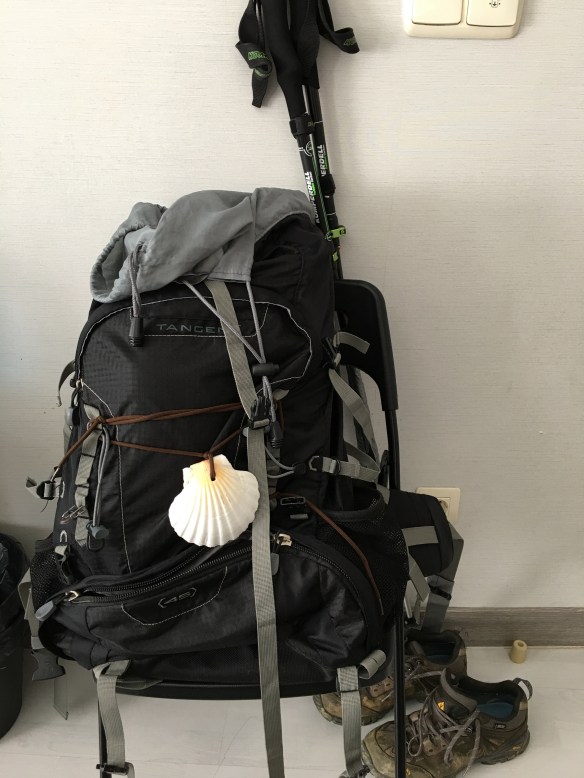
Before I took my first steps on the Camino de Santiago pilgrimage a couple of years ago, I first had to choose my shell—the symbol for St James the Apostle. Along the roadways and paths of the 800-kilometre trek across the Iberian Peninsula in northern Spain you can tell a pilgrim by the shell they have attached to their backpacks.

IMG_5341

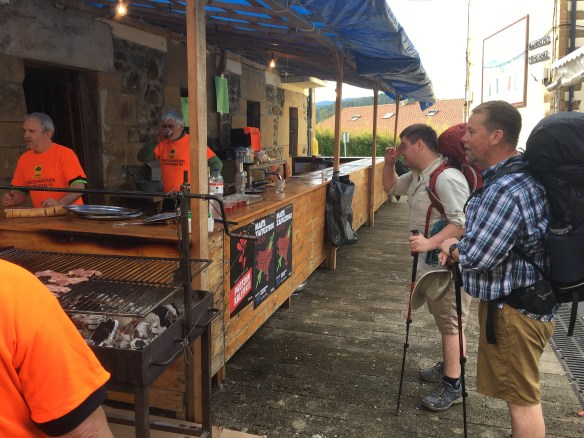
Wearing the shell attracted attention, often very positive. The group with whom I was walking came through a small suburb of the city of Guernica one Sunday morning. When we walked into the town square, we soon realized we were at the finish line of a marathon fundraiser for a local, special needs school.

There, some of the locals had set up large barbecues where they were grilling all sorts of meats for the marathon runners to enjoy after their race. We entered the square moments before the first runners crossed the finish line. But those preparing the barbecue called us over and without even asking our names or who we were offered us some of the delectable meats.

IMG_5308

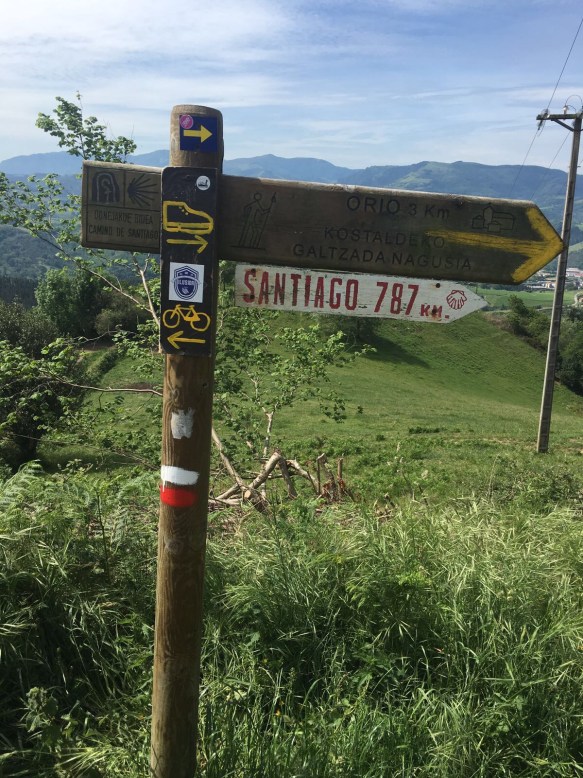
When we expressed our gratitude, they asked us to say a prayer for them at the destination of our pilgrimage: the shrine in the city of Santiago, Spain—still some 700 kilometres away. I promised them I would.

IMG_5385

As you know, I didn’t make it to Santiago, falling ill to pneumonia and coming home early after only a couple of weeks on the trail. I remember struggling with my ‘failure’ to achieve my spiritual and physical goals. For one thing, I wasn’t able to offer a prayer in Santiago for those good people from Guernica who asked me to.

Was it worth it? Did my truncated pilgrimage do any good? Or, was the love and generosity those locals showed us and our receiving their gifts graciously, enough?

On Ash Wednesday, we begin a journey. And at the beginning of this journey, we are given a mark—not a shell, but the sign of the cross on our foreheads. It is a public act, a public ‘coming out’ if you will. By this mark the world will know we are Christians.

I hope you will wear your mark home tonight, wherever you go and whatever you still have to do—keep it visible. And see what happens. You might be invited into some meaningful, enriching conversations along the way. Some might even ask you to pray for them.

Go into the closet where no one can see you, instructs Jesus.[1]And pray to your Father in heaven who hears you, and will reward you for your faithful act. But even when we think our faith fails us? Or only for its visible success? Or only if we achieve our goals?

Arnold Lobel, author of his children’s book called The Frog and Toad Treasury describes the relationship of two friends and how they pass time together, explore the world together and support one another.

In one chapter, the action takes place in October. The leaves are falling. Frog decides to go to Toad’s house, secretly, and rake his leaves for him. “I will rake all the leaves that have fallen on his lawn. Toad will be surprised,” Frog says.

Now, his friend Toad has the same idea. Both manage to arrive at the home of the other unseen, ascertain that no one is home, rake the leaves, and return to their own houses unnoticed. On their respective ways home, however, a wind comes.

The wind blows and blows. The piles of leaves do too, so that the leaves are scattered everywhere. At the end of the day, neither Frog nor Toad realizes what the other has done, because both return home to leaves strewn across their yards. Both pledge to rake their own leaves the next day. Nevertheless, that night Frog and Toad are both happy when they each turned out the light and went to bed.[2]

What is more important: Our good intentions and motivation? Or, the outcome of our actions. Being authentic matters more than the results of our actions. The Gospel is not about the consequences, good or bad, of our good or bad intentions. The Gospel is not about achieving results and being rewarded for our good work, even with righteous motivation. In the end, the Gospel does not leave us stuck (and perplexed!) in self-centred piety, it points to what God is all about.

Normally when we hear the words of Jesus: “the kingdom of heaven is like …”[3]when someone does so and so, we think of the job we must do to enter that kingdom. And so, we imagine and want to be like that religious person, attending to ritual and prayer and acts of charity and justice our whole life long; the more we can do, the better.

Not that we don’t do anything or don’t keep trying. But we cannot ignore from these words of Jesus what Godis all about. I consider those scriptures about the kingdom of heaven as describing the character of God: A God who treasures each of us. And will stop at nothing to find us. And give up God’s very life on the cross—give up everything—in order to be with us and love us.

God is the one who sells all in order buy the field with the treasure buried in it. God is the merchant who sells everything in order to obtain the pearl of great value. Where God’s treasure is (God’s life, God’s mercy, God’s presence—in us), there God’s heart is also.

This is a fundamental message of Christianity. A message of One who comes into our life even in the messiness and despair of being human. Born a vulnerable baby to poor, teenage parents in a backwater town of Bethlehem. Living the life of a simple man from Nazareth, hanging out with fishers, tax collectors and prostitutes. Dying, even, the very humiliating death of a criminal, for all to see.

The message of Christianity is about a God who ‘sells it all’ in order to be with us, live in us and work in us, for the good.

God does all of this in order to know us, really know us. To love us. To grieve with us. To enjoy with us. To walk with us this often difficult journey that we undertake again this day.

And despite the difficult journey for which Lent is a metaphor, may the world in each step we take on the pilgrimage know we are Christians by our love.

And that’s enough.


[1]Matthew 6:1-6,16-21

[2]Cited in Lori Brandt Hale, David L. Bartlett & Barbara Brown Taylor, eds. Feasting on the Word: Preaching the Revised Common Lectionary Year C Vol 2 (Kentucky: WJK Press, 2009), p.23-24.

[3]from his later parables (or stories) describing the reign of God, specifically Matthew 13:44-45.

Pastor’s Annual Report 2018

From this morning’s Annual General Meeting at Faith Lutheran Church in Ottawa, here is my report about the past year:

The council had a significant turnover of membership in 2018. On the one hand, the pastoral care ministry was strengthened. An intentional and regular congregational visitation schedule was initiated by council member Rochelle Piske. Resources were expended for lay training and producing visitation cards.

To this end, the council with Bishop Michael Pryse’s appointment acclaimed Pastor Diane Raddatz as Faith’s Honorary Assistant Pastor. This action was taken to broaden and acknowledge the quality of pastoral ministry provided by ordained persons associated with Faith church, as well as honoring Pastor Raddatz’s presence and history with our congregation.

At the same time, the leadership of the congregation was challenged to strengthen a vision for ministry that was focused outwards, to the communities which the church serves. A more public understanding of Christian ministry’s destination was articulated, repeated and reinforced. Even social events, such as the youth ‘Eating Around the World’ and ’Brass & Bratwurst’, benefitted from the Ottawa Ministry Area of ELCIC congregations as the basis of support and participation.

Moreover, Faith Lutheran Church convened leadership events for the Ottawa Ministry Area, such as the ‘Apple Tree’ workshop. The council spent time in training and visioning conversations. A ‘future directions’ initiative in council builds on the need, moving forward, not merely to ‘do church better’ but to ‘do church differently.’

The result of these conversations is leaving more and more church members with a broader understanding of the church today. For example, while deficit management can be a helpful short-term ‘fix’ to budgetary stresses, this micro-management perspective will not solve the long-term sustainability challenge that the church faces in our day and age.

As long as I have been ordained (over two decades), there have been very few years where deficit anxiety hasn’t been broiling under the surface of annual general meeting conversations. I believe deep down we know that merely narrowing annual deficits by reducing expenses is not a sustainable strategy that is going to resolve the church’s institutional problems.

Another approach is necessary. The solution lies, I believe, in reinvigorating the ‘why’ of church. Envisioning and acting on the mission of Christ, and seeking to participate in God’s activity in the world around us are steps in the right direction. But this means, too, that the church’s institutional structure must change in order to align with that purpose.

And that is precisely where conversations must focus, on ideas such as: repurposing church property, building bridges, cooperating and collaborating with other congregations, taking on some risk for the sake of local mission projects with other effective partners and community groups. I have explored such strategies in previous annual general meeting pastor’s reports.

At the beginning of the Advent season, Bishop Pryse was our guest in worship who preached and brought greetings on behalf of the Eastern Synod of the Evangelical Lutheran Church in Canada (ELCIC) of which we are a member congregation. At an ‘open mic with Bishop Mike’ session the evening before, he challenged the church to view collaboration with other congregations not as a threat but a gift. I hope to have Bishop Pryse make an annual ‘visit’ to our congregation.

Bishop Pryse was re-elected bishop for a six-year term at the Eastern Synod Assembly last June in Toronto. Council member Julia Wirth and I were Faith representatives who were both elected at that Synod Assembly to attend the National Convention of the ELCIC in Regina SK in July 2019 as Eastern Synod delegates.

Towards the end of the year, the council worked on moving forward with updating the congregational constitution and Call documents to align with recent Eastern Synod proposals. The chief benefit for congregations in adopting this updated version lies in making it much easier for congregations to make changes to their constitution by moving relevant items into the bylaws. Such adjustments are advisable since the local congregation will then be able to make changes with relative ease, thus making its constitution more of a living document reflecting more accurately the current truth of the congregation.

Thank you for your partnership in ministry. Specifically I want to thank council chair Jann Thulien for her prayer-filled support of the pastor’s office, and for each member of council and staff for their willingness to envision and act on new things.

Advent 2018 marked the beginning of the Gospel of Luke’s prominence in the Sunday readings for the coming year, according to the Revised Common Lectionary. Luke is also the author of the book of Acts. In Luke’s writings from both books, there is the emphasis of the community of faith taking care of the needs of the community, while at the same time reaching out and building bridges with others who are different from us and who present diverse needs.

May God, whose mission we serve in our day and age, give us all courage to act boldly, trusting always in the grace and mercy of God.

Pastor Martin Malina