Thanksgiving builds commUNItY

Sometimes what I see in nature represents how I feel. For example: “The dark, thunder clouds looked angry,” we say. Or, “The deer leapt with joy across the meadow.”

Nature has a way of evoking feelings within us. When I stopped in this cove on Cape Disappointment, I couldn’t help but feel praise for the creator God, and thankful for the beauty of life.

IMG_6215.JPG

This particular photo conveys to me first a state of peace. After all, not far from this lone pine the swirling waters, changing tides and ravaging winds off the Cape constantly threaten to uproot the tree. And yet, the tree lives on looking very peaceful.

But more than that, thankful. The tree shoots to the sky, to the life-giving sun. It’s not just hugging the rock in defensive self-protection. It offers its praise to the Creator by aiming and growing upward, giving a faithful witness to all that will see this tree.

For me, a life lived grounded and united in peace, praise and thanksgiving to God, is indeed a life lived in the gracious community of God.

During this month when we reflect on the legacy of the 16th century Reformation and celebrate together the 500th year of Reformation, we cannot avoid nor deny the sad reality of conflict and division. It seems you cannot fully appreciate the nature of things, including the church, unless you acknowledge the role of conflict among people of all times and places.

This is why it is noteworthy that Luke in the Gospel text assigned for Thanksgiving Day tells this story, which is not found anywhere else in the New Testament.[1] What is unique about this healing story is the response of thanksgiving by a Samaritan. Jesus sets this “foreigner” apart from the others who were also healed.[2]

The Samaritan was the only one who “turned back” to give thanks to Jesus.[3] So, there is much more going on here than a physical, medical cure of a disease.

Since ancient times, a political and religious rift was growing between Israel and Samaria. Samaria became “foreign” after breaking off from the Davidic monarchy and the establishment of Samaria as the capital of the northern kingdom.[4] Then, after the Babylonian exile, tensions mounted between the people of Samaria and the Jews who returned to rebuild Jerusalem.[5]

Luke includes this story in his Gospel to emphasize the importance of looking to the positive witness of the outsider. In other words, the normal divisions separating us in our religious and cultural identities matter little in the larger scheme of things. Especially when it comes to the expression of faith.

Those who are different are often the very people we need to look to for a positive example of faithful living.

This summer a friend of mine visited the German town of Dinkelsbühl in Bavaria. During the Reformation Era in the 16th and 17th centuries, this town was the first of only a small number at the time who identified as bi-confessional; that is, roughly equal numbers of Roman Catholic and Protestant citizens were allowed to live and practice their faith, with equal rights for both sides.

After the Peace of Augsburg in 1555, a few years after Martin Luther’s death, land in Germany was divided into Protestant or Catholic regions. The religious adherence of a population in any region was determined by the religion of the ruling prince in that area.

Except for Dinkelsbühl. The Peace of Westphalia a century later enshrined the bi-confessional identity of this town by establishing a joint Catholic-Protestant government and administrative system, and ensured a precise and equal distribution between Catholic and Protestant civic officials.

When you consider the animosity, violence and warfare characteristic of those centuries between Catholics and Protestants, never-mind the twentieth century history in Ireland and the unfortunately enduring oppositional attitudes between Protestants and Catholics today – this is truly remarkable.

Bucking the dominant culture of dualistic either/or, right/wrong, in/out, black/white thinking, the leaders and citizens of Dinkelsbühl chose to follow a different path. We don’t need to point to present day efforts of ecumenism and unity building. Right in the middle of the conflict of the 16th, 17th and 18th centuries there were already efforts then to see a different way:

To see the good in the other. To search out and focus on common understandings first. To seek mutual understanding. Amidst everything around conspiring against such counter-cultural vision.

The point of decision for the Samaritan leper came when he realized he was healed, on the path as they went.[6] It’s important to picture this in your mind. Jesus didn’t snap his fingers and, voila! Yes, the lepers brought their belief in Jesus to the encounter, asking him for healing. Jesus then told them to go to the priest for certification of their healing.

It was on the way – after they had committed to doing something, even before any proof of their healing was given, amidst their still debilitating illness – they went. In doing something, on the way, they were healed. Healing is a process.

It was on this journey when the healed Samaritan had to make a decision.  He could have followed the other nine who were clearly pursuing their self-interest. Against the conforming pressures of the majority, he turned back to follow his heart, full of thanksgiving. We may wonder whether he was also motivated by avoiding potential ridicule and discrimination as a Samaritan appearing before Jewish authority in Jerusalem.

Nevertheless, the Samaritan made thanksgiving a priority. It is to him that Jesus ascribes the affirmation: “Your faith has made you well”; or, as other translations have it: “Your faith has saved you.”[7]

Faith without gratitude is no faith at all. There is something life-giving about thanksgiving. Grateful people are more hopeful. Indeed, there is evidence now of a correlation between gratitude and the immune system. People who are grateful have a health edge. For example, an attitude of gratitude, reduces stress. So, your mother was right when she made you call your grandmother and thank her for the birthday card.[8]

A true expression of faith is complete when it includes thanksgiving. Coming to worship on Sundays is not validated because “you get something out of it.” Attending worship is not about the self-centered search for “what is in it for me?” Worship is not “me-first” exercise. Let’s be clear.

Rather, coming to worship is about offering thanksgiving, first and foremost. Sunday worship is an opportunity to give thanks to the God who gives all, for all. It is no wonder that the Holy Communion is traditionally called “The Holy Eucharist”, translated from the Greek as “The Great Thanksgiving”. We come to the table to offer our gifts of thanksgiving to God. Every week.

Thanksgiving changes the character of a community and its work. Stewardship is transformed from fundraising to the glad gratitude of joyful givers. The mission of the church changes from ethical duty to the work of grateful hands and hearts. Prayer includes not only our intercessions and supplications, but also our thanksgiving and praise of God’s good gifts to us at the Table.[9]  Thanksgiving builds bridges among people who are different.

We come to Communion to offer thanks to God not because we are good, but because God is good. And we see God reflected in all of creation, in all people, in the good they are.

We pray the legacy of the next 500 years of Reformation reflects the growth of unity among a people that are grateful for the good gifts God brings to us all.

Amen.


[1] Oliver Larry Yarbrough in David L. Bartlett & Barbara Brown Taylor, eds., “Feasting on the Word: Preaching the Revised Common Lectionary” Year C, Volume 4 (Kentucky: WJK Press, 2010), p.169

[2] Luke 17:17-19

[3] Luke 17:15

[4] 1 Kings 12, 16

[5] Nehemiah 4, Yarbrough ibid., p.167

[6] Luke 17:14-15

[7] Luke 17:19, Yarbrough, ibid., p.169

[8] John M. Buchanan, ibid., p.169

[9] Kimberley Bracken Long, ibid., p.168
Take a knee

IMG_5385

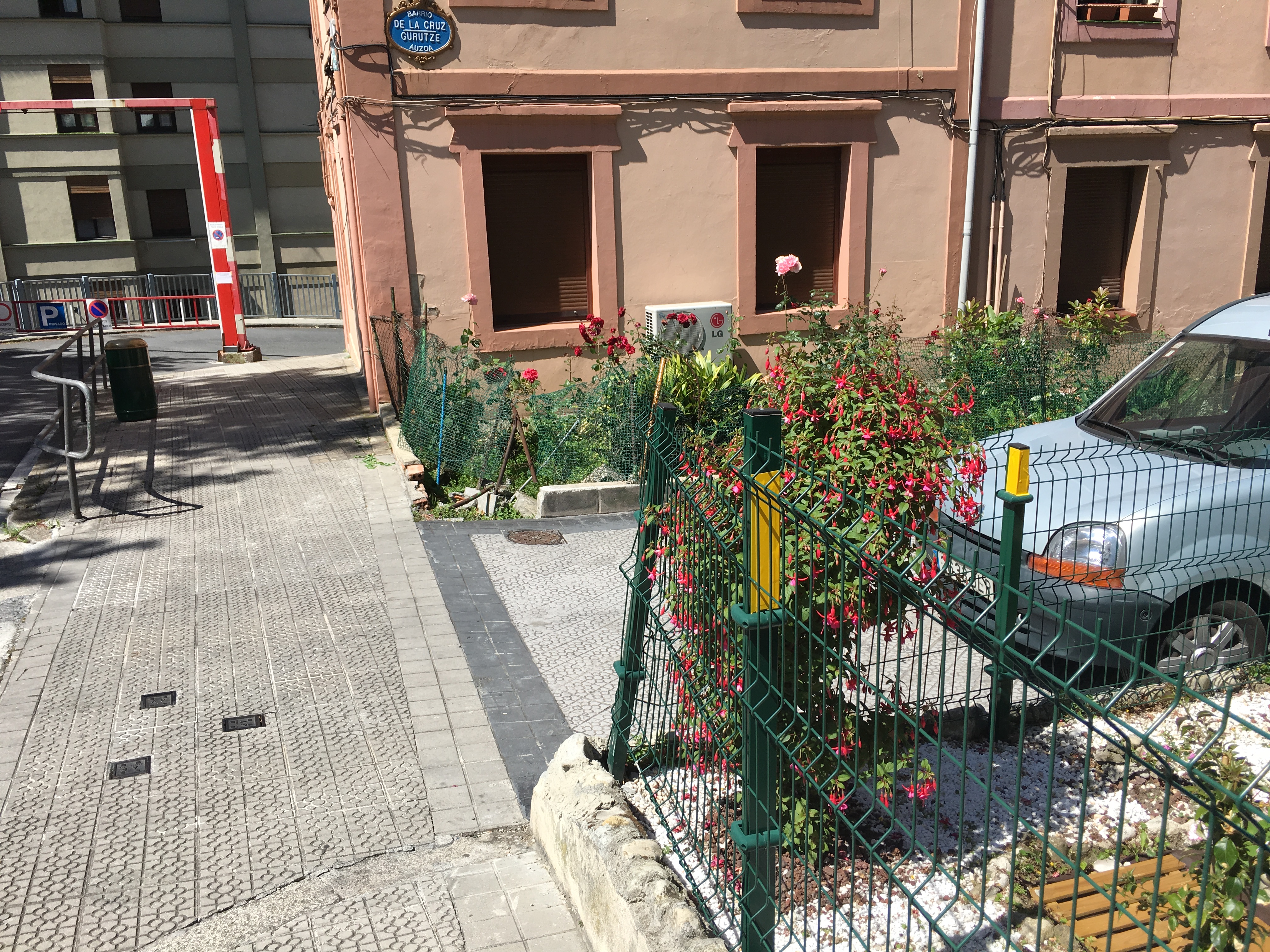
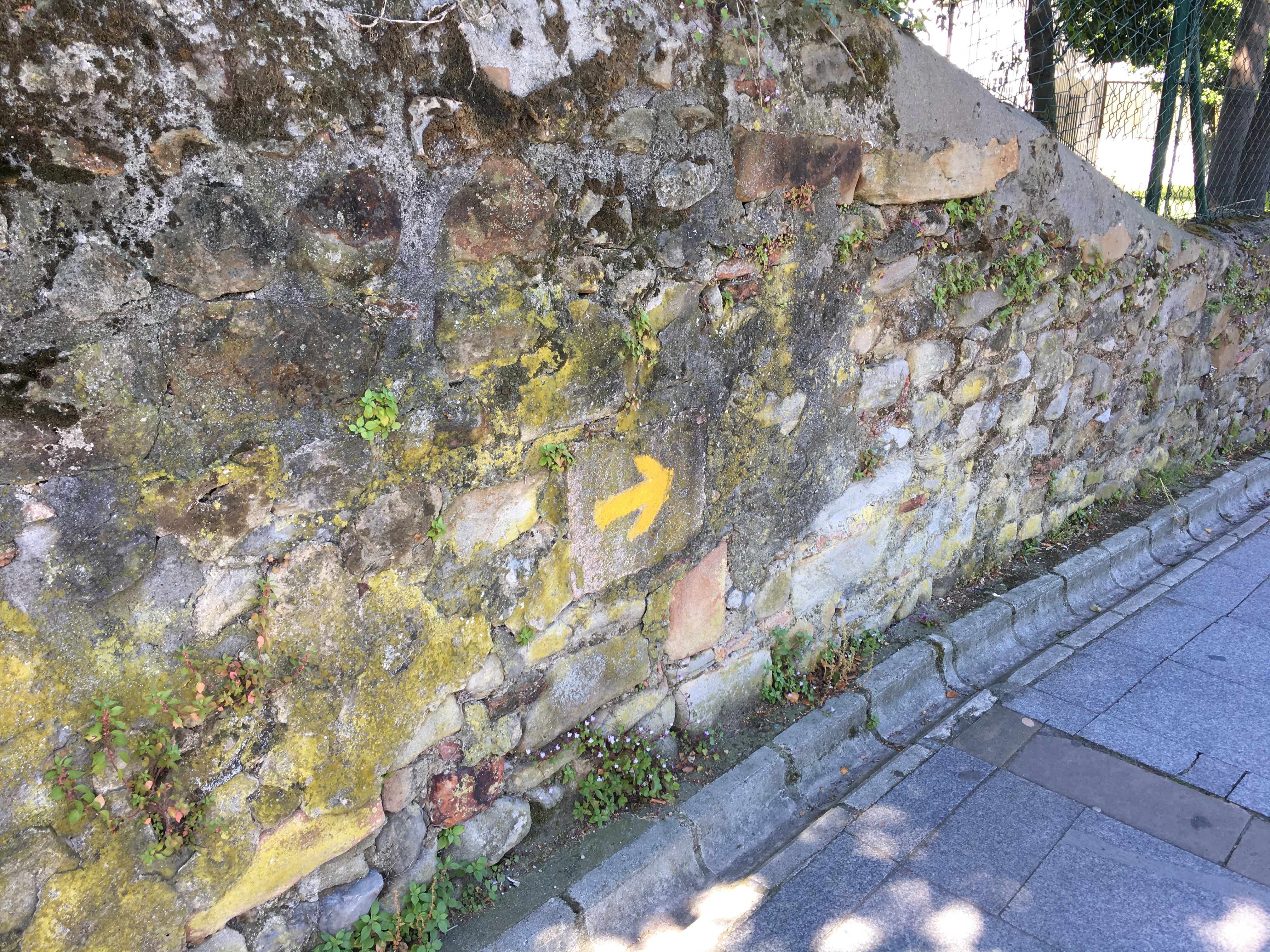
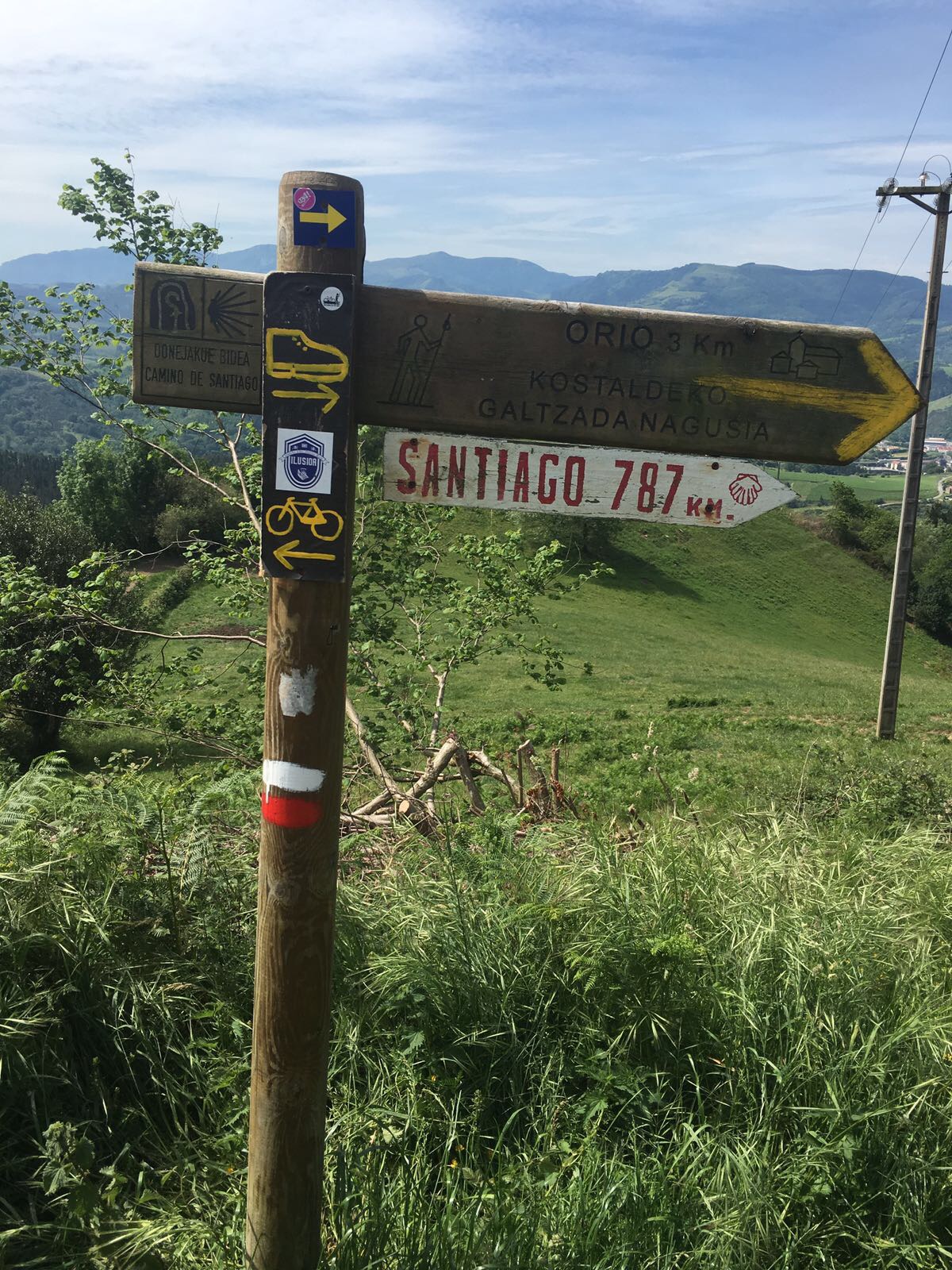
On the Camino de Santiago, you had to take care to follow the signs. Yellow arrows were common and well-known markers to all pilgrims along the path.

IMG_5368

It was easy to get lost, especially in the big cities, if you missed one of these markers. But also at critical junctions in the forests, the fields or roadways where if you were not paying attention, you could lose hours on the journey and have to double back.

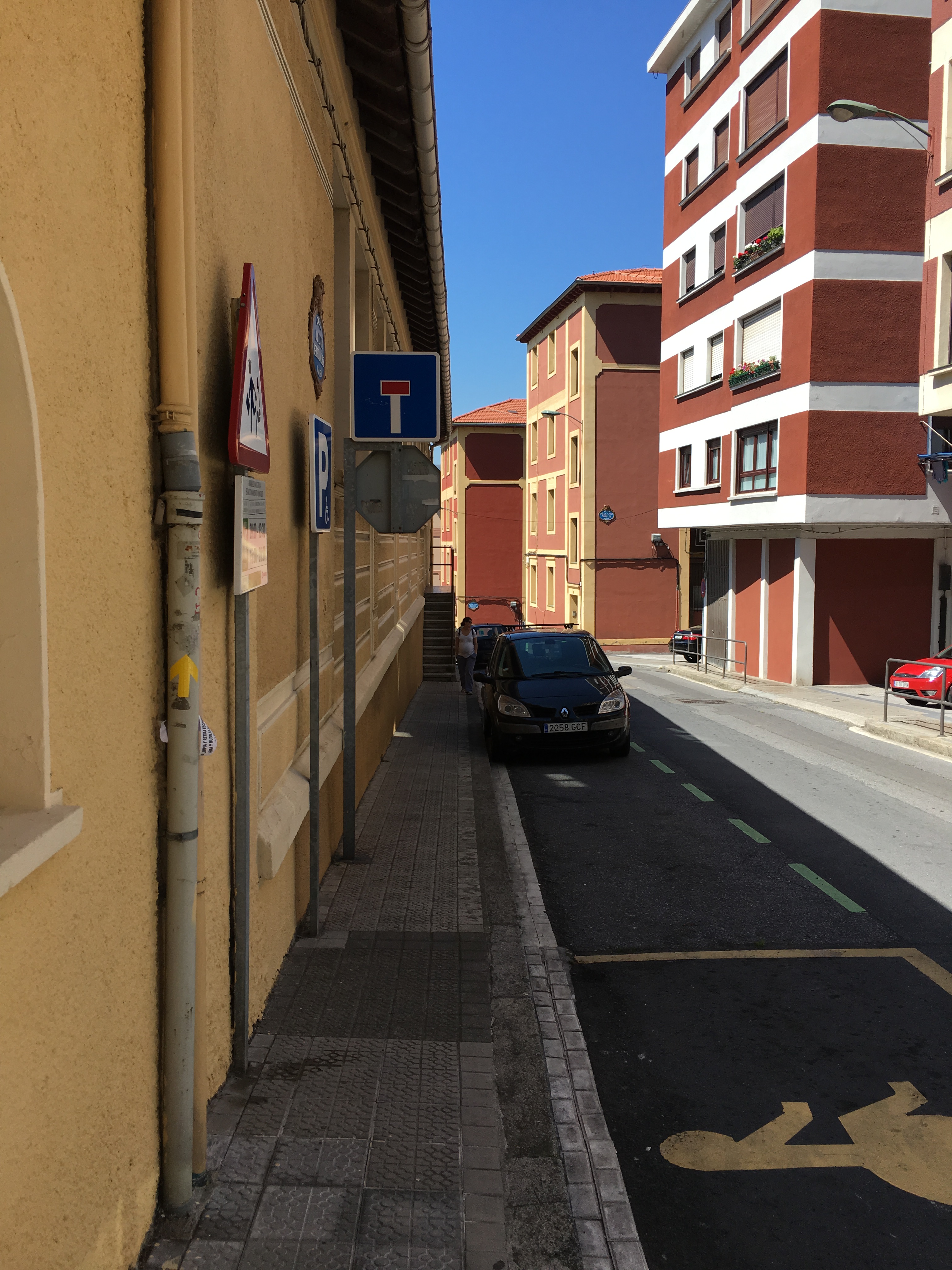
I learned, sometimes the hard way, to pay attention to what others might consider obvious. Some markers are easy to notice.

Some are sort of easy to notice:

But often it was a challenge to find that yellow marker:

AF9FA91C-7D0D-4D54-B2CD-F933EDE6260A7692EB83-1AA5-499D-AE9B-A64B6A5678C8IMG_5363IMG_5364

The signs — like the sacraments of baptism and holy communion — are reminders of what kind of journey we are on. These signs are embedded in the journey itself, on earth. These holy signs don’t stay in some other-worldly realm; they are very much a part of this world: Baptism uses common water; Communion uses bread and wine – basic, earthly elements which remind us of what God is all about on earth.

The signs are part of our daily, ordinary lives. The signs are already there, along the way, before we even commit to the journey. We only need to open the eyes of our heart and mind, and pay attention. Because the signs are too easy to miss. And when we do miss them, we get lost and go down other paths, paths that lead to division in the Body of Christ, the church.

I remember when our then 12-year-old son started playing football I first learned what it meant to ‘take a knee’. According to the tradition, if a player on the field was injured everyone ‘took a knee’. And it didn’t matter which team the injured player was from; that is, all the players from both teams knelt down and waited there until the injured player either walked off the field on their own strength, or was carted off on a stretcher.

Tim Tebow and Colin Kaepernick have both attracted world-wide media attention for ‘taking a knee’ in the last couple of years, although for very different reasons. Both have made a public display of their faith. Both are prayerful, and devout. One grew up the son of Baptist missionaries to the Philippines. The other was baptized Methodist, confirmed Lutheran, and attended a Baptist church during college.[1]

Tim Tebow, however, is a darling of the church while Colin Kaepernick has been reviled. Their differences reveal much more about the brand of Christianity preferred by many in the church today. Tebow is known for his signature move – dropping to one knee on the field, his head bowed in prayer, his arm resting on his bent knee. He’s clean cut, polite, gentle, respectful.

Colin Kaepernick, starting last year already, refused to stand to attention during the playing of the American national anthem. Originally, he did so in support of Black Lives Matter and to protest police violence against black people. Kaepernick was voted most disliked player in the National Football League (NFL). People posted videos of them burning his jerseys. He was called “an embarrassment” and “a traitor”. Of course, with recent events in the NFL, his witness gains momentum nonetheless.

Two players, two brands of Christianity:

Tim Tebow represents personal piety, gentleness, emphasis on moral issues. Colin Kaepernick represents social justice, community development and racial reconciliation. One version of Christianity is kneeling in private prayer. The other is kneeling in public protest. One is concerned with private sins like abortion. The other is concerned with public sins like racial discrimination. One preaches a gospel of personal salvation. The other preaches a gospel of social transformation. One is reading Paul’s letters. The other is reading the Minor Prophets.

Are these versions of Christianity mutually exclusive? Much of Christian history, especially since the Reformation, would suggest, ‘yes’, even among Lutherans. The proliferation of Christianity into some thirty thousand different denominations by the 500th anniversary of the Reformation in 2017 would suggest, ‘yes.’ The divisions within Christianity is leaving the church all the poorer, with each side needing to be enriched by the biblical vision of the other.

Bible scholar Walter Brueggemann expresses it well: He writes that Christianity should be “awed to heaven, rooted in earth.” We should, as he says, be able to “join the angels in praise, and keep our feet in time and place.”[2]

Christianity, sadly, remains on its knees because of our divisions, when all along the vision of the Gospel, expressed best by Paul himself, is that “every knee should bend, in heaven and on earth”[3]. How do Christians today, regardless of background and orientation, contribute to this vision in ways that actually make a difference on earth?

In the second reading for today, we learn about the essential character of the biblical God. In the Hebrew Scriptures, all of God’s acts, blessings, and delights in creating are for the sake of others. This is typical of God, “who is intimately concerned with justice, peace, and the flourishing of all creatures.” This is typical of God, “who is ‘on high’ but never remote, who is ‘over all’ but faithfully and dramatically invested in life on earth.”[4]

God does not embrace hierarchy. Nor does God rest in privileged autonomy, according to some deist idea of a distant and uncaring God. God is love. And the New Testament witness continues this description of a God who cares intimately about our humanity, in the incarnation of Jesus Christ. God is Immanuel, God-with-us and for us.

In setting up this wonderful hymn that Paul includes in his letter to the Philippian church, Christians are called to exemplify a humble regard for others, seeing them as “better than yourselves”; we are not to primarily serve our own interests, but the interests of those who are different.[5]

These may be an impossible task for us in our self-centred, me-first culture. Nevertheless, we are encouraged, as Paul encouraged the early church in Philippi, to “work out our salvation with fear and trembling”[6]. Why even bother?

Because God is already at work in us.[7] God is already at work in the world, as difficult as it can be to spot those signs of God’s grace, God’s justice, God’s good work. As Martin Luther insisted, matters of salvation revolved around God’s actions, not human activities. Justification — being placed into a right relationship with God — is totally God’s activity. After all, as Paul wrote earlier in his letter to the Philippians, we need to believe – despite what appears to be everything to the contrary – in the promise and the vision that God “who began a good work among you will bring it to completion.”[8]

God’s grace precedes all. Just like the signs on the journey before us and around us. Even though we may miss them from time to time doesn’t mean they aren’t there, waiting for us to notice. God’s grace continues to guide us and point in the right direction.

We therefore have nothing to lose, to take a knee for the sake of those who do not have a voice. To take a knee for the sake of others who are silenced by discrimination and abuse. To take a knee for all God’s creatures who long for a better day.

We pray for and support agency to help the refugees today escaping violence and oppression in Myanmar. We pray for and support agency to help victims of Hurricane Maria in Puerto Rico. We, so, ‘take a knee’, in the spirit and mind of Jesus Christ who took a knee for us all.

[1] I thank Michael Frost, “Colin Caepernick vs. Tim Tebow: A Tale of two Christians on their knees” (The Washington Post, September 27, 2017) for much of the content I use in this section of my sermon

[2] cited in Michael Frost, ibid.

[3] Philippians 2:10, NRSV

[4] William Greenway in David L. Bartlett & Barabara Brown Taylor, eds., “Feasting on the Word: Preaching the Revised Common Lectionary” Year A Volume 4 (Kentucky: WJK Press, 2011), p.112.

[5] Philippians 2:3-4

[6] 2:12

[7] 2:13

[8] 1:6

Martin Luther & Julian of Norwich

An imaginary meeting between Martin Luther (16th century reformer) and Julian of Norwich (14th century mystic) in celebration of the four-month time of worshipping together in the same space with Faith Lutheran Church Ottawa and Julian of Norwich Anglican Church Ottawa, a time which now comes to an end. Thank you to the Rev. Mary Ellen Berry, Anglican Diocese of Ottawa and incumbent of Julian of Norwich, for co-writing and presenting this dialogue with me, on our last Sunday together February 19, 2017


NARRATOR: I came early this morning to set up, and no one was here. I was tired so I sat down on the chancel steps, and fell asleep. And I had the strangest dream: Julian of Norwich had a conversation with Martin Luther …..

ANGEL: (singing, from the balcony) “I want Jesus to walk with me, I want Jesus to walk with me, all along my pilgrim journey, Lord I want Jesus to walk with me.” (ELW #325)

LUTHER: (appearing from behind the pulpit, holding a large Bible, opened, in one hand, his feather ink pen in the other) “Be perfect, therefore, as your heavenly Father is perfect!” (Matthew 5:48, Gospel for Epiphany 7A) What does this mean?

JULIAN: (appearing in her cell, sitting on a stool, leaning upon the reading desk) What does this mean to you?

LUTHER: Who are you?

JULIAN: Julian of Norwich.

LUTHER: Are you one of those uber-enthusiasts, I call Schwaermer in my native German tongue? Julian of Norwich, that’s hardly the way to relate to the Lord.

ANGEL: (singing) “I want Jesus to walk with me; I want Jesus to walk with me; all along my pilgrim journey, Lord, I want Jesus to walk with me.”

JULIAN: How did you learn that you couldn’t be perfect as God is perfect, by your efforts alone? What did you do?

LUTHER: At first, I rubbed the tips of my fingers raw washing the floors in the Augustinian monastery in Erfurt. That didn’t help my conscience. So, in 1510 I decided to go off to Rome. I crawled devoutly up the stairs of the Scala Santa, as millions of other pilgrims did.

JULIAN: Life, itself, Martin offers its own penance: disappointments, failures, sickness, betrayals. Life, if we but allow it, purges us of all the things for which our habits and affections grasp. Why on earth did you do all those things?

LUTHER: I laboured and sacrificed so much in order to purge myself of sin. It was up to me, I believed, to make myself right before God. It all depended on how hard I worked and the more penitential I became. I tried to impress God. I once believed my good works were the gateway to my salvation; only then, could I be perfect as my heavenly Father is perfect.

JULIAN: What happened to change your understanding?

LUTHER: It was on the Scala Santa in Rome as I made my wearisome, guilt-ridden way up those holy stairs, I heard God’s voice saying to me: ‘The just shall live by faith, not by doing penance.’ It was like scales fell from my eyes. I stood up, walked back down, and stalked out to ignite the Reformation!

JULIAN: You heard God’s voice speak to you! How do you know that it was God who spoke? Was it the only time you heard the voice of God speak to you? It seems quite an experience, no? Did you not criticize the ‘Schwaermer’ — as you call them — those ‘fanatics’ who relied on experience alone to express their Spirit-filled faith?

LUTHER: Well, yes .. and no, not just experience alone. I was suffering severe cramps in my room one evening, reading through Paul’s letter to the Romans, when I came across the verse from chapter 3: “Since all have sinned and fall short of the glory of God, we are now justified by God’s grace as a gift, through Jesus Christ” (v.23-24). This word of God is external, and comes to us quite apart from any experience we might have.

JULIAN: But you are not denying that God comes to us and speaks to us through our experiences?

LUTHER: Only when mediated through the Word.

JULIAN: I see, “Only when mediated by the Word.” And what, for you Martin, is the “Word’?

LUTHER: The spoken word, preached and proclaimed. The words in the bible. And, most importantly, the living Word made flesh, Jesus Christ.

ANGEL: (singing) “I want Jesus to walk with me; I want Jesus to walk with me; all along my pilgrim journey, Lord, I want Jesus to walk with me.”

JULIAN: But the spoken word and the living word touch our souls, not just the ears and mind, do they not? Is not the word something that needs to come into us, personally, experientially?

LUTHER: You are good at asking questions, fair Julian of Norwich. Perhaps you can tell me why it is you sit in your cell, asking questions of the faithful and listening to their stories?

JULIAN: It is in this way that I do my small part in the work of our Lord Jesus. I care for their souls, I tend to their hearts, so the real teacher, our Lord Jesus, can enter. My fondest hope, Martin, is “that when I am no longer in this world my dear ones will soon forget me so that I shall not hinder them, and they will behold Jesus who is teacher of all.”

LUTHER: In German, this pastoral care ministry is the work of the Seelsorger. But you also have written so much — the first book written by a woman in the English language. I wonder what greater impact your writing would have had, if you had Gutenberg’s printing press at your disposal, like I did.

JULIAN: You, too, my dear Martin, have written so much — more than me I should say! You translated the Latin bible into your beloved German.

LUTHER: Your Divine Revelations speak boldly of God’s love and trust.

JULIAN: You once wrote: “Sin boldly”. Do you regret anything you’ve written?

LUTHER: Well, yes. I did write unlovingly about the Jewish people. I have contributed, by my words, unfortunately, to the cause of anti-semitism. I am grateful that the Canadian Lutheran Church in the last century, among others worldwide, have rescinded this hateful language from my legacy. What advice do you have?

JULIAN: All wrath – all that is contrary to peace and love – is in us, not in God, Martin. So, yes you have sinned and fallen short of the glory of God. But you are forgiven, Martin. Grace alone. Is that not what you preached?

ANGEL: (singing) “I want Jesus to walk with me; I want Jesus to walk with me; all along my pilgrim journey, Lord, I want Jesus to walk with me.”

LUTHER: Your written work is impressive. Do you, Julian regret anything you’ve written?

JULIAN: Well, Martin, I don’t know that ‘regret’ is quite the proper word, but it will do until I can think of a better one. “All shall be well, and all shall be well, and all manner of things shall be well” are words that were given to me by our Lord, Jesus that I wrote in my Divine Revelations. They are beautiful words and they are most surely true, Martin. I do not regret hearing and writing these words; but I do regret – hmmm, still not the right word – how they are often taken.

LUTHER: What do you mean by “how they are often taken”?

JULIAN: What I mean, Martin, is that I fear these words have been misconstrued. When our Lord Jesus spoke them to me, I, too, was at first appalled and answered, “Good Lord, how can all be well when great harm has come to your creatures through sin.” – don’t forget, Martin, that I lived during times of war, plague, poverty, and famine. Through the grace of God, I came to understand our Lord Jesus’ words more fully.

LUTHER: Really, how so, Julian? Because being perfect, then, is not about a life free from all that ails us, and continues to do so all our lives long, no?

JULIAN: Yes. “All shall be well” is not a promise that God will relieve us of our sin and pain in this life. It is an invitation to trust God, to cultivate new habits of trust in God, and to at least be open to God’s healing love. “Just as by God’s courtesy he forgets our sin from the time we repent, just so does he wish us to forget our sins and all our depression and all our doubtful fears.”Does this speak to you, Martin? Or does it sound like the rantings of a 14th century mystic – a fourteenth century Schwaermer?

LUTHER: Well, you are two hundred years older than I am!

ANGEL: (singing) “I want Jesus to walk with me; I want Jesus to walk with me; all along my pilgrim journey, Lord, I want Jesus to walk with me.”

JULIAN: ‘Perfection’ then is experienced when we bask in the light of God’s love in, through, for and with us. Loving yourself, and loving others, loving all of creation, despite our suffering. This is the beginning and end of all prayer. How do you pray?

LUTHER: I spend nearly half the day in prayer, each and every day.

JULIAN: Being in the presence of God, whether you use words or not, unites us in Jesus.

LUTHER: I’ve always said: the fewer the words, the better the prayer!

JULIAN: The presence of Jesus, God’s love as a mother’s love, is all gift.

LUTHER: Despite our differences, then, prayer unites us all in this grace of God.

JULIAN & LUTHER: Thanks be to God! (Julian and Luther walk to the centre and embrace, then each walk separately out one of the side doors beside the altar)

ANGEL: (singing) “I want Jesus to walk with me; I want Jesus to walk with me; all along my pilgrim journey, Lord, I want Jesus to walk with me.”

NARRATOR: (wakes up, shakes his head, stands up and faces the congregation) The words of the Prayers of Intercession are posted on the screen. The Lutherans will with one voice say together their parts; and alternate with the Anglicans who will say their parts. Let us pray in the unity of Christ!

An installation sermon for a twin pastor

I wrestled this week with whether I should have my hair cut. Normally I wear my hair much shorter, especially during the winter months when ‘hat head’ poses fashion challenges. The reason I didn’t was I looked forward to playing up the twin thing once again; I know that my twin brother usually wears his hair much longer than I do.

And I’ve eagerly anticipated standing before you today, and asking: Are you sure you have the right twin as your new pastor? How do you know that your pastor is actually David, and not Martin? How do you know which one you are installing? After all, you’ve only had your new pastor a couple of months — do you really know him that well already?


Just one word of advice: If you believe you see Pastor David in Conestoga Mall or walking in Stanley Park in Kitchener or skiing at Chicopee, please, please don’t right away presume it’s Pastor David you are meeting.

One of my all-time favourite, yet awkward, twin-pastor experiences, almost always goes like this: I’m in town (Kitchener-Waterloo) either visiting David, Patricia, Sarah & Susie, or at some Synod meeting and going out by myself to the mall or restaurant when — it never fails — someone I do not know or maybe even know a little bit comes up to me and launches into quite a personal conversation; the person before me reveals information of a confidential nature.

I am caught in a conundrum: Do I carry on listening empathetically, nodding my head with pastoral attention and care? How soon do I break in with the news: “Ahh, excuse me, I am Martin, Pastor David’s twin brother; did you think I was Pastor David?”

At which point, the person’s jaw usually drops, the blush factor intensifies, and eyes pop. “Noooo! Really!?!”
“Yes. Really!”
“Pastor David, you are pulling my leg!”
Then, I have my passport and other photo ID handy, just to prove my identity.

Most non-identical-twins in leadership, I have come to covet, have lived relatively scrutiny-free of their public persona without ever having to ‘prove’ who they are. And here’s a twin secret: Both David and I know who we are. And we believe that there are differences between us; I don’t confuse my own identity with David’s. In fact, it has often surprised us why people can’t notice the distinct differences between us.

But we Malinas won’t make it simple. Add to that, we both end up being pastors in the same church. So not only do we look alike, we wear the same clothes on the job.

In the walls of the church, we may know who we are all about. We have our own social fortresses to hide behind; we gather with our own kind, in familiar places and spaces. We have our own rules and norms of behaviour in our brand of a more progressive, Lutheran church. Yes, we may know who we are.

But does the world know who we are? And perhaps this is the challenge for the church today.

Installations of pastors, or as the Anglicans call them, ‘Inductions’, are tricky events for us. Yes, we celebrate a new relationship between pastor and people, here at Christ Lutheran Church in Waterloo. That celebration tends to focus on the pastor; and, I’ve played into that in the first part of my sermon today!

I suspect that the traditional culture of the church has tended towards seeing ‘ministry’ as the sole purview of the pastor — and that Installation services tended to be viewed somewhat like launching pad for the pastor’s dazzling display of skill, leadership prowess and charisma.

In contrast, the relationship between pastor and people, which an Installation service signifies, is really about acknowledging the true meaning of the word, ‘liturgy’ — the work of the people. The pastor doesn’t ‘own’ the ministry of the church; it belongs to the people to which the pastor joins in supporting and enlivening it with his or her particular gifts, interests and passions.

Yes, leaders must be given permission to lead. Yes, you have elected Pastor David to be your leader. Yes, good leaders need to give themselves permission to lead. And yes, good leaders also need good followers. So, role clarity is vital. Setting and maintaining personal and professional boundaries are important.

It is also important to live collectively in this work. In the words of Martin Luther, we all comprise the ‘priesthood of all believers’ in the exercise of our vocations as Christians, ordained or not.

It’s not just about the pastor. It’s not just about the people. It’s not about pastor or people. It’s about pastor and people. We are not lone-rangers; we are not entrepreneurs or independent consultants in the business of selling faith to the world.

Because it’s about doing it together somehow. Praying together. Being responsible together. Not spectating the practice of faith, but participating in it. Figuring it out in the doing it — in the mystery, ambiguity and paradox that are central to the character of our faith.

I appreciate the Gospel text offered in this service today (Mark 4:3-9). I am drawn towards conversations about this text that focus on the identity of the sower, in Jesus’ parable. Who is the sower? Is it Jesus? Or, does this role fall exclusively on the ordained, set-apart, folks of our church — the pastor? Or, someone else? You, perhaps? We know only of the work the sower does.

I’ve also been looking at the Gospel text for this Second Sunday after the Epiphany (A), where Jesus calls his first disciples (John 1:29-42). There are two people accompanying John the Baptist when he identifies Jesus as the “Lamb of God”. Only Andrew is named. But the other one remains anonymous to us (v.40).

Perhaps both Jesus, who does not name the sower in his parable, and the writer of John’s Gospel who does not identify the second disciple, do so intentionally. Perhaps the anonymity we encounter in these stories is meant to engage us, the reader / the listener, in order to invite each of us / all of us into those roles — as follower of Jesus and sower of the Word.

Pastor David told me the little, liturgical scare you had here prior to the first Christmas services: Of course, it is appropriate not to have the baby Jesus in the manger during Advent and the weeks leading up to Christmas; after all, Jesus has not yet been born.

But it was just before the Christmas Eve service, I believe it was, when Pastor David expressed some anxiety about the missing infant. Where is Jesus? We’ll have to put him in the nativity sooner than later. Or, have we lost Jesus? Has Jesus already left the building? How can you celebrate the Word made flesh with no baby Jesus in the creche? This was not looking good.

Much to Pastor David’s delight, and surprise — I might add, not only did one baby Jesus appear in the little manger on Christmas morning, but two, identical baby Jesuses!!!!


I’m not going to suggest that Jesus had an identical twin brother, otherwise Dan Brown might have another best-selling fiction on the shelves in no time.

Nevertheless, the image is significant. Because, Christianity starts not with a one-person-show but a three-person Trinity (God the Father, God the Son, God the Holy Spirit). Christianity is inherently relational, and so is the work of God.

Following Jesus and sowing the Word is not exclusively the work of the Pastor. Can we envision this work collectively? Not just for one individual to do or be responsible for, but as the Body of Christ in the world today. Perhaps we can get at the identity of the sower or the disciple by observing and starting with what the sower and the disciple do. And how it is done:

When the work of compassion and justice expands beyond the walls of this space, we plant seeds. When the work of loving and forgiving involves the young and the mature doing it together, we plant seeds. When the risky following leads us out there and no one doing it stands alone, we plant seeds. When the work of the church is done together, as diverse and multi-faceted our individual identities in the Body of Christ are, we plant seeds.

And then the world will know who we are.

Martin Luther visit


Guten Tag. Allo. Ich heiss Martin. My name is Martin. Liebe Gott! I can speak English! Something incredible happened to me on my way to this time and place. And I cannot explain it! So, “Here I stand.” With you. In this place. Today.
You know, truth be told, I don’t know what to make of this “Lutheran Church”.

Yes, it’s been a long time — 500 years — since I hung the 95 Theses on the door of the Wittenberg Church. So much in the world has changed. Travel, electricity, automation, information systems. And yes, I did write a lot with my hand. I suppose I would do things differently today, as well. Who knows?

But I noticed that some of my words have taken on an iconic status in your discourse through the centuries. And so, I’ll start there and tell you what I observe about your “Lutheran” church today — I feel awkward even saying that word: “Lutheran”! Who the hell do you think I am? “It’s true, we are all beggars!” Even me!

So, let me set the record straight. First off, I never intended there to be a separate church, divided from the Catholic church. Oh yes, a toilet-flushing theology underpinned some religious practices at the time, beliefs that needed reformation. I was excommunicated. And that meant death. But the Lord had a purpose for me still to fulfill, and I was spared. Thanks to Frederick, who let me live in his Wartburg castle for a time being.

Obviously, I still have a purpose or else I wouldn’t be standing here today. I am amazed to see how many different churches exist — and some even taking on my name! In a letter I once sent to my colleague Philip Melanchthon, you know, I encouraged him to “sin boldly, but believe and rejoice in Christ even more boldly.” He must have taken my words seriously — the “sin boldly” part, anyway — since he pushed my reforms to brink of dividing the “one, holy, catholic church.” Dumbkopf!

Which, it seems, has happened here in Ottawa as well. I take it that Lutherans from my Heimat, Germany, arrived quite late in Ottawa — later than in other parts of Turtle Island — is that not what the first nations of this land call it, this Canada?

I have secret to tell you — the Germans have long since stopped getting off the boats and settling this land in large waves of immigration. You are all settlers! And, the first Lutheran Church was St Paul’s Lutheran Church near the University of Ottawa, established in 1874. For the most part of your history since then there have been some 15 Lutheran congregations, no?, divided basically into three different Synods — the Evangelical Lutheran Church in Canada, the Lutheran Church Canada-Missouri Synod, and the Wisconsin Evangelical Lutheran Synod.

“What does this mean?”. You who have endured Confirmation classes decades ago, yes I’m speaking to you now: When you memorized parts of my Small Catechism, you will remember I sectioned parts of the Creed, the Lord’s Prayer, and the Ten Commandments, for example, I offered my interpretation of those sections preceded by the question: “What does this mean?”

I did that on purpose. Don’t you know that asking the question itself reflects an important stance towards learning? “What does this mean” is a question that first seeks to understand. It doesn’t presume you already have the answer.

I certainly didn’t at first. I struggled mightily with my own stuff, and spent a whole lot of time on that blessed toilet seat! I had doubt and prayed: “Lord, I believe, help my unbelief!” (Mark 9:24).

The purpose of your Lutheran Council, for example, which functioned between 1968 and 1992 (I learned in your history books), was “to foster greater understanding between Lutherans in Ottawa” (1) — this amid conflicts over biblical interpretation, Communion practice and ordination of women to suggest a few enduring divisions. Good for the Lutheran Council! They were onto something, there, you know!

Learn from the first nations of this land. Among the diversity of Indigenous Peoples of Canada comes the wise advice: Seek first to understand, then to be understood. First, however, to understand the other. Not to persuade, to defend, to self-justify, to impose one’s opinion. Which appears to be the dominant characteristic of relationships in the church and the public today. You believe you first have to defend yourselves.

“What does this mean?” can be a call sign for you “Lutherans” today, indeed for all of mature faith, on how to learn, how to grow, how to move forward to embrace God’s future. You do so first by seeking to understand the other. Ask questions. Try to feel into from where the other is coming in their approach. Listen for smidgens of truth, of potential points of agreement, of overlap between what you hear and where your own heart resonates.

There’s another phrase some have said I wrote. But I didn’t. One of your modern theologians, Karl Barth, actually wrote it, based on something Saint Augustine of blessed memory wrote: “Semper Reformanda” — Always reforming. It’s still good and wise counsel! The Evangelical Lutheran Church in Germany (Evangelische Kirche Deutschland) has as the theme logo for the 500th Anniversary of the Reformation: “500 Years of Reformation”, suggesting that these past 500 years represent a continually reforming church. I like that. Sehr gut!

I know you like “A Mighty Fortress is our God”, ok? But I wrote that hymn in order to bring the popular music of my day into the church. I confess I spent much time in bars during my travels across Germany enjoying the local ales. And I sung along to the bar tunes, and wondered: “Wouldn’t this sound great in church!” And so, I took some of those tunes and transformed them into hymnody.

Why are you still singing “A Mighty Fortress” to celebrate the Reformation? The very idea of 21st century “Lutherans” celebrating the Reformation by clinging to the events of the 16th century doesn’t make sense, if you believe you are truly Semper Reformanda. I travelled all this way through space and time; I want to hear some of your new songs! 

We should be singing this century’s music rather than smugly resting on the laurels of the past, you would say. You should be plotting where the reformation goes from here. Perhaps in this the 21st century, when so many of your traditions have seen the institution fall into the malaise of irrelevancy, you need to echo the cry: “Semper Reformanda” — “Always Reforming”. Indeed, the church in every age stands in need of reformation (2).

In my Disputation in Heidelberg, a year before I hung those famous Theses on the doors of the Wittenberg Church, I stated that, “The Law says ‘do this’ and it’s never done; Grace says, ‘believe in this’ and everything is already done.”

The quality and practice of faith today is on trial. What do you believe about God, and your life with God, others and this world? Reformation starts with those questions.

I’m glad to see you still say, at least, that we are justified by grace through faith.

And when I read the Jeremiah (31:31-34) text for today, I must confess we are often our own worst enemy. When we try so hard and work so hard but underneath all that work is a niggling belief that it’s all up to us. We are most ready to hear those words of grace, forgiveness and mercy, I will confess, when our own efforts are exhausted. When we are weary of our inner turmoil we are ready to hear the Gospel of Jesus Christ. And believe. And trust.

Because by my own understanding or strength I cannot believe in Jesus Christ, in God, or anything good!

Do the work of God, yes. But allow God, in the end, to reap God’s own harvest. Believe in that which cannot be seen, towards that which can be seen (Hebrews 11:1). It won’t be our accomplishment when it finally happens. Because all is grace. All is love.

“This is most certainly true.”

I’ll tell you what else is true. There are some new words circulating among Lutherans in Ottawa these days. I’ve heard them. Who are you? You are “many communities and one church”. And you are “better together.” The fragmentation of the church which has been the unfortunate legacy of the Reformation needs reformation.

How can you see it? This is a matter of faith and belief? Do you believe that though you are many communities you are still one church? Do you believe you are better together?

This is not a figment of someone’s imagination that has mere mythic, allegorical status, invisible and irrelevant.

After all, when in the last year you gathered together at a Peace pole and prayer garden; when you gathered together to recall the history of the relationship between Indigenous and setter peoples in the blanket exercise; when you gathered together on Ash Wednesday and during Advent to worship; when you support a city-wide youth group by gathering together to have fun at summer fest; and when you serve together to do refugee sponsorship — it is real. It is tangible. It is visible.

And it is happening in a Lutheran community near you!

This is most certainly true!

(1) Barton Beglo & Jo Nordley Beglo, eds., “By Faith; Lutherans in Ottawa and the Valleys” (Ottawa: St Peter’s Press, 1995), p.66

(2) Dawn Hutchings, pastordawn.com “Enough with ‘A Might Fortress’ Already! Sing a New Song”

Martin Luther quotes

Please review these famous Martin Luther quotes before reading the posted sermon (“Martin Luther visit”)

1. I cannot nor will not retract anything since it is neither safe nor right to go against conscience. Here I stand, may God help me. Amen.

– with these words spoken to authorities at the Diet of Worms (April 15, 1521), Luther drew a line in the sand and started an age of Reformation for Christian church

2. It is true; we are all beggars

– Martin Luther’s last written words before he died (February 16, 1546)

3. Be a sinner and sin boldly; believe and rejoice in Christ even more boldly

– in a letter to Philip Melanchthon (August 1, 1521)

4. What does this mean?

– repeatedly, prior to each explanation, in Luther’s ‘Small Catechism

5. Semper Reformanda

– the cry of the reformers in the 16th century, whose idea originated in the writings of Saint Augustine, and whose words are attributed to Karl Barth in 1947

6. The Law says, “do this”, and it is never done; Grace says, “believe in this”, and it is already done

– in Luther’s Heidelberg Disputation (1518)

7. By my own understanding or strength I cannot believe in Jesus Christ

– explanation of the 3rd Article of the Creed, in Luther’s ‘Small Catechism’ (1529)

8. This is most certainly true

– repeatedly following each explanation, in Luther’s ‘Small Catechism’ (1529)
(Most of these quotes are from “The Lutheran Handbook”, Augsburg Fortress, 2005, p.55-57)

The case of the missing pulpit

As we worship this morning, the sanctuary at Faith Lutheran Church building is gutted — empty, a shell. Not only is the cork on the walls now removed and the old carpet disposed. The light fixtures, most of the furniture, liturgical items and holy hardware is stowed away for the time being to be recovered, restored and positioned again in their proper place once the renovations are completed.

I know some of you who have been at the site in the last day or so helping to get it ready for the workers, have been asking the question: “Where is the pulpit?” I can see the title of the next best-selling mystery novel: “The Case of the Missing Pulpit.” Where is it?

What a mystery! Well, this is what happened …

Last Sunday afternoon as I was helping members of our altar care committee removing certain items, we ran into a little problem. Our pulpit is mobile; it sits on wheels. So, depending on the needs of the day, we move it around. 

Well, we moved it alright — all the way to the door of the sacristy where we were hoping to store it. Without doing serious alterations (and damage!) to the door frame, there was no way that pulpit would get through. And the cloakroom, where we normally store the pulpit at Christmas, was going to be filled with stacks of chairs. Where on an already compact floor space would we store a rather heavy and cumbersome piece of teak-wood furniture?

It was the spur of the moment when I offered to put the pulpit in my car. I had the back seats down anyway at the time, and the rear hatch opened just wide enough to allow the pulpit to slide in fairly easily. And I drove away with church’s pulpit in the back seat of my car! Truth be told!

During the 45 minute drive home to Arnprior, my mind raced: What would I say to someone who would behold this mystery! I was also wondering where on earth I would put it. I had no clue. There was room in our garage, but most of that space was already tagged for bikes, tires, canoes and garden implements for the winter season.

My wife and I sat in the living room that evening scratching our chins and trying to come up with solutions. But to no avail. I guess I would drive around with a pulpit in the back seat of my car for three months! A mobile preacher who comes with his own pulpit! What a deal!

Barbecuing on the back deck that evening, I looked above the tree line and my eyes rested on the steeple of a church, just around the corner from our place. After making a phone call, and depending on the good will of their pastor and the muscle of a couple of their men from that community — and our pulpit now has a resting place. 

So, if anyone asks: Our pulpit is in the safe-keeping in the building of the good people of St John Lutheran Church in Arnprior. Let it be heard! “The case of the missing pulpit” … mystery solved!

I’m usually the kind of person who wants to have a plan, to know how things ought to go and what the end result should be, before doing anything. This is also usually a good thing. Driving away with the pulpit without any clue as to where it should go, was a little unnerving for me. It was, nevertheless, a good exercise for letting go and trusting that a solution would present itself. And it did, in a most gracious, natural and expedient way.

Some of you know that I am planning to go on a sabbatical next year. The theme of my sabbatical is ‘pilgrimage’. And part of the experience is to walk an ancient path, some eight hundred kilometres long, on the north coast of Spain on the famous Camino de Santiago de Compostela. I’ve read that a majority of people who start the pilgrimage — hundreds of thousands every year — don’t finish it. Many pilgrims give up, some even just 25 kilometres into it. 

What many successful pilgrims learn is that all that is required is to remain committed to the journey itself. What is needed, is to unlearn deep-seeded attitudes about what justifies us, as human beings. To persevere in that un-learning process over six-weeks, even against all the challenges of the trail. To learn that all that is required is simply to put the next foot forward. To not give up, to not lose heart. And to pray always.

To dial it down to accepting that it’s all about taking the next step faithfully — nothing more, nothing less. Although simple, it is not easy for most of us to comprehend let alone do: Just walk. Eight hundred kilometres. Because it’s not about our ability and resourcefulness in the end. It’s not about rushing to the next distraction, checking off the next thing on our list in a busy, hectic lifestyle. It’s about something much bigger than us and our ‘stuff.’ A pilgrimage can teach us that.

That was the message from last week’s Gospel from Luke 18:1-8, to pray always. The most important thing is to remain focused on staying the course, to do the prayer. The solution — the answer, the benefit — will present itself as long as we remain committed to the journey, the adventure. 

Last week, we learned to persevere in prayer. This week in the story that follows we learn how to pray. And I want to reflect David Lose’s perspective here (1), to watch for the trap that Luke sets for us readers. Remember, the Gospel of Luke is full of reversals — the song of Mary, the beatitudes in the sermon on the mount, Jesus’ conversation with the thief hanging beside him on a cross, etc. Luke, it seems, delights in setting up his readers with presumed expectations, and then pulling the rug from under our feet.

It’s too easy merely to paint the bad guy as the Pharisee. Because don’t forget, the Pharisee is law abiding, has fulfilled all the demands of his religion, lives a pure and righteous life. Isn’t this what faithful living looks like? After all, we shall know others by their fruits, no? The Pharisee does a lot of things right. Except for one thing:

The Pharisee, while living the right life, has forgotten the source of his life and all the good in it. Otherwise, he would not despise another whom God loves. He falsely believes it’s all about him and his efforts alone. He falsely believes others who are not like him, need to be, in order for them to be good people.

And, it’s too easy to side with the ‘humble’ tax collector. Let’s not let him off the hook too easily. The tax collector only recognizes that all he is about is depending on the mercy and forgiveness of God. That’s in good contrast to the Pharisee, yes. And that’s the challenging starting place, to be sure.

But nowhere do we see a sign of his repenting. Does he desire to have his life turned around? He may very well be as self-engrossed as the Pharisee. Just the other side of the same coin. The tax collector strikes me as one who might remain stuck in cycles of self-pity, negative self-talk and depression. 

He might be one who goes back every Sunday to remind himself how bad he really is. A false humility, we may call it, where it feels good, actually, to put yourself down before others. “I’m not good enough.” “I don’t have a strong faith.” “I can’t do this or that.” 
Will he not hear that God’s forgiveness can lift him out of what may appear a chronic negativity? Will he not hear that he is not all of the time all worms and dirt and badness within? Will he not hear that God has given him a great gift within himself, in himself?

No matter with whom we relate, or cheer for, in this text — the Pharisee or the tax collector — we run into a wall with both of them. And I believe this wall is meant to test to what degree we focus too much on ourselves in the practice of our faith and in our prayer, and not on God.

The trap is to call us out whenever what we do or what we decide as communities of faith is more about our own stuff, than about the bigger picture, the holy and wonderful mystery that is God.

At least one item from our worship practice is not in storage, but stands in this place alongside yours — the Paschal Candle. It is called, ‘paschal’, because it describes the ‘mystery’ of Jesus life, death, resurrection and ascension. We call it, ‘the Paschal Mystery’. 

We are not talking here about a mystery like ‘the case of the missing pulpit’, where it is simply a question of information about something that is already known, just not to everyone. “Mystery isn’t something that you cannot understand”; A mystery, in the holy sense, is as Richard Rohr puts it: something you can “endlessly understand” (2). We never ‘arrive’ at a complete knowing, this side of eternity, of what God is all about. We never completely ‘get it’. We are always growing, changing, discovering, adventuring.

It is natural to seek signs. The Pharisees and disciples demanded Jesus: Give us a sign! And the only ‘sign’ that Jesus was willing to give them, was the “sign of Jonah” (Luke 11:29). Many of us know that story from the Old Testament, where Jonah fights against God’s will, refuses to follow where God calls, doesn’t want to do it! 

Only by spending time in the belly of a whale for a few days, where he can do nothing, does Jonah become aware and accept that it’s not about him, or his mission, but about God’s purpose, God’s call, God’s mission. Doing God’s mission will call us beyond our own agendas, preferences, and even personalities. Not that those things are bad. But this is about something a lot bigger than our resumes, list of accomplishments, or even our baggage and painful histories.

We are on a journey moving forward, a pilgrimage, to discover what God is about in this holy space and in the world around us, now. We already received signs of God grace — your authentic and heartfelt welcome and accommodating us, for starters. This beautiful space and hospitality we can share. This is God’s good work among us and through you. Thank you!

We might not know what this will look like at the end of the journey together as Faith Lutheran Church worships alongside Julian of Norwich Anglican Church over the next few months. “I’ve got this pulpit in the back seat of my car, and I have no idea where it’s going!”
We might not know where this adventure leads.

But we don’t go alone. We travel this uncertain road together, side by side. We may suffer through some moments together as we figure things out, as we feel our way into this journey, as we learn and perhaps go through some growing pains together on these first few steps.

But let us be encouraged by the Paschal Mystery, which points to the way of Christ, the self-emptying and giving that leads to a marvellous and wonderful resurrection from all that is passing away, transforming us into the new thing that God is doing. The light of Christ shines ever and ever, even in the darkness and through our most challenging journeys. 

Thanks be to God! Amen.


(1) David Lose, “The Pharisee, the Tax Collector, and the Reformation”; Monday, October 21, 2013; http://www.workingpreacher.org 

(2) Richard Rohr, “The Divine Dance: The Trinity and Your Transformation” (Whitaker House Publishing, Pennsylvania, 2016)

Rooted in the earth, rising to the sun

Recently I have been reading about people’s experiences on the Camino de Santiago — the eight hundred kilometre walking pilgrimage through northern Spain. This walk has become more and more popular among Christians of all stripes over the past couple of decades. It seems Christians around the globe are finding the pilgrimage a good place to work through personal issues, find focus in life again and seek re-connection with God, the world and themselves.

This past week I met with one such pilgrim from Ottawa who goes at least once a year to walk some part of the Camino; in fact he is leaving today for Barcelona. I sought his experienced advice for some practical considerations for the trek. His first rule of thumb: Pack only ten percent of your body weight. For me, that would mean no more that 20 pounds in my back pack — of all that I would need for the thirty to forty day hike. Twenty pounds is not a lot!

His second rule of thumb: What you wear on your back, put only one in your pack. That’s all. For example, if you are wearing a t-shirt, pack only one other t-shirt in your back-pack. If you are wearing a pair of shorts, pack only one other pair of shorts. And so on.

He laughed when he told me that about four days in — some one hundred kilometres into the journey — you find bins and bins full of personal items people left behind. These pilgrims had realized, thankfully sooner than later, that they were simply carrying too much — stuff they didn’t really need (extra shirts, pants, sweaters, books, jackets, bed mats, blankets, etc.). A final rule of thumb from my friend: If you do take something extra, then you need to have a good reason for it besides, “I might need it.”

This discipline reflects the quality of being able to let go. It can be described as a total self-surrendering, a giving up. The term “Kenosis” has been used among Christians throughout the ages to connote this sense of releasing that which we normally feel we need to hold onto tightly.

Fourteenth century German theologian Meister Eckhart said, “God is not found in the soul by adding anything, but by a process of subtraction.” (1) In our consumer culture, religion and spirituality have very often become a matter of addition: earning points with God, attaining enlightenment, producing moral behaviour. In the ‘prosperity gospel’ so popular in North America, we often hear the message that Jesus approves of you when your material and financial wealth increases; the more you have, the more in favour you are in God’s eyes.

Yet authentic, Christian faith is not about getting, attaining, achieving, performing or succeeding. The solution is not just “work harder” or “get more” of something. Our culture and economy, indeed, is based on more and more. Whereas true faith suggests: less is more. Martin Luther’s theology of Justification by Grace through Faith suggests the very same: We cannot by our own efforts achieve anything worthy of God.

So, stop trying. In fact, start doing the opposite: Let go of your pretence to manage your life according to the creed: Bigger and More is Better. Let go of a paralyzing negative body image. Let go of the inner talk that is putting yourself down, that tells you you are no good. Let go of attitudes of hatred against people who are different from you. Let go of those material aspirations that tease you into a false sense of security. Let go of being paralyzed by fear.

Instead, focus on what is essential. Appreciate that you already have enough, all that you need. When Jesus gives instruction in the Gospel text for today (Luke 14:25-33) he is travelling out on a public road, on his pilgrimage to the Cross. Remember, ever since Luke 9:51, he is already on the way to Jerusalem, his final destination. When Jesus is walking towards his death and resurrection in Jerusalem, he offers what sounds rather harsh to our ears. What is called-for here is a ‘single-mindedness’ that is needed when you travel with Jesus.

Discipleship is about being single-minded about the purpose, the goal and the mission of Jesus in the world. It is about prioritizing what is important to life in the public realm where culture, consumerism and a whole host of other distractions can keep us from this focus.

This single-mindedness demands that we think ahead, and anticipate the cost of our journey. Setting out on the road to follow Jesus requires at least a little forethought and reflection. This journey is not a light matter. Sit down and think about it a bit. Reflect.

There is not only the blessing of the assets promised, but there are the liabilities, too. Discipleship is not just one more hobby or extra-curricular activity to add to a well-rounded, prosperous life. It is not merely “a matter of pure passion and abandon” (2).

Followers of Jesus should count the cost, but also realize this is not just about counting the cost of a church building renovation or a church fund-raising project. The cost of discipleship, as Dietrich Bonhoeffer first coined the term, is about prioritizing our whole lives, not just our “church” or “Sunday morning” lives.

If someone told me a year ago that I would spend four days cut off from civilization, in the bush without cell-phone service, hauling all my food and everything I need to survive in a canoe that I would have to navigate through rapids and rocky, snake-infested portage routes — I would say they were dreaming … or talking about someone else.

Well, that’s precisely what I did last week, along the French River Provincial Park between North Bay and Sudbury. Fortunately I was not alone; I journeyed with a more experienced wilderness survivalist. 

We ended up taking more than we needed. We could have packed less food, and less clothing. The exercise, nevertheless, was confident-building for me in realizing I really don’t need that much stuff.

Jesus says, “None of you can become my disciple if you do not give up all your possessions.”

To live life well, and faithfully, is to recognize one’s place in the world, and not to over-reach, over-extend, to be someone you are not — all on the basis of wanting more and more, bigger and better. To live faithfully, we are called to examine our dependencies, count the cost of it all, focus on what is important, and then make room in our lives for what is important by letting go.

A sojourn into the wilderness may indeed by the antidote to visions of self-aggrandizement embedded in the prosperity gospel message. Try doing without, for some time, what you may have taken for granted for too long. Try doing without what you always have believed you needed in order to live. Try Letting go. Releasing. Forgiving. 

This is not about doing away with personal boundaries. Letting go is not about condoning injustice or cruelty. Kenosis/letting go is not about being blind optimists, repressing or denying or not caring, or ‘giving up’ in frustration.

Forgiveness is a good example of letting go of the misery caused by holding on to the pain of resentment or holding a grudge. This kind of letting go brings a positivity that is based in honest struggle and prayer born out of compassion and love for self, the other, and God. The end result is a freedom and peace that cannot ever be realized through a program of simply working harder or getting more.

The German poet, Rainer Maria Rilke, wrote about the contrast between the law of gravity and the rising of the trees. He writes about the gift of letting go into a place of trust: Trusting that the gift in you is enough. So that you can rise up, rooted like trees: 

How surely gravity’s law,

strong as an ocean current,

takes hold of even the smallest thing

and pulls it toward the heart of the world.


Each thing —

each stone, blossom, child —

is held in place.

Only we, in our arrogance,

push out beyond what we each belong to

for some empty freedom.

If we surrendered

to earth’s intelligence

we could rise up rooted, like trees


Instead we entangle ourselves

in knots of our own making

and struggle, lonely and confused.

So, like children, we begin again

to learn from the things,

because they are in God’s heart;

they have never left God.

This is what the things can teach us:

to fall,

patiently to trust our heaviness.

Even a bird has to do that

before he can fly. (3)

In the poetry of scripture, the Psalmist describes beautifully the blessing we are, created in the image of God — so “wonderfully made” (Psalm 139:14). God would know intimately each part of our lives only if we were valuable to God and to the rest of creation. Otherwise, why would God care?

In other words, we are and have everything we need to enjoy and live to our fullest potential. We are beautiful. We don’t have to strive and strive to become someone we are not. We don’t have to ‘add’ anything to our lives to be well. In fact, when we have the courage to risk letting go, and “fall”, as Rilke poetically expresses, trusting in our “heaviness”, we will find a freedom and peace that will be the joy of all creation, and the glory of God.

We will live our lives at the same time rooted in the earth, and rising to the sun.

(1) Translated by J. Clark & J. Skinner, “Meister Eckhart: Selected Treatises & Sermons Translated from Latin and German with an Introduction and Notes”, Faber & Faber: 1958, p.194

(2) David Schnasa Jacobsen, Commentary on Luke 14:25-33 in “WorkingPreacher.org”, 2016

(3) Rainer Maria Rilke, “Rilke’s Book of Hours: Love Poems to God” translated by Anita Barrows and Joanna Macy, Riverhead Books: 1996, p.116-117; cited with permission in Richard Rohr’s Daily Meditation for August 28, 2016

Gospel, Italian style

On the Sunday before I left for a family vacation to Italy, you encouraged me to — “know your history”. I think that message came to me mostly during the children’s chat when we talked about the Canadian flag on my backpack, and why Canadians had been so well appreciated and admired in western Europe, especially, over the past several decades.

The conversations then, as well as following the service over coffee, reinforced to me the value you place upon ‘history’ in general. 

Well, Italy is not exactly the hotbed of Reformation, Protestant Christian history as such. At the same time, the buildings there stand clearly as testimony to the dedication of Christians in certain times and places in history.

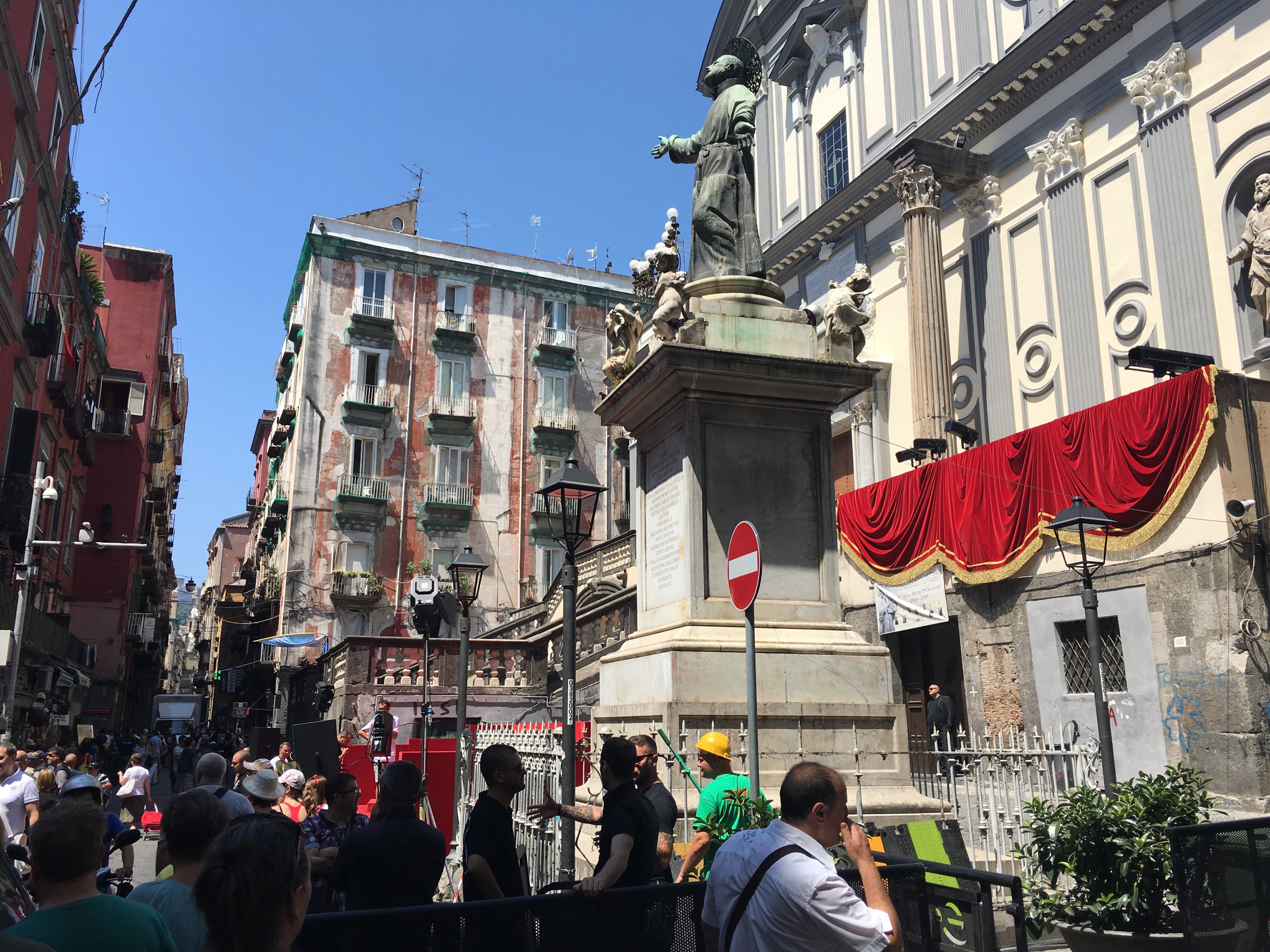
It was the first day we walked in the older section of Naples — a sprawling metropolis at the base of Mount Vesuvius on the Mediterranean coast — when I began to feel this history pressing in the air all around me.

I say sprawling because Naples is today the most densely populated urban centre in all of Europe; some 8,500 people inhabiting one square kilometre in a metropolis of nearly four million people — making it the third largest city in Italy, and the ninth most populous urban area in the entire European Union.


The noise was overwhelming: the hustle and bustle of pedestrians, car horns beeping, motorcycles and mopeds buzzing, shouting street vendors, impassioned conversations, two-toned emergency sirens, barking street dogs, screeching tires.

In conrast, the neo-Gothic styled ‘duomo’ in Naples offered a welcome break to this outside clamour. 

The expansive interior spaces of this main cathedral embraced silence and only hushed speech. You could occasionally hear the squeak of rubber-soled shoes and someone dropping a book on the stone and marbled flooring as people sat and wandered solemnly throughout the holy spaces.

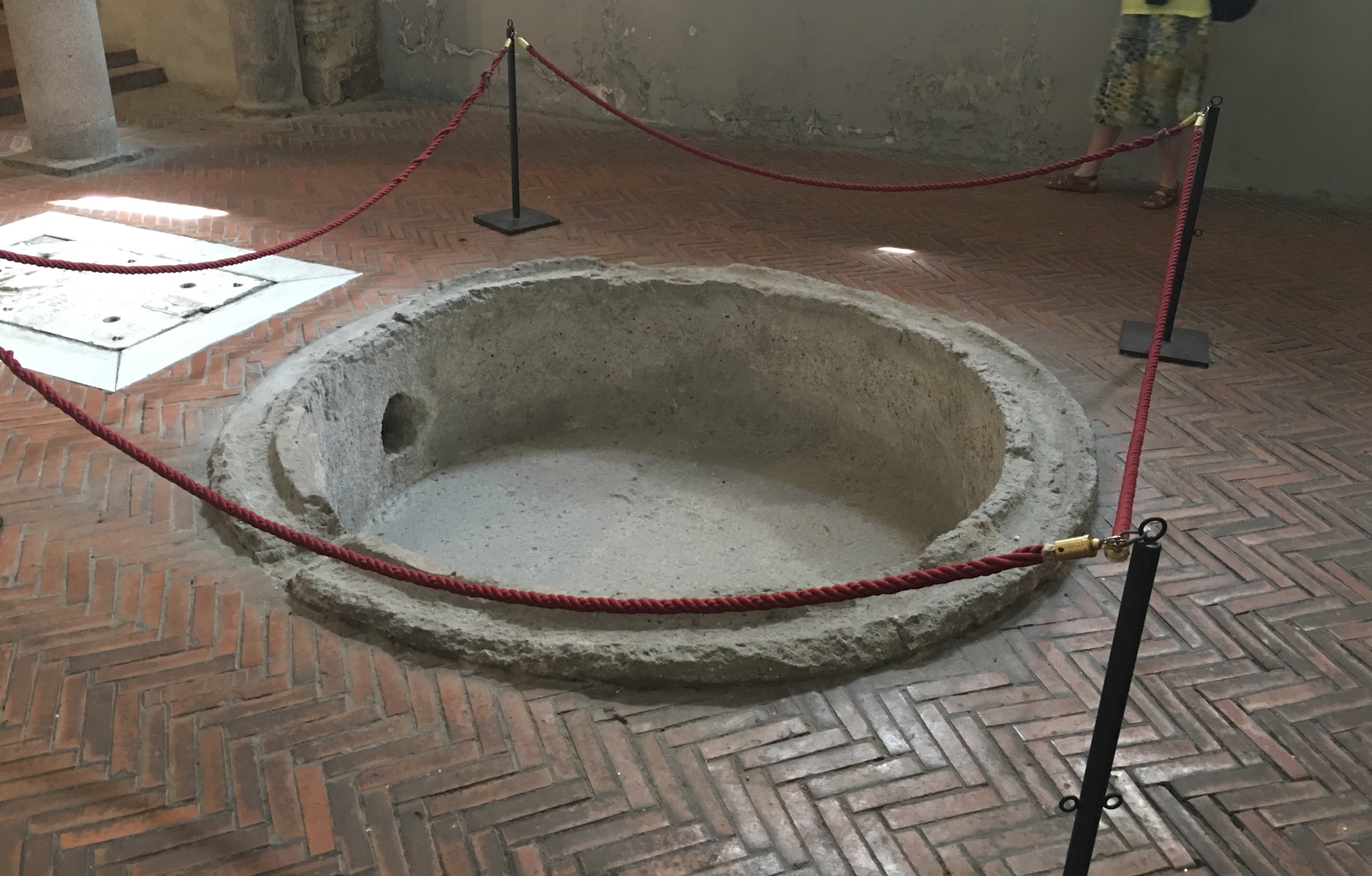
Perhaps the most significant feature of this cathedral is the baptistery, which is the oldest baptistery in the world, built in the fifth century, C.E. It is remarkable to connect with such an ancient symbol in a material form. 

When the baptized emerged from the water, looking upward at the ceiling, they would be encouraged in their faith; the first images they saw after being baptized were scenes from the Gospel expressed in Byzantine, mosaic art: Jesus saving Peter from drowning, the women at the empty tomb, the miracles of the multiplied fish, an image of Saint Paul, the Apostle, etc.

Seeing with my own eyes and touching with my own hands this font that was built by human hands only a few hundred years after Jesus, affirmed my conviction in the longevity and validity of the sacrament which has endured as profoundly meaningful for Christians throughout the millennia. 

I felt that faith is not just about the good old days when I was young, but the good old days when the Christian faith was younger. We are part of something much larger than our immediate reality. And, when we connect with that broader history, we realize it wasn’t always peaches ‘n cream and rose-coloured a history.

If you are movie watcher, you might recognize another cathedral we visited — the Duomo in the Umbrian, medieval town of Orvieto. 


This cathedral was featured in the opening scenes of Under the Tuscan Sun. This cathedral’s highlight is the Chapel of San Brizio, featuring Luca Signorelli’s brilliantly lit frescoes of the Day of Judgment and Life after Death. 

Although the frescoes refer to themes of resurrection and salvation, they do so through images not from the bible (that is, stories from the Gospels or Old Testament) but from the turbulent political and religious atmosphere of Italy in the late 1400s. Signorelli told the story of faith through his contemporary human events, rather than the traditional symbols (such as Jesus, God, the Trinity, the Apostles, disciples and other biblical characters) that we see in most other places.

Those frescos in the Orvieto cathedral chapel were snapshots of an historical era particular to a specific time and geo-political reality (i.e. 15th century Italy). And the impression of faith put ‘on it.’ Historical to us. Yet current to those who built that Cathedral in the Midlle Ages.

Faith is more than merely appealing to our past. Coming to worship today is not just about being reminded of something or someone from a long time ago. What we do here today is not just an exercise in recalling historical facts. As if decisions we make today are really not about faith. When we talk about our building renovations, worship practice and art, musical choices, communion, budgets, outreach initiatives  — these issues are very mcuh about the Christian faith ‘in the real world’, so to speak. All of these real things do reveal what we believe in, our values, what is important to us, who we are. How do these ‘mundane’ decisions reflect the Christian Gospel, faith, kindgom values in this time and place?

Lutherans make a similar mistake, I believe, when we define ‘Lutheranism’ as a belief/doctrinal system that is limited to the words and conceptual formulations of sixteenth century Germans. When we say that to be Lutheran is merely to ‘turn the clock back’ to 1537 when the Book of Concord was finally assembled including Luther’s Small and Large Catechisms, the Augsburg Confession, and the Apology to the Augsburg Confession.

I prefer a view that is reflected in the Evangelische Kirche Deutschland’s (EKD) logo for 2017, “Celebrating 500 years of Reformation”. Five hundred years of Reformation. In other words, Reformation started happening — in our tradition — with Martin Luther, yes. 

But, Reformation continued through the 500 years following, and continues to this day and beyond. We are always reforming the forms and means by which we express our evangelical, Gospel-centred faith. Always finding new and creative ways to tell the story of God.

What can we say, then, about Christian history? If we can apply a macro view over the ages, we can say that the history of the Christian faith is about a God who loves us. Christian history is about a God whose compassion never fails, who “will not come in wrath” (Hosea 11:9) — even though the people of God continue to keep “sacrificing to the Baals and offering incense to idols” (v.2).

The history of the Christian faith is about our lives being “hidden with Christ in God”, being “revealed with Christ in glory” (Colossians 3:3-4), dying daily to ways of sin and being renewed daily in Christ who “is all and in all!” — even though we are imperfect and sin as long as we hold breath. Christ is all and in all — despite us!

The history of the Christian faith is about how each moment of history — including this one right now — reflected Jesus’ love in the fifth century, the fourteenth century, the 21st century in Palestine, Egypt, Italy, Canada, etc. God for all times and places!

We validate the Christian faith by our lives today, now. This is where the rubber hits the road. This in-the-moment approach fuelled the generosity of medieval Catholicism represented in the magnificent building projects for worship as much as it did the passion and commitment of European Christians during the Reformation era.

We do not leave the practice of faith for some distant, utopic and dreamy future. Neither do we rest on the laurels of the tremendous sacrifices made by our forebears in Canada. 

Now is the time. Now is the time to live out of the conviction of God’s grace and love, despite the many and various ways Christians have messed up in history, and continue to do so today. Now is the time to live out of the faith that is full of hope, that despite our waywardness and unfaithfulness, God is faithful. Now is the time to claim God loves us, not because we are good, but because God is good. God is so good!

You know Jesus’ familiar exhortation, most often translated as “be perfect as your heavenly Father is perfect” (Matthew 5:48). Christians have often interpreted this word ‘perfection’ as being made whole. 

A much better translation might be: “be merciful.” Because this verse comes right at the end of a passage calling Christians to “love your enemies” (v. 43-48). Only God is perfect. But we can participate in God’s perfect mercy, God’s all-inclusive and impartial love.

Echoing Saint Paul’s words from the Epistle today (Colossians 3:11 — “Christ is all and in all”) St. Bonaventure later said, “Christ is the one whose centre is everywhere and whose circumference is nowhere.” [1] 

Christ’s mercy is everywhere evident in history. This is the Wholeness, the forgiveness, the grace, that holds you forever and everywhere. You can’t figure this Wholeness out rationally, nor can you control it. All you can do is fall into this Wholeness that holds you when you stop excluding, even the dark parts of yourself. [2] And that, my friends, is the Gospel — good news — for all times and places.

Thanks be to God!

1- Alan of Lille, ‘Regulae Theologicae’, Reg. 7 as quoted by Bonaventure, translated by Ewert Cousins, “The Soul’s Journey into God”, Classics of Western Spirituality (Paulist Press: 1978), p.100

2- Richard Rohr, “Daily Meditation on the Spirituality of Imperfection” Week 2 – Perfection of Wholeness, Thursday, July 28, 2016

Easter: Jesus on the loose, now!

A mother was putting her young, eight-year-old girl to bed one night. The girl, accustomed to saying her prayers as part of her bedtime ritual, said to her Mom:

“I want to die so I can see Jesus.”

Taken aback, the mother realized in that moment that everything her daughter had heard to that point about Jesus was about eternal life — how Jesus came to earth to save us from our sins so that after we die we will go to heaven. 

No wonder the girl, who had faith, thought that the only way to see Jesus was to die first.

Quick thinking, the mother put her hand in her child’s, looked her in the eye and said, “Jesus is alive. Jesus lives in you and in me. If you want to see Jesus, look for him in the people you meet in the church, in your school and wherever we go. If you want to see Jesus, sweet child, just open your eyes. And live your life!”

Jesus is alive, today. Right now. That is the message of Easter. And the foundation of our faith as Christians.
A few weeks ago the Jewish Rabbi who met with our confirmation class answered a question about who he thought Jesus was. His answer made me think. He said, “Jesus was and is a very important and significant person for Christians.”

I wondered if someone asked me, “Who is Jesus?”, what would I say? I think my first response would be: “Jesus is alive.” Not dead. Not just a great teacher who walked the earth over two thousand years ago and died a criminal on a cross outside Jerusalem. Not just a healer of the sick and prophet who spoke God’s good news to the people of his time. All those things, yes. But more. So much more.

You notice the traditional Easter acclamation is NOT: “Alleluia! Christ was risen! He was risen indeed! Allelulia!” He IS risen!

When we come to worship God, we are not just praising a man from the past, studying an important historical figure, or reading a great story from history. We are not just about being a bunch of ‘talking heads’ who like to debate religion, theology and doctrine, but go on living as if nothing really needs to change in our lives in this world, today. 

We cannot turn this great story of Jesus’ death and resurrection into a platitude that just makes us feel good on a holiday long weekend in Spring. There’s too much at stake. The Easter proclamation means something for our lives today. Our job is no different from the first disciples who met the risen Jesus.

Jesus, outside the garden tomb, had to shift Mary’s focus away from the past to the future. After calling Mary’s name, Jesus rebuffs Mary’s attempt to ‘hold on’ to Jesus as if he were the same as before he died (John 20:17). In that encounter with Jesus, Mary learns from her Teacher that she is being caught up into a larger drama that includes not only Jesus’ death and resurrection, but also his ascension — and beyond!

In other words, Mary learns that this is not merely a story about the re-union of friends with tears and hugs all around, case solved. It is about ultimate destinies: (1) Jesus’ and Mary’s — and the disciples’ destinies too. The story has not concluded; it is still unfolding. She must relate that to the rest of the disciples. Her story, and Jesus’ story, his experience and hers, cannot be anchored in the past. The story of Jesus, then and now, must move on.

That’s where our sights are focused on Easter morning. Where are we going? Where are you going, in your faith? The promise of new life in Christ Jesus means something special for you, now. It means something very special for the church, today. To live out of the Easter message, we must look forward, to where the risen Jesus awaits our following.

It seems so many people these days are reading Rumi, the great 13th century Sufi poet. Sufi described an image of a mirror in the hands of God. It fell, and broke into billions of pieces of glass strewn all across the face of the earth. Everybody took a piece of it, and thought at first they had the Truth — the whole Truth, and nothing but the Truth.

Let’s imagine that each shard represents a unique reflection of God’s being, God’s will, God’s presence. Let’s imagine that each piece of glass represents one who has faith. Each piece of glass reflects the beauty and light of God’s creation, manifest in the individual person or congregation — however you want to look at it.

God is, over time, restoring all the pieces back into wholeness, into the original mirror. God also seeks our cooperation in mending what has been divided. 

We are like that little girl who wants to see the face of Jesus. And is learning that we don’t have to wait until we die, to experience a fullness of the Lord’s presence. Using the words of the Apostle Paul, We may see as in a mirror dimly while we live on earth (1 Cor 13:12), for sure. But slowly, surely, God is also already at work reflecting the love, the light and presence of the living Christ in each and everyone one of us. Who in gospels was not changed after encountering the Lord?

We are, as Paul also describes, the “Body of Christ” (1 Cor 12:27), on earth. The tradition of Christianity since the Resurrection of the Lord has claimed that the church together is the Body of the Living Jesus. We are the living representation of Jesus on earth. As Martin Luther stated, in our baptism we are “little Christs”. 

Jesus is on the loose! Jesus can show up as a cashier in the grocery store, the young man who changes the oil in our car, a coworker in the office, our doctor, a good friend or even our spouse, child or grandchild. You may even find him looking back at you in your bathroom mirror! (2)

Paul concludes, “All of us … are being transformed” (2 Cor 3:18). God is already at work, in the power of the resurrection, healing what has been broken, bringing together what has been divided, restoring to completion a glorious transformation of our very lives. This is our hope. This is our Easter joy.

Alleluia! Christ is risen! He is risen indeed! Alleluia!


(1) Gregory A. Robbins & Nancy Claire Pittman in David L. Bartlett & Barbara Brown Taylor, eds., “Preaching the Revised Common Lectionary: Feasting on the Word” WJK Press, Kentucky, 2009, p.377

(2) Sr Bernadette Gautreau, “Jesus is Loose!” in Holy Week Reflections 2016 published by On Eagle’s Wings, p.9