Love: The Body speaks

I jumped out of bed Labour Day Monday ready for action: I had my traditional ‘to do’ list around the house, tasks reserved only for that most auspicious of holidays: Labour Day. Neatly positioned at the beginning of a new school year, Labour Day promises the beginning of a new season of programs, commitments, work, setting goals, ideals and visions of our aspiring.

I only did certain jobs on this day of the year. You know, like Spring cleaning, these were things that needed to be done once in a while, but aren’t really activities that are particularly pleasurable, to say the least. So, I put it off to Labour Day. I need that annual calendar day to help me stay disciplined. And that is good.

One of those jobs was cleaning the HRV – the Heat Recovery Ventilator. This is the contraption attached to the furnace that recycles the air in your house. On the sticker inside the ventilator, it suggests that the filter should be cleaned once every three months. Yeah, right. Who has time for that?

So, on Labour Day every year, I dutifully remove the heavy box containing the filter, and hose it down. I wash the spongy fabric and hang to dry. I meticulously wipe out the interior of the ventilator with a damp cloth. I vacuum out all the cobwebs, dead wasps, flies and dust mites. I use pipe cleaners to clean the plastic, transparent drain tubes. And when everything is done I put it all back together. Usually it takes me a couple of hours. And then it’s on to the next item on my Labour Day ‘to do’ list. You get the idea.

I knew I had a full day’s agenda of those odds and sods sort of jobs.  Jess and I had just pulled the stove away from the wall to clean the floor underneath (yuck!) when all-of-a-sudden the doorbell rang.

With beads of sweat trickling from my forehead stinking of sweat in dirty clothes, I looked up with ‘surprise’ at who was smiling and waving through the front door pane: my parents-in-law! They were inviting us out for lunch at the local truck stop.

With herculean effort to switch gears and rush into ‘receive-and-respond-to-guest’ mode, I quietly complained to Jess in the bathroom as we quickly washed up that I didn’t appreciate this interruption to the day’s agenda of hard work. Likely all the work wouldn’t get done. And how long were they going to stay at our place after lunch? Throughout the lunch hour I fought the impulse to be resentful and angry at this unplanned, unwelcomed intrusion to the important Labour Day work.

Nevertheless, have to say I enjoyed lunch out. It was a treat. And the conversation helped take my mind off other pressing matters. After only about an hour, we came home, and my parents were off to complete errands. I was surprised by how just one hour of gift, of grace, of unscheduled act of love actually gave me the energy to finish all my Labour Day tasks in a shorter amount of time than I had originally anticipated.

Love has a way of doing that. Love does not steer clear of the structures, agendas, immediacies of our lives. Love does not exist on some surreal, other-worldly plane, dis-associated from ordinary life. Love is not a fantasy trip. Love operates right in the middle of the messy, honest reality of our lives.

We call it other things, which leave us empty:

Whenever we project our wants onto something or someone we don’t have. We delude ourselves in believing we will experience love when we yield to this mirage of desire. This is the ego’s impulse. But if we are honest, getting what we want only sets the ground for wanting more and more. This strategy for life is a prescription for perpetual unhappiness bereft of true joy, because pursuing this frantic desiring is predicated on the assumption that it is never good enough. We are always wanting what we don’t have. Wanting and desiring do not fulfill love.

Neither does the law. We skim the surface of love when we try to please God by merely following the rigor of the law. This is the ego’s attempt to prove one’s self-worth by measuring it up against some ideal. But if we are honest, this effort at loving God and others is really self-centred and only exposes our failure to live up to that ideal. This strategy for life can lead to a stifling legalism, judgmental attitudes towards others and self-hate. Our success at following all the rules is not love. Paying attention to another person is. “Love is the fulfilling of the law,” Paul writes.[1]

Love is free. It is not bound by our ability to control outcomes. Love happens when we are not in charge. Love is a gift, given and received freely. There is no guarantee, from our human perspective, that all our good efforts and good works will make things right. Author and teacher Belden Lane writes: “We love and are loved by God in the act of relinquishing every guarantee of love.”[2] In truth, when we stop our striving if only for a moment, when we release our need to be in control, then we are in the position to experience God’s grace and love. Through others. In ourselves. And from the least expected of places and people. Indeed, as C.S. Lewis expressed, we are surprised by joy.[3]

The ego doesn’t like this because the ego wants to get in the way.  But, love is expressed to another without preconceived expectations of what the other person needs. Love is expressed without giving what we imagine to be best in the situation for them. True love is not striving for what particular results we want to engineer in a relationship. True love, as Belden Lane describes so well, is “a love finally purged of the ego’s calculating desires, a love without strings.”[4] We simply be with the other, and listen to them. And go from there.

Love starts here. It is hard work to love. It is a labour of love – for self, others, creation and God. And it is a work in progress – a journey – that can last a life-time and beyond.

Paul continues in the Epistle text for today, that we are to “make no provision for the flesh, to gratify its desires.”[5] Here, it is helpful to substitute the word, ‘ego’ for flesh. Christianity is an incarnational religion. God is, for Christians, a human being in Christ. The divine entered humanity. God knows the human body intimately. We do our faith a dis-service when we neglect, shame or deny our physical bodies as well as the human dignity of others. Our flesh is not bad. Your physical body is, according to Paul, “a temple of the Holy Spirit.”[6]

We exercise the love of God by paying attention and listening to our own bodies and paying attention and listening to the suffering of humanity all around us. “The glory of God,” Saint Irenaeus said in the 2nd century, “is the human being fully alive.” We celebrate human beauty and strength, yes, but also not ignore its pains.

I sat alone in the Bilbao hotel room looking at my body. On the surface, everything looked fine. Even great. In eight days I had walked one hundred and thirty kilometres through the Basque hills along the coast of the Bay of Biscay in northern Spain. I had even lost several pounds and buffed up a bit.

My feet were fine. So many pilgrims on the Camino de Santiago develop serious problems with blisters and tendonitis. Not I. Now, I did give regular attention to my feet: I made periodic breaks during my hiking, taking my shoes and socks off and gently, lovingly, applying moisturizing cream around my toes, under the ball of my foot and around the heels. They say foot care is paramount to the successful completion of any Camino pilgrimage. I was the poster boy for that piece of advice.

Yet, these superficial indicators did not reveal the truth of the matter. You see, even before I had left Canada to fly to Barcelona, I was coughing.

Besides the cough, I was feeling fine when I headed out of Irun at the start of the Camino del Norte, near the French-Spanish border. But eight days later, a few kilometres outside of Guernica, my right knee blew out. And, in that moment, I realized that I was in trouble. The systematic repetition of hefting my 200-pound body weight and additional 20 pound pack, leading with my right knee finally screamed protest. At first, my pilgrim friends suggested what I was thinking: A few rest days in Bilbao would renew me enough to continue my pilgrimage across northern Spain.

But after three days of rest in Bilbao, I was feeling worse. Not only did I continue to cough, all my muscles were aching not just my knee. I didn’t even feel like travelling to visit with my extended family in Germany.

My body hath spoken. And I was going to listen to it. When I saw my doctor in Ottawa a few days later, she ordered an x-ray and ultrasound which confirmed the diagnosis of pneumonia. I had, literally, ‘walking’ pneumonia on the Camino. All the medical staff, my family and friends complemented me in being able to ‘listen to my body’. And even though I didn’t realize and know how sick I really was at the time, I didn’t push it for the sake of some higher, abstract goals or principles. I came home to heal. My body was telling me something I needed listening to: Stop. Stop the frantic desiring. Stop the restless striving. Just stop. And be still, for a while.

They say the body never lies. We can deceive ourselves in our heads, play all kinds of mind games with ourselves, providing ceaseless self-justifications and employing conniving self-defense mechanisms that would confound any therapist. But what the body presents – the physical manifestation of who we are – is the truth indicator. What the body proclaims is truer than what anyone says.

Any journey towards health and love begins by paying attention to what your body is saying. And go from there. We may slow down. We may pray. We may embark on a journey to search out meaning in our lives, to explore the multi-layered regions of our hearts and souls. We may seek medical help, and rely on the gifts of medical science. We may even make major changes in our lives. In other words, we learn the truth about ourselves. Beginning with what the body says.

Someone asked me what I learned about myself during the sabbatical. You could say, I had the chance to just be myself. I experienced my humanity without the usual trappings of roles, titles and responsibilities. I met with and explored myself as a human being. I am human. Not just a talking head. I don’t just live out of my head. I live out of my body, too.

And, to be honest, I didn’t always like everything I saw, there, in my human nature. Yet, I will confess that in that mess of my humanity I re-discovered Jesus. It wasn’t so much in the usual places but in those other pilgrims I met, the help I received along the way, and in my own, ordinary self – stripped away from all the usual distractions, comforts and busy-ness of life – that grounded me in a love that endures.

Out of this awareness has grown a deep thankfulness for all the gifts of life. Gifts over which I don’t have ultimate control in having received: The gift of physical health and ability; The gift of this sabbatical – about which I express heartfelt thanks to the congregation; The gift of colleagues who take up the torch so to speak — thank you to Pastors Diane and Ted and musician, David: The gift of capable lay leaders who show remarkable abilities administratively and creatively when given a chance – Beth, Julia and Megan, especially; The gift of lay preachers who in their diverse expression reflect something beautiful about God and God’s ways – Jessica, Beth, Christa and Jann; The gift of a spouse and children who model the love of God by ‘letting me go’ for a while.

In Christianity, the word, ‘body’, takes on a broader meaning: The Body of Christ is the church, the community, the network of relationships. I am ever so grateful and encouraged. I learned another thing out of this sabbatical experience: There is love in the Body of Christ, to be sure.


[1] Romans 13:10

[2] Belden C. Lane, “The Solace of Fierce Landscapes: Exploring Desert and Mountain Spirituality”, New York: Oxford University Press, 2007, p.201.

[3] C.S. Lewis, “Surprised By Joy”, New York: Harper Collins, 1966

[4] Belden C. Lane, ibid.

[5] Romans 13:14

[6] 1 Corinthians 6:19
Dialogue sermon – Epiphany 3A

The people who sat in darkness have seen a great light, and for those who sat in the region and shadow of death light has dawned (Matthew 4:16)

The people who walked in darkness have seen a great light; those who lived in a land of deep darkness — on them light has shined (Isaiah 9:2b)

Voice 1: We confess that we sit in darkness (Matthew 4).
Voice 2: We confess that we even have the gall to walk around in the darkness (Isaiah 9).

Voice 1: Whether we are moving, or staying put, the darkness of sin clouds our vision, purpose and value in the world. We stumble and fall —
When we exclude, and draw lines of division between the haves and have-nots;
When we ignore, avoid and despise those different from us who press into our private places, disturbing the darkness and isolation.

Voice 2: We confess our longing to sit and walk in the light.
A place to be, free from our stuck-in-the-rut-ness,
free from what holds us back — our prejudices and fears.
A place to affirm and re-affirm our call.

Voice 3 (from balcony):
Bethlehem.
Egypt.
Nazareth.
Jordan River.
Wilderness.
Capernaum by the Sea of Galilee.

Voice 4 (from balcony):
The places where Jesus had his beginnings —
moving,
interrupting,
disturbing,
challenging,
calling.

Voice 1: Where are we now? What place inhabits our vision?
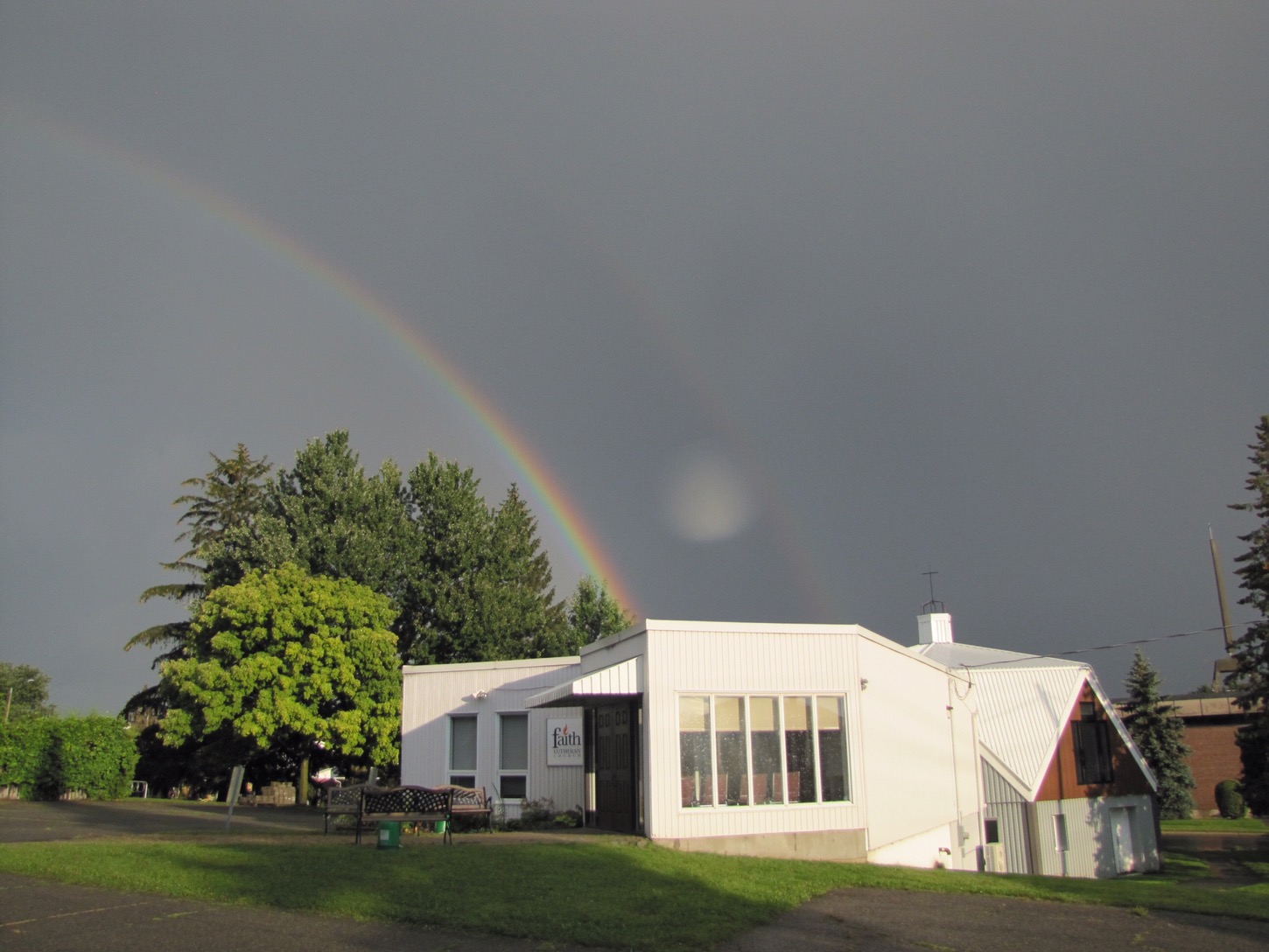
We long to return soon to our home, at 43 Meadowlands (Faith Lutheran Church).

Voice 2: We long to identify our place in the mission of God to the inadequately-housed (Julian of Norwich Anglican Church).

PLACE IS IMPORTANT.

Voice 5:
Our place in this world.
Our purpose.
Where we pray, sing, do mission together.
Where we affirm week after week who we are in Christ,
the light of the world.

In relationships, where we act boldly, and immediately, as did Christ’s disciples of old.

Jesus comes into the places of our lives to change us, challenge us.
No longer complacent,
but urgent following.
No longer passive,
but active response —

Voice 1: to the God who has, does and will continue to shine
God’s light and love in Jesus Christ
upon all who sit and walk in the darkness of the world.

The other side

In a Brazilian folk tale called, “The Little Cow”, a master of Wisdom was walking through the countryside with his apprentice. They came to a small disheveled hovel on a meagre piece of farmland. “See this poor family,” said the Master. “Go see if they will share with us their food.”

“But we have plenty,” said the apprentice.

“Do as I say.”

The obedient apprentice went to the home. The good farmer and his wife, surrounded by their seven children, came to the door. Their clothes were dirty and in tatters.
“Fair greetings,” said the apprentice. “My Master and I are sojourners and want for food. I’ve come to see if you have any to share.”
The farmer said, “We have little, but what we have we will share.” He walked away, then returned with a small piece of cheese and a crust of bread. “I am sorry, but we don’t have much.”

The apprentice did not want to take their food but did as he had been instructed. “Thank you. Your sacrifice is great.”
“Life is difficult,” the farmer said, “but we get by. And in spite of our poverty, we do have one great blessing.”

“What blessing is that?” asked the apprentice.

“We have a little cow. She provides us milk and cheese, which we eat or sell in the marketplace. It is not much but she provides enough for us to live on.”

The apprentice went back to the Master with the meagre rations and reported what he had learned about the farmer’s plight. The Master of Wisdom said, “I am pleased to hear of their generosity, but I am greatly sorrowed by their circumstance. Before we leave this place, I have one more task for you.”
“Speak, Master.”

“Return to the hovel and bring back their cow.”

The apprentice did not know why, but he knew his Master to be merciful and wise and so he did as he was told. When he returned with the cow, he said to his Master, “I have done as you commanded. Now what is it that you would do with this cow?”
“See yonder cliffs? Take the cow to the highest crest and push her over.”
The apprentice was stunned. “But, Master …”

“Do as I say.”

The apprentice sorrowfully obeyed. When he had completed his task, the Master and his apprentice went on their way.

Over the next years, the apprentice grew in mercy and wisdom. But every time he thought back on the visit to the poor farmer’s family, he felt a pang of guilt. One day he decided to go back to the farmer and apologize for what he had done. But when he arrived at the farm, the small hovel was gone. Instead there was a large, fenced villa.

“Oh, no,” he cried. “The poor family who was here was driven out by my evil deed.” Determined to learn what had become of the family, he went to the villa and pounded on its great door. The door was answered by a servant. “I would like to speak to the master of the house,” he said.

“As you wish,” said the servant. A moment later the apprentice was greeted by a smiling, well-dressed man.
“How may I serve you?” the wealthy man asked.

“Pardon me, sir, but could you tell me what has become of the family who once lived on this land but is no more?”

“I do not know what you speak of,” the man replied. “My family has lived on this land for three generations.”

The apprentice looked at him quizzically. “Many years ago I walked through this valley, where I met a farmer and his seven children. But they were very poor and lived in a small hovel.”
“Oh,” the man said smiling, “that was my family. But my children have all grown now and have their own estates.”

The apprentice was astonished. “But you are no longer poor. What happened?”

“God works in mysterious ways,” the man said, smiling. “We had this little cow who provided us with the slimmest of necessities, enough to survive but little more. We suffered but expected no more from life. Then, one day, our little cow wandered off and fell over a cliff. We knew that we would be ruined without her, so we did everything we could to survive. Only then did we discover that we had greater power and abilities than we possibly imagined and never would have found as long as we relied on that cow. What a blessing from Heaven to have lost our little cow.” (1)

This story is not a prescription for how the church or society should treat economically disadvantaged, underprivileged people — by ignoring their plight and expecting them to pull themselves up by their own bootstraps. 

Instead, I offer this story as an allegory, a parable, of whatever it is in our lives that keeps us bound, that keeps us stuck. 

The cow, in the story, represents that which the farmer believed would help them survive in the big, bad world. And without it, they would be lost.

What is ‘the cow’ in your life? Whatever you believe you cannot live without. What keeps you bound, shackled in a sense? It may not appear or even be a bad thing. It can be the ‘best’ thing in your life, you will say! And that’s point of the fable.

The cow was the only thing, the best thing, the poor family had going. In our lives, it can be the relationship we have with our work. It can be a person. It can be some activity of our lives that we think we want and need. What is the ‘cow’ in your life — things to “let go ” of, either in church life or your personal lives, that would enable the freedom of God to operate?

Letting go of over-attachment to building? Property? Material riches? Some significant aspect of your financial portfolio?Clutching on to church programs and processes that have had their day, making room for something new?

It could even be your reputation, your status, or social position. Whatever it is …

If we should lose that, why would God want that for us? And when we do lose it, we may be angry at God for taking it away from us. We may shake our fists at God, walk away in disgust and anger, never to darken the door of a church again. We may be blind to the possibilities on the other side.

In the Gospel text today (Luke 8:26-39), Jesus travels to opposite side of Lake Galilee. He goes to what I will call ‘the other side’, where the people in the Gentile territory there respond to the miracle of exorcism with fear. The man they knew to be living on the outskirts of town, out of his mind, full of demons — now sat at the feet of Jesus “in his right mind” (v.35).             

Odd as it may sound, we often prefer the devil we know to the freedom we do not. We can take a false sense of security from the patterns of our lives we learned to cope with over the years. 

And we may fear what change — even change for health — may bring. Because that would mean losing that which we have grown accustomed, even cherished, for a long time. We keep ourselves from seeing the possibilities on the other side.

The truth of the Gospel of Jesus Christ reverses the fortunes of those in low estate. The “good news to the poor” which Jesus announces in his inaugural speech (4:18) becomes a reality in the healings and exorcisms that follow in Luke’s Gospel.

But this freedom and health does not come without major disruption in people’s lives. This is the part we like to dismiss in our “feel good”, “prosperity-gospel” driven culture of church in North America. 

Because to the people whose living depended on the pigs — those pigs who ran off the edge of a cliff to their deaths — their loss is catastrophic. The swineherds in the Gospel story are understandably afraid, too, even angry at Jesus. And despite the healing, they want Jesus to leave them (v.37).

The story demonstrates that the the Gospel brings upheaval and sets in motion powerful forces that will disrupt our lives. 

At first, the good news of Jesus will not seem good to everyone. At first, our economic and social lives are put on their heads. At first, we will experience pain and suffering. We will need to surrender that which has given us a sense of security in life. 

We cannot have Easter without “Good” Friday. The cross precedes the empty tomb. The way of salvation goes through suffering, not around it. We cannot avoid pain in our journey towards liberation, healing and salvation.

The good news is the promise that there is no darkness, no loss, no pit too deep that God will not go into, in order to carry us through to the other side.

(1) cited in Richard Paul Evans, “The Walk” Toronto: Simon & Schuster, 2010, p.285-288

Bread for all

After the old doctor died, his sons emptied the house in order to sell it. In the living room on the shelf above the fireplace they found a box with a slice of bread in it.

It was dried up hard and obviously had sat in the box a long time.

“He really kept every thing!” said one of the sons amazed. The doctor’s assistant who worked for the doctor for many years stood beside the sons silently. And then said: “Let me tell you the story of the slice of bread:

“You know that after the war your dad became very ill. He was weak, and near death. A friend, who had visited him told him, ‘If you don’t eat enough to regain your strength, it looks very bad for you.’ But where was one to get enough to eat? Everyone was starving. Many simply cooked potato peels and considered it a rich soup.

“The friend returned after some hours and brought some bread. Where he found it, he didn’t say. Surely he must have paid a fortune for it.

“But your dad did not eat it,” continued the assistant. “Your dad told me to take it to the neighbour; their daughter had been ill for a long time too. ‘I am an old man already who does not need the bread as much!’ your Dad said. ‘Take it to the neighbours!’

“As it later turned out, the neighbours did not eat it either, but passed it on to a family of refugees with three little children that lived in a small shack in the backyard of the neighbours’ house. They were overjoyed for they had not seen bread for more than three months. 

“But as they were about to eat, they remembered that the doctor, who had helped their children at no charge when they had been struck by a dangerous fever, was ill and weak and really needed something that would make him stronger.

“So when the bread came back after a day,” said the assistant, “we recognized it at once. Your dad was in tears, as they found out about the wandering piece of bread and where it had been.

Your Dad had said, “as long as there is love between us – I am not afraid about anything, not even dying”. So he divided it evenly and sent me out again. His share he kept; he put it in this box to always remember what had happened.”

The three children took the old bread, broke in in three pieces and decided to keep it in order to remember the story, to tell it to the next generation, and to teach them about the power of love and the wonder of sharing.

Something like this can only happen when there is a communal consciousness — more than one person that participates in a community of love and trust. That all will have enough. That all will benefit. That the needs of the whole outweigh the needs of the one.

This is the Gospel call. The kingdom call. Not for individual enlightenment or edification. Not for our sake alone. Dear Confirmands, your baptism as a baby was not valid on account of your own individual strength or decision. It was the community — your parents, sponsors and everyone in the church long ago — whose faith surrounded you at your baptism. Even your confirmation is not done for your own sake — but for the sake of others around you.

And that’s why you participate in leading and assisting in your own confirmation service: To practice this truth, that affirming your baptism is a call to deeper commitment in the life of the church. You may doubt the strength of your faith. That’s ok. In fact, I would be worried if you didn’t. God can work with just a tiny bit.

I must admit when we planted that tiny four-inch tall spruce on church grounds last Fall, I didn’t have a lot of hope that it would survive the winter. This was our first tree planted in response to the Reformation challenge for our national church to plant 500,000 trees by the end of 2017 — the 500th anniversary of the Reformation. It was a small tree. A humble start. Could it live, and even bear fruit? I had my doubts.

For one thing it was exposed, and not easily visible, to the many pedestrians that use this property to cross through and the many children who play in this space. For another thing, since receiving the sapling, I had not seen signs of new life on it. So I wasn’t sure it there was anything new to come out of it.

I was in for a pleasant surprise. Throughout the coming months, our neighbours put a tall chicken-wire type fence around it and staked it. We watered it. People walked around it. God took care of it over the cold winter. And voila, look at the new shoots of life sprouting now! There is hope.


It does take a community committed to sharing, committed to kingdom values, and the Gospel of Jesus Christ. Today is just as much about celebrating the church of all times and places as it is about our part in the kingdom of God on earth. We are not loners on this path. We don’t walk by ourselves. It’s not all up to us, individually. 

It’s amazing to see the fans of “We the North” cheer on the Toronto Raptors as they advance through the NBA playoffs this post-season. They are true fans who gather in “Jurassic Park” outside the ACC in downtown Toronto, even during away-games in the pouring rain. You might say, they are ‘fan-atics’ of their team. 

Yes, fans can be fanatics — exuberant, dedicated, passionate, sometimes even over-the-top. Imagine the fans in heaven — the faithful gathered as the grand host of heaven, cheering you on this day. These may be your loved ones, long gone now, or recently died. These may be the saints throughout the ages. These may be other Christians not here today yet praying for you nonetheless. These are your fans of faith. Fans. Fanatics. Fantastic!

You are not alone, making this decision today. Pentecost, and Confirmation Sunday, is also about trusting in God’s initiative, God’s work, God’s love and mercy. Through the Holy Spirit God comes to us in so many ways we sometimes don’t even recognize. 

In a few minutes, God comes to us in bread. This bread, the body of Jesus, is broken bread. It is broken from the One, so that all may eat. There is always enough for all, for the sake of our broken lives in this broken world that God so loves.

The gift of the White-breasted Nuthatch

I walk quickly. In the first hour of walking I can manage 6 kilometres. Pretty impressive, eh? Well, I was zipping through the treed park near our house the other day when I heard birds rustling and chirping in the branches above me. 

I stopped when I noticed a small bird scampering down the trunk of the tree head-first. This tiny bird caught my attention. It had a disproportionately long beak, a black cap and a white breast. I memorized the details of what I saw, and scurried home to consult my three, different bird books.

It was a White-breasted Nuthatch. I was so thrilled to have made that identification. I love birds, and I enjoy the challenge. Most of the time.

I’m by no means an experienced, knowledgeable birder. Because most often I forget the names of the birds I identify or mis-identify. Because I don’t carry around with me my bird books and note pads wherever I go, I have to hone my skills of observation and memory. There are times even when my bird books don’t display sketches or photos of what I think I saw. That’s really frustrating!

When Paul and Silas were thrown into prison after being flogged for disrupting the peace, their future was uncertain at best, an absolute failure at worse (Acts 16:16-34). They were done, or so it seemed. The prospects of continuing their missionary journeys looked bleak no matter how you looked at it. What could they do?

I bet no one expected that earthquake to come when it did. A natural disaster always comes unexpectedly. The severity and life-changing magnitude of an earthquake, for example, cannot be predicted. It’s only after-the-fact when assessments and conclusions of what happened can be made. 

No one could see it coming the way it did: The fires in northern Alberta around Fort McMurray, despite the dry hot Spring, could not be predicted. Who could forsee precisely how it’s actually played out, and continues to play out? It just happens. And people have to react to the moment, when it does.

Despite the life-changing magnitude of events unfolding around Paul, he still seems to find stride in his faith, and yes, even joy. He shows resilience in faith. Despite all the losses, earthquakes, imprisonments, floggings, shipwrecks, rejections, threats on his life, thorn in his side — he still demonstrates an incredible passion for, dedication to, and joy in his life in Christ.

They are in the Roman colonial city of Philippi when Paul and Silas are arrested. Paul’s famous letter to the Philippians was written, later, when Paul sat in a Roman prison cell. And it is in this letter where we find some of the most joyous and aspirational words from Paul’s hand: 

“Rejoice in the Lord always; again I will say: Rejoice! Let your gentleness be known to everyone. The Lord is near. Do not worry about anything, but in everything by prayer and supplication let your requests be made known to God. And the peace of God, which surpasses all understanding, will guard your hearts and your minds in Christ Jesus.” (4:4-7)

Paul is instructing his good friends in Philippi, and followers of Christ in all times and places, to rejoice — not when everything is perfect, not when your problems have been resolved, not when certain conditions have been met, not when we are prepared for rejoicing, not even when the stars are aligned.

But, to rejoice, precisely when things are chaotic and messy. Rejoice, precisely when things are not going well, nor planned, nor pre-conceived, nor forseen. How is this even possible?

When installing our new dishwasher recently, I screwed clamps into the cabinetry on both sides. Tightly.

When I ran a cycle for the first time, water started streaming out the side of the door. It’s as if the door wasn’t even sealed! I discovered later that because I had fastened the clamps too tightly, the whole unit twisted and warped the door in an unnatural way and therefore could not seal properly and do its job. 

As soon as I loosened the screws a bit so that the dishwasher could rest naturally, evenly and squarely on the floor, everything worked fine.

Indeed, to be faithful is to know how to celebrate, even in difficult, unpredictable times. Trying too hard without a break can actually damage our commitment in faith. 

When things don’t go well, is it that we are trying too hard? Or believe the solution is simply to work harder? And then do we get all tense, anxious, impatient and frustrated when nothing in our power seems to work or when things don’t always go the way we planned? And we don’t ask for help. Or recognize or confess openly our limitations. Who do we think we are?

Especially during the long journey of a dark night of the soul, it is vital for our health to pause from time to time, loosen the screws, and lighten up a bit. Doing so will improve our endurance, open our hearts, deepen our trust in the good Lord who comes to us, who is alive and lives in us.

It is the freedom of God who comes to us, quite unexpectedly. Like the gift of the White-breasted Nuthatch. All I needed to do, was to stop my rushed march through the woods. Stop my over-thinking, incessant mental machinations. 

Just stop, and look up.

Better is not what you think

What happens when doors close and we don’t see other doors open? Life is full of closed doors: unemployment, failure to graduate, illness, tragedy, lost friendships, divorce — the list goes on. What happens when you are stuck in the middle of that transition and can’t see a way through? For whatever reason, doors close. The fact we sometimes don’t know why may make it harder to take.

Paul wanted and “attempted” to go to Asia. The lectionary doesn’t include the verses (6-9) immediately prior to the first text today (Acts 16:9-15). For some inexplicable reason, the Holy Spirit “did not allow” Paul and his cohort to travel there. A door is closed. 

But you’ve heard the cliche: When God closes a door, another one opens. Which is, presumably, a better deal.

After the door to Asia, and Paul’s ‘wants’, closes, he then goes to Macedonia after a convincing vision and on to Philippi where he meets Lydia. The result of their encounter is that “she and her household were baptized”. Good things happen. This open door was a successful mission. Even though, originally, this mission-field was not for-seen, planned, even desired.

The church finds itself in an uncomfortable situation these days. The glory days of ethnically-defined church planting and building are long gone. We still yearn for those good-old-days, the hey day of the kind of church we still try to maintain when Lutherans from Germany were streaming off the boats, church budgets were growing and pews were filled. For the institutional reality, it feels like a door is closing. And we don’t see a clear picture of what it is changing into.

It’s not a comfortable place to be, when doors close. Where’s the open door?

Earlier this year a couple members of a Lutheran church in Southern Ontario, decided to partner with a neighbouring church to organize a refugee sponsorship initiative. They complied with all the regulations, began a fundraising appeal, and the word got out.

Before long they had attracted fourteen people from the community to work alongside them. They found unprecedented success at mobilizing resources and motivating people to help. Tens of thousands of dollars was raised in no time. An apartment was secured and furnished without problem. A Syrian family was on the way.

The Lutherans on the committee made sure their own congregation was brought up to speed with regular reports, appeals for help and updates. To their surprise, and dismay, all but a couple on that growing committee were members of their church.

The gentleman who had initiated this refugee work lamented to one of the Synod staff who was close to the community, “What’s the point of doing all this work, when the people working on the committee don’t come to church on Sundays and put offerings in the plate?”

“Are others aware you are a Christian from a local congregation?”

“Are people being helped?”

“Is good coming out of all your efforts?”

“Are you doing this from your conscience as a Christian?”

“Do you feel God is calling you to do this work?”

All these questions were answered in the affirmative. So, what’s the problem? Maybe a door is closing, and maybe another has opened? It just isn’t what we may expect or think we want. The Holy Spirit is active in the world and among people. The question is, are we willing to walk through that open door? Congratulations to that Lutheran who took the initiative to do something when there was a need.

When a door closes, it can feel like you are unprepared for whatever may be. In life transitions, especially, the in-between ‘close door / open door’ time can be unnerving. When a baby is born, for example, no manual comes out with the baby. Being a parent is feeling your way to make decisions with each passing moment. Preparation — you can throw that out the door!

Of the top three major festivals of the church year, the Day of Pentecost comes up almost unexpectedly. Did you know it’s two weeks from today? Unlike Christmas and Easter which have long weeks of preparation (Advent and Lent, respectively) leading up to these high, holy days, Pentecost does not.

We only have Jesus’ words in the Gospel of John (14:23-29) to his disciples, these days, preparing them for his departure. And giving the promise of the Holy Spirit.

Occasions like this should be sad, unnerving, disquieting, too sudden. And, on some level, it is. It cannot be denied. After all, the disciples will no longer have Jesus physically present with them any more. In a way, they are losing something precious and dear to them: their leader, their confidant, their friend. The common reaction to a loved one’s leaving is sorrow and despair. We can understand. Sympathize.

And yet, Jesus tells them to “rejoice” that Jesus is going back to the Father. Be glad, that Jesus is leaving them? It doesn’t make sense. Be glad, that you are going? – You can probably hear the disciples murmur under their breath, trying to figure it out.

In coping with his absence, Jesus nevertheless gives them something even better. The door of his physical presence is closing. But another, better door, is opening. This is unexpected, never-before-seen, and unplanned (from the disciples’ point of view):

After he leaves, Jesus’ presence will be within them: Earlier in this chapter (v.20), Jesus says: “I am in my Father, and you in me, and I in you.” Through the gift of the Holy Spirit, they will have the power and the grace to do great things in the name of Jesus. “Very truly, I tell you, the one who believes in me will also do the works that I do and, in fact, will do greater works than these, because I am going to the Father” (14:12).

In order for the new door to open, the old door must close. The only way the disciples of Jesus can receive the Holy Spirit and do and be all that they are meant to be and do, is only after Jesus leaves them and returns to his Father in heaven.

The promises of God are rich. We may not see the outcome or how it will all turn out, in the end. Yet, it is true: Once a door closes, another will open. And it will not be what we think. It will be better!

Prayer: “Help”

When I heard this prayer I thought it related well and in a humorous way to how well we follow the ‘rules’ of our faith:

“Dear Lord, I am happy to report, so far this day has gone well: I haven’t coveted anyone their belongings; I haven’t harboured ill-will to my neighbours; I haven’t spoken hateful words or done anything out of spite to harm anyone; I want to help out in the church food-bank this week; I’m even praying to you now! I am thankful that this day has been going so well, Lord. But I think I’m going to need some help, once I get out of bed. Amen.”

Indeed, how well do we follow the commandments of God? The very act of getting out of bed almost guarantees we will make mistakes no matter our good intentions. It is our common humanity.

One of the functions of the Law, from a Lutheran point of view, is to make us realize that we totally depend on the grace of God. Let’s be honest. We need help, and we can’t do it on our own. No matter how hard we try, we will always miss the mark and mess up in some way. If there is anything good that comes out of our work, it is a gift and a grace.

This morning’s Gospel (John 13:31-35) was also read at the Maundy Thursday liturgy last month. Maundy means the commandment to love. It is fair to say that these words of Jesus capture the essence of who we are called to be and what we are called to do: In all we are called to be and do, is to personify love.

In this love, we see the glory of God. Glory. A statement attributed to Saint Ireneus of the early church comes to mind: “The glory of God is a human fully realized”. 

I take that to mean that God’s glory is not something other-worldly so much as something discovered in the ordinary, real, weak, broken life of a person who is able to receive with open heart the gifts of another, the gifts of grace and love. That is the glory of God. So intertwined with Jesus’ suffering as a human on the night of his betrayal (v.31-32), when Jesus needed to depend on his Father.

Faith is not just about believing and thinking doctrines and dogma, it’s more than that; it’s not just about believing, it’s about behaving. We have to pay attention to the behaving part. We must remember something I have heard our bishops say for many years now: Those who claim the greatest truth must demonstrate the greatest love.

Peter Steinke, who has given much thought, books and workshops about healthy churches and leadership today, told the true story of mega-church pastor whose congregation in the southern U.S. was doing really well. By all counts, Pastor Chase was enjoying unprecedented success in his vocation. 

And yet, he had confessed to Steinke, he was suffering from a malaise of the spirit. You could call it, a crisis of faith. Chase was losing a sense of personal direction in his work. 

Hearing about his struggle, a brother-in-law who was a member of a Franciscan order invited Chase to visit him in Italy. And so, Chase took his leave and spent that time resting, reading and visiting his extended family. 

Nearing the end of his time away, the brother-in-law invited him to come for a day to the AIDS hospice which the Franciscans managed and served the several men who were terminally ill. After working in the kitchen a couple of hours, a care-giver invited Chase upstairs to help with one of the residents. The man he looked upon was emaciated. His skin looked like it would fall off the bone. He couldn’t have been more than 90 pounds.

The care-giver greeted the man with a kiss on the forehead, and then looked at Chase: “Could you please lift him into the bath for me?” Chase carried the man and laid him into the bath water. The care-giver then asked, “Would you please wash him?” At first hesitant, Chase understood that this man needed a thorough wash. And so he did.

When they were finished and walking down the stairs the care-giver thanked Chase for his help. She indicated they were short-staffed that day and Chase had provided a real service to the hospice. “I can tell you have a Christian background,” she said. Chase responded: “It is I who need to thank you, Sister, because today I became a Christian.” (1)

“They will know we are Christians by our love,” goes the song. We have a choice to make. We need to be intentional as Christians. We cannot afford not to be, in this day and age. We can choose whether or not to love. 

We can’t save ourselves, or do anything to garner points for heaven, for we will always fall short no matter how heroic, self-giving or impressive our good deeds of faith appear. This is not about doing these things in order to make ourselves right with God. It is not about not doing anything at all. It is, however, about choosing actions that demonstrate care, compassion and love for the sake of others, and so, for God. 

It won’t ever be perfect. But that’s not the point. It is about behaviour that flows genuinely from a heart of love. And understands that all is a gift: The gift of faith, the gift of each other, the gift of community, the gift of Jesus Christ who is alive and lives in the Body of Christ, the church, and in the world he so loves.

(1) – adpated from a video entitled, “To Make a Difference”, presented in an upcoming workshop called “Apple Tree” by the Eastern Synod-ELCIC. Apple Tree is a workshop to help stimulate conversations about purpose and mission

The home of God

Every year in mid to late November since the turn of the millenium Canada has observed a National Housing Day. This Sunday, November 15, I will participate in an interfaith Prayer Service at Centrepointe Studio in Nepean (Ottawa) to mark this day and remind us of our calling as Christians as well as members of other faiths to work together in providing affordable and safe housing for all people. Please visit http://www.multifaithhousing.ca for more details on our observance of National Housing Day. Below is a draft of my words, representing a Protestant Christian viewpoint focusing on the Gospel of Jesus Christ. We will also hear voices from the Roman Catholic, Muslim, Hindu, Unitarian and Jewish perspectives.

Community singing is an important tradition among Christians. We love to sing. And the music conveys well the passion and the truth of what we are all about, as followers of Jesus.
Here is a verse, and the refrain, from a hymn that is quickly growing in my affection at this time of year:

Christ, be our light! Shine in our hearts. Shine through the darkness. Christ, be our light! Shine in your church gathered today.

Longing for shelter, many are homeless. Longing for warmth, many are cold. Make us your building, sheltering others, walls made of living stone.

Christ, be our light! Shine in our hearts. Shine through the darkness. Christ, be our light! Shine in your church gathered today. (1)

Many times in the Gospels (in the Greek Testament of the Bible), Jesus describes the “kingdom of God”. One of my favourite images is from Mark (4:32), where Jesus compares God’s reign to a small seed that ” … becomes the greatest of all shrubs, and puts forth large branches, so that the birds of the air can make nests in its shade.”

This image gives an all-encompassing, expansive vision of what God intends: a home for all creatures great and small.

Of course, the problem is, that so many people don’t have this shelter, this safety, this home. And it’s not just a spiritual reality. It’s also a material, earth-bound reality.

After all, Jesus himself was a refugee. After his birth, Jesus’ parents Joseph and Mary had to flee the threat of persecution in their home country. In Matthew (2:13) we read: “… an angel of the Lord appeared to Joseph in a dream and said, ‘Get up, take the child and his mother, and flee to Egypt, and remain there until I tell you; for Herod is about to search for the child, to destroy him.” Jesus, Christians believe, is the Son of God. And this God we worship experienced, on earth, what it means to be a refugee and to be homeless.

Elsewhere in Matthew (8:20) as Jesus exercises his ministry of compassion, healing and grace to the downtrodden, he reminds those who listen: “Foxes have holes and birds of air have nests, but the Son of Man has nowhere to lay his head.”

We are called, therefore, to care precisely for those who are homeless, who are refugees today as if we are loving God. The righteous will ask God: “Lord, when was it that we saw you hungry and gave you food, or thirsty and gave you something to drink? And when was it that we saw you a stranger and welcomed you, or naked and gave you clothing? And when was it that we saw you sick or in prison and visited you?” And Jesus answers, “Truly I tell you, just as you did it to least of these … you did it to me.” (Matthew 25:37-40)

I quote thirteenth century Saint Francis of Assisi, who said: “Preach the Gospel; use words only when necessary.” Through concrete actions of care to the homeless, Christians have a clear and unequivocal mandate that bears witness to our faith most effectively: Not through words so much as by our actions, we make a physical haven for those without. And, in so doing, we reveal the truth that the author of the last book of the Bible expressed: “See, the home of God is among mortals!” (Revelation 21:3)

(1) “Christ Be Our Light” text by Bernadette Farrell OCP Publications in Evangelical Lutheran Worship Hymn #715 Pew Edition, Augsburg Fortress, 2006

Prayer for Reformation Sunday

We give you thanks, loving God, for  your unconditional love and grace to us and all people. Help us be moved to your heart, Christ Jesus, as our motivation, our desire, our passion for the decisions we make in our congregations. By your Holy Spirit, keep us steadfast in your Word, and continue to bless us in mission for and with others, so all may have dignity and all may live in hope. Amen

You shall see the light

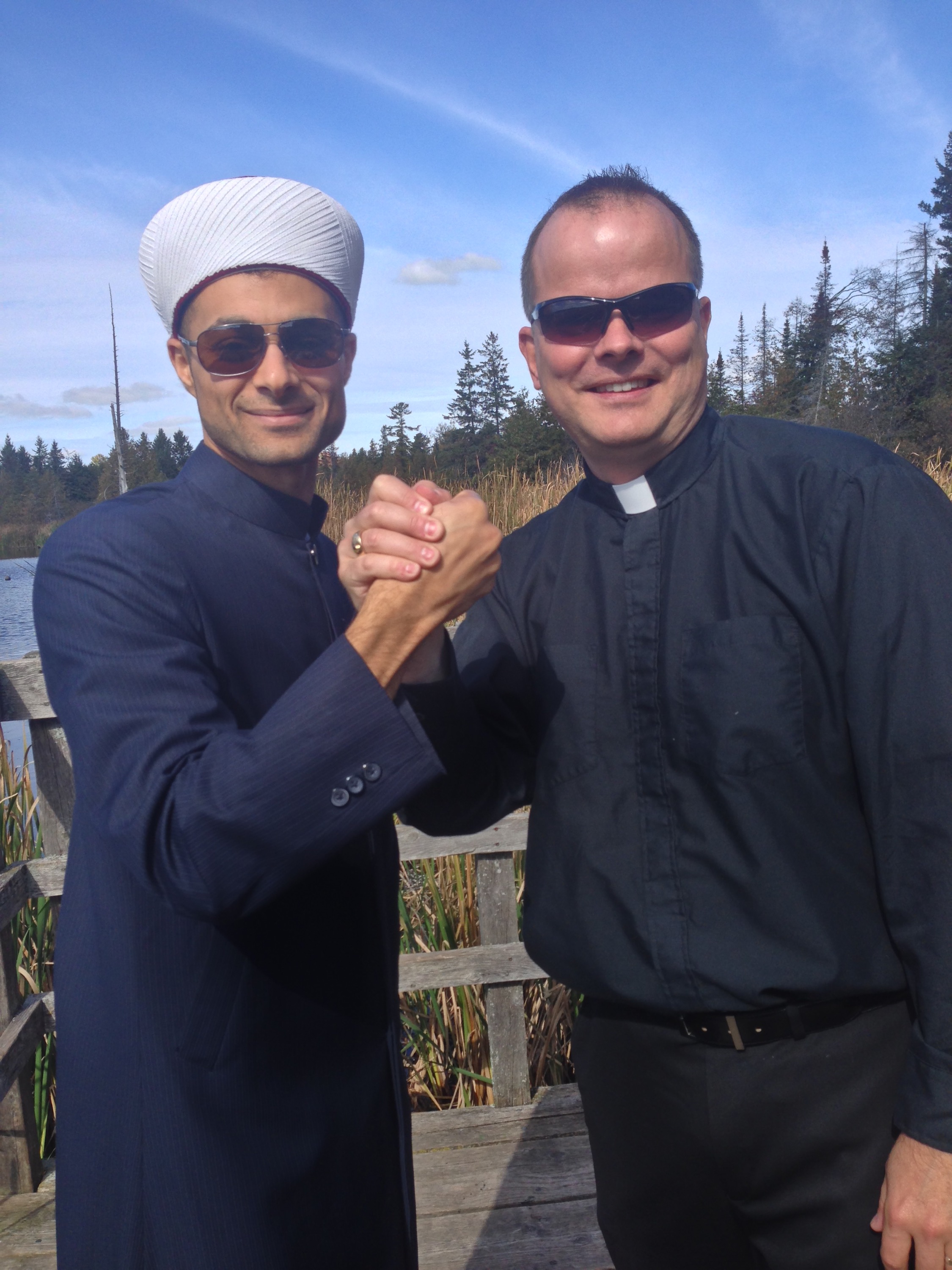
Jesus commanded that we shall love our neighbour as ourselves (Matthew 22:36-40). This commandment motivates me to participate this afternoon in the clerics’ cycling challenge (www.clericchallenge.com), initiated by Imam Mohamad Jebara.

  
Practically, then, what Jesus’ commandment means is that if you love someone, you want to know something about her or him. You want to know who she is, what he values, and how they orient their life. If you love someone, you take the time to talk to him, get to know her, and in so doing, you share yourself as well. 

  
Love shows itself in attention to another, in accepting another on their own terms — yes, and in a willingness to learn something new, to think about things in a new way, and to grow together in friendship and harmony. 

  
When I say Christians are called to love their Jewish or Muslim neighbours, for example, I mean we are called to develop relationships of mutual affection, understanding, and appreciation (Kristin Johnston Largen, “Interreligious Learning and Teaching” Fortress Press, 2014, p.59). Then, we love our neighbour as ourselves, thus fulfilling Jesus’ commandment.

  
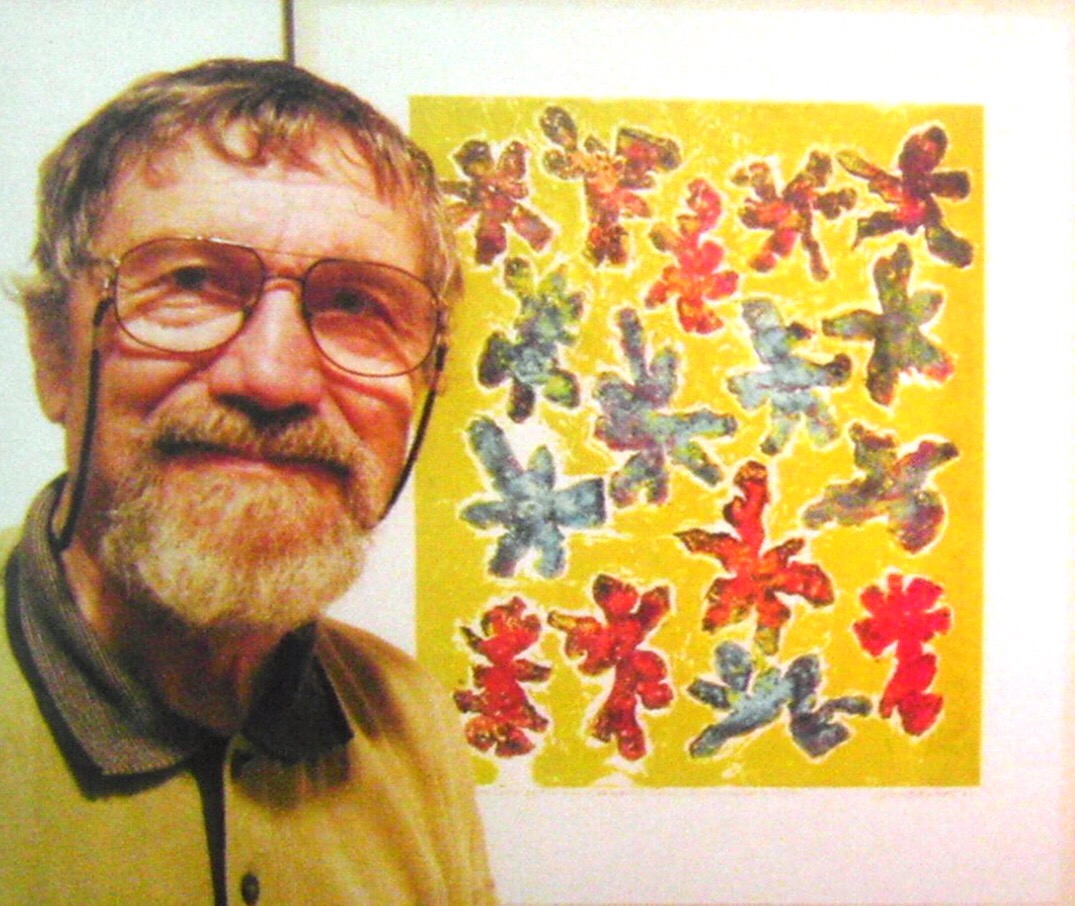
I had the pleasure of viewing some artwork this past week at the Rothwell Gallery on Montreal Road in Ottawa. The Gallery is presenting until October 24th the work of the late Leonard Gerbrandt (1942-2010) who travelled the world and created beautiful impressionistic watercolours and prints especially about the structures of various land and waterscapes. I was given a personal tour by Ute, his spouse, of the hundred pieces or so displayed in the gallery.

  
When we began the tour, she asked me to guess what colour appears and is prevalent in the vast majority of his art. With a twinkle in her eye, she confessed that this particular colour also happened to be his favourite. And so I went to work. At first, I suggested it was the earth tone greens, even maybe the rust, terracotta and orange/reds. No. No. And no.

As we reflected on one specific piece of art I marvelled how Leonard mixed the blues to distinguish sky and sea. Ute smiled, then said, it was blue indeed. I quickly travelled through the gallery looking anew at the paintings. And you know what? It was true! Now, I could see it — blue indeed found its way into almost all his paintings. Why didn’t I see that at first?

Blue, after all, is my favourite colour too (No political association, though!). And then I pondered further why I couldn’t see what had always been my favourite colour. Had I been distracted by the flashiness of other ‘colours’? Did I take ‘my colour’ for granted? What were ‘the blocks’ inside of me preventing me from seeing what was most important to me? Pride? Anger? Fear? Shame? Greed? Why couldn’t I appreciate fully the beauty that was staring me in the face, for me?

Of course, colours would not exist without the presence of light. In fact, it is how the light is represented in a work of art that brings out the textures and hues created by the paint brush. I also believe that art, like music, serves to reflect back to us an inner state — and that is why art and music can be so powerful conveyors of meaning and truth about ourselves and the world at any given moment in time.

The living Jesus is with us, and in our hearts through the Holy Spirit. The love of God propels the Spirit to move us in the the way of Jesus. And yet, we block our sight. We can’t see the light. What are those blocks that keep us from living out of our nature that is being renewed day by day? What keeps us from loving our neighbour? Is it fear of the unknown? Is it a shame that is deeply imbedded? Is it the fire of anger, the pain of regret, the poison of hatred, the paralysis of mistrust?

“Out of his anguish he shall see light” (Isaiah 53:11)

This phrase comes from a larger so-called suffering servant poem from the prophet Isaiah. Christians have read Jesus Christ into the role of the servant even though the text was originally heard among the people of Israel hundreds of years before Christ. The ‘servant’ could refer to the people as a whole suffering in Babylonian exile, or to a specific individual (i.e. Persian King Cyrus /Isaiah 45) who liberated the Israelites and led them home to Jerusalem.

This exegesis is important and we need to tread carefully in working with sacred texts that we share with our Jewish neighbours. We Christians know the sacrifice of Jesus on the Cross for our liberation, indeed for the whole world. Jesus fits the suffering servant-narrative from Isaiah. Let’s work with this.

The anguish Jesus experiences in his suffering and death reflects a God who is fundamentally relational. And God the Father, the Son and the Holy Spirit relates to us in our very own humanity. Thanks to Jesus who showed us the way not just in his divinity but especially in his very own humanity. ‘Anguish’ after all, is a human emotion grounded in love. That is, “to anguish over the loss of a loved one” (online dictionary definition).

Not only does Jesus know our suffering in a shared humanity, he feels for us because of God’s intense love for us. The author of Hebrews is therefore able to describe Jesus as the ultimate high priest, who “is able to deal gently with the ignorant and wayward, since he himself is subject to [this] weakness” (5:2). In short, Jesus helps us “see the light” because of God’s deep anguish-filled love for us. God grieves losing us to our sin, and will not stop short in going the distance — even sacrificing his own life — so that we too will see things as they truly are, in the brilliance of God.

In prayer, 14th century Christian mystic Julian of Norwich reflected the divine stance: “I am light and grace which is all blessed love.” May our words and deeds reflect the light of Christ to our neighbours, in all grace and love.