Give God a chance

A year ago last summer we bought a potted Hibiscus plant already in full, glorious bloom. The local nursery encouraged us to plant it right away and let it take root in our garden. When winter came, we snipped the stem down to a few inches above the ground.

Last Spring, the sprig showed no signs of life. At all. And it was late June already when I was tempted to pull up the seemingly lifeless root ball from the garden to make room for something else. Visiting the same nursery at the time I complained to them about the Hibiscus plant they sold to us, that obviously did not winter-well. To say the least.

“Don’t pull it up, yet!” they entreated me. “Wait a little longer, for it has been a late Spring. Give it a chance.”

At first, I didn’t believe them. But I left the dead thing alone trying not to think about my disappointment too much. Was I in for a surprise! In early July a tiny, green shoot pushed up the earth around the base. But then, not just one, but two, three and four shoots of new life erupted out of the ground. Seven weeks later, we were enjoying a multitude of magnificent blooms. The plant had more than doubled its growth from last year!

How critical it was for me to heed the gardener at the nursery when she told me “Don’t pull it up!” and “Wait a little longer” and “Give it a chance!”

“Then Jesus told them a parable about their need to pray always and not to lose heart”[1]

In Jesus’ story, the theme is ‘not giving up.’ Not giving up is what it looks like to pray always. Elsewhere in the bible, Paul, the writer to the early church, instructed the faithful “pray without ceasing”[2]. It’s about being persistent in waiting, in not reacting, in staying the course when it starts feeling like it’s no use any longer to keep going.

“If it seems to tarry, wait for it; it will surely come, it will not delay.”[3]

The prophet was waiting for a vision from God, a word that would give new life to those who were discouraged, defeated and ready to give up on God, on themselves and on the world.

For what do you wait? After what justice do you persist? What is it you seek after that seems elusive, just beyond your grasp? Whatever that is, the scriptures describe an inner quality of the heart that will not give up, that will wait for it, that is patient and true in enduring and persisting.

That sees the present moment as holding value in and of itself.

The goal, the destination, the vision – this may seem to tarry. Perhaps in those impatient moments it’s important again to look around at what is happening. Infant baptism, for one thing, is a visible sign of this challenge and truth.

For an infant does not express knowledge of God in the way we adults do. An infant cannot give us a rational accounting of their faith. They cannot, surely, deserve blessing by pointing to a long list of their good deeds and giving an impassioned testimony.

It confounds us sophisticated grown-ups crazy, as we are influenced so much by a success-mindset culture of instant gratification. The world we live in has little patience for this kind of long-view approach. We’d sooner just give up on someone or something for which we hope. When it seems we are in futility grasping at something not yet.

Here, we are asked to commit to quite the opposite. Infant baptism invites us all to dedicate ourselves to long journey. We are challenged to persist in our waiting for it, not to give up, to have faith and stay the course.

And, in the meantime, walk with the baptized as he grows over time into the person God has created him to be. The flowering will happen, yet quite beyond our claim to control it. The green shoots poking out of the ground are occasion to rejoice. Here is evidence enough for now, for this moment. Those tiny shoots hold the fullness of the gift of faith and life in him.

Dear family and friends of the baptized, and Faith community, I hope you stick with it. This journey of faith, together. Trust in the vision, the promise. And celebrate the wondrous gift of this moment.

IMG_3355


[1]Luke 18:1-8

[2]1 Thessalonians 5:17

[3]Habakkuk 2:3, the first reading from a couple of weeks ago, Pentecost 17C (RCL)

Thanks-doing

I knew—we all knew—we had to do it. We had to go, single-file, through the turn-style and meet, individually, with the control officer. The ticket attendant would then scan the barcode on our paper copy or our smartphone before letting us in.

It started out a large crowd—a mass of people walking together across the cordoned-off streets, parking lots and plazas like a tsunami racing towards the stadium. But then it eventually, ultimately, bottle-necked to one person at a time through the gate.

IMG_8943

It was my first time at Mosaic Stadium in Regina, Saskatchewan. At game time it is probably the largest gathering of Canadians I will ever see together in one place—some thirty-thousand mostly screaming Rough Rider fans cheering their beloved football team. In all, watching that game in the stands was for me an exercise in social conformity, or fighting against it.

However, each football fan, regardless of our stripe, had to pass one-at-a-time through the entrance gate. In places where lots of people normally gather, whether it be the security line at the airport or the gate into a sporting event, each of us has to make a reckoning, an accounting.

And it can cause some anxiety, some fear. It does for me. Even though this fear is largely irrational. After all, I have my ticket. I purchased it. I have every right to be there.

And yet, that moment of passing through the gate has a kind of self-consciousness attributed to it. The spotlight now falls on me, not us as a whole. I have to put myself on the line. I can’t be anonymous any longer, melting into the perceived security of the crowd. I have to stand out, be vulnerable, if but for a moment.

Thanksgiving is about doing. It’s already a word constructed for doing something. It is ‘giving’ something, an action word: Thanks-giving. That is why we practice today. We bring food to the altar—our gifts—that will then be given to a world in need.

But doing something in our practice of faith is risky. We put ourselves on the line. We have to make a move. Declare ourselves. Make an account for ourselves. Thanksgiving has to mean something personal to each of us, individually and perhaps differently.

My mother tells the story of her home church in Poland when she was a child. Every Sunday morning during the gathering of the gifts, everyone would line up and go single-file to the altar to deposit their offering. In front of everyone to see!

For fifteen chapters in Deuteronomy (11-26), Moses gives the Lord’s instruction to the people of Israel upon arriving in the Promised Land. In the Hebrew text assigned for Thanksgiving this year, we read the first section of the concluding, last chapter (26:1-11), in this long oration.

In looking at the translated words into English we can’t see the distinction between singular and plural. In other words we can’t tell whether Moses calls the people into faithful commitment together or individually. But in the Hebrew language you would notice the distinction. So, while the early chapters in Moses’ speech are predominantly addressed to the community—as the verbs are in the plural—in chapter 26 the writer has noticeably shifted to singular verbs and personal pronouns.

In our pilgrimage of faith, there are times we have to walk by ourselves. When we can’t hide behind options any longer. When we can’t melt into the crowd. And simply observe. When we can’t be an anonymous fan any longer. When we can’t find excuses nor justifications for not doing anything about something we know needs some doing. When we can’t just be spectators any longer.

We have to go through the gate ourselves. Individually. We have to participate, and get into the arena of life and make some moves, some waves.

It’s scary to do so. To take a risk. We may not have done this kind of thing before. Because we know that in doing something for our faith, anything, we will likely make a mistake or two. It may not be pretty. In fact it may be downright messy for a while. We may at times fail, as in trying different things, things we’ve never done before—Christians have never done before—in mission with others.

The ticket we hold in our hands represents our efforts, our attempts at giving something of what we have—to show the attendant at the gate. At Thanksgiving, not every one of us may feel thankful, especially if you are going through some grief. So then, let your tears be the ‘ticket’ you bring. The ticket an also represent your financial gift, or your volunteer hours, or your gift of expertise knowledge or skills that you offer. Wherever you are at, whatever you have, you bring to the altar and lay it down.

Maybe the irrational fear we have (all fear is irrational) suggests that the ticket is not good enough, that somehow it will not register, that we will be turned away and denied the experience of what we have come to celebrate.

The ticket we bring may be for the cheapest seats high up in the nosebleeds. However we may have acquired our ticket, or whatever its value, we may suffer the anxiety of thinking it is all up to us. That our entrance fee is based on “I deserve it,” or, “I earned it”, or “I accomplished this.”

The risk of doing something brings both the pinch of vulnerability and the fulfilment of the promise. The pinch of vulnerability because in exposing our hearts we realize it’s not all perfect with us. In truth, we must acknowledge we do not do it on our own. We are limited. We are also weak. And, for a moment, this awareness—this confession—hurts.

But the ticket was already purchased. Weeks ago. Months ago. The moment we cross by the gate is after-the-fact. Our participation in the party is already guaranteed. And nothing can change that. The justification for our being there had been already long ago determined. The moment we must make an accounting of ourselves, the moment of fear and uncertainty, is also the moment we celebrate something already accomplished.

By Another. For us.

Thanks be to God!

Happy Thanksgiving!

IMG_8946

Faith alone not our faith alone

“Increase our faith,” we pray.

Isn’t that what we want? More faith to get us through the tough times. More faith to make us better people. More faith to tolerate things in life that set us off course. More faith to believe in things that are not easy to believe in. More. If only we had more.

In the BBC television series called “Broken” actor Sean Bean plays the role of Michael, a parish priest in a small, industrial town. In one of the episodes he answers a question from someone in the youth group curious as to why he chose the priesthood.

He tells the story of when he was eighteen years old he went one day with a crowd of people to visit a falconer on the side of a hill. To see such a large bird with a with a vast wingspan take flight was a treat for the villagers, many of whom had never before seen a falcon. The falconer took time describing the bird to the villagers and even had some of them feed it.

Then they all watched captivated by the sight of the majestic bird lifting off from the falconer’s outstretched arm. Michael saw the bird circle once overhead before heading out into the vast sky overlooking the valley below. The falcon became smaller and smaller—a small dot over the horizon—until it finally disappeared from view.

The afternoon wore on. People looked at the falconer and each other, wondering what to do. But the falconer did not move from his place on the side of the hill. The hours turned and the sun was setting in the western sky. What had started as a large crowd dissipated until there was only the falconer and Michael standing alone there. Michael wondered why the people had left.

He sympathized, for sure. Perhaps, as he was feeling, there was no point in hanging around anymore. The falcon was gone. How would it know to return to this very spot after ranging across a sky which was so vast and covered the whole world? Why would the falcon even care to return? It was now free to roam wherever it wanted to go. What more could it want?

To Michael’s surprise, but not it seemed to the falconer’s, as the darkness descended on the hillside he heard a flutter and rush of wings. The falcon had returned and now sat perched contentedly on the falconer’s arm. Michael could see the white of the falconer’s teeth showing from behind a smile that stretched from cheek to cheek. Michael laughed with delight.

Here was faith. And it was the falconer’s witness of faith that inspired Michael on his life journey. That the falconer had waited on that hillside for what seemed like forever. To stay there, when everyone else had gone home, even if it meant waiting alone. To have no guarantee that the falcon would return. To not have control over how long and when. And if. But only do what he was called to do: Let the falcon go. Let that bird with whom he had a relationship, to be sure, go.

“Increase our faith.”

Maybe it’s not our faith that is at stake here. These texts assigned for today can easily lead us into yet another guilt trip or glory trip—as if that’s what faith is all about! We are either not worthy enough, not good enough. Or, look – I’ve moved mountains! If only we had more, even more, faith!

“Increase our faith.”

The faith talked about in these passages are Christian, but perhaps not in the sense of the faith of the Christians. Because dwelling exclusively on our faith alone often gets us spiraling into dark holes of depression and feelings of unworthiness, defeat and failure. We hit walls of misunderstanding when we separate our faith from the faith of Christ, the One we trust. Here the central understanding is not our faith but faith in Christ, a faith that mirrors the faith of Christ.

It is like eighteen-year-old Michael watching the faith of the falconer.  What Michael ends up doing with his life is secondary. What is at stake, what is the most important thing in Michael’s experience on the side of that mountain one long afternoon, is not his own faith but someone else’s.

Timothy is charged to ‘rekindle’ the mustard seed of faith that is within him. The mustard seed is tiny, almost undetectable to the naked eye. We don’t often recognize the gift that is already there.[1]

Perhaps we too need to wait on the side of that hill, and not just give up and go home.

Timothy is encouraged that there is something good within him working long before he even became aware of it. He has to be reminded that “grace was given to us in Christ Jesus before the ages began”. And that we are called to good things, “not according to our works but according to [Christ’s] own purpose and grace.”[2]

In prayer, in our relationships and interactions, the search-light of consciousness turns off ourselves and onto the living Christ. When the attention turns away from our stuff—good and bad—and onto Jesus, I believe we may feel a needed lift. Our heart alights. The pressure for performance relaxes. The guilt dissipates. And we can start by simply being in awe about the One whose purposes and faithfulness and love reach far beyond our own self-preoccupations, weaknesses and accomplishments.

What transformed eighteen-year-old Michael was not an argument about faith, not a debate which he won or lost and convinced him either way what to do with his life. What transformed Michael was an encounter with someone who showed him the way, who practiced faith. Our call is not to win all the arguments but to forgive as we have been forgiven and to love as we have been loved.

We are called to get in touch with the Giver of the gift of faith. We are called to give thanks for the One who beckons for us to stay on the journey, calling us not worthless, but friends along the way.

Let our prayer of praise therefore shout from the rooftops: “Great is Thy Faithfulness!”[3]Amen.


[1]Luke 17:5-10

[2]2 Timothy 1:1-14

[3]Hymn 733, Evangelical Lutheran Worship (Augsburg Fortress, 2006).

The loved migrant: a ‘washing feet’ analogy

The disciples need to have their feet washed.

It was not only customary in ancient times to wash the feet of guests into your home, but necessary. Calloused and muddy feet were the norm in an age of open-toed sandals and pedestrian highways. Providing this service was a kind and appreciated gesture offered to the weary pilgrim.

But no one else had volunteered to do it. The disciples had followed all the Lord’s instructions to prepare for a meal in the upper room. They had bought what they needed in preparation for the Passover. They had gathered the bread and wine. Check. Check. Check.

So, what made them miss this important act of hospitality, friendship and welcome? What blinders did they have on?

Perhaps, we can’t underestimate the state of affairs among the disciples. Recall, they were arguing about which one of them was the greatest.[1]And for any one of them to volunteer to wash feet would be to lose the argument. Because only servants and slaves washed the feet of their superiors.

So Jesus got up to do it—shocking them all by his disregard for social and cultural convention.[2]

And then, as if that wasn’t shock enough to the system, Jesus looks up at the disciples, looks them square in the eyes and says:

“If I, your Lord and Teacher, have washed your feet, you also ought to wash one another’s feet.” (v.14)

How good are we at ‘washing one another’s feet’? We’re not doing it in worship tonight on Maundy Thursday. I don’t believe we’ve ever done it here at Faith. But maybe we need the practice.

Since my father’s death earlier this year, I’ve been reviewing his life story, going over certain details. Especially in his formative days when he migrated from Poland to London, England, in the mid-1960s, I see a pattern emerge.

The small town in southern Poland where he was born and raised was and has been the largest concentration of Lutherans in a predominantly Roman Catholic nation. They called themselves the Lutheran Church of the Augsburg Confession. And, the church whose bishop he assisted later in London was the Lutheran church ‘in exile’ from Poland. This church was taken care of by the Missouri Synod Lutheran church.

Even though commissioned to serve ELCIC congregations when he and my mother immigrated to Canada in 1967, Dad was still called upon to serve Polish-speaking Lutherans once a month in an independent Lutheran Church in Toronto during the 1980s. This congregation has since become part of the Missouri Synod.

When our long-time family friend from Toronto visited us here in Ottawa a couple weeks ago, I was reminded again of this pattern: My father had been, in the first part of his life certainly, born and bred in the culture and beliefs of the Missouri Synod/Confessional Lutheran Church, worldwide, you could say.

The question I’ve pondered is: What made him change his allegiance? Why not continue to remain serving the denomination and church culture of his childhood and youth—even in North America? Why did he change? What made the difference?

It wasn’t doctrinal, by and large. I remember several debates we had around the kitchen table over the hot button issues in the church during the past few decades. And he usually tended towards the more conservative stance. It wasn’t doctrinal. It wasn’t about beliefs and confessions of faith. It was something else.

When he was serving the Missouri Synod church in London, he met someone over lunch after worship one day. This man, William Dase, had been a pilot in the war. A Canadian flying with the British Airforce, he had made many runs over London. And, after the war, decided to make London his home.

He was also a major benefactor of Waterloo Lutheran Seminary. In conversation over lunch, my Dad expressed a desire to learn English, and not anywhere people knew him. Somewhere far away from any Polish-speaking Lutherans, he felt he could master the English language. Following the Soviet invasion of Czechoslovakia in 1968, he also didn’t believe he could ever return to Poland a free person.

And so Dase posed a simple question, with significant consequence: Why not spend a study year at Waterloo Lutheran Seminary in Canada? Dase would sponsor my Dad’s study and booked passage for both my parents on the ocean liner, Maasdam, to set sail from Southampton to Quebec.

Before my parents landed in Waterloo, the Dean of the Seminary at the time, Professor Dr. Hauser, had already arranged an apartment in student housing and a job in the cafeteria kitchen for my mother which paid $75 a month. This was just enough to cover the rent for the apartment.

After completing his master’s degree at Waterloo, my Dad was appointed to serve a small rural parish north of Stratford, Ontario. He needed a car. So, Assistant to the Bishop, Dr. Berner, of the Eastern Canada Synod, went with my Dad to the bank to arrange a loan to buy a VW Beetle. Dr. Berner used his standing with the bank as collateral for the loan.

However, after the year was up, my parents’ temporary student and visitor VISAs were expiring. And so, the Dean of the Seminary, Dr. Hauser, promptly took my parents to the immigration office in Kitchener to vouch for an upgrade to landed immigrant status— ‘my parents would make excellent citizens in Canada’, he told the immigration officer without hesitation. They received their immigrant status on the spot.

When my brother and I came along a couple of years later—twin boys—thus creating an instant family that doubled in size literally overnight, my parents experienced a sudden strain on the household budget.

The bishop of the Eastern Canada Synod, then Bishop Lotz, immediately arranged for a changed call to the three-point parish in Maynooth, Raglan and Denbigh—because these parishes were able to offer a higher wage.

That was then, this is now. I understand. Nevertheless, I am impressed in reviewing this history how church people who were in a position to do so could make such a positive difference in the lives of those in need. No just once. But consistently. Over time. And in response to various needs.

I can say with certainty that it was the love shown in practical, simple, ordinary ways to my parents when they immigrated and settled into Canada, that made all the difference.

The disciples needed their feet washed, after all. Despite all their debating and power struggles and determining who was right and who was wrong. Jesus showed his disciples, and shows us, that to help another is to put oneself on the same level as the other. Not to ‘lord it over’ in a condescending manner, but to recognize the common humanity we all share.

Jesus shows us what it means to fulfill the ‘new commandment’ of love.[3]If the world will know that ‘you are my disciples’, it has nothing to do with agreeing on doctrine, creedal statements, confessions of faith. In fact, arguing about these things, as the disciples tended to do, hinder this expression of true discipleship.

In the Gospel of John, the disciples do not and cannot understand the significance of Jesus’ actions until after Easter.[4]Even then, their faith still falters.[5]In John, “the disciples’ divine election and sustenance do not depend on how much they understand. Their faith is perfected, not in knowledge, but in how much they love their fellow lambs (21:15-19; cf. 1 Cor 13:12-13).”[6]

Jesus tells his disciples after washing their feet, “If you know these things, blessed are you if you do them.”[7]

It’s about loving action, not knowledge/understanding.

St John of the Cross wrote: “In the evening of life, we will be judged on love alone.” I concur. When all is said and done, at the end of the road, we will be asked: “How have you loved your neighbor?” not “Did you believe the right things?”

Just like washing one’s feet is messy, and uncomfortable, so at first it may feel out-of-sorts to be so vulnerable to one another. There are boundary issues when it comes to feet, to be sure.

We are not used to small and ordinary acts of self-giving for another. We need to practice. In an age when congregations and denominations are significantly divided over doctrinal, social, and other issues, and sometimes have difficulty even gathering at the same table for a meal with one another—what do we need? What do we really need?

More debate? More information? More knowledge? More convincing arguments? Really?

The disciples just needed their feet washed.


[1]Luke 22:24-27

[2]Jim Green Somerville in David L. Bartlett & Barbara Brown Taylor, eds., Feasting on the Word: Preaching the Revised Common Lectionary Year C Volume 2 (Kentucky: WJK Press, 2008), p.276

[3]John 13:1-17,31-35, the Gospel text for Maundy Thursday, according to the Revised Common Lectionary (RCL).

[4]2:22; 7:39; 12:16; 14:26

[5]20:19-29; 21:20-23

[6]C. Clifton Black, Feasting on the Word., ibid., p.279

[7]John 13:17, emphasis mine.

Here we (and God) go again

The horrible evil unleashed in Christchurch, New Zealand, this past weekend exposes so much that is wrong in our world. And in our relationship with those who are different from us. And in our relationship with God. When worshippers are gunned down in their house of prayer, to do anything now but grieve alongside and stand in solidarity with the sufferers exposes in us a serious God-image problem.

Our God-image problem, as Christians, starts with our understanding of God’s holy word. And specifically, our over-simplistic judgement of Jesus’ opponents. Typically, in the New Testament, these are the Pharisees. And we succumb to what I call the ‘black helmet syndrome’.

The ‘black helmet syndrome’ comes from how the bad guys are usually portrayed in popular culture—in old tv shows and movies like Star Wars. For example, the bad guys all wear the same uniform, usually the same colour, and we normally don’t see their faces because they are hidden behind some helmet or mask. They march to the same tune and move the same, predictable ways. They behave, essentially, like robots.

We know nothing of their unique personalities (unless a story evolves and develops, like Star Wars eventually does) and never gain insight into their unique personalities. They are trapped in their badness because individuals yield to the pressure to conform.

When we read the bible like that, it’s easy to lump all the Pharisees together under one over-arching label: bad guy. But that’s not the case, if we read the narrative more closely and contemplatively.

Portrayed in several Gospel stories as the antagonists, the Pharisees do scrutinize and criticize Jesus. Yes. But there are layers to that antagonism, even to the point of sympathy for Jesus. That is what first caught my attention in the Gospel text assigned for today, the Second Sunday in Lent.[1]

It was the Pharisees who warned Jesus he should get out of town because Herod wanted to kill him.[2]Jesus, after all, has become a useful target and a convenient scapegoat for the powerful elite. Let the restless crowds project their anxiety, their anger and fear onto the troublemaker Jesus rather than those holding tentatively to power.

Do you sense the growing tension? Jesus’ enemies have throughout his ministry flocked to him, hung on his every word and literally breathed down his neck. There is a power struggle strangling Jerusalem, and everyone, especially Herod Antipas, is looking over their shoulders.

The fact that Jesus had sympathizers and supporters  in the halls of power shouldn’t come to us as a surprise. After all, Joseph of Arimathea, on whose land Jesus was buried, exercised power in Jerusalem and had Pilate’s ear.[3]Joseph of Arimathea, we sense, was partial to Jesus and what he was all about. Nicodemus, who often questioned Jesus[4], in the end helped the Arimathean bury Jesus with respect and according to tradition. Who Jesus is and what he says somehow touches the hearts of those like Nicodemus.

These sympathizers, however, are caught between two worlds, two kingdoms. They have benefited from their privileged status, to be sure. They wouldn’t easily give that up, nor would they necessarily want to. And yet, this preacher from Nazareth who gives hope and the promise of God’s love to the downtrodden stirs something irresistible deep within them.

“Tell that fox, Herod …,” Jesus snipes.[5]“Tell him what’s really going to happen sooner than later. Tell him the truth about God and God’s intention.” Jesus gives a warning, and gives it to these ‘sitters-on-the-fence’ Pharisees to convey his cutting words.

At the first, we witness Jesus throwing his allies the proverbial ticking time bomb. For when they bring Jesus’ message to Herod, they would be bringing upon themselves unwelcome attention and even scrutiny. A shadow would pass over them, the seed of suspicion planted. “What were they doing so close to Jesus in the first place?” “Whose side are they really on?” And the political machine might start turning against them. The balance shifts ever so subtly, and the irreversible track to their eventual demise begins.

Indeed, Jesus’ words for these sympathizers lead them to a place of discomfort, to say the least. And Jesus knows what he is doing. These ‘good’ Pharisees must now face their own demons and answer to themselves. They must choose.

It’s as if Jesus is forcing their hands to come clean: Whose kingdom will you serve, now? Will you follow the values of Herod and the political self-serving machine of Jerusalem? Or, will you follow in the realm of God? Whose kingdom will you seek? The kingdom of hate? Or, the kingdom of love? And, are you prepared to let go of your privileged status, for my sake? And the sake of the Gospel?

We also live between two worlds. Being a follower of Christ creates tension before release and peace.

What about you? Where are you feeling the pinch in your life today? Where is your journey taking you? Where in your life is Jesus pushing you to decide in your heart whom you will follow—the voice of ambition and accumulation, the voice of privilege and protecting it at all costs, the voice of acquisition and preservation?

Or, will you follow the values represented by Jesus and the kingdom of God—the voice of compassion and forgiveness, the voice of reason and discernment, the voice of restorative justice and peace, of personal responsibility and collective wisdom?

We’ve seen this narrative repeat throughout the bible. Jesus even implies the repetitive nature of this story when in his lament, Jesus says, “How many times / How often have I desired  you….”[6]

Not only was this one of several, actual visits Jesus made to Jerusalem in Luke’s writing, the cycle has been going on since ancient times. God’s relationship with Israel reflects a similar pattern: At one point, they are not God’s people; at the next, they are God’s people, again.

The prophets preached God’s word to the people like a broken record: Judgement; Forgiveness. Destruction; Restitution. Rejection; Restoration. “How often have we been down this road before,” it’s as if Jesus were lamenting. Here we go again.

And yet, herein lies the grace, the Gospel, the good news: In confessing that we have an image problem with Jesus’ enemies—that we far too often succumb to the ‘black helmet syndrome’— we also must confess our image problem with God.

Because God is not some cosmic police officer ready to pounce on us should we be caught speeding. God is not some old man sitting on a throne pointing a finger of judgement and accusation. God is not about retributive, punitive justice. A tit-for-tat God who stokes the fire of revenge and escalating violence. God is not an exclusive God for only the rich, the famous, the perfect.

We learn three things that I can tell about God’s love from this passage. First, God’s love is true. God loves us, not to control us, but to free us. God’s love gives us the freedom to choose our way. God’s love allows us to figure it out for ourselves. God’s love lets us own it for ourselves, so our action is authentic and true. And then God’s grace follows.

We are not robots, mindlessly marching to some pre-determined rhythm of God’s master plan. We are not mindless creatures who can’t make own decisions. We are not co-dependent in some unhealthy, enmeshed relationship with a controlling God. As God’s love increases, so does our freedom. Union is not a breakdown of personal initiative and unique expression. Rather, God’s love is about ‘letting go’. This is true sacrifice.

Second, and consequently, God lets us fail if fail we will. If there is anything we learn about God’s love from Jesus lamenting over Jerusalem is that  Jesus’ sadness is the sadness of God. God grieves with us when we live the unfortunate consequences of our poor decisions. God understands and is ever near, especially when we fall to the bottom of our lives. That’s what they say about tears—they bear witness to how deep one’s love is for the other.

Finally, God never gives up on us. God is faithful. God will keep giving us second chances to grow and deepen our relationship with God, with one another, with ourselves and with this world we inhabit. God will always be there to give us those opportunities to make it better, to choose better. God will never abandon us on this journey.

As we follow Jesus on his path with ours this Lenten season, may we hold on, if anything, to this wonderful promise of God’s never-ending love for all people.


[1]Luke 13:31-35; the Gospel reading according to the Revised Common Lectionary (RCL).

[2]Luke 13:31

[3]John 19:38-42

[4]John 3 & 7

[5]Luke 13:32

[6]Luke 13:34

With us, snowed-in

I wasn’t able to remove the Christmas manger scene from our front yard in time, before the snowstorms left everything buried. As we’ve approached Lent, the joke in our household is that Jesus, like us, is snowed-in.

IMG_8042

It likely won’t be until late April now when I will be able to remove the tableau from the frozen earth and its snowy cover. When will Jesus be set free from the tomblike confines of winter’s grip?

When exactly, no one knows. Meteorologists are calling for a cooler-than-normal late April /early May. It might be a while.

The Jesus story, for us, begins in winter around the winter solstice on Christmas Day. We begin again our Lenten pilgrimage in the throes of winter, when snow and ice cover everything. When will the sky brighten and warmer temperatures heat the ground again? When does the journey end?

The poet, Mary Oliver, who died in January of this year, wrote primarily about winter. In several pieces she twins snow with wisdom, the capacity to live with questions in silence, surrendering to its beauty. “I love this world,” she wrote, “but not for its answers.”[1]

I’ve considered Christianity to be a winter faith. We, as people of faith, live with many questions that are largely unanswerable. Why do we still live in a world beset by injustice, intolerance, hatred—despite all good effort in the name of Jesus to the contrary? Why death and disease? When will we find the answers to our deepest questions? Why? Why? Why? Winter is a time for questions.

And so, we continue to search, wander, and wonder with Jesus snowed-in, by our side.

But, is Jesus in over his head?

The temptation of Jesus—as this story is famously called—happens near the beginning of his divine calling and ministry.[2]He goes into the wilderness, the desert, for forty days. He goes into a place of harsh simplicity, stripped of all creaturely comforts, to serve a holy purpose.

We wonder, will he survive the challenge?

Given his life purpose on earth, he meets with what could be his greatest vulnerability—the seduction of power and its forceful implications. The man who is the Son of God, King of Kings, Lord of Lords, Almighty and Everlasting, the man whom people would look to for guidance and leadership, the man who many would lift onto a pedestal—would Jesus succumb to everyone’s expectation?

Would Jesus yield to the temptation that he, the Messiah, will now lead the revolt to free the suppressed and oppressed Judeans out from Roman occupation? Would he be the political rallying point around which the crowds would mobilize and generate an effective, political movement?

And, in fact, the evil one touches on this potential weakness. Notice in different ways each of the three temptations seduce Jesus to grab hold of power that would make him this kind of King: One who satisfies his every appetite and hunger using whatever means at his disposal; one who creates God in one’s own image by forcing God’s hands, one who offers blind obedience to those still ‘above’ them while climbing the ladder of ‘success’.

But that’s not what Jesus was going to be about. We know that. In order to embrace his true identity, what happens?

Jesus is first led by the Spirit into this vulnerable place, not away from it. He was to first meet this human, shadow side.

The point of Lenten discipline, whatever it may be for you, is to be led into that shadow place in our own lives that we, on our own, don’t want and even can’t go. The Spirit leads us to face that which we normally distract ourselves from, where we normally deny, avoid. What is that vulnerability for you?

What does the light and Spirit reveal in the dark corners of your life? Is it a fear? Is it a conversation you know needs to happen? Is it confronting a situation you have been trying to avoid? Is it coming to terms with what is really going on deep down in your heart?

How does Jesus respond to his temptation? How does he return to his identity in God?

The scriptural quotations he cites are signs of his true identity—his ‘touchstone’, if you will. The scriptures point to his true self. By citing the scripture, he reminds himself, he aligns himself, he allies himself, with what grounds him in who he is. By citing scripture he relies not on his own humanity and resources of his own making, but rather on God.

This text provides rich support for our own journeys of Lent. As we wander into the wilderness of our lives and continue to trudge through the snow wary of still slipping on the ice, as we wonder with our questions, we meet our own shadow sides. And are called to stay rooted in who and whose we are.

And what is your touchstone for remembering your identity in Christ? Is it scripture? Is it the bread and cup of the sacrament? Is it a song? Is it an act of repeated service for another? Is it a prayer?

In her poems about winter Madeleine L’Engle writes a word of hope for the journey:

“Snow does not obscure the shape of things. It outlines them, like an icy highlighter, revealing the deep structure of the world. We walk through the woods, seeing differently, and, when we glimpse the hidden structure, we ask questions even as we experience its stark beauty.”[3]

Writer-theologian, Diana Butler Bass takes it further: “Strangely I have found in my own life that it is only through a wintery spirituality that I am able to affirm summer and sunshine. A friend wrote me recently, ‘Winter reveals structure’. Only as the structure is firmly there are we able to dress it with the lovely trappings of spring, budding leaves, rosy blossoms. Winter is the quiet, fallow time when earth prepares for the rebirth of spring.”

The word, Lent, means ‘springtime’. While the Lenten journey begins in the frozen winter, we can say in faith that the purpose of the journey is to bring us to Spring. Because by the end of the Lenten season, the snow will be gone revealing the soft, verdant earth underneath where new life is just budding to sprout.

In the end, the disciplines of Lent, the questions we now pose and with which we struggle on the journey, these are gifts from God. They point us to God’s presence in our lives and in our world. In the end, that is what faithful observance of Lent is—“a grace-filled return to the Lord our God.”[4]

Who begins with us, snowed-in and under.


[1]Cited in Diana Butler Bass, The Cottage: A Winter Faith (January 18, 2019)

[2]Luke 4:1-13

[3]Madeleine L’Engle cited in Diana Butler Bass, ibid.

[4]Kimberly M. Van Driel, in David L. Bartlett & Barbara Brown Taylor, eds. Feasting on the Word: Preaching the Revised Common Lectionary Year C, Vol 2 (Kentucky: WJK Press, 2009), p.25.

You can tell a pilgrim …

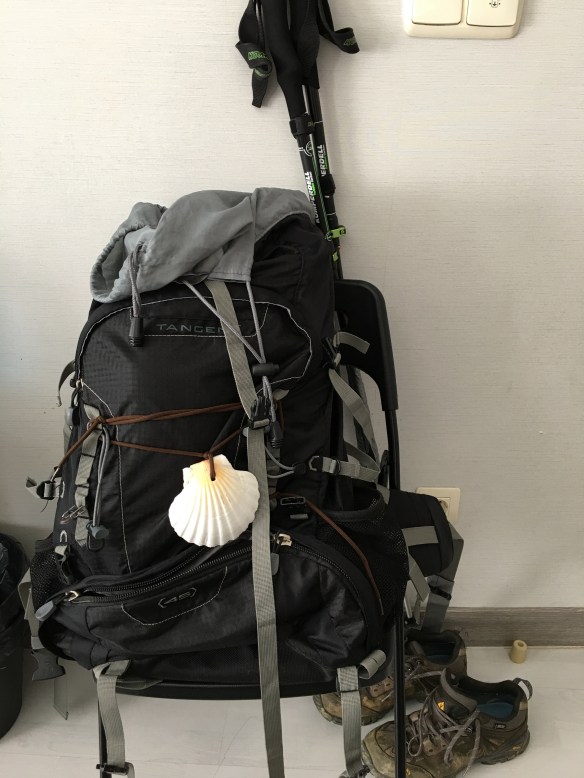
Before I took my first steps on the Camino de Santiago pilgrimage a couple of years ago, I first had to choose my shell—the symbol for St James the Apostle. Along the roadways and paths of the 800-kilometre trek across the Iberian Peninsula in northern Spain you can tell a pilgrim by the shell they have attached to their backpacks.

IMG_5341

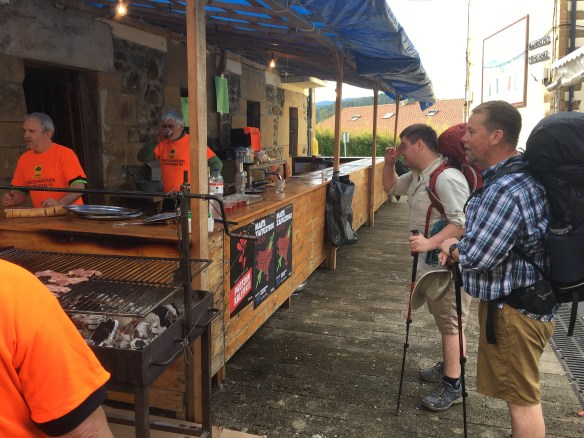
Wearing the shell attracted attention, often very positive. The group with whom I was walking came through a small suburb of the city of Guernica one Sunday morning. When we walked into the town square, we soon realized we were at the finish line of a marathon fundraiser for a local, special needs school.

There, some of the locals had set up large barbecues where they were grilling all sorts of meats for the marathon runners to enjoy after their race. We entered the square moments before the first runners crossed the finish line. But those preparing the barbecue called us over and without even asking our names or who we were offered us some of the delectable meats.

IMG_5308

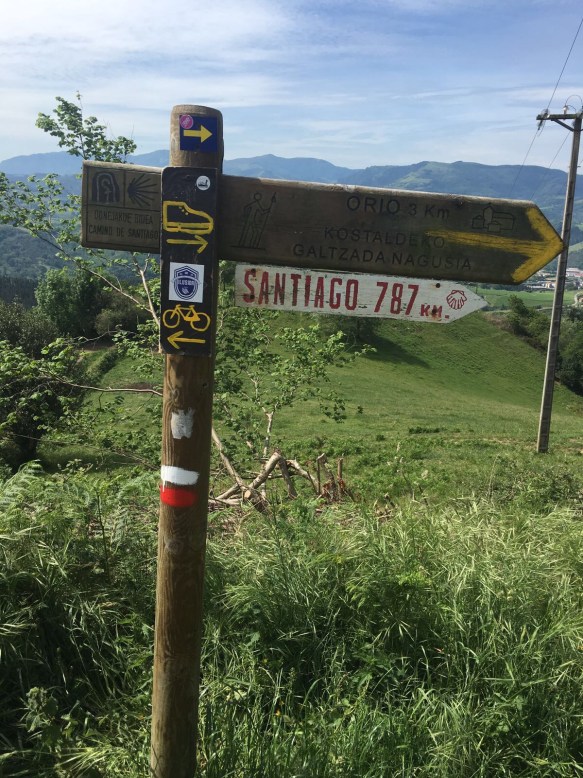
When we expressed our gratitude, they asked us to say a prayer for them at the destination of our pilgrimage: the shrine in the city of Santiago, Spain—still some 700 kilometres away. I promised them I would.

IMG_5385

As you know, I didn’t make it to Santiago, falling ill to pneumonia and coming home early after only a couple of weeks on the trail. I remember struggling with my ‘failure’ to achieve my spiritual and physical goals. For one thing, I wasn’t able to offer a prayer in Santiago for those good people from Guernica who asked me to.

Was it worth it? Did my truncated pilgrimage do any good? Or, was the love and generosity those locals showed us and our receiving their gifts graciously, enough?

On Ash Wednesday, we begin a journey. And at the beginning of this journey, we are given a mark—not a shell, but the sign of the cross on our foreheads. It is a public act, a public ‘coming out’ if you will. By this mark the world will know we are Christians.

I hope you will wear your mark home tonight, wherever you go and whatever you still have to do—keep it visible. And see what happens. You might be invited into some meaningful, enriching conversations along the way. Some might even ask you to pray for them.

Go into the closet where no one can see you, instructs Jesus.[1]And pray to your Father in heaven who hears you, and will reward you for your faithful act. But even when we think our faith fails us? Or only for its visible success? Or only if we achieve our goals?

Arnold Lobel, author of his children’s book called The Frog and Toad Treasury describes the relationship of two friends and how they pass time together, explore the world together and support one another.

In one chapter, the action takes place in October. The leaves are falling. Frog decides to go to Toad’s house, secretly, and rake his leaves for him. “I will rake all the leaves that have fallen on his lawn. Toad will be surprised,” Frog says.

Now, his friend Toad has the same idea. Both manage to arrive at the home of the other unseen, ascertain that no one is home, rake the leaves, and return to their own houses unnoticed. On their respective ways home, however, a wind comes.

The wind blows and blows. The piles of leaves do too, so that the leaves are scattered everywhere. At the end of the day, neither Frog nor Toad realizes what the other has done, because both return home to leaves strewn across their yards. Both pledge to rake their own leaves the next day. Nevertheless, that night Frog and Toad are both happy when they each turned out the light and went to bed.[2]

What is more important: Our good intentions and motivation? Or, the outcome of our actions. Being authentic matters more than the results of our actions. The Gospel is not about the consequences, good or bad, of our good or bad intentions. The Gospel is not about achieving results and being rewarded for our good work, even with righteous motivation. In the end, the Gospel does not leave us stuck (and perplexed!) in self-centred piety, it points to what God is all about.

Normally when we hear the words of Jesus: “the kingdom of heaven is like …”[3]when someone does so and so, we think of the job we must do to enter that kingdom. And so, we imagine and want to be like that religious person, attending to ritual and prayer and acts of charity and justice our whole life long; the more we can do, the better.

Not that we don’t do anything or don’t keep trying. But we cannot ignore from these words of Jesus what Godis all about. I consider those scriptures about the kingdom of heaven as describing the character of God: A God who treasures each of us. And will stop at nothing to find us. And give up God’s very life on the cross—give up everything—in order to be with us and love us.

God is the one who sells all in order buy the field with the treasure buried in it. God is the merchant who sells everything in order to obtain the pearl of great value. Where God’s treasure is (God’s life, God’s mercy, God’s presence—in us), there God’s heart is also.

This is a fundamental message of Christianity. A message of One who comes into our life even in the messiness and despair of being human. Born a vulnerable baby to poor, teenage parents in a backwater town of Bethlehem. Living the life of a simple man from Nazareth, hanging out with fishers, tax collectors and prostitutes. Dying, even, the very humiliating death of a criminal, for all to see.

The message of Christianity is about a God who ‘sells it all’ in order to be with us, live in us and work in us, for the good.

God does all of this in order to know us, really know us. To love us. To grieve with us. To enjoy with us. To walk with us this often difficult journey that we undertake again this day.

And despite the difficult journey for which Lent is a metaphor, may the world in each step we take on the pilgrimage know we are Christians by our love.

And that’s enough.


[1]Matthew 6:1-6,16-21

[2]Cited in Lori Brandt Hale, David L. Bartlett & Barbara Brown Taylor, eds. Feasting on the Word: Preaching the Revised Common Lectionary Year C Vol 2 (Kentucky: WJK Press, 2009), p.23-24.

[3]from his later parables (or stories) describing the reign of God, specifically Matthew 13:44-45.

Pastor’s Annual Report 2018

From this morning’s Annual General Meeting at Faith Lutheran Church in Ottawa, here is my report about the past year:

The council had a significant turnover of membership in 2018. On the one hand, the pastoral care ministry was strengthened. An intentional and regular congregational visitation schedule was initiated by council member Rochelle Piske. Resources were expended for lay training and producing visitation cards.

To this end, the council with Bishop Michael Pryse’s appointment acclaimed Pastor Diane Raddatz as Faith’s Honorary Assistant Pastor. This action was taken to broaden and acknowledge the quality of pastoral ministry provided by ordained persons associated with Faith church, as well as honoring Pastor Raddatz’s presence and history with our congregation.

At the same time, the leadership of the congregation was challenged to strengthen a vision for ministry that was focused outwards, to the communities which the church serves. A more public understanding of Christian ministry’s destination was articulated, repeated and reinforced. Even social events, such as the youth ‘Eating Around the World’ and ’Brass & Bratwurst’, benefitted from the Ottawa Ministry Area of ELCIC congregations as the basis of support and participation.

Moreover, Faith Lutheran Church convened leadership events for the Ottawa Ministry Area, such as the ‘Apple Tree’ workshop. The council spent time in training and visioning conversations. A ‘future directions’ initiative in council builds on the need, moving forward, not merely to ‘do church better’ but to ‘do church differently.’

The result of these conversations is leaving more and more church members with a broader understanding of the church today. For example, while deficit management can be a helpful short-term ‘fix’ to budgetary stresses, this micro-management perspective will not solve the long-term sustainability challenge that the church faces in our day and age.

As long as I have been ordained (over two decades), there have been very few years where deficit anxiety hasn’t been broiling under the surface of annual general meeting conversations. I believe deep down we know that merely narrowing annual deficits by reducing expenses is not a sustainable strategy that is going to resolve the church’s institutional problems.

Another approach is necessary. The solution lies, I believe, in reinvigorating the ‘why’ of church. Envisioning and acting on the mission of Christ, and seeking to participate in God’s activity in the world around us are steps in the right direction. But this means, too, that the church’s institutional structure must change in order to align with that purpose.

And that is precisely where conversations must focus, on ideas such as: repurposing church property, building bridges, cooperating and collaborating with other congregations, taking on some risk for the sake of local mission projects with other effective partners and community groups. I have explored such strategies in previous annual general meeting pastor’s reports.

At the beginning of the Advent season, Bishop Pryse was our guest in worship who preached and brought greetings on behalf of the Eastern Synod of the Evangelical Lutheran Church in Canada (ELCIC) of which we are a member congregation. At an ‘open mic with Bishop Mike’ session the evening before, he challenged the church to view collaboration with other congregations not as a threat but a gift. I hope to have Bishop Pryse make an annual ‘visit’ to our congregation.

Bishop Pryse was re-elected bishop for a six-year term at the Eastern Synod Assembly last June in Toronto. Council member Julia Wirth and I were Faith representatives who were both elected at that Synod Assembly to attend the National Convention of the ELCIC in Regina SK in July 2019 as Eastern Synod delegates.

Towards the end of the year, the council worked on moving forward with updating the congregational constitution and Call documents to align with recent Eastern Synod proposals. The chief benefit for congregations in adopting this updated version lies in making it much easier for congregations to make changes to their constitution by moving relevant items into the bylaws. Such adjustments are advisable since the local congregation will then be able to make changes with relative ease, thus making its constitution more of a living document reflecting more accurately the current truth of the congregation.

Thank you for your partnership in ministry. Specifically I want to thank council chair Jann Thulien for her prayer-filled support of the pastor’s office, and for each member of council and staff for their willingness to envision and act on new things.

Advent 2018 marked the beginning of the Gospel of Luke’s prominence in the Sunday readings for the coming year, according to the Revised Common Lectionary. Luke is also the author of the book of Acts. In Luke’s writings from both books, there is the emphasis of the community of faith taking care of the needs of the community, while at the same time reaching out and building bridges with others who are different from us and who present diverse needs.

May God, whose mission we serve in our day and age, give us all courage to act boldly, trusting always in the grace and mercy of God.

Pastor Martin Malina

funeral sermon – living with a Gospel bias

The last church activity in which Tony participated was the weekly bible study group. At that time I was asking the group to choose next week’s text for study. And the selection was one from either the Old Testament or the Psalms or from Paul’s letters in the New Testament or from a Gospel reading in Matthew, Mark, Luke or John—the first four books of the New Testament.

Tony always, always, always voted for the Gospel reading. The Gospel describes the story of Jesus—his life, death and resurrection. You could say Tony had a bias towards the Gospel. And especially the Gospel of John, for some reason.

The word, Gospel, means: Good News. Good news. Not bad news. Not about how we always fall short. Not about human folly. Not readings about our sinfulness, about what we should do to make it better. But about the grace of God. God’s forgiveness, mercy, love.

The example in today’s Gospel is typical: Jesus washes his disciples’ feet.[1]The Gospel, to recognize it, is always about what God does, as a gift to us. So, here’s the thing about the good news of God:

It’s about receiving more than it is about achieving. The grace of God must be received, not achieved. Normally at a funeral service we talk about what our loved one has achieved in life, as if somehow the more one has achieved the better.

And without second glance, Tony, on that measure, has achieved so much: publishing books in his retirement, building half a dozen houses, acquiring degrees in mathematics and engineering, qualifying himself in brick-laying and construction, even playing soccer into his 80thyear. He achieved a lot, if that’s how you want to look at it.

And certainly in our culture, it seems that’s what it’s all about.

But what a tribute to one who has learned to see, that in all that life has given him—good and bad—all that he received in life, there is grace. A gift of God’s love. To appreciate life as gift. This is right brain stuff. This is entering into the mystery that is God and life.

When he was young, he contracted Diphtheria which kept him isolated for some time, sequestered with the nuns in their abbey. Late in his life, Tony was able to confess that even having a disease was a gift, since it kept him from entering the war, a war that claimed the lives of his two brothers.

These traumatic events of life could have left him bitter. But, despite it all, he remained his true self—kind, loving and gracious.

The author bio on the back cover of both books he published in his retirement says the following about Tony: “Tony was always very interested in literature, history, religion, and cosmology.”

At the end of Act One in his book entitled About God, the World and People, the scene is set at an evening dinner party. Around the table sit different characters – a priest and a scientist among others. After covering such cerebral topics as ‘what is dark matter’, the origin of the universe and various forms of energy, the priest, Father Stengel, concludes with what I suspect is the author’s personal belief:

Father Stengel says, “I personally have no problem with what our diligent scientists discover. I clearly see in the development of our universe the guiding and loving spirit of our Father in heaven.”[2]

While working with numbers all his life and valuing their clarity and succinctness, Tony was also able to say, “They’re just numbers”, in light of God’s truth.

From the perspective of faith, analytics and left-brain thinking can obviously help with some things in life. But when it comes to the great mysteries of life, when we encounter great suffering or great love, when we experience death, or yearn for God, we need to access another ‘operating system’.

You can’t explain these realities adequately using the scientific method alone. It’s remarkable, for the mathematician and engineer that Tony was—that he was able to appreciate, discern and plumb those more intuitive and subtler depths of knowing as well.

It doesn’t make sense how grief works, really. I’ve told this to many grieving families over the years after a loved one died: That in a grieving process, it’s not just the pain of loss of that particular person that comes to the surface at that time. The death of a loved one triggers all the emotional baggage—if you will—of all previous losses you have experienced as well, all those unresolved issues in a family, everything. It can be quite overwhelming. I’ve recently experienced this truth myself. It’s not rational. But it’s very real.

And in those moments that can’t be explained, in the end, the only course of action is love. It’s the only way that does make sense in the turmoil of loss and pain. I think Tony knew that. Gospel bias towards love.

Tony’s teammates on the soccer team were well represented at the funeral home last evening. One of his teammates told me that Tony was the reason they kept playing together. He said that during a game teammates and the competition sometimes came to blows, emotionally if not physically. But Tony was always there trying to mend ways, trying to keep the group together, inspiring them to play on. Tony knew that. Gospel bias towards love.

Death changes some things. Death is final, in a way. And it hurts. Yes. But human death doesn’t mean the relationship is ended. Death merely changed the nature of our relationship with Tony.

Now, Tony is no longer physically present with us. But he lives on—in our hearts, in our minds, in our spirit, in our conscience, in our actions. He is still with us, albeit in a different way. Tony’s death leaves us a gift, an invitation to make what was important to him, important to us. Life as gift, a grace to do unto others as you would have done unto yourself. Gospel bias towards love.

“What we do for ourselves dies with us. What we do for others and the world remains and is immortal.”[3]Let what we do for others, be love.


[1]John 13:12-15,34-35

[2]Tony Bickle, About God, the World and People (Xlibris Corporation, 2008) p.48

[3]Most likely from Albert Pike, 19thcentury American attorney, soldier, writer, and Freemason. Sometimes this quote is attributed to 20thcentury American writer and biographer, Albert Paine.


Pluck up!

When our daughter received a pouch of seeds last Spring, we didn’t know initially what to do with them. They were Colorado Spruce Tree seeds. And we weren’t exactly planning on seeding a forest.

So we took a medium-sized flower pot and sprinkled the dozen-or-so seeds into the soil packed into the container which we left on the back deck outside. Let’s first see if the seeds in fact sprout, we thought. And go from there.

Three little buds popped through the top layer of soil a couple weeks later. One came up near the edge of the pot. But two of them came up in the centre, side-by-side. At first, I thought the two to be part of one sprig. But they weren’t.

At some point I would have to separate the two, distinct saplings. They were too close together. When to pull them up posed a bit of a challenge. If I waited too long, then the root systems would most certainly entwine and grow into one tree making it impossible to separate. If I plucked up the saplings too soon, I ran the risk of damaging the vulnerable shoots.

The task before me reminded me of the call of God to Jeremiah stated poetically: “to pluck up … and to plant.”[1]While Jeremiah’s plucking up and planting had to do with nations, social practice and religious faith, mine was more literal: As the tiny saplings were finding life and vitality to grow, I would first have to pluck them up from the soil before planting them into separate containers for the next stage of their growth.

And that plucking up would not be easy. It would hurt. It would put stress on the individual seedlings. I could very well be killing them in the transfer. Would they survive the ‘plucking up’?

Sometimes we don’t believe we can survive the ‘plucking up’ events of our lives. We don’t believe we have the strength to endure those difficult transitions in life, especially after experiencing loss, or when confronted with change or great disappointment and failure.

We object, like Jeremiah did—and Moses and Isaiah before him, to God’s call, finding all sorts of justifications: Can’t do that; I’m not qualified, I don’t have the skills, I don’t have the strength, I am too young or too old, I don’t have time. They make sense, common sense we might say. We find all sorts of excuses and even create a religion around all of that to keep us feeling good. Or at least not guilty. And stuck in a rut.

What is more, we make our faith into something that ought to make us comfortable. We ‘go to church’ expecting not the challenge to grow and change but instead to find the salve of warm fuzzies and emotional feel-goodies. We even believe Jesus was all about being ‘nice’. And if anyone is not nice, or challenges us, or doesn’t fit our mould—well, that’s not the way it’s supposed to be.

And yet, the biblical witness, if not our authentic lives of faith when we pay honest attention to them, suggest something entirely different:

  1. Jesus’ popularity suffers a severe blow after he says to his people in their synagogue that “today the scripture has been fulfilled in their hearing”.[2]What he means is that they—his people—would not be the vessels for the unfolding of God’s new narrative; outsiders would be. Stew on that. The audacity. They nearly succeed in throwing him off a cliff, they are so enraged.
  2. In the Jeremiah text, we read that God’s hand “touches” Jeremiah’s mouth. “I have put my words in your mouth,” God says.[3]Perhaps, at first, this sounds rather intimate, soft, gentle, nice.

But we need to be careful not to imagine it was a comforting touch. The same verb used here can also mean “strike” or “harm.” The one other biblical verse that uses this same verb to envision God’s hand touching is found in the prologue to the book of Job, where Satan challenges God to test Job’s faithfulness by taking away everything Job has.[4]There is nothing gentle about the wind that then “touches” the house where Job’s children are feasting, leaving every one of them dead beneath its roof.[5]

“When we picture the hand of God ‘touching’ Jeremiah’s mouth, we might do better to imagine a jolt or a shock. We would be justified in asking whether it hurt, whether it left a wound or scar, whether having God’s words in his mouth changed Jeremiah forever.”[6]

The message of Christ is the message of the cross. And then, resurrection. For our growth and life in Christ, we are called into places of disruption of our comfortable lives before anything new and life-giving happens. There’s no way around it, if we want to follow Jesus in this world.

It starts small, though. And that’s the grace and the hope. God does not call the qualified; God qualifies the called. The point of the Jeremiah story is that Jeremiah cannot depend on his own, developed capabilities and skill-set to justify his participation in God’s work. God called and equipped him even before he was born.

Every worldly role has purpose in Christ. No work is meaningless in God’s light. Martin Luther famously said about parenthood, when understood in Christian vocation: even changing dirty diapers is done for the glory of God! It is God’s invitation to us to invest God’s grace into whatever work God opens to us.[7]

All Jeremiah must do is trust God, and not make his decisions—yay or nay—based on fear. The most often repeated command in the bible—do you know it? “Fear not”. This does not mean we will never be afraid when we listen to and follow God. It means we do not lead our lives with fear in the driver’s seat. Instead, we find in the driver’s seat of our lives: Trust God. And hope in God. Fear can take a back seat, now.

I sat on the front porch with three separate, small pots for each of the seedlings. I did this in early November, believing they would do much better inside during their first winter.

My ‘plucking up’ was done swiftly, using the old adage of taking off a band-aid quickly is better than dragging it out. What surprised me the most in the process of ‘plucking up’ and then ‘planting’ again, was to see the roots.

Each of the tiny saplings had astoundingly long tap roots. One even had extended its main root all the way to the bottom of the original pot, and then some. More than tripling the length of the part of the sapling above ground, there was definitely more to the little sprout than what met the eye on the surface.

And so, there is much more to you and to me than what may first meet the eye—the eye of our self-regard. God calls us to break through the crust of the surface of our self-perception and to mine the depths of who we are, created uniquely each of us in God’s image. There’s so much good, there!

God is just waiting for you to uncover those depths, and then to bless and to empower who you are and what you do, into God’s holy purposes.

img_7991

[1]Jeremiah 1:10

[2]Luke 4:21-30

[3]Jeremiah 1:9

[4]Job 1:11, see Anathea Portier-Young in her commentary on Jeremiah 1:4-10 in workingpreacher.org

[5]Job 1:19

[6]Portier-Young, ibid.

[7]James Calvin Davis, in David L. Bartlett & Barbara Brown Taylor, eds., Feasting on the Word: Preaching the Revised Common Lectionary Year C Volume 1 (Kentucky: WJK Press, 2009) p.292