Ordinary faithfulness

“Those who love their life lose it, and those who hate their life in this world will keep it for eternal life. Whoever serves me must follow me, and where I am, there will my servant be also.” (John 12:25-26, NRSV)

One reason the Stars Wars saga in the movies and on television has endured successfully over the years is because the themes in the story-telling resonate with ordinary life.

For example, the epic struggle between the dark side and the good side of the Force gets played out in entertaining fashion between the Sith lords and the Jedi masters. This war of fiction nevertheless resembles so much of how we perceive the struggles in our own lives, how we do battle with bad in our hearts and the evil in the world around us. It just goes on and on, already for some forty years, and never seems to end!

In the spin off TV series, “Star Wars: The Clone Wars”, a story is told of how Jedi younglings are trained in the Force in a ritual called “The Gathering”. In order to become full Jedi, they must build their own light sabres. Their light sabres are unique to the individual. Each one is built around a crystal which they have to retrieve on an inhospitable, cold planet.

A group of younglings is dispatched into an ice cave to harvest their crystal. In order to succeed, they must meet and overcome their deepest individual fear and greatest weakness. Fear of heights. Fear of monsters. Impatience. Being left behind. Their crystal becomes available to them once they endure this personal challenge, each to their own.

What is more, they must find their crystal and exit the cave in a few short hours before the entrance to it freezes over. Otherwise, they would have to wait a couple of weeks trapped inside without help until the next rotation of the sun would allow the ice entrance to melt open again. The clock is ticking.

Individual challenges. But a group effort. Before sending the younglings into the cave, Jedi master Yoda gives them their final instructions: “Trust yourself and trust each other you must.”

For some, this is the biggest problem. Most of the younglings run into the cave and work together in smaller groups, at least in pairs. One helps the other, and vice versa.

But for Petro, the young upstart, know-it-all youngling boy, he rushes in at breakneck speed and abandons the group immediately. He forges ahead giving the others the impression, again, that he doesn’t need anyone’s help.

Before you know it, he finds his crystal, or so he thinks. And, so he is the first one back outside the cave. But when Yoda inspects the crystal, it melts in his hand. It wasn’t a crystal he found on the tip of the cave’s stalactite, just some frozen water.

Petro needs to go back in and do it all over again. But now, time is against him. While he runs back through the main entrance of the cave, others are already returning from their search. He is worried and anxious now that he won’t have enough time.

Feverishly sprinting down tunnels and turning corners Petro doesn’t know what to do. Until he comes across one of his class mates, Ketuni, trapped behind a glass wall. Ketuni had been rushing herself to get to the entrance after finding her crystal. She had followed what she thought was a short cut from one of the larger caverns where her return passage was blocked. Just as she had recognized the main tunnel near the exit, she realized she was trapped. There was no way she had enough physical strength herself to break the glass wall. Neither did she have enough time to find another way around.

Ketuni is just about to give up, getting used to the idea of spending days alone in the cave when she notices Petro rush by. Ketuni calls, “Help! Get me out! Help!”. Petro faces her through the glass wall. “But I haven’t yet found my crystal. I can’t help you. I have to get going.” And so, preoccupied with his own agenda and needs, he darts off.

But seconds later, perhaps with a change of heart remembering Yoda’s initial instructions to work together, Petro comes back to the trapped Ketuni. Still without a crystal himself, Petro takes a sharp rock and breaks a hole through the glass wall big enough to let her out. “Thank you! I’ll help you find yours, now quick!” Ketuni says.

“No, No, you go. There isn’t enough time. Please, get yourself out!” Petro cries. Reluctantly, yet realizing the truth of what he says, Ketuni runs to the exit. At that moment Petro notices a crystal glimmering in the ice of the wall he just broke down to help his friend. In his willing sacrifice for her sake, he finds what he is looking for himself. By the end of the story, of course, Petro makes it out just in the nick of time.

One of the lessons learned from the story is the mutual blessing that comes from serving first the needs of the other as the way of finding your own true needs met. Our little friend needed to learn the value of trust in working together.

Star Wars, like many popular stories, are grandiose in order to get our attention and entertain us. Yet, the spiritual life, our pilgrimage of faith on earth, is anything but grandiose. Neither, by the way, is it entertainment. Because of the influence of our hyper-stimulated culture, we may be tempted to believe our faith, if it has any value, has to show itself in spectacular fashion.

We may be tempted to believe that if we have any faith at all, it has to be mass media worthy, go viral on the internet and make millions: a grand spectacle of sacrifice, of laying down one’s life, of doing what no one else could do. These extraordinary spectacles, unfortunately, can serve to keep us stuck in the rut of unbelief. “Well, we can’t do that,” we convince ourselves. And we give up. And don’t do anything for the sake of the common good.

But true faithfulness begins with the first, small, ordinary step. It begins with something we can do.

Twentieth-century Jesuit theologian Walter Burghardt defined prayer, simply yet profoundly, as: “a long, loving look at the real.”[1] Long, because it is unhurried and quiet. Loving, because our connection with God, however we do it, is done in the context of love. Prayer is a look, because we do it being aware; we pay attention, simply. We don’t analyze, define or describe; we simply observe and acknowledge. Finally, prayer is real because it focuses on our daily life and what is ordinary.

So, what do we do to follow Jesus? How do we ‘lose’ our life? How can we find what we are looking for by looking to the needs of others? How can we move beyond being solely interested in our own individualistic well-being to those outside our families, friends, and immediate community?[2]

Reflecting on Burghardt’s definition of prayer, we can ‘look’ at what we already have. This requires us to slow down and pay attention, and quieting our compulsive, driven nature. Breathe. Because God is out there. God is present, even here. Even there.

One of our members asked recently a neighbor to describe what happens on and around our property on an average day. This, by the way, is prayer that is ‘real’ by focusing on what is ordinary. And the neighbor reported that between 2:30 and 3:30 every week day, about 30 kids on average, children of all ages, walk across our property from the bus stops along Meadowlands to their homes in the City View neighborhood. Thirty.

With presence of mind, our member asked the neighbor: What do they do when they walk across? Is there anything in particular that stands out in their behavior?

The neighbor said many of them like our benches outside the front doors. They like to sit and visit. They like to rest for a few minutes before continuing on their walk home.

When the member and I reflected on this, we realized there aren’t many, if any at all, public places in the neighborhood where people can sit awhile. Not only do we fill a need providing a place to sit, we encourage community-building, relationship-building right outside the doors to the church. How appropriate!

And for so many young people who are turned off the church, or at least afraid to enter into a church building these days, providing benches for young people to sit and visit sends a positive if subtle message about our identity and purpose as a church. It also sends a subtle yet real message of welcome.

This example is simple, ordinary, unspectacular. Yet, it is a first step in the right direction. As a community. Not as individuals doing our own thing. But, together, as a church.

And isn’t that what the walk of faith is all about? We can only do what we are able to do, together. And then, when we take the first step, we watch as the Spirit of God can surprise us and meet our own needs. All because we began by simply responding to the needs of others. Giving from ourselves, for the sake of others. That is, following Jesus.

We become “children of the light”[3], the Light who shines through us.

[1] Cited in James Martin, SJ, “The Jesuit Guide to Almost Everything: A Spirituality for Real Life” (New York: HarperCollins Publishers, 2012), p.114.

[2] James Martin, SJ, ibid., p.183-184

[3] John 12:36

There’s a wild-ness to God’s mercy

“Show me your ways, O Lord, and teach me your paths …

All your paths, O Lord, are steadfast, love and faithfulness

To those who hold on to your promise …”

(Psalm 25:4,10)

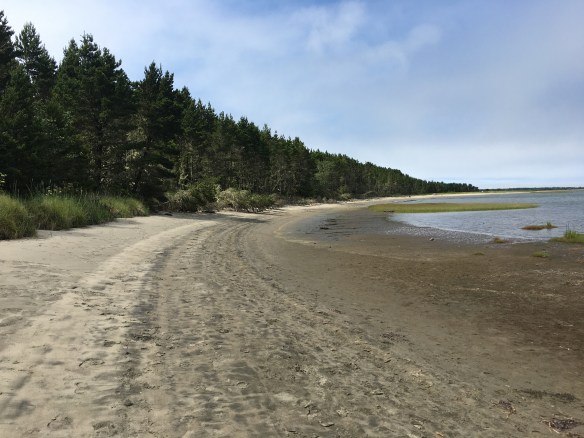
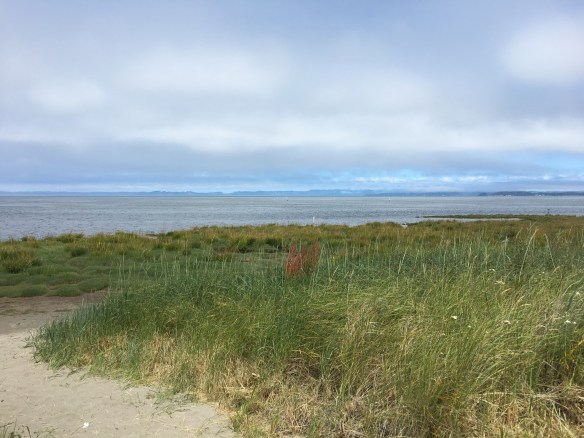
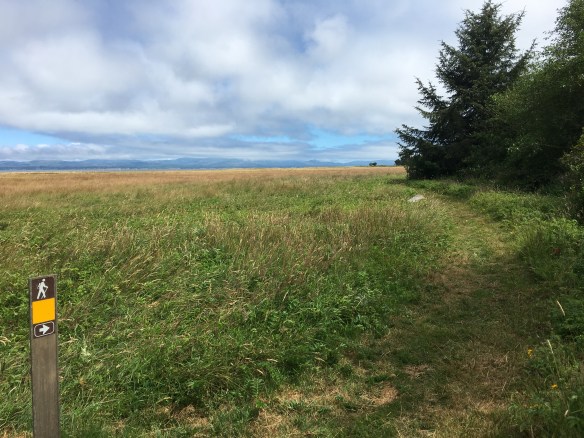
When I walked fifty kilometers on the sand last summer on Long Beach Peninsula on the coast of the Pacific Ocean in Washington State, I was obviously forging my own path.

IMG_5894

Even though the beach was not busy any time I walked it, it was also obvious to me that many had travelled this route – by foot and vehicle, since cars are allowed to drive portions on this way.

IMG_6237IMG_5889

I couldn’t trust these other paths, however, since I was by myself I had no idea how long the footprints or car tracks had been there. And with the dramatic shift of tides on the beach every twelve-or-so-hours, I could easily lose a path someone else made.

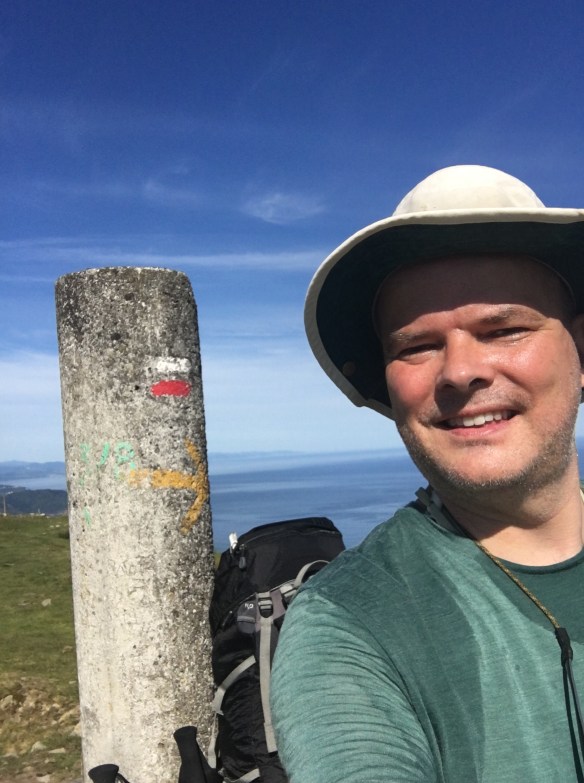
And, you might presume that my 130-kilometer hike on the Camino in Spain  a month earlier would have been harder on my feet. While I did not get one blister in Spain – no problems there whatsoever with my feet – walking on Long Beach Peninsula was brutal by comparison.

52238986157__0BB32B7D-A218-49B0-A0AB-CE5783F87119

Often, we make assumptions about our faith journeys. We presume things about following the way of Jesus that are, simply, untrue. And only experience can verify. The first myth is that this path is easy – a walk along the Rideau Canal among the tulips on a sunny, quiet Sunday in May.

I’m watching  Mark Burnett’s TV production of “The Bible” this Lent. And I was impressed by the actor playing Moses, who when he parts the Red Sea with water spraying all around in the tumult, mayhem and stress of the moment – when the Egyptian army is bearing down on the Israelites – he calls to them, “Follow Me!”

It’s like an invitation to a roller coaster ride. Or worse! A part of me wants to say, “Thank you. But, no thank you. I’ll take that walk by the canal.”

These short verses from Mark’s Gospel focus on Jesus’ personal experience of change, leading to a simple message to his listeners to follow in his way. And his way leads through disruptive changes in one’s life. True growth is a wild journey, to say the least, to follow the path of Jesus by making our own through the desert of our lives.

Jesus’ baptism by John is something which Jesus experiences by himself. Mark gives no indication whatsoever that Jesus’ baptism is some public event witnessed by many. It is intended for Jesus alone. Jesus is set apart to experience a deeply personal, largely private, and divine event in his life.

“And just as he was coming up out of the water, he saw the heavens torn apart and the Spirit descending like a dove on him.”[1]

This personally divine experience is not a pleasant, comforting event for Jesus. The word “torn apart” in Greek is used only at one other time in Mark’s short Gospel – at the moment of Jesus’ death on the cross, when the curtain in the temple was “torn apart.”[2] When Jesus experiences the blessing and call of his life, it’s not about gentle doves cooing from heaven. God does the ripping apart in both cases.

There’s a wild-ness and a danger in God’s grace. This is a disrupting affair. This is life and death stuff. You can only wonder whether Jesus didn’t see in a moment of churning clouds his own death – the end of the journey he was about to begin.

After Jesus’ baptism, the text takes a rapid shift, as Jesus is “immediately” driven into the desert. Mark does not go into the details of Jesus’ forty days in the wilderness. He does not reveal what it meant for Jesus to be with the “wild beasts”. His temptations are not described in detail, only that he was tempted by Satan. And, by the end of the time in the desert, the angels waited on him.

IMG_6315

Mark preserves these truths about anyone’s wilderness journeys: It is wild, for sure; and, no one else can make that human journey for us.

As Jesus was privy to his own struggle with the wild beasts, so is it with our journeys in the wilderness. Whenever we go through challenging times and transitions in our lives, whenever we experience the severity of life’s choices and consequences of our misdeeds, whenever we receive the blunt end of life’s punches in the death of loved ones, in the loss of any security, the pain of ill health – these are intensely personal demons we struggle with.

IMG_6236

No one else, really, can fully presume to understand this journey of ours. They are unique to us alone. Our temptations are unique to us as spiritual individuals on a human journey. We need, as individuals, to take ownership of our own wilderness journey.

IMG_6244

Some of you may have been surprised in the Ash Wednesday liturgy this year when I asked you to impose the ashes on your own forehead as I said the words: “Remember that you are dust, and to dust you shall return. Repent, and believe in the Gospel.”

For those of you who were here last Wednesday, I hope you reflected on the subtle change’s significance. If you are entering this forty-day journey, embracing the path of Jesus in some way, through the desert of your life – however you define your wilderness journey – then you need to own it yourself. No one else can do for you. At the start of this interior and life-changing journey, you will own your own ‘ash’, you will enter the desert of your own heart.

This journey is a journey of repentance. Repentance means, “a change of mind.” This is the original, basic meaning of the word – more than a renewing of the mind as Paul puts it,[3] repentance entails a radical turn around in thinking. This is largely an interior journey, in your mind and heart. “Rend not your garments,” the prophet Joel preached, “Rend your hearts.”[4] Will you go there, this Lent?

Martin Luther defined repentance as a returning to your baptismal waters. Returning to God’s grace, God’s love, God’s unconditional forgiveness and mercy upon your heart.

The Lenten journey can be taken by holding on to the promise of your baptism.  The path we make is only possible by the waters of faith. In the end, the waters of grace, of eternal presence of God, will wash away our delusions and give us sustenance for the journey. If we must forge our own path, we are not alone nonetheless. For, another has gone before us. One who loves us.

In his description of the journey of the Lenten season, American theologian Frederick Buechner wrote, “After being baptized by John in the river Jordan, Jesus went off alone into the wilderness where he spent forty days asking himself the question what it meant to be Jesus. During Lent, Christians are supposed to ask one way or another what it means to be themselves.”

He, then, outlines several questions for Christians to ponder during Lent. Among them:

  1. When you look at your face in the mirror, what do you see in it that you most like and what do you see in it that you most deplore?
  2. If you had only one last message to leave to the handful of people who are most important to you, what would it be – in twenty-five words or less?
  3. Of all the things you have done in your life, which is the one you would most like to undo?
  4. Which is the one that makes you happiest to remember?
  5. If you had to bet everything you have on whether there is a God or whether there isn’t, which side would get your money and why?
  6. Is there any person in the world, or any cause, that, if circumstances called for it, you would be willing to die for?
  7. If this were the last day of your life, what would you do with it?

“To hear yourself try to answer questions like these,” Buechner goes on, “is to begin to hear something not only of who you are but of both what you are becoming and what you are failing to become. It can be a pretty depressing business all in all. But if sackcloth and ashes are at the start of it, something like Easter may be at the end.”[5]

[1] Mark 1:10

[2] Mark 15:38; Stanley P. Saunders in David L. Bartlett and Barbara Brown Taylor, eds., “Feasting on the Word: Preaching the Revised Common Lectionary Year B Volume 2 (Kentucky: WJK Press, 2008), p.47.

[3] Romans 12:2

[4] Joel 2:13

[5] Frederick Buechner, “Wishful Thinking” (New York: HarperCollins, 1993).

Traveling stones: a pilgrimage lesson in letting go

In the sixth century Saint Benedict said, “A monk should have death always before his eyes.”[1] ‘Death’ doesn’t need to refer only to our physical demise at the end of life but to any loss experienced in life. There are many deaths we experience in life: the death of a cherished pet, the loss of friendship, the loss of a job, divorce, death of a loved one, moving into another home. Any significant change, even positive ones, involve something lost.

In the second reading for today written in the first century, Saint Paul admonishes the Corinthians to live in this world “as though not.”[2] He is advocating a certain disengagement from the attachments and claims of our lives, including some of our most cherished relationships. The likes of Paul and Benedict reflect, as well, the wisdom of the prophets and poets of ancient Israel: “The grass withers, the flower fades, but the word of God stands forever.”[3]

Our earth-bound attachments come under scrutiny here, no doubt. The question remains for each of us on our own journeys of faith and life – what are those things of which we need to let go in order to move on? After all, in the Lord’s Prayer the words, “Thy Kingdom come”, mean little unless we can also say: “My kingdom go.”[4]

Following Jesus means leaving things behind — as the first disciples did, in our Gospel reading for today (Mark 1:14:20).

You heard about the man who was hiking in the mountains when he slipped, and started to slide over the edge. Just as he was about to fall into the abyss, he grabbed a tree branch growing out of the rock ledge. He hung on perilously dangling in the air.

He didn’t know what to do. It was impossible to pull himself up since the branch stem was slippery and wet. He swung in the silence of the breeze contemplating his fate with growing terror. Finally he looked up to the sky and prayed: “If there is a God anywhere up there, I could do with some help, please.”

To his surprise and shock, he heard God’s voice respond instantly: “I will help you. But you first have to let go.”

The man was silent for a minute. He dared not look down. It was a long way to the jagged rocks of the canyon below. Again he looked up to the sky, and said: “Is there anyone else up there?”

A long-standing tradition in doing a pilgrimage is to bring a stone from home and lay it somewhere along the path. This home-stone represents a part of myself that I lose, and leave behind, where I have walked.

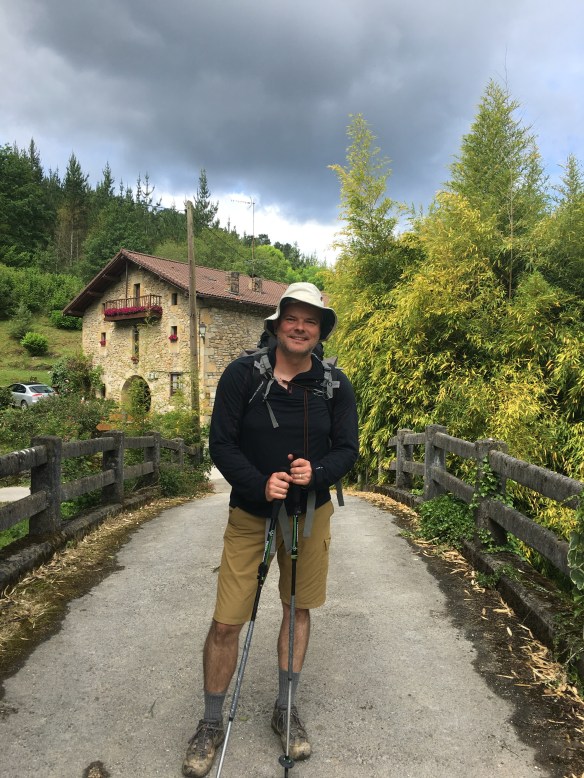
Last Spring when I walked a part of the Camino de Santiago, I wanted to leave my stone in the waters off the western coast of Spain, either in Fisterra or Muxia – both coastal towns are some one hundred kilometres west of Santiago.

I imagined this place a fitting resting place for my stone since I love walking by water and coastlines. Once, long ago, people believed the coastal town of Fisterra (French, for ‘the end of the earth’) was the physical limit of land – the farthest one could go. In my imagination, I saw myself facing the setting sun, having completed the 800-kilometer, two-month trek, looking west to the horizon line beyond which lies the land of my home in North America.

I imagined feeling satisfied at the end of a long journey, having reached my goal, grateful for the challenge and all the things the Camino taught me. In that moment of gratitude and joy, I would toss my stone as far as I could into the spume and depths of the Atlantic Ocean. That was the vision, anyway.

I found the perfect sized stone while wandering around my house one afternoon a week before leaving for Spain. Because I was running about making the last-minute preparations for the journey, I placed it temporarily on the landing railing in the garage, certain I would soon tuck it away in my backpack.

Two weeks later I was scrambling up a steep incline outside the town of Irun on the first day of my pilgrimage. As I expected that first day was incredibly tough going. The temperatures soared to above 25 degrees C and the sun shone brightly. Sweat pouring down my neck and back I struggled up that cliff wondering why on earth I chose to do this on my sabbatical. I dug my walking poles into the hard-caked sandy ground to make the next ledge and wondered sarcastically if I should have rather taken rappelling lessons in preparation for coming to Spain.

In that moment of physical and growing mental exhaustion, I realized I had forgotten to pack my stone. It was still sitting on the railing in the garage back home! I stopped in my tracks and exhaled deeply.

“What’s the matter?” my Dutch pilgrim friend asked me, huffing and puffing as I was.

“I forgot to bring my stone,” I confessed my failure.

“Don’t despair,” my co-pilgrim wanted to advise. “The Camino will give you an answer.”

IMG_5248

Several days later two significant things happened. The first was while I was walking down a slope towards the northern Basque town of Guernica, I thought I should take with me a couple stones from this path, as a keepsake from walking the Camino. So, I selected two small pebbles from under my feet where I stood beholding the town and valley below.

IMG_5299

That same day, my knee seized up, and I walked the remainder of my Camino in pain. Three days later, coughing and feeling very sick, I was on a plane homebound. Diagnosed with pneumonia back in Ottawa, I had to come to terms with my failure of not having reached my goal.

Not only had I not reached Santiago and Fisterra, I had done nothing with my stone which I had forgotten anyway. By forgetting the stone, had I already destined myself not to finish the pilgrimage? These dark thoughts swirled in my mind.

After having recovered a few weeks later, my wife and I flew to Lisbon for a week of vacation to celebrate our wedding anniversary. Originally, the plan had been for her to join me at the end of my pilgrimage, where I would meet her in Lisbon. Nevertheless, this time, I did bring my stone from home, renamed my ‘glory’ stone.

My glory stone represented all my aspirations, desires, longings which I knew deep down the Camino had taught me to let go of. I had to surrender even my human yearning and goals to God.

IMG_5853

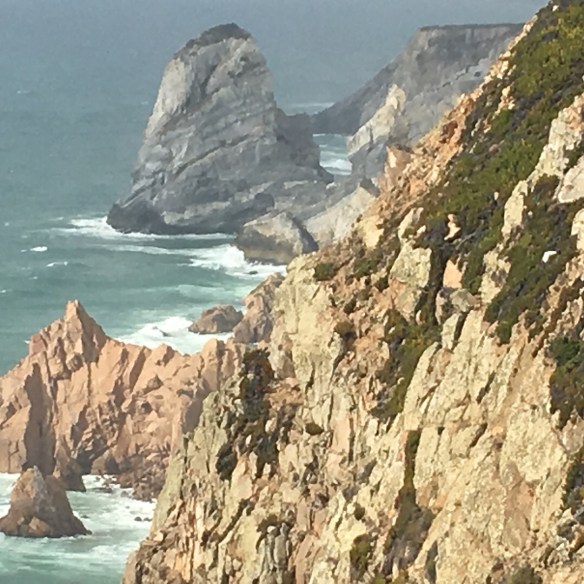
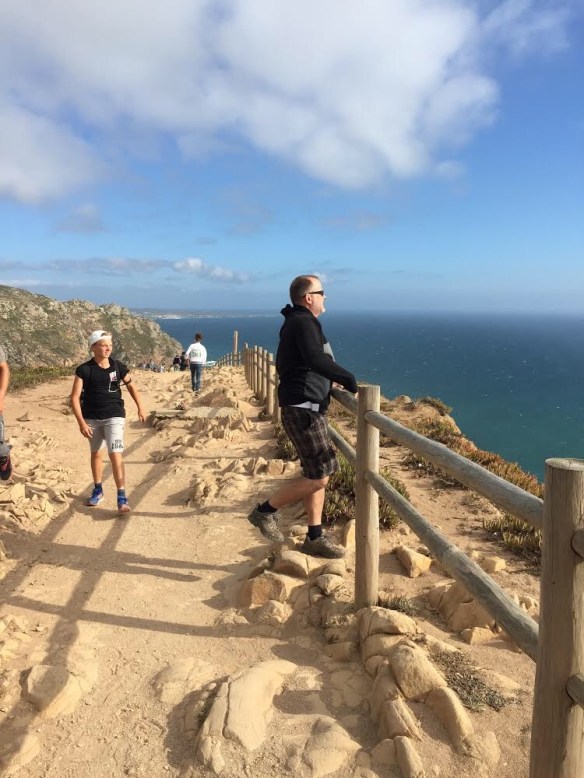
And so, at Cabo Da Roca near Lisbon, Portugal – the farthest most western point of land on continental Europe – I threw my glory stone into the Atlantic Ocean facing the setting sun. I had to practice letting glory go.

IMG_5812

It seems I was still bound to finish some kind of pilgrimage during my sabbatical. I didn’t have enough time to go back to Spain and finish the Camino de Santiago. But I did have enough time to walk the entire length of the longest contiguous sand beach in North America – fifty kilometres on Long Beach Peninsula in Washington State. There, my journey of letting go continued.

IMG_6200

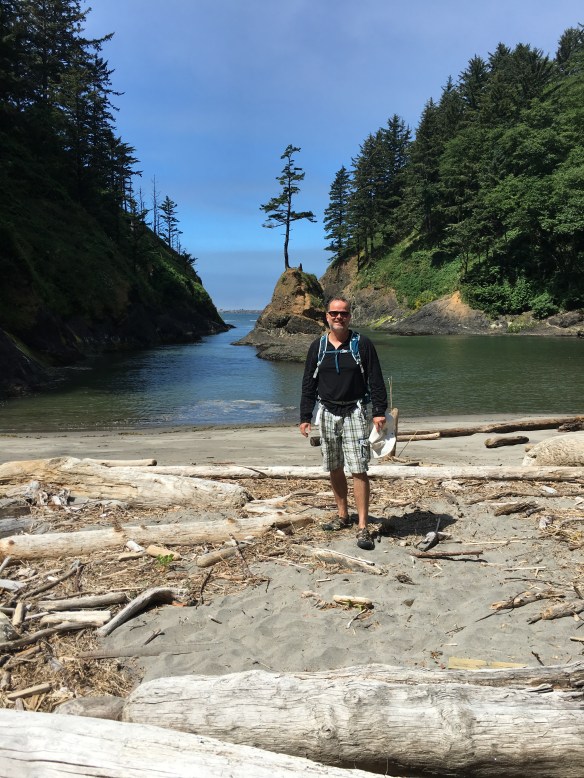
There, on “Cape Disappointment” – fittingly named – I brought the two pebbles that I picked up in Spain on the last day I walked on the Camino. One glorious afternoon, I scrambled down into Dead Man’s Cove – also fittingly named – on Cape Disappointment. After reflecting on my disappointments of late, I realized on my journey of life not only did I need to yield all my dreams but also all my regrets and suffering. And so, I threw those stones of disappointment into the Pacific Ocean. I let these go.


I realized life is not lived well when we obsessively hold on to all those things that cause us grief. I had to offer these to God as well. Later, while I sat on a park bench near the lighthouse on Cape Disappointment looking over the Pacific, I met a couple of Americans visiting from Portland. In our conversation, we were able to affirm that “all great spirituality is about learning to let go.”[5]

IMG_6217

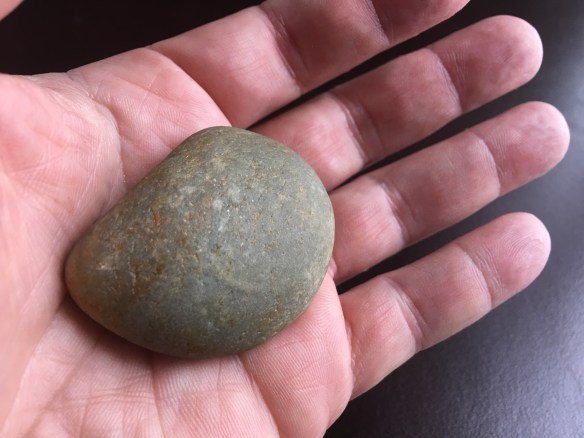
But I didn’t leave my pilgrimage empty handed. When I climbed out of Dead Man’s Cove that day, I picked up from the sand a smooth, round stone. Now, any rocks on the Peninsula are rare. Most of the fifty-kilometre stretch is sand, land created from the outflow of the mighty Columbia River as it spills into the Pacific Ocean. Most rocks you see on the Peninsula have been trucked in. So, I was delighted to take with me back home, a rare thing.

And hope is a rare commodity in this world of pessimism, denial, and despair. This is my “stone of hope”, that I hold forever, amidst all the human aspirations swirling in my life and all the disappointments and failures which I regularly need to practice letting go of.

IMG_6752

We hold not only that which we need to let go of, but we also hold hope throughout our lives. “We do not simply resign ourselves to the give-ness of the world, for we have planted within us a great hope that God’s kingdom will come on earth, as in heaven. This means we are a people who look to the future with trust and hope, confident that God is working God’s purposes out and that God’s realm is even now breaking into our world.”[6]

At this point in your journey of life, which stones are you holding — of dreams, of disappointments, of hope? Which ones do you need to let go of? Which do you need to hold on to? I suspect it is true when the likes of Saint Paul, and all the wise teachers over the ages, writes: “Hope does not disappoint us.” [7]

[1] cited in Ruthanna B. Hooke in David L. Bartlett & Barbara Brown Taylor, eds., “Feasting on the Word: Preaching the Revised Common Lectionary Year B Volume 1” (Kentucky: WJK Press, 2008), p.280

[2] 1 Corinthians 7:29-31

[3] Isaiah 40:8

[4] Richard Rohr, Daily Meditation, Thursday, January 18, 2018.

[5] Richard Rohr, Center for Action and Contemplation, cac.org

[6] Ruthanna B. Hooke, ibid.

7 – Romans 5:5

Driving me crazy

IMG_7227

There are times in life that come our way to remind us that something is ending. And even though at some deeper level we know it to be true, we hesitate to face that ending, whatever it is — the end of an era, the end of the life of a loved one, the end of a relationship, the end of a career, the end of youthful health and energy, etc.

How do we face these movements in life?

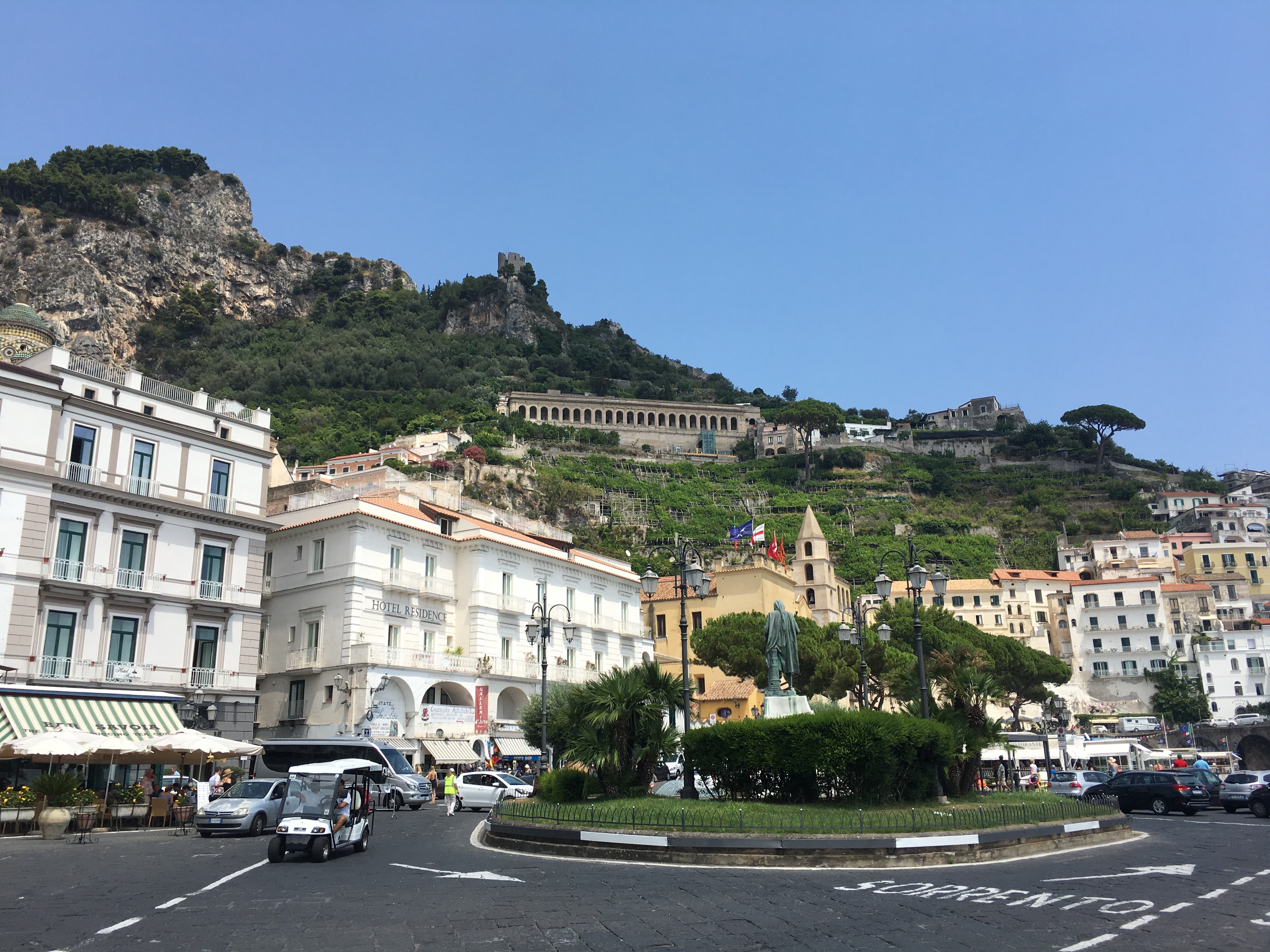
In planning our family vacation to Italy a couple summers ago, we decided to rent a car. Our host family lived in Naples. So, right off the plane, we jumped in our small Fiat, yours truly engaged the manual shift, and we immersed ourselves in the mayhem of driving in Naples.

What added to the heightened anxiety of driving in the sprawling metropolis, was that I had to follow our friends from downtown to the suburbs – no short jaunt ‘round the corner.

Not only did I have to deal with the speedy and crazy driving conditions, I had to slice through the haze of jetlag in my mind, and pay attention. I had to keep up to our host family already long acclimatized to the riotous driving culture there.

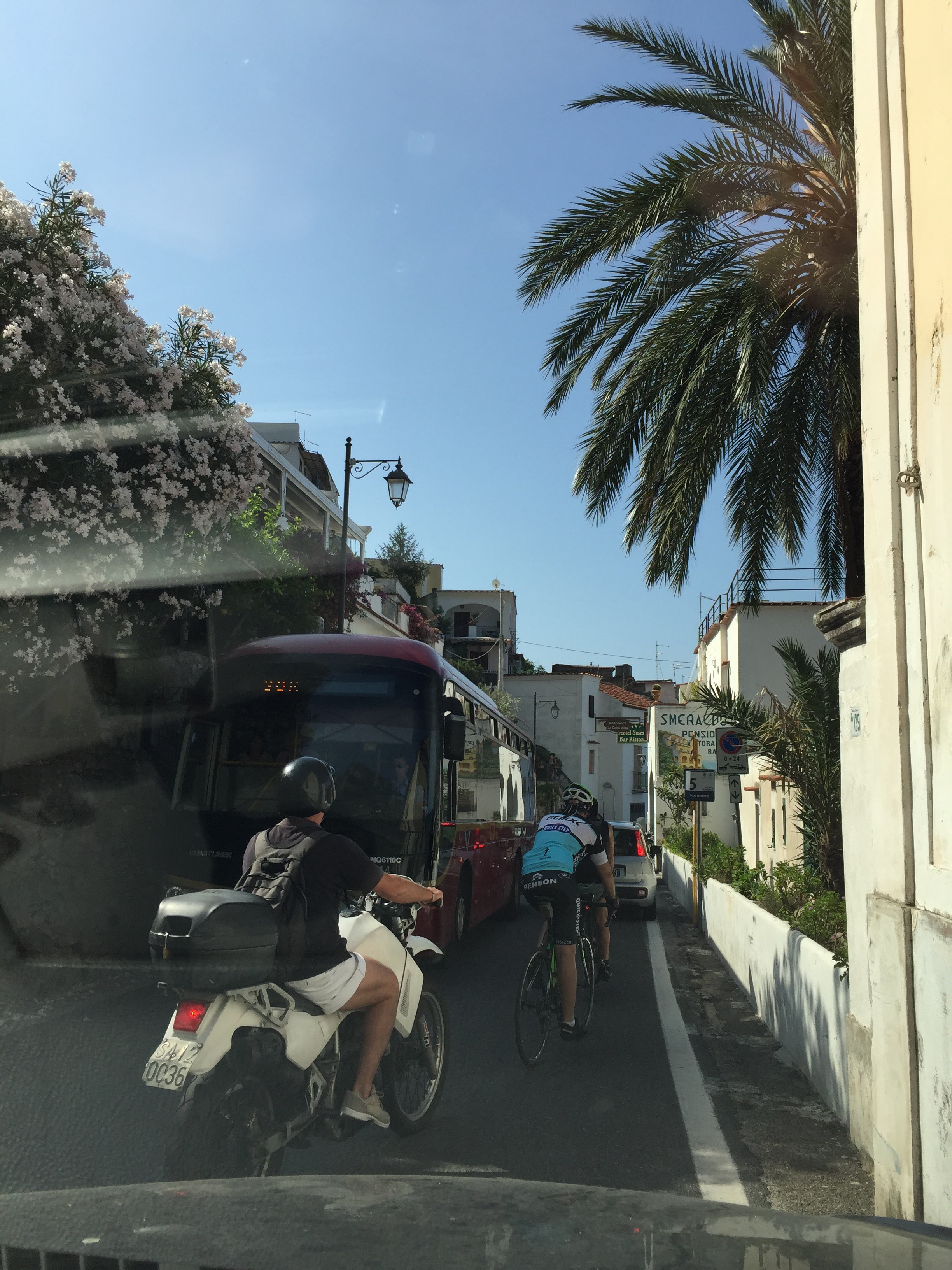
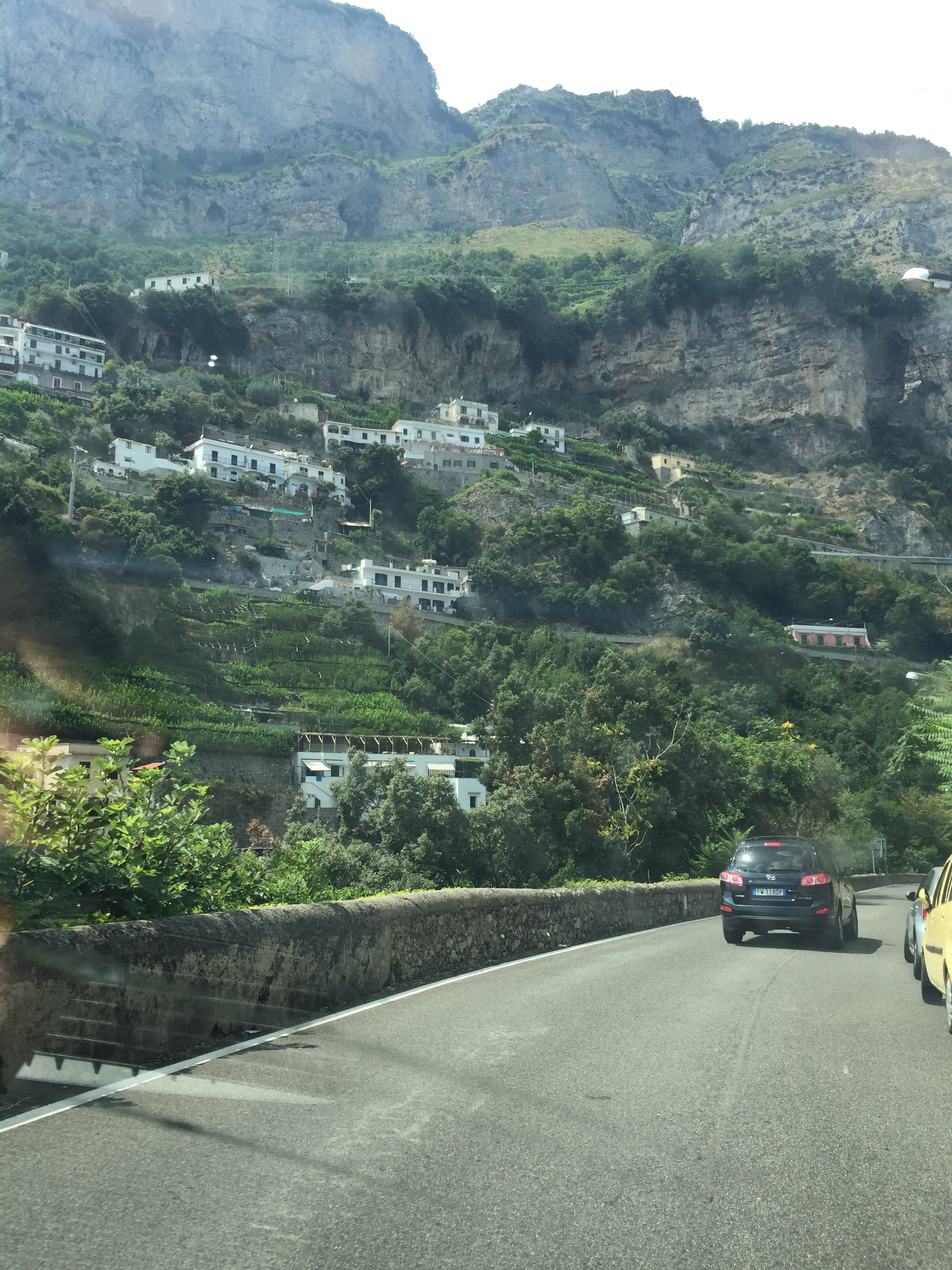
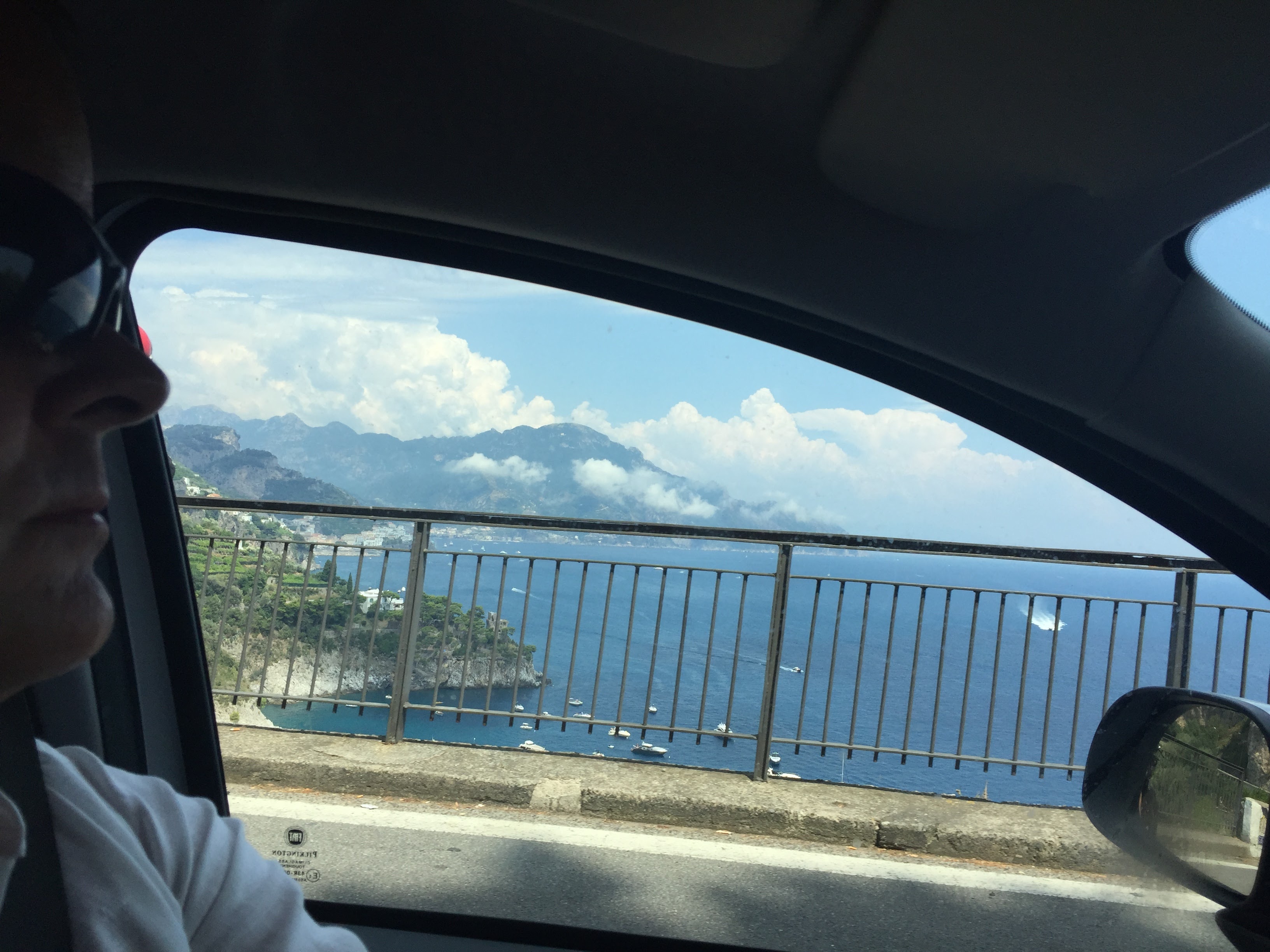
What is more, shortly after recovering from the stress and thrill of that first-day drive from the airport, the next day, in our separate cars we took to the winding and narrow road along the Amalfi Coast. To get there, we had to cross Naples first. Been there done that. No small feat.

IMG_5192

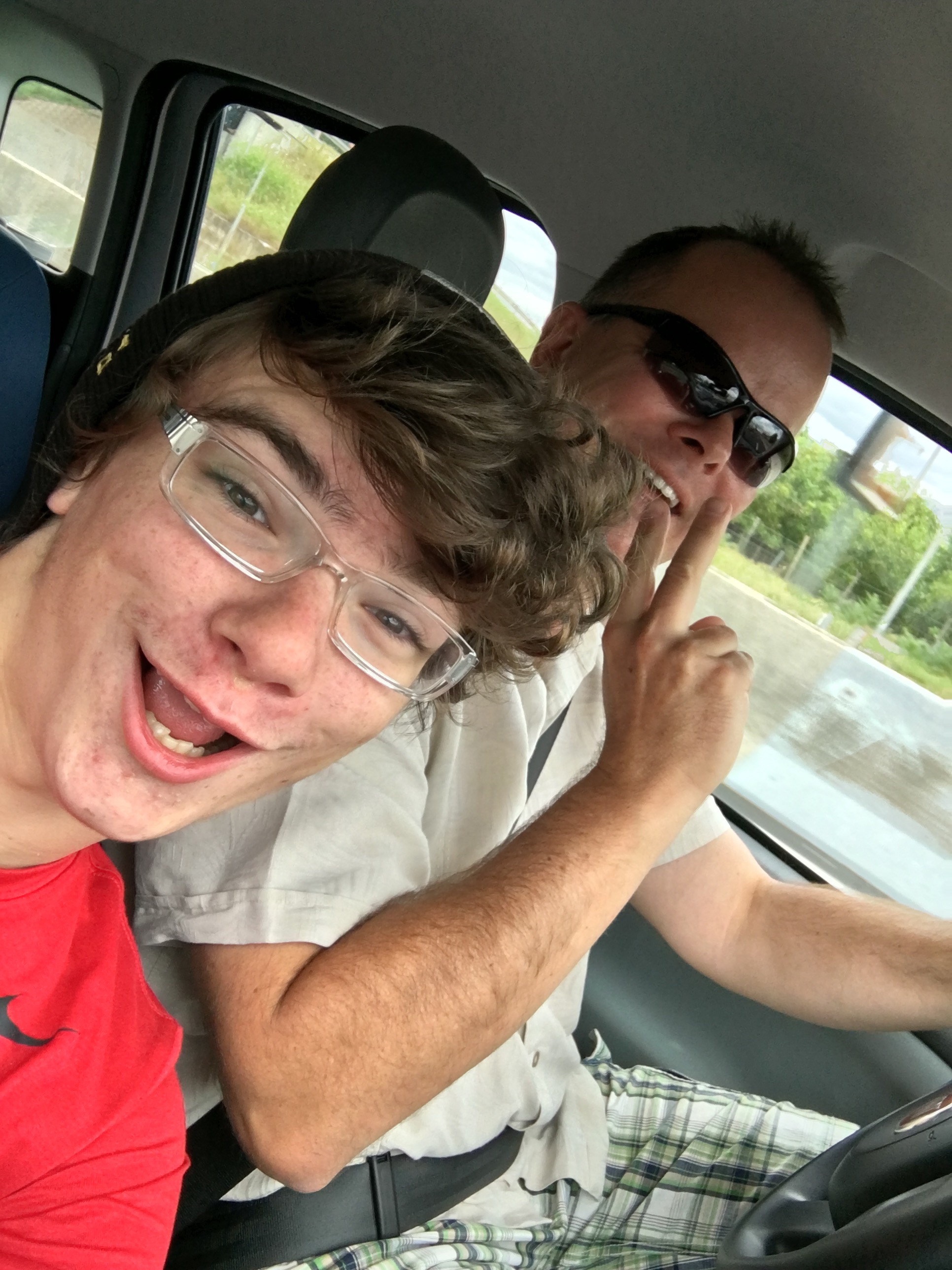
Then, once on the rocky Amalfi coastline, my face was practically pasted on the front windshield. I had to make constant reflexive maneuvers rounding blind, hairpin bends. At relatively high speeds I squeezed our little Fiat between oncoming Vespa scooters, ginormous tour buses and sleek, racing, tinted-windowed Audi sedans. All the while wiping the spittle from the glass in front of my mouth emitting profanity after profanity.


Caution thrown to the wind, I threw myself into it without thinking too much. Reactive, assertive and confident driving skills required! Since I didn’t exactly know the route we would take, I had to focus on what was directly in front of me. I had to pay attention and respond not only to the immediate conditions I found myself in. I also had to keep an eye on the dark blue Hyundai some car lengths in front, leading the way.

IMG_7315

Following someone in another car, requires certain skills best developed in the context of faith. Let me explain.

First, you have to trust. You must trust that the One you are following knows what they are doing and where they are going. You have to believe that following them faithfully will take you to where you want to go. At some gut level, you have to relinquish your claim to knowing better. And trust the other. And believe that they believe in you and your skill, too.

Second, you have to pay attention. You have to stay aware of your surroundings, even though the distractions and obstacles are frightening. As with driving in general, you can’t be looking inside the car or admiring the scenery to the side or behind you. Rather, you have to remain focused on the road ahead. Better yet, for as smooth a ride as possible, you have to envision yourself already being a certain distance down the road.

IMG_6661

Third, you need to act on in-the-moment decisions. Following another car is a whole different way of driving then when you are on your own. On your own, you can stop whenever you want, you can go however fast or slow you want to go, and you are not accountable in any way to another vehicle on the road.

IMG_7356

All that changes as soon as you say, “I will follow you.” If you don’t want to get lost, you have to keep up. You have to do it. You have to match the velocity of the lead car, whether they speed up or slow down. You have to drive in a way that will keep you within eyesight of the lead, which will affect how you negotiate traffic signals, lane changes, roundabouts, traffic jams, and toll gates.

IMG_4632

Finally, in order to follow another successfully, you have to take the primary focus off yourself. And fix it on whom you are following. There is no time to dwell on your past mistakes – the guy you cut off coming onto the expressway, your cursing a fellow driver weaving across multi lanes going 130 kilometres an hour, or the slight yet growing pressure you feel on your bladder from all the espresso you drank earlier in the day.

There is no time for self-indulgence of this kind. There is no time for regret, guilt or self-absorbed mental gymnastics. There is no time to stop to lick the wounds of obsessive introspection.

Because your energy is required now for the task at hand: trust, focus, action.

Jesus describes at least two opposing lifestyles in the Gospel reading for today.[1] The sheep are on Christ’s right hand – they are the good guys. The goats are on Jesus’ left hand – they are the bad guys. I suspect we can relate to being both a goat and a sheep at different times and conditions of our lives.

Either way, both groups are surprised to hear Jesus’ answer to their question: “When did we see you …?”[2] Both groups failed to see Jesus in the faces of the stranger, sick, hungry, thirsty, naked, and imprisoned.

The only difference is that the sheep already happened to be serving those in need, before they heard this news, before they had a chance to think about it too much, strategize and create impressive mission plans. That group was visiting the sick and tending to the needs of others as a matter of course, moved by a simple compassion for the needy. Doing so was part of their regular routine of life.

On the other hand, the goats apparently never thought nor believed that their very salvation depended on helping others, going to the poor, attending to the weak and vulnerable in society. Instead, they must have made life predominantly a game of ‘who can get the most stuff and be most comfortable and take care of their own first.’ Their faith must have been assigned to a God who existed only in their minds, in abstraction, a matter reserved only for intellectual discourse,polite company, and board room strategy sessions.

At this turning point in the calendar year, we shift gears and look ahead. We leave behind the relative calm and ease of the long summer season after Pentecost, and enter the fray of the holiday season. How we drive through and around the many distractions, noise, pace and twisting corners of our lives in the coming months will reveal a lot about who we follow or whether we are following anyone at all, let alone Jesus.

So, let’s not forget where Jesus goes. Let’s not forget what he was all about, whom he visited, whom he cared for and where he spent his time. This is our focus. Let’s trust that Jesus knows what he is talking about and the path he takes, even though God’s reign feels countercultural and unpopular in a season of getting more stuff and self-indulgent sentimentality.

Perhaps we will need to practice looking for Jesus on the streets, in the hospices, the safe-injection sites, the social housing units, the shelters, the refugee lines and immigrant ghettos in our city.

Let’s trust that Jesus’ way will lead to our resurrection and transformation in this life as much as in the next. Let’s pay attention to our surroundings and the various ways God encourages us on the way. Let’s not remain idle, nor get stuck in self-centred living. Let’s not coast nor ride the clutch too much. Because we’ll stall the car. And stopping is not good on the highway of life. In fact, it’s dangerous.

IMG_4253

Instead, let’s act faithfully in small, concrete ways that make a difference for the better in the lives of others in need.  Let’s do so assertively and confidently, knowing that we don’t travel alone; there are others in the car with us and on the highway around us. Because despite our many failings, and the mistakes we will make along the way, God continues to have faith in us.

There is too much at stake. And no time to lose. Still today, in our country – Canada – and in our nation’s capital, Ottawa, there are still over 10,000 households needing adequate, safe and affordable housing.[3] And, 15% of the population in the whole province of Ontario still lives in some kind of housing need.

Where is Jesus? The bible makes it very clear. The better question is: Will you follow?

Recently I came across this anonymous quote about the merits of volunteering in ways that can reflect the reign of Christ in our lives and in our world:

Volunteering is the ultimate exercise in democracy. You vote in elections … [once every four years], but when you volunteer, you vote every day about the kind of community you want to live in.

When you volunteer for good causes you add value to the vision of God in earth. The Reign of Christ is about the kind of world God wants us to live in. Where is Jesus? Will you follow?

We end today a church season. This annual observance can remind us that endings only herald a new beginning just around the corner.

[1] Matthew 25:31-46

[2] verses 37 and 44

[3] check out http://www.multifaithhousing.ca

Cape Disappointment

How do we learn to deal with disappointment?

When health concerns mount? When there are cutbacks in the company you work for? When a relationship breaks down? When someone betrays you? When you fail to meet your goal? When you lose something precious?

How, as people of faith, do we learn to deal with disappointment? When what has happened does not make sense, when we can’t understand ‘why’?

In 1788 Captain John Meares named the spot of land overlooking the confluence of the Columbia River and the Pacific Ocean, Cape Disappointment. He was disappointed that the Columbia River was simply thus, a river, instead of the fabled Northwest Passage which he was intending to find.

IMG_6125.JPG

Mr. Meares was obviously well off-course to his goal. We know today that the Columbia River begins its journey at Columbia Lake in central British Columbia, Canada, and winds itself south hundreds of kilometres into the states of Washington and Oregon before spilling into the Pacific.

IMG_6201

In keeping with the rather downer of name, the lighthouse on Cape Disappointment overlooks the hundreds of shipwreck sites off the coast. The United States Coast Guard recognizes this large area of water as the most dangerous among all the river outlets along the continental shores of the United States.

IMG_6123

Both the strong outflow of the broad and mighty Columbia competes with the powerful tides and winds generated by the largest ocean on earth. Crisscrossing currents of water create constantly shifting sand bars and opposite flow wave action that can confuse, disorient and ultimately undo any mariner navigating this passage.

IMG_5932

IMG_6320

IMG_6322

Add to this mayhem the fog which has an uncanny knack of coming in unexpectedly on the north breeze, disappearing under the burning sunshine as quickly as it appears. I stood bewildered in such a fog jam on the beach one day, unable to comprehend how a perfectly cloudless sky in beautiful sunshine can change so quickly. Signs are staked at entrances to the shores along the thirty-eight mile stretch of contiguous sand beach north of the Cape warning unsuspecting swimmers of rip currents and unstable sand conditions above and below the surf.

In short, while ascetically beautiful to the eyes, this small part of the world contains hidden, life-threatening dangers beneath the surface of things. Disappointing is an understatement when considering the potentially dire consequences of a mariner’s failed attempt at moving around the Cape, let alone dealing with the failure of not arriving at one’s goal.

IMG_6204

In the first reading for today[1], God responds to Jonah by asking questions, rhetorical though they are. Jonah expresses his anger at God for sparing the “great” city of Nineveh. God’s actions did not make sense to Jonah, even though Jonah confesses his belief in a gracious God who is “merciful, slow to anger, and abounding in steadfast love, and ready to relent from punishing.”[2] He obviously did not think much about the people of Nineveh regardless of God’s mercy. Yet he is internally divided, unable to reconcile his belief with his feelings. He can’t figure it out. He is depressed. And wants to die.

If God says anything toward Jonah’s healing, it starts with a question: “Is it right for you to be angry?” And when God provides a bush to protect and save Jonah’s life, a bush that then dies, Jonah is angry again. What does God say to Jonah’s outburst? Another question. “Is it right for you to be angry about the bush?” And to top it off, the entire book of Jonah ends rather abruptly, again with a question from God.[3] Questions. Not pat, cut-and-dry answers. Questions.

I wonder if we have tended to make God and religion into something and someone to give us quick and final answers. We demand ‘what’ from God when all along Jesus, in the wisdom tradition, is primarily teaching ‘how’. Out of the total of the one hundred and eighty-three questions that are asked of him in the Gospel, Jesus only directly answers three of them.[4] In the New Testament, Jesus’ very first words spoken to his disciples was a question: “What are you looking for?”[5]

Jesus turns the tables on the disciples, as he does time and time again. Rather than give them what they are looking for in a neat and tidy package of an easy answer, he throws it back at them. What do you want?

The first call of Jesus in our lives is a call to be honest with ourselves. Before we can do anything, we need to be true to ourselves. And commit to that lifelong struggle to move beyond our intellect and its insatiable compulsions for answers, towards actions that reflect a trusting heart. Because following Jesus in this world does not, most of the time, make a whole lot of intellectual sense. If we are being faithful.

It is not our job to know everything. God knows all. We don’t have to. Ours is a call to hold, not rid ourselves of, all the messy contradictions of our lives. Abraham, Jacob, Rebekah, Moses, David, Job, Esther, Jonah, Elijah, the disciples, Paul – they were not people who had all the easy answers to life’s complex questions. But they were trusting, obedient, and they acted. Sure, they objected to God at times. Yes, they made mistakes. If anything, the story of Jonah ought to reinforce the importance of a real, personal, topsy-turvy relationship with God. That is the stand-out characteristic of all the faithful.

During the years following the Council of Nicea in the fourth century, a common heresy re-emerged under the leadership of Eunomius, a bishop in Cappadocia (in modern day Turkey). Eunomius argued that we can understand the nature of God simply and clearly. Reflecting on what was the mystery of the Trinity, he implied that God was perfectly accessible to human intelligence.[6]

The Cappadocian Fathers, as they are called, reacted to Eunomius. Basil the Great, his brother Gregory of Nyssa along with John Chrysostom insisted on the incomprehensibility of God to the human mind, and the necessary limits of theological discourse. Their position became the orthodox, Christian stance, ever since.

I wonder, ever since the Reformation, the industrial, scientific revolutions and enlightenment era of the last few centuries in especially the western world, haven’t we slipped back into this heresy once again? Pretending, even though we may not be aware of it, that we should have answers to all of life’s important questions.

It is our natural humanity to strive to know everything. But if we are honest, our minds certainly cannot grasp fully such incomprehensible realities as the mysteries of love, suffering, death and God. Here, we must trust and let go of all our pretenses. “For,” in the words of the prophet Isaiah, “my thoughts are not your thoughts, nor are your ways my ways, says the Lord.”[7]

Disappointment in life is a doorway to a deeper awareness of God’s truth and presence in our lives. Our varied expressions of worship, of living out God’s call, our prayer lives – all these are not so much, then, a matter of petition, of doctrine, of rule-setting-and-following, of solving the discrepancies and inconsistencies of the bible and theological discourse.

Rather, our complex lives with all the joys and disappointments become the tableau, the canvas, upon which we discover we are not alone. And that God is ever present and faithful, regardless of what we do or think. You can’t make God love you one ounce more – by all your right thinking and having all the right answers – than God already loves you right now.

Often, the disappointments of our lives bring us to this realization more than all of our accomplishments and successes. Because if we are going to get anywhere in our lives, we need to hope and believe, despite the disappointing circumstances of our lives.

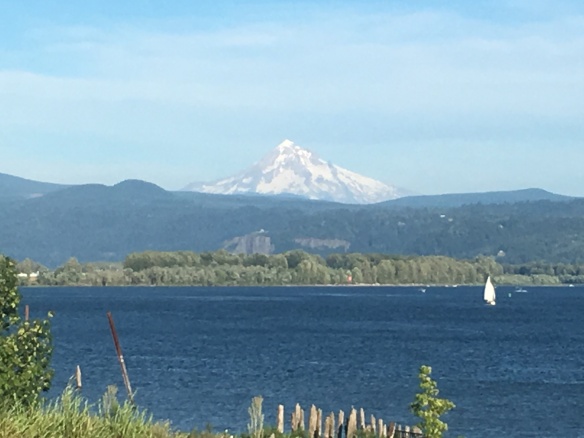
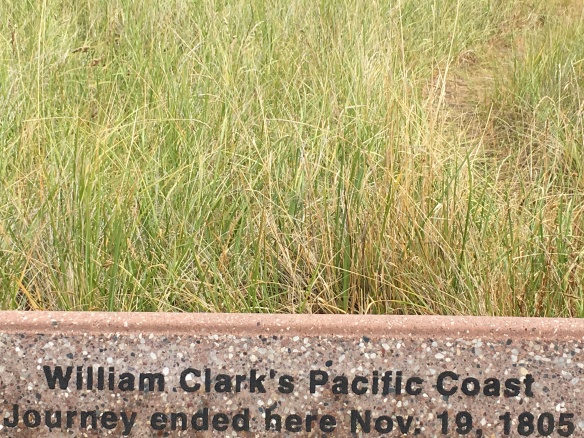
Cape Disappointment marks another very important place in the history of North America. It is not just a place that signifies disappointment, tragedy and danger. It is also the very spot where the famous Lewis and Clark expedition reached the Pacific Ocean in November of 1805. Yes, Lewis & Clark met with many a disappointment and setback along the 3700-mile route up the Missouri River, across the American Midwest, over the Rocky and Cascade mountains and down the Columbia River Gorge that took them a year-and-a-half to accomplish.

IMG_6400

On the journey, were they ever absolutely certain they would make it? As it was, they must have taken their disappointments in stride. For on an uncharacteristically calm day in a stormy November, they made their final push around the western Cape and finally met the limitless horizon.

Significantly, the Lewis and Clark Expedition was called the Corps of Discovery. Today, a 10-mile-long, well-groomed paved path winds through the dunes of Long Beach Peninsula and up into the forest of the Cape. It is called the “Path of Discovery”.

IMG_5994

Cape Disappointment is intricately tied to the Corps of Discovery, where both failure and success are entwined in a rich and diverse history of exploration. The spirit of questing celebrated on these shores includes and transcends both the unique events of human tragedy and human achievement. You cannot have one without the other. In one place. In one human being. Each of us is invited to the journey that includes, embraces and transcends disappointment and failure.

At some point along the journey, you need to have hope in order to continue. Even in the midst of all our unknowing, we can believe and trust in the solution, before it happens.

It’s called faith.

IMG_5922.JPG


[1] Jonah 3:10—4:11, NRSV, Proper 20A/Ordinary 25A/Pentecost+16

[2] Jonah 4:2

[3] Jonah 4:4,9,11, NRSV

[4] Richard Rohr, “Adam’s Return: The Five Promises of Male Initiation” (New York: The Crossroad Publishing Company, 2004), p.112

[5] John 1:38, NRSV

[6] Belden C. Lane, “The Solace of Fierce Landscapes: Exploring Desert and Mountain Spirituality” (New York: Oxford University Press, 1998), p.105

[7] Isaiah 55:8, NRSV

photos by Martin Malina IMG_5940

Buen Camino!

When in Sunday School decades ago we played the roles of well-known bible characters, I remember the only thing worse than being a “Judas” was to be a “doubting Thomas”.

We wanted to be Abraham, Moses, Kind David, Samson, Queen Esther, Rachel, Ruth, The Magi, Peter, Paul, John. We wanted to be Joseph or Mary, or even Jesus himself!

But Judas the Betrayer, or Thomas the Doubter? No. Indeed Thomas has been treated quite negatively in much of Christian preaching and teaching. He is often held up as a negative role model.

Let’s take a closer look at the text about Jesus’s resurrection appearance to his disciples (John 20: 19-31). Because there is no condemnation of Thomas. Recall the disciples are hiding behind locked doors in Jerusalem fearful of the authorities. Unless Jesus’ words to Thomas are inflected in an accusing way, they do not need to be read as a condemnation: “Have you believed because you have seen me? Blessed are those who have not seen and yet have come to believe” (John 20:29). They simply affirm that those who believe without first-hand experience of the risen Jesus are also blessed. (1)

But can we blame Thomas? Thomas only desires his own firsthand experience of the risen Jesus. He is unwilling to accept the secondhand testimony of others. And, his desire is granted: Jesus appears to him. Prayer answered!

I wonder if Thomas today doesn’t really represent so many of us who deeply yearn and seek for a first-hand experience of God, and are simply and naturally unsatisfied with hearing it ‘second-hand’. Hearing someone else’s first-hand experience of God is inspiring and instructional to be sure. We learn about someone else’s experience of God’s presence, healing, grace and wonder — whether that person is from the bible or our grandparents or the person sitting next to us in worship. But someone else’s experience of God can never be a substitute for our own.

What we may be looking for, is to be more like Thomas: Honest in our desire for a first-hand experience of the living God. Yearning to taste and feel more of the goodness of God in our own lives and in the world. Striving ourselves to make the world a better place for everyone. We may be unsatisfied with basing our commitment to a life of faith on someone else’s testimony. We may, like many people today, be seeking our own experience of God and suffer from what I would call the ‘second-hand syndrome’. Perhaps Thomas needs to be our role-model more than anyone else in the bible today!

Of course, the benefit of the Reformation was to teach us an important distinction in all our striving: Our motivation is important to be aware of, because if we strive to do good all in order to make ourselves right before God we will most certainly miss the mark. “We confess that we are captive to sin and cannot free ourselves,” we say in our Confession. God initiates the saving relationship. God moves; we only second the motion.

And yet, our striving, our trying, our good work as response to God can help create the space and the climate in which God’s grace is made clear to us, is given to us, and in which we are most ready, then, to receive God’s forgiveness, love and mercy. Being pro-active, doing things with one another in the church, yearning and striving for God — these are antidotes to the ‘second-hand syndrome’ and a prescription for a healthy life of faith.

Last week on the first Sunday of Easter, I emphasized the words from Matthew’s account of the Resurrection of Jesus outside the empty tomb that first morning. Jesus instructs the women: “Do not be afraid; go and tell my brothers to go to Galilee; there they will see me” (Matthew 28:9-10).

When resurrection happens today, as it always has beginning with that first day, there is movement forward. Not backward. As I said last week, there is no turning back once resurrection happens. The disciples are not instructed to meet Jesus in the empty tomb where the miracle happened. No. The instruction is quite clear: Get moving! Get out of here! Go to Galilee. Go to where I wait for you. In other words, don’t stay where you are! Do something!

In 2017 the Lutheran Church worldwide celebrates the 500th anniversary of the Reformation. We call it Reformation 500. ‘Five hundred’ is an important number in all the dialogue surrounding this momentous occasion. The national church has even set up the Reformation Challenges for the church across Canada to meet. And each of those goals are pegged at some variant of 500:

Five hundred refugee sponsorships (which already has been exceeded), five hundred scholarships for school children in the Holy Land, five hundred thousand trees planted in Canada, and five hundred thousand dollars raised for the Lutheran World Federation endowment. You can visit elcic.ca for the most recent update on where we are at in meeting all those goals. And please consider making a personal contribution towards any one of those worthwhile causes.

I’d like to up the ante. Let me call it the ‘Reformation 800 Challenge’. Eight hundred is the new Five hundred. Not only are we celebrating 500 years of Reformation this year; we turn to the future and pray not just for 500 more years but … 800. Why not?

Let that number, eight hundred, symbolize a confidence and hope-filled trust that God has more good than we can ever imagine in store for us in the church far into the future. And this is what I propose in this year’s Reformation 800 Challenge:

Next month, I begin walking the 800 kilometres from Irun, Spain to Santiago de Compostela in Galicia. The route I follow skirts the northern coast of Spain from East to West. This is my Reformation 800 Challenge.

I walk a pilgrimage route, one of the most ancient on the planet. This Camino (which means the “way”) has been an important spiritual discipline for almost a thousand years for millions of Christians.

A pilgrimage means that what happens on the outside of us in our physical reality mirrors the change and challenge that happens on the inside of us. In other words, outer and inner realities find some kind of resonance on a pilgrimage experience. It’s on a pilgrimage where many discover or re-discover their ‘walk’ with God in life, are renewed on their ‘path’ and/or are ‘re-directed’ to new ways of living.

I would like you to do this with me. Yes. I invite you to consider doing a Reformation 800 Challenge with me, in your own way, with your own resources and plan.

For example: In order to reach the goal of 800 kilometres in under two months I plan to walk at least 20 kilometres a day. So, while I’m gone would you consider a physical discipline whereby you, for 20 minutes a day, do something intentional for your own health and well-being: walking, cycling, lifting a small weight, stretching, doing yoga, etc.? It doesn’t have to be ‘extreme’; something simple even if you are confined to a chair or bed — for 20 minutes a day, do something that involves your body in ways you have not normally been accustomed. Be creative.

A piece of wisdom for pilgrims that has guided my preparation and planning is: Walk Your Way. Walk your own Camino. This is nobody else’s walk but yours. Do what you want and need to do, in your own way, according to your own pace.

You can interpret this challenge in many ways. For example, if you are very active and move about a lot in your daily life already, perhaps sitting still and quietly for twenty minutes a day in silent meditation and prayer is your way. Or, take twenty steps a day. Do twenty reps of a particular exercise or stretch. But whatever you do, the important thing is that you are challenged to attempt and remain faithful to a daily, body-involving discipline. Do it your own way.

Keep a journal or write your notes on a piece of paper that you stick to the fridge door. Write the date, and the accomplished task, so that over time, you can track your progress.

Your goal: 800 of something before the end of this year — whether eight hundred minutes, steps, kilometres. And here’s the good news. You already have a head start on me. I don’t begin until mid-May. You can start this afternoon, on your Reformation 800 Challenge! And, you have until the end of the year; I need to be finished my walk by early July.

After I return from my sabbatical, I would very much be interested in having a conversation with you about our experiences on our pilgrimage. They say that for pilgrims close to reaching their destination in Santiago, many confess that by the end it was no longer them walking the Camino, but the Camino was walking them. In other words, the experience of doing it created deeper trust in the way of God, of faith and peace within them. The physical reality converged with their inner life in positive ways.

As you contemplate what your discipline will be, as you think about what you will do, as you plan your own ‘pilgrimage’ — here are some questions for your own reflection and which can provide a basis for our own conversation when I return. Ask yourself:

In Preparation

What will you do to reach ‘800’ by the end of the year? In time? Kilometres? Steps? Reps? And how will you do it on a daily basis? (for example, 20 minutes/kms/reps/steps, etc. per day)

What are your intentions for this experience? What do you hope for by the end? The first recorded words of Jesus to his disciples in John’s Gospel are: “What are you looking for?” (John 1:38). How do you know you will find it if you don’t know what you are looking for in the first place?

What do you think you will discover about yourself? Saint Augustine once said that knowing yourself is a stepping stone to knowing God.

How will you record your journey?

On the Journey

Where did God find you? What experiences along the way brought you close to God?

What was the best part of the experience so far? What has been the greatest challenge?

Who did you meet along the way? Or, describe your relationships with others during the experience.

What were you grateful for?

Nearing the end / Getting close to the goal

What does it mean ‘to arrive’?

How does it feel to be reaching a destination after great effort and clear motivation for the journey?

What sacrifices did you make in order to get this far on the journey?

How will you celebrate and honour the ending of the journey?

After the Journey

What was the most memorable part of the whole experience?

How did you deal with disappointments and/or failure during the journey?

How do you now view God?

How will you keep what you learned alive in your regular life now that the journey is over?

Has anything shifted within you as a result of the experience? If so, how would you describe this change within yourself?

How will you share your journey and what you have learned with the important people in your life?

As we soon begin our pilgrimages, may God bless us on the way. And to all we meet along the path, may we wish them, “Buen Camino!”
1 — Marcus Borg & John Crossan, “The Last Week: What the Gospels Really Teach About Jesus’ Final Days in Jerusalem” (New York: Harper One, 2006), p.202-204.

Dialogue sermon – Epiphany 3A

The people who sat in darkness have seen a great light, and for those who sat in the region and shadow of death light has dawned (Matthew 4:16)

The people who walked in darkness have seen a great light; those who lived in a land of deep darkness — on them light has shined (Isaiah 9:2b)

Voice 1: We confess that we sit in darkness (Matthew 4).
Voice 2: We confess that we even have the gall to walk around in the darkness (Isaiah 9).

Voice 1: Whether we are moving, or staying put, the darkness of sin clouds our vision, purpose and value in the world. We stumble and fall —
When we exclude, and draw lines of division between the haves and have-nots;
When we ignore, avoid and despise those different from us who press into our private places, disturbing the darkness and isolation.

Voice 2: We confess our longing to sit and walk in the light.
A place to be, free from our stuck-in-the-rut-ness,
free from what holds us back — our prejudices and fears.
A place to affirm and re-affirm our call.

Voice 3 (from balcony):
Bethlehem.
Egypt.
Nazareth.
Jordan River.
Wilderness.
Capernaum by the Sea of Galilee.

Voice 4 (from balcony):
The places where Jesus had his beginnings —
moving,
interrupting,
disturbing,
challenging,
calling.

Voice 1: Where are we now? What place inhabits our vision?
We long to return soon to our home, at 43 Meadowlands (Faith Lutheran Church).

Voice 2: We long to identify our place in the mission of God to the inadequately-housed (Julian of Norwich Anglican Church).

PLACE IS IMPORTANT.

Voice 5:
Our place in this world.
Our purpose.
Where we pray, sing, do mission together.
Where we affirm week after week who we are in Christ,
the light of the world.

In relationships, where we act boldly, and immediately, as did Christ’s disciples of old.

Jesus comes into the places of our lives to change us, challenge us.
No longer complacent,
but urgent following.
No longer passive,
but active response —

Voice 1: to the God who has, does and will continue to shine
God’s light and love in Jesus Christ
upon all who sit and walk in the darkness of the world.

An installation sermon for a twin pastor

I wrestled this week with whether I should have my hair cut. Normally I wear my hair much shorter, especially during the winter months when ‘hat head’ poses fashion challenges. The reason I didn’t was I looked forward to playing up the twin thing once again; I know that my twin brother usually wears his hair much longer than I do.

And I’ve eagerly anticipated standing before you today, and asking: Are you sure you have the right twin as your new pastor? How do you know that your pastor is actually David, and not Martin? How do you know which one you are installing? After all, you’ve only had your new pastor a couple of months — do you really know him that well already?


Just one word of advice: If you believe you see Pastor David in Conestoga Mall or walking in Stanley Park in Kitchener or skiing at Chicopee, please, please don’t right away presume it’s Pastor David you are meeting.

One of my all-time favourite, yet awkward, twin-pastor experiences, almost always goes like this: I’m in town (Kitchener-Waterloo) either visiting David, Patricia, Sarah & Susie, or at some Synod meeting and going out by myself to the mall or restaurant when — it never fails — someone I do not know or maybe even know a little bit comes up to me and launches into quite a personal conversation; the person before me reveals information of a confidential nature.

I am caught in a conundrum: Do I carry on listening empathetically, nodding my head with pastoral attention and care? How soon do I break in with the news: “Ahh, excuse me, I am Martin, Pastor David’s twin brother; did you think I was Pastor David?”

At which point, the person’s jaw usually drops, the blush factor intensifies, and eyes pop. “Noooo! Really!?!”
“Yes. Really!”
“Pastor David, you are pulling my leg!”
Then, I have my passport and other photo ID handy, just to prove my identity.

Most non-identical-twins in leadership, I have come to covet, have lived relatively scrutiny-free of their public persona without ever having to ‘prove’ who they are. And here’s a twin secret: Both David and I know who we are. And we believe that there are differences between us; I don’t confuse my own identity with David’s. In fact, it has often surprised us why people can’t notice the distinct differences between us.

But we Malinas won’t make it simple. Add to that, we both end up being pastors in the same church. So not only do we look alike, we wear the same clothes on the job.

In the walls of the church, we may know who we are all about. We have our own social fortresses to hide behind; we gather with our own kind, in familiar places and spaces. We have our own rules and norms of behaviour in our brand of a more progressive, Lutheran church. Yes, we may know who we are.

But does the world know who we are? And perhaps this is the challenge for the church today.

Installations of pastors, or as the Anglicans call them, ‘Inductions’, are tricky events for us. Yes, we celebrate a new relationship between pastor and people, here at Christ Lutheran Church in Waterloo. That celebration tends to focus on the pastor; and, I’ve played into that in the first part of my sermon today!

I suspect that the traditional culture of the church has tended towards seeing ‘ministry’ as the sole purview of the pastor — and that Installation services tended to be viewed somewhat like launching pad for the pastor’s dazzling display of skill, leadership prowess and charisma.

In contrast, the relationship between pastor and people, which an Installation service signifies, is really about acknowledging the true meaning of the word, ‘liturgy’ — the work of the people. The pastor doesn’t ‘own’ the ministry of the church; it belongs to the people to which the pastor joins in supporting and enlivening it with his or her particular gifts, interests and passions.

Yes, leaders must be given permission to lead. Yes, you have elected Pastor David to be your leader. Yes, good leaders need to give themselves permission to lead. And yes, good leaders also need good followers. So, role clarity is vital. Setting and maintaining personal and professional boundaries are important.

It is also important to live collectively in this work. In the words of Martin Luther, we all comprise the ‘priesthood of all believers’ in the exercise of our vocations as Christians, ordained or not.

It’s not just about the pastor. It’s not just about the people. It’s not about pastor or people. It’s about pastor and people. We are not lone-rangers; we are not entrepreneurs or independent consultants in the business of selling faith to the world.

Because it’s about doing it together somehow. Praying together. Being responsible together. Not spectating the practice of faith, but participating in it. Figuring it out in the doing it — in the mystery, ambiguity and paradox that are central to the character of our faith.

I appreciate the Gospel text offered in this service today (Mark 4:3-9). I am drawn towards conversations about this text that focus on the identity of the sower, in Jesus’ parable. Who is the sower? Is it Jesus? Or, does this role fall exclusively on the ordained, set-apart, folks of our church — the pastor? Or, someone else? You, perhaps? We know only of the work the sower does.

I’ve also been looking at the Gospel text for this Second Sunday after the Epiphany (A), where Jesus calls his first disciples (John 1:29-42). There are two people accompanying John the Baptist when he identifies Jesus as the “Lamb of God”. Only Andrew is named. But the other one remains anonymous to us (v.40).

Perhaps both Jesus, who does not name the sower in his parable, and the writer of John’s Gospel who does not identify the second disciple, do so intentionally. Perhaps the anonymity we encounter in these stories is meant to engage us, the reader / the listener, in order to invite each of us / all of us into those roles — as follower of Jesus and sower of the Word.

Pastor David told me the little, liturgical scare you had here prior to the first Christmas services: Of course, it is appropriate not to have the baby Jesus in the manger during Advent and the weeks leading up to Christmas; after all, Jesus has not yet been born.

But it was just before the Christmas Eve service, I believe it was, when Pastor David expressed some anxiety about the missing infant. Where is Jesus? We’ll have to put him in the nativity sooner than later. Or, have we lost Jesus? Has Jesus already left the building? How can you celebrate the Word made flesh with no baby Jesus in the creche? This was not looking good.

Much to Pastor David’s delight, and surprise — I might add, not only did one baby Jesus appear in the little manger on Christmas morning, but two, identical baby Jesuses!!!!


I’m not going to suggest that Jesus had an identical twin brother, otherwise Dan Brown might have another best-selling fiction on the shelves in no time.

Nevertheless, the image is significant. Because, Christianity starts not with a one-person-show but a three-person Trinity (God the Father, God the Son, God the Holy Spirit). Christianity is inherently relational, and so is the work of God.

Following Jesus and sowing the Word is not exclusively the work of the Pastor. Can we envision this work collectively? Not just for one individual to do or be responsible for, but as the Body of Christ in the world today. Perhaps we can get at the identity of the sower or the disciple by observing and starting with what the sower and the disciple do. And how it is done:

When the work of compassion and justice expands beyond the walls of this space, we plant seeds. When the work of loving and forgiving involves the young and the mature doing it together, we plant seeds. When the risky following leads us out there and no one doing it stands alone, we plant seeds. When the work of the church is done together, as diverse and multi-faceted our individual identities in the Body of Christ are, we plant seeds.

And then the world will know who we are.

Checking our Image of God

Do you know “Good Old Uncle George”? (1)

Listen to this description of what happens when a family makes a visit to Uncle George who lives in, and never really leaves, his formidable mansion.

At the end of the brief visit in which the children describe Uncle George as bearded, gruff and threatening, he leans closely, and says in a severe tone of voice, “Now listen, dear. I want to see you here once a week. And if you fail to come, let me just show you what will happen to you.”

He then leads the family down to the mansion’s basement. It is dark, becomes hotter and hotter as they descend, and they begin to hear unearthly screams. In the basement there are steel doors. Uncle George opens one.

“Now look in there, dear,” he says. They see a nightmare vision, an array of blazing furnaces with little demons in attendance, who hurl into the blaze those men, women and children who failed to visit Uncle George or act in a way he approved. “And if you don’t visit me, dear, that is where you will most certainly go,” says Uncle George.

Do you know “Good Old Uncle George?” Sound familiar?

From the bible readings assigned for this season after Epiphany, we are asked to consider again who is this God we are called to follow. Of course, no one image of God is complete. Our perspective is limited, no matter how well we know the bible or how many degrees we may have behind our name. And God is greater and bigger than anything anyone can imagine or say.

Nevertheless, it is fruitful to examine what we think about God. Our image of God influences our own behaviour and what we do “in the name of God”, who is revealed in history, in our experience and in the Scriptures as God the Father, God the Son and God the Holy Spirit. Eventually, our actions mirror the God to whom we pray, to whom we relate, whom we imagine. (2)

I would like to highlight briefly three aspects of the character of God, in Jesus, that we can see in the story of Epiphany for today — the baptism of our Lord (Matthew 3:13-17).

First, Jesus moves. He does not sit still for too long. Jesus is baptized ‘on the side of the road’ so to speak. He is baptized nowhere special, not in some officially consecrated, designated holy place — but in the wilderness where John preaches ‘on the edge’ of civilization where crowds have to follow to be there.

In fact, the Jordan River is some 35 kilometres from Jerusalem. For people who walked, this would likely mean at least a two-day journey from the city. So, most of the people who witnessed this divine event and encounter between Jesus and John on the banks of the Jordan River had to travel to get there. Even the high priests and Pharisees, those in power and who held influence in the religious establishment of Jerusalem had to get there.

Who is God? God is more a verb than a noun; God is not static; God is always on the move; we can in this story of Jesus’ baptism appreciate the moving parts of faith. It is important to note to where God goes, and is revealed.

Mobility is a kingdom value. Going some place else away from what is familiar and comfortable is part of exercising a healthy faith. Conversely, staying in one place too long is not healthy for the soul.

Second, in this mobility God relates to us in vulnerability. In worship and praise of God we are accustomed to calling God Almighty. But, at the same time, if we are ‘getting’ Jesus, we ought to be calling God Al-vulnerable.

Jesus relates to us. The divine becomes one of us in moments of vulnerability, especially. The primary symbol of Christianity, the Cross, points to the ultimate, earthly destination of Jesus, and reveals our most vulnerable God. The Cross is a sign that says: God understands us even in death and dying.

What is unique about Matthew’s version of the baptism of our Lord is that it is meant for public witness. Unlike the other Gospel accounts who make this event more of an inward, spiritual experience of Jesus, Matthew portrays the baptism of Jesus as an external event, available to all present.

Also, Jesus submits to baptism not because he needs his sins washed away. Through this act, Jesus was indicating his willingness to yield his life, to surrender his life, in obedience to his Father. Jesus requests baptism by John so that he could completely identify with those he came to save.

Therefore, relationships described by mutual vulnerability is another kingdom value. Being with others in this way, in community, is vital for faith. Prolonged isolation and emotional detachment from others is not healthy for the soul.

Finally, not only is God in motion and in vulnerable relationship with us, God is reaching out to us, immanent and present to our common lives.

Jesus’ father in heaven calls to him, validates and affirms his path. Then, too, Jesus calls his disciples. Jesus does not do it alone. He includes his disciples in his travels, walks in their shoes, involves himself in the common, daily activities, gets his hands dirty — so to speak.

Jesus is the son of a carpenter from Nazareth, he fishes with his disciples, he goes to weddings and drinks wine, he hangs out with all people not just the ‘good ones’.

Jesus does not leave us alone, some distant, transcendent God who does not care about what happens on earth. Jesus will not stop reaching out to us, and will beckon us to follow where he goes. Jesus continues to engage our lives, touching our hearts, our hands and our minds, in the very course of our lives on earth. God will intervene, and pierce our perception, inviting us into a new way of being and doing.

Today, followers of Jesus can consider anew this God who is revealed to us in Jesus. Jesus is the divine-man, who walked everywhere and moved around a lot; Jesus is the God who seeks relationships and models vulnerability and self-surrender; Jesus is the God who will not leave us alone and continues to call out to us to follow in his way.

May God bless the path we journey. Amen.
(1) cited in Dennis Linn, Sheila Fabricant Linn & Matthew Linn, “Good Goats: Healing our Image of God” (Paulist Press, New York, 1994), p.3
(2) ibid., p. 7ff

The outing begins within us

“If a kingdom is divided against itself, that kingdom cannot stand … No one can enter a strong man’s house and plunder his property without first tying up the strong man; then indeed the house can be plundered … Whoever does the will of God is [my family]” – Mark 3:24,27,35 

I wonder, in an action-oriented culture, whether we have considered the curious notion of where the kingdom of God – the reign of God – resides. In the the Gospel of Luke (17:21), Jesus says that “The kingdom of God is within you.” The great reformer, Martin Luther, preferred this rendering to the sometimes translated, “among” you. In his famous German translation he writes: “Das Reich Gottes ist inwendig in euch.”

Our house-dividedness and our divisions are not only externally out there in the big, bad world; they embody an internal reality, among and within us, that we often fail to acknowledge.

I think it was Canadian mystery writer, Louise Penny, in one of her recent novels described the internal conflict between two wolves: On the one hand, there is the wolf that lives on fear, anxiety and negativity; the other wolf warring for supremacy inside of us lives on joy, optimism and hope. The main characters in the newly-released home video entitled “Tomorrowland” starring George Clooney use this image of two parts of ourselves in conflict: the wolf of fear versus the wolf of hope. Which one wins? Which one will be victorious?

The answer: The one you feed.

We don’t often recognize the darkness within each one of us. We are all divided – in our nation, in our city, our communities, our churches and in our own lives. Whether we are ‘saved’ or not. Whether we are believers or not. Whether we belong to the right church, or not. Whether we have the right interpretation and doctrine, or not. Whether we speak the right language, or not.

It is curious how Jesus rebuffs the religious leaders’ serious accusation that Jesus had the devil inside him. In denouncing their claim by a logical argument – how can the devil purge the devil? – he acknowledges Satan’s existence and influence. Jesus doesn’t deny the power of evil.

We are all divided. The power of sin extends into the ways we have organized our lives, our prejudices, our racism, our bigotry, our ‘common sense’ ways of looking at the world and people, our economy. We are divided. Our identity is fractured. We will say one thing about God’s love, and behave the opposite way when it comes down to it.

It can be very easy to detect which wolf we end up feeding, most of the time.

Thankfully, there is this levelling affect that Jesus has in his words from the Gospel today. This is not an exclusive venture we are on, as followers of Jesus. In verse 28 a more accurate translation of the word “people” evokes a universal meaning, such as “all children of humanity” – everyone will be forgiven their sins! This is good news! This is the hope. Because, even though we live in imperfect, flawed and divided communities – there is still the good, therein.

But how can the two wolves get along inside of us? How can the warring internal battles, in the end, be resolved?

“Das Reich Gottes ist inwendig in EUCH”. That last word, “you”, is not singular. In German, it is the plural form. Of course, in the original Greek, Jesus addressed his disciples. But in English we don’t have this distinction in the second-person between individual or plural; so we easily and naturally assume, I think, the individual. But this is a mistake.

In this Gospel text, the one verse that I think get’s us distracted more than any other is the ‘one sin against the Holy Spirit that is unforgivable’ (v.29). And immediately we, individually, start getting upset and fearful and very nervous: What if I have sinned against the Holy Spirit? Will I go to hell? People on their death beds will often become anxious about their faith, whether they, individually, have done enough to ‘earn’ salvation on their own, by themselves. This fear goes deep.

But the weight of glory and the burden of sin is carried by the whole, mystical body of Christ. I don’t have to be privately perfect in order to go to heaven, because the perfection is in the whole body of Christ. We are merely members of it: some of you are a foot, some of you are an eye, some of you are an ear – today, I am the mouth! “I” am not the whole body; you (singular) are not the whole body.

You, individually, don’t have to take the burden of universal sin upon yourself, in which you are complicit, I agree. And so am I. But neither can you, individually, take on the weight of glory upon yourself. If you are good – and obviously you are by coming to church today and sticking with us the whole hour long – your goodness is not your own: It’s your Mom in you; it’s your Dad in you; it’s your grandfather and your grandmother in you; it’s your neighbour in you; it’s your pastor that pastored you years ago in you; it’s your friends in you. They are your goodness.

This rampant individualism that is the unfortunate consequence of the Reformation has probably undone Christianity more than anything else, to keep us – ‘tie us up’ – from understanding the communal aspect of God’s kingdom and the church. This is the level from which Jesus, Paul and Martin Luther for that matter proclaimed it. (Richard Rohr, Center for Action and Contemplation, The Rohr Institute, Disc 4, New Mexico, 2012).

So, despite the tug of war inside of inside of us, obey the good. Whatever is strong and good in us together, let that lead. Whatever good nudges us at the core of our being – forgiveness, compassion, grace, good intention – let’s not ‘tie that strength up within us.’ Let’s not hesitate. Let’s not rationalize it to death. Let’s not succumb to the temptation of paralysis-by-analysis. Let it out. Let that goodness lead us. Because each of us has this shared, good strength within – even people against whom we hold prejudice and discriminate.

Decorated Canadian Olympian and mental health advocate, Clara Hughes, said at the Closing Ceremonies of the Truth and Reconciliation Commission in Ottawa this past week that “The only way you can be good and strong and fast is if you want it for everyone.”

Jesus said, “Only those who do the will of God is my brother and sister and mother” (v.35). We say the words every week in our prayers – praying for peace among waring religious groups in far away places. We pray for peace in Syria and Iraq where ISIL continues its reign of terror against religious minorities. We pray for reconciliation between Aboriginal and Settler peoples – that is, immigrants like us.

Why don’t we also consider living that prayer out, in our own backyard? Why don’t we also consider actually doing something in the name of Jesus to the purpose of peace and reconciliation between different religious and ethnic groups in our own city? To be a faithful witness of what peace can look like, to the world?

To feed the wolf of hope.