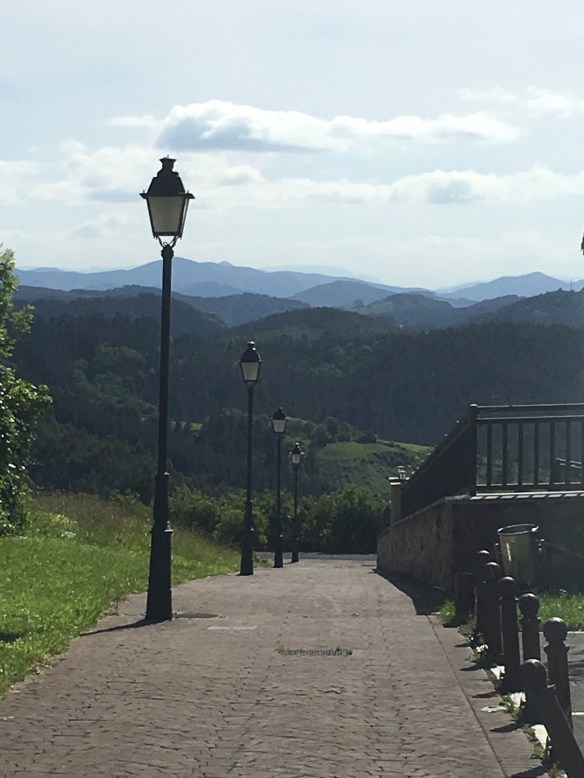
Driving me crazy

IMG_7227

There are times in life that come our way to remind us that something is ending. And even though at some deeper level we know it to be true, we hesitate to face that ending, whatever it is — the end of an era, the end of the life of a loved one, the end of a relationship, the end of a career, the end of youthful health and energy, etc.

How do we face these movements in life?

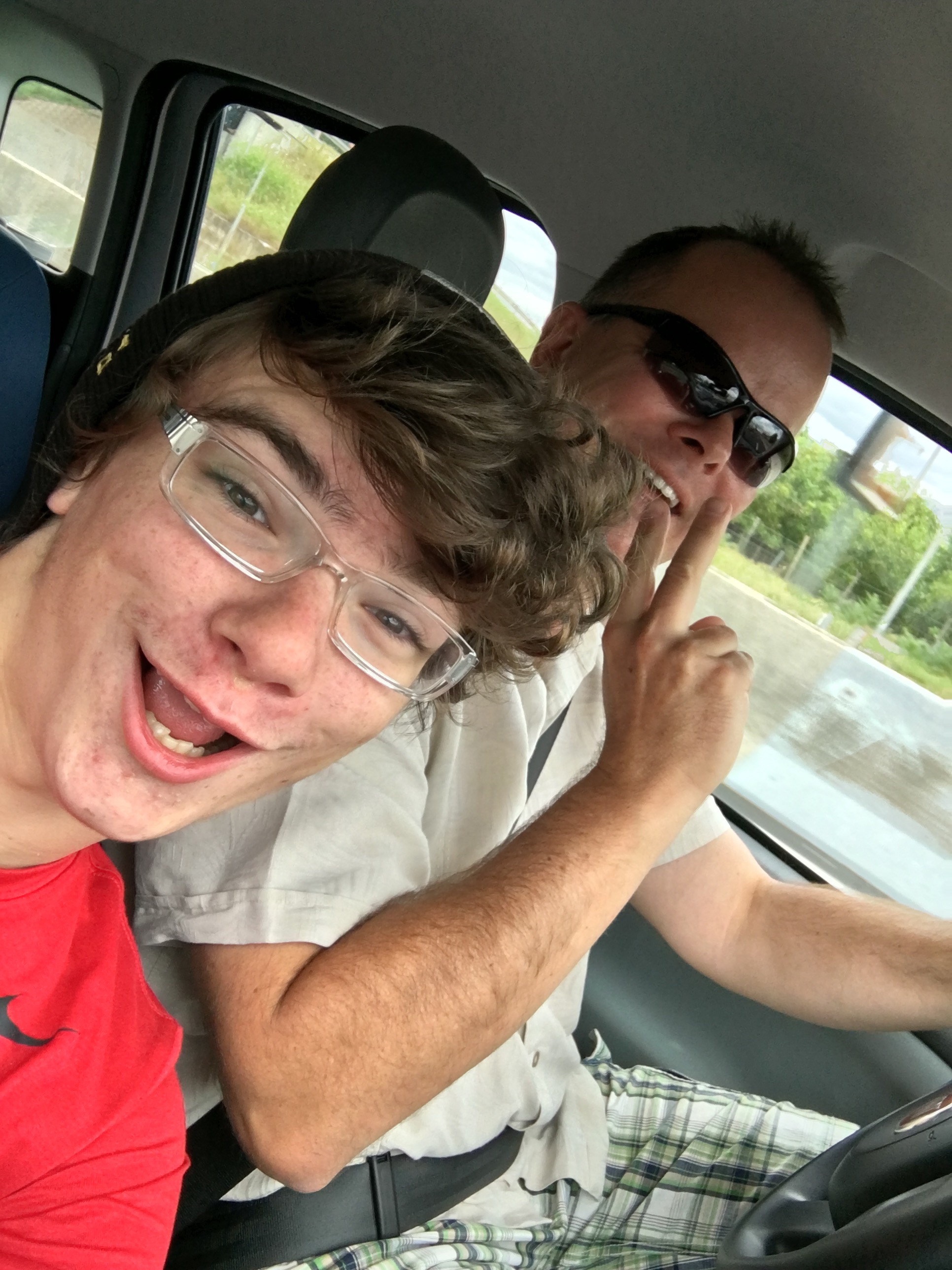
In planning our family vacation to Italy a couple summers ago, we decided to rent a car. Our host family lived in Naples. So, right off the plane, we jumped in our small Fiat, yours truly engaged the manual shift, and we immersed ourselves in the mayhem of driving in Naples.

What added to the heightened anxiety of driving in the sprawling metropolis, was that I had to follow our friends from downtown to the suburbs – no short jaunt ‘round the corner.

Not only did I have to deal with the speedy and crazy driving conditions, I had to slice through the haze of jetlag in my mind, and pay attention. I had to keep up to our host family already long acclimatized to the riotous driving culture there.

What is more, shortly after recovering from the stress and thrill of that first-day drive from the airport, the next day, in our separate cars we took to the winding and narrow road along the Amalfi Coast. To get there, we had to cross Naples first. Been there done that. No small feat.

IMG_5192

Then, once on the rocky Amalfi coastline, my face was practically pasted on the front windshield. I had to make constant reflexive maneuvers rounding blind, hairpin bends. At relatively high speeds I squeezed our little Fiat between oncoming Vespa scooters, ginormous tour buses and sleek, racing, tinted-windowed Audi sedans. All the while wiping the spittle from the glass in front of my mouth emitting profanity after profanity.


Caution thrown to the wind, I threw myself into it without thinking too much. Reactive, assertive and confident driving skills required! Since I didn’t exactly know the route we would take, I had to focus on what was directly in front of me. I had to pay attention and respond not only to the immediate conditions I found myself in. I also had to keep an eye on the dark blue Hyundai some car lengths in front, leading the way.

IMG_7315

Following someone in another car, requires certain skills best developed in the context of faith. Let me explain.

First, you have to trust. You must trust that the One you are following knows what they are doing and where they are going. You have to believe that following them faithfully will take you to where you want to go. At some gut level, you have to relinquish your claim to knowing better. And trust the other. And believe that they believe in you and your skill, too.

Second, you have to pay attention. You have to stay aware of your surroundings, even though the distractions and obstacles are frightening. As with driving in general, you can’t be looking inside the car or admiring the scenery to the side or behind you. Rather, you have to remain focused on the road ahead. Better yet, for as smooth a ride as possible, you have to envision yourself already being a certain distance down the road.

IMG_6661

Third, you need to act on in-the-moment decisions. Following another car is a whole different way of driving then when you are on your own. On your own, you can stop whenever you want, you can go however fast or slow you want to go, and you are not accountable in any way to another vehicle on the road.

IMG_7356

All that changes as soon as you say, “I will follow you.” If you don’t want to get lost, you have to keep up. You have to do it. You have to match the velocity of the lead car, whether they speed up or slow down. You have to drive in a way that will keep you within eyesight of the lead, which will affect how you negotiate traffic signals, lane changes, roundabouts, traffic jams, and toll gates.

IMG_4632

Finally, in order to follow another successfully, you have to take the primary focus off yourself. And fix it on whom you are following. There is no time to dwell on your past mistakes – the guy you cut off coming onto the expressway, your cursing a fellow driver weaving across multi lanes going 130 kilometres an hour, or the slight yet growing pressure you feel on your bladder from all the espresso you drank earlier in the day.

There is no time for self-indulgence of this kind. There is no time for regret, guilt or self-absorbed mental gymnastics. There is no time to stop to lick the wounds of obsessive introspection.

Because your energy is required now for the task at hand: trust, focus, action.

Jesus describes at least two opposing lifestyles in the Gospel reading for today.[1] The sheep are on Christ’s right hand – they are the good guys. The goats are on Jesus’ left hand – they are the bad guys. I suspect we can relate to being both a goat and a sheep at different times and conditions of our lives.

Either way, both groups are surprised to hear Jesus’ answer to their question: “When did we see you …?”[2] Both groups failed to see Jesus in the faces of the stranger, sick, hungry, thirsty, naked, and imprisoned.

The only difference is that the sheep already happened to be serving those in need, before they heard this news, before they had a chance to think about it too much, strategize and create impressive mission plans. That group was visiting the sick and tending to the needs of others as a matter of course, moved by a simple compassion for the needy. Doing so was part of their regular routine of life.

On the other hand, the goats apparently never thought nor believed that their very salvation depended on helping others, going to the poor, attending to the weak and vulnerable in society. Instead, they must have made life predominantly a game of ‘who can get the most stuff and be most comfortable and take care of their own first.’ Their faith must have been assigned to a God who existed only in their minds, in abstraction, a matter reserved only for intellectual discourse,polite company, and board room strategy sessions.

At this turning point in the calendar year, we shift gears and look ahead. We leave behind the relative calm and ease of the long summer season after Pentecost, and enter the fray of the holiday season. How we drive through and around the many distractions, noise, pace and twisting corners of our lives in the coming months will reveal a lot about who we follow or whether we are following anyone at all, let alone Jesus.

So, let’s not forget where Jesus goes. Let’s not forget what he was all about, whom he visited, whom he cared for and where he spent his time. This is our focus. Let’s trust that Jesus knows what he is talking about and the path he takes, even though God’s reign feels countercultural and unpopular in a season of getting more stuff and self-indulgent sentimentality.

Perhaps we will need to practice looking for Jesus on the streets, in the hospices, the safe-injection sites, the social housing units, the shelters, the refugee lines and immigrant ghettos in our city.

Let’s trust that Jesus’ way will lead to our resurrection and transformation in this life as much as in the next. Let’s pay attention to our surroundings and the various ways God encourages us on the way. Let’s not remain idle, nor get stuck in self-centred living. Let’s not coast nor ride the clutch too much. Because we’ll stall the car. And stopping is not good on the highway of life. In fact, it’s dangerous.
IMG_4253

Instead, let’s act faithfully in small, concrete ways that make a difference for the better in the lives of others in need.  Let’s do so assertively and confidently, knowing that we don’t travel alone; there are others in the car with us and on the highway around us. Because despite our many failings, and the mistakes we will make along the way, God continues to have faith in us.

There is too much at stake. And no time to lose. Still today, in our country – Canada – and in our nation’s capital, Ottawa, there are still over 10,000 households needing adequate, safe and affordable housing.[3] And, 15% of the population in the whole province of Ontario still lives in some kind of housing need.

Where is Jesus? The bible makes it very clear. The better question is: Will you follow?

Recently I came across this anonymous quote about the merits of volunteering in ways that can reflect the reign of Christ in our lives and in our world:

Volunteering is the ultimate exercise in democracy. You vote in elections … [once every four years], but when you volunteer, you vote every day about the kind of community you want to live in.

When you volunteer for good causes you add value to the vision of God in earth. The Reign of Christ is about the kind of world God wants us to live in. Where is Jesus? Will you follow?

We end today a church season. This annual observance can remind us that endings only herald a new beginning just around the corner.

[1] Matthew 25:31-46

[2] verses 37 and 44

[3] check out http://www.multifaithhousing.ca

Surprise ending

The Arnprior Rapids were destined to lose. If you asked me, midseason, to write the history of the 2017 Fall season of the Lanark-Renfrew Highschool Football League, it would sound completely different than it actually turned out in the end.

After playing five games, the Rapid’s opponent, the Almonte Thunderbolts, was undefeated. What is more, in all their games they did not have one single point scored against them. They were that good. By all counts, they were destined to be the League’s champion.

When a couple of weeks ago Almonte faced its arch rival and 2nd place Arnprior Rapids in the final championship game, many – even the players themselves deep down – felt this was a pointless exercise. Why bother even playing the game? Because the last time these two teams clashed Almonte thrashed Arnprior 40-0. And the time before that, 24-0.

So, you tell me. What will the history books have said about the outcome?

IMG_6618

These kids are learning an important life skill. Because as is often the case throughout life when things happen, it is easy to focus on what is wrong, what seems impossible, what appears a waste of time and energy. And give up.

Over the past several weeks, we have been reading some parables of Jesus recorded in the latter chapters of the Gospel of Matthew.[1]

These apocalyptic[2] parables sound somewhat harsh towards the human project: It seems human beings cannot help but eventually get it all wrong, whether it be the wicked tenants, the foolish bridesmaids or, as in today’s parable, the fearful investor.[3]

What is more, you get the feeling that the line between doing the right thing and the wrong thing is awfully thin. Even those that do get it right in Jesus’ telling are not that much different from those who get it all wrong – those who are doomed to the hell fires “where there will be weeping and gnashing of teeth.”[4] In short, there is a heavy, dark pall of negativity hanging over these stories.

It’s hard to remain enthusiastic about a life of faith when presented with these doom-and-gloom scenarios. It’s easier to become more fearful than hopeful.

When reading from this section in Matthew, I think we need to be mindful of the context of Jesus’ storytelling. We need to remember that Jesus told these stories while he was heading right into the middle of his own personal, high-risk venture, which led to arrest, torture, suffering and horrible death.

That is, he had decided to leave the relative safety of rural Galilee and head to Jerusalem, the capital city, where the authorities would regard Jesus as “a threat to the status quo and their own power.” The Romans would regard him as a “disturber of the peace” and condemn him to capital punishment on the Cross.[5]

We have the benefit of hindsight to help us better interpret these challenging parables. That is, because of the new life given to Jesus on Easter morning, we can now believe in resurrection, which is the end game of all of history. The benefit of Christ-faith is the hope and promise we discover on the other side of risk-taking, of losing, of failing and of taking responsibility. All the things that make us human.

Despite what may look impossible, a sure failure, a likely defeat and a waste of time and energy, this parable today encourages us to take heart and simply put our gifts, our talents on the line.

The sin described here is the sin of not risking anything, of not caring, not investing, of playing it safe and being overly cautious with what we have been given.

Whatever we have, “each according to their ability”[6], even if it’s only one, measly, tiny “talent” – when we risk giving it away to the world, allowing it to engage the world with positive intent, only then can good things happen. There are no guarantees good things will happen. But then again, we wouldn’t know unless we try. And take the risk.

But it’s well worth it! Because one talent is neither measly, neither is it tiny. One talent, according to some interpreters, was worth fifteen years wages or $1.25 million in today’s valuation. Just imagine the wealth of the entire property of the master who was placing it all in the care of his stewards.

Let’s take that to be God and us. When we can first appreciate all that wealth and riches that God has given us, and can begin to acknowledge the great faithfulness of God to entrust all that is God’s to us … now that’s something special about the God we worship. What a great joy! What a great responsibility!

In the end, this parable is not about money, essentially. Because even if the first two stewards who invested the little that was given them lost all that they invested on the market, Jesus would still have applauded them for trying. The attitude of risk-taking and putting it all on the line is the important thing, not the results of their monetary investment.

And then, when you try despite the odds stacked against you, you never know. How resurrection happens, and when, in the context of our own lives, will be a surprise.

When the Arnprior Rapids faced off against their arch rivals, the Almonte Thunderbolts in the Lanark-Renfrew Highschool Football League championship game, it was truly a David and Goliath show-down. The end looked bleak for Arnprior.

By all counts, Almonte should have won that game.

But, life is full of surprises. God is full of surprises. We can never know for sure what unexpected things await us when we put ourselves out there and invest our gifts on the playing field of life.

Not only did Arnprior score two touchdowns in the game – thus breaking Almonte’s bid for a clean sheet season – Arnprior did not allow a single point scored against them.

History is being written anew.

[1] Matthew 25:1-13, Matthew 22:1-14, Matthew 21:33-46; a parable is simply a fictional story Jesus tells to reflect some truth

[2] when the ‘end time’ promises of God are fulfilled

[3] Matthew 25:14-30

[4] Matthew 25:30

[5] John M. Buchanan in David L. Bartlett and Barbara Brown Taylor, eds., “Feasting on the Word: Preaching the Revised Common Lectionary Year A Volume 4” (Kentucky: WJK Press, 2011), p.308

[6] Matthew 25:15

God-talk

Last week in the Canadian Football League (CFL), Ottawa RedBlacks receiver Diontae Spencer set a CFL record in a game against the Hamilton Ticats for most overall yardage gained — just under 500 — in one game. His incredible feat was truly remarkable in a game where his team didn’t score any points in the first quarter.

When asked afterwards about his record-setting accomplishment, Spencer mentioned God several times. He emphasized that the praise was ultimately for God. He couldn’t have succeeded along with his team in that game without God. God was the reason and source of his victory.

Such a witness gets a lot of mileage, especially on national TV covering a professional sports league in Canada. It is true: the public, general impression of Christians is their often-exuberant witness to an all-powerful, almighty God who authors and reflects anything and everything that is glorious, successful, impressive and spectacular. This is the dominant belief and main flavour of the kind of God-talk in the public arena when it comes to Christian witness.

Years ago, a parishioner in a former parish declined my invitation to her to give a testimony of faith during a mid-week Lenten program. I knew she was struggling with some personal challenges at the time. When I asked her why she said no, especially as I recognized in her the strong gift of faith, she said she wanted to wait until things were going better in her life before sharing her faith.

While I understood her reasoning, and was mindful of the delicate situation in her life, I wondered to myself if her attitude didn’t reflect a more general disposition among Christians today. As if you could only give public testimony of faith when you could talk about how good your life was. As if you could only give public testimony of faith when you could point to external circumstances that were favourable, impressive, even enviable.

After all, how could you get up in front of people and talk about God when all was not well in your life? How could you talk about God if you had nothing impressive to show for it? More to the point, would you be giving faithful testimony to God if everything in your life was broken, damaged, failed?

Is God only mentioned when humans achieve something great? Is God only a God who wins contests on the football field and battlefield of life? Can God be talked about only among folks who have succeeded and are healthy and rich? Only when things are going super well?

Or, could God also be present and real to us when we fail, when we are down, when we lose our earthly battles? It seems to me Christians call themselves Christian because we follow the way of Christ. And so, don’t we believe in the God of the Cross? God, by all human standards, failed — being branded public enemy number one and condemned to death. Jesus’ broken body is the iconic symbol for Christians. It is precisely in the suffering of life where God finds us.

On this All Saints Sunday, we understandably focus on what human beings have accomplished: the saints on earth and the saints in heaven. Blessed are those who demonstrate the qualities we read in the Beatitudes[1] — the Gospel text for this festival in the church calendar.

“Blessed” is not the word we might associate with being poor, persecuted peacemakers especially if we use the often-translated English word, “Happy”. I prefer the translation of the first word in the Psalms[2] also often translated to “Happy are they …”:

The Hebrew word here is ‘ashar, which means, literally, “to find the right road.” So, in providing the first beatitude, Jesus is saying: “You are on the right road when you are poor in spirit.”[3] I prefer this translation because it implies a direction rather than a moral state.

Should we take these beatitudes as moral rules for living, as with the Law, we can never fulfill it perfectly. And therefore, we can easily despair and give up. Being on the way, however, gives the long view and big picture. It implies the need for trusting that we are headed in the right direction even if the present circumstances in our lives suggest otherwise.

What is more, as much as we want to make the Beatitudes into the Ten (or rather, Nine) Commandments of the New Testament, this speech from Jesus — given at the beginning of his Sermon on the Mount in Matthew’s Gospel — is not primarily about ‘rules for moral behaviour’ as it is facts about God. These Beatitudes really and fundamentally describe God.

Matthew’s narrative builds towards this awareness, if you can appreciate the classic reversal that Matthew sets up in the first five chapters of his Gospel:

In the first chapter, Matthew’ genealogy firmly plants Jesus “the Messiah” in the lineage of the great Israelite King David. In the second chapter, exotic magi from the East come to pay homage to the newborn king. In the third chapter, King Herod takes seriously this threat to his power and tries to eliminate a contestant to his throne by killing innocent, Hebrew two-year-old boys in Bethlehem. Then, John the Baptist comes on the scene, announcing that he was making way for one who was greater than he. Finally, Matthew has Jesus ascend a mountain where he, like his predecessor Moses, would dispense the Word of God and give his inaugural address.[4]

You can see the build-up, I hope, of an expectation that Jesus would come to bring justice to the wicked and set things right. He, the Messiah, would turn back Roman oppression and occupation of Palestine. But, these words from Jesus’ mouth announcing who is “blessed” pull the rug from under our expectations of who God is. “The one who was supposed to lead revolutionary armies or bring down heavenly fire shows up in Galilee building hospitals and telling people not to hit back.”[5]

Can you imagine the surprise and shock among his disciples! Even the imprisoned John the Baptist does a double-take on his faith and later questions Jesus: “Are you the one who is to come, or shall we keep looking?”[6] It is no wonder, then, that Peter later rebukes Jesus when he talks of his impending death: “God forbid it, Lord! This must never happen to you!”[7]

These beatitudes must have seriously disappointed his listeners and most ardent followers who had such ‘high’ expectations of their would-be Messiah King. How could they now continue following this man?

Is the reason why we may have trouble conforming our lives to the way described in the beatitudes is that we really don’t believe in these words as giving an accurate and trustworthy understanding of God? This is, after all, Jesus, who we know was persecuted and reviled as the prophets were before him.[8]

Do we believe in a God who chooses to be revealed in human flesh, born a vulnerable baby to a teenage couple? Do we believe in a God who chooses to be revealed dying a grotesque and brutal death on a cross showing the world a bruised, beaten, broken and bloody body?

If we did, perhaps we would hear more from the losers in our society. Perhaps TSN would hear the faithful witness of locker room players talking of a God who knows how it is to lose a big game and still keep faith. Perhaps we would hear more from street people, addicts and the impoverished, vulnerable people talk of their simple yet honest faith in a God who walks with them. Perhaps we would hear more from children declare their love of a playful God who carries our burdens for us, freeing us to be who and how we are without judgement and punishment.

Perhaps we would listen more to the murmurs of our own hearts whisper the love of God for us especially when we suffer the turmoil of life. Then, I gather, the world will open its eyes to the God of grace and love.

Because they will see people who live in hope. They will see people who know they have found the right road where they find God most present in helping people who suffer loss and pain, a road on which Jesus has walked himself, a road upon which God will always first find us.


[1] Matthew 5:1-12, NRSV

[2] Psalm 1:1, NRSV

[3] Earl F. Palmer in David L. Bartlett and Barbara Brown Taylor, eds., “Feasting on the Word: Preaching the Revised Common Lectionary Year A, Volume 4 (Kentucky: WJK Press, 2011), p.238

[4] Allen Hilton in ibid., p.239

[5] ibid., p.239

[6] Matthew 11:3

[7] Matthew 16:22

[8] Matthew 5:11-12

From Loss to Life

“I have learned to be content with whatever I have. I know what it is to have little … and of being in need. I can do all things through him who strengthens me.”

 -Paul, to the Philippians 4:11-13

One of the basic truisms of pilgrimage walking is that first-timers usually pack more than they need for the journey. The general rule is ten percent of your body weight. For most people, that means no more than fifteen to twenty pounds in your backpack.

IMG_5303

I read in one of the Camino de Santiago guidebooks, in preparation for my walk last summer, that for most first-time pilgrims five pounds in their pack is unnecessary; these items amount to five pounds of fear: that extra sweatshirt, pajama onesie, that tub of moisturizing cream or the proverbial electric hairdryer. It is not long on the journey before at least five pounds are left behind or mailed home.

IMG_5285

If we use the pilgrimage as a metaphor for life, then the pilgrim on the journey of life, to be true to the journey, needs to learn how to let go.

IMG_5243

When I began I thought I had it down to the bare minimum. Nevertheless, I was still anxious. Those first few days I worried about where I was going to sleep that night. Not knowing how far I would walk, and not wanting to put the stress of expectation by booking ahead, I had to go with the flow and improvise in the moment. Even though I found a place every night, I was still preoccupied, distracted and fretting. Perhaps I had put too much faith in what I carried.

IMG_6116

Before I knew it, I lost some of my belongings those first days on the path. The first night I left behind my head lamp. The second or third night – I don’t know which – I lost my very expensive self-inflating bed roll for underneath my sleeping bag.

If the story ended there, you might say I was in an unwanted, growing state of crisis. If the story ended there you might say my pilgrimage was headed towards disaster, defeat, loss and failure. If the story ended there, you might say that everything was falling apart in my journey, collapsing into the rubble heap of destruction.

But the story didn’t end there. And it doesn’t end there.

The truth is, as Richard Rohr explains it best, that “through loss, through crisis, through stress, limitation, we move to a better place in our lives.

“Physicists today would say that loss is not real. There is only transformation. The metaphor of the liquid world is that this element simply moves from liquid to solid to vapor and back again.

“It looks like a death, a loss, in each case. But, in fact, it’s a becoming. Now we recognize that Jesus was saying this all along. In Christianity, it was called the ‘Paschal Mystery’. It was a phrase used by Saint Augustine that in fact dying leads to resurrection. Jesus became the icon, the living image, of that mystery – that his crucified body transformed into the risen Christ. That they are both the same person.

“Creativity, newness of life, has a cost. And the cost is what always looks like death. But really isn’t. The cost is loss. Which is perceived as an enemy, or affliction, which always looks like what we don’t want. Somehow to embrace loss, spiritually speaking, is to achieve eternity. Death allows us to be united with what is real. But, of course, it only looks like death from our side. Apparently from the other side – we call it heaven, or eternal life – is in fact the really real.

“The really real is already beginning now. And that’s what we need to trust. That’s what we need to allow. Fourteenth century Italian theologian Catherine of Siena once said: ‘It’s heaven all the way to heaven; and, it’s hell all the way to hell.’ And the way to heaven begins in this world, all the way to heaven.

“To avoid all loss, to avoid all letting go, is to avoid transformation into union with God. If you spend your entire life avoiding ‘dying’, Jesus would say you never get there. It’s hell all the way to hell.

“‘Unless the grain of wheat dies, it remains just a grain of wheat. But if it dies, it bears much fruit.’[i] We now know that this phrase was used in the initiation rites of Asia Minor. Perhaps one of Jesus’ most enigmatic lines is: ‘You must lose your life in order to find your life; you must lose your life in order to gain your life.’[ii] And if you don’t let it go, you will never find it.”[iii]

This is what Paul is talking about when he says he can do all things in Christ who strengthens him. That is, he can also ‘let go’. Not only does he know what it is to have plenty. He can also lose.

Philippians 4:13 is a popular well-loved verse in the New Testament: “I can do all things through him who strengthens me.” It is often used to bolster self-confidence in accomplishing heroic goals and aspirations. It is often quoted on posters, billboards and bumper stickers to indicate a glory, success and prosperity gospel message of human achievement more reflective of current self-help pop psychology. It is also used to undergird impressive mission goals in the church.

Moreover, the first nine verses of this chapter – the famous “Rejoice always!” text – are read on their own, as unfortunately prescribed in the Revised Common Lectionary, without including verses 10-13 for context. And the context is Paul’s suffering and need and persecution.

He is rejoicing and expressing his confidence in living precisely because he has travelled through the valley of the shadow of death. Precisely because he has learned to let go. You can’t have resurrection without death. You can’t experience the joy of transformation without first feeling the pain of loss. You can’t do mission unless you have let go, done without, lost — in some fundamental, real way.

Later this month on Reformation Sunday when all ELCIC Lutherans in Ottawa will gather to worship together, we will sing together Martin Luther’s well-known hymn: “A Mighty Fortress is our God.” Frederick Hedge’s English translation is closer to the original German when in the last verse we sing: “Let goods and kindred go, this mortal life also.”[iv]

Here, we get a peek into an under-emphasized aspect of Luther’s theology which included the practice of letting go. Not only is salvation realized at the moment of our mortal death, it is something that begins in the midst of living. That is, during our life we the practice the art of dying – of letting go, of losing – as an essential experience in the way of salvation, of transformation.

When I realized I had lost my head lamp and bed roll several days later, a couple of things were happening within me:

First, it took a while for me to notice these losses. I didn’t notice my loss right away perhaps because I really didn’t need those things. Second, and maybe more significantly, I was less stressed the farther I journeyed along the Camino. I was relaxing more into the pilgrimage, even without what I had deemed essential kit when I began.

Some Christians in the West today make the mistake, I believe, of confusing loss of privilege with persecution. Wealthy, financially advantaged Christians say they are being persecuted by a politically correct movement to recognize other religions and different people in a growing multi-cultural and pluralistic society, something Luther could never have envisioned in his day.[v]

We are not being persecuted. Rather, we are being confronted with the prospect of losing our privileged place in society, a status that we have admittedly enjoyed for centuries in our country. What the real issue is, is whether we will resist and avoid this loss, or whether we will accept it.

What is ending in your life? What are you facing that deep down you know is a loss? What are the failures and defeats and suffering in your life? Where is there suffering in the lives of the vulnerable, the underprivileged, the poor?

Pay attention, and wake up. These may, in truth, be invitations. Invitations to enter the gate of loss and letting go. Invitations to let go and trust that through dying, it is heaven all the way to heaven.


[i] John 12:24

[ii] Matthew 16:25, Mark 8:35, Luke 9:24, John 12:25

[iii] Richard Rohr, “The Art of Letting Go: Living the Wisdom of Saint Francis” (Boulder Colorado: Sounds True Audio CD Learning Course, 2010), Session Three.

[iv] Evangelical Lutheran Worship (Minneapolis: Augsburg Fortress 2006), Hymn 505

[v] The Rev. Dr. Gordon Jensen, “Luther’s Legacy” in Canada Lutheran (Volume 32, Number 6, September 2017), p.10-14

To see beyond, and go deep

“Suffering produces endurance, and endurance produces character, and character produces hope, and hope does not disappoint us, because God’s love has been poured into our hearts through the Holy Spirit that has been given to us.” (Romans 5:3-5)

We had a problem. In this perfectly finished renovation, something was not right. The microphone jack, on the floor in front of the pulpit here, was not working.

2_Power

How could this be? Everything was designed and installed as it should be. And yet, something had gone awry. The prognosis was not good. How could it be fixed, without tearing up the carpet, pulling off the baseboard and cutting into the drywall to find out exactly where the wire was shorting out?

For this problem to present months and years from now would be one thing. But to discover this problem in the first week or so back into our ‘new’ space. Uh-oh.

And yet, as you can see and hopefully hear today, it is working. And, as you can see, the carpet has not been ripped and there are no pieces of drywall cut and patched up. How was this problem solved? How were we saved from doom and destruction?

I will say this: For Brian who discovered the problem, it caused him some serious stress, at first. ‘Despair’ might be a word that comes close to describing his feeling, for someone who had already spent hours and hours of his time and energy and resources in the entire renovation project over the last several months.

All that you can see now is a tiny hole on the baseboard no larger than the size of a dime, just above the carpet line on the other side of the chancel. That’s all. A tiny hole, that doesn’t really reveal the depth and breadth of how the problem was solved.

4_TheCulprit

Apparently, a finishing nail had been shot into the wire from outside during the renovation. Unbeknownst to the worker strapping on the the siding, one of the nails embedded into the wire, thus shorting it out. It was, for Brian, a question of finding the proverbial needle in the haystack.

He employed the material resources at his disposal and years of experience in engineering and computer sciences. He brought in an oscilloscope to measure the current, and his infra-red camera, which he ran along the presumed route of the hidden wire. These instruments disclosed an abnormal, irregular heat signature which spiked at the spot of the short-out. From there, it was merely the task to go in with surgical precision, and remove the offending nail. And voila! The microphone now works!

This is definitely a feel-good story with a good ending. Especially because at first, it didn’t look good. It would have been easy to give up, to remain in despair and not do anything about it. And live with, and remain stuck in, some unhappy, dysfunctional space.

The Gospel story about Jesus meeting the Samaritan woman at Jacob’s well (John 4:5-42) has a feel-good ending, at least from the point of view of the woman. She starts by being defensive and confrontational — not seeing nor recognizing Jesus for who this man truly is. She leaves the encounter with Jesus, joyous, liberated, un-inhibited, free.

The story reveals God’s character in Jesus. To emphasize the point the Gospel writer John wishes to make about God’s character, John places this story immediately after Jesus’ encounter with Nicodemus in the previous chapter. Let’s compare briefly the two encounters:

For one thing, Nicodemus has a name. The woman is nameless. Nicodemus is a Pharisee and as such has status, authority and privilege in the social-religious culture of the day. The woman is a Samaritan with whom the Jewish authorities were in conflict. Nicodemus lived in a male-dominated society. The nameless, Samaritan woman is a nobody.

Jesus takes the initiative to cross the boundaries of geography, culture and prejudice to speak with the woman. And not only that, to draw from her the truth, and then empower her to be a missionary for the kingdom of God. The encounter with Jesus transforms her from a nobody to a somebody.

As the dialogue at the well comes to a close, the woman is filled with joy. She is so energized with passion and hope that she “left her water jar and went back into the city” (v.28). We now can see what is not immediately apparent. We can complete the sentence when the Samaritan woman exclaims: “Come and see a man who told me everything I have ever done” … and loved me anyway! She does not say these last four words at the end of verse 29, but they are implicit in her action and in the joy with which she runs.

“Everything she ever did” is a long list of sins. It is always before her, in the judgemental expressions of her neighbours and in her mind for the rest of her life; she has had many husbands, and the one she is living with now is not. For Jesus to have intimate knowledge of that list and for him to know her past, and still love and forgive her — well that’s unbelievably new and fresh as anything she has ever heard. The man who told her everything she ever did … and loved her anyway … is what saves her life. (1)

A caution: Her sin is not the main point in the story. (2) While Jesus’ offer of forgiveness is implied in the dialogue, the text itself says nothing of any sin she has committed (as we see elsewhere in the Gospel, for example, John 8:1-11); nor does Jesus ever actually say words of forgiveness to her.

The focus here is not sin. It is rather in the character of God, and the liberating result of a gracious, truth telling encounter with Jesus. In that moment, the woman sees God. She receives Christ — and leaps up to tell.

Would you? When Paul talks about suffering in his letter to the Romans (cited above) he is encouraging the faithful to see beyond their present, often difficult circumstances to the hope we have in Christ. Indeed our society’s values can make us feel, and keep us trapped in believing, we are nothing:

If we don’t have significant financial resources stored away in investments, bank accounts and property; if we don’t have that ‘perfect’ life, secure in our fortress worlds of private privilege and comfort; if we don’t have the perfect-looking body, the disease-free physiology, the magnetic, people-pleasing personality; if we don’t have the high-paying job, the investment-rich retirement plan; if we don’t measure up … the list goes on. The values of society make us feel like nobody.

And yet, Christ comes to remind us that we have everything we need to get through it, and more! We just need to see beyond what is immediately apparent. Jesus breaks all those boundaries of division and exclusion, casting aside our pretence and our cloudy vision. Jesus doesn’t pay attention to what society says is valuable or not valuable. Jesus comes to each and every one of us and says: “Look deeper. I know everything there is about you, and I love you anyway!”

So, what do you have to lose? Take the risk, and do something to make things better in your life, and those around you. Make the hole in that spot you may not be sure about because it’s not visible on the surface of things. And then trust what God has given to you already — the resources at your disposal, the unique gift of your very life, your talents, treasures and time — is worthy of using! And go for it!

Because God will love you anyway.


1 — Anna Carter Florence in David L. Bartlett and Barbara Brown Taylor, eds, “Feasting on the Word: Preaching the Revised Common Lectionary” Year A Volume 2 (Lousville Kentucky: WJK Press, 2010), p.97

2 — Karoline M. Lewis in ibid., p.95

Transfiguration – a launching pad, not a destination

Last Fall, a member of council framed a few pieces of the original cork that lined our walls prior to the renovation. I now show you a piece of this cork as another reminder of what used to be a unique certainty every time worshippers gathered in this space, for over fifty years. Certainty no longer!

You notice, obviously, that this space is fundamentally the same. And yet what we see and what is invisible has changed. No longer cork, but drywall and insulation. No longer narrow windows placed as a trinity, but wider ones that let in more light! The reredos, the pulpit and the ceiling — all retain fundamental elements of the old, but are definitely and without a doubt new at the same time!

These are mysterious, hard to grasp perceptions that can help our understanding of the Transfiguration of Jesus — the same person, the same general shape and size, but different: not only fully human, but also fully divine!

The Transfiguration points to a truth in our lives we often, because of our sin, want to resist: Change happens; it is part and parcel of the process of life.

Before the transfiguration of this space that occurred over the last four months, did you know that this space experienced a previous transfiguration? Perhaps it was more a transfiguration of purpose, than actual bricks and mortar:

In 1965, the sanctuary was originally intended and designed to be the fellowship hall for the ‘new’ church to be built at some future date. The Annual Design Award for 1965 was given to the Schoeler Markham and Hector architectural firm by the Ontario Association of Architects, Ottawa Chapter, for the design of the “Faith Lutheran Fellowship Hall”, as it was originally named. (1)

Change in the church is the norm, not the exception. As we sit, stand and move in this space today, we know there is still work to be done. The narthex hallway is still under construction, and needs some time for its transfiguration to be completed.

Life is a process of change, of coming and going. The last four months were not a vacuum in our existence. Whether we are aware of it or not, we have changed in the time we were not here. Whether you worshipped with us at Julian, whether you worshipped elsewhere, whether you didn’t worship at all, we changed. And that is part of the reason that during midweek Lent gatherings, we will give ourselves time to process our learnings.

Much has been said and written about the extraordinary, supernatural experience of Jesus being transformed in the presence of a few of his disciples. Not only does Jesus’ countenance change, he appears with Moses and Elijah — a couple of Israel’s greats.

The relationship between these characters — Jesus, Moses, Elijah, Peter, James and John — is fascinating to ponder. What compels me in this reading is what happens shortly before they climb the Mount of Transfiguration, and what happens shortly after Jesus’ entourage heads back down the mountain. The movement up and down speaks of a rhythm not only evident in the bible, but in life: a rhythm of coming and going, of ups and downs, of death and resurrection.

Jesus took with him Peter, James and John up the mountain. Special treatment? After all, didn’t have twelve disciples? Were these Jesus’ favourites? I wonder. Well, Peter, in the verses prior to the text for today, gets a scolding from Jesus after Peter suggests Jesus ought not suffer and die; Jesus calls Peter “Satan” (Matthew 16:23) for expressing that opinion. So, Peter is not in Jesus’ good books. Or at least, that’s what James and John probably thought, hiking up that mountain.

And so, after the spectacular event atop the mountain, when they return with Jesus down into the valley of their regular lives, they want to keep and guard their special status among the other disciples. A few verses after the end of this text, they ask Jesus: “Who is the greatest in the kingdom of heaven?” (Matthew 18:1). The Gospeler Mark portrays James and John in a more aggressive manner, when he records James’ and John’s request more as an order, or demand of Jesus: “Teacher, we want you to do for us whatever we ask of you … Grant us to sit, one at your right hand and one at your left, in your glory” (Mark 10:35-37).

The disciples are fighting amongst themselves, and competing over who is the greatest. Of course, they use the world’s standards of greatness. Jesus brings to them children and the Cross, to show them who and what is truly great in God’s eyes.

“‘BANG!’ The gun fires and the race is on. The runners take off across the field. It rained the day before and the ground is still damp. The temperature is cool. It is a perfect day for running. The line of runners quickly forms a pack. Like a school of fish they come together as one. They move as one … As with any race, in a short period of time the stronger ones will start to pull ahead and the weaker ones will start to to fall behind.

“But not Ben Comen. Ben was left behind as soon as the starter gun sounded. Ben’s not the fastest runner on the team. In fact, he’s the slowest. He has never won a single race the entire time he’s been on the … High School cross-country track team. Ben, you see, has cerebral palsy.

“Cerebral palsy, a condition often caused by complications at birth, affects someone’s movement and balance. The physical problems endure a lifetime. Misshapen spines create a twisted posture. Muscles are often withered and motor reflexes slow. Tightness in the muscles and joints also affect balance. Those with cerebral palsy often have an unsteady gait, their knees knock and their feet drag. To an outsider, they may seem clumsy. Or even broken.

“The pack pulls farther and farther ahead while Ben falls farther and farther behind. He slips on the wet grass and falls forward into the soft earth. He slowly picks himself up and keeps going. Down he goes again. This time it hurts. He gets back up and keeps running. Ben won’t quit. The pack is now out of sight and Ben is running alone. It is quiet. He can hear his own laboured breathing. He feels lonely. He trips over his own feet again, and down he goes yet another time.

“No matter his mental strength, there is no hiding the pain and frustration on his face. He grimaces as he uses all his energy to pull himself back to his feet to continue running. For Ben, this is part of the routine. Everyone else finishes the race in about twenty-five minutes. It usually takes Ben more than forty-five minutes.

“When Ben Comen eventually crosses the finish line he is in pain and he is exhausted. It took every ounce of strength he had to make it. His body is bruised and bloodied. He is covered in mud. Ben inspires us, indeed.

“But this is not a story of ‘when the going gets tough, the tough get going.’ This is not a story of ‘when you fall down, pick yourself up.’ Those are great lessons to learn, without a doubt. But we don’t need Ben Comen to teach us those lessons. There are dozens of others we can look to for that … Ben’s lesson is deeper.

“…. What Ben teaches us is special … Ben starts every race with a very clear sense of why he’s running. [It’s not about how Ben relates to his ‘competitors’.] He’s not there to beat anyone but himself. Ben never loses sight of that. His sense of why he’s running gives him the strength to keep going. To keep pushing. To keep getting up. To keep going. And to do it again and again and again. And every day he runs, the only time Ben sets out to beat is his own.” (2)

Change is the norm, not the resisted exception. When we face changes in our lives, the only competitor we face is ourselves — individually, or as a group. When we face the changes of life, we misfire our energies if we find someone else to blame, some other entity out there that is the cause of all our problems. When we play that kind of game, we become part of the problem rather then part of the solution. The greatest and most significant competitor we face, is ourselves.

From the mountaintop experience, one must return to the valley, where the real work begins. We need to ponder, now that we have this beautiful space to gather, why indeed we gather here. We need to articulate for a new day in new language and different forms what is our purpose, our mission. What is the purpose of the building?

There is no recording of James, John and Peter ever running back to the place of worship atop the Mount of Transfiguration when things got tough. They didn’t go back there every Sunday, again and again. That’s because the purpose of worship is not a destination, but a launching pad to the world around.

The purpose of this space on Sunday morning is not a destination of our faith, but a launching pad, to go out there and live out our faith in our daily, Monday-Saturday lives. Ekklesia, the Greek word for ‘church’ means literally, ‘a people called out’. We keep going, moving forward, doing what we are called to be and do.

And we don’t give up. We keep in mind that when the stress of change seems overwhelming, there is no one or circumstance ‘out there’ to blame. We are our own greatest enemy, they say; it is true. We, also, are our greatest asset. We only have ourselves to challenge, to change, and to grow.

And Jesus goes with us, and before us, through all the ups and down. Thanks be to God. Ours is the task, now, to follow.

1 – from Church Anniversary 2011, Faith Evangelical Lutheran Church Ottawa, “Some Interesting Facts”.

2 – Simon Sinek, “Start With Why”, New York: Penguin, 2009, pages 222-224.

Annual Pastor’s Report

Effective Partnerships

The most significant event in the life of Faith Lutheran Church in 2016, was the decision to complete an extensive renovation of our worship space and narthex hallway. To complete this major modernization project, we partnered with the capable and esteemed contracting company from Stittsville, “Amsted”.

This decision precipitated what may in the long run prove to be just as significant, if not more so: The decision to join with the local Anglican parish on Sunday mornings during the time of the renovation (which lasted into 2017).

Even should nothing enduring come of the relationship between Faith Lutheran Church and Julian of Norwich Anglican Church, the mere exercise of gathering as a hybrid congregation for the last ten consecutive Sundays in 2016 plus two Christmas Eve services caught the attention of the Christian community in Ottawa and across our Eastern Synod.

Meeting to worship with local Anglicans affirmed both the existing Full Communion relationship between the Evangelical Lutheran Church in Canada (ELCIC) and the Anglican Church of Canada (ACC), an agreement existing since 2001. As such, given the other options during our vacancy from 43 Meadowlands Drive West, meeting with an Anglican congregation was attractive, since doing so facilitated many logistics of worship between our similar liturgies, as well as kept a certain momentum alive for meeting at all, during the renovation/vacancy period.

On Lutheran liturgy Sundays (every other Sunday) at Julian of Norwich, we expressed our unique identity within the union of two distinct congregations. For example, each congregation has different histories, as well as contrasting governance structures (i.e. Anglicans are governed episcopally, while Lutherans are governed in a congregational structure).

While comparing congregations is fruitful, challenging and enjoyable, the fact that we began this relationship knowing we were returning home at some point allows us to pose critical questions of review of our ‘way of doing things’ freely, both around sacramental practice and mission.

During the Eastern Synod Assembly in June, your lay delegate (Julia Wirth) and the pastor heard again the four main, missional themes of the Eastern Synod (Effective Partnerships, Healthy Church, Spirited Discipleship, Compassionate Justice). No doubt, our congregation participated in a way no other Eastern Synod congregation has, in affirming the value of seeking “Effective Partnerships” in fulfilling God’s mission, especially during times of need and change.

Loss and Transition

A basic assumption of committing to the renovation project was that we had to take leave of our current building, and specifically our place of prayer. Doing so was an act of courage. Leaving a place that has symbolized a constant certainty in the lives of Faith members for over fifty years was not easy. Our sense of stability in faith was disrupted, as we were challenged to distinguish between the form (‘our’ building) and function (the purpose) of faith.

This leave-taking coincided with other endings. June 2016 marked the last time the Faith Lutheran Women (FLW), structured the way they had been for the last few decades, met in typical fashion (see report). For some time prior to this they had been talking about closing their account and ceasing to meet ‘as is’. In the latter part of 2016, that talk became reality.

Also, the Confirmation program that for several years had been a successful experience for leaders and participants alike, did not in the Fall of 2016 achieve the critical mass of students to warrant a class structured in the same way. As a result, no program started up at the start of the school year.

These events, I believe, constitute ground for growth and maturity of our community as we practice the spiritual gifts of detachment and trust. The prophet Isaiah spoke the word of God to the exiled people in Babylon in the 6th century B.C.:

“Do not remember the former things, or consider the things of old. I am about to do a new thing; now it springs forth, do you not perceive it? I will make a way in the wilderness and rivers in the desert.” (Isaiah 43:18-19)

Before the new thing arrives, we need to stop the old thing. These endings are not failures as such; rather, they provide the space for the new thing God will have for us. What we are called to in disruptive times of loss and transition, I believe, is to be patient, have presence of mind and openness of heart, and be willing to take a risk together when something presents itself in our hearts as possibility and passion.

Poised for renewal

Moving into the new year, Faith Lutheran Church is poised to embrace a season of discernment, reflection and new beginnings.

Not only will we return to enjoy the gift of a refreshed, safe and healthy environment for meeting in our newly renovated building, we will be encouraged to reflect on what this space, created for at least another decade of ministry, worship, and mission, will be used for.

Late in 2016, the congregational council unanimously endorsed a proposal for a 3-month sabbatical for the pastor in 2017. The sabbatical covenant, based on the Eastern Synod Guidelines for Sabbatical, addresses the need for leaders to take periodic and extensive ‘pauses’ in vocational life, for renewal, reflection and discernment.

The benefits for the congregation mirror those for the pastor. From the perspective of providing some distance, a sabbatical gives freedom for everyone to step back, assess the structure of ministry and mission in the congregation, and contemplate new ways of supporting one another in our lives of faith.

For example, healthy congregations in general have several highly functioning lay leaders who engage proactively not only in managing a church, but in leading the mission of the church. The health benefits to the congregation, as for the pastor, following the sabbatical give opportunity for renewal of the mutuality of the relationship between pastor and congregation in God’s mission. The ‘reset button’ is pressed, and energy flows again.

Adaptive Change: Put away the mallets and start asking “Why?”

“There is a wonderful story of a group of American car executives who went to Japan to see a Japanese assembly line. At the end of the line, the doors were put on the hinges, the same as in America. But something was missing.

“In the United States, a line worker would take a rubber mallet and tap the edges of the door to ensure that it fit perfectly. In Japan, that job didn’t seem to exist.

“Confused, the American auto executives asked at what point they made sure the door fit perfectly. Their Japanese guide looked at them and smiled sheepishly. ‘We make sure it fits when we design it.’

“In the Japanese auto plant, they didn’t examine the problem and accumulate data to figure out the best solution — they engineered the outcome they wanted from the beginning. If they didn’t achieve their desired outcome, they understood it was because of a decision they made at the start of the process.

“At the end of the day, the doors on the American-made and Japanese-made cars appeared to fit when each rolled off the assembly line. Except the Japanese didn’t need to employ someone to hammer doors, nor did they need to buy any mallets. More importantly, the Japanese doors are likely to last longer and maybe even more structurally sound in an accident. All this for no other reason than they ensured the pieces fit from the start.

“What the American automakers did with their rubber mallets is a metaphor for how so many people and organizations lead … a series of perfectly effective short-term tactics are used until the desired outcome is achieved. But how structurally sound are those solutions?

“ … Long-term success [is] more predictable for only one. The one that understands why the doors need to fit by design and not by default.

“Going back to the original purpose, cause of belief will help … [churches] adapt. Instead of asking, “WHAT should we do …? the questions must be asked, “WHY did we start doing WHAT we’re doing in the first place, and WHAT can we do to bring our cause to life considering all the technologies and …[other] opportunities available today?” (1)

Being poised for renewal means we need to understand the nature of change in institutions such as the church. Some definitions, outlined in a report generated by the Eastern Synod Mission Committee late in 2016, draw the distinction between Technical Change and Adaptive Change:

Technical Change is about fixing problems while essentially keeping the system the same. In other words, where’s the mallet?
Adaptive Change, on the other hand, is about addressing fundamental changes in values that demand innovation, learning and changes to the system itself. Start with ‘Why?’ And then lead from there, by design not default.

During this coming year, which will give all of us permission to pause and reflect, please resist the temptation to rush into doing something either because ‘we’ve always done it that way’ or because we are too anxious not to remain awhile in the uneasy ‘in-between’ time of loss and transition. Be patient, take deep breath, pray, and reflect on the following questions:

Our adaptive challenge questions for 2017:
1. How do we communicate? To whom is each of us accountable?
2. How well do we listen and seek to understand the other? Give concrete examples.
3. Will we create a list of those who are not in church (technical strategy); or, will we identify the needs in the community surrounding 43 Meadowlands Dr West, in Ottawa (adaptive strategy)?
4. How will prayer be our starting point?
5. What are other ways besides worship that serve as entry points for the public to engage the church? This is important.
6. How do we see worship as a launching pad, not a destination, for following Jesus? This is very important.
7. What are the gifts we have as a church? (personnel, space, talents, passions, etc.)
8. How well do you know your fellow congregants’ jobs, professions, contacts, interests, hobbies, talents, passions?
9. Why do we initiate a ministry or mission outreach activity in the first place? Who is the target group? What is the purpose of doing it? Does everyone know the purpose? Why or why not? Is there general agreement about the purpose? Why or why not?

Thank you again for the privilege of another year doing this work with you. Blessings and Grace, on our journeys moving forward,
Pastor Martin

(1) Simon Sinek, “Start With Why”, Penguin Books, New York, 2009, p.14-15, p.51

Why? To melt hearts of stone

In a typical Canadian winter at this time of year, salt and light (Matthew 5:13-20), of course, serve a particular purpose.

It doesn’t matter how cold it can still get in February, if the sun is shining then the snow and ice will melt under the strengthening, radiant beams of warm light. And, with the occasional freezing rain still in the offing, that bag of salt sitting on the porch or in the garage can come in handy, to sprinkle on the walkways and driveways — to melt the ice.

Salt and light, in any given context, serves a specific purpose. I can remember when the kids were younger, one of ours had the habit of picking anything and everything up off the ground and putting it in her mouth.

I can remember needing to intervene when she was in her exploratory mode, walking down the sidewalk in the middle of winter. “Don’t eat it! That is road salt, dear. Not table salt.”

We are called to be like salt and light in the world. But that gift will serve a specific purpose, according to the context and circumstance of our lives.

How can we know what that gift is, and for what purpose it serves? It can be challenging to claim that gift for our lives, and then have the courage to use it. This can be difficult because the world and the dominant powers of culture may not support it. The gift and purpose may seem small in comparison to the dominant climate of coldness, hatred and violence so prevalent in the culture today.

Julian of Norwich in her first of Divine Revelations writes about the small hazelnut. She writes, that God “showed me a little thing, the quantity of a hazel nut, lying in the palm of my hand …. I marvelled how it might last, for I thought it might suddenly have fallen to nothing for littleness. And I was answered in my understanding: It lasts and ever shall, for God loves it. And so have all things their beginning by the love of God.”

It may seem pallid at first, even pointless. But there is power in small. Ezekiel writes, “A new heart I will give you, and a new spirit I will put within you; and I will remove from your body the heart of stone and give you a heart of flesh. I will put my spirit within you …” (Ezekiel 11:19;36:26-27).

In words that may make better sense in our Canadian winter, God is promising us that God will melt our hearts of stone-cold bitterness, resentment, fear and hatred. And put the warmth of God’s light in Christ and the loving power of the Spirit to change our lives, and the world around us.

Salt and light are gifts that are subtle and small, yes, similar to the smallness of the hazelnut. And yet, these are gifts you cannot easily hide. Nor will they go away. They are public gifts, not private, in scope. They affect the whole experience of living.

You cannot add salt to soup, and not notice a difference. You cannot throw ice-melter on the driveway, and not notice some change on the ground. You cannot stop the sun from shining, and not stop the smile that comes on a sunny day after weeks of dark, grey, cloudy existence.

Faith Lutheran has a renovated gift, the gift of a safe and modernized building — a gift, yes. But why will it be used? How will our (Faith Lutheran’s) soon return to that site on 43 Meadowlands Drive restore something that was missing in the neighbourhood while we were here (at Julian)? Or, does it? What difference does that gift make to the world around us?

Our gift has a purpose. And that purpose is meant to catch the attention of a world that is shrouded in cloudy days and numbed to the slippery vices of distraction, delusion and fear.

Why is this important? How is it worthwhile? In an age when the church in North America is facing challenge and change, perhaps it is time again to focus on the WHY. It has been argued that people don’t buy-in to the WHAT we do but the WHY we do it. (1)

We need to be clear about that. The only way we can know WHAT do do with our faith, the church and our buildings is first to claim, embrace and communicate clearly the WHY of our faith. The WHY.

In the aftermath of the tragic violence in Quebec last weekend, the premier challenged his province, indeed our whole society, to reflect and consider again how we treat one another in a culturally diverse community. How we treat one another through the changes and stresses of life that can be disruptive. How we treat one another who are different and come from different walks of life, religious experience and ethnic diversity.

Observing how we do what we do may also give us a clue to the WHY. I believe the church has a lot to offer this world of ours, as salt and light. St. Paul encourages the fledgling, conflict-ridden Corinthian church to claim their identity they already have, in Jesus: “We have the mind of Christ,” he concludes (1 Corinthians 2:16). And Jesus, in short, came to show the love and grace of God to a world so hung up on achieving, earning, competing, judging, proving themselves, excluding others and fighting.

I believe the church has a lot to offer this world. To reflect Christ, the light of the world: to receive the love of God, to accept the love of God, and then demonstrate that compassion and love to the world. It is behind everything we do in the church. Everything. Let’s not forget that.

To melt hearts of stone.
(1) Simon Sinek, “Start With Why” (New York: Penguin, 2009), p.58

An installation sermon for a twin pastor

I wrestled this week with whether I should have my hair cut. Normally I wear my hair much shorter, especially during the winter months when ‘hat head’ poses fashion challenges. The reason I didn’t was I looked forward to playing up the twin thing once again; I know that my twin brother usually wears his hair much longer than I do.

And I’ve eagerly anticipated standing before you today, and asking: Are you sure you have the right twin as your new pastor? How do you know that your pastor is actually David, and not Martin? How do you know which one you are installing? After all, you’ve only had your new pastor a couple of months — do you really know him that well already?


Just one word of advice: If you believe you see Pastor David in Conestoga Mall or walking in Stanley Park in Kitchener or skiing at Chicopee, please, please don’t right away presume it’s Pastor David you are meeting.

One of my all-time favourite, yet awkward, twin-pastor experiences, almost always goes like this: I’m in town (Kitchener-Waterloo) either visiting David, Patricia, Sarah & Susie, or at some Synod meeting and going out by myself to the mall or restaurant when — it never fails — someone I do not know or maybe even know a little bit comes up to me and launches into quite a personal conversation; the person before me reveals information of a confidential nature.

I am caught in a conundrum: Do I carry on listening empathetically, nodding my head with pastoral attention and care? How soon do I break in with the news: “Ahh, excuse me, I am Martin, Pastor David’s twin brother; did you think I was Pastor David?”

At which point, the person’s jaw usually drops, the blush factor intensifies, and eyes pop. “Noooo! Really!?!”
“Yes. Really!”
“Pastor David, you are pulling my leg!”
Then, I have my passport and other photo ID handy, just to prove my identity.

Most non-identical-twins in leadership, I have come to covet, have lived relatively scrutiny-free of their public persona without ever having to ‘prove’ who they are. And here’s a twin secret: Both David and I know who we are. And we believe that there are differences between us; I don’t confuse my own identity with David’s. In fact, it has often surprised us why people can’t notice the distinct differences between us.

But we Malinas won’t make it simple. Add to that, we both end up being pastors in the same church. So not only do we look alike, we wear the same clothes on the job.

In the walls of the church, we may know who we are all about. We have our own social fortresses to hide behind; we gather with our own kind, in familiar places and spaces. We have our own rules and norms of behaviour in our brand of a more progressive, Lutheran church. Yes, we may know who we are.

But does the world know who we are? And perhaps this is the challenge for the church today.

Installations of pastors, or as the Anglicans call them, ‘Inductions’, are tricky events for us. Yes, we celebrate a new relationship between pastor and people, here at Christ Lutheran Church in Waterloo. That celebration tends to focus on the pastor; and, I’ve played into that in the first part of my sermon today!

I suspect that the traditional culture of the church has tended towards seeing ‘ministry’ as the sole purview of the pastor — and that Installation services tended to be viewed somewhat like launching pad for the pastor’s dazzling display of skill, leadership prowess and charisma.

In contrast, the relationship between pastor and people, which an Installation service signifies, is really about acknowledging the true meaning of the word, ‘liturgy’ — the work of the people. The pastor doesn’t ‘own’ the ministry of the church; it belongs to the people to which the pastor joins in supporting and enlivening it with his or her particular gifts, interests and passions.

Yes, leaders must be given permission to lead. Yes, you have elected Pastor David to be your leader. Yes, good leaders need to give themselves permission to lead. And yes, good leaders also need good followers. So, role clarity is vital. Setting and maintaining personal and professional boundaries are important.

It is also important to live collectively in this work. In the words of Martin Luther, we all comprise the ‘priesthood of all believers’ in the exercise of our vocations as Christians, ordained or not.

It’s not just about the pastor. It’s not just about the people. It’s not about pastor or people. It’s about pastor and people. We are not lone-rangers; we are not entrepreneurs or independent consultants in the business of selling faith to the world.

Because it’s about doing it together somehow. Praying together. Being responsible together. Not spectating the practice of faith, but participating in it. Figuring it out in the doing it — in the mystery, ambiguity and paradox that are central to the character of our faith.

I appreciate the Gospel text offered in this service today (Mark 4:3-9). I am drawn towards conversations about this text that focus on the identity of the sower, in Jesus’ parable. Who is the sower? Is it Jesus? Or, does this role fall exclusively on the ordained, set-apart, folks of our church — the pastor? Or, someone else? You, perhaps? We know only of the work the sower does.

I’ve also been looking at the Gospel text for this Second Sunday after the Epiphany (A), where Jesus calls his first disciples (John 1:29-42). There are two people accompanying John the Baptist when he identifies Jesus as the “Lamb of God”. Only Andrew is named. But the other one remains anonymous to us (v.40).

Perhaps both Jesus, who does not name the sower in his parable, and the writer of John’s Gospel who does not identify the second disciple, do so intentionally. Perhaps the anonymity we encounter in these stories is meant to engage us, the reader / the listener, in order to invite each of us / all of us into those roles — as follower of Jesus and sower of the Word.

Pastor David told me the little, liturgical scare you had here prior to the first Christmas services: Of course, it is appropriate not to have the baby Jesus in the manger during Advent and the weeks leading up to Christmas; after all, Jesus has not yet been born.

But it was just before the Christmas Eve service, I believe it was, when Pastor David expressed some anxiety about the missing infant. Where is Jesus? We’ll have to put him in the nativity sooner than later. Or, have we lost Jesus? Has Jesus already left the building? How can you celebrate the Word made flesh with no baby Jesus in the creche? This was not looking good.

Much to Pastor David’s delight, and surprise — I might add, not only did one baby Jesus appear in the little manger on Christmas morning, but two, identical baby Jesuses!!!!


I’m not going to suggest that Jesus had an identical twin brother, otherwise Dan Brown might have another best-selling fiction on the shelves in no time.

Nevertheless, the image is significant. Because, Christianity starts not with a one-person-show but a three-person Trinity (God the Father, God the Son, God the Holy Spirit). Christianity is inherently relational, and so is the work of God.

Following Jesus and sowing the Word is not exclusively the work of the Pastor. Can we envision this work collectively? Not just for one individual to do or be responsible for, but as the Body of Christ in the world today. Perhaps we can get at the identity of the sower or the disciple by observing and starting with what the sower and the disciple do. And how it is done:

When the work of compassion and justice expands beyond the walls of this space, we plant seeds. When the work of loving and forgiving involves the young and the mature doing it together, we plant seeds. When the risky following leads us out there and no one doing it stands alone, we plant seeds. When the work of the church is done together, as diverse and multi-faceted our individual identities in the Body of Christ are, we plant seeds.

And then the world will know who we are.

Checking our Image of God

Do you know “Good Old Uncle George”? (1)

Listen to this description of what happens when a family makes a visit to Uncle George who lives in, and never really leaves, his formidable mansion.

At the end of the brief visit in which the children describe Uncle George as bearded, gruff and threatening, he leans closely, and says in a severe tone of voice, “Now listen, dear. I want to see you here once a week. And if you fail to come, let me just show you what will happen to you.”

He then leads the family down to the mansion’s basement. It is dark, becomes hotter and hotter as they descend, and they begin to hear unearthly screams. In the basement there are steel doors. Uncle George opens one.

“Now look in there, dear,” he says. They see a nightmare vision, an array of blazing furnaces with little demons in attendance, who hurl into the blaze those men, women and children who failed to visit Uncle George or act in a way he approved. “And if you don’t visit me, dear, that is where you will most certainly go,” says Uncle George.

Do you know “Good Old Uncle George?” Sound familiar?

From the bible readings assigned for this season after Epiphany, we are asked to consider again who is this God we are called to follow. Of course, no one image of God is complete. Our perspective is limited, no matter how well we know the bible or how many degrees we may have behind our name. And God is greater and bigger than anything anyone can imagine or say.

Nevertheless, it is fruitful to examine what we think about God. Our image of God influences our own behaviour and what we do “in the name of God”, who is revealed in history, in our experience and in the Scriptures as God the Father, God the Son and God the Holy Spirit. Eventually, our actions mirror the God to whom we pray, to whom we relate, whom we imagine. (2)

I would like to highlight briefly three aspects of the character of God, in Jesus, that we can see in the story of Epiphany for today — the baptism of our Lord (Matthew 3:13-17).

First, Jesus moves. He does not sit still for too long. Jesus is baptized ‘on the side of the road’ so to speak. He is baptized nowhere special, not in some officially consecrated, designated holy place — but in the wilderness where John preaches ‘on the edge’ of civilization where crowds have to follow to be there.

In fact, the Jordan River is some 35 kilometres from Jerusalem. For people who walked, this would likely mean at least a two-day journey from the city. So, most of the people who witnessed this divine event and encounter between Jesus and John on the banks of the Jordan River had to travel to get there. Even the high priests and Pharisees, those in power and who held influence in the religious establishment of Jerusalem had to get there.

Who is God? God is more a verb than a noun; God is not static; God is always on the move; we can in this story of Jesus’ baptism appreciate the moving parts of faith. It is important to note to where God goes, and is revealed.

Mobility is a kingdom value. Going some place else away from what is familiar and comfortable is part of exercising a healthy faith. Conversely, staying in one place too long is not healthy for the soul.

Second, in this mobility God relates to us in vulnerability. In worship and praise of God we are accustomed to calling God Almighty. But, at the same time, if we are ‘getting’ Jesus, we ought to be calling God Al-vulnerable.

Jesus relates to us. The divine becomes one of us in moments of vulnerability, especially. The primary symbol of Christianity, the Cross, points to the ultimate, earthly destination of Jesus, and reveals our most vulnerable God. The Cross is a sign that says: God understands us even in death and dying.

What is unique about Matthew’s version of the baptism of our Lord is that it is meant for public witness. Unlike the other Gospel accounts who make this event more of an inward, spiritual experience of Jesus, Matthew portrays the baptism of Jesus as an external event, available to all present.

Also, Jesus submits to baptism not because he needs his sins washed away. Through this act, Jesus was indicating his willingness to yield his life, to surrender his life, in obedience to his Father. Jesus requests baptism by John so that he could completely identify with those he came to save.

Therefore, relationships described by mutual vulnerability is another kingdom value. Being with others in this way, in community, is vital for faith. Prolonged isolation and emotional detachment from others is not healthy for the soul.

Finally, not only is God in motion and in vulnerable relationship with us, God is reaching out to us, immanent and present to our common lives.

Jesus’ father in heaven calls to him, validates and affirms his path. Then, too, Jesus calls his disciples. Jesus does not do it alone. He includes his disciples in his travels, walks in their shoes, involves himself in the common, daily activities, gets his hands dirty — so to speak.

Jesus is the son of a carpenter from Nazareth, he fishes with his disciples, he goes to weddings and drinks wine, he hangs out with all people not just the ‘good ones’.

Jesus does not leave us alone, some distant, transcendent God who does not care about what happens on earth. Jesus will not stop reaching out to us, and will beckon us to follow where he goes. Jesus continues to engage our lives, touching our hearts, our hands and our minds, in the very course of our lives on earth. God will intervene, and pierce our perception, inviting us into a new way of being and doing.

Today, followers of Jesus can consider anew this God who is revealed to us in Jesus. Jesus is the divine-man, who walked everywhere and moved around a lot; Jesus is the God who seeks relationships and models vulnerability and self-surrender; Jesus is the God who will not leave us alone and continues to call out to us to follow in his way.

May God bless the path we journey. Amen.
(1) cited in Dennis Linn, Sheila Fabricant Linn & Matthew Linn, “Good Goats: Healing our Image of God” (Paulist Press, New York, 1994), p.3
(2) ibid., p. 7ff