There’s a hole, PART 1: Meant to be

The Lord God took the man and put him in the garden of Eden to till it and keep it. And the Lord God commanded the man, “You may freely eat of every tree of the garden; but of the tree of the knowledge of good and evil you shall not eat, for in the day that you eat of it you shall die” Genesis 2:15-17).

“There is a hole inside you. It’s been there a long time. Longer than you even knew. But chances are great these days this hole reappears on almost a daily basis, reminding you that something is missing in your life.”

It shouldn’t come as a surprise, really, to say that there is lots that’s wrong with the world. We don’t have to look far and wide to notice the brokenness in our lives, the violence in creation and in relationships of all kinds.

Christians have pointed to the creation stories in Genesis — in the Bible — to locate the beginnings of all that has gone wrong in this world. “The Fall” we have called it.

But all the doctrine-making explanations do not take away the problem.

All that’s not right, all this reminds each of us that something is missing in our lives. Like a hole right at the bottom of your heart.

One of the first camp songs I learned was one that’s called: “There’s a hole in the bottom of the sea.” Right off the bat, that image suggests permanence, because a hole at the bottom of the sea has likely been there a very long time.

But the song goes on in repetitive fashion: “There’s a log in the hole … there’s a log … there’s a bump … there’s a frog … there’s a wart … there’s a fly … there’s a flea — all in the hole in the bottom of the sea.”

So even though that hole is an integral and permanent part of the landscape, it’s fun to imagine that hole filled! From a young age we learn that having a hole is not good. It’s better to have it filled, somehow. What is the hole in the bottom of your heart? What is missing in your life?

“It may involve a relationship. It may involve a yearning for intimacy in the relationships you have. Maybe it’s an issue related to health, a problem that has become chronic. Maybe it’s a loved one who died and left a huge hole in your heart.

“Maybe the thing that’s missing has to do with being fulfilled in your life’s work, or vocation, or job. Or, maybe the hole has to do with a dream that has been just out of reach.

“If we had time and courage, we would turn to each other and share what is the hole in our lives. And we would have to listen, because all the holes are different; they’re not quite the same.

“The only thing that is the same, is that everybody is missing something.

“As Christians, we would pray about it. So we claim such verses as: ‘Ask and you will receive, seek and you will find, knock and the door will be open unto you’ (Matthew 7:7, Luke 11:9). Over the years, there has been plenty asking, seeking and knocking … and still this thing that is missing persists.

“Oh, we learn eventually to cope with it. Our favourite coping mechanism is to rush back to work and get busy enough to not have to think about it. Others prefer to distract themselves through entertainment. Some of us come to church precisely in search of spiritual distraction from the hole that remains in our hearts.

“But at the end of the day, when you are too tired to remain distracted, when you are trying to get to sleep, the pain of this hole returns. Maybe the pain is so great you well up with tears, and you can’t sleep. You think about all the choices you’ve made in your life and you wish you could do it all over again.

“There is nothing that will keep us up at night like fear. We try to talk ourselves out of anxiety with rational reasons why we shouldn’t be afraid. But as soon as we figure out why what we fear wont happen, we find three more ways it will happen. If only I had ….

“Some will say that God does not desire this for us. That God doesn’t desire us to live with any holes in our lives at all. That God wants us to be complete, whole.

“I’m not sure about that, actually.

“The opening of the bible is very important for us. It gives a short glimpse into what God had in mind for us. It’s only two pages in my bible. That’s all we get, in terms of what God had in mind from the very beginning. The entire rest of the bible is … the recovery plan.

“We cherish these first two pages. They’re critical to us. In these brief glimpses into what God had in mind for us we’re told we were created by God — which means we are creatures, not the creator — we were placed into a garden. And we were told that we could freely eat of almost every fruit of this garden. (Genesis 1-3)

“Because it was given to us by God. Even in taking the fruit we are partaking in doxology — we are saying, “Thank you” to God because it was given to us. We didn’t create the fruit, God created the fruit. We receive it. We receive all of this out of the bounty of God’s goodness to us. So, it’s not just thanksgiving for the knowledge of God, it is thanksgiving for being in this spectacular garden, to being able to work in it, be stewards of it and receive its fruit.

Almost all the fruit. But there was one tree whose fruit was forbidden. Fruit that was not given to us by God. And to desire this fruit is to desire it for its own end. Not as a means for saying thanks to God because God chose not to give us this fruit.

“Do you remember where that tree was planted in the garden? Right slap dab in the middle. The exact same place it is planted in your life. Right in the middle of your life. This meant, as the narrative goes, every day Adam and Eve had to walk past this thing that they did not have. A reminder that something was missing in the garden of their lives. Just as there is in ours. That it wasn’t all for the taking. And, that they were not supposed to have it.

“Keep in mind, this is God’s idea of paradise. This is not a result of the ‘Fall’. This is the garden God created for you and called “good”. God said, “It’s all for you except for this one thing right in the middle that you’re never going to have.” Now, this drives us nuts. Just like it did Adam and Eve. We think about this thing we don’t have every day. This hole that just keeps returning. We obsess over it. We want it. Other people have. Why can’t I?

“There can be 999 spectacular trees in our garden. But where do we pitch our tent? Right underneath this one thing we don’t have. We obsess over it. We yearn for it. We think about it constantly. Let the rest of the garden go to weed, but what am I going to do about this one thing I don’t have?

“As the narrative goes, it is in reaching further than we were meant to reach that we then lose the garden. On the way out, we discover that it actually was a pretty good garden. Only now it is paradise lost.

“There is nothing and no one that can do as much damage to your life as you can yourself. When we reach for more than we were created to have.”

The real miracle, however, is that despite all the pain and suffering and confusion, there is good in the world.

Now, hear this: there is good in our lives. There is good within us. There is good within you. And good that can come out of you in word and deed.

But that good only happens, that good is there only when we trust God. When we put our trust in that which is beyond us — in the power, grace and strength that is God and God’s alone. God created everything.

When we put our trust in God …

Not in our abilities to do the good because there is always something missing in our lives.

We put our trust in God. For we can also claim these verses from the bible, the words of Jesus who said, “Pick up your cross, and follow me” (Mark 8:34-35). Jesus, the God we follow, never promised to plug up that hole in our hearts.

We do have a choice. We can choose gratitude over despair. We can be thankful despite all that is wrong in the world. Despite all that is wrong in our lives. We may have pitched our tent underneath that one tree. But we can also build an altar there, an altar of thanksgiving right beside that hole in the bottom of our heart.

“Because the garden, you know, it’s pretty good. It’s not perfect. Something is missing. But we can choose gratitude, because it’s pretty good.”

Thank you, to Craig Barnes whose sermon is given, in quotations, from the Festival of Homiletics in Denver Colorado (Minneapolis: Luther Seminary Peach Media CD, 2015)

Fresh air

I am glad to be back to breathe the air in the Ottawa Valley. That is why I live here, truth be told. Even before the plane landed at Ottawa airport last evening, I could feel it in the air.

IMG_7127

There’s nothing in the world like catching the sweet breeze blowing down over James Bay, through the budding pine and spruce trees of the Laurentian’s and over the pristine waters of the Ottawa River.

Not only was the hotel room where my brother and I stayed sealed off to the outside, the air in Washington DC was heavy, stale and full of particle contaminants that caused us some coughing, wheezing and rubbing our itching eyes. You don’t have to be an environmentalist to know the Potomac River basin is ….well, not the Ottawa River and Valley.

Ottawa and Washington DC are both the capital cities of their respective nations. Each reflects by its monuments, memorials and geography the character of the nation it represents. One of the purposes of nationalism, like the rivers that surround the two capital cities, is to separate one from the other. Indeed, the work of creating divisions continues in earnest to this day.

In fact, walls are being built not only in the United States, but all over the world as the USA Today front page reported a couple of days ago.[1]Protectionism and isolationism fueled by fear are on the rise.

IMG_7120

So, the voices of a different vision need to be heard, once again.

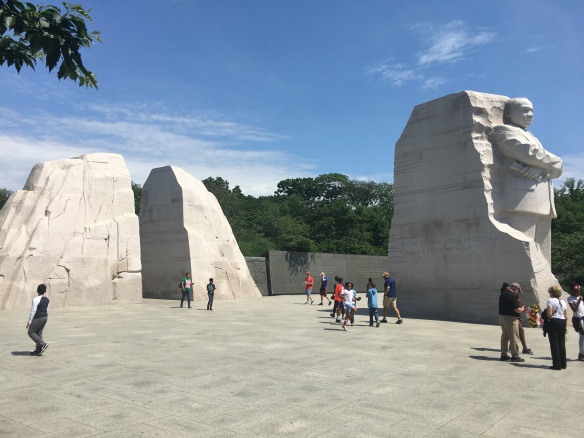
One of the most recently constructed memorials in Washington is on the shores of the Potomac River — the Martin Luther King Memorial.

IMG_6993

“No one is free,” said Martin Luther King, “until we are all free.” In other words:

What I want for myself can’t happen, until it can be so for everyone. If there is anyone who suffers in whatever way,

If there is anyone who is not free, in whatever way,

If there are people who are bound, captive to whatever vice, to whatever imprisonment of the soul or in prison because something they have done…

I am going to be healed of whatever ails me, only when I seek the healing of the other, the freeing of the other, the liberation of the other. The church holds up a different vision from that of the divisive, individualistic and exclusive nature of white nationalism in the world today.

You can see, I hope, why the consciousness of the church not only at Faith Lutheran, not only in Ottawa, or in the Eastern Synod or the Evangelical Lutheran Church in Canada, but in the United States of America and worldwide is moving to see not a division between things, not building walls between two perceived opposites, but building unity between them.

Not a division between politics and pastoral care,

Not a division between care for the soul and social justice,

Not a division between reaching out and reaching in,

Not a division between speaking out against injustice of whatever kind and speaking to the choir,

Not a division between contemplation and action.

Not an either-or, but a both-and.

Last week when Ken stood here and told you about the different ways we can support the financial health of the congregation, he introduced his well-delivered announcement by saying — “you’ve heard we in the church were never to talk about money, politics and sex (well, he didn’t actually say the last word, but I know you all were thinking it!).

And then a couple weeks before that, Mark stood here and told you about his upcoming trip to Ecuador to build homes in a community destroyed by an earthquake some years ago. And in his well-worded speech he said (I paraphrase): “In this mission trip the group he was going with was not doing mere charity, dollars sent to a far-off location, but directly helping them on the ground and making a real difference in the lives of those who suffer.” Check it out. He said it. I believe he has it all on a piece of paper.

I alone am not telling you all this. Your own members are. Your own church family is slowly but surely breaking down the walls that have divided, distanced and incubated our conversations in the church.

Limited our conversation. Limited our imagination. Limited the ways of God. NOT talking about these things, well, how has that worked out for the church in recent times?

NOT talking about the things that really matter in our daily life, NOT being open and honest, sharing the deepest secrets and burdens of our lives, NOT feeling safe in a community of faith to be who we humanly are, warts and all, imperfect, suffering, in need of God’s love. NOT being like that — how has that worked for the church? How has that worked for you?

It is not easy in the church (although everyone else in our real lives are talking about them!) to talk about money, politics and sex. It is not easy to talk about the real things that matter in this life. And so, the church for many decades has avoided having these conversations. Why? Because we were afraid? Because talking about sex, politics and money would put a mirror in front of us, exposing areas of our life that needed even a bit of God’s light shining upon it?

It’s not easy to talk about these things. I know. I feel it too. But I always thought that that’s what faith was supposed to be about — to confess, be honest, be real, and just do the work of God. How can we do the work of God when we can’t even be honest, and real, and confess ourselves to one another?

We can echo the prophet Isaiah’s complaint to the Lord: “Woe is me! I am lost, for I am a man of unclean lips …”[2]

But he doesn’t stop there. His confession is not just about himself. Faithfulness is not merely individualistic. We don’t come to church to make an individual contract with the Lord.

Isaiah continues in his confession: “Woe is me! I am lost, for I am a man of unclean lips, and I live among a people of unclean lips.”

Faithfulness drives towards the communal, the community, the well-being of the world. “No one is free, until we are all free.” Not just me, but we!

When we don’t include, welcome and affirm people who are different from us, we are a people of unclean lips.

When we refuse to include conversations about sexuality, money and political action, we are a people of unclean lips.

When we remain quiet in the face of injustice, we are a people of unclean lips.

In other words, this confession of Isaiah implies that he feels he should just ‘shut up and sit down.’ Not say anything. Because he is bad. And Israel is bad.

Maybe you feel this too. Not unlike Isaiah when confronted with a vision of God, you feel, deep down, the church is bad, and has nothing worthwhile to say in the public sphere. Millennials believe that. Just ask your children or your friend’s children. In the past, we church-going Canadians have conveniently said, “That sort of stuff is the government’s job.” We effectively, therefore, excuse ourselves from any social action in the name of Jesus. And continue the dividing.

Martin Luther King also said that in the church it’s alright to talk about the New Jerusalem (pointing to heaven, the afterlife), yes, but one day we also have to talk about the New York or the new Ottawa, the new community in the here and now.

What did Isaiah see in his vision?

Two details in this vision I want to focus on:

First, “the house was filled with smoke.”[3]

Here’s Isaiah who sees God in all God’s glory. How can I understand this vision by analyzing: Why the six wings folded over on various parts of the seraphim? What’s with that?

But the smoke fills the space. Usually, the image of smoke — like the cloud — in the bible is codeword for, “Can’t get this.” I can’t explain what’s going on in the presence of God. I can’t bring all the statistics, analysis, data and information the world can offer, to explain this rationally. But that’s ok. Because that’s not the point.

In 2018, in the wake of the internet revolution, did you know that more than 7 billion humans use the internet; and, that’s 7 and a half percent more, over 2016. Google now processes more than 40 thousand searches EVERY second. And remember, that’s only Google. Include all the other search engines out there, worldwide there are 5 billion searches EVERY day.[4]

We don’t need any more information! The church’s solutions are not found in accruing more data to solve our problems!

Because things happen in life that we can’t understand. The truth about God cannot be conveyed in data streams and pie charts and three point sermons.

Smoke in the house. Mystery. Might it be, that Isaiah and the bible is trying to say: We don’t need to understand everything. We don’t need to know how it makes sense for people of different races, colour, ethnic background, different social economic status, expressing a different sexuality, different ages, different abilities can form one, unified community. We don’t need to know how that can be.

Today is Trinity Sunday. I am not going to stand here and try to explain to you how three different persons can constitute one God. Because I don’t know. All I know is that those different persons are in a unified relationship. Relationship.

The third person, especially, confounds our Lutheran sensibilities. We’ve figured God the Creator. We’ve figured out God the Son, well, as much as we can. But the Holy Spirit throws a wrench into any rationalizations. A mystery, to be sure!

How does it all fit together? How can we analyze this even more? Shouldn’t we first have a detailed plan? Shouldn’t we try to draw a diagram?

We don’t need to know! All we have are the visions. The dreams. The imagination that describes in poetry and colourful words flashes and fragments of God’s kingdom and truth. We don’t need to know. We don’t need to reconcile all the contradictions. We don’t need to make sense of it. We don’t need to provide all the answers. We don’t need to put God in a box, nor explain God to anyone. God doesn’t need that from us.

Why?

Because even though Isaiah is a man of unclean lips (God doesn’t deny it!), even though God’s people have unclean lips, even though we are imperfect individuals in an imperfect church, that isn’t going to stop God. In Section Five of a recent Confession of Faith in a Time of Crisis called “Reclaiming Jesus” church leaders from across the United States wrote: “We support democracy, not because we believe in human perfection, but because we do not.”[5]

The realm of politics is imperfect. Who would think? Yet, our imperfection is the very reason politics happens. It is not something to avoid, it is something to embrace.

What does God do? Despite Isaiah’s complaints and resistance (just like all the rest of the people in the bible!) …

Despite us!

God reaches down from God’s throne and touches Isaiah’s lips with God’s holiness. God doesn’t steer uncomfortably away from the place of Isaiah’s greatest embarrassment, sin, weakness, brokenness, uncleanliness. God doesn’t avoid the uncomfortable places of our lives. God doesn’t even say anything to that uncleanliness.

God touches it. In the place of our greatest fear, shame, guilt, when we present ourselves in God’s almighty, mysterious presence, honestly and openly — not denying nor avoiding — we place ourselves in a position to be touched by God in the very place of our greatest weakness, to be healed, to be transformed, to be made new.

Even in the vision, the temple and the seraphim cannot contain the ‘bigness of God’. “The train of God’s robe filled the temple.”[6]The image is not meant to convey facts, figures, numbers, measurements, information.. Only our post-enlightenment, rational minds want to go there. But we can’t explain the vision of God. God’s kingdom doesn’t sit comfortably in our rationally justified common-sense policies.

God’s presence enfolds and goes to the edges and bunches up in the corner feeling like it needs to be stretched even beyond the walls of temple.

Whom shall I send? God asks.

Isaiah, transformed by God’s touch, can then say, “Here I am, send me.”[7]

Will we?

The Holy Spirit blows where it will. The wind does not stop at the border. The wind does not end at any walls we build to divide. The Holy Spirit brings fresh air into the stagnant, recycled, stuffy air of our temples. The Holy Spirit blows, fresh air at last, sending us into the world with God’s love, grace and power to change.

I don’t know how the fresh air of the Ottawa Valley is cleaner and sweeter than the air I breathed south of the border, really. But I don’t need to know how. I just know.

And give thanks.

[1]USA Today, May 24, 2018

[2]Isaiah 6:5

[3]Isaiah 6:4

[4]Bernard Marr, Forbes.com, May 21, 2018

[5]ReclaimingJesus.org

[6]Isaiah 6:1

[7]Isaiah 6:8

The musical performance

“You are witnesses of these things,” Jesus tells his followers.[1]

What does it mean, ‘to be a witness’ to all that happened around Jesus over two thousand years ago? How can we be a witness to these things with which we haven’t had a direct experience, when we haven’t seen with our own eyes and met with our own bodies the living, Lord Jesus?

The weather this weekend is a joke. There’s no other way of putting it, to my mind. It is the season of baseball not snowball! But sometimes when things don’t go our way, humour can be a good antidote. So, here is a music joke.

Last week I gave an example of a double bass player to illustrate how we need to go from the head to the heart. But we don’t always trust that movement from head to heart because it feels like we are losing control.

Imagine a picture of several double bass players standing at the back of an orchestra playing Beethoven’s Ninth Symphony. The bass players are swaying to the majestic sounds and rhythms; their bodies are into it. It is nearing the end of the epic masterpiece, and the caption at the bottom of the comic strip says:

“It’s the bottom of the ninth, and the bassists are loaded.” Hmmm. Maybe too much heart?

How do we live a life of faith that is heart-centred? At same time, how do we deal with our performance anxiety, worried about how people will perceive us when we do our thing, as Christians? We do put a lot of pressure on ourselves to perform to perfection and make a good impression. Unfortunately, this kind of self-talk keeps us from being the best we can be. That’s why, unfortunately, too many musicians have too much to drink prior to a performance.

We need not be too hard on ourselves. Easily 50% of the population make decisions based on fear.[2]The annual “Back to Church” movement creator, Michael Harvey, claims that there is only one socially-accepted sin in the church today: fear.[3]

Yet, none of the Gospel accounts of the risen Jesus condemn the fear. It is to be expected. Jesus meets the disciples, and meets us, where we are even in our uncertainty. Jesus’ initial purpose, after all, is to bring peace. “Peace be with you,” are Jesus’ first words to his disciples after the resurrection.[4]

But Jesus calls us, as he called his disciples, to move beyond our fear, move beyond the fearfully locked doors of our hearts.

The ultimate purpose of the Gospel is not just to allay the fears of Jesus’ followers. It is not to convince us of the miracle of God. In other words, ultimately, who and what we’re about leads us beyond ourselves. The point of the bodily resurrection of Jesus is not the miracle per se, but that it becomes the engine of the proclamation of Jesus Christ to all nations.

Brother Curtis Almquist of the Society of Saint John the Evangelist noted recently that, “Jesus’ resurrection was indeed a miracle; however, Jesus’ resurrection needs to be more than a miracle. It needs to be normal, everyday, how we live and breathe: with resurrection power.”[5]

God’s grace finds expression in flesh and blood – in our bodies. First, as we experience it coming through the Eucharist, the presence of God is made manifest in humanity. And today, in the power of the Holy Spirit, that means, in us and all our brokenness and despite our imperfections.

How can we say this? Because in Jesus’ resurrected body, his scars were still visible. His humanity was still intact – in some mysterious way, in an mysteriously enhanced body to be sure. But the fact that Jesus bodily resurrection is so defended and argued by Paul and Luke and other early Apostles suggests, does it not, the crucial importance of the earthly, human manifestation, and receptivity, of God’s grace and presence.[6]

This is the power of the resurrection. That in the midst of our fear, Jesus comes to stand among us. In the midst of all that is wrong, broken, suffering in our lives, Jesus comes into the locked doors of our hearts and bodies. And then, calls us out.

How do we ‘proclaim’ Christ to all the nations? Again, nothing spectacular, here. Through our ordinary, simple selves, reaching out.

Leonard Bernstein, 20thcentury musician and famous conductor of renowned orchestras around the world – the Berlin Philharmonic, Los Angeles Philharmonic – once said: “The only way I have of knowing I’ve done a really remarkable performance is when I lose my ego completely and become the composer. I have the feeling that I’m creating the piece, writing the piece on stage … making it up as I go, along with those hundred people [in the orchestra] who are also making it up with me.”[7]

Working together, like in an orchestra, we are playing the music of the Gospel of Jesus Christ to the world, and in the world. Even though the music was first created a long time ago, we are making it alive and real for us and for the world, today.

We do so, using the gifts and grace and resources given to us from the Composer of the whole experience. We do so, through our own bodies, minds and spirits. At the same time, we let go of our ego, because it is not about us; it is about something much bigger than all of us.

Order of Canada recipient for his work in fostering Christian unity and inter-religious dialogue, Father Laurence Freeman said: “…grace works on nature. The grace of God that enters into human existence doesn’t come from out of space; it comes through nature. That’s why it is very dubious to talk about supernatural things. We are always interested in the supernatural, but what’s much more real and interesting is the real meaning of the natural. It is through nature, through the natural, through our own nature, our own psychology, our own physiology, our mind and body – through our human nature – that grace touches, emerges and transforms us …”[8]

So, it is our ordinary selves through which the grace and purpose of God works. What does this mean? First, it means we have to believe in ourselves. We have to trust that God has given us what we need to do God’s work, to be God’s instruments and vehicles through which God accomplishes God’s purposes.

Then, we need to perform the music, so to speak. And, it doesn’t need to be perfect, complicated or anything spectacular. Just simple, ordinary. We have to start somewhere.

One of our members asked recently a neighbor to describe what happens on and around our property on an average day in the Spring, Summer and Fall. And the neighbor reported that between 2:30 and 3:30pm every week day, about 30 kids on average, children of all ages, walk across our property from the bus stops along Meadowlands to their homes in the City View neighborhood. Thirty.

With presence of mind, our member asked the neighbor: What do they do when they walk across? Is there anything in particular that stands out in their behavior?

The neighbor said many of them like our benches outside the front doors. They like to sit and visit. They like to rest for a few minutes before continuing on their walk home.

When the member and I reflected on this, we realized there aren’t many, if any at all, public places in the neighborhood where people can sit awhile. Not only do we fill a need providing a place to sit, we encourage community-building, relationship-building right outside the doors to the church. How appropriate!

And for so many young people who are turned off the church, or at least afraid to enter into a church building these days, providing benches for children and young people to sit and visit sends a positive if subtle message about our identity and purpose as a church. It also sends a subtle yet real message of welcome.

This example is simple, ordinary, unspectacular. Yet, it is a first step in the right direction. As a community. Not as individuals doing our own thing. But, together, as a church, an orchestra playing together.

And isn’t that what the walk of faith is all about? We can only do what we are able to do, together. And then, when we take the first step, we watch as the Spirit of God can surprise and delight in us. All because we began by simply using what God has given us. Giving from ourselves, for the sake of others, for something larger than all of us.

That is, being faithful witnesses to these things.

[1]Luke 24:48, NRSV.

[2]Richard Rohr & Andreas Ebert, “The Enneagram: A Christian Perspective” (Crossroad, 2001).

[3]Michael Harvey, “Unlocking the Growth: You’ll Be Amazed at your Church’s Potential” (Oxford: Monarch Books, 2012), p.52.

[4]Luke 24:36; John 20:19-21, NRSV.

[5]Brother Curtis Almquist, Society of Saint John the Evangelist, “Brother, Give us a Word” on April 10, 2018.

[6]Paul’s first letter to the Corinthian church is a testimony both to Jesus’ bodily resurrection, and to our bodies being the imperfect vessels for the transmission of God’s grace and wisdom.

[7]Cited in Barry Green with W. Timothy Gallwey, “The Inner Game of Music: The Classic Guide to Reaching a New Level of Musical Performance” (New York: Doubleday & Company Inc., 1986), p.95.

[8]Laurence Freeman, OSB, “Finding Oneself 2” transcript (Singapore: Medio Media, 2017), p.29.

Re-purpose the building: a sermon for Transfiguration

In the Gospel stories of the Transfiguration of Jesus, it is the disciples’ response to Jesus’ glory that captures my attention and imagination.

In response to seeing the incredible transformation of their friend and master before them, Peter says he wants to build three “dwelling places”, or “tents” from the Greek. The Gospel of Mark suggests that Peter wants to build these shelters because they are “terrified”.[1]

It is a natural reaction when we are afraid for us to go to that which gives us security. For Peter, that means building a house. Or two. Or three. He must have been really scared. Not just a tent for Jesus, but also for Moses and Elijah who have mystically and supernaturally appeared alongside Jesus.

This is a glorious moment. Jesus’ divinity bursts upon their vision. And, we humans naturally want to contain this mountaintop experience. Put God, literally, in the proverbial box. Saint Augustine said in the fourth century, “If you can comprehend it, it is not God.”

The Gospel of Matthew goes further when he writes that it was “while Peter was speaking”[2] this, that a voice from heaven spoke: “This [Jesus] is my beloved Son.” The narrative feels like God interrupted Peter, cut him off.

It’s as if God is saying: “Don’t.” Don’t try to own such divine moments of God’s self-revelation. Don’t try to manage your spirituality. Don’t try to control the experience of gift, of unconditional love. We may want to build something and thus put God in a box. But we can’t. Because, really, there is no box.

In our religiosity, we may instinctively try to capture any glorious, God moments we experience in life. By repeating the experience, invoking certain feelings and the mood. We build buildings and keep them the same.

As with the disciples of old, we would rather escape the humdrum, ordinary realities of living in the valley of our daily, imperfect lives, and just stay on the mountaintop, containing God while we are at it. We don’t want it to change. We don’t want to change. We, like the disciples of old, just want to remain in this state of euphoric ‘mountaintop’ feelings and stay put, there.

Today marks the one-year anniversary that we have worshipped in this transfigured space. A year ago, on Transfiguration Sunday, we returned from an extended absence during which we worshipped every Sunday for eighteen straight weeks with our neighbours at Julian of Norwich Anglican Church. Coming back to this renewed space was a joy and a blessing. We were back in our own tent, so to speak.

IMG_6546

I say, ‘tent’, intentionally. Because the contractors who modernized this building emphasized the strap-over accenting on the exterior – to make it look like when you put a large fly over your tent. In fact, those of us on the ‘liturgical arts’ committee who consulted with the contract designer heard him say on occasion early on in the project, that the idea behind the contrasting colour choices was to make it look like a tent.

Which was by design. And very appropriate for the church, as a symbol. Not only was the natural element emphasized in the tent-like strappings on the outside, the blue colour on our ceiling inside was meant to image the night sky – looking up, in faith.

Indeed, the structure of our church, and its recent ‘transformation’, is not new. It is to emphasize an original idea when it was first built over fifty years ago: as a temporary house worship space. The tent image for our structure underscores an enduring truth about the church: The church is a movement. It is always on the move. It doesn’t stay put in one place for long.

A church ever changing, a church adapting its form yet reflecting its original mission.

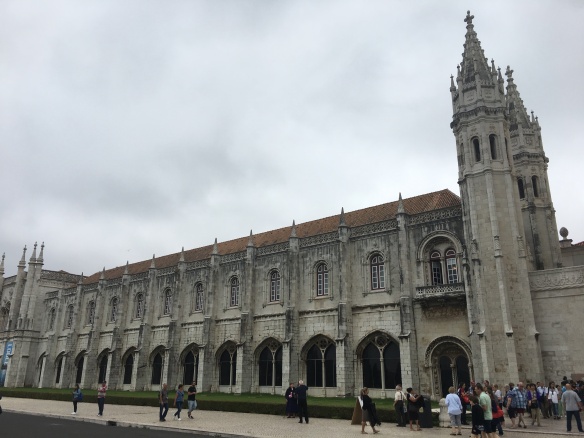
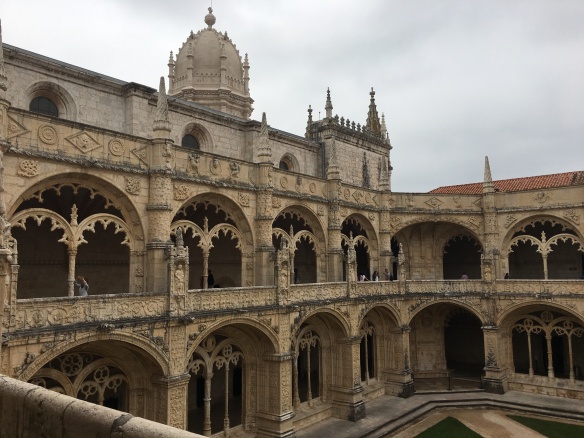
The Jeróminos Monastery in Lisbon, Portugal, is a UNESCO world heritage site. When my wife and I toured the massive complex last summer, including the impressive cloister and the ‘chapel’ – which views more like a colossal cathedral in typical European grandeur, I understood why. These photos don’t do it justice.

IMG_5608

In 1833, over three hundred years after the site and property was inaugurated as a religious Order of Saint Jerome, a state edict transferred the property and all its assets to Real Casa Pia de Lisboa, a philanthropic institution that took in, raised and educated orphan children.

IMG_5573

It was hard for me to imagine that a three-hundred-year-old religious institution of this magnitude would relinquish its assets. And doing this, located on prime waterfront in Portugal’s growing commercial city during the sea-faring Age of Discovery.

IMG_5588

IMG_5595

IMG_5605

IMG_5581

Without delving into the complex history and context of the Secularization Act of 1833, the fact remains: During a robust period of historical expansion, the church made a big change. I would argue, however, the church did not lose. Sure, it no longer could boast financial ownership of the property. But, by handing over its assets and combining them with the resources of the state, it bolstered its core purpose in mission – the care of vulnerable children. The space and property, as of 1833 moving forward, would now serve the needs of needy children.

Jesus says: “Unless you change and become like children …”[3] Without doubt, the religious of 1833 Lisbon were being true to the mission of Jesus.

In our lifetimes, we are witnessing here in North America – indeed in Ottawa – many growing examples of a church re-purposing its properties to build senior’s complexes and other social enterprise. We may believe this is a sign of the times – a negative, unfortunate, disappointing, mournful reality of the church. But, in truth, in many cases, such a re-purposing of a building is consistent with the Christian mission – to care for the weak, the vulnerable and needy in our society.

I can remember driving through rural country in south-western Ontario, and more in Saskatchewan, where you would see, stuck in the middle of a wheat field, a run-down, dilapidated old church building no longer in use, just left abandoned. It is sad to see this. It’s easy to jump to the negative conclusion that the church is dying by simply looking at its physical assets. When it’s not tied to a living purpose, the building will surely die.

But two hundred years after the so-called secularization of the Jeróminos Monastery’s assets, hundreds of thousands of visitors to the site every year continue to pour in and be inspired by the legacy of that bold, courageous move of those 19th century Christians in Lisbon. Good for them.

Re-purposing church property is not just a recent, contemporary phenomenon borne out of the institution’s modern demise. Re-purposing assets is not a sign of Christian defeat in a secular society. First of all, it has evidently been done throughout history when the need and opportunity arose.

Moreover, changing a physical structure doesn’t mean Christians are being decimated by an oppressively secular, contemporary, multi-cultural, diverse society in Canada. The physical transfiguration of Christian property may in truth be a positive sign of healthy, missional spirit, consistent with our Christian identity. A sign that the church and its original purpose in their properties will endure for centuries longer.

The disciples of Jesus accompany him to and from the mountaintop. Moses and Elijah appear with the transfigured Jesus, linking the present moment with the great tradition spanning all times and places. The community, the people, the saints on earth and the saints of heaven, accompany us on this journey.

The journey is a movement, not to remain stuck – even in moments of glory and victory. Rather, we are called to embrace the hardship as well, the challenges, the disappointments and opportunities of the daily grind of living, down in the valley of our lives. Ours is not a denial religion. Ours is not an escapist religion, one that ignores the plight of those who suffer, avoiding the normal difficulties of life, pretending that somehow we can with God only experience the highs without the lows. That is false religion.

Jesus interrupts our striving and tells us, “Don’t”. Don’t build those false expectations of a prosperity gospel. Don’t pretend you can stay on the mountaintop with Jesus forever while you live on earth. Because, Jesus, the divine Son of God, also embraced his humanity, and leads us down into the very human valley of life on earth.

Positive change and transfiguration in this light don’t come by way of escaping the world. The cathedrals of our hearts are meant to house people – all people, in their needs and for the sake of the other.

We are not alone, in this enterprise. As Jesus accompanied the first disciples up and down the mountain, God goes with us, up and down. Jesus leads the way. And, we walk shoulder to shoulder with our co-pilgrims who go with us.

[1] Mark 9:6, NRSV

[2] Matthew 17:5, NRSV

[3] Matthew 18:1-5

Mirage gates

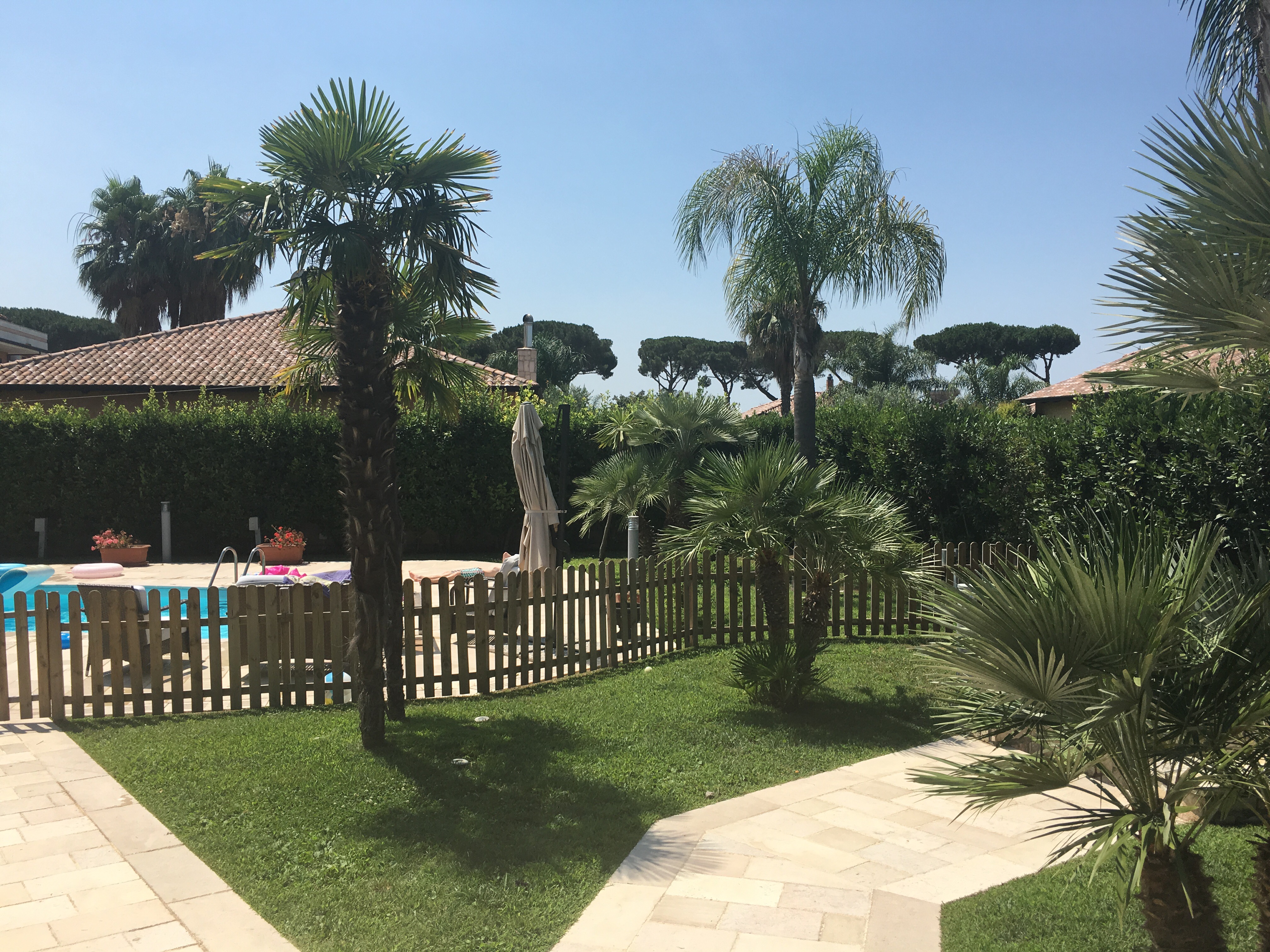
When we stayed at our friends’ house in Lago Patria — a suburb of Naples — we felt safe in the gated community in which they lived. Nearly a dozen homes lined the little neighbourly and upscale street where mostly stationed officers and NATO personnel lived during their posting to the base there. We called it, ‘the parco’ — the Italian for ‘park’. An oasis it truly was.


Lining the perimeter of the parco was a tall wall. A large sliding metal door would guard entrance to this haven, and then release us again to the urban jungle that is Naples, where stray dogs roamed and garbage lined the roadways. You get the picture.


In Robert Frost’s poem, “Mending Wall”, he wrestles with our desire to have clearly defined boundaries of what is my place and what is yours; and, why we divide ourselves so. He concludes his poem with a challenge: “Before I built a wall I’d ask to know what I was walling in or walling out” (1). Good advice.

Indeed, fences and walls serve to keep us from seeing ‘what’s out there’ — and perhaps we want it that way. We don’t want to see what might disturb our comfort. We don’t want to see who might be out there, lurking on the perimeter of our safely constructed lives. We don’t want to see because we are afraid of what truly seeing them might do to change, disrupt and unravel us.

The Gospel text today (Luke 16:19-31) can unravel us, for sure! A poor man named Lazarus makes his temporary home at the gate of a rich man’s house, eating crumbs off the rich man’s table.

The story suggests that the rich man never even sees Lazarus is there, begging, at his gate. Even in the afterlife, as the rich man burns in hell, he doesn’t talk directly to Lazarus, referring to him only in the third person (v.23-24). Even serving his due in hell, the rich man still hasn’t learned his lesson!

Indeed, as Jesus says later in Luke, “it is easier for a camel to go through the eye of a needle than for someone who is rich to enter the kingdom of God” (18:25). How can the rich and the poor bridge the gap? How can we break down the barriers that separate us? How can we ‘see’ better — by this I mean: develop the eye of the heart and mind?

My brother tells the story of what happened at the beginning of the CLAY gathering this past August (Canadian Lutheran-Anglican Youth gathering). All nine-hundred participants did a certain exercise in the large group gathering that unnerved him:

They were asked to find someone they did not know; and then, to go over to that person, sit next to them; and then turn to look directly into their eyes…. and keep looking into their eyes for as long as possible, without turning away.  It’s hard enough to do this sort of thing with someone you know well… let alone a complete stranger!!


So, my brother David found a young person he didn’t know. And the two of them – complete strangers – began to look into each other’s eyes. It was unnerving! He felt vulnerable. Exposed.

While this was happening, the leader at the front said something like: “The person before you has a story, and has experienced happiness, as well as sadness, perhaps even deep hurt and pain. Who knows? Life may’ve been very hard on the person in front of you.”

As these words were being said, David noticed the slightest hint of tears welling up in his partner’s eyes. And he wondered…. He wondered …. What’s my partner’s story?

It’s said that the eyes are the ‘window into the soul.’ In a sense, they were peering into ‘each other’s souls’.

A natural connection is formed. Two people, connecting on a human level, affirming the fact that we’re all united in our common humanity and life’s experiences – of sadness and laughter and humour – which we all go through at some point in our lives … no matter our differences in age, ethnicity, language, sexual orientation or religion.

I’m reminded of a quote attributed to Philo of Alexandria: “Be kind to everyone you meet — you don’t know the battle they are fighting.”

Author and theologian Diana Butler Bass tells the touching story of what happened in an airport when she was flying from Albany, New York, to Washington D.C.

As you know, typically airports can be cold, heartless places, where everyone seems absorbed in their own rushing around, wrapped up in their private worries, nerves or plans, ignoring others around them.

This time, as passengers milled around in the gate area before boarding the plane, there sat alone at the far end of the row of seats, a middle-aged man.

He looked distraught, perhaps ill. Maybe, he needed help.

His whole demeanor was one of sorrow, and he was bent over, slumped in his chair as if falling toward the ground.

Diana walked over to him, and sat down beside him. She gently began asking him questions and listening to him.

With deep, heavy sobs, he told her how he buried his wife that morning, and now he was going home. To nothing.

For the next half hour, he told Diana about his wife, her illness and untimely death.

The man and his wife had no children.

She had been his best friend since high school.

Their parents had all passed away.

He had taken her to be buried where they had grown up in New York State, a place they both loved.

Most of their childhood friends had moved away.

There had been no funeral, just him and a priest at a graveside to say a few prayers and good-bye.

Now, he was going home, back to work. Other than a few friends, he was alone.

Diana listened, and then went to get him some water.

On the way back, she found a flight attendant, and told her about the man and his wife, how he had buried her that day. The flight attendant thanked her for sharing, and said ‘they’d take care of him.’

There were only about fifteen people on the flight that day on that small plane.

Somehow word got around, and soon everyone knew about their fellow passenger in mourning.

By the time everyone was boarding the plane, people were going out of their way to be kind to the man.

A crew member escorted him aboard.

With courtesy and attention, they seated him at the back of the plane to be alone with this thoughts and whatever tears might come.

When they landed, some silent agreement formed between the passengers to let him exit first.

Instead of the usual rush and urgent calls on cell phones, everyone stood silently, forming two lines of respect, as he walked down the aisle toward the cabin door…

Some nodded respectfully as he passed.

One woman reached out and touched his shoulder.

When he reached the front of the plane, he turned back, and looked at everyone, to acknowledge the sympathy offered.

The pilot came out of the cockpit, and took the man’s hand, and together they descended the steps to the tarmac.

All the passengers followed in silence.

A private car, dispatched by the airline, waited there beside the plane, to deliver him home. (2)


The irony is that no amount of gates, fences, walls or clearly defined dividing lines however constructed will keep us separated from each other. When there is love. When we can ‘see.’

Boundaries are important. But they don’t guarantee the self-serving security we seek. Shortly after they were posted to Naples a couple of years ago, our friends’ house was broken into despite the impressive protection their gated community seemed to provide.

These kinds of gates are really only illusions — like the proverbial mirage in the desert. Gates and fences that separate the rich from the poor, the privileged from the underprivileged, the employed from the the unemployed, the bum on the street and the senior executive in the top floor corner office are at best a mediocre interpretation of reality. Because they are constructed out of fear.

Jesus is about breaking down those barriers. And we are called to bridge the apparent chasm separating us from each other. Better now in this world while we can still do so, then whine about it like the rich man does in hell after it is too late.

We are called to look into each other’s eyes, and see the connection we share with all humanity, in the love of God. We are called to work together, like the community of care that formed on that short plane trip. We do not do this work individually, by ourselves. Not separately, but we work together at this task of reaching out and mending what has been broken.

We do this in the mission of God who broke down the greatest divide between God and human: when Jesus was born a human child. When God became human the ultimate gap was bridged. And now, we live in that flow of God’s love, continually binding us together, and all people.

(1) Robert Frost cited in David L. Bartlett & Barbara Brown Taylor, editors, “Preaching the Revised Common Lectionary; Feasting on the Word” Year C, Volume 4; Louisville Kentucky: Westminster John Knox Press, 2010, p. 118-120

(2) Diana Butler Bass, “Grounded: Finding God in the World: A Spiritual Revolution”, HarperOne, 2015, p.256

No life insurance

It’s like the spirited game parents play with their young children.

I remember years ago when the kids were still in diapers tossing our little ones up into the air, and then catching them on their way down. What makes this game so delightful is to watch the expression on the face of the child. If you slow-motioned the activity and zoomed in on the facial reactions of the child at each stage of the ‘throw and catch’ game, you would see a contrast of emotions:

From the catch to the upward toss, a smile and squeal of joy; from the falling motion to moment of catch, a growing sense of alarm as the eyes widen in concern and fear begins to creep into the picture. But, then, again the catch. And the grin returns. And the game resumes.

Can you imagine being the widow in the Gospel story (Luke 7:11-17) who has just lost her only son? Having lost her husband is one thing. You think it cannot get any worse. Yet, as is often the case in life, it does. Now her son. She feels the sharp edge of grief once again. Perhaps more deeply for the child she gave birth to, and raised with all her mother’s love.

Not only a personal grief, but the prospect of living in extreme need. Being a widow in 1st century Palestine was usually a ticket to poverty and low social status. A woman’s economic worth was almost always tied up in the men of her household — her husband or eldest son. This was much more than personal, emotional grief. This was a complete life-style change, from top to bottom, in a heart beat.

After meeting Jesus, however, things change so rapidly. From a season of mourning and grief, to the astonishment and wonder of joy: Her son is no longer dead, but alive! No longer is she alone, vulnerable, a burden on society, worthless in the economy and social structures of the day. Now, she has her son back. She has family. And that means the world to her!

Although something has changed. This new thing is also scary. All who witnessed the miracle were filled with fear (v.16). What does this second chance at life mean? Things will be different now. No longer like the good old days.

The rapid and extreme change of emotions could make her feel like a yo-yo. Maybe life sometimes feels like that for you. From moments of exquisite satisfaction, pleasure and joy, to the dark caverns of grief, depression, loss, suffering, fear and pain. Life. Death. Life. Death. Life. Death. Life. 

In my first parish, which was in rural southern Ontario, burials were conducted (except during winter months) immediately following the funeral service in the cemetery right beside the church building. The recessional with casket proceeded to the grave side where the words of committal, prayers and scripture readings were offered. 

But then, the family stood by as the grave-diggers and funeral attendants lowered the casket, suspended up until that point on winches and ropes, down into the hole. In some cases, I had to assist by moving the casket into place as it slowly lowered. Once resting on the ground inside the hole, a family member used a spade to throw the first shovel-full of earth onto the casket — a symbol of the family participating in burying their loved one.

Today, especially in urban centres where funeral services are highly managed by market-driven professionals, most often the family leaves the grave-side before the casket is lowered and actually buried. I wonder about how the smallest of acts reflects our attitudes towards death and loss. 

Perhaps we can’t ‘go there’ emotionally so soon after losing a loved one and have to insulate ourselves in order to cope. The funeral rite therefore serves more as an anesthetic against the harsh reality of death and loss. I wonder: Does the experience and ritual of funerals only end up buffering the hard, emotional impact of loss?

Perhaps we are not used to ‘losing’, letting go, failing, surrendering, being powerless, vulnerable, at ground zero. We have little in life to practice this letting go before the final experience of losing a loved one. And perhaps healthy religion, as Richard Rohr claims, is about showing us what to do with our pain.

Is this too difficult an expectation of our faith? Because in making religion only about ‘feel good’ ‘warm fuzzies’ we might maintain our denial of life’s realities and only distract ourselves from truth. And that’s not what Christian faith is about — distracting us and keeping us from the rhythms of life, death, life, death, life.

Because in avoiding death, we also ironically, avoid life. And Jesus is about life. When we say this Gospel story is first and foremost about a miracle, we may be missing the point. It’s understandable that we do, because it is sensational. It captivates our imagination.

Focusing only on the miracle may just play into our fear and avoidance of death. As if to say Jesus performing this miracle was done for the boy’s sake. The enemy, death, was conquered! Therefore we can go on denying death. As if the boy will never eventually die an earthly death. As if to say Jesus performed this miracle solely to convince us to ‘believe’ in him — because no one else could do so (even though there were magicians/soothsayers and other miracle workers who performed incredible acts in Jesus’ day).

But the miracle, per se, is not the point of the story. Jesus raised the son from death not merely to show his divine power but to express his love and concern for the widow. He had compassion on her (v.13). And he couldn’t stand the thought that she would have to go it alone in a culture that marginalized the widow. Jesus brought the son back to restore a relationship, for living in the world.

God tosses us into the air. God throws us into the thick of life with all its challenges, disappointments, failures, weaknesses, joys, hurts, loves, pleasures and pain, satisfactions and accomplishments. God throws us into the air to experience fully this life we have been given. Life, death, life, death, life, death …

Then, to our happy amazement, God catches us again at just the right moment. God cares about what happens to us in our lives. God is interested in every minute detail and event in our lives — even those things we would rather cover up and hide in the darkest recesses of our hearts. God’s light exposes those secrets, even. We may feel vulnerable, challenged, unsettled for a time. And we may even wonder if we won’t just crash and burn on our way down.

Have faith in the One who’s tossing you. Because it’s part of life, for one thing. But most importantly, because God loves you and will quite unexpectedly be the One to catch you, at just the right moment.

Leading with love

When I saw the man pull up to the church doors, I was afraid. I am ashamed to confess that I was fearful when the man with olive-coloured skin, his neck wrapped in a scarf worn by Arab men, knocked at the door of the church. It is all the negative associations mainstream society has built up around people from the Middle East that went swirling through my brain in that moment.

What would I do? Act, based on my fear — and ignore, reject, send away this man? 

I therefore read the story of Saul’s conversion this past week through the eyes of Ananias, who is called by God to attend to Saul. Of course, Ananias at the point of his calling, does not know what dramatic change happened in Saul’s life on the road to Damascus (Acts 9). He objects. You might say, understandably: “Lord, I have heard how much evil this man has done to your saints in Jerusalem … he has authority to bind all who invoke your name” (Acts 9:13-14). Ananias was scared. How does he get past his fear?

We normally associate the beginning of Paul’s story with his dramatic conversion on the road to Damascus when light flashed around him and Jesus spoke to him. But the story of Paul, formerly Saul, begins earlier. 

In fact, the first time we read of Saul’s name is during the stoning of Stephen outside the gates of Jerusalem (Acts 7). More to the point, The first time Saul’s name is mentioned in the Bible is right before and after Stephen prays: “Lord, do not hold this sin against them” (Acts 7:58-60). In other words, Stephen prays for the forgiveness of his executioners, including Saul, at the moment of his death. Saul needs forgiveness, as he stands by “approving” (Acts 8:1) of the killing of one of Christ’s most passionate, ardent and faithful followers.

I have often wondered why God would later choose this Saul — the worst enemy of the early church — to become its greatest advocate. You cannot design a more effective and impressive strategy! In a war between good guys and bad guys you take out your primary enemy. But how is it that God would even have the heart to consider him? After all, Saul does not come with the right resume, to say the least.

I believe God answered the prayer of Stephen made at the moment of his death. The reason the drama on the Damascus road happens in the first place is because God listened to Stephen’s request to forgive Saul and the others who stoned him to death. I believe Saul was a forgiven man already before that “light from heaven flashed around him” (Acts 9:3). God honoured the prayer asking for the forgiveness of sins.

Peter, too, realizes forgiveness from the risen Lord. The Gospel text (John 21:15-17) is set up that way: Three times Jesus asks Peter: “Do you love me?” This three-times echoes the three times Peter had denied knowing Jesus in the courtyard of the high priest on the night of Jesus’ arrest (Luke 22:54-62).

Peter felt ashamed for this transgression against his friend and his Lord. Then, when Peter sees Jesus by the lake shore, he “puts on some clothes, for he was naked, and jumped into the water” (John 21:7). Normally, when we go swimming more clothes come off than on. Why does he put on clothes to get into the water? I would suggest this action echoes the Adam and Eve story from the first book of the bible, Genesis. 

When Adam and Eve realized their shame and guilt after disobeying God, they clothed themselves (Genesis 3:7,21). It seems that donning clothes in the presence of God is a penitential act — a confession of sin, and an expression of the guilt of sinning.

That is why we read this intentional dialogue between Jesus and Peter. The conversation has a liturgical feel to it, as if Peter needs the ritual of the speech to finally recognize and believe the truth of his forgiveness and being loved.

Here, there is an interesting wordplay on ‘love’. For example, ‘agapao’ is the the kind of self-giving, dedicated, total-commitment, unconditional type of love frequently associated with the Gospel of Jesus Christ. It is this love that Jesus asks of (Simon) Peter the first two times the question is asked: “Simon, son of John, do you love/agapao me?”

Peter, on account of his guilt, can only respond affirmatively to that question using another Greek variation of love — ‘phileo’ — which is a heartfelt and emotional type of love often expressed between good friends. He, in effect, answers by saying he can only love Jesus as a friend. He can do no more. He is stuck in his guilt. And that is why Jesus needs to continue pressing. When Peter answers again that he can only ‘phileo’ Jesus, we see an incredible shift on the part of Jesus:

The last time Jesus asks: “Simon, Son of John, to you love me?”, Jesus switches to ‘phileo’. He meets Peter where he is at. He validates Peter’s feelings. He allows Peter to be where he’s at. And that acceptance, then, releases the power for Peter to grow. This conversation, I believe, is the moment when Peter finally forgives himself. After Jesus loves Peter, Peter is able to love himself.

When we know we are loved by a God who initiates contact with us, who reaches out to us in our pain, and forgives us, then and only then can we do God’s work of loving others. Only when we know we are forgiven, and loved unconditionally by a God who can relate to us, then and only then can we ‘feed God’s sheep’ effectively and powerfully. Until that time we will live bound by and stuck in our guilt and our sin, and therefore in our fear.

The good news, is that our conversion and our salvation is not something we can do. In truth, there is nothing we can do to ‘save ourselves’. These heroes, giants, of the faith — Peter and Paul — do not gain their status in Christian tradition because of anything they did! Quite the contrary: the biblical witness shows in both cases that their conversions were all God’s doing, despite and especially because of their downfalls.

God saves. God calls. God empowers. All because of God’s forgiving love. Before we lift a finger to do anything for God, we are already forgiven. However we respond to that call, it’s already given. Given by a God who totally ‘gets us’ and already loves us.

Yes, I relate to Ananias. His first, and habitual reaction, is fear. And yet, praise be to God, he doesn’t lead with fear and judgement. He doesn’t deny his fear; he just puts fear in its proper place. He doesn’t stay put in his house. He doesn’t ignore, deny, or turn down the call of God which is to do something risky even reckless. 

Instead, He leads with love and trust of God. And therefore he experiences the great things God is already doing in the lives of the saints. He, along with Paul and Peter, can now ‘feed my sheep’.

I am grateful to have met that young man after opening the door of the church to him. He was, after all, a believer in the God of compassion and love. And he just wanted a quiet place to pray for a few minutes.

Praise be to God!

Love confronts violence

You can feel the tension rising. As we make the slow yet certain journey with Jesus to his eventual arrest, trial, sentencing and violent death on the Cross, the assigned texts for Lent heighten the tension between Jesus and his scrutinizing opponents in the religious institution of Jerusalem. This short Gospel from Luke (13:31-35) reflects the tone.

It starts with a warning from the Pharisees. “Get away from here; Herod wants to kill you!” they say to Jesus. They are alarmed yet perhaps enjoying the drama unfolding around their competitor in the religious marketplace. They don’t care about Jesus. They are just pressing his buttons to see his reaction.

Immanent violence is in the air. It’s the only way we know to resolve conflict. Whether with our words, our manipulative behaviour, our compulsiveness and in some cases our outright physical abuses — violence is the unfortunate reality whenever and wherever human beings mix.

I’ve learned in a course on conflict I have been taking, that violence is not just played out on a battlefield between warring groups. Violence does not only happen in a physical way between people or nations, as sure and as horrific as these examples are.

Violence is also something that occurs in our verbal communication — whether of a bullying, judging, teasing, condemning nature, or intentionally hurtful put down. Violent communication creeps into any competitive or self-defensive motivation. Which is usually fuelled by a deep fear.

Not outside of this escalating situation for Jesus, the obvious underdog in the power struggle, he announces words of love. He describes God’s favour towards precisely those who wish him harm. “Jerusalem, Jerusalem … How often have I desired to gather your children together as a hen gathers her brood under her wings …” (v.34)

This maternal, protective, embracing, comforting image of God’s love for us intervenes into a world of violence and abusive cravings for power and corruption. This passionate love of God for us is not because we don’t sin, but especially because of our sin. This love of God is undeserved, and it is almost impossible to fully explain or justify. Precisely because it is exercised amidst a violent world.

“On April 16, 2007, the Virginia Tech massacre occurred in which a distraught student went on a shooting rampage, coldly killing fellow students. As many as fifteen were saved from death by an instinctively protective and caring English professor. 

“Liviu Librescu pressed his body against the door to his classroom while he urged his students to jump out a window to safety. This professor, a Romanian Jew who survived the Nazis in his homeland years earlier, died in his classroom after the killer shot through the door that Librescu was holding shut.

“Selfless love is real. In spite of the horrors of war and other brutal ways that humans treat one another, love is possible. Unselfish people reside everywhere. They love unconditionally, dedicate themselves to alleviating suffering, are willing to give their all for another, intent on being life-givers and spirit-transformers. 

“These are not do-gooders, holier-than-thou people. No, this kind of love is seared by trials, purified by personal growth, shaped by persistent rededication and self-giving that goes beyond required duty. Each day people on this planet open the door of their hearts and love pours forth. No matter how discouraged we might get about the world’s violence and hatred, let us remember that generous love thrives in kind souls and expresses itself daily.

“Caryll Houselander writes: ‘This is the first and last vocation of every Christian, to love, and all other vocations are only a shell in which this vocation, to love, is protected.’

“Our deeds of love may not be as enormous as Liviu Librescu’s, but they still contain great value. The unselfish giving and support we offer occurs within our homes and workplaces, in local grocery stores and on the highways, in hospitals, restaurants and other common places of personal encounter.

“Dorothy Day, founder of the Catholic Worker movement, was convinced that each act of love had a far reaching effect: ‘If we all carry a little of the burden, it will be lightened. If we share in the suffering of the world, then some will not have to endure so heavy an affliction … You may think you are alone. But we are all members of one another. We are children of God together.'” (1)

Librescu could have heeded warnings, and jumped out the window to safety himself. He could have heard the killer coming closer to his classroom, and acted in self-preservation. But, love for his students overcame his fear. “Perfect love casts out fear” (1 John 4:18). 

The first words God speaks to Abraham, the god-father of three world religions, in this version of God’s Promise to Abram is “Do not be afraid” (Genesis 15:1). You would think the more important words of God at this point in the Scriptural tradition is the great Covenant God establishes with the people of Israel through Abraham and Sarah.

Yet, God knows us humans. We are a fearful lot, when propositioned with promises of greatness but which require letting go of seemingly important things. And Abraham would need to lose a lot — home, familiarity, security — in order to travel to the new place God was calling him. “Do not be afraid.” The most often quoted divine instruction throughout the whole bible! “Do not be afraid/Fear not!”

The journey to the Cross, and beyond the Cross is ultimately a journey of love. We can only carry our own crosses the whole way because of the love of God which sustains us. “Nothing can separate us from the love of God,” writes Saint Paul (Romans 8:38-39). Nothing. Not even all the violence in this world.

Thanks be to God!

(1) Joyce Rupp, “Open the Door”, Sorin Books, Notre Dame IN, 2008, digital copy Week 6 ‘Beyond the Door’ Day 2 ‘Bringing Love’ p.12-13

Changing your mind on faith

This past week I was finishing up on my monthly calls to shut-ins and those who are not easily able to attend worship services here. And it was in a couple of conversations where I felt particularly moved. Of course, I am not mentioning any names or specific circumstances.
“Sometimes I wonder if I have enough faith,” said one.
“When is it that you feel that you might not have enough faith?” I asked, prompting further: “What kinds of things are happening when you think you might not have enough faith?””Whenever things are not going well for me. When I’m suffering, or in pain. When it hurts. When I’m afraid that the worst will happen.”
Speaking Lutheran to Lutheran, I mentioned that the 16th century reformer was an anxious person. Martin Luther was terrified, for example, of dying. “I think that’s probably very normal,” I said. “Even people we consider giants of the faith, were afraid and scared especially when they thought they were going to die.”
Our conversation continued until we concluded that to have faith was not apart from all that scares us or causes us suffering and pain. Faith happens inspite of the difficulties of life. The challenging circumstances of life don’t define and determine our faith or lack thereof; Our faith or lack thereof is expressed amidst the realities of living.
“Faith is real only when we face and embrace the suffering of our lives.”
And it is here that we encounter what Jesus is getting at in the Gospel text today: We are not harmed by what comes from outside of us — including difficult circumstances — but by what is going on inside of us: what we think and say (Mark 7, James 1).
I like the more positive way the Deuteronomist expresses the same lesson — this to the Israelites entering the Promised Land: “Take care and watch yourselves closely, so as neither to forget the things that your eyes have seen [that is, the great acts of God to free the people from slavery in Egypt and sustain them through the desert wanderings] … nor to let them slip from your mind all the days of your life…” (Deuteronomy 4:9). Don’t forget! Don’t forget who and whose you are! Because what we do comes straight from what and how we think.
If we are honest, this life can take a toe-hold on our imagination — with values, goals, material aspirations and selfish projects that affect our way of thinking. I would add, cultural values that lead us to conclude that only if everything is perfect in my life — no pain, no tears, no suffering and lots and lots of money — then and only then can I have faith, believe in God and be active in my faith.
The Gospel message of Jesus Christ enduring throughout human history is all about a renewing of the mind — embracing a whole new way of thinking. Paul expresses this in one of his letters to the early church: “Be renewed in the way you think …” he counselled the Ephesians (2:23). Because often the way we think — our attitudes and opinions — are downright unhelpful and evil. “All these evil things come from within,” Jesus warns (Mark 7:23).
Sometimes we hold on to our opinions as if they were sacrosanct even though they may be unhelpful. But have we ever really examined our opinions? We often look down upon others (and ourselves), and dare I say politicians, who ‘change their mind’ about something or other. Waffling, we believe, or changing our mind about controversial subjects especially, is bad and suggests a weak personality. And yet God, even, changed his mind about bringing disaster upon the people when Moses and other prophets engaged God in passionate debate (eg. Exodus 32:14). If God is able to change directions, could we not too?
To change our way of thinking to be less self-centred and more other-centred.To change our way of thinking to find meaning more in serving others than serving self.To change our way of thinking about doing something good not out of fear or shame but more out of a heart filled with compassion.
“Once upon a time a king was strolling through the forest and he saw an old man, a poor man, bent over a furrow. He walked up to him and saw that he was planting seeds for chestnut trees. He asked the old man why he was doing it and the old man replied, ‘I love the taste of chestnuts.’
“The king responded, ‘Old man, stop punishing your back bent over a hole in the ground. Do you really not know that by the time even one of these trees has grown tall enough to bear nuts, you may not be around to gather them?’
“And the old man answered, “Your Majesty, if my ancestors had thought the way you do, I would never have tasted chestnuts.'” (Juan Gomez-Jurado, God’s Spy, Orion Books, Great Britain, 2007, p.164-165)
I had another inspiring conversation this week with someone who is caring for a loved one suffering with illness. She decided to invite some friends struggling with similar challenges over for a meal. These friends, especially, were down and depressed about their mutually-shared, tough circumstances.
And yet, over the tasty meal and dancing to music and laughter, something shifted in the climate of the meeting. The next day, the host received an email from one of the friends who visited: “Thank you for your generosity and love. I was so encouraged by the visit, that when I returned home, I changed into my gardening clothes, went outside to the front yard and trimmed the bush that had gotten way out of hand.” It was like the fearful, anxious, angst-ridden Martin Luther who said that if he knew the end of the world was going to happen tomorrow, he would still go out and plant an apple tree today. Now, that’s faith.
Here’s my confession today: Often I wonder whether it’s even possible. Whether we can change our minds towards God and God’s ways in Jesus Christ, no matter what circumstance of life in which we find ourselves. Sometimes I doubt that our minds can be renewed into the likeness of Jesus when we are sick, when we feel destitute and deprived, when things don’t go our way. When times are tough, we often knee-jerk into old, often destructive patterns of thinking. Will we, indeed, have enough faith, to see things differently and not despair?
It is here when, despite how I feel, I affirm a faith that says: No matter what you think, Martin, no matter what anyone else thinks, God will not forget you. Even if I have a lapse of memory and forget who I am and whose I am, even though our minds may go completely, this is the promise of the One who created us: “I will not forget you; I have inscribed you on the palms on my hands” (Isaiah 49:15-16). Because of who God is, I can therefore act boldly on a way of thinking that is based in trust. Trust this loving God who will not let go of us. Ever. And no matter what.
Thanks be to God!

Getting drenched

Nine, good people praying and studying in the church were brutally murdered this past week in Charleston, South Carolina. What tragedy. What loss. What a deep wound inflicted on our society. What awful pain the Christian community has suffered for the loss of those individuals, and for the loss of feeling secure, in church and in public.
In reaction to such horror, our ‘fear-meter’ may very well continue to rise. The storm clouds are thickening. We fear for others lives’ in a culture still troubled by racism. We fear for our own. Why would anyone ever want to enter the public square anymore to study the bible, pray and engage in social interaction? In reaction to the increasing anxiety in us, we may bolt our gates shut, close our borders completely, and cower to any anticipated conflict with others on account of our identity as Christians, as white people, as black people. This, too, would be tragic.
What the gift of faith does not do, however, is dis-spell fear. Having faith does not get rid of the reasons for being afraid. Rather, faith helps us cope with the fear and insecurity we must live with. Notice in the Gospel text for today, Jesus does not say, “Have no fear”; instead he says, “Why do you fear?” (Mark 4:35-41). Jesus does not deny there very well may be good reason to be afraid in life; at the same time, he suggests that faith gives us reason to embrace our fear with hope. And then act boldly, despite that fear.
Faith gives us reason to see beyond the fearful circumstance. The purpose of faith is to live with the hope that the present circumstance, fraught with anxiety and fear, has not the last word on our lives. Only by going through it, risking vulnerability in that circumstance, is the way to that hope, on the way to that new day.
I can imagine when Jesus calmed the storm and the wind ceased, the clouds above them broke open and they saw the sun shine again. Faith is about painting the sun-shine picture in our hearts, minds and souls, while in the middle of the storm. Faith is singing with confidence while the rain is falling (modifying slightly the words of an old song): “Someday when our crying is done, we’re gonna walk with a smile in the sun.” (A-Ha, “Crying in the Rain”)
When we are tempted in our fear not to do anything.

When we are tempted in our anxiety to turn a blind eye to the racism that continues – evidently – to be a blight on our culture.

When we are tempted in our fear to build fortress walls around us instead of welcoming the stranger …
The disciples were afraid, not awed, by Jesus’ calming the tempest. A better English translation of the Greek (phobos megas) in verse 41 is “being filled with a great fear”. Why? Probably because they knew deep down in their hearts, that living in the presence of Jesus will change them, will challenge them and cause them to behave differently in the future: boldly — no longer according to their fears, but taking risks of reaching out based on the faith — the vision — of the kingdom of God where all people are welcome.
Don’t forget that the journey across the lake was more than simply a change in venue. When Jesus said, “Let’s go to the other side”, he had in mind the actual geography of the place. He wanted to go to Gentile territory, the “country of the Garasenes” (5:1) — this is the context of the story that follows the Gospel for today. And, this represents Jesus’ first visit to what would likely have been considered a dangerous, risky mission field. Coming from his Jewish background, this would even be considered an inappropriate destination.

All this is to say, following Christ means, reaching out to others despite our fears and amidst of the storms of life. And doing so, never letting go of the vision and promise of Christ-with-us.
On my way home from Kitchener-Waterloo last week I chose to go the longer route north through Algonquin Park — and yes, I stopped at Gravenhurst to fill up with gas! I was looking forward to ‘try before I buy’ a canoe I had researched. They had a demo for sale at a reduced price, and I wanted to take this canoe for a test-paddle. I wasn’t making a commitment either way. I wanted to be open to not buying, or even finding another boat there that may have been more suitable. So, I had packed all my gear and was ready for a morning paddle in Oxtongue Lake near Dwight.
It was raining. And it wasn’t just a passing shower. It was a steady downpour. When I mentioned to the sales person that I really would like to paddle this canoe, he looked at me and smiled — “That depends”, he said, “on whether you are ok getting drenched.”
Earlier that morning when I had got up and looked at the weather forecast, I was a bit discouraged. It was cool and wet and dreary outside. And the forecast had promised a day-long rain. I hummed and hawed for a while. “Is it worth it?” “I could wait until the end of summer for the end-of-season sales.” “I don’t have to buy now”. 
Then I brought an image — a vision — to my mind. I imagined paddling this canoe on a sunny, calm-water day in some of my favourite places. I imagined the joy this would bring me, the adventure and the peace of mind and heart. Holding this vision before me, I decided it would definitely be worth the test paddle in the pouring rain.
I realize how easily discouraged I could be if the present circumstances are less than ideal. I realize how so much of life is led from the perspective of the stormy seas — as if that is the only reality we know. I also realize that if I were not able to hold firmly the vision of hope and faith and goodness before me, how life can be a negative and rather sad existence. Imagine the joy I would be missing out on had I listened to the voice of fear rather than the voice of hope.   
Another lesson I learned from my new solo canoe, is the vital importance of relaxing, of trusting, into the insecurity and uncertainty. You see, for the first time I have a canoe with a tumblehome design with no keel underneath. In other words, it is a flat-bottom boat with sides that bubble out before coming in to the gunnels on the sides. 
What this does, is make the boat extremely tippy. Unless you are sitting with your weight centred in the exact middle of the craft, you will start rocking back and forth. Unless you ‘settle down’, you will get wet quickly!
This boat is like a horse. I am told horses can read, intuitively the anxiety level of the rider. If the rider is nervous and anxious, the horse will respond in kind. The result can be an unpleasant experience for all concerned. The key, is to relax into and trust the experience. And when I do, this canoe can track with speed and is very good to manoeuvre in tight.
The Gospel for today opens to us the possibility of living through the storms of life holding onto the vision of Jesus. The only ‘condition’ of faith, is the presence of Jesus, quietly and faithfully resting in the back of our minds, in the bottom of our hearts, at the core of our being — always there, always pointing to the sun shining even above the storm clouds.
Thank you, Jesus. Help us act out of hope and faith knowing you are always there for us, always bidding us to reach out, to take the risk, and from time to time, getting drenched in the process. Amen.