Jesus’ eye is on the sparrow

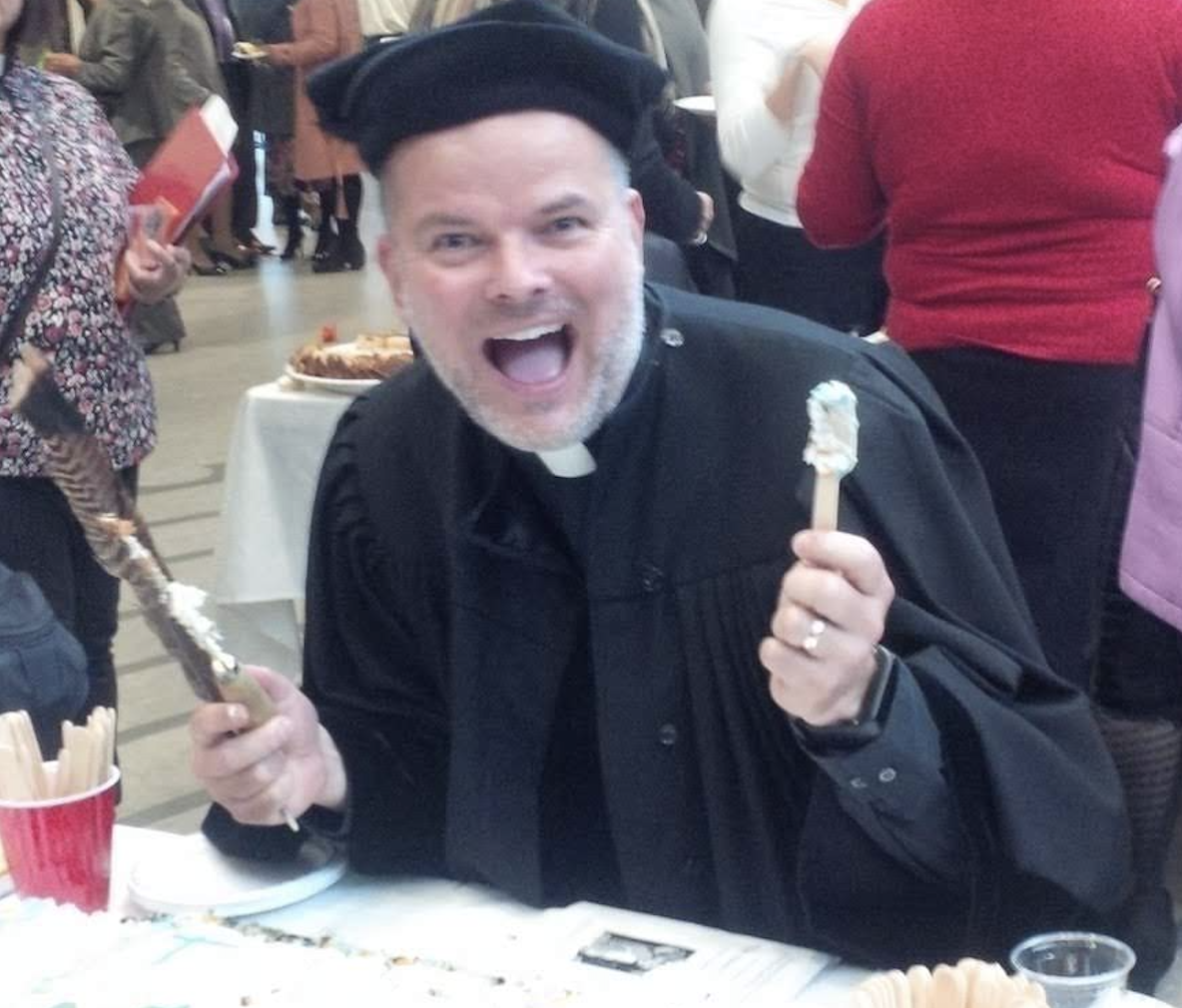
photo by Martin Malina (Aug 26, 2024)

Many of us who love to read fiction, or watch movies, do so not only to find out whodunnit. We continue reading because we expect that a happy or at least satisfyingly good and appropriate ending awaits.

What is more, some hardened book lovers will toil through a dry and thick middle part of a book just to get to the ending trusting it will be well worth the work. Some people in this room today whom I know – not mentioning any names – will even have the audacity to cheat. They will peak ahead to the last page to determine whether or not it is worth their time and energy to plow through those sometimes-boring middle sections of the book.

The lectionary readings for this Sunday deserve a careful reading and re-reading. And you will note that the story of the widow at Zarephath feeding Elijah ends in abundance and promise fulfilled (1 Kings 17:8-16). The lecture in Hebrews about Jesus’ sacrifice for our sins ends in the promise of salvation for those who wait for God. That text ends by explicitly stating that when Jesus comes again it’s not to deal with sin, but to save people (Hebrews 9:24-28).

Judgement and sin are not the end of the story. Mercy, grace, salvation and promise-fulfilled are.

When we read this sacred text thousands of years after it was first written, what do we hear? What do we say? What do we believe about what’s important in our faith?

Last month, the father of liberation theology, Gustavo Gutiérrez, died at age 96. Once considered a revolutionary, his notion of God’s preferential option for the poor, his idea of empathy and advocacy for the poor, have influenced the social teaching of the church over the last century (Friskics-Warren, 2024 October 24).

According to Lutheran theology God is revealed most clearly in the suffering and death of Jesus. The cross therefore becomes the central metaphor for how God comes to us, and in what circumstances of life. God is revealed most profoundly not in glory, not in victory, not in riches, not in greatness, nor in prosperity.

But, rather, in conditions that are the exact opposite. Hence, the missional stance that suggests the voices of the poor, those on the margins, those who don’t have it all, in fact guide the church.

The cross shows us the way of Christ in the world and in the church. It is a humble way, a way of honesty. A way of being vulnerable. A way of asking for and receiving help and love from others. In receiving love we know who we truly are. At very least, we say God is revealed in all things, even in the tragic and sad.

In grief work, we say that sad is not bad (Morris, 2018). Sad may clue us, in fact, to the way forward in faith. What we initially ignore, dismiss, discard, pity, even despise in others and in ourselves may clue us, invite us into the truth of faith.

I think the woman gave her two cents worth, literally, because she trusted God. Hers was the faith in trusting that ultimately what awaited her at the end of her life was not judgement and sin. At the end, for her, was the embrace of a loving God for eternity. What has she to lose?

From his great sermon on the mount, we learn something important about Jesus verified in this Gospel today. Jesus’ eye is on the sparrow, on the littlest bird (Matthew 10:29). Therefore, we know that he watches, not to judge, not to put pressure on us to perform righteously, not to goad us to make a good example for others, not to make us great. No.

Jesus watches to protect us. To love us. To hold us through thick and thin.

The end of our story, your story, is good. Trust that life which God gives, reigns! Trust that love, which is still expressed from time to time in the world, reigns, in the end. Trust that God will not forsake you, that God will not forsake the little ones, that God will give voice in our weakness, that God will rise in the voices of the poor, in their example to us.

Will we listen? Will we watch where Christ looks?

Reference:

Friskics-Warren, B. (2024, October 24). Gustavo Gutiérrez, father of liberation theology, dies at 96. The New York Times. https://www.nytimes.com/2024/10/23/world/americas/gustavo-gutierrez-dead.html?unlocked_article_code=1.W04.MM2s.LBybnrYFAjNp&smid=em-share

Morris, S. (2018). Overcoming grief (2nd ed.). Robinson.

Candleholders

We ran into a crisis that, in the end, wasn’t a crisis. In fact, it could not have conveyed the meaning of today more appropriately.

It was the crisis of the candles. Every year, weeks before All Saints Sunday, we do an inventory of the candles that we light in memory and in celebration of the saints we name today. Of course, every year there is a different number of people we remember, and therefore a corresponding number of candles. And sometimes, depending on our stock, we might need to order more.

So, there is a bit of stress, especially if we need to order more and time becomes a factor. This year, our dedicated altar care group assured me that we had enough candles.

But, there was a catch. We had used them before, probably during All Saints Sunday worship last year. Though these candles were all uniform and about the same length, they were not new out of the box. Pause.

When we discussed the situation, I wondered out loud about this belief we have when it comes to celebrations – that every individual deserves their own, unburned candle. It’s like the fact that many people, like myself, share a birthday with someone else in the family. Don’t we deserve our own day? “It must be tough,” some have commiserated with me, “sharing the limelight with someone else!”

Indeed, we tend to centre meaning on the individual. That’s a whole lot of pressure we put on ourselves – to make it or break it! We therefore value self-reliance and seek reward for our individual achievements and successes.

When our faith is dependent on ourselves, individually, we at the same time create a culture in which people have a hard time asking for help. We resist relying on and learning from others. We see that as weakness.

This is one of the lingering legacies of the Reformation. While Martin Luther brought the bible to the people and encouraged a personal engagement with scripture and sacrament, his legacy also individualized faith. The lasting consequence was to leave us believing everything important hangs on the balance of individual decisions.

Consequently our sense of community erodes and our connection weakens not only with each other on earth but with the “mystical union” (Prayer of the day, n.d.) we have with all the saints in heaven, in Christ.

When you grieve the loss of someone special in your life, for example, what do you believe about your connection with that loved one right now? To what degree is the relationship over? And, if you believe it isn’t over, how has that relationship changed?

On All Saints Sunday we counter the tendency to individualize everything, and affirm instead that we stand on the shoulders of those who have gone before us. We light candles that have already burned before! In our baptism we unite with all the saints on earth and heaven. As Luther famously said, we belong to the priesthood of all believers, in every time and every place. Each of us belongs to and is part of something much bigger than ourselves.

The foundation of our faith is not our individual decision to follow Christ but rather our confession of being held in the communion of all the saints whose foundation is Jesus Christ. Our faith is not alighted on the merit of our own individual efforts. Our faith is lighted up because the flame has always been shining and showing us the way, going before us all.

My brother tells of a recent mystical experience of connecting with our dad who died five years ago. His telling of the story is published in the recent edition of “Eternity for Today” (Malina, 2024):

“I was going through a rough week,” he writes, “questioning a lot of things. It was two o’clock in the morning, and I had been tossing and turning in bed for hours. Just as I was finally drifting off, there he suddenly appeared before me, unquestionably my dad. I jolted in surprise. His smiling and jovial face had never seemed so vivid and warmly familiar.

“And he told me something I so needed to hear, words which not only encouraged me, but also affirmed my faith in an inter-connected universe where the eternal and material dimensions weave together in undetermined ways, where God’s love in Jesus binds us all in heaven and on earth: ‘Be at peace. Don’t be afraid. Just keep going. One step at a time. I am with you. God is with you’” (p. 30).

Even and especially when we grieve our losses, we discover other ways we are connected. We may even be able to affirm that the relationship is not over, it has only changed. And maybe then we discover new roles and new ways of being in relationship.

In their book, “Beyond Saints and Superheroes”, authors Allen Jorgenson and Laura MacGregor challenge readers to re-envision our identity in community to be like candleholders rather than trying to be the light ourselves (MacGregor & Jorgenson, 2023).

So, we hold others, especially those unlike us with needs different from our own. And we empathize with them. But true empathy is “not about imagining how you would think or feel in the given situation. Rather, it is about imagining how someone else feels in the situation they are in” (Morris, 2018, p. 171).

This shift in thinking moves us out of our individual self-preoccupation to an other-centred way of thinking. To do this, we first practice simply—but perhaps not easily—just being with another rather than compulsively doing for another. When we can simply hold space with others, the tiny flame has oxygen to breathe, so the light of Christ can shine brightly for the world to notice.

When we practice just being with someone else, we love them by meeting them where they are at. When they have that sense of being seen, that they matter. In that space of grace, then, we recognize the light of Christ which, although it may appear fragile and small, actually gives enough light in the night for all to see.

Listen to the words of Professor Jorgenson who wrote this poem called “Candleholders” :

“Yesterday was All Saints’ Sunday at church and candles lumined the nave to honor the departed, the beloved, the beleaguered.

“We were invited to light one for a soul deep in our heart, and I walked to the altar and lit a candle in honor of you… sadly missed…

“The candles were variously held by brass, by glass holders. Some votives sat free. I took one of these and tipped it toward the Christ light. As it flamed, I breathed a prayer of thanks. I set you – on fire – into a bed of sand, imagining holding your hand once again, but no, you were grasped by grains of sand without number.

“I pondered you then, with all the saints: each one different, each one the same, each one broken, each one whole – together a circle of support.

“As I made my way back to the pew, I thought I heard you say:

“Today is All Saints Sunday, but each day is holy, as are we, as we hold each other and so the Christ” (MacGregor & Jorgenson, 2023, pp. 110-111).

References:

MacGregor, L., & Jorgenson, A. G. (2023). Beyond saints and superheroes: Supporting parents raising children with disabilities: A practical guide for faith communities. Mad and Crip Theology Press.

Malina, D. (2024, October 22). My dad in my dreams. Eternity for Today: Daily Scripture Reading for Reflection and Prayer, 60(4), 30. Evangelical Lutheran Church in Canada.

Morris, S. (2018). Overcoming grief (2nd ed.). Robinson.

Wahrnehmen: What do you do when the past visits you?

You will know the truth, and the truth will set you free (John 8:32).

In an online forum, fans of Leonard Cohen debate the title of his song, “One of us cannot be wrong” (leonardcohenforum.com). The song seems to be about a failing romantic relationship.

The term has also been used as a joke between two people who disagree on something. Any argument, it seems, presumes that someone must always be right. And, therefore, someone else must also always be wrong.

Saint Paul in his letter to the Romans throws a wrench into this kind of dualism. “For all have sinned and fall short of the glory of God” (Romans 3:23). Therefore, no one is right. And no one is wrong. No one, ultimately, can claim higher moral ground.

In today’s Gospel reading for Reformation Sunday, Jesus says, “Everyone who sins is a slave to sin” (John 8:34). In other words, human beings – we are all in the same boat. And, therefore, we need to learn to co-exist, peaceably, even with our enemies.

But only the truth will “set you free” (John 8:32).

Ok. So, what is truth? Pilate asked Jesus this question (John 18:38). It’s normal to go into our heads to figure that one out. In today’s Gospel, those who believed in Jesus misinterpreted his teaching by thinking they didn’t need to be made free because they were not slaves, literally.

We can, and have to this day two thousand years later, argued and debated what this truth is. Martin Luther in the 16th century, who launched the Reformation, offered his interpretation by focusing theological truth on the unconditional grace of God, which implies accepting, loving, and caring for everyone unconditionally.

But not every Christian feels comfortable with that message. We’d rather slip back into that comfortable dualism of believing “one of us cannot be wrong.”

Maybe the way to knowing the truth starts by examining how we receive the truth. Perhaps we first need to set the context for that truth giving and receiving. How is it given? Who is there? What’s going on?

In Martin Luther’s mother tongue, the German language, the word truth is “Wahrheit”. But German offers a helpful nuance by introducing a verb, an action word, for the word truth: “Wahrnehmen” loosely means perceiving, or as I’ve already mentioned, truth-receiving.

Truth is about how we receive it. It is not just a thought, or doctrine floating up here somewhere. It is contextual. It’s on the ground, in our lives. It is integral to what we do as much as what we think.

I can hear the wheels turning in your heads. You might argue with me here, saying the main theological point of Martin Luther’s Reformation is that we are made right with God not by doing good works. We are made right, or justified, with God by God’s grace alone. We can’t earn God’s favour because even the good we try to do has a downside. Nothing we do is a perfect thing with 0-negative consequence. We are truly dependent on God’s grace.

But because our actions – all of them – yield at least some negative consequence, doesn’t mean we remain passive or don’t try. Recognizing our sinful nature doesn’t translate to inactivity based in fear of making a mistake – because we will anyway no matter what we do! Proclaiming the primacy of God’s grace in everyone’s life doesn’t mean we don’t reach out, take risks, and express our faith in loving deeds.

It takes practice. Luther did say, “Sin boldly! But trust in God’s grace even more!” Wahrnehmen.

Mother Theresa said, “Love cannot remain by itself – it has no meaning. Love must be put into action, and that action is service” (Dyer, 2010, p. 99). In other words, love, compassion, mercy and forgiveness – all these grace-words mean absolutely nothing if we let them remain only in our individual lives, or only in our heads. Wahrnehmen.

What Jesus did for us on the cross and empty tomb was that he led the way for us, showed us the way and modelled for us the pattern, the way to follow. What Jesus did for us is not just for our intellectual benefit, not just for disputation in order to arrive at some level of doctrinal purity.

We are created and called for a purpose: To follow faithfully despite the mistakes we are bound to make on the way. It takes practice and exercising our spiritual muscles. Early in any exercise regime, it feels awkward.

In her book on overcoming grief, Sue Morris (2018) suggests writing with your other hand (pp. 26-27). Try writing your name and address with your non-dominant hand. Write as neatly as you can.

How does it feel? How does your writing compare to when you write with your dominant hand? Did you have to concentrate more? Did it feel strange?

“Being able to write effectively with your other hand would require a lot of practice … Even after many years of experience, writing with your non-dominant hand may never feel as effortless as writing with your dominant hand” (pp. 27-28).

A similar thing happens in grief, after a loved one has died. Even though you know how to live just like you know how to write, your life now feels awkward and unfamiliar. It takes more concentration, effort and energy. Any transition in life, even positive ones, involve loss and change. Transitions involve new learning and a period of adjustment.

As we practice, nevertheless, we can experience God’s loving presence. In the receiving of grace, we discover a deep source of strength flowing through us. We discover that in giving we begin to receive even more.

In practising faith, the truth frees us from the prisons of our own compulsive self-centredness. In practising faith, we learn again that, though the results are never perfect and even though our actions are always flawed, the truth of God’s grace is realized in deeds of love, serving others unconditionally, and courage to try something new.

And when we arrive one day at heaven’s gates, one thing we can be certain of: God will never fault us for loving too much, caring too much, showing mercy and compassion too much.

Thanks be to God, for the truth in Christ, who indeed sets us free.

Martin Luther, in his words, offers a blessing to us: “May God, who has led and called you to a knowledge of the truth, strengthen and preserve you to his praise and glory. To him and to his grace I commend you. Amen” (Owen, 1993).

Blast from the past: Ottawa Lutherans celebrate 500 years of Reformation in 2017

References:

Iazariuk. (2007, December 25). I think the title gives the interpretation, but I may be wrong [Comment on the online forum post One of us can’t be wrong – interpretations please.]. leonardcohenforum.com. https://www.leonardcohenforum.com/viewtopic.php?t=9931

Dyer, W. W. (2010). The shift: Taking your life from ambition to meaning. Hay House, Inc.

Morris, S. (2018). Overcoming grief (2nd ed.). Robinson.

Owen, B. (Ed.). (1993). Daily readings from Luther’s writings. Augsburg Fortress.

Healing

In the Gospel last week Jesus healed someone with an unclean Spirit.[1] This week, Jesus heals again, not only Simon’s mother-in-law but many others with all kinds of different problems.[2] What does it mean that Jesus heals us?

The language has changed in two thousand years. What healing was to people in the first century was expressed in language that has evolved over time. Today, the language we use to describe health, wholeness and healing assumes medical advances and understandings of how our bodies and brains work—something the authors of the letters, books, poetry and sermons of the bible didn’t yet know about.

It’s not to say there is no truth in the words of scriptures. It is to confess, however, that the means of conveying that truth—the language—has changed. Because our perspective has deepened. We have learned more, over time.

Listen to these predictions made almost a century ago, about computers. In 1949, a Popular Mechanics writer predicted, “Computers in the future may weigh more than one and a half tons.” And an IBM executive in 1943 observed, “I think there is a world market for maybe five computers.”[3] Despite their erroneous predictions, computers have since the 1940s changed in size, weight, speed, memory capacity, and market value. And they are an integral part of how we must effectively engage with others and the world today.

Technology is like language. Language is a tool. And while fulfilling an important purpose, tools change with changing needs.

Today, it’s Artificial Intelligence (AI). Maybe one thing we can learn from the mistakes the IBM executive and Popular Mechanics magazine made in the 40s is not to be too certain about our predictions about AI. You never know.

There are, nevertheless, some insightful comments made by those who work closely with AI development. They point to how the technology affects people and what we value. The development of AI presents a desperate need for compassionate, loving human interaction in this world, called “soft skills”.

Although technical skills will always help someone develop an expertise, the research suggests that in the age of AI, ethics skills are more valuable than ever.[4] People who develop and work with AI need to become ethicists to preserve authenticity and trust. Interpersonal communication is another in-demand skill in this field; that is, the ability to build real relationships.

So, what does this have to do with healing? Let’s look again at the Gospel. Jesus heals. That’s what Jesus does: he seeks the healing of all people. The emphasis in this text is on healing for the sake of a good and better life-on-earth, for us and for all people. Jesus came so that we might have “life abundantly”[5] because “God so loved the world.”[6]

God so loved the world, at the time when those words were first written two thousand years ago. But God so loved the world, in the 1940s. And, God so loved the world, today, in 2024.

Jesus’ healing today has to do with reconciling people within community, overcoming barriers and whatever separates people. Healing has to do with strengthening relationship and building community.

And, to this end, God has given us the tools we need. Much of our medicine today derives from plant-life, in other words, from God’s good creation. Our healing from God is found in the gifts God has already given to us in our natural environment.

Listen to this definition of medicine from an Indigenous writer: “Medicine is in every tree, plant, rock, animal, and person. It is in the light, the soil, the water, and the wind. Medicine is something that happened ten years ago that still makes you smile when you think about it. Medicine is that old friend who calls you up out of the blue because he or she was thinking about you. There is medicine in watching a small child play. Medicine is the reassuring smile of an elder. There is medicine in every event, memory, place, person and movement. There is even medicine in empty space if you know how to use it. And there can be powerful medicine in painful or hurtful experiences as well.”[7]

Let’s remember Jesus’ healing didn’t prevent people from dying eventually from something. Healing is not some magical cure for your problems. Healing is not the total eradication of disease from life on earth.

When Jesus healed he showed us, gave us a picture, of love-in-action, healing that happened in community, not in private. Notice the healing was always in the presence of another. That’s how we know these healings happened! There was always somebody around – if not in the crowded synagogue, in a crowded house and in the streets and byways.

Healing is what happens when there is loving connection with oneself, between oneself and others, between oneself and the natural world, between oneself and the Divine. There is balance in all those parts that make us who we are.

And God loves it all. God wants us to know and feel that love. Jesus couldn’t wait to get on to the next town and village to share the message of and demonstrate God’s love-in-action!

Today is Global Mission Sunday in the ELCIC. In Bishop Johnson’s sermon for today,[8] she reflects on our relationship with the Evangelical Lutheran Church in Jordan and the Holy Land (ELCJHL). In the midst of all their troubles, especially war, they continue to live in hope and faith.

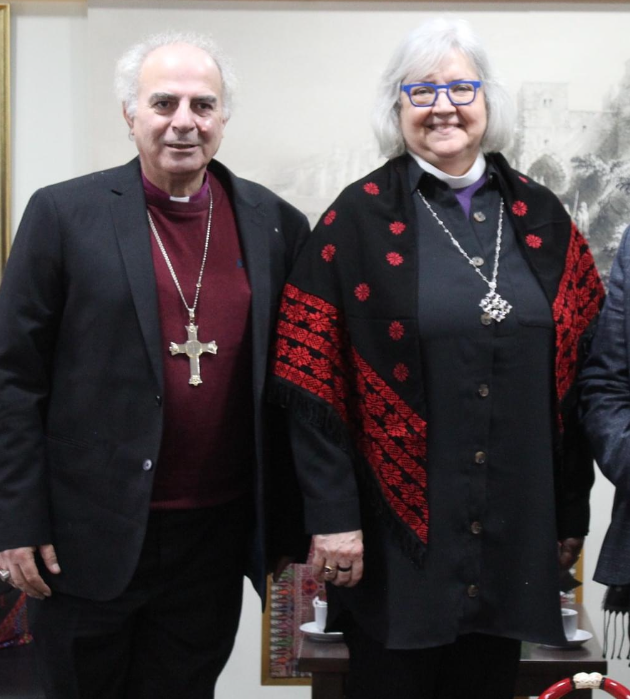
Bishop Susan was actually in the Holy Lands last month, and talked with Bishop Ibrahim Azar about the very toned-down Christmas they had just experienced. She asked him how it had gone and he said to her how hard it was. “But,” Bishop Azar said, “Christ was born again in our hearts.” Christ was born again in our hearts.

If the ELCJHL can be faithful and continue ministry in their extremely difficult circumstances— keeping congregations and schools open and serving those in need, what about us?

Here’s a prediction that cannot be denied: We can certainly continue with faith and hope in the midst of the challenges we face!

Thanks be to the God, who continues to heal in Christ’s name, we pray. Amen.


[1] Mark 1:21-28

[2] Mark 1:29-39

[3] Ed Bowen. (2024, January 18). Hold Fast to the Truth. Eternity for Today.

[4] Peter Cardon. (2024, January 23). The Future of Work: New study finds AI makes employers value soft skills more. Fast Company. https://www.fastcompany.com/91012874/new-study-finds-ai-makes-employers-value-soft-skills-more

[5] John 10:10

[6] John 3:16

[7] Garrett, M. T., Garrett, J. T., & Brotherton, D. (2001). Inner circle/outer circle: A group technique based on Native American healing circles. Journal for Specialists in Group Work, 26(1), 17-30.

[8] Click here for Global Mission Sunday  resources (ELCIC, February 4, 2024).

Ordinary Time

We understandably seek an extraordinary experience of the divine. The stories we like to tell each other over coffee, for example, are those strange, inexplicable even miraculous moments of life. It’s as if we can know God only through these extreme, irregular events: How by some fluke we avoided an accident waiting to happen, or how we were so fortunate to win a prize, or how we happened to be in the right place at the right time to witness something incredible. 

These expectations of experiencing something spectacular of the divine translate into our religious observance. We will come to church at Christmas and Easter – when all the stops are pulled to put on a good show – in order to fulfill our longing for God, for something better than the norm, something more entertaining and stimulating. Aren’t epiphanies supposed to catch our attention after all?

It is so tempting to set religion apart from the ordinary, making of it a sort of “fairyland amusement park.” This leads to an ancient heresy of the church – the split between God and human, the ordinary and the holy, the sacred and profane.[1]And when this split entrenches in our minds, how is it, we wonder, that we would deserve such a God? A God who is made known only to an elite few who will have these extraordinary, divine epiphanies more than we ever can.

But today we find ourselves in ‘ordinary’ time of the church year. According to the church calendar, these times are marked by the colour green. The largest chunk of ordinary time follows the numerous Sundays after Pentecost, running through the whole summer and into late Fall.

But, ordinary time also has a place early in the year, a shorter chunk of time between Christmas and Easter. Combined with the season after Pentecost, ‘ordinary’ time makes up mostof our time – thirty-three or thirty-four weeks of every year.[2]It is not, therefore, the time during which the church is engaged in preparations for, or celebrations of, the birth, death and resurrection of Jesus.

It is the time during which we are called, like Simon and Andrew in the Gospel for today, to follow Jesus. Not because of the star that announced his birth. Neither because of the excitement conjured by the promise of a trip to Jerusalem. But simply because Jesus said, “Follow me.”[3]

It’s ironic that in church history and doctrine we have minimized Jesus’ life and ministry in comparison to his birth and death. Some of the ancient creeds jump directly from Jesus’ birth to his death. But the reason for which Jesus lived on earth cannot be minimized. “Though it is not untrue to say that Jesus came to earth to die, it is more true to the Gospels to say that he came first to live.”[4]

In fact, Jesus’ death is truly significant only in connection with that which he lived for and proclaimed – God’s kingdom. We pray every week, “Thy kingdom come, thy will be done on earth as it is in heaven.” On earth. While we go about living, here.

In these weeks between Christmas and Easter we are reminded that, for all their wonders, neither of these great celebrations is sufficient to sustain us in the hard work of following Jesus in our ordinary lives. How can we do that?

In addressing this question let’s be aware again not to be always so taken by the WOW factor —the exceptional even unbelievable nature of the disciples’ response:

“Immediately they left their nets and followed him.”[5]

Again, we may tend to focus only on the extraordinary act of obedience on the part of the disciples. All we see and read here is this immediate response by Simon and Andrew to follow Jesus. They don’t think about it, they don’t talk to anyone before agreeing. They just drop everything and go. Wow!

But what has been going on leading up to this moment, this encounter between Jesus and the disciples he calls? You get the feeling that there has been something brewing beneath the surface, even of their consciousness, which then presents in this radical behaviour. What has been going on in their lives preceding this moment? And, over the long haul of their ordinary living?

Saint Augustine from the fourth century opens the first book of his Confessionswith the prayer and statement that “our hearts are restless until they rest in thee.”[6]It might very well be that even those four fishers had restless hearts – so restless that when they heard Jesus’ call to them, they could do nothing else but leave everything behind and follow. 

Perhaps they were simply responding to what had already been imprinted on their souls from birth—the knowledge of the voice of God—so that when they heard the voice, all they could do was obey. Their hearts were already prepared over time, to respond to that moment of invitation.

Our hearts have been prepared through every experience of our lives, prepared to hear God’s voice when it happens. Our lives, every ordinary moment, is holy ground in which God is working in us to be prepared for when that moment of realization comes.

We may be our greatest enemy in recognizing the work of God in our ordinary routines, as we go about our lives—washing dishes, or walking to the office, or talking on the phone. We can give up the search for extraordinary experiences to validate our relationship with God and service in Jesus’ name. It is obvious. It is right here. In our ordinary lives. Salvation happens in everyday, ordinary experience.[7]

An old man was making rope. Someone came to him and asked him, “What is it necessary to be saved?” Without looking up from his work, he replied, “You are looking at it.”[8]

An episode on one of the nature documentary channels was about the elephant seals of Argentina. The show focused on a mother and her seal pup, who had just been born. Soon after birthing her baby, the mother, now famished, abandoned the pup on the shore so she could go feed in the rich waters off the coast. 

After feeding, she returned to a different part of the beach and began to call for her baby. Other mothers had done the same, and all had returned at a similar time. It was hard to believe they would find each other. 

The camera then followed the mother as she called to her pup and listened for the response. Following each other’s voices and scents, soon the mother and her pup were reunited. The host of the show explained that, from the moment of birth, the sound and scent of the pup are imprinted in the mother’s memory; and, the sound and scent of the mother are imprinted in the pup’s memory.[9]

That’s how it is between God and each of us. We are imprinted with a memory, a longing for God. And God is imprinted with a memory, a longing for us. And even if it takes a lifetime, we will find each other.

No bright stars. No earthquakes. Just a voice that strikes our ear amid the ordinariness of our lives and announces that God has found us and God is among us.


[1]Gregory Mayers, Listen to the Desert; Secrets of Spiritual Maturity from the Desert Fathers and Mothers (Chicago: ACTA Publications, 1996), p.105

[2]David Toole in David L. Bartlett and Barbara Brown Taylor, eds. Feasting on the Word; Preaching the Revised Common Lectionary Year A Volume 1 (Kentucky: WJK Press, 2010) p.284-286

[3]Matthew 4:19

[4]Troy A. Miller in David L. Bartlett and Barbara Brown Taylor, eds., ibid., p.287

[5]Matthew 4:20

[6]Cited in Rodger Y. Nishioka, Feasting on the Word, ibid., p.286

[7]Gregory Mayers, ibid., p.105

[8]Ibid., p.97

[9]Rodger Y. Nishioka, Feasting on the Word, ibid., p.284-286

To the coastlands

In the second of four, so-called ‘servant poems’ in this section of Isaiah,[1]we encounter a person who is called from before his birth for God’s purposes. But the servant is “deeply despised” and “abhorred by the nations” for something he had done that caused the people to heap judgement and even violence against him.

Whatever this servant had been doing was frustrating even for the servant. He complains that his work had been a complete waste of time, that he had “labored in vain.” Can you relate?

Have you “labored in vain”? Do you feel as if all the work you’ve put into something was in vain, wasn’t worth it, or it felt like it was all for naught and didn’t make any difference? Have you once felt the shame of futility, frustration and failure?

Mahatma Gandhi, during his student life, suffered from frequent panic attacks. He had a particularly agonizing experience during a speech he was asked to give to a vegetarian community in London. After reading one line from the message he had prepared, he could no longer speak and asked someone else to read the rest of the speech for him.

“My vision became blurred and I trembled, though the speech hardly covered a sheet of foolscap,” he recalled.[2]How can someone who is barely able to utter two sentences together in public lead an independence movement? You’d think he must have grieved his shortcomings and fear. Even doubted his ability to lead. 

What will God say to us? How will God answer our prayer born out of our frustration, feelings of futility and anxiety about the changing and scary world within and outside of us?

God’s answer surprises and is often counter-intuitive. We think, perhaps, the solution lies in scaling back, lowering expectations, isolating ourselves in cocoons of introspection and introversion. We think, perhaps, the solution lies in moving away from what causes our fears and anxieties in this changing and scary world out there.

But God’s way isn’t what we think! You thought the solution to your problems was to circle the wagons of your world, make it narrow and easily controlled. You thought the solution to your problems was to constrict your vision to stay within the walls you have constructed in your life between you, your loved ones and the changing and scary world around. To retreat into the safety of a like-minded ghetto behind fortress walls.

God’s answer is cued right at the beginning of this servant poem, in verse one: “Listen to me, O coastlands, pay attention, you peoples from far away!” The servant is not speaking to his own folk, nearby. The servant is not addressing his words to his like-minded cohort. The servant is not preaching to the choir. 

The servant may not realize it at the beginning, but buried in his first words is the seed for his own transformation, his own healing, the answer to his own problem. God only puts a punctuation mark at the end of the sentence: “I will give you as a light to the nations, that my salvation may reach to the end of the earth” (v.6). Not only are his sights set on raising up the tribes of Jacob and restore Israel; his destiny lies with people from far away, at the far reaches of his vision.

After God hears the servant’s lament, “God not only renews the servant’s original calling but enlarges the scope of it, so that it encompasses not only the restoration of Israel but the salvation of every nation on earth. Rather than looking upon the servant’s failures and adjusting the call downwards to meet diminished expectations,”[3]God offers an antidote to the servant’s inner struggles.

If the servant is to be healed from his inner turmoil and outer struggles, here is the antidote: reach out to others to meet them, serve them, learn from them and live together with them. Get out of yourself and the self-preoccupation born from too much navel-gazing, and meet God out there in that changing and scary world.

Gandhi found a cause that inflamed a passion in him so great that it overrode his anxieties and fears. His desire to see a free India moved him to stand up for what he believed in. Ghandi’s life echoed the expansive vision of God to care not just for those closest to him – in his family, village, township or province. But to care for the entire country!

Maybe when we’re anxious, we would do well to set our sights on the coastlands. Maybe, when are afraid, we would do well to consider a strategy that goes in another direction than ‘the way it used to be’. Maybe, when we feel all our work has been in vain, we would do well to try to reach out rather than just reach in. Maybe, when we are frustrated, we would do well to resist the temptation to retreat into the comfort zones too quickly.

Because maybe our healing lies in this expansive vision of God. Maybe our growth lies in setting our sights on the coastlands, to meet with people from far away, to make meaningful connections with peoples from all nations.

I think what we need to remember is that what has brought us here today—in the first place—is love. What brings us to this point of confession—confessing our sins, confessing our fear, feeling all those wants and unmet needs and grievances … we can only do that because love lives in our hearts. The small, spark of love – the love of God in us – opens our hearts to be who we are, warts and all.

But God doesn’t stop there. The love that brings us to honesty also sends us out to share God’s love in the world. The love of God will not stop in us but will radiate outwards, a centrifugal force that cannot be stopped, a force that will shine to the farthest corners. God won’t lower the bar with us, but raise it.

When we find the balance, when our outward reaching stems from the depths of our hearts in Christ, when the centrifugal force of the Spirit of God’s mission in the world emerges from the deep wells of God’s love within, then …

Our work will not be in vain. God will bring to completion the good work already begun in us.


[1]Isaiah 49:1-7

[2]https://visme.co/blog/amazing-leaders-who-once-had-crippling-stage-fright-and-how-they-overcame-it/

[3]Stephanie A. Paulsell, Feasting on the Word; Preaching the Revised Common Lectionary Year A Volume 1 (Kentucky: WJK Press, 2010), p.244-246

Christmas Eve – the greatest gift for getting it wrong

For over five centuries, Lutherans have asserted and proclaimed: grace is a gift. Meal time, especially during the holidays, is a great opportunity to experience grace.

Many of us will get together with friends, family, and coworkers for Christmas meals and potlucks. We sit at the same table and eat food that is shared among everyone at table. 

Where’s the grace? (besides the pre-meal prayer)

The grace in that experience, is being together. How often does that happen in today’s world? When family members are separated by vast distances unlike in any other time in human history. When coworkers can suspend their usual activities and work routines to just sit down and eat a meal together. When effort is made to make and/or bring food for all.

The grace is sharing food together despite the conflicts, the dislikes, the divisions and lines drawn between those around the table on account of political opinion, social standing, personality, past hurts.

The grace is found in those moments when, unexpectedly and surprisingly, a kind word is said between combatants, a genuine smile of thanksgiving is offered when ‘gifts’ are exchanged, or tears of forgiveness given and received are expressed.

On the surface, these moments may not change a whole lot, at least not immediately. But repeated often enough – Christmas comes every year – the seed sown deeply in the heart will one day sprout. ‘Mary treasured all these things and pondered them deeply in her heart’,[1]the scripture says. Sometimes, in the face of grace, all we can do is find a moment to appreciate and digest this gift. And let it grow in us. We are, each of us, the innkeeper who will decide whether or not to let Jesus in.

Celtic Thunder, the Irish, male group sings a powerful version of Silent Night that tells the story of Christmas at the Western Front in 1915. German and British soldiers stopped their fighting for a few moments Christmas Eve when one of the German soldiers – a lad of 21 years of age – started singing Silent Night.

Before long, combatants from both sides that had been avowed to killing each other were walking across no-man’s land. For a few moments they left their weapons behind, hugged each other and gave each other gifts of cigarettes and pots of wine.

But alas, the moment of grace passed. And before long they were shooting at each other again. And the 21-year-old soldier who had started the singing, did not make it to the morning.

Grace was given to those boys amidst the battle. In the singing of Silent Night, in the exchange of gifts, in the hugs and laughter, grace was still given.

Grace is a gift not for getting it right, but for getting it wrong.[2]And we human beings, throughout history, can get it awfully wrong. But this does not stop God.

God came into the world not at an ideal time when everyone was getting along. Herod was a paranoid despot about to wreak havoc in the land. In short, there was unrest in Palestine. Beneath the surface of all that might have appeared genteel in the little town of Bethlehem that holy night was broiling a call to arms by discontented zealots against Roman occupation. The military conflict would finally erupt some seventy years after Jesus’ birth with the destruction of Jerusalem.

God chose a particularly dark and disruptive time and place in history to enter in, as a vulnerable little baby boy born to a teenager in a barn for animals. Not a strategy for success, you might think, eh? On earth, nothing was going right.

But the grace of God knows no bounds. The grace of God enters into the thick of it. Not when everyone is getting along. But especially when everyone is getting it wrong.

The message of Christmas, in the end, is one of hope. Because no matter how bad or sad things get, it won’t stop God from prying into our consciences from time to time to tell us that God is never too far away. No matter how bad it gets, God is always with us. Emanuel. God with us.

Once we can accept that God is in all situations – not just the warm fuzzy moments decorated with visions from Hallmark – then everything becomes an occasion where some good can happen. God can and will use even bad situations for good.[3]This is the day God has made, let us rejoice and be glad in it!”[4]

Our task this Christmas – however you are observing it – is to look for and find the good, the true, and the beautiful in everything, even and most especially the problematic. Because the bad is never strong enough to counteract the good, however small or short-lived. “The light shines in the darkness, and the darkness cannot and never will overcome it.”[5]

Amen.


[1]Luke 2:19

[2]Richard Rohr, “Accountability Is Sustainability” Twelve-Step Spirituality: Part One (Daily Meditations, www.cac.org) Friday, December 13, 2019

[3]Richard Rohr, “Incarnation – Like Knows Like” Richard Rohr’s Daily Meditation (www.cac.org, Monday, December 23, 2019).

[4]Psalm 118:24

[5]John 1:5,9

“¡Presente!”

Each of the four blessings is matched with a corresponding ‘woe’[1] First, Jesus says that blessed are they who are poor, who are hungry, who weep now and whom people hate. But, unlike Matthew’s version of the beatitudes[2], Luke doesn’t stop there. Luke doesn’t let us off easily.

Lest we become too enamoured with spiritualizing virtues or escape into some pie-in-the-sky notion of faith, Luke’s version of Jesus’ sermon only sets us up for being gobsmacked upside the head. In a stunning reversal to each blessing Jesus brings a ‘woe’—to those who are rich, who are full, who laugh now and about whom people speak well.

But wait—a secure financial future, a full stomach, a light heart, and a good reputation – aren’t these all values we want and seek? Aren’t these the things around which we structure our lives to obtain? Don’t these describe to a ‘t’ our five-year, ten-year and twenty-five-year goals?

A surface reading of this scripture can leave us picking sides. Am I on the ‘blessing’ side or the ‘woe’ side of the equation. Either / Or. Will we dare go deeper?

And, at the deeper currents of our awareness — when we are honest with ourselves — don’t we already know? Don’t we already know the truth of it—that, at best, wealth, a full stomach, a light heart and a good reputation are mixed blessings? They come at a great cost to health and relational well-being. They are temporary, fleeting. They can come and they can go.

Contrary to popular belief, rather than being evidence of God’s favour, prosperity can actually endanger our relationship with God, as was the case with the rich fool and Zacchaeus—both characters unique to Luke’s Gospel.[3]

What is common to both characters? Both came to Jesus rich men with full stomachs and their reputations intact. When they came to Jesus, both the rich fool and Zacchaeus were perfectly able to take care of themselves, to say the least.

The common trait they share as prosperous men of first century Palestine, is their self-sufficiency. This state is what separates them from God. And has them trapped. they are self-sufficient.

Elsewhere in Luke’s Gospel, we read that those who lay up treasures for themselves are not—and cannot be—rich toward God[4]because when we can take perfectly good care of ourselves, it is altogether too easy for us not to trust God. So, what jeopardizes the wealthy Christian’s relationship with God is the subtle temptation to think that we can go it alone and take care of ourselves.[5]

This underlying belief applies not only to our personal lives—and what we decide to do with our wealth, our investments, our properties our material blessing— but, also to the way we do church.

Will we be a community that lives only unto ourselves, or for the sake of others? Meeting the challenges of church today, how do we move forward? What decisions will we make with the resources we have? Will we abide by the code of self-sufficiency and go it alone? Or, will we seek out effective partners, neighbours and others on the journey of faith? Will we say God is only here inside thesewalls alone? Or, will we seek God’s work out there in the world?

What with all the competing values and programs for success beating down the doors of our hearts and minds, to follow the Christ of the cross is not easy. It’s not a technique or strategy that we can simply employ. In light of the beatitudes from Luke, the way of Christ cannot be an add-on. It cannot work that way, as another activity to add to the schedule of our already busy lives.

It comes to us as a complete package. It’s a call to transformation – a whole-life make-over. I understand the hesitation. Because life in the fast lane has its perks. Maybe we don’t want to give them up. Not easily, anyway. Seeking after self-sufficiency is too much of a lucrative deal for our egos.

Therefore the message of the Gospel can really be a downer! After all, how can we ever live faithfully when immersed in our world and its values?

But, perhaps, the message of All Saints provides an antidote to the despair and the grief. And give us hope for the journey. After all, the Gospel is not just about how to get into heaven after you die, but actually more about how to live in the kingdom of heaven on earth before you die. Not just the saints of heaven. But the saints on earth.

I want to close with a brief reflection on the meaning of a couple of words. First, ‘blessing’. “Blessed” is sometimes translated as “Happy”. I prefer the translation of the first word in the Psalms[6]which incidentally is also often translated to “Happy are they …”:

The Hebrew word here is ‘ashar, which means, literally, “to find the right road.” So, in offering the beatitudes, Jesus is saying: “You are on the right road when you are poor, when you hunger, when you weep, when you let go, when you don’t hold it all to yourself.” I prefer this translation because it implies a direction rather than a moral state. It acknowledges a journey of becoming. And any path of growth and transformation will include honest struggling and striving and letting go.

It is human to struggle with these things. On one hand, we do need to learn early in life how to take care of ourselves. Learning vital skills around self-care are important. Along the journey of maturity and growth, however, we must also learn how to balance this skill towards attention to others.

The second word is ‘presence’. This word doesn’t appear in the biblical texts for today, but it is implied in our ritual of All Saints. In Spanish, you hear the word said aloud: “¡Presente!”—which literally means “here” or “present”. There is a long tradition in Latin American movements for justice of invoking the memory of those who have lost their lives in the struggle.

At political gatherings their names were read out loud, one after another, not unlike we read the names of the saints earlier. After each name the crowd says together: “¡Presente!” as if to say: “You are not gone, you are here with us. You are not forgotten, and we continue the struggle in your name.”

It is human to struggle in the mission of God on earth. But we are not alone. Not only are the saints of heaven among us in spirit and in love, God is with us each step of the way. On the journey of life …

“Blessed are you who are poor – because you are not alone!”

“Blessed are you who hunger – because you are not alone!”

“Blessed are you who weep – because you are not alone!”

“Blessed are you who are despised – because you are not alone!”

“¡Presente!” “¡Presente!” “¡Presente!”


[1]Luke 6:20-31

[2]Matthew 5:1-12

[3]Luke 12:16-21; 19:1-10; E. Elizabeth Johnson in David L. Bartlett & Barbara Brown Taylor, eds., Feasting on the Word; Preaching the Revised Common Lectionary Year C Volume 4 (Kentucky: WJK Press, 2010), p.239-241.

[4]Luke 12:21

[5]E. Elizabeth Johnson, ibid., p.241

[6]Psalm 1:1

Give God a chance

A year ago last summer we bought a potted Hibiscus plant already in full, glorious bloom. The local nursery encouraged us to plant it right away and let it take root in our garden. When winter came, we snipped the stem down to a few inches above the ground.

Last Spring, the sprig showed no signs of life. At all. And it was late June already when I was tempted to pull up the seemingly lifeless root ball from the garden to make room for something else. Visiting the same nursery at the time I complained to them about the Hibiscus plant they sold to us, that obviously did not winter-well. To say the least.

“Don’t pull it up, yet!” they entreated me. “Wait a little longer, for it has been a late Spring. Give it a chance.”

At first, I didn’t believe them. But I left the dead thing alone trying not to think about my disappointment too much. Was I in for a surprise! In early July a tiny, green shoot pushed up the earth around the base. But then, not just one, but two, three and four shoots of new life erupted out of the ground. Seven weeks later, we were enjoying a multitude of magnificent blooms. The plant had more than doubled its growth from last year!

How critical it was for me to heed the gardener at the nursery when she told me “Don’t pull it up!” and “Wait a little longer” and “Give it a chance!”

“Then Jesus told them a parable about their need to pray always and not to lose heart”[1]

In Jesus’ story, the theme is ‘not giving up.’ Not giving up is what it looks like to pray always. Elsewhere in the bible, Paul, the writer to the early church, instructed the faithful “pray without ceasing”[2]. It’s about being persistent in waiting, in not reacting, in staying the course when it starts feeling like it’s no use any longer to keep going.

“If it seems to tarry, wait for it; it will surely come, it will not delay.”[3]

The prophet was waiting for a vision from God, a word that would give new life to those who were discouraged, defeated and ready to give up on God, on themselves and on the world.

For what do you wait? After what justice do you persist? What is it you seek after that seems elusive, just beyond your grasp? Whatever that is, the scriptures describe an inner quality of the heart that will not give up, that will wait for it, that is patient and true in enduring and persisting.

That sees the present moment as holding value in and of itself.

The goal, the destination, the vision – this may seem to tarry. Perhaps in those impatient moments it’s important again to look around at what is happening. Infant baptism, for one thing, is a visible sign of this challenge and truth.

For an infant does not express knowledge of God in the way we adults do. An infant cannot give us a rational accounting of their faith. They cannot, surely, deserve blessing by pointing to a long list of their good deeds and giving an impassioned testimony.

It confounds us sophisticated grown-ups crazy, as we are influenced so much by a success-mindset culture of instant gratification. The world we live in has little patience for this kind of long-view approach. We’d sooner just give up on someone or something for which we hope. When it seems we are in futility grasping at something not yet.

Here, we are asked to commit to quite the opposite. Infant baptism invites us all to dedicate ourselves to long journey. We are challenged to persist in our waiting for it, not to give up, to have faith and stay the course.

And, in the meantime, walk with the baptized as he grows over time into the person God has created him to be. The flowering will happen, yet quite beyond our claim to control it. The green shoots poking out of the ground are occasion to rejoice. Here is evidence enough for now, for this moment. Those tiny shoots hold the fullness of the gift of faith and life in him.

Dear family and friends of the baptized, and Faith community, I hope you stick with it. This journey of faith, together. Trust in the vision, the promise. And celebrate the wondrous gift of this moment.

IMG_3355


[1]Luke 18:1-8

[2]1 Thessalonians 5:17

[3]Habakkuk 2:3, the first reading from a couple of weeks ago, Pentecost 17C (RCL)

Thanks-doing

I knew—we all knew—we had to do it. We had to go, single-file, through the turn-style and meet, individually, with the control officer. The ticket attendant would then scan the barcode on our paper copy or our smartphone before letting us in.

It started out a large crowd—a mass of people walking together across the cordoned-off streets, parking lots and plazas like a tsunami racing towards the stadium. But then it eventually, ultimately, bottle-necked to one person at a time through the gate.

IMG_8943

It was my first time at Mosaic Stadium in Regina, Saskatchewan. At game time it is probably the largest gathering of Canadians I will ever see together in one place—some thirty-thousand mostly screaming Rough Rider fans cheering their beloved football team. In all, watching that game in the stands was for me an exercise in social conformity, or fighting against it.

However, each football fan, regardless of our stripe, had to pass one-at-a-time through the entrance gate. In places where lots of people normally gather, whether it be the security line at the airport or the gate into a sporting event, each of us has to make a reckoning, an accounting.

And it can cause some anxiety, some fear. It does for me. Even though this fear is largely irrational. After all, I have my ticket. I purchased it. I have every right to be there.

And yet, that moment of passing through the gate has a kind of self-consciousness attributed to it. The spotlight now falls on me, not us as a whole. I have to put myself on the line. I can’t be anonymous any longer, melting into the perceived security of the crowd. I have to stand out, be vulnerable, if but for a moment.

Thanksgiving is about doing. It’s already a word constructed for doing something. It is ‘giving’ something, an action word: Thanks-giving. That is why we practice today. We bring food to the altar—our gifts—that will then be given to a world in need.

But doing something in our practice of faith is risky. We put ourselves on the line. We have to make a move. Declare ourselves. Make an account for ourselves. Thanksgiving has to mean something personal to each of us, individually and perhaps differently.

My mother tells the story of her home church in Poland when she was a child. Every Sunday morning during the gathering of the gifts, everyone would line up and go single-file to the altar to deposit their offering. In front of everyone to see!

For fifteen chapters in Deuteronomy (11-26), Moses gives the Lord’s instruction to the people of Israel upon arriving in the Promised Land. In the Hebrew text assigned for Thanksgiving this year, we read the first section of the concluding, last chapter (26:1-11), in this long oration.

In looking at the translated words into English we can’t see the distinction between singular and plural. In other words we can’t tell whether Moses calls the people into faithful commitment together or individually. But in the Hebrew language you would notice the distinction. So, while the early chapters in Moses’ speech are predominantly addressed to the community—as the verbs are in the plural—in chapter 26 the writer has noticeably shifted to singular verbs and personal pronouns.

In our pilgrimage of faith, there are times we have to walk by ourselves. When we can’t hide behind options any longer. When we can’t melt into the crowd. And simply observe. When we can’t be an anonymous fan any longer. When we can’t find excuses nor justifications for not doing anything about something we know needs some doing. When we can’t just be spectators any longer.

We have to go through the gate ourselves. Individually. We have to participate, and get into the arena of life and make some moves, some waves.

It’s scary to do so. To take a risk. We may not have done this kind of thing before. Because we know that in doing something for our faith, anything, we will likely make a mistake or two. It may not be pretty. In fact it may be downright messy for a while. We may at times fail, as in trying different things, things we’ve never done before—Christians have never done before—in mission with others.

The ticket we hold in our hands represents our efforts, our attempts at giving something of what we have—to show the attendant at the gate. At Thanksgiving, not every one of us may feel thankful, especially if you are going through some grief. So then, let your tears be the ‘ticket’ you bring. The ticket an also represent your financial gift, or your volunteer hours, or your gift of expertise knowledge or skills that you offer. Wherever you are at, whatever you have, you bring to the altar and lay it down.

Maybe the irrational fear we have (all fear is irrational) suggests that the ticket is not good enough, that somehow it will not register, that we will be turned away and denied the experience of what we have come to celebrate.

The ticket we bring may be for the cheapest seats high up in the nosebleeds. However we may have acquired our ticket, or whatever its value, we may suffer the anxiety of thinking it is all up to us. That our entrance fee is based on “I deserve it,” or, “I earned it”, or “I accomplished this.”

The risk of doing something brings both the pinch of vulnerability and the fulfilment of the promise. The pinch of vulnerability because in exposing our hearts we realize it’s not all perfect with us. In truth, we must acknowledge we do not do it on our own. We are limited. We are also weak. And, for a moment, this awareness—this confession—hurts.

But the ticket was already purchased. Weeks ago. Months ago. The moment we cross by the gate is after-the-fact. Our participation in the party is already guaranteed. And nothing can change that. The justification for our being there had been already long ago determined. The moment we must make an accounting of ourselves, the moment of fear and uncertainty, is also the moment we celebrate something already accomplished.

By Another. For us.

Thanks be to God!

Happy Thanksgiving!

IMG_8946