Lent

IMG_6780

All we need to do during this season of Lent, is just slow down a bit.

Displaying a delightful play on words, this photo of Dorchester Ave in Ottawa suggests in the French language what drivers must do in the bilingual city of Ottawa when navigating narrow streets: “Slow down!”

A meaning of the word Lent, is slow. It is a season when we slow down to aerate the lawn of our lives, so to speak. In so doing, we create bigger and longer spaces amidst the hurly-burly of living. We take stock of our lives, reflect on the purpose of our living and contemplate our lives as part of a bigger picture.

During Lent, we (re) connect and correct. We connect with others in an organized fashion to focus on others in meeting their needs And, we connect with the Other that is the destination and goal of life — the living Christ.

In community and in relation to the other, we also experience a correction. We say the market makes occasional corrections to re-establish a sustainable pattern for growth in the value of stocks over the long term. So, our lives must experience regularly a season of correction, for the long term.

We make this Lenten pilgrimage both for connection and correction, in the hope that by the time Easter arrives we can experience renewed balance and a pattern for sustainable growth and joy in living.

But, it starts by slowing down the pace. Evening stopping, pausing, for a moment or two. Take a deep breath.

Lentement, s’il vous plait.

Langsam, bitte.

Slowly, please.

Leaning in

The man with the unclean spirit is ordered by Jesus to “Be silent!”[1] After Jesus speaks to him, the unclean spirit obeys, and leaves the man. The man is thus transformed, healed, made whole in this dramatic Gospel encounter with Jesus.

We need to note, before going on, that Jesus speaks in the synagogue in Capernaum. He is at the beginning of his ministry. And what better place to start his preaching than on home turf, on familiar ground, in the rural community with people he likely knows, and who know him?

If you’ve ever lived in the country, or farther up the Ottawa Valley, you know that in small towns, people know each other. And when it comes to annual fairs, big events or musical shows, everyone attends. So, when in the lake side village, a home-boy comes to preach in the local synagogue, well, who wouldn’t show up? The synagogue is crammed full. Standing room only.

The point here is that the evil spirit resides and comes out within this rather homogenous community. The evil is not out there, somewhere – in Jerusalem the big city, or out there across the lake among the heathen Gentiles, or expressed within other groups with different belief systems and faiths. The evil is right there in the middle of the common, familiar, comforts of home.

The man with the evil spirit is a person like us. We know him. He is our neighbour. He, or she, is our friend, co-worker. She is the person who comes to church and sits beside us, Sunday after Sunday. The person with the evil spirit is not a stranger to us. That person is us. Each of us.

The Gospel of Mark – indeed the entire New Testament – is a primarily message to and for the church. Not to Islam. Not to Wicca. Not to some Voodoo occult. Not to the so-called Axis of Evil. The finger of judgement is pointed directly at us, at our sin, our evil, the brokenness within us.

When we deny. When we exclude. When we overstep our bounds. When we self-justify. And if you think you don’t have any of these and other problems – to quote what my Dad used to say and preach – you do have a problem!

It’s to this community, in awareness of the sin in our hearts, individually and collectively, that Jesus’ first words, spoken with authority, are: “Be silent!”

How do we change by being silent? I thought we were supposed to do something about our sin! Being silent sounds too much like being passive, lazy, self-indulgent and unproductive. How is it that we are changed when we are quiet?

The silence of which I speak, is first not the silence of denial. It is not a silence that happens when we remain quiet in the face of a great injustice. When a problem is not named, silence enables the problem to continue unattested. When there is something wrong, but no one dares to name the elephant in the room. This is not the silence of which I speak.

Neither is it the silence of combative conflict between people. When someone gives the other ‘the silent treatment’, silence serves as a weapon between people who need help to speak to one another about things that need saying in a safe way. This, too, is not the silence of which I speak.

Jesus is not scolding the man with the unclean spirit when he says, “Be silent!” He is not like the frustrated parent who has reached the boiling point with a disobedient child and just wants them to just shut up and go to their room.

When Jesus says, “Be silent!” he is inviting the disturbed and ill man to open his heart to being changed. Jesus first words are an invitation to be healed. And the first step in that direction is to put to rest, for the moment, the rampant flailing of a seemingly unstoppable ego.

This is a scary thing to do. How can we let go of our reactions, compulsions, need to be right? How can we be so vulnerable and leave ourselves wide open? How can we take this risk, let alone be healed by doing so?

One of my greatest fears as a child was to play on the round-a-bout. At the centre of the playground at kindergarten, stood the scary carousel-like structure. The round-a-bout used rotary motion, spinning around in a circle either clockwise or counter-clockwise. It was painted red.

A bunch of us kids would start by grabbing the four railings which fanned out from the centre like spokes on a wheel. We then started running, really fast, around and around pushing the carousel to dizzying speeds. And then at the moment when we couldn’t run any faster, we threw ourselves onto the spinning platform.

My instinct, at first, was to hang on for dear life at the edge of the round-a-bout as it spun ridiculously fast. It seemed to me the closer I could be to the edge, the more control I had over when I wanted to get off. Doing this, however, I didn’t step off when I wanted. I flew off when I couldn’t hold on any more. So much for control. When all I wanted when I played on the round-a-bout was an evacuation plan.

In order to best stay on the round-a-bout, and not fall off, I had to lean in towards the centre. I had to do the counter-intuitive thing. I had to grab hold of the centre wheel – the hub, the heart of this fearful reality. This way, not only did I last longer, I actually had some fun.

We overcome the evil within not by denying it. Not by turning away from it. Because denying and turning away already exposes another negative disposition. Actual repentance is served best by turning toward that which frightens us. Transformation is realized by moving to our fear not away from it.

And surprise, we are not alone there. We find our strength and our victory in turning toward and leaning into … a very loving, very much present Christ. Jesus is even there, yes.

Like a pine tree on the Canadian Shield rocky coast of Georgian Bay leans into the gale force winds to survive and thrive in that environment, so, too, we turn towards that which assails us in life. As you know, I love the White Pine – native to this part of the world. And one of my favourite Group of Seven pieces of art is A.J. Casson’s “White Pine”.

This painting, in particular, depicts the rugged, often inhospitable places where the white pine flourishes. Spreading its roots just beneath the surface of the ground, the white pine can find foothold in rocky, sandy earth. What is more, along waterlines, the pine will grow sometimes leaning, like the Tower of Pisa, into the gale force winds, not away from them. By doing so, even with its shallow root system, it will not fall. At least, not for a long time.

Naturally, we resist this counter-intuition. Many say that when they meditate, the first half of the period of meditation is hell. When the flood gates are opened. That is when all the thoughts, distractions, and emotions scream to the surface. That is when we fight our greatest battle in prayer. Not against the thoughts and feelings themselves, but against the experience of being still and silent. Because all that has been hidden and suppressed in the dark recesses of our lives finally can come to the surface and is exposed even burned in the Son-light.

It is too easy to give into the ego at this point, which wants to have control, which drives compulsively towards having more, making more, producing more, taking more, defending more. Un-relentless is the ego, driving impulses we struggle with in those first minutes of quiet, still, sitting and praying. It is too easy to give up on the experience and declare, “This is not for me.” And return to the hurly-burly of life in the fast lane.

Should we, however, lean into the internal fray – not suppressing the maelstrom of thoughts, not doing violence against our ego – when we just let the thoughts and feelings come at us and go through us, we will find the rock of our salvation who will hold us up even if we are leaning a bit.

Our lives thus become a prayer of healing when, before all else, we heed Jesus’ call: “Be silent!”, when we seek to quiet our busy thoughts. Saint Isaak of Syria wrote of a way of becoming silent and experiencing our hearts as the temple of the Holy Spirit[2], the holy still centre, and the hub of our lives:

“Enter eagerly into the treasure house that is within you,” he wrote, “and you will see the things that are in heaven – for there is but one single entry to them both. The ladder that leads to the kingdom is hidden within your soul.  Dive into yourself, into your soul, and there you will find the ladder by which to ascend”, and by which God descends into our lives.[3]

Just the turning, the leaning in, is everything on the journey to transformation. “Be still before the Lord,” the Psalmist sings.[4] “In quietness and in trust shall be your strength,” the Prophet advises.[5] “Be silent!” Jesus invites.

[1] Mark 1:21-28, NRSV

[2] 1 Corinthians 6:19

[3] cited in Greg Pennoyer & Gregory Wolfe, eds. “God For Us: Rediscovering the Meaning of Lent and Easter” (Massachusetts: Paraclete Press, 2015), p.91.

[4] Psalm 37:7; 46

[5] Isaiah 30:15

Pizza, sushi, pigs-in-a-blanket: It all matters

It’s an odd beginning.[1] You’d wonder why, if Matthew and Luke – and to some extent even John – begin with stories of Jesus’ birth, Mark starts his Gospel rather abruptly. And by reference to the Hebrew prophets of old.

During this Advent season as we prepare for and wait for God’s coming at Christmas, the Gospel text for today feels out of place. It shakes us out of our sentimental leanings and Hallmark expectations of pleasant Christmassy stories.

One of my favourite children’s exercises is finding the pattern in a row of numbers, words, pictures – and identifying which part doesn’t fit. Preparing a way in the dusty heat of the Judean desert by referring to Isaiah is a no-brainer for finding what doesn’t fit if we would line up and compare the first chapters of each of the four Gospels.

Compared to wordy John, for example, Mark is the master of brevity. The earliest of all four Gospels in the New Testament, Mark tells the story of Jesus by getting to the point. He appeals to our contemporary need to summarize concisely. Mark is short – only 16 chapters compared to Matthew’s 28, Luke’s 24 and John’s 21. In our digital video age where sound and video bytes must capture our attention in less than 15 second ads, Mark is the go-to Gospel. If you’ve got the time.

He opens by simply getting to the point: Jesus is the Son of God. And it’s good news. Amen. We’d go hear his sermons.

Unlike Matthew, Mark leaves out the juicy, vitriolic speech John the Baptist gives slicing up the Pharisees calling them a brood of vipers.[2] Instead, in a few short verses, Mark simply tells his audience that John the Baptist comes to herald Jesus’ coming. That’s John the Baptist’s only role: To announce and prepare the way of the Lord. Period. Next question.

Our three confirmands this year and their families have decided to meet in each other’s home once a month. Taking turns to host, each decides then what we will eat for supper. The first month it was pizza, perhaps no surprise there. The second month was sushi. And the third month we met this Fall, it was crescent pigs in a blanket. Pizza, sushi and pigs in a blanket.

Same group of kids and parents. Different culinary expressions. And I wondered how well this group found unity despite our differences. The detailed differences mark important aspects of our identity and perspectives on life. And yet, there we were, eating together and talking about God.

Which is why we must stop, pause and ponder Mark’s inclusion of certain details. If Mark wants to be brief and just tell the basic point, then why does he include what John the Baptist is wearing and what his diet is? There must be something very important about locusts, wild honey and camel’s hair.

I find a few good reasons for including only those details. First, Mark makes the connection between John the Baptist and prophets of old. We see, through these details that John the Baptist stands in line with Isaiah by citing his work.[3] John the Baptist is also mistaken for Elijah because of their similar attire,[4] and because he, like it is recorded in the other Gospels, foretells of the coming Messiah.[5]

Mark wants to be brief, but he also wants to add just enough detail to make those connections. Not only is this good writing, he conveys that it all matters. Not just the principles, the higher meanings, the abstract thoughts, the arguments, the beliefs. Material matters too. The locusts and wild honey that he eats, the camel hair that he wears – these all mediate God’s intent and message.

We can learn from Mark that “spiritual talk is always, in the Gospel, tied to material — real water, real bread, real time, inexpensive wine, locusts, honey, sand, camel’s hair, wind, birds and the clouds being rent asunder. This is the nitty-gritty of life, and it can never be separated from matters of the Spirit.”[6]

Because there is “nothing in all of creation that can separate us from the love of God in Christ Jesus”[7], then everything can mediate that love. There is nothing in all of creation that cannot communicate God’s goodness. All perspectives, all things, everyone – it all matters!

Those that created this library that we call “the Bible” in the fourth century could have tried to summarize the four Gospels – Matthew, Mark, Luke and John – into one definitive, authoritative account. No variations. No differences. No discrepancies.

No need to ask questions like: Was it the feeding of the 5000 or 4000? Were there two or was there just one angel in the empty tomb to speak to the disciples? Why does the Gospel of John contain stories not recorded in Matthew and Luke? One compilation would be enough, one that gets right the chronology of all the events, teaching and parables of Jesus. It would have made life easier!

But the wisdom of our forebears in the faith would keep the variations intact. Four similar yet different accounts were included in the New Testament. The diverse expressions and witnesses of Jesus Christ and his birth, life, teaching, healing, death, resurrection and ascension emerge as a critical element of faith.

In reflecting on the unitive diversity of Christian faith in the Bible, Richard Rohr wrote earlier this week in his daily meditation: “Scripture gathers together cumulative visions of the divine.”[8] Diversity is essential to who we are. It all matters.

It all matters because there is something good in everything. Everything in creation is just that: Created by God. And if everything was and is created by God, then despite the consequences of human misdeeds and the stain of sin in creation, despite all the religious and political differences in the world, there is still something redeemable and inherently good in this brokenness of creation. Including in us. This is the hope of Christian faith.

The Christmas season is a time when traditional gatherings occur in families, communities, friendship groups, and workplace teams. It would be too easy, and lazy on our part, to be dismissive and rush to make judgements of family members and co-workers with whom we differ. Some hesitate and complain about attending these gatherings because we can’t stand “grumpy uncle Stan” or “flakey aunty Molly”.

But even “grumpy uncle Stan” and “flakey aunty Molly” are beloved of God. There is something good about them. Will we take the time and effort to help make a safe place for them to express their true selves created in the image of God?

Richard Rohr has made many enemies in the Christian church for his provocative and progressive views. He has been a voice crying out in the wilderness for several decades now. And over all this time, he maintains that in conversation with those who differ from him, he follows a simple rule:

There is always at least ten percent of what he hears in their point of view that he can agree with. And it’s from that common ten percent that he begins his response to them.[9]

That calls for some work. And persistence. Because building relationships with those from whom we differ is not accomplished in one meeting, overnight, or after one phone conversation. It’s not easy work. It can take a life time.

It’s easier to give up and walk away. It’s easier to justify some narrative that paints them as evil or not worth spending any time with. The sad consequence of following this easy way we see in the world today.

We pray for peace on earth this Christmas season, as with the angels of old. The way of peace is to have hope. To have hope is to live into that which God calls us into being. And that hope requires us to take the narrow path.[10] To have hope is to work hard at practicing good listening skills. Hope requires us to work hard at not speaking first, but first asking questions and hearing the other. That hope requires us to work hard at listening with the aim of seeking understanding, to try to see things from the perspective of the other.

This doesn’t mean we will agree with the other. This doesn’t mean we will lose our integrity or that which defines us as Christians and as individuals. But it does lead us to a way of being with the other that honours them and respects them as beloved creatures of God.

We will continue eating together as a confirmation class into the new year. I look forward to the different culinary tastes that await. And what is better, I know the young women in the confirmation class are looking forward to this as well.

Hope.

[1] The Gospel for Advent 2B – Mark 1:1-8

[2] Matthew 3:7

[3] Isaiah 40:3

[4] 2 Kings 1:8

[5] John 1:21-23

[6] I wrote in my post from January 2015, “Borderland Spirituality”

[7] Romans 8:38-39

[8] December 4, 2017

[9] Richard Rohr, “The Art of Letting Go: Living the Wisdom of Saint Francis” (Boulder Colorado: Sounds True Audio CD Learning Course, 2010).

[10] Matthew 7:13-14; Luke 13:24

Thanksgiving builds commUNItY

Sometimes what I see in nature represents how I feel. For example: “The dark, thunder clouds looked angry,” we say. Or, “The deer leapt with joy across the meadow.”

Nature has a way of evoking feelings within us. When I stopped in this cove on Cape Disappointment, I couldn’t help but feel praise for the creator God, and thankful for the beauty of life.

IMG_6215.JPG

This particular photo conveys to me first a state of peace. After all, not far from this lone pine the swirling waters, changing tides and ravaging winds off the Cape constantly threaten to uproot the tree. And yet, the tree lives on looking very peaceful.

But more than that, thankful. The tree shoots to the sky, to the life-giving sun. It’s not just hugging the rock in defensive self-protection. It offers its praise to the Creator by aiming and growing upward, giving a faithful witness to all that will see this tree.

For me, a life lived grounded and united in peace, praise and thanksgiving to God, is indeed a life lived in the gracious community of God.

During this month when we reflect on the legacy of the 16th century Reformation and celebrate together the 500th year of Reformation, we cannot avoid nor deny the sad reality of conflict and division. It seems you cannot fully appreciate the nature of things, including the church, unless you acknowledge the role of conflict among people of all times and places.

This is why it is noteworthy that Luke in the Gospel text assigned for Thanksgiving Day tells this story, which is not found anywhere else in the New Testament.[1] What is unique about this healing story is the response of thanksgiving by a Samaritan. Jesus sets this “foreigner” apart from the others who were also healed.[2]

The Samaritan was the only one who “turned back” to give thanks to Jesus.[3] So, there is much more going on here than a physical, medical cure of a disease.

Since ancient times, a political and religious rift was growing between Israel and Samaria. Samaria became “foreign” after breaking off from the Davidic monarchy and the establishment of Samaria as the capital of the northern kingdom.[4] Then, after the Babylonian exile, tensions mounted between the people of Samaria and the Jews who returned to rebuild Jerusalem.[5]

Luke includes this story in his Gospel to emphasize the importance of looking to the positive witness of the outsider. In other words, the normal divisions separating us in our religious and cultural identities matter little in the larger scheme of things. Especially when it comes to the expression of faith.

Those who are different are often the very people we need to look to for a positive example of faithful living.

This summer a friend of mine visited the German town of Dinkelsbühl in Bavaria. During the Reformation Era in the 16th and 17th centuries, this town was the first of only a small number at the time who identified as bi-confessional; that is, roughly equal numbers of Roman Catholic and Protestant citizens were allowed to live and practice their faith, with equal rights for both sides.

After the Peace of Augsburg in 1555, a few years after Martin Luther’s death, land in Germany was divided into Protestant or Catholic regions. The religious adherence of a population in any region was determined by the religion of the ruling prince in that area.

Except for Dinkelsbühl. The Peace of Westphalia a century later enshrined the bi-confessional identity of this town by establishing a joint Catholic-Protestant government and administrative system, and ensured a precise and equal distribution between Catholic and Protestant civic officials.

When you consider the animosity, violence and warfare characteristic of those centuries between Catholics and Protestants, never-mind the twentieth century history in Ireland and the unfortunately enduring oppositional attitudes between Protestants and Catholics today – this is truly remarkable.

Bucking the dominant culture of dualistic either/or, right/wrong, in/out, black/white thinking, the leaders and citizens of Dinkelsbühl chose to follow a different path. We don’t need to point to present day efforts of ecumenism and unity building. Right in the middle of the conflict of the 16th, 17th and 18th centuries there were already efforts then to see a different way:

To see the good in the other. To search out and focus on common understandings first. To seek mutual understanding. Amidst everything around conspiring against such counter-cultural vision.

The point of decision for the Samaritan leper came when he realized he was healed, on the path as they went.[6] It’s important to picture this in your mind. Jesus didn’t snap his fingers and, voila! Yes, the lepers brought their belief in Jesus to the encounter, asking him for healing. Jesus then told them to go to the priest for certification of their healing.

It was on the way – after they had committed to doing something, even before any proof of their healing was given, amidst their still debilitating illness – they went. In doing something, on the way, they were healed. Healing is a process.

It was on this journey when the healed Samaritan had to make a decision.  He could have followed the other nine who were clearly pursuing their self-interest. Against the conforming pressures of the majority, he turned back to follow his heart, full of thanksgiving. We may wonder whether he was also motivated by avoiding potential ridicule and discrimination as a Samaritan appearing before Jewish authority in Jerusalem.

Nevertheless, the Samaritan made thanksgiving a priority. It is to him that Jesus ascribes the affirmation: “Your faith has made you well”; or, as other translations have it: “Your faith has saved you.”[7]

Faith without gratitude is no faith at all. There is something life-giving about thanksgiving. Grateful people are more hopeful. Indeed, there is evidence now of a correlation between gratitude and the immune system. People who are grateful have a health edge. For example, an attitude of gratitude, reduces stress. So, your mother was right when she made you call your grandmother and thank her for the birthday card.[8]

A true expression of faith is complete when it includes thanksgiving. Coming to worship on Sundays is not validated because “you get something out of it.” Attending worship is not about the self-centered search for “what is in it for me?” Worship is not “me-first” exercise. Let’s be clear.

Rather, coming to worship is about offering thanksgiving, first and foremost. Sunday worship is an opportunity to give thanks to the God who gives all, for all. It is no wonder that the Holy Communion is traditionally called “The Holy Eucharist”, translated from the Greek as “The Great Thanksgiving”. We come to the table to offer our gifts of thanksgiving to God. Every week.

Thanksgiving changes the character of a community and its work. Stewardship is transformed from fundraising to the glad gratitude of joyful givers. The mission of the church changes from ethical duty to the work of grateful hands and hearts. Prayer includes not only our intercessions and supplications, but also our thanksgiving and praise of God’s good gifts to us at the Table.[9]  Thanksgiving builds bridges among people who are different.

We come to Communion to offer thanks to God not because we are good, but because God is good. And we see God reflected in all of creation, in all people, in the good they are.

We pray the legacy of the next 500 years of Reformation reflects the growth of unity among a people that are grateful for the good gifts God brings to us all.

Amen.


[1] Oliver Larry Yarbrough in David L. Bartlett & Barbara Brown Taylor, eds., “Feasting on the Word: Preaching the Revised Common Lectionary” Year C, Volume 4 (Kentucky: WJK Press, 2010), p.169

[2] Luke 17:17-19

[3] Luke 17:15

[4] 1 Kings 12, 16

[5] Nehemiah 4, Yarbrough ibid., p.167

[6] Luke 17:14-15

[7] Luke 17:19, Yarbrough, ibid., p.169

[8] John M. Buchanan, ibid., p.169

[9] Kimberley Bracken Long, ibid., p.168

Place for all – a funeral sermon

“Lord, when the shadows lengthen and night has come, I know that you will strengthen my steps toward home, then nothing can impede me, O blessed Friend! So, take my hand and lead me unto the end.” (1)

I wonder if in her last days in the hospital, May if she weren’t singing the words she certainly meant them when she declared a few times to those attending to her, “I’m soon going home.”

In saying this, did she mean her home in Osgoode — the homestead and first family home? Or in Bel Air Heights on Cannon Drive, where she and her family lived for 52 years? Or, was a more nuanced meaning of ‘home’ coming to mind? For example, when home wasn’t so much a specific place, as it was being with family in any place — such as the campground at Silver Lake, which I hear you frequented quite often and created so many cherished memories together.

“I’m soon going home.” Or, as I suspect, didn’t she already know that she soon was going home to be with all her loved ones gone before her — in her heavenly home?

A prayer on her lips and a well-known hymn’s words: So, take my hand and lead me, Lord, strengthen me in my steps toward home.

Indeed, home life was so important to May. You have told me, dear family, how your home — however imagined — was always a place of welcome to all your friends. It was a place of unconditional acceptance of each of you and your friends. Your home became a destination place for the community. A basement brimming with energy and sounding of laughter was a common occurrence. A tone of inclusiveness and openness surrounded home life.

Today as we gather to celebrate May’s life, we can affirm that God’s house is now home for May (John 14:1-3). This is a dwelling place which has a room for her, and all her loved ones in the heavenly host. 

May feels at home, I am sure, because her homes on earth seemed very much like what Jesus described in the kingdom of God: A place of inclusion, where all feel welcome. Food for everyone! An acre of vegetables that had to be tended, comes to mind, as you shared precious memories of treasured places like the large garden in the back yard.

In the Gospel reading, when Jesus says: In my Father’s house there are many rooms, read “a room for you” as “a place for you.” It goes beyond a mere belonging. It means “you can be yourself fully, here”. It means “you can come just as you are and be as you are.” “You can participate fully in everything this family is about.”

This participation is not isolated individualism. Because a house has shared space. A house has many rooms, yes. But a house means you are in a community of a certain kind. There are spaces in a house that must be shared — a living room, family room, dining room, kitchen, hallways, bathrooms.

Your parents were leaders in this shared space. They valued certain things in the family. They taught you what you know about being in relationship with one another: respecting the other, being responsible for your actions, being accountable to one another. Each of you had ‘room’ in this family to participate fully in your own unique way, and still be mindful of the other. 

The journey which continues today for May in her heavenly home begins on earth. However we find our way from this day onward — different for each of us — the same God who walked with May on earth walks with us. The God who blessed May with the joy of family relationships leads us toward bright horizons — the dawn of a new day.

Lord, take my hand and lead me upon life’s way; Direct, protect, and feed me from day to day. Without your grace and favour I go astray; So take my hand, O Saviour, and lead the way. (2)

Amen.

(1) – Julie von Hausmann, “Lord Take My Hand and Lead Me” in #767 Evangelical Lutheran Worship, Augsburg Fortress, MN, 2006

(2) – Ibid.

Transfiguration – a launching pad, not a destination

Last Fall, a member of council framed a few pieces of the original cork that lined our walls prior to the renovation. I now show you a piece of this cork as another reminder of what used to be a unique certainty every time worshippers gathered in this space, for over fifty years. Certainty no longer!

You notice, obviously, that this space is fundamentally the same. And yet what we see and what is invisible has changed. No longer cork, but drywall and insulation. No longer narrow windows placed as a trinity, but wider ones that let in more light! The reredos, the pulpit and the ceiling — all retain fundamental elements of the old, but are definitely and without a doubt new at the same time!

These are mysterious, hard to grasp perceptions that can help our understanding of the Transfiguration of Jesus — the same person, the same general shape and size, but different: not only fully human, but also fully divine!

The Transfiguration points to a truth in our lives we often, because of our sin, want to resist: Change happens; it is part and parcel of the process of life.

Before the transfiguration of this space that occurred over the last four months, did you know that this space experienced a previous transfiguration? Perhaps it was more a transfiguration of purpose, than actual bricks and mortar:

In 1965, the sanctuary was originally intended and designed to be the fellowship hall for the ‘new’ church to be built at some future date. The Annual Design Award for 1965 was given to the Schoeler Markham and Hector architectural firm by the Ontario Association of Architects, Ottawa Chapter, for the design of the “Faith Lutheran Fellowship Hall”, as it was originally named. (1)

Change in the church is the norm, not the exception. As we sit, stand and move in this space today, we know there is still work to be done. The narthex hallway is still under construction, and needs some time for its transfiguration to be completed.

Life is a process of change, of coming and going. The last four months were not a vacuum in our existence. Whether we are aware of it or not, we have changed in the time we were not here. Whether you worshipped with us at Julian, whether you worshipped elsewhere, whether you didn’t worship at all, we changed. And that is part of the reason that during midweek Lent gatherings, we will give ourselves time to process our learnings.

Much has been said and written about the extraordinary, supernatural experience of Jesus being transformed in the presence of a few of his disciples. Not only does Jesus’ countenance change, he appears with Moses and Elijah — a couple of Israel’s greats.

The relationship between these characters — Jesus, Moses, Elijah, Peter, James and John — is fascinating to ponder. What compels me in this reading is what happens shortly before they climb the Mount of Transfiguration, and what happens shortly after Jesus’ entourage heads back down the mountain. The movement up and down speaks of a rhythm not only evident in the bible, but in life: a rhythm of coming and going, of ups and downs, of death and resurrection.

Jesus took with him Peter, James and John up the mountain. Special treatment? After all, didn’t have twelve disciples? Were these Jesus’ favourites? I wonder. Well, Peter, in the verses prior to the text for today, gets a scolding from Jesus after Peter suggests Jesus ought not suffer and die; Jesus calls Peter “Satan” (Matthew 16:23) for expressing that opinion. So, Peter is not in Jesus’ good books. Or at least, that’s what James and John probably thought, hiking up that mountain.

And so, after the spectacular event atop the mountain, when they return with Jesus down into the valley of their regular lives, they want to keep and guard their special status among the other disciples. A few verses after the end of this text, they ask Jesus: “Who is the greatest in the kingdom of heaven?” (Matthew 18:1). The Gospeler Mark portrays James and John in a more aggressive manner, when he records James’ and John’s request more as an order, or demand of Jesus: “Teacher, we want you to do for us whatever we ask of you … Grant us to sit, one at your right hand and one at your left, in your glory” (Mark 10:35-37).

The disciples are fighting amongst themselves, and competing over who is the greatest. Of course, they use the world’s standards of greatness. Jesus brings to them children and the Cross, to show them who and what is truly great in God’s eyes.

“‘BANG!’ The gun fires and the race is on. The runners take off across the field. It rained the day before and the ground is still damp. The temperature is cool. It is a perfect day for running. The line of runners quickly forms a pack. Like a school of fish they come together as one. They move as one … As with any race, in a short period of time the stronger ones will start to pull ahead and the weaker ones will start to to fall behind.

“But not Ben Comen. Ben was left behind as soon as the starter gun sounded. Ben’s not the fastest runner on the team. In fact, he’s the slowest. He has never won a single race the entire time he’s been on the … High School cross-country track team. Ben, you see, has cerebral palsy.

“Cerebral palsy, a condition often caused by complications at birth, affects someone’s movement and balance. The physical problems endure a lifetime. Misshapen spines create a twisted posture. Muscles are often withered and motor reflexes slow. Tightness in the muscles and joints also affect balance. Those with cerebral palsy often have an unsteady gait, their knees knock and their feet drag. To an outsider, they may seem clumsy. Or even broken.

“The pack pulls farther and farther ahead while Ben falls farther and farther behind. He slips on the wet grass and falls forward into the soft earth. He slowly picks himself up and keeps going. Down he goes again. This time it hurts. He gets back up and keeps running. Ben won’t quit. The pack is now out of sight and Ben is running alone. It is quiet. He can hear his own laboured breathing. He feels lonely. He trips over his own feet again, and down he goes yet another time.

“No matter his mental strength, there is no hiding the pain and frustration on his face. He grimaces as he uses all his energy to pull himself back to his feet to continue running. For Ben, this is part of the routine. Everyone else finishes the race in about twenty-five minutes. It usually takes Ben more than forty-five minutes.

“When Ben Comen eventually crosses the finish line he is in pain and he is exhausted. It took every ounce of strength he had to make it. His body is bruised and bloodied. He is covered in mud. Ben inspires us, indeed.

“But this is not a story of ‘when the going gets tough, the tough get going.’ This is not a story of ‘when you fall down, pick yourself up.’ Those are great lessons to learn, without a doubt. But we don’t need Ben Comen to teach us those lessons. There are dozens of others we can look to for that … Ben’s lesson is deeper.

“…. What Ben teaches us is special … Ben starts every race with a very clear sense of why he’s running. [It’s not about how Ben relates to his ‘competitors’.] He’s not there to beat anyone but himself. Ben never loses sight of that. His sense of why he’s running gives him the strength to keep going. To keep pushing. To keep getting up. To keep going. And to do it again and again and again. And every day he runs, the only time Ben sets out to beat is his own.” (2)

Change is the norm, not the resisted exception. When we face changes in our lives, the only competitor we face is ourselves — individually, or as a group. When we face the changes of life, we misfire our energies if we find someone else to blame, some other entity out there that is the cause of all our problems. When we play that kind of game, we become part of the problem rather then part of the solution. The greatest and most significant competitor we face, is ourselves.

From the mountaintop experience, one must return to the valley, where the real work begins. We need to ponder, now that we have this beautiful space to gather, why indeed we gather here. We need to articulate for a new day in new language and different forms what is our purpose, our mission. What is the purpose of the building?

There is no recording of James, John and Peter ever running back to the place of worship atop the Mount of Transfiguration when things got tough. They didn’t go back there every Sunday, again and again. That’s because the purpose of worship is not a destination, but a launching pad to the world around.

The purpose of this space on Sunday morning is not a destination of our faith, but a launching pad, to go out there and live out our faith in our daily, Monday-Saturday lives. Ekklesia, the Greek word for ‘church’ means literally, ‘a people called out’. We keep going, moving forward, doing what we are called to be and do.

And we don’t give up. We keep in mind that when the stress of change seems overwhelming, there is no one or circumstance ‘out there’ to blame. We are our own greatest enemy, they say; it is true. We, also, are our greatest asset. We only have ourselves to challenge, to change, and to grow.

And Jesus goes with us, and before us, through all the ups and down. Thanks be to God. Ours is the task, now, to follow.

1 – from Church Anniversary 2011, Faith Evangelical Lutheran Church Ottawa, “Some Interesting Facts”.

2 – Simon Sinek, “Start With Why”, New York: Penguin, 2009, pages 222-224.

Annual Pastor’s Report

Effective Partnerships

The most significant event in the life of Faith Lutheran Church in 2016, was the decision to complete an extensive renovation of our worship space and narthex hallway. To complete this major modernization project, we partnered with the capable and esteemed contracting company from Stittsville, “Amsted”.

This decision precipitated what may in the long run prove to be just as significant, if not more so: The decision to join with the local Anglican parish on Sunday mornings during the time of the renovation (which lasted into 2017).

Even should nothing enduring come of the relationship between Faith Lutheran Church and Julian of Norwich Anglican Church, the mere exercise of gathering as a hybrid congregation for the last ten consecutive Sundays in 2016 plus two Christmas Eve services caught the attention of the Christian community in Ottawa and across our Eastern Synod.

Meeting to worship with local Anglicans affirmed both the existing Full Communion relationship between the Evangelical Lutheran Church in Canada (ELCIC) and the Anglican Church of Canada (ACC), an agreement existing since 2001. As such, given the other options during our vacancy from 43 Meadowlands Drive West, meeting with an Anglican congregation was attractive, since doing so facilitated many logistics of worship between our similar liturgies, as well as kept a certain momentum alive for meeting at all, during the renovation/vacancy period.

On Lutheran liturgy Sundays (every other Sunday) at Julian of Norwich, we expressed our unique identity within the union of two distinct congregations. For example, each congregation has different histories, as well as contrasting governance structures (i.e. Anglicans are governed episcopally, while Lutherans are governed in a congregational structure).

While comparing congregations is fruitful, challenging and enjoyable, the fact that we began this relationship knowing we were returning home at some point allows us to pose critical questions of review of our ‘way of doing things’ freely, both around sacramental practice and mission.

During the Eastern Synod Assembly in June, your lay delegate (Julia Wirth) and the pastor heard again the four main, missional themes of the Eastern Synod (Effective Partnerships, Healthy Church, Spirited Discipleship, Compassionate Justice). No doubt, our congregation participated in a way no other Eastern Synod congregation has, in affirming the value of seeking “Effective Partnerships” in fulfilling God’s mission, especially during times of need and change.

Loss and Transition

A basic assumption of committing to the renovation project was that we had to take leave of our current building, and specifically our place of prayer. Doing so was an act of courage. Leaving a place that has symbolized a constant certainty in the lives of Faith members for over fifty years was not easy. Our sense of stability in faith was disrupted, as we were challenged to distinguish between the form (‘our’ building) and function (the purpose) of faith.

This leave-taking coincided with other endings. June 2016 marked the last time the Faith Lutheran Women (FLW), structured the way they had been for the last few decades, met in typical fashion (see report). For some time prior to this they had been talking about closing their account and ceasing to meet ‘as is’. In the latter part of 2016, that talk became reality.

Also, the Confirmation program that for several years had been a successful experience for leaders and participants alike, did not in the Fall of 2016 achieve the critical mass of students to warrant a class structured in the same way. As a result, no program started up at the start of the school year.

These events, I believe, constitute ground for growth and maturity of our community as we practice the spiritual gifts of detachment and trust. The prophet Isaiah spoke the word of God to the exiled people in Babylon in the 6th century B.C.:

“Do not remember the former things, or consider the things of old. I am about to do a new thing; now it springs forth, do you not perceive it? I will make a way in the wilderness and rivers in the desert.” (Isaiah 43:18-19)

Before the new thing arrives, we need to stop the old thing. These endings are not failures as such; rather, they provide the space for the new thing God will have for us. What we are called to in disruptive times of loss and transition, I believe, is to be patient, have presence of mind and openness of heart, and be willing to take a risk together when something presents itself in our hearts as possibility and passion.

Poised for renewal

Moving into the new year, Faith Lutheran Church is poised to embrace a season of discernment, reflection and new beginnings.

Not only will we return to enjoy the gift of a refreshed, safe and healthy environment for meeting in our newly renovated building, we will be encouraged to reflect on what this space, created for at least another decade of ministry, worship, and mission, will be used for.

Late in 2016, the congregational council unanimously endorsed a proposal for a 3-month sabbatical for the pastor in 2017. The sabbatical covenant, based on the Eastern Synod Guidelines for Sabbatical, addresses the need for leaders to take periodic and extensive ‘pauses’ in vocational life, for renewal, reflection and discernment.

The benefits for the congregation mirror those for the pastor. From the perspective of providing some distance, a sabbatical gives freedom for everyone to step back, assess the structure of ministry and mission in the congregation, and contemplate new ways of supporting one another in our lives of faith.

For example, healthy congregations in general have several highly functioning lay leaders who engage proactively not only in managing a church, but in leading the mission of the church. The health benefits to the congregation, as for the pastor, following the sabbatical give opportunity for renewal of the mutuality of the relationship between pastor and congregation in God’s mission. The ‘reset button’ is pressed, and energy flows again.

Adaptive Change: Put away the mallets and start asking “Why?”

“There is a wonderful story of a group of American car executives who went to Japan to see a Japanese assembly line. At the end of the line, the doors were put on the hinges, the same as in America. But something was missing.

“In the United States, a line worker would take a rubber mallet and tap the edges of the door to ensure that it fit perfectly. In Japan, that job didn’t seem to exist.

“Confused, the American auto executives asked at what point they made sure the door fit perfectly. Their Japanese guide looked at them and smiled sheepishly. ‘We make sure it fits when we design it.’

“In the Japanese auto plant, they didn’t examine the problem and accumulate data to figure out the best solution — they engineered the outcome they wanted from the beginning. If they didn’t achieve their desired outcome, they understood it was because of a decision they made at the start of the process.

“At the end of the day, the doors on the American-made and Japanese-made cars appeared to fit when each rolled off the assembly line. Except the Japanese didn’t need to employ someone to hammer doors, nor did they need to buy any mallets. More importantly, the Japanese doors are likely to last longer and maybe even more structurally sound in an accident. All this for no other reason than they ensured the pieces fit from the start.

“What the American automakers did with their rubber mallets is a metaphor for how so many people and organizations lead … a series of perfectly effective short-term tactics are used until the desired outcome is achieved. But how structurally sound are those solutions?

“ … Long-term success [is] more predictable for only one. The one that understands why the doors need to fit by design and not by default.

“Going back to the original purpose, cause of belief will help … [churches] adapt. Instead of asking, “WHAT should we do …? the questions must be asked, “WHY did we start doing WHAT we’re doing in the first place, and WHAT can we do to bring our cause to life considering all the technologies and …[other] opportunities available today?” (1)

Being poised for renewal means we need to understand the nature of change in institutions such as the church. Some definitions, outlined in a report generated by the Eastern Synod Mission Committee late in 2016, draw the distinction between Technical Change and Adaptive Change:

Technical Change is about fixing problems while essentially keeping the system the same. In other words, where’s the mallet?
Adaptive Change, on the other hand, is about addressing fundamental changes in values that demand innovation, learning and changes to the system itself. Start with ‘Why?’ And then lead from there, by design not default.

During this coming year, which will give all of us permission to pause and reflect, please resist the temptation to rush into doing something either because ‘we’ve always done it that way’ or because we are too anxious not to remain awhile in the uneasy ‘in-between’ time of loss and transition. Be patient, take deep breath, pray, and reflect on the following questions:

Our adaptive challenge questions for 2017:
1. How do we communicate? To whom is each of us accountable?
2. How well do we listen and seek to understand the other? Give concrete examples.
3. Will we create a list of those who are not in church (technical strategy); or, will we identify the needs in the community surrounding 43 Meadowlands Dr West, in Ottawa (adaptive strategy)?
4. How will prayer be our starting point?
5. What are other ways besides worship that serve as entry points for the public to engage the church? This is important.
6. How do we see worship as a launching pad, not a destination, for following Jesus? This is very important.
7. What are the gifts we have as a church? (personnel, space, talents, passions, etc.)
8. How well do you know your fellow congregants’ jobs, professions, contacts, interests, hobbies, talents, passions?
9. Why do we initiate a ministry or mission outreach activity in the first place? Who is the target group? What is the purpose of doing it? Does everyone know the purpose? Why or why not? Is there general agreement about the purpose? Why or why not?

Thank you again for the privilege of another year doing this work with you. Blessings and Grace, on our journeys moving forward,
Pastor Martin

(1) Simon Sinek, “Start With Why”, Penguin Books, New York, 2009, p.14-15, p.51

Mirage gates

When we stayed at our friends’ house in Lago Patria — a suburb of Naples — we felt safe in the gated community in which they lived. Nearly a dozen homes lined the little neighbourly and upscale street where mostly stationed officers and NATO personnel lived during their posting to the base there. We called it, ‘the parco’ — the Italian for ‘park’. An oasis it truly was.
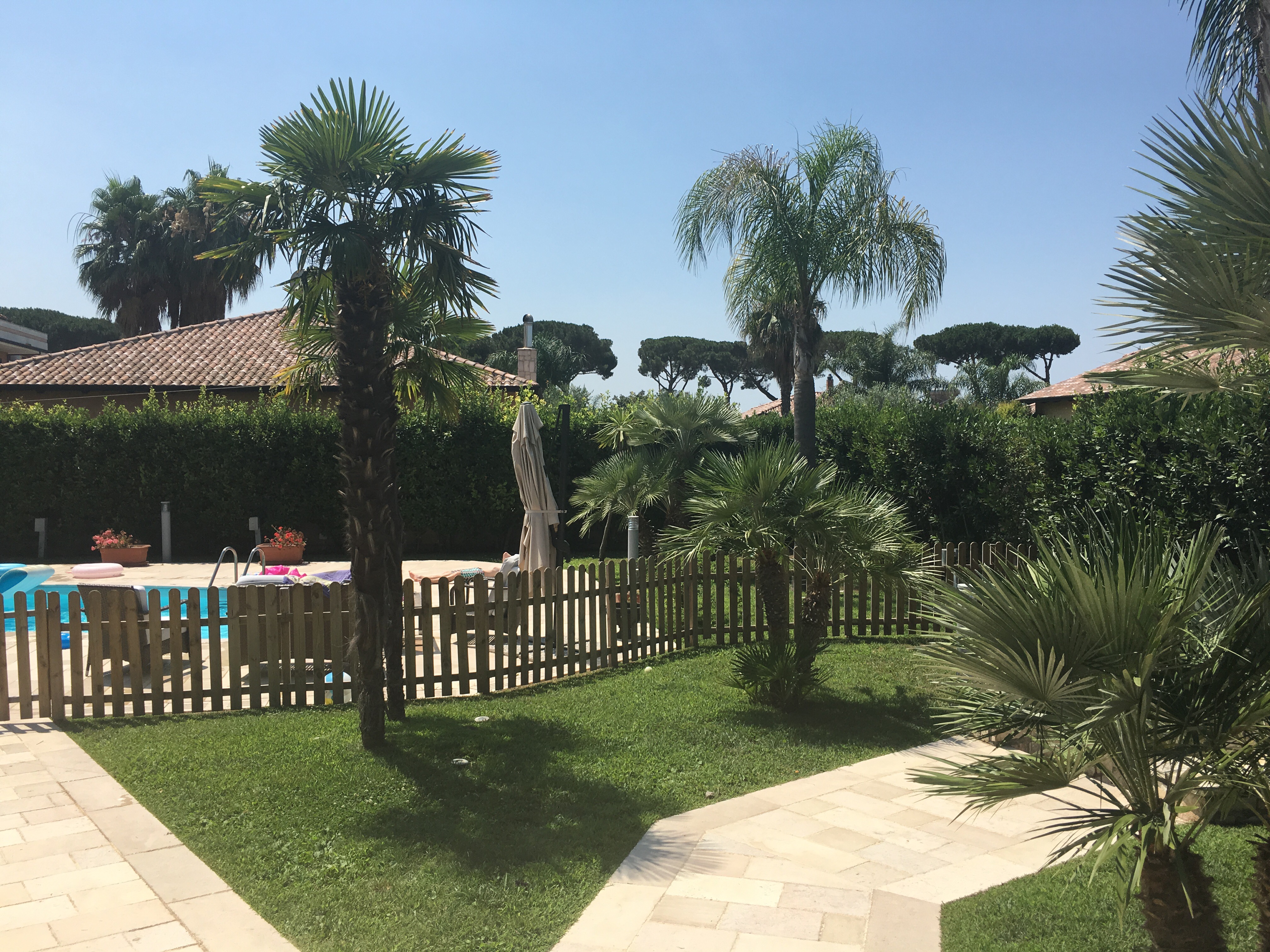

Lining the perimeter of the parco was a tall wall. A large sliding metal door would guard entrance to this haven, and then release us again to the urban jungle that is Naples, where stray dogs roamed and garbage lined the roadways. You get the picture.
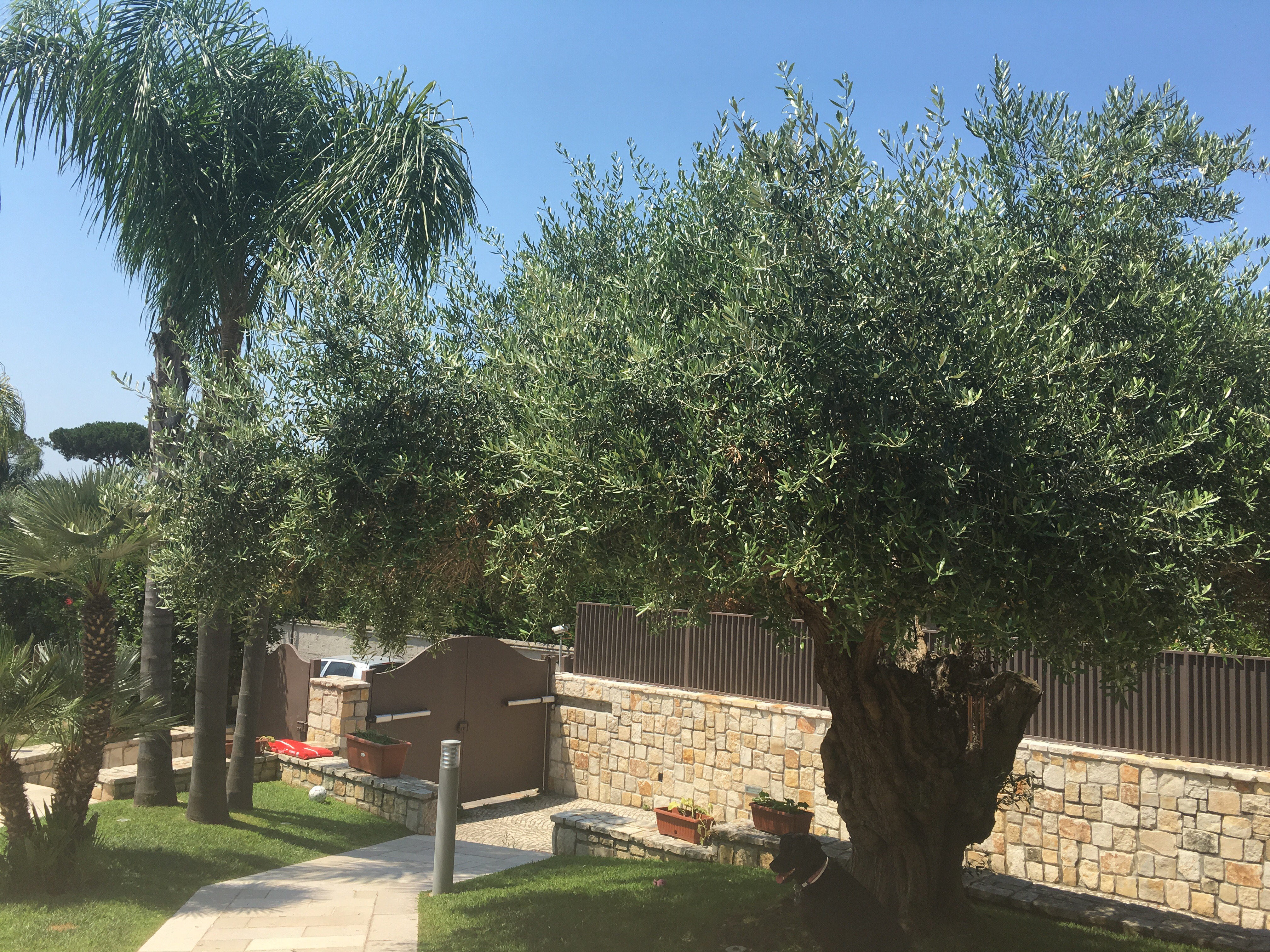

In Robert Frost’s poem, “Mending Wall”, he wrestles with our desire to have clearly defined boundaries of what is my place and what is yours; and, why we divide ourselves so. He concludes his poem with a challenge: “Before I built a wall I’d ask to know what I was walling in or walling out” (1). Good advice.

Indeed, fences and walls serve to keep us from seeing ‘what’s out there’ — and perhaps we want it that way. We don’t want to see what might disturb our comfort. We don’t want to see who might be out there, lurking on the perimeter of our safely constructed lives. We don’t want to see because we are afraid of what truly seeing them might do to change, disrupt and unravel us.

The Gospel text today (Luke 16:19-31) can unravel us, for sure! A poor man named Lazarus makes his temporary home at the gate of a rich man’s house, eating crumbs off the rich man’s table.

The story suggests that the rich man never even sees Lazarus is there, begging, at his gate. Even in the afterlife, as the rich man burns in hell, he doesn’t talk directly to Lazarus, referring to him only in the third person (v.23-24). Even serving his due in hell, the rich man still hasn’t learned his lesson!

Indeed, as Jesus says later in Luke, “it is easier for a camel to go through the eye of a needle than for someone who is rich to enter the kingdom of God” (18:25). How can the rich and the poor bridge the gap? How can we break down the barriers that separate us? How can we ‘see’ better — by this I mean: develop the eye of the heart and mind?

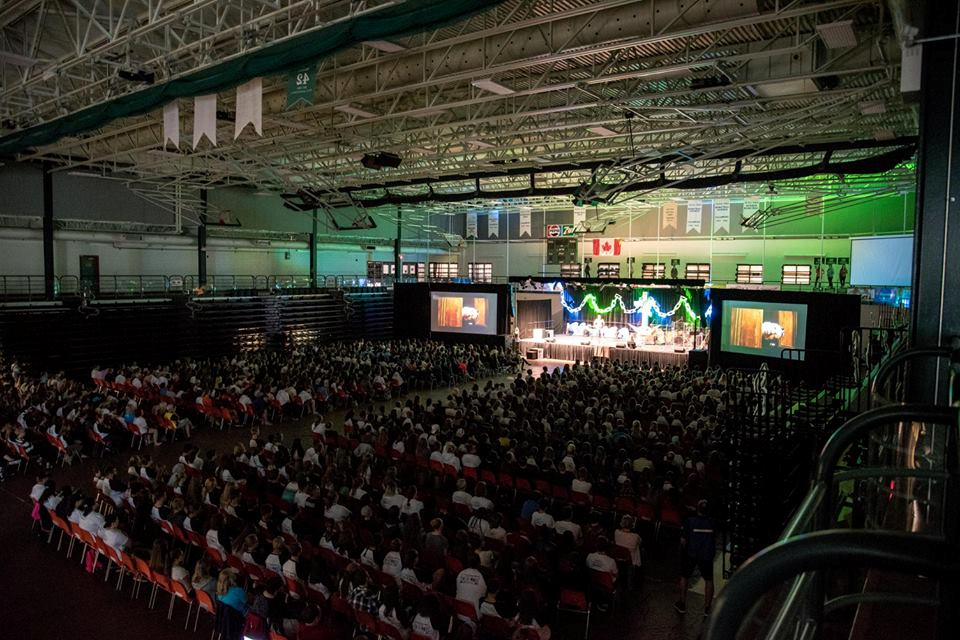
My brother tells the story of what happened at the beginning of the CLAY gathering this past August (Canadian Lutheran-Anglican Youth gathering). All nine-hundred participants did a certain exercise in the large group gathering that unnerved him:

They were asked to find someone they did not know; and then, to go over to that person, sit next to them; and then turn to look directly into their eyes…. and keep looking into their eyes for as long as possible, without turning away.  It’s hard enough to do this sort of thing with someone you know well… let alone a complete stranger!!

So, my brother David found a young person he didn’t know. And the two of them – complete strangers – began to look into each other’s eyes. It was unnerving! He felt vulnerable. Exposed.

While this was happening, the leader at the front said something like: “The person before you has a story, and has experienced happiness, as well as sadness, perhaps even deep hurt and pain. Who knows? Life may’ve been very hard on the person in front of you.”

As these words were being said, David noticed the slightest hint of tears welling up in his partner’s eyes. And he wondered…. He wondered …. What’s my partner’s story?

It’s said that the eyes are the ‘window into the soul.’ In a sense, they were peering into ‘each other’s souls’.

A natural connection is formed. Two people, connecting on a human level, affirming the fact that we’re all united in our common humanity and life’s experiences – of sadness and laughter and humour – which we all go through at some point in our lives … no matter our differences in age, ethnicity, language, sexual orientation or religion.

I’m reminded of a quote attributed to Philo of Alexandria: “Be kind to everyone you meet — you don’t know the battle they are fighting.”

Author and theologian Diana Butler Bass tells the touching story of what happened in an airport when she was flying from Albany, New York, to Washington D.C.

As you know, typically airports can be cold, heartless places, where everyone seems absorbed in their own rushing around, wrapped up in their private worries, nerves or plans, ignoring others around them.

This time, as passengers milled around in the gate area before boarding the plane, there sat alone at the far end of the row of seats, a middle-aged man.

He looked distraught, perhaps ill. Maybe, he needed help.

His whole demeanor was one of sorrow, and he was bent over, slumped in his chair as if falling toward the ground.

Diana walked over to him, and sat down beside him. She gently began asking him questions and listening to him.

With deep, heavy sobs, he told her how he buried his wife that morning, and now he was going home. To nothing.

For the next half hour, he told Diana about his wife, her illness and untimely death.

The man and his wife had no children.

She had been his best friend since high school.

Their parents had all passed away.

He had taken her to be buried where they had grown up in New York State, a place they both loved.

Most of their childhood friends had moved away.

There had been no funeral, just him and a priest at a graveside to say a few prayers and good-bye.

Now, he was going home, back to work. Other than a few friends, he was alone.

Diana listened, and then went to get him some water.

On the way back, she found a flight attendant, and told her about the man and his wife, how he had buried her that day. The flight attendant thanked her for sharing, and said ‘they’d take care of him.’

There were only about fifteen people on the flight that day on that small plane.

Somehow word got around, and soon everyone knew about their fellow passenger in mourning.

By the time everyone was boarding the plane, people were going out of their way to be kind to the man.

A crew member escorted him aboard.

With courtesy and attention, they seated him at the back of the plane to be alone with this thoughts and whatever tears might come.

When they landed, some silent agreement formed between the passengers to let him exit first.

Instead of the usual rush and urgent calls on cell phones, everyone stood silently, forming two lines of respect, as he walked down the aisle toward the cabin door…

Some nodded respectfully as he passed.

One woman reached out and touched his shoulder.

When he reached the front of the plane, he turned back, and looked at everyone, to acknowledge the sympathy offered.

The pilot came out of the cockpit, and took the man’s hand, and together they descended the steps to the tarmac.

All the passengers followed in silence.

A private car, dispatched by the airline, waited there beside the plane, to deliver him home. (2)


The irony is that no amount of gates, fences, walls or clearly defined dividing lines however constructed will keep us separated from each other. When there is love. When we can ‘see.’

Boundaries are important. But they don’t guarantee the self-serving security we seek. Shortly after they were posted to Naples a couple of years ago, our friends’ house was broken into despite the impressive protection their gated community seemed to provide.

These kinds of gates are really only illusions — like the proverbial mirage in the desert. Gates and fences that separate the rich from the poor, the privileged from the underprivileged, the employed from the the unemployed, the bum on the street and the senior executive in the top floor corner office are at best a mediocre interpretation of reality. Because they are constructed out of fear.

Jesus is about breaking down those barriers. And we are called to bridge the apparent chasm separating us from each other. Better now in this world while we can still do so, then whine about it like the rich man does in hell after it is too late.

We are called to look into each other’s eyes, and see the connection we share with all humanity, in the love of God. We are called to work together, like the community of care that formed on that short plane trip. We do not do this work individually, by ourselves. Not separately, but we work together at this task of reaching out and mending what has been broken.

We do this in the mission of God who broke down the greatest divide between God and human: when Jesus was born a human child. When God became human the ultimate gap was bridged. And now, we live in that flow of God’s love, continually binding us together, and all people.

(1) Robert Frost cited in David L. Bartlett & Barbara Brown Taylor, editors, “Preaching the Revised Common Lectionary; Feasting on the Word” Year C, Volume 4; Louisville Kentucky: Westminster John Knox Press, 2010, p. 118-120

(2) Diana Butler Bass, “Grounded: Finding God in the World: A Spiritual Revolution”, HarperOne, 2015, p.256


Grace precedes

Everyone was excited, but not sure what it was all about. In the centre of the room was a big box of balloons that had not been blown up yet.

The team leader asked each person to pick a balloon, blow it up and write their name on it. About 30 team members were able to get their name on a balloon without it popping. Those 30 were asked to leave their balloons and exit the room. They were told they had qualified for the second round.

Five minutes later the leader brought the team back into the room and announced that their next challenge was to find the balloon they had left behind with their name on it, among the hundreds of other balloons scattered in the large cafeteria. She warned them however to be very careful and not to pop any of the balloons. If they did, they would be disqualified.

While being very careful, but also trying to go as quickly as they could, each team member looked for the balloon with their name. After 15 minutes not one single person was able to find their balloon. 

They were not able to do it, because they were stuck looking only after their own interests as individuals. They couldn’t think collectively. They presumed they needed to do it all on their own, according to their interpretation of the rules of ‘the game’.

To me, the first two rounds of this game can be seen as a snap shot of the values of our culture and society. After all, there are ‘rules’ in our society. There are accepted ways of behaviour. There are the social norms and laws that bring at least a sense of order to our lives. One such norm, is the belief that we have to make it all on our own in this world.

We tell ourselves that competition and individualism are healthy and good, especially in the youth of our lives.

I grew up competing with my twin brother, David. Throughout our lives whether we were playing games, musical instruments and sports, doing our homework, achieving success at school, writing exams, making life choices — underlying our relationship was this competition. Always comparing and contrasting. While motivating and stimulating, ultimately it has become not always helpful, even a burden — as a foundation for our relationship.

When considering the doctrine of grace, based in the biblical witness of Paul’s letter to the Galatians, we often skim over and even neglect the original social context of Paul’s writing. We get excited debating the doctrine of Justification by Grace posited here — especially as Lutherans. Yet to do so without first examining what was going on in the early Christian community, we can miss its original meaning:

At the time of writing Galatians (2:15-21), Paul and Peter were in a bit of a conflict. They represented two, competing views of how the mission of Jesus should be carried out.

For Peter, the disciple chosen by Jesus to be “the rock” upon which the church would be built (Matthew 16:18), he was influenced by some Jewish-Christians in Jerusalem who insisted that true converts to Christianity should first follow all the rules of the Jewish tradition — since the first disciples and Jesus himself were Jews.

When Paul and Peter met in a town called Antioch in those early decades of the first century, they confronted each other on this point. Because, for Paul, the Gospel of Jesus Christ was on the line. He argued that Gentiles, who weren’t Jews, didn’t have first to be Jewish before becoming a follower of Jesus. If Christianity followed Peter’s bent, Gentiles could barely attain the status of second class citizens.

Later, Paul won the argument. Paul was a multi-culturalist far ahead of his time. Paul saw Jesus as the fulfillment of the long arc of God’s love and God’s inclusion, an arc bent toward making Gentiles full members of the family without preconditions. (1) Inclusion. Unconditional love. These words are signposts for the theology of grace, in Paul’s view, reflecting the way Jesus related to others.

If we begin with faith and grace, we can inhabit our traditions and rules more lightly. But it starts with God’s grace, for all people.

When I was in Clinical Pastoral Training at the Ottawa Hospital as part of my preparation for ordained ministry back in my seminary days, I was reminded of the truth of Christ’s presence and grace, which precedes mine.

I was advised, before entering the room of a patient, to stop for a moment. And bring to mind and heart this truth: Jesus is already in the room before I enter it. Jesus is already there, waiting for me. I do not bring Jesus with my charisma, eloquent words, magnetic personality, comforting presence. All these things may help, and may be true to some extent! 

But I don’t create Jesus. Jesus creates me. The patient I visit, along with me, are already in the presence of Christ. “It is no longer I who live, but Christ who lives in me,” Paul writes in his letter (2:20). Grace precedes everything I am and do.

When Jesus accepts the woman’s extravagant and outrageous offering of foot-washing with the gifts she has been given (her hair, her love, her touch, her tears), he is being inclusive and loving unconditionally. 

Jesus is not making the woman first follow a bunch of religious rules or follow accepted social norms before letting her come near and even touch him. (Luke 7:36 -8:3) Jesus is not requiring her to provide a government-issued I.D., proof of baptism certificate or a list of all the good deeds she accomplished and the churches she has attended.

The only requirement Jesus seems to accept is that she is honest, vulnerable and open about her sinfulness. Because only honest sinners can appreciate the gift of grace, it seems. The one who is forgiven the greater debt, shows the greater love (Luke 7:47).

What will we do when we see a homeless person, notice the addict, rub shoulders against a divorced person, or sense the struggling and pain in another? Will we ignore the other, suggesting “it’s none of my business”? (that statment reflects a major social norm in today’s society, you know!). 

Or, will we approach the person, confident that Jesus is already there? Will we approach the person, take a risk, and ask a question motivated by love and trust in God? Will we approach the person, aware and honest of our own sinfulness? Aware of the forgiveness we have been given?

We are not alone. We all stand on the same, level playing field in God’s kingdom. That is why we have the church. That is why we gather each week to feed at the Lord’s Table of grace and Divine Presence. We are not alone. We have each other, in the Body of Christ.

After the team who couldn’t find their balloons in the cafeteria was told that the second round of the game was over, they moved on to the third and final round:

In this last round the leader told the team members to find any balloon in the room with a name on it and give it to the person whose name was on it. Within a couple of minutes every member of the team had their balloon with their own name on it.

The team leader made the following point: “We are much more effective when we are willing to share with each other. And we are better problem solvers when we work together, helping each other.” We are able to do what we are called to do in Christ, when we work together for the sake of each other, in God’s mission on earth.

Because Jesus’ love, grace and presence await us in the room, at the table, in the world, beckoning us to come.
Amen.

(1) – Gregory H. Ledbetter, in David L. Bartlett & Barbara Brown Taylor, eds., “Feasting on the Word, Year C, Volume 3”, WJK Press, Kentucky, 2010, p.137