Unknown's avatar

About raspberryman

I am a pastor in the Evangelical Lutheran Church in Canada, serving a parish in Ottawa Ontario. I am a husband, father, and admirer of the Ottawa Valley. I enjoy beaches, sunsets and waterways. I like to write, reflect theologically and meditate in the Christian tradition.

Easter 5A – Truth be Told

Psalm 31:5 — Into your hands I commend my spirit, for you have redeemed me, O Lord, God of truth.

John 14 — Jesus said, “Do not let not your hearts be troubled. Believe in God; believe also in me …. I go to prepare a place for you …. Thomas said to him, “Lord, we do not know where you are going. How can we know the way?” Jesus said to him, “I am the way, and the truth, and the life …”

In the Gospel reading from John and in the Psalm for today the word “truth” appears in key verses of those passages from the Bible: Jesus says, “I am the way, the truth, and the life ….” The Psalmist confesses faith amidst hardship: “Into your hands I commend my spirit, for you have redeemed me, O Lord, God of truth.”

How do we come to know the truth? From the appointed scriptures on this fifth Sunday of Easter — taken together — there is a sense that truth-knowing is discovered and proclaimed not in ideal, perfect scenarios born from our wishes and dreams, but from paying attention right in the middle of experiencing difficulties and challenges of life. And these places of our lives are not easy places in which to stay. Because we’re always trying to get out of those places — places of dis-connection, dis-orientation, transition, fear, anxiety, surrender and loss. And understandable so.

If there is any stage of life most closely associated with “transition” — it is those tumultuous teen years. So, teenagers can teach us something about how to live in the “inbetween” times and spaces of our lives. They know this space: No longer in the relative safety of childhood, and now crossing into the terrain of adulthood.

The inbetween spaces of life are like doorframes — a space between rooms, a portal joining inside and outside, this room and that hallway or other room. These are not spaces we normally think to spend lots of time in; in all honesty we don’t think twice about moving as quickly as possible through that space. Perhaps that is one reason so many people don’t have a lot of patience for teenagers.

One of our young children loves to spend time standing in door frames or sitting on staircases. This drives Daddy crazy. “Either you’re out or your in,” I keep telling her. “Close the door.” “Don’t play on the staircase! Stay downstairs, or upstairs; don’t just be moving inbetween all the time!” Yup, children and teenagers can teach us adults a thing or two about living in the inbetweens of life.

The disciples of Jesus had some-how to come to terms with their shattered dreams — dreams of a messianic strongman that would come and rescue them from Roman occupation in 1st century Palestine. In the time surrounding Jesus’ death and resurrection, the disciples were living in a time of transition and change.

But not only are we talking about “dreams shattered”, but also “hearts broken”. Here, we enter more into the emotional arena of our lives. A tricky terrain, to be sure. But a place that, since ancient times among the Hebrew people of God, has been considered the centre of our being: the heart.

The message in this Easter season invites us to enter into that inbetween space of finding the way amidst our broken hearts, our disappointments, our failures, our fears and anxieties. Is there a cure for heart dis-ease? The message of Easter is an invitation to finding the places where the risen and living God in Jesus guides and leads us beyond places of despair, and into a future of hope and wholeness in community with God and one another.

Discovering, or re-discovering, the truth about Jesus and God the Father, as I said, comes first not from a place of security and perceived strength. But from exactly the opposite kinds of circumstances in our lives. The Psalmist, time and time again, captures this spiritual and faithful reality. In Psalm 31, the Psalmist is able to confess the God of truth only by coming through the space and way of great distress, suffering and anxiety. That passage concludes with the claim of faith: “Into your hands I commend my spirit, for you have redeemed me, O Lord, God of truth.” The Psalmist is able to believe in the truth of God only after embracing that undesired, un-sought-after existential angst of being, and surrendering all of it to God. Not easy.

Because sometimes we want to hold on to it, wallow in it, remain stuck in the rut of despair and anguish. Perhaps because it’s familiar ground. But it is precisely in this inbetween place where we discover and then confess the truth of the gracious, loving, merciful and hope-giving Christian God in Christ Jesus.

In a prayerful and faithful re-telling of Psalm 31, Leslie Brandt (“Psalms Now”, Concordia Publishing House) writes, “Maybe it was Your doing, Lord. It is Your way of bringing me back to home port, of correcting my focus and reassessing my goals.” She speaks, of course, of those heart-breaking failures and losses not as God-caused events, but as natural life circumstances in which God’s purposes and presence are born anew.

In the Gospel reading from John chapter 14, Jesus opens this passage with those comforting and well-known words often recited at funerals: “Let not your hearts be troubled …”, and then goes on to create that popular image of Jesus going to prepare a place for us all.

The disciples, however, want to cling to the perceived safety of an actual, geographic location. Thomas, for one, wants to know where Jesus is going and how to go there with him. Their understanding of “place” is bound by measurable and observable criteria. Their understanding of a “home” is equated with the safety of familiar, concrete places and spaces.

Throughout the Gospel of John, however, place and location are used simply as metaphors for the intimacy of a close relationship: For example, the sheep are placed close the the shepherd; Jesus is close to the heart of God the Father. As the disciples are gathered in the Upper Room sharing a meal that signifies Jesus’ soon bodily departure from them, Jesus assures his friends and followers that there will always be a place with plenty of rooms for them. Their relationship with Jesus will continue, even as it changes. Their relationship with Jesus will continue, even beyond suffering and death. They will not be forgotten as they remember him every time they share in the Holy Meal.

The church, to be sure, lives in a time of transition. These very decades we occupy comprise a time of living in the inbetween. Something old is passing. Something new is beckoning. It is the time of not-yet-but-soon-to-be. It is frought with fear and anxiety, suffering and loss.

Yet, it is the place and space where Jesus is present. Jesus’ farewell discourse to the disciples is not just a nice thing he says to make them feel good, “Do not let your hearts be troubled.” It is a direction to the disciples’ will. Jesus is giving them a command to stand firm, even when their hearts are breaking for their coming loss.

Jesus is real, and close by, even as everything changes, even as your relationship with Jesus changes, even as everything around us changes. This is the divine promise. This is the truth: Jesus is still with us.

And that is why we gather week after week to celebrate the presence of Jesus in the Holy Communion. In our tasting and eating and seeing the bread and the cup, we constitute — literally — the church. In our participation of the Holy Meal, we receive the new life of the risen Christ. In the eating and drinking, we “taste” and “see” that the Lord is good! Our hunger for God’s intimacy is satisfied. We are a community fed by God, so that we can with hearts of thanksgiving and hope, feed a hungry world.

In so doing and being, we re-discover the truth of God, find a way beyond our heart dis-ease, and live in the community that God calls us to and empowers us in his Spirit to share with the world.

How do we come to know the truth? We know the truth by coming together. We know the truth by engaging and embracing the sometimes messy situations of interacting and being together. Notice, in the scripture from 1st Peter, the address is given not to an individual, but to an assembled people; Together, we are then in truth, “a chosen race, a royal priesthood, a holy nation, God’s own people…” (1 Peter 2:9) Together, in this time of transition, we will re-discover the way, the truth, and the life in Christ Jesus our Lord.

Amen.

Remembering a loved one

Henry David Thoreau wrote, “In my youth, before I lost any of my senses, I can remember that I was all alive.”

From the wisdom book of Ecclesiastes, “For everything there is a season, a time for everything under heaven … a time to live and a time to die …”

We judge an experience not simply by the duration of it, but by the intensity of it. Young people, especially, can pack a whole of living into a single hour, or day. When I spend time at one of my favourite places, the beach, I often notice children at play. Every object they find is picked up and examined closely. Even the most ordinary object, which many of us older folks wouldn’t even notice, becomes an object of wonder to them, and gets their undivided attention. I marvel at their concentration, their focused dedication to their tasks. For them time has ceased to exist.

We gather on the beach today to remember one who enjoyed this place very much. We are invited by those who have throughout history lived very close to the land, to feel the earth, to be grounded in this moment, to be in touch with ourselves, one another and the earth upon which we stand. This is indeed the time and the place to be today. In a Christian prayer we recite every week before the Holy Meal, we affirm this grounding in God wherever and whenever we are: “It is indeed right and salutary that we should at all times and in all places give thanks and praise to God …”

For those who knew her well, I am certain you can remember times in her life when she lived fully, when she was “all alive”, and grounded in the moments of her life. And in this way she, even because of her death, will continue to teach us the value of living for each day given to us. So that life is not merely about getting to the next stage, or achieving the higher goal, or acquiring the next, best thing. Because when life is reduced to the rat race that only serves to pull us away from the present moment and one another, that divides our attention and blinds our sight to that which is — we no longer live.

Death has, in a sense, separated us from our loved one. But the separation is not complete. That separation which we grieve today is not unlike the separation between this shoreline and those banks across the river. What unites that shore-line with this one? The water, of course. “What can separate us from the love of God in Christ Jesus?” asks Saint Paul of the New Testament. Nothing can. In the love of God, in the waters of life and love, we are all connected — forever.

Kahlil Gibran is often quoted at ceremonies affirming the love between people. We often focus on the union, the inseparateness between those that love each other dearly. But a theme that runs through his poetry and wisdom is a prayer: “Let there be spaces in your togetherness.” Those spaces are important to honour and respect. “Love one another,” he continues, but let that love be more like “a moving sea between the shores of your souls … For only the hand of Life can contain your hearts.”

The water will always run between the shores of our souls, between us and those we have lost. In Christian love and faith, nevertheless, we remain united with our loved one even in death. The love of God keeps our spirits united, our memories of her solid in our hearts.

God is not removed from this time and this place. God is not removed from our suffering just as God is not removed from our joy and thanksgiving. God is not “out there”, but rather — in the words of theologian Paul Tillich — God is the very “ground of our being”. God is here and we can experience the fullness of God in the things we do and in the people we meet in this time and in this place. Today. Now. Thanks be to God.

Easter 2A – Faith and Doubt

In Canada we go to the polls tomorrow in another federal election. Will you vote?

I heard this past week the story of a former pastor of a Lutheran church in Belleville who immigrated from a former Eastern bloc nation during the Cold War era. In a sermon he gave prior to an election campaign now decades ago, he shared with the congregation how voting was done back in his home country during the Communist reign: “There was only one name on the ballot,” he said, “and it didn’t make any sense at all. But we had to go, and put a check mark beside that person’s name. God forbid, you did anything besides that.”

The pastor went on to describe his joy and pride to live in a country where he could now vote for one person among several. He had a choice. He, along with all other citizens, had been given the power to choose the government! This was amazing for him.  And he looked forward to election day in Canada.

Someone listening to his sermon then called out, “But Pastor, who should we vote for?” The pastor didn’t miss a beat; he smiled and said, “We’re not that kind of church!” In other words, not to tell you what to do, but to encourage your belief and participation in the process.

If only all Canadians shared his enthusiasm and belief in our electoral system! If only all Canadians believed in the value of and appreciated the democratic freedom we have in the vote. That is what organizations such as Fair Vote, Apathy is Boring, and Student Vote are trying to resurrect, especially among younger generations of Canadians.

Is the fact that voter turnout was the lowest in Canadian history last time around due to a growing doubt, cynicism and despair among the electorate?

Is this malaise true also for us who struggle with our religion, faith, and the institution of the church? Does church attendance and belief in the risen Jesus suffer from a similar prevailing doubt, cynicism and despair? Perhaps there are more among us who can relate and sympathize with the disciple, Thomas. Because sometimes, when we experience the dark night of the soul, when we go through rough times and fall to despair — it’s really hard to believe! So, in those times, what should we do?

There is a profound tale from the Desert Fathers of Christian antiquity that explains why just doing it; that is, practising your faith makes sense even in spite of questions without answers:

A young monk approached an older, more adept one and asked, “Father, I am having trouble remembering the instructions that I have been given about living the spiritual life. I ask questions and I listen to the answers and I do what is asked of me, but then, I almost just as quickly forget what I’ve been told! What is the point to trying to learn if I am so simple-minded? Why should I practice when I do not know for certain what is true? Maybe I should just return to my worldly life.”

The old monk points to two empty bottles on a nearby table. “Take those two bottles. Fill one completely with the oil that we use for our lampstands. As for the other, leave it empty, as it was.”

The young man obediently did as he was told.

Then the old monk said, “Now, take the bottle full of oil and pour it back where it was.” The younger man again did as he was told.

“Do it again,” the elder instructed. “Fill that same bottle that you filled before, once again with oil.” And again he told him to empty the bottle once it was filled. This went on for more than an hour, over and over. Meanwhile the empty bottle sat empty.

With patience, the young man kept doing as he was told. It just so happened that this novice’s job in the community was to clean bottles used for holding lamp oil. He knew all about bottles and oil.

After a while, as they sat together looking on the two bottles now empty, the old monk said, “Please tell me, my son, what you see.”

“I see one bottle that has not held any oil and it is only dusty and dry,” the novice answered.

“But the bottle that I have filled, unfilled, and refilled many times is clean, shining and coated with the sweetness of oil.”

“Precisely!” the old man replied. “In the same way, you benefit from doing these spiritual things even if they challenge you and cause you to question. Whether you realize it immediately or not, over time they will change you. Filling yourself with these oils will leave you fragranced.”

The doubting Thomas did just that. Even though he questioned and doubted, fell to despair and disassociated himself from his community of faith for a time, he just needed to show up again, and yes, initially, just go through the motions. Thank God he did! Jesus appeared a second time to the gathered disciples when Thomas happened to be there. And then Jesus gave Thomas what he needed.

What did Thomas need? Thomas needed to get out of his head. It was his ideas about Jesus that created his cyncism and doubt. The rationalizations and arguments for and against made the resurrection a matter of intellectual debate for him. The result should not surprise us:  The result of getting lost in all the mental gymnastics was that Thomas left his community of faith, disappointed, discouraged and frustrated after the burial of Jesus.

Jesus gave Thomas what he needed: He needed to experience the living Lord, personally. His encounter with Jesus brought Thomas down from his head into his heart. Not only did Jesus speak to Thomas — thus appealing to his head — he asked Thomas to touch his wounded side and hands. Thomas was then able to ground his experience of Jesus in his own skin, his body. That loving touch trigged an emotional, affective response from Thomas. Only then was he able to confess his true belief from the mind and heart: “My Lord and my God!”

Jesus knew what Thomas needed, and gave it to him. It likely wasn’t something Thomas was aware he needed. Yes, he wanted proof, but likely more to satisfy some intellectual debate. Was he expecting to be moved emotionally into to a deeper, personal and renewed relationship with Jesus?

And to each of us, the living Lord responds faithfully to what we need. The assigned texts for this time in the church year imply that God knows our varied needs. Psalm 16 begins with unequivocal confession and praise: “You are my Lord”; what follows is like a faith diary, a journal cataloguing his faith and trust in the ups and downs of life. Conversely, the Gospel writer ends this resurrection account (John 20:19-31) by Thomas’ climactic confession: “My Lord and my God!”  God knows what we need and when we need it: Do some of us start with a strong faith, and then move through both the joys and sadness of life, ‘working out’ our salvation through it all (like the Psalmist)? Or, do we start from a place of doubt and disbelief, and then work and wait toward believing (like Thomas)?

Whatever the case, we may be assured that though Christ is risen from the dead and is alive today, faith and doubt still go hand in hand for us. Whether we’ve been Christians all our lives, or we discovered the love and embrace of Christ for us only late in life — to pretend that doubt has no place in the believer’s life is folly. For we know that what we resist persists, and then controls us. But when we can appreciate the role of doubt in our lives, confess it and hold it, authentic faith can spring up by the grace of God. The gift of faith will give us the strength to make a small, simple step in the right direction.

I wonder what it would be like if the decisions we made in our lives sprung more from what we felt we needed to do, instead of what we wanted to do all the time. What if we did the right thing rather than always take the easy, self-serving way? What if we were at least able to distinguish our needs from our wants? And then acted on this discernment?

Perhaps, for one thing, our prayer lives would find vitality again. Because we know that despite our unbelief and misguided compulsions, our intercessions are nevertheless heard and acted upon by a loving and living God who will give us what we need.

Thanks be to God!

For reflection this week, pray over the words of scripture — specifically Psalm 16 and John 20:19-31

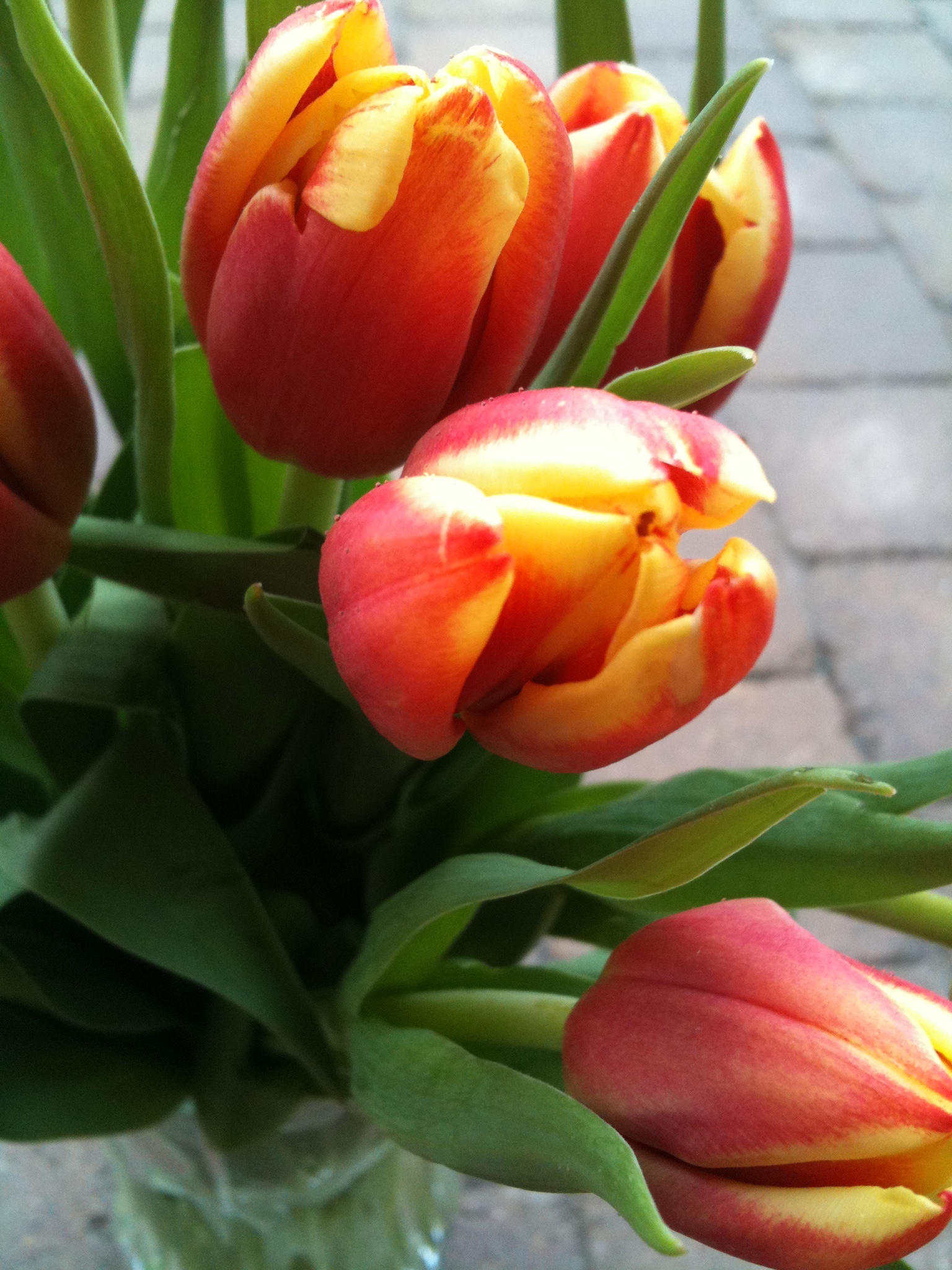
A New Easter Day

Christians worship according to a liturgical calendar which follows the journey of Jesus’ birth, life, work, suffering, death, resurrection and ascension. The resurrection is the central and highest point of the calendar, indeed the essence of Christian faith. Christians are essentially a resurrection people; that is, the new life of Jesus Christ and union with the living God are the goals and destination for the Christian.

20110423-105915.jpg

To Lead Or Not To Lead

When a stand up comic recently spoke about the art of improvisation with a team of actors on stage, he outlined three basic rules for everyone on stage to follow. Of course he had in mind the success of the scene with the audience. Basically each actor on stage had to do one of three things: Rule #1 – Lead
Rule #2 – Support (the leader); or,
Rule #3 – Get out of the way
I think this is a great model for leadership among a group of people working together for a common purpose. Because in community successful leadership is not simplistically about one and only one person (the Leader!) for the whole enterprise to work. It’s ultimately about a group of people making it work together. So, take the initiative. And when you do, count on others to support you in the endeavor. And if they can’t, they will for the time being recede benignly into the background. A different scene may call upon a changed cast, with a new lead, a reshuffled cast of supporters and others who will positively stand quietly at the perimeter.