No easy way up those stairs


Perhaps you know someone like Sue.

Sue had Multiple Sclerosis (MS). As the disease progressed in her relatively young life, she nevertheless wanted to stay at home as long as possible. Her house, unfortunately, was not outfitted appropriately for someone in her debilitating condition.

And yet, she battled. For example, it took her twenty minutes to crawl upstairs to her bedroom. Sue called the stairs “Mount Sinai”. Because it was by struggling on those stairs, moving limb for limb through each laboured breath through gritted teeth; it was through determination for each step gained, that she learned so much (1).

The prophet Isaiah does this to us again — gives us an ideal vision of a world where no one suffers any longer, a utopia where everyone is joyful. What is perhaps even more astounding is that this vision of hope and promise is proclaimed in the midst of everything that was not:

These verses speak to Babylonian exiles (2). They are the captives of war, and as such have been wounded maimed, even intentionally blinded as was King Zedekiah (2 Kings 25:7). It is to this failed community now subjugated and marginalized in an oppressive regime far away from Jerusalem that Isaiah paints this picture of a highway leading back home through the desert (Isaiah 35:1-10).

The cynic in us alights, as it must have in many of the exiles in the sixth century B.C.E. For, when do we see the eyes of the blind opened, the ears of the deaf unstopped, the disabled leaping like a deer, the tongues of the speechless sing for joy? (vs.5-6). Words that Jesus later repeats almost verbatim (Matthew 11:5; Luke 4:18) surprise because he seems to validate the promise of a vision, hundreds of years after Isaiah, that has yet to be fulfilled.

The vision, the promise, operates like a bouncing ball through history. Indeed, our world to this day — two thousand years later — is still rife with human brokenness, both visible and hidden from sight. Many have given up on God precisely because they can’t see how a God of love can be represented in a world of suffering, disease, violence and disability.

What if this promise is given, is meant, for us today? Can we believe it? Yet, perhaps human beings will always struggle with the God who came, and is coming again and again, in Jesus. We have to be careful with Isaiah’s vision, for it can pander to our perfectionism, which denies the reality of a life lived in the graces of God: That what is of God is exclusively the purview of the rich and famous, successful, beautiful and handsome — only for the perfect ones.

Perfectionism pretends that we have to achieve that vision of wholeness and restoration by our own herculean efforts and responsibilities. A denial of the suffering in life leads us to attempt a path around all that is difficult, challenging and transformative.

“A highway shall be there, and it shall be called the Holy Way, and the unclean shall not pass it by, but it shall be for them.” (Isaiah 35:8)

When John the Baptist shouts that the coming Jesus will make a way through the aridity and desolation of the desert (Matthew 3:3), it bears reason to pause and reflect on the place of John’s prophetic work. Not in the public square in downtown Jerusalem nor on the steps of the Temple.

He stands on the banks of the Jordan River — which separated two worlds. On the one side, the desert which represents the long journey, the pilgrimage, that the people of God made from slavery in Egypt. On the other side of the Jordan lies the Promised Land, the place of arrival, destination, highlighted by the holy city of Jerusalem.

John the Baptist stands preaching words of challenge and hope in the in-between place — the River Jordan. Baptismal in its imagery, this in-between space is the place where something happens. A change occurs in our lives. The space in-between is often a place of disruption as the mental furniture of long-held beliefs, assumptions and values are re-arranged. In this in-between place of discomfort and turbulence we experience, nevertheless, a transformation to be people ‘on the way’ to our destination with God.

We must be willing to go there. And not deny this path through the wilderness. A holy highway does not circumvent the desert places of our lives. What ails us, what disturbs us, what challenges us — these are often valuable clues, yes even invitations, to a deeper engagement with our lives and with God. The disruption is actually God calling us into a transformative experience of life.

Do we accept this? Advent is a time to be honest. Advent is a time of reckoning. Will we stay the same, stuck in our inhibitions and motivated by fear? Or, are we willing to take the risk and go through this in-between place that does not deny our suffering and discomfort, but which actually holds redemptive power?

It is no accident that God chose to be revealed in a broken body. A bloody and pierced body hanging on a Cross. God showed us the way, in Jesus’ death and resurrection. God opened to us the way of salvation.

We know God saves. The names of Isaiah, and Joshua — important in the Hebrew Scriptures — echo the same meaning of Jesus’ name: God saves. No dispute there. But what is the way, the how, of God’s saving? How does God save?

The path through the desert. Before there is a re-ordering of our lives, there must first be a dis-order or sorts. There is no direct-flight from ‘order to re-order’ as much as we might wish there were. In God’s realm, according to the way of Jesus, we must go from ‘order to dis-order before arriving at re-order’ (3).

Julian of Norwich wrote: “First the fall, and then the recovery from the fall. And both are the mercy of God” (4).

We can’t have Easter without Good Friday. Both are held in tandem. Even today in popular Christianity, people avoid worshiping on Good Friday; most experience the ‘hosananas’ of Palm Sunday only to return the following Easter Sunday to sing ‘halleluia’. No wonder we get seduced by culture’s ‘glory’ theology that pretends we can somehow deny suffering in order to validate our faith.

But without somehow acknowledging the Passion and suffering of Holy Week culminating in death on the Cross of Good Friday, we miss the point of Easter. We miss the point of Christianity:

The body of Christ is broken in love for us. God loves us not despite our brokenness as human beings but precisely because we are broken.

Lutherans talk a lot about grace, and unconditional love of God for us ‘while we were yet sinners’ (Romans 5:6-8). This is good talk. But — being a diehard, lifelong Lutheran myself and so I can say this — it is not easy living, behaving and inter-relating according to that unconditional-love-‘way’ with others. It may be a simple concept for the mind to turn over and accept, but it certainly is not easy for our egos to put into practice.

Climbing the steps of “Mount Sinai” as Sue was want to do was a feat of incredible endurance. Whether it took her twenty minutes or two hours is not the point, really. It’s the journey: Learning to love, forgive and accept our lives not because everything is ‘just right’ but precisely because God is there in the ‘not alright’ — is a discipline that may indeed take a lifetime to learn.

Enduring whatever suffering comes your way. Grieving whatever loss or mourning a loved one. Carrying on in the midst of the in-between places of our lives. Being present to all the feelings and thoughts and sensations of life — good and bad. Accepting our own imperfection and disability — and still enjoying moments of grace with one another on the way.

So as we learn on the way, may our journeys be inspired by moments when we do experience the presence of a God who understands and walks with us, when the vision appears no longer a mirage on the horizon of reality. But is truth incarnate. An inexplicable gift of joyous wonder.

When, “everlasting joy shall be upon their heads; they shall obtain joy and gladness, and sorrow and sighing shall flee away” (Isaiah 35:10).


(1) Charles Foster, “The Sacred Journey” (Thomas Nelson, Nashville, 2010), p. xxiii
(2) Bruce C. Birch in David L. Bartlett & Barbara Brown Taylor, eds. “Preaching the Revised Common Lectionary; Feasting on the Word, Year A, Volume 1” (WJK Press, Kentucky, 2010), p.51-55
(3) Richard Rohr, “Daily Meditation”, Tuesday, December 6, 2016 (Center for Action and Contemplation), http://www.cac.org
(4) Julian of Norwich, “Revelations of Divine Love”, 61, ed. Grace Warrack, R.Rohr paraphrase (London: Methuen & Company, 1901), p.153

The case of the missing pulpit

As we worship this morning, the sanctuary at Faith Lutheran Church building is gutted — empty, a shell. Not only is the cork on the walls now removed and the old carpet disposed. The light fixtures, most of the furniture, liturgical items and holy hardware is stowed away for the time being to be recovered, restored and positioned again in their proper place once the renovations are completed.

I know some of you who have been at the site in the last day or so helping to get it ready for the workers, have been asking the question: “Where is the pulpit?” I can see the title of the next best-selling mystery novel: “The Case of the Missing Pulpit.” Where is it?

What a mystery! Well, this is what happened …

Last Sunday afternoon as I was helping members of our altar care committee removing certain items, we ran into a little problem. Our pulpit is mobile; it sits on wheels. So, depending on the needs of the day, we move it around. 

Well, we moved it alright — all the way to the door of the sacristy where we were hoping to store it. Without doing serious alterations (and damage!) to the door frame, there was no way that pulpit would get through. And the cloakroom, where we normally store the pulpit at Christmas, was going to be filled with stacks of chairs. Where on an already compact floor space would we store a rather heavy and cumbersome piece of teak-wood furniture?

It was the spur of the moment when I offered to put the pulpit in my car. I had the back seats down anyway at the time, and the rear hatch opened just wide enough to allow the pulpit to slide in fairly easily. And I drove away with church’s pulpit in the back seat of my car! Truth be told!

During the 45 minute drive home to Arnprior, my mind raced: What would I say to someone who would behold this mystery! I was also wondering where on earth I would put it. I had no clue. There was room in our garage, but most of that space was already tagged for bikes, tires, canoes and garden implements for the winter season.

My wife and I sat in the living room that evening scratching our chins and trying to come up with solutions. But to no avail. I guess I would drive around with a pulpit in the back seat of my car for three months! A mobile preacher who comes with his own pulpit! What a deal!

Barbecuing on the back deck that evening, I looked above the tree line and my eyes rested on the steeple of a church, just around the corner from our place. After making a phone call, and depending on the good will of their pastor and the muscle of a couple of their men from that community — and our pulpit now has a resting place. 

So, if anyone asks: Our pulpit is in the safe-keeping in the building of the good people of St John Lutheran Church in Arnprior. Let it be heard! “The case of the missing pulpit” … mystery solved!

I’m usually the kind of person who wants to have a plan, to know how things ought to go and what the end result should be, before doing anything. This is also usually a good thing. Driving away with the pulpit without any clue as to where it should go, was a little unnerving for me. It was, nevertheless, a good exercise for letting go and trusting that a solution would present itself. And it did, in a most gracious, natural and expedient way.

Some of you know that I am planning to go on a sabbatical next year. The theme of my sabbatical is ‘pilgrimage’. And part of the experience is to walk an ancient path, some eight hundred kilometres long, on the north coast of Spain on the famous Camino de Santiago de Compostela. I’ve read that a majority of people who start the pilgrimage — hundreds of thousands every year — don’t finish it. Many pilgrims give up, some even just 25 kilometres into it. 

What many successful pilgrims learn is that all that is required is to remain committed to the journey itself. What is needed, is to unlearn deep-seeded attitudes about what justifies us, as human beings. To persevere in that un-learning process over six-weeks, even against all the challenges of the trail. To learn that all that is required is simply to put the next foot forward. To not give up, to not lose heart. And to pray always.

To dial it down to accepting that it’s all about taking the next step faithfully — nothing more, nothing less. Although simple, it is not easy for most of us to comprehend let alone do: Just walk. Eight hundred kilometres. Because it’s not about our ability and resourcefulness in the end. It’s not about rushing to the next distraction, checking off the next thing on our list in a busy, hectic lifestyle. It’s about something much bigger than us and our ‘stuff.’ A pilgrimage can teach us that.

That was the message from last week’s Gospel from Luke 18:1-8, to pray always. The most important thing is to remain focused on staying the course, to do the prayer. The solution — the answer, the benefit — will present itself as long as we remain committed to the journey, the adventure. 

Last week, we learned to persevere in prayer. This week in the story that follows we learn how to pray. And I want to reflect David Lose’s perspective here (1), to watch for the trap that Luke sets for us readers. Remember, the Gospel of Luke is full of reversals — the song of Mary, the beatitudes in the sermon on the mount, Jesus’ conversation with the thief hanging beside him on a cross, etc. Luke, it seems, delights in setting up his readers with presumed expectations, and then pulling the rug from under our feet.

It’s too easy merely to paint the bad guy as the Pharisee. Because don’t forget, the Pharisee is law abiding, has fulfilled all the demands of his religion, lives a pure and righteous life. Isn’t this what faithful living looks like? After all, we shall know others by their fruits, no? The Pharisee does a lot of things right. Except for one thing:

The Pharisee, while living the right life, has forgotten the source of his life and all the good in it. Otherwise, he would not despise another whom God loves. He falsely believes it’s all about him and his efforts alone. He falsely believes others who are not like him, need to be, in order for them to be good people.

And, it’s too easy to side with the ‘humble’ tax collector. Let’s not let him off the hook too easily. The tax collector only recognizes that all he is about is depending on the mercy and forgiveness of God. That’s in good contrast to the Pharisee, yes. And that’s the challenging starting place, to be sure.

But nowhere do we see a sign of his repenting. Does he desire to have his life turned around? He may very well be as self-engrossed as the Pharisee. Just the other side of the same coin. The tax collector strikes me as one who might remain stuck in cycles of self-pity, negative self-talk and depression. 

He might be one who goes back every Sunday to remind himself how bad he really is. A false humility, we may call it, where it feels good, actually, to put yourself down before others. “I’m not good enough.” “I don’t have a strong faith.” “I can’t do this or that.” 
Will he not hear that God’s forgiveness can lift him out of what may appear a chronic negativity? Will he not hear that he is not all of the time all worms and dirt and badness within? Will he not hear that God has given him a great gift within himself, in himself?

No matter with whom we relate, or cheer for, in this text — the Pharisee or the tax collector — we run into a wall with both of them. And I believe this wall is meant to test to what degree we focus too much on ourselves in the practice of our faith and in our prayer, and not on God.

The trap is to call us out whenever what we do or what we decide as communities of faith is more about our own stuff, than about the bigger picture, the holy and wonderful mystery that is God.

At least one item from our worship practice is not in storage, but stands in this place alongside yours — the Paschal Candle. It is called, ‘paschal’, because it describes the ‘mystery’ of Jesus life, death, resurrection and ascension. We call it, ‘the Paschal Mystery’. 

We are not talking here about a mystery like ‘the case of the missing pulpit’, where it is simply a question of information about something that is already known, just not to everyone. “Mystery isn’t something that you cannot understand”; A mystery, in the holy sense, is as Richard Rohr puts it: something you can “endlessly understand” (2). We never ‘arrive’ at a complete knowing, this side of eternity, of what God is all about. We never completely ‘get it’. We are always growing, changing, discovering, adventuring.

It is natural to seek signs. The Pharisees and disciples demanded Jesus: Give us a sign! And the only ‘sign’ that Jesus was willing to give them, was the “sign of Jonah” (Luke 11:29). Many of us know that story from the Old Testament, where Jonah fights against God’s will, refuses to follow where God calls, doesn’t want to do it! 

Only by spending time in the belly of a whale for a few days, where he can do nothing, does Jonah become aware and accept that it’s not about him, or his mission, but about God’s purpose, God’s call, God’s mission. Doing God’s mission will call us beyond our own agendas, preferences, and even personalities. Not that those things are bad. But this is about something a lot bigger than our resumes, list of accomplishments, or even our baggage and painful histories.

We are on a journey moving forward, a pilgrimage, to discover what God is about in this holy space and in the world around us, now. We already received signs of God grace — your authentic and heartfelt welcome and accommodating us, for starters. This beautiful space and hospitality we can share. This is God’s good work among us and through you. Thank you!

We might not know what this will look like at the end of the journey together as Faith Lutheran Church worships alongside Julian of Norwich Anglican Church over the next few months. “I’ve got this pulpit in the back seat of my car, and I have no idea where it’s going!”
We might not know where this adventure leads.

But we don’t go alone. We travel this uncertain road together, side by side. We may suffer through some moments together as we figure things out, as we feel our way into this journey, as we learn and perhaps go through some growing pains together on these first few steps.

But let us be encouraged by the Paschal Mystery, which points to the way of Christ, the self-emptying and giving that leads to a marvellous and wonderful resurrection from all that is passing away, transforming us into the new thing that God is doing. The light of Christ shines ever and ever, even in the darkness and through our most challenging journeys. 

Thanks be to God! Amen.


(1) David Lose, “The Pharisee, the Tax Collector, and the Reformation”; Monday, October 21, 2013; http://www.workingpreacher.org 

(2) Richard Rohr, “The Divine Dance: The Trinity and Your Transformation” (Whitaker House Publishing, Pennsylvania, 2016)

Gospel, Italian style

On the Sunday before I left for a family vacation to Italy, you encouraged me to — “know your history”. I think that message came to me mostly during the children’s chat when we talked about the Canadian flag on my backpack, and why Canadians had been so well appreciated and admired in western Europe, especially, over the past several decades.

The conversations then, as well as following the service over coffee, reinforced to me the value you place upon ‘history’ in general. 

Well, Italy is not exactly the hotbed of Reformation, Protestant Christian history as such. At the same time, the buildings there stand clearly as testimony to the dedication of Christians in certain times and places in history.

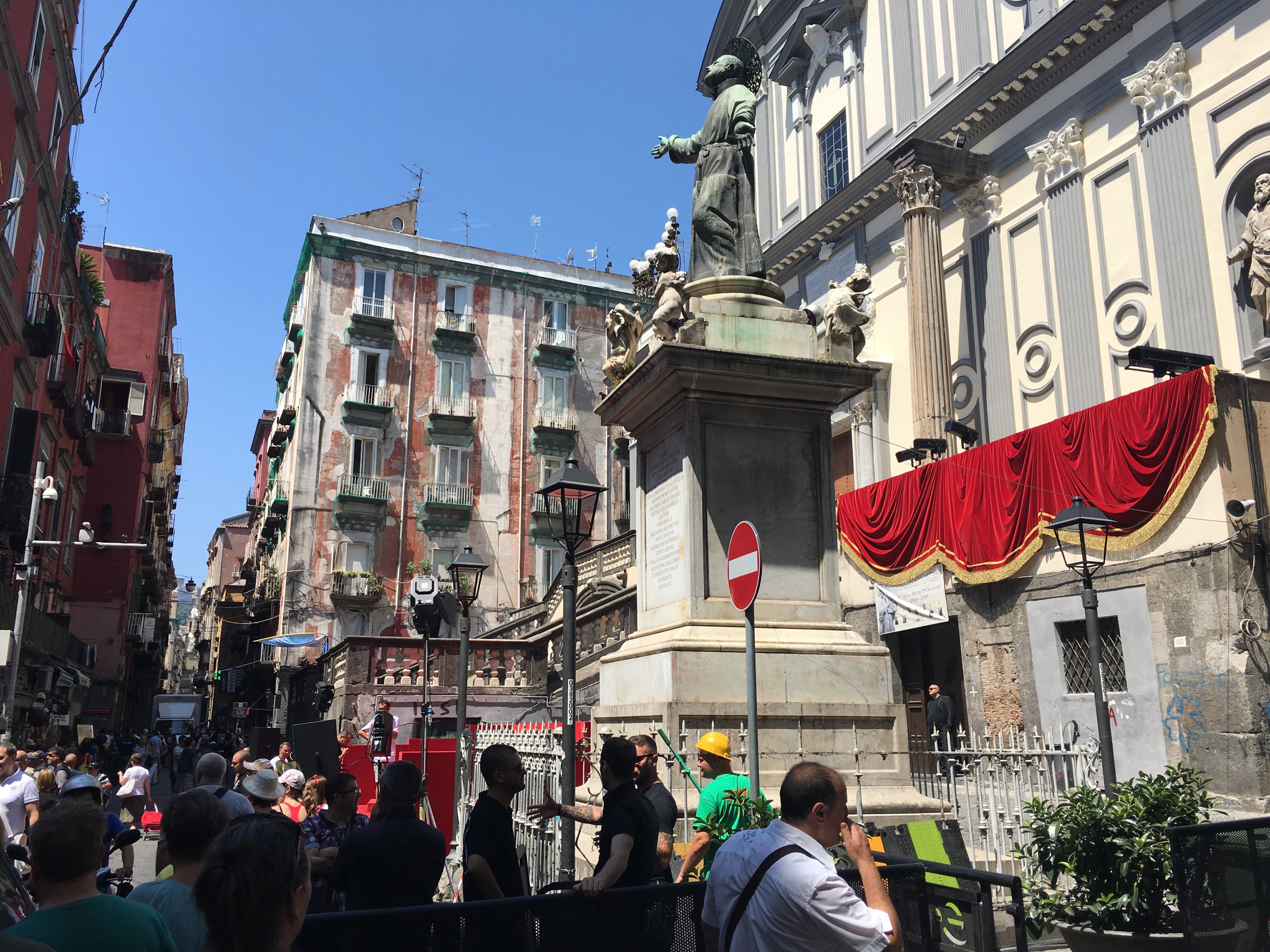
It was the first day we walked in the older section of Naples — a sprawling metropolis at the base of Mount Vesuvius on the Mediterranean coast — when I began to feel this history pressing in the air all around me.

I say sprawling because Naples is today the most densely populated urban centre in all of Europe; some 8,500 people inhabiting one square kilometre in a metropolis of nearly four million people — making it the third largest city in Italy, and the ninth most populous urban area in the entire European Union.


The noise was overwhelming: the hustle and bustle of pedestrians, car horns beeping, motorcycles and mopeds buzzing, shouting street vendors, impassioned conversations, two-toned emergency sirens, barking street dogs, screeching tires.

In conrast, the neo-Gothic styled ‘duomo’ in Naples offered a welcome break to this outside clamour. 

The expansive interior spaces of this main cathedral embraced silence and only hushed speech. You could occasionally hear the squeak of rubber-soled shoes and someone dropping a book on the stone and marbled flooring as people sat and wandered solemnly throughout the holy spaces.

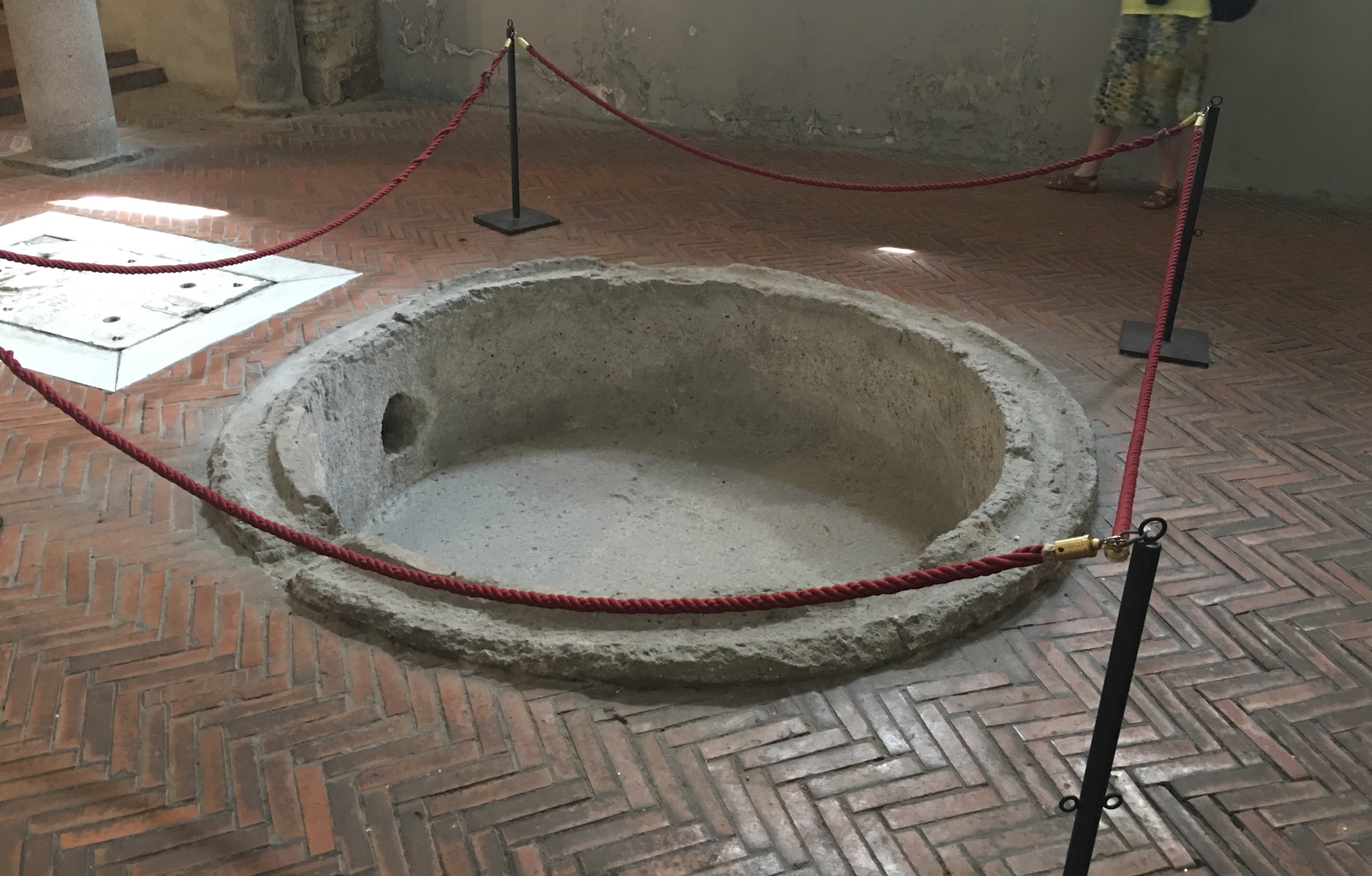
Perhaps the most significant feature of this cathedral is the baptistery, which is the oldest baptistery in the world, built in the fifth century, C.E. It is remarkable to connect with such an ancient symbol in a material form. 

When the baptized emerged from the water, looking upward at the ceiling, they would be encouraged in their faith; the first images they saw after being baptized were scenes from the Gospel expressed in Byzantine, mosaic art: Jesus saving Peter from drowning, the women at the empty tomb, the miracles of the multiplied fish, an image of Saint Paul, the Apostle, etc.

Seeing with my own eyes and touching with my own hands this font that was built by human hands only a few hundred years after Jesus, affirmed my conviction in the longevity and validity of the sacrament which has endured as profoundly meaningful for Christians throughout the millennia. 

I felt that faith is not just about the good old days when I was young, but the good old days when the Christian faith was younger. We are part of something much larger than our immediate reality. And, when we connect with that broader history, we realize it wasn’t always peaches ‘n cream and rose-coloured a history.

If you are movie watcher, you might recognize another cathedral we visited — the Duomo in the Umbrian, medieval town of Orvieto. 


This cathedral was featured in the opening scenes of Under the Tuscan Sun. This cathedral’s highlight is the Chapel of San Brizio, featuring Luca Signorelli’s brilliantly lit frescoes of the Day of Judgment and Life after Death. 

Although the frescoes refer to themes of resurrection and salvation, they do so through images not from the bible (that is, stories from the Gospels or Old Testament) but from the turbulent political and religious atmosphere of Italy in the late 1400s. Signorelli told the story of faith through his contemporary human events, rather than the traditional symbols (such as Jesus, God, the Trinity, the Apostles, disciples and other biblical characters) that we see in most other places.

Those frescos in the Orvieto cathedral chapel were snapshots of an historical era particular to a specific time and geo-political reality (i.e. 15th century Italy). And the impression of faith put ‘on it.’ Historical to us. Yet current to those who built that Cathedral in the Midlle Ages.

Faith is more than merely appealing to our past. Coming to worship today is not just about being reminded of something or someone from a long time ago. What we do here today is not just an exercise in recalling historical facts. As if decisions we make today are really not about faith. When we talk about our building renovations, worship practice and art, musical choices, communion, budgets, outreach initiatives  — these issues are very mcuh about the Christian faith ‘in the real world’, so to speak. All of these real things do reveal what we believe in, our values, what is important to us, who we are. How do these ‘mundane’ decisions reflect the Christian Gospel, faith, kindgom values in this time and place?

Lutherans make a similar mistake, I believe, when we define ‘Lutheranism’ as a belief/doctrinal system that is limited to the words and conceptual formulations of sixteenth century Germans. When we say that to be Lutheran is merely to ‘turn the clock back’ to 1537 when the Book of Concord was finally assembled including Luther’s Small and Large Catechisms, the Augsburg Confession, and the Apology to the Augsburg Confession.

I prefer a view that is reflected in the Evangelische Kirche Deutschland’s (EKD) logo for 2017, “Celebrating 500 years of Reformation”. Five hundred years of Reformation. In other words, Reformation started happening — in our tradition — with Martin Luther, yes. 

But, Reformation continued through the 500 years following, and continues to this day and beyond. We are always reforming the forms and means by which we express our evangelical, Gospel-centred faith. Always finding new and creative ways to tell the story of God.

What can we say, then, about Christian history? If we can apply a macro view over the ages, we can say that the history of the Christian faith is about a God who loves us. Christian history is about a God whose compassion never fails, who “will not come in wrath” (Hosea 11:9) — even though the people of God continue to keep “sacrificing to the Baals and offering incense to idols” (v.2).

The history of the Christian faith is about our lives being “hidden with Christ in God”, being “revealed with Christ in glory” (Colossians 3:3-4), dying daily to ways of sin and being renewed daily in Christ who “is all and in all!” — even though we are imperfect and sin as long as we hold breath. Christ is all and in all — despite us!

The history of the Christian faith is about how each moment of history — including this one right now — reflected Jesus’ love in the fifth century, the fourteenth century, the 21st century in Palestine, Egypt, Italy, Canada, etc. God for all times and places!

We validate the Christian faith by our lives today, now. This is where the rubber hits the road. This in-the-moment approach fuelled the generosity of medieval Catholicism represented in the magnificent building projects for worship as much as it did the passion and commitment of European Christians during the Reformation era.

We do not leave the practice of faith for some distant, utopic and dreamy future. Neither do we rest on the laurels of the tremendous sacrifices made by our forebears in Canada. 

Now is the time. Now is the time to live out of the conviction of God’s grace and love, despite the many and various ways Christians have messed up in history, and continue to do so today. Now is the time to live out of the faith that is full of hope, that despite our waywardness and unfaithfulness, God is faithful. Now is the time to claim God loves us, not because we are good, but because God is good. God is so good!

You know Jesus’ familiar exhortation, most often translated as “be perfect as your heavenly Father is perfect” (Matthew 5:48). Christians have often interpreted this word ‘perfection’ as being made whole. 

A much better translation might be: “be merciful.” Because this verse comes right at the end of a passage calling Christians to “love your enemies” (v. 43-48). Only God is perfect. But we can participate in God’s perfect mercy, God’s all-inclusive and impartial love.

Echoing Saint Paul’s words from the Epistle today (Colossians 3:11 — “Christ is all and in all”) St. Bonaventure later said, “Christ is the one whose centre is everywhere and whose circumference is nowhere.” [1] 

Christ’s mercy is everywhere evident in history. This is the Wholeness, the forgiveness, the grace, that holds you forever and everywhere. You can’t figure this Wholeness out rationally, nor can you control it. All you can do is fall into this Wholeness that holds you when you stop excluding, even the dark parts of yourself. [2] And that, my friends, is the Gospel — good news — for all times and places.

Thanks be to God!

1- Alan of Lille, ‘Regulae Theologicae’, Reg. 7 as quoted by Bonaventure, translated by Ewert Cousins, “The Soul’s Journey into God”, Classics of Western Spirituality (Paulist Press: 1978), p.100

2- Richard Rohr, “Daily Meditation on the Spirituality of Imperfection” Week 2 – Perfection of Wholeness, Thursday, July 28, 2016

Better together

The story is told of a wide-eyed enthusiast who visited Mother Theresa in Calcutta. Over the last century, Mother Theresa has been admired by Christians worldwide for her dedicated, self-giving work for the poorest of the poor in India.

The young man approached Mother Theresa and said, “You couldn’t pay me a million dollars to do what you do.”

Mother Theresa, not missing a beat, replied, “You couldn’t pay me a million dollars to do what I do either. I do this because I was made to do it.”

When we speak about the Holy Spirit in this season after Pentecost, we speak about the breath of God breathing in us. The Greek word for “spirit” is pneuma, which means “breath.” 

Breathing is one of those automatic, biological responses that we don’t even have to think about. It is natural and does not really take any effort at all. We are seldom aware of our breathing. And yet, it is vital to our health. Breathing is critical to our very life and purpose.

You could say, we are made to breath.

And yet, though breathing is integral to our life we may forget the gift that is in us: The gift of the Holy Spirit. We forget that living in the Spirit is as natural as breathing.

The Spirit of God is like our breath. “God’s spirit is more intimate to us that we are to ourselves,” writes Henri Nouwen. “We might not often be aware of it, but without it we cannot live a spiritual life. It is the Holy Spirit of God who prays in us, who offers us the gifts of love, forgiveness, kindness, goodness, gentleness, peace, and joy.” (1) 

Breathing is so essential for life that we only think about it when something is wrong with it. When disease, shock or accident leaves us without breath. When breathing becomes laboured. When oxygen levels are critically low in our bodies. When something we have taken for granted for so long no longer works, then what?

The way to arrive and remain in the Holy Spirit of God is both very simple and very hard: We have to remain in love. Breathing the Spirit of God’s love nips negativity, hatred and violence in the bud. It begins by retraining our initial thoughts.

We can’t risk walking around with a negative, or resentful, or gossipy, or critical mind. Because if we let the mind operate in a paranoid, angry, and resentful way, we aren’t going to breathe the Spirit of God. We won’t be breathing. We can’t be God’s usable instrument. 

That’s why Jesus commanded us to to love. It’s that crucial for life. Like breathing. That love can begin in the mind. As Eleanor Roosevelt apparently said: “Watch your thoughts; they become words. Watch your words; they become actions. Watch your habits; they become character. Watch your character; it becomes your destiny.” (2)     

In Jewish tradition only the consonants for Yahweh were printed in the Hebrew text – YHWH. As such, this most holy name for God was unspeakable. Interestingly, even the Hebrew consonants used in YHWH do not allow you to close your lips when you try to speak them.

We cannot confine God in one place as much as we cannot contain breath. We cannot point to one specific place and say, “God is there!”, turn around, point in the opposite direction and say, “And God isn’t there!” We can’t dare try to close our lips over breathing and pretend we have God all figured out! Identifying with God since ancient times was simply the intake and exhalation of breath. The great “I AM” was the breath itself.

It is the great mystery we enter into when we follow Jesus. Someone said, “life is a mystery to embrace, not a problem to be solved.” God is always beyond us but totally around us, within us and outside of us. And we all share in that same air and that same breath. It is the first thing we did coming out of our mother’s womb, and there will come that moment when we will do it for the last time.

But in between, we continue to take in the breath of God and exhale the breath of God – the totally accessible One, the totally given One, who like breath just waits to be received. Waits to be engaged. In bold acts fuelled by love for the other.

The late Swedish Lutheran bishop, New Testament scholar, and pioneer in Lutheran-Jewish relations, Krister Stendahl, gave helpful advice in this regard. How is it we can love others who are so different from us, so unlike us? Because it is easy to ignore, write off, dismiss and be critical of them.

To Christians living in a diverse and multi-religious environment, Stendahl encourages us to cultivate an attitude of ‘holy envy’ (3) towards the other. That is, we first recognize the gifts, the positives, that the other offers by their life. Rather than thinking first we need to persuade them that ‘they are wrong’, we first seek understanding based on admiring a gift they have. What does the other offer that I/We do not have? Because others have gifts I/We do not have. So, what is it the other has, that is good?

In such a way we begin to see the image of God reflected in creation — in others who are different. We begin to practice seeing Christ in the other. We begin to see the unity we share in the purpose of God, the mission of God. It takes us working together, each with their gifts, to make it happen.

This mysterious God we worship chooses to self-reveal as the Trinity — three persons in one. In other words, this one God we worship is a holy relationship. God the Father, God the Son, and God the Holy Spirit must function together by nature.

So, too, we must learn, practice, be intentional, about being in relationship with one another: working together, breathing in together and breathing out together the love and purpose of God on earth.

Once there was a Washer-man (a man who washes others’ clothes for hire) who was raising two donkeys. One he called Donkey-A and the other Donkey-B.

Donkey-A felt he was more energetic and could do better than the other donkey. He always tried to get the Washer-man’s attention by taking more of the load and walking as fast as he could in front of him.

Donkey-B was just a normal donkey. He tried as hard as he could, but he couldn’t carry as much as Donkey-A or impress the Washer-man by walking in front of him.

One day Donkey-B was crying and asking Donkey-A to help. He said, “Dear friend, it is only the two of us. Why do we compete against each other? If we worked together we could carry an equal load at a normal speed.”

Donkey-A became even more competitive after that. The next day he boasted to the Washer-man that he could carry more and run faster than Donkey-B, and he did.

Under the pressure Donkey-B collapsed in great fatigue and quietly passed away. As a result of the collapse, Donkey-A felt like he was on top of the world, having proved his superior skills and abilities. 

But now he also had to carry Donkey-B’s load.

For a short time Donkey-A was able to carry both loads, but he eventually became fatigued and weak. Finally the day came when the Washer-man was tired of this fatigued and no good donkey. He put him to pasture, and went searching for some other pack donkeys to get his work done.

The moral of this story is, you can’t do it alone. If we are made to breathe the Spirit of the triune God, we are by nature ‘relational’. It is important to learn how to work well together.

Worrying more about individual performance, taking all the credit and trying to do more than you are capable of doing eventually comes back and bites us one way or another. Christians, at their best, are team players.

Donkey B may not have been the strongest nor the fastest, but he was consistent. Everyone brings something valuable to the table. And so do you. Just because you may be different from others, doesn’t qualify you or them to be in competition nor be shunned.

Stronger together. Better together. This is what we were made for.


(1) Henri Nouwen, “Bread for the Journey; A Daybook of Wisdom and Faith”, HarperSanFrancisco, 1997, May 18

(2) cited in “Richard Rohr’s Daily Meditation” Centre for Action and Contemplation, May 19

(3) cited in Kristin Johnston Largen, “Interreligious Learning and Teaching: A Christian Rationale for a Transformative Praxis” Fortress Press, 2014,page 4

Exposing the agenda of hate

A recent song by American singer-songwriter Soufjan Stevens is entitled: “There’s no shade in the shadow of the cross.” Today, on Good Friday, we all stand in the shadow of the Cross of Jesus. But there’s no shade in this shadow.

If you want a comfortable religion that just makes you feel good, then you dare not approach the Cross of Christ, and you dare not pray.

Encountering Jesus on the Cross is not pablum for the soul nor is it expressing mere platitude for an easy life. The cross is not an exercise of remembering something that happened long ago (and therefore doesn’t really mean anything for me today). We are not merely going through the motions, on Good Friday.

The cross, in all its bloody, bear and stark reality, exposes the darkness within each one of us, today. The cross exposes the human problem of hatred. You will not find relief here today. No shade. No comfort. Only sin. Only hate. In the world. And, within you.

The longer we live in this world, we are forced to asked the question: What makes many people so mean? What creates mean-spirited people? “I want to hurt you!” What is behind hate?

Hate – I just called it ‘mean-spiritedness’. Maybe that is what we see more often than overt hatred. Mean-spiritedness is, unfortunately, here to stay.

Hate is, for some reason, helpful. Hate works. In a lot of immediate and seemingly good ways. It unites a group very quickly. Far quicker than love, you must know that. Hate immediately and easily resolves the inner struggle between the little devil on one shoulder persuading you to do something other than what the little angel on the other shoulder is saying. 

Mean-spiritedness is formed by contraction, ‘against-ness’. Love, on the other hand, is formed by expansion. Love doesn’t come easily, because you have to let down your boundaries. And no one wants to do that.

Contraction — whereby you can eliminate another person, write them off, exclude them, torture them, expel them, ‘vote them off the island’, immediately gives one a sense of boundaried definition, boundaried superiority, even.

Hatred — mean-spiritedness — gives a person identity even if it is a negative one (“I am not that, I am not like them, I am against so-and-so, etc.”). And we’d sooner have a negative identity than feel vulnerable, like nothing, empty. Just who we are, in God.

Hatred takes away all doubt, and free-floating anxiety. Even if in a false way. It feels superior. And feels in control. Hate settles the dust, and the ambiguity that none of us likes. Hate is much more common and — I’m sad to have to say this as a pastor — it is much more immediately effective than love. Immediately.

Hate makes the world go round. Just read the front pages of morning paper this week, scroll through the news feeds on your tablet or flip the channels at 6 o’clock every day. It’s largely about who is hating whom.

You could say that Jesus came to resolve the central problem of hate — this problem that has defined humanity since the beginning of history. There’s really no other way: To save us from ourselves. To save us from one another. And to, therefore, save us.

Until and unless we are saved from our need to hate. 

That’s why people even made religion into a cover for their need to be hateful. I’m hating for Allah, and so it’s ok. And yes, I’m hating for Jesus. Christian history, too, is not free from violence (the Crusades, the witch-hunts, Protestant-Catholic European wars, the residential schools — the list goes on). “I’m hating for Christianity — so my hatred is good hatred.” It happens every day. It’s almost the name of the game.

The ultimate disguise, whereby you can remain a hateful, mean-spirited person is to do it to protect the church, or to protect the country. All those good excuses. So, you are relieved of all anxiety: “I am still a holy person.” Even though, underneath, in the deeper stream, you are a hateful person. But you don’t have to see that. That’s what Scott Peck called, years ago, “People of the Lie”.

We have done so much utopian talk about Jesus and love. But Jesus had a very hard time getting to the issue of love. First, he had to expose and destroy the phenomenon of hate. Which I think is the meaning of the Cross.

Once he exposed the lie and the illusion of hatred, love could show itself clearly. But until then, you can’t. The pattern is still the same. As Jesus shockingly put it, “Satan is the real prince of this world” (John 12:31, 14:30, 16:11).

Hate, it seems, is the daily, ordinary agenda. Love is the totally enlightened, entirely non-sensical way out of the ordinary agenda. The Gospel presents the dilemma in a personal and cathartic Passion narrative that grounds the whole issue in history, and in one man’s enlightened response to that history. 

One man, Jesus — fully divine and fully human, accepts the religious and social judgement of hate. We have both church and state, both Caiaphas and Pilate. Both power systems declaring Jesus unworthy, declaring him a sinner, wrong, the problem. The very one that you and I call the most perfect man who ever lived is judged by power at the highest levels to in fact be the problem. 

Jesus bears the consequences of hatred, publicly. But in an utterly new way that transforms the pattern. And therefore for us, transforms the possibilities. For two thousand years, Jesus has remained the most striking icon of a possible new agenda. His death exposed the lie and the problem like never before.

His risen life told people that life could have a different story line. Jesus did not just give us textbook answers from a distance. But he personally walked through the process of being rejected and then said, ‘follow me’. And there’s something you only know having been in that position.

What is behind hate? I believe fear is almost always behind hate. It’s not easy to get to that deeper river of fear. It’s not easy to recognize the subtle fears: Afraid of not looking good. Afraid of not being in control. Afraid of not having the right word. All those are fears. But they are subtle.

And the only way to see them is to go right into your own poverty of spirit — blessed are they who do so, Jesus said (Matthew 5:3).

Sometimes it looks like it’s control that’s behind hatred. But even control freaks like myself are usually afraid of losing something. Just go deeper, and you’ll see. It is almost always fear that justifies our knee-jerk hateful response. 

Fear is hardly ever recognized as such. As Paul says in Second Corinthians — ‘the angel of darkness must always be disguised as an angel of light’ (2 Corinthians 11:14). The best and most convincing disguise, of course, is virtue itself, or godliness. Then, it never looks like fear. 

For fear to survive, it has to look like reason, or reasonableness, prudence, common sense, intelligence, the need for social order, responsible stewardship, morality, religion, obedience, or even justice and spirituality. It always works. Just give it the nice cover, and you don’t have to face underneath it, what is craven fear.

What better way to veil vengeance, and a vengeful spirit than to call it justice. You hear it on the news every night, “I just want justice.” One wonders whether the inner need to punish the other, to hurt the other, has ever been recognized. Let’s be honest: It’s in everyone of us in this room. When someone has made you afraid, you want to hurt them back. To be trapped in our need for vengeance, is to always be afraid. It’s necessarily to be afraid. No wonder fear is the name of the game in almost all of the world. 

And that demon is not exorcised easily. Until you name the demon and admit the demon is there, you have no power of exorcising the demon. It’s clear, in Jesus’ exorcisms. You must name the demon correctly. When you pretend the demon isn’t there, you’ll never do any good exorcism. That’s largely what we do. It’s called, denial.

Only people who are honest and vulnerable about their own fear, and confess their need to control all outcomes, only those practiced in letting go, can go beyond the agenda of hate. Jesus himself prayed hanging on the cross: “Father, into your hands I commend my spirit” (Psalm 31:5). This is about letting go of our opinions, our need for getting back, our need to exclude, circle the wagons, and point the finger.  

Jesus prayed, too, from the cross: “Father, forgive them — they don’t know what they are doing!” (Luke 23:34). Only people practised in letting go will be taking the first step in the new agenda of love and forgiveness. This agenda of love, Jesus made possible for us. “Perfect love casts out fear,” scripture promises us (1 John 4:18).

The Cross, today on Good Friday, calls us to trust Jesus. To not have anyone that you can trust is necessarily to be afraid, to be vengeful. Christianity at its best aims to free individuals from their small, fragile, sinful selves, and points to a larger identity in Christ Jesus — the only true self — “hidden in Christ with God” (Colossians 3:3) .

Jesus is the only trustworthy lover, the only trustworthy self. Healthy Christianity, like Jesus himself, tells you that there IS someone you can trust. You do not have to create all the good. You do not have to fix all of the bad. You do not have to explain all the failures. You know you are simply in the stream we call the mystery of death and resurrection, the paschal mystery. 

What else would be the beginnings of peace? As long as you think you have to fix everything, control everything, explain everything, and understanding everything, I can promise you, you will never be a peaceful, loving person.

In the shadow of the cross, there is no shade. Indeed. But let’s stay awhile, and open our hearts to Jesus whose love makes us worthy and who is with us, even in the darkness.

Adapted and transcribed from Richard Rohr, “The Central Problem of Hate” track 8 on CD ‘Action & Contemplation’, Meditatio Talk Series 2015

The outing begins within us

“If a kingdom is divided against itself, that kingdom cannot stand … No one can enter a strong man’s house and plunder his property without first tying up the strong man; then indeed the house can be plundered … Whoever does the will of God is [my family]” – Mark 3:24,27,35 

I wonder, in an action-oriented culture, whether we have considered the curious notion of where the kingdom of God – the reign of God – resides. In the the Gospel of Luke (17:21), Jesus says that “The kingdom of God is within you.” The great reformer, Martin Luther, preferred this rendering to the sometimes translated, “among” you. In his famous German translation he writes: “Das Reich Gottes ist inwendig in euch.”

Our house-dividedness and our divisions are not only externally out there in the big, bad world; they embody an internal reality, among and within us, that we often fail to acknowledge.

I think it was Canadian mystery writer, Louise Penny, in one of her recent novels described the internal conflict between two wolves: On the one hand, there is the wolf that lives on fear, anxiety and negativity; the other wolf warring for supremacy inside of us lives on joy, optimism and hope. The main characters in the newly-released home video entitled “Tomorrowland” starring George Clooney use this image of two parts of ourselves in conflict: the wolf of fear versus the wolf of hope. Which one wins? Which one will be victorious?

The answer: The one you feed.

We don’t often recognize the darkness within each one of us. We are all divided – in our nation, in our city, our communities, our churches and in our own lives. Whether we are ‘saved’ or not. Whether we are believers or not. Whether we belong to the right church, or not. Whether we have the right interpretation and doctrine, or not. Whether we speak the right language, or not.

It is curious how Jesus rebuffs the religious leaders’ serious accusation that Jesus had the devil inside him. In denouncing their claim by a logical argument – how can the devil purge the devil? – he acknowledges Satan’s existence and influence. Jesus doesn’t deny the power of evil.

We are all divided. The power of sin extends into the ways we have organized our lives, our prejudices, our racism, our bigotry, our ‘common sense’ ways of looking at the world and people, our economy. We are divided. Our identity is fractured. We will say one thing about God’s love, and behave the opposite way when it comes down to it.

It can be very easy to detect which wolf we end up feeding, most of the time.

Thankfully, there is this levelling affect that Jesus has in his words from the Gospel today. This is not an exclusive venture we are on, as followers of Jesus. In verse 28 a more accurate translation of the word “people” evokes a universal meaning, such as “all children of humanity” – everyone will be forgiven their sins! This is good news! This is the hope. Because, even though we live in imperfect, flawed and divided communities – there is still the good, therein.

But how can the two wolves get along inside of us? How can the warring internal battles, in the end, be resolved?

“Das Reich Gottes ist inwendig in EUCH”. That last word, “you”, is not singular. In German, it is the plural form. Of course, in the original Greek, Jesus addressed his disciples. But in English we don’t have this distinction in the second-person between individual or plural; so we easily and naturally assume, I think, the individual. But this is a mistake.

In this Gospel text, the one verse that I think get’s us distracted more than any other is the ‘one sin against the Holy Spirit that is unforgivable’ (v.29). And immediately we, individually, start getting upset and fearful and very nervous: What if I have sinned against the Holy Spirit? Will I go to hell? People on their death beds will often become anxious about their faith, whether they, individually, have done enough to ‘earn’ salvation on their own, by themselves. This fear goes deep.

But the weight of glory and the burden of sin is carried by the whole, mystical body of Christ. I don’t have to be privately perfect in order to go to heaven, because the perfection is in the whole body of Christ. We are merely members of it: some of you are a foot, some of you are an eye, some of you are an ear – today, I am the mouth! “I” am not the whole body; you (singular) are not the whole body.

You, individually, don’t have to take the burden of universal sin upon yourself, in which you are complicit, I agree. And so am I. But neither can you, individually, take on the weight of glory upon yourself. If you are good – and obviously you are by coming to church today and sticking with us the whole hour long – your goodness is not your own: It’s your Mom in you; it’s your Dad in you; it’s your grandfather and your grandmother in you; it’s your neighbour in you; it’s your pastor that pastored you years ago in you; it’s your friends in you. They are your goodness.

This rampant individualism that is the unfortunate consequence of the Reformation has probably undone Christianity more than anything else, to keep us – ‘tie us up’ – from understanding the communal aspect of God’s kingdom and the church. This is the level from which Jesus, Paul and Martin Luther for that matter proclaimed it. (Richard Rohr, Center for Action and Contemplation, The Rohr Institute, Disc 4, New Mexico, 2012).

So, despite the tug of war inside of inside of us, obey the good. Whatever is strong and good in us together, let that lead. Whatever good nudges us at the core of our being – forgiveness, compassion, grace, good intention – let’s not ‘tie that strength up within us.’ Let’s not hesitate. Let’s not rationalize it to death. Let’s not succumb to the temptation of paralysis-by-analysis. Let it out. Let that goodness lead us. Because each of us has this shared, good strength within – even people against whom we hold prejudice and discriminate.

Decorated Canadian Olympian and mental health advocate, Clara Hughes, said at the Closing Ceremonies of the Truth and Reconciliation Commission in Ottawa this past week that “The only way you can be good and strong and fast is if you want it for everyone.”

Jesus said, “Only those who do the will of God is my brother and sister and mother” (v.35). We say the words every week in our prayers – praying for peace among waring religious groups in far away places. We pray for peace in Syria and Iraq where ISIL continues its reign of terror against religious minorities. We pray for reconciliation between Aboriginal and Settler peoples – that is, immigrants like us.

Why don’t we also consider living that prayer out, in our own backyard? Why don’t we also consider actually doing something in the name of Jesus to the purpose of peace and reconciliation between different religious and ethnic groups in our own city? To be a faithful witness of what peace can look like, to the world?

To feed the wolf of hope.

Stop the talk, start the walk

How do you become a better Christian? There’s a quick and easy answer: “You just have to know more; that is, get more information. More information, more power. More information, is salvation. The more you ‘know’ about something or someone, the better you’ll be able to navigate life’s journey.”

Sound familiar? This is, at least, the mantra of our culture which has been heavily influenced by western advances through the scientific revolution, the industrial revolution and yes, even the Reformation from the last few centuries.

And then, Paul writes this, which serves to throw a mystic wrench into our rationalist preoccupations with ‘information’, which we so readily equate with knowledge: “… all of us possess knowledge …” (1 Corinthians 8:1-2) Hey, stop right there! — how can everyone have this knowledge? I thought knowledge was something we had to acquire by reading another book or spending more time on ‘Google’!

Paul continues: “Knowledge puffs up, but love builds up. Anyone who claims to know something does not yet have the necessary knowledge; but anyone who loves God is known by him”. To begin with, in the biblical tradition, knowledge is NOT information and information is NOT knowledge. After all, even the man with the evil spirit ‘knew’ and recognized Jesus as the Son of God (Mark 1:21-28). Having the right information alone is not the answer.

How do you become a better Christian? Last week I told you about my three-week hiatus in Vancouver, which in the Jonah story was like the three days in the belly. Remember, Jonah was running away — escaping — from God’s call. It was a time of reflection, discerning and struggle as I slowly accepted my call to the pastoral vocation. I spoke about my long walks alone on the beaches as the place where I solidified my decision to return to my seminary studies.

But there was one prior event that may have broken my heart open to accept this change in direction. One Sunday in Vancouver I attended a church service. It was in a large Baptist congregation, housed in an old, cathedral-like building on a prominent downtown intersection. I went there because my friend told me the preacher was particularly good.

I don’t remember anything the preacher talked about, specifically. I only recall how I was moved to tears during the sermon. It was just like the preacher spoke to my heart about God’s love and support during a hard time in my life. Again, I remember he preached from the Gospel, so my Lutheran spidey-sense was satisfied.

But, really, it was my heart not my mind that was spoken to directly. Somehow, after that sermon, I was assured that no matter what I did, God would not forsake me. That assurance, coming from the ‘outside’ — from someone else — was what I needed to hear in order to make my decision to change directions in my life, for the better.

How do you become a better Christian? You become a better Christian by opening up your heart. You become a better Christian by being vulnerable and honest before God and others, by taking a risk exposing your inner self as you truly are. You become a better Christian by being affected by God’s love so much so that you can’t help but be changed. The cliche is true: Changed people change people. As Mahatma Gandhi famously said, “Be the change you want to see in the world”.

Jesus heals the man with the evil spirit by ordering the evil spirit to “Be silent!” Be silent with all the talk. Be silent with all the verbal expressions of truth and righteousness. Be silent with all the mental, cerebral formulations. Stop talking the talk. And start walking the walk.

In this Gospel story the emphasis is on Jesus’ action. The drama takes place in the synagogue in Capernaum. Jesus is like the guest preacher of the day. But the Gospel writer does not specify the content of his words. We only know that he is teaching.

This is not new. We presume he is saying all the right words, words everyone has heard before likely from the Hebrew scriptures. But this “new teaching, with authority” is tied to Jesus’ action which results in a changed, transformed person.

As post-resurrection Christians we have the benefit of hindsight. We can look back to a verse earlier in Mark’s first chapter to a description of Jesus’ first preached message. In verse 15, we get at the heart of Jesus’ teaching; Jesus proclaims the good news of God, saying: “The time is fulfilled and the kingdom of God has come near; repent and believe in the good news!”. Repent literally means, “change your mind” — I would add in the Hebrew sense; that is, a changed heart results in a changed mind (Richard Rohr, “Falling Upward”, Jossey-Bass Wiley, San Francisco, 2011, p.11)

If anything, the Gospel of Jesus drives at the heart. And the heart leads to loving, compassionate action. This action can be described as nothing more or less than a healing, transformative, life-changing energy. This is the power, the authority, of God in Christ Jesus — that God is changing us, transforming our hearts, our minds and our bodies for the better.

We all bear this capability. Being Christian is not about becoming cerebral experts on a particular subject matter that only some are able to comprehend. No. We all, each and everyone of us, have the capacity in our hearts to be changed and transformed by God’s love.

We live in a world that doesn’t believe in that kind of change. Sometimes I catch myself wondering if people (including myself!) can ever move beyond the distractions, addictions and hang-ups that impede our growth and well-being.

Maybe we don’t change for the better because we don’t want to pay the price of admission. Experiencing this positive transformation, or healing, does require the willingness to be disrupted, for a time being. That’s the catch, the price of admission: We have to understand that positive change won’t happen without a little bit of costly pain — and particularly the pain of losing something cherished.

Can you imagine sitting in the synagogue in Capernaum listening to this new Rabbi teach from the scriptures? And then, unexpectedly some guy you’ve seen from time to time at worship stands up and starts heckling the Rabbi they call Jesus from Nazareth. Jesus silences his aggression with firm yet loving words — “Be silent!” — and the man calms down and leaves the synagogue a different person! That’s a disruptive event for the congregation. But it’s also an invitation to begin a journey of healing and transformation in Christ, the Lord.

This change does not come about without enduring some disruption. Would this disruption mean risking some embarrassment? Would it mean risking your reputation? Would it mean doing something you have little previous experience or knowledge in doing? Would it be confessing you may not be ready — but will try anyway? Would it mean trusting someone, forgiving them, for once? Would it be confessing you need help, and asking someone for it?

Many musical images have been used to describe the activity of the church. One such image is the orchestra, where Jesus — or sometimes, tragically, the pastor — is considered to be the director. And all of us play our parts to make beautiful, harmonious music together. I’ve liked this illustration, for it’s collaborative, working-together imagery. But recently another illustration has captivated my imagination as even a better one:

Last year, at the Carlington Community Chaplaincy choral festival the Bellevue Beat Drumming Group performed. Members of the group sit in a circle with their unique drums and percussion instruments on their laps or at their feet. A leader starts. But then after some time another drummer takes the lead while the others support with their quieter rhythms and beats. The presentation does not end without all members taking a turn to lead a riff or section of the music.

“Being the church is akin to playing in a jazz band in which every player in turn, including the ‘leader’, offers their own improvisation on the shared theme according to their particular ability, instrument and insight” (Dick Lewis, ed. “A different way of being church”, p.10).

“Be silent!” Jesus speaks to each of us — and to the ways which hinder us from being ourselves and using our unique gifts, from taking responsibility and doing it ourselves.
“Be silent!” to mere ideas that keep us trapped in the rat’s cage of information-getting and head-centred religion.
“Be silent!” to saying the right words without corresponding action.
“Be silent!” to negative self-talk that keeps the heart trapped with a burning self-hatred.
“Be silent!” to the negative self-talk that convinces you that you’re not good enough to do the right kinds of things and do your part for the building up of God’s kingdom.

Because, the Lord Jesus, the Holy One of God, has come into your life. And he will bring to completion the good work that he has begun in you! (Philippians 1:6). God’s love will change your heart, and you will know God, and be transformed in the light of God.

Christmas: Jesus all grown-up in us

In the Monastery of the Holy Spirit in Conyers, Georgia, Mary — the God-bearer — is depicted in a magnificent rose window above the altar. What strikes me is the size of Mary’s womb. Mary sits in this glorious stained-glass circle with outstretched arms and a womb so large it contains Jesus standing as a grown man, with his arms open wide. (Trisha Lyons Senterfitt, “Feasting on the Word; Advent Companion”, WJK Press, Kentucky, 2014, p. 90)

Why the adult form of Jesus? After all, isn’t the Christmas story of Mary giving birth to the Son of Man about a baby Jesus? Was the artist of this stained glass window confusing metaphors?

Or, is there something more going on here worthy of our reflection?

After all, the historical Jesus was a man. But Christ was not his last name. “The Christ” includes the whole sweep of creation, and history joined with him, including you and me. We are members, each and every one of us, of the Body of Christ — this ‘mystical union’ we call it in our liturgy; Lutherans have sometimes called it the ‘invisible union’ of the church. Though we cannot claim to be the historical Jesus, obviously, we are, as Martin Luther described it, “little Christs”. We rightly believe in Jesus Christ — and both names — ‘Jesus’ and ‘Christ’ — are important. We, like Mary, are Christ-bearers.

The celebration of Christmas is not merely a reverie about a baby born in Bethlehem. We do the Gospel of Jesus no favour when we make Jesus, the eternal Christ, into a perpetual baby, a baby able to ask little or no adult response from us. That may have been the role of Advent — the season of preparing the way of the Lord, when we consider how to make room for the birth of Jesus in our lives. A baby image can be helpful, to start with: A sign of grace that results in a sweet feeling of love.

But, eventually, we have to grow up. A mature Christianity, today, receives the risen Christ in his fullness. In relationship with Jesus the Christ, there come expectations. God wants to relate to us in our adulthood — expecting a full, free, responsible, participatory (Philippians 3:10), cooperative (Romans 8:28) and mature (Ephesians 4:13) adult response from us. When we pray, “Come, Christ Jesus”, we are asking for our own full birth and transformation. God, in our growth, wants ultimately to have an adult relationship with us.

When we read in the Gospel today that we have the power to become “children of God” (John 1:12) we are not relinquishing any responsibility and mature engagement with our faith; being a ‘child of God’, a wonderful expression, simply indicates that God is God and I am not; being a ‘child of God’ describes a quality of trust towards God, a trust that despite any delusion on my part that I can somehow earn God’s favour. Because God still has faith in me. God will never give up on me.

But Christ has come! And it is the risen Christ in 2014, not the historical baby, of two thousand years ago! (Richard Rohr, “Preparing for Christmas” Franciscan Media, Cincinnati, 2008, p.8-9)

In our lives we have the capability already born within us to have room for our transformation. We are all ‘pregnant’ with the possibility of new life, becoming more than we are, growing up into the fullness promised to us in Christ. For God is with us and in us.

So, what does that path to our transformation look like?

In a modern painting of the manger scene by German artist Beate Heinen, Mary and Joseph hover over their newborn baby boy Jesus. There are no angels in the painting, neither ox and donkey nor any of the people, who in our imagination usually gather around the crib – shepherds and kings; just the three of them: Mary, Joseph and the child lying in a manger, which looks conspicuously like a coffin. The scene is set in a cold cavern like stable from which a winding path leads to a distant hill with three crosses. (Thank you to Rev. Thomas Mertz for this illustration)

In all the glory and celebration of the Advent and Christmas season this image sticks out like a sore thumb. As we celebrate the renewed life and hope for our world in Christ, the reminder to suffering and death creates a stumbling block. And it always has.

“How then is it written about the Son of Man, that he is to go through many sufferings and be treated with contempt?”(Mark 9:12) The words though spoken by Jesus reflect a nagging question on the minds and in the hearts of the disciples: “How can it be that our salvation comes through the suffering of God?” A few years later Paul wrote to the Corinthians that the message about the cross is foolishness (1 Corinthians 1).

You will notice that halfway between the manger and the hill in Beate Heinen’s painting there are three wanderers – a reminiscence of Jesus meeting two of his disciples on their way to Emmaus; still struggling and pondering the same questions, facing the foolishness of the cross.

As all believers they travel the road between the Good News of Christmas, the pain of Good Friday and the Glory of Easter. And it is not until they gather around a table, worshipping and united in the breaking of bread, that in the presence of God all starts to fall into place and their questions come to rest (Luke 24:13-35).

“The word made flesh” is the proclamation of the festive celebration of the Nativity of our Lord. The word made flesh! Meaning, that the Word — Jesus Christ — comes into our very ordinary humanity. But not the glory of humanity in all its splendour and might.

Rather, as the Christmas story reveals, Christ comes into the darkest night of our souls — in the outcast, rejected places. Christ comes into the impoverished places of our lives, and of humanity. As at least one theologian has put it (i.e. Gustavo Gutierrez), the Word made flesh should read: The Word made poor. That’s where Jesus is born and is at work. As Saint Paul put it, “For you know the generous act of our Lord Jesus Christ, that though he was rich, yet for your sakes he became poor, so that by his poverty you might become rich” (2 Corinthians 8:9).

As bread is broken around the Holy Communion, Christ comes into the broken places in us and into the world where healing is needed. The circle in the Georgia Monastery stained glass reminds me of the trajectory of my life — the promise of completion, wholeness, fulfillment is there, in Christ Jesus. I am continually being re-made, transformed; I am growing, in Christ Jesus. And so are you.

The rest of the world wants to finish Christmas this morning. But the true Christmas message that begins today does not allow us to keep stuck in our baby Christianity. But invites us to grow up — no matter how young we are — in a maturing faith, deepening commitment, and active Christian witness to the newborn King!

May we grow into a fuller, deeper celebration of Christmas in the days to come, as we ponder the mystery of God’s incarnation, God entering our humanity.

An Advent-Christmas funeral sermon

In some churches, the manger scenes during the Advent season are left intentionally incomplete: For example, as in our creche, the manger is empty; during the four weeks leading up to Christmas, the figurine of baby Jesus is not there. Until December 25th.

In one congregation that worships in a large, cathedral-type building, the magi start their journey at the beginning of Advent somewhere in the narthex (the entrance). Each successive Sunday in Advent, the magi move closer to the manger scene which is set up at the front near the altar.

And, each Sunday, the children of the congregation are charged with a treasure-hunt search for where the figurines of the magi have been placed that week — whether on a decorated window sill, or beside a poinsettia plant, or on the steps to the chancel, etc.

Not only do these traditions emphasize the important Advent themes of waiting and watching with expectation for the coming Christmas joy, we are reminded at this time of year that we are, all of us, indeed, on a journey towards the manger, towards a new encounter with Jesus.

I believe Grant’s love of hiking revealed his ability to see the Big Picture. You see, when you go on a hike, following a trail that spans hundreds of kilometres as Grant has done on occasion, you are not just meandering aimlessly. Oh, yes, the trail can take many twists, turns, ups and downs.

But part of the joy of long-distance hiking is understanding in your imagination where you are headed, where you began, and the relationship between the two. No matter where you are along that journey, you can see the Big Picture.

One of my favourite visual effects of modern cinema does this well: From the perspective of the TV/movie camera, a scene of someone or something that happens on the ground in one moment of time is suddenly zoomed out; we move backwards up into the sky — still focused on the ground, but quickly disappears through the clouds and then into outer space. And we can see the planet earth and the solar system. And we can understand how that particular event or person on earth relates to the cosmos!

To have this Big Picture vision is to see our present reality, on the ground, from the perspective of not only history (where you’ve been) but also from the perspective of the future (where you’re going). Grant was a Big Picture kind of guy. He enjoyed the long-distance hike.

The ancient caravan routes through the Holy Land, Judean desert I think informed the prophetic writings, many of which we read in the Bible. These caravan routes were the life-line of the economy, and framed the boundaries of social order.

When you followed a caravan route you were walking a path trodden by generations of people who came before you, and a path that was followed by many once you were gone. This is the experience of people who journey, in every time and place.

I like our Bishop’s repeated advice to pastors whenever we gather for clergy and leadership retreats: “Remember, we are one and all merely ‘interim’ pastors”. Even pastors who are tenured and may remain years, even decades, in one parish are still, only, ‘interim’. They are interim because there were pastors who preceded them in the congregations’s history, and hopefully there will be more pastors coming once they are gone.

The point is not a focus on the pastor so much as seeing that pastor in the context of the larger history and journey of a congregation. It’s to regard an individual from the perspective of the Big Picture.

I can see why Richard Rohr uses the term, Big Picture, to understand the Kingdom of God. Because even though we are in constant transition on the caravan route, both the memory of the past and the promise of the future impinge on the present moment. In the Big Picture, the twin pulls of historical and future vision reveal a “vibrant now” in which God’s kingdom is complete and dwelling among us (Gail Ricciuti, “Feasting on the Word; Advent Companion”, WJK Press, Kentucky, 2014, p.94).

Being in the present moment, while informed by the past and motivated by the future promise, requires that you keep both feet on the ground. Hiking is an activity that requires the hiker not merely to keep moving, but to keep focused on the ground, one step at a time. It’s a cliche, but it’s a good one: a journey of a thousand miles begins with the first step.

As such, the journey of faith is grounded in the moment. It is earthy, real. Your boots, feet and legs get dirty, scratched, bitten, sunburned. The Big Picture ultimately, for it to be effective, is anchored in the present, gritty, sometimes ugly circumstance of life.

Even when we experience death, loss, suffering and pain; this is part of the route when we have to go through the wilderness, the desert, and navigate the ‘dark night of the soul’ (St John of the Cross).

When I hiked part of the Bruce Trail near Tobermory on the Bruce Peninsula years ago, I remember first following the trail from the parking lot to a cliff- edge standing over a hundred feet above the crashing surf of Georgian Bay. It was a beautiful vista overlooking the bay, the sky, the water birds. The memory is vibrant: breathing in the marine smells, feeling the warm, morning sun. I relished the moment, standing still, taking it all in.

I didn’t want to turn my back on it, and continue on the hike. I wanted the moment to last forever. I felt that should I continue on the trail, I would never experience such a blissful moment again. It wasn’t easy to rip myself away. However, in the course of the day, there were many more such views I enjoyed along the trail.

The poet T.S. Elliott wrote: “The end is where we start from … or say that the end precedes the beginning” (ibid.). Grant met his ‘end’, we say, in dying. But that ending was just the start of something new. Our faith in God, the promise of salvation, Jesus’ resurrection, and by the guidance of the Holy Spirit — we are, each and everyone of us, including Grant — well equipped for the journey of life and death.

Because even though we might need to keep putting one foot forward and turn our back on the old, there is in each turn only something new waiting for us — a new perspective, something beautiful, something beyond our wildest dreams.

When we finish our walk on earth, the journey to Jesus merely takes on a whole new dimension. This Christmas, like the Magi who finally arrive at their destination to encounter the Christ child, Grant arrives home — his home with the Creator God and his Saviour Jesus. Now, he can experience life and union with God in a whole new, and deeper way.

One thing remains. The caravan is a journey undertaken with others, together. No one would even consider travelling the caravan routes through the desert alone. Jesus travelled with Grant throughout his life on earth, just as Jesus embraces Grant this day, with all the hosts of heaven.

Psalm 139:7-10
Where can I go from your spirit?
Or where can I flee from your presence?
If I ascend to heaven, you are there;
if I make my bed in Sheol, you are there.
If I take the wings of the morning
and settle at the farthest limits of the sea,
even there your hand shall lead me,
and your right hand shall hold me fast.

Dream-state

“Who are you?” the scrutinizing Levites ask John the Baptist (John 1:19-28). “Who is this man?” Because if John the Baptist is indeed preparing the way for the Messiah, he must be — according to tradition — the prophet Elijah.

There seems to be confusion in the ranks about his identity. If he is who he claims to be, then either their beliefs need to be changed, or else John the Baptist is a liar. ‘Who he is’, is a question of great importance.

I admire John the Baptist’s self-confidence. He does not seem to care who they think he is, much less their confusion. Note his rather curt responses to their questions: “I am not the Messiah”, “I am not”, “No” — He is not inclined to make kind, polite conversation. Neither does he care to make things better for them by clarifying.

And when he does say anything positive about his identity — he uses esoteric images from the ancient scripts: He is “a voice crying out in the wilderness”, meant to “make straight the way of the Lord” (Isaiah 40). This is not a clear, rational response to their very pointed questions that demand a ‘straight’ answer. What is apparent and important to John the Baptist, is that he knows who he is.

Who are you? Who are we? A glaring symptom of our confusion today, our disconnection from who we are, and our supreme fear and lack of confidence in our own identity — as people of God, as individuals and members of the Body of Christ — is the heaping layers of distraction with which we surround ourselves. Especially at this time of year!

It’s like we are walking around in a dream-state. Our dreaming disconnects us from who we truly are, and what is really important. On the first Sunday in Advent, we heard Jesus’ instruction to “Keep awake!” (Mark 13:37). On this third Sunday in Advent we sing the hymn: “Awake! Awake, and Greet the new Morn” (EvLW 242). It seems a prevalent theme in our Advent liturgy is to “wake up!”

Listen to the way Richard Rohr describes our way of life:

“It’s safe to say that there is confusion about what is needed for life and what is really important for life …. We have created a pseudo-happiness, largely based in having instead of being. We are so overstimulated that the ordinary no longer delights in us. [In our culture] … middle-class people have more comforts and securities than did kings and queens in the times when royalty flourished. We have become human doings more than human beings. And the word ‘rest’ as Jesus uses it [‘Come to me … to find rest for your souls’ (Matthew 11:28)] is largely foreign to us.”

What the Gospel says, is that simplicity “is the only place that happiness is ever to be found … Such a message is about as traditional, old-fashioned and conservative a gospel as we can possible preach, and it will always be true” (Richard Rohr, “Preparing for Christmas; Daily Meditations for Advent”, Franciscan Media, Cincinnati Ohio, 2008, p.27-28).

How do we wake up from this false, dream-state of distraction and over-stimulation? How do we wake up to our true selves? And how can we embrace a more simpler life of ‘being’?

These are the real questions I believe we need to be asking during Advent, and as we approach the Christmas season.

It’s not easy. It might take some discipline. Because we may be “Like people who have lived by the train tracks for years, we no longer hear the sound of the train. After years in church, we get used to the noise of Advent, to the message of the coming Christ, so much so that we no longer notice it. Or if we do, it has ceased to jolt us awake and has become instead a low, dull rumble …

Like the house hunter who noticed the train tracks on moving day, but later sleeps through the whistles and the engines that rush by, we can miss the thing in the season of Advent that might have been the most obvious and important at one time …” — the presence and love of Jesus coming into our lives again. (Lillian Daniel, “Feasting on the Word; Advent Companion”, WJK Press, Kentucky, 2014, p.66).

And this is God’s dream, coming to us. As Christians, we carry the mantle of God’s dreamers. This is our heritage — the dreams of the prophets and those who spoke God’s restorative vision to a people in exile, a people depressed, discouraged, downcast. And, who were given a vision — a dream — of a straight path through the wilderness of their lives.

To this day and age. If God could inspire Jacob in the desert with a dream of a ladder reaching down from heaven (Genesis 28:10-17), God can dream in us. If God could give guidance to Joseph wondering what to do with Mary (Matthew 1:18-25), then God can dream in us.

Twenty-five centuries after the psalmist expressed the words: “We were like those who dream…” (Psalm 126:1), Martin Luther King said, “I have a dream”. And with those words ignited a vision in the 20th century for justice towards an uncertain future. A generation later, (the first African-American) President Barak Obama, tantalized a nation, and the world, with his eloquent words of hope. Today, Malala Yousafzai inspires us to support education for women, in a dark and conflict-ridden world.

God’s dreams of a just and peaceful kingdom are born in the visions of the people of God, and in the heart of each child of God. In the end, it is not ‘my’ dream, maybe not even ‘our’ dream alone; it starts with God’s dream — when the wolf shall live with the lamb (Isaiah 11:6;65:25), and swords will be beaten into ploughshares (Isaiah 2:4).

The problem with dreaming is not the dream itself, necessarily, but whose dream it is. The problem with walking in a dream-state at this time of year, distracted by all the ueber- stimulation of our culture, is when it is our dream — my dream, alone, when I got caught up in my stuff so much that I don’t see the other; when I don’t see the other as God would.

Who are we? We are who we are meant to be when we bear witness in our very lives to the vision and dream of God. We are who we are created to be, when we let the light of God’s love that burns in our hearts, radiate out to a world shrouded in cold darkness.

And then, paraphrasing the famous words of Elliot Wolfson, God’s dream “dreams the dreamer as much as the dreamer dreams the dream.”

May God’s dream, dream in us.