Take a knee

IMG_5385

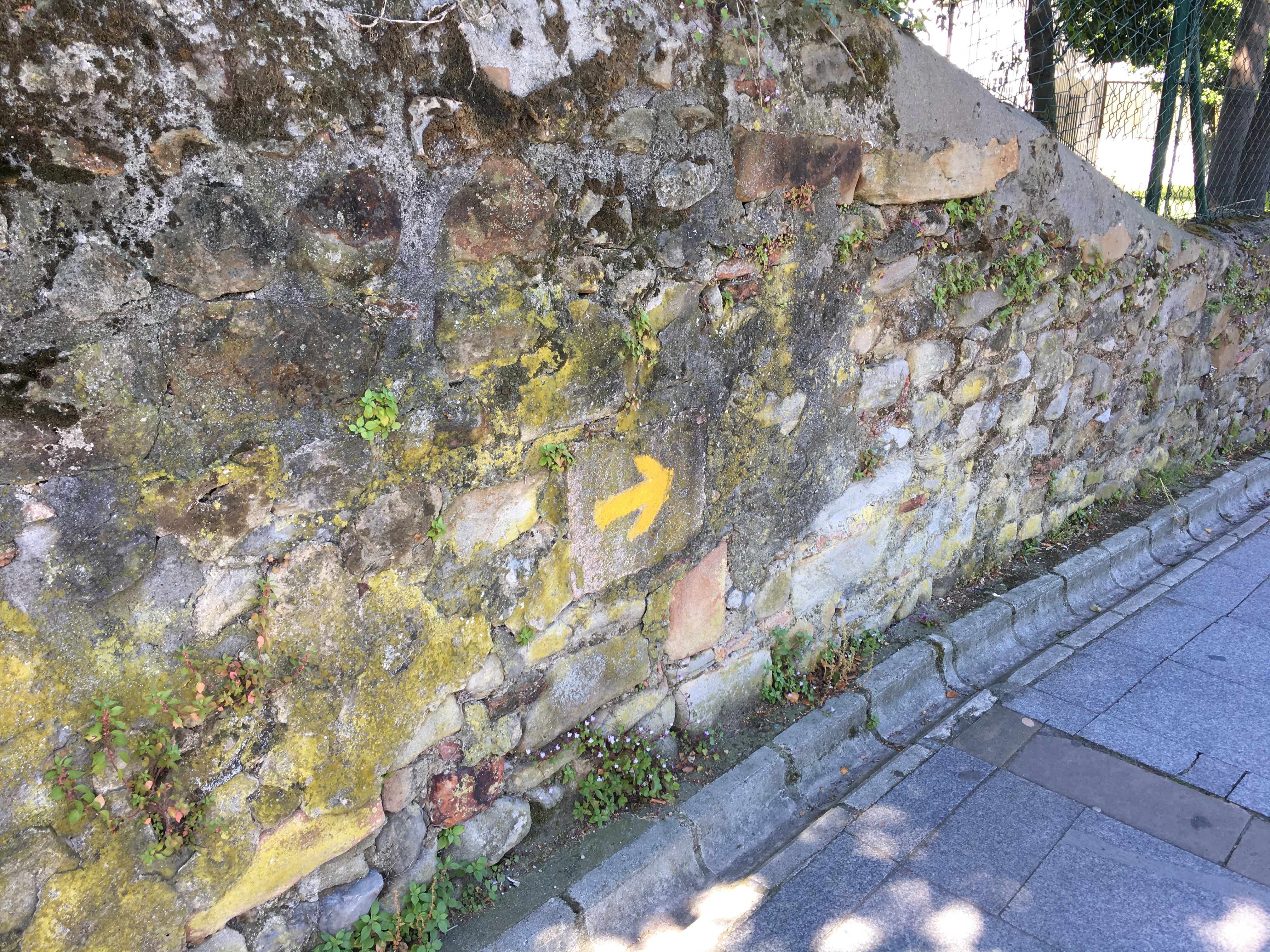
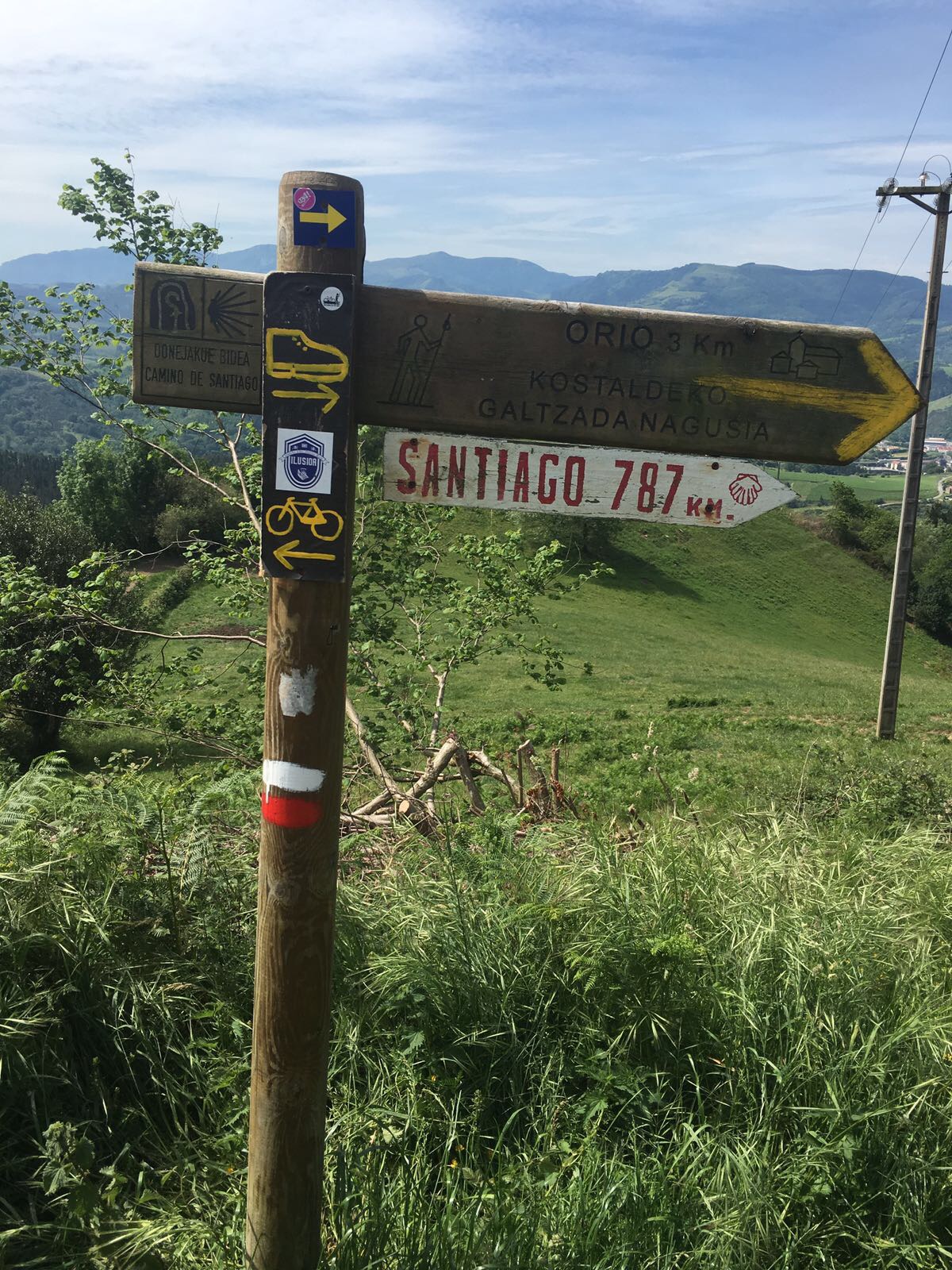
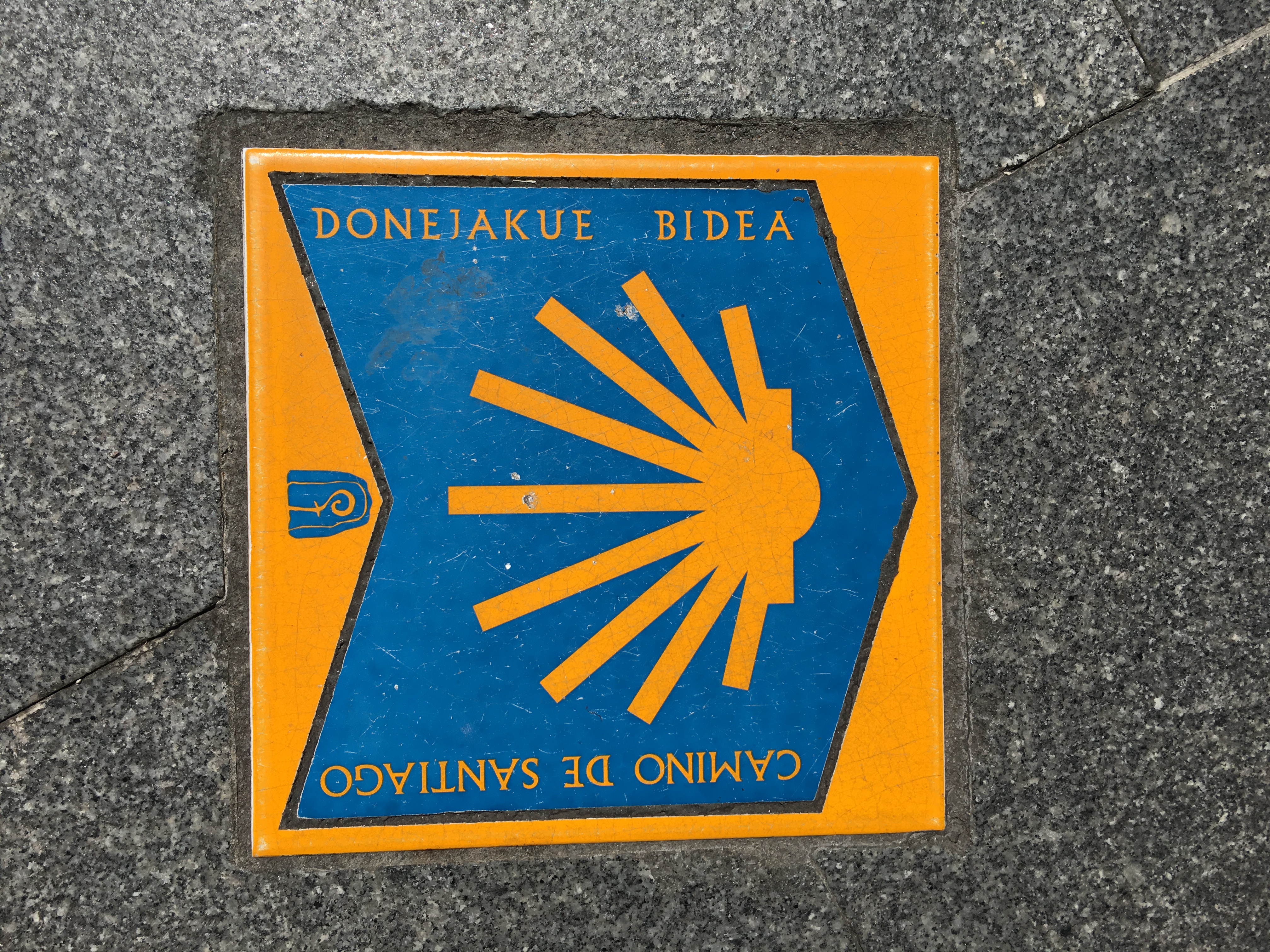
On the Camino de Santiago, you had to take care to follow the signs. Yellow arrows were common and well-known markers to all pilgrims along the path.
IMG_5368

It was easy to get lost, especially in the big cities, if you missed one of these markers. But also at critical junctions in the forests, the fields or roadways where if you were not paying attention, you could lose hours on the journey and have to double back.

I learned, sometimes the hard way, to pay attention to what others might consider obvious. Some markers are easy to notice.

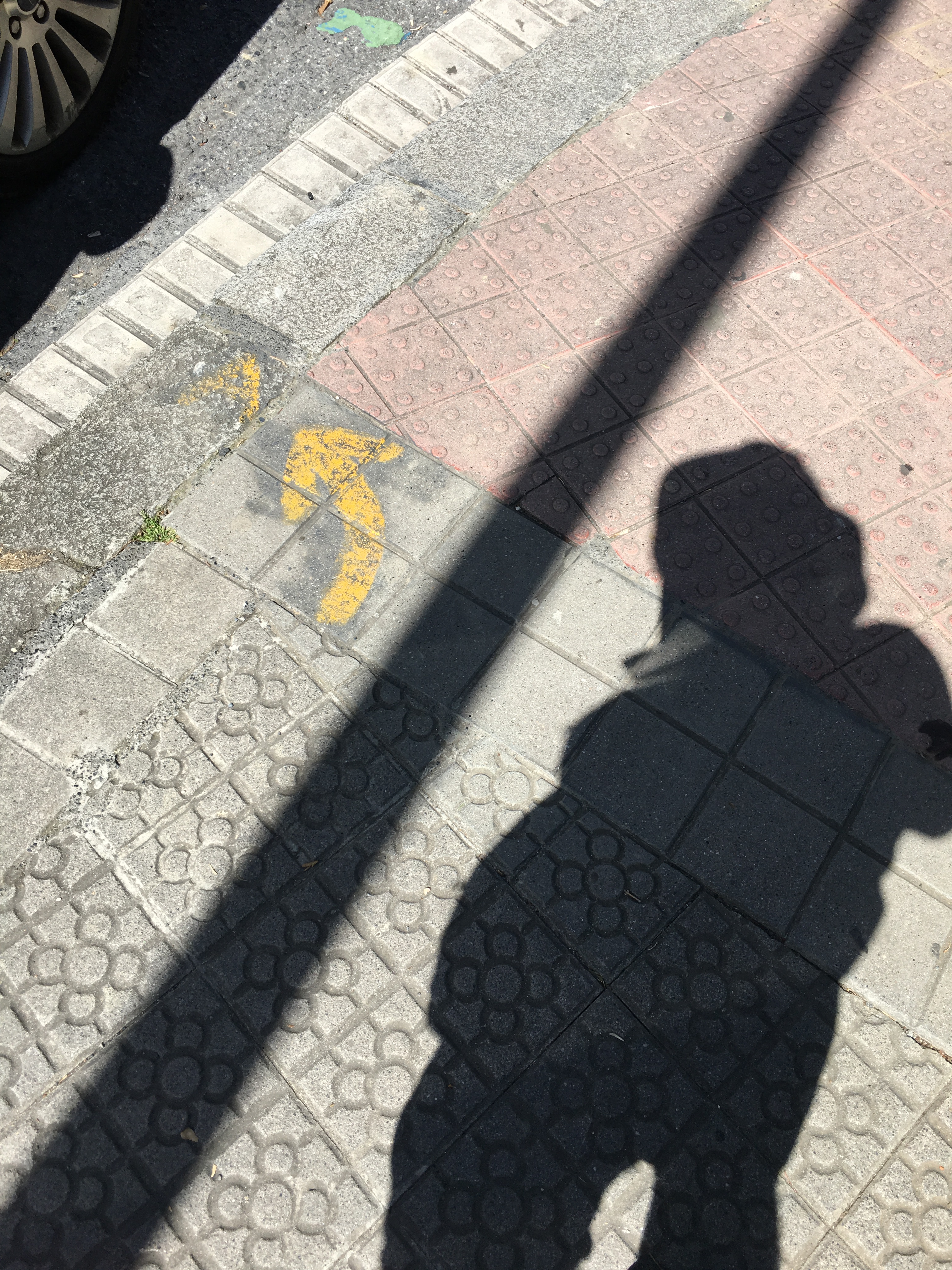
Some are sort of easy to notice:

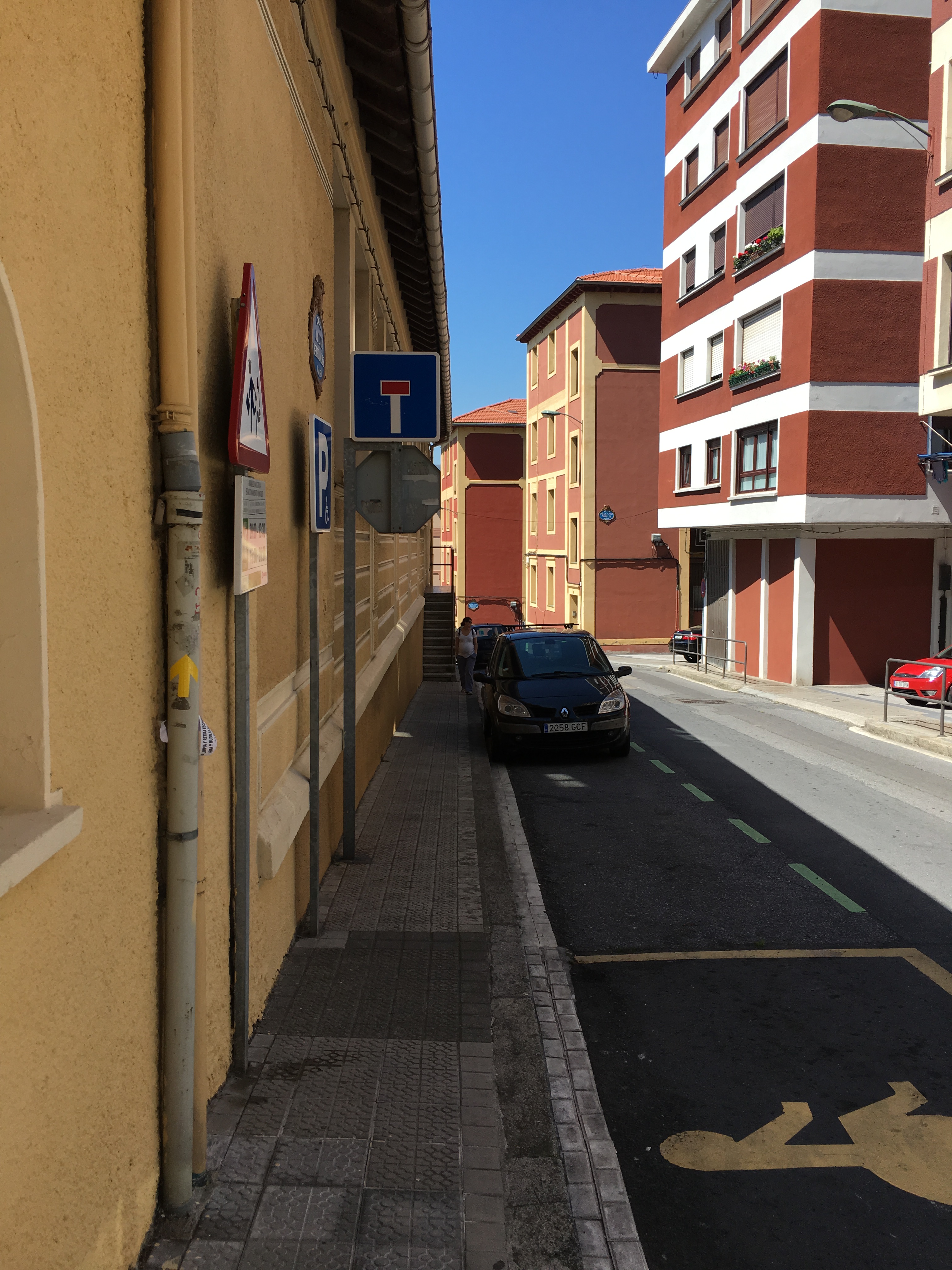
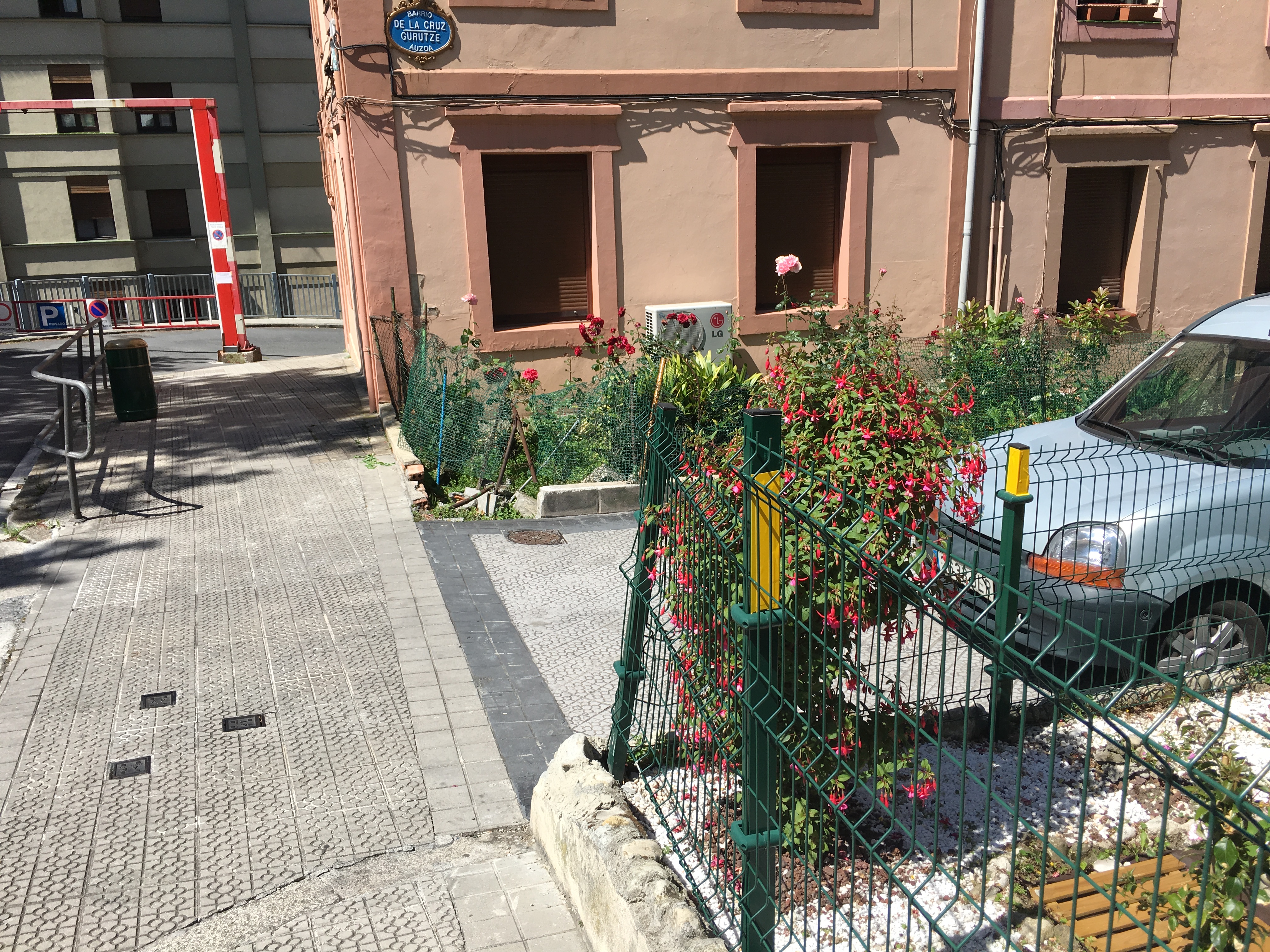
But often it was a challenge to find that yellow marker:
AF9FA91C-7D0D-4D54-B2CD-F933EDE6260A7692EB83-1AA5-499D-AE9B-A64B6A5678C8IMG_5363IMG_5364

The signs — like the sacraments of baptism and holy communion — are reminders of what kind of journey we are on. These signs are embedded in the journey itself, on earth. These holy signs don’t stay in some other-worldly realm; they are very much a part of this world: Baptism uses common water; Communion uses bread and wine – basic, earthly elements which remind us of what God is all about on earth.

The signs are part of our daily, ordinary lives. The signs are already there, along the way, before we even commit to the journey. We only need to open the eyes of our heart and mind, and pay attention. Because the signs are too easy to miss. And when we do miss them, we get lost and go down other paths, paths that lead to division in the Body of Christ, the church.

I remember when our then 12-year-old son started playing football I first learned what it meant to ‘take a knee’. According to the tradition, if a player on the field was injured everyone ‘took a knee’. And it didn’t matter which team the injured player was from; that is, all the players from both teams knelt down and waited there until the injured player either walked off the field on their own strength, or was carted off on a stretcher.

Tim Tebow and Colin Kaepernick have both attracted world-wide media attention for ‘taking a knee’ in the last couple of years, although for very different reasons. Both have made a public display of their faith. Both are prayerful, and devout. One grew up the son of Baptist missionaries to the Philippines. The other was baptized Methodist, confirmed Lutheran, and attended a Baptist church during college.[1]

Tim Tebow, however, is a darling of the church while Colin Kaepernick has been reviled. Their differences reveal much more about the brand of Christianity preferred by many in the church today. Tebow is known for his signature move – dropping to one knee on the field, his head bowed in prayer, his arm resting on his bent knee. He’s clean cut, polite, gentle, respectful.

Colin Kaepernick, starting last year already, refused to stand to attention during the playing of the American national anthem. Originally, he did so in support of Black Lives Matter and to protest police violence against black people. Kaepernick was voted most disliked player in the National Football League (NFL). People posted videos of them burning his jerseys. He was called “an embarrassment” and “a traitor”. Of course, with recent events in the NFL, his witness gains momentum nonetheless.

Two players, two brands of Christianity:

Tim Tebow represents personal piety, gentleness, emphasis on moral issues. Colin Kaepernick represents social justice, community development and racial reconciliation. One version of Christianity is kneeling in private prayer. The other is kneeling in public protest. One is concerned with private sins like abortion. The other is concerned with public sins like racial discrimination. One preaches a gospel of personal salvation. The other preaches a gospel of social transformation. One is reading Paul’s letters. The other is reading the Minor Prophets.

Are these versions of Christianity mutually exclusive? Much of Christian history, especially since the Reformation, would suggest, ‘yes’, even among Lutherans. The proliferation of Christianity into some thirty thousand different denominations by the 500th anniversary of the Reformation in 2017 would suggest, ‘yes.’ The divisions within Christianity is leaving the church all the poorer, with each side needing to be enriched by the biblical vision of the other.

Bible scholar Walter Brueggemann expresses it well: He writes that Christianity should be “awed to heaven, rooted in earth.” We should, as he says, be able to “join the angels in praise, and keep our feet in time and place.”[2]

Christianity, sadly, remains on its knees because of our divisions, when all along the vision of the Gospel, expressed best by Paul himself, is that “every knee should bend, in heaven and on earth”[3]. How do Christians today, regardless of background and orientation, contribute to this vision in ways that actually make a difference on earth?

In the second reading for today, we learn about the essential character of the biblical God. In the Hebrew Scriptures, all of God’s acts, blessings, and delights in creating are for the sake of others. This is typical of God, “who is intimately concerned with justice, peace, and the flourishing of all creatures.” This is typical of God, “who is ‘on high’ but never remote, who is ‘over all’ but faithfully and dramatically invested in life on earth.”[4]

God does not embrace hierarchy. Nor does God rest in privileged autonomy, according to some deist idea of a distant and uncaring God. God is love. And the New Testament witness continues this description of a God who cares intimately about our humanity, in the incarnation of Jesus Christ. God is Immanuel, God-with-us and for us.

In setting up this wonderful hymn that Paul includes in his letter to the Philippian church, Christians are called to exemplify a humble regard for others, seeing them as “better than yourselves”; we are not to primarily serve our own interests, but the interests of those who are different.[5]

These may be an impossible task for us in our self-centred, me-first culture. Nevertheless, we are encouraged, as Paul encouraged the early church in Philippi, to “work out our salvation with fear and trembling”[6]. Why even bother?

Because God is already at work in us.[7] God is already at work in the world, as difficult as it can be to spot those signs of God’s grace, God’s justice, God’s good work. As Martin Luther insisted, matters of salvation revolved around God’s actions, not human activities. Justification — being placed into a right relationship with God — is totally God’s activity. After all, as Paul wrote earlier in his letter to the Philippians, we need to believe – despite what appears to be everything to the contrary – in the promise and the vision that God “who began a good work among you will bring it to completion.”[8]

God’s grace precedes all. Just like the signs on the journey before us and around us. Even though we may miss them from time to time doesn’t mean they aren’t there, waiting for us to notice. God’s grace continues to guide us and point in the right direction.

We therefore have nothing to lose, to take a knee for the sake of those who do not have a voice. To take a knee for the sake of others who are silenced by discrimination and abuse. To take a knee for all God’s creatures who long for a better day.

We pray for and support agency to help the refugees today escaping violence and oppression in Myanmar. We pray for and support agency to help victims of Hurricane Maria in Puerto Rico. We, so, ‘take a knee’, in the spirit and mind of Jesus Christ who took a knee for us all.

[1] I thank Michael Frost, “Colin Caepernick vs. Tim Tebow: A Tale of two Christians on their knees” (The Washington Post, September 27, 2017) for much of the content I use in this section of my sermon

[2] cited in Michael Frost, ibid.

[3] Philippians 2:10, NRSV

[4] William Greenway in David L. Bartlett & Barabara Brown Taylor, eds., “Feasting on the Word: Preaching the Revised Common Lectionary” Year A Volume 4 (Kentucky: WJK Press, 2011), p.112.

[5] Philippians 2:3-4

[6] 2:12

[7] 2:13

[8] 1:6

Cape Disappointment

How do we learn to deal with disappointment?

When health concerns mount? When there are cutbacks in the company you work for? When a relationship breaks down? When someone betrays you? When you fail to meet your goal? When you lose something precious?

How, as people of faith, do we learn to deal with disappointment? When what has happened does not make sense, when we can’t understand ‘why’?

In 1788 Captain John Meares named the spot of land overlooking the confluence of the Columbia River and the Pacific Ocean, Cape Disappointment. He was disappointed that the Columbia River was simply thus, a river, instead of the fabled Northwest Passage which he was intending to find.

IMG_6125.JPG

Mr. Meares was obviously well off-course to his goal. We know today that the Columbia River begins its journey at Columbia Lake in central British Columbia, Canada, and winds itself south hundreds of kilometres into the states of Washington and Oregon before spilling into the Pacific.

IMG_6201

In keeping with the rather downer of name, the lighthouse on Cape Disappointment overlooks the hundreds of shipwreck sites off the coast. The United States Coast Guard recognizes this large area of water as the most dangerous among all the river outlets along the continental shores of the United States.

IMG_6123

Both the strong outflow of the broad and mighty Columbia competes with the powerful tides and winds generated by the largest ocean on earth. Crisscrossing currents of water create constantly shifting sand bars and opposite flow wave action that can confuse, disorient and ultimately undo any mariner navigating this passage.

IMG_5932

IMG_6320

IMG_6322

Add to this mayhem the fog which has an uncanny knack of coming in unexpectedly on the north breeze, disappearing under the burning sunshine as quickly as it appears. I stood bewildered in such a fog jam on the beach one day, unable to comprehend how a perfectly cloudless sky in beautiful sunshine can change so quickly. Signs are staked at entrances to the shores along the thirty-eight mile stretch of contiguous sand beach north of the Cape warning unsuspecting swimmers of rip currents and unstable sand conditions above and below the surf.

In short, while ascetically beautiful to the eyes, this small part of the world contains hidden, life-threatening dangers beneath the surface of things. Disappointing is an understatement when considering the potentially dire consequences of a mariner’s failed attempt at moving around the Cape, let alone dealing with the failure of not arriving at one’s goal.

IMG_6204

In the first reading for today[1], God responds to Jonah by asking questions, rhetorical though they are. Jonah expresses his anger at God for sparing the “great” city of Nineveh. God’s actions did not make sense to Jonah, even though Jonah confesses his belief in a gracious God who is “merciful, slow to anger, and abounding in steadfast love, and ready to relent from punishing.”[2] He obviously did not think much about the people of Nineveh regardless of God’s mercy. Yet he is internally divided, unable to reconcile his belief with his feelings. He can’t figure it out. He is depressed. And wants to die.

If God says anything toward Jonah’s healing, it starts with a question: “Is it right for you to be angry?” And when God provides a bush to protect and save Jonah’s life, a bush that then dies, Jonah is angry again. What does God say to Jonah’s outburst? Another question. “Is it right for you to be angry about the bush?” And to top it off, the entire book of Jonah ends rather abruptly, again with a question from God.[3] Questions. Not pat, cut-and-dry answers. Questions.

I wonder if we have tended to make God and religion into something and someone to give us quick and final answers. We demand ‘what’ from God when all along Jesus, in the wisdom tradition, is primarily teaching ‘how’. Out of the total of the one hundred and eighty-three questions that are asked of him in the Gospel, Jesus only directly answers three of them.[4] In the New Testament, Jesus’ very first words spoken to his disciples was a question: “What are you looking for?”[5]

Jesus turns the tables on the disciples, as he does time and time again. Rather than give them what they are looking for in a neat and tidy package of an easy answer, he throws it back at them. What do you want?

The first call of Jesus in our lives is a call to be honest with ourselves. Before we can do anything, we need to be true to ourselves. And commit to that lifelong struggle to move beyond our intellect and its insatiable compulsions for answers, towards actions that reflect a trusting heart. Because following Jesus in this world does not, most of the time, make a whole lot of intellectual sense. If we are being faithful.

It is not our job to know everything. God knows all. We don’t have to. Ours is a call to hold, not rid ourselves of, all the messy contradictions of our lives. Abraham, Jacob, Rebekah, Moses, David, Job, Esther, Jonah, Elijah, the disciples, Paul – they were not people who had all the easy answers to life’s complex questions. But they were trusting, obedient, and they acted. Sure, they objected to God at times. Yes, they made mistakes. If anything, the story of Jonah ought to reinforce the importance of a real, personal, topsy-turvy relationship with God. That is the stand-out characteristic of all the faithful.

During the years following the Council of Nicea in the fourth century, a common heresy re-emerged under the leadership of Eunomius, a bishop in Cappadocia (in modern day Turkey). Eunomius argued that we can understand the nature of God simply and clearly. Reflecting on what was the mystery of the Trinity, he implied that God was perfectly accessible to human intelligence.[6]

The Cappadocian Fathers, as they are called, reacted to Eunomius. Basil the Great, his brother Gregory of Nyssa along with John Chrysostom insisted on the incomprehensibility of God to the human mind, and the necessary limits of theological discourse. Their position became the orthodox, Christian stance, ever since.

I wonder, ever since the Reformation, the industrial, scientific revolutions and enlightenment era of the last few centuries in especially the western world, haven’t we slipped back into this heresy once again? Pretending, even though we may not be aware of it, that we should have answers to all of life’s important questions.

It is our natural humanity to strive to know everything. But if we are honest, our minds certainly cannot grasp fully such incomprehensible realities as the mysteries of love, suffering, death and God. Here, we must trust and let go of all our pretenses. “For,” in the words of the prophet Isaiah, “my thoughts are not your thoughts, nor are your ways my ways, says the Lord.”[7]

Disappointment in life is a doorway to a deeper awareness of God’s truth and presence in our lives. Our varied expressions of worship, of living out God’s call, our prayer lives – all these are not so much, then, a matter of petition, of doctrine, of rule-setting-and-following, of solving the discrepancies and inconsistencies of the bible and theological discourse.

Rather, our complex lives with all the joys and disappointments become the tableau, the canvas, upon which we discover we are not alone. And that God is ever present and faithful, regardless of what we do or think. You can’t make God love you one ounce more – by all your right thinking and having all the right answers – than God already loves you right now.

Often, the disappointments of our lives bring us to this realization more than all of our accomplishments and successes. Because if we are going to get anywhere in our lives, we need to hope and believe, despite the disappointing circumstances of our lives.

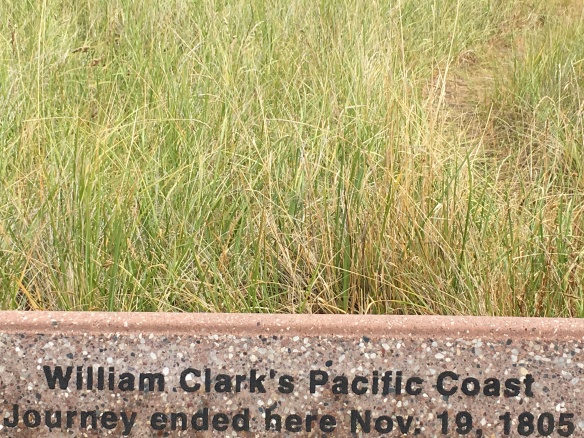
Cape Disappointment marks another very important place in the history of North America. It is not just a place that signifies disappointment, tragedy and danger. It is also the very spot where the famous Lewis and Clark expedition reached the Pacific Ocean in November of 1805. Yes, Lewis & Clark met with many a disappointment and setback along the 3700-mile route up the Missouri River, across the American Midwest, over the Rocky and Cascade mountains and down the Columbia River Gorge that took them a year-and-a-half to accomplish.

IMG_6400

On the journey, were they ever absolutely certain they would make it? As it was, they must have taken their disappointments in stride. For on an uncharacteristically calm day in a stormy November, they made their final push around the western Cape and finally met the limitless horizon.

Significantly, the Lewis and Clark Expedition was called the Corps of Discovery. Today, a 10-mile-long, well-groomed paved path winds through the dunes of Long Beach Peninsula and up into the forest of the Cape. It is called the “Path of Discovery”.

IMG_5994

Cape Disappointment is intricately tied to the Corps of Discovery, where both failure and success are entwined in a rich and diverse history of exploration. The spirit of questing celebrated on these shores includes and transcends both the unique events of human tragedy and human achievement. You cannot have one without the other. In one place. In one human being. Each of us is invited to the journey that includes, embraces and transcends disappointment and failure.

At some point along the journey, you need to have hope in order to continue. Even in the midst of all our unknowing, we can believe and trust in the solution, before it happens.

It’s called faith.

IMG_5922.JPG


[1] Jonah 3:10—4:11, NRSV, Proper 20A/Ordinary 25A/Pentecost+16

[2] Jonah 4:2

[3] Jonah 4:4,9,11, NRSV

[4] Richard Rohr, “Adam’s Return: The Five Promises of Male Initiation” (New York: The Crossroad Publishing Company, 2004), p.112

[5] John 1:38, NRSV

[6] Belden C. Lane, “The Solace of Fierce Landscapes: Exploring Desert and Mountain Spirituality” (New York: Oxford University Press, 1998), p.105

[7] Isaiah 55:8, NRSV

photos by Martin Malina IMG_5940

Love: The Body speaks

I jumped out of bed Labour Day Monday ready for action: I had my traditional ‘to do’ list around the house, tasks reserved only for that most auspicious of holidays: Labour Day. Neatly positioned at the beginning of a new school year, Labour Day promises the beginning of a new season of programs, commitments, work, setting goals, ideals and visions of our aspiring.

I only did certain jobs on this day of the year. You know, like Spring cleaning, these were things that needed to be done once in a while, but aren’t really activities that are particularly pleasurable, to say the least. So, I put it off to Labour Day. I need that annual calendar day to help me stay disciplined. And that is good.

One of those jobs was cleaning the HRV – the Heat Recovery Ventilator. This is the contraption attached to the furnace that recycles the air in your house. On the sticker inside the ventilator, it suggests that the filter should be cleaned once every three months. Yeah, right. Who has time for that?

So, on Labour Day every year, I dutifully remove the heavy box containing the filter, and hose it down. I wash the spongy fabric and hang to dry. I meticulously wipe out the interior of the ventilator with a damp cloth. I vacuum out all the cobwebs, dead wasps, flies and dust mites. I use pipe cleaners to clean the plastic, transparent drain tubes. And when everything is done I put it all back together. Usually it takes me a couple of hours. And then it’s on to the next item on my Labour Day ‘to do’ list. You get the idea.

I knew I had a full day’s agenda of those odds and sods sort of jobs.  Jess and I had just pulled the stove away from the wall to clean the floor underneath (yuck!) when all-of-a-sudden the doorbell rang.

With beads of sweat trickling from my forehead stinking of sweat in dirty clothes, I looked up with ‘surprise’ at who was smiling and waving through the front door pane: my parents-in-law! They were inviting us out for lunch at the local truck stop.

With herculean effort to switch gears and rush into ‘receive-and-respond-to-guest’ mode, I quietly complained to Jess in the bathroom as we quickly washed up that I didn’t appreciate this interruption to the day’s agenda of hard work. Likely all the work wouldn’t get done. And how long were they going to stay at our place after lunch? Throughout the lunch hour I fought the impulse to be resentful and angry at this unplanned, unwelcomed intrusion to the important Labour Day work.

Nevertheless, have to say I enjoyed lunch out. It was a treat. And the conversation helped take my mind off other pressing matters. After only about an hour, we came home, and my parents were off to complete errands. I was surprised by how just one hour of gift, of grace, of unscheduled act of love actually gave me the energy to finish all my Labour Day tasks in a shorter amount of time than I had originally anticipated.

Love has a way of doing that. Love does not steer clear of the structures, agendas, immediacies of our lives. Love does not exist on some surreal, other-worldly plane, dis-associated from ordinary life. Love is not a fantasy trip. Love operates right in the middle of the messy, honest reality of our lives.

We call it other things, which leave us empty:

Whenever we project our wants onto something or someone we don’t have. We delude ourselves in believing we will experience love when we yield to this mirage of desire. This is the ego’s impulse. But if we are honest, getting what we want only sets the ground for wanting more and more. This strategy for life is a prescription for perpetual unhappiness bereft of true joy, because pursuing this frantic desiring is predicated on the assumption that it is never good enough. We are always wanting what we don’t have. Wanting and desiring do not fulfill love.

Neither does the law. We skim the surface of love when we try to please God by merely following the rigor of the law. This is the ego’s attempt to prove one’s self-worth by measuring it up against some ideal. But if we are honest, this effort at loving God and others is really self-centred and only exposes our failure to live up to that ideal. This strategy for life can lead to a stifling legalism, judgmental attitudes towards others and self-hate. Our success at following all the rules is not love. Paying attention to another person is. “Love is the fulfilling of the law,” Paul writes.[1]

Love is free. It is not bound by our ability to control outcomes. Love happens when we are not in charge. Love is a gift, given and received freely. There is no guarantee, from our human perspective, that all our good efforts and good works will make things right. Author and teacher Belden Lane writes: “We love and are loved by God in the act of relinquishing every guarantee of love.”[2] In truth, when we stop our striving if only for a moment, when we release our need to be in control, then we are in the position to experience God’s grace and love. Through others. In ourselves. And from the least expected of places and people. Indeed, as C.S. Lewis expressed, we are surprised by joy.[3]

The ego doesn’t like this because the ego wants to get in the way.  But, love is expressed to another without preconceived expectations of what the other person needs. Love is expressed without giving what we imagine to be best in the situation for them. True love is not striving for what particular results we want to engineer in a relationship. True love, as Belden Lane describes so well, is “a love finally purged of the ego’s calculating desires, a love without strings.”[4] We simply be with the other, and listen to them. And go from there.

Love starts here. It is hard work to love. It is a labour of love – for self, others, creation and God. And it is a work in progress – a journey – that can last a life-time and beyond.

Paul continues in the Epistle text for today, that we are to “make no provision for the flesh, to gratify its desires.”[5] Here, it is helpful to substitute the word, ‘ego’ for flesh. Christianity is an incarnational religion. God is, for Christians, a human being in Christ. The divine entered humanity. God knows the human body intimately. We do our faith a dis-service when we neglect, shame or deny our physical bodies as well as the human dignity of others. Our flesh is not bad. Your physical body is, according to Paul, “a temple of the Holy Spirit.”[6]

We exercise the love of God by paying attention and listening to our own bodies and paying attention and listening to the suffering of humanity all around us. “The glory of God,” Saint Irenaeus said in the 2nd century, “is the human being fully alive.” We celebrate human beauty and strength, yes, but also not ignore its pains.

I sat alone in the Bilbao hotel room looking at my body. On the surface, everything looked fine. Even great. In eight days I had walked one hundred and thirty kilometres through the Basque hills along the coast of the Bay of Biscay in northern Spain. I had even lost several pounds and buffed up a bit.

My feet were fine. So many pilgrims on the Camino de Santiago develop serious problems with blisters and tendonitis. Not I. Now, I did give regular attention to my feet: I made periodic breaks during my hiking, taking my shoes and socks off and gently, lovingly, applying moisturizing cream around my toes, under the ball of my foot and around the heels. They say foot care is paramount to the successful completion of any Camino pilgrimage. I was the poster boy for that piece of advice.

Yet, these superficial indicators did not reveal the truth of the matter. You see, even before I had left Canada to fly to Barcelona, I was coughing.

Besides the cough, I was feeling fine when I headed out of Irun at the start of the Camino del Norte, near the French-Spanish border. But eight days later, a few kilometres outside of Guernica, my right knee blew out. And, in that moment, I realized that I was in trouble. The systematic repetition of hefting my 200-pound body weight and additional 20 pound pack, leading with my right knee finally screamed protest. At first, my pilgrim friends suggested what I was thinking: A few rest days in Bilbao would renew me enough to continue my pilgrimage across northern Spain.

But after three days of rest in Bilbao, I was feeling worse. Not only did I continue to cough, all my muscles were aching not just my knee. I didn’t even feel like travelling to visit with my extended family in Germany.

My body hath spoken. And I was going to listen to it. When I saw my doctor in Ottawa a few days later, she ordered an x-ray and ultrasound which confirmed the diagnosis of pneumonia. I had, literally, ‘walking’ pneumonia on the Camino. All the medical staff, my family and friends complemented me in being able to ‘listen to my body’. And even though I didn’t realize and know how sick I really was at the time, I didn’t push it for the sake of some higher, abstract goals or principles. I came home to heal. My body was telling me something I needed listening to: Stop. Stop the frantic desiring. Stop the restless striving. Just stop. And be still, for a while.

They say the body never lies. We can deceive ourselves in our heads, play all kinds of mind games with ourselves, providing ceaseless self-justifications and employing conniving self-defense mechanisms that would confound any therapist. But what the body presents – the physical manifestation of who we are – is the truth indicator. What the body proclaims is truer than what anyone says.

Any journey towards health and love begins by paying attention to what your body is saying. And go from there. We may slow down. We may pray. We may embark on a journey to search out meaning in our lives, to explore the multi-layered regions of our hearts and souls. We may seek medical help, and rely on the gifts of medical science. We may even make major changes in our lives. In other words, we learn the truth about ourselves. Beginning with what the body says.

Someone asked me what I learned about myself during the sabbatical. You could say, I had the chance to just be myself. I experienced my humanity without the usual trappings of roles, titles and responsibilities. I met with and explored myself as a human being. I am human. Not just a talking head. I don’t just live out of my head. I live out of my body, too.

And, to be honest, I didn’t always like everything I saw, there, in my human nature. Yet, I will confess that in that mess of my humanity I re-discovered Jesus. It wasn’t so much in the usual places but in those other pilgrims I met, the help I received along the way, and in my own, ordinary self – stripped away from all the usual distractions, comforts and busy-ness of life – that grounded me in a love that endures.

Out of this awareness has grown a deep thankfulness for all the gifts of life. Gifts over which I don’t have ultimate control in having received: The gift of physical health and ability; The gift of this sabbatical – about which I express heartfelt thanks to the congregation; The gift of colleagues who take up the torch so to speak — thank you to Pastors Diane and Ted and musician, David: The gift of capable lay leaders who show remarkable abilities administratively and creatively when given a chance – Beth, Julia and Megan, especially; The gift of lay preachers who in their diverse expression reflect something beautiful about God and God’s ways – Jessica, Beth, Christa and Jann; The gift of a spouse and children who model the love of God by ‘letting me go’ for a while.

In Christianity, the word, ‘body’, takes on a broader meaning: The Body of Christ is the church, the community, the network of relationships. I am ever so grateful and encouraged. I learned another thing out of this sabbatical experience: There is love in the Body of Christ, to be sure.


[1] Romans 13:10

[2] Belden C. Lane, “The Solace of Fierce Landscapes: Exploring Desert and Mountain Spirituality”, New York: Oxford University Press, 2007, p.201.

[3] C.S. Lewis, “Surprised By Joy”, New York: Harper Collins, 1966

[4] Belden C. Lane, ibid.

[5] Romans 13:14

[6] 1 Corinthians 6:19

Martin Luther & Julian of Norwich

An imaginary meeting between Martin Luther (16th century reformer) and Julian of Norwich (14th century mystic) in celebration of the four-month time of worshipping together in the same space with Faith Lutheran Church Ottawa and Julian of Norwich Anglican Church Ottawa, a time which now comes to an end. Thank you to the Rev. Mary Ellen Berry, Anglican Diocese of Ottawa and incumbent of Julian of Norwich, for co-writing and presenting this dialogue with me, on our last Sunday together February 19, 2017


NARRATOR: I came early this morning to set up, and no one was here. I was tired so I sat down on the chancel steps, and fell asleep. And I had the strangest dream: Julian of Norwich had a conversation with Martin Luther …..

ANGEL: (singing, from the balcony) “I want Jesus to walk with me, I want Jesus to walk with me, all along my pilgrim journey, Lord I want Jesus to walk with me.” (ELW #325)

LUTHER: (appearing from behind the pulpit, holding a large Bible, opened, in one hand, his feather ink pen in the other) “Be perfect, therefore, as your heavenly Father is perfect!” (Matthew 5:48, Gospel for Epiphany 7A) What does this mean?

JULIAN: (appearing in her cell, sitting on a stool, leaning upon the reading desk) What does this mean to you?

LUTHER: Who are you?

JULIAN: Julian of Norwich.

LUTHER: Are you one of those uber-enthusiasts, I call Schwaermer in my native German tongue? Julian of Norwich, that’s hardly the way to relate to the Lord.

ANGEL: (singing) “I want Jesus to walk with me; I want Jesus to walk with me; all along my pilgrim journey, Lord, I want Jesus to walk with me.”

JULIAN: How did you learn that you couldn’t be perfect as God is perfect, by your efforts alone? What did you do?

LUTHER: At first, I rubbed the tips of my fingers raw washing the floors in the Augustinian monastery in Erfurt. That didn’t help my conscience. So, in 1510 I decided to go off to Rome. I crawled devoutly up the stairs of the Scala Santa, as millions of other pilgrims did.

JULIAN: Life, itself, Martin offers its own penance: disappointments, failures, sickness, betrayals. Life, if we but allow it, purges us of all the things for which our habits and affections grasp. Why on earth did you do all those things?

LUTHER: I laboured and sacrificed so much in order to purge myself of sin. It was up to me, I believed, to make myself right before God. It all depended on how hard I worked and the more penitential I became. I tried to impress God. I once believed my good works were the gateway to my salvation; only then, could I be perfect as my heavenly Father is perfect.

JULIAN: What happened to change your understanding?

LUTHER: It was on the Scala Santa in Rome as I made my wearisome, guilt-ridden way up those holy stairs, I heard God’s voice saying to me: ‘The just shall live by faith, not by doing penance.’ It was like scales fell from my eyes. I stood up, walked back down, and stalked out to ignite the Reformation!

JULIAN: You heard God’s voice speak to you! How do you know that it was God who spoke? Was it the only time you heard the voice of God speak to you? It seems quite an experience, no? Did you not criticize the ‘Schwaermer’ — as you call them — those ‘fanatics’ who relied on experience alone to express their Spirit-filled faith?

LUTHER: Well, yes .. and no, not just experience alone. I was suffering severe cramps in my room one evening, reading through Paul’s letter to the Romans, when I came across the verse from chapter 3: “Since all have sinned and fall short of the glory of God, we are now justified by God’s grace as a gift, through Jesus Christ” (v.23-24). This word of God is external, and comes to us quite apart from any experience we might have.

JULIAN: But you are not denying that God comes to us and speaks to us through our experiences?

LUTHER: Only when mediated through the Word.

JULIAN: I see, “Only when mediated by the Word.” And what, for you Martin, is the “Word’?

LUTHER: The spoken word, preached and proclaimed. The words in the bible. And, most importantly, the living Word made flesh, Jesus Christ.

ANGEL: (singing) “I want Jesus to walk with me; I want Jesus to walk with me; all along my pilgrim journey, Lord, I want Jesus to walk with me.”

JULIAN: But the spoken word and the living word touch our souls, not just the ears and mind, do they not? Is not the word something that needs to come into us, personally, experientially?

LUTHER: You are good at asking questions, fair Julian of Norwich. Perhaps you can tell me why it is you sit in your cell, asking questions of the faithful and listening to their stories?

JULIAN: It is in this way that I do my small part in the work of our Lord Jesus. I care for their souls, I tend to their hearts, so the real teacher, our Lord Jesus, can enter. My fondest hope, Martin, is “that when I am no longer in this world my dear ones will soon forget me so that I shall not hinder them, and they will behold Jesus who is teacher of all.”

LUTHER: In German, this pastoral care ministry is the work of the Seelsorger. But you also have written so much — the first book written by a woman in the English language. I wonder what greater impact your writing would have had, if you had Gutenberg’s printing press at your disposal, like I did.

JULIAN: You, too, my dear Martin, have written so much — more than me I should say! You translated the Latin bible into your beloved German.

LUTHER: Your Divine Revelations speak boldly of God’s love and trust.

JULIAN: You once wrote: “Sin boldly”. Do you regret anything you’ve written?

LUTHER: Well, yes. I did write unlovingly about the Jewish people. I have contributed, by my words, unfortunately, to the cause of anti-semitism. I am grateful that the Canadian Lutheran Church in the last century, among others worldwide, have rescinded this hateful language from my legacy. What advice do you have?

JULIAN: All wrath – all that is contrary to peace and love – is in us, not in God, Martin. So, yes you have sinned and fallen short of the glory of God. But you are forgiven, Martin. Grace alone. Is that not what you preached?

ANGEL: (singing) “I want Jesus to walk with me; I want Jesus to walk with me; all along my pilgrim journey, Lord, I want Jesus to walk with me.”

LUTHER: Your written work is impressive. Do you, Julian regret anything you’ve written?

JULIAN: Well, Martin, I don’t know that ‘regret’ is quite the proper word, but it will do until I can think of a better one. “All shall be well, and all shall be well, and all manner of things shall be well” are words that were given to me by our Lord, Jesus that I wrote in my Divine Revelations. They are beautiful words and they are most surely true, Martin. I do not regret hearing and writing these words; but I do regret – hmmm, still not the right word – how they are often taken.

LUTHER: What do you mean by “how they are often taken”?

JULIAN: What I mean, Martin, is that I fear these words have been misconstrued. When our Lord Jesus spoke them to me, I, too, was at first appalled and answered, “Good Lord, how can all be well when great harm has come to your creatures through sin.” – don’t forget, Martin, that I lived during times of war, plague, poverty, and famine. Through the grace of God, I came to understand our Lord Jesus’ words more fully.

LUTHER: Really, how so, Julian? Because being perfect, then, is not about a life free from all that ails us, and continues to do so all our lives long, no?

JULIAN: Yes. “All shall be well” is not a promise that God will relieve us of our sin and pain in this life. It is an invitation to trust God, to cultivate new habits of trust in God, and to at least be open to God’s healing love. “Just as by God’s courtesy he forgets our sin from the time we repent, just so does he wish us to forget our sins and all our depression and all our doubtful fears.”Does this speak to you, Martin? Or does it sound like the rantings of a 14th century mystic – a fourteenth century Schwaermer?

LUTHER: Well, you are two hundred years older than I am!

ANGEL: (singing) “I want Jesus to walk with me; I want Jesus to walk with me; all along my pilgrim journey, Lord, I want Jesus to walk with me.”

JULIAN: ‘Perfection’ then is experienced when we bask in the light of God’s love in, through, for and with us. Loving yourself, and loving others, loving all of creation, despite our suffering. This is the beginning and end of all prayer. How do you pray?

LUTHER: I spend nearly half the day in prayer, each and every day.

JULIAN: Being in the presence of God, whether you use words or not, unites us in Jesus.

LUTHER: I’ve always said: the fewer the words, the better the prayer!

JULIAN: The presence of Jesus, God’s love as a mother’s love, is all gift.

LUTHER: Despite our differences, then, prayer unites us all in this grace of God.

JULIAN & LUTHER: Thanks be to God! (Julian and Luther walk to the centre and embrace, then each walk separately out one of the side doors beside the altar)

ANGEL: (singing) “I want Jesus to walk with me; I want Jesus to walk with me; all along my pilgrim journey, Lord, I want Jesus to walk with me.”

NARRATOR: (wakes up, shakes his head, stands up and faces the congregation) The words of the Prayers of Intercession are posted on the screen. The Lutherans will with one voice say together their parts; and alternate with the Anglicans who will say their parts. Let us pray in the unity of Christ!

Dialogue sermon – Epiphany 3A

The people who sat in darkness have seen a great light, and for those who sat in the region and shadow of death light has dawned (Matthew 4:16)

The people who walked in darkness have seen a great light; those who lived in a land of deep darkness — on them light has shined (Isaiah 9:2b)

Voice 1: We confess that we sit in darkness (Matthew 4).
Voice 2: We confess that we even have the gall to walk around in the darkness (Isaiah 9).

Voice 1: Whether we are moving, or staying put, the darkness of sin clouds our vision, purpose and value in the world. We stumble and fall —
When we exclude, and draw lines of division between the haves and have-nots;
When we ignore, avoid and despise those different from us who press into our private places, disturbing the darkness and isolation.

Voice 2: We confess our longing to sit and walk in the light.
A place to be, free from our stuck-in-the-rut-ness,
free from what holds us back — our prejudices and fears.
A place to affirm and re-affirm our call.

Voice 3 (from balcony):
Bethlehem.
Egypt.
Nazareth.
Jordan River.
Wilderness.
Capernaum by the Sea of Galilee.

Voice 4 (from balcony):
The places where Jesus had his beginnings —
moving,
interrupting,
disturbing,
challenging,
calling.

Voice 1: Where are we now? What place inhabits our vision?
We long to return soon to our home, at 43 Meadowlands (Faith Lutheran Church).

Voice 2: We long to identify our place in the mission of God to the inadequately-housed (Julian of Norwich Anglican Church).

PLACE IS IMPORTANT.

Voice 5:
Our place in this world.
Our purpose.
Where we pray, sing, do mission together.
Where we affirm week after week who we are in Christ,
the light of the world.

In relationships, where we act boldly, and immediately, as did Christ’s disciples of old.

Jesus comes into the places of our lives to change us, challenge us.
No longer complacent,
but urgent following.
No longer passive,
but active response —

Voice 1: to the God who has, does and will continue to shine
God’s light and love in Jesus Christ
upon all who sit and walk in the darkness of the world.

Community of the broken and blessed

This Sunday I will use the words of David Lose, in his fine reflection on the Gospel assigned for this 19th Sunday after Pentecost in the Revised Common Lectionary (Mark 10:2-16).

He suggests that Jesus’ difficult words here are not so much addressed to individuals as they are to a community that is broken and blessed. These words are not about divorce per se but about the law and under what circumstances it was applied.

Finally, these Gospel words are not so much about matters of the law, but about relationships of mutual dependence and health. He welcomes children, thereby painting a vivid picture of this kindgom community. This is a community comprising of relationships whose purpose is to be honest about our vulnerability, and whose mission is to protect the vulnerable.

Please visit his blog for the full text: In the Meantime

It’s ok to fall (4): It’s the only way

It’s only the second Sunday in Lent. Time seems to drag during this long, hard season. At least Advent — a similar season of preparation, repentance, and waiting — is only four weeks long; things seem to go faster in December.

The pace for Lent is perfect for Sarai and Abram. They are old — in their nineties, now in the twilight of their lives (Genesis 17). They are, likely, slower in moving about and more reflective than the young. They are, likely, more contemplative and more aware of the mistakes they have made and the wounds they have caused — all of which is appropriate for the Lenten journey (Craig Kocher, “Feasting on the Word” Year B Vol 2, Westminster/John Knox Press, Kentucky, 2008, p.50). I agree — although it’s hard to admit — sometimes we need a slower pace, and a place to listen and pray carefully, to confess our sin, as we turn toward God.

I tried something for the first time this past week which goes against the grain of my personality. When I go for my 45 minute walks, my route takes me along streets, roadways and eventually into a beautiful multi-acred forest called ‘the Grove’ whose trails lead to the Ottawa River. 

But I always carry my smart-phone with me. I have justified doing so for safety reasons. My hyper-vigilant personality loves this — no matter where I am on this planet I am only a text or phone call away! If there is a crisis or emergency, I can respond with efficiency and lightning speed to get help.

As I pondered leaving my phone at home, before going for my walk, I reflected on how dependent I have become on this device. Addicted, perhaps? I wondered what I would have done before the smart-phone era — not long ago, but long enough! If there was an emergency, I would have sought a neighbour’s help by knocking on their door; I would have paid more attention to my surroundings and where I might find help. I would have prepared better for my walk. I would have rested more in the moment, trusting more in the interrelated fabric of life around me.

So, here’s the good news. (But the structure of this sermon goes like this: There’s good news, then bad news, then really good news. Stay with me!) First good news, from this experience: I felt liberated. Leaving my phone behind wasn’t really that hard to do — and yet, it was a small step in a healthy direction, a simple sacrifice for evaluating my life-style and making concrete changes for the good. I will now practice more often ‘leaving my phone behind’, for its obvious benefits.

These are the ‘small’ steps we can make during Lent. Others give up chocolate, sweets, meat. Others still will ‘add’ something to their lifestyle — exercise, working out, volunteering more, coming to church more often, giving more money for some overseas mission, spending more time in prayer — all these good disciplines that are popular for Christians in Lent. And these are good!

During Lent, however, we are called also to contemplate the journey of Jesus to the cross — and the implications of that kind of sacrifice on our own lives. And so — and here’s the rub, the ‘bad’ news: Giving up chocolate or the cell phone is not ultimately what the Lenten journey is about. Jesus’ death on the cross was not making a ‘convenient’ sacrifice. Jesus’ death on the cross was not a little discipline that pinched but really didn’t change anything significant when Easter morning came around.

Jesus’ sacrifice goes to the jugular of our lives; it demands a costly cost; it means a radical change and giving up of something that is near and dear to us.

God calls Abram and Sarai to change their names. And it was a big deal in their day. In our times, names are often considered nothing more than labels. In our world, names are often chosen based on nostalgia, diction or popularity.

In the ancient world, however, names reflected the character and destiny of that person. To be called by your name, was a big deal. To change that identification was radical! Names were wrapped up in the core of one’s identity and purpose.

The name of God, above all, was untouchable — literally. The Jewish people withheld from spelling God’s name in scripture, from saying God’s name out-loud in worship. To call ‘on the name of the Lord’ was an act of profound devotion. To call ‘on the name of the Lord’ was a radical act of identifying with an un-nameable God.

And yet, in this text, even God is given a new name. For the first time, God is given the name “God Almighty” (Genesis 17:1). It is transliterated from the Hebrew, “El Shaddai” which might be translated, “God of the Mountains” (ibid., p.52).

So, here is my invitation to you today: Consider what profound and deep aspect of your life God is calling you to change. You may object, on the grounds of scriptural interpretation alone: “This text is not about us needing to change! God called Abram and Sarai to change their names. That was them. But not us!” 

Yes, we may think on occasions — even religious in nature — where we do still change our names — at weddings, some women will change their last names; and in Christian baptisms practised in some churches, babies take on their “Christian” name for the first time.

And yet, when we read this Old Testament text, and while we would do well to acknowledge its original context and meaning to the first people who received it, we are still asked today: What does it mean to us? How can this text become alive for us today?

And when we relate this text to the Gospel for today (Mark 8:31-38), where Jesus calls us to take up our cross and follow him, where Jesus challenges us to ‘lose’ our lives in order to ‘gain’ life — what does that mean? It’s not just about throwing a little more cash in the offering plate, or not indulging in sweets.

What may God be calling us to change, in our own lives? What may God be calling us, whispering into our hearts, to ‘lose’? Are we prepared to fall? Big time?

Jesus shows us that it’s okay to fall, because it’s the only way to go: The Cross. If anything, don’t skip opportunities in Lent to worship — during mid-week studies, Maundy Thursday, Good Friday, and the Easter Vigil. Why? Going to the Cross, through the Cross, is the only way for us to know and experience the joy and truth of resurrection. Being uncomfortable by facing our fear, anger and shame is the only way for us to know and experience the joy of life. If you yearn for true joy, satisfaction and rebirth in your life, being uncomfortable is the only way for you to be healed, to be redeemed and forgiven, to find your way in this world.

You can’t have Easter without Good Friday. We need to be prepared to ‘lose’ ourselves — to fall — in order to ‘find’ ourselves — to get up, again. In Christ. “El Shaddai”, God of the Mountains. Mountains define valleys. You can’t have mountains without valleys. Mountains encircle valleys — valleys of despair, valleys of impatience and sorrow, valleys of Lenten confession and discipline. Wherever you have a range of mountains, you will have valleys. But whenever you find yourself in a valley, don’t give up. Don’t get stuck in the valley. Don’t get comfortable there, either. Get up and keep on, because there’s a mountain just up ahead pointing our vision to the skies. 

And here comes the really good news (after the bad news, after the first good news): Abram is ninety-nine years old when ‘the big change’ happens. Ninety-nine! It’s never too late. Never too late for God to call us to change. Never too late for God to call us into ‘losing’ something that we have for a life-time believed to be important. Never too late for God to give us the strength we need to endure and follow-through on that change. Never too late for God to bless us with a wonderful gift of the new thing God is doing for us — whatever that may be.

God will never give up on us. God will wait a life-time, and then some! God is the God of Mountains. And mountains are steadfast and true. Mountains point upwards to the vastness and infinite beauty and glory of the sky and the stars. God pointed Moses’ vision upwards to see the Big Picture of God’s promises and God’s future.

Mountains will remind us, I pray, that God’s promises are sure. God’s covenant to us cannot be broken, even as we follow Jesus down this long, slow road. But, “whose destiny is our destiny: the cross, the grave, the skies” (ibid, p.54).

It’s ok to fall (3): Jesus leads us there

The beginning of a story introduces the characters, but it also sets things up for what readers can expect later in the book. The writer of a good story will craft, early on, a good ‘set up’ for the plot development. Here’s an example, and you tell me what you think will happen later in the story:

At the beginning of this story, we read about a couple of children walking home from school, as they always do, along a familiar path. However, their route goes by the town’s cemetery, a place they have never visited. It remains a mystery to them. The cemetery is guarded by spiked, iron-wrought gates and surrounded by tall, thick cedar hedges.

The children are coming of age when their curiosity is piquing, and they ask their parents if they can venture into the cemetery. But they are warned repeatedly from all quarters: “Don’t ever, ever, EVER play in the cemetery! Especially, after dark!”

Now, what do you think will happen as a result of this ‘set up’ in the story line? They’ll likely go there! — into the cemetery, at night, perhaps under scary or tension-filled circumstances. And, we want to read on to find out how, as our own imaginations grow! It’s true, when we are ordered not to do something in some unequivocal, unyielding, non-explanatory way, it’s something we will usually end up doing! The story is a snap-shot of life.

Social history bears witness to this human dynamic: In 1920, law-makers south of the border enacted the 18th Amendment which attempted to curb the evils of liquor. Laws were passed against the sale and trade of alcohol. The result? After Prohibition was finally lifted, historians showed that the consumption of alcohol by the general population actually increased during those ‘prohibitive’ years. (Strayer & Gatzke, “The Mainstream of Civilization since 1500”, Harcourt, Toronto, 1984, p.730)

“Brick-wall” parenting, as some call it, often fails. Because children don’t grow in an environment where the evils of the world can be talked about, reasoned through and struggled with in loving, patient and understanding ways. They just outright rebel.

Perhaps it was employing some reverse-psychology that spurred Martin Luther to say those infamous words: “Sin boldly … !” But I like to emphasize the latter part of that quote: “Sin boldly … and trust the Lord even more.” Luther doesn’t deny or hide away from sin. He just trumps it, with the Lord!

When I assert repeatedly the theme of this sermon series for Lent: “It’s okay to fall”, I am NOT encouraging you to sin. Because you don’t need to purposely go out and find sin and suffering. You don’t need to seek out suffering, as if it’s a choice we can make (eg. “I think I’ll go out and sin today”; or, “I don’t think I’ll sin today!”)

Sin is something that we must learn to live with. It’s a part of our lives. Sin is not something we can ‘will’ away by the force of our self-righteous toil to purge ourselves somehow. If you think yourself a good Christian, you may be good at hiding your sin. But honest, faithful, authentic Christians will struggle monumentally with their sin, and not need to put on masks of perfection when they come to church.

Life happens. Life is ‘done unto us’. Mistakes are made. I can’t explain why God created a world where suffering is so much a part of the journey of life. The better, more meaningful question, I believe, is to consider what the suffering and the sin has to teach us about ourselves in relationship to God, in the journey to redemption.

In other words, it’s okay to fall, because that is where Jesus leads us. In the Gospel text for the first Sunday in Lent, after Jesus is baptized, “The Spirit of God immediately drove him into the wilderness” (Mark 1:12) where he spent forty days, tempted by Satan. This part of Jesus’ life is for me the image I hold whenever I pray the traditional English translation of the Lord’s Prayer: “Lead us not into temptation”.

Because, while Jesus does not cause my sinning, Jesus leads me into the wilderness of my life where I must confront all those temptations, the brokenness, weaknesses, despair, anger, fear, guilt — that cause my sinning. Jesus takes me there, into the barren land of my soul. He leads the way. I must follow.

The formal ‘Invitation to the Lenten discipline’ in most liturgies begins with a call to self-examination — even before repenting, praying, fasting and works of love strengthened by the gifts of word and sacrament (Evangelical Lutheran Worship, Leader’s Desk Edition, Augsburg Fortress, p.617). Self-examination is an act of profound humility and honesty. And it could very well be the most difficult task in the Lenten journey.

Here is some good news: Jesus is not afraid. Because he has already gone to the darkest place of all — the Cross, and then even descended into hell as we affirm in the Creeds. I can persevere through any turmoil life may offer, because Jesus is there, right beside me, helping me get through it.

What makes the consequences of our sin worse, I suspect, is the kind of thinking that suggests Jesus cannot be present if or whenever we go into those dark places of our lives. Our prejudice may be that Jesus cannot be there in the shameful, anger-ridden, fear-devastated places of our suffering. We thus delude ourselves into believing “I am alone” in my suffering. The Gospel, however, teaches us otherwise.

I was so inspired by the record number of folks we had out on Shrove Tuesday for our pancake party — including almost a dozen folks from the neighbourhood who had never been with us before! We danced, we sang, we ate, we enjoyed music together.

When we are in the desert of our lives confronting our sin and suffering, it is so important to know, again, who your friends are, your family, your community, your church — and simply experience their presence. And by their presence, their loving support — even in the darkest time of our lives. Just being there together, can make a huge difference.

Therefore, I can be encouraged that as Jesus was waited upon by the angels who gave him the things he needed to get through his wilderness suffering, so then Jesus will not abandon me in my desert. He’ll be right there beside me, and give me what I need (and maybe not always what I want).

It’s okay to fall, because Jesus leads me into that place that I would rather avoid. And even that place where I might be tempted to go. Because I don’t go alone. Thanks be to God.

Back to the Future: Borderland spirituality

2015 is the year of “Back to the Future”, did you know? When Marty McFly, played by Michael J. Fox, travelled ‘Back to the Future’ in the 1980’s pop culture film, the year they went to, in the future, was 2015.

As a kid I enjoyed the movie, partly because the year 2015, at the time, seemed some unrealistic, arbitrary and irrelevant point in the future; the number only represented some distant benchmark unconnected to my present reality.

Today, 2015 no longer means some far-off, futuristic fantasy. It is reality, now. And if I watch ‘Back to the Future’ today, the movie represents more of an historical curiosity — I’m only looking ‘back’.

In faith, it’s like we simultaneously look back, forward, and both from the grounding of the present moment. Balancing all three is good theology. For its sesquicentennial anniversary, the Eastern Synod (ELCIC) employed the motto: “Remembering for the Future”. Celebrating an important event in the present day by integrating past with the future is important. And a good way to interpret the Bible.

But it an also cause dismay if we only insist on a certain, chronological ordering of events in an absolute kind of way. For example, at Jesus’ baptism in the Gospel for today (Mark 1:4-11) there is the matter of the Holy Spirit, which descends in the form of a dove upon Jesus (v. 8, 10). John the Baptist preaches that Jesus will baptize with the Holy Spirit.

But Jesus never performs one baptism in his ministry that we know of. And, according to the time-line of the Gospels, the Holy Spirit doesn’t descend on the church until after Jesus’ resurrection (John 20:19-23) and at the Day of Pentecost (Acts 2) — these Holy Spirit events do not occur during Jesus’ ministry of healing, teaching and praying on earth. Curious, since many understand Jesus’ baptism as his ordination or commissioning to his call as the beloved Son of God. How do we make sense of this?

To understand many of the stories we read, like the Gospel for today, we would do well, I believe, to employ a ‘Back to the Future’ hermeneutic. This way of interpreting does not deny the truth of all of the events outlined above. For one, it reveals something about how the bible was put together:

The actual writing of the New Testament was done decades after these events took place. Therefore, we say, that we, today, are ‘post-resurrection’ Christians. We can best understand what happens at Jesus baptism from the perspective of the future. Because when these stories were written down for the first time, and from today’s perspective — the Holy Spirit has already come. Jesus is alive. Even as we recall, as a matter of history, what happened in the moments of Jesus’ life on earth some two thousand years ago.

And it’s not just a pointing forward that we need to keep in mind. It is a reverence and respect for the past.

If you look at the geography of the Baptism of our Lord, we can conclude at least a couple of things: First, it takes place in the wilderness, the desert. That is through which the river Jordan runs, basically north to south separating lands that are for the most part destitute, rugged, dangerous even.

Second, that river forms a boundary between two worlds — on the east and south, the world of the ancient Israelites tracking through the desert for decades on their way to the Promised Land flowing with milk and honey, which is on the other side.

John the Baptist comes to this border land, which is significant in the history of the prophets. In fact, John the Baptist stands in line with the prophets of old. His speeches are associated with Isaiah (Mark 1:1-8); he is also mistaken for Elijah because of what he wears (2 Kings 1:8) and because he foretells of the coming Messiah (John 1:21). John’s presence and ministry at the Jordan River in the wilderness brings the past (an identification with history and the prophets) together with the future (Jesus Christ, and the coming Holy Spirit) together into the present moment.

How can we keep ourselves from getting lost and totally confused in the plot line of “Back to the Future?” We remain grounded in the present moment. We look to our immediate surroundings. Like the beasts of the field, we scuff the earth with our heal, and snort and spit, before we look up.

And this is the beauty and wisdom of these Scriptures: their insistent if not peculiar emphasis on details. Yes, God acts in creation. Yes, God redeems sinners. Yes, God has a plan for salvation.

But this ‘spiritual’ talk is always, in the Gospel, tied to material — real water, real bread, real time, inexpensive wine, locusts, honey, sand, camel’s hair, wind, birds and the clouds being rent asunder. This is the nitty-gritty of life, and it can never be separated from matters of the Spirit.

Keeping grounded in the present awareness of life, ‘as is’, helps us track the sometimes confusing plot-line of ‘Back to the Future’. Because it is there that Jesus stands — on the borderland, at the edge of the Kingdom of God. Jesus stands there, and invites us to live into the now-and-not-yet reality of it (Ted Smith, “Feasting on the Word” WJK Press, Kentucky, 2008, p.239).

The Gospel of John identifies Jesus as a ‘lamb’. T.S. Elliot describes Jesus as a ‘tiger’. In C.S. Lewis’ ‘Narnia’ books, Jesus is personified in Aslan, the ‘lion’. Nancy Rockwell, in her post, “Tracks” (blog: The Bite in the Apple) suggests the ‘camel’, for Jesus who identified with lepers and prostitutes, difficult people, estranged members of right society, people who are spat upon. All these images for Jesus throughout history reveal unique elements about his truth.

But, standing in the desert beside John the Baptist, Jesus identifies with the lowly who are on a journey of transformation. Jesus invites the lowly in us to go on a journey that does not reject the past, and tradition, and history but doesn’t allow us to remain stuck there. Because this journey through borderland brings us eventually into a land flowing with milk and honey — a land of healing, restoration and justice for all who seek these gifts of the Holy Spirit.

This means that we cannot use our tainted and troubled past as an excuse for not doing the right thing, now. At the same time, we cannot wait until an ideal future when circumstances are perfect to do the right thing, now.

Back to the Future brings the present moment into sharp focus. A good theology will always ask, “What is going on right now in my life and world?” “Who do I meet today?” And act, now, accordingly. A spirituality of the borderland will always draw my attention to the divine importance of the present moment which is supported by history, and hope-filled for the future.

New Year’s Goals

It seems to me that so much “success” in our lives is based on setting goals. We set goals in our business ventures; we set goals for our personal self-care — exercise, diet and relationships; we set goals for acquiring the toys and things we want in life. Setting goals motivates us to act!

A person who does not have any goals, we believe, is a person without backbone, floating untethered through life, unprincipled, and usually lazy and poor. A person without any goals, we believe, is rudderless and not making the most of what life can offer. A person without any goals, we believe, are the very people who end up in therapy, counselling, or on the street. They just need to get their life back on track by setting some goals, we believe.

There are some traditions of this time of year that stand out for me. Making New Year’s resolutions is one of them. And I like to ponder what this means, because I need to get back on track with so many things — year after year! And since I do a lot of driving, I like what blogger Jeff Boss has to say about New Year’s resolutions:

“New Year’s resolutions are like traffic. As the driver, your focus is intent while trying to ‘get there;’ you see others pass you by; you get held up at a red light that slows down progress. Distractions such as the radio, crazy drivers, cellphones, preclude you from focusing on the one thing you should: the road ahead. In other words, New Year’s resolutions come and go, ebb and flow, only to be revisited the following year …

“It has been said that the only certainty in life is uncertainty; change is the one ‘thing’ we can all count on to always be there—and that guy Murphy always seems to be leading the charge.” (Jeff Boss, contributor, “4 Simple Goal-Setting Ideas for 2015”, Forbes http://buff.ly/1A6rx47)

As important as goal-setting is, we also have somehow to account for the unexpected, on-the-ground realities that come our way on the journey towards that goal.

What will we do when we encounter those who ‘pass us by’ on the road? What will we do when we have to ‘stop at a red light’? And, what will we do when we are distracted from our goals?

First, what do you do when you see others pass you by on the road of life and faith? Our culture is based on the value of competition — whether we’re talking about sibling rivalry, sports or our economy. Competition can be a motivator.

But it can also deflate one’s spirit, creativity and passion. Because competition can discourage you from focusing on the grace in your unique life, the gifts of your own life, family, job, and the blessing you are to others. You are beloved by God, created in the image of the Divine, endowed with a special gift to share with the world.

And it doesn’t matter that someone is passing you on the road; it doesn’t matter what other people are doing. It only matters what you are doing. How has our cultural obsession with competition and comparison stifled your growth and held you back?

Second, what do you do when you get held up at a red light that slows down progress? The red lights in our lives are usually those unfortunate events that are unexpected, stressful and require the loving support of others. No amount of goal setting can turn this around: a family member suddenly turns ill, you receive a discouraging diagnosis, a friend dies, tragedy strikes, the bottom falls out on your personal life, you lose your job. If you’ve set some lofty goals before any of this happens, you’re into a major reset on life. After all, “Life happens,” they say.

Finally, what do you do when you are distracted by the radio, crazy drivers, or your cellphone? These are issues we probably have the most control over, whether we like it or not, whether we take responsibility for them or not.

Most of the ‘distractions’ of life are self-imposed. We do it unto ourselves — lifestyle choices that are really counter-productive, habits that immediately gratify but are ultimately self-destructive. We enter here the realm of addictive behaviours that can de-rail any idealistic goals for self-improvement. So, they say, instead of watching that show, go for a walk; instead of staying up late on social media or surfing the net, get some sleep; instead of indulging in that second helping, pack away leftovers for lunch the next day.

This inner struggle can drive us over the curb and into the ditch! The passers-by, the red lights and the distractions on the road of life throughout the year often cause us to abandon those goals altogether.

I wonder what some of those first desert wanderers did to cope with the reality of the terrain over which they travelled. I wonder how the Magi (Matthew 2:1-12) following a star in the sky, coped with seeing others pass them by on the caravan routes whenever the star appeared to stop in the sky? I wonder how the Magi, following that star over what must have been a long period of time, dealt with the red lights of set backs that surely must have occurred on the trail? I wonder how the Magi kept their spirits up when the desert creatures, sand storms and bandits threatened their safety and resolve on the journey? I wonder what would have happened if they said, “Let’s just give this until January 11th, or December 21, or December 31 at midnight — and if that star hasn’t brought us to the Christ-child by then, let’s go home!”?

Perhaps the wisdom of the ancient story of the Epiphany has something to say to us about how we traverse the terrain of our lives today. As we set goals and resolve to do certain things in 2015, perhaps it would be wise to pay attention to how we travel over the long haul of our lives, and not just fixate on the specific goals themselves.

Will we pause regularly on the side of the road — not just at Christmas and Easter — to worship, pray and give thanks? Will we pause regularly on the side of the road — not just when times are good, but especially when they are bad — to reflect on the Word and the meaning of our faith in Jesus? Will we pause regularly on the side of the road — regardless of our ‘goals’ — to remember the One who walks with us, who is always by our side, who is ever faithful to us and steadfast in love for the whole world?

And thank God, that we always have a second chance to press the ‘reset button’ on our lives, reflect again, and start anew! Year after year! It is a miracle and grace that we even consider a fresh brand of New Year’s resolutions every January 1st. Despite the failures, we still go back to the drawing board every New Year.

In 2015, perhaps our goals need to be a little more open-ended and less prescriptive. The magi had a goal, to be sure: to follow the star to where the newborn king was born. But that goal could lead them anywhere! They didn’t presume it had to be Jerusalem. They didn’t presume it had to be in a palace. They didn’t presume it had to be in their own home country.

When the goals are set with this kind of openness, Murphy may still lead the charge, uncertainty can still be the only certain thing, and change be the only constant on the journey of life. But we still trust that God’s promises are true and that eventually our yearning and longings are resolved somewhere in God’s unconditional, and never-ending love.

Happy New Year!