Pray, in Christ

In 1970, Russian cellist Mstislav Rostropovich expressed his support for artistic freedom and human rights in a letter to Pravda, the state-run newspaper of the Soviet Union. In response, the Soviets sharply curtailed his ability to travel. After Rostropovich and his wife decided not to return to the Soviet Union when travelling abroad in 1975, the Soviets stripped him and his wife of citizenship.

The political conflict in which the Rostropovich’s were embroiled reflected the larger geo-political strife of the Cold War from the last century.

When Rostropovich later played a Dvorak cello concerto in Chicago, the audience was treated to a brilliant performance. As the last note faded, the audience sat mesmerized. Rostropovich then did an extraordinary thing: he stood up and kissed his cello. The audience erupted. Then he hugged and kissed the surprised conductor. Then he hugged and kissed the entire cello section before moving on to the violins. He hugged and kissed most of the orchestra.[1]

With deeply felt gratitude, especially when circumstances are not ideal. When a home country—betrays, rejects. When suffering the consequences of some internal battle. When divided, separated from our home on earth and true home within. And still feeling grateful and expressing a profound thanksgiving. Does this not describe the experience of prayer?

I must admit upon reading the scripture from 1 Timothy I did not at first catch that this text is fundamentally about prayer. This text from Paul’s letter to Timothy announces the theme of prayer in the first verse: “First of all, then,” writes Paul, “I urge that supplications, prayers, intercessions and thanksgivings be made for everyone …”[2]

What follows in seven verses reads like a creedal statement of belief. This is what initially distracted me. But without the basic context of prayer undergirding that confession we can easily miss the deeper meaning by getting derailed by arguments about universalism and atonement theories.[3]

Starting with prayer gives us a practical, experiential basis for engaging questions of faith. Because it is in our personal communion with God that sets those questions in better, more productive, perspective.

Basically, religion is about realigning, reconnecting with God—that’s the meaning of the word, religion. Prayer is the means, the way, by which we connect with God. Our journeys of faith begin in the practice of prayer. And that is what we do every week in worship on Sunday. Everything that happens in the liturgy—in the order of worship—is prayer and flows from prayer.

At the Regina convention of the Evangelical Lutheran Church in Canada (ELCIC) this past summer, national bishop, Susan Johnson articulated a four-year vision for “Living our Faith”. She writes that “God is calling us into a deeper relationship …” and invites the church to focus, each of those four years, on one aspect of our spiritual journey. The first is prayer.[4]

Everything else (scripture, worship, love) flows from the beginning point of prayer. Why? Living our faith starts with communion in God, relationship with Jesus, personal connection with the living Lord.

While in worship we find many forms of prayer—different ways to pray (confession, petition, song, silence, sacrament, community, etc.)—there is only one prayer. And it is the prayer of Jesus. At its core, prayer for Christians is, as Paul often describes it, ‘in Christ Jesus.’ Paul uses the phrase, ‘in Christ’ dozens of times in his letters to the early Church. In Ephesians alone Paul uses ‘in Christ’ some twenty-seven times.

Christians believe in the living Lord. Jesus is not dead. Yes, he died on the cross over two thousand years ago. But since then, Christ is alive. And still is! We assert this every Easter season: Christ is risen! And Jesus’ communion with his ‘Abba’ (Father) through the Holy Spirit continues to this day, to this very moment.

When we pray we join in Christ’s ongoing prayer, in our hearts, like deciding to step into a river that continually flows towards the ocean. That river flows through our hearts. That is where the consciousness of Jesus resides through the Holy Spirit. In prayer, we incorporate with, enfold in, the prayer of Jesus with the Creator.

In our verbal prayers we will often conclude our words with, ‘in Jesus’ name.’ We pray ‘in the name of Jesus’. We pray, ‘in Christ’. This is the fundamental understanding of Christ as intercessor, as ‘mediator’ for us and for all people – as Paul writes here to Timothy. “Prayer is not an act resulting from our own autonomous will,”[5]but an act resulting from the good will of Jesus—a prayer that is ongoing regardless of what we do.

That is also why, prayer is not about us. Prayer doesn’t turn us back onto ourselves. Christian prayer may start by consciously locating our attention within our minds, our words and hearts and bodies. But ultimately, prayer leads us beyond ourselves. To others.

When Paul writes to Timothy that prayers “should be made for everyone” because God “desires everyone to be saved and come to the knowledge of the truth”, the emphasis is so made because of the real conflicts in the lives of those early Christians. The Christian community of Timothy’s time was persecuted for proclaiming Christ; they were not an accepted part of the social fabric in Gentile or Jewish community.[6]

I opened with a real story of conflict in the context of the Cold War. We can only understand our lives of faith in the context of our real lives which daily encounter some conflict—whether within ourselves, with our spouse, our children, our grandchildren, our neighbours, our hockey coaches, our teachers, our community leaders, our politicians, and whomever we label ‘our enemies’.

It is in the context of conflict and yes even strife where the instruction to pray bears down upon people of faith. “Love your enemies,” Jesus instructed more than once I am sure.[7] “Pray for those who persecute you,” he said.

We follow a God who is not immune from controversy and confrontation. Remember his earthly destination was death by a state-sponsored, capital punishment on the cross. This God we follow stretches us beyond our comfort zones and calls us to love in surprising situations. This God calls conservative evangelicals to pray for their liberal sisters and brothers, and vice versa. Trudeau Liberals are called to pray for Scheer Conservatives, and vice versa!

Maintaining healthy boundaries are important. And, some hurts go so deep that so much work and time are required in the process of healing. Without minimizing nor denying the harsh consequences of divisions …

“When you’re able to open your heart to your ‘enemy,’ allow God’s love to flow through you to them. Picture their face and send them warmth and tenderness. If this is a struggle, begin by focusing on someone that is easy for you to love, for whom you feel natural affection. Then broaden that circle of compassion to friends, acquaintances, and strangers.  [Because] no one is outside the embrace of God’s loving presence!”[8]


[1]William P. “Matt” Matthews in David L. Bartlett & Barbara Brown Taylor, eds. Feasting on the Word: Preaching the Revised Common Lectionary Year C Volume 4(Kentucky: WJK Press, 2010) p.89; www.britannica.com

[2]1 Timothy 2:1

[3]For example, God ‘desires everyone to be saved’ (verse 4); and, ‘Christ Jesus … gave himself a ransom’ (verse 6).

[4]www.elcic.ca

[5]Stephane Mar Smith in Feasting on the Word, ibid., p.88.

[6]Jane Anne Ferguson in Feasting on the Word, ibid., p.86.

[7]Matthew 5:44; Luke 6:27

[8]Richard Rohr, “Following Jesus” in Daily Meditations (www.cac.org, January 26, 2019).
‘The world needs more Canada’

A national coordinator’s first impression of a John Main Seminar

Bono, U2’s lead man, has said in the press, international conferences and at the United Nations in recent years that “the world needs more Canada”. Former US president Barack Obama addressed the Canadian Parliament on his visit to Ottawa in 2016 with the words, ‘The world needs more Canada’. The mantra was reinforced this past Spring when Nick Nurse, head coach of the National Basketball Association champion team, Toronto Raptors, yelled out to the two million who lined the streets and filled downtown squares to celebrate a Canadian sports victory: “The world needs more Canada … and they got it!”

The crowd cheered, and so emphatically punctuated a sentiment that is shared not only by most Canadians but by people around the world.

This past summer that phrase stuck in my mind. I was attending my first John Main Seminar, where Christian Meditators from around the world gathered in picturesque Squamish, British Columbia. And my first impression was a beautiful vision of a truly global movement. Christians normally separated by history, geography, national boundaries, religious affiliation, language and culture find profound and lasting union in the simple, prayer of the heart.

Sarah Bachelard in her thoughtful, challenging and inspiring keynote said that a contemplative church is fundamentally ecumenical. Neither denominationally defined nor culturally specific, Christian Meditation affirms people from all walks of life.

Of course, diversity has for a long time characterized what is Canada. People from around the world have made Canada home. While immigration has also created significant problems in our relationships with Indigenous communities, Canada has become the world’s home. How we have learned to co-exist in peace with those who represent different religions, traditions and culture is truly a gift, albeit imperfect, we give to the world.

I would add, then, that the world needs Christian Meditation even more. Given the rabid pace of life in our run-away/throw-away culture, there is no other time as desperate for peace, stillness and silence than this. The world needs more Christian Meditation.

I appreciate more and more that the gift we have is meant to be shared. Shared with the world. We do not ‘own’, as Canadians and as individuals, the Christian Meditation tradition. We do not hoard it for ourselves as if it is a secret or treasure no one else should know about or partake in. The resources, capacity and gifts we are given in Christian Meditation are meant for the world’s benefit. The world has also become Canada’s home. It is truly an expansive vision that John Main first articulated so well in describing this gift we share.

The Christian Meditation movement continues to evolve outwards. As younger people explore the gift of Christian Meditation, we will move out of the church basements into the public arenas—the boardrooms, the hospitals, and the schools. We will meet people where they are at, not where we are at. We will meet them where they experience their greatest need, where life explodes in speed and stress.

At the annual meeting of the Canadian Community for Christian Meditation held at the John Main Seminar, I asked the assembly to recommit to their twice-daily discipline of meditation. What the world needs is not an elite, few saints in their ivory towers doing meditation perfectly. What the world needs is millions of people meditating imperfectly. In the beautiful diversity of prayerful experience, we encounter the Christ who loves us unconditionally and who is alone perfectly faithful to us on our journey.

The Rev. Martin Malina

Kitchen vision

During Mika’s confirmation last weekend, I was grateful to reconnect with folks from her past and present, and hopefully future. At Mika’s confirmation party on the Saturday, we had just over thirty people in our house. It was raining, so all of them were, physically, in our house. It was crowded. Loud. Noisy.

You know I am an introvert. And they say that if you want to starve an introvert to death, put a stranger right in the middle of their kitchen. Far from being strangers, these were all friends and family. And yet, to have someone ‘in your space’ who is not normally there, was challenging for me. Add to that stress, organizing food for all these people and making sure everyone had somewhere to sit …

I remember first meeting Mika’s godparents in rural southern Ontario in my first parish. In century old houses, the kitchen can be the largest room. The kitchen is also where most people enter the house—not the front entrance facing the road. But ‘out back’ where friends, family and neighbours know to go in, right into the kitchen.

The kitchen in our first home there even had an Elmira wood stove in it. It was flanked by arm chairs and a small settee right beside the long counter and ample room for the kitchen table. Lots of people could fit in there!

Times have changed, indeed. Today, in average-sized homes there isn’t a whole lot of room to manoeuvre about. And for introverts such as myself, when I’m cooking or washing up the dishes, it’s a real struggle for me to share the space. I have to work at that.

I suspect I am not alone on this! We guard our spaces, covet our ground. We justify our beliefs and behaviour by appealing to social norms: Of course, everyone feels this way! Right? Let’s just say, having so many people crammed into ‘my space’ was a growth opportunity for me!

Jesus’ last prayer before his death and resurrection was for the disciples to be “one”—one in each other, one in Christ, one in God—bound together in the love of God.[1]The vision of God is an ever-expanding community brought together in love. The vision of God is that everyone can come to the table, everyone who is thirty, hungry, yearning for deeper connection with God and the world. The vision of God is that the dividing lines be erased—the lines that divide, exclude, deny, keep away.

The problem is, Jesus’ prayer and vision has come on hard times. We cannot deny it: the church has been fractured and divided more than anything—especially after the Reformation which brought some good things nonetheless. History in the last five hundred years has taught us, if nothing else, that fighting about who believes the right things about God can keep faithful people entangled with words about God rather than walking in the ways of God.

When followers of Christ draw lines in the sand, exclude and divide, when we quarrel and argue about dogmas and creeds and doctrines, the world will not witness the peace and love of God in us. So, the challenge of living faithfully is not only a call to private goodness or a superficial ‘everyone likes each other’.

It is a call to let our lives invite others to follow Jesus. Our lives ought not solely be preoccupied with right or wrong, guilty or not, in or out but whether or not our actions and behaviour contribute to the good of the world. Whether or not our actions contribute to a loving witness of what God’s vision is all about.

And we discover this path by experiencing the living presence of God in our lives. Not just talking about faith, but living it. And so, we are called to grow. And even when good growth happens, there will be growing pains as we stretch and flex our spiritual muscles.

There are two things ‘growing pains’ are not: First, when we are invited to do something differently, it is not an indictment against your history. It is not saying what happened in the past was all wrong. It is not dismissing the way you did things were bad.

When we are invited to do something new, something differently, let me suggest it is a challenge. A challenge to grow. Growth means change. When a plant or flower grows from its place in the ground, it changes. It’s ok to change our minds, as we grow. We are adults. We gain new life experiences. We learn new things, consider fresh perspectives. We have to integrate those experiences as we try new things.

Second, this discomfort is also not persecution. Please don’t confuse growing pains with ‘being persecuted’. We often hear that. When Christians, especially, are not interested in growth, some will conveniently use that interpretation: ‘We are being persecuted’.

When all along this discomfort is more likely about giving up privilege. It is giving up some of our privilege. Being comfortable at all costs—even the cost of avoiding difficult, vulnerable conversations, even at the cost of staying comfortable—is the very definition of privilege.

Growth will make us feel uncomfortable. But following Jesus is not about our degree of comfort. There is always a cost.

Dietrich Bonhoeffer, a German Lutheran theologian in the last century, spent the last year of his life in a Nazi prison. And he was executed by the Nazis just before the end of the Second World War.

But in those last days of his life he reflected deeply on the meaning of Christianity in the world and Christian discipleship. One of his great books was called, “The Cost of Discipleship.” And in it he warns us in the modern world to beware of what he called ‘cheap grace’. He wrote that cheap grace was the mortal enemy of our church. What we need in the church today is a costly grace, a grace that costs us something.

What is ‘cheap grace’? It is the kind of grace we give ourselves. It is the kind we get when we use the church to satisfy ourselves. It is grace without really following, without really being a disciple. It is the kind of grace reflected by the Christian who says, “I like to stay as I am.” “I’m ok” “Leave me alone.” “Don’t ask me to grow.” “I am happy where I am.”

To grow. To go deeper. To expand. To overcome the divisions that separate, isolate, exclude—within ourselves, with others and the world around us. The twelve apostles each gave their lives for their discipleship. Theirs was indeed a costly discipleship.[2]

The cross stands at the centre of this process of growth and change. We are called, and we are challenged to grow. And to grow means to give things up: attitudes, attachments, ways of seeing things, our resources, whatever keeps us the same. This is the way of the cross.

“Lay down your life if you want to find it,” Jesus said. “Leave yourself behind if you want to find your true self.”[3]

John’s visionary writing in the Book of Revelation concludes the bible. It ends with a prayer that the grace of the Lord Jesus be with “all”.[4]The original Greek does not add the words “the saints” which some English translations do. Indeed, the grace, love and mercy of God is meant for all people. Everyone.

The Spirit of God says, “Come!” to everyone:

And let everyone who hears say, ‘Come.’

And let everyone who is thirsty come.

Let anyone who wishes take the water of life as a gift …[5]

Divisions do not matter when people come to the table of good food aplenty. When people come forward to receive the gifts of God, differences do not really matter, do they? The bible’s climax is a marvelous image of countless people of all nationalities, ages, languages, sexes, classes—you name it!—drawing out water that is freely given as a gift to all.[6]

Differences do not matter in this climactic vision. What was of importance is the coming to the sacred waters, to the table. We come, to wash ourselves of prejudice and fear. We come to be challenged to grow. We come to receive grace. For everyone. Everyone is allowed in the kitchen. It’s not just mine, ours.

Come to the Table. It is for everyone.


[1]John 17:20-26; the Gospel for the 7thSunday of Easter, Year C in the Revised Common Lectionary.

[2]Laurence Freeman, “Christian Life in the Light of Christian Meditation: Discipleship” (Meditatio Talks Series 2019 A Jan-Mar), Discipleship 3, wccm.org/resources/audio/albums.

[3]Matthew 10:39; 16:25; Mark 8:35; Luke 9:24; 17:33; John 12:25

[4]Revelation 22:21

[5]Revelation 22:17

[6]Paul ‘Skip’ Johnson in Feasting in the Word Year C Volume 2 (Kentucky: WJK Press, 2009), p.534-538.

The raising of Love

If I told you that during this past week I bumped into a bunch of little, green aliens that landed in my backyard in their saucer-shaped UFO, I doubt you would believe me.[1]  I also doubt anyone would believe it if you or I brought someone back from death to life.

Yet, that is what the story from Acts implies. Following the resurrection of Jesus, Peter raises from actual death the woman named Tabitha. It isn’t Jesus that is now raising dead people. It isn’t Jesus alone performing such miracles. These are common men and women, like you and me.

How can we accept the miracle of resurrection? How can we believe that ordinary human beings can experience such an incredible degree of change within themselves and others? Death to life is probably the most radical change we can imagine. And yet, this is the very proposition of the resurrection.

On the one hand, we know that nothing is the same forever. So says modern science: ninety-eight percent of our bodies’ atoms are replaced every year; Geologists can prove with good evidence that no landscape is permanent. And, apparently so do people of faith: In the introduction to a mainline liturgy for a funeral service it says: “Life is not ended but merely changed.”[2]

In the short term any change can look and feel like a death. Perhaps that is why we tend to be change-averse. What we really are is death-averse, even though dying must precede any kind of resurrection and new life. The challenge of the Easter message for us is to accept our part in the very natural yet incredible change that is happening in our lives.

Perhaps that is the miracle: to believe change to this degree is possible. And happening, already. So, we affirm the Easter proclamation: Christ is risen! Christ is risen indeed!

How do we live Christ’s resurrection in our lives?

First of all, I believe we must confess the limits of words alone to describe the meaning of resurrection. We need to go beyond words to describe the truth surrounding the mystery of Christ’s resurrection. Apparently, it was too great a mystery for artists in the first centuries as well.

Until the 6thcentury, the moment of Jesus’ resurrection was deemed unpaintable or uncarvable.[3] Trying to capture, as we would today with a camera, how Jesus appeared and what resurrection looked like is a task too difficult to pin down in a one-time, concrete way. Understanding ‘resurrection’ is not easy but easily can bewilder us as it did those early Christians.

Eventually, certain symbols emerged as telltale signs identifying the Christ-like way and understanding. We know, for example, that before the cross became the central symbol for empire Christians, the fish identified followers of the Way[4] especially during times of persecution. These symbols helped non-literate early century people identify with the profound and ineffable meaning of Christ’s resurrection.

Another symbol that circulated among early Christians was the gazelle. Yes, the gazelle. The symbol of the gazelle became the all-inclusive mark of Christ-like love.

Where the early Christians struggled, for example, with how, or whether, to welcome Jewish people into the Way, the gazelle incorporated and communicated the love of God to do so. Should they include the circumcised? Or not? Could you be ritually impure, and still belong? The image of the gazelle communicated the emphatic ‘yes’ to the questions that Paul would later put in words.

The image of the gazelle pre-dates Christianity. In Jewish art the gazelle was used as a symbol for YAHWEH/God. Even more specifically, the gazelle was used to illustrate the life-giving character of YAHWEH. Why is this important for our discussion of the text from Acts?

Well, the author of this raising-to-life scripture story from Acts introduces the woman named Tabitha in both the Aramaic and Greek languages. That, in and of itself, is significant, in casting the message of the life-giving God to include more than just one group in early-century Palestine. At the same time, the bilingual reference may very well be a writing technique to draw our attention into the meaning of this woman’s name.

In Greek and Jewish culture, everything is in the name. So, let’s go with it. Back to Tabitha. Dorcas, in Greek, literally means ‘gazelle’. Now, bear with me, ‘gazelle’ is a word that literally comes from an older Arabic word for LOVE. We sometimes call this splendid creature an antelope.

I know that we don’t often encounter gazelles in Canada. But they are very common in the Middle East especially the variety that has become known as the Dorcas antelope, which literally means the “love love”. This is why in a culture where the majority could not read, images of the gazelle were used to represent the details of the faith and life-giving character of YAHWEH who is LOVE.

The woman—Tabitha/Dorcas—symbolizes something far greater than we can even begin to imagine at first. For she bears the name of YAHWEH who is LOVE. This story carries us beyond the physical resuscitation of the body of a first century woman. This story carries us beyond the mechanics of a resurrection ‘miracle.’

Clearly, the author here has set his listeners up for a story that expresses more than words can tell. Should we pay attention to it. And go there.

This is the story of the raising of love in the lives of those who follow Christ. This, alone, is a miracle when it happens. The life and love of Christ being raised in us and in the world around us! Can we see it? Can we perceive it? Can we hear the voice of Christ whispering in our hearts to ‘love love’?

Last year at this time when I spent a week in Algonquin Park, I didn’t meet any aliens. But I do recall talking to you about the ice on the lake. In the span of the few days I was there, the lake went from being ice-covered, to completely ice-free. It was incredible to witness such a significant change in the life of the lake, in such a short time frame. In fact, it came as a surprise.

You might call it, the resurrection of the lake. A couple warmer days strung together and a day of rain and wind, and … voilà! When I hiked out of the bush on the last day I could not detect one chunk of ice. If it weren’t for the budding leaves on trees around the lake and the still-cool temperatures you would think we were in the middle of summer the way the lake looked.

How different it was on the first day of that week! A sheet of white ice had locked the waters in its icy grip. It looked like that that ice wasn’t going anywhere for a long time! To suggest the ice would be completely gone in a few days — I wouldn’t believe it. The radical change was imperceptible. Or, was it?

I sat on the banks of the lake shore on the second day, surveying the field of drifting snow and glimmering ice stretching across the entire surface of the lake. It was quiet, except for the occasional chirping of a bird and the sound of the wind through the pines above. But when everything was still, I heard it.

First, it was subtle, barely detectible. A cracking, a knocking, a whining and groaning. Things were shifting below the surface. The ice was beginning to break up!

Although I couldn’t notice it with my eyes, I could hear it. Just. The change was happening. But only by hearing it, being open to it, paying attention to it. And giving myself a chance, in the first place, to be present to it.

Jesus said, “My sheep hear my voice … and they follow me.”[5] It’s not easy nor always quick to recognize God’s call amid the cacophony of sounds and distractions in our world. It’s not easy to discern the will of God in a complex society with moral questions and conundrums that can leave us spinning with confusion and mental paralysis . The noise can be enough to burn us out and leave us despairing.

The noise of delusion, false aspiration, needless worry; the allure of addiction, distraction and material comfort. It’s hard to hear that “still, small voice” of God’s resurrection change in the world and in our life. To recognize it, we must practice and learn how to pay attention, again, to the melting of the ice in God’s love.

Maybe, now that Christ is alive, it’s about a power that permeates all things. Maybe that power is a love that includes Jesus as much as it includes Peter, Tabitha, you and me. Maybe resurrection is about experiencing God’s love in all my relationships.

What a wonder to behold! What a love to live into!

No wonder so many are seeking solace in the practice of meditation—a safe place being in silence and stillness to practice paying attention, and listening to the voice of Jesus. Christians have meditated together since the early church in the form of the “Jesus Prayer”, for example. I encourage you to try it if you haven’t already.[6]

We all need starting points. The melting ice on the lake needed to start melting and breaking apart. Prayer in this way is a good starting point from which to live into the resurrection we share with all people and all of creation in the risen Christ Jesus. This prayer involves me in the life of Christ in the world that God so loved. I don’t have to worry whether or not I have the power to do these things—it is the life of Christ who works these miracles in me and in the world!

Christ is risen! Christ is risen indeed! Alleluia! Thanks be to God!


[1]Please read the comprehensive and insightful sermon by the Rev. Dawn Hutchings, The Raising of LOVE: the ‘more-than-literal’ meaning of the Raising of Tabitha – a sermon on Acts 9:36-41 (www.pastordawn.wordpress.com). I gratefully draw on her alien illustration, her research on the meaning of Tabitha’s name, and the reference to the dorcas antelope/gazelle. Thank you, Dawn, for your words.

[2]Richard Rohr, Raised from the Dead; Jesus’ Resurrection(Daily Meditation, www.cac.org), April 24, 2019

[3]Richard Rohr, From Darkness to Light; Jesus’ Resurrection(Daily Meditation, www.cac.org), April 25, 2019

[4]Acts 18:26; 19:9; 24:14

[5]John 10:27

[6]Faith has a weekly Christian Meditation group, which meets at 5pm on Wednesdays. See www.faithottawa.ca/calendarfor details.

Here we (and God) go again

The horrible evil unleashed in Christchurch, New Zealand, this past weekend exposes so much that is wrong in our world. And in our relationship with those who are different from us. And in our relationship with God. When worshippers are gunned down in their house of prayer, to do anything now but grieve alongside and stand in solidarity with the sufferers exposes in us a serious God-image problem.

Our God-image problem, as Christians, starts with our understanding of God’s holy word. And specifically, our over-simplistic judgement of Jesus’ opponents. Typically, in the New Testament, these are the Pharisees. And we succumb to what I call the ‘black helmet syndrome’.

The ‘black helmet syndrome’ comes from how the bad guys are usually portrayed in popular culture—in old tv shows and movies like Star Wars. For example, the bad guys all wear the same uniform, usually the same colour, and we normally don’t see their faces because they are hidden behind some helmet or mask. They march to the same tune and move the same, predictable ways. They behave, essentially, like robots.

We know nothing of their unique personalities (unless a story evolves and develops, like Star Wars eventually does) and never gain insight into their unique personalities. They are trapped in their badness because individuals yield to the pressure to conform.

When we read the bible like that, it’s easy to lump all the Pharisees together under one over-arching label: bad guy. But that’s not the case, if we read the narrative more closely and contemplatively.

Portrayed in several Gospel stories as the antagonists, the Pharisees do scrutinize and criticize Jesus. Yes. But there are layers to that antagonism, even to the point of sympathy for Jesus. That is what first caught my attention in the Gospel text assigned for today, the Second Sunday in Lent.[1]

It was the Pharisees who warned Jesus he should get out of town because Herod wanted to kill him.[2]Jesus, after all, has become a useful target and a convenient scapegoat for the powerful elite. Let the restless crowds project their anxiety, their anger and fear onto the troublemaker Jesus rather than those holding tentatively to power.

Do you sense the growing tension? Jesus’ enemies have throughout his ministry flocked to him, hung on his every word and literally breathed down his neck. There is a power struggle strangling Jerusalem, and everyone, especially Herod Antipas, is looking over their shoulders.

The fact that Jesus had sympathizers and supporters  in the halls of power shouldn’t come to us as a surprise. After all, Joseph of Arimathea, on whose land Jesus was buried, exercised power in Jerusalem and had Pilate’s ear.[3]Joseph of Arimathea, we sense, was partial to Jesus and what he was all about. Nicodemus, who often questioned Jesus[4], in the end helped the Arimathean bury Jesus with respect and according to tradition. Who Jesus is and what he says somehow touches the hearts of those like Nicodemus.

These sympathizers, however, are caught between two worlds, two kingdoms. They have benefited from their privileged status, to be sure. They wouldn’t easily give that up, nor would they necessarily want to. And yet, this preacher from Nazareth who gives hope and the promise of God’s love to the downtrodden stirs something irresistible deep within them.

“Tell that fox, Herod …,” Jesus snipes.[5]“Tell him what’s really going to happen sooner than later. Tell him the truth about God and God’s intention.” Jesus gives a warning, and gives it to these ‘sitters-on-the-fence’ Pharisees to convey his cutting words.

At the first, we witness Jesus throwing his allies the proverbial ticking time bomb. For when they bring Jesus’ message to Herod, they would be bringing upon themselves unwelcome attention and even scrutiny. A shadow would pass over them, the seed of suspicion planted. “What were they doing so close to Jesus in the first place?” “Whose side are they really on?” And the political machine might start turning against them. The balance shifts ever so subtly, and the irreversible track to their eventual demise begins.

Indeed, Jesus’ words for these sympathizers lead them to a place of discomfort, to say the least. And Jesus knows what he is doing. These ‘good’ Pharisees must now face their own demons and answer to themselves. They must choose.

It’s as if Jesus is forcing their hands to come clean: Whose kingdom will you serve, now? Will you follow the values of Herod and the political self-serving machine of Jerusalem? Or, will you follow in the realm of God? Whose kingdom will you seek? The kingdom of hate? Or, the kingdom of love? And, are you prepared to let go of your privileged status, for my sake? And the sake of the Gospel?

We also live between two worlds. Being a follower of Christ creates tension before release and peace.

What about you? Where are you feeling the pinch in your life today? Where is your journey taking you? Where in your life is Jesus pushing you to decide in your heart whom you will follow—the voice of ambition and accumulation, the voice of privilege and protecting it at all costs, the voice of acquisition and preservation?

Or, will you follow the values represented by Jesus and the kingdom of God—the voice of compassion and forgiveness, the voice of reason and discernment, the voice of restorative justice and peace, of personal responsibility and collective wisdom?

We’ve seen this narrative repeat throughout the bible. Jesus even implies the repetitive nature of this story when in his lament, Jesus says, “How many times / How often have I desired  you….”[6]

Not only was this one of several, actual visits Jesus made to Jerusalem in Luke’s writing, the cycle has been going on since ancient times. God’s relationship with Israel reflects a similar pattern: At one point, they are not God’s people; at the next, they are God’s people, again.

The prophets preached God’s word to the people like a broken record: Judgement; Forgiveness. Destruction; Restitution. Rejection; Restoration. “How often have we been down this road before,” it’s as if Jesus were lamenting. Here we go again.

And yet, herein lies the grace, the Gospel, the good news: In confessing that we have an image problem with Jesus’ enemies—that we far too often succumb to the ‘black helmet syndrome’— we also must confess our image problem with God.

Because God is not some cosmic police officer ready to pounce on us should we be caught speeding. God is not some old man sitting on a throne pointing a finger of judgement and accusation. God is not about retributive, punitive justice. A tit-for-tat God who stokes the fire of revenge and escalating violence. God is not an exclusive God for only the rich, the famous, the perfect.

We learn three things that I can tell about God’s love from this passage. First, God’s love is true. God loves us, not to control us, but to free us. God’s love gives us the freedom to choose our way. God’s love allows us to figure it out for ourselves. God’s love lets us own it for ourselves, so our action is authentic and true. And then God’s grace follows.

We are not robots, mindlessly marching to some pre-determined rhythm of God’s master plan. We are not mindless creatures who can’t make own decisions. We are not co-dependent in some unhealthy, enmeshed relationship with a controlling God. As God’s love increases, so does our freedom. Union is not a breakdown of personal initiative and unique expression. Rather, God’s love is about ‘letting go’. This is true sacrifice.

Second, and consequently, God lets us fail if fail we will. If there is anything we learn about God’s love from Jesus lamenting over Jerusalem is that  Jesus’ sadness is the sadness of God. God grieves with us when we live the unfortunate consequences of our poor decisions. God understands and is ever near, especially when we fall to the bottom of our lives. That’s what they say about tears—they bear witness to how deep one’s love is for the other.

Finally, God never gives up on us. God is faithful. God will keep giving us second chances to grow and deepen our relationship with God, with one another, with ourselves and with this world we inhabit. God will always be there to give us those opportunities to make it better, to choose better. God will never abandon us on this journey.

As we follow Jesus on his path with ours this Lenten season, may we hold on, if anything, to this wonderful promise of God’s never-ending love for all people.


[1]Luke 13:31-35; the Gospel reading according to the Revised Common Lectionary (RCL).

[2]Luke 13:31

[3]John 19:38-42

[4]John 3 & 7

[5]Luke 13:32

[6]Luke 13:34

You can tell a pilgrim …

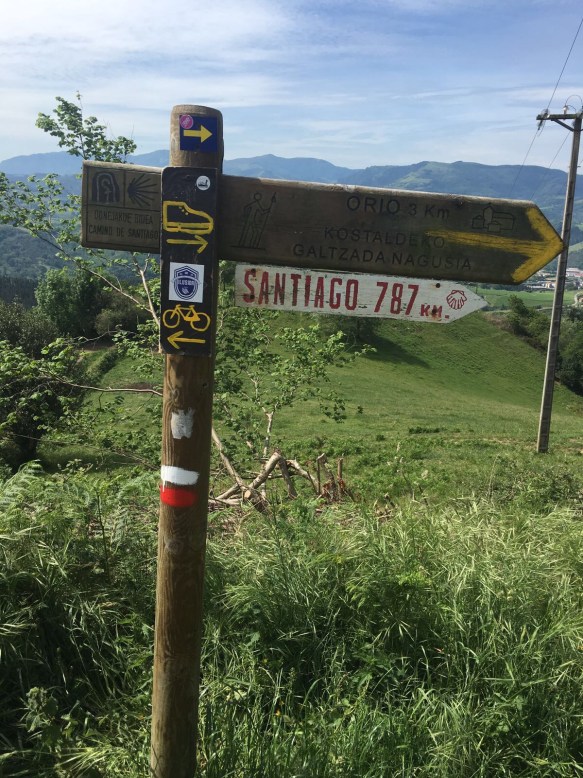
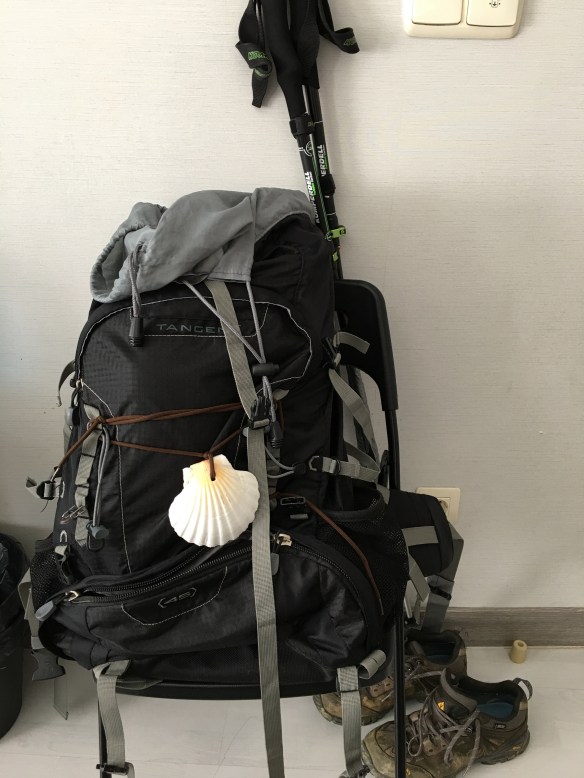
Before I took my first steps on the Camino de Santiago pilgrimage a couple of years ago, I first had to choose my shell—the symbol for St James the Apostle. Along the roadways and paths of the 800-kilometre trek across the Iberian Peninsula in northern Spain you can tell a pilgrim by the shell they have attached to their backpacks.

IMG_5341

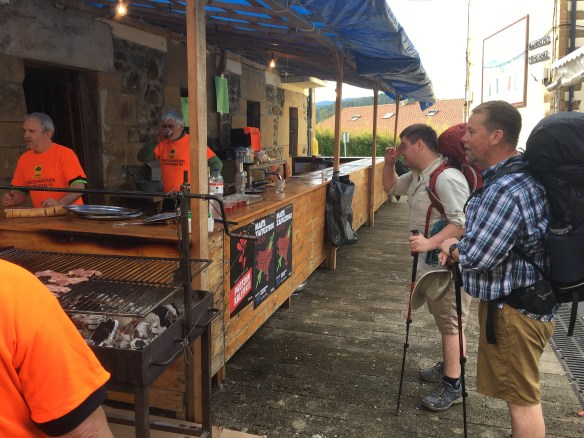
Wearing the shell attracted attention, often very positive. The group with whom I was walking came through a small suburb of the city of Guernica one Sunday morning. When we walked into the town square, we soon realized we were at the finish line of a marathon fundraiser for a local, special needs school.

There, some of the locals had set up large barbecues where they were grilling all sorts of meats for the marathon runners to enjoy after their race. We entered the square moments before the first runners crossed the finish line. But those preparing the barbecue called us over and without even asking our names or who we were offered us some of the delectable meats.

IMG_5308

When we expressed our gratitude, they asked us to say a prayer for them at the destination of our pilgrimage: the shrine in the city of Santiago, Spain—still some 700 kilometres away. I promised them I would.

IMG_5385

As you know, I didn’t make it to Santiago, falling ill to pneumonia and coming home early after only a couple of weeks on the trail. I remember struggling with my ‘failure’ to achieve my spiritual and physical goals. For one thing, I wasn’t able to offer a prayer in Santiago for those good people from Guernica who asked me to.

Was it worth it? Did my truncated pilgrimage do any good? Or, was the love and generosity those locals showed us and our receiving their gifts graciously, enough?

On Ash Wednesday, we begin a journey. And at the beginning of this journey, we are given a mark—not a shell, but the sign of the cross on our foreheads. It is a public act, a public ‘coming out’ if you will. By this mark the world will know we are Christians.

I hope you will wear your mark home tonight, wherever you go and whatever you still have to do—keep it visible. And see what happens. You might be invited into some meaningful, enriching conversations along the way. Some might even ask you to pray for them.

Go into the closet where no one can see you, instructs Jesus.[1]And pray to your Father in heaven who hears you, and will reward you for your faithful act. But even when we think our faith fails us? Or only for its visible success? Or only if we achieve our goals?

Arnold Lobel, author of his children’s book called The Frog and Toad Treasury describes the relationship of two friends and how they pass time together, explore the world together and support one another.

In one chapter, the action takes place in October. The leaves are falling. Frog decides to go to Toad’s house, secretly, and rake his leaves for him. “I will rake all the leaves that have fallen on his lawn. Toad will be surprised,” Frog says.

Now, his friend Toad has the same idea. Both manage to arrive at the home of the other unseen, ascertain that no one is home, rake the leaves, and return to their own houses unnoticed. On their respective ways home, however, a wind comes.

The wind blows and blows. The piles of leaves do too, so that the leaves are scattered everywhere. At the end of the day, neither Frog nor Toad realizes what the other has done, because both return home to leaves strewn across their yards. Both pledge to rake their own leaves the next day. Nevertheless, that night Frog and Toad are both happy when they each turned out the light and went to bed.[2]

What is more important: Our good intentions and motivation? Or, the outcome of our actions. Being authentic matters more than the results of our actions. The Gospel is not about the consequences, good or bad, of our good or bad intentions. The Gospel is not about achieving results and being rewarded for our good work, even with righteous motivation. In the end, the Gospel does not leave us stuck (and perplexed!) in self-centred piety, it points to what God is all about.

Normally when we hear the words of Jesus: “the kingdom of heaven is like …”[3]when someone does so and so, we think of the job we must do to enter that kingdom. And so, we imagine and want to be like that religious person, attending to ritual and prayer and acts of charity and justice our whole life long; the more we can do, the better.

Not that we don’t do anything or don’t keep trying. But we cannot ignore from these words of Jesus what Godis all about. I consider those scriptures about the kingdom of heaven as describing the character of God: A God who treasures each of us. And will stop at nothing to find us. And give up God’s very life on the cross—give up everything—in order to be with us and love us.

God is the one who sells all in order buy the field with the treasure buried in it. God is the merchant who sells everything in order to obtain the pearl of great value. Where God’s treasure is (God’s life, God’s mercy, God’s presence—in us), there God’s heart is also.

This is a fundamental message of Christianity. A message of One who comes into our life even in the messiness and despair of being human. Born a vulnerable baby to poor, teenage parents in a backwater town of Bethlehem. Living the life of a simple man from Nazareth, hanging out with fishers, tax collectors and prostitutes. Dying, even, the very humiliating death of a criminal, for all to see.

The message of Christianity is about a God who ‘sells it all’ in order to be with us, live in us and work in us, for the good.

God does all of this in order to know us, really know us. To love us. To grieve with us. To enjoy with us. To walk with us this often difficult journey that we undertake again this day.

And despite the difficult journey for which Lent is a metaphor, may the world in each step we take on the pilgrimage know we are Christians by our love.

And that’s enough.


[1]Matthew 6:1-6,16-21

[2]Cited in Lori Brandt Hale, David L. Bartlett & Barbara Brown Taylor, eds. Feasting on the Word: Preaching the Revised Common Lectionary Year C Vol 2 (Kentucky: WJK Press, 2009), p.23-24.

[3]from his later parables (or stories) describing the reign of God, specifically Matthew 13:44-45.

The change within

When seventeen-year-old Hannah said she was drug free, her parents were skeptical. Having participated in a rehab program and given all the support she could expect from friends and family, Hannah was able to declare that she was finding success in weaning herself off a destructive opioid dependence.

But her father was not convinced. When pressed, he simply confessed, “I don’t believe people can change. Once a drug addict, always a drug addict.”

Though fictional, Hannah and her parents’ situation poses a common predicament for many today. Not just of the real struggle with addiction. But also the struggle with belief: Do we change? And if so, how? And maybe more to the point: Do we recognize the change that happens in our lives? Do we want to?

There’s the story of the Zen Monk who was visiting Time’s Square in New York. And he wanted to buy a hotdog. The vendor asked him, “What would you like on your hotdog?”

The monk replied with a smile, “Make me one with everything.” So the vendor made the hotdog with ketchup, onions and lettuce and mustard and all these other nice things. And he gave it to the monk, and the monk gave the vendor a twenty-dollar bill.

And the vendor didn’t give him anything back. So the monk said, “What about my change?” And the vendor said, “The change is all within.”[1]

An underlying belief in Christianity is that people do change. The resurrection of Christ presents the ultimate pattern for life. We die. We live. We grow. We evolve. We are given new beginnings, to live again. Death. Resurrection. Life is dynamic, not static.

On this Transfiguration of our Lord Sunday, we encounter people who change. First and foremost, Jesus. He is bathed in uncreated light and to the onlookers his face radiates a changed appearance. His countenance is transformed before their very eyes. Here the gospel writers want to emphasize Jesus’ divine nature, his unique revelation as God’s own. The witnesses to this holy and amazing encounter receive the most wonderful gift of experiencing God’s greatness in Christ.[2]

At the same time, the transfigured Lord encounters us. In the scriptures for this Sunday we witness change in the characters of the bible, specifically Moses, Elijah and Paul.[3]They, and others in the bible, are not static beings, one-dimensional characters. We witness in them, rather, incredible change over the course of their lives and throughout history.

In other words, Jesus is not the only one who shows a divine-like appearance. Throughout scripture, there are others who experience within themselves a transfiguration.

Jesus is the first and foremost. But God’s divinity, though fully expressed in Jesus, is not confined to Jesus. God’s true presence is not limited to Jesus for Jesus’ sake alone. God’s fullness in all of creation is not locked in one specific time of history, two thousand years ago.

Martin Luther called it, the great, wonderful, holy “exchange”[4]. On the cross God experienced the fullness of our human sin in all its humiliating nakedness and vulnerability in order that all for whom Christ loved and died may eventually experience and grow into the fullness of divine life and union with God. This divine-human holy exchange is exemplified and mediated through Jesus.

We may balk at the notion that in our very lives, in each one of us, God is present in the living consciousness of Jesus. How can we be that good, eh? We are so used to imagining a separation there—that God is ‘out there’ reserved exclusively to doctrinal debate alone or in some other person upon whom we project all our hopes and dreams. But within me? In my heart? So that I can live differently, better, a changed person?

St. Paul, elsewhere in his first century writings expresses this truth from the start: In his letter to the Galatians, he says, “God revealed his Son in me”[5]. On the road to Damascus the living, post-resurrected Christ encountered Paul. Over one hundred times in all of his New Testament writings he writes this phrase: en Christo meaning ‘in Christ’. And to the Colossians, he confesses: “There is only Christ. He is everything and he is in everything.”[6]

The vendor’s response to the monk carries metaphoric weight. The change is within. A holy encounter with Jesus first changes us within. The change for the better can happen because God is in us. God works on our hearts. God is relentless. Sometimes it hurts. God is the refiner’s fire, creating and re-creating us from the inside-out.

So that, eventually, the light of Christ’s love may shine forth from our lives, and our union with God will be complete, in this world and the next.

Thanks be to God!

[1]Laurence Freeman, “Change is part of the Journey, like it or not”; talk 1 in Mount Oliveto Retreat, Maggiore Siena, Italy, June 18-25, 2016: Change (wccm.org, audio resources, album)

[2]Luke 9:28-43

[3]Exodus 34:29-35; 2 Corinthians 3:12—4:2

[4]“That is the mystery which is rich in divine grace to sinners: wherein by a wonderful exchange our sins are no longer ours but Christ’s and the righteousness of Christ not Christ’s but ours. He has emptied Himself of His righteousness that He might clothe us with it, and fill us with it.

And He has taken our evils upon Himself that He might deliver us from them… in the same manner as He grieved and suffered in our sins, and was confounded, in the same manner we rejoice and glory in His righteousness.”

–Martin Luther, Werke (Weimar, 1883), 5: 608.

[5]Chapter one, verse sixteen, as translated by the NIV and JB.

[6]Chapter three, verse 11. In the NRSV, the Greek is translated, “He is all and in all.”

funeral sermon in Advent: Faith in the Night

From the Gospel of John, the first chapter (v.5.9):

“The light shines in the darkness, and the darkness did not overcome it … The true light, which enlightens everyone, is coming into the world.”

These days, we walk in darkness.

December 6thwas the first day the sun set the earliest it will all year long—at 4:19pm. And that will be the case for another week before the days start getting longer again. Your beloved died at, literally, the darkest time of year.

And, so it is with your grief at this sudden loss. It is a dark time, indeed, that you journey these last days of a significant year in the life of your family.

At the end of the year. At the end of a life shared together. It is dark. And it is in the darkness that we must remain, for some time.

We may feel like love is lost at times like this. In the intensity of grief, the finality of death hits like sprinting into a brick wall. The familiar bonds are severed completely. And the prospect of a radically changed life, now, chill the heart with fear and uncertainty.

Where, O Love, is Thy soothing presence? Where, O Love, is Thy warming touch? Where, O Love, is Thy reassuring voice?

For Christians, this loss is symbolized by the cross. And in the cross we see a cruciform shape to reality: Loss precedes renewal; emptiness makes way for every new infilling; every change in the universe requires the surrendering of a previous ‘form’.[1]

At your loved one’s bedside on December 6, you described to me the image of wings of protection and love that your beloved offered in prayer and in spirt for his children and grandchildren. The image of wings of love surrounding his family is a tender one.

In the bible wings describe the loving and protective stance of God towards us. “I gathered you as a hen gathers her chicks under her wings” (2 Esdras 1:30). The Psalmist prays: “How precious is your steadfast love, O God! All people may take refuge in the shadow of your wings” (Psalm 36:7).

May the image of holding a bird demonstrate the kind of love we need now to express in this time of loss. They say that to hold a bird, you can’t hold it too tightly. When the chickadees fly into the palm of my hand when I feed them nuts and sunflower seeds, I cannot, dare not, clasp my hand into a fist.

I must keep my hands open. They say that to show true love you must be willing to let the object of your love go. They say that to love, one must let go. One cannot control true love, hold on to it tightly. To be sure, there are times in life when love calls for a tighter grip, especially when giving direct care to one in need, or guiding and parenting children. In these situations, yes, a firmer hold in love may be necessary.

But at other times, especially when dark times of the year come around which they do for all of us, love demands a different approach. People wonder, understandably so, why if God is Almighty and Benevolent, why God allows those dark times to even happen at all.

If God truly loves us, God will offer love freely and not demand it be returned. If God truly loves us, God will give us freedom. God will let us go. Not abandon us, because God is everywhere. But give us the freedom to love and to let go.

And, you know also the saying: What you let go in love, like giving a tiny bird freedom to fly away from your hand, will return to you in love. Perhaps not in exactly the way you expected. Perhaps not according to your timing. Yet, this is the nature of God’s grace and love: In letting go, we discover and experience the surprise of love’s return in some form, some day.

What else can be said about December 6th, besides the day your beloved died? December 6th, of course, is Saint Nicolas Day. If anything can be said about Saint Nicolas is that he was generous. Generous to the poor, to those in need. Your beloved was generous to you with his love. The gift of generosity is given on the day your beloved died.

How can we continue in the love freely given and freely received in the union of marriage and family that was severely disrupted on the day your loved one died? The symbolism of the day cannot go unnoticed, unrecognized. We can continue in the legacy of your beloved is leaving to us: to pay attention to the needs of the vulnerable, the children. To be generous with the gifts God has given us to share with those in need. This is an honorable expression of our love for your loved one. This is a worthy focus of our energies as we wander in this dark time of loss and grief.

Yes, “grief and anxiety has gripped us, and we are frightened by the future. Yet, even in these times, God is there. The good news is that Jesus always comes again. Every year, despite how hard things have been, Jesus is born into our lives anew. Death is never the final word”[2]– divine love comes and gives us life. Again.

May love be our guide through these dark days, and into the bright hope of a New Year.


[1]Richard Rohr, Daily Meditations (Center for Action and Contemplation,  www.cac.org) 7 December 2018)

[2]Lutherans Connect “Faith in the Night” DAY 7 (Lutheran Campus Ministry Toronto, 8 December 2018), lcfaithinthenight.blogspot.com

Impossible Questions: a sermon for Thanksgiving and Confirmation

In observing Jesus’ teaching style in this text (Matthew 6:24-34), indeed throughout the gospels, notice all the questions he asks.

Normally, you would think the student is the only one who asks questions of the teacher, not the other way around. Jesus, the Rabbi, or Teacher, asks questions to reinforce his point. In fact, Jesus is employing a technique he learned from the sages of Israel who came before him.

There are at least two kinds of questions employed by the wisdom writers of the Hebrew scriptures: The first, is the rhetorical type, the one with the obvious answer. The obvious answer is leading to either ‘yes’ or ‘no.’

For example, “Can one walk on hot coals without scorching one’s feet?” (Proverbs 6:28); “Does not wisdom call, and does not understanding raise her voice?” (Proverbs 8:1)? To answer these questions, you don’t need to study the night before.

Now, Jesus’ teachings include some rhetorical questions, such as: “Is there anyone among you who, if your child asks for bread, will give a stone?” (Matthew 7:9); “Is there anyone among you, who, if your child asks for a fish, will give a snake?” (Luke 11:11; Matthew 7:10); “Are grapes gathered from thorns, or figs from thistles?” (Matthew 7:16; Luke 6:44). No brainer, right? Either yes or no.

We have a large three-panelled window at the front of our house. Recently we placed my reading chair beside it so I can enjoy the natural lighting and look outside. Periodically a bird would hit one of the side panels with a loud ‘thump’ and we would jump each time a bird slammed into it, offering a prayer for the poor bird’s well-being.

One day we noticed a good-sized crack making its way from the top corner of the centre panel. And we called in the window-guy. As he was removing the large centre panel window, he asked for my help. It wasn’t easy getting it out of the frame. Even with the vinyl strips removed we needed to do a lot of jimmying to get that frame out.

“This panel was installed too tightly,” he mused. “That may be the cause of the problem. Windows need to have some give, some space to move. Otherwise when something hits it, it’ll break.”

Rhetorical questions are like that window that have no give. Today, rhetorical questions don’t get much traction in meaningful conversation let alone as an effective teaching method. Like the window too tightly installed, there’s no wiggle room. Laced with presumption, rhetorical questions are often used as cheap shots in a fight: “Do you think I was going to say anything in response to that stupid thing you did?” “Duh! Isn’t it obvious you should not have done that?”

Rhetorical questions are also not very helpful in dealing with crises. When someone struggles, asking them rhetorical questions presumes ‘they should know better.’ I remember sitting in a church assembly years ago when the bishop forbade the use of rhetorical questions in the debate we were having.

Given the trouble associated with this style of asking questions, you can breathe a sigh of relief because–maybe you’ve already noticed– rhetorical questioning isn’t the type of question used in today’s text. But, don’t breathe too easily just yet. Because Jesus’ distinctive voice comes through more clearly in his “impossible questions.”[1]

His impossible questions made him a subversive teacher who often undercut the comfortable assumptions of his audience. His teaching and use of questions were more in the style of Ecclesiastes and Job, rather than the sunnier outlook of Proverbs. Some examples of impossible questions we see in Ecclesiastes and Job:

“How can the wise die just like the fools?” (Eccl 2:16); “What do mortals get from all the toil and strain with which they toil under the sun?” (Eccl 2:22); “Where is the way of the dwelling of light, and where is the place of darkness?” (Job 38:19-20). Not so easy, these questions are, to answer. Even impossible, in light of reality for many people. Nothing neat and tidy about answers to these kinds of questions.

Impossible questions annoy and even anger people. Why? Because they make us scramble for answers and doubt our most basic assumptions. Who likes to do that? It’s easier to be fixed and unyielding with clear-cut proofs and rules. It’s easier to repel the questions with sure-fire answers. If we don’t yield or bend, however, we will crack under the pressure of our own doing and the challenges of life that come to us all.

  • “Can any of you by worrying add a single hour to your span of life?” (Matthew 6:27; Luke 9:25).
  • “What will it profit them to gain the whole world and forfeit their life?” (Matthew 16:26; Mark 8:36; Luke 9:25).
  • “Salt is good, but if salt has lost its taste, how can its saltiness be restored?” (Matthew 5:13; Mark 9:50; Luke 14:34).
  • “If you love those who love you what reward do you have?” (Matthew 5:46; Luke 6:32)

Indeed, Jesus uses sayings that conform to traditional wisdom like the beatitudes and proverbs. But he uses them not to resolve conflicts of life but to heighten them. He uses them not to preserve the status quo, but to push the hearer to questions one’s own values and assumptions.

Not a very popular technique. No wonder the authorities got nervous and eventually did away with Jesus.

Questions are indeed indicators that learning can happen. Of course, just because we ask questions, or questions are asked of us, doesn’t mean we will respond positively to them. Just because we ask questions to which are provided answers, rhetorical or otherwise, doesn’t mean we will take the next step forward, ourselves, with our growth, healing and transformation.

We will likely stumble out of the gate. And continue to stumble on the path of life. And sometimes get stuck in the mud. But just because we can’t fathom how to emerge from the shackles of our own humanity, our own failings, our own weaknesses, doesn’t mean all is lost. Doesn’t mean the journey is not worth taking.

Jesus stirs the pot. And continues to do so. But because he believes in us. Because Jesus believes in our growth, in our transformation. Because Jesus is anchored in his divine self, Jesus is free “to dive into a fully incarnate and diverse world—as it is. He can love this ordinary and broken world … and critique all false absolutes and idolatries at the same time.”[2]

Jesus nudges us and beckons us forward on the journey, refusing to abandon us when we get stuck. He goes ahead on the muddy path. In shine and shower, wind storm and in the calm stretches. And, on the way, can we learn to let go of the false absolutes and idolatries in our lives? Can we release our preoccupation with worry, for example, to hang on too tightly to the emotional securities of material wealth, which seems to be the message of the passage today? But I would extend this to worries about what awaits after  we let go of anything that we have held on too tightly in our lives?

Every time we worship and every time we say the Creed together, we are being confirmed in faith. We have a confirmation every Sunday! And the one being confirmed is YOU!

Yet, as I’ve tried to make clear to the confirmation classes year after year, just because you are saying ‘yes’ today, just because you are saying the words of affirmation of baptism printed on the sheet in your hands, just because you are standing up at the front of the church doesn’t mean:

  • You’ve got it all figured out
  • You have all the answers to all the questions of faith
  • You are finished on this journey of learning
  • You have nothing more to learn
  • You will now never again make any mistakes nor experience any hardship

You keep on keeping on, as they say, not because the church is perfect. Listen, if you haven’t figured that out yet let me emphasize again: the church is not perfect. The church will continue to be full of people who are far from perfect. You stay on the journey NOT because the church or its leaders are perfect and never make mistakes. Your faith and your participation in a life and journey of faith is not validated by the church to which you belong, but by the God who loves you and us despite all our failings.

If anything, what you are doing today is bearing witness to the need to keep on the journey. You are standing with the rest of us, calling for us to stay the course alongside you. By your witness today you are calling the rest of us not to stop asking questions. Not to stop doubting from time to time. Not to stop saying once in while, “Hey, wait a minute. I’m not sure I believe that. What’s that all about?” Not to stop looking up and asking for help from time to time. Not to give up, on the journey.

Your window of faith will last intact a lot longer when there continues to be ‘give’ around the frame of your beliefs.

Jesus suggests to us that knowing all the answers and not making mistakes is not the point of the faithful life. Rather, it is the imperfect yet faithful following on the journey that makes all the difference.

Despite all that is wrong, God is still there.

We stay on the path not because it is easy. But for those moments of grace. We do this for those moments of joy where we notice the pinpricks of light across the dark canvas of our world.

Where forgiveness melts cold hearts.

Where mercy triumphs over condemnation.

Where love embraces the weary traveller.

Thank you, God.


[1]Alyce Mckenzie, No Easy Answers: Reflections on Matthew 6:24-34 (patheos.com, February 21, 2011)

[2]Richard Rohr, Daily Meditation,3 October 2018 (www.cac.org/Meditations@cac.org)

A New Way to Pray: Tracking the Trajectory of the Reformation

What follows are the lecture notes for Week Three in the course I am giving at the Ottawa School of Theology and Spirituality (www.osts.ca) this Fall. Reformation Sunday is on the last Sunday in October, October 28, 2018. It is a time for Lutherans and all Christians to reflect on the legacy of Reformation, commemorate its contributions, and to pray for unity among all who try to follow in the Way of Christ Jesus today.

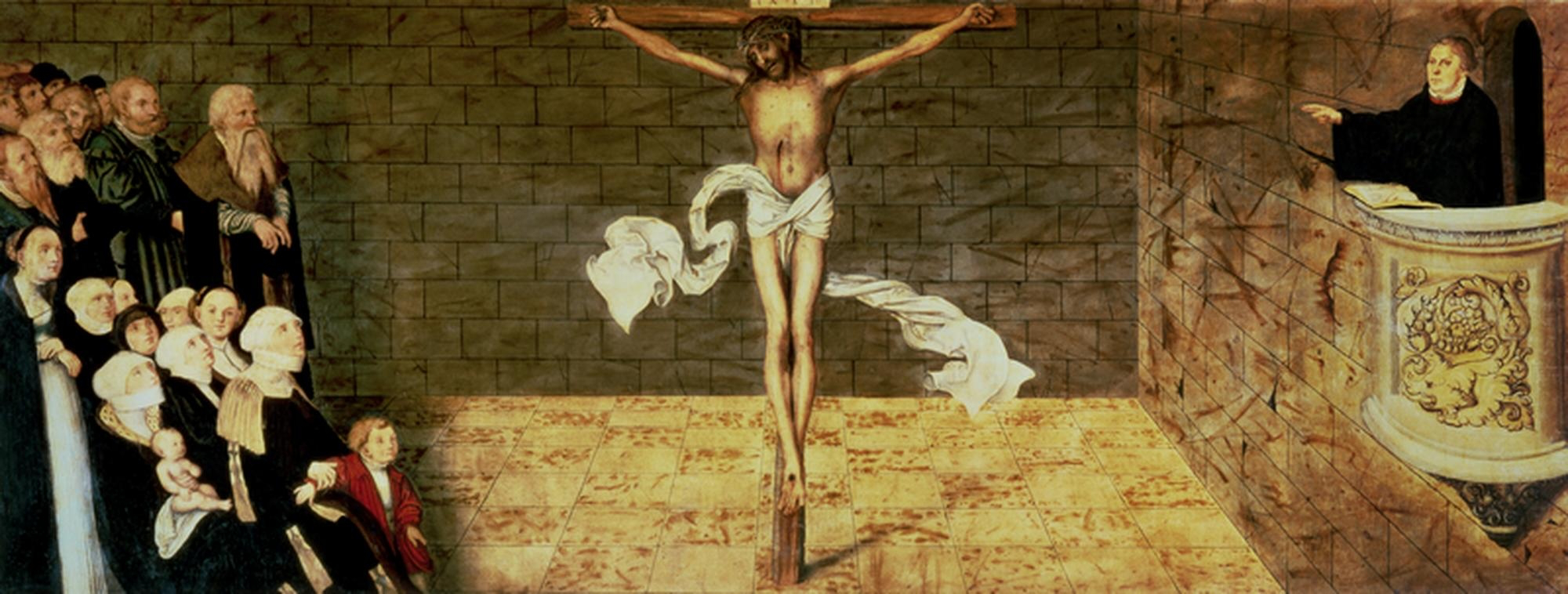
Lucas Cranach was a Renaissance painter and printmaker in woodcut and engraving. He was a friend of Martin Luther and his wife Katharine von Bora. In one of his paintings (1547) focusing on the Cross of Christ, Cranach depicts Martin Luther preaching to the congregation. I remember this particular painting vividly as it hung above the bookshelf in my house growing up.

image.png

It shows Martin Luther standing in a pulpit perched high on the wall of the chancel at the front of the medieval church. One of Martin Luther’s hands rests on the bible. And he points with his other hand to a cross with Jesus hanging bloodied bruised planted in the floor space between Luther and the crowd gathered in the church. Jesus hanging on the cross forms the center of this work of art.

Today this painting comprises one of the plates surrounding the altar in the Wittenberg church where Luther preached. As such, we often recognize and associate this painting with the ‘Reformation altar’.

Its prominence in Lutheran history suggests how poignantly this painting describes Luther’s theological bias: The Cross stands at the center. And Christ crucified informs everything in the church and even our reading of the bible.

Before we can embrace deeper understanding of Martin Luther’s theological claim that we find salvation by God’s grace—which finds us— through faith, we must first encounter the centrality of the Cross in Luther’s thinking and prayer.

In the seminary that I attended[1], we used the term, “Theology of the Cross”. Martin Luther first coined the phrase in his Heidelberg Disputation written in 1518. A theology of the cross is a way of understanding and imagining God. Fundamentally, in addressing God, we need to ask the questions: What is my image of God? Where is God primarily revealed? How is God best known?

Luther provided an answer: God was, and is, being revealed to us in all truth most clearly and unequivocally in suffering. In the vulnerability and pain of death on the cross, Jesus revealed—and continues to—the God who suffers alongside us wherever there is pain and suffering in the world. It is no wonder, then, that the longest sections in each of the four Gospels in the New Testament are dedicated to the various passion narratives[2]of Jesus.

Therefore, the Cross is theologically vital not just to Luther but to the Apostle Paul (the central figure of the Acts of the Apostles and some of the earliest Christian writings and Epistles) who central theme is: “God’s power is shown in human weakness.”[3]

The Theology of the Cross is contrasted to a Theology of Glory. Especially today among spiritually materialistic cultures in the West, what has been coined ‘a prosperity gospel’ has grown in popularity. This theology of glory presumes God validates faith, and is only validated by, success, measures of progress and triumphal conquering over any weakness or adversary.

A prosperity gospel fueled by unbridled optimism avoids places of defeat, failure, vulnerability and weakness as having anything to do with divine identity or purpose. A theology of glory undermines real people and a God who is known in the darkest times and places of life. It compromises and even derides a common humanity and the losses we all endure.

Prayer, as I have said, is the act of letting go. If prayer begins with God, and our address of God, we must presume before all else who this God is, and how this God is revealed—in scripture, in tradition and in our own experience.

One of the first creeds that circulated among the earliest Christians is from a hymn imbedded in Paul’s letter to the Philippians 2:5-11. The poetry first describes the descent of God. This is the primary movement of God, and of faith: downward. The Almighty chose to enter the lower and lowest regions of human birth, life and death. Only after this primary downward movement can the rising out of the depths happen.

Theologians over the centuries have used the term kenosis, from this text in Philippians, to capture the primary movement of faith. It starts with Christ’s self-emptying and letting go of God’s pure, divine nature. In God’s humility, Jesus compromised a perfect divinity in order to take on the fullness of a human existence.

Our God is a God who lets go, releases, self-empties what has become part of the God-self. This calls for a descent of the soul which in the words of St John of the Cross entails, indeed, a ‘dark night’ of the soul. Prayer is not easy, in so much as it may very well be simple.

Prayer, in the words of Laurence Freeman, “… always involves us in the paradoxes of growth, the cycle of losing so that we can find and then of having to let go of what we have found.”[4]

Prayer is a continual process of detaching and dislodging from places of comfort, stability and strength. Prayer is a deconstructive process. It is disruptive. In prayer we begin first to detach our self from all that we are attached to, all that has defined our identity and lives, all our constructs—mental and material—that constitute the construction and containment of our ego. All of this, in prayer, is placed on the precipice of loss.

All is not lost, however. Because in action and contemplation prayer’s aim and understanding is the prayer of God and for the sake of the God of the Cross. “Prayer calls the active person to a life of interiority and soul discovery … by detaching from all the fruits of action and doing everything purely for the love of God.”[5]In letting go, we discover our true self in God which includes and transcends all that we have been and are becoming.

By kenosis we resolve the Lutheran paradox. Some complain that the grace of God is cheap, such as Dietrich Bonhoeffer last century who sacrificed his life for a greater cause of justice in the Nazi regime. He wrote a book entitled, “The Cost of Discipleship”. Bonhoeffer argued that the theology of the cross ought not lead the Christian to rest on their laurels and not do anything. Just because we are saved by grace and since Christ lost everything for everyone once and for all doesn’t mean there isn’t a point doing anything. There is a cost of discipleship.

In prayer, we move into response because prayer is not for our sake. When we pray, it is not my prayer or our prayer. Praying is like walking along a path on the banks of a fast-flowing river and frequently stepping into the water. The current is strong. It is moving in one direction. We immerse ourselves into presence, the presence of Christ. We fall into the river of prayer that continues, the prayer of the living, resurrected Jesus, whose destination is union with God.

It is in Christ’s name we pray, and for the sake of our God who chose to be revealed in the humility and defeat of the Cross, in the most desperate human condition possible: death. We step maybe timidly yet faithfully into the water, fast flowing towards the great hope of new love and life in God. 

Questions for reflection and discussion:

  1. When you pray, after considering your image of God, what is God doing? What is God’s purpose—a purpose that is consistent with that image of God? Construct your prayer by strengthening the connection between image and function. If God is revealed in human suffering, where does that suffering lead? If God is compassionate, why? If God is patient, for what purpose? If God forgives and heals, to what end? Practice making this relationship between image and function as clear as possible before you make any petition to God. And write down some examples of the connection you make between image and function of God, to share with others next time (See copies of “Prayers of the Day” in Evangelical Lutheran Worship for good examples of how short prayers can be constructed).
  2. What is one non-negotiable spiritual practice and/or belief you would hold onto, if everything else had to be take away? (Ask yourself this, after visiting a place of worship other than your own)
  3. If time was short, what is most important to you in the end? Have you had this crucial conversation with those closest to you? If not, why not?

[1]Martin Luther University College (formerly, Waterloo Lutheran Seminary)

[2]The last several chapters of Matthew, Mark, Luke and John describe in detail the last days of Jesus leading to his arrest, torture and death on the cross. These passion narratives form nearly half the total lengths of the Gospels.

[3]1 Corinthians 1-2

[4]Laurence Freeman, Christian Meditation Newsletter, June 2005.

[5]Richard Rohr, Daily Meditation, 17 August 2018