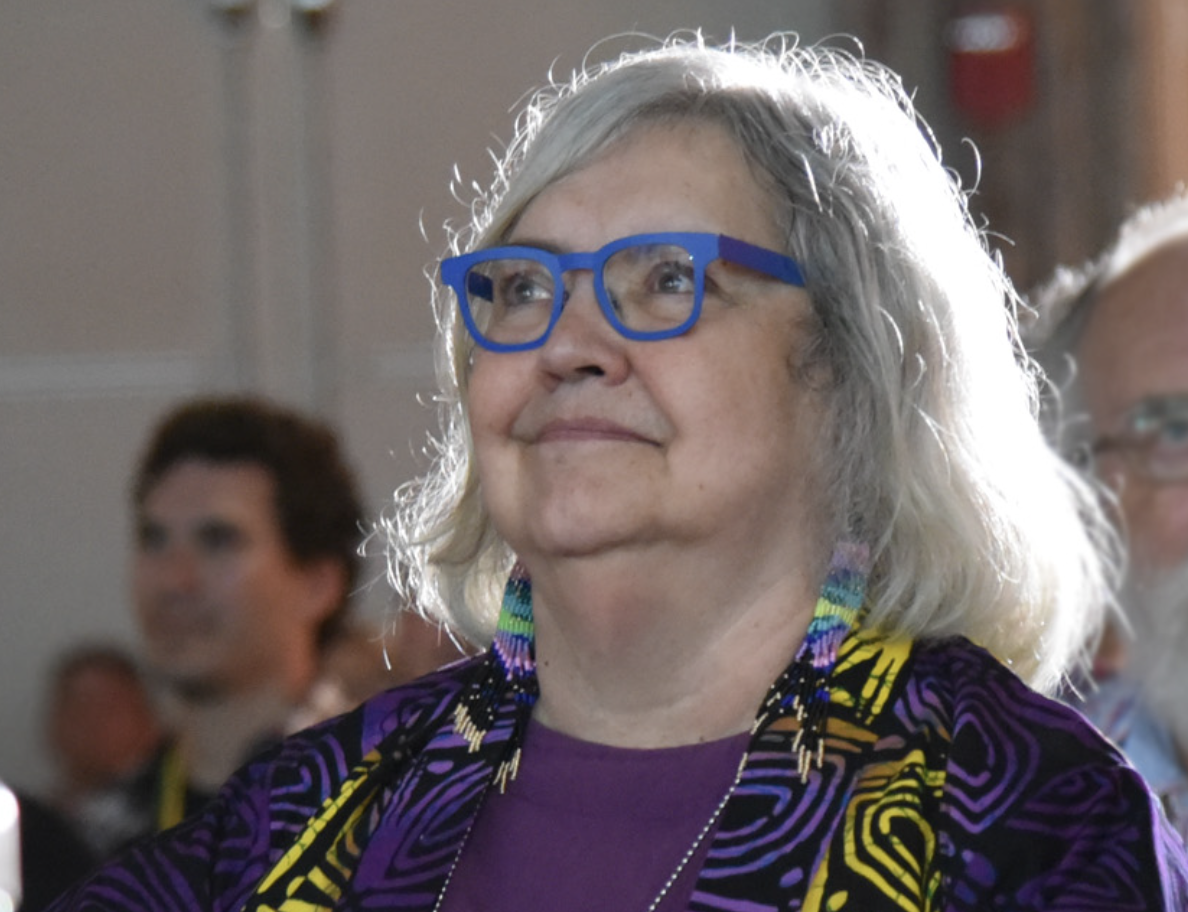
The two disciples, after recognizing Jesus is alive on the road to Emmaus, go and tell their friends right away. They are filled with joy. They didn’t even wait an hour (Luke 24:33) before rushing back to Jerusalem to tell the others the good news. They are filled with joy.
The Gospel story today involves two disciples remembering, conversing, encountering and experiencing the risen Christ. They have this amazing experience all because they went for a walk. Talking about their grief, externalizing their feelings, thoughts while moving their bodies helped in working out their faith story.
When my identical twin brother and I tell the stories of our childhood, I often now find a remarkable pattern. We may be speaking about the same event – a lakeside holiday, a kitchen table discussion, a school yard game. This sharing of memories often begins by one of us asking the other: “Do you remember, when …?”
Recently we reminisced about a family vacation to Florida over forty years ago when we were teenagers. Late one afternoon, we decided to walk all the way from Pompano Beach to Fort Lauderdale barefoot along the pristine beach on the Atlantic Ocean. We both remembered going on that walk together.
There are aspects of that memory we share. We both recall, at the outset of our hike, seeing the long pier jutting out into the Atlantic Ocean which marked our destination south of us. We both remembered how late we started that walk in the afternoon, not giving us enough time to return before darkness settled in. We had underestimated the time we needed.
But when we reminisce about this experience, there are parts of that story one of us does not recall. For example, I mention the fact that we had to dodge the many jellyfish that came up on the shore when the sun was setting and we had to be careful on our return hike where we stepped.
My brother has no recollection of those jellyfish. But he will mention the people we bumped into on the walk that we apparently knew from the area. I have no memory of seeing those people whatsoever. That aspect, that truth, does not stick. And just because I don’t remember that part doesn’t mean it didn’t happen.
Each of us have gaps in the story we tell, even though we both experienced and were talking about the same event we shared in our lives on that same day some forty years ago.
This story from my life tells me two things about how we live our Christian faith.
First, telling the story of faith is not something left to our own individual devices. Because there are gaps in our individual telling. Being a Christian is not a solitary enterprise. Being a believer is not justified within our own mindset. Otherwise, we are just emphasizing what we want to hear, like talking in an echo chamber. Alone we will miss important perspectives.
That’s why we journey together. Telling the story of faith is a shared enterprise. That’s why it’s important, in living out our faith in Christ, to proverbially walk with another and within a community of faith.
Jesus joined the disciples on the road to Emmaus to get them out of their heads and out of talking only about their individual perspectives from what happened in the past days. Jesus joined them to give them an experience of the living Lord in their time and place. We need to hold space in this time and place with others on the journey.
When Jesus is present with us, we are drawn out of our self-centred, individual and past-fixated mindsets to pay attention to what is happening now.
That is why, I believe, the writer Luke does not specify the name of the other disciple walking with Cleopas. That’s because the intent of the Gospel writer is to encourage readers and listeners to put themselves in the story, to make it relevant for each of us.
Which is the second take-away from my walk to Fort Lauderdale by the sea story. When my brother and I talk about that story from the past, it becomes real to us in the present. The conversations bring us a meaning and joy for today.
We remember Christ’s story not only to tell his story alone, but also our story, and the story of every human being. The story of Jesus’ suffering, death and resurrection tells not just of the deliverance, transformation and renewed life that happened back then to Jesus, but of the deliverance, transformation and renewed life we experience now and expect in our own future with the living Christ Jesus.
That’s why we engage these resurrection stories from the bible. The resurrection of Jesus didn’t happen just in that first-century community. In remembering, in re-telling, we know, and we trust that it is happening now and that it will happen again and again (Beaumont, 2019, p. 97).
When we travel with others on the journey of faith, sharing our stories and filling in the gaps of the narrative of faith; and, when we appreciate that new life happens every day, this brings us great joy.
Unlike happiness, joy can live alongside sadness, boredom, fear, or despair. Joy expands our capacity to hold contradictions at the same time. And because we know joy we recover this strange yet steady confidence that life is still worth loving, even when it hurts.
So, resurrection happens every time we love someone even though they were not loving to us. Every time we decide to trust and begin again, even after repeated failures, we are resurrected. Every time we try to stop those negative thoughts that fuel our cynicism, we experience the Risen Christ. Resurrection is always possible now, because of the joy we have in the Risen Christ. Joy is one of the most powerful experiences we can have because it an emotion that can co-exist with our actual lives.
It is not joy instead of grief. It is joy with grief. It is truer than plain happiness. It is the deep assurance that the story is not finished, even when our lives feel painfully incomplete. Easter joy is the grace of being able to say: “This is hard, I am still waiting, and God is still good.” Not because everything has changed but because one day God promises everything will (Bowler, 2026, April 7).
We don’t have wait for death to experience resurrection (Rohr, 2026, April 10). We can begin resurrection today by living connected to God with one another, filling in the gaps of our own understanding, loving courageously, trusting boldly and living joyfully.
We are so fortunate to live in this part of the world when Easter coincides with springtime. I hope you are all getting outside more these days to see the earth begin to live again after months of winter and a very late Spring this year.
Waking up, getting up, and watching the sunrise during this season of Easter can be inspiring. Because, sure enough, the sun will rise tomorrow as it always does. It peaks over the horizon, when I watch it from our back deck, between two large white pine trees in the distance.
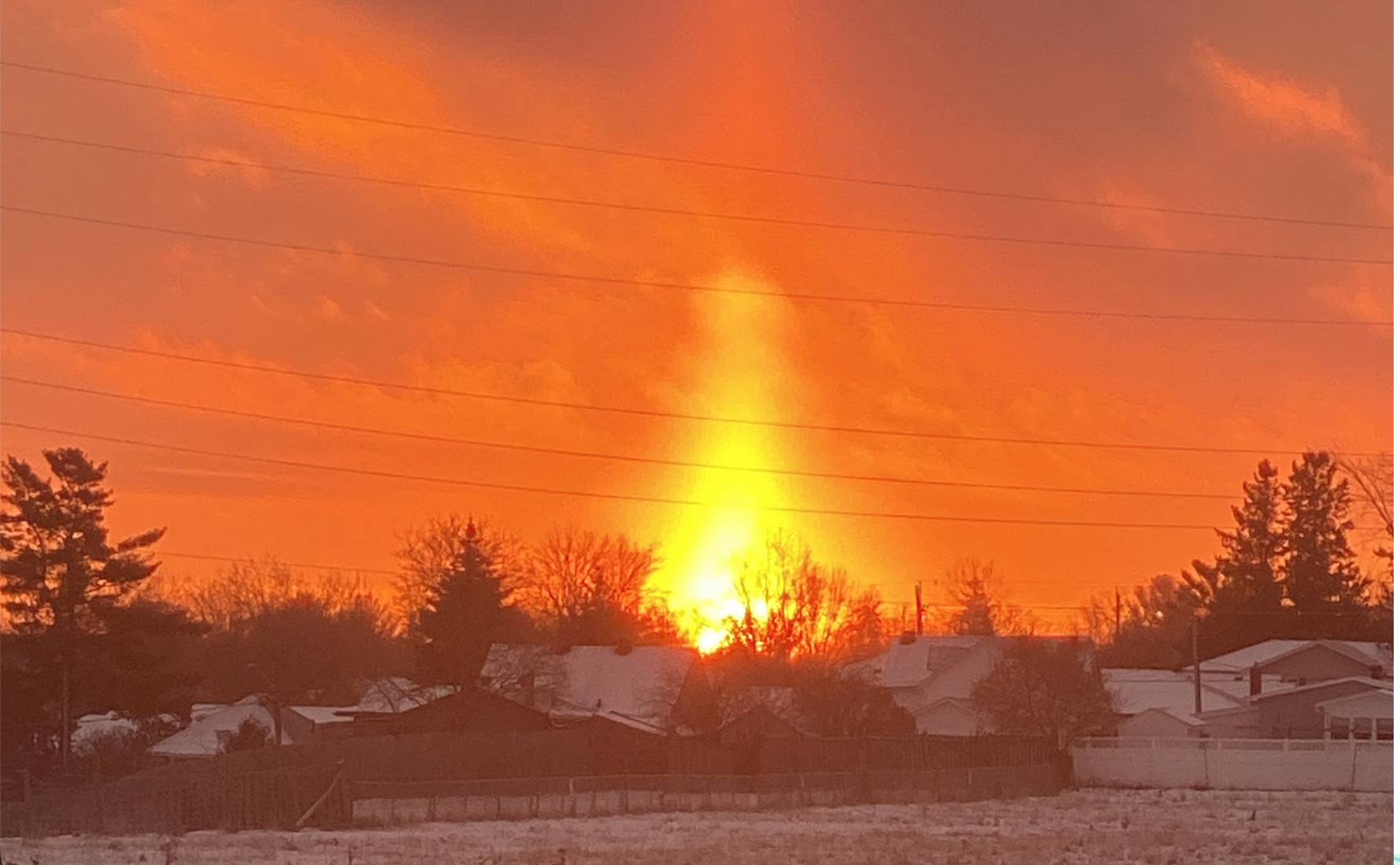
But it doesn’t appear so much like a sunrise but as a groundswell. It appears like the light comes from the earth. It comes from the world we live in. It comes not from the top, but from the bottom. It seems to say, that even all the world which looks muddy and material, even all of this, which looks so ordinary and dying, will be reborn.
Easter is the feast of joyful hope. This is the time of year we hear that God will have the last word and that this last word is resurrection. God will turn all that we mess up and hurt and punish into life and beauty (Rohr, 2026, April 5). Easter is the longest day of the year because it happens every day!
What joy!
References:
Beaumont, S. (2019). How to lead when you don’t know where you are going: Leading in a liminal season. Rowman & Littlefield.
Bowler, K. (2026, April 7). A different kind of joy. In R. Rohr’s Daily Meditations [Website]. https://cac.org/daily-meditations/a-different-kind-of-joy/
Rohr, R. (2026, April 10). Resurrection is possible now. Daily Meditations [Website]. https://cac.org/daily-meditations/resurrection-is-possible-now/
Rohr, R. (2026, April 5). The hope of resurrection. Daily Meditations [Website]. https://cac.org/daily-meditations/the-hope-of-resurrection/