A wintery spirit

IMG_6730

The winter of 2018 has been record-setting, so far. And we are barely one week into the new year! Did you know it was Ottawa’s coldest New Year’s Day since records began in 1873? At 8am on January 1st, the mercury dipped to a frigid minus 30.2 degrees Celsius (-22 Fahrenheit); New Year’s Day also marked Ottawa’s sixth consecutive day with temperatures below -17 degrees Celsius (1 Fahrenheit), which made it the longest run in exactly one hundred years.[1]

IMG_0223

A full onslaught of winter can help us appreciate the meaning of Christianity. Though much of the bible’s stories and lessons were wrought out of the harsh desert climate surrounding the Mediterranean and Arabian seas, the winter realities we face in Canada are not that much different. I suggest, then, let’s take desert and winter as synonymous – meaning, essentially, the same things.

IMG_3529

American Lutheran theologian, Martin Marty, describes the importance of what he calls a “wintery spirituality”, defined by the shrill cry of absence, frost, and death. In contrast to a summer spirituality, winter is more given to being emptied than being filled. Winter is harsh and lean in imagery, beggarly in its gifts of grace and love.[2]

IMG_3524

Of course, Jesus goes into the Judean wilderness to be baptized in the Jordan River. And right after his baptism, he spends forty days and nights in the desert.[3] The desert is not a comfortable place to be. For one thing, it makes scarce and even denies the basic need for our survival – water. A desert is an arid region where annual rainfall remains miniscule. Some deserts average only one centimetre a year, with parts of the Sahara not receiving a drop of rain for more than twenty years.[4]

The word and image of water appears in each of the Hebrew readings assigned for this festival day in the church calendar, and is tied to baptism in the readings from the New Testament.[5] More to the point, water is given out of the chaotic void in the creation story, and in the arid wilderness as a gift and a grace. Water is thus a sign of God’s love amid the harsh winter or desert realities of our lives.

The prophets of old affirm that it is precisely in the desert where God expresses God’s love to the people. The grace of God cannot be received outside of winter. “Thus says the Lord: The people who found grace in the wilderness … I have loved you with an everlasting love …. I remember your love, how you followed me in the wilderness.”[6]

How, then, can we appreciate and even thrive, living out of this truth? How can we follow Jesus in his way? After all, the Baptism of our Lord is about Jesus beginning the journey to fulfill his God-given purpose in life. How he does it is of particular importance to us, if we are interested in following Jesus in our life-style.

Listen to a story first told by a nineteenth-century teacher, Awad Afifi the Tunisian, who drew his wisdom from the wide expanse of the North African desert:

A gentle rain fell on a high mountain in a distant land. The rain was at first hushed and quiet, trickling down granite slopes. Gradually it increased in strength, as rivulets of water rolled over rocks and down gnarled, twisted trees that grew there. The rain fell, as water must, without calculation. After all, water never has time to practice falling.

Soon, it was pouring, as swift currents of dark water flowed together into the beginnings of a stream. The brook made its way down the mountainside, through small stands of cypress trees and fields of lavender, and down cascading falls. It moved without effort, splashing over stones – learning that the stream interrupted by rocks is the one that sings most nobly. Finally, having left its heights in the distant mountain, the stream made its way to the edge of a great desert. Sand and rock stretched beyond seeing.

Having crossed every other barrier in its way, the stream fully expected to cross this as well. But as fast as its waves splashed into the desert, that fast did they disappear into the sand. Before long, the stream heard a voice whispering, as if coming from the desert itself, saying, “The wind crosses the desert, so can the stream.”

“Yes, but the wind can fly!” cried out the stream, still dashing itself into the desert sand.

“You’ll never get across that way,” the desert whispered. “You have to let the wind carry you.”

“But, how?” shouted the stream.

“You have to let the wind absorb you.”

The stream could not accept this, however. It didn’t want to lose its identity or abandon its own individuality. After all, if it gave itself to the winds, could it ever be sure of becoming a stream again?

The desert replied that the stream could continue its flowing, perhaps one day even producing a swamp there at the desert’s edge. But it would never cross the desert so long as it remained a stream.

The stream was silent for a long time, listening to distant echoes of memory, knowing parts of itself having been held before in the arms of the wind. From that long-forgotten place, it gradually recalled how water conquers only by yielding, by turning to steam in a natural cycle. From the depths of that silence, slowly the stream raised its vapours to the welcoming arms of the wind and was borne upward, carried easily on great white clouds over the wide desert waste.

Approaching distant mountains on the desert’s far side, the stream then began once again to fall as a light rain. At first it was hushed and quiet, trickling down granite slopes. Gradually it increased in strength, as rivulets rolled over the rocks and down the gnarled, twisted trees that grew there. The rain fell, as water must, without calculation. And soon it was pouring, as swift currents of dark water flowed together – yet again – into the headwaters of a new stream. [7]

Jesus instructs his followers to become the people they are called to be.[8] God is aware that our lives are like a journey through the desert. Or, as Canadians, we can say that our faith journey is not dissimilar from living through an Ottawa record-setting winter.

To thrive in this life is to see that this journey of becoming is not static. We are not called by Jesus to become mere swamp lands at the edge of the desert. Rather, the journey calls us to be vulnerable, to recognize what we may initially want to resist in us – like the stream that first struggled against yielding to the wind.

Our journey through life are journeys of vulnerability. Of taking little. Of trusting God. Of appreciating the value of small things. Of letting go into the Spirit wind of God. Then, we can, with the Psalmist see that, even in the wilderness, the Lord fulfills God’s promises and does indeed give strength to us and bless us with peace.[9]

IMG_3628

[1] Ottawa weather records, Twitter @YOW_Weather

[2] cited in Belden C. Lane, “The Solace of Fierce Landscapes: Exploring Desert and Mountain Spirituality” (New York: Oxford University Press, 1998), p.37

[3] Mark 1:12-13

[4] Belden C. Lane, ibid., p.38

[5] The Baptism of our Lord, Revised Common Lectionary Year B: Genesis 1:1-5, Psalm 29, Acts 19:1-7, Mark 1:4-11

[6] Jeremiah 31:3; 2:2

[7] as written by Belden C. Lane, ibid., p.20-21

[8] read the entire section from Matthew 10:5-42

[9] Psalm 29:11, NRSV
From Loss to Life

“I have learned to be content with whatever I have. I know what it is to have little … and of being in need. I can do all things through him who strengthens me.”

 -Paul, to the Philippians 4:11-13

One of the basic truisms of pilgrimage walking is that first-timers usually pack more than they need for the journey. The general rule is ten percent of your body weight. For most people, that means no more than fifteen to twenty pounds in your backpack.

IMG_5303

I read in one of the Camino de Santiago guidebooks, in preparation for my walk last summer, that for most first-time pilgrims five pounds in their pack is unnecessary; these items amount to five pounds of fear: that extra sweatshirt, pajama onesie, that tub of moisturizing cream or the proverbial electric hairdryer. It is not long on the journey before at least five pounds are left behind or mailed home.

IMG_5285

If we use the pilgrimage as a metaphor for life, then the pilgrim on the journey of life, to be true to the journey, needs to learn how to let go.

IMG_5243

When I began I thought I had it down to the bare minimum. Nevertheless, I was still anxious. Those first few days I worried about where I was going to sleep that night. Not knowing how far I would walk, and not wanting to put the stress of expectation by booking ahead, I had to go with the flow and improvise in the moment. Even though I found a place every night, I was still preoccupied, distracted and fretting. Perhaps I had put too much faith in what I carried.

IMG_6116

Before I knew it, I lost some of my belongings those first days on the path. The first night I left behind my head lamp. The second or third night – I don’t know which – I lost my very expensive self-inflating bed roll for underneath my sleeping bag.

If the story ended there, you might say I was in an unwanted, growing state of crisis. If the story ended there you might say my pilgrimage was headed towards disaster, defeat, loss and failure. If the story ended there, you might say that everything was falling apart in my journey, collapsing into the rubble heap of destruction.

But the story didn’t end there. And it doesn’t end there.

The truth is, as Richard Rohr explains it best, that “through loss, through crisis, through stress, limitation, we move to a better place in our lives.

“Physicists today would say that loss is not real. There is only transformation. The metaphor of the liquid world is that this element simply moves from liquid to solid to vapor and back again.

“It looks like a death, a loss, in each case. But, in fact, it’s a becoming. Now we recognize that Jesus was saying this all along. In Christianity, it was called the ‘Paschal Mystery’. It was a phrase used by Saint Augustine that in fact dying leads to resurrection. Jesus became the icon, the living image, of that mystery – that his crucified body transformed into the risen Christ. That they are both the same person.

“Creativity, newness of life, has a cost. And the cost is what always looks like death. But really isn’t. The cost is loss. Which is perceived as an enemy, or affliction, which always looks like what we don’t want. Somehow to embrace loss, spiritually speaking, is to achieve eternity. Death allows us to be united with what is real. But, of course, it only looks like death from our side. Apparently from the other side – we call it heaven, or eternal life – is in fact the really real.

“The really real is already beginning now. And that’s what we need to trust. That’s what we need to allow. Fourteenth century Italian theologian Catherine of Siena once said: ‘It’s heaven all the way to heaven; and, it’s hell all the way to hell.’ And the way to heaven begins in this world, all the way to heaven.

“To avoid all loss, to avoid all letting go, is to avoid transformation into union with God. If you spend your entire life avoiding ‘dying’, Jesus would say you never get there. It’s hell all the way to hell.

“‘Unless the grain of wheat dies, it remains just a grain of wheat. But if it dies, it bears much fruit.’[i] We now know that this phrase was used in the initiation rites of Asia Minor. Perhaps one of Jesus’ most enigmatic lines is: ‘You must lose your life in order to find your life; you must lose your life in order to gain your life.’[ii] And if you don’t let it go, you will never find it.”[iii]

This is what Paul is talking about when he says he can do all things in Christ who strengthens him. That is, he can also ‘let go’. Not only does he know what it is to have plenty. He can also lose.

Philippians 4:13 is a popular well-loved verse in the New Testament: “I can do all things through him who strengthens me.” It is often used to bolster self-confidence in accomplishing heroic goals and aspirations. It is often quoted on posters, billboards and bumper stickers to indicate a glory, success and prosperity gospel message of human achievement more reflective of current self-help pop psychology. It is also used to undergird impressive mission goals in the church.

Moreover, the first nine verses of this chapter – the famous “Rejoice always!” text – are read on their own, as unfortunately prescribed in the Revised Common Lectionary, without including verses 10-13 for context. And the context is Paul’s suffering and need and persecution.

He is rejoicing and expressing his confidence in living precisely because he has travelled through the valley of the shadow of death. Precisely because he has learned to let go. You can’t have resurrection without death. You can’t experience the joy of transformation without first feeling the pain of loss. You can’t do mission unless you have let go, done without, lost — in some fundamental, real way.

Later this month on Reformation Sunday when all ELCIC Lutherans in Ottawa will gather to worship together, we will sing together Martin Luther’s well-known hymn: “A Mighty Fortress is our God.” Frederick Hedge’s English translation is closer to the original German when in the last verse we sing: “Let goods and kindred go, this mortal life also.”[iv]

Here, we get a peek into an under-emphasized aspect of Luther’s theology which included the practice of letting go. Not only is salvation realized at the moment of our mortal death, it is something that begins in the midst of living. That is, during our life we the practice the art of dying – of letting go, of losing – as an essential experience in the way of salvation, of transformation.

When I realized I had lost my head lamp and bed roll several days later, a couple of things were happening within me:

First, it took a while for me to notice these losses. I didn’t notice my loss right away perhaps because I really didn’t need those things. Second, and maybe more significantly, I was less stressed the farther I journeyed along the Camino. I was relaxing more into the pilgrimage, even without what I had deemed essential kit when I began.

Some Christians in the West today make the mistake, I believe, of confusing loss of privilege with persecution. Wealthy, financially advantaged Christians say they are being persecuted by a politically correct movement to recognize other religions and different people in a growing multi-cultural and pluralistic society, something Luther could never have envisioned in his day.[v]

We are not being persecuted. Rather, we are being confronted with the prospect of losing our privileged place in society, a status that we have admittedly enjoyed for centuries in our country. What the real issue is, is whether we will resist and avoid this loss, or whether we will accept it.

What is ending in your life? What are you facing that deep down you know is a loss? What are the failures and defeats and suffering in your life? Where is there suffering in the lives of the vulnerable, the underprivileged, the poor?

Pay attention, and wake up. These may, in truth, be invitations. Invitations to enter the gate of loss and letting go. Invitations to let go and trust that through dying, it is heaven all the way to heaven.


[i] John 12:24

[ii] Matthew 16:25, Mark 8:35, Luke 9:24, John 12:25

[iii] Richard Rohr, “The Art of Letting Go: Living the Wisdom of Saint Francis” (Boulder Colorado: Sounds True Audio CD Learning Course, 2010), Session Three.

[iv] Evangelical Lutheran Worship (Minneapolis: Augsburg Fortress 2006), Hymn 505

[v] The Rev. Dr. Gordon Jensen, “Luther’s Legacy” in Canada Lutheran (Volume 32, Number 6, September 2017), p.10-14

Rooted in the earth, rising to the sun

Recently I have been reading about people’s experiences on the Camino de Santiago — the eight hundred kilometre walking pilgrimage through northern Spain. This walk has become more and more popular among Christians of all stripes over the past couple of decades. It seems Christians around the globe are finding the pilgrimage a good place to work through personal issues, find focus in life again and seek re-connection with God, the world and themselves.

This past week I met with one such pilgrim from Ottawa who goes at least once a year to walk some part of the Camino; in fact he is leaving today for Barcelona. I sought his experienced advice for some practical considerations for the trek. His first rule of thumb: Pack only ten percent of your body weight. For me, that would mean no more that 20 pounds in my back pack — of all that I would need for the thirty to forty day hike. Twenty pounds is not a lot!

His second rule of thumb: What you wear on your back, put only one in your pack. That’s all. For example, if you are wearing a t-shirt, pack only one other t-shirt in your back-pack. If you are wearing a pair of shorts, pack only one other pair of shorts. And so on.

He laughed when he told me that about four days in — some one hundred kilometres into the journey — you find bins and bins full of personal items people left behind. These pilgrims had realized, thankfully sooner than later, that they were simply carrying too much — stuff they didn’t really need (extra shirts, pants, sweaters, books, jackets, bed mats, blankets, etc.). A final rule of thumb from my friend: If you do take something extra, then you need to have a good reason for it besides, “I might need it.”

This discipline reflects the quality of being able to let go. It can be described as a total self-surrendering, a giving up. The term “Kenosis” has been used among Christians throughout the ages to connote this sense of releasing that which we normally feel we need to hold onto tightly.

Fourteenth century German theologian Meister Eckhart said, “God is not found in the soul by adding anything, but by a process of subtraction.” (1) In our consumer culture, religion and spirituality have very often become a matter of addition: earning points with God, attaining enlightenment, producing moral behaviour. In the ‘prosperity gospel’ so popular in North America, we often hear the message that Jesus approves of you when your material and financial wealth increases; the more you have, the more in favour you are in God’s eyes.

Yet authentic, Christian faith is not about getting, attaining, achieving, performing or succeeding. The solution is not just “work harder” or “get more” of something. Our culture and economy, indeed, is based on more and more. Whereas true faith suggests: less is more. Martin Luther’s theology of Justification by Grace through Faith suggests the very same: We cannot by our own efforts achieve anything worthy of God.

So, stop trying. In fact, start doing the opposite: Let go of your pretence to manage your life according to the creed: Bigger and More is Better. Let go of a paralyzing negative body image. Let go of the inner talk that is putting yourself down, that tells you you are no good. Let go of attitudes of hatred against people who are different from you. Let go of those material aspirations that tease you into a false sense of security. Let go of being paralyzed by fear.

Instead, focus on what is essential. Appreciate that you already have enough, all that you need. When Jesus gives instruction in the Gospel text for today (Luke 14:25-33) he is travelling out on a public road, on his pilgrimage to the Cross. Remember, ever since Luke 9:51, he is already on the way to Jerusalem, his final destination. When Jesus is walking towards his death and resurrection in Jerusalem, he offers what sounds rather harsh to our ears. What is called-for here is a ‘single-mindedness’ that is needed when you travel with Jesus.

Discipleship is about being single-minded about the purpose, the goal and the mission of Jesus in the world. It is about prioritizing what is important to life in the public realm where culture, consumerism and a whole host of other distractions can keep us from this focus.

This single-mindedness demands that we think ahead, and anticipate the cost of our journey. Setting out on the road to follow Jesus requires at least a little forethought and reflection. This journey is not a light matter. Sit down and think about it a bit. Reflect.

There is not only the blessing of the assets promised, but there are the liabilities, too. Discipleship is not just one more hobby or extra-curricular activity to add to a well-rounded, prosperous life. It is not merely “a matter of pure passion and abandon” (2).

Followers of Jesus should count the cost, but also realize this is not just about counting the cost of a church building renovation or a church fund-raising project. The cost of discipleship, as Dietrich Bonhoeffer first coined the term, is about prioritizing our whole lives, not just our “church” or “Sunday morning” lives.

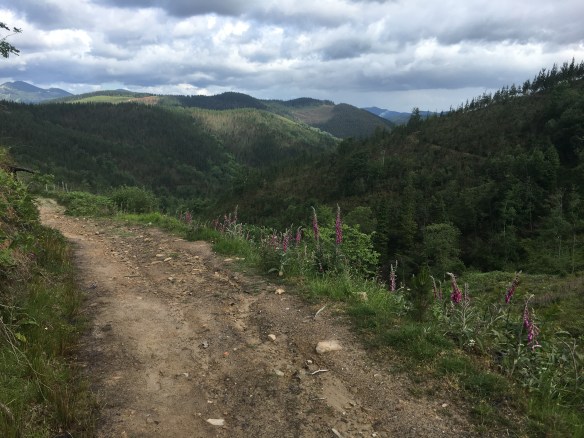
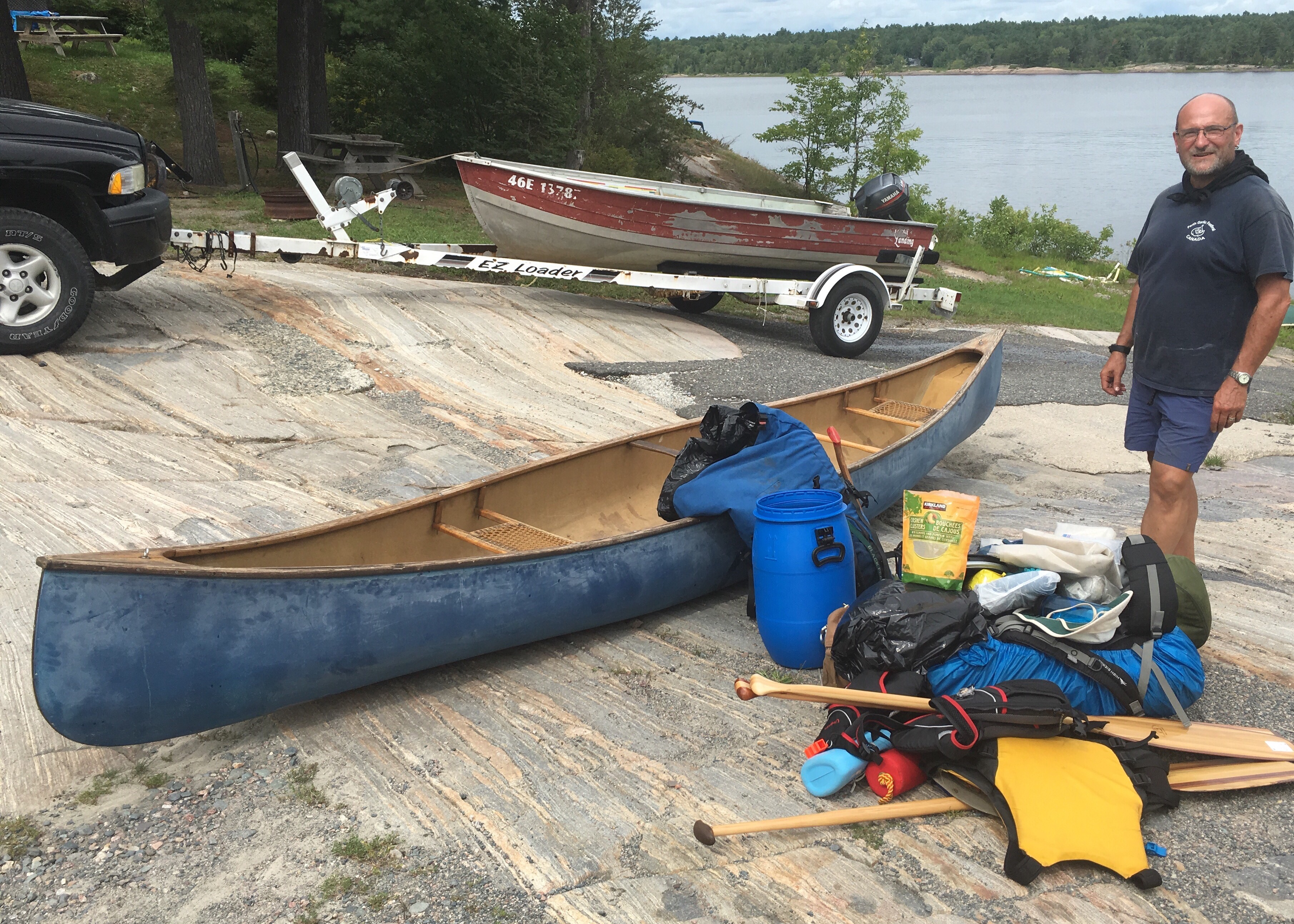
If someone told me a year ago that I would spend four days cut off from civilization, in the bush without cell-phone service, hauling all my food and everything I need to survive in a canoe that I would have to navigate through rapids and rocky, snake-infested portage routes — I would say they were dreaming … or talking about someone else.

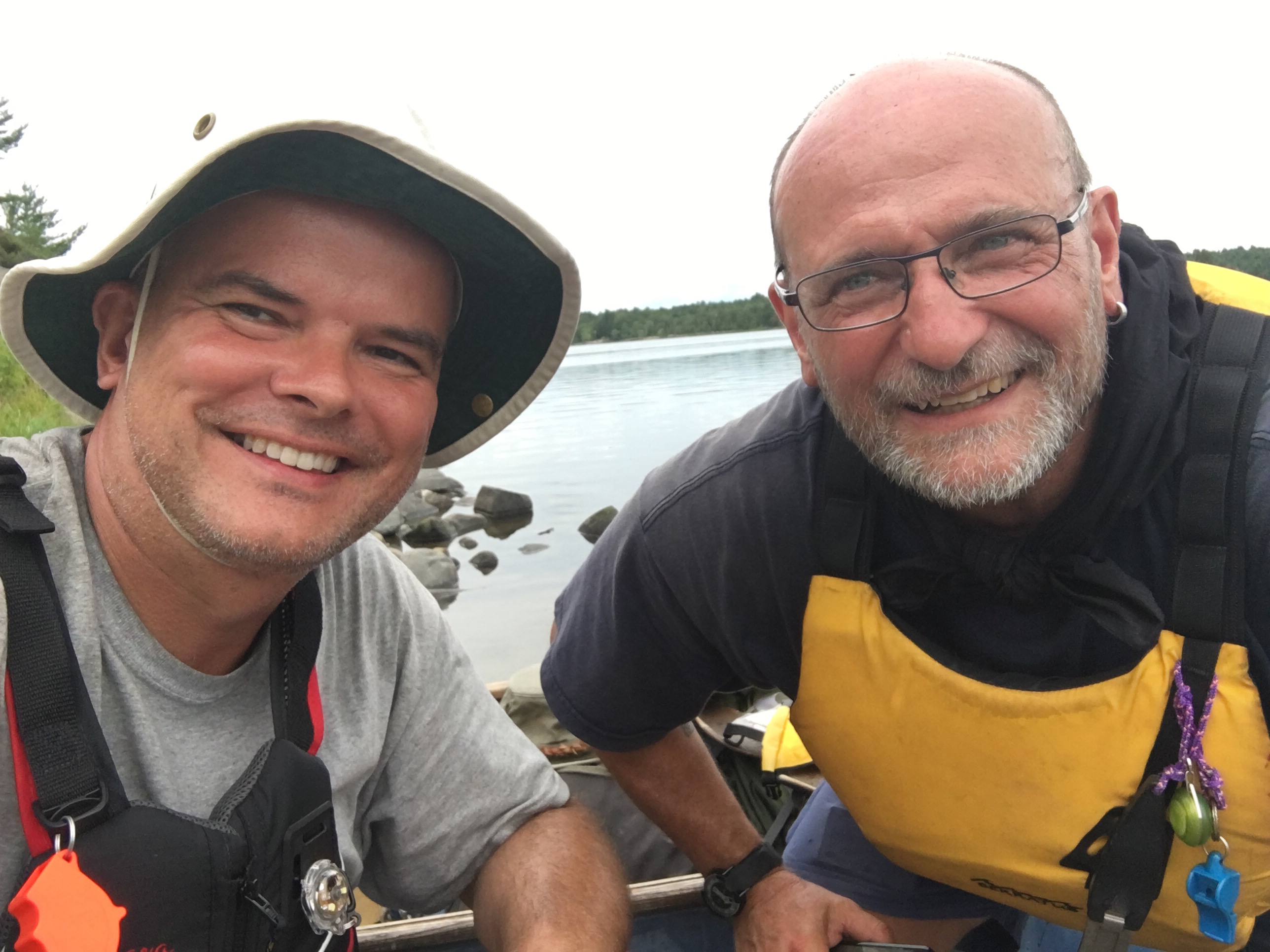
Well, that’s precisely what I did last week, along the French River Provincial Park between North Bay and Sudbury. Fortunately I was not alone; I journeyed with a more experienced wilderness survivalist. 

We ended up taking more than we needed. We could have packed less food, and less clothing. The exercise, nevertheless, was confident-building for me in realizing I really don’t need that much stuff.

Jesus says, “None of you can become my disciple if you do not give up all your possessions.”

To live life well, and faithfully, is to recognize one’s place in the world, and not to over-reach, over-extend, to be someone you are not — all on the basis of wanting more and more, bigger and better. To live faithfully, we are called to examine our dependencies, count the cost of it all, focus on what is important, and then make room in our lives for what is important by letting go.

A sojourn into the wilderness may indeed by the antidote to visions of self-aggrandizement embedded in the prosperity gospel message. Try doing without, for some time, what you may have taken for granted for too long. Try doing without what you always have believed you needed in order to live. Try Letting go. Releasing. Forgiving. 

This is not about doing away with personal boundaries. Letting go is not about condoning injustice or cruelty. Kenosis/letting go is not about being blind optimists, repressing or denying or not caring, or ‘giving up’ in frustration.

Forgiveness is a good example of letting go of the misery caused by holding on to the pain of resentment or holding a grudge. This kind of letting go brings a positivity that is based in honest struggle and prayer born out of compassion and love for self, the other, and God. The end result is a freedom and peace that cannot ever be realized through a program of simply working harder or getting more.

The German poet, Rainer Maria Rilke, wrote about the contrast between the law of gravity and the rising of the trees. He writes about the gift of letting go into a place of trust: Trusting that the gift in you is enough. So that you can rise up, rooted like trees: 

How surely gravity’s law,

strong as an ocean current,

takes hold of even the smallest thing

and pulls it toward the heart of the world.


Each thing —

each stone, blossom, child —

is held in place.

Only we, in our arrogance,

push out beyond what we each belong to

for some empty freedom.

If we surrendered

to earth’s intelligence

we could rise up rooted, like trees


Instead we entangle ourselves

in knots of our own making

and struggle, lonely and confused.

So, like children, we begin again

to learn from the things,

because they are in God’s heart;

they have never left God.

This is what the things can teach us:

to fall,

patiently to trust our heaviness.

Even a bird has to do that

before he can fly. (3)

In the poetry of scripture, the Psalmist describes beautifully the blessing we are, created in the image of God — so “wonderfully made” (Psalm 139:14). God would know intimately each part of our lives only if we were valuable to God and to the rest of creation. Otherwise, why would God care?

In other words, we are and have everything we need to enjoy and live to our fullest potential. We are beautiful. We don’t have to strive and strive to become someone we are not. We don’t have to ‘add’ anything to our lives to be well. In fact, when we have the courage to risk letting go, and “fall”, as Rilke poetically expresses, trusting in our “heaviness”, we will find a freedom and peace that will be the joy of all creation, and the glory of God.

We will live our lives at the same time rooted in the earth, and rising to the sun.

(1) Translated by J. Clark & J. Skinner, “Meister Eckhart: Selected Treatises & Sermons Translated from Latin and German with an Introduction and Notes”, Faber & Faber: 1958, p.194

(2) David Schnasa Jacobsen, Commentary on Luke 14:25-33 in “WorkingPreacher.org”, 2016

(3) Rainer Maria Rilke, “Rilke’s Book of Hours: Love Poems to God” translated by Anita Barrows and Joanna Macy, Riverhead Books: 1996, p.116-117; cited with permission in Richard Rohr’s Daily Meditation for August 28, 2016

The other side

In a Brazilian folk tale called, “The Little Cow”, a master of Wisdom was walking through the countryside with his apprentice. They came to a small disheveled hovel on a meagre piece of farmland. “See this poor family,” said the Master. “Go see if they will share with us their food.”

“But we have plenty,” said the apprentice.

“Do as I say.”

The obedient apprentice went to the home. The good farmer and his wife, surrounded by their seven children, came to the door. Their clothes were dirty and in tatters.
“Fair greetings,” said the apprentice. “My Master and I are sojourners and want for food. I’ve come to see if you have any to share.”
The farmer said, “We have little, but what we have we will share.” He walked away, then returned with a small piece of cheese and a crust of bread. “I am sorry, but we don’t have much.”

The apprentice did not want to take their food but did as he had been instructed. “Thank you. Your sacrifice is great.”
“Life is difficult,” the farmer said, “but we get by. And in spite of our poverty, we do have one great blessing.”

“What blessing is that?” asked the apprentice.

“We have a little cow. She provides us milk and cheese, which we eat or sell in the marketplace. It is not much but she provides enough for us to live on.”

The apprentice went back to the Master with the meagre rations and reported what he had learned about the farmer’s plight. The Master of Wisdom said, “I am pleased to hear of their generosity, but I am greatly sorrowed by their circumstance. Before we leave this place, I have one more task for you.”
“Speak, Master.”

“Return to the hovel and bring back their cow.”

The apprentice did not know why, but he knew his Master to be merciful and wise and so he did as he was told. When he returned with the cow, he said to his Master, “I have done as you commanded. Now what is it that you would do with this cow?”
“See yonder cliffs? Take the cow to the highest crest and push her over.”
The apprentice was stunned. “But, Master …”

“Do as I say.”

The apprentice sorrowfully obeyed. When he had completed his task, the Master and his apprentice went on their way.

Over the next years, the apprentice grew in mercy and wisdom. But every time he thought back on the visit to the poor farmer’s family, he felt a pang of guilt. One day he decided to go back to the farmer and apologize for what he had done. But when he arrived at the farm, the small hovel was gone. Instead there was a large, fenced villa.

“Oh, no,” he cried. “The poor family who was here was driven out by my evil deed.” Determined to learn what had become of the family, he went to the villa and pounded on its great door. The door was answered by a servant. “I would like to speak to the master of the house,” he said.

“As you wish,” said the servant. A moment later the apprentice was greeted by a smiling, well-dressed man.
“How may I serve you?” the wealthy man asked.

“Pardon me, sir, but could you tell me what has become of the family who once lived on this land but is no more?”

“I do not know what you speak of,” the man replied. “My family has lived on this land for three generations.”

The apprentice looked at him quizzically. “Many years ago I walked through this valley, where I met a farmer and his seven children. But they were very poor and lived in a small hovel.”
“Oh,” the man said smiling, “that was my family. But my children have all grown now and have their own estates.”

The apprentice was astonished. “But you are no longer poor. What happened?”

“God works in mysterious ways,” the man said, smiling. “We had this little cow who provided us with the slimmest of necessities, enough to survive but little more. We suffered but expected no more from life. Then, one day, our little cow wandered off and fell over a cliff. We knew that we would be ruined without her, so we did everything we could to survive. Only then did we discover that we had greater power and abilities than we possibly imagined and never would have found as long as we relied on that cow. What a blessing from Heaven to have lost our little cow.” (1)

This story is not a prescription for how the church or society should treat economically disadvantaged, underprivileged people — by ignoring their plight and expecting them to pull themselves up by their own bootstraps. 

Instead, I offer this story as an allegory, a parable, of whatever it is in our lives that keeps us bound, that keeps us stuck. 

The cow, in the story, represents that which the farmer believed would help them survive in the big, bad world. And without it, they would be lost.

What is ‘the cow’ in your life? Whatever you believe you cannot live without. What keeps you bound, shackled in a sense? It may not appear or even be a bad thing. It can be the ‘best’ thing in your life, you will say! And that’s point of the fable.

The cow was the only thing, the best thing, the poor family had going. In our lives, it can be the relationship we have with our work. It can be a person. It can be some activity of our lives that we think we want and need. What is the ‘cow’ in your life — things to “let go ” of, either in church life or your personal lives, that would enable the freedom of God to operate?

Letting go of over-attachment to building? Property? Material riches? Some significant aspect of your financial portfolio?Clutching on to church programs and processes that have had their day, making room for something new?

It could even be your reputation, your status, or social position. Whatever it is …

If we should lose that, why would God want that for us? And when we do lose it, we may be angry at God for taking it away from us. We may shake our fists at God, walk away in disgust and anger, never to darken the door of a church again. We may be blind to the possibilities on the other side.

In the Gospel text today (Luke 8:26-39), Jesus travels to opposite side of Lake Galilee. He goes to what I will call ‘the other side’, where the people in the Gentile territory there respond to the miracle of exorcism with fear. The man they knew to be living on the outskirts of town, out of his mind, full of demons — now sat at the feet of Jesus “in his right mind” (v.35).             

Odd as it may sound, we often prefer the devil we know to the freedom we do not. We can take a false sense of security from the patterns of our lives we learned to cope with over the years. 

And we may fear what change — even change for health — may bring. Because that would mean losing that which we have grown accustomed, even cherished, for a long time. We keep ourselves from seeing the possibilities on the other side.

The truth of the Gospel of Jesus Christ reverses the fortunes of those in low estate. The “good news to the poor” which Jesus announces in his inaugural speech (4:18) becomes a reality in the healings and exorcisms that follow in Luke’s Gospel.

But this freedom and health does not come without major disruption in people’s lives. This is the part we like to dismiss in our “feel good”, “prosperity-gospel” driven culture of church in North America. 

Because to the people whose living depended on the pigs — those pigs who ran off the edge of a cliff to their deaths — their loss is catastrophic. The swineherds in the Gospel story are understandably afraid, too, even angry at Jesus. And despite the healing, they want Jesus to leave them (v.37).

The story demonstrates that the the Gospel brings upheaval and sets in motion powerful forces that will disrupt our lives. 

At first, the good news of Jesus will not seem good to everyone. At first, our economic and social lives are put on their heads. At first, we will experience pain and suffering. We will need to surrender that which has given us a sense of security in life. 

We cannot have Easter without “Good” Friday. The cross precedes the empty tomb. The way of salvation goes through suffering, not around it. We cannot avoid pain in our journey towards liberation, healing and salvation.

The good news is the promise that there is no darkness, no loss, no pit too deep that God will not go into, in order to carry us through to the other side.

(1) cited in Richard Paul Evans, “The Walk” Toronto: Simon & Schuster, 2010, p.285-288

Slo-mo prayer

Everyone’s happy for the extra time off in March. For those in school, children and teachers can enjoy some leisure and vacation time. Then, at the end of the month, comes the extra long, four-day weekend at a time when Spring and warmer weather brightens our days.

Indeed, the holy days are upon us. But it’s not really just party time. It looks like that on the surface or at the start: The singing of hosannas, palm branches waving, praising the coming of the Messiah into Jerusalem riding a … wait. A pony? Is this a joke?

Palm Sunday starts the final leg, so to speak, on our Lenten journey. And what seems on the surface like the start of a holiday (that is, to relax and enjoy some well-earned leisure and play) is in truth an invitation to go deeper and reflect not only on the good life, but to go underneath and look at our suffering and pain. In Christian language, we call it the crosses we bear.

It is time now to look at the big picture of our life without ignoring the present sometimes difficult reality. How can we do that?

This Holy Week we are invited to slow down. And take a deep breath. And be honest, with ourselves and the truth of our lives. Not to grovel in a depressive, morbid mire of self-hate. But to lift to the light everything that has been hidden, kept secret, denied, overlooked, suppressed in the shadows and dark recesses of our hearts. In the end, it can be cause of a deeper joy and freedom; at first, though, it can be distressing and anxious-filled.

The path of Jesus shows us the way through it all. Where Jesus goes and how he does it offers us a way to forgiveness, release and true happiness. But first we must bear our cross. As we slow down, we pray.

Pray. As Jesus, on the night of his arrest, commanded his sleepy disciples in the Garden of Gethsemane not once but twice: “Get up and pray, that you may not come into the time of trail” (Luke 22:40,46). Jesus not only shows us what to pray, but also how to pray.

I follow the Ottawa Senators NHL team on Instagram. And before every game they post a short video montage, lasting no more than 15 seconds or so, of the players getting ready for the big game.

What’s attractive about the video to me, is to see how they splice together several brief clips of various moves the players make on and off the ice: back-slapping a team mate, practising a slap shot, the goalie making a glove save, skating towards the puck, a pre-game ritual.

But what keeps my attention is where the editors choose to speed up and slow down a few of the segments. Strategically done in an appealing way, the montage goes back and forth between periodic slow-motion action clips and real-time moves.

The whole presentation is enhanced because the real time rapid action shots are interspersed with slow motion shots. In fact, because they slow down some of the action, I can appreciate and enjoy a particular move even more — for all the skill and intention it entails.

In other words, it’s not boring. Slowing down, from time to time, actually gives energy. Slowing down, from time to time, gives clarity, focus and meaning to the activity and the whole picture. Slowing down, from time to time, allows me to get a good look at what is actually happening in all that I do.

And that’s what we do when we pray as Jesus did. Throughout his life of ministry, Jesus moved around a lot in the region of Galilee — healing people and teaching them about God. He covered great distances by foot. He didn’t even have a home base. 

But as was his custom, even before suffering betrayal, arrest and branded a criminal to die a horrific death on the cross, Jesus slowed things down. He went to quiet places on a hillside, by himself usually, to pray.

The feeling I have every Palm Sunday is like I’m seeing a video montage of Jesus’ life, ministry, and Passion. Just short segments highlighted with the larger flow of the story. Certain shots are in real time, sometimes even sped up because we also see the cross on Palm Sunday. But then there are the segments that slow right down.

Jesus was already practised in the art of slowing down to pray, so that from the cross came two prayers that can not be rushed, denied, suppressed, hidden: There’s a prayer for forgiveness (“Father, forgive them; for they do not know what they are doing” – Luke 23:34) and a prayer of relinquishment/release (“Father, into your hands I commend my spirit” – Luke 23:46). (1)

Whom was Jesus forgiving? The disciples who deserted him, the Roman soldiers who killed him, the ruling religious elite who condemned him to death, yes. Was he forgiving us all forever, for all our sins? This is the Gospel.

Did they “know what they were doing”? Only in part. None of us knows the full extent of our sinning or the full harm we do. God’s forgiveness covers all.

In his prayer of relinquishment, Jesus offers to his Father – Abba – what he has been offering all along: his life into the hands of God who is ever faithful. Jesus quotes Psalm 31, an evening prayer which may very well have been the bedtime prayer for Hebrew children and their parents. It is the prayer of “letting go”.

And Jesus asks his disciples to do the same. So, we can say, especially bearing our own crosses: “O God, take my sticky fingers off the controls, and place my life and life of my loved ones in better hands than mine. In your hands.”

It’s in our nature not to want to slow down. It’s in our nature to go-go-go. Slowing down, being silent and still, forgiving and letting go, is especially difficult in our day and age when we are so used to being stimulated by rapid-fire activity, lots of noise, and when we have total control.

The irony is that our lives of activity and go-go-go will have even more effect should we also intersperse that activity with regular times of slowing down to pray as Jesus did.

It has always been a tradition for Christians to pray silently, to just be, in the presence of God. We pray without having to do a whole lot. And this reminds us that God is already with us, Jesus already loves us and is already doing stuff in the world — even before we do anything. The practice of prayer has given Christians through the centuries great energy and peace for life, even more so had they not made the time for prayer.

If someone would do a video montage of your life to date — reviewing all the things you have done, places you’ve visited, people you’ve been with — would it also include shots of you being silent, still, praying by yourself and with others?

I think that would make a really cool video!

(1) – H. Stephen Shoemaker in David L. Bartlett & Barbara Brown Taylor, eds “Preaching the Revised Common Lectionary: Feasting on the Word” Year C, Volume 2, WJK Press, Kentucky, 2009, p.183

Becoming the new

I spend a lot of time in the car. With over 30 years of driving experience, I pride myself in being a good driver who is well-prepared and always thinking ahead. 
Especially when it comes to fuelling the car. In fact, I have rarely ever let the gas gauge go much less than half full. Whenever I’ve noticed others pushing their car to the gas pump, I would secretly harbour disdain for them: “Stupid! Why would you even let yourself run out of fuel when you know you are running out of gas?!!! Plan ahead, idiot!” 
Others have loved to road trip with me because I am the one always thinking ahead, anticipating and watching out for where we could stop for cheap gas along the journey — I am the responsible car operator! 
Until this past week.
There are at least two ways to tell how much fuel you have: First, there is the traditional gauge with the little red needle that fluctuates between F for full and E for empty. In the new cars you can also toggle a button on your dash displaying how many kilometres you can still travel on the amount of gas you have. And it was this latter feature — this guidance system — that I chose to depend on in planning my road trip to Waterloo.
I filled up at Costco Monday morning and flipped the switch to show that I could travel 570 kilometres before I needed to refuel. According to Google Maps, the distance between Ottawa and where I was going in Kitchener was 528 kilometres. So, I concluded, I could make that trip on one tank of gas, especially since the gas station I was aiming for in Kitchener had the cheapest gas in the region. Sounds like a good plan, right? I wouldn’t have to stop. I could make better time. I wouldn’t have to pay the exorbitant gas prices along the 401.
As I travelled throughout the day I noticed the red needle make its slow but steady plunge towards the E. By the time I arrived in Cambridge (between Toronto and Kitchener) the trip counter showed I could still go 30 kilometres before I would run out of gas. Okay. But I was embroiled in one of those famous car parks along the 401. Happy to say, it didn’t take too long, even though by now the red needle was sitting on E. As I was flying along Highway 8 in Kitchener a handful of kilometres from the cheap gas station, the indicator still had me for 19 kilometres. My other eye kept looking at the red needle, which hadn’t moved at all still resting on empty.
I stopped at a red light very close to that gas station. I was still good for 19 kilometres. I looked around me and the other cars in the intersection waiting for the light to turn, feeling smug that everything was going smoothly according to my plan. Then, I looked down at the trip-counter, and to my horror it read: “0” kilometres left. How did it go suddenly from 19 to 0? I figured, I still had a few hundred metres to go. I would be running on fumes. And I just made it, without having to push my car to the pump. It was close!

It is vital to know which way of thinking, which guidance system, is informing our behaviour and the decisions we make. My decision to trust the trip counter instead of the fuel gauge made a difference in the way I experienced my journey.
What beliefs, what values, which guidance systems are informing the decisions you are making now in your life — especially in the midst of stress, loss, and increased anxiety? It’s important to step back and uncover this stuff.
What we do is based on beliefs that go deep. Often, like an iceberg, those beliefs are hidden, unacknowledged, under-the-surface — even though they constitute the main part, the main reason, for what we do. For the most part, we deal with what’s above the water line. This is where we operate most of the time. Without going underneath the surface, we end up leading shallow lives, simply reacting to what happens and going in circles.
I’ve quoted Albert Einstein before: “you can’t solve a problem with the same way of thinking that caused the problem in the first place.” 
Admittedly, this is how we normally have done things: we react, we knee-jerk, into similar, surface kinds of responses based on assumptions closer to the surface. We respond to a stupid remark by giving an equally stupid remark. When there is a disagreement, we jump into a relational food-fight to see who can yell louder — as if this is supposed somehow solve the problem. 
When I took history in public school, it was still during the Cold War; my teachers described the problem that the super-powers were caught in by calling it: “Mutually-Assured-Destruction” — the slippery slope to an unsustainable reality. How would it stop, when both sides stockpiled more and more nuclear weapons to show their enemy who was stronger? The anacronym for mutually-assured-destruction is true: It is MAD! It doesn’t lead us anywhere constructive. In fact, it is the path towards the demise of all that is.
Are we aware of the ordinary patterns of our thinking? If so, to begin with, we can give thanks. To a degree, those ways of thinking may have served us well throughout our lives, to a point. Without ditching them altogether, are we at the same time aware of deeper currents and other ways of approaching life’s challenges? I would hope so, because when life happens and we run low on gas, we have decisions to make. The question is: According to which way of thinking?
Paul concludes in the passage we read from his second letter to the Corinthian church: “We regard no one from a human [read, ‘ordinary’] point of view … So, if anyone is in Christ, there is a new creation: everything old has passed away; see, everything has become new!” (2 Corinthians 5:16-17)
How do we get to the ‘new’? I don’t believe we have to wait until we die, to get to the new. Someone wise once said, “The truth will set you free. But first it will make you miserable.” Whatever good, whatever new life we receive is necessarily preceded by some pain and what some have called: “necessary suffering.”
We resist this, quite naturally, in our personal lives and in the life of the church. And yet, the truth stares us in the face: No pain, no gain. You cannot circumnavigate grief, for example. You cannot trick life by avoiding conflict, another example. You cannot grow and mature without first letting go of something that is holding you back. All this causes some pain, yes. And on the other side of that suffering is the new creation.
This takes courage, resolve and determination to behave according to a different mind-set. “Be transformed by the renewing of your mind,” Paul writes to the Roman church (12:2). Renewing the mind involves taking some risk, responding differently from your usual pattern, stepping out of our comfort zones into places of discomfort. It may even feel like a momentary affliction. I had to experience the unexpected anxiety of trying another way of planning my road trips in order to learn something new, so that I am better equipped to plan for fuel stops along the way, next time I drive to Waterloo.
Talking about the new thing, wanting it will not make it happen. We first need to face the harder truth. Neale Donald Walsch writes: “Yearning for a new way will not produce it. Only ending the old way can do that. You cannot hold onto the old while declaring that you want something new. The old will defy the new; the old will deny the new; the old will decry the new. There is only one way to bring in the new. You must make room for it.” (nealedonaldwalsch.com) 
Making room will not guarantee anything. Making room will not make it happen. An yet, making room creates the space in our lives for grace. I think in the parable today (Mark 4:26-34), we can place ourselves in the role of the ‘someone’ who scatters the seed — the seed being the work we do and the hopes and dreams of our lives. You can call it, our work to surrender ourselves. 
We scatter the seed — our prayer for letting go for the good to come. We have to give it away. The results, the sprouting and growing, are beyond our doing. And then, the miracle happens. Then, the smallest seeds of our hearts become, with God’s work, something wonderful and great where even “the birds of the air can make nests in its shade.”

That’s what we can look forward to.

Step off the gas

It was -20c and the roadways were covered with snow and ice. And yet, I was feeling pretty proud of myself. Coming into the west-end near Stittsville, the Queensway/417 (the main expressway through the city of Ottawa) was empty. And it was mid-morning on a weekday!

I was powering it through! A little snowfall wasn’t going to impede me. I was going at my regular speed in the passing lane and was wondering why very few were venturing onto the highway. And then I saw a car had spun out, resting perpendicular to me at the side of the 417 in front of the Canadian Tire Centre. It had struck the guardrail. And a little further on I witnessed another car spinning out of control.

I decided to slow down, and tapped the brake. Surely my four-wheel drive will keep me in control. And then I felt the wheels begin to float underneath me. I stepped on the gas to try to get grip. But the fish-tailing was starting to feel like a swan dive! I was losing it!

You drivers out there, what would you do? Thankfully in that moment, I remembered what my drivers-ed teacher taught me thirty years ago: Step off the gas! I think we instinctively associate stepping on the gas with more control — in all circumstances; the more I give, the more I expend, the more I put myself out there — the better it’ll be.

But in this case, the solution was to let go and just keep the steering wheel pointed forward. And as soon as I let off the accelerator, the four wheels found purchase, and I was able to recover. It is a little bit counter-intuitive for us in our get’er done culture to divest ourselves of the belief that doing more about something will save us from whatever predicament we find ourselves in. Sometimes, in tough situations, we just have to let off the gas, a bit.

Isaiah writes to a people in exile. Some six hundred years before Jesus, the people of God were taken to a far away land, in Babylon, where for some generations they made it their home. They had to let go of things precious, people beloved, and a way of life they believed to be sacrosanct.

But Babylon was not home. Jerusalem was. And now, gone was their temple worship. Gone were the symbols, rituals and constant reminders of who they were and who the God of Abraham, Isaac and Jacob was. Gone was their culture, their social structures, their familiar communities.

And, in its place were foreign languages, foreign gods and strange customs. The Psalmist recalls the tragic sense of their exiled life, where they lamented, and mourned their loss: (Psalm 137:1-6)

By the rivers of Babylon—
there we sat down and there we wept
when we remembered Zion.
On the willows there
we hung up our harps.
For there our captors
asked us for songs,
and our tormentors asked for mirth, saying,
‘Sing us one of the songs of Zion!’
How could we sing the Lord’s song
in a foreign land?
If I forget you, O Jerusalem,
let my right hand wither!
Let my tongue cling to the roof of my mouth,
if I do not remember you,
if I do not set Jerusalem
above my highest joy.

To address this despair, Isaiah (40:21-31) offers some strategies for coping. First he holds in beautiful tension a paradox about God — two aspects of God over which theologians over the centuries have sparred: God is BOTH transcendent AND immanent. Not only is God up there “sitting above the circle of the earth (v.22), God also calls each part of creation “by name” (v.26).

Not only is God some far-away all powerful being, God is also personal, and calls to you by your name. God values what happens ‘on the ground’ in our ordinary lives. God’s love for us is revealed not only in the extraordinary, but especially in the ordinary lives of you and me. God cares.

Second, the prophet Isaiah encourages the people in exile not to forget their story, not to forget their history, not to forget what God had done for them in the past. Twice in this text the prophet asks the rhetorical questions: “Have you not heard? Have you not known? Has it not been told … ?” (v. 21&28). Of course they’ve heard! Of course they have been told! The problem is, they have forgotten.

A re-membering of their story — of God’s story with them — could strengthen their sense of identity, and bring forward to the present circumstances a hope that would see them through their loss. In other words, remembering for the future is an integral part of having faith in God.

Part of what it means to believe in God, is to believe in your story — and remember it! Remember what brought you to be where you are, today. Recall the most difficult times in your lives, and how God brought you through. Picture in your mind the people who where there, helping you cope and manage — friends, doctors, family, spouses, neighbours — people who came into your life at that lowest point and were like God’s angels to you.

Claim this story as your story of faith in a God who still makes good on God’s promises. The very fact that you are sitting in this room today is testimony enough to say: You survived! And not only did you survive — in many ways you thrived! And will so, again!

Not only do we remember who we are, we must remember who God is. God is in charge and whose thoughts and actions are way beyond our own capabilities (Isaiah 55:8-9). Therefore, our first job, especially when we are down-and-out, is to be patient. “Wait” is the direction from the prophet Isaiah. Just let off the gas a little bit. Saint Augustine wrote that ‘patience is the companion of wisdom’.

You might not need to do anything right now. What you really might need to do is nurture an inner life, an attitude, of watchful presence. Wait upon the Lord! — echoes throughout the poetry of the Hebrew scriptures (eg. from the Psalmist 27:16; 37) to a people yearning to renew their courage and trust. God is God; and we are not.

Waiting pays off for the people. King Cyrus of Persia (Isaiah 45) frees the exiles from Babylonian captivity — and the remnant of Israel finally returns to Jerusalem. Some 70 years they spent in captivity. Not all the people who left Jerusalem at the start of it saw the end of it. Many died in Babylon. But salvation is not individualistic. It is given to a people.

So, finally, Isaiah reminds us that just as it was for the Israelites in exile, our identity is in the larger collective. The narrative of our faith spans centuries. Our identity is corporate. As Christians, we call it “The Body of Christ” of which each of us is a member.

That means, even when we do not, individually, have a faith to stand up to the worst of the worst in life, even when our individual faith wanes from time to time, even when individually “I” have a hard time believing in God, “I” am not lost. There’s still a chance.

One of the downsides of an individualistic spiritual culture in which we live today, is to place unwarranted onus on ‘MY faith’ and ‘YOUR faith’ as the critical condition for ‘MY salvation’ or ‘YOUR salvation’. As if we are independent, autonomous beings. Many a death-bed confession — and this is common — involves anxiety about whether or not ‘my’ faith is strong enough, good enough. In those situations, especially, we need to be reminded that it is not ‘my’ faith or ‘your’ faith alone that will get you through this trial. It is the faith we share.

It is our faith together that helps us through the tough times. It’s not dependent on how good I am, or how strong my faith is. There is a people of God — “a cloud of witnesses” (Hebrews 12:1-2) — around me and you. There is a church, a community of faith — whose collective faith gets us through. This is the faith of our fathers and mothers, our predecessors, our forebears, the current saints in light, and the faith of those who will come after we are gone. I don’t think anyone would question that kind of faith. It is the collective, communion of saints in heaven and on earth praying for you, upholding you, during your personal exiles.

And, ultimately, it is the faithfulness of God that gets us through. Throughout the scriptures, salvation is described in this way: It is not we that have loved God, but that God has loved us (1 John 4:7-11). This is an integral, vital, part our story together. Let’s believe in it. And believe that God starts it all, and ends it all, for us.

For those who can’t stand doing nothing, who are frustrated by the notion of being patient and waiting, there may be something for you, in fact, to do: Practice. In all that you do, be mindful, aware and intentional in your prayer life. Because prayer is about letting go in time and space, and listening to God. Prayer is not about me, it’s about God.

I realize that part of what saved me on the highway this past week, was that I had practiced. I recall all those times that whenever I’m in an empty parking lot — even coming during the week into the church parking lot — I’ll have a little fun with it: I’ll spin around a bit — not recklessly doing donuts all over the place. But I’ll just get the car going enough to do a bit of fishtailing. I get the feel of it. So I know what I can do in a crisis.

Stepping off the gas in a spin out, works. And it takes a bit of practice.

Cultivating God’s imagination in us

Cartoons today are not like the cartoons I watched on TV when I was a kid. Back then, the story lines were straight forward, and characters behaved in ways that were expected. Even though their world was animated, it was easy to relate to the real world. If you ran off a cliff, like the coyote did chasing the road runner, you would pay the price and fall to your doom. Yes, these cartoons were funny and often the characters made mistakes — and that was entertaining.

But today, when I watch the Teletoon channel, it is crazy! More often than not the characters behave in ways that are unpredictable, excessive and even absurd. When you expect a certain consequence for a behaviour, the opposite happens! And this style gets kids laughing. This medium has little if no connection to the way people normally operate in the real world. It is meant to shock, and display the impossible rather than convey the probable.

At the same time, this is precisely the style of the story presented in our Gospel text today (Matthew 18:21-35). Yes, it is! Bear with me. Jesus tells a story in response to Peter’s question about how often should he forgive someone who has done him wrong.

Reading in between the lines, it’s as if Jesus answers Peter’s question with another rhetorical question: “How could you ask such a stupid question?” So Jesus tells an extreme, over-the-top parable to startle Peter into recognizing the absurdity of his assumptions and to call him to a new way of seeing and living (Charles Campbell in “Feasting on the Word” Year A Volume 4, p.71).

Jesus’ story is really excessive, when you think about it. First, Jesus says that we should forgive always, without limit, certainly more than seven times. And yet, the king in the story (who for some interpreters is analogous to God and therefore an example to us) — how many times does he forgive his slave? Just once! The king doesn’t give his slave a second chance, doesn’t forgive him more than once, even though that’s the moral of the story, right?

Then there is the matter of the ten thousand talents that the slave owes the king. In Greek, “ten thousand” and “talents” indicate the largest possible number; the amount is so absurd that in some early Greek manuscripts of this text reduced the number (Lewis Donelson, ibid.). There is no way that any slave would ever have ten thousand talents to begin with — otherwise he would not be a slave if he did. How could a slave even get to a position of owing that incredibly huge amount of money, and then pretend that he could pay it back in his lifetime. Absurd. We really can’t take this story too literally.

The rest of the parable continues in this vein: The slave who was forgiven this unimaginable debt load refuses to forgive the comparatively minuscule debt of another slave. He acts in an extreme way, seizing the debtor by the throat (v.28).

All in all this parable reads just like a modern-day cartoon. It’s excessive; it doesn’t follow the norms of social interaction — in Jesus’ day as much as in our own. We are left shaking our heads, “Ridiculous! Impossible! How could anyone do such a thing?”

But that’s the point. What we consider here is an imagination that is beyond earthly probabilities and rationalizations. The parable turns on us, as it surely did on Peter: How often should I forgive?” As the church, we should know better. For we know how much we have already been forgiven.

What we encounter in the Gospel text today is a Godly imagination that is presented in contradistinction to the world’s. Most of our lives operate according to probabilities and possibilities, measurable criteria, tit-for-tat, and certainties. Not so in God’s kingdom of grace. Mercy, forgiveness — these are undeserved, incalculable. Yet given.

How do we forgive? Rabbi Harold Kushner tells the story of a woman in his congregation who is a single mother, divorced, working to support herself and three young children. Since her husband walked out on them, every month, she says, it is a struggle to pay bills. She says, “I have to tell my kids we have no money to go to the movies while he’s living it up with his new wife in another state. How can you tell me to forgive him?”

The Rabbi answers, “I’m not asking you to forgive him because what he did was acceptable. It wasn’t; it was mean and selfish. I’m asking you to forgive because he doesn’t deserve the power to live in your head and turn you into a bitter angry woman. I’d like to see him out of your life emotionally as completely as he is out of it physically. But you keep holding on to him. You’re not hurting him by holding on to that resentment, but you’re hurting yourself.”

Presbyterian Minister, writer and retreat leader Marjorie Thompson gives a helpful definition of what it is to forgive. She writes: “To forgive is to make a conscious choice to release the person who has wounded us from the sentence of our judgement, however justified that judgment may be. It represents a choice to leave behind our resentment and desire for retribution, however fair such retribution may seem …

“Forgiveness involves excusing persons from the punitive consequences they deserve because of their behaviour. The behaviour remains condemned, but the offender is released from its effects as far as the forgiver is concerned. Forgiveness means the power of the original wound’s power to hold us trapped is broken.”

You’ve maybe heard the story of one prisoner of war, after being freed, who asked another, “Have you forgiven your captors yet?”
“I will never do that!” the second one answered.
“Then they still have you in prison, don’t they?” the first one replied. (These stories are recited in Charlotte Dudley Cleghorn, ibid., p.71-72)

The ability to forgive has more to do with ourselves than it has to do with the perpetrator of our wounds. This realization makes the impossible, possible; the improbable, probable. Holding on to resentment and a desire for revenge keeps us stuck in the false belief that somehow we can change the other person.

But perhaps who needs changing is ourselves! Peter got an earful from Jesus as Jesus held up a mirror to Peter when he asked the question, “How often should I forgive?”

We are not alone on this journey. Jesus talks about forgiveness in the context of the relationship of people in the church, among his disciples as they jostle for power and deal with in-house conflicts. We are not alone in this struggle to forgive our debtors. After all, the Body of Christ, the church, has a role to recognize the sin together, demand accountability together, and exercise forgiveness together. This takes time and it isn’t easy.

“Where two or three are gathered in my name, there I am among them,” said Jesus just before Peter’s question (Matthew 18:20). God surprises us, yes, even sometimes shocks and startles us with undeserved love and steadfast faithfulness. This is the imagination, the hope, and the longing that motivates us to keep on.

Of God’s forgiveness, we can be sure.

Your Word is true, on letting go

When I spent a year in Germany during my seminary days, I struggled in the first half of that year with feelings of being lost, without guidance, and without my usual supports in place. I was lonely: For the first time in my life, I wasn’t able to rely on my parents, and I didn’t have my twin brother close by to share a life experience. I felt depressed, rudderless, cut off, a ship floating aimlessly in the stormy ocean.

I was reminded of this turbulent time in my life after reading the Gospel text (Luke 21:5-19) for today. Jesus points to those external ‘structures’ in the lives of his disciples, structures that they have come to depend on for guidance, for a sense of purpose and identity – and tells them basically that they will crumble, that they will have to learn to do without the usual dependencies, that they will have to ‘lose’ these. They will be no more.

First, it’s the massive and impressive temple that Herod was building, adorned with decorations; the temple presented a glorious architectural masterpiece to the world. At the end of the text, Jesus mentions family – even those closest to us will be cut off from the path we are on. There is a profound losing that imbues this scripture today, not unlike what the Israelites had to experience when they were exiled from their land, their homes, their precious Jerusalem temple, some five hundred years before Christ. It is a pattern that is repeating again.

The first part in the path of faith – of true spirituality – is one of letting go, of releasing, of surrendering. If anyone has experienced even a margin of what that means, it’s never easy. It’s hard, especially when for most of your life you’ve placed so much energy and invested your emotions and stability in a building, a place, a person, a family – and then you have lose it.

Luke wrote this story in the Gospel some forty years after the life of Jesus. Remember, all of what we read in the Bible was for the longest time first shared by word of mouth – stories told to the community and from generation to generation. In the latter half of the first century A.D. these told stories about Jesus began to be written down in the form we see them today.

It’s important for me to mention this because Jesus’ prediction that the temple would be destroyed actually happened. In about 70 A.D. the Roman armies laid siege to Jerusalem to try to subdue the radical Jewish insurrection who were rebelling against Roman occupation of their land. The victorious Romans eventually toppled the impressive stone walls of the temple, leaving only what we see today – the famous western wall, or the “Wailing Wall”.

All this is to say, that Luke wrote these words of Jesus at a time when the rebellion was reaching its peak: “… the days will come when not one stone will be left upon another; all will be thrown down.” These written words carried extra emotional weight, it would seem to me, to those who first received them in the late first century. Because it was actually happening.

Early Christians were encouraged to trust Jesus, because what Jesus says is true! What Jesus promises will come to pass. This truth is consistent with the tradition of earlier scriptures, first echoed in the poetry emerging from the exile – “The grass withers, the flower fades – but the word of our God will stand forever” (Isaiah 40:7-8).

Though the path is full of suffering, one thing remains: the presence and purpose of God. This may give us a clue as to the meaning of Jesus’ closing words in the text: “By your endurance you will gain your souls.” Some translations have it, “by your patience”.

Since I opened with a personal story from my seminary days, I’ll bring here another story I heard from a seminary class studying ‘the end times’. For you to get this story, I need to remind you of how a liturgical church, such as ours, organizes our reading of the Bible. We follow a lectionary, which means that there are assigned readings not only for every Sunday of the year but for every day, even. You can find these assigned readings at the front of our worship books. The point is, after a three year cycle of following this ‘lectionary’, we will have basically read through the whole Bible.

So, these seminary students were engaged in a discussion of what Bible text they would choose if they had reason to believe that this was the Final Day. Some suggested John 3:16 – “For God so loved the world that he gave his only Son, so that whoever believes in him may not perish but have eternal life.” Others suggested Psalm 23 – “The Lord is my Shepherd, I shall not want, even though I walk through the darkest valley, I fear no evil …” Still others suggested the very last verses of the Bible from Revelation 22:20-21 – “The one who testifies to these things says, ‘Surely I am coming soon. Amen! Come, Lord Jesus (Maranatha). The grace of the Lord Jesus be with all the Saints. Amen!’”

But, the winning suggestion was – “I would preach on whatever Bible lesson was appointed as the Gospel for the day.”

A homeowner hired a gardener to plant a certain kind of tree. “But that kind of tree takes many years to mature,” the gardener protested. “Then get started with the planting,” the homeowner replied. “You do not have a moment to lose.”

If the first difficult part of the path of faith is surrendering, letting go, not identifying any longer with those structures on which we have come to depend heavily, the second part is the motivation to endure in the regular, daily task. It is full of promise, and new life.

Because those endings and beginnings in Christ are not our doing. We do not control our destiny, contrary to what so much of our culture preaches. We are called only to be faithful in our daily service, doing that which is set before us this day. We don’t know exactly how things will turn out. But we can take the risk and take the first step because we have the true promise of God:

Being aware of God’s faithfulness to us, being assured in the Word that what Jesus promises is true, we can be buoyed by a vibrant hope on the stormy ocean of life. We live every day as if it were the last, doing all that we can, doing the right thing, in the moment. And we cling to the assurance that God will not only do the rest, but much, much more!

In the last few months of my year abroad in Germany, I finally found my stride. Maybe it was because I knew ‘the end’ was coming; my time in Germany was coming to an end, and soon and very soon I would be returning home. Being aware of and confident in my returning home coming closer with each passing day, I was able to enjoy and fully enter each moment: I travelled with my friends, visited my families in Poland and Germany, breathed the air deeply, and went about finishing the tasks set before me.

In engaging my life fully, doing what I was called to do there – even though it wasn’t always easy – I now remember that time as one of those crucial, pivotal and cherished learning moments of my life. For, a true letting go yielded a wondrous new beginning.