One part per billion

I’m going into the Algonquin Park region this coming week. As you can see outside the church, I’ve already strapped my canoe atop the car. I’m looking forward!

And when I’m paddling, I like to follow the river or lake banks. Of course, where I’m going, there are lots of little lakes and rivers, and therefore many riverbanks and rocky shorelines I will skirt (probably still breaking the ice!).

We live in a world where borders and boundaries are important. Whether these are borders between nations, continents, cities, regions, communities, families or individuals, they mark the line between separate and distinct realities. Without honouring certain boundaries, we can fail to distinguish who we are and lose a sense of our identity and purpose.

Last summer when I travelled through Spain and Portugal, I learned that he Portuguese-Spanish border is the oldest, unchanged national border on continental Europe. This surprised me because that border did not appear natural. Not unlike the border between Canada and the United States in North America, the Spanish-Portuguese border draws a counterintuitive line across the more natural flow of the continent’s geography.

For example, to see it from space, the North American continent flows more north-south: The mountains run north-south on the western half of the continent, the prairie and plains in the centre of the continent, and the Great Lakes basin spilling into both the Mississippi and St Lawrence River valleys in the eastern portion of the continent. The geography suggests more natural north-south lines.

Spain and Portugal share what looks like a giant square mass of land peaking in the northwest on what is called the Iberian Peninsula. The Atlantic Ocean hugs the northern and western edges of this square. And the Mediterranean laps up against the eastern edge and into the southern Straits of Gibraltar separating Africa from Europe.

Despite what looks like it should be a unified whole, this large land mass is divided between two nations with Portugal carving its small section on the south-western shoreline.

When the kids were toddlers — and sometimes even to this day — they often lingered on the thresholds of doorways separating outdoors from indoors. Standing or sitting on the threshold meant that the door remained open. Of course, we parents were concerned about them jamming their thumbs and fingers and toes. So, we would yell at them: “In our out! Make up your mind!”

Borderlands, as we know from German history (the Berlin Wall) and between North and South Korea, can be dangerous places. We call the space in the border “no man’s land.” At best, these thresholds are ambivalent to us; at worst, they leave us uncomfortable, unsettled, fearful. We feel we can’t rest in these places.

I learned recently about what is called the ‘riparian zone’ which is the border between land and water. The riparian zone can be the lake or riverbank that is a marsh, or a rocky or sandy, thin strip of land, a hardwood forest or stand of pine on the edge of the river.

This ‘in-between’ place of the riparian zone fulfills three, vital, ecological functions: First, the riparian zone functions as a natural filter, cleaning ground water as it flows into the larger watershed. It also protects the surrounding soil from accelerated erosion by slowing down wash effect of the river. In the process, riparian zones actually create new soil and provides for new habitats.

A NASA scientist called the river and its marshy edges the ‘sine qua non’ of life; that is, where water and land touch, these edges are necessary for life on earth.[1]

So, we agree that boundaries are important. Borders, whether political, relational or ecological are vital.

But we also say that the grace of God knows no boundaries. We say that God’s love crosses and surpasses all boundaries. Jesus says, “Abide in my love.”[2]Paul wrote that “nothing can separate us from the love of God.”[3]God’s love expands and grows and overcomes all obstacles.

How does this happen? How can we, on the one hand, honour the boundaries in our lives and, on the other hand, live into the boundary-busting, wall-breaking, division-crossing, far-reaching, limitless, boundless reality of God’s love? How can God’s love abide in us when we are separated from God and each other by sin?

We are human, after all.

Imagine you are at the ocean, and you’re standing in the ocean ankle-deep. It’s true, you are only ankle deep. But it’s also true you are in the ocean. It’s also true that if you keep going, it will get plenty deep soon enough. If not in the ocean you are standing in, certainly at the deepest point on earth — the Marianas Trench — because all oceans on earth are connected anyway.

What if the infinite depth of the ocean gives the totality of its depths to your ankle-deep degree of realization of it?[4]

During the Easter season, and because of the resurrection of Jesus, the church says God is everywhere. But then, we also say God is really in your soul. And God is really, really in the church. You have to go in the church to save your soul. And, in the church, God is really, really, really in the Holy Communion. And, then, God is really, really, really, really in heaven. And, here at Faith Lutheran in Ottawa, it’s like one part per billion!

But, Jesus is alive. Therefore, God is really, really, really, really, really, everywhere.

The truth is, when you’re connected to a little bit of it, you’re connected to the whole of it, the fullness of it.

Speaking of the Holy Communion, when we receive one grain, it belongs to the one bread; one grape, one cup. Many parts, one body. When you receive only one small part of the Communion, you receive the whole of Christ.

“Every piece of bread and sip of wine is precisely the same one: there is one bread, and that is Christ. We receive all of Christ in communion, not just a piece of him. If we break the loaf into a thousand pieces, there’s still only one Christ – and each of us receives all of him.”[5]

This logic extends on several levels. Our lives, for one, belong to God’s story. “We need to sense that all aspects of our history, of our experience, are part of the same story, even the bits that don’t make any sense or the meaningless parts …”[6]There is no part of us that does not, somehow, belong to the great story of God and God’s people. Every part of us — our history, our experiences — is valuable to God and to us, and to each other.

We are who we are. No part of us is wasted space, wasted DNA. No part of us is lost, no memory is gone. All parts of us and each one of us belong.


[1]Diana Butler Bass, “Grounded: Finding God in the World; A Spiritual Revolution” (New York: Harper One, 2015), p.68.

[2]John 15:9-17 speaks of the mutuality of divine love’s presence: We abide in Christ as he abides in us.

[3]Romans 8:38

[4]James Finley, Centre for Action and Contemplation, 28 April 2018 (audio, http://www.cac.org).

[5]Br. Mark Brown, Society of Saint John the Evangelist (SSJE), Brother, Give us a Word, 28 April 2018

[6]Laurence Freeman, Daily Wisdom (Word Community for Christian Meditation, Meditatio), 1 May 2018.

God in Acts

In Mark Burnett’s recent visual adaptation of the entire Bible, some scenes from Jesus’ passion still stand out for me. Weeks have passed since the dramatic events of Holy Week and Easter. So, I ask you, to rewind the tape for just a minute. And recall with me when news of the upstart prophet from Galilee first came to ears of the high priest in Jerusalem:

The scene in the temple is dark, illuminated only by the flickering flame of candlelight sending fleeting shadows throughout the cavernous room. The religious leaders draped in their flowing robes shuffle about.

An anxious member of the religious elite makes his way to the high priest, catching his attention: “There are reports of a man performing miracles, and some five thousand followed him to Galilee.” At first, news about Jesus does not worry the high priest. He turns away without saying a word. But the messenger persists, pulling at the high priest’s shoulder. “He calls himself the Son of God!”

The high priest’s mouth stretches in a cold smile, “They all do.”

Then, the night before Jesus’ death, Pilate consoles his wife who is disturbed by news of Jesus’ arrest and trial. Pilate’s wife tries to convince Pilate to have nothing to do with Jesus and let him go.

But Pilate, feeling caught between a stone and a hard place, is playing a delicate political game in order to keep control. He says to his wife, trying to justify his own actions to have Jesus condemned to death: “Don’t worry, in a week this man will be forgotten.”

Both the high priest and Pilate, struggling for political control, convince themselves Jesus is a no one, or at best, a pretender. And will be forgotten, like all the rest of them.

We fast forward now, to life in Jerusalem after Jesus’ death and resurrection. Now, in the Book of Acts, the focus shifts to the disciples. A man who is disabled, sitting by the gate near the temple in Jerusalem, finds healing. Peter and John meet him on their way into the temple. “In the name of Jesus Christ”, Peter touches the man, and he is able to walk again.[1]

“By what power or by what name did you do this?” the religious leaders in Jerusalem ask Peter and John when they are arrested. The Sadducees, who were a powerful religious group in Jerusalem, did not believe in the resurrection of the dead.

Strike one, against Peter and John who did not stop preaching the resurrection of Jesus and all who believe.

It is said that five thousand people converted to Christianity after hearing and seeing what miracles and words Peter and John performed.[2]

Strike two, against them. Five thousand people is a huge threat to the religious establishment. And to social stability. Rome held Jerusalem’s religious leaders responsible for keeping the pax romana – Caesar’s idea of political control over each region in the vast Mediterranean empire. There was no way the Sanhedrin were going to allow Peter and John to continue their disruptive work.

So, they were arrested and brought before the religious council called the Sanhedrin. Did Peter and John know that a few weeks prior, Jesus stood in the same place before the religious leaders?

Strange, I find, that something obviously positive – the healing of a person – turns into something negative so easily where human nature is concerned. Questions of resurrection, the mercy of God and healing turn into a question of power: “By what power or by what name did you do this?”

It is also clear, as the author of Acts present, that the religious leaders were “jealously protective”[3]of their franchise on religion. They wanted the masses to be prayerful and faithful. But they wanted people to do so under the exclusive banner of the temple.

Yet, from the beginning, the Christian movement was an outbreak of the Holy Spirit, spreading like wildfire. It cannot be contained in any one, exclusive denomination, group or church claiming to be the only, right way. That is not the nature of the Christian movement, from day one to the present. Exclusivity is not the preferred style of Christian life.

“By what power or by what name did you do this?” Peter and John have an answer: There is no other name by which we all are healed. Jesus Christ stands for all.[4]For God shows no partiality, for there are people in every nation who are acceptable to God.[5]

There is no other name. Other gods will give up on you:

The god of war and violence will give up on you when you turn the other cheek.

The god of consumerism will give up on you when you give what you have to those in need.

The god of power and control will give up on you when you let go of any pretence of being in control of others, forcing them to be like you.

The god of competition and hatred will give up on you when you welcome, affirm and show mercy to those who are different from you and your kind.

All these false gods of the world will forget you. They will be forgotten. The high priest of Jerusalem and Pilate were right because there were so many claiming to be the Messiah who were just that: fakes. These are the false gods who will be forgotten.

But not Jesus. Even after his resurrection and ascension, Jesus will not be forgotten.

Peter and John may have had a couple of strikes against them standing as prisoners before the religious leaders in the temple’s portico. But they, and the Christian movement, would never strike out. God was about to blast a grand slam out of the park of history.

The God of resurrection and new life will continue to inspire, to push us forward, to pinch our consciences, even challenge us to move forward. There is no hiding from this God who will not give up on you and on us.

The God who created you, who loved you,

Who, even in your sin forgives you and shows you mercy,

The God who gives you a second chance, always,

The God who is your loving shepherd, compassionate friend,

This God will never, ever give up on you, nor forget you. Nor any lost, hurting person or creature in all of creation.

Whether it is Peter or John, or the voice of God speaking this through the church and in the world today …

There is no other name under heaven by whose power all can be saved.

Amen.

[1]Acts 3:1-10

[2]Acts 4:4

[3]Thomas C. Long cited in David L Bartlett & Barbara Brown Taylor, “Feasting on the Word: Preaching the Revised Common Lectionary” Year B Volume 2 (Kentucky: WJK Press, 2008) p.432

[4]Acts 4:10-12

[5]Acts 10:34

The Shepherd, and Creation

In the midst of this season of Easter, the extreme winter weather that has plagued this part of the world recently has been the topic of conversation. Perhaps, then, it is appropriate that April 22 is Earth Day. The public, as well as Christians, are invited to pause and reflect on our relationship with all of creation.

Earth Day coincides with the Fourth Sunday of Easter, which is traditionally called “Good Shepherd Sunday”. Familiar readings from the bible populate the liturgies of this day.

The imagery from the Psalms, particularly Psalm 23, calls forth in me a context of creation that is stable, healthy. The Psalmist walks beside still waters, green pastures, verdant valleys. And if we expand the Psalmist’s repertoire we can include the hills and mountains (Psalm 121), the moon and the stars (Psalm 8), breaking waves (Psalm 42,89), expansive seas (Psalm 139) and sky-reaching trees (Psalms 1,148).

In scripture, grace is mediated through creation, not apart from it. The message of the Gospel cannot be communicated in spite of creation but in and with it. All of creation, like the Sacrament, is a beloved conveyor of God’s grace and purpose.

When in the Gospel Jesus says to his disciples that he is the “good shepherd” (John 10:11), we are invited to consider what it means to care for creation. The Greek word for ‘good’ in this text, kalos, means ‘model’. In other words, Jesus is the model shepherd. Jesus models for us, in his life-giving love, how it looks to be a follower of Jesus.

Jesus will stop at no cost to care for us and for the world that God created and so loved. What does it mean for us? What are we called to do, as followers of Jesus?

This weekend, as the weather finally warms up and feels more like Spring, please reflect and act on what it means to follows Jesus in today’s world. Start by reading the Earth Day statement prepared together by the ELCIC Bishop, the Rev. Susan Johnson, Anglican National Indigenous Bishop, the Rt. Rev. Mark MacDonald, and the Anglican Church of Canada Bishop, the Most Rev. Fred Hiltz:

Earth Day statement by church leaders

The will of God – creation,incarnation,passion – March 25

In both Mel Gibson’s ‘The Passion of the Christ’ and, more recently, Mark Burnett’s ‘The Bible’, the devil stands by watching Jesus’ moments of agony.

Contemporary Jesuit writer, James Martin, SJ, describes three temptations facing Jesus during his Passion: The temptation of accommodation; the temptation of annihilation, and the temptation of abandonment.[1]

Jesus could have accommodated his opposition by not offending his listeners and telling them what they wanted to hear thereby avoiding his fate. When the Pharisees tested him time after time, Jesus could have appeased them.[2] But he didn’t.

Jesus could also have simply wiped out/annihilated his opponents by rallying the rebellious Jews against the Roman oppressors. Moreover, he could have called on divine power to protect him through force and violence.[3] But he didn’t.

Finally, Jesus could have left his ministry behind and the life God chose for him – abandoned it – in favor of a more conventional life. He could have settled down in the quiet sea-side town of Capernaum and taken on his earthly father’s carpentry business. But he didn’t.

Instead of doing all these things, he chose the path of surrendering to what came before him. He remained true to himself and his path.

Jesus chose the path of love and obedience. Jesus understood that the only way for God to fully embrace the human life and therefore the only way for God to love us, was the path of suffering and death. How did he come to align his will with God’s will? In the garden of Gethsemane, he prayed, “Not my will, but thy will be done.”[4] He prayed this as an affirmation that his deepest desires aligned with God’s purposes. “With you, all things are possible,” he prayed in his hour of anguish.

Indeed, what is God’s will? How do we discern God’s will for our lives? And when we are faced with the right path to follow, are we not also tempted to accommodate, to annihilate or to abandon? Early Christians, even before they were identified as such, were called, “Followers of the Way”, or “People of the Way”.[5] Jesus said, “I am the Way, the truth and the life…”[6]

This is the path of Jesus that we follow – a path that does not accommodate, annihilate nor avoid the reality of situation on the way to new life and resurrection. Life and death, light and dark, suffering and healing – the opposites are not excluded nor denied in the life of discipleship. It’s more both/and, than either/or.

March 25th is a significant date in Christian tradition, did you know? What we realize on the Sunday of the Passion / Palm Sunday is a liturgical convergence, an integration of meaning in the events of Holy Week, rather than a dissection and deconstruction into separate parts.

Some Christian denominations on March 25 celebrate the Annunciation – the day the angel Gabriel announced to Mary that she was pregnant with the Holy Spirit – nine months before Christmas Day. It is also the day ancient Christian believed Jesus was crucified. Finally, while now the calendar puts it on March 21, this time was associated with the creation of the world, on the Spring Equinox, the day when the day is divided equally between light and dark.

Creation, Incarnation (Christmas) and Passion (Crucifixion) – all collapse and converge on this day in Christian tradition.[7] The larger purpose of God come together to offer significant meaning on this one day: We recall the separation of day and night in Genesis during creation; the entering of God into the world in the person of Jesus; and, finally, the passion of Jesus brings to concrete and vivid reality the cross as the way to resurrection.

We live as we worship, and worship as we live.

Amidst the collisions of light and dark, hope and despair, love and suffering in our own lives, how do we discern God’s will for our lives? What are we supposed to do? Often when we ask these questions we assume that we have to figure it out. As if God’s will exists somewhere out there, detached or opposed to us, like clues we have to solve and decipher – a problem or mystery.

And yet, Christians have for centuries believed that God’s will was discerned within their  very own lives. Our own desires help reveal God’s desires for us. We look for signs of those desires in our own lives.[8] From ancient days, the Psalmist prayed: “May God grant you your heart’s desire and fulfill your plans.”[9]

Here are some pointers:

  1. Sometimes an obligation is an obligation, and you need to do it in order to be a good and moral person. But be careful your life is not simply one in which you only respond to shoulds or pushes that may not be coming from God. “When you feel pushed to do something – I should do this, I should do that – out of a sense of crushing and lifeless obligation or a desire to please everyone, it may not be coming from God.”[10] God’s ‘pulls’ are gentle invitations that beckon in love – that do not accommodate, annihilate nor abandon the reality you face.
  2. The desires of our heart are not the surface pushes and pulls of wishes and wants, neither are they tied to our compulsive, impulsive selves. The desires of our hearts are discovered deep within us. When getting water from the lake or river into a jar, we need to let all the sediment – twigs, leaves, sand – settle to the bottom. We can’t examine or use it right away. Even just waiting for a few minutes is really not good enough. We have to wait a good day, leaving it alone, still. Then, the water is at its best. Truly, it is the best of ourselves that will reveal our truest and deepest desires.
  3. Finally, the desires of our hearts as the way to discerning God’s will for us, are realized in the most ordinary tasks of the day. What God wills for us is presented in the problems, situations, people and events of our daily lives. God’s will for us is not found in any abstract principle disconnected from the reality of our simple, ordinary lives. If you want to find God’s will and God’s path for your life, start with the realities of your day-to-day, and discover the path of love and attention within the specifics of every moment you face.

Pray for what you desire, as the way of discovering God’s will for your life. Your will and God’s will may very well be closer than you imagined. When we follow in the Way of Christ, we discover that God is Immanuel – God is with us.


[1] James Martin, SJ, “The Jesuit Guide to Almost Everything; A Spirituality for Real Life” (New York: HarperCollins, 2010) p.299.

[2] Matthew 22:15-22; John 2:13-22

[3] John 18:36; Luke 23:39

[4] Mark 14:36

[5] Acts 24:14.

[6] John 14:6

[7] Beth Bevis in Greg Pennoyer & Gregory Wolfe, eds., “God For Us: Rediscovering the Meaning of Lent and Easter” (Massachusetts: Paraclete Press, 2015), p.155-157.

[8] James Martin, SJ, ibid., p.279-283.

[9] Psalms 20:4

[10] James Martin SJ, ibid., p.329.

Love got down and dirty

I am not a pet person. In the sense that we don’t own a pet and we don’t have any animals currently living in our home.

However, we do enjoy visiting with the pets of others. And, if we did have a dog at home, I would probably consider a terrier. The word, terrier, is derived from the Latin word terra, meaning, earth.

And, I’ve heard, a terrier will eat dirt. And dig holes in the dirt. It is a solid dog with short legs. It is scruffy and tough. A terrier is, indeed, an ‘earth dog’, living very close to the ground.

Today, Ash Wednesday, marks the beginning of Lent. This long season of the church year, some forty days’ pilgrimage, leads us somewhere. It is not an aimless wandering. Though it may sometimes feel like it.

The forty days is largely symbolic, let’s be honest. Though the Lenten season is an ancient Christian tradition going back in its variations to at least the fourth century after Christ, our observance of it today is slight, for the most part.

How can we re-discover its meaning?

At the beginning of any journey – I prefer to see the progress of life and faith as a journey – I want to see in my mind’s eye at least, the destination – the finish line so to speak.

Before I set out on the Camino pilgrimage in Spain last Spring – some 800 kilometres long – I needed to know my destination, which was the city of Santiago. Not only did knowing the destination help me navigate the trail, it motivated me on the way.

What is the finish line of the Lenten journey? Easter, of course.

I said the observance of the faith journey is marked by symbol or ritual. These rituals in the church take the form of sacraments, such as baptism and Holy Communion. At Easter – the celebration of Jesus’ resurrection – we not only receive the promise of our ongoing transformation and new life in Christ, we have arrived at the destination of the Lenten journey of our healing, our forgiveness, our change.

Because of Easter, we can do Lent. The disciplines of Lent would be groundless without the Easter promise guiding our way. The joy of Easter is the destination – the very point – of the long Lenten discipline.

That is why baptisms and confirmations happen during Easter. This so-called first sacrament of the church, baptism, involves using water to make the sign of the cross on baptized forehead.  In some churches, the congregation gathers literally by the river to participate in a baptismal celebration.

Diana Butler Bass grew up as an evangelical Christian. She remembers that more often than not, “The water would be murky, seemingly impure rather than sanctified … The pastor would dunk the newcomer anyway, a drenching testimony of sin washed away and new birth in Christ.” But she wondered “how one could be washed of sin when the water itself was not safe to drink.”[1]

It seems, we cannot avoid getting dirty on the road to Easter and new life. In truth, is there not something good about dirt?

Some years ago, Diana Butler Bass spent the forty days of Lent focusing her discipline on priming her vegetable and flower garden in Spring. Obviously, she lived farther south than where we are. During Lent, she readied the garden, worked the soil, coaxed dirt to life. And, she concluded,

“Dirt was not dirty – it was beautiful. God made it. I was tending it. Caring for soil is hard work. The last thing I wanted to imagine was it being washed away. I was fighting for the dirt. I wanted more dirt, better dirt, richer dirt. I was adding stuff to it to make it mealier. I wanted dirtier dirt.”[2]

Yet, I would agree with Butler Bass, the symbols of the church have become sterile over the centuries. We have become germ-a-phobic, averse to dirt. And this, to our spiritual peril.

“In many dictionaries, the definition of ‘soil’ as a noun is typically scientific” – a particular kind of earth, a portion of the earth’s surface, the ground, etc.”

But the second definition, as a verb, turns sinister: ‘to soil: to make unclean, dirty or filthy; to smirch, smudge, or stain; to sully or tarnish, as with disgrace; defile morally. Its synonyms are ‘blacken, taint, debase, pollute.’ The term ‘dirt’ is perhaps even worse than ‘soil’. ‘Dirt’ comes from Middle English … meaning ‘mud, dung, or excrement’; or related ‘smutty or morally unclean.”

It’s easy to understand the theological leap from dirt and soil to sin and evil.[3] This is why we need Ash Wednesday in our faith journey. We need to feel the dirt on our foreheads in the sign of the cross as much as we make the sign of the cross with baptismal water, impure as it sometimes is.

This may seem like “a tempest in a linguistic teapot”[4] except for the fact that the bible points in another direction:

“Biblical creation stories abound with praise for the soil: God creates the ground and calls it good. Then the land brings forth life, and God calls it good. Humankind is made from the dust; God breathes life into the soil and Adam is born, this ‘soil creature’, and God sees that as very good.[5]

Humans beings are, literally, made from the humus, the ground. We are, simply, animated dirt.

In the famous Gospel story of the sower and the seed – where some seed falls on rocky ground, other seed on fertile, deep soil, other seed on the path, and other seed on shallow soil – Jesus explains that the seed is God’s love and the soil is us. The moral of the story?

“We are not soil-y enough! Spiritually, we would be better off more soiled rather than less. Being soiled is actually the point. You could say: ‘God loves dirt more than plants, soil more than what it yields. God is a dirt farmer, not a vegetable gardener.’ Soil is not sin. Soil is sacred, holy, and good. When we care for it, we are doing God’s work. Soil is life. And it is time for us — Ash Wednesday is a good time, symbolically at least — to reclaim the dirt.”[6] Why?

God became humus. God’s love got down and dirty. In the person of Jesus, God’s love was shown – in a human being. God is, according to Paul Tillich, not apart from us “but who is the very core and ground of all that is.”[7]

God is part of us, because of Christ Jesus and the incarnation. I read that every day more than sixty tons of cosmic dust fall to the earth. These are microscopic elements we can’t see, travelling in space from the farthest reaches of the universe. This cosmic dust enters our atmosphere where it mixes with existing soil on earth and enters the food chain.

Imagine, this cosmic dust is a source of ongoing creation. We eat and breathe it. Quite literally, human beings are made and being made of ‘stardust’. As the biblical story reflects: the divine and the soil, the Creator and created, are part of the same, theological ecosystem.

The Easter baptismal celebration is the end goal. We see it now, from the perspective of the starting line: Ash Wednesday. Tonight, we also make the sign of the cross on our foreheads, not with water – pure or murky. But with ash. We start by embracing the soil in and of our own lives.

Earth to Earth, Ashes to Ashes, Dust to Dust. The traditional words spoken at the start of Lent, and significantly, when our bodies return to the ground. A reminder, viscerally by the imposition of ash on our foreheads, that we are not only mortal, but that we belong to the earth. A reminder of our own need for repentance and new life.

At very least, we have to say it starts with dirt. We are dirt. Really. We therefore have to care for the dirt that is us, and in the earth, on this journey.

“We are not tourists here,” writes philosopher Mary Midgly, “We are at home in the world, because we were made for it,”[8] a world God so loved.

[1] Diana Butler Bass, “Grounded: Finding God in the World; A Spiritual Revolution” (New York: HarperCollins Publishers, 2015), p.53.

[2] Ibid., p.53-54.

[3] Ibid., p.54.

[4] Ibid., p.54.

[5] Ibid., p.57.

[6] Ibid., p.58.

[7] Cited in ibid., p.31

[8] Cited in ibid., p.64

Christmas – God goes home

Were you home for Christmas?

It is customary to be at home, or go home, for Christmas. For some, Christmas wouldn’t be Christmas without being home. And, in this meaning, ‘home’ refers to a specific, geographic location, a space usually defined by a building: the homestead back on the farm, the house you grew up in and is still in the family, the house you lived in for many years, etc.

Bing Crosby’s “I’ll be home for Christmas” echoes in the back of our mind, providing a mantra for constructing our idea of what Christmas must be like. Being home brings comfort and a feeling of stability. To do or say otherwise might threaten our very notion of what Christmas means. In discussing whether it is time to celebrate Christmas somewhere new and somewhere different, someone will always say: How could we do Christmas anywhere else than here — at home?

I heard over the holiday the story of a childhood memory of Christmas. When this person was a young child, her parents took her and her siblings to travel from Ottawa to the Eastern Townships to be with an aging and infirm family member. Friends criticized them: “How could you spend Christmas in a motel room and nursing home far away,” they judged. “You’re spoiling Christmas. Especially for the children.”

Contrary to our nostalgic sentiments, the first Christmas story points another way: Mary and Joseph make a home where there is no home – a stable behind a packed inn in a town far away from hometown Nazareth. The recluse shepherds have to leave the familiar abodes of the fields surrounding Bethlehem and go with haste to visit strangers in town. And the magi travel great distances, following a star, from the East and arrive to visit the Christ child after some time has passed since that Holy Night.

The Christmas story is more about traveling away from home, away from the familiar and towards the unknown, the new, the unfamiliar. If we assume that being away from home at Christmas would be unsettling, then we might be surprised that the dislocation of the main characters in the Christmas story does not appear to destabilize them.[1]

Brian McLaren argues that what matters most in religion “is not our status but our trajectory, not where we are but where we’re going, not where we stand but where we’re headed. Religion is at its best when it leads us forward, when it guides us on our spiritual growth.”[2] This is the meaning of the magi’s journey:

Religion is at its best when we, with the wise men, follow the star shining upon the place of Jesus’ presence in the world today. Like Jesus’ disciples who were to “go into all the world”[3], we are called from time to time to leave places of comfort and familiarity, in order to discover the new things God is revealing to us and participate in the mission of God.

Our comfort and stability come when, no matter where we find ourselves at Christmas time, we find our home in Christ. There is something true about a nostalgic portrayal of the nativity: the happy family and visitors huddle around the manger made of straw, a soft light shedding its warmth on the pastoral scene; what is right about this is that there is a home – a home whose hearth is Jesus Christ himself.[4]

As I pondered the idea of being home at Christmas, I found this wonderful definition of home: “Home is the abiding place of the affections.”[5] Home speaks of a shared intimacy, vulnerability, truth-telling and love. The abiding place of the affections is not limited to any one physical space, but is more a function of healthy relationships. Jesus said, “Wherever two or three are gathered in my name, there I am among them.”[6] Whenever deep speaks to deep,[7] heart speaks to heart, that is home. And that is where God is.

In this coming season of Epiphany, we indeed discover God anew. We discover the revelation of Jesus in the world today. We discover with joy that God is at home in us and in this world.

“See, the home of God is among mortals; He will dwell with them; they will be his peoples and God himself will be with them.”[8]

Christmas means that the game for us has changed. For, no longer do we need to wait until the end of our life to go to heaven and be with God. For that matter, we don’t need to go anywhere at all.

Rather, Christmas means that God came home; that God and heaven have come to us. To where we are. And no matter where we are. For now, and forevermore. Amen.


[1] Cynthia L. Rigby in David L. Bartlett & Barbara Brown Taylor, eds. “Feasting on the Word: Preaching the Revised Common Lectionary Year B, Volume 1 (Kentucky: WJK Press, 2008) p.118.

[2] Brian McLaren, “The Great Spiritual Migration: How the World’s Largest Religion is Seeking a Better Way to Be Christian” (Convergent, 2006), p.xi-xii, 12-13.

[3] Mark 16:15

[4] Cynthia L. Rigby, ibid.

[5] David Marine, cited in Diana Butler Bass, “Grounded: Finding God in the World, A Spiritual Revolution (New York: HarperCollins Publishers, 2015) p.172.

[6] Matthew 18:20

[7] Psalm 42:7

[8] Revelation 21:3

Christmas – God comes anyway

Do you remember ‘grumpy old uncle Stan’?

Eleven-year-old Nadia couldn’t believe that her recluse uncle fell asleep under the Christmas tree during the family gift exchange. He snored louder than any squeals of joy from other family opening presents.

Nadia complained to her Mom that she didn’t want to sit beside him at the Christmas dinner table any more. His burps and other inappropriate sounds coming from him embarrassed her to no end.

“I just don’t get it,” Nadia said. “Even though we make his favourite mash potatoes every year and wrap up all sorts of yarn for his knitting projects – he still acts all weird-like.”

“We only see him once a year, dear,” said her Mom. “We need to be patient.”

Nadia took a bite from left-over ginger bread. “Yeah. I don’t remember a Christmas without him.”

“You’re right,” Mom said. “He comes every year. He has a present for each of us. He listens to us more than he talks. I think he is just happy to be invited.”

“And sometimes he will ask me questions that make me really think.” Nadia continued eating her cookie. “I missed my cousins this year.”

“Yeah,” Mom sighed. “Other family members will sometimes find reasons for not coming. Uncle Stan comes anyway. Regardless of the weather. Regardless of who does or doesn’t have colds. Even when it would be better not to come. He comes anyway.”

“Christmas wouldn’t be Christmas without Grumpy Uncle Stan.”

Christmas teaches us how God is present to us. I believe that everything that Jesus says, everything that Jesus does, and everything that happens to Jesus reveals to us how God is present in our life. And the way Jesus responds to the situations and people in his life reveals to us how we are to respond to God’s presence in our life.

It is in that spirit then, that I read and hear again this holy night the Gospel story of Jesus birth: When Mary and Joseph arrived in Bethlehem the time came for Mary to give birth. And probably because of all the people in Bethlehem because of the census, there was no room in the inn. And so, they had to go to a small stable where Jesus was born. Mary wrapped him in swaddling clothes and put him in a manger. And he was born there out in the dark in the stable with the animals.

What does this story teach us about how God is present in our life? To me, it seems that a lesson is that there was no room in the inn, but God came anyway. The fact there was no room in the inn did not stop God from being born into this world, and that’s the lesson because that’s always true:

That sometimes in today’s world, whether it be through mass media or just the things that are going on internationally, and the way we as human beings treat each other, or sometimes just in our daily life, the hectic pace that we have to keep to just stay ahead of the day’s demands, along with the complexities of it all, it seems that there’s no room in the inn. That there is no hiatus from it all.

It’s true sometimes, not just in the world but in our own families, or sometimes just what we’re going through ourselves and all the ragged unfinished business of things. It seems that there’s no room in the inn. That it’s just all like closed up or too filled up with too much complexity and maybe things that shouldn’t even be there in the first place.

And as true as that might be we can take reassurance that God comes anyway. That God is being inexplicably born in our hearts moment by moment, breath by breath, as the interior richness of every little thing that happens to us and everyone around us.

As much as we may think it is all up to us – the good work we do, the important, business of our lives, striving after all that we believe is important – then come times and circumstances in our lives that confound and disrupt our self-inflated, self-constructed, neatly-tidied world –

A sudden death, a broken relationship, health problems, some failure, job loss, bad news, an unsolvable problem – and our neatly-packaged lives unravel.

And so, the Christmas message is really for those who seek more comfort than joy at this time of year. Some mercy. Some grace.

The Christmas message is for you who have tried oh-so hard to make things right but do not reap nor see the benefits of your toil; to you who by no fault of your own find yourselves in the middle of heart-ache; to you who continue to flounder in fields of despair when it seems there is no end in sight, no light at the end of the tunnel; to you who carry on, lifting head high despite the significant impairments of your lives. The Christmas message is for you. So, hear this: God comes anyway.

Christmas is not an escape from those hard realities, an escape we must engineer somehow by all the numbing stimulations of holiday ‘cheer’. But that God comes right into the midst of the darkness of our lives.

But here’s the thing: In order to discover the presence of God, we have to leave the hurly-burly of the inn, the superficiality and the chatter of it all, and find our way in the dark, back to the stable. That is, we have to enter into the humility and the simplicity and the patience and the delicate nature of what’s unfolding in our heart to discover where God is being born in our life.

And in this kind of prayerful attentiveness we are then asked to bring that delicate simplicity back out into the hurly-burly of the world. “It would be so much easier if we were asked to live a simple life in a simple world. But we’re asked to live a simple life in a complicated world.”[1] And I think this is how God is born in our hearts: In simplicity of heart we do our best to live with integrity in a complicated world.

James Finley relates one of his earliest memories of Christmas: His mother would take him to mass on Sunday and they always sat right up in the first couple of rows, off to the side altar. He was maybe three years old. He knew it was Christmas time because there were Christmas trees up in the sanctuary and there was a nativity scene.

He remembers the church was very crowded and a little baby started to cry near the back. And he remembers whispering in his mother’s ear: “Is that the baby Jesus crying?” His Mom leaned down and whispered in his ear, “Yes, it is.” And little James believed her. And today at 74 years old he still believes her. Not in the naïve way that a small child would believe it. But knowing that in Christ it is revealed to us that every child is worth all that God is worth.

And the truth is, for all the complexities and things of which that simplicity has been buried under, these so many things, there is in our heart this childlike purity, this childlike God-given Godly nature of who we simply are because God loves us.

And so, for us Christmas is us being awakened to this birthing of God in the simplicity of our hearts, in the depths of our life; and, into the awareness that despite the complexities of whatever each day might bring, we can take reassurance that God comes anyway.[2]

[1] Katagiri Roshi, Contemporary Zen master.

[2] I’ve adapted his words to my preaching context and am ever grateful to James Finley, “An Advent Meditation” (New Mexico: Center for Action and Contemplation, 2017), for sharing and emphasizing the Christmas Gospel message, that God comes anyway.

The unknown journal of Ebenezer Scrooge

After attending the National Arts Centre (Ottawa) theatre performance of Charles Dickens’ classic tale “A Christmas Carol” last week, I wondered: What if Scrooge kept a daily journal? So, in my journal this week, I wrote this imaginative piece entitled, The Unknown Journal of Ebenezer Scrooge:

“It started out as a good idea. Keeping a daily journal was easy for a man who kept meticulous financial records. His ledgers were perfectly lined, his pen craft impeccable.

“Ebenezer Scrooge was on a mission to clean up all of life’s messiness. He wanted to resolve all his problems. He wanted to tie up all the loose ends and complete any unfinished business:

“The brackets on his library shelves downstairs needed reinforcing. The kitchen silverware needed polishing. The large knocker on his apartment door needed sanding and some fresh paint.

The door’s deteriorating condition had recently created spectral images on his imagination in the fading light of day. Like on this Christmas Eve when coming home from work, he saw the face of his long-deceased partner, Mr. Morley, embedded in the decorative door knocker.

“Then, there was the unresolved issue of his assistant Bob Cratchit’s pay in the New Year. Scrooge waffled between giving him a decrease, or keeping it at the same level. The money was tight. And, Scrooge was still beset by disturbing dreams about Tiny Tim – Cratchit’s youngest boy. He wanted to understand what to do with the feelings of despair swirling about these nocturnal predations of the mind.

“All these he would diligently record. These matters, after all, needed his scrupulous and perfectionist ministrations once he would have the time, or by unsuspecting fortune he was granted insight and resource to solve.

“Scrooge lifted his journal onto his lap, feeling the rough leather-bound book. He was surprised by how heavy it felt. Curious about the turn of his thoughts, he flipped to previous days in the month. Then quickly he turned to the first half of his nearly-finished tome, recording events in the last year. Finally, he opened to the first few pages when he started the journal several years ago now.

“Back then, the door knob still needed fixing, the shelf brackets still needed reinforcing. The silverware was never polished enough. And worry about money figured into most of his notations throughout. Nothing changed.

“What is more, a persistent, dark pessimism shrouded his lists of unfinished, unresolved, ‘problems.’ His writing reflected a clear, negative tendency. Something was always missing, incomplete, imperfect. There was never enough. Scarcity, he realized with startling awareness, was a constant undercurrent in his approach to life. And had been, for a long, long time.

“Scrooge pulled on his night shirt and climbed onto his giant canopy bed. As he pulled the covers tight around his chin, he wondered if he should bother keeping a journal at all. The lights dimmed. And he thought he heard the rattle of chains ….”

Charles Dicken’s epic story survives the ages and continues to inspire people at Christmastime because there is something in all of us that can relate to it. The light of Christ coming into the world exposes the darker contours of our souls. In the weeks, and now days, leading to the Christmas celebration, we may feel and struggle with the tensions in our own hearts: Between generosity and self-preservation, between a joyous liberation of spirit and the confining constriction of fear.

Into these tensions, the Lord’s message is clear. The Gospel pushes us into the realm of light – under the spotlight of God’s vision. All is revealed.  We have nothing to hide, and nothing for which we have to strive and toil and protect. “The true light, which enlightens everyone, was coming into the world.”[1]

During Advent, we hear again the story of Elizabeth’s meeting with her cousin Mary. Both are pregnant, expecting the birth of babies. Even the babies feel the excitement of their mothers, “leaping with joy” in the womb.[2] The Magnificat, which we read responsively this morning, is Mary’s song of joy in response to the message of the Lord’s promise to her. Joy is a central theme both in the four weeks of preparation leading to Christmas, and also an important characteristic of faith.

It is God’s will for us to enjoy the good things in life. Without denying nor avoiding the hard, challenging and often disappointing events of life, we are called to see the good, and rest in the joy of living. Jesus came, after all, that we might have life “abundantly”.[3] The dominant disposition of faith is joy.

Paul writes in our second lesson some of the earliest script in the New Testament.[4] Written around 50 C.E. the Christians in Thessalonica are merely a generation removed from Jesus life, death, resurrection and ascension. They are waiting for the immanent return of Jesus. And this letter is written to a people with a growing anxiety. The proverbial elephant in the room is growing larger with each passing year: Why hasn’t Jesus yet returned in glory?

So, in essence, Paul is addressing a relevant question of faith – even to us some two thousand years later: What do we do in the tension of living between the promise of Jesus’ coming again, and the harsh reality of ‘not yet’?

Paul’s answer revolves around the inner attitudes of thanksgiving and joy. “Give thanks in all circumstances,” he admonishes the faithful.[5] Even when things don’t seem just right. Even when there doesn’t seem to be enough. Even when there are still things to be done, problems to solve, imperfections to address.

The true message of Christmas does a frontal attack on our inherent pessimism. This wake-up call can be disarming. The inaugural Prayer of the Day for Advent calls us to be pure and blameless at the coming of the Lord.[6] Even our liturgies can make us feel worse. For, how can we give thanks in all circumstances when we are hurting so much, are so fearful or angry?

By the end of the story, Ebenezer Scrooge has a conversion of heart. He becomes generous, joyful, free, helping others. How does it happen? A man steeped in his own negativity makes an almost incredible U-turn by the end because of the intervention of the ghosts of Christmas past, present and future. An intervention of divine proportions breaks into and breaks apart the shroud of pessimism encasing his heart.

Even when we find ourselves stuck in the mire of circumstance, we can begin by appreciating that all of life, especially the good things, are a pure gift of God. Even amidst the direst of circumstances, are there not pinpricks of light, nuggets of grace, whispers of love that pierce our field of vision?

We can, in this appreciation, learn to let go, and release our claim on our lives which are not our own. They are gift. With open hearts, we learn to walk lightly in faith, trusting that God will indeed complete the good work begun in each of our hearts “by the day of Jesus Christ.”[7] All our days are God’s. Our very breath is a gift of life from the Creator.

And what is more, Paul’s earliest message to the Christian church, a message that will endure until the day of Jesus Christ, is one of grace. “The one who calls you is faithful,” Paul tells us, “and God will do this.”[8] On our own strength, and by our own will, we may very well not be able to engineer our own perfection, or the perfection of our lives.

By ourselves, we cannot make the world a better place. By ourselves, we cannot solve all the world’s problems.

But together, God can through us. God did; God does; And God will.

[1] John 1:9

[2] Luke 1:41

[3] John 10:10

[4] 1 Thessalonians 5:16-24

[5] 1 Thessalonians 5:18

[6] First Sunday of Advent, Year B in “Evangelical Lutheran Worship” (Augsburg Fortress, 2006), p.18

[7] Philippians 1:6

[8] 1 Thessalonians 5:24

Pizza, sushi, pigs-in-a-blanket: It all matters

It’s an odd beginning.[1] You’d wonder why, if Matthew and Luke – and to some extent even John – begin with stories of Jesus’ birth, Mark starts his Gospel rather abruptly. And by reference to the Hebrew prophets of old.

During this Advent season as we prepare for and wait for God’s coming at Christmas, the Gospel text for today feels out of place. It shakes us out of our sentimental leanings and Hallmark expectations of pleasant Christmassy stories.

One of my favourite children’s exercises is finding the pattern in a row of numbers, words, pictures – and identifying which part doesn’t fit. Preparing a way in the dusty heat of the Judean desert by referring to Isaiah is a no-brainer for finding what doesn’t fit if we would line up and compare the first chapters of each of the four Gospels.

Compared to wordy John, for example, Mark is the master of brevity. The earliest of all four Gospels in the New Testament, Mark tells the story of Jesus by getting to the point. He appeals to our contemporary need to summarize concisely. Mark is short – only 16 chapters compared to Matthew’s 28, Luke’s 24 and John’s 21. In our digital video age where sound and video bytes must capture our attention in less than 15 second ads, Mark is the go-to Gospel. If you’ve got the time.

He opens by simply getting to the point: Jesus is the Son of God. And it’s good news. Amen. We’d go hear his sermons.

Unlike Matthew, Mark leaves out the juicy, vitriolic speech John the Baptist gives slicing up the Pharisees calling them a brood of vipers.[2] Instead, in a few short verses, Mark simply tells his audience that John the Baptist comes to herald Jesus’ coming. That’s John the Baptist’s only role: To announce and prepare the way of the Lord. Period. Next question.

Our three confirmands this year and their families have decided to meet in each other’s home once a month. Taking turns to host, each decides then what we will eat for supper. The first month it was pizza, perhaps no surprise there. The second month was sushi. And the third month we met this Fall, it was crescent pigs in a blanket. Pizza, sushi and pigs in a blanket.

Same group of kids and parents. Different culinary expressions. And I wondered how well this group found unity despite our differences. The detailed differences mark important aspects of our identity and perspectives on life. And yet, there we were, eating together and talking about God.

Which is why we must stop, pause and ponder Mark’s inclusion of certain details. If Mark wants to be brief and just tell the basic point, then why does he include what John the Baptist is wearing and what his diet is? There must be something very important about locusts, wild honey and camel’s hair.

I find a few good reasons for including only those details. First, Mark makes the connection between John the Baptist and prophets of old. We see, through these details that John the Baptist stands in line with Isaiah by citing his work.[3] John the Baptist is also mistaken for Elijah because of their similar attire,[4] and because he, like it is recorded in the other Gospels, foretells of the coming Messiah.[5]

Mark wants to be brief, but he also wants to add just enough detail to make those connections. Not only is this good writing, he conveys that it all matters. Not just the principles, the higher meanings, the abstract thoughts, the arguments, the beliefs. Material matters too. The locusts and wild honey that he eats, the camel hair that he wears – these all mediate God’s intent and message.

We can learn from Mark that “spiritual talk is always, in the Gospel, tied to material — real water, real bread, real time, inexpensive wine, locusts, honey, sand, camel’s hair, wind, birds and the clouds being rent asunder. This is the nitty-gritty of life, and it can never be separated from matters of the Spirit.”[6]

Because there is “nothing in all of creation that can separate us from the love of God in Christ Jesus”[7], then everything can mediate that love. There is nothing in all of creation that cannot communicate God’s goodness. All perspectives, all things, everyone – it all matters!

Those that created this library that we call “the Bible” in the fourth century could have tried to summarize the four Gospels – Matthew, Mark, Luke and John – into one definitive, authoritative account. No variations. No differences. No discrepancies.

No need to ask questions like: Was it the feeding of the 5000 or 4000? Were there two or was there just one angel in the empty tomb to speak to the disciples? Why does the Gospel of John contain stories not recorded in Matthew and Luke? One compilation would be enough, one that gets right the chronology of all the events, teaching and parables of Jesus. It would have made life easier!

But the wisdom of our forebears in the faith would keep the variations intact. Four similar yet different accounts were included in the New Testament. The diverse expressions and witnesses of Jesus Christ and his birth, life, teaching, healing, death, resurrection and ascension emerge as a critical element of faith.

In reflecting on the unitive diversity of Christian faith in the Bible, Richard Rohr wrote earlier this week in his daily meditation: “Scripture gathers together cumulative visions of the divine.”[8] Diversity is essential to who we are. It all matters.

It all matters because there is something good in everything. Everything in creation is just that: Created by God. And if everything was and is created by God, then despite the consequences of human misdeeds and the stain of sin in creation, despite all the religious and political differences in the world, there is still something redeemable and inherently good in this brokenness of creation. Including in us. This is the hope of Christian faith.

The Christmas season is a time when traditional gatherings occur in families, communities, friendship groups, and workplace teams. It would be too easy, and lazy on our part, to be dismissive and rush to make judgements of family members and co-workers with whom we differ. Some hesitate and complain about attending these gatherings because we can’t stand “grumpy uncle Stan” or “flakey aunty Molly”.

But even “grumpy uncle Stan” and “flakey aunty Molly” are beloved of God. There is something good about them. Will we take the time and effort to help make a safe place for them to express their true selves created in the image of God?

Richard Rohr has made many enemies in the Christian church for his provocative and progressive views. He has been a voice crying out in the wilderness for several decades now. And over all this time, he maintains that in conversation with those who differ from him, he follows a simple rule:

There is always at least ten percent of what he hears in their point of view that he can agree with. And it’s from that common ten percent that he begins his response to them.[9]

That calls for some work. And persistence. Because building relationships with those from whom we differ is not accomplished in one meeting, overnight, or after one phone conversation. It’s not easy work. It can take a life time.

It’s easier to give up and walk away. It’s easier to justify some narrative that paints them as evil or not worth spending any time with. The sad consequence of following this easy way we see in the world today.

We pray for peace on earth this Christmas season, as with the angels of old. The way of peace is to have hope. To have hope is to live into that which God calls us into being. And that hope requires us to take the narrow path.[10] To have hope is to work hard at practicing good listening skills. Hope requires us to work hard at not speaking first, but first asking questions and hearing the other. That hope requires us to work hard at listening with the aim of seeking understanding, to try to see things from the perspective of the other.

This doesn’t mean we will agree with the other. This doesn’t mean we will lose our integrity or that which defines us as Christians and as individuals. But it does lead us to a way of being with the other that honours them and respects them as beloved creatures of God.

We will continue eating together as a confirmation class into the new year. I look forward to the different culinary tastes that await. And what is better, I know the young women in the confirmation class are looking forward to this as well.

Hope.

[1] The Gospel for Advent 2B – Mark 1:1-8

[2] Matthew 3:7

[3] Isaiah 40:3

[4] 2 Kings 1:8

[5] John 1:21-23

[6] I wrote in my post from January 2015, “Borderland Spirituality”

[7] Romans 8:38-39

[8] December 4, 2017

[9] Richard Rohr, “The Art of Letting Go: Living the Wisdom of Saint Francis” (Boulder Colorado: Sounds True Audio CD Learning Course, 2010).

[10] Matthew 7:13-14; Luke 13:24

Take a knee

IMG_5385

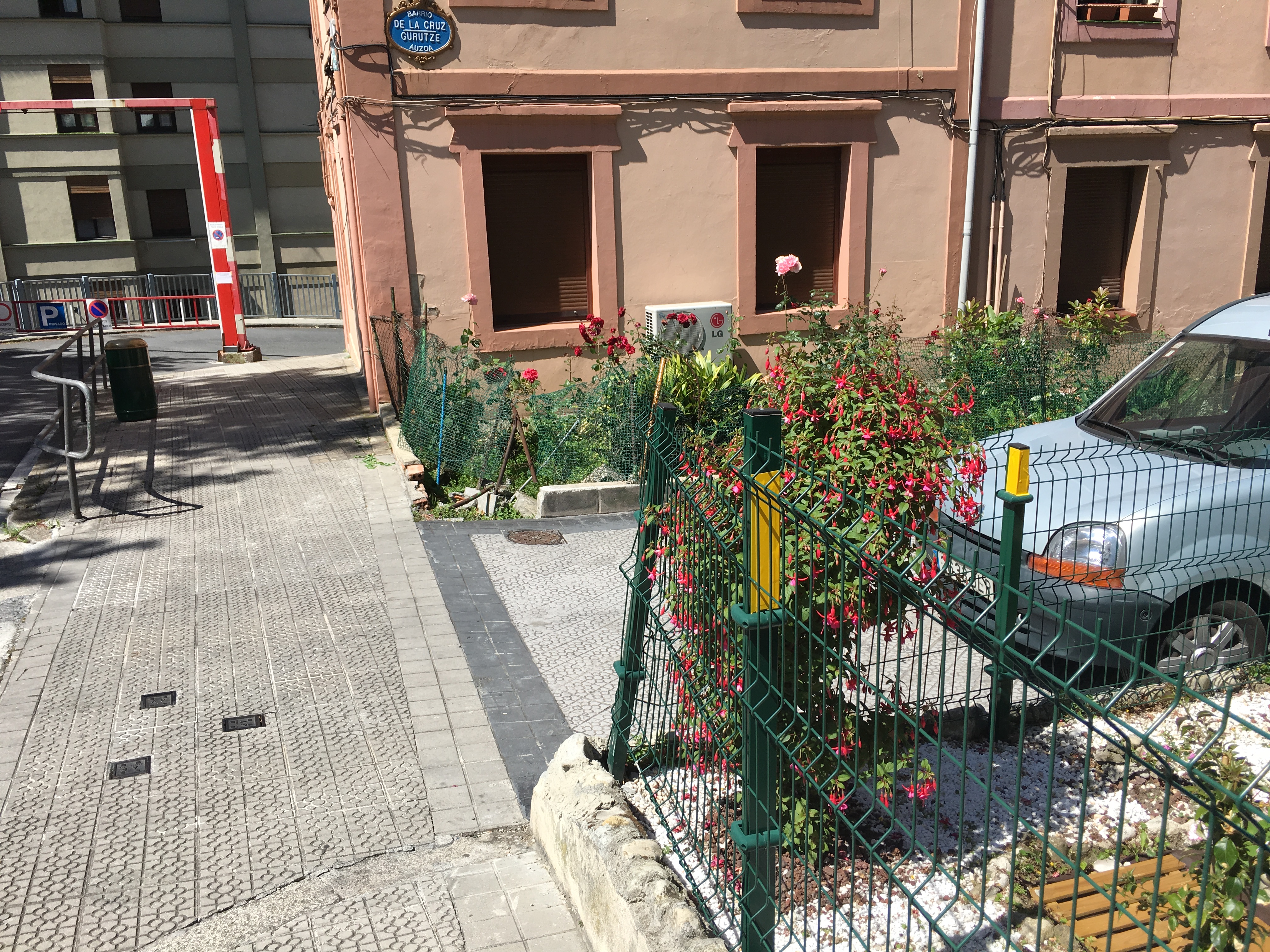
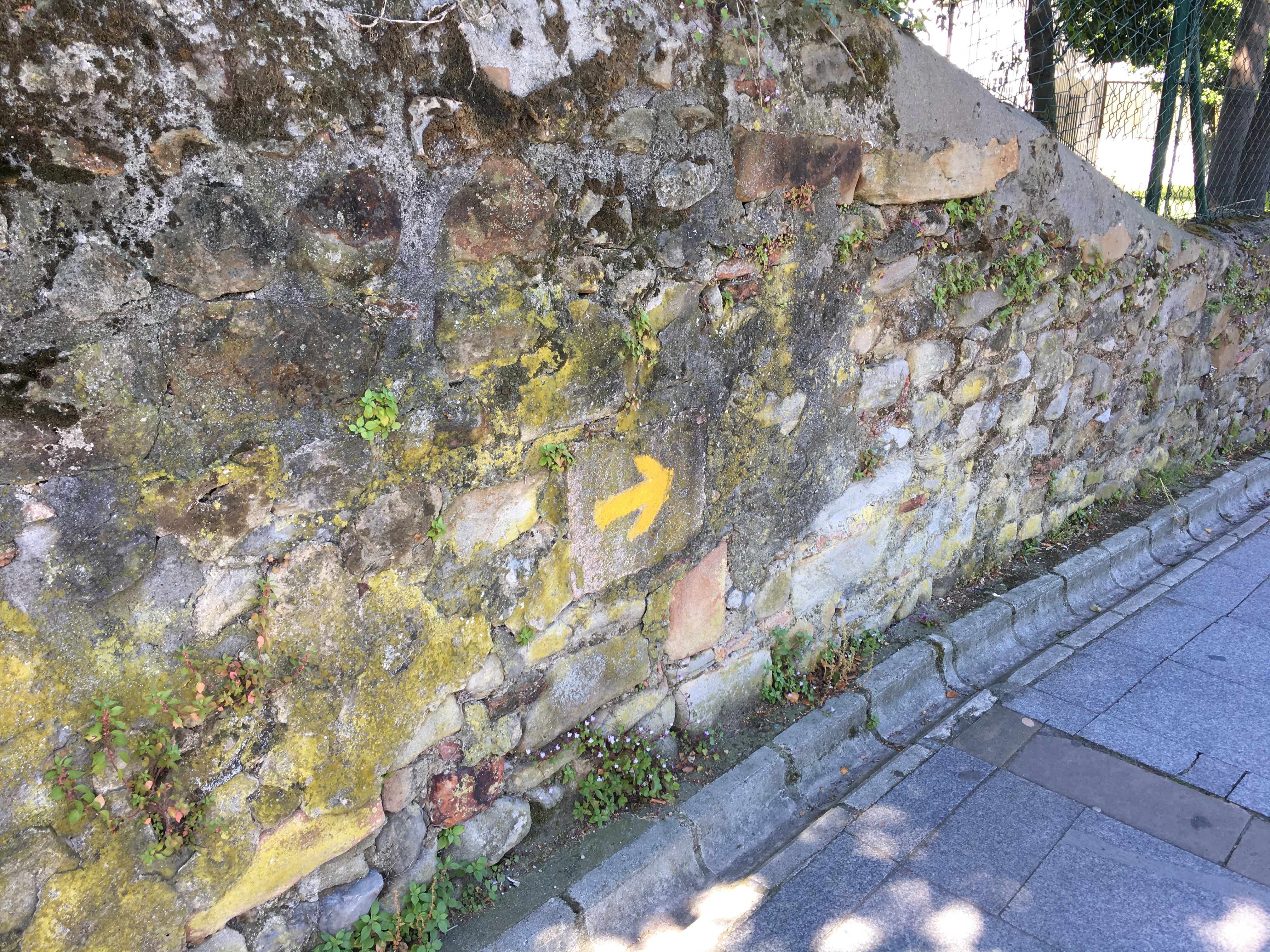
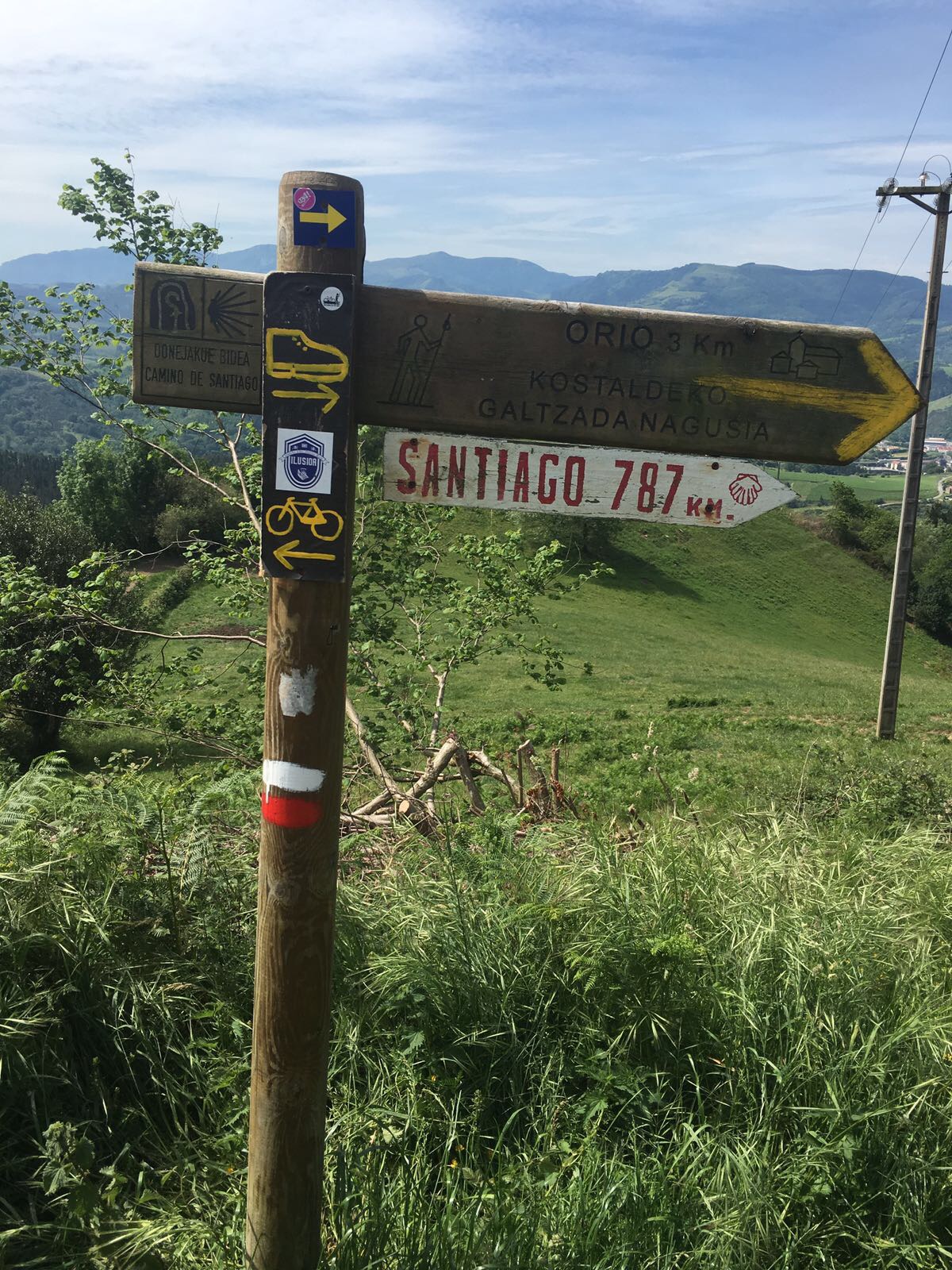
On the Camino de Santiago, you had to take care to follow the signs. Yellow arrows were common and well-known markers to all pilgrims along the path.

IMG_5368

It was easy to get lost, especially in the big cities, if you missed one of these markers. But also at critical junctions in the forests, the fields or roadways where if you were not paying attention, you could lose hours on the journey and have to double back.

I learned, sometimes the hard way, to pay attention to what others might consider obvious. Some markers are easy to notice.

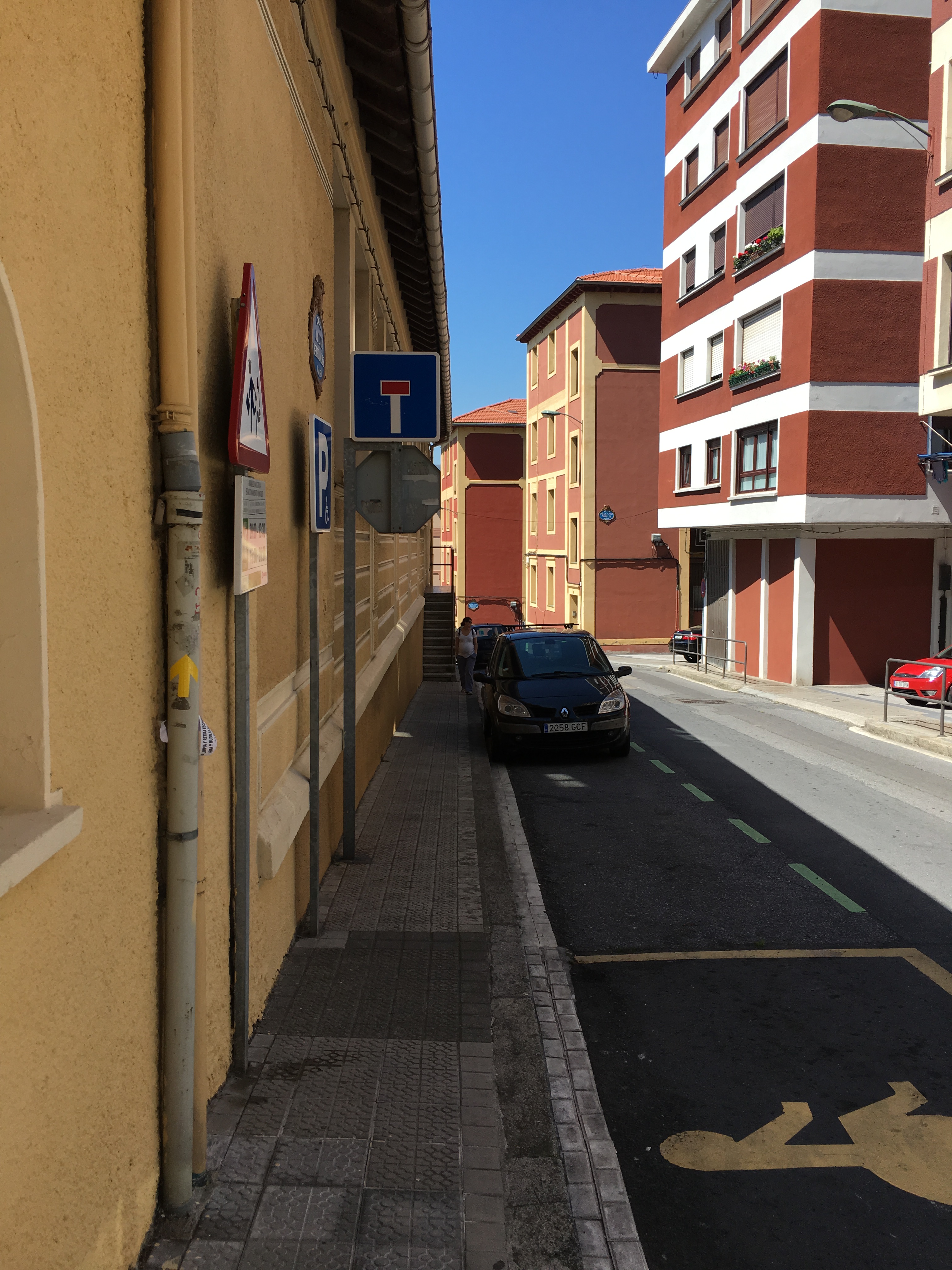
Some are sort of easy to notice:

But often it was a challenge to find that yellow marker:

AF9FA91C-7D0D-4D54-B2CD-F933EDE6260A7692EB83-1AA5-499D-AE9B-A64B6A5678C8IMG_5363IMG_5364

The signs — like the sacraments of baptism and holy communion — are reminders of what kind of journey we are on. These signs are embedded in the journey itself, on earth. These holy signs don’t stay in some other-worldly realm; they are very much a part of this world: Baptism uses common water; Communion uses bread and wine – basic, earthly elements which remind us of what God is all about on earth.

The signs are part of our daily, ordinary lives. The signs are already there, along the way, before we even commit to the journey. We only need to open the eyes of our heart and mind, and pay attention. Because the signs are too easy to miss. And when we do miss them, we get lost and go down other paths, paths that lead to division in the Body of Christ, the church.

I remember when our then 12-year-old son started playing football I first learned what it meant to ‘take a knee’. According to the tradition, if a player on the field was injured everyone ‘took a knee’. And it didn’t matter which team the injured player was from; that is, all the players from both teams knelt down and waited there until the injured player either walked off the field on their own strength, or was carted off on a stretcher.

Tim Tebow and Colin Kaepernick have both attracted world-wide media attention for ‘taking a knee’ in the last couple of years, although for very different reasons. Both have made a public display of their faith. Both are prayerful, and devout. One grew up the son of Baptist missionaries to the Philippines. The other was baptized Methodist, confirmed Lutheran, and attended a Baptist church during college.[1]

Tim Tebow, however, is a darling of the church while Colin Kaepernick has been reviled. Their differences reveal much more about the brand of Christianity preferred by many in the church today. Tebow is known for his signature move – dropping to one knee on the field, his head bowed in prayer, his arm resting on his bent knee. He’s clean cut, polite, gentle, respectful.

Colin Kaepernick, starting last year already, refused to stand to attention during the playing of the American national anthem. Originally, he did so in support of Black Lives Matter and to protest police violence against black people. Kaepernick was voted most disliked player in the National Football League (NFL). People posted videos of them burning his jerseys. He was called “an embarrassment” and “a traitor”. Of course, with recent events in the NFL, his witness gains momentum nonetheless.

Two players, two brands of Christianity:

Tim Tebow represents personal piety, gentleness, emphasis on moral issues. Colin Kaepernick represents social justice, community development and racial reconciliation. One version of Christianity is kneeling in private prayer. The other is kneeling in public protest. One is concerned with private sins like abortion. The other is concerned with public sins like racial discrimination. One preaches a gospel of personal salvation. The other preaches a gospel of social transformation. One is reading Paul’s letters. The other is reading the Minor Prophets.

Are these versions of Christianity mutually exclusive? Much of Christian history, especially since the Reformation, would suggest, ‘yes’, even among Lutherans. The proliferation of Christianity into some thirty thousand different denominations by the 500th anniversary of the Reformation in 2017 would suggest, ‘yes.’ The divisions within Christianity is leaving the church all the poorer, with each side needing to be enriched by the biblical vision of the other.

Bible scholar Walter Brueggemann expresses it well: He writes that Christianity should be “awed to heaven, rooted in earth.” We should, as he says, be able to “join the angels in praise, and keep our feet in time and place.”[2]

Christianity, sadly, remains on its knees because of our divisions, when all along the vision of the Gospel, expressed best by Paul himself, is that “every knee should bend, in heaven and on earth”[3]. How do Christians today, regardless of background and orientation, contribute to this vision in ways that actually make a difference on earth?

In the second reading for today, we learn about the essential character of the biblical God. In the Hebrew Scriptures, all of God’s acts, blessings, and delights in creating are for the sake of others. This is typical of God, “who is intimately concerned with justice, peace, and the flourishing of all creatures.” This is typical of God, “who is ‘on high’ but never remote, who is ‘over all’ but faithfully and dramatically invested in life on earth.”[4]

God does not embrace hierarchy. Nor does God rest in privileged autonomy, according to some deist idea of a distant and uncaring God. God is love. And the New Testament witness continues this description of a God who cares intimately about our humanity, in the incarnation of Jesus Christ. God is Immanuel, God-with-us and for us.

In setting up this wonderful hymn that Paul includes in his letter to the Philippian church, Christians are called to exemplify a humble regard for others, seeing them as “better than yourselves”; we are not to primarily serve our own interests, but the interests of those who are different.[5]

These may be an impossible task for us in our self-centred, me-first culture. Nevertheless, we are encouraged, as Paul encouraged the early church in Philippi, to “work out our salvation with fear and trembling”[6]. Why even bother?

Because God is already at work in us.[7] God is already at work in the world, as difficult as it can be to spot those signs of God’s grace, God’s justice, God’s good work. As Martin Luther insisted, matters of salvation revolved around God’s actions, not human activities. Justification — being placed into a right relationship with God — is totally God’s activity. After all, as Paul wrote earlier in his letter to the Philippians, we need to believe – despite what appears to be everything to the contrary – in the promise and the vision that God “who began a good work among you will bring it to completion.”[8]

God’s grace precedes all. Just like the signs on the journey before us and around us. Even though we may miss them from time to time doesn’t mean they aren’t there, waiting for us to notice. God’s grace continues to guide us and point in the right direction.

We therefore have nothing to lose, to take a knee for the sake of those who do not have a voice. To take a knee for the sake of others who are silenced by discrimination and abuse. To take a knee for all God’s creatures who long for a better day.

We pray for and support agency to help the refugees today escaping violence and oppression in Myanmar. We pray for and support agency to help victims of Hurricane Maria in Puerto Rico. We, so, ‘take a knee’, in the spirit and mind of Jesus Christ who took a knee for us all.

[1] I thank Michael Frost, “Colin Caepernick vs. Tim Tebow: A Tale of two Christians on their knees” (The Washington Post, September 27, 2017) for much of the content I use in this section of my sermon

[2] cited in Michael Frost, ibid.

[3] Philippians 2:10, NRSV

[4] William Greenway in David L. Bartlett & Barabara Brown Taylor, eds., “Feasting on the Word: Preaching the Revised Common Lectionary” Year A Volume 4 (Kentucky: WJK Press, 2011), p.112.

[5] Philippians 2:3-4

[6] 2:12

[7] 2:13

[8] 1:6