funeral sermon – Epiphany

Something of eternal consequence had already started the day before Derry died.

As is customary in the weekly bible study at Faith, we take turns reading the scripture for the day. And we read that same scripture over three times, in the tradition of lectio divina – a meditative, prayerful approach to the bible.

I think I speak for everyone in that group to say that we all wanted Derry to read. He read well. Derry articulated the words with nuance and meaning. His deep, rich voice brought the scripture to life.

The day before Derry died, he attended our last session before the Christmas break. We were reading, as you can imagine, the story of Jesus’ birth from Luke chapter two. At the beginning of our time together, I asked Derry if he would read that scripture. But he needed more time to get settled, and he would read it later. “We’ll get back to you,” I announced.

But, for whatever reason, we never did. Whether it was the turn of the conversation, the character of the group that day, or innocent forgetting, Derry didn’t get his turn to read that day.

A couple of us reflected briefly on this over Christmas. And we felt badly that we missed an opportunity to honor his gift one last time.

In retrospect, it feels like unfinished business, something left hanging, incomplete. On this side of death, we can’t yet fully realize and appreciate what Derry’s gift of faith means beyond death’s door.

Last summer in my travels I found this quote printed on the window of a restaurant: “Life is not measured by how many breaths you take, but by the experiences that take your breath away.”[1]

What are these experiences that ‘take our breath away’? When we behold something beautiful. When something outside of ourselves ignites and inspires something from within us, we taste glory. We are moved. Deep speaks to deep[2]. Emotions, memories, feelings stir within us.

This is the purpose of art. The creative impulse is to fashion something material outside of us to reflect the beauty and glory within. Our outer world and its inner significance – those moments that take our breath away – come together with resulting joy and a sense of coherent beauty.[3]

Art is not something that can be used. Its primary purpose is not functional. A sculpture cannot be part of a mechanism to make something work. Art does not bring water into a community, heat our homes, transport goods and services across the continent. Art isn’t meant to be a cog in the wheel of our economy. It’s not easy to make a good living in our culture doing only art. From this perspective, art is unproductive — even useless.

So, why do we bother to spend so much of our time in our flower gardens? Why do we exercise extraordinary patience in painting something that is called from within us? Why do we write poetry? Why do we travel across this globe to visit cathedrals and art galleries and artifacts that bespeak of unspeakable beauty?

Like a verdant garden bursting with variety and the fullness of life, Derry’s artwork was rich in diversity – sculpting, painting, ceramic and wood-carving and gardening. Derry’s gift of art not only reflect his astounding creativity but also the witness of one who reflected the light and glory of Christ to the world in his own, unique way. The ‘likeness of Christ’, we say.

Today is the church’s annual observance of the Epiphany. Every year on January 6th, Christians further contemplate the mystery of the incarnation, of word made flesh.[4] During the season of Epiphany that follows, we discover again how God is made flesh in Christ, in the world today.

Whether we want to believe it or not, we reflect the light of Christ, the light even the darkness of death cannot consume.[5] Today we stand in the shadow of death. We grope in the darkness of grief, trying to find our way forward but not sure because it is an unknown path. We mourn at this occasion of profound loss.

Yet, the light continues to shine. And what is more, that light shines within us. If Derry leaves a legacy, it is to witness to this light – the light of glory, the light of Christ risen, the light of life that is now, because of Christmas, in the world and in us. Second century bishop of Lyons, Irenaeus, said that “the glory of God is the human person fully alive.”

Derry, in his artistic expression, was surely ‘fully alive’. We can trust this. We may not feel it all the time, especially in grief. But not feeling God’s light within us doesn’t make it untrue.

Derry was also a teacher. He taught many student teachers at the university. Derry teaches us something important about life and death. Derry’s teaching to us now is to witness to the glory of God, reflected in each one of us.

The darkness does not overcome the light. The light endures forever. In God’s reign, there is no unfinished business. Derry continues to bask in the light and glory of God’s eternal reign. Today, Derry deepens his connection with the Word, reading and living the stories of God made flesh in Jesus Christ. In this time, God brings to completion the good work begun in Derry’s life with us.

Thanks be to God.

[1] T. Paul’s Restaurant in Astoria, Oregon

[2] Psalm 42:7

[3] Richard Rohr, Daily Meditation, January 1, 2018

[4] John 1:14

[5] John 1:5

Christmas – God goes home

Were you home for Christmas?

It is customary to be at home, or go home, for Christmas. For some, Christmas wouldn’t be Christmas without being home. And, in this meaning, ‘home’ refers to a specific, geographic location, a space usually defined by a building: the homestead back on the farm, the house you grew up in and is still in the family, the house you lived in for many years, etc.

Bing Crosby’s “I’ll be home for Christmas” echoes in the back of our mind, providing a mantra for constructing our idea of what Christmas must be like. Being home brings comfort and a feeling of stability. To do or say otherwise might threaten our very notion of what Christmas means. In discussing whether it is time to celebrate Christmas somewhere new and somewhere different, someone will always say: How could we do Christmas anywhere else than here — at home?

I heard over the holiday the story of a childhood memory of Christmas. When this person was a young child, her parents took her and her siblings to travel from Ottawa to the Eastern Townships to be with an aging and infirm family member. Friends criticized them: “How could you spend Christmas in a motel room and nursing home far away,” they judged. “You’re spoiling Christmas. Especially for the children.”

Contrary to our nostalgic sentiments, the first Christmas story points another way: Mary and Joseph make a home where there is no home – a stable behind a packed inn in a town far away from hometown Nazareth. The recluse shepherds have to leave the familiar abodes of the fields surrounding Bethlehem and go with haste to visit strangers in town. And the magi travel great distances, following a star, from the East and arrive to visit the Christ child after some time has passed since that Holy Night.

The Christmas story is more about traveling away from home, away from the familiar and towards the unknown, the new, the unfamiliar. If we assume that being away from home at Christmas would be unsettling, then we might be surprised that the dislocation of the main characters in the Christmas story does not appear to destabilize them.[1]

Brian McLaren argues that what matters most in religion “is not our status but our trajectory, not where we are but where we’re going, not where we stand but where we’re headed. Religion is at its best when it leads us forward, when it guides us on our spiritual growth.”[2] This is the meaning of the magi’s journey:

Religion is at its best when we, with the wise men, follow the star shining upon the place of Jesus’ presence in the world today. Like Jesus’ disciples who were to “go into all the world”[3], we are called from time to time to leave places of comfort and familiarity, in order to discover the new things God is revealing to us and participate in the mission of God.

Our comfort and stability come when, no matter where we find ourselves at Christmas time, we find our home in Christ. There is something true about a nostalgic portrayal of the nativity: the happy family and visitors huddle around the manger made of straw, a soft light shedding its warmth on the pastoral scene; what is right about this is that there is a home – a home whose hearth is Jesus Christ himself.[4]

As I pondered the idea of being home at Christmas, I found this wonderful definition of home: “Home is the abiding place of the affections.”[5] Home speaks of a shared intimacy, vulnerability, truth-telling and love. The abiding place of the affections is not limited to any one physical space, but is more a function of healthy relationships. Jesus said, “Wherever two or three are gathered in my name, there I am among them.”[6] Whenever deep speaks to deep,[7] heart speaks to heart, that is home. And that is where God is.

In this coming season of Epiphany, we indeed discover God anew. We discover the revelation of Jesus in the world today. We discover with joy that God is at home in us and in this world.

“See, the home of God is among mortals; He will dwell with them; they will be his peoples and God himself will be with them.”[8]

Christmas means that the game for us has changed. For, no longer do we need to wait until the end of our life to go to heaven and be with God. For that matter, we don’t need to go anywhere at all.

Rather, Christmas means that God came home; that God and heaven have come to us. To where we are. And no matter where we are. For now, and forevermore. Amen.


[1] Cynthia L. Rigby in David L. Bartlett & Barbara Brown Taylor, eds. “Feasting on the Word: Preaching the Revised Common Lectionary Year B, Volume 1 (Kentucky: WJK Press, 2008) p.118.

[2] Brian McLaren, “The Great Spiritual Migration: How the World’s Largest Religion is Seeking a Better Way to Be Christian” (Convergent, 2006), p.xi-xii, 12-13.

[3] Mark 16:15

[4] Cynthia L. Rigby, ibid.

[5] David Marine, cited in Diana Butler Bass, “Grounded: Finding God in the World, A Spiritual Revolution (New York: HarperCollins Publishers, 2015) p.172.

[6] Matthew 18:20

[7] Psalm 42:7

[8] Revelation 21:3

Take a knee

IMG_5385

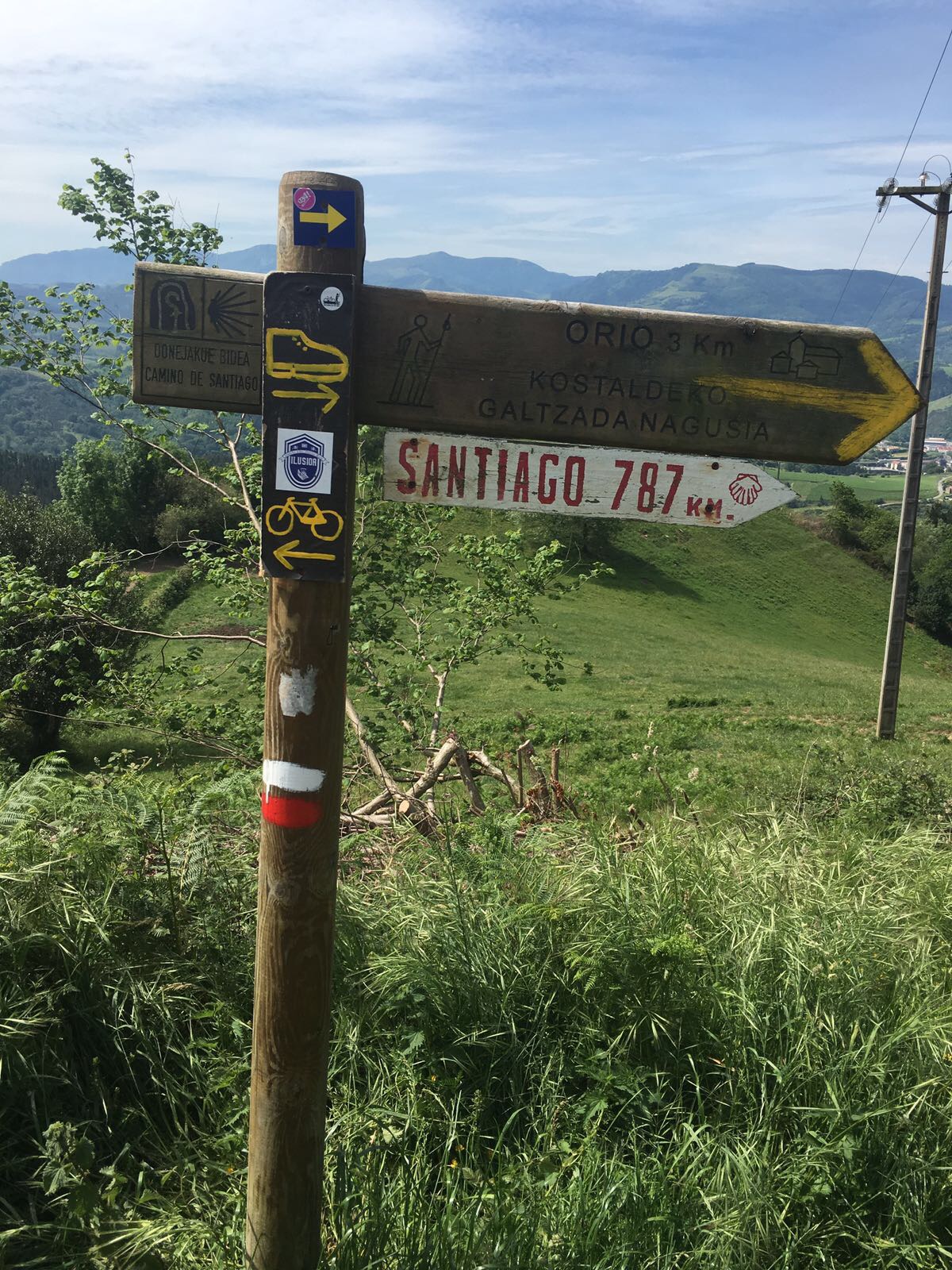
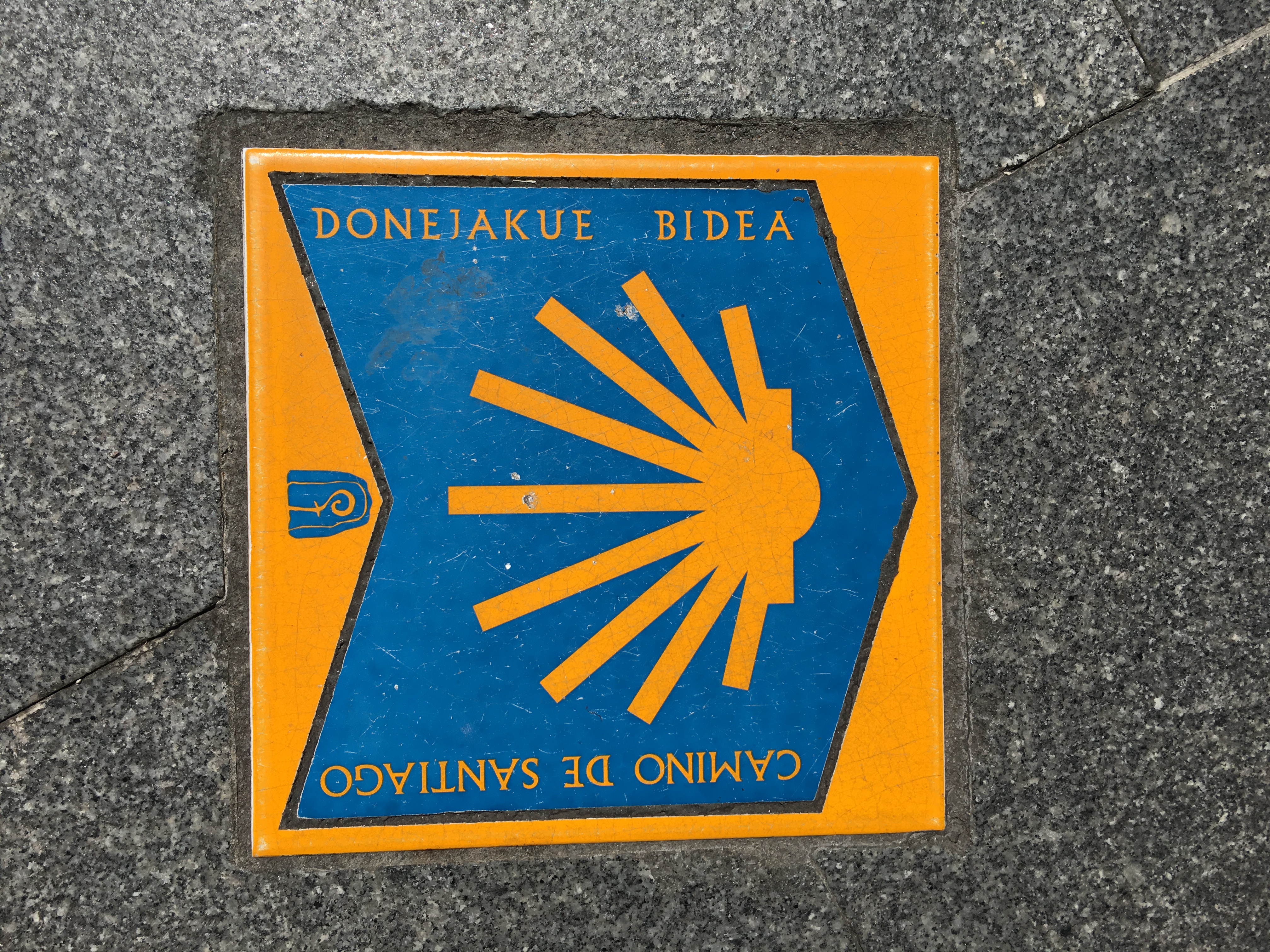
On the Camino de Santiago, you had to take care to follow the signs. Yellow arrows were common and well-known markers to all pilgrims along the path.

IMG_5368

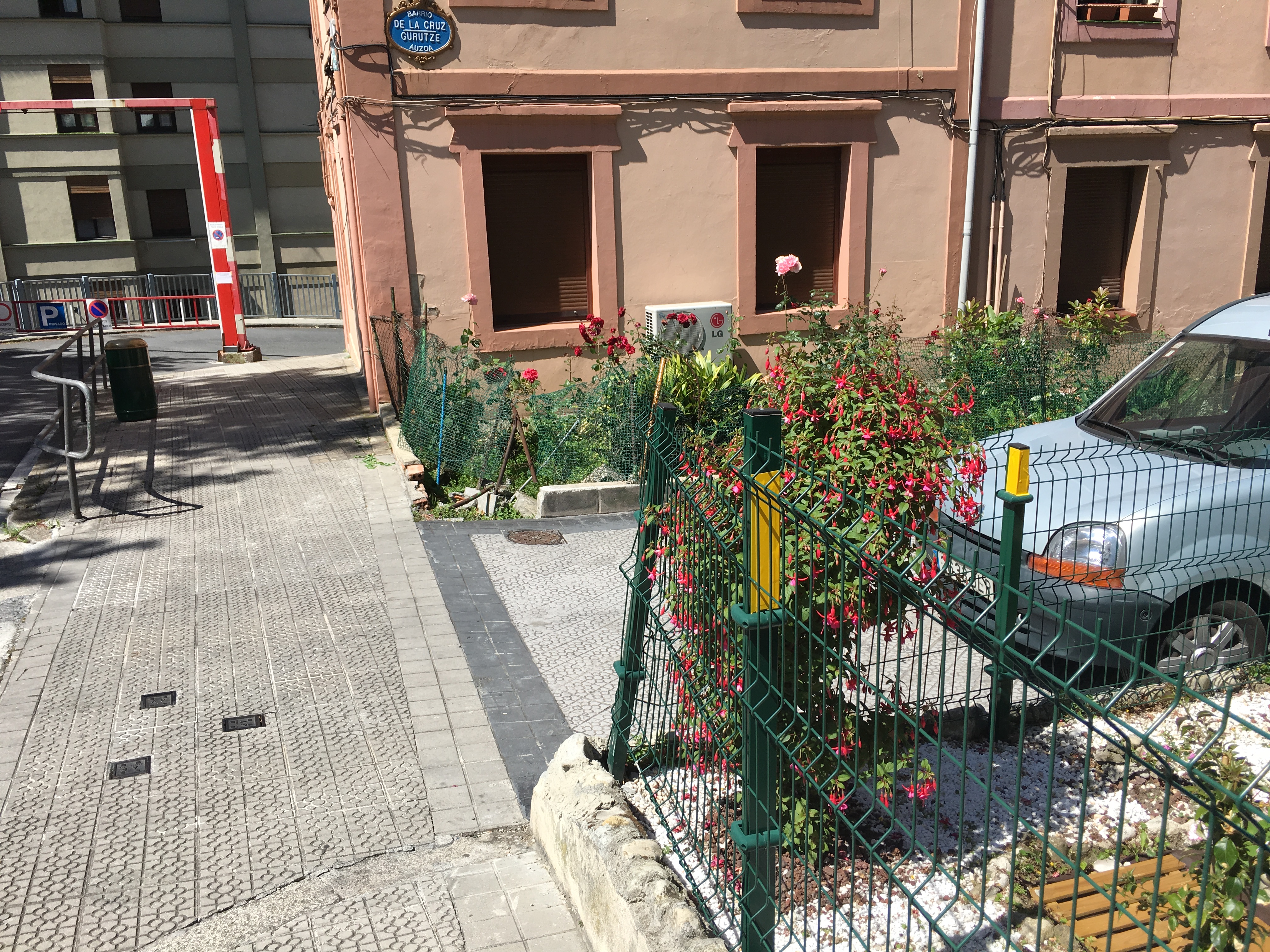
It was easy to get lost, especially in the big cities, if you missed one of these markers. But also at critical junctions in the forests, the fields or roadways where if you were not paying attention, you could lose hours on the journey and have to double back.

I learned, sometimes the hard way, to pay attention to what others might consider obvious. Some markers are easy to notice.

Some are sort of easy to notice:

But often it was a challenge to find that yellow marker:

AF9FA91C-7D0D-4D54-B2CD-F933EDE6260A7692EB83-1AA5-499D-AE9B-A64B6A5678C8IMG_5363IMG_5364

The signs — like the sacraments of baptism and holy communion — are reminders of what kind of journey we are on. These signs are embedded in the journey itself, on earth. These holy signs don’t stay in some other-worldly realm; they are very much a part of this world: Baptism uses common water; Communion uses bread and wine – basic, earthly elements which remind us of what God is all about on earth.

The signs are part of our daily, ordinary lives. The signs are already there, along the way, before we even commit to the journey. We only need to open the eyes of our heart and mind, and pay attention. Because the signs are too easy to miss. And when we do miss them, we get lost and go down other paths, paths that lead to division in the Body of Christ, the church.

I remember when our then 12-year-old son started playing football I first learned what it meant to ‘take a knee’. According to the tradition, if a player on the field was injured everyone ‘took a knee’. And it didn’t matter which team the injured player was from; that is, all the players from both teams knelt down and waited there until the injured player either walked off the field on their own strength, or was carted off on a stretcher.

Tim Tebow and Colin Kaepernick have both attracted world-wide media attention for ‘taking a knee’ in the last couple of years, although for very different reasons. Both have made a public display of their faith. Both are prayerful, and devout. One grew up the son of Baptist missionaries to the Philippines. The other was baptized Methodist, confirmed Lutheran, and attended a Baptist church during college.[1]

Tim Tebow, however, is a darling of the church while Colin Kaepernick has been reviled. Their differences reveal much more about the brand of Christianity preferred by many in the church today. Tebow is known for his signature move – dropping to one knee on the field, his head bowed in prayer, his arm resting on his bent knee. He’s clean cut, polite, gentle, respectful.

Colin Kaepernick, starting last year already, refused to stand to attention during the playing of the American national anthem. Originally, he did so in support of Black Lives Matter and to protest police violence against black people. Kaepernick was voted most disliked player in the National Football League (NFL). People posted videos of them burning his jerseys. He was called “an embarrassment” and “a traitor”. Of course, with recent events in the NFL, his witness gains momentum nonetheless.

Two players, two brands of Christianity:

Tim Tebow represents personal piety, gentleness, emphasis on moral issues. Colin Kaepernick represents social justice, community development and racial reconciliation. One version of Christianity is kneeling in private prayer. The other is kneeling in public protest. One is concerned with private sins like abortion. The other is concerned with public sins like racial discrimination. One preaches a gospel of personal salvation. The other preaches a gospel of social transformation. One is reading Paul’s letters. The other is reading the Minor Prophets.

Are these versions of Christianity mutually exclusive? Much of Christian history, especially since the Reformation, would suggest, ‘yes’, even among Lutherans. The proliferation of Christianity into some thirty thousand different denominations by the 500th anniversary of the Reformation in 2017 would suggest, ‘yes.’ The divisions within Christianity is leaving the church all the poorer, with each side needing to be enriched by the biblical vision of the other.

Bible scholar Walter Brueggemann expresses it well: He writes that Christianity should be “awed to heaven, rooted in earth.” We should, as he says, be able to “join the angels in praise, and keep our feet in time and place.”[2]

Christianity, sadly, remains on its knees because of our divisions, when all along the vision of the Gospel, expressed best by Paul himself, is that “every knee should bend, in heaven and on earth”[3]. How do Christians today, regardless of background and orientation, contribute to this vision in ways that actually make a difference on earth?

In the second reading for today, we learn about the essential character of the biblical God. In the Hebrew Scriptures, all of God’s acts, blessings, and delights in creating are for the sake of others. This is typical of God, “who is intimately concerned with justice, peace, and the flourishing of all creatures.” This is typical of God, “who is ‘on high’ but never remote, who is ‘over all’ but faithfully and dramatically invested in life on earth.”[4]

God does not embrace hierarchy. Nor does God rest in privileged autonomy, according to some deist idea of a distant and uncaring God. God is love. And the New Testament witness continues this description of a God who cares intimately about our humanity, in the incarnation of Jesus Christ. God is Immanuel, God-with-us and for us.

In setting up this wonderful hymn that Paul includes in his letter to the Philippian church, Christians are called to exemplify a humble regard for others, seeing them as “better than yourselves”; we are not to primarily serve our own interests, but the interests of those who are different.[5]

These may be an impossible task for us in our self-centred, me-first culture. Nevertheless, we are encouraged, as Paul encouraged the early church in Philippi, to “work out our salvation with fear and trembling”[6]. Why even bother?

Because God is already at work in us.[7] God is already at work in the world, as difficult as it can be to spot those signs of God’s grace, God’s justice, God’s good work. As Martin Luther insisted, matters of salvation revolved around God’s actions, not human activities. Justification — being placed into a right relationship with God — is totally God’s activity. After all, as Paul wrote earlier in his letter to the Philippians, we need to believe – despite what appears to be everything to the contrary – in the promise and the vision that God “who began a good work among you will bring it to completion.”[8]

God’s grace precedes all. Just like the signs on the journey before us and around us. Even though we may miss them from time to time doesn’t mean they aren’t there, waiting for us to notice. God’s grace continues to guide us and point in the right direction.

We therefore have nothing to lose, to take a knee for the sake of those who do not have a voice. To take a knee for the sake of others who are silenced by discrimination and abuse. To take a knee for all God’s creatures who long for a better day.

We pray for and support agency to help the refugees today escaping violence and oppression in Myanmar. We pray for and support agency to help victims of Hurricane Maria in Puerto Rico. We, so, ‘take a knee’, in the spirit and mind of Jesus Christ who took a knee for us all.

[1] I thank Michael Frost, “Colin Caepernick vs. Tim Tebow: A Tale of two Christians on their knees” (The Washington Post, September 27, 2017) for much of the content I use in this section of my sermon

[2] cited in Michael Frost, ibid.

[3] Philippians 2:10, NRSV

[4] William Greenway in David L. Bartlett & Barabara Brown Taylor, eds., “Feasting on the Word: Preaching the Revised Common Lectionary” Year A Volume 4 (Kentucky: WJK Press, 2011), p.112.

[5] Philippians 2:3-4

[6] 2:12

[7] 2:13

[8] 1:6

Courage and Joy

Last night, the hustle and bustle of getting ready, and anticipating the birth. Last night, the noise, the anxiety, the smelly stable, the animals, the shepherds, the chorus of heaven singing in the starry, silent night. “Joy to the world” indeed!

Today, however, the child is born. A little more breathing room, perhaps. A little more time for realizing what just has happened. Time, amidst the burping, squawking infant feeding for quiet reflection, to ponder this miraculous birth, this wondrous event that will change everything! “What child is this?” indeed!

As things begin to sink in, to settle, one may ponder the last several months as I am sure Mary and Joseph did — how it all began to take shape. It all started, of course, when the Angel Gabriel visited Mary to tell her the news of God’s intention (Luke 1). 

Looking back, this was the critical moment. In the reverie it almost feels like the Mission Impossible theme song should start up: “Should you choose to accept your mission ….” Da-Da, Da-Da-Da, Da-Da. 

Everything depended on that moment of decision on Mary’s part. The course of history hung in the balance. So much at stake. What does she do? How will she respond?

During Christmas, Mary mother of Jesus figures prominently in the story-telling. Traditionally, Mary has been imagined by Christians as a passive, placid, sweet and quiet girl. Certainly she is portrayed like this in many a Sunday School Christmas pageant.

But the biblical record suggests something more. Listen to the famous poem, the “Annunciation” by Denise Levertov who captures the immensity of the moment:

“We know the scene: the room, variously furnished, 

almost always a lectern, a book; always

the tall lily.


Arrived on solemn grandeur of great wings,

the angelic ambassador, standing or hovering,

whom she acknowledges, a guest.

But we are told of meek obedience. No one mentions

courage.


The engendering Spirit

did not enter her without consent.

God waited.

She was free

to accept or to refuse, choice

integral to humanness.

Aren’t there annunciations

of one sort or another

in most lives?


Some unwillingly

undertake great destinies,

enact them in sullen pride,

uncomprehending.

More often

those moments

when roads of light and storm

open from darkness in a man or woman,

are turned away from

in dread, in a wave of weakness, in despair

and with relief.

Ordinary lives continue.

God does not smite them.

But the gates close, the pathway vanishes.

She had been a child who played, ate, slept

like any other child–but unlike others,

wept only for pity, laughed

in joy not triumph.

Compassion and intelligence

fused in her, indivisible.

Called to a destiny more momentous

than any in all of Time,

she did not quail,

only asked

a simple, ‘How can this be?’

and gravely, courteously,

took to heart the angel’s reply,

the astounding ministry she was offered:

to bear in her womb

Infinite weight and lightness; to carry

in hidden, finite inwardness,

nine months of Eternity; to contain

in slender vase of being,

the sum of power–

in narrow flesh,

the sum of light.


Then bring to birth,

push out into air, a Man-child

needing, like any other,

milk and love–

but who was God.

This was the moment no one speaks of,

when she could still refuse.

A breath unbreathed, Spirit suspended, waiting.

She did not cry, ‘I cannot. I am not worthy,’

Nor, ‘I have not the strength.’

She did not submit with gritted teeth,

raging, coerced.

Bravest of all humans,

consent illumined her.

The room filled with its light,

the lily glowed in it,

and the iridescent wings.

Consent,

courage unparalleled,

opened her utterly.”

How did she handle the moment of decision before the Angel Gabriel? I must conclude, with both courage AND joy. Often we don’t consider the two together. Either someone has a whole lot of courage, determination, and serious intent about their business. Or, someone tends towards the frivolous, uncontained in their happiness and joyful demeanour — even being silly, unfettered from the cares of the world.

During the memorial service for the late Dorothy Mueller last week, we recalled a moment in Dorothy’s early life in Montreal with her husband Henry. One night all dressed up for going out dancing on the town, she and Henry came across a street fight where a couple boys were beating up another. Without missing a beat she crossed the street, strode right up to the offending boys and demanded that they stop their violence. Which they did.

Not many of us would demonstrate that level of courage in the public arena. And take the risk to stand up out of passionate concern for the underdog, the downtrodden, the suffering, the poor.

What else is impressive is that she showed that courage while out on the night, dancing. Along with any kind of bold, courageous deed on behalf of the poor, we must also be filled with joy, of letting go, of honest and playful engagement with ourselves and our loved ones — all of which good dancing demands and embodies.

Theologian Gustavo Gutierrez, and others, have suggested that the most appropriate contemporary equivalent to “The Word became flesh” (John 1:14) may be “The Word became poor.” (1) Like Mary, like Dorothy, we too need to express joy in our lives even as we are called to do the right things on behalf of the poor and the needy.

Dancing is a relational/relationship-building activity. And this is what we ultimately celebrate at Christmas. When Mary, with courage and joy, accepted the mission presented by the Angel Gabriel, the God-human relationship was now restored in the incarnation — the birth of Jesus. Indeed, “The Word became flesh.” Because of that first Christmas the divine could finally, truly and intimately relate to all humanity. To us.

God was now human in the person of Jesus. At Christmas, we celebrate the divine-human dance. At Christmas we ponder the love of God that seeks to fully understand each one of us. We ponder this great love which brings God’s comfort, mercy and encouragement no matter the depth of our grief, the extent of our suffering, the measure of our pain and loss. Jesus came into the darkness of the 1st century world. And, Jesus continues to come into the darkness of our lives.

At Christmas-time, this year, the dance continues. Yes, the world, our lives, still have problems. At the same time we can express the grace of God that comes to us in different ways, and to each according to our needs.

Perhaps, on this Christmas Day, we can start by giving thanks to God for Mary — her courage and joy at being the first to receive Christ.

(1) cited in “Feasting on the Word: Advent Companion”, WJK Press Kentucky, 2014, p.138

A funeral sermon at Christmas

In these days leading to Christmas, Mary mother of Jesus figures prominently in the story-telling. Traditionally, Mary has been imagined by Christians as a passive, placid, sweet and quiet girl. Certainly she is portrayed like this in many a Sunday School Christmas pageant.

But according to the biblical record this characterization is not entirely true. Her song — called the “Magnificat” (Luke 1:46-55) — suggests a courageous, brave, even revolutionary figure in the bible. Not only does she accept this radical calling of God to bear the Christ-child, she affirms the great reversals of Gospel truth. 

While she says ‘yes’ to God, she implies ‘no’ to the power structures of the day — the rich will be sent away empty, the proud will be scattered, the powerful will be brought down. 

It’s significant that your loved one’s middle name is Mary. Our names are important. I believe they are windows into our souls. And her life reflected, did it not, the style of Mary’s character in the sense of her courage, her almost impulsive stance towards defending the poor? You already told stories of how she often defended the underdog, the downtrodden, putting herself on the line, making herself vulnerable in order to do the right thing.

You told me how one night in her youth all dressed up for going out dancing in Montreal, she and your father came across a street fight where a couple boys were beating up another. Without missing a beat she crossed the street, strode right up to the offending boys and demanded that they stop their violence. Which they did. Never mind your poor father who was convinced she was going to get herself seriously hurt.

Not many of us would do that in the public arena. So, the gift of her life encourages us to consider our own disposition towards those whom God favours. Her life is a testimony to the practice of unconditional love to all people. And the risk it sometimes entails.

Mary’s Magnificat is also often sung. Music is an excellent medium for expressing praise and true joy. Dear family, you spoke of your mother’s support of the arts and culture. Your family carries on in various ways this important tradition, this legacy. 

One wonderful memory you hold of your mother at this time is the beauty, the poise, the elegance and the joy with which in the early part of life, she danced. Danced with your father. Dancing was what they did in Montreal in the early years as they courted and were married there. 

Out on the night dancing, was what they were doing just before, in the story you told me, she defended the young man being beaten on the street. It seems your mother demonstrated the truth that along with any kind of bold, courageous deed on behalf of the poor, we must also be filled and our spirits charged by expressions of joy, of letting go, of honest and playful engagement with ourselves and our loved ones — all of which good dancing demands and embodies.

We need to express joy in our lives even as we are called to do the right things on behalf of the needy. Your mother’s life reflected this both/and stance: The freedom of joyful sharing with others including a great sense of humour, and demonstrating a singular passion for justice and working hard for another. She needed this gift to endure the trials and tribulations of her life.

Dancing is a relational/relationship-building activity. And this is what we ultimately celebrate at Christmas. What had throughout history not worked so well as far as the relationship between humanity and God, was now resolved in the incarnation — the birth of Jesus. Because of that first Christmas the divine could finally, truly and intimately relate to humanity. To us. 

The divine was now human in the person of Jesus. At Christmas, we celebrate the divine-human dance. At Christmas we ponder the love of God that seeks to fully understand each one of us. We ponder this great love which brings God’s comfort, mercy and encouragement no matter the depth of our grief, the extent of our suffering, the measure of our pain and loss. 

At Christmas-time, this year, the dance continues. Yes, you mourn your loss. You feel this loss deeply. At the same time we can express the grace of God that comes to us in different ways, to each according to our unique needs.

And for your mother, today, after almost 50 years of being separated by death from her dance partner in your Dad, she resumes a beautiful dance with him in heavenly glory. For joyful reunions, thanks be to God!

Part B

I don’t have many bad memories from my youth. But recurring is one from exam time in highschool. This memory brings back desperate feelings of failure, despair, and shame. The exam was for a history or English course. And it was only a one-pager!

I recall sitting down in the large gymnasium at the start of the exam period looking down at the simple Part A question, and thinking to myself: ‘I got this one in the bag!’ Instead of writing my answer down on that page underneath the question, I wrote down about five pages on extra sheets I asked from the exam moderator. Usually, I took the entire allotted time to write my exams. I remember, however, with this one I finished much earlier.

After checking over my in-depth and complete answer, feeling satisfied and even smug with my work, I signed off on it and left the room with a hop in my step. I felt confident that I had performed to my usual high level of competency in a subject matter that I liked.

You might imagine the horror I felt shortly thereafter when I learned from others why it was that I happened to finish so early.

“Martin,” a friend asked me, “What did you write for the Part B question?”

“Part B?!!”

“Yeah, on the second page.” 

Alas! The one-pager was double-sided. I didn’t think to turn the question sheet over to do Part B. I had only completed the first half — Part A — of the exam. I didn’t finish the entire test. I. Was. Doomed.

In the Gospel for today (John 6:51-58), Jesus uses carnal language that borders on the cannabalistic. “Eat my flesh. Drink my blood.” What are we to make of this arresting, vivid, corporeal language?

Well, the Pharisees have an answer. But theirs is the usual mind-tripping, logical finagling. They take everything literally! “How can this man give us his flesh to eat?” they ask. This style of intellectual, rational mind-gaming is reminiscent of when earlier Jesus spoke of being born again — and again the Pharisee Nicodemus gets trapped in his head: “How can a man go back a second time into his mother’s womb and be born again?” (John 3:1-4).

The Gospel of John and especially this text (6:51-58) evokes images of ingesting, chewing, and gulping — and relates this to our relationship in Christ Jesus. Language like this pervades the Gospel, right from its inaugural, tone setting words: “The Word became flesh” (John 1:14).

The Word is not just a doctrine or idea. The Word is not just a mental picture that we frame with rational explanations, logical arguments and eloquent words about Jesus. That is only Part A.

There’s a Part B that needs to be completed in order to get at the fullness of truth of Jesus relating to us and the world God creates. When we talk of Christian theology and even Christian discipleship, we must go beyond saying: “Let’s follow Jesus” or merely have conversations about Jesus, or think about Jesus, or construct nice ideas about Jesus. 

We must learn to confess that Jesus not only wants our thoughts, Jesus wants all of me/us — every aspect of our lives including our bodies, our exercise, our diets, our play, our work, our relationships. Jesus wants more than our Sunday mornings. He wants Friday night and Wednesday morning as well. A local church had this message on their front-lawn sign last week: “Jesus doesn’t want weekend visits; he wants full custody.” 

Worship is only Part A. Part B is when we walk out that door when worship is over. If our prayers and songs and statements of faith during worship on Sunday morning — as glorious and uplifting and inspiring as they may be — do not translate into meaningful, concrete action consistent with our faith Monday through Saturday, then our worship is really, in the words of Saint Paul, “a noisy gong or clanging cymbal” (1 Corinthian 13:1). The Psalmist confesses to God: For you have no delight in sacrifice; if I were to give a burnt offering, you would not be pleased. The sacrifice acceptable to God is a broken spirit; a broken and contrite heart, O God, you will not despise. (Psalm 51:16-17)

“People often daydream, and even share their fantasies, about what they would do if they won the lottery. Still, most people choose to keep their money in their wallet. In response, lotteries south of the border run commercials reminding us, ‘You can’t win if you don’t play.’ In a sense, Jesus is saying something very similar: ‘Unless you eat the flesh of the Son of Man and drink his blood, you have no life in you’ (v.56). In these verses, Jesus demands more than intellectual assent, more than fantasies of eternal life. Jesus asks for high-stakes, all-in participation, here and now.” (Sundays and Seasons, Augsburg Fortress, 2014, p.261) Jesus wants all of me. Part A and Part B.

I still passed the course, both because I did well during the term on assignments and such; and, because I passed the exam with a 50% score. Even though I messed up and had my blinders on, even though I did not complete the expectations of the exam, I could count on the grace of the instructor.

You see, I did not get a perfect score on Part A. Close, but not perfect. I should have therefore failed the exam. But the instructor knew me. Knew me well. And she knew I deserved to pass the grade. Despite my mistake, I still got credit for the course.

Where there is suffering in the real world. Where there is blood spilled and bodies broken. Perhaps it did take the Christian movement some centuries to work through their natural repulsion against the unadorned cross — an instrument of torture and death — to finally embrace the Cross as the central symbol of our faith. Because there is an important point to it.

That is where Christ is, in our lives and in the world. And it is there that we must go to find Jesus in the faces of those bloodied by war, by displacement, by injustice and violence — in whatever kind. It is there that we must go to witness by our giving and our own brokeness the truth and hope of the Gospel. It is there that we must go. The life stronger than death that God gives to the world in Jesus Christ always comes to us “in the flesh” and blood sufferings of the present time. It is there we must turn the page, and go.

Part B.
Lord, you have searched me out; O Lord, you have known me. You know my sitting down and my rising up; you discern my thoughts from afar. You trace my journeys and my resting places, and are acquainted with all my ways. Indeed, there is not a word on my lips but, O Lord, know it altogether. You encompass me, behind and before, and lay your hand upon me. Such knowledge is too wonderful for me; it is so high that I cannot attain to it. Where can I go from your Spirit? Where can I flee from your presence? If I climb up to heaven, you are there; if I make the grave my bed, you are there also. If I take the wings of the morning and dwell in the uttermost parts of the sea, even there your hand will lead me and your right hand hold me fast. (Psalm 139:1-10)


Amen.

Jesus is here

/home/wpcom/public_html/wp-content/blogs.dir/ee9/22468366/files/2014/12/img_0164-0.jpg

On Christmas Eve we come to see, and to pay attention to, the places where Jesus comes to us: Jesus is born into all the places of our lives. Jesus comes to us, wherever we are and go. The fact that Jesus — the King of Kings — was born in an animal stable (not a palace), to teenagers (not the rich and powerful) and whose first visitors were the ruddy shepherds (not the highly educated) — should tip us off to this truth: Jesus comes into the least expected places of our lives — not just here at church, or at the altar.
But in our homes, in our places of work, in the marketplaces, in our schools.
Merry Christmas!

In the Other

When we moved into our new house last Spring, there were no trees in our backyard. And so I went to a local nursery and bought a beautiful looking Norway Spruce tree, about four feet high, which I planted at the fence line. And I remember choosing this particular tree because it looked healthy; its deep and thick, verdant green branches were bursting with fresh, full buds, all over.

I watered it all summer long and fed it with fertilizer. In the winter I covered it with a folding board to protect it from the harsh winds and biting temperatures — which we had! I was going to make sure this tree would prosper!

So, tell me what you would do if you saw what I saw this Spring once all the snow melted: What would you do? (scroll down to see photo).

I must confess that my first instinct was to rip it out and start over. Find another tree. I thought, at first, that this tree was surely dead. There was no life in it anymore. Hopeless cause. Forget it.

But, for some reason or other I just let it be. I left it alone for awhile. And about a month ago, I noticed something remarkable. Do you see it? There are indeed signs of life showing: the green buds atop, and amidst the what looks otherwise like dead wood.

And I thought of my tree when reading the Gospel text for today (Matthew 10:24-39). Jesus seems intent on reminding his disciples of their worth, their value (“You are of more value than many sparrows” v.31) — despite everything that seems to the contrary. Remember, these disciples are not getting it; they misunderstand Jesus left, right and centre! They are imperfect, some would say — hopeless causes! Why would God even bother with those stupid disciples from Galilee? Riff-raff. Blue collar. Uneducated … the list goes on!

There is the story of a certain monastery — a monastic community which had fallen upon hard times. Only five monks remained in the motherhouse and all of them over the age of 70. Clearly, it was a dying order.

In the woods surrounding the monastery was a little hut, where a wise bishop lived. One day, the abbot thought it would be a good idea to visit this bishop, and ask him for any advice he might be able to offer, in order to save the monastery.

And so the abbot went and explained the problem to the bishop. The bishop commiserated with him: “I know how it is,” he said. “The spirit has gone out of the people. No one knows the joy and love of God anymore.” And so the old bishop and the abbot wept together. They read parts of the Bible, and quietly spoke of deep things together.

The time came for the abbot to leave. They embraced each other, and as they parted the abbot said, “It’s been wonderful that we should meet after all these years. But I must ask: Is there nothing you can tell me, no piece of advice you can give me that would help me to save my dying order?”

The bishop looked straight into the eyes of the abbot and said, “The only thing I can tell you is this: One of you at the monastery is the Messiah.”

When the abbot returned to the monastery, he told his monks: “The bishop couldn’t really help me. We only read some Scripture and wept together. But he said some cryptic thing as I was leaving — he said that one of us is the Messiah. I really don’t know what he meant by that.”

In the weeks and months that followed, the old monks pondered the bishop’s statement, and wondered among themselves if there could possibly be anything of significance to the bishop’s words. The Messiah? One of us? But which one? The conversations went something like this:

“Do you suppose he means the abbot? Surely if he means anyone, it is Father Abbot. He has been our leader for more than a generation.

“On the other hand, he might have meant Brother Thomas. Without a doubt, Brother Thomas is a holy man.

“But certainly he could not have meant Brother Eldred! Eldred can get really crotchety at times. But you know, come to think of it, even though he can be a thorn in people’s sides … when you look back on it, Eldred is virtually always right about anything. Often very right. Maybe the bishop means Brother Eldred.

“But surely not Brother Philip. Philip is so passive, a real nobody. But then, he has got a real gift of somehow always being there when you really need him. He just, like magic, appears by your side. Maybe Philip is the one ……”

And so, as they contemplated this matter together, the old monks began to pay greater attention to one another. They regarded each other with fresh eyes. They began to treat one another with respect, love and extra care. They related to one another keeping in the back of their minds always, that just maybe one of them might be the Messiah. Or, perhaps that each monk himself might be the one.

A beautiful forest surrounded the monastery, and people still occasionally came to visit the monastery — to picnic on its lawn, to wander along some of its paths, and even now and then to go into its dilapidated yet charming chapel, to pray.

And as they did so, without even being conscious of it, they sensed this aura of respect and grace that now began to surround the five old monks …

And radiate out from them.

There was something strangely attractive and compelling about the atmosphere about the community. Hardly knowing why, these visitors began to return to the monastery to picnic, to play, and to pray. They began to bring their friends to show them this special place. And their friends brought their friends.

Then it happened that some of these visitors started to talk more and more with the old monks, and ask them questions: “Why are you here?” “What are you all about?” “Who are you?” etc. etc.

After awhile, one asked if he could join them. Then another. And yet another. And within a few years, the monastery had once again become a thriving order focused not on its own self nor plight — but in others with whom they came into contact in their daily routines about the community.

This story touches on the practice of being church. Community in Christ is not about navel-gazing and conformity. It’s not about seeking a gathering of the “like-minded”. Belonging in the family of God is not about being the same, or tying to be the same, with everyone else in the community.

Being in a church is about meeting others who are not like me. Being part of the church is about discovering God in difference, in others who are different from me and my ilk. Often that comes about by first noticing what you might not choose to be like, yet seeking to understand from where the other is coming, and appreciating their gifts.

And perhaps this story might give us a clue as how to appreciate the disruptive words of Jesus in our Gospel text — about loving God before loving our family. The Gospel of Jesus Christ is not about forming exclusive communities or clubs of like-minded people.

Rather, the Gospel is continually calling us to go out into the world in order to discover what God is already up to in other people who are not ‘part of our family’. Our worth and our value has a purpose — “to proclaim [the Gospel of Jesus] from the housetops” (v.27). As we have heard from many church leaders in recent years — “the church exists primarily — it’s primary focus — for those who are not members of it.”

This challenges each one of us, first to see the Christ in one another, and also see Christ in the stranger. And remembering that if God doesn’t give up on us who are far from perfect — if God sees the value and worth in us even when we might only see the blemishes — so God asks us to value an outsider as potentially being visited upon by Jesus himself.

20140620-110751-40071026.jpg

Body Care

I admit this quote from St Theresa of Avila serves to motivate me to think twice about indulging in behavior that does not contribute to my bodily health. Not that that second thought leads always to healthier choices or self discipline. But maybe a regular return to these words over time will sink deep into my heart…..

Christ has no body but yours,
No hands, no feet on earth but yours, when
Yours are the eyes with which he looks
Compassion on this world,
Yours are the feet with which he walks to do good,
Yours are the hands, with which he blesses all the world.
Yours are the hands, yours are the feet,
Yours are the eyes, you are his body.

This stuff of earth matters

Popular Canadian author, Louise Penny, in her most recent book, “The Beautiful Mystery”, writes about monks living in a monastery hidden deep in the wilderness of northern Quebec. Their holy order is characterized by a vow of silence. But not when it comes to singing:

Unique to this group of two-dozen cloistered monks is Gregorian chant. Apart from constant silence, they chant their daily, round-the-clock prayers.

A rift develops in this monastic order called “Saint-Gilbert-Entre-Les-Loups” (St Gilbert among the wolves). The conflict between those supporting the Abbot (the leader) and those supporting the Prior (choir director) deepens until one morning the Prior is found murdered in the Abbot’s secret garden. Now, this religious order ‘among the wolves’ suggests that one of monks themselves is a wolf in sheep’s clothing.

Some years ago, their murdered Prior had led the group in recording a CD of their most enchanted singing. The recording sold millions, and had provided enough funds to restore part of the monastery building. But apparently more had to be done.

When famed chief inspector Armand Gamache and his sidekick Jean-Guy Beauvoir visit the monastery to solve the murder mystery, they hear from one of the monks the crisis facing this ancient monastery built hundreds of years ago: the foundation is cracking, to the extent that if nothing is done soon the beautiful stone building will collapse.

They also learn that the Prior had recently tried to convince the Abbot to agree to making another recording of their popular, sought-after, Gregorian chant. Doing so could raise enough funds to meet the needs of their aging building. But that would also mean suspending their vow of silence and commitment to remain detached from the world.

The Abbot refused the Prior’s plan. He believed that God wanted them to remain true to their holy calling to observe the vow of silence. By growing their own food and doing their own repairs they would thus fulfill their mission and identity as self-sufficient Gilbertines. All they had to do, according to the Abbot, was to pray that God would provide their every need, and continue as had monks throughout their history to do what they had to do without outside contact or help.

Those monks in support of the now dead Prior argue that God indeed had provided them an answer to their prayers. Using their gift of chanting, God was giving them a way through their predicament. God was giving them the financial help, through the sale of a CD recording, to do just that: solve their need.

I haven’t finished reading this story, so I can’t tell you who dun-it! But what strikes me is that their conflict is very similar to an age-old Christian tension between flesh and spirit.

The story of Jesus turning water into wine in Cana of Galilee (John 2:1-11) during a week-long wedding celebration suggests not either/or but both/and. Both the spiritual realm and the earthly are important. The church, nevertheless, has placed greater emphasis on ‘spiritual’ matters, often downplaying the stuff of earth.

Yet, if I remember anything from my biblical study in seminary — now, many years ago — it is this: The theology of the Gospel of John, where we find this miracle story, is rooted in the Hebrew Scriptures (the Old Testament). And this theology is very much an ‘earthy’ one; that is, concepts like ‘salvation’ and ‘eternity’ are grounded in real life.

Salvation for the Jewish people was in fact experienced in the exodus from Egypt (i.e. being liberated from slavery) and in the return from exile (i.e. coming home to rebuild Jerusalem after years of captivity in far away Babylon). While throughout the Bible these places like Zion and Babylon, for example, take on symbolic weight in the poetry — especially in the Psalms and Revelation — any ‘spiritualizing’ of these places and events cannot be removed from their actual existence in world geography and history. Salvation is grounded in life on earth. It is the starting point.

Salvation, then, is not just after we die. Salvation is not merely a discussion about heaven. Salvation has just as much to do with our earthly condition and circumstance. And the Gospel message of Jesus — the good news of our faith — addresses just as much and as importantly what is going on between people and their reality on earth, as we pray every week: “Thy kingdom come, on earth, as it is in heaven.”

The expression of our faith, then, is reflected in what we do with what we have. These things matter: bricks and mortar, soup and sandwiches, money and politics. These are not outside the scope of our concern. Nor God’s.

Martin Luther, when he wrote hymns such as ‘A Mighty Fortress is our God’ and ‘From Heaven Above’, he used popular bar tunes to develop the music in these, what we now consider, “sacred” hymns.

From a sacramental perspective, he emphasized that Christians ought to celebrate the Holy Communion as often as they assemble. Why? His passion about the Holy Communion — the bread and the wine — mediating the grace of God was unparalleled among the 16th century reformers.

Of course, God is not bound by any particular way of dispensing grace and forgiveness. But Christians have throughout the ages understood the special, intimate, albeit mysterious way in which the presence and love of the living Jesus is mediated through the sharing of a meal. How more common a human activity than eating!

The ordinary world matters. Material reality is spiritual. It is the starting point for people longing for an authentic experience of the divine.

And yet, to be sure, while the ground on which we stand and the flesh and bones of life are the initial places of engagement with God, that encounter then draws us beyond what is measurable, quantifiable and bound by our reality. We don’t remain stuck in tasting, feeling, touching, seeing. The Christian Gospel points us beyond ourselves to God’s reality which is not bound by human limitation.

While our earthly reality is valuable as a meeting point, a starting point, we begin a journey that continues eventually beyond this life. The wedding at Cana was Jesus’ first miracle. The time had come for Jesus to begin his journey to Jerusalem, death on a Cross, and the empty tomb of Easter. Our vision is not turned inward, ultimately. It is directed onward, outward and upward.

And yet, on this earthly journey, we return to that starting point, over and over again. Back to the table, to be renewed and fed. That is where Jesus waits for us. And spurs us on.

So do not lose heart. Jesus cares. And gives more than we could ask, saving the best wine for last. God cares about every part of our lives, even those Monday through Saturday realities that we might normally exclude from considering “holy”. And God is poised to engage and intersect our lives precisely in those moments of greatest material need as well as joyous celebration.

If anything, reading this familiar miracle story of Jesus gives me comfort and assurance that Jesus will exercise care and compassion to me not just when I’m engaging those more serious acts of piety in worship and formal prayer. But Jesus will provide grace, resources and ‘signs’ especially in the ordinary, commonplace aspects of living life on earth and in community.

And what is more, when those ordinary, material, needs of life are dedicated in service of God and for the love of the world — then I can be confident in faith. I am confident that Jesus will demonstrate the glory of God. God will provide around those very mundane, secular and at-first-glance unholy, irreverent and even jovial circumstances of life.

Open the eyes of our heart, Lord, to see your glory in laughter, in joy and in ordinary living with others. May this awareness lead us to offer your joy and love in providing real, material support in your mission to those in need. Amen.