Pizza, sushi, pigs-in-a-blanket: It all matters

It’s an odd beginning.[1] You’d wonder why, if Matthew and Luke – and to some extent even John – begin with stories of Jesus’ birth, Mark starts his Gospel rather abruptly. And by reference to the Hebrew prophets of old.

During this Advent season as we prepare for and wait for God’s coming at Christmas, the Gospel text for today feels out of place. It shakes us out of our sentimental leanings and Hallmark expectations of pleasant Christmassy stories.

One of my favourite children’s exercises is finding the pattern in a row of numbers, words, pictures – and identifying which part doesn’t fit. Preparing a way in the dusty heat of the Judean desert by referring to Isaiah is a no-brainer for finding what doesn’t fit if we would line up and compare the first chapters of each of the four Gospels.

Compared to wordy John, for example, Mark is the master of brevity. The earliest of all four Gospels in the New Testament, Mark tells the story of Jesus by getting to the point. He appeals to our contemporary need to summarize concisely. Mark is short – only 16 chapters compared to Matthew’s 28, Luke’s 24 and John’s 21. In our digital video age where sound and video bytes must capture our attention in less than 15 second ads, Mark is the go-to Gospel. If you’ve got the time.

He opens by simply getting to the point: Jesus is the Son of God. And it’s good news. Amen. We’d go hear his sermons.

Unlike Matthew, Mark leaves out the juicy, vitriolic speech John the Baptist gives slicing up the Pharisees calling them a brood of vipers.[2] Instead, in a few short verses, Mark simply tells his audience that John the Baptist comes to herald Jesus’ coming. That’s John the Baptist’s only role: To announce and prepare the way of the Lord. Period. Next question.

Our three confirmands this year and their families have decided to meet in each other’s home once a month. Taking turns to host, each decides then what we will eat for supper. The first month it was pizza, perhaps no surprise there. The second month was sushi. And the third month we met this Fall, it was crescent pigs in a blanket. Pizza, sushi and pigs in a blanket.

Same group of kids and parents. Different culinary expressions. And I wondered how well this group found unity despite our differences. The detailed differences mark important aspects of our identity and perspectives on life. And yet, there we were, eating together and talking about God.

Which is why we must stop, pause and ponder Mark’s inclusion of certain details. If Mark wants to be brief and just tell the basic point, then why does he include what John the Baptist is wearing and what his diet is? There must be something very important about locusts, wild honey and camel’s hair.

I find a few good reasons for including only those details. First, Mark makes the connection between John the Baptist and prophets of old. We see, through these details that John the Baptist stands in line with Isaiah by citing his work.[3] John the Baptist is also mistaken for Elijah because of their similar attire,[4] and because he, like it is recorded in the other Gospels, foretells of the coming Messiah.[5]

Mark wants to be brief, but he also wants to add just enough detail to make those connections. Not only is this good writing, he conveys that it all matters. Not just the principles, the higher meanings, the abstract thoughts, the arguments, the beliefs. Material matters too. The locusts and wild honey that he eats, the camel hair that he wears – these all mediate God’s intent and message.

We can learn from Mark that “spiritual talk is always, in the Gospel, tied to material — real water, real bread, real time, inexpensive wine, locusts, honey, sand, camel’s hair, wind, birds and the clouds being rent asunder. This is the nitty-gritty of life, and it can never be separated from matters of the Spirit.”[6]

Because there is “nothing in all of creation that can separate us from the love of God in Christ Jesus”[7], then everything can mediate that love. There is nothing in all of creation that cannot communicate God’s goodness. All perspectives, all things, everyone – it all matters!

Those that created this library that we call “the Bible” in the fourth century could have tried to summarize the four Gospels – Matthew, Mark, Luke and John – into one definitive, authoritative account. No variations. No differences. No discrepancies.

No need to ask questions like: Was it the feeding of the 5000 or 4000? Were there two or was there just one angel in the empty tomb to speak to the disciples? Why does the Gospel of John contain stories not recorded in Matthew and Luke? One compilation would be enough, one that gets right the chronology of all the events, teaching and parables of Jesus. It would have made life easier!

But the wisdom of our forebears in the faith would keep the variations intact. Four similar yet different accounts were included in the New Testament. The diverse expressions and witnesses of Jesus Christ and his birth, life, teaching, healing, death, resurrection and ascension emerge as a critical element of faith.

In reflecting on the unitive diversity of Christian faith in the Bible, Richard Rohr wrote earlier this week in his daily meditation: “Scripture gathers together cumulative visions of the divine.”[8] Diversity is essential to who we are. It all matters.

It all matters because there is something good in everything. Everything in creation is just that: Created by God. And if everything was and is created by God, then despite the consequences of human misdeeds and the stain of sin in creation, despite all the religious and political differences in the world, there is still something redeemable and inherently good in this brokenness of creation. Including in us. This is the hope of Christian faith.

The Christmas season is a time when traditional gatherings occur in families, communities, friendship groups, and workplace teams. It would be too easy, and lazy on our part, to be dismissive and rush to make judgements of family members and co-workers with whom we differ. Some hesitate and complain about attending these gatherings because we can’t stand “grumpy uncle Stan” or “flakey aunty Molly”.

But even “grumpy uncle Stan” and “flakey aunty Molly” are beloved of God. There is something good about them. Will we take the time and effort to help make a safe place for them to express their true selves created in the image of God?

Richard Rohr has made many enemies in the Christian church for his provocative and progressive views. He has been a voice crying out in the wilderness for several decades now. And over all this time, he maintains that in conversation with those who differ from him, he follows a simple rule:

There is always at least ten percent of what he hears in their point of view that he can agree with. And it’s from that common ten percent that he begins his response to them.[9]

That calls for some work. And persistence. Because building relationships with those from whom we differ is not accomplished in one meeting, overnight, or after one phone conversation. It’s not easy work. It can take a life time.

It’s easier to give up and walk away. It’s easier to justify some narrative that paints them as evil or not worth spending any time with. The sad consequence of following this easy way we see in the world today.

We pray for peace on earth this Christmas season, as with the angels of old. The way of peace is to have hope. To have hope is to live into that which God calls us into being. And that hope requires us to take the narrow path.[10] To have hope is to work hard at practicing good listening skills. Hope requires us to work hard at not speaking first, but first asking questions and hearing the other. That hope requires us to work hard at listening with the aim of seeking understanding, to try to see things from the perspective of the other.

This doesn’t mean we will agree with the other. This doesn’t mean we will lose our integrity or that which defines us as Christians and as individuals. But it does lead us to a way of being with the other that honours them and respects them as beloved creatures of God.

We will continue eating together as a confirmation class into the new year. I look forward to the different culinary tastes that await. And what is better, I know the young women in the confirmation class are looking forward to this as well.

Hope.

[1] The Gospel for Advent 2B – Mark 1:1-8

[2] Matthew 3:7

[3] Isaiah 40:3

[4] 2 Kings 1:8

[5] John 1:21-23

[6] I wrote in my post from January 2015, “Borderland Spirituality”

[7] Romans 8:38-39

[8] December 4, 2017

[9] Richard Rohr, “The Art of Letting Go: Living the Wisdom of Saint Francis” (Boulder Colorado: Sounds True Audio CD Learning Course, 2010).

[10] Matthew 7:13-14; Luke 13:24

Surprise ending

The Arnprior Rapids were destined to lose. If you asked me, midseason, to write the history of the 2017 Fall season of the Lanark-Renfrew Highschool Football League, it would sound completely different than it actually turned out in the end.

After playing five games, the Rapid’s opponent, the Almonte Thunderbolts, was undefeated. What is more, in all their games they did not have one single point scored against them. They were that good. By all counts, they were destined to be the League’s champion.

When a couple of weeks ago Almonte faced its arch rival and 2nd place Arnprior Rapids in the final championship game, many – even the players themselves deep down – felt this was a pointless exercise. Why bother even playing the game? Because the last time these two teams clashed Almonte thrashed Arnprior 40-0. And the time before that, 24-0.

So, you tell me. What will the history books have said about the outcome?

IMG_6618

These kids are learning an important life skill. Because as is often the case throughout life when things happen, it is easy to focus on what is wrong, what seems impossible, what appears a waste of time and energy. And give up.

Over the past several weeks, we have been reading some parables of Jesus recorded in the latter chapters of the Gospel of Matthew.[1]

These apocalyptic[2] parables sound somewhat harsh towards the human project: It seems human beings cannot help but eventually get it all wrong, whether it be the wicked tenants, the foolish bridesmaids or, as in today’s parable, the fearful investor.[3]

What is more, you get the feeling that the line between doing the right thing and the wrong thing is awfully thin. Even those that do get it right in Jesus’ telling are not that much different from those who get it all wrong – those who are doomed to the hell fires “where there will be weeping and gnashing of teeth.”[4] In short, there is a heavy, dark pall of negativity hanging over these stories.

It’s hard to remain enthusiastic about a life of faith when presented with these doom-and-gloom scenarios. It’s easier to become more fearful than hopeful.

When reading from this section in Matthew, I think we need to be mindful of the context of Jesus’ storytelling. We need to remember that Jesus told these stories while he was heading right into the middle of his own personal, high-risk venture, which led to arrest, torture, suffering and horrible death.

That is, he had decided to leave the relative safety of rural Galilee and head to Jerusalem, the capital city, where the authorities would regard Jesus as “a threat to the status quo and their own power.” The Romans would regard him as a “disturber of the peace” and condemn him to capital punishment on the Cross.[5]

We have the benefit of hindsight to help us better interpret these challenging parables. That is, because of the new life given to Jesus on Easter morning, we can now believe in resurrection, which is the end game of all of history. The benefit of Christ-faith is the hope and promise we discover on the other side of risk-taking, of losing, of failing and of taking responsibility. All the things that make us human.

Despite what may look impossible, a sure failure, a likely defeat and a waste of time and energy, this parable today encourages us to take heart and simply put our gifts, our talents on the line.

The sin described here is the sin of not risking anything, of not caring, not investing, of playing it safe and being overly cautious with what we have been given.

Whatever we have, “each according to their ability”[6], even if it’s only one, measly, tiny “talent” – when we risk giving it away to the world, allowing it to engage the world with positive intent, only then can good things happen. There are no guarantees good things will happen. But then again, we wouldn’t know unless we try. And take the risk.

But it’s well worth it! Because one talent is neither measly, neither is it tiny. One talent, according to some interpreters, was worth fifteen years wages or $1.25 million in today’s valuation. Just imagine the wealth of the entire property of the master who was placing it all in the care of his stewards.

Let’s take that to be God and us. When we can first appreciate all that wealth and riches that God has given us, and can begin to acknowledge the great faithfulness of God to entrust all that is God’s to us … now that’s something special about the God we worship. What a great joy! What a great responsibility!

In the end, this parable is not about money, essentially. Because even if the first two stewards who invested the little that was given them lost all that they invested on the market, Jesus would still have applauded them for trying. The attitude of risk-taking and putting it all on the line is the important thing, not the results of their monetary investment.

And then, when you try despite the odds stacked against you, you never know. How resurrection happens, and when, in the context of our own lives, will be a surprise.

When the Arnprior Rapids faced off against their arch rivals, the Almonte Thunderbolts in the Lanark-Renfrew Highschool Football League championship game, it was truly a David and Goliath show-down. The end looked bleak for Arnprior.

By all counts, Almonte should have won that game.

But, life is full of surprises. God is full of surprises. We can never know for sure what unexpected things await us when we put ourselves out there and invest our gifts on the playing field of life.

Not only did Arnprior score two touchdowns in the game – thus breaking Almonte’s bid for a clean sheet season – Arnprior did not allow a single point scored against them.

History is being written anew.

[1] Matthew 25:1-13, Matthew 22:1-14, Matthew 21:33-46; a parable is simply a fictional story Jesus tells to reflect some truth

[2] when the ‘end time’ promises of God are fulfilled

[3] Matthew 25:14-30

[4] Matthew 25:30

[5] John M. Buchanan in David L. Bartlett and Barbara Brown Taylor, eds., “Feasting on the Word: Preaching the Revised Common Lectionary Year A Volume 4” (Kentucky: WJK Press, 2011), p.308

[6] Matthew 25:15

Reforming Remembrance

In the last couple weeks, we have worn our poppies and have been challenged to remember.

There is little to question about what actually happened in the First, Great War, the Korean War, The Second World War and all the military conflicts in the last century including Afghanistan. We have the numbers, the maps, the results, the casualties. We honour the soldiers and veterans who made sacrifices in service to their country. We recall the horrors of war and pledge to be agents for peace in the world.

Remembering is important to do. How we remember and what we remember is another question worth pondering.

In recent years whenever my twin brother and I have gotten together we are intentional to remember times especially with my Father, growing up, travelling, spending ordinary days doing ordinary things. As with any life, there are lots of stories to remember.

And what is almost always the case, is that David remembers one aspect of the same event that I don’t; and, I remember a completely different part of that event – which David doesn’t. For example, David remembers the imaginative story Dad told us when we were about ten years old about Mr. Black fighting Mr. White. While he remembers more the content of the story, I remember that when Dad told us that story we were sitting on the back porch after having gone for a bike ride together.

We spend these times reminiscing by ‘filling in’ each other’s gaps in memory. Same event. Just different things remembered. And different things forgotten or overlooked.

In this 500th anniversary year of the Reformation, the Lutheran and Roman Catholic churches have attempted a different tact from the way we have ‘celebrated’ Reformation anniversaries in the past. Listen to what the Lutheran World Federation scholars and Roman Catholic leadership wrote together recently about the task of how we remember the Reformation events of the sixteenth century:

“What happened in the past cannot be changed, but what is remembered of the past and how it is remembered can, with the passage of time, indeed change. Remembrance makes the past present. While the past itself is unalterable, the presence of the past in the present is alterable. In view of 2017 [the 500th anniversary of the start of the Reformation] the point is not to tell a different history, but to tell that history differently.”[1]

That same history, you will know, was used for centuries to incite conflict and division between our churches. Reformation was traditionally a time to celebrate how good we are and how bad they are. Today, in a changed context reflecting globalization, ecumenism and a pile of new research and study about Martin Luther, his times and his theology — these have yielded fresh approaches that emphasize unity rather than division.

Perspectives have changed. And continue to change.

This year in Canada we are also celebrating our 150 years of history with more of a critical eye. We acknowledge publicly, perhaps in a new way, the fact that Canada was already occupied by people long before the first Europeans settled here. This understanding may be challenging for us settlers because for so long we have reaped the vast material benefits of settling and working here.

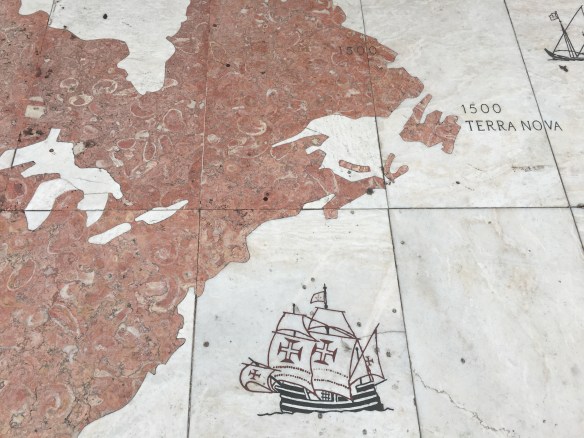
Part of my sabbatical journey took me to Lisbon, Portugal. On the far westernmost coast of continental Europe, Lisbon was a natural launching point for the various expeditions and voyages made by Europeans during the “Age of Discovery”.

IMG_6630

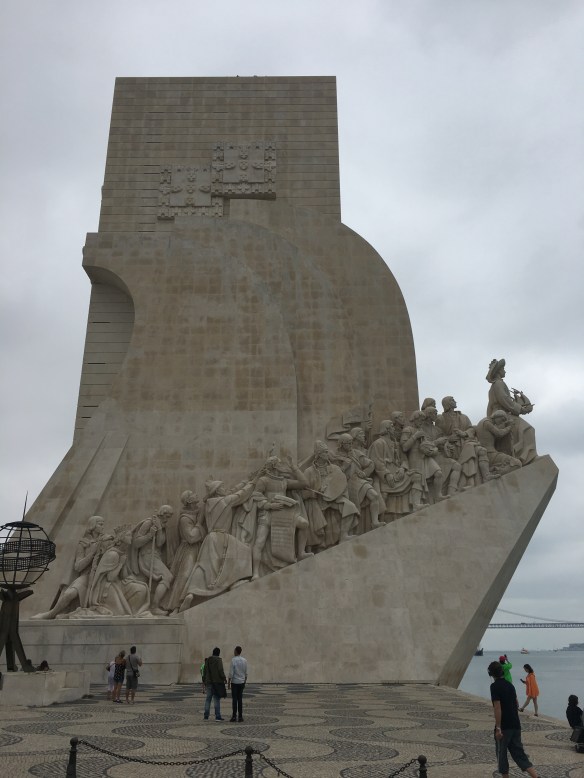
On Lisbon’s extensive waterfront at least a couple of impressive monuments stand in celebration of the achievements of European explorers and aviators. There is the looming Monument of Discovery which depicts the personalities of various explorers making their way across the ocean.

IMG_6632

IMG_6633

IMG_6631

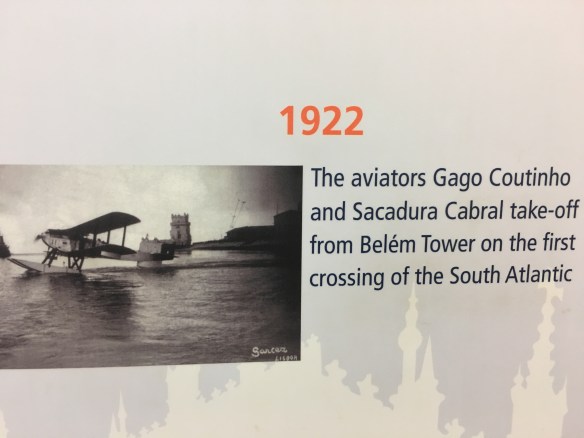
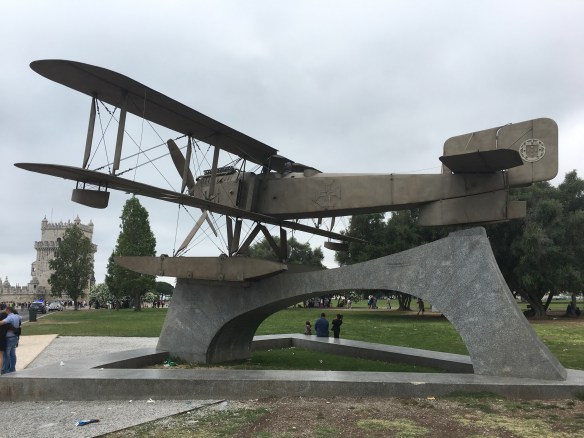
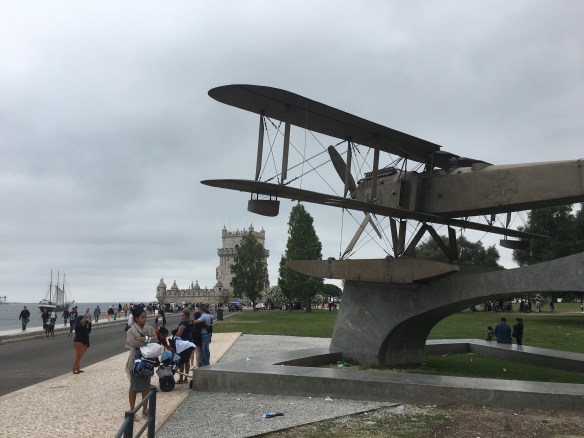
And there is an airplane monument commemorating the historic first south Atlantic crossing in 1922 flown by Gago Coutinho and Sacadura Cabral.

IMG_6628

IMG_6629

IMG_6634

In the decade following Coutinho’s and Cabral’s inaugural south Atlantic flight, another adventuring aviator, Antoine de Saint-Exupéry who is perhaps most well-known for writing the children’s book “The Little Prince”, reflected on what flying did to our understanding of the land upon which we live:

The airplane, he writes, “has revealed to us the true face of the earth. Through all the centuries, in truth, the roads have deceived us … They avoid barren lands, great rocks and sands, they are wedded to the needs of men and go from spring to spring …But our perspective has sharpened, and we have taken a cruel step forward. Flight has brought us knowledge of the straight line. The moment we are airborne we leave behind those [winding] roads …  It is only then, from high on our rectilinear course, that we discover the essential bedrock, the stratum of stone and sand and salt…

“Thus do we now assess man on a cosmic scale, observing him through our cabin windows as if through scientific instruments. Thus we are reading our history anew.”[2]

As we retell our history, as we seek understanding of what and how it happened, do we take the winding road, or do we take to the skies?

Amos the reformer was a prophet in ancient Israel. He challenged especially the northern kingdom in the eighth century B.C.E. to accept a new way of worshipping God. No longer where they to worship at the old shrines established by earlier prophets Samuel, Elijah, and Elisha at Beer-sheba, Bethel and Gilgal. Now, they would have to learn to worship God in a central location, at the temple in Jerusalem.[3]

In order to persuade them, he railed against the rituals and heartless pomp often associated with worship in that day.[4] The Israelites’ understanding of their own history needed changing. Without denying or changing the history itself, Amos helped them grow into an appreciation of the centralized worship which was not inconsistent with the Hebrew faith, a faith that had always emphasized care for the poor, the widow, the destitute. As such, Amos was “an agent of reformation”[5].

Whether we speak of ancient Israel, or the Reformation, or the Age of Discovery, or World War Two, or present day Canada, our remembrance is being reformed.

This first week of November is Treaties Recognition Week in Ontario. Listen to what perspective is offered in the writing of our history. Again, this perspective is not untrue. It simply offers a fuller understanding of what happened when Europeans ‘discovered’ this land:

“This native land was the home of many peoples, who have lived here for centuries and millennia. There is extensive archaeological evidence to confirm this statement. North America was occupied long before European strangers from across the ocean ‘got lost’ on their way to India and ignorantly named the inhabitants ‘Indians’.

“The residents of this new land had a deep regard for the practice of hospitality. So they welcomed the strangers to come ashore and opened their lives to these ‘lost’ explorers. This invitation to step out onto the land conveyed a message that did not make sense to the newly-arrived who had their own primary interests; wealth and resources.

“These alien visitors were nominally Christian. They were supported by ‘Christian’ interests intermingled with commercial and imperial motives. The biblical foundations and the practice of hospitality had been lost or buried under the exercise of abusive power that appears to be the inevitable companion of empires seeking to expand their influence and control. Equally forgotten or ignored was the fundamental biblical concept of covenant whose goal is establishing and nurturing respectful relationships that honour the Creator.

“These European strangers had been told by their highest authorities that any people unlike themselves actually were nobodies. The Doctrine of Discovery … reminded the newly-arriving aliens that they were superior to the ‘nobodies’ greeting them in hospitality. The rest is history and now we are trying to ‘get it right’ so that we can discover what it means to live in peace and mutual respect. It is time to set aside suspicion and abuse so that we can again become hospitable to one another as well as to contemporary visitors.”[6]

This anniversary year we sing “O Canada” and this Remembrance Day we’ve worn our poppies. It is important that we remember. It is important that we commemorate our history, good and bad.

How we remember is important, too. What aspects of our remembrance we emphasize speak loudly about the kind of people we are and aspire to be.

Amos presented a pretty bleak picture of Israel’s plight in the eighth century B.C.E.  The tone of his message is harsh, doom-and-gloom. It seems the Israelites can do nothing to avoid the inevitable calamity that awaits. It’s easy to lose hope and despair in the present circumstances. It doesn’t look good, what with all that’s going on in the world today.

From the perspective of history, though, we know how the story ends for them. We know the people of God are headed to the trials of Babylonian exile a couple of centuries later. We also know that one day, they do return to Jerusalem to restore the temple worship and re-build their lives at home.

Antoine Saint-Exupéry tells the story of when he and his friends from northern Europe invited some north Africans from the Sahara to visit with them in France.[7] These Bedouin, up until this point in their lives, never left the desert; they only knew the scarcity of water that defined so much of their lives and perspective.

When they climbed in the foothills of the French Alps they came across a thunderous waterfall. The French explained to their astounded friends that this water was enhanced by the Spring run-off of melting snows high above them. After minutes of silence during which the Africans stood transfixed before the bounteous and gorged scene before them, the Europeans turned to continue on their mountain path.

But the Africans didn’t move.

“What are you waiting for?” Saint- Exupéry called back.

“The end. We are waiting for the water to stop running. A stream of water always runs out. We are just curious to see how long it takes.”

They would be waiting there a long time. The prophet Amos concludes his diatribe by doing what so many other prophets of Israel do: They call on the people to have faith in God’s action in the world, God’s righteousness and justice. “Let justice roll down like waters, and righteousness like an ever-flowing stream.”[8]

God’s justice never runs out. The waters of God’s grace, mercy and truth never cease flowing. Our perspectives, our experience, our opinions are limited and sometimes scarce, if we rely on these alone.

But God’s work continues to gush forth in and all around us. Let us trust and have faith in the never-ending flow of God’s love and presence in the world today. So we may grow into the fullness of God’s vision for us all.


[1]  “From Conflict to Communion: Lutheran-Catholic Common Commemoration of the Reformation in 2017” (Leipzig: Evangelische Verlagsanstalt/Paderborn: Bonifatius, 2013), p.16

[2] Antoine Saint-Exupéry, “Wind, Sand and Stars” trans. by William Rees (New York: Penguin Classics, 2000), p.33-34.

[3] Wil Gafney in David L. Bartlett & Barbara Brown Taylor, eds., “Feasting on the Word: Preaching the Revised Common Lectionary Year A Volume 4” (Kentucky: WJK Press, 2011), p.266-270

[4] Amos 5:18-24

[5] Wil Gafney, ibid., p.268

[6] Reconciling Circle: reconcilingcircle@execulink.com, Daily Readings for Treaties Recognition Week: 5-11 November 2017, Day 1 “Have You Ever”

[7] I summarize and paraphrase his telling from “Wind, Sand and Stars”, ibid., p.54-55

[8] Amos 5:24

Faith in the dark

Sixteenth century Reformer Martin Luther claimed we are “justified by faith”. That means, we are in a right relationship with God because of the gift of faith in us.

Anyone and everyone, therefore, can live in faith. And there is nothing anyone of us can do to earn good favor with God.

Faith, to Luther, was to trust in God and God’s promises, despite your circumstance or any evidence to the contrary. What validates faith in you is not your external situation or material well-being, but God’s purposes, intentions, and promises for your life and the life of others.

Nevertheless, faith is not something you have. It is still something you do, but not to save ourselves. How do we deal with this paradox?

A brother once asked an older monk in a desert community, “Which is holier, someone who leads a solitary life for six days a week, giving himself much pain; or, another who simply takes care of the sick?”

The old man smiled and replied, “Even if the one who withdraws for six days were to hang himself up by his nostrils, he could not equal the one who serves the sick.”[1]

Self-denial and isolation never substitute for an active faith born out of love for our neighbour.

“Give to Caesar what belongs to Caesar,” Jesus answers the trick question posed to him by the Pharisees, “And give to God what belongs to God.”[2] The giving-to-God part, we get. But giving to Caesar?

Giving to Caesar ties us to this earth – to its politics, to its confusion, despair and hardship. Giving to Caesar, after all, was not popular among the Jews resisting Roman occupation in 2nd century Palestine. Giving to Caesar was fraught with political controversy – as it is today in the parlance of paying taxes. Giving to Caesar is not something we would normally associate with being faithful, being Christian.

But it is. Why? It certainly is not a perfect activity free from blemish and beyond reproach. But we do it anyway.

It is not a perfect thing to do faith. But when has it ever been? We give, in faith. We act, in faith. We love, in faith. Even though our response in faith is never perfect.

In faith, we always walk in the darkness. We see, using Paul’s language, “a mirror dimly” (1 Corinthians 13:12).

Medieval Spanish theologian, John of the Cross, called it “luminous darkness”. Because the darkness is also part of God’s creation. We need darkness in order to see the light.

Classical literature and art suggests the spiritual significance of darkness in one’s journey of life and faith. Parsifal’s quest for the Holy Grail begins by entering the forest at “the darkest place.” Dante begins his paradise journey “alone in a dark wood,” and it continues through purgatory and hell. Darkness is often the language of faithful, committed, spiritual people, a language and reality that cannot really be separated from light.[3]

Even in the beginning, as recorded in Genesis, the Bible brings the two together. In the first verses of Genesis, God names every day of creation “good”.[4] Except the first two days – the days when darkness is separated from light and when heaven is separated from earth. Darkness and light must not be separated. The real world, as Jesus teaches, is always a field of weeds and wheat and we can never presume to eliminate the weeds.[5] Light and dark belong together. You can’t have one without the other, to do faith.

In the Hebrew reading for today, the prophet Isaiah renders God’s words: “I create darkness”. God says that God will “give you the treasures of darkness … hidden in secret places.”[6]

This is the way of living without all the answers, living with ambiguity, living without denying or pretending away or even avoiding the contradictions of your life.

This is the way through the desert.

When King Cyrus of Persia conquered Babylon around 539 B.C.E. he let the exiled Israelites living there go back home to re-build Jerusalem. After living by the rivers of Babylon for decades, the people of Israel had a decision to make in response to their newfound freedom: Would they stay? Some did. But many – a remnant, we call them – decided to make the long trek through the desert back home.

What is more, King Cyrus of Persia did not even know God.[7] And yet, he was chosen by God to fulfill God’s purposes. God would even “go ahead”[8] of Cyrus to clear the way for God’s mission.

The way through the desert is not the way of certainty, security and safety, to be sure. The way through the desert is not an easy way. But the dark way, often in biblical times encountered in the harsh climate of the desert, is the way home. It is the way of healing, transformation and the new, good thing God is doing for us and in us and the world.

The Israelites could not avoid the desert even though they were freed from exile. They had to trust not only the dark way, they had to trust the foreigner and pagan King Cyrus to believe what he was doing for them, to believe he was in truth an instrument of God.

Talk about contradiction and ambiguity in faith! Would we, today, confer such a trust in someone outside the traditional community of faith? Would we, for example, take to heart Gord Downie’s medium of pop rock to advocate for better relationships with Indigenous People? Would we trust the revelation of God’s purposes in people of other religions, newcomers to Canada who bring with them different cultures from ours? Could these people and others also be instruments of God and God’s purposes, for us today?

The Israelites were faced with such a conundrum. And we know what they decided to do. They had to walk home in the desert, in the darkness, and trust that even through Cyrus, God’s unknowing servant, the mighty God of Israel was moving behind the scenes of everything that was transpiring.[9]

The way to healing and resolution of whatever troubles you today is a desert way of darkness. Yet, as someone once said, “In every cross we bear, therein lies a great treasure.”

A group of white settlers learned the hard way in the fall of 1849 as they set out from the Utah Territory toward gold fields in the San Joaquin Valley of California.

Taking a shortcut recommended to them by the leader of a passing pack train, they headed into a 140-mile long stretch of desert waste known to us today as Death Valley. It was a tragic mistake.

Twenty-seven wagons started into that long desert valley east of the Sierra Nevada. Only one of them came out. A survivor of that misguided party spoke of the dreadful sameness of the terrain, the awfulness of the Panamint Mountains, remembering only hunger and thirst and an awful silence.

Two months later, as the only surviving wagon topped the westernmost crest of the distant mountains, one of the settlers looked back on the place that had nearly claimed them all, and said: “Goodbye, Death Valley.” That’s how the site received its name.

But there’s another name the Spanish used to describe this God-forsaken land. They referred to it as ‘la Palma de la Mano de Dios’, the very palm of God’s hand.[10]

Could it be that even in the midst of the most dangerous climate and terrain on earth, where it’s 134 degrees (57 degrees Celsius) in the shade exposed to winds in excess of one hundred miles (160 kilometers) an hour, wanderers have found God? It is God, actually, who finds us, in the darkest most arid times and places of our own lives.

It is during these times and places where people become accustomed to risk, vulnerability and brokenness that they build an unshakable trust in the other? It is during these dark times and places where you confront your inevitable loss of control and the specter of your own eventual demise head on. It is in these moments where we have to wait for God, ask God for help, and learn to trust God over and above anything we may be able to accomplish by the might of our own hand.

In the dark, desert journeys of our lives especially, we remain inscribed in palms of God’s hands.[11] La Palma de la Mano de Dios. You may not understand all the contradictions and ambiguities of your life, right now. You may not be able to figure out all the inconsistencies and paradoxes of life. You may not be able to resolve the problems of your life or in the world.

But, believe this: There is Someone who does. As you wander in the darkness of faith, never forget that God is bringing to resolution and completion all the confusion and contradiction of your life and the life of the world.

And, it is all good.


[1] Belden C. Lane, “The Solace of Fierce Landscapes: Exploring Desert and Mountain Spirituality” (.202

[2] Matthew 22:21

[3] Richard Rohr, “Adam’s Return: The Five Promises of Male Initiation” (New York: The Crossroad Publishing Company, 2016), p.39.

[4] Genesis 1:3-8

[5] Matthew 13:24-30

[6] Isaiah 45:3,7

[7] Isaiah 45:4-5

[8] Isaiah 45:2

[9] Carolyn J. Sharp in David L. Bartlett and Barbara Brown Taylor, eds., “Feasting on the Word: Preaching the Revised Common Lectionary” Year A Volume 4 (Kentucky: WJK Press, 2011), p.175

[10] Belden C. Lane, ibid., p.231-232.

[11] Isaiah 49:16

Cape Disappointment

How do we learn to deal with disappointment?

When health concerns mount? When there are cutbacks in the company you work for? When a relationship breaks down? When someone betrays you? When you fail to meet your goal? When you lose something precious?

How, as people of faith, do we learn to deal with disappointment? When what has happened does not make sense, when we can’t understand ‘why’?

In 1788 Captain John Meares named the spot of land overlooking the confluence of the Columbia River and the Pacific Ocean, Cape Disappointment. He was disappointed that the Columbia River was simply thus, a river, instead of the fabled Northwest Passage which he was intending to find.

IMG_6125.JPG

Mr. Meares was obviously well off-course to his goal. We know today that the Columbia River begins its journey at Columbia Lake in central British Columbia, Canada, and winds itself south hundreds of kilometres into the states of Washington and Oregon before spilling into the Pacific.

IMG_6201

In keeping with the rather downer of name, the lighthouse on Cape Disappointment overlooks the hundreds of shipwreck sites off the coast. The United States Coast Guard recognizes this large area of water as the most dangerous among all the river outlets along the continental shores of the United States.

IMG_6123

Both the strong outflow of the broad and mighty Columbia competes with the powerful tides and winds generated by the largest ocean on earth. Crisscrossing currents of water create constantly shifting sand bars and opposite flow wave action that can confuse, disorient and ultimately undo any mariner navigating this passage.

IMG_5932

IMG_6320

IMG_6322

Add to this mayhem the fog which has an uncanny knack of coming in unexpectedly on the north breeze, disappearing under the burning sunshine as quickly as it appears. I stood bewildered in such a fog jam on the beach one day, unable to comprehend how a perfectly cloudless sky in beautiful sunshine can change so quickly. Signs are staked at entrances to the shores along the thirty-eight mile stretch of contiguous sand beach north of the Cape warning unsuspecting swimmers of rip currents and unstable sand conditions above and below the surf.

In short, while ascetically beautiful to the eyes, this small part of the world contains hidden, life-threatening dangers beneath the surface of things. Disappointing is an understatement when considering the potentially dire consequences of a mariner’s failed attempt at moving around the Cape, let alone dealing with the failure of not arriving at one’s goal.

IMG_6204

In the first reading for today[1], God responds to Jonah by asking questions, rhetorical though they are. Jonah expresses his anger at God for sparing the “great” city of Nineveh. God’s actions did not make sense to Jonah, even though Jonah confesses his belief in a gracious God who is “merciful, slow to anger, and abounding in steadfast love, and ready to relent from punishing.”[2] He obviously did not think much about the people of Nineveh regardless of God’s mercy. Yet he is internally divided, unable to reconcile his belief with his feelings. He can’t figure it out. He is depressed. And wants to die.

If God says anything toward Jonah’s healing, it starts with a question: “Is it right for you to be angry?” And when God provides a bush to protect and save Jonah’s life, a bush that then dies, Jonah is angry again. What does God say to Jonah’s outburst? Another question. “Is it right for you to be angry about the bush?” And to top it off, the entire book of Jonah ends rather abruptly, again with a question from God.[3] Questions. Not pat, cut-and-dry answers. Questions.

I wonder if we have tended to make God and religion into something and someone to give us quick and final answers. We demand ‘what’ from God when all along Jesus, in the wisdom tradition, is primarily teaching ‘how’. Out of the total of the one hundred and eighty-three questions that are asked of him in the Gospel, Jesus only directly answers three of them.[4] In the New Testament, Jesus’ very first words spoken to his disciples was a question: “What are you looking for?”[5]

Jesus turns the tables on the disciples, as he does time and time again. Rather than give them what they are looking for in a neat and tidy package of an easy answer, he throws it back at them. What do you want?

The first call of Jesus in our lives is a call to be honest with ourselves. Before we can do anything, we need to be true to ourselves. And commit to that lifelong struggle to move beyond our intellect and its insatiable compulsions for answers, towards actions that reflect a trusting heart. Because following Jesus in this world does not, most of the time, make a whole lot of intellectual sense. If we are being faithful.

It is not our job to know everything. God knows all. We don’t have to. Ours is a call to hold, not rid ourselves of, all the messy contradictions of our lives. Abraham, Jacob, Rebekah, Moses, David, Job, Esther, Jonah, Elijah, the disciples, Paul – they were not people who had all the easy answers to life’s complex questions. But they were trusting, obedient, and they acted. Sure, they objected to God at times. Yes, they made mistakes. If anything, the story of Jonah ought to reinforce the importance of a real, personal, topsy-turvy relationship with God. That is the stand-out characteristic of all the faithful.

During the years following the Council of Nicea in the fourth century, a common heresy re-emerged under the leadership of Eunomius, a bishop in Cappadocia (in modern day Turkey). Eunomius argued that we can understand the nature of God simply and clearly. Reflecting on what was the mystery of the Trinity, he implied that God was perfectly accessible to human intelligence.[6]

The Cappadocian Fathers, as they are called, reacted to Eunomius. Basil the Great, his brother Gregory of Nyssa along with John Chrysostom insisted on the incomprehensibility of God to the human mind, and the necessary limits of theological discourse. Their position became the orthodox, Christian stance, ever since.

I wonder, ever since the Reformation, the industrial, scientific revolutions and enlightenment era of the last few centuries in especially the western world, haven’t we slipped back into this heresy once again? Pretending, even though we may not be aware of it, that we should have answers to all of life’s important questions.

It is our natural humanity to strive to know everything. But if we are honest, our minds certainly cannot grasp fully such incomprehensible realities as the mysteries of love, suffering, death and God. Here, we must trust and let go of all our pretenses. “For,” in the words of the prophet Isaiah, “my thoughts are not your thoughts, nor are your ways my ways, says the Lord.”[7]

Disappointment in life is a doorway to a deeper awareness of God’s truth and presence in our lives. Our varied expressions of worship, of living out God’s call, our prayer lives – all these are not so much, then, a matter of petition, of doctrine, of rule-setting-and-following, of solving the discrepancies and inconsistencies of the bible and theological discourse.

Rather, our complex lives with all the joys and disappointments become the tableau, the canvas, upon which we discover we are not alone. And that God is ever present and faithful, regardless of what we do or think. You can’t make God love you one ounce more – by all your right thinking and having all the right answers – than God already loves you right now.

Often, the disappointments of our lives bring us to this realization more than all of our accomplishments and successes. Because if we are going to get anywhere in our lives, we need to hope and believe, despite the disappointing circumstances of our lives.

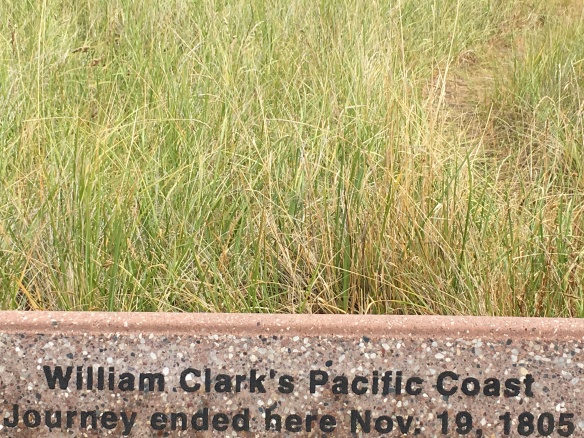
Cape Disappointment marks another very important place in the history of North America. It is not just a place that signifies disappointment, tragedy and danger. It is also the very spot where the famous Lewis and Clark expedition reached the Pacific Ocean in November of 1805. Yes, Lewis & Clark met with many a disappointment and setback along the 3700-mile route up the Missouri River, across the American Midwest, over the Rocky and Cascade mountains and down the Columbia River Gorge that took them a year-and-a-half to accomplish.

IMG_6400

On the journey, were they ever absolutely certain they would make it? As it was, they must have taken their disappointments in stride. For on an uncharacteristically calm day in a stormy November, they made their final push around the western Cape and finally met the limitless horizon.

Significantly, the Lewis and Clark Expedition was called the Corps of Discovery. Today, a 10-mile-long, well-groomed paved path winds through the dunes of Long Beach Peninsula and up into the forest of the Cape. It is called the “Path of Discovery”.

IMG_5994

Cape Disappointment is intricately tied to the Corps of Discovery, where both failure and success are entwined in a rich and diverse history of exploration. The spirit of questing celebrated on these shores includes and transcends both the unique events of human tragedy and human achievement. You cannot have one without the other. In one place. In one human being. Each of us is invited to the journey that includes, embraces and transcends disappointment and failure.

At some point along the journey, you need to have hope in order to continue. Even in the midst of all our unknowing, we can believe and trust in the solution, before it happens.

It’s called faith.

IMG_5922.JPG


[1] Jonah 3:10—4:11, NRSV, Proper 20A/Ordinary 25A/Pentecost+16

[2] Jonah 4:2

[3] Jonah 4:4,9,11, NRSV

[4] Richard Rohr, “Adam’s Return: The Five Promises of Male Initiation” (New York: The Crossroad Publishing Company, 2004), p.112

[5] John 1:38, NRSV

[6] Belden C. Lane, “The Solace of Fierce Landscapes: Exploring Desert and Mountain Spirituality” (New York: Oxford University Press, 1998), p.105

[7] Isaiah 55:8, NRSV

photos by Martin Malina IMG_5940

Even there your hand shall lead me

Later this summer I will be going on a 10-day canoe-camping trip on the French River. Last summer my friend and I did three nights and four days on a smaller portion of the French; this summer we want to challenge ourselves to do the whole, or at least most, of the river all the way from Lake Nipissing to Georgian Bay.

Because the challenge is greater, I felt I needed to take a First Aid Course in preparation, so I could be of some use to the company with whom I travel.

I learned some interesting facts about providing First Aid. Did you know that in all of Canada, except Quebec, you and I are not legally obligated to provide First Aid to anyone experiencing a medical emergency? In Quebec, however, we are legally bound to help someone who is in distress. It is, from Quebec’s point of view, a basic human right for any person to receive first aid in an emergency.

In class we discussed reasons why we may choose not to give First Aid: For fear of hurting them more, for fear of harming oneself, and of course for fear of legal repercussions. Our instructor countered this latter objection by reminding us of the “Good Samaritan Act” which governs any attempt in good faith to help someone in an emergency. So, legally, we were off the hook.

But we may still hesitate to take the risk and commit ourselves to helping someone. It would be easier to pretend we didn’t see it, get on with our busy day and avoid the added stress and responsibility.

Every time I read the wonderful story of the so-called “Walk to Emmaus” (Luke 24:13-35), something else piques my interest and causes me to reflect. I believe there is so much depth to this story while it provides a summary of what we believe as Christians. Particularly, this time, I wondered what Cleopas and his friend had to do with this incredible encounter with Jesus.

It seems they really had nothing to do with making this encounter happen, when Jesus appeared to them on the road that first Easter day. As far as we can tell, they weren’t expecting to meet Jesus let alone praying for it. And, ironically, when they do finally recognize the living Lord Jesus at the breaking of the bread, Jesus disappears from their sight! Truly, this event happened to them.

But were they merely passive recipients of this encounter? There is one turning point in the story, where things could have gone one of two opposite directions. Up until that point, they had not yet consciously recognized the man walking with them as Jesus himself. After that point, the table was set — literally — for their full recognition of Jesus.

Had they not invited Jesus to stay with them, for the evening was nigh, they would have missed out on a wonderful conclusion to their day. “Abide with us, for it is evening,” they invited this still stranger to them into their home. They could have chosen to let the man on his way. They could have chosen not to pay attention to their burning hearts. They could have ignored the subtle yet real ‘promptings of the Spirit’ we may call it today, within them.

I learned some thought-provoking statistics on my First Aid course this week. There we were, some twenty-five of us stuffed into a tiny room above a car repair shop in Renfrew. We were from all walks of life. Local businesses paid for their employees to take this course; therefore, my class mates were prompt and motivated to learn their First Aid techniques, principles and procedures. Certificates were issued upon successful completion of two exam periods and practice with bandages, splints and manikins.

Then, our instructor posted these statistics after asking us: Presuming it was done properly, what was the success rate of providing only chest compressions (sets of thirty thrusts downward over the chest) to someone who was unconscious and not breathing? What was the success rate of doing just that? 1.2%.

Without the aid of an Automated External Defibrillator (AED), adding ventilation to the chest compressions (pinching the nose and breathing in sets of two into the casualty’s mouth) raises the chance of recovery to only 5%.

I thought to myself: There is hope to humanity! Because it would be easy to just not bother! No wonder we may feel unwilling to commit to providing First Aid to an unconscious stranger on the street! What’s the point of doing that, let alone learning how to do it?! The chances of success are so slim!

And yet, there we were. These classes, I am told, are usually full. Businesses and organizations require their employees who engage with the public to know First Aid. They employ resources to make sure their employees have this training. All this effort for at best a 5% success rate.

But the ethics of it would argue: It is worth trying. Better to do something, than do nothing at all.

Sometimes I wonder whether being the church feels a bit like that. We expect the church to function at a 100% success rate; and when we fail the odd time, well — the church is no good, don’t bother. What is the worth of it all?

People are still bad. Failures in humans abound and seem to persist against all good intentions and efforts to be good. The message of the Gospel doesn’t always seem to make any positive difference in our lives. So, what’s the point?

Driving on Clyde Ave the other day, I noticed the sign outside the Reformed Church that reads: “Growth doesn’t come without change. Change doesn’t come without some risk.”

Following the example of Cleopas and his friend on the road to Emmaus, the only thing we can do, it seems, is learn to pay attention to those rare moments whenever our hearts are burning with love. And then, practice making the invitation in response to that nudging of our hearts and open our lives to those moments when we sense something shift within us. We may not be able to put our finger on it just yet, but respond nonetheless.

And then the rest is up to God. God is free. God enters our lives and walks with us whether we know it or not. God then ‘disappears’ from our awareness whenever God wants. But whether we feel God near or far, God is there. “Am I a God nearby and not a God far off? Who can hide in secret places so that I cannot see them?” says the Lord. “Do I not fill heaven and earth?” (Jeremiah 23:23-24).

The God of Easter is alive and present with us no matter where on earth we go. This is the good news of the resurrection. God is alive, and so we are called to rise up in renewal and joy. “If I take the wings of the morning and settle at the farthest limits of the sea, even there your hand shall lead me and your right hand shall hold me fast” (Psalm 139:9-10).

It is worth it. Even though we fail time and time again. There is the hope. There is the promise. There is the opportunity. There is the constant presence of God.

Buen Camino!

When in Sunday School decades ago we played the roles of well-known bible characters, I remember the only thing worse than being a “Judas” was to be a “doubting Thomas”.

We wanted to be Abraham, Moses, Kind David, Samson, Queen Esther, Rachel, Ruth, The Magi, Peter, Paul, John. We wanted to be Joseph or Mary, or even Jesus himself!

But Judas the Betrayer, or Thomas the Doubter? No. Indeed Thomas has been treated quite negatively in much of Christian preaching and teaching. He is often held up as a negative role model.

Let’s take a closer look at the text about Jesus’s resurrection appearance to his disciples (John 20: 19-31). Because there is no condemnation of Thomas. Recall the disciples are hiding behind locked doors in Jerusalem fearful of the authorities. Unless Jesus’ words to Thomas are inflected in an accusing way, they do not need to be read as a condemnation: “Have you believed because you have seen me? Blessed are those who have not seen and yet have come to believe” (John 20:29). They simply affirm that those who believe without first-hand experience of the risen Jesus are also blessed. (1)

But can we blame Thomas? Thomas only desires his own firsthand experience of the risen Jesus. He is unwilling to accept the secondhand testimony of others. And, his desire is granted: Jesus appears to him. Prayer answered!

I wonder if Thomas today doesn’t really represent so many of us who deeply yearn and seek for a first-hand experience of God, and are simply and naturally unsatisfied with hearing it ‘second-hand’. Hearing someone else’s first-hand experience of God is inspiring and instructional to be sure. We learn about someone else’s experience of God’s presence, healing, grace and wonder — whether that person is from the bible or our grandparents or the person sitting next to us in worship. But someone else’s experience of God can never be a substitute for our own.

What we may be looking for, is to be more like Thomas: Honest in our desire for a first-hand experience of the living God. Yearning to taste and feel more of the goodness of God in our own lives and in the world. Striving ourselves to make the world a better place for everyone. We may be unsatisfied with basing our commitment to a life of faith on someone else’s testimony. We may, like many people today, be seeking our own experience of God and suffer from what I would call the ‘second-hand syndrome’. Perhaps Thomas needs to be our role-model more than anyone else in the bible today!

Of course, the benefit of the Reformation was to teach us an important distinction in all our striving: Our motivation is important to be aware of, because if we strive to do good all in order to make ourselves right before God we will most certainly miss the mark. “We confess that we are captive to sin and cannot free ourselves,” we say in our Confession. God initiates the saving relationship. God moves; we only second the motion.

And yet, our striving, our trying, our good work as response to God can help create the space and the climate in which God’s grace is made clear to us, is given to us, and in which we are most ready, then, to receive God’s forgiveness, love and mercy. Being pro-active, doing things with one another in the church, yearning and striving for God — these are antidotes to the ‘second-hand syndrome’ and a prescription for a healthy life of faith.

Last week on the first Sunday of Easter, I emphasized the words from Matthew’s account of the Resurrection of Jesus outside the empty tomb that first morning. Jesus instructs the women: “Do not be afraid; go and tell my brothers to go to Galilee; there they will see me” (Matthew 28:9-10).

When resurrection happens today, as it always has beginning with that first day, there is movement forward. Not backward. As I said last week, there is no turning back once resurrection happens. The disciples are not instructed to meet Jesus in the empty tomb where the miracle happened. No. The instruction is quite clear: Get moving! Get out of here! Go to Galilee. Go to where I wait for you. In other words, don’t stay where you are! Do something!

In 2017 the Lutheran Church worldwide celebrates the 500th anniversary of the Reformation. We call it Reformation 500. ‘Five hundred’ is an important number in all the dialogue surrounding this momentous occasion. The national church has even set up the Reformation Challenges for the church across Canada to meet. And each of those goals are pegged at some variant of 500:

Five hundred refugee sponsorships (which already has been exceeded), five hundred scholarships for school children in the Holy Land, five hundred thousand trees planted in Canada, and five hundred thousand dollars raised for the Lutheran World Federation endowment. You can visit elcic.ca for the most recent update on where we are at in meeting all those goals. And please consider making a personal contribution towards any one of those worthwhile causes.

I’d like to up the ante. Let me call it the ‘Reformation 800 Challenge’. Eight hundred is the new Five hundred. Not only are we celebrating 500 years of Reformation this year; we turn to the future and pray not just for 500 more years but … 800. Why not?

Let that number, eight hundred, symbolize a confidence and hope-filled trust that God has more good than we can ever imagine in store for us in the church far into the future. And this is what I propose in this year’s Reformation 800 Challenge:

Next month, I begin walking the 800 kilometres from Irun, Spain to Santiago de Compostela in Galicia. The route I follow skirts the northern coast of Spain from East to West. This is my Reformation 800 Challenge.

I walk a pilgrimage route, one of the most ancient on the planet. This Camino (which means the “way”) has been an important spiritual discipline for almost a thousand years for millions of Christians.

A pilgrimage means that what happens on the outside of us in our physical reality mirrors the change and challenge that happens on the inside of us. In other words, outer and inner realities find some kind of resonance on a pilgrimage experience. It’s on a pilgrimage where many discover or re-discover their ‘walk’ with God in life, are renewed on their ‘path’ and/or are ‘re-directed’ to new ways of living.

I would like you to do this with me. Yes. I invite you to consider doing a Reformation 800 Challenge with me, in your own way, with your own resources and plan.

For example: In order to reach the goal of 800 kilometres in under two months I plan to walk at least 20 kilometres a day. So, while I’m gone would you consider a physical discipline whereby you, for 20 minutes a day, do something intentional for your own health and well-being: walking, cycling, lifting a small weight, stretching, doing yoga, etc.? It doesn’t have to be ‘extreme’; something simple even if you are confined to a chair or bed — for 20 minutes a day, do something that involves your body in ways you have not normally been accustomed. Be creative.

A piece of wisdom for pilgrims that has guided my preparation and planning is: Walk Your Way. Walk your own Camino. This is nobody else’s walk but yours. Do what you want and need to do, in your own way, according to your own pace.

You can interpret this challenge in many ways. For example, if you are very active and move about a lot in your daily life already, perhaps sitting still and quietly for twenty minutes a day in silent meditation and prayer is your way. Or, take twenty steps a day. Do twenty reps of a particular exercise or stretch. But whatever you do, the important thing is that you are challenged to attempt and remain faithful to a daily, body-involving discipline. Do it your own way.

Keep a journal or write your notes on a piece of paper that you stick to the fridge door. Write the date, and the accomplished task, so that over time, you can track your progress.

Your goal: 800 of something before the end of this year — whether eight hundred minutes, steps, kilometres. And here’s the good news. You already have a head start on me. I don’t begin until mid-May. You can start this afternoon, on your Reformation 800 Challenge! And, you have until the end of the year; I need to be finished my walk by early July.

After I return from my sabbatical, I would very much be interested in having a conversation with you about our experiences on our pilgrimage. They say that for pilgrims close to reaching their destination in Santiago, many confess that by the end it was no longer them walking the Camino, but the Camino was walking them. In other words, the experience of doing it created deeper trust in the way of God, of faith and peace within them. The physical reality converged with their inner life in positive ways.

As you contemplate what your discipline will be, as you think about what you will do, as you plan your own ‘pilgrimage’ — here are some questions for your own reflection and which can provide a basis for our own conversation when I return. Ask yourself:

In Preparation

What will you do to reach ‘800’ by the end of the year? In time? Kilometres? Steps? Reps? And how will you do it on a daily basis? (for example, 20 minutes/kms/reps/steps, etc. per day)

What are your intentions for this experience? What do you hope for by the end? The first recorded words of Jesus to his disciples in John’s Gospel are: “What are you looking for?” (John 1:38). How do you know you will find it if you don’t know what you are looking for in the first place?

What do you think you will discover about yourself? Saint Augustine once said that knowing yourself is a stepping stone to knowing God.

How will you record your journey?

On the Journey

Where did God find you? What experiences along the way brought you close to God?

What was the best part of the experience so far? What has been the greatest challenge?

Who did you meet along the way? Or, describe your relationships with others during the experience.

What were you grateful for?

Nearing the end / Getting close to the goal

What does it mean ‘to arrive’?

How does it feel to be reaching a destination after great effort and clear motivation for the journey?

What sacrifices did you make in order to get this far on the journey?

How will you celebrate and honour the ending of the journey?

After the Journey

What was the most memorable part of the whole experience?

How did you deal with disappointments and/or failure during the journey?

How do you now view God?

How will you keep what you learned alive in your regular life now that the journey is over?

Has anything shifted within you as a result of the experience? If so, how would you describe this change within yourself?

How will you share your journey and what you have learned with the important people in your life?

As we soon begin our pilgrimages, may God bless us on the way. And to all we meet along the path, may we wish them, “Buen Camino!”
1 — Marcus Borg & John Crossan, “The Last Week: What the Gospels Really Teach About Jesus’ Final Days in Jerusalem” (New York: Harper One, 2006), p.202-204.

Something always has to die …

(The following is taken from Richard Rohr’s commentary in his book “Wondrous Encounters; Scriptures for Lent”, with my added words.)

The crowds were gathered in Jerusalem for the Passover Festival. This ritual is described in Exodus 12, and provides the basis of the Holy Communion in Christian practice.

In the original ritual, people were to procure a small year-old lamb for each household. They were to keep it for four days — just enough for the children to bond with it and for all to see its loveliness — and then “slaughter it during the evening twilight”! Then they were to take its blood and sprinkle it on the doorpost of the houses. That night they were to eat it in highly ritualized fashion, recalling their departure from Egypt and their protection by God along the way.

This practice was meant to be a psychic shock for all, as killing always is. Thank God, animal sacrifice was eventually stopped. The human psyche was evolving in history to identify the real problem and what it is that actually has to die.

The sacrificial instinct is the deep recognition that something always has to die for something bigger to be born. We started with human sacrifice (Abraham and Isaac), we moved here to animal, and we gradually get closer to what has to be sacrificed — our own beloved ego — as protected and beloved as a little household lamb! (1)

We will all find endless disguises and excuses to avoid letting go of what really needs to die for our own spiritual growth. And it is not other humans (firstborn sons of Egyptians), animals (lambs or goats), or even ‘meat on Friday’ that God wants or needs.

It is always our beloved passing self that has to be let go of. Jesus surely had a dozen good reasons why he should not have to die so young, unsuccessful (sentenced to death, a criminal), and the Son of God besides!

By becoming the symbolic Passover Lamb himself, Jesus makes the movement to the human and personal very clear and quite concrete. It is always “we” — in our youth, in our beauty, in our power and over-protectedness and self-preservation instinct that must be handed over. Otherwise we will never grow up, big enough to ‘eat’ of the Mystery of God. In short, we have to ‘get over ourselves’, individually and collectively as the church, before we can be effective and authentic followers of Jesus in the world today.

Good Friday is really about “passing over” to the next level of faith and life. And that never happens without some kind of “dying to the previous levels.” This is an honest day of very good ritual that gathers the essential but often avoided meaning of Good Friday: Necessary suffering; that is, something always has to die for something bigger to be born.

One of the Gospel stories repeated every year during Holy Week is the anointing of Jesus by a woman named Mary at Bethany (John 12:1-11). Even though the text does not identify her as a sinner, this has been the common understanding. This alone should reveal our rancid preoccupation with sin.

The point in this story, again, is not the sin but the act of love towards Jesus, whom the woman correctly accepts (unlike the twelve disciples) the coming death of Jesus. She anoints Jesus’ feet with expensive nard, which is the anointing oil for death. Jesus’ favourable response to Mary’s act clearly suggests her act of love trumps any failing on her part, or the part of the poor, or on our part!

As always, love of Jesus and love of justice for the neighbour are just two different shapes or sides to the one Love, that gets us beyond our over-thinking sin. A simple act of love gets us beyond our negative self-obsession, which only keeps us stuck in selfish, egoistic preoccupation.(2)

May our praise of God this day, in Jesus’ acceptance of his death on a Cross, invite each of us into commitments and acts of love toward God, toward one another, and to the world in need. Then, we get the point of the story. And we affirm, that something bigger indeed is just around the corner.


1 — Richard Rohr, “Wondrous Encounters; Scriptures for Lent” (Cincinnati, Ohio: Franciscan Media, 2011), p.133-135

2 — ibid., p.126-127

Trust the down

I hate roller-coasters. It’s about the fear of letting go of control on the way down, that’s the problem. The couple times I’ve had the guts to go on a roller-coaster, I didn’t enjoy the experience because I couldn’t let go on the way down. Someone took a photo of me and my friend in the middle of one of those rapid descents: My friend who loves roller-coaster — his arms were up in the air and a big smile beamed across his face.

Sitting beside him, I was the opposite: My hands were glued to the bar in front of us, and my lips were pursed tightly and my eyes looked like they were going to pop out of their sockets. It looked as if I were staring death in the face, going down that roller coaster.

I read this week: “Humans are the only creatures who have knowledge of their own death. Its awareness creeps on us as we get older. All other animals, plants, and the cycles of nature themselves seem to live out and surrender to the pattern of mortality.

This places humans in a state of anxiety and insecurity from our early years. We know on some level that whatever this is that we are living will not last. This changes everything, probably more than we realize consciously. So our little bit of consciousness makes us choose to be unconscious. It hurts too much to think about it.” (1)

We humans find ingenious ways to avoid this journey, especially through Holy Week, that invites us to contemplate not only human death but the death of God in Christ Jesus. No wonder, especially among Protestants, attending services through Holy Week is not popular. This is not easy work, to face Jesus’s and our own mortality. No fun in that.

One way we avoid and deny this awareness of our own mortality is to find a scapegoat — by focusing all our negative energy on something or someone else. Our scapegoat is that which deludes us into believing that its destruction will somehow solve all our problems and make everything better again. Our scapegoat also shields us from taking responsibility for and dealing with our own problems.

Today, the scapegoats are easy to identify: The immigrants, the newcomers to Canada, the Muslims, the gays, the corrupt politicians, the government, the media, the church hierarchy — you name it. The blame game is alive and well, even in the church.

And then what happens is what many wise teachers through the ages have said: When we deny our own suffering we make others around us suffer. Which is unfair and unjust. Because the Gospel was given first and foremost to the followers of Jesus. 

“The time is fulfilled and the kingdom of God has come near,” The Gospel Mark thus records Jesus’s first words to his own people in Galilee. And to them he said, “Repent and believe in the Gospel” (Mark 1:15). We are the ones addressed by the Gospel — those who are already in the church, in the family of God. Not those so-called ‘bad’ people out there.

Jesus was the scapegoat whose destruction would solve the high-priestly authorities’ problems. By having Jesus put to death, the religious authorities could maintain their power and privileged position in Jerusalem, the Roman Emperor’s fears of insurrection would be temporarily alleviated, and the Pax Romana (the Roman rule) would continue in the land.

As unjust as killing Jesus was — for many even in authority including Pilate saw that Jesus was innocent — Jesus was the convenient scapegoat whose death on a cross would make it easy on those in power. And maintain the unjust status quo in the land.

After hearing of Jesus’ raising of Lazarus from the dead, the high priest, Caiaphas, advised the rest of the leadership in Jerusalem: “It is better for you to have one man die for the people than to have the whole nation destroyed” (John 11:50). Rather than do the right thing in the moment, the end — a false peace — justifies the unjust means. Classic scapegoat -ism: Jesus became the convenient victim in the human power play of first century Judean politics.

It’s ironic that our fear, denial and avoidance of death is actually that which keeps us stuck in scapegoating, in blaming others, in all the motivations for war and violence in the world. You could argue that all of what is bad in the world today stems from humanity’s continued ambivalence and denial of death.

What’s amazing is that Jesus, knowing all along this human condition, chose to become a victim to it. From his privileged unity with God the Creator, he chose to connect with humanity. The reading on Palm Sunday from Philippians 2:5-11 describes this downward movement of God in Christ into the “enfleshment of creation” (2), and then into humanity’s depths and sadness, and final identification with those at the very bottom, “taking the form of a slave” (Philippians 2:7), to death on the Cross.

Jesus represents God’s total solidarity with, and love of, the human situation. It’s as if God is saying: “Nothing human, now, is abhorrent to me.” This is incredible.

The Cross represents the divine choice to descend. It’s almost total counterpoint with our humanity that is always trying to climb, achieve, perform, justify and prove itself. The witness of the Cross is the divine invitation to each of us to reverse the usual process.

Christians worldwide have a great gift and witness in the Gospel of Christ crucified. The divine union with humanity suggests that everything human — including death, losing and letting go that is so much a reality in all our lives — is embraced by God’s love. The reason God loves even our shadow sides, is because God experienced the fullness of its brutal and unjust consequences, in the death of Jesus.

Jesus is like the human blueprint for our own transformation. Because who would have presumed that the way up could be the way down? It is, as Saint Paul writes, “the secret Mystery” (Romans 16:25).

Trust the down, and God will take care of the up. The hymn in Philippians 2:5-11 says that Jesus leaves the ascent to God, in God’s way, and in God’s time. Because Jesus went to the bottom of all that is human, “God lifted him up, and gave him the name above all other names” (Philippians 2:9-11).

Of course, they say the joy of a roller coaster’s twists, turns and rapid descents is knowing and trusting that the ride eventually and surprisingly goes up. What an incredible rush! Carl Jung wrote: “Not wanting to live is identical with not wanting to die.” (3) The roller coaster analogy suggests that when we refuse to descend, when we avoid facing our own mortality, and avoid taking responsibility for our own suffering, we also don’t really live.

Conversely, we can only truly live when we have faced and come to terms with the reality of our own mortal, imperfect human lives. Being fully human is being fully spiritual, faithful and alive. Saint Irenaeus was first to say in the second century that the glory of God is human being fully alive.

Trust the down, and God will take care of the up. When challenges, disappointments, defeats and failures come your way, don’t rush into avoidance techniques, distractions, denial of the problem or blaming others for the circumstance you find yourself in. What do these events have to teach you? Where is God in the midst of your suffering? What are the signs of grace therein? Christian faith asserts that God is revealed precisely in those lowest moments. Jesus believed this. It was trust in his Father that got Jesus through his passion, suffering and death.

Trust the down, and God will take care of the up. Resurrection was just around the corner.


1 — Richard Rohr, “Wondrous Encounters: Scripture for Lent” (Cincinnati Ohio: Franciscan Media, 2011), p.100.
2 — Rohr, ibid., p.123
3 — cited in Rohr, ibid., p.123.

The good crowd

I was ten years old when my parents shuffled me and my brother into one of the front rows of the main, outdoor theatre in the small, Bavarian town. The crowd pushed and shoved for privileged seating to watch the story of Jesus’s last days acted out daily by the town’s folk every ten years.

In fact, the crowd on the large stage did not appear any different than the tourists who got up very early in the morning for tickets to the Oberammergau Passion play.  

This coming Holy Week is rich with story. And when we read the stories about the last days of Jesus — full of drama, plot, and character — we will naturally identify with elements of the story-telling. Our worship is designed to help us identify, for example, with the crowds.

This morning, we sing “Hosanna” and wave our palm branches identifying with the enthusiastic crowd that first day when Jesus entered the city. “A very large crowd spread their cloaks on the road, and others cut branches from the trees …” (Matthew 21:8). Some years in Holy Week we dramatized and therefore simplify the trial scenes. We have individuals and groups speaking the various parts of the story. So, for example, ‘the crowd’ is played by the whole congregation who chants those lines together, such as “Crucify Him! Crucify Him!” (Matthew 27:23) and “He deserves death!” (Matthew 26:66).

Undergoing some mysterious metamorphosis sometime between Palm Sunday and Maundy Thursday, the crowd turns to the dark side. In a tradition that goes back centuries, Christians have most often portrayed the Jewish crowd around Jesus during his last days as rabidly and violently against him. We see it in Passion plays, the most famous of which is at Oberammergau in Bavaria. The evil crowd is also central to Mel Gibson’s film, “The Passion of the Christ.”

This over-interpretation has unfortunately led to harmful, anti-semitic justification against the Jewish people throughout the dark side of Christian history.

It may be easy to identify with these ‘bad’ crowds more than anyone else in the stories. Through the journey of Lent, we have struggled with the shadow self of our own lives, carrying our own cross so to speak, alongside Jesus. We have confessed our sin. Indeed, at the climax of Christ’s Passion, we pound nails into the cross on Good Friday. We so readily identify with the crowds, even saying that ‘we’ have crucified Jesus by our sin. It is little wonder why we come to these rather negative views, from Scripture.

What these portrayals fail to address, however, is this: Why, if the Jewish crowd was so against Jesus, was it necessary to arrest him in the darkness of night with the help of a traitor from among Jesus’s followers? Why not arrest him in broad daylight? And why do they need Judas?

What we discover is a positive, more balanced approach to the identity of the crowd. First we need to understand why the high-priestly authorities wanted to do away with Jesus.

“[The chief priests and Pharisees] wanted to arrest him …” (Matthew 21:46).

If the chief priests and Pharisees let him go on like this, everyone would believe in him, and the Romans would then intervene and execute them (John 11:48). Moreover, the authorities were not just afraid of the Roman Emperor, who was the recipient of Judean tax money and demanded political allegiance from those put in a position of power by the Emperor to keep the Pax Romana in the region. Insurrection in Judea would not be tolerated by Rome.

“… but they feared the crowds …”

Pilate and the high-priests also felt threatened by the whole crowd of people who, if they didn’t do something about Jesus, would eventually turn on them, which in 70AD (around the time most of the Gospels were written), did in fact happen. (1)

The Gospels reveal a clear disconnect between the high-priestly authorities who wish to execute Jesus, and the “whole crowd” who are “spellbound by his teachings” (Mark 11:18) and who “regarded him as a prophet” (Matthew 21:46).

This favourable support of Jesus by the predominantly Jewish crowd does not stop after the “Hosannas” of Palm Sunday. It continues throughout the days leading to the Passover Festival in Jerusalem.

The crowds aren’t perfect, to be sure. Their motivations for supporting Jesus may very well have missed the mark, especially those who still sought in Jesus a violent solution to the end of Roman rule in Judea.

Yet, they are captivated by his teachings. There is some good, therein. The ‘whole crowd’ can be personified by each of us. Which part of ourselves identifies with the crowd that is for the most part good and supportive of Jesus, even during his last days on earth?

I ask this question, especially in the midst of the most penitential season of the church year. I ask this question, and make this point as a spiritual antidote to what can easily, and so often does, slide into self-hatred on account of all our sinfulness.

We must remember we live in Christ Jesus, and the living Christ lives in us through the Holy Spirit. There is some good therein. We don’t need to be so hard on ourselves.

“The secret of life,” say the American Indigenous people, “is in the shadows and not in the open sun; to see anything at all, you must look deeply into the shadow of a living thing.” (2)

We may begin Lent and Holy Week — indeed our Christian pilgrimage on earth — by confronting our shadow self. It’s important to do so. But by the end of Holy Week we cannot avoid the open sun and see the empty tomb. The ending is always as it was in the beginning when God created everything and everyone, and said that it was good. “It was very good” (Genesis 1:31).

 
1 — Marcus J. Borg & John Dominic Crossan, “The Last Week: What the Gospels Really Teach About Jesus’s Final Days in Jerusalem” (New York: HarperCollins, 2006), esp. p.87-91

2 — cited in Joyce Rupp, “Walk In A Relaxed Manner: Life Lessons from the Camino” (New York: Orbis Books, 2005), p.161