Transfiguration – a launching pad, not a destination

Last Fall, a member of council framed a few pieces of the original cork that lined our walls prior to the renovation. I now show you a piece of this cork as another reminder of what used to be a unique certainty every time worshippers gathered in this space, for over fifty years. Certainty no longer!

You notice, obviously, that this space is fundamentally the same. And yet what we see and what is invisible has changed. No longer cork, but drywall and insulation. No longer narrow windows placed as a trinity, but wider ones that let in more light! The reredos, the pulpit and the ceiling — all retain fundamental elements of the old, but are definitely and without a doubt new at the same time!

These are mysterious, hard to grasp perceptions that can help our understanding of the Transfiguration of Jesus — the same person, the same general shape and size, but different: not only fully human, but also fully divine!

The Transfiguration points to a truth in our lives we often, because of our sin, want to resist: Change happens; it is part and parcel of the process of life.

Before the transfiguration of this space that occurred over the last four months, did you know that this space experienced a previous transfiguration? Perhaps it was more a transfiguration of purpose, than actual bricks and mortar:

In 1965, the sanctuary was originally intended and designed to be the fellowship hall for the ‘new’ church to be built at some future date. The Annual Design Award for 1965 was given to the Schoeler Markham and Hector architectural firm by the Ontario Association of Architects, Ottawa Chapter, for the design of the “Faith Lutheran Fellowship Hall”, as it was originally named. (1)

Change in the church is the norm, not the exception. As we sit, stand and move in this space today, we know there is still work to be done. The narthex hallway is still under construction, and needs some time for its transfiguration to be completed.

Life is a process of change, of coming and going. The last four months were not a vacuum in our existence. Whether we are aware of it or not, we have changed in the time we were not here. Whether you worshipped with us at Julian, whether you worshipped elsewhere, whether you didn’t worship at all, we changed. And that is part of the reason that during midweek Lent gatherings, we will give ourselves time to process our learnings.

Much has been said and written about the extraordinary, supernatural experience of Jesus being transformed in the presence of a few of his disciples. Not only does Jesus’ countenance change, he appears with Moses and Elijah — a couple of Israel’s greats.

The relationship between these characters — Jesus, Moses, Elijah, Peter, James and John — is fascinating to ponder. What compels me in this reading is what happens shortly before they climb the Mount of Transfiguration, and what happens shortly after Jesus’ entourage heads back down the mountain. The movement up and down speaks of a rhythm not only evident in the bible, but in life: a rhythm of coming and going, of ups and downs, of death and resurrection.

Jesus took with him Peter, James and John up the mountain. Special treatment? After all, didn’t have twelve disciples? Were these Jesus’ favourites? I wonder. Well, Peter, in the verses prior to the text for today, gets a scolding from Jesus after Peter suggests Jesus ought not suffer and die; Jesus calls Peter “Satan” (Matthew 16:23) for expressing that opinion. So, Peter is not in Jesus’ good books. Or at least, that’s what James and John probably thought, hiking up that mountain.

And so, after the spectacular event atop the mountain, when they return with Jesus down into the valley of their regular lives, they want to keep and guard their special status among the other disciples. A few verses after the end of this text, they ask Jesus: “Who is the greatest in the kingdom of heaven?” (Matthew 18:1). The Gospeler Mark portrays James and John in a more aggressive manner, when he records James’ and John’s request more as an order, or demand of Jesus: “Teacher, we want you to do for us whatever we ask of you … Grant us to sit, one at your right hand and one at your left, in your glory” (Mark 10:35-37).

The disciples are fighting amongst themselves, and competing over who is the greatest. Of course, they use the world’s standards of greatness. Jesus brings to them children and the Cross, to show them who and what is truly great in God’s eyes.

“‘BANG!’ The gun fires and the race is on. The runners take off across the field. It rained the day before and the ground is still damp. The temperature is cool. It is a perfect day for running. The line of runners quickly forms a pack. Like a school of fish they come together as one. They move as one … As with any race, in a short period of time the stronger ones will start to pull ahead and the weaker ones will start to to fall behind.

“But not Ben Comen. Ben was left behind as soon as the starter gun sounded. Ben’s not the fastest runner on the team. In fact, he’s the slowest. He has never won a single race the entire time he’s been on the … High School cross-country track team. Ben, you see, has cerebral palsy.

“Cerebral palsy, a condition often caused by complications at birth, affects someone’s movement and balance. The physical problems endure a lifetime. Misshapen spines create a twisted posture. Muscles are often withered and motor reflexes slow. Tightness in the muscles and joints also affect balance. Those with cerebral palsy often have an unsteady gait, their knees knock and their feet drag. To an outsider, they may seem clumsy. Or even broken.

“The pack pulls farther and farther ahead while Ben falls farther and farther behind. He slips on the wet grass and falls forward into the soft earth. He slowly picks himself up and keeps going. Down he goes again. This time it hurts. He gets back up and keeps running. Ben won’t quit. The pack is now out of sight and Ben is running alone. It is quiet. He can hear his own laboured breathing. He feels lonely. He trips over his own feet again, and down he goes yet another time.

“No matter his mental strength, there is no hiding the pain and frustration on his face. He grimaces as he uses all his energy to pull himself back to his feet to continue running. For Ben, this is part of the routine. Everyone else finishes the race in about twenty-five minutes. It usually takes Ben more than forty-five minutes.

“When Ben Comen eventually crosses the finish line he is in pain and he is exhausted. It took every ounce of strength he had to make it. His body is bruised and bloodied. He is covered in mud. Ben inspires us, indeed.

“But this is not a story of ‘when the going gets tough, the tough get going.’ This is not a story of ‘when you fall down, pick yourself up.’ Those are great lessons to learn, without a doubt. But we don’t need Ben Comen to teach us those lessons. There are dozens of others we can look to for that … Ben’s lesson is deeper.

“…. What Ben teaches us is special … Ben starts every race with a very clear sense of why he’s running. [It’s not about how Ben relates to his ‘competitors’.] He’s not there to beat anyone but himself. Ben never loses sight of that. His sense of why he’s running gives him the strength to keep going. To keep pushing. To keep getting up. To keep going. And to do it again and again and again. And every day he runs, the only time Ben sets out to beat is his own.” (2)

Change is the norm, not the resisted exception. When we face changes in our lives, the only competitor we face is ourselves — individually, or as a group. When we face the changes of life, we misfire our energies if we find someone else to blame, some other entity out there that is the cause of all our problems. When we play that kind of game, we become part of the problem rather then part of the solution. The greatest and most significant competitor we face, is ourselves.

From the mountaintop experience, one must return to the valley, where the real work begins. We need to ponder, now that we have this beautiful space to gather, why indeed we gather here. We need to articulate for a new day in new language and different forms what is our purpose, our mission. What is the purpose of the building?

There is no recording of James, John and Peter ever running back to the place of worship atop the Mount of Transfiguration when things got tough. They didn’t go back there every Sunday, again and again. That’s because the purpose of worship is not a destination, but a launching pad to the world around.

The purpose of this space on Sunday morning is not a destination of our faith, but a launching pad, to go out there and live out our faith in our daily, Monday-Saturday lives. Ekklesia, the Greek word for ‘church’ means literally, ‘a people called out’. We keep going, moving forward, doing what we are called to be and do.

And we don’t give up. We keep in mind that when the stress of change seems overwhelming, there is no one or circumstance ‘out there’ to blame. We are our own greatest enemy, they say; it is true. We, also, are our greatest asset. We only have ourselves to challenge, to change, and to grow.

And Jesus goes with us, and before us, through all the ups and down. Thanks be to God. Ours is the task, now, to follow.

1 – from Church Anniversary 2011, Faith Evangelical Lutheran Church Ottawa, “Some Interesting Facts”.

2 – Simon Sinek, “Start With Why”, New York: Penguin, 2009, pages 222-224.

Why? To melt hearts of stone

In a typical Canadian winter at this time of year, salt and light (Matthew 5:13-20), of course, serve a particular purpose.

It doesn’t matter how cold it can still get in February, if the sun is shining then the snow and ice will melt under the strengthening, radiant beams of warm light. And, with the occasional freezing rain still in the offing, that bag of salt sitting on the porch or in the garage can come in handy, to sprinkle on the walkways and driveways — to melt the ice.

Salt and light, in any given context, serves a specific purpose. I can remember when the kids were younger, one of ours had the habit of picking anything and everything up off the ground and putting it in her mouth.

I can remember needing to intervene when she was in her exploratory mode, walking down the sidewalk in the middle of winter. “Don’t eat it! That is road salt, dear. Not table salt.”

We are called to be like salt and light in the world. But that gift will serve a specific purpose, according to the context and circumstance of our lives.

How can we know what that gift is, and for what purpose it serves? It can be challenging to claim that gift for our lives, and then have the courage to use it. This can be difficult because the world and the dominant powers of culture may not support it. The gift and purpose may seem small in comparison to the dominant climate of coldness, hatred and violence so prevalent in the culture today.

Julian of Norwich in her first of Divine Revelations writes about the small hazelnut. She writes, that God “showed me a little thing, the quantity of a hazel nut, lying in the palm of my hand …. I marvelled how it might last, for I thought it might suddenly have fallen to nothing for littleness. And I was answered in my understanding: It lasts and ever shall, for God loves it. And so have all things their beginning by the love of God.”

It may seem pallid at first, even pointless. But there is power in small. Ezekiel writes, “A new heart I will give you, and a new spirit I will put within you; and I will remove from your body the heart of stone and give you a heart of flesh. I will put my spirit within you …” (Ezekiel 11:19;36:26-27).

In words that may make better sense in our Canadian winter, God is promising us that God will melt our hearts of stone-cold bitterness, resentment, fear and hatred. And put the warmth of God’s light in Christ and the loving power of the Spirit to change our lives, and the world around us.

Salt and light are gifts that are subtle and small, yes, similar to the smallness of the hazelnut. And yet, these are gifts you cannot easily hide. Nor will they go away. They are public gifts, not private, in scope. They affect the whole experience of living.

You cannot add salt to soup, and not notice a difference. You cannot throw ice-melter on the driveway, and not notice some change on the ground. You cannot stop the sun from shining, and not stop the smile that comes on a sunny day after weeks of dark, grey, cloudy existence.

Faith Lutheran has a renovated gift, the gift of a safe and modernized building — a gift, yes. But why will it be used? How will our (Faith Lutheran’s) soon return to that site on 43 Meadowlands Drive restore something that was missing in the neighbourhood while we were here (at Julian)? Or, does it? What difference does that gift make to the world around us?

Our gift has a purpose. And that purpose is meant to catch the attention of a world that is shrouded in cloudy days and numbed to the slippery vices of distraction, delusion and fear.

Why is this important? How is it worthwhile? In an age when the church in North America is facing challenge and change, perhaps it is time again to focus on the WHY. It has been argued that people don’t buy-in to the WHAT we do but the WHY we do it. (1)

We need to be clear about that. The only way we can know WHAT do do with our faith, the church and our buildings is first to claim, embrace and communicate clearly the WHY of our faith. The WHY.

In the aftermath of the tragic violence in Quebec last weekend, the premier challenged his province, indeed our whole society, to reflect and consider again how we treat one another in a culturally diverse community. How we treat one another through the changes and stresses of life that can be disruptive. How we treat one another who are different and come from different walks of life, religious experience and ethnic diversity.

Observing how we do what we do may also give us a clue to the WHY. I believe the church has a lot to offer this world of ours, as salt and light. St. Paul encourages the fledgling, conflict-ridden Corinthian church to claim their identity they already have, in Jesus: “We have the mind of Christ,” he concludes (1 Corinthians 2:16). And Jesus, in short, came to show the love and grace of God to a world so hung up on achieving, earning, competing, judging, proving themselves, excluding others and fighting.

I believe the church has a lot to offer this world. To reflect Christ, the light of the world: to receive the love of God, to accept the love of God, and then demonstrate that compassion and love to the world. It is behind everything we do in the church. Everything. Let’s not forget that.

To melt hearts of stone.
(1) Simon Sinek, “Start With Why” (New York: Penguin, 2009), p.58

Checking our Image of God

Do you know “Good Old Uncle George”? (1)

Listen to this description of what happens when a family makes a visit to Uncle George who lives in, and never really leaves, his formidable mansion.

At the end of the brief visit in which the children describe Uncle George as bearded, gruff and threatening, he leans closely, and says in a severe tone of voice, “Now listen, dear. I want to see you here once a week. And if you fail to come, let me just show you what will happen to you.”

He then leads the family down to the mansion’s basement. It is dark, becomes hotter and hotter as they descend, and they begin to hear unearthly screams. In the basement there are steel doors. Uncle George opens one.

“Now look in there, dear,” he says. They see a nightmare vision, an array of blazing furnaces with little demons in attendance, who hurl into the blaze those men, women and children who failed to visit Uncle George or act in a way he approved. “And if you don’t visit me, dear, that is where you will most certainly go,” says Uncle George.

Do you know “Good Old Uncle George?” Sound familiar?

From the bible readings assigned for this season after Epiphany, we are asked to consider again who is this God we are called to follow. Of course, no one image of God is complete. Our perspective is limited, no matter how well we know the bible or how many degrees we may have behind our name. And God is greater and bigger than anything anyone can imagine or say.

Nevertheless, it is fruitful to examine what we think about God. Our image of God influences our own behaviour and what we do “in the name of God”, who is revealed in history, in our experience and in the Scriptures as God the Father, God the Son and God the Holy Spirit. Eventually, our actions mirror the God to whom we pray, to whom we relate, whom we imagine. (2)

I would like to highlight briefly three aspects of the character of God, in Jesus, that we can see in the story of Epiphany for today — the baptism of our Lord (Matthew 3:13-17).

First, Jesus moves. He does not sit still for too long. Jesus is baptized ‘on the side of the road’ so to speak. He is baptized nowhere special, not in some officially consecrated, designated holy place — but in the wilderness where John preaches ‘on the edge’ of civilization where crowds have to follow to be there.

In fact, the Jordan River is some 35 kilometres from Jerusalem. For people who walked, this would likely mean at least a two-day journey from the city. So, most of the people who witnessed this divine event and encounter between Jesus and John on the banks of the Jordan River had to travel to get there. Even the high priests and Pharisees, those in power and who held influence in the religious establishment of Jerusalem had to get there.

Who is God? God is more a verb than a noun; God is not static; God is always on the move; we can in this story of Jesus’ baptism appreciate the moving parts of faith. It is important to note to where God goes, and is revealed.

Mobility is a kingdom value. Going some place else away from what is familiar and comfortable is part of exercising a healthy faith. Conversely, staying in one place too long is not healthy for the soul.

Second, in this mobility God relates to us in vulnerability. In worship and praise of God we are accustomed to calling God Almighty. But, at the same time, if we are ‘getting’ Jesus, we ought to be calling God Al-vulnerable.

Jesus relates to us. The divine becomes one of us in moments of vulnerability, especially. The primary symbol of Christianity, the Cross, points to the ultimate, earthly destination of Jesus, and reveals our most vulnerable God. The Cross is a sign that says: God understands us even in death and dying.

What is unique about Matthew’s version of the baptism of our Lord is that it is meant for public witness. Unlike the other Gospel accounts who make this event more of an inward, spiritual experience of Jesus, Matthew portrays the baptism of Jesus as an external event, available to all present.

Also, Jesus submits to baptism not because he needs his sins washed away. Through this act, Jesus was indicating his willingness to yield his life, to surrender his life, in obedience to his Father. Jesus requests baptism by John so that he could completely identify with those he came to save.

Therefore, relationships described by mutual vulnerability is another kingdom value. Being with others in this way, in community, is vital for faith. Prolonged isolation and emotional detachment from others is not healthy for the soul.

Finally, not only is God in motion and in vulnerable relationship with us, God is reaching out to us, immanent and present to our common lives.

Jesus’ father in heaven calls to him, validates and affirms his path. Then, too, Jesus calls his disciples. Jesus does not do it alone. He includes his disciples in his travels, walks in their shoes, involves himself in the common, daily activities, gets his hands dirty — so to speak.

Jesus is the son of a carpenter from Nazareth, he fishes with his disciples, he goes to weddings and drinks wine, he hangs out with all people not just the ‘good ones’.

Jesus does not leave us alone, some distant, transcendent God who does not care about what happens on earth. Jesus will not stop reaching out to us, and will beckon us to follow where he goes. Jesus continues to engage our lives, touching our hearts, our hands and our minds, in the very course of our lives on earth. God will intervene, and pierce our perception, inviting us into a new way of being and doing.

Today, followers of Jesus can consider anew this God who is revealed to us in Jesus. Jesus is the divine-man, who walked everywhere and moved around a lot; Jesus is the God who seeks relationships and models vulnerability and self-surrender; Jesus is the God who will not leave us alone and continues to call out to us to follow in his way.

May God bless the path we journey. Amen.
(1) cited in Dennis Linn, Sheila Fabricant Linn & Matthew Linn, “Good Goats: Healing our Image of God” (Paulist Press, New York, 1994), p.3
(2) ibid., p. 7ff

Christmas in July


This past summer my family visited friends in Italy. We spent three weeks touring around mostly the southern half of mainland Italy — Naples and the Amalfi Coast especially. In this region in summer, the weather is tropical. Palm trees, humid air, full sun and temperatures soaring. We wore shorts and sandals, t-shirts and hats the entire time.

One of our highlights was visiting the Green, or Emerald, grotto near Positano on the Amalfi Coast. We had to take an elevator down from the snaking roadway to the water line. Then, we entered small boats for a tour around the cave.


The grotto was named “Emerald” for the incredible colours that filter from an underground opening and fill the cave with intense nuances of green. The inside of the cavern is filled with stalagmites, stalactites and beautiful works of art created by time and nature.

Near the end of the tour when the boat was paddled close to a wall of the cave, our tour guide asked us to look down into the sparkling, luminescent water on the one side of the boat. “What do you see?” he prompted us. For the longest time, I could see nothing, just the rippling waters.

Then, as the light continued to play on the currents swirling some ten feet underneath us, I saw it:

The grotto is home to an underwater nativity scene, made by a ceramics artisan from nearby Vietri in 1956. Since that time, divers from all over Italy come to pay a visit to the Holy Family at Christmas. But it wasn’t Christmas.

For me, the traditional nativity set felt out of place – a kitsch decoration in a natural, marine setting in a tropical paradise. From my Canadian perspective, it felt all wrong. This didn’t belong here.

It was the least-expected time and place to be reminded of Christmas. Christmas in July, where temperatures were well into the 30 degree celsius range, far away from home on the Amalfi Coast in Italy. On vacation. Christmas was the farthest thing from my mind!

In the Christmas children’s book by Eve Bunting, entitled, “We Were There: A Nativity Story”, she illustrates how the least expected animals very likely also attended the birth of Jesus: a snake, a frog, a scorpion, a cockroach, a bat, a spider and a rat.

It is written from the perspective of these least likely characters who are thankful for the more popular donkeys, sheep and cows who are “so generous to share their place” by the side of the manger. She concludes:

No one will look beyond the light to darkness
and the corner where we watch, unwatched.
They will not know or care.
But we were there. (1)

This children’s book makes a deep, theological point! The problem: We don’t see that God is there. We only expect to see God in certain places, at certain times:
Only at Christmas once a year in a crowded, decorated church;
Only in warm, comfortable stables where clean sheets and cutesy animals surround a quiet baby lying in the arms of a domicile Mary;
Only when good times roll with egg nog at the hearth of a roaring fire sitting in your favourite chair;
Only when choristers sing your favourite carols;
Or, only when everything is perfect.

We’ve locked God into the proverbial box.

The good news: God blows all our contrived and constricted expectations. God comes to us in all times and places, especially when we least expect it, even when we are not thinking about it, or planning for it.

While the dominant Christmas culture depends on our planning and organizing and ‘setting it up’, God comes to us despite all our fussing and fretting.

In truth, God is already there, just beneath the surface, out of the reach of the light, in the shadows where no one is looking or even caring.

Our job is not to make God happen by all our toiling and efforts to create the best Christmas ever. We don’t achieve God’s presence. Our job is simply to recognize where God is already present. Our job, simple though not easy, is to surrender to God who is already there. And this takes practice and intention.

So, this Christmas holiday, take a walk downtown where street people continue to ask for money. This Christmas holiday, search out an old friend with whom you haven’t spoken for a long time. This Christmas holiday, do something that you normally would not do, for the common good. This Christmas holiday, recognize the gifts you already have, not just in those presents packed under the tree.

Give thanks for the gifts you enjoy every day of the year — friends, family, love, community — the blessings that come from learning to want what you have instead of having what you want. Exercise the skill of seeing where and what many will not.

The joy of Christmas be with you. The gift of life and love in Jesus is born anew in our very lives. Today. And no matter where you are and whatever the circumstance of your life. God is already with you, waiting to be seen.

(1) – Eve Bunting, “We Were There: A Nativity Story” (Clarion Books, New York, 2001)

A Poem from Rainer Maria Rilke

“My eyes already touch the sunny hill

Going far ahead of the road I have begun.

So we are grasped by what we cannot grasp;

It has its inner light, even from a distance —

And changes us, even if we do not reach it,

Into something else, which, hardly sensing it, we already are.”


Rainer Maria Rilke, “A Walk,” quoted by Robert Bly, Iron Man (Cambridge, MA: DaCapo Press, 2004), p.49

The case of the missing pulpit

As we worship this morning, the sanctuary at Faith Lutheran Church building is gutted — empty, a shell. Not only is the cork on the walls now removed and the old carpet disposed. The light fixtures, most of the furniture, liturgical items and holy hardware is stowed away for the time being to be recovered, restored and positioned again in their proper place once the renovations are completed.

I know some of you who have been at the site in the last day or so helping to get it ready for the workers, have been asking the question: “Where is the pulpit?” I can see the title of the next best-selling mystery novel: “The Case of the Missing Pulpit.” Where is it?

What a mystery! Well, this is what happened …

Last Sunday afternoon as I was helping members of our altar care committee removing certain items, we ran into a little problem. Our pulpit is mobile; it sits on wheels. So, depending on the needs of the day, we move it around. 

Well, we moved it alright — all the way to the door of the sacristy where we were hoping to store it. Without doing serious alterations (and damage!) to the door frame, there was no way that pulpit would get through. And the cloakroom, where we normally store the pulpit at Christmas, was going to be filled with stacks of chairs. Where on an already compact floor space would we store a rather heavy and cumbersome piece of teak-wood furniture?

It was the spur of the moment when I offered to put the pulpit in my car. I had the back seats down anyway at the time, and the rear hatch opened just wide enough to allow the pulpit to slide in fairly easily. And I drove away with church’s pulpit in the back seat of my car! Truth be told!

During the 45 minute drive home to Arnprior, my mind raced: What would I say to someone who would behold this mystery! I was also wondering where on earth I would put it. I had no clue. There was room in our garage, but most of that space was already tagged for bikes, tires, canoes and garden implements for the winter season.

My wife and I sat in the living room that evening scratching our chins and trying to come up with solutions. But to no avail. I guess I would drive around with a pulpit in the back seat of my car for three months! A mobile preacher who comes with his own pulpit! What a deal!

Barbecuing on the back deck that evening, I looked above the tree line and my eyes rested on the steeple of a church, just around the corner from our place. After making a phone call, and depending on the good will of their pastor and the muscle of a couple of their men from that community — and our pulpit now has a resting place. 

So, if anyone asks: Our pulpit is in the safe-keeping in the building of the good people of St John Lutheran Church in Arnprior. Let it be heard! “The case of the missing pulpit” … mystery solved!

I’m usually the kind of person who wants to have a plan, to know how things ought to go and what the end result should be, before doing anything. This is also usually a good thing. Driving away with the pulpit without any clue as to where it should go, was a little unnerving for me. It was, nevertheless, a good exercise for letting go and trusting that a solution would present itself. And it did, in a most gracious, natural and expedient way.

Some of you know that I am planning to go on a sabbatical next year. The theme of my sabbatical is ‘pilgrimage’. And part of the experience is to walk an ancient path, some eight hundred kilometres long, on the north coast of Spain on the famous Camino de Santiago de Compostela. I’ve read that a majority of people who start the pilgrimage — hundreds of thousands every year — don’t finish it. Many pilgrims give up, some even just 25 kilometres into it. 

What many successful pilgrims learn is that all that is required is to remain committed to the journey itself. What is needed, is to unlearn deep-seeded attitudes about what justifies us, as human beings. To persevere in that un-learning process over six-weeks, even against all the challenges of the trail. To learn that all that is required is simply to put the next foot forward. To not give up, to not lose heart. And to pray always.

To dial it down to accepting that it’s all about taking the next step faithfully — nothing more, nothing less. Although simple, it is not easy for most of us to comprehend let alone do: Just walk. Eight hundred kilometres. Because it’s not about our ability and resourcefulness in the end. It’s not about rushing to the next distraction, checking off the next thing on our list in a busy, hectic lifestyle. It’s about something much bigger than us and our ‘stuff.’ A pilgrimage can teach us that.

That was the message from last week’s Gospel from Luke 18:1-8, to pray always. The most important thing is to remain focused on staying the course, to do the prayer. The solution — the answer, the benefit — will present itself as long as we remain committed to the journey, the adventure. 

Last week, we learned to persevere in prayer. This week in the story that follows we learn how to pray. And I want to reflect David Lose’s perspective here (1), to watch for the trap that Luke sets for us readers. Remember, the Gospel of Luke is full of reversals — the song of Mary, the beatitudes in the sermon on the mount, Jesus’ conversation with the thief hanging beside him on a cross, etc. Luke, it seems, delights in setting up his readers with presumed expectations, and then pulling the rug from under our feet.

It’s too easy merely to paint the bad guy as the Pharisee. Because don’t forget, the Pharisee is law abiding, has fulfilled all the demands of his religion, lives a pure and righteous life. Isn’t this what faithful living looks like? After all, we shall know others by their fruits, no? The Pharisee does a lot of things right. Except for one thing:

The Pharisee, while living the right life, has forgotten the source of his life and all the good in it. Otherwise, he would not despise another whom God loves. He falsely believes it’s all about him and his efforts alone. He falsely believes others who are not like him, need to be, in order for them to be good people.

And, it’s too easy to side with the ‘humble’ tax collector. Let’s not let him off the hook too easily. The tax collector only recognizes that all he is about is depending on the mercy and forgiveness of God. That’s in good contrast to the Pharisee, yes. And that’s the challenging starting place, to be sure.

But nowhere do we see a sign of his repenting. Does he desire to have his life turned around? He may very well be as self-engrossed as the Pharisee. Just the other side of the same coin. The tax collector strikes me as one who might remain stuck in cycles of self-pity, negative self-talk and depression. 

He might be one who goes back every Sunday to remind himself how bad he really is. A false humility, we may call it, where it feels good, actually, to put yourself down before others. “I’m not good enough.” “I don’t have a strong faith.” “I can’t do this or that.” 
Will he not hear that God’s forgiveness can lift him out of what may appear a chronic negativity? Will he not hear that he is not all of the time all worms and dirt and badness within? Will he not hear that God has given him a great gift within himself, in himself?

No matter with whom we relate, or cheer for, in this text — the Pharisee or the tax collector — we run into a wall with both of them. And I believe this wall is meant to test to what degree we focus too much on ourselves in the practice of our faith and in our prayer, and not on God.

The trap is to call us out whenever what we do or what we decide as communities of faith is more about our own stuff, than about the bigger picture, the holy and wonderful mystery that is God.

At least one item from our worship practice is not in storage, but stands in this place alongside yours — the Paschal Candle. It is called, ‘paschal’, because it describes the ‘mystery’ of Jesus life, death, resurrection and ascension. We call it, ‘the Paschal Mystery’. 

We are not talking here about a mystery like ‘the case of the missing pulpit’, where it is simply a question of information about something that is already known, just not to everyone. “Mystery isn’t something that you cannot understand”; A mystery, in the holy sense, is as Richard Rohr puts it: something you can “endlessly understand” (2). We never ‘arrive’ at a complete knowing, this side of eternity, of what God is all about. We never completely ‘get it’. We are always growing, changing, discovering, adventuring.

It is natural to seek signs. The Pharisees and disciples demanded Jesus: Give us a sign! And the only ‘sign’ that Jesus was willing to give them, was the “sign of Jonah” (Luke 11:29). Many of us know that story from the Old Testament, where Jonah fights against God’s will, refuses to follow where God calls, doesn’t want to do it! 

Only by spending time in the belly of a whale for a few days, where he can do nothing, does Jonah become aware and accept that it’s not about him, or his mission, but about God’s purpose, God’s call, God’s mission. Doing God’s mission will call us beyond our own agendas, preferences, and even personalities. Not that those things are bad. But this is about something a lot bigger than our resumes, list of accomplishments, or even our baggage and painful histories.

We are on a journey moving forward, a pilgrimage, to discover what God is about in this holy space and in the world around us, now. We already received signs of God grace — your authentic and heartfelt welcome and accommodating us, for starters. This beautiful space and hospitality we can share. This is God’s good work among us and through you. Thank you!

We might not know what this will look like at the end of the journey together as Faith Lutheran Church worships alongside Julian of Norwich Anglican Church over the next few months. “I’ve got this pulpit in the back seat of my car, and I have no idea where it’s going!”
We might not know where this adventure leads.

But we don’t go alone. We travel this uncertain road together, side by side. We may suffer through some moments together as we figure things out, as we feel our way into this journey, as we learn and perhaps go through some growing pains together on these first few steps.

But let us be encouraged by the Paschal Mystery, which points to the way of Christ, the self-emptying and giving that leads to a marvellous and wonderful resurrection from all that is passing away, transforming us into the new thing that God is doing. The light of Christ shines ever and ever, even in the darkness and through our most challenging journeys. 

Thanks be to God! Amen.


(1) David Lose, “The Pharisee, the Tax Collector, and the Reformation”; Monday, October 21, 2013; http://www.workingpreacher.org 

(2) Richard Rohr, “The Divine Dance: The Trinity and Your Transformation” (Whitaker House Publishing, Pennsylvania, 2016)

Sanctuary

For a year and a half my wife and I took dance lessons. We learned Latin dances such as the Salsa, Rumba, Samba, Triple-Step, Merengue, and the Cha-Cha. 

I was motivated, at the start, by a beautiful vision in my imagination: I could see my wife and I swinging to the music, sweeping across the dance floor, effortlessly. I had a vision of us moving in complete sync with one another, twirling and swaying together in perfect rhythm and harmony. What a vision!

When I first proposed we take these lessons together, she was all game. So, every week we dutifully went to our lesson and met with our dance instructor who showed us the steps and taught us the moves. We were doing this together!

After a few lessons, however, I was becoming a little bit disappointed. My vision was not panning out. We weren’t always in sync with each other. Indeed, more often than not, we were stepping on each other toes! Oh yes, we giggled about our missteps, but it seemed we were not getting anywhere.

Our instructor calmly yet persistently reminded us that we needed to practice. Before the fun would come, she said, we had to master the steps. And for me, the lead, I had to memorize the patterns and in my mind always be one step ahead, knowing where we were going with each and every move. And this took work! And persistence. And time. The fun would come later, I held on to the promise.

It wasn’t as easy as I imagined it would be, working towards that vision. In fact, it was my wife who grew into the love of the dance and often had to cajole and encourage me to keep up with the program.

The Gospel text (Luke 18:1-8) today describes a woman who is persistent in her pursuit of justice. Jesus tells this parable to illustrate what it means not to lose heart. In the story, persistence is not just about building up the courage to do something beyond one’s comfort zone just once, and then give up because it doesn’t turn out. 

How often, isn’t that how we operate when trying something new for the first time? Something doesn’t please us the way we expected or wanted the first time we try, and so we just give up on it. No, in the story, she goes back “continually”. The vision of justice never wavers in her commitment to do the hard work.

This relentless pestering is accomplished in adversity, and really against all odds. Why the woman would even consider trying, up against someone in power who has no fear of God and no respect for anyone, is remarkable. At the onset, we would say she is hardly setting herself up for success!

Setting up a contrast of visions to describe God, is what Jesus is up to in telling this story. The place where we meet God is a place of mercy, of sanctuary. People, in the course of history, could enter a church and find respite from the condemnation of the law. The police, the authorities, the powers that be, even the force of the law could not touch you in the holy space. Here, you found immediate relief and mercy, just by entering the space.

The place where we exercise our prayer is a place where we receive forgiveness, despite the imperfection and sordid realities of our lives in the world. That is why Jesus tells of a woman receiving justice, not because she goes to the temple per se, but a court of law in the secular world: Even there, you can find justice, despite the unjust and sinful people involved. God’s love is greater even then the most powerful, unjust judge.

Indeed, this is our challenge today. God is not just in one, holy place that we have cherished for the past fifty-five years. God is out there, too! In the imperfection of our Monday-to-Saturday lives. In the imperfection of our secular world. In the seat of government. In the marketplace. And, would you believe it, also in other churches. The truth of the Gospel resides in a worshipping community that is far from perfect. That, in fact, has weakness and brokenness imbedded in our very being together.

When Jacob wrestled with God on the banks of the River Jabbok (Genesis 32:22-31), he didn’t hold back any punches, so to speak. He let God have it, and prevailed! His encounter with God, nevertheless, left him with a physical reminder of relationship with God: A bad hip. He would live the rest of his days, “limping because of his hip.” 

To be in communion with the Holy One is to bear the physical, real mark of sacrifice, of weakness, of imperfection. Followers of Christ, if you want to know them, are not perfect people. And if you meet Christians who appear to be perfect — or you want them to be — you are missing the truth of it I am certain. In fact, we would throw our lot in with the unjust judge, more than anyone else in these stories I would guess.

I read recently a story told by Marianne Williamson in her most recent book: “Tears to Triumph”. It’s “about a chimpanzee troop in which a portion of the population displayed depressed behaviour. They didn’t eat with the rest of the chimps, play with the rest of the chimps, or sleep with the rest of the chimps.

“A group of anthropologists wondered what effect the absence of these depressed chimps would have on the rest of the troop and removed them for six months. When they returned, they found that all of the other chimps, those who remained in the troop, had died! Why?

“According to one analysis, the chimps perished because the so-called depressed chimps among them had been their early warning system. The depressed chimps had been depressed for a reason; they registered that a storm was coming or snakes, or elephants, or disease. The presence of the depressed chimps had been an aid to the survival of the entire population … ” (1)

We need each other. We need our faults, you could say, just as much as we need our strengths. To remind us of what it’s all about. To point us to the Cross and the Empty Tomb. To help us remember that the church is not about our mission, but about God’s mission. To emphasize the grace of God under which all of us stand. To encourage us to work together with others that appear different from us. Going to, and persisting with, people that do things differently from us — in some ways better, in other ways not so much — is vital for the health and survival of the whole church.

So, after today we begin an adventure. Worship and faith and life-in-our-community does not stop now because this particular space becomes a construction zone for a couple months. We will continue to worship as a community, as Faith Lutheran Church. Yes we will! 

Our prayer will continue, and we will persist with others who are different from us (and I suspect we will soon discover they are not that much different from us!) at Julian of Norwich Anglican Church. Being outside our comfort zone is a critical, healthy, spiritual exercise. Should we persist together in this adventure, I believe we will grow in ways that are both vital and healthy to the future of Faith Lutheran Church; persisting together in this adventure will also deepen our walk with God.

I want to encourage you over the next two months to embrace this challenge, not shy away form it, maintain the vision, not lose heart, and pray always! Because God is already and always merciful and just.

(1) Marianne Williamson, “Tears to Triumph; The Spiritual Journey from Suffering to Enlightenment”, HarperOne, New York, 2016, p.84-85

Mirage gates

When we stayed at our friends’ house in Lago Patria — a suburb of Naples — we felt safe in the gated community in which they lived. Nearly a dozen homes lined the little neighbourly and upscale street where mostly stationed officers and NATO personnel lived during their posting to the base there. We called it, ‘the parco’ — the Italian for ‘park’. An oasis it truly was.


Lining the perimeter of the parco was a tall wall. A large sliding metal door would guard entrance to this haven, and then release us again to the urban jungle that is Naples, where stray dogs roamed and garbage lined the roadways. You get the picture.


In Robert Frost’s poem, “Mending Wall”, he wrestles with our desire to have clearly defined boundaries of what is my place and what is yours; and, why we divide ourselves so. He concludes his poem with a challenge: “Before I built a wall I’d ask to know what I was walling in or walling out” (1). Good advice.

Indeed, fences and walls serve to keep us from seeing ‘what’s out there’ — and perhaps we want it that way. We don’t want to see what might disturb our comfort. We don’t want to see who might be out there, lurking on the perimeter of our safely constructed lives. We don’t want to see because we are afraid of what truly seeing them might do to change, disrupt and unravel us.

The Gospel text today (Luke 16:19-31) can unravel us, for sure! A poor man named Lazarus makes his temporary home at the gate of a rich man’s house, eating crumbs off the rich man’s table.

The story suggests that the rich man never even sees Lazarus is there, begging, at his gate. Even in the afterlife, as the rich man burns in hell, he doesn’t talk directly to Lazarus, referring to him only in the third person (v.23-24). Even serving his due in hell, the rich man still hasn’t learned his lesson!

Indeed, as Jesus says later in Luke, “it is easier for a camel to go through the eye of a needle than for someone who is rich to enter the kingdom of God” (18:25). How can the rich and the poor bridge the gap? How can we break down the barriers that separate us? How can we ‘see’ better — by this I mean: develop the eye of the heart and mind?

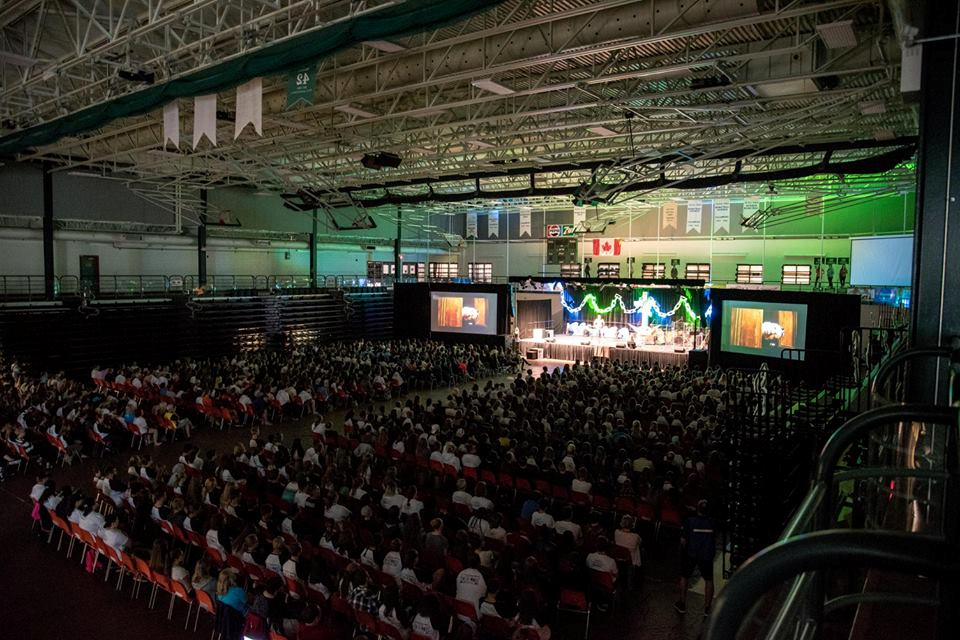
My brother tells the story of what happened at the beginning of the CLAY gathering this past August (Canadian Lutheran-Anglican Youth gathering). All nine-hundred participants did a certain exercise in the large group gathering that unnerved him:

They were asked to find someone they did not know; and then, to go over to that person, sit next to them; and then turn to look directly into their eyes…. and keep looking into their eyes for as long as possible, without turning away.  It’s hard enough to do this sort of thing with someone you know well… let alone a complete stranger!!


So, my brother David found a young person he didn’t know. And the two of them – complete strangers – began to look into each other’s eyes. It was unnerving! He felt vulnerable. Exposed.

While this was happening, the leader at the front said something like: “The person before you has a story, and has experienced happiness, as well as sadness, perhaps even deep hurt and pain. Who knows? Life may’ve been very hard on the person in front of you.”

As these words were being said, David noticed the slightest hint of tears welling up in his partner’s eyes. And he wondered…. He wondered …. What’s my partner’s story?

It’s said that the eyes are the ‘window into the soul.’ In a sense, they were peering into ‘each other’s souls’.

A natural connection is formed. Two people, connecting on a human level, affirming the fact that we’re all united in our common humanity and life’s experiences – of sadness and laughter and humour – which we all go through at some point in our lives … no matter our differences in age, ethnicity, language, sexual orientation or religion.

I’m reminded of a quote attributed to Philo of Alexandria: “Be kind to everyone you meet — you don’t know the battle they are fighting.”

Author and theologian Diana Butler Bass tells the touching story of what happened in an airport when she was flying from Albany, New York, to Washington D.C.

As you know, typically airports can be cold, heartless places, where everyone seems absorbed in their own rushing around, wrapped up in their private worries, nerves or plans, ignoring others around them.

This time, as passengers milled around in the gate area before boarding the plane, there sat alone at the far end of the row of seats, a middle-aged man.

He looked distraught, perhaps ill. Maybe, he needed help.

His whole demeanor was one of sorrow, and he was bent over, slumped in his chair as if falling toward the ground.

Diana walked over to him, and sat down beside him. She gently began asking him questions and listening to him.

With deep, heavy sobs, he told her how he buried his wife that morning, and now he was going home. To nothing.

For the next half hour, he told Diana about his wife, her illness and untimely death.

The man and his wife had no children.

She had been his best friend since high school.

Their parents had all passed away.

He had taken her to be buried where they had grown up in New York State, a place they both loved.

Most of their childhood friends had moved away.

There had been no funeral, just him and a priest at a graveside to say a few prayers and good-bye.

Now, he was going home, back to work. Other than a few friends, he was alone.

Diana listened, and then went to get him some water.

On the way back, she found a flight attendant, and told her about the man and his wife, how he had buried her that day. The flight attendant thanked her for sharing, and said ‘they’d take care of him.’

There were only about fifteen people on the flight that day on that small plane.

Somehow word got around, and soon everyone knew about their fellow passenger in mourning.

By the time everyone was boarding the plane, people were going out of their way to be kind to the man.

A crew member escorted him aboard.

With courtesy and attention, they seated him at the back of the plane to be alone with this thoughts and whatever tears might come.

When they landed, some silent agreement formed between the passengers to let him exit first.

Instead of the usual rush and urgent calls on cell phones, everyone stood silently, forming two lines of respect, as he walked down the aisle toward the cabin door…

Some nodded respectfully as he passed.

One woman reached out and touched his shoulder.

When he reached the front of the plane, he turned back, and looked at everyone, to acknowledge the sympathy offered.

The pilot came out of the cockpit, and took the man’s hand, and together they descended the steps to the tarmac.

All the passengers followed in silence.

A private car, dispatched by the airline, waited there beside the plane, to deliver him home. (2)


The irony is that no amount of gates, fences, walls or clearly defined dividing lines however constructed will keep us separated from each other. When there is love. When we can ‘see.’

Boundaries are important. But they don’t guarantee the self-serving security we seek. Shortly after they were posted to Naples a couple of years ago, our friends’ house was broken into despite the impressive protection their gated community seemed to provide.

These kinds of gates are really only illusions — like the proverbial mirage in the desert. Gates and fences that separate the rich from the poor, the privileged from the underprivileged, the employed from the the unemployed, the bum on the street and the senior executive in the top floor corner office are at best a mediocre interpretation of reality. Because they are constructed out of fear.

Jesus is about breaking down those barriers. And we are called to bridge the apparent chasm separating us from each other. Better now in this world while we can still do so, then whine about it like the rich man does in hell after it is too late.

We are called to look into each other’s eyes, and see the connection we share with all humanity, in the love of God. We are called to work together, like the community of care that formed on that short plane trip. We do not do this work individually, by ourselves. Not separately, but we work together at this task of reaching out and mending what has been broken.

We do this in the mission of God who broke down the greatest divide between God and human: when Jesus was born a human child. When God became human the ultimate gap was bridged. And now, we live in that flow of God’s love, continually binding us together, and all people.

(1) Robert Frost cited in David L. Bartlett & Barbara Brown Taylor, editors, “Preaching the Revised Common Lectionary; Feasting on the Word” Year C, Volume 4; Louisville Kentucky: Westminster John Knox Press, 2010, p. 118-120

(2) Diana Butler Bass, “Grounded: Finding God in the World: A Spiritual Revolution”, HarperOne, 2015, p.256

Foolish advice

The following sermon is adapted from one preached by The Rev. Dawn Hutchings of Holy Cross Lutheran Church in Newmarket, Ontario. You can read her excellent sermon on pastordawn.com. In her introduction she thanks a couple of professors from whom we both learned — Eduard Riegert and Donna Seamone. Dawn writes that preachers today stand on the shoulders of those who have gone before; today, I will add that we also lean on each other as we journey together in the ministry of preaching! 

The ‘fool’ isn’t normally taken very seriously. In period books and films set in Medieval times especially, the court jester is the character to whom nobody pays attention beyond their ability to make people laugh. These are the fools we relegate to the realms of distraction and mindless entertainment. And then they are dismissed with an impatient wave of the hand.

Who are fools in our day and age? Who do we pay lip service to, or not take seriously? Who do we seek for a little distraction for entertainment purposes — but whose advice or thoughts or words we do not heed? Because they are fools!

In the recent home release of the film, “Now You See Me 2” starring Morgan Freeman, Mark Ruffalo and Woody Harrelson, the main characters reflect on the role of “the fool” symbolized on a playing card which figures significantly in the plot of the movie. No spoilers; you have to see it!

The whole movie is structured around the power of perspective. By the end of the movie, we are dazzled by how the same words spoken at the beginning of the movie can mean the total opposite by the end. At the end of the movie, here is what they say about “the fool” (I paraphrase): “The fool starts with a blank slate. Therefore, for the fool it’s not about who they are, it’s about who they are becoming.”

Let’s turn to the Gospel reading for today in Luke 15:1-10. Among the teachings of Jesus, the parables of the lost and found are so well known, so familiar that we are in peril of failing to hear the foolishness they advocate.

Today, we just focus on the lost sheep (but the parables of the lost coin and lost sons which follow in chapter 15 of Luke can also be understood in the same way — as foolish advice!): Whether we are relating to co-workers, clients, customers, students, friends, or children none but the foolish among us would leave ninety-nine to the perils and dangers of the wilderness in order to go looking for one idiot who’d been stupid enough to get themselves lost.

These parables of the lost and found are outrageous. None of us would get very far in life if we lived by these teachings. Because we live by a different code; you know it: It is better to put the welfare of the many above the needs of one. Sometimes its better to cut your losses and move on.

The wisdom of the world lurks in us down to every last maxim: – charity begins at home. – God helps those who help themselves. – Count the cost or pay the price. – “They should just pull themselves up, by the bootstraps.” You fill in the rest…

And yet along comes Jesus, spouting such foolishness that even we who are predisposed to agree with him, even we can sympathize with the self-righteous and wonder how anyone could be expected to live like this. The chaos that would ensue if we followed the teaching of these parables as law would be horrendous. What Jesus is advocating is foolishness itself. It makes no earthly sense.  

And so the foolishness that Jesus advocates remains on the pages of our Bibles, or in the sanctuaries of our churches, or in the halls of the academies where they busy themselves arguing of the historical minutia and we smile as the familiarity of the text washes over us from time to time.

But we know full well that this is not the way for any self-respecting, 21st century person to live in the world. These are just parables after all and we can’t be expected to live by them. We’d be fools to try. After all we are not Jesus! And anyway look what happened to him! So, the foolishness that Jesus taught is reasoned into irrelevance and confined to the recesses of our consciousness. 

But what if we didn’t approach these parables with the idea of pinning down their meaning. What if we approached these parables without feeling the need to wrestle the wisdom they contain to the ground so that we can extract from them rules to live by. 

What if we allowed these parables to simply touch us? What might the foolishness they prescribe evoke in us? How might we respond to their touch? In brushing up against these parables of the lost might we feel the touch of the ONE to whom they point?

I have come to believe that only those who have known the fear, the pain and the joy of losing and finding can really feel the touch the parables of the lost. But then again, I’ve come to know that it is impossible to go through life without knowing the fear, the pain and the joy of loosing and finding again and again and again. 

Jesus came teaching in parables. The parables of Jesus come to us to “show” us what God is like and to call us to a way of being in the world. These parables, simply, have about them a “ring” of foolishness.

Because not only would a fool leave ninety-nine sheep to look for the one lost. Not only would a fool leave the ninety-nine unguarded to wander aimlessly, to be ravaged by some unknown predator, to fall prey to God knows what. Not only would a fool leave to search for the stray who might be wounded, damaged, dying, not interested in being rescued. And not only would a fool risk a reputation as a wise shepherd, a careful guardian of the known and secure, to seek one lone sheep. 

But a fool would also find, restore, and be foolish to care enough to save the lost, the wandering, the lonely, the one outside the bounds of the flock. Jesus teaches by showing us in these parables: in such foolishness this God has broken into our world and does so again and again. 

The parable of the lost sheep points us in a direction of foolish and passionate abandon. The seeking shepherd who rushes off to find one sheep shows us the God who cares for us so much that the safety of the secure flock is risked so that the stray might be brought home. The mark of the reign of God will be foolishness such as this.

In the time of God’s reign shepherds will care less about flock security and principles of good management, and more about the vulnerability of the odd one out. In the time of God’s reign everyone will counted valuable enough to be cared for. In the time of God’s reign every stone, every clump of dirt, every thing, every one will be counted as valuable.

Today, as we do every Sunday, in worship, we gather in thanksgiving for the reign of God. In the retelling of the parables of the lost sheep and the lost coin we are called to a holy foolishness. To live toward the reign of God is, in some ways, to heed a call to reckless love that gives itself away for the sheer joy of loving. If only our lives could embody that spirit of abandoned self-giving and love.

In the telling of these parables, we remember that none of these stories is of the stuff of everyday fare. None of us can do this kind of relentless, reckless abandon constantly. But there are times, there are times when … The risk must be taken. The grasp on the known must be released to reach for, find and restore the lost the abandoned the wayward and yes even the self-righteous. Those we have every right to leave alone. 

In one frame of reference the shepherd should have been guarding the flock, faithful to home duties. But there is a moment that grips, a moment in which what might be choice is no choice. There is only abandon and care, compassion and joy… There is only a moment of foolishness; and then…. love.

These are not only words for individuals they are words for the collective, words for institutions and those of us who make up institutions. The parables were spoken to the Pharisees by Jesus whose comfort with the outcasts and sinners made those keepers of the gates of righteousness squirm in their holy seats. It was foolish action Jesus was about. 

The wisdom of the righteous was ossified righteousness. Theirs was the wisdom of those entrenched in their own role and task so deeply they could not see some new foolishness of God, as wisdom. These were people lost and in exile for most of their history over and over again called and delivered by God. These were the ones whose memory of deliverance could not release them to be deliverers. These people were very much like us.

The Apostle Paul tells us that God has chosen what is foolish in the world to shame the wise, God chose what is weak in the world to shame the strong (1 Corinthians 1:20-27). These parables challenge us to be reckless and relentless in our loving and in our witness.

We are called to be vulnerable in our ministry, vulnerable to those outside the boundaries of our private lives and our community of faith: to give with no expectation of reward, to love without demand for return, to reach out to those in need with unrelenting care, to release preoccupation with the cares and concerns of our own lives (or perhaps through these cares) to reach out in love to those who are not easy to love. We are called to do all this in delight and with joy and in so doing we mirror the foolishness of God. 

St Paul tells us that God has chosen what is foolish in the world to shame the wise, God chose what is weak in the world to shame the strong. By God’s grace we are the weak and the foolish. We are ‘the fool’; starting over again with a clean slate, becoming who God created us to be.

In the retelling of the parables of the lost sheep and the lost coin we are called to a holy foolishness. To live toward the reign of God is, in some ways, to heed a call to reckless love that gives itself away for the sheer joy of loving. We pray that our various ministries in the worlds in which we live will embody that spirit of abandoned self-giving and love. 

May we declare the foolishness of God by reaching out in love recklessly, and with great joy. Moment by moment….let it be so!

Rooted in the earth, rising to the sun

Recently I have been reading about people’s experiences on the Camino de Santiago — the eight hundred kilometre walking pilgrimage through northern Spain. This walk has become more and more popular among Christians of all stripes over the past couple of decades. It seems Christians around the globe are finding the pilgrimage a good place to work through personal issues, find focus in life again and seek re-connection with God, the world and themselves.

This past week I met with one such pilgrim from Ottawa who goes at least once a year to walk some part of the Camino; in fact he is leaving today for Barcelona. I sought his experienced advice for some practical considerations for the trek. His first rule of thumb: Pack only ten percent of your body weight. For me, that would mean no more that 20 pounds in my back pack — of all that I would need for the thirty to forty day hike. Twenty pounds is not a lot!

His second rule of thumb: What you wear on your back, put only one in your pack. That’s all. For example, if you are wearing a t-shirt, pack only one other t-shirt in your back-pack. If you are wearing a pair of shorts, pack only one other pair of shorts. And so on.

He laughed when he told me that about four days in — some one hundred kilometres into the journey — you find bins and bins full of personal items people left behind. These pilgrims had realized, thankfully sooner than later, that they were simply carrying too much — stuff they didn’t really need (extra shirts, pants, sweaters, books, jackets, bed mats, blankets, etc.). A final rule of thumb from my friend: If you do take something extra, then you need to have a good reason for it besides, “I might need it.”

This discipline reflects the quality of being able to let go. It can be described as a total self-surrendering, a giving up. The term “Kenosis” has been used among Christians throughout the ages to connote this sense of releasing that which we normally feel we need to hold onto tightly.

Fourteenth century German theologian Meister Eckhart said, “God is not found in the soul by adding anything, but by a process of subtraction.” (1) In our consumer culture, religion and spirituality have very often become a matter of addition: earning points with God, attaining enlightenment, producing moral behaviour. In the ‘prosperity gospel’ so popular in North America, we often hear the message that Jesus approves of you when your material and financial wealth increases; the more you have, the more in favour you are in God’s eyes.

Yet authentic, Christian faith is not about getting, attaining, achieving, performing or succeeding. The solution is not just “work harder” or “get more” of something. Our culture and economy, indeed, is based on more and more. Whereas true faith suggests: less is more. Martin Luther’s theology of Justification by Grace through Faith suggests the very same: We cannot by our own efforts achieve anything worthy of God.

So, stop trying. In fact, start doing the opposite: Let go of your pretence to manage your life according to the creed: Bigger and More is Better. Let go of a paralyzing negative body image. Let go of the inner talk that is putting yourself down, that tells you you are no good. Let go of attitudes of hatred against people who are different from you. Let go of those material aspirations that tease you into a false sense of security. Let go of being paralyzed by fear.

Instead, focus on what is essential. Appreciate that you already have enough, all that you need. When Jesus gives instruction in the Gospel text for today (Luke 14:25-33) he is travelling out on a public road, on his pilgrimage to the Cross. Remember, ever since Luke 9:51, he is already on the way to Jerusalem, his final destination. When Jesus is walking towards his death and resurrection in Jerusalem, he offers what sounds rather harsh to our ears. What is called-for here is a ‘single-mindedness’ that is needed when you travel with Jesus.

Discipleship is about being single-minded about the purpose, the goal and the mission of Jesus in the world. It is about prioritizing what is important to life in the public realm where culture, consumerism and a whole host of other distractions can keep us from this focus.

This single-mindedness demands that we think ahead, and anticipate the cost of our journey. Setting out on the road to follow Jesus requires at least a little forethought and reflection. This journey is not a light matter. Sit down and think about it a bit. Reflect.

There is not only the blessing of the assets promised, but there are the liabilities, too. Discipleship is not just one more hobby or extra-curricular activity to add to a well-rounded, prosperous life. It is not merely “a matter of pure passion and abandon” (2).

Followers of Jesus should count the cost, but also realize this is not just about counting the cost of a church building renovation or a church fund-raising project. The cost of discipleship, as Dietrich Bonhoeffer first coined the term, is about prioritizing our whole lives, not just our “church” or “Sunday morning” lives.

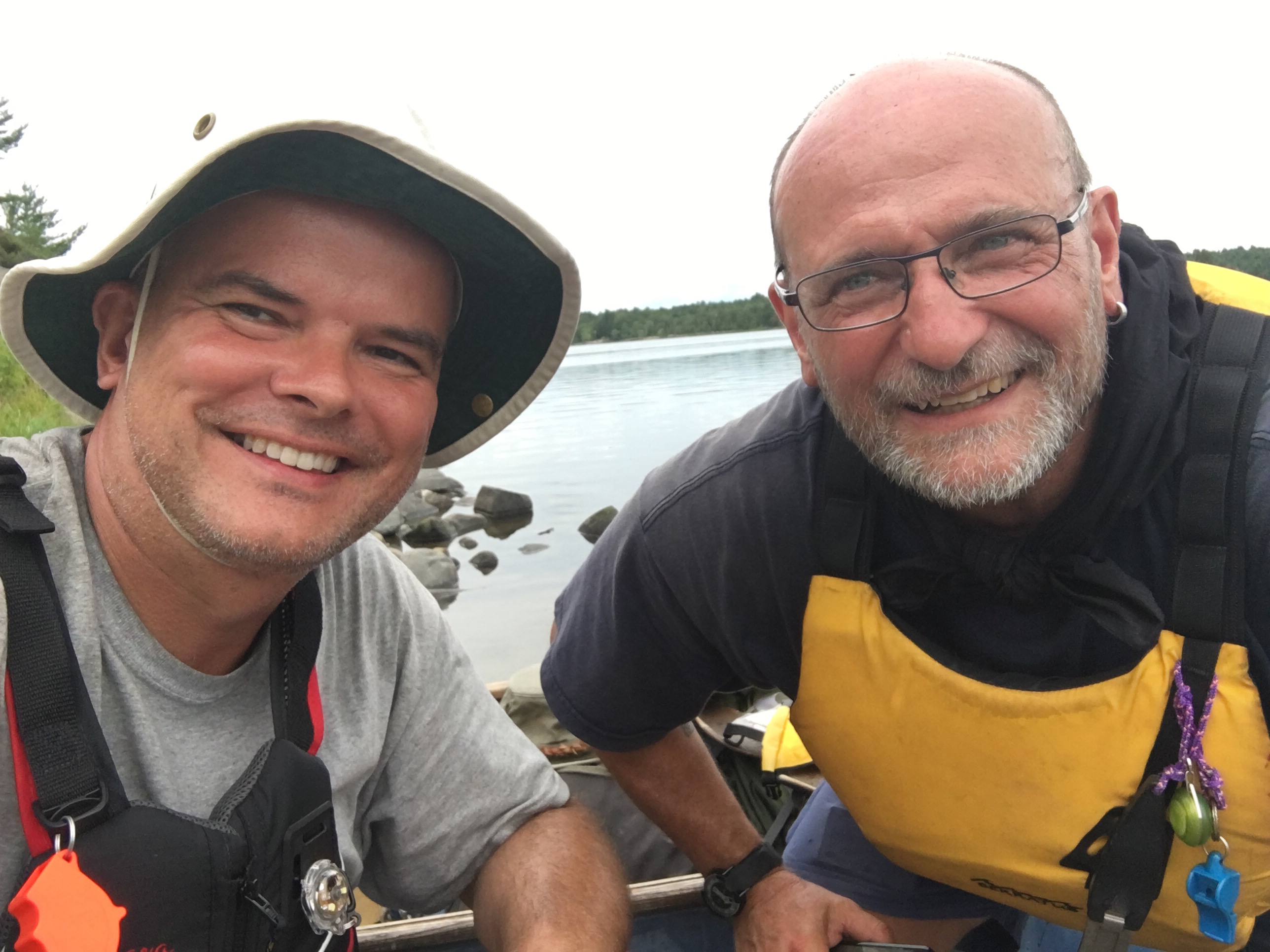
If someone told me a year ago that I would spend four days cut off from civilization, in the bush without cell-phone service, hauling all my food and everything I need to survive in a canoe that I would have to navigate through rapids and rocky, snake-infested portage routes — I would say they were dreaming … or talking about someone else.

Well, that’s precisely what I did last week, along the French River Provincial Park between North Bay and Sudbury. Fortunately I was not alone; I journeyed with a more experienced wilderness survivalist. 

We ended up taking more than we needed. We could have packed less food, and less clothing. The exercise, nevertheless, was confident-building for me in realizing I really don’t need that much stuff.

Jesus says, “None of you can become my disciple if you do not give up all your possessions.”

To live life well, and faithfully, is to recognize one’s place in the world, and not to over-reach, over-extend, to be someone you are not — all on the basis of wanting more and more, bigger and better. To live faithfully, we are called to examine our dependencies, count the cost of it all, focus on what is important, and then make room in our lives for what is important by letting go.

A sojourn into the wilderness may indeed by the antidote to visions of self-aggrandizement embedded in the prosperity gospel message. Try doing without, for some time, what you may have taken for granted for too long. Try doing without what you always have believed you needed in order to live. Try Letting go. Releasing. Forgiving. 

This is not about doing away with personal boundaries. Letting go is not about condoning injustice or cruelty. Kenosis/letting go is not about being blind optimists, repressing or denying or not caring, or ‘giving up’ in frustration.

Forgiveness is a good example of letting go of the misery caused by holding on to the pain of resentment or holding a grudge. This kind of letting go brings a positivity that is based in honest struggle and prayer born out of compassion and love for self, the other, and God. The end result is a freedom and peace that cannot ever be realized through a program of simply working harder or getting more.

The German poet, Rainer Maria Rilke, wrote about the contrast between the law of gravity and the rising of the trees. He writes about the gift of letting go into a place of trust: Trusting that the gift in you is enough. So that you can rise up, rooted like trees: 

How surely gravity’s law,

strong as an ocean current,

takes hold of even the smallest thing

and pulls it toward the heart of the world.


Each thing —

each stone, blossom, child —

is held in place.

Only we, in our arrogance,

push out beyond what we each belong to

for some empty freedom.

If we surrendered

to earth’s intelligence

we could rise up rooted, like trees


Instead we entangle ourselves

in knots of our own making

and struggle, lonely and confused.

So, like children, we begin again

to learn from the things,

because they are in God’s heart;

they have never left God.

This is what the things can teach us:

to fall,

patiently to trust our heaviness.

Even a bird has to do that

before he can fly. (3)

In the poetry of scripture, the Psalmist describes beautifully the blessing we are, created in the image of God — so “wonderfully made” (Psalm 139:14). God would know intimately each part of our lives only if we were valuable to God and to the rest of creation. Otherwise, why would God care?

In other words, we are and have everything we need to enjoy and live to our fullest potential. We are beautiful. We don’t have to strive and strive to become someone we are not. We don’t have to ‘add’ anything to our lives to be well. In fact, when we have the courage to risk letting go, and “fall”, as Rilke poetically expresses, trusting in our “heaviness”, we will find a freedom and peace that will be the joy of all creation, and the glory of God.

We will live our lives at the same time rooted in the earth, and rising to the sun.

(1) Translated by J. Clark & J. Skinner, “Meister Eckhart: Selected Treatises & Sermons Translated from Latin and German with an Introduction and Notes”, Faber & Faber: 1958, p.194

(2) David Schnasa Jacobsen, Commentary on Luke 14:25-33 in “WorkingPreacher.org”, 2016

(3) Rainer Maria Rilke, “Rilke’s Book of Hours: Love Poems to God” translated by Anita Barrows and Joanna Macy, Riverhead Books: 1996, p.116-117; cited with permission in Richard Rohr’s Daily Meditation for August 28, 2016