Cornered?

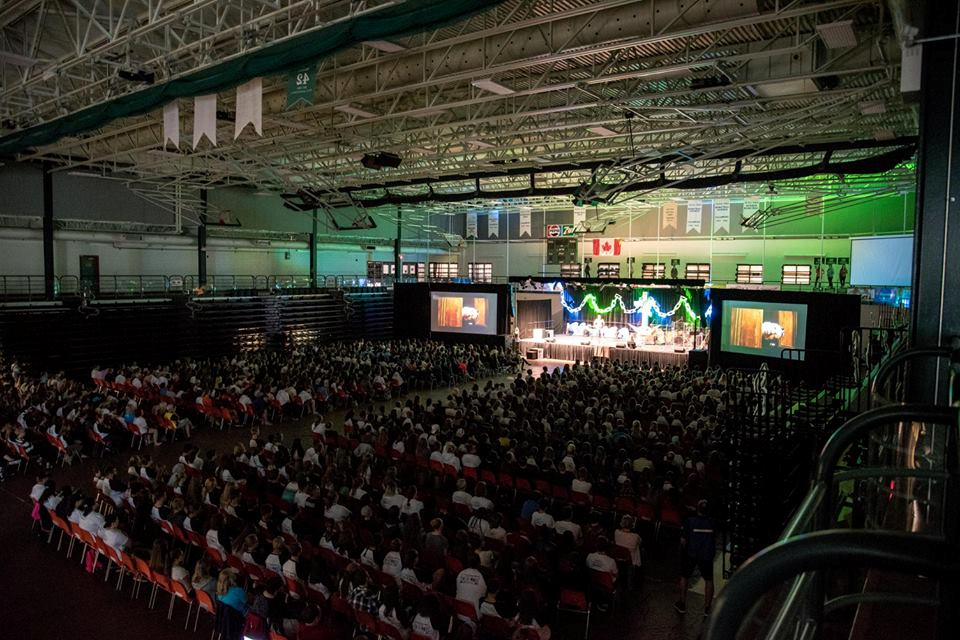
Have you ever wondered why this building was designed to be more-or-less round? Well, don’t you know, “The devil can’t corner you in here!” we say.

Like in the boxing ring, the combatants in the corner are at either end of the victory-defeat spectrum: In the corner they either have the upper hand, literally. Or, they are on the verge of collapsing in a heap.

Being in the corner is an undesired position. Cornering someone is to put them at a disadvantage. The one being cornered is vulnerable. Being cornered is to admit there are no options left.

We also use the phrase to mock contractors and builders worried only about the bottom line when they ‘cut corners’. Cutting corners may serve the bottom line, but in the long run cutting corners is a prescription for guaranteed repair and reconstruction work sooner than later.

At the same time, the latest fashion in contemporary urban design values right angles and sharp lines. The new buildings are rather square and boxy, aren’t they? Meaning, lots of straight lines. But a straight line can’t go on forever. Therefore, lots of corners.

People in many non-Western cultures don’t build as many corners as we do. The Zulus in southern Africa, for example, live in a less-carpentered world. They live in a history and culture where straight lines and right angles are scarce, if not entirely absent. (1)

What would it be like to live in a non-linear world? Where our material culture presents more rounded, softer, curved constructions such as our building!

And yet, there is a gift in the message of a corner. Not only can corners get us stuck. But they also are an indisputable sign that there’s always a corner to be turned. In truth, this is what we say, don’t we, when things are just starting to get better: “We’ve turned the corner on this.” When things are not yet better, we wonder: “When will I turn the corner on my illness, my fear, my problem, my troubled feelings, my strained relationships?”

Turning the corner means, nevertheless, there’s no turning back. Once you’ve crossed the line, there’s no going back to the way it used to be. That could be good. It can also be scary. Corners are necessary to find a way through a predicament, such as in a maze. Corners define clearly where one eventually needs to go, like it or not.

The story of Jesus’ resurrection is a huge corner turned in the cosmos of all that was, and is, and is to come. History is forever changed by the empty tomb. The ether of our very existence is transformed into the triumph of good that can be, for all time, for all people, and in every place. All the evil forces that led to Jesus’s crucifixion no longer need to triumph in the world today.

They say any lead in playoff hockey is a dangerous lead, as the first few games of the NHL playoffs have shown. More often than not the lead does not stand. If a team does have the lead however small, they are coached to employ the killer instinct:

Don’t let up. Don’t get too comfortable. Don’t sit back. Finish off your opponent with indiscriminating, ruthless power. Once they’re down, make sure they stay down. Hate your opponent. Don’t give them a chance to come back. Don’t be merciful, kind, generous, compassionate. Above all, don’t feel sorry for your opponent’s misgivings.

This is the philosophy of competitive play in professional sports. Why professional athletes and teams are so popular and generate billions of dollars in our economy is precisely because we humans are really good at believing this philosophy if not doing it from time to time.

Easter is God’s come-from-behind victory. The way of non-violence, of loving self-giving, and of trust in God is a victory against all the odds. It is, frankly, an unbelievable, unexpected move from our human perspective. Jesus’ demonstration of non-violence, of loving self-giving, and of trust in God is validated and redeemed by his resurrection. The surprising, brilliant victory of Easter morning is a poignant witness to what God is really all about.

The way of violence of our will/my will over yours, of greedy acquisition for more, of cynical mistrust of others — this is the way of the world that crashes in a heap of defeat in the light of Jesus’ resurrection. Now, the way of God is before us.

Resurrection says a lot about the nature of God’s purposes. Because Jesus lives. And Jesus is Lord. We therefore gather today to affirm that God’s purposes are good. And, in the end, it is not all doom and gloom. In the end, God comes through.

One thing I like about the re-modelled communion rail around the chancel, is that we have those corners at both sides. Some have said they don’t like it at the corner, because they feel squeezed out. Well, we can help each other with that. What the corners force us to do is pay more attention to who is standing beside us; and make room for them. And that’s not a bad thing!

What these corners force us to do, is to face and look at each other when we are standing or kneeling at the altar. We are not just individuals coming to face the Lord God one-on-one in a straight line, not seeing nor even respective of who comes along beside us. Now, it’s no longer just about ‘me and sweet Jesus’.

It’s about ‘us’ and sweet Jesus. And Jesus is not always sweet. We are a community gathered around one table, a people who embody the living Body of Christ in the world today. We are also the broken body of Jesus, whose power is shown through human weakness (1 Corinthians 1:18-29). What better place than to see our sisters and brothers in Christ, eye-to-eye, and practice right here what it means to pray for others, to encourage them, to recognize our unity in the living God.

And then take in word and deed that awareness and message from this place, into the world out there: Christ is risen! Christ is risen indeed! Alleluia!

1 — Wayne Weiten & Doug McCann, “Psychology: Themes and Variations” 3rd Edition (Toronto: Nelson Education, 2013), p.168


Trust the down

I hate roller-coasters. It’s about the fear of letting go of control on the way down, that’s the problem. The couple times I’ve had the guts to go on a roller-coaster, I didn’t enjoy the experience because I couldn’t let go on the way down. Someone took a photo of me and my friend in the middle of one of those rapid descents: My friend who loves roller-coaster — his arms were up in the air and a big smile beamed across his face.

Sitting beside him, I was the opposite: My hands were glued to the bar in front of us, and my lips were pursed tightly and my eyes looked like they were going to pop out of their sockets. It looked as if I were staring death in the face, going down that roller coaster.

I read this week: “Humans are the only creatures who have knowledge of their own death. Its awareness creeps on us as we get older. All other animals, plants, and the cycles of nature themselves seem to live out and surrender to the pattern of mortality.

This places humans in a state of anxiety and insecurity from our early years. We know on some level that whatever this is that we are living will not last. This changes everything, probably more than we realize consciously. So our little bit of consciousness makes us choose to be unconscious. It hurts too much to think about it.” (1)

We humans find ingenious ways to avoid this journey, especially through Holy Week, that invites us to contemplate not only human death but the death of God in Christ Jesus. No wonder, especially among Protestants, attending services through Holy Week is not popular. This is not easy work, to face Jesus’s and our own mortality. No fun in that.

One way we avoid and deny this awareness of our own mortality is to find a scapegoat — by focusing all our negative energy on something or someone else. Our scapegoat is that which deludes us into believing that its destruction will somehow solve all our problems and make everything better again. Our scapegoat also shields us from taking responsibility for and dealing with our own problems.

Today, the scapegoats are easy to identify: The immigrants, the newcomers to Canada, the Muslims, the gays, the corrupt politicians, the government, the media, the church hierarchy — you name it. The blame game is alive and well, even in the church.

And then what happens is what many wise teachers through the ages have said: When we deny our own suffering we make others around us suffer. Which is unfair and unjust. Because the Gospel was given first and foremost to the followers of Jesus. 

“The time is fulfilled and the kingdom of God has come near,” The Gospel Mark thus records Jesus’s first words to his own people in Galilee. And to them he said, “Repent and believe in the Gospel” (Mark 1:15). We are the ones addressed by the Gospel — those who are already in the church, in the family of God. Not those so-called ‘bad’ people out there.

Jesus was the scapegoat whose destruction would solve the high-priestly authorities’ problems. By having Jesus put to death, the religious authorities could maintain their power and privileged position in Jerusalem, the Roman Emperor’s fears of insurrection would be temporarily alleviated, and the Pax Romana (the Roman rule) would continue in the land.

As unjust as killing Jesus was — for many even in authority including Pilate saw that Jesus was innocent — Jesus was the convenient scapegoat whose death on a cross would make it easy on those in power. And maintain the unjust status quo in the land.

After hearing of Jesus’ raising of Lazarus from the dead, the high priest, Caiaphas, advised the rest of the leadership in Jerusalem: “It is better for you to have one man die for the people than to have the whole nation destroyed” (John 11:50). Rather than do the right thing in the moment, the end — a false peace — justifies the unjust means. Classic scapegoat -ism: Jesus became the convenient victim in the human power play of first century Judean politics.

It’s ironic that our fear, denial and avoidance of death is actually that which keeps us stuck in scapegoating, in blaming others, in all the motivations for war and violence in the world. You could argue that all of what is bad in the world today stems from humanity’s continued ambivalence and denial of death.

What’s amazing is that Jesus, knowing all along this human condition, chose to become a victim to it. From his privileged unity with God the Creator, he chose to connect with humanity. The reading on Palm Sunday from Philippians 2:5-11 describes this downward movement of God in Christ into the “enfleshment of creation” (2), and then into humanity’s depths and sadness, and final identification with those at the very bottom, “taking the form of a slave” (Philippians 2:7), to death on the Cross.

Jesus represents God’s total solidarity with, and love of, the human situation. It’s as if God is saying: “Nothing human, now, is abhorrent to me.” This is incredible.

The Cross represents the divine choice to descend. It’s almost total counterpoint with our humanity that is always trying to climb, achieve, perform, justify and prove itself. The witness of the Cross is the divine invitation to each of us to reverse the usual process.

Christians worldwide have a great gift and witness in the Gospel of Christ crucified. The divine union with humanity suggests that everything human — including death, losing and letting go that is so much a reality in all our lives — is embraced by God’s love. The reason God loves even our shadow sides, is because God experienced the fullness of its brutal and unjust consequences, in the death of Jesus.

Jesus is like the human blueprint for our own transformation. Because who would have presumed that the way up could be the way down? It is, as Saint Paul writes, “the secret Mystery” (Romans 16:25).

Trust the down, and God will take care of the up. The hymn in Philippians 2:5-11 says that Jesus leaves the ascent to God, in God’s way, and in God’s time. Because Jesus went to the bottom of all that is human, “God lifted him up, and gave him the name above all other names” (Philippians 2:9-11).

Of course, they say the joy of a roller coaster’s twists, turns and rapid descents is knowing and trusting that the ride eventually and surprisingly goes up. What an incredible rush! Carl Jung wrote: “Not wanting to live is identical with not wanting to die.” (3) The roller coaster analogy suggests that when we refuse to descend, when we avoid facing our own mortality, and avoid taking responsibility for our own suffering, we also don’t really live.

Conversely, we can only truly live when we have faced and come to terms with the reality of our own mortal, imperfect human lives. Being fully human is being fully spiritual, faithful and alive. Saint Irenaeus was first to say in the second century that the glory of God is human being fully alive.

Trust the down, and God will take care of the up. When challenges, disappointments, defeats and failures come your way, don’t rush into avoidance techniques, distractions, denial of the problem or blaming others for the circumstance you find yourself in. What do these events have to teach you? Where is God in the midst of your suffering? What are the signs of grace therein? Christian faith asserts that God is revealed precisely in those lowest moments. Jesus believed this. It was trust in his Father that got Jesus through his passion, suffering and death.

Trust the down, and God will take care of the up. Resurrection was just around the corner.


1 — Richard Rohr, “Wondrous Encounters: Scripture for Lent” (Cincinnati Ohio: Franciscan Media, 2011), p.100.
2 — Rohr, ibid., p.123
3 — cited in Rohr, ibid., p.123.

Why? To melt hearts of stone

In a typical Canadian winter at this time of year, salt and light (Matthew 5:13-20), of course, serve a particular purpose.

It doesn’t matter how cold it can still get in February, if the sun is shining then the snow and ice will melt under the strengthening, radiant beams of warm light. And, with the occasional freezing rain still in the offing, that bag of salt sitting on the porch or in the garage can come in handy, to sprinkle on the walkways and driveways — to melt the ice.

Salt and light, in any given context, serves a specific purpose. I can remember when the kids were younger, one of ours had the habit of picking anything and everything up off the ground and putting it in her mouth.

I can remember needing to intervene when she was in her exploratory mode, walking down the sidewalk in the middle of winter. “Don’t eat it! That is road salt, dear. Not table salt.”

We are called to be like salt and light in the world. But that gift will serve a specific purpose, according to the context and circumstance of our lives.

How can we know what that gift is, and for what purpose it serves? It can be challenging to claim that gift for our lives, and then have the courage to use it. This can be difficult because the world and the dominant powers of culture may not support it. The gift and purpose may seem small in comparison to the dominant climate of coldness, hatred and violence so prevalent in the culture today.

Julian of Norwich in her first of Divine Revelations writes about the small hazelnut. She writes, that God “showed me a little thing, the quantity of a hazel nut, lying in the palm of my hand …. I marvelled how it might last, for I thought it might suddenly have fallen to nothing for littleness. And I was answered in my understanding: It lasts and ever shall, for God loves it. And so have all things their beginning by the love of God.”

It may seem pallid at first, even pointless. But there is power in small. Ezekiel writes, “A new heart I will give you, and a new spirit I will put within you; and I will remove from your body the heart of stone and give you a heart of flesh. I will put my spirit within you …” (Ezekiel 11:19;36:26-27).

In words that may make better sense in our Canadian winter, God is promising us that God will melt our hearts of stone-cold bitterness, resentment, fear and hatred. And put the warmth of God’s light in Christ and the loving power of the Spirit to change our lives, and the world around us.

Salt and light are gifts that are subtle and small, yes, similar to the smallness of the hazelnut. And yet, these are gifts you cannot easily hide. Nor will they go away. They are public gifts, not private, in scope. They affect the whole experience of living.

You cannot add salt to soup, and not notice a difference. You cannot throw ice-melter on the driveway, and not notice some change on the ground. You cannot stop the sun from shining, and not stop the smile that comes on a sunny day after weeks of dark, grey, cloudy existence.

Faith Lutheran has a renovated gift, the gift of a safe and modernized building — a gift, yes. But why will it be used? How will our (Faith Lutheran’s) soon return to that site on 43 Meadowlands Drive restore something that was missing in the neighbourhood while we were here (at Julian)? Or, does it? What difference does that gift make to the world around us?

Our gift has a purpose. And that purpose is meant to catch the attention of a world that is shrouded in cloudy days and numbed to the slippery vices of distraction, delusion and fear.

Why is this important? How is it worthwhile? In an age when the church in North America is facing challenge and change, perhaps it is time again to focus on the WHY. It has been argued that people don’t buy-in to the WHAT we do but the WHY we do it. (1)

We need to be clear about that. The only way we can know WHAT do do with our faith, the church and our buildings is first to claim, embrace and communicate clearly the WHY of our faith. The WHY.

In the aftermath of the tragic violence in Quebec last weekend, the premier challenged his province, indeed our whole society, to reflect and consider again how we treat one another in a culturally diverse community. How we treat one another through the changes and stresses of life that can be disruptive. How we treat one another who are different and come from different walks of life, religious experience and ethnic diversity.

Observing how we do what we do may also give us a clue to the WHY. I believe the church has a lot to offer this world of ours, as salt and light. St. Paul encourages the fledgling, conflict-ridden Corinthian church to claim their identity they already have, in Jesus: “We have the mind of Christ,” he concludes (1 Corinthians 2:16). And Jesus, in short, came to show the love and grace of God to a world so hung up on achieving, earning, competing, judging, proving themselves, excluding others and fighting.

I believe the church has a lot to offer this world. To reflect Christ, the light of the world: to receive the love of God, to accept the love of God, and then demonstrate that compassion and love to the world. It is behind everything we do in the church. Everything. Let’s not forget that.

To melt hearts of stone.
(1) Simon Sinek, “Start With Why” (New York: Penguin, 2009), p.58

Checking our Image of God

Do you know “Good Old Uncle George”? (1)

Listen to this description of what happens when a family makes a visit to Uncle George who lives in, and never really leaves, his formidable mansion.

At the end of the brief visit in which the children describe Uncle George as bearded, gruff and threatening, he leans closely, and says in a severe tone of voice, “Now listen, dear. I want to see you here once a week. And if you fail to come, let me just show you what will happen to you.”

He then leads the family down to the mansion’s basement. It is dark, becomes hotter and hotter as they descend, and they begin to hear unearthly screams. In the basement there are steel doors. Uncle George opens one.

“Now look in there, dear,” he says. They see a nightmare vision, an array of blazing furnaces with little demons in attendance, who hurl into the blaze those men, women and children who failed to visit Uncle George or act in a way he approved. “And if you don’t visit me, dear, that is where you will most certainly go,” says Uncle George.

Do you know “Good Old Uncle George?” Sound familiar?

From the bible readings assigned for this season after Epiphany, we are asked to consider again who is this God we are called to follow. Of course, no one image of God is complete. Our perspective is limited, no matter how well we know the bible or how many degrees we may have behind our name. And God is greater and bigger than anything anyone can imagine or say.

Nevertheless, it is fruitful to examine what we think about God. Our image of God influences our own behaviour and what we do “in the name of God”, who is revealed in history, in our experience and in the Scriptures as God the Father, God the Son and God the Holy Spirit. Eventually, our actions mirror the God to whom we pray, to whom we relate, whom we imagine. (2)

I would like to highlight briefly three aspects of the character of God, in Jesus, that we can see in the story of Epiphany for today — the baptism of our Lord (Matthew 3:13-17).

First, Jesus moves. He does not sit still for too long. Jesus is baptized ‘on the side of the road’ so to speak. He is baptized nowhere special, not in some officially consecrated, designated holy place — but in the wilderness where John preaches ‘on the edge’ of civilization where crowds have to follow to be there.

In fact, the Jordan River is some 35 kilometres from Jerusalem. For people who walked, this would likely mean at least a two-day journey from the city. So, most of the people who witnessed this divine event and encounter between Jesus and John on the banks of the Jordan River had to travel to get there. Even the high priests and Pharisees, those in power and who held influence in the religious establishment of Jerusalem had to get there.

Who is God? God is more a verb than a noun; God is not static; God is always on the move; we can in this story of Jesus’ baptism appreciate the moving parts of faith. It is important to note to where God goes, and is revealed.

Mobility is a kingdom value. Going some place else away from what is familiar and comfortable is part of exercising a healthy faith. Conversely, staying in one place too long is not healthy for the soul.

Second, in this mobility God relates to us in vulnerability. In worship and praise of God we are accustomed to calling God Almighty. But, at the same time, if we are ‘getting’ Jesus, we ought to be calling God Al-vulnerable.

Jesus relates to us. The divine becomes one of us in moments of vulnerability, especially. The primary symbol of Christianity, the Cross, points to the ultimate, earthly destination of Jesus, and reveals our most vulnerable God. The Cross is a sign that says: God understands us even in death and dying.

What is unique about Matthew’s version of the baptism of our Lord is that it is meant for public witness. Unlike the other Gospel accounts who make this event more of an inward, spiritual experience of Jesus, Matthew portrays the baptism of Jesus as an external event, available to all present.

Also, Jesus submits to baptism not because he needs his sins washed away. Through this act, Jesus was indicating his willingness to yield his life, to surrender his life, in obedience to his Father. Jesus requests baptism by John so that he could completely identify with those he came to save.

Therefore, relationships described by mutual vulnerability is another kingdom value. Being with others in this way, in community, is vital for faith. Prolonged isolation and emotional detachment from others is not healthy for the soul.

Finally, not only is God in motion and in vulnerable relationship with us, God is reaching out to us, immanent and present to our common lives.

Jesus’ father in heaven calls to him, validates and affirms his path. Then, too, Jesus calls his disciples. Jesus does not do it alone. He includes his disciples in his travels, walks in their shoes, involves himself in the common, daily activities, gets his hands dirty — so to speak.

Jesus is the son of a carpenter from Nazareth, he fishes with his disciples, he goes to weddings and drinks wine, he hangs out with all people not just the ‘good ones’.

Jesus does not leave us alone, some distant, transcendent God who does not care about what happens on earth. Jesus will not stop reaching out to us, and will beckon us to follow where he goes. Jesus continues to engage our lives, touching our hearts, our hands and our minds, in the very course of our lives on earth. God will intervene, and pierce our perception, inviting us into a new way of being and doing.

Today, followers of Jesus can consider anew this God who is revealed to us in Jesus. Jesus is the divine-man, who walked everywhere and moved around a lot; Jesus is the God who seeks relationships and models vulnerability and self-surrender; Jesus is the God who will not leave us alone and continues to call out to us to follow in his way.

May God bless the path we journey. Amen.
(1) cited in Dennis Linn, Sheila Fabricant Linn & Matthew Linn, “Good Goats: Healing our Image of God” (Paulist Press, New York, 1994), p.3
(2) ibid., p. 7ff

Christmas in July


This past summer my family visited friends in Italy. We spent three weeks touring around mostly the southern half of mainland Italy — Naples and the Amalfi Coast especially. In this region in summer, the weather is tropical. Palm trees, humid air, full sun and temperatures soaring. We wore shorts and sandals, t-shirts and hats the entire time.

One of our highlights was visiting the Green, or Emerald, grotto near Positano on the Amalfi Coast. We had to take an elevator down from the snaking roadway to the water line. Then, we entered small boats for a tour around the cave.


The grotto was named “Emerald” for the incredible colours that filter from an underground opening and fill the cave with intense nuances of green. The inside of the cavern is filled with stalagmites, stalactites and beautiful works of art created by time and nature.

Near the end of the tour when the boat was paddled close to a wall of the cave, our tour guide asked us to look down into the sparkling, luminescent water on the one side of the boat. “What do you see?” he prompted us. For the longest time, I could see nothing, just the rippling waters.

Then, as the light continued to play on the currents swirling some ten feet underneath us, I saw it:

The grotto is home to an underwater nativity scene, made by a ceramics artisan from nearby Vietri in 1956. Since that time, divers from all over Italy come to pay a visit to the Holy Family at Christmas. But it wasn’t Christmas.

For me, the traditional nativity set felt out of place – a kitsch decoration in a natural, marine setting in a tropical paradise. From my Canadian perspective, it felt all wrong. This didn’t belong here.

It was the least-expected time and place to be reminded of Christmas. Christmas in July, where temperatures were well into the 30 degree celsius range, far away from home on the Amalfi Coast in Italy. On vacation. Christmas was the farthest thing from my mind!

In the Christmas children’s book by Eve Bunting, entitled, “We Were There: A Nativity Story”, she illustrates how the least expected animals very likely also attended the birth of Jesus: a snake, a frog, a scorpion, a cockroach, a bat, a spider and a rat.

It is written from the perspective of these least likely characters who are thankful for the more popular donkeys, sheep and cows who are “so generous to share their place” by the side of the manger. She concludes:

No one will look beyond the light to darkness
and the corner where we watch, unwatched.
They will not know or care.
But we were there. (1)

This children’s book makes a deep, theological point! The problem: We don’t see that God is there. We only expect to see God in certain places, at certain times:
Only at Christmas once a year in a crowded, decorated church;
Only in warm, comfortable stables where clean sheets and cutesy animals surround a quiet baby lying in the arms of a domicile Mary;
Only when good times roll with egg nog at the hearth of a roaring fire sitting in your favourite chair;
Only when choristers sing your favourite carols;
Or, only when everything is perfect.

We’ve locked God into the proverbial box.

The good news: God blows all our contrived and constricted expectations. God comes to us in all times and places, especially when we least expect it, even when we are not thinking about it, or planning for it.

While the dominant Christmas culture depends on our planning and organizing and ‘setting it up’, God comes to us despite all our fussing and fretting.

In truth, God is already there, just beneath the surface, out of the reach of the light, in the shadows where no one is looking or even caring.

Our job is not to make God happen by all our toiling and efforts to create the best Christmas ever. We don’t achieve God’s presence. Our job is simply to recognize where God is already present. Our job, simple though not easy, is to surrender to God who is already there. And this takes practice and intention.

So, this Christmas holiday, take a walk downtown where street people continue to ask for money. This Christmas holiday, search out an old friend with whom you haven’t spoken for a long time. This Christmas holiday, do something that you normally would not do, for the common good. This Christmas holiday, recognize the gifts you already have, not just in those presents packed under the tree.

Give thanks for the gifts you enjoy every day of the year — friends, family, love, community — the blessings that come from learning to want what you have instead of having what you want. Exercise the skill of seeing where and what many will not.

The joy of Christmas be with you. The gift of life and love in Jesus is born anew in our very lives. Today. And no matter where you are and whatever the circumstance of your life. God is already with you, waiting to be seen.

(1) – Eve Bunting, “We Were There: A Nativity Story” (Clarion Books, New York, 2001)

A Poem from Rainer Maria Rilke

“My eyes already touch the sunny hill

Going far ahead of the road I have begun.

So we are grasped by what we cannot grasp;

It has its inner light, even from a distance —

And changes us, even if we do not reach it,

Into something else, which, hardly sensing it, we already are.”


Rainer Maria Rilke, “A Walk,” quoted by Robert Bly, Iron Man (Cambridge, MA: DaCapo Press, 2004), p.49

Sanctuary

For a year and a half my wife and I took dance lessons. We learned Latin dances such as the Salsa, Rumba, Samba, Triple-Step, Merengue, and the Cha-Cha. 

I was motivated, at the start, by a beautiful vision in my imagination: I could see my wife and I swinging to the music, sweeping across the dance floor, effortlessly. I had a vision of us moving in complete sync with one another, twirling and swaying together in perfect rhythm and harmony. What a vision!

When I first proposed we take these lessons together, she was all game. So, every week we dutifully went to our lesson and met with our dance instructor who showed us the steps and taught us the moves. We were doing this together!

After a few lessons, however, I was becoming a little bit disappointed. My vision was not panning out. We weren’t always in sync with each other. Indeed, more often than not, we were stepping on each other toes! Oh yes, we giggled about our missteps, but it seemed we were not getting anywhere.

Our instructor calmly yet persistently reminded us that we needed to practice. Before the fun would come, she said, we had to master the steps. And for me, the lead, I had to memorize the patterns and in my mind always be one step ahead, knowing where we were going with each and every move. And this took work! And persistence. And time. The fun would come later, I held on to the promise.

It wasn’t as easy as I imagined it would be, working towards that vision. In fact, it was my wife who grew into the love of the dance and often had to cajole and encourage me to keep up with the program.

The Gospel text (Luke 18:1-8) today describes a woman who is persistent in her pursuit of justice. Jesus tells this parable to illustrate what it means not to lose heart. In the story, persistence is not just about building up the courage to do something beyond one’s comfort zone just once, and then give up because it doesn’t turn out. 

How often, isn’t that how we operate when trying something new for the first time? Something doesn’t please us the way we expected or wanted the first time we try, and so we just give up on it. No, in the story, she goes back “continually”. The vision of justice never wavers in her commitment to do the hard work.

This relentless pestering is accomplished in adversity, and really against all odds. Why the woman would even consider trying, up against someone in power who has no fear of God and no respect for anyone, is remarkable. At the onset, we would say she is hardly setting herself up for success!

Setting up a contrast of visions to describe God, is what Jesus is up to in telling this story. The place where we meet God is a place of mercy, of sanctuary. People, in the course of history, could enter a church and find respite from the condemnation of the law. The police, the authorities, the powers that be, even the force of the law could not touch you in the holy space. Here, you found immediate relief and mercy, just by entering the space.

The place where we exercise our prayer is a place where we receive forgiveness, despite the imperfection and sordid realities of our lives in the world. That is why Jesus tells of a woman receiving justice, not because she goes to the temple per se, but a court of law in the secular world: Even there, you can find justice, despite the unjust and sinful people involved. God’s love is greater even then the most powerful, unjust judge.

Indeed, this is our challenge today. God is not just in one, holy place that we have cherished for the past fifty-five years. God is out there, too! In the imperfection of our Monday-to-Saturday lives. In the imperfection of our secular world. In the seat of government. In the marketplace. And, would you believe it, also in other churches. The truth of the Gospel resides in a worshipping community that is far from perfect. That, in fact, has weakness and brokenness imbedded in our very being together.

When Jacob wrestled with God on the banks of the River Jabbok (Genesis 32:22-31), he didn’t hold back any punches, so to speak. He let God have it, and prevailed! His encounter with God, nevertheless, left him with a physical reminder of relationship with God: A bad hip. He would live the rest of his days, “limping because of his hip.” 

To be in communion with the Holy One is to bear the physical, real mark of sacrifice, of weakness, of imperfection. Followers of Christ, if you want to know them, are not perfect people. And if you meet Christians who appear to be perfect — or you want them to be — you are missing the truth of it I am certain. In fact, we would throw our lot in with the unjust judge, more than anyone else in these stories I would guess.

I read recently a story told by Marianne Williamson in her most recent book: “Tears to Triumph”. It’s “about a chimpanzee troop in which a portion of the population displayed depressed behaviour. They didn’t eat with the rest of the chimps, play with the rest of the chimps, or sleep with the rest of the chimps.

“A group of anthropologists wondered what effect the absence of these depressed chimps would have on the rest of the troop and removed them for six months. When they returned, they found that all of the other chimps, those who remained in the troop, had died! Why?

“According to one analysis, the chimps perished because the so-called depressed chimps among them had been their early warning system. The depressed chimps had been depressed for a reason; they registered that a storm was coming or snakes, or elephants, or disease. The presence of the depressed chimps had been an aid to the survival of the entire population … ” (1)

We need each other. We need our faults, you could say, just as much as we need our strengths. To remind us of what it’s all about. To point us to the Cross and the Empty Tomb. To help us remember that the church is not about our mission, but about God’s mission. To emphasize the grace of God under which all of us stand. To encourage us to work together with others that appear different from us. Going to, and persisting with, people that do things differently from us — in some ways better, in other ways not so much — is vital for the health and survival of the whole church.

So, after today we begin an adventure. Worship and faith and life-in-our-community does not stop now because this particular space becomes a construction zone for a couple months. We will continue to worship as a community, as Faith Lutheran Church. Yes we will! 

Our prayer will continue, and we will persist with others who are different from us (and I suspect we will soon discover they are not that much different from us!) at Julian of Norwich Anglican Church. Being outside our comfort zone is a critical, healthy, spiritual exercise. Should we persist together in this adventure, I believe we will grow in ways that are both vital and healthy to the future of Faith Lutheran Church; persisting together in this adventure will also deepen our walk with God.

I want to encourage you over the next two months to embrace this challenge, not shy away form it, maintain the vision, not lose heart, and pray always! Because God is already and always merciful and just.

(1) Marianne Williamson, “Tears to Triumph; The Spiritual Journey from Suffering to Enlightenment”, HarperOne, New York, 2016, p.84-85

Mirage gates

When we stayed at our friends’ house in Lago Patria — a suburb of Naples — we felt safe in the gated community in which they lived. Nearly a dozen homes lined the little neighbourly and upscale street where mostly stationed officers and NATO personnel lived during their posting to the base there. We called it, ‘the parco’ — the Italian for ‘park’. An oasis it truly was.


Lining the perimeter of the parco was a tall wall. A large sliding metal door would guard entrance to this haven, and then release us again to the urban jungle that is Naples, where stray dogs roamed and garbage lined the roadways. You get the picture.


In Robert Frost’s poem, “Mending Wall”, he wrestles with our desire to have clearly defined boundaries of what is my place and what is yours; and, why we divide ourselves so. He concludes his poem with a challenge: “Before I built a wall I’d ask to know what I was walling in or walling out” (1). Good advice.

Indeed, fences and walls serve to keep us from seeing ‘what’s out there’ — and perhaps we want it that way. We don’t want to see what might disturb our comfort. We don’t want to see who might be out there, lurking on the perimeter of our safely constructed lives. We don’t want to see because we are afraid of what truly seeing them might do to change, disrupt and unravel us.

The Gospel text today (Luke 16:19-31) can unravel us, for sure! A poor man named Lazarus makes his temporary home at the gate of a rich man’s house, eating crumbs off the rich man’s table.

The story suggests that the rich man never even sees Lazarus is there, begging, at his gate. Even in the afterlife, as the rich man burns in hell, he doesn’t talk directly to Lazarus, referring to him only in the third person (v.23-24). Even serving his due in hell, the rich man still hasn’t learned his lesson!

Indeed, as Jesus says later in Luke, “it is easier for a camel to go through the eye of a needle than for someone who is rich to enter the kingdom of God” (18:25). How can the rich and the poor bridge the gap? How can we break down the barriers that separate us? How can we ‘see’ better — by this I mean: develop the eye of the heart and mind?

My brother tells the story of what happened at the beginning of the CLAY gathering this past August (Canadian Lutheran-Anglican Youth gathering). All nine-hundred participants did a certain exercise in the large group gathering that unnerved him:

They were asked to find someone they did not know; and then, to go over to that person, sit next to them; and then turn to look directly into their eyes…. and keep looking into their eyes for as long as possible, without turning away.  It’s hard enough to do this sort of thing with someone you know well… let alone a complete stranger!!


So, my brother David found a young person he didn’t know. And the two of them – complete strangers – began to look into each other’s eyes. It was unnerving! He felt vulnerable. Exposed.

While this was happening, the leader at the front said something like: “The person before you has a story, and has experienced happiness, as well as sadness, perhaps even deep hurt and pain. Who knows? Life may’ve been very hard on the person in front of you.”

As these words were being said, David noticed the slightest hint of tears welling up in his partner’s eyes. And he wondered…. He wondered …. What’s my partner’s story?

It’s said that the eyes are the ‘window into the soul.’ In a sense, they were peering into ‘each other’s souls’.

A natural connection is formed. Two people, connecting on a human level, affirming the fact that we’re all united in our common humanity and life’s experiences – of sadness and laughter and humour – which we all go through at some point in our lives … no matter our differences in age, ethnicity, language, sexual orientation or religion.

I’m reminded of a quote attributed to Philo of Alexandria: “Be kind to everyone you meet — you don’t know the battle they are fighting.”

Author and theologian Diana Butler Bass tells the touching story of what happened in an airport when she was flying from Albany, New York, to Washington D.C.

As you know, typically airports can be cold, heartless places, where everyone seems absorbed in their own rushing around, wrapped up in their private worries, nerves or plans, ignoring others around them.

This time, as passengers milled around in the gate area before boarding the plane, there sat alone at the far end of the row of seats, a middle-aged man.

He looked distraught, perhaps ill. Maybe, he needed help.

His whole demeanor was one of sorrow, and he was bent over, slumped in his chair as if falling toward the ground.

Diana walked over to him, and sat down beside him. She gently began asking him questions and listening to him.

With deep, heavy sobs, he told her how he buried his wife that morning, and now he was going home. To nothing.

For the next half hour, he told Diana about his wife, her illness and untimely death.

The man and his wife had no children.

She had been his best friend since high school.

Their parents had all passed away.

He had taken her to be buried where they had grown up in New York State, a place they both loved.

Most of their childhood friends had moved away.

There had been no funeral, just him and a priest at a graveside to say a few prayers and good-bye.

Now, he was going home, back to work. Other than a few friends, he was alone.

Diana listened, and then went to get him some water.

On the way back, she found a flight attendant, and told her about the man and his wife, how he had buried her that day. The flight attendant thanked her for sharing, and said ‘they’d take care of him.’

There were only about fifteen people on the flight that day on that small plane.

Somehow word got around, and soon everyone knew about their fellow passenger in mourning.

By the time everyone was boarding the plane, people were going out of their way to be kind to the man.

A crew member escorted him aboard.

With courtesy and attention, they seated him at the back of the plane to be alone with this thoughts and whatever tears might come.

When they landed, some silent agreement formed between the passengers to let him exit first.

Instead of the usual rush and urgent calls on cell phones, everyone stood silently, forming two lines of respect, as he walked down the aisle toward the cabin door…

Some nodded respectfully as he passed.

One woman reached out and touched his shoulder.

When he reached the front of the plane, he turned back, and looked at everyone, to acknowledge the sympathy offered.

The pilot came out of the cockpit, and took the man’s hand, and together they descended the steps to the tarmac.

All the passengers followed in silence.

A private car, dispatched by the airline, waited there beside the plane, to deliver him home. (2)


The irony is that no amount of gates, fences, walls or clearly defined dividing lines however constructed will keep us separated from each other. When there is love. When we can ‘see.’

Boundaries are important. But they don’t guarantee the self-serving security we seek. Shortly after they were posted to Naples a couple of years ago, our friends’ house was broken into despite the impressive protection their gated community seemed to provide.

These kinds of gates are really only illusions — like the proverbial mirage in the desert. Gates and fences that separate the rich from the poor, the privileged from the underprivileged, the employed from the the unemployed, the bum on the street and the senior executive in the top floor corner office are at best a mediocre interpretation of reality. Because they are constructed out of fear.

Jesus is about breaking down those barriers. And we are called to bridge the apparent chasm separating us from each other. Better now in this world while we can still do so, then whine about it like the rich man does in hell after it is too late.

We are called to look into each other’s eyes, and see the connection we share with all humanity, in the love of God. We are called to work together, like the community of care that formed on that short plane trip. We do not do this work individually, by ourselves. Not separately, but we work together at this task of reaching out and mending what has been broken.

We do this in the mission of God who broke down the greatest divide between God and human: when Jesus was born a human child. When God became human the ultimate gap was bridged. And now, we live in that flow of God’s love, continually binding us together, and all people.

(1) Robert Frost cited in David L. Bartlett & Barbara Brown Taylor, editors, “Preaching the Revised Common Lectionary; Feasting on the Word” Year C, Volume 4; Louisville Kentucky: Westminster John Knox Press, 2010, p. 118-120

(2) Diana Butler Bass, “Grounded: Finding God in the World: A Spiritual Revolution”, HarperOne, 2015, p.256

The other side

In a Brazilian folk tale called, “The Little Cow”, a master of Wisdom was walking through the countryside with his apprentice. They came to a small disheveled hovel on a meagre piece of farmland. “See this poor family,” said the Master. “Go see if they will share with us their food.”

“But we have plenty,” said the apprentice.

“Do as I say.”

The obedient apprentice went to the home. The good farmer and his wife, surrounded by their seven children, came to the door. Their clothes were dirty and in tatters.
“Fair greetings,” said the apprentice. “My Master and I are sojourners and want for food. I’ve come to see if you have any to share.”
The farmer said, “We have little, but what we have we will share.” He walked away, then returned with a small piece of cheese and a crust of bread. “I am sorry, but we don’t have much.”

The apprentice did not want to take their food but did as he had been instructed. “Thank you. Your sacrifice is great.”
“Life is difficult,” the farmer said, “but we get by. And in spite of our poverty, we do have one great blessing.”

“What blessing is that?” asked the apprentice.

“We have a little cow. She provides us milk and cheese, which we eat or sell in the marketplace. It is not much but she provides enough for us to live on.”

The apprentice went back to the Master with the meagre rations and reported what he had learned about the farmer’s plight. The Master of Wisdom said, “I am pleased to hear of their generosity, but I am greatly sorrowed by their circumstance. Before we leave this place, I have one more task for you.”
“Speak, Master.”

“Return to the hovel and bring back their cow.”

The apprentice did not know why, but he knew his Master to be merciful and wise and so he did as he was told. When he returned with the cow, he said to his Master, “I have done as you commanded. Now what is it that you would do with this cow?”
“See yonder cliffs? Take the cow to the highest crest and push her over.”
The apprentice was stunned. “But, Master …”

“Do as I say.”

The apprentice sorrowfully obeyed. When he had completed his task, the Master and his apprentice went on their way.

Over the next years, the apprentice grew in mercy and wisdom. But every time he thought back on the visit to the poor farmer’s family, he felt a pang of guilt. One day he decided to go back to the farmer and apologize for what he had done. But when he arrived at the farm, the small hovel was gone. Instead there was a large, fenced villa.

“Oh, no,” he cried. “The poor family who was here was driven out by my evil deed.” Determined to learn what had become of the family, he went to the villa and pounded on its great door. The door was answered by a servant. “I would like to speak to the master of the house,” he said.

“As you wish,” said the servant. A moment later the apprentice was greeted by a smiling, well-dressed man.
“How may I serve you?” the wealthy man asked.

“Pardon me, sir, but could you tell me what has become of the family who once lived on this land but is no more?”

“I do not know what you speak of,” the man replied. “My family has lived on this land for three generations.”

The apprentice looked at him quizzically. “Many years ago I walked through this valley, where I met a farmer and his seven children. But they were very poor and lived in a small hovel.”
“Oh,” the man said smiling, “that was my family. But my children have all grown now and have their own estates.”

The apprentice was astonished. “But you are no longer poor. What happened?”

“God works in mysterious ways,” the man said, smiling. “We had this little cow who provided us with the slimmest of necessities, enough to survive but little more. We suffered but expected no more from life. Then, one day, our little cow wandered off and fell over a cliff. We knew that we would be ruined without her, so we did everything we could to survive. Only then did we discover that we had greater power and abilities than we possibly imagined and never would have found as long as we relied on that cow. What a blessing from Heaven to have lost our little cow.” (1)

This story is not a prescription for how the church or society should treat economically disadvantaged, underprivileged people — by ignoring their plight and expecting them to pull themselves up by their own bootstraps. 

Instead, I offer this story as an allegory, a parable, of whatever it is in our lives that keeps us bound, that keeps us stuck. 

The cow, in the story, represents that which the farmer believed would help them survive in the big, bad world. And without it, they would be lost.

What is ‘the cow’ in your life? Whatever you believe you cannot live without. What keeps you bound, shackled in a sense? It may not appear or even be a bad thing. It can be the ‘best’ thing in your life, you will say! And that’s point of the fable.

The cow was the only thing, the best thing, the poor family had going. In our lives, it can be the relationship we have with our work. It can be a person. It can be some activity of our lives that we think we want and need. What is the ‘cow’ in your life — things to “let go ” of, either in church life or your personal lives, that would enable the freedom of God to operate?

Letting go of over-attachment to building? Property? Material riches? Some significant aspect of your financial portfolio?Clutching on to church programs and processes that have had their day, making room for something new?

It could even be your reputation, your status, or social position. Whatever it is …

If we should lose that, why would God want that for us? And when we do lose it, we may be angry at God for taking it away from us. We may shake our fists at God, walk away in disgust and anger, never to darken the door of a church again. We may be blind to the possibilities on the other side.

In the Gospel text today (Luke 8:26-39), Jesus travels to opposite side of Lake Galilee. He goes to what I will call ‘the other side’, where the people in the Gentile territory there respond to the miracle of exorcism with fear. The man they knew to be living on the outskirts of town, out of his mind, full of demons — now sat at the feet of Jesus “in his right mind” (v.35).             

Odd as it may sound, we often prefer the devil we know to the freedom we do not. We can take a false sense of security from the patterns of our lives we learned to cope with over the years. 

And we may fear what change — even change for health — may bring. Because that would mean losing that which we have grown accustomed, even cherished, for a long time. We keep ourselves from seeing the possibilities on the other side.

The truth of the Gospel of Jesus Christ reverses the fortunes of those in low estate. The “good news to the poor” which Jesus announces in his inaugural speech (4:18) becomes a reality in the healings and exorcisms that follow in Luke’s Gospel.

But this freedom and health does not come without major disruption in people’s lives. This is the part we like to dismiss in our “feel good”, “prosperity-gospel” driven culture of church in North America. 

Because to the people whose living depended on the pigs — those pigs who ran off the edge of a cliff to their deaths — their loss is catastrophic. The swineherds in the Gospel story are understandably afraid, too, even angry at Jesus. And despite the healing, they want Jesus to leave them (v.37).

The story demonstrates that the the Gospel brings upheaval and sets in motion powerful forces that will disrupt our lives. 

At first, the good news of Jesus will not seem good to everyone. At first, our economic and social lives are put on their heads. At first, we will experience pain and suffering. We will need to surrender that which has given us a sense of security in life. 

We cannot have Easter without “Good” Friday. The cross precedes the empty tomb. The way of salvation goes through suffering, not around it. We cannot avoid pain in our journey towards liberation, healing and salvation.

The good news is the promise that there is no darkness, no loss, no pit too deep that God will not go into, in order to carry us through to the other side.

(1) cited in Richard Paul Evans, “The Walk” Toronto: Simon & Schuster, 2010, p.285-288

Leading with love

When I saw the man pull up to the church doors, I was afraid. I am ashamed to confess that I was fearful when the man with olive-coloured skin, his neck wrapped in a scarf worn by Arab men, knocked at the door of the church. It is all the negative associations mainstream society has built up around people from the Middle East that went swirling through my brain in that moment.

What would I do? Act, based on my fear — and ignore, reject, send away this man? 

I therefore read the story of Saul’s conversion this past week through the eyes of Ananias, who is called by God to attend to Saul. Of course, Ananias at the point of his calling, does not know what dramatic change happened in Saul’s life on the road to Damascus (Acts 9). He objects. You might say, understandably: “Lord, I have heard how much evil this man has done to your saints in Jerusalem … he has authority to bind all who invoke your name” (Acts 9:13-14). Ananias was scared. How does he get past his fear?

We normally associate the beginning of Paul’s story with his dramatic conversion on the road to Damascus when light flashed around him and Jesus spoke to him. But the story of Paul, formerly Saul, begins earlier. 

In fact, the first time we read of Saul’s name is during the stoning of Stephen outside the gates of Jerusalem (Acts 7). More to the point, The first time Saul’s name is mentioned in the Bible is right before and after Stephen prays: “Lord, do not hold this sin against them” (Acts 7:58-60). In other words, Stephen prays for the forgiveness of his executioners, including Saul, at the moment of his death. Saul needs forgiveness, as he stands by “approving” (Acts 8:1) of the killing of one of Christ’s most passionate, ardent and faithful followers.

I have often wondered why God would later choose this Saul — the worst enemy of the early church — to become its greatest advocate. You cannot design a more effective and impressive strategy! In a war between good guys and bad guys you take out your primary enemy. But how is it that God would even have the heart to consider him? After all, Saul does not come with the right resume, to say the least.

I believe God answered the prayer of Stephen made at the moment of his death. The reason the drama on the Damascus road happens in the first place is because God listened to Stephen’s request to forgive Saul and the others who stoned him to death. I believe Saul was a forgiven man already before that “light from heaven flashed around him” (Acts 9:3). God honoured the prayer asking for the forgiveness of sins.

Peter, too, realizes forgiveness from the risen Lord. The Gospel text (John 21:15-17) is set up that way: Three times Jesus asks Peter: “Do you love me?” This three-times echoes the three times Peter had denied knowing Jesus in the courtyard of the high priest on the night of Jesus’ arrest (Luke 22:54-62).

Peter felt ashamed for this transgression against his friend and his Lord. Then, when Peter sees Jesus by the lake shore, he “puts on some clothes, for he was naked, and jumped into the water” (John 21:7). Normally, when we go swimming more clothes come off than on. Why does he put on clothes to get into the water? I would suggest this action echoes the Adam and Eve story from the first book of the bible, Genesis. 

When Adam and Eve realized their shame and guilt after disobeying God, they clothed themselves (Genesis 3:7,21). It seems that donning clothes in the presence of God is a penitential act — a confession of sin, and an expression of the guilt of sinning.

That is why we read this intentional dialogue between Jesus and Peter. The conversation has a liturgical feel to it, as if Peter needs the ritual of the speech to finally recognize and believe the truth of his forgiveness and being loved.

Here, there is an interesting wordplay on ‘love’. For example, ‘agapao’ is the the kind of self-giving, dedicated, total-commitment, unconditional type of love frequently associated with the Gospel of Jesus Christ. It is this love that Jesus asks of (Simon) Peter the first two times the question is asked: “Simon, son of John, do you love/agapao me?”

Peter, on account of his guilt, can only respond affirmatively to that question using another Greek variation of love — ‘phileo’ — which is a heartfelt and emotional type of love often expressed between good friends. He, in effect, answers by saying he can only love Jesus as a friend. He can do no more. He is stuck in his guilt. And that is why Jesus needs to continue pressing. When Peter answers again that he can only ‘phileo’ Jesus, we see an incredible shift on the part of Jesus:

The last time Jesus asks: “Simon, Son of John, to you love me?”, Jesus switches to ‘phileo’. He meets Peter where he is at. He validates Peter’s feelings. He allows Peter to be where he’s at. And that acceptance, then, releases the power for Peter to grow. This conversation, I believe, is the moment when Peter finally forgives himself. After Jesus loves Peter, Peter is able to love himself.

When we know we are loved by a God who initiates contact with us, who reaches out to us in our pain, and forgives us, then and only then can we do God’s work of loving others. Only when we know we are forgiven, and loved unconditionally by a God who can relate to us, then and only then can we ‘feed God’s sheep’ effectively and powerfully. Until that time we will live bound by and stuck in our guilt and our sin, and therefore in our fear.

The good news, is that our conversion and our salvation is not something we can do. In truth, there is nothing we can do to ‘save ourselves’. These heroes, giants, of the faith — Peter and Paul — do not gain their status in Christian tradition because of anything they did! Quite the contrary: the biblical witness shows in both cases that their conversions were all God’s doing, despite and especially because of their downfalls.

God saves. God calls. God empowers. All because of God’s forgiving love. Before we lift a finger to do anything for God, we are already forgiven. However we respond to that call, it’s already given. Given by a God who totally ‘gets us’ and already loves us.

Yes, I relate to Ananias. His first, and habitual reaction, is fear. And yet, praise be to God, he doesn’t lead with fear and judgement. He doesn’t deny his fear; he just puts fear in its proper place. He doesn’t stay put in his house. He doesn’t ignore, deny, or turn down the call of God which is to do something risky even reckless. 

Instead, He leads with love and trust of God. And therefore he experiences the great things God is already doing in the lives of the saints. He, along with Paul and Peter, can now ‘feed my sheep’.

I am grateful to have met that young man after opening the door of the church to him. He was, after all, a believer in the God of compassion and love. And he just wanted a quiet place to pray for a few minutes.

Praise be to God!