Take a knee

IMG_5385

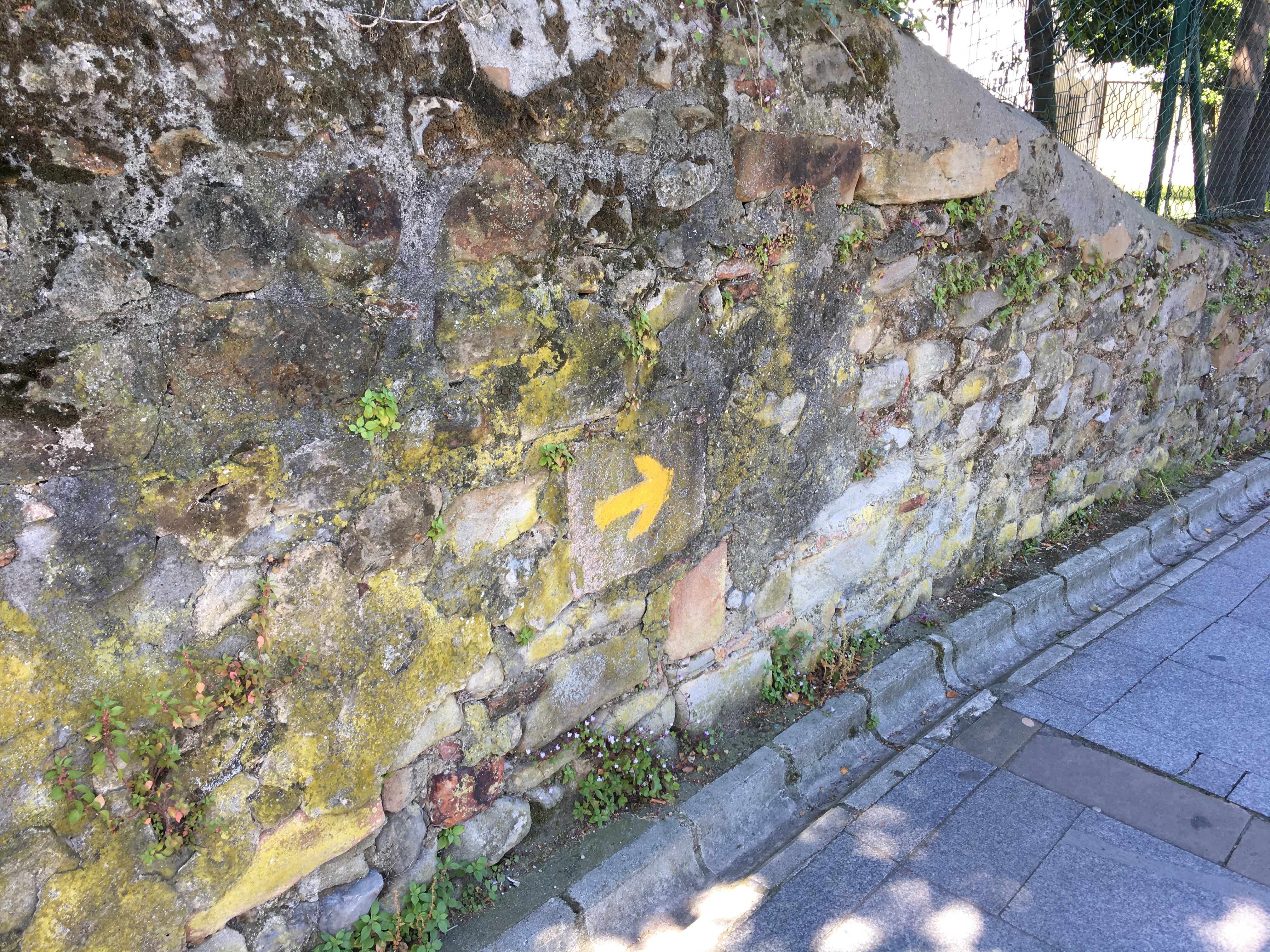
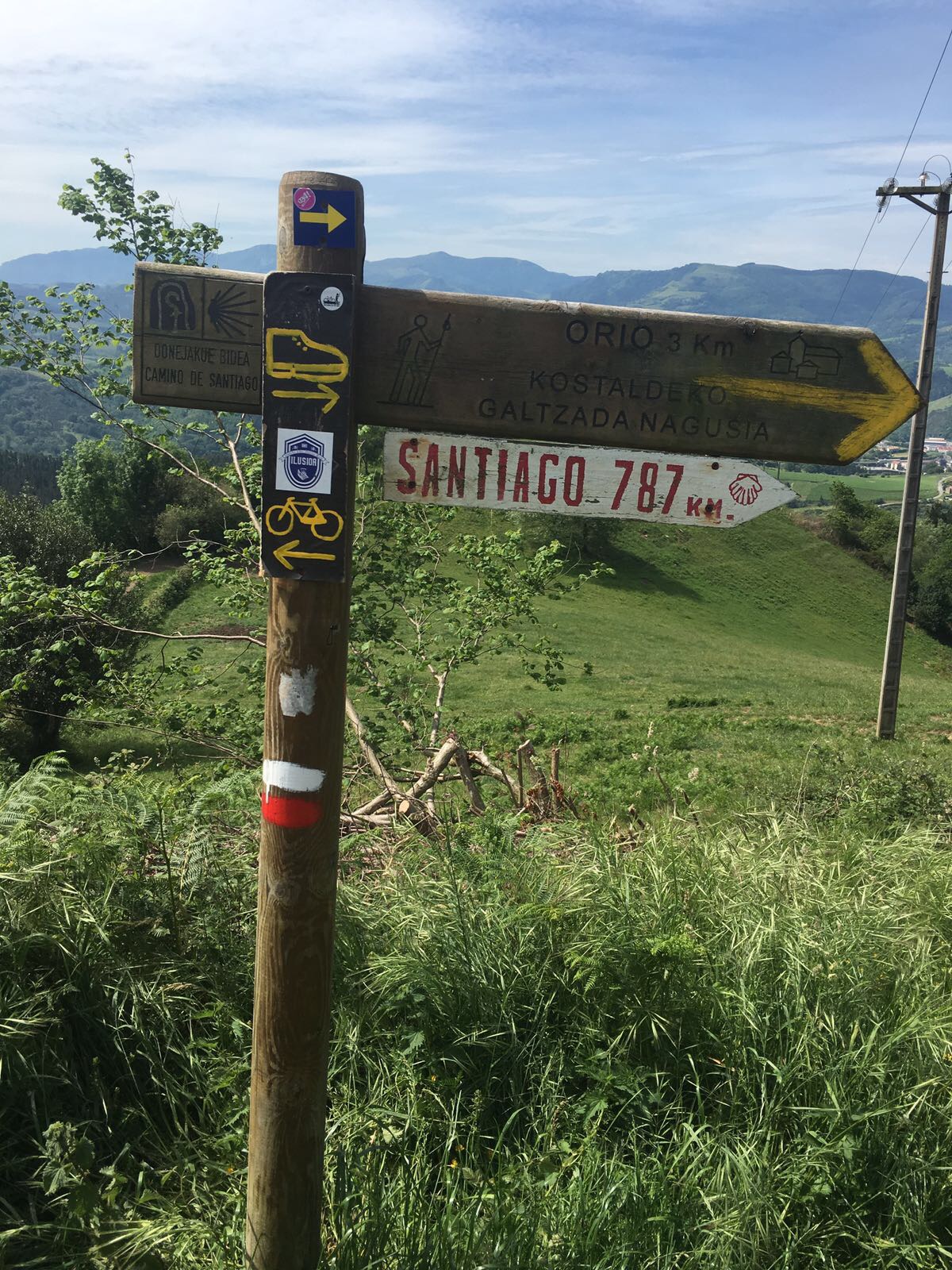
On the Camino de Santiago, you had to take care to follow the signs. Yellow arrows were common and well-known markers to all pilgrims along the path.

IMG_5368

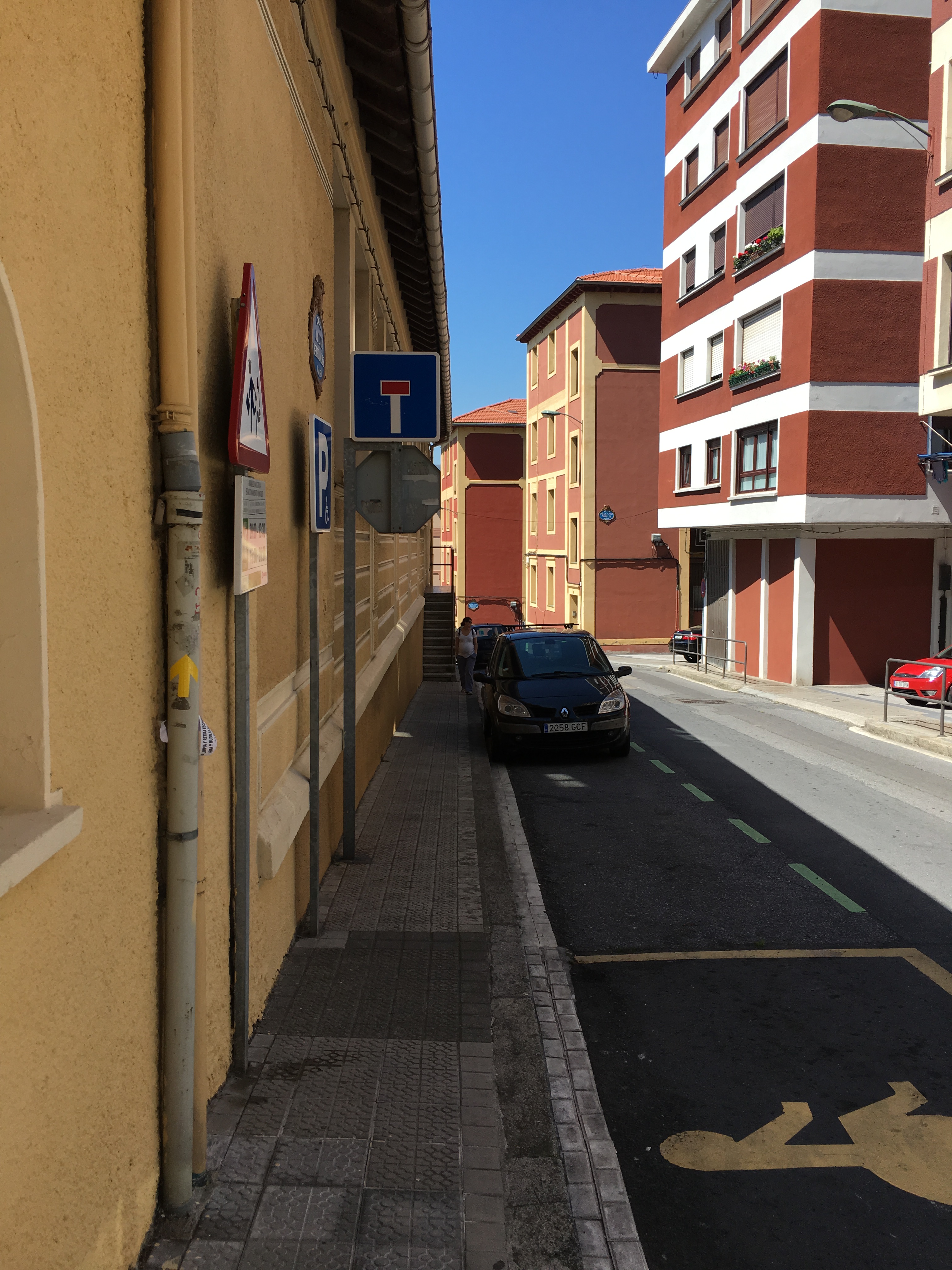
It was easy to get lost, especially in the big cities, if you missed one of these markers. But also at critical junctions in the forests, the fields or roadways where if you were not paying attention, you could lose hours on the journey and have to double back.

I learned, sometimes the hard way, to pay attention to what others might consider obvious. Some markers are easy to notice.

Some are sort of easy to notice:

But often it was a challenge to find that yellow marker:
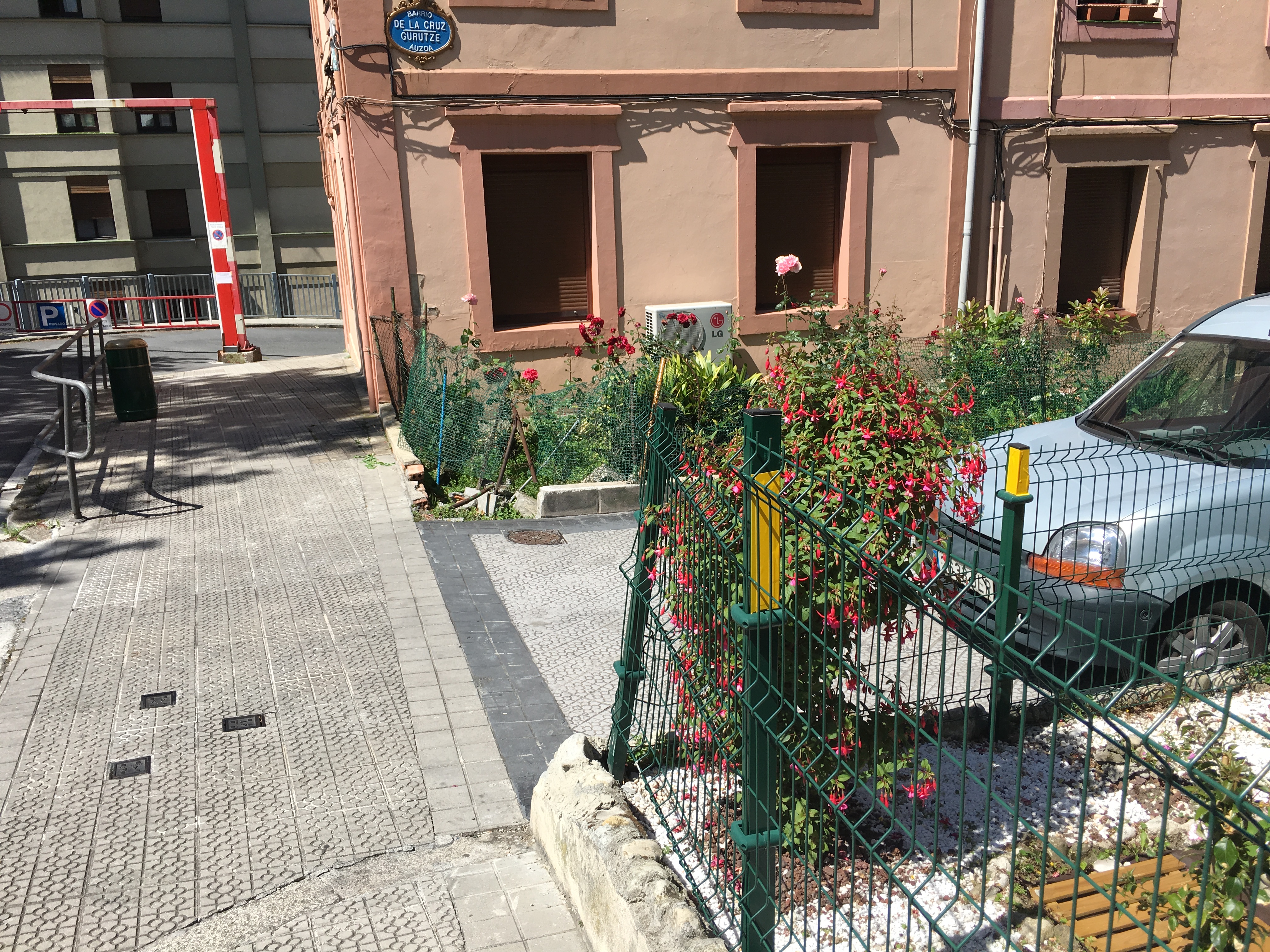
AF9FA91C-7D0D-4D54-B2CD-F933EDE6260A7692EB83-1AA5-499D-AE9B-A64B6A5678C8IMG_5363IMG_5364

The signs — like the sacraments of baptism and holy communion — are reminders of what kind of journey we are on. These signs are embedded in the journey itself, on earth. These holy signs don’t stay in some other-worldly realm; they are very much a part of this world: Baptism uses common water; Communion uses bread and wine – basic, earthly elements which remind us of what God is all about on earth.

The signs are part of our daily, ordinary lives. The signs are already there, along the way, before we even commit to the journey. We only need to open the eyes of our heart and mind, and pay attention. Because the signs are too easy to miss. And when we do miss them, we get lost and go down other paths, paths that lead to division in the Body of Christ, the church.

I remember when our then 12-year-old son started playing football I first learned what it meant to ‘take a knee’. According to the tradition, if a player on the field was injured everyone ‘took a knee’. And it didn’t matter which team the injured player was from; that is, all the players from both teams knelt down and waited there until the injured player either walked off the field on their own strength, or was carted off on a stretcher.

Tim Tebow and Colin Kaepernick have both attracted world-wide media attention for ‘taking a knee’ in the last couple of years, although for very different reasons. Both have made a public display of their faith. Both are prayerful, and devout. One grew up the son of Baptist missionaries to the Philippines. The other was baptized Methodist, confirmed Lutheran, and attended a Baptist church during college.[1]

Tim Tebow, however, is a darling of the church while Colin Kaepernick has been reviled. Their differences reveal much more about the brand of Christianity preferred by many in the church today. Tebow is known for his signature move – dropping to one knee on the field, his head bowed in prayer, his arm resting on his bent knee. He’s clean cut, polite, gentle, respectful.

Colin Kaepernick, starting last year already, refused to stand to attention during the playing of the American national anthem. Originally, he did so in support of Black Lives Matter and to protest police violence against black people. Kaepernick was voted most disliked player in the National Football League (NFL). People posted videos of them burning his jerseys. He was called “an embarrassment” and “a traitor”. Of course, with recent events in the NFL, his witness gains momentum nonetheless.

Two players, two brands of Christianity:

Tim Tebow represents personal piety, gentleness, emphasis on moral issues. Colin Kaepernick represents social justice, community development and racial reconciliation. One version of Christianity is kneeling in private prayer. The other is kneeling in public protest. One is concerned with private sins like abortion. The other is concerned with public sins like racial discrimination. One preaches a gospel of personal salvation. The other preaches a gospel of social transformation. One is reading Paul’s letters. The other is reading the Minor Prophets.

Are these versions of Christianity mutually exclusive? Much of Christian history, especially since the Reformation, would suggest, ‘yes’, even among Lutherans. The proliferation of Christianity into some thirty thousand different denominations by the 500th anniversary of the Reformation in 2017 would suggest, ‘yes.’ The divisions within Christianity is leaving the church all the poorer, with each side needing to be enriched by the biblical vision of the other.

Bible scholar Walter Brueggemann expresses it well: He writes that Christianity should be “awed to heaven, rooted in earth.” We should, as he says, be able to “join the angels in praise, and keep our feet in time and place.”[2]

Christianity, sadly, remains on its knees because of our divisions, when all along the vision of the Gospel, expressed best by Paul himself, is that “every knee should bend, in heaven and on earth”[3]. How do Christians today, regardless of background and orientation, contribute to this vision in ways that actually make a difference on earth?

In the second reading for today, we learn about the essential character of the biblical God. In the Hebrew Scriptures, all of God’s acts, blessings, and delights in creating are for the sake of others. This is typical of God, “who is intimately concerned with justice, peace, and the flourishing of all creatures.” This is typical of God, “who is ‘on high’ but never remote, who is ‘over all’ but faithfully and dramatically invested in life on earth.”[4]

God does not embrace hierarchy. Nor does God rest in privileged autonomy, according to some deist idea of a distant and uncaring God. God is love. And the New Testament witness continues this description of a God who cares intimately about our humanity, in the incarnation of Jesus Christ. God is Immanuel, God-with-us and for us.

In setting up this wonderful hymn that Paul includes in his letter to the Philippian church, Christians are called to exemplify a humble regard for others, seeing them as “better than yourselves”; we are not to primarily serve our own interests, but the interests of those who are different.[5]

These may be an impossible task for us in our self-centred, me-first culture. Nevertheless, we are encouraged, as Paul encouraged the early church in Philippi, to “work out our salvation with fear and trembling”[6]. Why even bother?

Because God is already at work in us.[7] God is already at work in the world, as difficult as it can be to spot those signs of God’s grace, God’s justice, God’s good work. As Martin Luther insisted, matters of salvation revolved around God’s actions, not human activities. Justification — being placed into a right relationship with God — is totally God’s activity. After all, as Paul wrote earlier in his letter to the Philippians, we need to believe – despite what appears to be everything to the contrary – in the promise and the vision that God “who began a good work among you will bring it to completion.”[8]

God’s grace precedes all. Just like the signs on the journey before us and around us. Even though we may miss them from time to time doesn’t mean they aren’t there, waiting for us to notice. God’s grace continues to guide us and point in the right direction.

We therefore have nothing to lose, to take a knee for the sake of those who do not have a voice. To take a knee for the sake of others who are silenced by discrimination and abuse. To take a knee for all God’s creatures who long for a better day.

We pray for and support agency to help the refugees today escaping violence and oppression in Myanmar. We pray for and support agency to help victims of Hurricane Maria in Puerto Rico. We, so, ‘take a knee’, in the spirit and mind of Jesus Christ who took a knee for us all.

[1] I thank Michael Frost, “Colin Caepernick vs. Tim Tebow: A Tale of two Christians on their knees” (The Washington Post, September 27, 2017) for much of the content I use in this section of my sermon

[2] cited in Michael Frost, ibid.

[3] Philippians 2:10, NRSV

[4] William Greenway in David L. Bartlett & Barabara Brown Taylor, eds., “Feasting on the Word: Preaching the Revised Common Lectionary” Year A Volume 4 (Kentucky: WJK Press, 2011), p.112.

[5] Philippians 2:3-4

[6] 2:12

[7] 2:13

[8] 1:6

Cape Disappointment

How do we learn to deal with disappointment?

When health concerns mount? When there are cutbacks in the company you work for? When a relationship breaks down? When someone betrays you? When you fail to meet your goal? When you lose something precious?

How, as people of faith, do we learn to deal with disappointment? When what has happened does not make sense, when we can’t understand ‘why’?

In 1788 Captain John Meares named the spot of land overlooking the confluence of the Columbia River and the Pacific Ocean, Cape Disappointment. He was disappointed that the Columbia River was simply thus, a river, instead of the fabled Northwest Passage which he was intending to find.

IMG_6125.JPG

Mr. Meares was obviously well off-course to his goal. We know today that the Columbia River begins its journey at Columbia Lake in central British Columbia, Canada, and winds itself south hundreds of kilometres into the states of Washington and Oregon before spilling into the Pacific.

IMG_6201

In keeping with the rather downer of name, the lighthouse on Cape Disappointment overlooks the hundreds of shipwreck sites off the coast. The United States Coast Guard recognizes this large area of water as the most dangerous among all the river outlets along the continental shores of the United States.

IMG_6123

Both the strong outflow of the broad and mighty Columbia competes with the powerful tides and winds generated by the largest ocean on earth. Crisscrossing currents of water create constantly shifting sand bars and opposite flow wave action that can confuse, disorient and ultimately undo any mariner navigating this passage.

IMG_5932

IMG_6320

IMG_6322

Add to this mayhem the fog which has an uncanny knack of coming in unexpectedly on the north breeze, disappearing under the burning sunshine as quickly as it appears. I stood bewildered in such a fog jam on the beach one day, unable to comprehend how a perfectly cloudless sky in beautiful sunshine can change so quickly. Signs are staked at entrances to the shores along the thirty-eight mile stretch of contiguous sand beach north of the Cape warning unsuspecting swimmers of rip currents and unstable sand conditions above and below the surf.

In short, while ascetically beautiful to the eyes, this small part of the world contains hidden, life-threatening dangers beneath the surface of things. Disappointing is an understatement when considering the potentially dire consequences of a mariner’s failed attempt at moving around the Cape, let alone dealing with the failure of not arriving at one’s goal.

IMG_6204

In the first reading for today[1], God responds to Jonah by asking questions, rhetorical though they are. Jonah expresses his anger at God for sparing the “great” city of Nineveh. God’s actions did not make sense to Jonah, even though Jonah confesses his belief in a gracious God who is “merciful, slow to anger, and abounding in steadfast love, and ready to relent from punishing.”[2] He obviously did not think much about the people of Nineveh regardless of God’s mercy. Yet he is internally divided, unable to reconcile his belief with his feelings. He can’t figure it out. He is depressed. And wants to die.

If God says anything toward Jonah’s healing, it starts with a question: “Is it right for you to be angry?” And when God provides a bush to protect and save Jonah’s life, a bush that then dies, Jonah is angry again. What does God say to Jonah’s outburst? Another question. “Is it right for you to be angry about the bush?” And to top it off, the entire book of Jonah ends rather abruptly, again with a question from God.[3] Questions. Not pat, cut-and-dry answers. Questions.

I wonder if we have tended to make God and religion into something and someone to give us quick and final answers. We demand ‘what’ from God when all along Jesus, in the wisdom tradition, is primarily teaching ‘how’. Out of the total of the one hundred and eighty-three questions that are asked of him in the Gospel, Jesus only directly answers three of them.[4] In the New Testament, Jesus’ very first words spoken to his disciples was a question: “What are you looking for?”[5]

Jesus turns the tables on the disciples, as he does time and time again. Rather than give them what they are looking for in a neat and tidy package of an easy answer, he throws it back at them. What do you want?

The first call of Jesus in our lives is a call to be honest with ourselves. Before we can do anything, we need to be true to ourselves. And commit to that lifelong struggle to move beyond our intellect and its insatiable compulsions for answers, towards actions that reflect a trusting heart. Because following Jesus in this world does not, most of the time, make a whole lot of intellectual sense. If we are being faithful.

It is not our job to know everything. God knows all. We don’t have to. Ours is a call to hold, not rid ourselves of, all the messy contradictions of our lives. Abraham, Jacob, Rebekah, Moses, David, Job, Esther, Jonah, Elijah, the disciples, Paul – they were not people who had all the easy answers to life’s complex questions. But they were trusting, obedient, and they acted. Sure, they objected to God at times. Yes, they made mistakes. If anything, the story of Jonah ought to reinforce the importance of a real, personal, topsy-turvy relationship with God. That is the stand-out characteristic of all the faithful.

During the years following the Council of Nicea in the fourth century, a common heresy re-emerged under the leadership of Eunomius, a bishop in Cappadocia (in modern day Turkey). Eunomius argued that we can understand the nature of God simply and clearly. Reflecting on what was the mystery of the Trinity, he implied that God was perfectly accessible to human intelligence.[6]

The Cappadocian Fathers, as they are called, reacted to Eunomius. Basil the Great, his brother Gregory of Nyssa along with John Chrysostom insisted on the incomprehensibility of God to the human mind, and the necessary limits of theological discourse. Their position became the orthodox, Christian stance, ever since.

I wonder, ever since the Reformation, the industrial, scientific revolutions and enlightenment era of the last few centuries in especially the western world, haven’t we slipped back into this heresy once again? Pretending, even though we may not be aware of it, that we should have answers to all of life’s important questions.

It is our natural humanity to strive to know everything. But if we are honest, our minds certainly cannot grasp fully such incomprehensible realities as the mysteries of love, suffering, death and God. Here, we must trust and let go of all our pretenses. “For,” in the words of the prophet Isaiah, “my thoughts are not your thoughts, nor are your ways my ways, says the Lord.”[7]

Disappointment in life is a doorway to a deeper awareness of God’s truth and presence in our lives. Our varied expressions of worship, of living out God’s call, our prayer lives – all these are not so much, then, a matter of petition, of doctrine, of rule-setting-and-following, of solving the discrepancies and inconsistencies of the bible and theological discourse.

Rather, our complex lives with all the joys and disappointments become the tableau, the canvas, upon which we discover we are not alone. And that God is ever present and faithful, regardless of what we do or think. You can’t make God love you one ounce more – by all your right thinking and having all the right answers – than God already loves you right now.

Often, the disappointments of our lives bring us to this realization more than all of our accomplishments and successes. Because if we are going to get anywhere in our lives, we need to hope and believe, despite the disappointing circumstances of our lives.

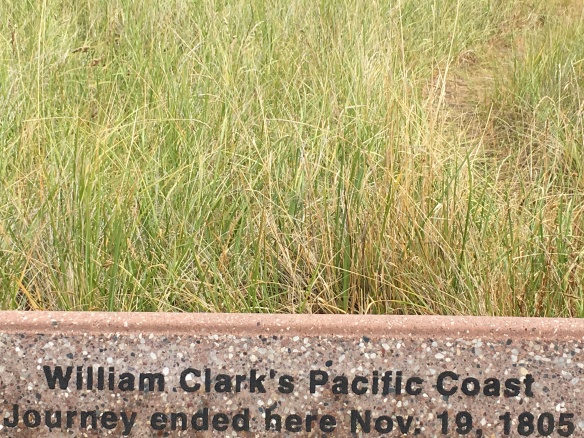
Cape Disappointment marks another very important place in the history of North America. It is not just a place that signifies disappointment, tragedy and danger. It is also the very spot where the famous Lewis and Clark expedition reached the Pacific Ocean in November of 1805. Yes, Lewis & Clark met with many a disappointment and setback along the 3700-mile route up the Missouri River, across the American Midwest, over the Rocky and Cascade mountains and down the Columbia River Gorge that took them a year-and-a-half to accomplish.

IMG_6400

On the journey, were they ever absolutely certain they would make it? As it was, they must have taken their disappointments in stride. For on an uncharacteristically calm day in a stormy November, they made their final push around the western Cape and finally met the limitless horizon.

Significantly, the Lewis and Clark Expedition was called the Corps of Discovery. Today, a 10-mile-long, well-groomed paved path winds through the dunes of Long Beach Peninsula and up into the forest of the Cape. It is called the “Path of Discovery”.

IMG_5994

Cape Disappointment is intricately tied to the Corps of Discovery, where both failure and success are entwined in a rich and diverse history of exploration. The spirit of questing celebrated on these shores includes and transcends both the unique events of human tragedy and human achievement. You cannot have one without the other. In one place. In one human being. Each of us is invited to the journey that includes, embraces and transcends disappointment and failure.

At some point along the journey, you need to have hope in order to continue. Even in the midst of all our unknowing, we can believe and trust in the solution, before it happens.

It’s called faith.

IMG_5922.JPG


[1] Jonah 3:10—4:11, NRSV, Proper 20A/Ordinary 25A/Pentecost+16

[2] Jonah 4:2

[3] Jonah 4:4,9,11, NRSV

[4] Richard Rohr, “Adam’s Return: The Five Promises of Male Initiation” (New York: The Crossroad Publishing Company, 2004), p.112

[5] John 1:38, NRSV

[6] Belden C. Lane, “The Solace of Fierce Landscapes: Exploring Desert and Mountain Spirituality” (New York: Oxford University Press, 1998), p.105

[7] Isaiah 55:8, NRSV

photos by Martin Malina IMG_5940

Even there your hand shall lead me

Later this summer I will be going on a 10-day canoe-camping trip on the French River. Last summer my friend and I did three nights and four days on a smaller portion of the French; this summer we want to challenge ourselves to do the whole, or at least most, of the river all the way from Lake Nipissing to Georgian Bay.

Because the challenge is greater, I felt I needed to take a First Aid Course in preparation, so I could be of some use to the company with whom I travel.

I learned some interesting facts about providing First Aid. Did you know that in all of Canada, except Quebec, you and I are not legally obligated to provide First Aid to anyone experiencing a medical emergency? In Quebec, however, we are legally bound to help someone who is in distress. It is, from Quebec’s point of view, a basic human right for any person to receive first aid in an emergency.

In class we discussed reasons why we may choose not to give First Aid: For fear of hurting them more, for fear of harming oneself, and of course for fear of legal repercussions. Our instructor countered this latter objection by reminding us of the “Good Samaritan Act” which governs any attempt in good faith to help someone in an emergency. So, legally, we were off the hook.

But we may still hesitate to take the risk and commit ourselves to helping someone. It would be easier to pretend we didn’t see it, get on with our busy day and avoid the added stress and responsibility.

Every time I read the wonderful story of the so-called “Walk to Emmaus” (Luke 24:13-35), something else piques my interest and causes me to reflect. I believe there is so much depth to this story while it provides a summary of what we believe as Christians. Particularly, this time, I wondered what Cleopas and his friend had to do with this incredible encounter with Jesus.

It seems they really had nothing to do with making this encounter happen, when Jesus appeared to them on the road that first Easter day. As far as we can tell, they weren’t expecting to meet Jesus let alone praying for it. And, ironically, when they do finally recognize the living Lord Jesus at the breaking of the bread, Jesus disappears from their sight! Truly, this event happened to them.

But were they merely passive recipients of this encounter? There is one turning point in the story, where things could have gone one of two opposite directions. Up until that point, they had not yet consciously recognized the man walking with them as Jesus himself. After that point, the table was set — literally — for their full recognition of Jesus.

Had they not invited Jesus to stay with them, for the evening was nigh, they would have missed out on a wonderful conclusion to their day. “Abide with us, for it is evening,” they invited this still stranger to them into their home. They could have chosen to let the man on his way. They could have chosen not to pay attention to their burning hearts. They could have ignored the subtle yet real ‘promptings of the Spirit’ we may call it today, within them.

I learned some thought-provoking statistics on my First Aid course this week. There we were, some twenty-five of us stuffed into a tiny room above a car repair shop in Renfrew. We were from all walks of life. Local businesses paid for their employees to take this course; therefore, my class mates were prompt and motivated to learn their First Aid techniques, principles and procedures. Certificates were issued upon successful completion of two exam periods and practice with bandages, splints and manikins.

Then, our instructor posted these statistics after asking us: Presuming it was done properly, what was the success rate of providing only chest compressions (sets of thirty thrusts downward over the chest) to someone who was unconscious and not breathing? What was the success rate of doing just that? 1.2%.

Without the aid of an Automated External Defibrillator (AED), adding ventilation to the chest compressions (pinching the nose and breathing in sets of two into the casualty’s mouth) raises the chance of recovery to only 5%.

I thought to myself: There is hope to humanity! Because it would be easy to just not bother! No wonder we may feel unwilling to commit to providing First Aid to an unconscious stranger on the street! What’s the point of doing that, let alone learning how to do it?! The chances of success are so slim!

And yet, there we were. These classes, I am told, are usually full. Businesses and organizations require their employees who engage with the public to know First Aid. They employ resources to make sure their employees have this training. All this effort for at best a 5% success rate.

But the ethics of it would argue: It is worth trying. Better to do something, than do nothing at all.

Sometimes I wonder whether being the church feels a bit like that. We expect the church to function at a 100% success rate; and when we fail the odd time, well — the church is no good, don’t bother. What is the worth of it all?

People are still bad. Failures in humans abound and seem to persist against all good intentions and efforts to be good. The message of the Gospel doesn’t always seem to make any positive difference in our lives. So, what’s the point?

Driving on Clyde Ave the other day, I noticed the sign outside the Reformed Church that reads: “Growth doesn’t come without change. Change doesn’t come without some risk.”

Following the example of Cleopas and his friend on the road to Emmaus, the only thing we can do, it seems, is learn to pay attention to those rare moments whenever our hearts are burning with love. And then, practice making the invitation in response to that nudging of our hearts and open our lives to those moments when we sense something shift within us. We may not be able to put our finger on it just yet, but respond nonetheless.

And then the rest is up to God. God is free. God enters our lives and walks with us whether we know it or not. God then ‘disappears’ from our awareness whenever God wants. But whether we feel God near or far, God is there. “Am I a God nearby and not a God far off? Who can hide in secret places so that I cannot see them?” says the Lord. “Do I not fill heaven and earth?” (Jeremiah 23:23-24).

The God of Easter is alive and present with us no matter where on earth we go. This is the good news of the resurrection. God is alive, and so we are called to rise up in renewal and joy. “If I take the wings of the morning and settle at the farthest limits of the sea, even there your hand shall lead me and your right hand shall hold me fast” (Psalm 139:9-10).

It is worth it. Even though we fail time and time again. There is the hope. There is the promise. There is the opportunity. There is the constant presence of God.

Buen Camino!

When in Sunday School decades ago we played the roles of well-known bible characters, I remember the only thing worse than being a “Judas” was to be a “doubting Thomas”.

We wanted to be Abraham, Moses, Kind David, Samson, Queen Esther, Rachel, Ruth, The Magi, Peter, Paul, John. We wanted to be Joseph or Mary, or even Jesus himself!

But Judas the Betrayer, or Thomas the Doubter? No. Indeed Thomas has been treated quite negatively in much of Christian preaching and teaching. He is often held up as a negative role model.

Let’s take a closer look at the text about Jesus’s resurrection appearance to his disciples (John 20: 19-31). Because there is no condemnation of Thomas. Recall the disciples are hiding behind locked doors in Jerusalem fearful of the authorities. Unless Jesus’ words to Thomas are inflected in an accusing way, they do not need to be read as a condemnation: “Have you believed because you have seen me? Blessed are those who have not seen and yet have come to believe” (John 20:29). They simply affirm that those who believe without first-hand experience of the risen Jesus are also blessed. (1)

But can we blame Thomas? Thomas only desires his own firsthand experience of the risen Jesus. He is unwilling to accept the secondhand testimony of others. And, his desire is granted: Jesus appears to him. Prayer answered!

I wonder if Thomas today doesn’t really represent so many of us who deeply yearn and seek for a first-hand experience of God, and are simply and naturally unsatisfied with hearing it ‘second-hand’. Hearing someone else’s first-hand experience of God is inspiring and instructional to be sure. We learn about someone else’s experience of God’s presence, healing, grace and wonder — whether that person is from the bible or our grandparents or the person sitting next to us in worship. But someone else’s experience of God can never be a substitute for our own.

What we may be looking for, is to be more like Thomas: Honest in our desire for a first-hand experience of the living God. Yearning to taste and feel more of the goodness of God in our own lives and in the world. Striving ourselves to make the world a better place for everyone. We may be unsatisfied with basing our commitment to a life of faith on someone else’s testimony. We may, like many people today, be seeking our own experience of God and suffer from what I would call the ‘second-hand syndrome’. Perhaps Thomas needs to be our role-model more than anyone else in the bible today!

Of course, the benefit of the Reformation was to teach us an important distinction in all our striving: Our motivation is important to be aware of, because if we strive to do good all in order to make ourselves right before God we will most certainly miss the mark. “We confess that we are captive to sin and cannot free ourselves,” we say in our Confession. God initiates the saving relationship. God moves; we only second the motion.

And yet, our striving, our trying, our good work as response to God can help create the space and the climate in which God’s grace is made clear to us, is given to us, and in which we are most ready, then, to receive God’s forgiveness, love and mercy. Being pro-active, doing things with one another in the church, yearning and striving for God — these are antidotes to the ‘second-hand syndrome’ and a prescription for a healthy life of faith.

Last week on the first Sunday of Easter, I emphasized the words from Matthew’s account of the Resurrection of Jesus outside the empty tomb that first morning. Jesus instructs the women: “Do not be afraid; go and tell my brothers to go to Galilee; there they will see me” (Matthew 28:9-10).

When resurrection happens today, as it always has beginning with that first day, there is movement forward. Not backward. As I said last week, there is no turning back once resurrection happens. The disciples are not instructed to meet Jesus in the empty tomb where the miracle happened. No. The instruction is quite clear: Get moving! Get out of here! Go to Galilee. Go to where I wait for you. In other words, don’t stay where you are! Do something!

In 2017 the Lutheran Church worldwide celebrates the 500th anniversary of the Reformation. We call it Reformation 500. ‘Five hundred’ is an important number in all the dialogue surrounding this momentous occasion. The national church has even set up the Reformation Challenges for the church across Canada to meet. And each of those goals are pegged at some variant of 500:

Five hundred refugee sponsorships (which already has been exceeded), five hundred scholarships for school children in the Holy Land, five hundred thousand trees planted in Canada, and five hundred thousand dollars raised for the Lutheran World Federation endowment. You can visit elcic.ca for the most recent update on where we are at in meeting all those goals. And please consider making a personal contribution towards any one of those worthwhile causes.

I’d like to up the ante. Let me call it the ‘Reformation 800 Challenge’. Eight hundred is the new Five hundred. Not only are we celebrating 500 years of Reformation this year; we turn to the future and pray not just for 500 more years but … 800. Why not?

Let that number, eight hundred, symbolize a confidence and hope-filled trust that God has more good than we can ever imagine in store for us in the church far into the future. And this is what I propose in this year’s Reformation 800 Challenge:

Next month, I begin walking the 800 kilometres from Irun, Spain to Santiago de Compostela in Galicia. The route I follow skirts the northern coast of Spain from East to West. This is my Reformation 800 Challenge.

I walk a pilgrimage route, one of the most ancient on the planet. This Camino (which means the “way”) has been an important spiritual discipline for almost a thousand years for millions of Christians.

A pilgrimage means that what happens on the outside of us in our physical reality mirrors the change and challenge that happens on the inside of us. In other words, outer and inner realities find some kind of resonance on a pilgrimage experience. It’s on a pilgrimage where many discover or re-discover their ‘walk’ with God in life, are renewed on their ‘path’ and/or are ‘re-directed’ to new ways of living.

I would like you to do this with me. Yes. I invite you to consider doing a Reformation 800 Challenge with me, in your own way, with your own resources and plan.

For example: In order to reach the goal of 800 kilometres in under two months I plan to walk at least 20 kilometres a day. So, while I’m gone would you consider a physical discipline whereby you, for 20 minutes a day, do something intentional for your own health and well-being: walking, cycling, lifting a small weight, stretching, doing yoga, etc.? It doesn’t have to be ‘extreme’; something simple even if you are confined to a chair or bed — for 20 minutes a day, do something that involves your body in ways you have not normally been accustomed. Be creative.

A piece of wisdom for pilgrims that has guided my preparation and planning is: Walk Your Way. Walk your own Camino. This is nobody else’s walk but yours. Do what you want and need to do, in your own way, according to your own pace.

You can interpret this challenge in many ways. For example, if you are very active and move about a lot in your daily life already, perhaps sitting still and quietly for twenty minutes a day in silent meditation and prayer is your way. Or, take twenty steps a day. Do twenty reps of a particular exercise or stretch. But whatever you do, the important thing is that you are challenged to attempt and remain faithful to a daily, body-involving discipline. Do it your own way.

Keep a journal or write your notes on a piece of paper that you stick to the fridge door. Write the date, and the accomplished task, so that over time, you can track your progress.

Your goal: 800 of something before the end of this year — whether eight hundred minutes, steps, kilometres. And here’s the good news. You already have a head start on me. I don’t begin until mid-May. You can start this afternoon, on your Reformation 800 Challenge! And, you have until the end of the year; I need to be finished my walk by early July.

After I return from my sabbatical, I would very much be interested in having a conversation with you about our experiences on our pilgrimage. They say that for pilgrims close to reaching their destination in Santiago, many confess that by the end it was no longer them walking the Camino, but the Camino was walking them. In other words, the experience of doing it created deeper trust in the way of God, of faith and peace within them. The physical reality converged with their inner life in positive ways.

As you contemplate what your discipline will be, as you think about what you will do, as you plan your own ‘pilgrimage’ — here are some questions for your own reflection and which can provide a basis for our own conversation when I return. Ask yourself:

In Preparation

What will you do to reach ‘800’ by the end of the year? In time? Kilometres? Steps? Reps? And how will you do it on a daily basis? (for example, 20 minutes/kms/reps/steps, etc. per day)

What are your intentions for this experience? What do you hope for by the end? The first recorded words of Jesus to his disciples in John’s Gospel are: “What are you looking for?” (John 1:38). How do you know you will find it if you don’t know what you are looking for in the first place?

What do you think you will discover about yourself? Saint Augustine once said that knowing yourself is a stepping stone to knowing God.

How will you record your journey?

On the Journey

Where did God find you? What experiences along the way brought you close to God?

What was the best part of the experience so far? What has been the greatest challenge?

Who did you meet along the way? Or, describe your relationships with others during the experience.

What were you grateful for?

Nearing the end / Getting close to the goal

What does it mean ‘to arrive’?

How does it feel to be reaching a destination after great effort and clear motivation for the journey?

What sacrifices did you make in order to get this far on the journey?

How will you celebrate and honour the ending of the journey?

After the Journey

What was the most memorable part of the whole experience?

How did you deal with disappointments and/or failure during the journey?

How do you now view God?

How will you keep what you learned alive in your regular life now that the journey is over?

Has anything shifted within you as a result of the experience? If so, how would you describe this change within yourself?

How will you share your journey and what you have learned with the important people in your life?

As we soon begin our pilgrimages, may God bless us on the way. And to all we meet along the path, may we wish them, “Buen Camino!”
1 — Marcus Borg & John Crossan, “The Last Week: What the Gospels Really Teach About Jesus’ Final Days in Jerusalem” (New York: Harper One, 2006), p.202-204.

Cornered?

Have you ever wondered why this building was designed to be more-or-less round? Well, don’t you know, “The devil can’t corner you in here!” we say.

Like in the boxing ring, the combatants in the corner are at either end of the victory-defeat spectrum: In the corner they either have the upper hand, literally. Or, they are on the verge of collapsing in a heap.

Being in the corner is an undesired position. Cornering someone is to put them at a disadvantage. The one being cornered is vulnerable. Being cornered is to admit there are no options left.

We also use the phrase to mock contractors and builders worried only about the bottom line when they ‘cut corners’. Cutting corners may serve the bottom line, but in the long run cutting corners is a prescription for guaranteed repair and reconstruction work sooner than later.

At the same time, the latest fashion in contemporary urban design values right angles and sharp lines. The new buildings are rather square and boxy, aren’t they? Meaning, lots of straight lines. But a straight line can’t go on forever. Therefore, lots of corners.

People in many non-Western cultures don’t build as many corners as we do. The Zulus in southern Africa, for example, live in a less-carpentered world. They live in a history and culture where straight lines and right angles are scarce, if not entirely absent. (1)

What would it be like to live in a non-linear world? Where our material culture presents more rounded, softer, curved constructions such as our building!

And yet, there is a gift in the message of a corner. Not only can corners get us stuck. But they also are an indisputable sign that there’s always a corner to be turned. In truth, this is what we say, don’t we, when things are just starting to get better: “We’ve turned the corner on this.” When things are not yet better, we wonder: “When will I turn the corner on my illness, my fear, my problem, my troubled feelings, my strained relationships?”

Turning the corner means, nevertheless, there’s no turning back. Once you’ve crossed the line, there’s no going back to the way it used to be. That could be good. It can also be scary. Corners are necessary to find a way through a predicament, such as in a maze. Corners define clearly where one eventually needs to go, like it or not.

The story of Jesus’ resurrection is a huge corner turned in the cosmos of all that was, and is, and is to come. History is forever changed by the empty tomb. The ether of our very existence is transformed into the triumph of good that can be, for all time, for all people, and in every place. All the evil forces that led to Jesus’s crucifixion no longer need to triumph in the world today.

They say any lead in playoff hockey is a dangerous lead, as the first few games of the NHL playoffs have shown. More often than not the lead does not stand. If a team does have the lead however small, they are coached to employ the killer instinct:

Don’t let up. Don’t get too comfortable. Don’t sit back. Finish off your opponent with indiscriminating, ruthless power. Once they’re down, make sure they stay down. Hate your opponent. Don’t give them a chance to come back. Don’t be merciful, kind, generous, compassionate. Above all, don’t feel sorry for your opponent’s misgivings.

This is the philosophy of competitive play in professional sports. Why professional athletes and teams are so popular and generate billions of dollars in our economy is precisely because we humans are really good at believing this philosophy if not doing it from time to time.

Easter is God’s come-from-behind victory. The way of non-violence, of loving self-giving, and of trust in God is a victory against all the odds. It is, frankly, an unbelievable, unexpected move from our human perspective. Jesus’ demonstration of non-violence, of loving self-giving, and of trust in God is validated and redeemed by his resurrection. The surprising, brilliant victory of Easter morning is a poignant witness to what God is really all about.

The way of violence of our will/my will over yours, of greedy acquisition for more, of cynical mistrust of others — this is the way of the world that crashes in a heap of defeat in the light of Jesus’ resurrection. Now, the way of God is before us.

Resurrection says a lot about the nature of God’s purposes. Because Jesus lives. And Jesus is Lord. We therefore gather today to affirm that God’s purposes are good. And, in the end, it is not all doom and gloom. In the end, God comes through.

One thing I like about the re-modelled communion rail around the chancel, is that we have those corners at both sides. Some have said they don’t like it at the corner, because they feel squeezed out. Well, we can help each other with that. What the corners force us to do is pay more attention to who is standing beside us; and make room for them. And that’s not a bad thing!

What these corners force us to do, is to face and look at each other when we are standing or kneeling at the altar. We are not just individuals coming to face the Lord God one-on-one in a straight line, not seeing nor even respective of who comes along beside us. Now, it’s no longer just about ‘me and sweet Jesus’.

It’s about ‘us’ and sweet Jesus. And Jesus is not always sweet. We are a community gathered around one table, a people who embody the living Body of Christ in the world today. We are also the broken body of Jesus, whose power is shown through human weakness (1 Corinthians 1:18-29). What better place than to see our sisters and brothers in Christ, eye-to-eye, and practice right here what it means to pray for others, to encourage them, to recognize our unity in the living God.

And then take in word and deed that awareness and message from this place, into the world out there: Christ is risen! Christ is risen indeed! Alleluia!

1 — Wayne Weiten & Doug McCann, “Psychology: Themes and Variations” 3rd Edition (Toronto: Nelson Education, 2013), p.168

Something always has to die …

(The following is taken from Richard Rohr’s commentary in his book “Wondrous Encounters; Scriptures for Lent”, with my added words.)

The crowds were gathered in Jerusalem for the Passover Festival. This ritual is described in Exodus 12, and provides the basis of the Holy Communion in Christian practice.

In the original ritual, people were to procure a small year-old lamb for each household. They were to keep it for four days — just enough for the children to bond with it and for all to see its loveliness — and then “slaughter it during the evening twilight”! Then they were to take its blood and sprinkle it on the doorpost of the houses. That night they were to eat it in highly ritualized fashion, recalling their departure from Egypt and their protection by God along the way.

This practice was meant to be a psychic shock for all, as killing always is. Thank God, animal sacrifice was eventually stopped. The human psyche was evolving in history to identify the real problem and what it is that actually has to die.

The sacrificial instinct is the deep recognition that something always has to die for something bigger to be born. We started with human sacrifice (Abraham and Isaac), we moved here to animal, and we gradually get closer to what has to be sacrificed — our own beloved ego — as protected and beloved as a little household lamb! (1)

We will all find endless disguises and excuses to avoid letting go of what really needs to die for our own spiritual growth. And it is not other humans (firstborn sons of Egyptians), animals (lambs or goats), or even ‘meat on Friday’ that God wants or needs.

It is always our beloved passing self that has to be let go of. Jesus surely had a dozen good reasons why he should not have to die so young, unsuccessful (sentenced to death, a criminal), and the Son of God besides!

By becoming the symbolic Passover Lamb himself, Jesus makes the movement to the human and personal very clear and quite concrete. It is always “we” — in our youth, in our beauty, in our power and over-protectedness and self-preservation instinct that must be handed over. Otherwise we will never grow up, big enough to ‘eat’ of the Mystery of God. In short, we have to ‘get over ourselves’, individually and collectively as the church, before we can be effective and authentic followers of Jesus in the world today.

Good Friday is really about “passing over” to the next level of faith and life. And that never happens without some kind of “dying to the previous levels.” This is an honest day of very good ritual that gathers the essential but often avoided meaning of Good Friday: Necessary suffering; that is, something always has to die for something bigger to be born.

One of the Gospel stories repeated every year during Holy Week is the anointing of Jesus by a woman named Mary at Bethany (John 12:1-11). Even though the text does not identify her as a sinner, this has been the common understanding. This alone should reveal our rancid preoccupation with sin.

The point in this story, again, is not the sin but the act of love towards Jesus, whom the woman correctly accepts (unlike the twelve disciples) the coming death of Jesus. She anoints Jesus’ feet with expensive nard, which is the anointing oil for death. Jesus’ favourable response to Mary’s act clearly suggests her act of love trumps any failing on her part, or the part of the poor, or on our part!

As always, love of Jesus and love of justice for the neighbour are just two different shapes or sides to the one Love, that gets us beyond our over-thinking sin. A simple act of love gets us beyond our negative self-obsession, which only keeps us stuck in selfish, egoistic preoccupation.(2)

May our praise of God this day, in Jesus’ acceptance of his death on a Cross, invite each of us into commitments and acts of love toward God, toward one another, and to the world in need. Then, we get the point of the story. And we affirm, that something bigger indeed is just around the corner.


1 — Richard Rohr, “Wondrous Encounters; Scriptures for Lent” (Cincinnati, Ohio: Franciscan Media, 2011), p.133-135

2 — ibid., p.126-127

The good crowd

I was ten years old when my parents shuffled me and my brother into one of the front rows of the main, outdoor theatre in the small, Bavarian town. The crowd pushed and shoved for privileged seating to watch the story of Jesus’s last days acted out daily by the town’s folk every ten years.

In fact, the crowd on the large stage did not appear any different than the tourists who got up very early in the morning for tickets to the Oberammergau Passion play.  

This coming Holy Week is rich with story. And when we read the stories about the last days of Jesus — full of drama, plot, and character — we will naturally identify with elements of the story-telling. Our worship is designed to help us identify, for example, with the crowds.

This morning, we sing “Hosanna” and wave our palm branches identifying with the enthusiastic crowd that first day when Jesus entered the city. “A very large crowd spread their cloaks on the road, and others cut branches from the trees …” (Matthew 21:8). Some years in Holy Week we dramatized and therefore simplify the trial scenes. We have individuals and groups speaking the various parts of the story. So, for example, ‘the crowd’ is played by the whole congregation who chants those lines together, such as “Crucify Him! Crucify Him!” (Matthew 27:23) and “He deserves death!” (Matthew 26:66).

Undergoing some mysterious metamorphosis sometime between Palm Sunday and Maundy Thursday, the crowd turns to the dark side. In a tradition that goes back centuries, Christians have most often portrayed the Jewish crowd around Jesus during his last days as rabidly and violently against him. We see it in Passion plays, the most famous of which is at Oberammergau in Bavaria. The evil crowd is also central to Mel Gibson’s film, “The Passion of the Christ.”

This over-interpretation has unfortunately led to harmful, anti-semitic justification against the Jewish people throughout the dark side of Christian history.

It may be easy to identify with these ‘bad’ crowds more than anyone else in the stories. Through the journey of Lent, we have struggled with the shadow self of our own lives, carrying our own cross so to speak, alongside Jesus. We have confessed our sin. Indeed, at the climax of Christ’s Passion, we pound nails into the cross on Good Friday. We so readily identify with the crowds, even saying that ‘we’ have crucified Jesus by our sin. It is little wonder why we come to these rather negative views, from Scripture.

What these portrayals fail to address, however, is this: Why, if the Jewish crowd was so against Jesus, was it necessary to arrest him in the darkness of night with the help of a traitor from among Jesus’s followers? Why not arrest him in broad daylight? And why do they need Judas?

What we discover is a positive, more balanced approach to the identity of the crowd. First we need to understand why the high-priestly authorities wanted to do away with Jesus.

“[The chief priests and Pharisees] wanted to arrest him …” (Matthew 21:46).

If the chief priests and Pharisees let him go on like this, everyone would believe in him, and the Romans would then intervene and execute them (John 11:48). Moreover, the authorities were not just afraid of the Roman Emperor, who was the recipient of Judean tax money and demanded political allegiance from those put in a position of power by the Emperor to keep the Pax Romana in the region. Insurrection in Judea would not be tolerated by Rome.

“… but they feared the crowds …”

Pilate and the high-priests also felt threatened by the whole crowd of people who, if they didn’t do something about Jesus, would eventually turn on them, which in 70AD (around the time most of the Gospels were written), did in fact happen. (1)

The Gospels reveal a clear disconnect between the high-priestly authorities who wish to execute Jesus, and the “whole crowd” who are “spellbound by his teachings” (Mark 11:18) and who “regarded him as a prophet” (Matthew 21:46).

This favourable support of Jesus by the predominantly Jewish crowd does not stop after the “Hosannas” of Palm Sunday. It continues throughout the days leading to the Passover Festival in Jerusalem.

The crowds aren’t perfect, to be sure. Their motivations for supporting Jesus may very well have missed the mark, especially those who still sought in Jesus a violent solution to the end of Roman rule in Judea.

Yet, they are captivated by his teachings. There is some good, therein. The ‘whole crowd’ can be personified by each of us. Which part of ourselves identifies with the crowd that is for the most part good and supportive of Jesus, even during his last days on earth?

I ask this question, especially in the midst of the most penitential season of the church year. I ask this question, and make this point as a spiritual antidote to what can easily, and so often does, slide into self-hatred on account of all our sinfulness.

We must remember we live in Christ Jesus, and the living Christ lives in us through the Holy Spirit. There is some good therein. We don’t need to be so hard on ourselves.

“The secret of life,” say the American Indigenous people, “is in the shadows and not in the open sun; to see anything at all, you must look deeply into the shadow of a living thing.” (2)

We may begin Lent and Holy Week — indeed our Christian pilgrimage on earth — by confronting our shadow self. It’s important to do so. But by the end of Holy Week we cannot avoid the open sun and see the empty tomb. The ending is always as it was in the beginning when God created everything and everyone, and said that it was good. “It was very good” (Genesis 1:31).

 
1 — Marcus J. Borg & John Dominic Crossan, “The Last Week: What the Gospels Really Teach About Jesus’s Final Days in Jerusalem” (New York: HarperCollins, 2006), esp. p.87-91

2 — cited in Joyce Rupp, “Walk In A Relaxed Manner: Life Lessons from the Camino” (New York: Orbis Books, 2005), p.161

Place for all – a funeral sermon

“Lord, when the shadows lengthen and night has come, I know that you will strengthen my steps toward home, then nothing can impede me, O blessed Friend! So, take my hand and lead me unto the end.” (1)

I wonder if in her last days in the hospital, May if she weren’t singing the words she certainly meant them when she declared a few times to those attending to her, “I’m soon going home.”

In saying this, did she mean her home in Osgoode — the homestead and first family home? Or in Bel Air Heights on Cannon Drive, where she and her family lived for 52 years? Or, was a more nuanced meaning of ‘home’ coming to mind? For example, when home wasn’t so much a specific place, as it was being with family in any place — such as the campground at Silver Lake, which I hear you frequented quite often and created so many cherished memories together.

“I’m soon going home.” Or, as I suspect, didn’t she already know that she soon was going home to be with all her loved ones gone before her — in her heavenly home?

A prayer on her lips and a well-known hymn’s words: So, take my hand and lead me, Lord, strengthen me in my steps toward home.

Indeed, home life was so important to May. You have told me, dear family, how your home — however imagined — was always a place of welcome to all your friends. It was a place of unconditional acceptance of each of you and your friends. Your home became a destination place for the community. A basement brimming with energy and sounding of laughter was a common occurrence. A tone of inclusiveness and openness surrounded home life.

Today as we gather to celebrate May’s life, we can affirm that God’s house is now home for May (John 14:1-3). This is a dwelling place which has a room for her, and all her loved ones in the heavenly host. 

May feels at home, I am sure, because her homes on earth seemed very much like what Jesus described in the kingdom of God: A place of inclusion, where all feel welcome. Food for everyone! An acre of vegetables that had to be tended, comes to mind, as you shared precious memories of treasured places like the large garden in the back yard.

In the Gospel reading, when Jesus says: In my Father’s house there are many rooms, read “a room for you” as “a place for you.” It goes beyond a mere belonging. It means “you can be yourself fully, here”. It means “you can come just as you are and be as you are.” “You can participate fully in everything this family is about.”

This participation is not isolated individualism. Because a house has shared space. A house has many rooms, yes. But a house means you are in a community of a certain kind. There are spaces in a house that must be shared — a living room, family room, dining room, kitchen, hallways, bathrooms.

Your parents were leaders in this shared space. They valued certain things in the family. They taught you what you know about being in relationship with one another: respecting the other, being responsible for your actions, being accountable to one another. Each of you had ‘room’ in this family to participate fully in your own unique way, and still be mindful of the other. 

The journey which continues today for May in her heavenly home begins on earth. However we find our way from this day onward — different for each of us — the same God who walked with May on earth walks with us. The God who blessed May with the joy of family relationships leads us toward bright horizons — the dawn of a new day.

Lord, take my hand and lead me upon life’s way; Direct, protect, and feed me from day to day. Without your grace and favour I go astray; So take my hand, O Saviour, and lead the way. (2)

Amen.

(1) – Julie von Hausmann, “Lord Take My Hand and Lead Me” in #767 Evangelical Lutheran Worship, Augsburg Fortress, MN, 2006

(2) – Ibid.

Windows of love – a funeral sermon

Our lives are like windows. Over the course of living, we evolve through at least three stages, like being three different kinds of windows.

Usually, the first half of our life is about being a stained glass window. We spend so much energy trying to get people to notice how exceptional we are. We want people to notice our beauty and see the intricacy, the colour, the ‘picture’ we want to show — how the glass is perfectly constructed, wonderfully arranged. Those closest to us — in family, friendships and work — admire and gaze upon the image we wish to project.

Then, life happens. Whether we like it or not, we can’t hold it all together. We can’t keep our loved ones from also seeing our cracks. So, we become like a cracked, dirty window pane. What people see and what we show are our wounds, our brokenness, our pain. When others see us they may want to ignore our dirt and pretend it is not there. They might instinctively try to ‘fix’ us. Or, they might get upset with us and even reject us.

Finally, we can become a clear window — transparent. We have nothing, really, to hide. We are who we are. In all our humanity we are not ashamed to reflect the truth in us — good and bad.

For people of faith, a large part of our identity is the gracious presence of God in us. The spirit of God, we say, “in Christ Jesus”. The divine presence who created us to be who we are shines through us and illumines the world.

Leonard Cohen’s Anthem verse again comes to mind: “There is a crack in everything ; there is a crack in everything. That’s how the light gets in.” And that’s how it gets out, I would add.

This is the transparent window of love. Despite the good, the bad and the ugly in our lives, we cannot deny God’s claim of love and presence within each of our hearts. Saint Paul wrote that we are “always carrying in the body the death of Jesus, so that the life of Jesus may also be made visible in our bodies” (2 Corinthians 4:10-12). This faith, then, can give us courage to be transparent, and communicate God’s love outward.

Whenever I visited Dorothy in her residence over the past few years, and prayed the familiar prayers of confession and thanksgiving ending with the Lord’s Prayer, she did something I haven’t often heard. Even in her steadily declining cognitive ability, she ended each of the prayers not just with one “Amen”, but three: “Amen. Amen. Amen” she said with escalating intensity.

And this practice was consistent over time. It was instinctual for her, to assert the affirming words of prayer in this way. As if she were emphasizing that her connection with God — which is what prayer is all about — was more important than whatever was cracked in her life. “Amen. Amen. Amen” is an assertion of faith: Let it be!

Faith to see in oneself, and in others, the face of God. Faith to embrace the love of God even though, on the surface of things, you might feel undeserving or not very loving. Faith to see the crack as a way for God’s light to shine through your life.

A little known fact about Dorothy’s life of faith: Back in the late 1950s when St John Lutheran Church downtown was expanding its mission, the common desire was expressed to plant a church in Nepean. So Dorothy, along with several other members of St John, committed to this new effort to grow the church.

During a planning meeting the tiny group were deciding what to call this new congregation. Apparently, Dorothy was the first person to suggest “Faith” as the name of the congregation. And it stuck. Thanks to Dorothy, and God’s shining light within her and through her, we have now been identified as “Faith” Lutheran Church for over fifty years.

The community of faith is not a collection of perfect people. It is really an assembly of imperfect people trying to do the will of God. I read recently of a tradition faithfully employed by the native Navajo people of the south-western United States: When the crafters of the community knit their rugs, there is always and intentionally one clear imperfection woven into the pattern of the traditional rug. Not only is this done to remind one another of who they are as a unique community.

But whatever the irregular patterning or tiny hole in the rugs, they believe it is precisely there where the Spirit moves in and out of the rug! It is through the hole where the Spirit enters and moves and where the light shines through. Without the crack of imperfection, the presence of God would in truth be missed. It is the acknowledgement of the imperfection that creates the space for what will be good. (1)

As we remember Dorothy, let her life bear witness to the truth we all share in Christ Jesus. May our lives, like her’s, become transparent windows of love.


(1) Richard Rohr, “On the Threshold of Transformation” (Loyola Press, 2010), p.170

From memory to presence

Whenever we suffer the stress of living, we naturally reach for ways of coping. Memory can be a healing salve. Not only remembering loved ones and friends from our past. But when it comes to observing traditions and special occasions — at Thanksgiving, Christmas and Easter for example — we bring the expectations of good times had long ago to bear on the moment.

Indeed, our memory of pleasant past experiences can even act as a narcotic for dealing with current challenges and stresses. We may make it a habit of escaping into our mind’s eye; we linger with a memory until we feel the peace.

While our memories are a key to understanding what is meaningful to us, we get stuck, however, in the rut of our problems if we try creating an exact imitation of the past. Escaping into the past isn’t always the best way for addressing present day problems. The path to healing and wholeness is not about making a simulation of past experiences.

I heard about a man who, in middle age, purchased a Harley-Davidson to try to live in the myth of the youthful, unfettered individual who is free to go anywhere at any time. He felt unsatisfied, however, after his solitary road-trips. Something was missing.

After more reflection, what he was remembering on a deeper level was the positive experience in his youth of the friends he made in a bike shop where he worked a job one summer. The meaning of memory was found in the relationships more so than the motor-cycles. He didn’t sell the Harley-Davidson. But he did inquire about local riding groups of folks his age. His interest shifted to making friends. (1)

Memories of past Christmases, Easters, friendships or treasured experiences can transform each new, present day moment. For example, a memory of a family bike ride on an Easter Monday decades ago can lead to a family train trek through the Rockies. A friendship born from intellectual and emotional stimulation long ago can lead to a rediscovery of a hobby or commitment to personal growth. What’s important is not to re-create the past, but to transform it so it’s meaningful for the present. Not simulation, but translation.

The point, is to recognize and accept the present moment as the most important time and place of our lives. Because even if we are not able to remember any good in our past, or remember anything at all for that matter, God is about the now.

In last week’s Gospel story about Jesus meeting the Samaritan woman at Jacob’s well (John 4:5-42), Jesus leaps beyond all boundaries of time to announce God’s intent for humanity is taking place in the present time. Three times in the passage, the words “already” and “now” highlight the importance of now. “Open your eyes and see!” Jesus says. “The fields are shining for the harvest, the reaper can collect his wages now, the reaper can already bring in the grain of eternal life” (v.35-36). Jesus is excited at the possibilities. Why? Partly because it is all happening now! (2)

In today’s Gospel, the Pharisees are interested in formulations of the mind which rest on the past. The blind man provides a focus for their cerebral machinations; they want an explanation for his condition: “Who sinned, this man or his parents, that he was born blind?” (John 9:2). A biblically sound question, since the Torah suggests that the “iniquity of the parents is visited upon the children and the children’s children to the third and fourth generation” (Exodus 34:6-8).

Jesus avoids this kind of biblicism that seeks only to make historical, technical arguments that focus only on our righteousness or lack thereof. Jesus turns our sight away from ourselves and onto God’s work in the present. “We must work the works of Him who sent me while it is day …” Jesus countered (v.4).

The purpose of our lives, including our suffering, is to point to God. If we are to remember anything from the past, it is to remember God’s mighty acts in relation to the people of God, including you and me. When the Psalmist delights in the past, his memory focuses on what God has done: “I remember the days of old, I think about all your deeds, I meditate on the works of your hands” (Psalm 143:5).

God’s vision is expansive and eternal, abounding in steadfast love. Before talking about the iniquity imparted to the third and fourth generations, when the Lord spoke to Moses, he said first: “The Lord is a God merciful and gracious, slow to anger and abounding in steadfast love and faithfulness, keeping steadfast love for the thousandth generation” (Exodus 34:6-7) — which is a lot longer than four!

And as we know, generations ago the world was a lot different than what it is now. Recently I was watching on Netflix a show that I remember watching avidly in the 1990s. One detail caught my attention, when the characters talked to each other holding the old, large, clunky ear pieces connected by a spiral, rubber cord to a hand-dial phone. In one generation, so much has changed and people are doing things in different ways.

And yet, one thing remains: The steadfast love of God. Whatever we do in God’s mission today, and however we do it, we can be assured that God is faithful to us, that God is abounding in love for us. After all, God doesn’t look on outward appearances, our resume, our list of past sins, etc. God looks at our heart. When David was chosen to be king of Israel, God wasn’t looking for the one who appeared to have all the desirable qualities; God wasn’t looking for the tallest, the strongest, the best-looking one to be their leader. God was looking at the heart of David (1 Samuel 16).

We can be courageous, then, and bold to reach out and be the hands and feet of Jesus in the world today. After all, it’s not, in the end about us or our past. We find healing and wholeness for our lives by doing the will of God. It is for God’s sake that we throw ourselves fully into life, in the present moment. It is for God’s sake that we are healed and restored.

We come to the Table of Communion each week, a diverse group of people. But we come as equals on a level-playing field feeling together the weight of our past sins, yet forgiven and showered with God’s mercy and grace, as one. We are empowered through the broken body of Jesus to be his broken body for the world, today.

How that memory shapes us today may be different from decades ago. But memory continues to form us, and reform us. In our lives, the Gospel is translated for the world today.


(1) Alan J. Roxburgh and M. Scott Boren in “Introducing the Missional Church: What it is, why it mattes, how to become one” (Baker Books, Michigan, 2009), chapters 2-3
(2) Richard Rohr, “Wondrous Encounters: Scripture for Lent” (Franciscan Media, Ohio, 2011), p.60-61