Funeral sermon – Thanksgiving

Isaiah 25:6-10 —

On this mountain the Lord of hosts will make for all peoples a feast of rich food, a feast of well-matured wines, of rich food filled with marrow, of well-matured wines strained clear. 

And he will destroy on this mountain the shroud that is cast over all peoples, the sheet that is spread over all nations; he will swallow up death for ever.

Then the Lord God will wipe away the tears from all 

faces, and the disgrace of his people he will take away from all the earth, 

for the Lord has spoken. It will be said on that day,

   Lo, this is our God; we have waited for him, so that he might save us.

   This is the Lord for whom we have waited; let us be glad and rejoice in his salvation. For the hand of the Lord will rest on this mountain. 

It is not insignificant, I believe, that Peter died on Thanksgiving. It’s a paradox of the utmost to grapple with this most grievous reality — on a day when we are supposed to be thankful for all good things, someone beloved is taken away from us. The pain of loss digs sharply into our hearts to have to face death when this loss occurs on Thanksgiving weekend, of all times.

How can we be thankful in such circumstances? Is this possible?

We say that a funeral service is about a “celebration of life”. When we name it such, we choose to focus on life. Then, perhaps we can begin to approach the notion of giving thanks even amidst the turmoil of grief.

Because “death does not end our relationship with those who have died. Relationships at their deepest level are not of the body, but of the spirit. And in that sense, they are never over. The crux of a relationship lies not in its form, but in its content.” (1) Living into heaven, but starting on earth.

It is our work on earth, especially now that Peter has died, to tap the gift of faith in us and deepen our understanding of the eternal nature of relationships, and the eternal nature of love. This understanding, I believe, can bring peace to even a tormented heart.

We need to use our imaginations, and examine our beliefs honestly. The gift of faith grants those who wish to exercise it a rich imagination that is filled with God’s good promises, and the blessing of love lived out.

The image the prophet Isaiah paints is rich indeed! A feast on the mountain where there is more than enough good food and wine for all people! What a beautiful image of heaven, a promise to those who can imagine such a thing. And to all people, not just to those whose faith seems impressive on the outside, not just to those who appear spiritual. But to all.

Since Peter, I hear, was quite a cook, he would appreciate the attention to detail required to put on such a scrumptious and generous gift of food for all. I can imagine him today, one of the cooks in God’s kitchen!

Thanksgiving, as I’ve said before, is not a feeling that presumes all is well all of the time. In truth, thanksgiving is an action that stems from a belief in the never-ending power and unconditional nature of God’s love, forgiveness and presence — especially in the darkest and most trying of times.

“Faith, hope and love remain. And the greatest of these is love,” writes Saint Paul to the Corinthian Church. “Your anger, O God, lasts for but a moment; your love and mercy endureth forever,” sings the Psalmist. Again, Saint Paul to the Romans: “Nothing can separate us from the love of God, through Jesus Christ our Lord — not even death, nor principalities, nor things to come.”

These promises of God’s enduring love can be an anchor for you in a tumultuous, stormy sea of life. Such visions of God’s generosity are like salve to the troubled soul.

As you grieve the death of a dear husband, son, brother, brother-in-law and friend, I pray your thanksgiving for his life leaves a legacy of God’s love amongst yourselves, and in the world, for the days ahead.

Peace be with you,

Amen.

(1) Marianne Williamson, “Tears to Triumph; The Spiritual Journey from Suffering to Enlightenment” (HarperOne, New York, 2016), p.123-127

Blueberries where the forest was

A congregational treasurer once asked God how long a million years was to Him. God replied, “A million years to me is just like a single second in your time.”  

Then the treasurer asked God what a million dollars was to Him. God replied, “A million dollars to me is just like a single penny to you.” Congregational finances being what they were, the treasurer got her courage up and asked: “God, could I have one of your pennies?”  

God smiled and replied, “Certainly, just a second.”

I think it’s more often the case in our spiritual journeys that we do not simply get what we ask for, or want. The faith life just doesn’t work like that. Even though in popular religion we often joke about it.

When people banter with me about having a special connection to God when we want better weather, I like to remind them that I’m in sales, not management. Indeed, in the popular mindset we live with this idea that somehow we ought to manage what really is the purview, the domain, of God.

And in tough times we struggle with it. Why doesn’t God do what WE think is the solution to our problem: Cure our illness, give us money to make ends meet, solve our problems, etc.? Of course we hear stories that are exceptions to this. But even then, the answers to the prayer request don’t come in precisely the way we expected they would.

It reminds me of a Valentine’s day card that I’ve seen. On the outside of the card is the catchy phrase “You’re the answer to all of my prayers.” On the inside of the card are the words “You’re not what I prayed for, but you’re the answer to all of my prayers. You’re what I got!” 

It is true: everything we have in life is ‘what we got’ whether we like it, want it, or not. We run into spiritual and emotional trouble whenever we feel like we must control the outcome of all that we do and are. How much do we miss what’s there because we are expecting to see what’s not there? What we don’t have? What we’ve lost? What isn’t any longer?

At the ‘generous giving’ practicum I attended this past week in Orillia with other clergy from the Eastern Synod, several speakers spoke to us about the nature of giving. The general secretary of the Anglican Church of Canada, the Ven. Dr. Michael Thompson, told of the time when he and his wife hiked a challenging trail in Lake Superior National Park last summer.

Coming over a rise they descended into a valley devastated by a forest fire a couple years back. The contrast from the lush pine and spruce forest they had just left was stark. Now, they walked gingerly among the burnt out stumps in a moonscape land. The birdsong had disappeared into an eerie silence. The rustle of underbrush caused by scampering chipmunks yielded to wind gusts sweeping across the vast, exposed earth.

Where were the tall trees? Would they ever return? How long would it take? Michael and his wife began to despair as they hurried to leave the depressing scene and return into the cover of mature forest once again.

Then by their feet a blueberry caught their eye. As they lifted their vision, they saw not just one blueberry but a bush, and not just one blueberry bush but actually the whole place was teeming with blueberry bushes surrounding the base of the tree stumps and fallen timber.

They stopped to consider the gift of abundance that lay at their feet in the blueberries: the sweet taste, the healthy nutrition, the food for many creatures of land and air. And then the possibilities of scrumptious blueberry pies and jams. All of a sudden their mood shifted, and they began to see and talk not about what was missing anymore. But the new thing that was appearing out of the ruins of fire and loss.

Indeed, especially on Thanksgiving weekend, it can be hard to feel thankful, especially when we focus either in the direction of deficit and scarcity, or in the delusion that we are the reason of all that we have. When we lean either way we may have trouble understanding what it means to live by Paul’s words in his letter to the Philippians: “Rejoice always, again I will say rejoice!” (4:4). 

How can we rejoice always, when we focus on scarcity on the one hand, or pretend it’s all up to us on the other? Either way, we remain depressed or stressed to the hilt and cannot, in the words of the Deuteronomist, “celebrate with all the bounty that the Lord your God has given to you and to your house” (26:11).

The Lord instructs the people, when they enter the Promised Land, to bring their basket of offerings to the priest at the altar. The giving doesn’t stop there, however. They need to be reminded again and again that it was God who listened to their prayer and brought them out of slavery in Egypt to freedom in the Promised Land (Deuteronomy 26:1-11). In the Gospel for Thanksgiving Day, we read Jesus’ words reminding his listeners again, that it is his “Father in heaven” who is the source of the bread we need (John 6:33).

Perhaps the secret to thanksgiving is in seeing what is actually there, what God has actually given, and not fixate on what is “missing” all the time? Perhaps Thanksgiving is not only about giving, but also about receiving. What if the secret to thanksgiving is noticing the blueberries where a forest should of /could of/ would of been, if not for the fire?

It is our nature to give and to receive with joy. As Christians we have a choice. It is a matter of belief, and intention. We can submit to our ego cravings to keep ‘what we got’ for ourselves, pretending we are the source of all the good in our lives. Or, we can give ‘what we got’ for the benefit of the world which God so loved (John 3:16). And rejoice!

Thanksgiving is not a feeling. It is an action. It is intention, and practice, and discipline. Why do people give, today? There are some cultural changes we need to recognize. If you are of a certain age, born before the latter part of the last century, you likely give because of duty, responsibility and commitment. That’s not the case in recent decades, if you haven’t already noticed, among younger people. Only 29% of Canadian donors in 2013 reported donating to fulfill religious obligations. (1)

The reality, today, is that younger generations will give of their time, talent and treasures when they feel compassion in the community and hope towards their giving. They need to be inspired, not guilted. In other words, people today give when they believe in the mission of whatever group or activity — including the church’s work and programs — if they are inspired and compelled by a belief that their engagement with the church will make a positive difference in the world.

Statistics Canada reports that the vast majority of Canadian donors today (91%) said that the reason they donate is that they feel compassion towards people in need (2013 General Social Survey released in Dec 2015); other reasons for donating often cited include the idea of a helping cause in which they personally believe (88%) and wanting to make a contribution to their community (82%).

There is much for us to be thankful. Giving levels in Canada between 1984 and 2010 have steadily grown, contrary to what you might think; charitable giving peaked in 2010 (the last year this was tracked) with a gross amount of $15 billion. In other words, over the last couple decades people are giving more, not less. And what is good news for us in the church, is that 60% of this $15 billion was faith-based.

This community of faith has given generously to the refugee sponsorship, to Lutherlyn Camp and Conference Centre, to our youth initiatives. This community of faith has given of its time, talents and treasures for the last quarter century to the Carlington Community Chaplaincy. This community of faith has always been generous, giving at least 10 percent to the work of the wider church in benevolence offerings. And, I’ve just scratched the surface.

You people are very generous in your giving. And this culture of generosity, of compassion and commitment, is the heart of what we are all about as Christians, as followers of Jesus who gave his all, for us.

And so, on this Thanksgiving Sunday in Canada, on behalf of all the people in Ottawa, in Canada and in the world who have benefited in small and big ways over the years from your generous giving — I want to say a heartfelt “Thank you!”

Let’s pray together “The Prayer of Thanksgiving” written by Walter Rauschhenbusch:

For the wide sky and the blessed sun,

For the salt sea and the running water,

For the everlasting hills

And never-resting winds,

For trees and the common grass underfoot.

We thank you for our senses

By which we hear the songs of birds,

And see the splendor of the summer fields,

And taste of the autumn fruits,

And rejoice in the feel of the snow,

And smell the breath of the spring.

Grant us a heart wide open

To all this beauty;

And save our souls from being so blind

That we pass unseeing

When even the common thornbush

Is aflame with your glory,

O God our creator,

For ever and ever.

Amen.
(1) Kerilyn Voigt, “Generosity – What Moves Us to Give?” Canada Lutheran Vol 31 No 5 July/August 2015, p.10-14; also, from the Eastern Synod ‘Generous Giving Practicum’ October 2016

Rekindle what’s hidden


I am reminded of your sincere faith, a faith that lived first in your grandmother Lois and your mother Eunice and now, I am sure, lives in you. For this reason I remind you to rekindle the gift of God that is within you … (2 Timothy 1:5-6)

In his affectionate and encouraging letter to Timothy, Paul uses language that suggests Timothy’s faith is as yet undisclosed. Or, his faithfulness is in question. Paul uses a rhetorical, emphatic form of speech — “I am sure” — in the middle of his affirmation. In the letter Paul exhorts Timothy “not to be ashamed” of the gospel.

Paul then validates Timothy’s faith by appealing to his elders — his mother and grandmother. Surely theirs was a robust faith! Surely their faith was recognized by the community, evident by some religious standard:

Perhaps Eunice and Lois both worshipped every Sunday, in the community. Perhaps Eunice and Lois both were the generous type with their money, their time, and their treasures. Perhaps both women of the faith served as deacons, helped the poor, taught the young, reached out to the wayward. Surely, these were women of faith!

But, Timothy? He doesn’t seem to be doing the same things or in the same way his parents and grandparents did. What’s wrong? Is Timothy able to take on the mantle of leadership for which Paul is grooming him? Surely the apple couldn’t have fallen too far from the tree! Surely, this faith that so lived vibrantly in his family must also be somewhere in him. Paul even exhorts Timothy to take some responsibility in fanning the flame of faith in his own life — to ‘rekindle’ this gift of God hidden, up to this point in time. Bring it out to the open!

When we meet Timothy here, he has not yet expressed his faith in a way recognized by the community. Or in himself. And obviously he needs encouragement to get going. This first chapter in Paul’s second letter to Timothy is all about encouraging Timothy and building him up by reminding him of the seed hidden deep within his heart.

Retired pastor of our church and former chaplain general of the Canadian Armed Forces, the Rev Stanley Johnstone, wrote recently about something unexpected that was found during a restoration project of a Hawker Hurricane aircraft. A Hawker Hurricane was the main fighter aircraft of the Royal Air Force and other British Empire air forces early in World War Two.

During the restoration process of this aircraft, which had been recovered from the bottom of the English Channel, the workers found something in the engine compartment that was not supposed to be there. It certainly was not in the original technical specifications. On a small chain was a medallion of Saint Joseph — patron saint of travellers, workers and the universal church. This medallion had been very carefully installed such that it was not visible and would not interfere with the aircraft during its service life.

You can only imagine the day this aircraft was first assembled, when it received its engine: The worker had placed this medallion hidden deep in the engine compartment. She (the great majority of factory workers were women) did a very deliberate and purposeful thing. Had this addition been discovered by an inspector, no doubt she would have been seriously reprimanded about putting foreign objects into an airframe. 

She took a risk, and did it anyway. She had obviously thought through it carefully. Cleary, her prime concern was for those who would have to fly this machine under grim and stressful circumstances.

In a sense, this was the worker’s way of expressing her faith. She was offering, in her own way, a prayer for wartime pilots, many of whom were just out of high school. It’s wonderful to contemplate that we, some seventy-five years later, would be able to appreciate her prayer — her expression of faith — that at first did not go recognized. Even the pilots who flew that Hawker Hurricane didn’t know about the prayer being offered for them, but was still hidden close to them, in their most dire circumstances. (1)

In Paul’s letter to Timothy not only do we learn about the nature of faith — as a gift from God — we also are challenged to consider how this faith is demonstrated from generation to generation.


This morning we baptize baby Sebastian. Infant baptism is a practice that first and foremost recognizes faith as a gift from God, supported through the faith of parents, grandparents and the community of faith surrounding him. In time, and with support, we pray the seed of faith planted in Sebastian will grow and flourish. We may not be able to see this faith according to our adult standards as yet. But that doesn’t mean the seed isn’t there, or even that Sebastian isn’t expressing his faith in his own, baby way.

Many of us who have been around the church for decades are concerned that younger generations today aren’t doing their share anymore, or doing faith in a way we have come to recognize it.

Younger generations, we say, aren’t committed to the same projects we have always supported. Younger generations aren’t buying into ‘doing church’ in ways that for many of us have been a source of great comfort and meaning over the years.

But, as Marshall Goldsmith expressed in his book, “What Got You Here Won’t Get You There” (2). Perhaps we should borrow his title as a good mantra for the church today when it comes to the variety of ways we can express, and give form, to our faith, moving into the future.

Making adaptive change in the community of faith doesn’t mean the gift of faith is not present anymore, deep within the hearts of our children and youth. It doesn’t mean there isn’t a deep longing for connection with God among younger generations, to find meaning and making a difference in the world today.

We will sometimes confuse the form of faith with the function of faith. And, the church today may very well be challenged to consider a more public, outward/external expression of faith. Thinking, for example, of our programs as how they meet a public or specific community need rather than an internal need.

What our younger generations need is to be encouraged, like Timothy was by Paul, to appreciate the gift of faith within them. And to find ways of expressing that faith that are meaningful to them. And to support them in their initiatives. That’s a worthwhile cause! It starts by asking them: What would you like to do? And then supporting them in doing that.


I pray Sebastian will grow in a community of faith that will honour his gifts, his unique passions. I pray Sebastian will grow in a community of faith that will encourage the expression of his faith, even though it might look differently than what we are used to. I pray Sebastian will grow in a community of faith that he is not afraid of, because “God did not give us a spirit of cowardice”; rather, that each of us can be emboldened to express our faith in “a spirit of power, love and self-discipline” (v.7)

Because each of us has the gift of faith buried deep within our hearts. Yes. And this gift is just waiting to emerge and flower into a beautiful reflection of God’s love, power and truth in the world. The gift of faith is already given you. The gift of faith has already been offered. We have it. Each of us has it. It’s time we give each other permission to exercise that gift of faith.

(1) Stanley Johnstone, “Johanniter Herald” (Vol. XXXIII, No.3, 2016), p.3-4

(2) Marshall Goldsmith, “What Got You Here Won’t Get You There” (Hyperion, 2007)

Mirage gates

When we stayed at our friends’ house in Lago Patria — a suburb of Naples — we felt safe in the gated community in which they lived. Nearly a dozen homes lined the little neighbourly and upscale street where mostly stationed officers and NATO personnel lived during their posting to the base there. We called it, ‘the parco’ — the Italian for ‘park’. An oasis it truly was.
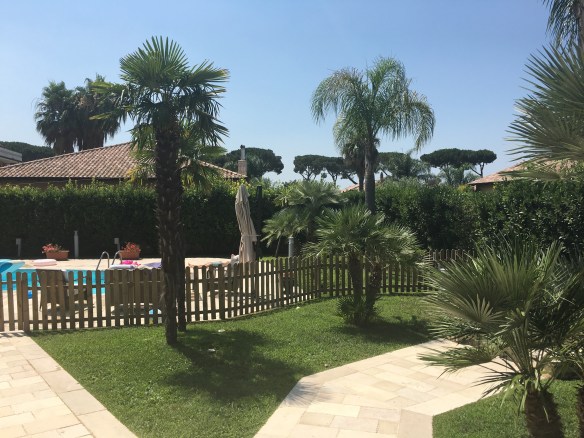

Lining the perimeter of the parco was a tall wall. A large sliding metal door would guard entrance to this haven, and then release us again to the urban jungle that is Naples, where stray dogs roamed and garbage lined the roadways. You get the picture.
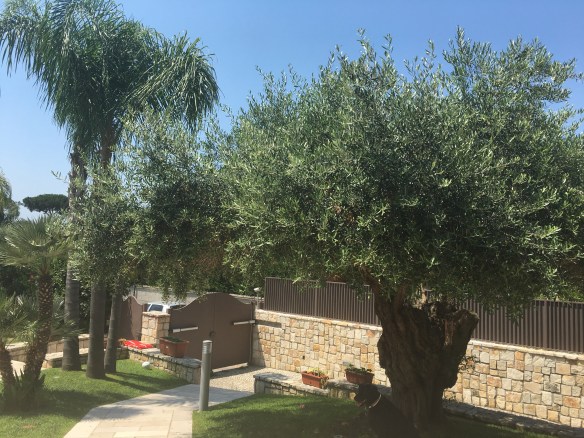

In Robert Frost’s poem, “Mending Wall”, he wrestles with our desire to have clearly defined boundaries of what is my place and what is yours; and, why we divide ourselves so. He concludes his poem with a challenge: “Before I built a wall I’d ask to know what I was walling in or walling out” (1). Good advice.

Indeed, fences and walls serve to keep us from seeing ‘what’s out there’ — and perhaps we want it that way. We don’t want to see what might disturb our comfort. We don’t want to see who might be out there, lurking on the perimeter of our safely constructed lives. We don’t want to see because we are afraid of what truly seeing them might do to change, disrupt and unravel us.

The Gospel text today (Luke 16:19-31) can unravel us, for sure! A poor man named Lazarus makes his temporary home at the gate of a rich man’s house, eating crumbs off the rich man’s table.

The story suggests that the rich man never even sees Lazarus is there, begging, at his gate. Even in the afterlife, as the rich man burns in hell, he doesn’t talk directly to Lazarus, referring to him only in the third person (v.23-24). Even serving his due in hell, the rich man still hasn’t learned his lesson!

Indeed, as Jesus says later in Luke, “it is easier for a camel to go through the eye of a needle than for someone who is rich to enter the kingdom of God” (18:25). How can the rich and the poor bridge the gap? How can we break down the barriers that separate us? How can we ‘see’ better — by this I mean: develop the eye of the heart and mind?

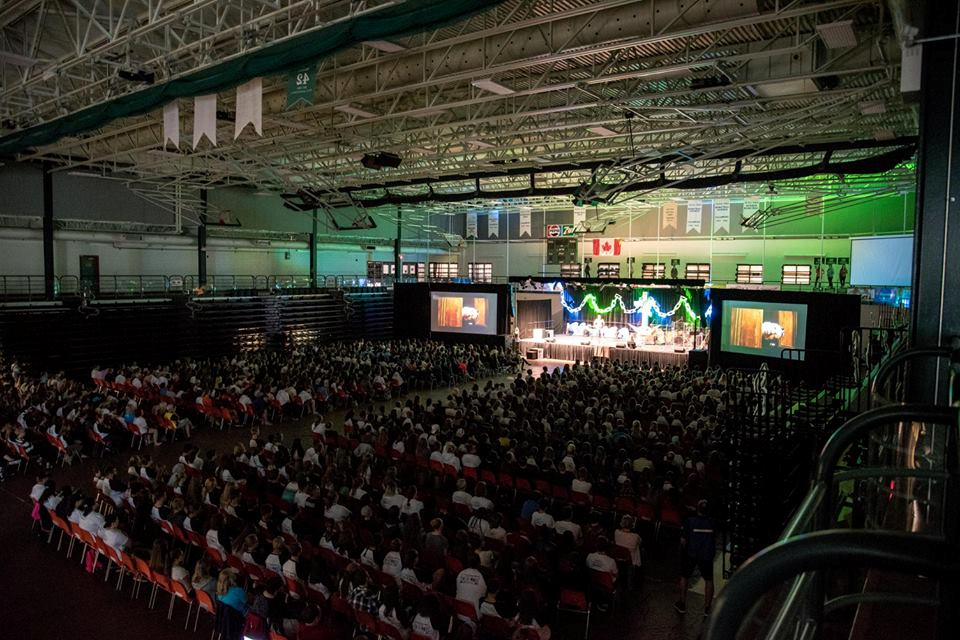
My brother tells the story of what happened at the beginning of the CLAY gathering this past August (Canadian Lutheran-Anglican Youth gathering). All nine-hundred participants did a certain exercise in the large group gathering that unnerved him:

They were asked to find someone they did not know; and then, to go over to that person, sit next to them; and then turn to look directly into their eyes…. and keep looking into their eyes for as long as possible, without turning away.  It’s hard enough to do this sort of thing with someone you know well… let alone a complete stranger!!
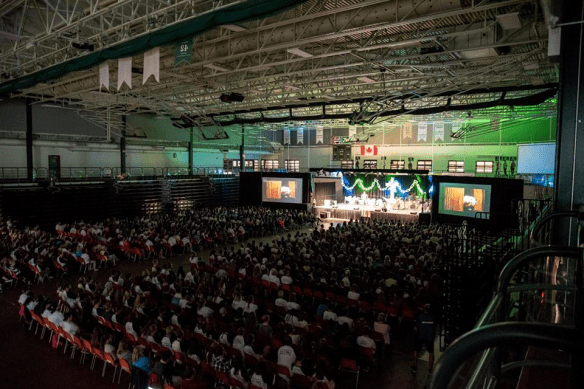

So, my brother David found a young person he didn’t know. And the two of them – complete strangers – began to look into each other’s eyes. It was unnerving! He felt vulnerable. Exposed.

While this was happening, the leader at the front said something like: “The person before you has a story, and has experienced happiness, as well as sadness, perhaps even deep hurt and pain. Who knows? Life may’ve been very hard on the person in front of you.”

As these words were being said, David noticed the slightest hint of tears welling up in his partner’s eyes. And he wondered…. He wondered …. What’s my partner’s story?

It’s said that the eyes are the ‘window into the soul.’ In a sense, they were peering into ‘each other’s souls’.

A natural connection is formed. Two people, connecting on a human level, affirming the fact that we’re all united in our common humanity and life’s experiences – of sadness and laughter and humour – which we all go through at some point in our lives … no matter our differences in age, ethnicity, language, sexual orientation or religion.

I’m reminded of a quote attributed to Philo of Alexandria: “Be kind to everyone you meet — you don’t know the battle they are fighting.”

Author and theologian Diana Butler Bass tells the touching story of what happened in an airport when she was flying from Albany, New York, to Washington D.C.

As you know, typically airports can be cold, heartless places, where everyone seems absorbed in their own rushing around, wrapped up in their private worries, nerves or plans, ignoring others around them.

This time, as passengers milled around in the gate area before boarding the plane, there sat alone at the far end of the row of seats, a middle-aged man.

He looked distraught, perhaps ill. Maybe, he needed help.

His whole demeanor was one of sorrow, and he was bent over, slumped in his chair as if falling toward the ground.

Diana walked over to him, and sat down beside him. She gently began asking him questions and listening to him.

With deep, heavy sobs, he told her how he buried his wife that morning, and now he was going home. To nothing.

For the next half hour, he told Diana about his wife, her illness and untimely death.

The man and his wife had no children.

She had been his best friend since high school.

Their parents had all passed away.

He had taken her to be buried where they had grown up in New York State, a place they both loved.

Most of their childhood friends had moved away.

There had been no funeral, just him and a priest at a graveside to say a few prayers and good-bye.

Now, he was going home, back to work. Other than a few friends, he was alone.

Diana listened, and then went to get him some water.

On the way back, she found a flight attendant, and told her about the man and his wife, how he had buried her that day. The flight attendant thanked her for sharing, and said ‘they’d take care of him.’

There were only about fifteen people on the flight that day on that small plane.

Somehow word got around, and soon everyone knew about their fellow passenger in mourning.

By the time everyone was boarding the plane, people were going out of their way to be kind to the man.

A crew member escorted him aboard.

With courtesy and attention, they seated him at the back of the plane to be alone with this thoughts and whatever tears might come.

When they landed, some silent agreement formed between the passengers to let him exit first.

Instead of the usual rush and urgent calls on cell phones, everyone stood silently, forming two lines of respect, as he walked down the aisle toward the cabin door…

Some nodded respectfully as he passed.

One woman reached out and touched his shoulder.

When he reached the front of the plane, he turned back, and looked at everyone, to acknowledge the sympathy offered.

The pilot came out of the cockpit, and took the man’s hand, and together they descended the steps to the tarmac.

All the passengers followed in silence.

A private car, dispatched by the airline, waited there beside the plane, to deliver him home. (2)


The irony is that no amount of gates, fences, walls or clearly defined dividing lines however constructed will keep us separated from each other. When there is love. When we can ‘see.’

Boundaries are important. But they don’t guarantee the self-serving security we seek. Shortly after they were posted to Naples a couple of years ago, our friends’ house was broken into despite the impressive protection their gated community seemed to provide.

These kinds of gates are really only illusions — like the proverbial mirage in the desert. Gates and fences that separate the rich from the poor, the privileged from the underprivileged, the employed from the the unemployed, the bum on the street and the senior executive in the top floor corner office are at best a mediocre interpretation of reality. Because they are constructed out of fear.

Jesus is about breaking down those barriers. And we are called to bridge the apparent chasm separating us from each other. Better now in this world while we can still do so, then whine about it like the rich man does in hell after it is too late.

We are called to look into each other’s eyes, and see the connection we share with all humanity, in the love of God. We are called to work together, like the community of care that formed on that short plane trip. We do not do this work individually, by ourselves. Not separately, but we work together at this task of reaching out and mending what has been broken.

We do this in the mission of God who broke down the greatest divide between God and human: when Jesus was born a human child. When God became human the ultimate gap was bridged. And now, we live in that flow of God’s love, continually binding us together, and all people.

(1) Robert Frost cited in David L. Bartlett & Barbara Brown Taylor, editors, “Preaching the Revised Common Lectionary; Feasting on the Word” Year C, Volume 4; Louisville Kentucky: Westminster John Knox Press, 2010, p. 118-120

(2) Diana Butler Bass, “Grounded: Finding God in the World: A Spiritual Revolution”, HarperOne, 2015, p.256

Relationships over Resources

A member of this congregation sent me an email including a list of short phrases called paraprosdokians.

A paraprosdokian, according to my online dictionary, is a derivative of a Greek word which means, ‘beyond expectation’. It is a wordplay, a figure of speech in which the latter part of a sentence is unexpected. Here’s a smattering:

 · A neighbour knocked on my door and asked for a small donation towards the local swimming pool, so I gave him a glass of water.

 · Take my advice — I’m not using it.

 · Ever stop to think, and forget to start again?

 · He who laughs last, thinks slowest.

 · I was going to give him a nasty look, but he already had one.

 · Change is inevitable, except from a vending machine.

 · I was going to wear my camouflage shirt today, but I couldn’t find it.

 · If at first you don’t succeed, skydiving is not for you.

 · No matter how much you push the envelope, it’ll still be stationery.

 · Money is the root of all … wealth.

Indeed, the Gospel today (Luke 16:1-13) has at least one major, unexpected twist. And unlike most of these paraprosdokians, this twist is not humorous. 

A manager has been wasteful of his boss’ riches, and consequently will lose his job. So, the manager figures on a scheme to look out for his own interests in his impending unemployment. The ‘dishonest manager’ — as some bibles entitle this parable — puts himself first at the seeming expense of his boss: he will go to his boss’ debtors and demand only half of what they owe. He shrewdly seeks to curry favour with them, and anticipates to be in their good books, once he is unemployed.

Smart move, you might say, eh? But what will Jesus say? Especially keeping in mind that this passage comes to us on the heels of the ‘golden’ chapter of the bible, Luke 15. Therein we read the familiar and heart-warming stories of the lost being found, of celebration and belonging, of unimaginable grace and mercy shown to the poor, the wayward, those who are not easily counted in the economy of the day. 

In Luke 15, we get the strong impression that the values of God’s kingdom — mercy, inclusion of others, unconditional love — stand in sharp contrast to the values of the world — competition, self-centredness, individualism. And, now, in Luke 16, the set up leads me to anticipate Jesus will come down hard on the ‘dishonest’ manager. I expect Jesus to say how unjust, unethical, and selfish the manager was. Don’t be as self-centred as he is!

In verse eight, the rug is pulled out from underneath me: “And his master commended the dishonest manager because he had acted shrewdly.” What ?!! Commended?

And yet, I should expect that the bible does that to us from time to time. The bible does not present a tightly knit, unequivocally clear and coherent storyline. You can justify anything from the bible, if you want — even murder. But that is not what we are about, when we approach the bible. 

After all, there is an important reason why the New Testament includes four, different, renditions of the life and times of Jesus. If uniformity was the goal in the inspiration behind putting together the bible, then we would have only had one Gospel, not four. Matthew, Mark, Luke and John — the first four books of the New Testament — basically follow a similar plot line about Jesus’ birth, baptism, calling, choosing disciples, healing, teaching, passion, death and resurrection stories.

And yet, each presents variations, slightly different orders, and yes, sometimes even these unexpected twists and turns in what needs to be emphasized. There are, after all, different people listening in — the religious leaders of the day, his disciples — people like you and me who live different lives and face different challenges. Each of us needs to hear something unique to what our needs are, apart from our neighbour. And each faith community needs to hear a unique word spoken to them.

So, while the story of the dishonest manager twists and puts our expectations on their head, perhaps there is something here worth paying attention to. “You cannot serve God and wealth” concludes the passage. And yet, the manager was looking out for his own material well-being in his shrewd and commendable actions.

Well, what is the wealth that is talked about here? For what treasure do we Christians — called the “children of the light” in this text (v.8) — search? What is the golden nugget that we seek, above all else? Again, perhaps the broader context can help us, again.

As I said, the previous stories of the lost sheep, lost coin and lost sons suggest that what is valuable in the economy of God, stands in sharp contrast to what is valuable in the economy of the world. These are treasures that are worth uprooting what is hidden, putting in the light what is shrouded in darkness, lifting up what is normally considered not worth the effort, forgiving what is unforgivable.

What does the shrewd manager value, even more than making money? He values relationships. He values keeping connected with others even though he loses what the world values — jobs, financial security and material wealth:

He reduces the amount of debt owed by the amount of his commission — as some biblical commentators suggest. He reduces the amount of interest owed, according to the Torah Law in Deuteronomy 23:19-20 — as other commentators suggest. Regardless of how we interpret the manager’s actions, we can see how much the manager values being in relationship, above all else.

The wealth described here is the treasure of being inter-related in a season of loss and disruptive change. Relationships over Resources, you could say (1).

And this truth hits us unexpectedly in the telling of the Gospel. Another classic reversal. I started this sermon with a Greek word to describe a form of speech that ends unexpectedly. Of course, the New Testament was written in Greek and influenced by Greek culture.

Greek culture often reflects this image of having a feast in the midst of famine. Another contrast of expectations, when during a famine you would not expect people to throw a large feast, and celebrate. Remember, after finding the lost sheep, the lost coin and when the Prodigal returns home, there is much rejoicing. And a feast is prepared for the whole community.

This does not make sense. To have a feast in the midst of famine. And yet, this is what we are called to do. To be children of the light, in the midst of darkness. Not to be a slave to our circumstances and meagre resources, as we may see them to be. But to release them, distribute them, relinquish our seeming control over them, all for the purpose of maintaining and strengthening our relationships.

Celebrating the gift of each other and those we meet. Relationships first, then resources. The horse before the cart, not the other way around.

We may by lying in the gutter of our lives, but we keep our gazed fixed upon the stars. We may be wallowing in an ocean of despair, regret, fear or pain — but we begin with a spoonful of water. In other words, there is always hope. There is always room to grow, to change, to something — anything — in order to make things better. This is the quality of faith.

We are never lost, abandoned and left for dead in the economy of God’s grace. After all, the rich man gives his irresponsible manager a second chance. Normally when charges are brought against an employee, charges that incriminate and prove wrong-doing to the degree of ‘squandering’ the owner’s property, the person in question is fired immediately, without question.

But something odd happens here: The rich man allows his soon-to-be-fired worker to continue doing his job for a while. The rich man gives his delinquent employee some ground, some space, to do something — anything — in order to make things better. The rich man demonstrates some grace in a relationship that has gone awry. 

Not only are the relationships in life our priority over everything else including our material resources, the quality of those relationships — according to the New Testament — are defined by grace, compassion, and love. 

An unexpected twist of the stories of our lives in the world, perhaps. Yet, these are the hallmarks of the children of light following Christ in the world.

Thanks be to God!

(1) David L. Bartlett & Barbara Brown Taylor, eds., Preaching the Revised Common Lectionary; Feasting on the Word, Year C Vol 4, WJK Press; Louisville Kentucky, 2010, p.92-97

Foolish advice

The following sermon is adapted from one preached by The Rev. Dawn Hutchings of Holy Cross Lutheran Church in Newmarket, Ontario. You can read her excellent sermon on pastordawn.com. In her introduction she thanks a couple of professors from whom we both learned — Eduard Riegert and Donna Seamone. Dawn writes that preachers today stand on the shoulders of those who have gone before; today, I will add that we also lean on each other as we journey together in the ministry of preaching! 

The ‘fool’ isn’t normally taken very seriously. In period books and films set in Medieval times especially, the court jester is the character to whom nobody pays attention beyond their ability to make people laugh. These are the fools we relegate to the realms of distraction and mindless entertainment. And then they are dismissed with an impatient wave of the hand.

Who are fools in our day and age? Who do we pay lip service to, or not take seriously? Who do we seek for a little distraction for entertainment purposes — but whose advice or thoughts or words we do not heed? Because they are fools!

In the recent home release of the film, “Now You See Me 2” starring Morgan Freeman, Mark Ruffalo and Woody Harrelson, the main characters reflect on the role of “the fool” symbolized on a playing card which figures significantly in the plot of the movie. No spoilers; you have to see it!

The whole movie is structured around the power of perspective. By the end of the movie, we are dazzled by how the same words spoken at the beginning of the movie can mean the total opposite by the end. At the end of the movie, here is what they say about “the fool” (I paraphrase): “The fool starts with a blank slate. Therefore, for the fool it’s not about who they are, it’s about who they are becoming.”

Let’s turn to the Gospel reading for today in Luke 15:1-10. Among the teachings of Jesus, the parables of the lost and found are so well known, so familiar that we are in peril of failing to hear the foolishness they advocate.

Today, we just focus on the lost sheep (but the parables of the lost coin and lost sons which follow in chapter 15 of Luke can also be understood in the same way — as foolish advice!): Whether we are relating to co-workers, clients, customers, students, friends, or children none but the foolish among us would leave ninety-nine to the perils and dangers of the wilderness in order to go looking for one idiot who’d been stupid enough to get themselves lost.

These parables of the lost and found are outrageous. None of us would get very far in life if we lived by these teachings. Because we live by a different code; you know it: It is better to put the welfare of the many above the needs of one. Sometimes its better to cut your losses and move on.

The wisdom of the world lurks in us down to every last maxim: – charity begins at home. – God helps those who help themselves. – Count the cost or pay the price. – “They should just pull themselves up, by the bootstraps.” You fill in the rest…

And yet along comes Jesus, spouting such foolishness that even we who are predisposed to agree with him, even we can sympathize with the self-righteous and wonder how anyone could be expected to live like this. The chaos that would ensue if we followed the teaching of these parables as law would be horrendous. What Jesus is advocating is foolishness itself. It makes no earthly sense.  

And so the foolishness that Jesus advocates remains on the pages of our Bibles, or in the sanctuaries of our churches, or in the halls of the academies where they busy themselves arguing of the historical minutia and we smile as the familiarity of the text washes over us from time to time.

But we know full well that this is not the way for any self-respecting, 21st century person to live in the world. These are just parables after all and we can’t be expected to live by them. We’d be fools to try. After all we are not Jesus! And anyway look what happened to him! So, the foolishness that Jesus taught is reasoned into irrelevance and confined to the recesses of our consciousness. 

But what if we didn’t approach these parables with the idea of pinning down their meaning. What if we approached these parables without feeling the need to wrestle the wisdom they contain to the ground so that we can extract from them rules to live by. 

What if we allowed these parables to simply touch us? What might the foolishness they prescribe evoke in us? How might we respond to their touch? In brushing up against these parables of the lost might we feel the touch of the ONE to whom they point?

I have come to believe that only those who have known the fear, the pain and the joy of losing and finding can really feel the touch the parables of the lost. But then again, I’ve come to know that it is impossible to go through life without knowing the fear, the pain and the joy of loosing and finding again and again and again. 

Jesus came teaching in parables. The parables of Jesus come to us to “show” us what God is like and to call us to a way of being in the world. These parables, simply, have about them a “ring” of foolishness.

Because not only would a fool leave ninety-nine sheep to look for the one lost. Not only would a fool leave the ninety-nine unguarded to wander aimlessly, to be ravaged by some unknown predator, to fall prey to God knows what. Not only would a fool leave to search for the stray who might be wounded, damaged, dying, not interested in being rescued. And not only would a fool risk a reputation as a wise shepherd, a careful guardian of the known and secure, to seek one lone sheep. 

But a fool would also find, restore, and be foolish to care enough to save the lost, the wandering, the lonely, the one outside the bounds of the flock. Jesus teaches by showing us in these parables: in such foolishness this God has broken into our world and does so again and again. 

The parable of the lost sheep points us in a direction of foolish and passionate abandon. The seeking shepherd who rushes off to find one sheep shows us the God who cares for us so much that the safety of the secure flock is risked so that the stray might be brought home. The mark of the reign of God will be foolishness such as this.

In the time of God’s reign shepherds will care less about flock security and principles of good management, and more about the vulnerability of the odd one out. In the time of God’s reign everyone will counted valuable enough to be cared for. In the time of God’s reign every stone, every clump of dirt, every thing, every one will be counted as valuable.

Today, as we do every Sunday, in worship, we gather in thanksgiving for the reign of God. In the retelling of the parables of the lost sheep and the lost coin we are called to a holy foolishness. To live toward the reign of God is, in some ways, to heed a call to reckless love that gives itself away for the sheer joy of loving. If only our lives could embody that spirit of abandoned self-giving and love.

In the telling of these parables, we remember that none of these stories is of the stuff of everyday fare. None of us can do this kind of relentless, reckless abandon constantly. But there are times, there are times when … The risk must be taken. The grasp on the known must be released to reach for, find and restore the lost the abandoned the wayward and yes even the self-righteous. Those we have every right to leave alone. 

In one frame of reference the shepherd should have been guarding the flock, faithful to home duties. But there is a moment that grips, a moment in which what might be choice is no choice. There is only abandon and care, compassion and joy… There is only a moment of foolishness; and then…. love.

These are not only words for individuals they are words for the collective, words for institutions and those of us who make up institutions. The parables were spoken to the Pharisees by Jesus whose comfort with the outcasts and sinners made those keepers of the gates of righteousness squirm in their holy seats. It was foolish action Jesus was about. 

The wisdom of the righteous was ossified righteousness. Theirs was the wisdom of those entrenched in their own role and task so deeply they could not see some new foolishness of God, as wisdom. These were people lost and in exile for most of their history over and over again called and delivered by God. These were the ones whose memory of deliverance could not release them to be deliverers. These people were very much like us.

The Apostle Paul tells us that God has chosen what is foolish in the world to shame the wise, God chose what is weak in the world to shame the strong (1 Corinthians 1:20-27). These parables challenge us to be reckless and relentless in our loving and in our witness.

We are called to be vulnerable in our ministry, vulnerable to those outside the boundaries of our private lives and our community of faith: to give with no expectation of reward, to love without demand for return, to reach out to those in need with unrelenting care, to release preoccupation with the cares and concerns of our own lives (or perhaps through these cares) to reach out in love to those who are not easy to love. We are called to do all this in delight and with joy and in so doing we mirror the foolishness of God. 

St Paul tells us that God has chosen what is foolish in the world to shame the wise, God chose what is weak in the world to shame the strong. By God’s grace we are the weak and the foolish. We are ‘the fool’; starting over again with a clean slate, becoming who God created us to be.

In the retelling of the parables of the lost sheep and the lost coin we are called to a holy foolishness. To live toward the reign of God is, in some ways, to heed a call to reckless love that gives itself away for the sheer joy of loving. We pray that our various ministries in the worlds in which we live will embody that spirit of abandoned self-giving and love. 

May we declare the foolishness of God by reaching out in love recklessly, and with great joy. Moment by moment….let it be so!

Rooted in the earth, rising to the sun

Recently I have been reading about people’s experiences on the Camino de Santiago — the eight hundred kilometre walking pilgrimage through northern Spain. This walk has become more and more popular among Christians of all stripes over the past couple of decades. It seems Christians around the globe are finding the pilgrimage a good place to work through personal issues, find focus in life again and seek re-connection with God, the world and themselves.

This past week I met with one such pilgrim from Ottawa who goes at least once a year to walk some part of the Camino; in fact he is leaving today for Barcelona. I sought his experienced advice for some practical considerations for the trek. His first rule of thumb: Pack only ten percent of your body weight. For me, that would mean no more that 20 pounds in my back pack — of all that I would need for the thirty to forty day hike. Twenty pounds is not a lot!

His second rule of thumb: What you wear on your back, put only one in your pack. That’s all. For example, if you are wearing a t-shirt, pack only one other t-shirt in your back-pack. If you are wearing a pair of shorts, pack only one other pair of shorts. And so on.

He laughed when he told me that about four days in — some one hundred kilometres into the journey — you find bins and bins full of personal items people left behind. These pilgrims had realized, thankfully sooner than later, that they were simply carrying too much — stuff they didn’t really need (extra shirts, pants, sweaters, books, jackets, bed mats, blankets, etc.). A final rule of thumb from my friend: If you do take something extra, then you need to have a good reason for it besides, “I might need it.”

This discipline reflects the quality of being able to let go. It can be described as a total self-surrendering, a giving up. The term “Kenosis” has been used among Christians throughout the ages to connote this sense of releasing that which we normally feel we need to hold onto tightly.

Fourteenth century German theologian Meister Eckhart said, “God is not found in the soul by adding anything, but by a process of subtraction.” (1) In our consumer culture, religion and spirituality have very often become a matter of addition: earning points with God, attaining enlightenment, producing moral behaviour. In the ‘prosperity gospel’ so popular in North America, we often hear the message that Jesus approves of you when your material and financial wealth increases; the more you have, the more in favour you are in God’s eyes.

Yet authentic, Christian faith is not about getting, attaining, achieving, performing or succeeding. The solution is not just “work harder” or “get more” of something. Our culture and economy, indeed, is based on more and more. Whereas true faith suggests: less is more. Martin Luther’s theology of Justification by Grace through Faith suggests the very same: We cannot by our own efforts achieve anything worthy of God.

So, stop trying. In fact, start doing the opposite: Let go of your pretence to manage your life according to the creed: Bigger and More is Better. Let go of a paralyzing negative body image. Let go of the inner talk that is putting yourself down, that tells you you are no good. Let go of attitudes of hatred against people who are different from you. Let go of those material aspirations that tease you into a false sense of security. Let go of being paralyzed by fear.

Instead, focus on what is essential. Appreciate that you already have enough, all that you need. When Jesus gives instruction in the Gospel text for today (Luke 14:25-33) he is travelling out on a public road, on his pilgrimage to the Cross. Remember, ever since Luke 9:51, he is already on the way to Jerusalem, his final destination. When Jesus is walking towards his death and resurrection in Jerusalem, he offers what sounds rather harsh to our ears. What is called-for here is a ‘single-mindedness’ that is needed when you travel with Jesus.

Discipleship is about being single-minded about the purpose, the goal and the mission of Jesus in the world. It is about prioritizing what is important to life in the public realm where culture, consumerism and a whole host of other distractions can keep us from this focus.

This single-mindedness demands that we think ahead, and anticipate the cost of our journey. Setting out on the road to follow Jesus requires at least a little forethought and reflection. This journey is not a light matter. Sit down and think about it a bit. Reflect.

There is not only the blessing of the assets promised, but there are the liabilities, too. Discipleship is not just one more hobby or extra-curricular activity to add to a well-rounded, prosperous life. It is not merely “a matter of pure passion and abandon” (2).

Followers of Jesus should count the cost, but also realize this is not just about counting the cost of a church building renovation or a church fund-raising project. The cost of discipleship, as Dietrich Bonhoeffer first coined the term, is about prioritizing our whole lives, not just our “church” or “Sunday morning” lives.

If someone told me a year ago that I would spend four days cut off from civilization, in the bush without cell-phone service, hauling all my food and everything I need to survive in a canoe that I would have to navigate through rapids and rocky, snake-infested portage routes — I would say they were dreaming … or talking about someone else.

Well, that’s precisely what I did last week, along the French River Provincial Park between North Bay and Sudbury. Fortunately I was not alone; I journeyed with a more experienced wilderness survivalist. 

We ended up taking more than we needed. We could have packed less food, and less clothing. The exercise, nevertheless, was confident-building for me in realizing I really don’t need that much stuff.

Jesus says, “None of you can become my disciple if you do not give up all your possessions.”

To live life well, and faithfully, is to recognize one’s place in the world, and not to over-reach, over-extend, to be someone you are not — all on the basis of wanting more and more, bigger and better. To live faithfully, we are called to examine our dependencies, count the cost of it all, focus on what is important, and then make room in our lives for what is important by letting go.

A sojourn into the wilderness may indeed by the antidote to visions of self-aggrandizement embedded in the prosperity gospel message. Try doing without, for some time, what you may have taken for granted for too long. Try doing without what you always have believed you needed in order to live. Try Letting go. Releasing. Forgiving. 

This is not about doing away with personal boundaries. Letting go is not about condoning injustice or cruelty. Kenosis/letting go is not about being blind optimists, repressing or denying or not caring, or ‘giving up’ in frustration.

Forgiveness is a good example of letting go of the misery caused by holding on to the pain of resentment or holding a grudge. This kind of letting go brings a positivity that is based in honest struggle and prayer born out of compassion and love for self, the other, and God. The end result is a freedom and peace that cannot ever be realized through a program of simply working harder or getting more.

The German poet, Rainer Maria Rilke, wrote about the contrast between the law of gravity and the rising of the trees. He writes about the gift of letting go into a place of trust: Trusting that the gift in you is enough. So that you can rise up, rooted like trees: 

How surely gravity’s law,

strong as an ocean current,

takes hold of even the smallest thing

and pulls it toward the heart of the world.


Each thing —

each stone, blossom, child —

is held in place.

Only we, in our arrogance,

push out beyond what we each belong to

for some empty freedom.

If we surrendered

to earth’s intelligence

we could rise up rooted, like trees


Instead we entangle ourselves

in knots of our own making

and struggle, lonely and confused.

So, like children, we begin again

to learn from the things,

because they are in God’s heart;

they have never left God.

This is what the things can teach us:

to fall,

patiently to trust our heaviness.

Even a bird has to do that

before he can fly. (3)

In the poetry of scripture, the Psalmist describes beautifully the blessing we are, created in the image of God — so “wonderfully made” (Psalm 139:14). God would know intimately each part of our lives only if we were valuable to God and to the rest of creation. Otherwise, why would God care?

In other words, we are and have everything we need to enjoy and live to our fullest potential. We are beautiful. We don’t have to strive and strive to become someone we are not. We don’t have to ‘add’ anything to our lives to be well. In fact, when we have the courage to risk letting go, and “fall”, as Rilke poetically expresses, trusting in our “heaviness”, we will find a freedom and peace that will be the joy of all creation, and the glory of God.

We will live our lives at the same time rooted in the earth, and rising to the sun.

(1) Translated by J. Clark & J. Skinner, “Meister Eckhart: Selected Treatises & Sermons Translated from Latin and German with an Introduction and Notes”, Faber & Faber: 1958, p.194

(2) David Schnasa Jacobsen, Commentary on Luke 14:25-33 in “WorkingPreacher.org”, 2016

(3) Rainer Maria Rilke, “Rilke’s Book of Hours: Love Poems to God” translated by Anita Barrows and Joanna Macy, Riverhead Books: 1996, p.116-117; cited with permission in Richard Rohr’s Daily Meditation for August 28, 2016

Faith’s fire & water

Please read Psalm 82, and Luke 12:49-56 — the appointed biblical texts for Pentecost+13, Year C (Revised Common Lectionary)

You may have heard some of the old rhymes of how outdoors’ enthusiasts and mariners have interpreted the appearance of the sky: For example,  

“Red sky at night, sailor’s delight; Red sky in morning, sailors take warning.” Or, “Rainbow in the morning sailors take warning; Rainbow towards night, Sailor’s delight.” How about, “If smoke goes high (from a campfire), no rain comes by; If smoke hangs low, watch out for a blow.”

Indeed we have our ways of predicting and managing our lives, based on beliefs and observations over time. We then convince ourselves of the truth of the things we repeat, like the rhymes, in our minds over and over. Even if, like the weather, we can be totally off.

If anything, our ability at self-deception is huge. For one thing, we have convinced ourselves that Jesus and Christianity is not about justice for the weak. If you don’t believe me, just examine our attitudes towards Indigenous First Nations people — how quickly we resort to condemning them as lazy drunkards, self-justifying our own greed and fearing the loss of our own power and property. Even though we are the rich and powerful, and they are the people in our communities who are the weakest, the lowly and the destitute. 

How long will you judge unjustly and show partiality to the wicked? Give justice to the weak and the orphan; maintain the right of the lowly and the destitute (Psalm 82:2-3)

When God calls us to give justice to the weak, who then are the wicked? Not the weak, the lowly and the destitute. Given the structure and spacing of these verses from Psalm 82 — the wicked are those who occupy the opposite end of the socio-economic spectrum: those who are strong, who are in power, who have wealth and security.

Why is that?

Most of Jesus’ teaching in the New Testament indeed focuses on issues (and problems) of power, prestige and possession. 

And yet, how quickly and easily we avoid those and focus on issues that Jesus spent little if no time on — homosexuality and abortion, to name a couple recent hot topics in the church.

It’s not that sexuality, addictions and ‘family values’ are not important. But these do not form the core of Jesus’ teaching.

The core of Jesus’ teaching reflects in such notions as: Blessed are the poor and the peacemakers; parables about rich men, selling all, the widow’s mite, the lost sheep, rendering to Caesar, he who has no sin throw the first stone, bigger barns, eating with sinners, praying to be seen vs the humble stance — the list goes on. I remember attending a stewardship event years ago when the main speaker asserted that most of Jesus’ teaching centred, in fact, on money.

And yet, how much these days a disproportionate amount of energy in the church is spent on anything but. We want to avoid talking about money in the church, especially if it means a sacrifice on our part.

You know how to interpret the appearance of earth and sky, but why do you not know how to interpret the present time? (Luke 12:56).

That’s what Jesus is saying in the conclusion of the Gospel text: You have fancy ways of reading the sky but you can’t even discern the truth of your very own lives and the truth of what I’m all about!

We need to hear again the words of scripture and the Lord God:

Rise up, O God, judge the earth. For all the nations belong to you! (Psalm 82:8).

Ultimately the question is: To whom do we belong? To whom does all of creation belong? We have all sorts of acceptable answers to that: We belong to our spouses, to our families, to our parents and grandparents. We belong to the church. We belong to the nation. Sounds righteous, does it not?

And, we go on: creation belongs to us! Natural resources belong to us. In this line of thinking, belonging morphs into ownership and the commodification of basic things, like water. As long as you have enough money to buy it, you have a right to it.

Speaking of water, these last few days those of us on municipal water in Arnprior were not permitted to use water for anything. Anything — not only drinking. We couldn’t boil it, or wash in it, take a shower or bath in it, wash laundry, do the dishes, even touch it!

The house was a complete mess by the weekend. We were driving into the city to take showers and to buy lots of bottled water. I felt just a little of what it must be like for the First Nations communities in northern Ontario who on a regular basis do not have adequate access to safe, drinking water.

I read here an excerpt from the online description (www.claygathering.ca) of the National Youth Project from 2012-2016 which will culminate in PEI this week at the Canadian-Lutheran-Anglican-Youth (CLAY) gathering:

“What is water? Although this may seem like an obvious question, the answers that we provide often depend on our cultural and religious backgrounds. Traditionally, western cultures, like ours, have treated water as a common property, meaning that water is owned equally by all of us.

“In recent years, however, western cultures have shifted their understanding of water. Now, water is viewed like any other natural resource, like natural gas, oil, or gold, and unfortunately, for the right price, it can be bought and sold by individuals and corporations. But who owns it? The water from the tap, the river, the rain… who owns it?

“As you might expect, this new western understanding of water differs strongly from that of many Indigenous communities. Instead of treating water as a resource that can be bought, it is viewed it as a living being with which all creation has a relationship and a responsibility to protect. 

“For the Ojibway, water is a source of purification, and for the Iroquois, it is a gift from the stars integral to medicine, prayer, and cleansing. In many Indigenous cultures, women have a special association with water: they are the keepers of water, and it is their responsibility to lead water ceremonies which demonstrate a community’s respect for water. What we can learn from our Indigenous brothers and sisters is that water is a force that sustains, and requires respect and protection.

“Although western culture may treat water as a resource that can be used and abused, as Christians we know that it is a very important component of our spiritual life. We know that in the Bible, water is recognized as divine and life-giving. In Genesis 1, we see that the shape and content of all bodies of water are creations of God. In Revelation 21, we are told that, through Jesus, we are freely given a kind of water that sustains our lives and in John 3, we learn that those who enter the Kingdom of God are those who are born of water and the Spirit. Indeed, our very baptism is validated by the Word and Water.

“These parts of Scripture and sacramental practice show examples of the importance of water to us as Christians. It reminds us that, just as our practical life depends on water, so too does our spiritual nourishment.

“Many Indigenous communities do not have access to this vital resource: even where there is access, the quality of water is poor. Understanding that water is important and is a human right, what happens if you have access to water but it isn’t clean, useable, or safe? As Christians, we recognize that water nourishes and cleanses, and now we need to care for it as much as it cares for us; we need to be good stewards of the earth.”

We don’t ‘own each other’ as property to be traded on the open market as much as we don’t own anything in creation. Creation is meant for all people to share and hold in common, for the common good.

That means, in God’s view, no one is alone, no one is left behind, and no one falls through the cracks. This is the Good News: Everyone belongs. Everything belongs. Where we are weak, we belong. When we fail, we belong. When others are weak, they belong. When others fail, they belong. To God.

This Gospel, while good, is not popular for those who have it all we need and more. For us who are fortunate — all things being equal — we have a tough pill to swallow, here.

God’s presence and God’s truth must permeate through our sinful greed, materialism, and lust for control and power. A fire it is, that God sends upon our lives, (“I came to bring fire to earth” – Luke 12:49) to burn through the false thinking, false beliefs. A baptism by fire, some call it.

Like my experience in the dunk tank last week: It’s both thrilling and scary, to let go of control, not knowing when the ball will hit the target and I go for a total immersion plunge.

This is the baptism into which we are called: A lot of turbulence and uncertainty before it gets better; humility comes after being humbled; forgiveness and mercy only after confrontation, honesty and truth; a letting go before new life, new beginnings. Pain before the gain.

A sunset and long darkness in the sky before the brilliance of the sunrise to start a new day.

This is our hope.

Gospel, Italian style

On the Sunday before I left for a family vacation to Italy, you encouraged me to — “know your history”. I think that message came to me mostly during the children’s chat when we talked about the Canadian flag on my backpack, and why Canadians had been so well appreciated and admired in western Europe, especially, over the past several decades.

The conversations then, as well as following the service over coffee, reinforced to me the value you place upon ‘history’ in general. 

Well, Italy is not exactly the hotbed of Reformation, Protestant Christian history as such. At the same time, the buildings there stand clearly as testimony to the dedication of Christians in certain times and places in history.

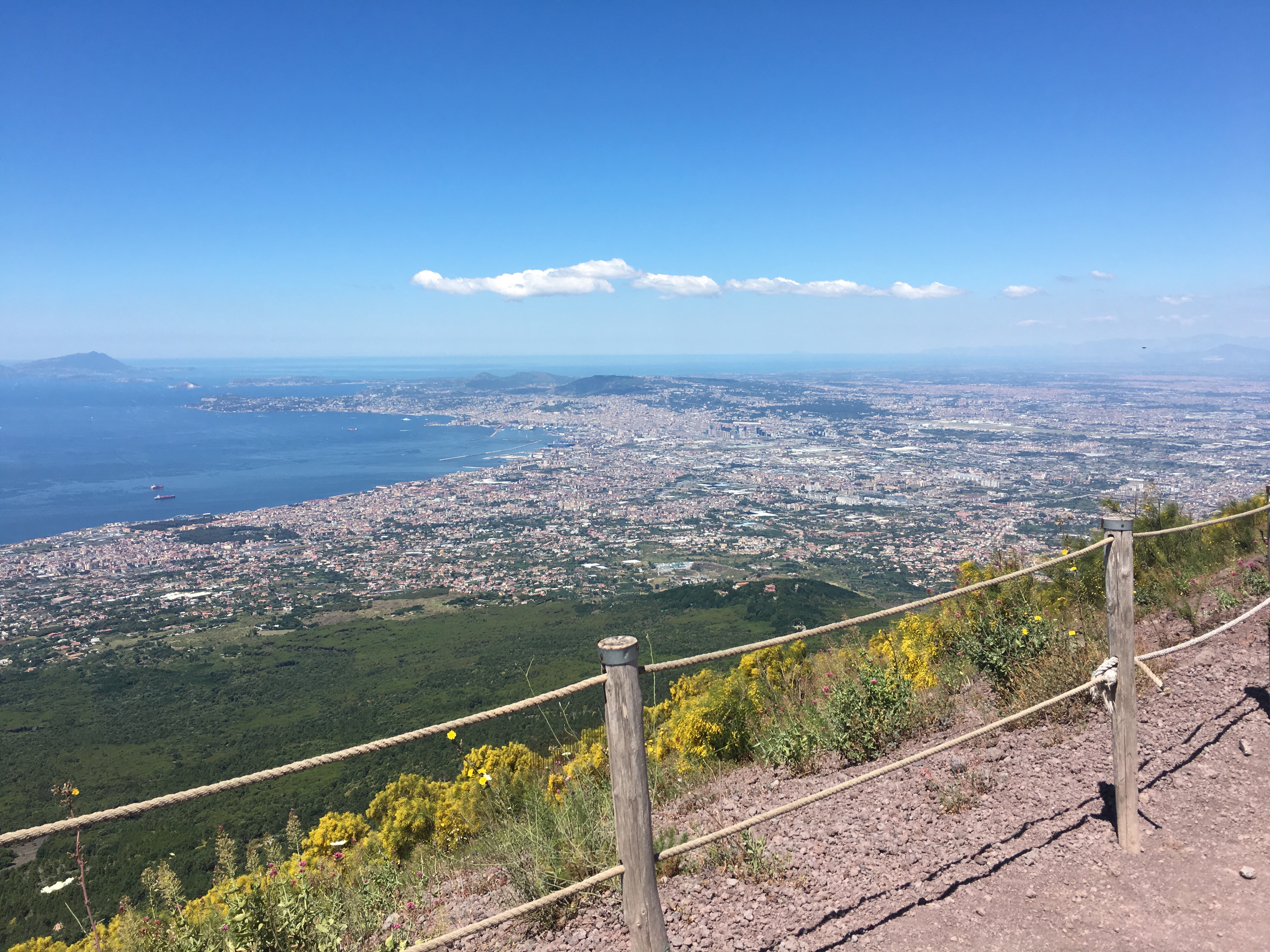
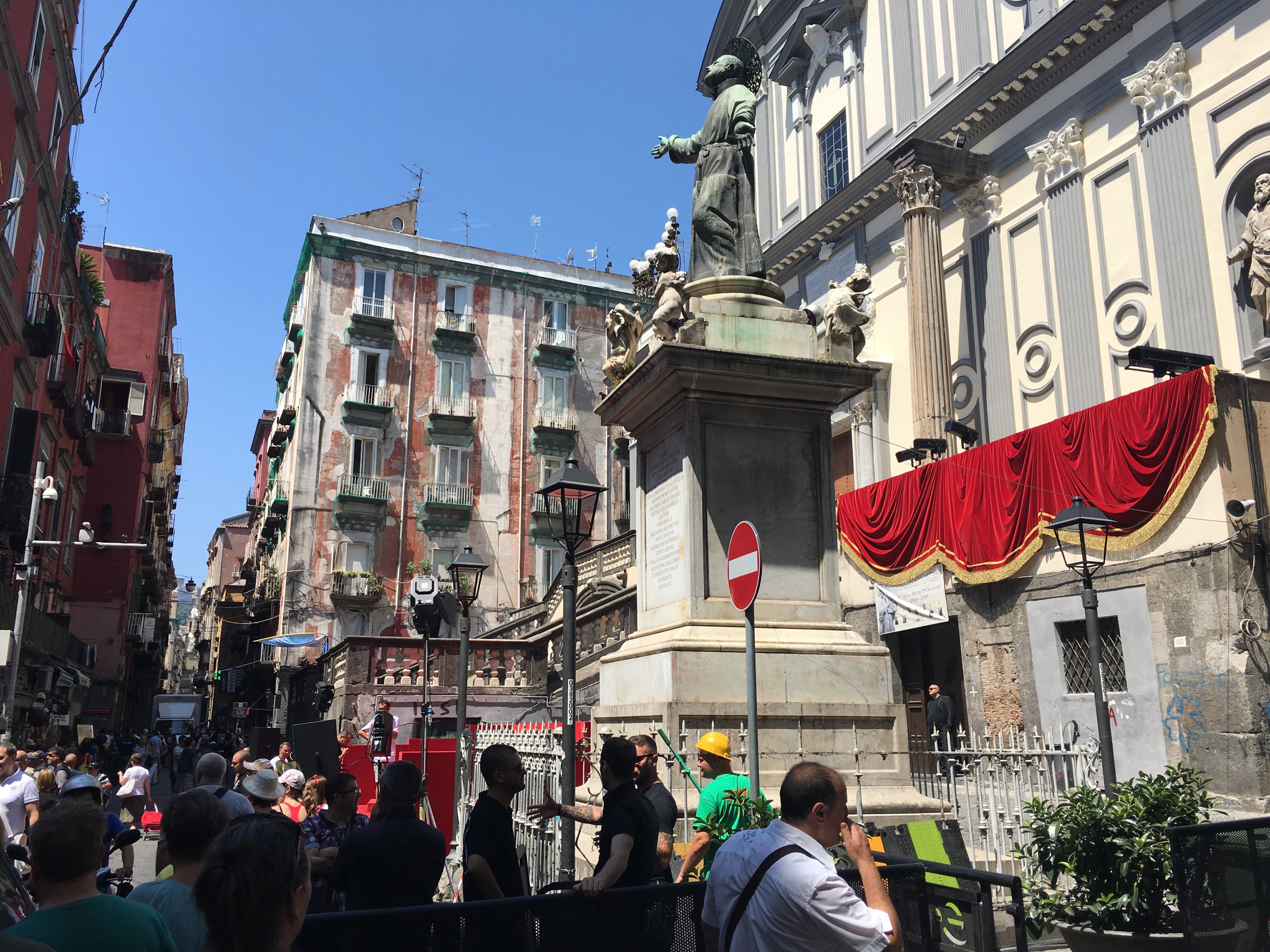
It was the first day we walked in the older section of Naples — a sprawling metropolis at the base of Mount Vesuvius on the Mediterranean coast — when I began to feel this history pressing in the air all around me.

I say sprawling because Naples is today the most densely populated urban centre in all of Europe; some 8,500 people inhabiting one square kilometre in a metropolis of nearly four million people — making it the third largest city in Italy, and the ninth most populous urban area in the entire European Union.


The noise was overwhelming: the hustle and bustle of pedestrians, car horns beeping, motorcycles and mopeds buzzing, shouting street vendors, impassioned conversations, two-toned emergency sirens, barking street dogs, screeching tires.

In conrast, the neo-Gothic styled ‘duomo’ in Naples offered a welcome break to this outside clamour. 

The expansive interior spaces of this main cathedral embraced silence and only hushed speech. You could occasionally hear the squeak of rubber-soled shoes and someone dropping a book on the stone and marbled flooring as people sat and wandered solemnly throughout the holy spaces.

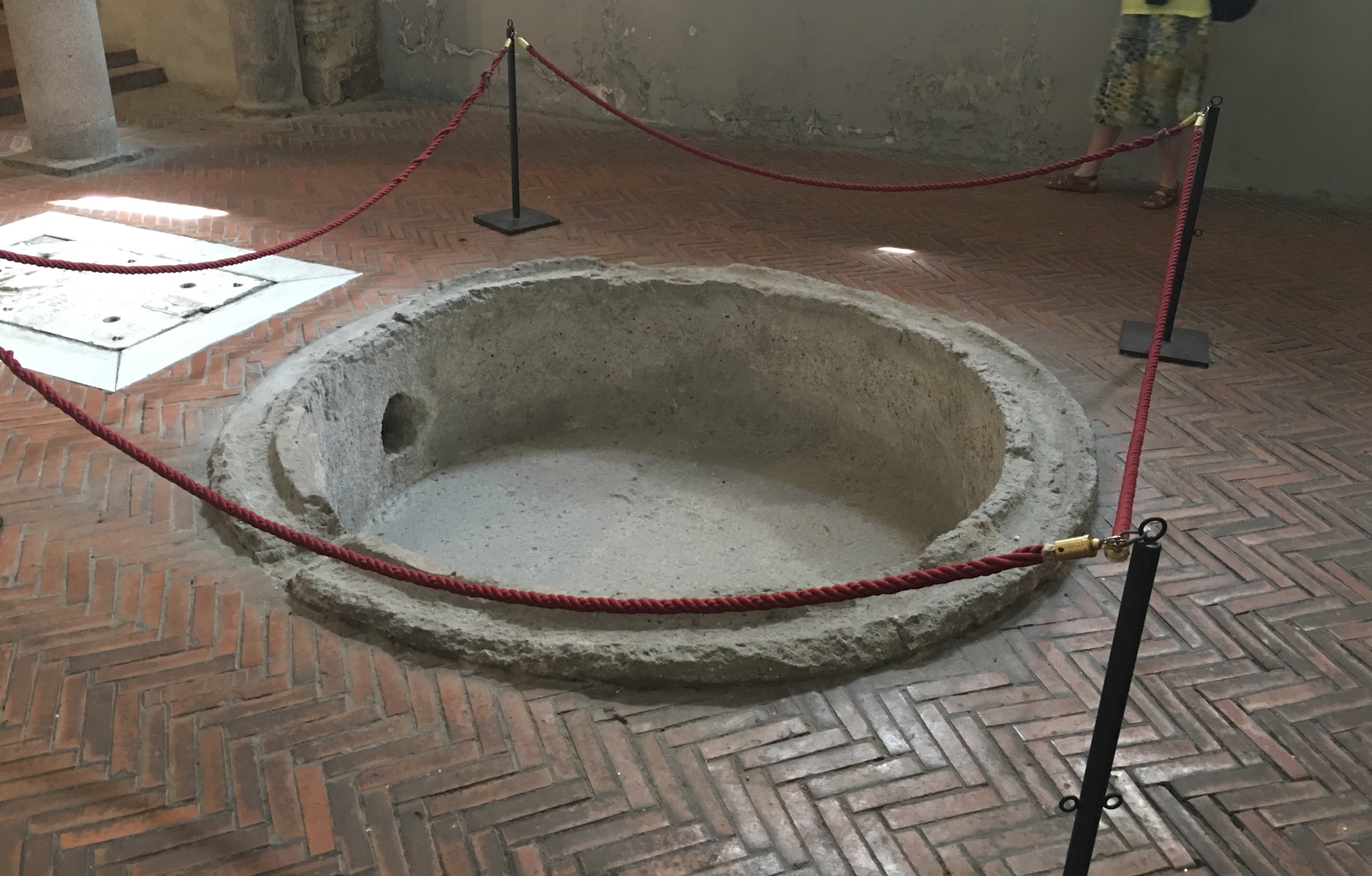
Perhaps the most significant feature of this cathedral is the baptistery, which is the oldest baptistery in the world, built in the fifth century, C.E. It is remarkable to connect with such an ancient symbol in a material form. 

When the baptized emerged from the water, looking upward at the ceiling, they would be encouraged in their faith; the first images they saw after being baptized were scenes from the Gospel expressed in Byzantine, mosaic art: Jesus saving Peter from drowning, the women at the empty tomb, the miracles of the multiplied fish, an image of Saint Paul, the Apostle, etc.

Seeing with my own eyes and touching with my own hands this font that was built by human hands only a few hundred years after Jesus, affirmed my conviction in the longevity and validity of the sacrament which has endured as profoundly meaningful for Christians throughout the millennia. 

I felt that faith is not just about the good old days when I was young, but the good old days when the Christian faith was younger. We are part of something much larger than our immediate reality. And, when we connect with that broader history, we realize it wasn’t always peaches ‘n cream and rose-coloured a history.

If you are movie watcher, you might recognize another cathedral we visited — the Duomo in the Umbrian, medieval town of Orvieto. 


This cathedral was featured in the opening scenes of Under the Tuscan Sun. This cathedral’s highlight is the Chapel of San Brizio, featuring Luca Signorelli’s brilliantly lit frescoes of the Day of Judgment and Life after Death. 

Although the frescoes refer to themes of resurrection and salvation, they do so through images not from the bible (that is, stories from the Gospels or Old Testament) but from the turbulent political and religious atmosphere of Italy in the late 1400s. Signorelli told the story of faith through his contemporary human events, rather than the traditional symbols (such as Jesus, God, the Trinity, the Apostles, disciples and other biblical characters) that we see in most other places.

Those frescos in the Orvieto cathedral chapel were snapshots of an historical era particular to a specific time and geo-political reality (i.e. 15th century Italy). And the impression of faith put ‘on it.’ Historical to us. Yet current to those who built that Cathedral in the Midlle Ages.

Faith is more than merely appealing to our past. Coming to worship today is not just about being reminded of something or someone from a long time ago. What we do here today is not just an exercise in recalling historical facts. As if decisions we make today are really not about faith. When we talk about our building renovations, worship practice and art, musical choices, communion, budgets, outreach initiatives  — these issues are very mcuh about the Christian faith ‘in the real world’, so to speak. All of these real things do reveal what we believe in, our values, what is important to us, who we are. How do these ‘mundane’ decisions reflect the Christian Gospel, faith, kindgom values in this time and place?

Lutherans make a similar mistake, I believe, when we define ‘Lutheranism’ as a belief/doctrinal system that is limited to the words and conceptual formulations of sixteenth century Germans. When we say that to be Lutheran is merely to ‘turn the clock back’ to 1537 when the Book of Concord was finally assembled including Luther’s Small and Large Catechisms, the Augsburg Confession, and the Apology to the Augsburg Confession.

I prefer a view that is reflected in the Evangelische Kirche Deutschland’s (EKD) logo for 2017, “Celebrating 500 years of Reformation”. Five hundred years of Reformation. In other words, Reformation started happening — in our tradition — with Martin Luther, yes. 

But, Reformation continued through the 500 years following, and continues to this day and beyond. We are always reforming the forms and means by which we express our evangelical, Gospel-centred faith. Always finding new and creative ways to tell the story of God.

What can we say, then, about Christian history? If we can apply a macro view over the ages, we can say that the history of the Christian faith is about a God who loves us. Christian history is about a God whose compassion never fails, who “will not come in wrath” (Hosea 11:9) — even though the people of God continue to keep “sacrificing to the Baals and offering incense to idols” (v.2).

The history of the Christian faith is about our lives being “hidden with Christ in God”, being “revealed with Christ in glory” (Colossians 3:3-4), dying daily to ways of sin and being renewed daily in Christ who “is all and in all!” — even though we are imperfect and sin as long as we hold breath. Christ is all and in all — despite us!

The history of the Christian faith is about how each moment of history — including this one right now — reflected Jesus’ love in the fifth century, the fourteenth century, the 21st century in Palestine, Egypt, Italy, Canada, etc. God for all times and places!

We validate the Christian faith by our lives today, now. This is where the rubber hits the road. This in-the-moment approach fuelled the generosity of medieval Catholicism represented in the magnificent building projects for worship as much as it did the passion and commitment of European Christians during the Reformation era.

We do not leave the practice of faith for some distant, utopic and dreamy future. Neither do we rest on the laurels of the tremendous sacrifices made by our forebears in Canada. 

Now is the time. Now is the time to live out of the conviction of God’s grace and love, despite the many and various ways Christians have messed up in history, and continue to do so today. Now is the time to live out of the faith that is full of hope, that despite our waywardness and unfaithfulness, God is faithful. Now is the time to claim God loves us, not because we are good, but because God is good. God is so good!

You know Jesus’ familiar exhortation, most often translated as “be perfect as your heavenly Father is perfect” (Matthew 5:48). Christians have often interpreted this word ‘perfection’ as being made whole. 

A much better translation might be: “be merciful.” Because this verse comes right at the end of a passage calling Christians to “love your enemies” (v. 43-48). Only God is perfect. But we can participate in God’s perfect mercy, God’s all-inclusive and impartial love.

Echoing Saint Paul’s words from the Epistle today (Colossians 3:11 — “Christ is all and in all”) St. Bonaventure later said, “Christ is the one whose centre is everywhere and whose circumference is nowhere.” [1] 

Christ’s mercy is everywhere evident in history. This is the Wholeness, the forgiveness, the grace, that holds you forever and everywhere. You can’t figure this Wholeness out rationally, nor can you control it. All you can do is fall into this Wholeness that holds you when you stop excluding, even the dark parts of yourself. [2] And that, my friends, is the Gospel — good news — for all times and places.

Thanks be to God!

1- Alan of Lille, ‘Regulae Theologicae’, Reg. 7 as quoted by Bonaventure, translated by Ewert Cousins, “The Soul’s Journey into God”, Classics of Western Spirituality (Paulist Press: 1978), p.100

2- Richard Rohr, “Daily Meditation on the Spirituality of Imperfection” Week 2 – Perfection of Wholeness, Thursday, July 28, 2016

Funeral sermon for an astronomer

Read Psalms 136:1-9 & 19:1-8

Rolf worked at many things. My impression is that he accomplished so much. Rolf was always on a project, whether clearing large rocks off his land, growing grapes, gardening, building structures, star-watching and -tracking.

His scientific mind, inductive reasoning and clarity of thought all translated into a degree of productivity not many of us will ever achieve. His gentle, methodical approach to his work reflects a state of mind that mirrors the great, spiritual giants of history.

Yes, spiritual.

Often science and religion have been pitted against each other in the philosophical and doctrinal wars of the contemporary age. And yet, in the lives of common people, we can begin to see that the two are not opposites in the seesaw battle for truth. Science and religion, in all truth, go hand in hand.

Some argue that besides the bible, no other book has likely influenced the course of western history more than the Rule of Benedict from the sixth century of the Common Era. Only some 13,000 words long, The Rule outlines instructions for the monastic tradition including prayer and work. In The Rule, Saint Benedict ordered the monks not only how to pray the Psalms, but how to work.

This work involved primarily manual, physical labour — fixing things, gardening, building. This work also evolved, happily, into artisan endeavours — wine-making, beer-producing, food preparing, and the such. Finally, the intellectual work of scribing and reading.

With singular attention focused on one task at a time, work becomes a contemplation. Even, you could say, a prayer. When it is done with joy and thanksgiving in each given moment. When we are present to our work, it is an offering of the natural rhythms of life, unfettered by distraction and self-consuming narcissism, which is often characterized by the demands and expectations of a hurried, anxious immediacy.

We remember and celebrate a precious life today. We recall moments that reveal a story of a person who reflects some of the best of what life and work is all about. Creation is indeed beautiful. God did good! And it will take eternity for us humans to begin to even scratch the surface of the brilliance and wonder of all that is.

The spirit of expansion, I would say, characterized Rolf’s life — a moving outward to include all, to embrace all, to reach to the farthest limits of all that we can know in God’s creation.

When Rolf was baptized at St James Anglican Church in Gatineau a few months after his birth, he was not only baptized into that particular faith community. His baptism signified his connection to the vast communion of saints. This community of faith spans the globe in all times and in all places. His baptism connected him to what Christians often call the ‘Body of Christ’ which has many members and includes all the baptized around the world: Starting here in the Ottawa region, and expanding outward.

In the funeral liturgy, one of the traditional prayers acknowledges the ‘mystical communion’ we all share in the Body of Christ. It speaks to the connectivity among all creatures.

Rolf’s passion for astronomy demonstrates this expansive spirit beautifully. The stars, of course, symbolize the mystery of heaven and God, and our human yearning for the unknown to become known. To connect to this great mystery, Rolf built his own observatory in the backyard of his house. 

And in 2005 he took a superb photo of Mars, his favourite planet. This image, which you see displayed here today, was possible because in 2005 Mars was in a close approach to earth at a high elevation — which means the angle at which viewing the red planet from the earth’s surface was exceptional.

Apparently Mars doesn’t behave like this every year. But in 2016, this year of Rolf’s death, Mars has again dipped close to the earth. Almost as if it was coming in to scoop Rolf up and connect his spirit once again to the vast universe, where now Rolf can see with his own eyes the expansive realm of God, whose love, mercy, and grace knows no limits.

Although we grieve a particular connection we have known with Rolf on earth these past six-plus decades, we touch today on the truth of the eternal connection we share with Rolf, all people, with all of creation and with God, forever.

Thanks be to God.