Ascension action

As you saw last Sunday, I had my canoe strapped atop my car. I was eager to put paddle in water and explore the waterways around Papineau Lake near the northern border of Algonquin Park, just south of Mattawa.

From Highway 17 at Mattawa, we turned south on a dirt road. The land there still thawing from winter’s grip, the snow-melting runoff left deep potholes and troughs across the narrow roadway. For about fifteen kilometres we traversed the rough and bumpy access road, thankful for the four-wheel drive.

Finally arriving at the end of the road at the shores of Papineau Lake, we still had to portage our gear about half a kilometer through the thick bush to the cabin. I thought to put the canoe in at the water in order to paddle my gear along the shore line and save the heavy climb carrying everything on my back along the trail.

But when I looked out over the lake, this is what I saw all over its surface: Ice.

IMG_6939

Despite the 20-degree Celsius air temperature by midweek, the persistent ice continued to lock out any hope of paddling into the lake. Until the fourth day of our camp-out, the ice prevented us from going to the deepest parts of the lake to fish for the coveted Lake Trout for dinner. We were limited to shoreline casts where a narrow band of water teased us into never-ending hope for a catch.


IMG_6935IMG_6931

After a windy and rainy day late into our stay, we awoke at long last to this glorious sight:

The ice was completely gone. Night and day. Needless to say, I was out on the water in my canoe, crisscrossing the lake and exploring new shorelines. The loons were back. The lake had awakened once more.

In these last few days, the church has recognized the Ascension of our Lord. Some forty days after Easter each year the church recalls when Jesus, after appearing to his disciples following his resurrection, ascends to heaven.[1]

Jesus, here, leaves them for good, so to speak. It is no wonder why the scripture texts in these last few weeks have gone back to parts of the farewell discourses from John’s Gospel, also appointed for reading before Christ’s death.[2]There’s a point to it.

Jesus prepares his disciples for his leave-taking, never easy – a second time, now. Both before his death, and now before his Ascension, Jesus needs to remind and console them – and us – that we are not left alone.

Despite his going away, Christ will come to them no longer in physical form but in the Holy Spirit. God is present now to us in each other– the community, through the power of the Holy Spirit.

Why did Jesus leave them? You might wonder: Why should Jesus have ascended to heaven and leave it all in his disciples’ hands? We don’t need to go far into Christian history to see the imperfection (to put it mildly) of Christians throughout the ages.

Jesus was alive and among them. Why couldn’t he just have stuck around – forever? Things would certainly have turned out better, no? Could you imagine how encouraging it would be for his disciples then and now to have Jesus appear from time to time albeit in his resurrected form to guide us, talk to us, lead us, comfort us, in physical form?

All the while the ice remained in the lake, we were confined to the shoreline. We could still fish, to be sure. But the real good catches were waiting for us out in the middle of the lake. For us to do so, we had to get out on the lake ourselves. The ice had to go, first.

If the Ascension didn’t happen, would the disciples ever really believe Jesus’ promise – or have to believe Jesus’ promise – that God lives in them through the Holy Spirit? Would the disciples ever do what Christ commanded them – to go “to the ends of the earth” to be Christ’s witnesses?[3]

If Jesus remained with them, wouldn’t they be tempted to look only to Jesus standing out in the middle of lake – even if there was ice covering it –  and not trust themselves enough to get ‘out there’ to do the job? Wouldn’t they become overly dependent on Jesus for everything and not embrace the gift within them?

“You are my witnesses, even to the ends of the earth,” Jesus says. We need to hear that first word in the sentence: You. Jesus speaks to each one of us here. Each one of us are Christ’s witnesses, now that Jesus is no longer present to us in bodily form.

And, that means, we have to follow through not only with words, but with deeds. When the ice melts, we are called to get ourselves out there into the middle of the lake and start fishing, with the gifts we have.

Over forty years ago, my father flew low over Algonquin Park in a single-prop plane. I was just a baby, and my mother was worried. You see, my father, the pastor of a church in Maynooth, was the passenger squeezed tightly into the small cabin of this plane. It was the pilot’s first solo flight.

The pilot was a member of his parish. Bill, we will call him. For years leading up to this event, my dad counselled Bill who struggled with many personal problems to say the least. Nothing was going right for this guy. At one point in their conversations, my dad asked Bill: “If there was anything you wanted to do, what is it you dream of doing?” Good, pastoral question, no?

Without much hesitation, Bill said he had always wanted to fly a plane. So, my dad encouraged him to get his pilot’s license. Which he did in short order. Again, good pastoral guidance. You’d think my dad’s job was done. Pastor School 101, check.

But when it came time for Bill to fly solo, he naturally asked his own wife to go with him the first time. She flatly refused, which worried my dad a bit. What was it about Bill that she couldn’t trust going into a plane with her husband flying it?

So, Bill came to my father. “Pastor,” he said, “you have been with me through it all. You said words that helped me in my despair. You listened to me when things weren’t going well. You helped me discover my passion. You encouraged me to get my pilot’s license. Now, I’d like you to go with me into the air, for my first solo flight. Would you please come?”

You could imagine why my mother was so worried. With two little baby boys to care for, she feared Bill would crash the plane and she would be left to parent us alone.

But dad went. He might have been justified in finding some excuse not to go with Bill. I think in his wisdom my dad knew, though, that his words had to be followed by actions.

I think in his wisdom, my dad knew that to be a witness to the gospel, it wasn’t merely about believing the right things and saying the right things. It had to be followed up by walking the talk. And this action involved some risk, to be sure, and a whole lot of trust.

May this Ascension Sunday remind us all that the God gives us the gifts we need to take the risk to get out there onto the lake and do the job that is ours, together in and through one another, blessed by God, and empowered by the Holy Spirit.

[1]Luke 24: 44-53

[2]John 17:6-19 (Easter 7B), John 15:9-17 (Easter 6B), John 15:1-8 (Easter 5B) – These texts, part of the ‘farewell discourse’ of Jesus in John’s Gospel, are intended to prepare, encourage and empower his disciples prior to Jesus’ departure. The context of the farewell discourse is Holy Week, especially during the Passover Meal on the night of his betrayal and arrest.

[3]Acts 1:8
Blessed, to trust

Jesus’ words to Thomas are meant for us. Yes, they were first said to Thomas over two thousand years ago in the upper room in Jerusalem days after Jesus’ resurrection. Yes, they were intended to increase his faith in light of his doubting and fear. Yes, the early church and disciples heard these words for them, too.

When Thomas confesses his faith in the risen Lord, Jesus says: “Blessed are those who have not seen yet have come to believe.”[1]They are for us.

Let’s slow down and savour these words. Let’s look at three sections of this short sentence.

First, “Blessed are those who have not seen yet have come to believe.”

When do we not see? What are the times in life when God is unrecognizable?

In the face of great suffering or great love,

in the presence of death and dying,

and facing the difficult questions of living such as: Why do children suffer disease, poverty, persecution? Why do people who don’t deserve it, suffer? When the usual, easy answers don’t fit.

When we stand in the presence of a great mystery.

When everything points to everything except what is good.

When all words and ideologies fail.

Then, “Blessed are those who have not seen yet have come to believe.”

What are the qualities of these people who have ‘not seen’? These are people …

Who sometimes doubt.

Who are not certain.

Who don’t have all the facts.

Who can’t provide an easy explanation.

Who don’t have proof.

Who have done without.

Who have to trust someone else, and ask for help.

Who have to trust …

“Blessed are those who have not seen yet have come to believe.”

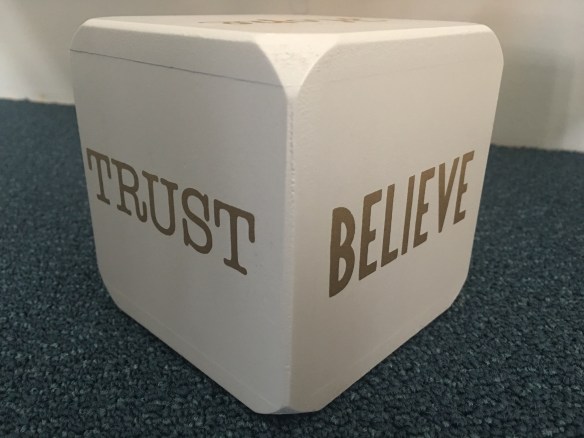
Finally, what does it mean to believe? To believe and to trust, are very similar. The two words appear on the faith cube. You might wonder why the authors of this toy decided to keep the two words separate even though they might, to our minds, mean essentially the same thing.

IMG_6887

And yet, it is worthy to ponder the subtle distinction between the two. Martin Luther understood faith as meaning the addition of the two concepts: Belief + Trust, not as opposing realities but complementing in distinct ways.

Belief is a function mainly of the mind. When we discuss doctrines, creeds. When we debate interpretations of scriptures and statements of faith. To believe is to access the cognitive capacity of our brains. It is, in the lingo of psycho-babble, the left brain analytical side that relishes in rational thought. To believe, in short, is to think through it.

Trust, on the other hand (or, on the other side of the brain), is more intuitive. Trust does not require a full explanation. Trust does not need all the facts and arguments in favor or against. Trust is a function mainly of the heart. Trust lowers the center of intelligence down from the brain to the heart.

Trust is relational. Trust understands our need for the other, to be open to the other, to take risks for and with the other. Trust calls us out of ourselves, to get out of the isolation of all our mental activity – to reach out to the other.

“Blessed are those who have not seen yet have come to believe.”

Jesus affirms for Thomas and the disciples that to follow in the Way of Christ, especially to generations and people like us thousands of years after the fact, that we need to trust others, and trust ourselves. To believe in Jesus, is to believe the witness of generations of Christians before us, to trust their witness, and to walk in the way precisely when easy explanations and scientific proof fall short.

We don’t ‘trust blindly’. That is often the criticism of trust, when it feels like we would be making an irrational decision not based in fact or evidence.

But we are trusting the most capable and the truest part of ourselves when we let go of our cognitive compulsions and let go into the love that sustains the heart.

The opposite of love is not hate. It is fear. “Perfect love casts out fear,” we read from the author of the second reading today[2]. We need to confess that it is fear that keeps us stuck in our heads, and keeps us stuck on the ground. Major decisions in our lives, decisions that changed the course of our lives, decisions that were important to us – were they born out of fear or love? Were they more a movement of the heart or head? Or some combination of both?

A music analogy …

I have been learning a new musical instrument these last couple of years. Classical guitar. Which is different, a little bit, from the acoustic guitar that you often see in churches today, and listen to in popular music.

In comparison, the classical guitar uses nylon strings, which tend to produce a softer, delicate, more harp-like sound. The fingerboard is wider on the classical guitar, and the body – the bell – of the instrument is smaller. When you hold the classical guitar, the curve of the body, which is more pronounced, sits on your left knee (if you are right-handed). And rather than strum chords, you pluck separate notes on the classical guitar. It’s a beautiful-sounding instrument.

But as with learning to play any instrument, and staying with it, there is a progression that needs to happen from the head to the heart. Listen to what Barry Green, renowned double bass player, writes about when teaching another musician how to play vibrato on their instrument. Vibrato is rolling your finger back and forth over your string when playing a note.

“On my Pacific tour,” he writes, “I coached Edith, a bass player from the New Zealand Symphony. She had tried to use her vibrato in a number of different places in a slow, expressive sonata by Vivaldi and couldn’t decide where it ‘worked’ best. None of her experiments quite had the right feel to them.

“I wanted Edith to discover the best places for vibrato by herself, so I asked her to play the piece without making any effort to put in a vibrato. I asked her to imagine that her fingers, not her brain, would tell her what to do, and suggested that she only use vibrato when her fingers ‘screamed at her’ to do so.  Since she would not have decided in advance which notes needed the vibrato, I was confident that her hands would be free to supply it unconsciously.

“Her performance improved immediately: Both her sound and her vibrato were smoother and richer.”[3]

Obviously to gain this level of playing, Edith had to practice and practice and practice. She had to become technically proficient in playing the bass. But to begin to enjoy playing and hearing the sounds you are creating on your instrument, to discover the resiliency of performing and the joy of making music, the usual questions provided by the mind must be eclipsed by the heart.

In other words, the mind will give instructions, constantly critique, and fan the flames of fear and self-consciousness – all of which undermine the making of a beautiful sound. We need the mind’s work, to an extent. But we also need to be able to let go of what the mental activity can get rather compulsive about. We need to grow up, as people of faith.

Albert Einstein, the most eminent scientist of the twentieth century, you would think would defend the prominence of the mind over the heart, the rational over the intuitive. So, this quote from him might surprise you; he said: “The intuitive mind is a sacred gift, and the rational mind is a faithful servant. We have created a society that honours the servant and has forgotten the gift.” Take his phrase, ‘intuitive mind’ to mean the ‘intelligence of the heart’.

Intuition relies on the capacity of trusting: Trusting the love, this capacity and capability within you, trusting the other who is willing to help, assuming the good intentions of others rather than immediately judging them – these are the attributes of one who has maturing faith. Especially, faith in God.

“Blessed are they who have not seen, yet have come to believe.”


[1]John 20:29

[2]1 John 4:18

[3]Barry Green with W. Timothy Gallwey, “The Inner Game of Music: The classical guide to reaching a new level of musical performance,” (New York: Doubleday & Company /Pan Books, 1986), p.113.

Christmas – God comes anyway

Do you remember ‘grumpy old uncle Stan’?

Eleven-year-old Nadia couldn’t believe that her recluse uncle fell asleep under the Christmas tree during the family gift exchange. He snored louder than any squeals of joy from other family opening presents.

Nadia complained to her Mom that she didn’t want to sit beside him at the Christmas dinner table any more. His burps and other inappropriate sounds coming from him embarrassed her to no end.

“I just don’t get it,” Nadia said. “Even though we make his favourite mash potatoes every year and wrap up all sorts of yarn for his knitting projects – he still acts all weird-like.”

“We only see him once a year, dear,” said her Mom. “We need to be patient.”

Nadia took a bite from left-over ginger bread. “Yeah. I don’t remember a Christmas without him.”

“You’re right,” Mom said. “He comes every year. He has a present for each of us. He listens to us more than he talks. I think he is just happy to be invited.”

“And sometimes he will ask me questions that make me really think.” Nadia continued eating her cookie. “I missed my cousins this year.”

“Yeah,” Mom sighed. “Other family members will sometimes find reasons for not coming. Uncle Stan comes anyway. Regardless of the weather. Regardless of who does or doesn’t have colds. Even when it would be better not to come. He comes anyway.”

“Christmas wouldn’t be Christmas without Grumpy Uncle Stan.”

Christmas teaches us how God is present to us. I believe that everything that Jesus says, everything that Jesus does, and everything that happens to Jesus reveals to us how God is present in our life. And the way Jesus responds to the situations and people in his life reveals to us how we are to respond to God’s presence in our life.

It is in that spirit then, that I read and hear again this holy night the Gospel story of Jesus birth: When Mary and Joseph arrived in Bethlehem the time came for Mary to give birth. And probably because of all the people in Bethlehem because of the census, there was no room in the inn. And so, they had to go to a small stable where Jesus was born. Mary wrapped him in swaddling clothes and put him in a manger. And he was born there out in the dark in the stable with the animals.

What does this story teach us about how God is present in our life? To me, it seems that a lesson is that there was no room in the inn, but God came anyway. The fact there was no room in the inn did not stop God from being born into this world, and that’s the lesson because that’s always true:

That sometimes in today’s world, whether it be through mass media or just the things that are going on internationally, and the way we as human beings treat each other, or sometimes just in our daily life, the hectic pace that we have to keep to just stay ahead of the day’s demands, along with the complexities of it all, it seems that there’s no room in the inn. That there is no hiatus from it all.

It’s true sometimes, not just in the world but in our own families, or sometimes just what we’re going through ourselves and all the ragged unfinished business of things. It seems that there’s no room in the inn. That it’s just all like closed up or too filled up with too much complexity and maybe things that shouldn’t even be there in the first place.

And as true as that might be we can take reassurance that God comes anyway. That God is being inexplicably born in our hearts moment by moment, breath by breath, as the interior richness of every little thing that happens to us and everyone around us.

As much as we may think it is all up to us – the good work we do, the important, business of our lives, striving after all that we believe is important – then come times and circumstances in our lives that confound and disrupt our self-inflated, self-constructed, neatly-tidied world –

A sudden death, a broken relationship, health problems, some failure, job loss, bad news, an unsolvable problem – and our neatly-packaged lives unravel.

And so, the Christmas message is really for those who seek more comfort than joy at this time of year. Some mercy. Some grace.

The Christmas message is for you who have tried oh-so hard to make things right but do not reap nor see the benefits of your toil; to you who by no fault of your own find yourselves in the middle of heart-ache; to you who continue to flounder in fields of despair when it seems there is no end in sight, no light at the end of the tunnel; to you who carry on, lifting head high despite the significant impairments of your lives. The Christmas message is for you. So, hear this: God comes anyway.

Christmas is not an escape from those hard realities, an escape we must engineer somehow by all the numbing stimulations of holiday ‘cheer’. But that God comes right into the midst of the darkness of our lives.

But here’s the thing: In order to discover the presence of God, we have to leave the hurly-burly of the inn, the superficiality and the chatter of it all, and find our way in the dark, back to the stable. That is, we have to enter into the humility and the simplicity and the patience and the delicate nature of what’s unfolding in our heart to discover where God is being born in our life.

And in this kind of prayerful attentiveness we are then asked to bring that delicate simplicity back out into the hurly-burly of the world. “It would be so much easier if we were asked to live a simple life in a simple world. But we’re asked to live a simple life in a complicated world.”[1] And I think this is how God is born in our hearts: In simplicity of heart we do our best to live with integrity in a complicated world.

James Finley relates one of his earliest memories of Christmas: His mother would take him to mass on Sunday and they always sat right up in the first couple of rows, off to the side altar. He was maybe three years old. He knew it was Christmas time because there were Christmas trees up in the sanctuary and there was a nativity scene.

He remembers the church was very crowded and a little baby started to cry near the back. And he remembers whispering in his mother’s ear: “Is that the baby Jesus crying?” His Mom leaned down and whispered in his ear, “Yes, it is.” And little James believed her. And today at 74 years old he still believes her. Not in the naïve way that a small child would believe it. But knowing that in Christ it is revealed to us that every child is worth all that God is worth.

And the truth is, for all the complexities and things of which that simplicity has been buried under, these so many things, there is in our heart this childlike purity, this childlike God-given Godly nature of who we simply are because God loves us.

And so, for us Christmas is us being awakened to this birthing of God in the simplicity of our hearts, in the depths of our life; and, into the awareness that despite the complexities of whatever each day might bring, we can take reassurance that God comes anyway.[2]

[1] Katagiri Roshi, Contemporary Zen master.

[2] I’ve adapted his words to my preaching context and am ever grateful to James Finley, “An Advent Meditation” (New Mexico: Center for Action and Contemplation, 2017), for sharing and emphasizing the Christmas Gospel message, that God comes anyway.

Pizza, sushi, pigs-in-a-blanket: It all matters

It’s an odd beginning.[1] You’d wonder why, if Matthew and Luke – and to some extent even John – begin with stories of Jesus’ birth, Mark starts his Gospel rather abruptly. And by reference to the Hebrew prophets of old.

During this Advent season as we prepare for and wait for God’s coming at Christmas, the Gospel text for today feels out of place. It shakes us out of our sentimental leanings and Hallmark expectations of pleasant Christmassy stories.

One of my favourite children’s exercises is finding the pattern in a row of numbers, words, pictures – and identifying which part doesn’t fit. Preparing a way in the dusty heat of the Judean desert by referring to Isaiah is a no-brainer for finding what doesn’t fit if we would line up and compare the first chapters of each of the four Gospels.

Compared to wordy John, for example, Mark is the master of brevity. The earliest of all four Gospels in the New Testament, Mark tells the story of Jesus by getting to the point. He appeals to our contemporary need to summarize concisely. Mark is short – only 16 chapters compared to Matthew’s 28, Luke’s 24 and John’s 21. In our digital video age where sound and video bytes must capture our attention in less than 15 second ads, Mark is the go-to Gospel. If you’ve got the time.

He opens by simply getting to the point: Jesus is the Son of God. And it’s good news. Amen. We’d go hear his sermons.

Unlike Matthew, Mark leaves out the juicy, vitriolic speech John the Baptist gives slicing up the Pharisees calling them a brood of vipers.[2] Instead, in a few short verses, Mark simply tells his audience that John the Baptist comes to herald Jesus’ coming. That’s John the Baptist’s only role: To announce and prepare the way of the Lord. Period. Next question.

Our three confirmands this year and their families have decided to meet in each other’s home once a month. Taking turns to host, each decides then what we will eat for supper. The first month it was pizza, perhaps no surprise there. The second month was sushi. And the third month we met this Fall, it was crescent pigs in a blanket. Pizza, sushi and pigs in a blanket.

Same group of kids and parents. Different culinary expressions. And I wondered how well this group found unity despite our differences. The detailed differences mark important aspects of our identity and perspectives on life. And yet, there we were, eating together and talking about God.

Which is why we must stop, pause and ponder Mark’s inclusion of certain details. If Mark wants to be brief and just tell the basic point, then why does he include what John the Baptist is wearing and what his diet is? There must be something very important about locusts, wild honey and camel’s hair.

I find a few good reasons for including only those details. First, Mark makes the connection between John the Baptist and prophets of old. We see, through these details that John the Baptist stands in line with Isaiah by citing his work.[3] John the Baptist is also mistaken for Elijah because of their similar attire,[4] and because he, like it is recorded in the other Gospels, foretells of the coming Messiah.[5]

Mark wants to be brief, but he also wants to add just enough detail to make those connections. Not only is this good writing, he conveys that it all matters. Not just the principles, the higher meanings, the abstract thoughts, the arguments, the beliefs. Material matters too. The locusts and wild honey that he eats, the camel hair that he wears – these all mediate God’s intent and message.

We can learn from Mark that “spiritual talk is always, in the Gospel, tied to material — real water, real bread, real time, inexpensive wine, locusts, honey, sand, camel’s hair, wind, birds and the clouds being rent asunder. This is the nitty-gritty of life, and it can never be separated from matters of the Spirit.”[6]

Because there is “nothing in all of creation that can separate us from the love of God in Christ Jesus”[7], then everything can mediate that love. There is nothing in all of creation that cannot communicate God’s goodness. All perspectives, all things, everyone – it all matters!

Those that created this library that we call “the Bible” in the fourth century could have tried to summarize the four Gospels – Matthew, Mark, Luke and John – into one definitive, authoritative account. No variations. No differences. No discrepancies.

No need to ask questions like: Was it the feeding of the 5000 or 4000? Were there two or was there just one angel in the empty tomb to speak to the disciples? Why does the Gospel of John contain stories not recorded in Matthew and Luke? One compilation would be enough, one that gets right the chronology of all the events, teaching and parables of Jesus. It would have made life easier!

But the wisdom of our forebears in the faith would keep the variations intact. Four similar yet different accounts were included in the New Testament. The diverse expressions and witnesses of Jesus Christ and his birth, life, teaching, healing, death, resurrection and ascension emerge as a critical element of faith.

In reflecting on the unitive diversity of Christian faith in the Bible, Richard Rohr wrote earlier this week in his daily meditation: “Scripture gathers together cumulative visions of the divine.”[8] Diversity is essential to who we are. It all matters.

It all matters because there is something good in everything. Everything in creation is just that: Created by God. And if everything was and is created by God, then despite the consequences of human misdeeds and the stain of sin in creation, despite all the religious and political differences in the world, there is still something redeemable and inherently good in this brokenness of creation. Including in us. This is the hope of Christian faith.

The Christmas season is a time when traditional gatherings occur in families, communities, friendship groups, and workplace teams. It would be too easy, and lazy on our part, to be dismissive and rush to make judgements of family members and co-workers with whom we differ. Some hesitate and complain about attending these gatherings because we can’t stand “grumpy uncle Stan” or “flakey aunty Molly”.

But even “grumpy uncle Stan” and “flakey aunty Molly” are beloved of God. There is something good about them. Will we take the time and effort to help make a safe place for them to express their true selves created in the image of God?

Richard Rohr has made many enemies in the Christian church for his provocative and progressive views. He has been a voice crying out in the wilderness for several decades now. And over all this time, he maintains that in conversation with those who differ from him, he follows a simple rule:

There is always at least ten percent of what he hears in their point of view that he can agree with. And it’s from that common ten percent that he begins his response to them.[9]

That calls for some work. And persistence. Because building relationships with those from whom we differ is not accomplished in one meeting, overnight, or after one phone conversation. It’s not easy work. It can take a life time.

It’s easier to give up and walk away. It’s easier to justify some narrative that paints them as evil or not worth spending any time with. The sad consequence of following this easy way we see in the world today.

We pray for peace on earth this Christmas season, as with the angels of old. The way of peace is to have hope. To have hope is to live into that which God calls us into being. And that hope requires us to take the narrow path.[10] To have hope is to work hard at practicing good listening skills. Hope requires us to work hard at not speaking first, but first asking questions and hearing the other. That hope requires us to work hard at listening with the aim of seeking understanding, to try to see things from the perspective of the other.

This doesn’t mean we will agree with the other. This doesn’t mean we will lose our integrity or that which defines us as Christians and as individuals. But it does lead us to a way of being with the other that honours them and respects them as beloved creatures of God.

We will continue eating together as a confirmation class into the new year. I look forward to the different culinary tastes that await. And what is better, I know the young women in the confirmation class are looking forward to this as well.

Hope.

[1] The Gospel for Advent 2B – Mark 1:1-8

[2] Matthew 3:7

[3] Isaiah 40:3

[4] 2 Kings 1:8

[5] John 1:21-23

[6] I wrote in my post from January 2015, “Borderland Spirituality”

[7] Romans 8:38-39

[8] December 4, 2017

[9] Richard Rohr, “The Art of Letting Go: Living the Wisdom of Saint Francis” (Boulder Colorado: Sounds True Audio CD Learning Course, 2010).

[10] Matthew 7:13-14; Luke 13:24

Faith in the dark

Sixteenth century Reformer Martin Luther claimed we are “justified by faith”. That means, we are in a right relationship with God because of the gift of faith in us.

Anyone and everyone, therefore, can live in faith. And there is nothing anyone of us can do to earn good favor with God.

Faith, to Luther, was to trust in God and God’s promises, despite your circumstance or any evidence to the contrary. What validates faith in you is not your external situation or material well-being, but God’s purposes, intentions, and promises for your life and the life of others.

Nevertheless, faith is not something you have. It is still something you do, but not to save ourselves. How do we deal with this paradox?

A brother once asked an older monk in a desert community, “Which is holier, someone who leads a solitary life for six days a week, giving himself much pain; or, another who simply takes care of the sick?”

The old man smiled and replied, “Even if the one who withdraws for six days were to hang himself up by his nostrils, he could not equal the one who serves the sick.”[1]

Self-denial and isolation never substitute for an active faith born out of love for our neighbour.

“Give to Caesar what belongs to Caesar,” Jesus answers the trick question posed to him by the Pharisees, “And give to God what belongs to God.”[2] The giving-to-God part, we get. But giving to Caesar?

Giving to Caesar ties us to this earth – to its politics, to its confusion, despair and hardship. Giving to Caesar, after all, was not popular among the Jews resisting Roman occupation in 2nd century Palestine. Giving to Caesar was fraught with political controversy – as it is today in the parlance of paying taxes. Giving to Caesar is not something we would normally associate with being faithful, being Christian.

But it is. Why? It certainly is not a perfect activity free from blemish and beyond reproach. But we do it anyway.

It is not a perfect thing to do faith. But when has it ever been? We give, in faith. We act, in faith. We love, in faith. Even though our response in faith is never perfect.

In faith, we always walk in the darkness. We see, using Paul’s language, “a mirror dimly” (1 Corinthians 13:12).

Medieval Spanish theologian, John of the Cross, called it “luminous darkness”. Because the darkness is also part of God’s creation. We need darkness in order to see the light.

Classical literature and art suggests the spiritual significance of darkness in one’s journey of life and faith. Parsifal’s quest for the Holy Grail begins by entering the forest at “the darkest place.” Dante begins his paradise journey “alone in a dark wood,” and it continues through purgatory and hell. Darkness is often the language of faithful, committed, spiritual people, a language and reality that cannot really be separated from light.[3]

Even in the beginning, as recorded in Genesis, the Bible brings the two together. In the first verses of Genesis, God names every day of creation “good”.[4] Except the first two days – the days when darkness is separated from light and when heaven is separated from earth. Darkness and light must not be separated. The real world, as Jesus teaches, is always a field of weeds and wheat and we can never presume to eliminate the weeds.[5] Light and dark belong together. You can’t have one without the other, to do faith.

In the Hebrew reading for today, the prophet Isaiah renders God’s words: “I create darkness”. God says that God will “give you the treasures of darkness … hidden in secret places.”[6]

This is the way of living without all the answers, living with ambiguity, living without denying or pretending away or even avoiding the contradictions of your life.

This is the way through the desert.

When King Cyrus of Persia conquered Babylon around 539 B.C.E. he let the exiled Israelites living there go back home to re-build Jerusalem. After living by the rivers of Babylon for decades, the people of Israel had a decision to make in response to their newfound freedom: Would they stay? Some did. But many – a remnant, we call them – decided to make the long trek through the desert back home.

What is more, King Cyrus of Persia did not even know God.[7] And yet, he was chosen by God to fulfill God’s purposes. God would even “go ahead”[8] of Cyrus to clear the way for God’s mission.

The way through the desert is not the way of certainty, security and safety, to be sure. The way through the desert is not an easy way. But the dark way, often in biblical times encountered in the harsh climate of the desert, is the way home. It is the way of healing, transformation and the new, good thing God is doing for us and in us and the world.

The Israelites could not avoid the desert even though they were freed from exile. They had to trust not only the dark way, they had to trust the foreigner and pagan King Cyrus to believe what he was doing for them, to believe he was in truth an instrument of God.

Talk about contradiction and ambiguity in faith! Would we, today, confer such a trust in someone outside the traditional community of faith? Would we, for example, take to heart Gord Downie’s medium of pop rock to advocate for better relationships with Indigenous People? Would we trust the revelation of God’s purposes in people of other religions, newcomers to Canada who bring with them different cultures from ours? Could these people and others also be instruments of God and God’s purposes, for us today?

The Israelites were faced with such a conundrum. And we know what they decided to do. They had to walk home in the desert, in the darkness, and trust that even through Cyrus, God’s unknowing servant, the mighty God of Israel was moving behind the scenes of everything that was transpiring.[9]

The way to healing and resolution of whatever troubles you today is a desert way of darkness. Yet, as someone once said, “In every cross we bear, therein lies a great treasure.”

A group of white settlers learned the hard way in the fall of 1849 as they set out from the Utah Territory toward gold fields in the San Joaquin Valley of California.

Taking a shortcut recommended to them by the leader of a passing pack train, they headed into a 140-mile long stretch of desert waste known to us today as Death Valley. It was a tragic mistake.

Twenty-seven wagons started into that long desert valley east of the Sierra Nevada. Only one of them came out. A survivor of that misguided party spoke of the dreadful sameness of the terrain, the awfulness of the Panamint Mountains, remembering only hunger and thirst and an awful silence.

Two months later, as the only surviving wagon topped the westernmost crest of the distant mountains, one of the settlers looked back on the place that had nearly claimed them all, and said: “Goodbye, Death Valley.” That’s how the site received its name.

But there’s another name the Spanish used to describe this God-forsaken land. They referred to it as ‘la Palma de la Mano de Dios’, the very palm of God’s hand.[10]

Could it be that even in the midst of the most dangerous climate and terrain on earth, where it’s 134 degrees (57 degrees Celsius) in the shade exposed to winds in excess of one hundred miles (160 kilometers) an hour, wanderers have found God? It is God, actually, who finds us, in the darkest most arid times and places of our own lives.

It is during these times and places where people become accustomed to risk, vulnerability and brokenness that they build an unshakable trust in the other? It is during these dark times and places where you confront your inevitable loss of control and the specter of your own eventual demise head on. It is in these moments where we have to wait for God, ask God for help, and learn to trust God over and above anything we may be able to accomplish by the might of our own hand.

In the dark, desert journeys of our lives especially, we remain inscribed in palms of God’s hands.[11] La Palma de la Mano de Dios. You may not understand all the contradictions and ambiguities of your life, right now. You may not be able to figure out all the inconsistencies and paradoxes of life. You may not be able to resolve the problems of your life or in the world.

But, believe this: There is Someone who does. As you wander in the darkness of faith, never forget that God is bringing to resolution and completion all the confusion and contradiction of your life and the life of the world.

And, it is all good.


[1] Belden C. Lane, “The Solace of Fierce Landscapes: Exploring Desert and Mountain Spirituality” (.202

[2] Matthew 22:21

[3] Richard Rohr, “Adam’s Return: The Five Promises of Male Initiation” (New York: The Crossroad Publishing Company, 2016), p.39.

[4] Genesis 1:3-8

[5] Matthew 13:24-30

[6] Isaiah 45:3,7

[7] Isaiah 45:4-5

[8] Isaiah 45:2

[9] Carolyn J. Sharp in David L. Bartlett and Barbara Brown Taylor, eds., “Feasting on the Word: Preaching the Revised Common Lectionary” Year A Volume 4 (Kentucky: WJK Press, 2011), p.175

[10] Belden C. Lane, ibid., p.231-232.

[11] Isaiah 49:16

Take a knee

IMG_5385

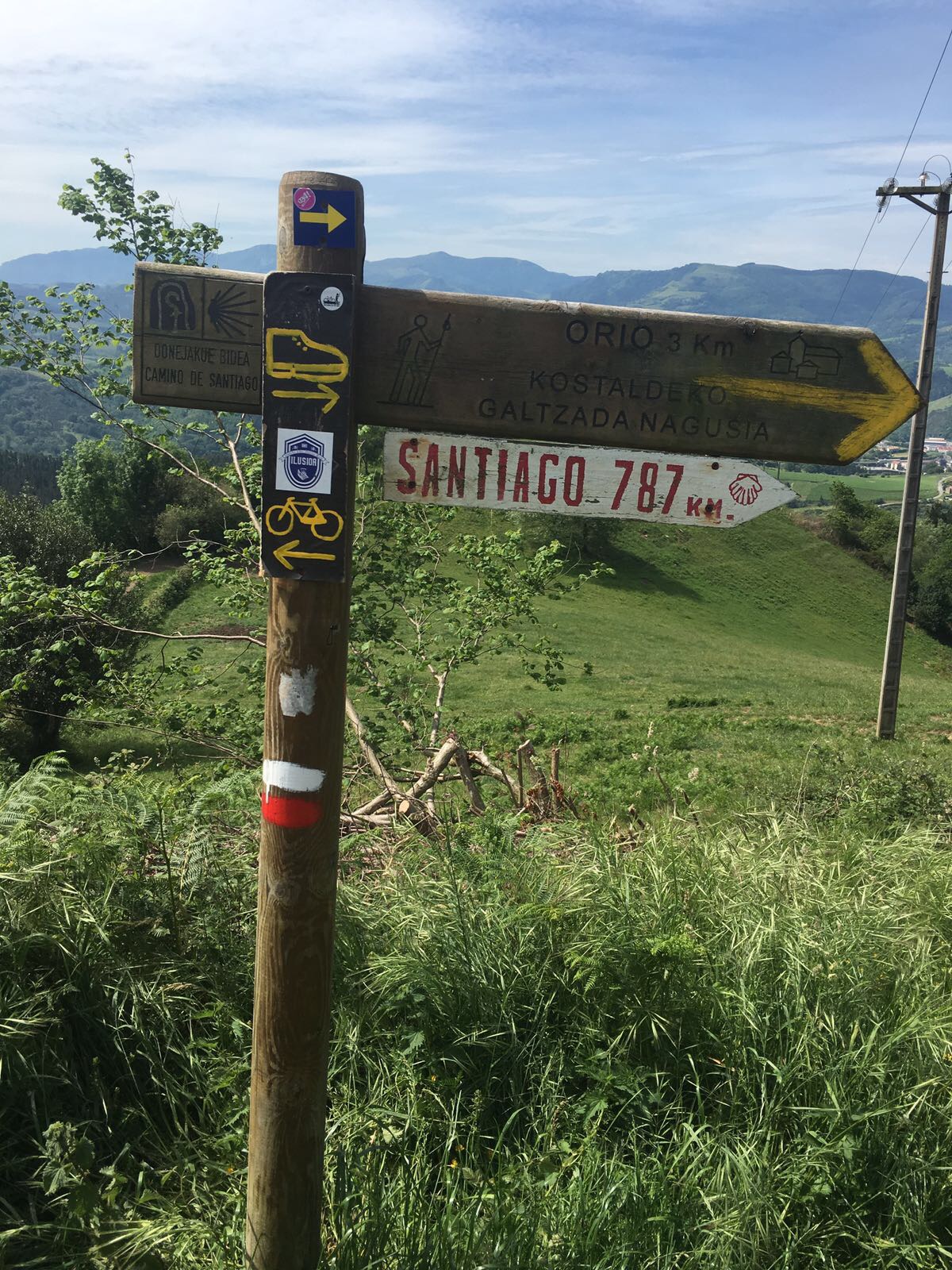
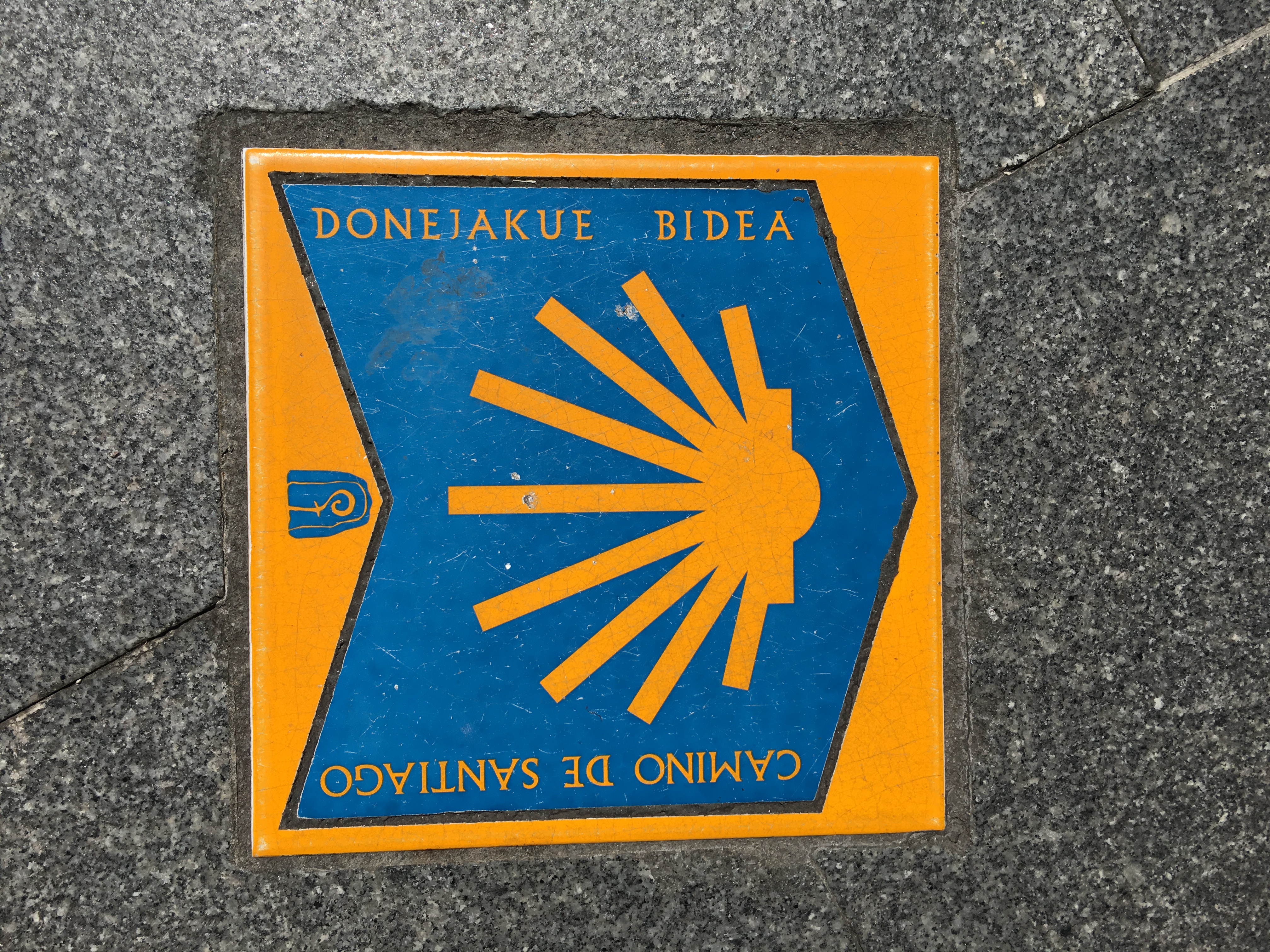
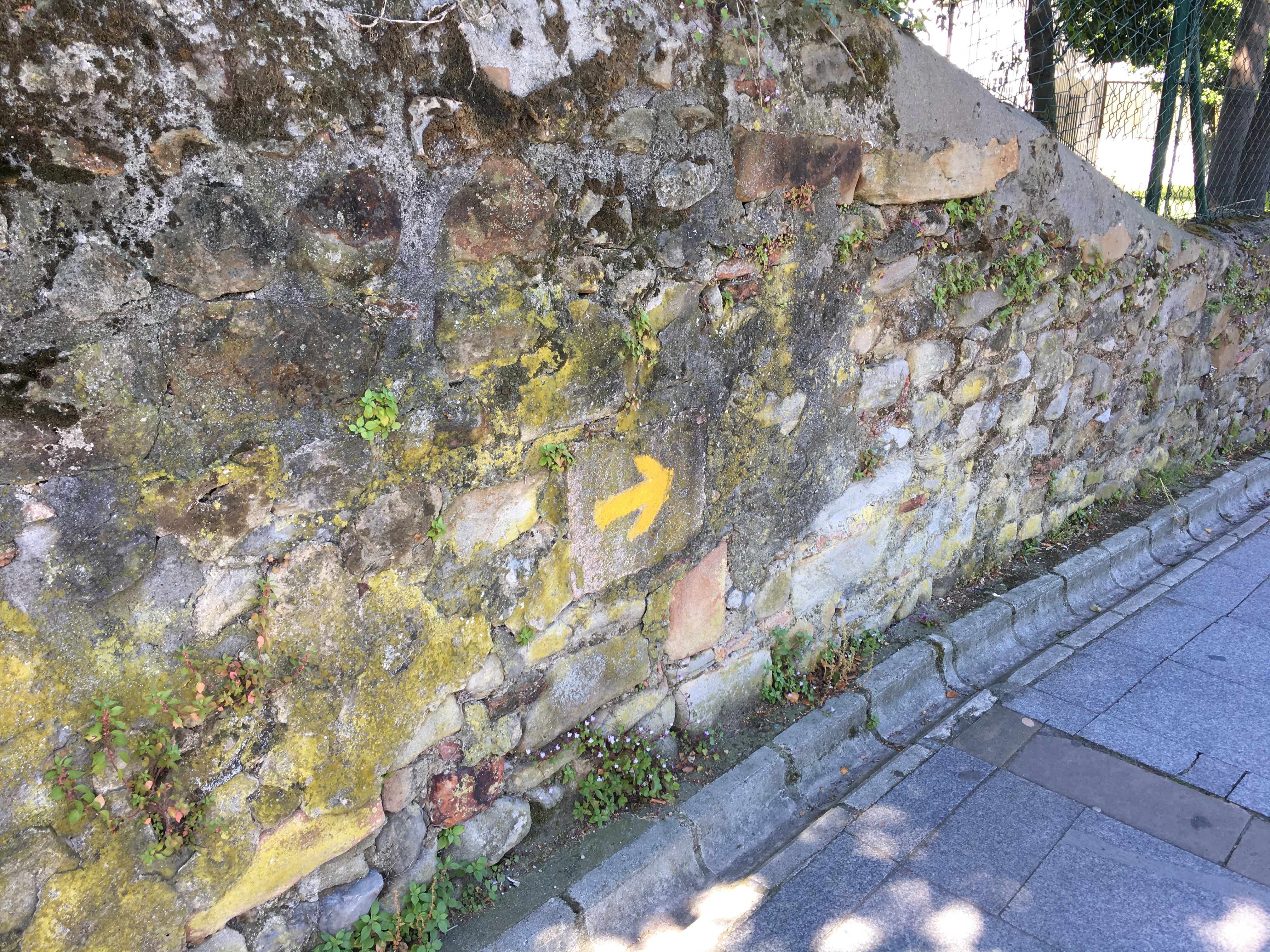
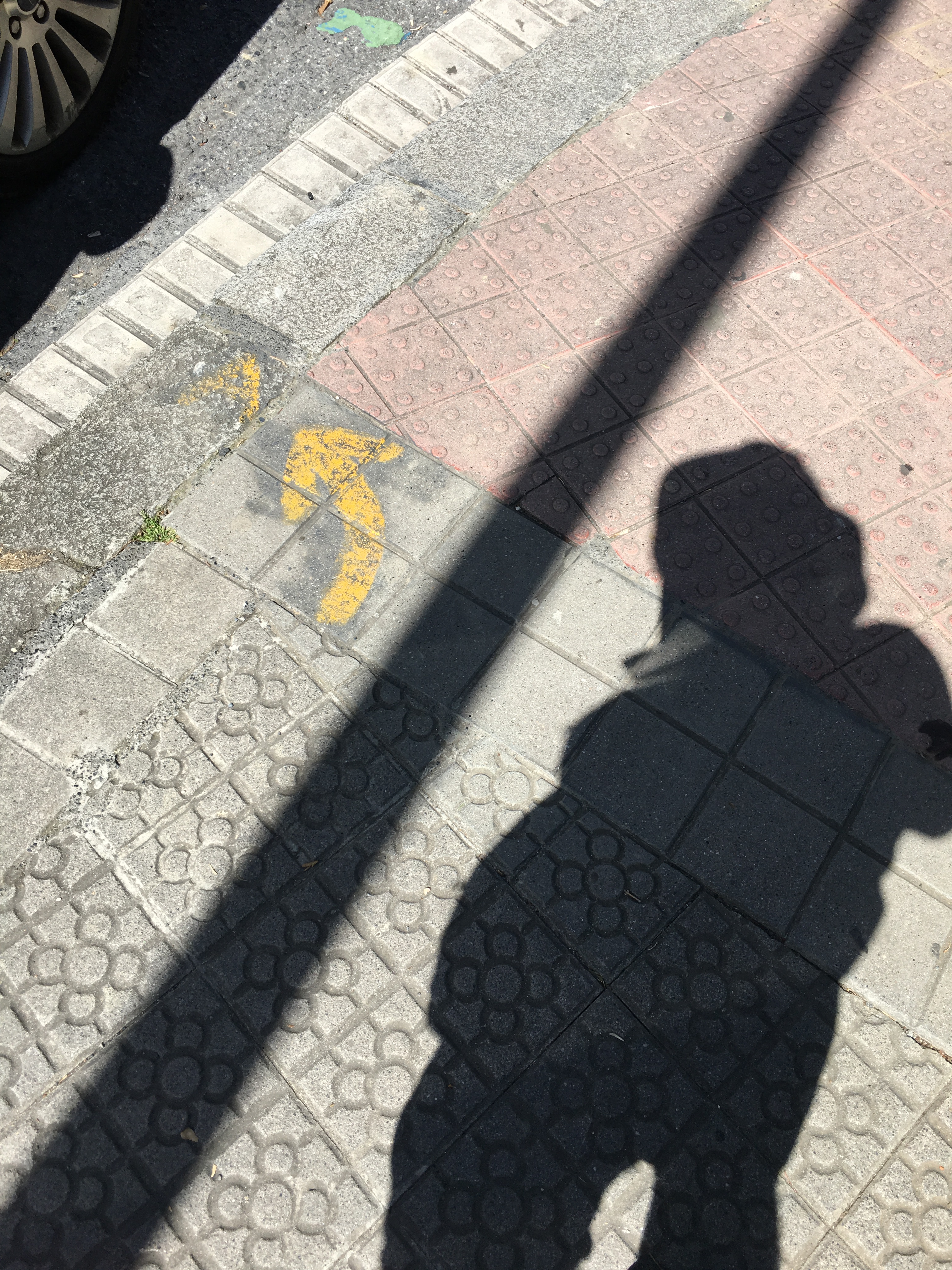
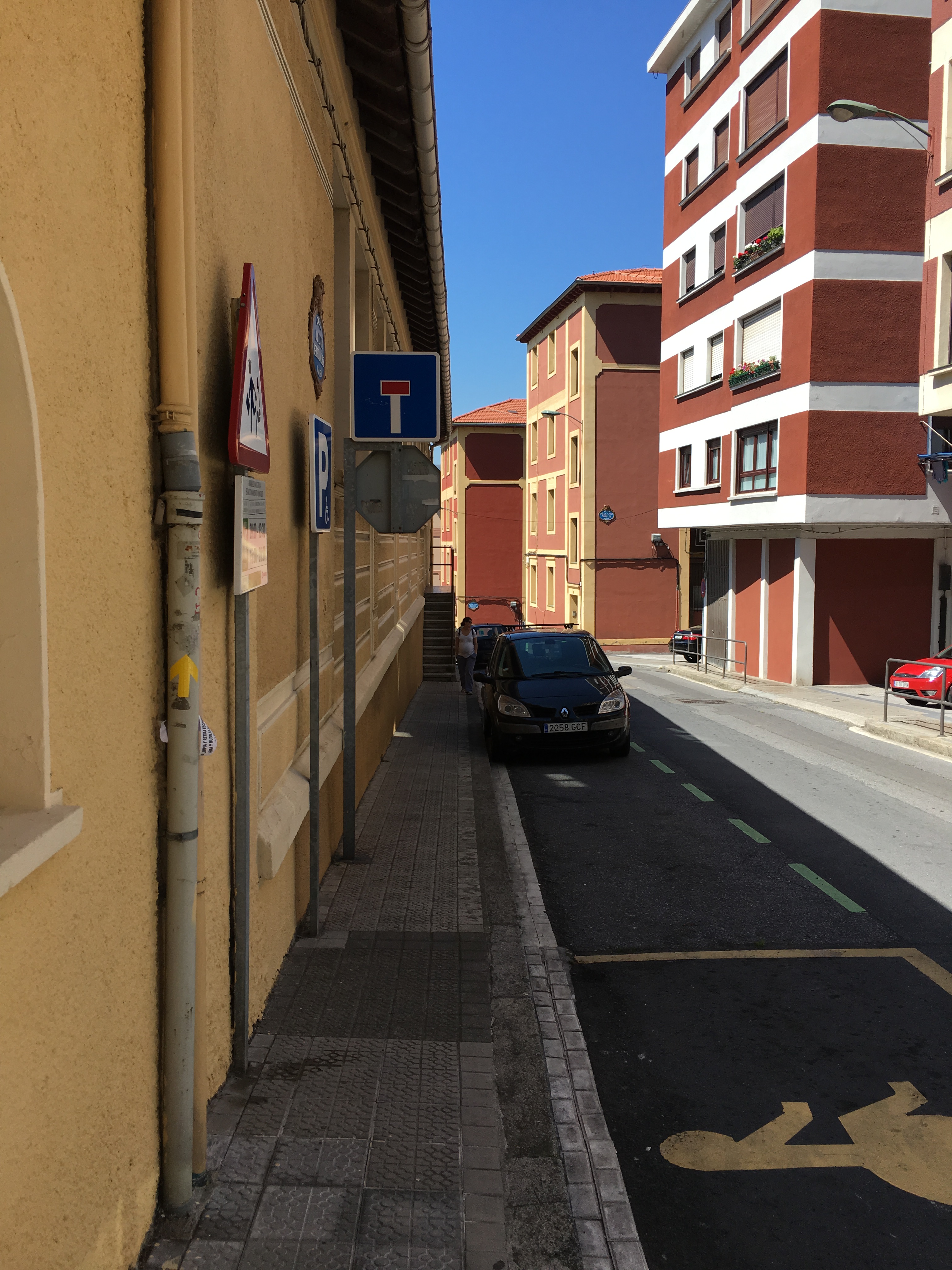
On the Camino de Santiago, you had to take care to follow the signs. Yellow arrows were common and well-known markers to all pilgrims along the path.

IMG_5368

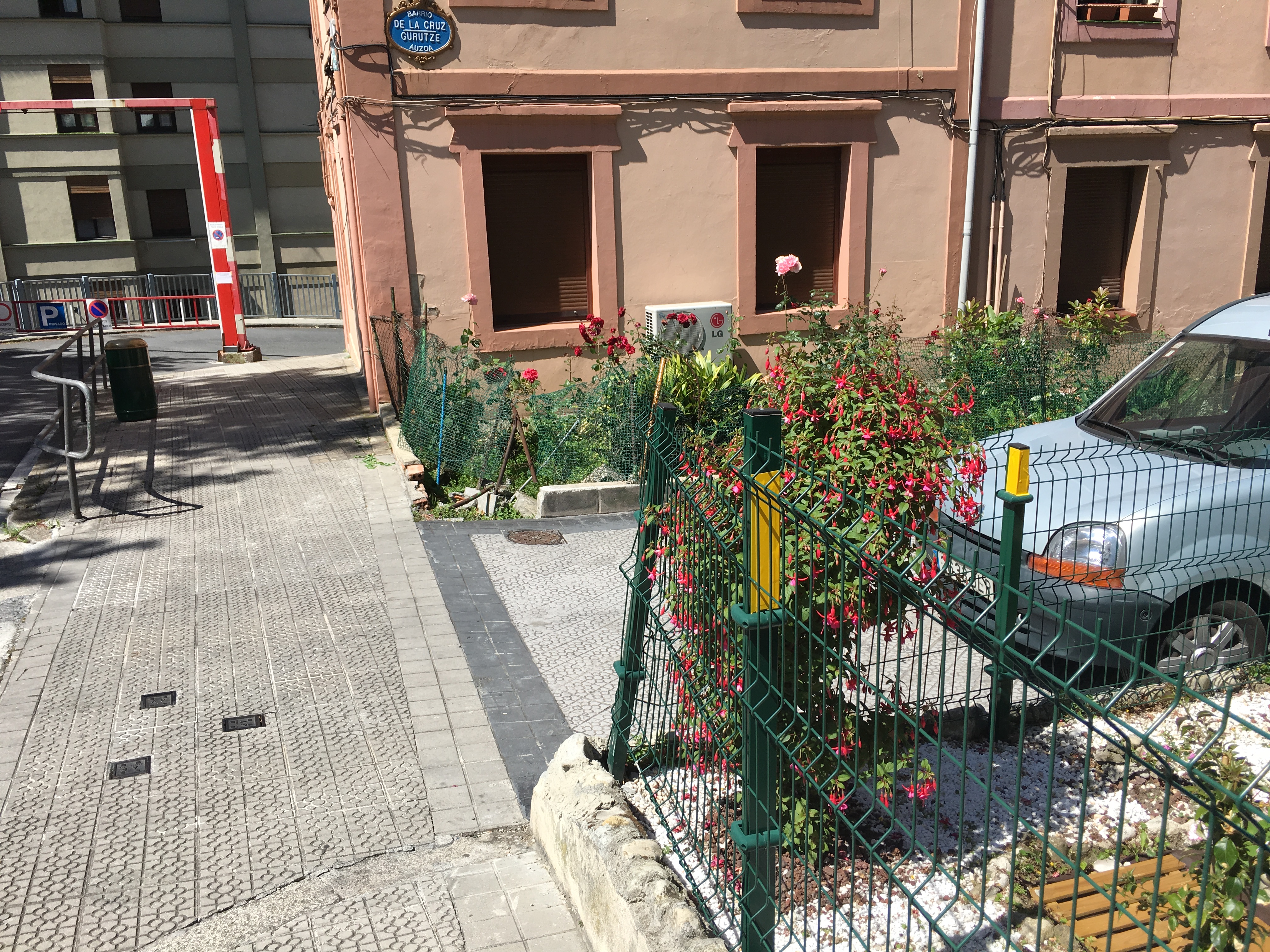
It was easy to get lost, especially in the big cities, if you missed one of these markers. But also at critical junctions in the forests, the fields or roadways where if you were not paying attention, you could lose hours on the journey and have to double back.

I learned, sometimes the hard way, to pay attention to what others might consider obvious. Some markers are easy to notice.

Some are sort of easy to notice:

But often it was a challenge to find that yellow marker:

AF9FA91C-7D0D-4D54-B2CD-F933EDE6260A7692EB83-1AA5-499D-AE9B-A64B6A5678C8IMG_5363IMG_5364

The signs — like the sacraments of baptism and holy communion — are reminders of what kind of journey we are on. These signs are embedded in the journey itself, on earth. These holy signs don’t stay in some other-worldly realm; they are very much a part of this world: Baptism uses common water; Communion uses bread and wine – basic, earthly elements which remind us of what God is all about on earth.

The signs are part of our daily, ordinary lives. The signs are already there, along the way, before we even commit to the journey. We only need to open the eyes of our heart and mind, and pay attention. Because the signs are too easy to miss. And when we do miss them, we get lost and go down other paths, paths that lead to division in the Body of Christ, the church.

I remember when our then 12-year-old son started playing football I first learned what it meant to ‘take a knee’. According to the tradition, if a player on the field was injured everyone ‘took a knee’. And it didn’t matter which team the injured player was from; that is, all the players from both teams knelt down and waited there until the injured player either walked off the field on their own strength, or was carted off on a stretcher.

Tim Tebow and Colin Kaepernick have both attracted world-wide media attention for ‘taking a knee’ in the last couple of years, although for very different reasons. Both have made a public display of their faith. Both are prayerful, and devout. One grew up the son of Baptist missionaries to the Philippines. The other was baptized Methodist, confirmed Lutheran, and attended a Baptist church during college.[1]

Tim Tebow, however, is a darling of the church while Colin Kaepernick has been reviled. Their differences reveal much more about the brand of Christianity preferred by many in the church today. Tebow is known for his signature move – dropping to one knee on the field, his head bowed in prayer, his arm resting on his bent knee. He’s clean cut, polite, gentle, respectful.

Colin Kaepernick, starting last year already, refused to stand to attention during the playing of the American national anthem. Originally, he did so in support of Black Lives Matter and to protest police violence against black people. Kaepernick was voted most disliked player in the National Football League (NFL). People posted videos of them burning his jerseys. He was called “an embarrassment” and “a traitor”. Of course, with recent events in the NFL, his witness gains momentum nonetheless.

Two players, two brands of Christianity:

Tim Tebow represents personal piety, gentleness, emphasis on moral issues. Colin Kaepernick represents social justice, community development and racial reconciliation. One version of Christianity is kneeling in private prayer. The other is kneeling in public protest. One is concerned with private sins like abortion. The other is concerned with public sins like racial discrimination. One preaches a gospel of personal salvation. The other preaches a gospel of social transformation. One is reading Paul’s letters. The other is reading the Minor Prophets.

Are these versions of Christianity mutually exclusive? Much of Christian history, especially since the Reformation, would suggest, ‘yes’, even among Lutherans. The proliferation of Christianity into some thirty thousand different denominations by the 500th anniversary of the Reformation in 2017 would suggest, ‘yes.’ The divisions within Christianity is leaving the church all the poorer, with each side needing to be enriched by the biblical vision of the other.

Bible scholar Walter Brueggemann expresses it well: He writes that Christianity should be “awed to heaven, rooted in earth.” We should, as he says, be able to “join the angels in praise, and keep our feet in time and place.”[2]

Christianity, sadly, remains on its knees because of our divisions, when all along the vision of the Gospel, expressed best by Paul himself, is that “every knee should bend, in heaven and on earth”[3]. How do Christians today, regardless of background and orientation, contribute to this vision in ways that actually make a difference on earth?

In the second reading for today, we learn about the essential character of the biblical God. In the Hebrew Scriptures, all of God’s acts, blessings, and delights in creating are for the sake of others. This is typical of God, “who is intimately concerned with justice, peace, and the flourishing of all creatures.” This is typical of God, “who is ‘on high’ but never remote, who is ‘over all’ but faithfully and dramatically invested in life on earth.”[4]

God does not embrace hierarchy. Nor does God rest in privileged autonomy, according to some deist idea of a distant and uncaring God. God is love. And the New Testament witness continues this description of a God who cares intimately about our humanity, in the incarnation of Jesus Christ. God is Immanuel, God-with-us and for us.

In setting up this wonderful hymn that Paul includes in his letter to the Philippian church, Christians are called to exemplify a humble regard for others, seeing them as “better than yourselves”; we are not to primarily serve our own interests, but the interests of those who are different.[5]

These may be an impossible task for us in our self-centred, me-first culture. Nevertheless, we are encouraged, as Paul encouraged the early church in Philippi, to “work out our salvation with fear and trembling”[6]. Why even bother?

Because God is already at work in us.[7] God is already at work in the world, as difficult as it can be to spot those signs of God’s grace, God’s justice, God’s good work. As Martin Luther insisted, matters of salvation revolved around God’s actions, not human activities. Justification — being placed into a right relationship with God — is totally God’s activity. After all, as Paul wrote earlier in his letter to the Philippians, we need to believe – despite what appears to be everything to the contrary – in the promise and the vision that God “who began a good work among you will bring it to completion.”[8]

God’s grace precedes all. Just like the signs on the journey before us and around us. Even though we may miss them from time to time doesn’t mean they aren’t there, waiting for us to notice. God’s grace continues to guide us and point in the right direction.

We therefore have nothing to lose, to take a knee for the sake of those who do not have a voice. To take a knee for the sake of others who are silenced by discrimination and abuse. To take a knee for all God’s creatures who long for a better day.

We pray for and support agency to help the refugees today escaping violence and oppression in Myanmar. We pray for and support agency to help victims of Hurricane Maria in Puerto Rico. We, so, ‘take a knee’, in the spirit and mind of Jesus Christ who took a knee for us all.

[1] I thank Michael Frost, “Colin Caepernick vs. Tim Tebow: A Tale of two Christians on their knees” (The Washington Post, September 27, 2017) for much of the content I use in this section of my sermon

[2] cited in Michael Frost, ibid.

[3] Philippians 2:10, NRSV

[4] William Greenway in David L. Bartlett & Barabara Brown Taylor, eds., “Feasting on the Word: Preaching the Revised Common Lectionary” Year A Volume 4 (Kentucky: WJK Press, 2011), p.112.

[5] Philippians 2:3-4

[6] 2:12

[7] 2:13

[8] 1:6

Trust the down

I hate roller-coasters. It’s about the fear of letting go of control on the way down, that’s the problem. The couple times I’ve had the guts to go on a roller-coaster, I didn’t enjoy the experience because I couldn’t let go on the way down. Someone took a photo of me and my friend in the middle of one of those rapid descents: My friend who loves roller-coaster — his arms were up in the air and a big smile beamed across his face.

Sitting beside him, I was the opposite: My hands were glued to the bar in front of us, and my lips were pursed tightly and my eyes looked like they were going to pop out of their sockets. It looked as if I were staring death in the face, going down that roller coaster.

I read this week: “Humans are the only creatures who have knowledge of their own death. Its awareness creeps on us as we get older. All other animals, plants, and the cycles of nature themselves seem to live out and surrender to the pattern of mortality.

This places humans in a state of anxiety and insecurity from our early years. We know on some level that whatever this is that we are living will not last. This changes everything, probably more than we realize consciously. So our little bit of consciousness makes us choose to be unconscious. It hurts too much to think about it.” (1)

We humans find ingenious ways to avoid this journey, especially through Holy Week, that invites us to contemplate not only human death but the death of God in Christ Jesus. No wonder, especially among Protestants, attending services through Holy Week is not popular. This is not easy work, to face Jesus’s and our own mortality. No fun in that.

One way we avoid and deny this awareness of our own mortality is to find a scapegoat — by focusing all our negative energy on something or someone else. Our scapegoat is that which deludes us into believing that its destruction will somehow solve all our problems and make everything better again. Our scapegoat also shields us from taking responsibility for and dealing with our own problems.

Today, the scapegoats are easy to identify: The immigrants, the newcomers to Canada, the Muslims, the gays, the corrupt politicians, the government, the media, the church hierarchy — you name it. The blame game is alive and well, even in the church.

And then what happens is what many wise teachers through the ages have said: When we deny our own suffering we make others around us suffer. Which is unfair and unjust. Because the Gospel was given first and foremost to the followers of Jesus. 

“The time is fulfilled and the kingdom of God has come near,” The Gospel Mark thus records Jesus’s first words to his own people in Galilee. And to them he said, “Repent and believe in the Gospel” (Mark 1:15). We are the ones addressed by the Gospel — those who are already in the church, in the family of God. Not those so-called ‘bad’ people out there.

Jesus was the scapegoat whose destruction would solve the high-priestly authorities’ problems. By having Jesus put to death, the religious authorities could maintain their power and privileged position in Jerusalem, the Roman Emperor’s fears of insurrection would be temporarily alleviated, and the Pax Romana (the Roman rule) would continue in the land.

As unjust as killing Jesus was — for many even in authority including Pilate saw that Jesus was innocent — Jesus was the convenient scapegoat whose death on a cross would make it easy on those in power. And maintain the unjust status quo in the land.

After hearing of Jesus’ raising of Lazarus from the dead, the high priest, Caiaphas, advised the rest of the leadership in Jerusalem: “It is better for you to have one man die for the people than to have the whole nation destroyed” (John 11:50). Rather than do the right thing in the moment, the end — a false peace — justifies the unjust means. Classic scapegoat -ism: Jesus became the convenient victim in the human power play of first century Judean politics.

It’s ironic that our fear, denial and avoidance of death is actually that which keeps us stuck in scapegoating, in blaming others, in all the motivations for war and violence in the world. You could argue that all of what is bad in the world today stems from humanity’s continued ambivalence and denial of death.

What’s amazing is that Jesus, knowing all along this human condition, chose to become a victim to it. From his privileged unity with God the Creator, he chose to connect with humanity. The reading on Palm Sunday from Philippians 2:5-11 describes this downward movement of God in Christ into the “enfleshment of creation” (2), and then into humanity’s depths and sadness, and final identification with those at the very bottom, “taking the form of a slave” (Philippians 2:7), to death on the Cross.

Jesus represents God’s total solidarity with, and love of, the human situation. It’s as if God is saying: “Nothing human, now, is abhorrent to me.” This is incredible.

The Cross represents the divine choice to descend. It’s almost total counterpoint with our humanity that is always trying to climb, achieve, perform, justify and prove itself. The witness of the Cross is the divine invitation to each of us to reverse the usual process.

Christians worldwide have a great gift and witness in the Gospel of Christ crucified. The divine union with humanity suggests that everything human — including death, losing and letting go that is so much a reality in all our lives — is embraced by God’s love. The reason God loves even our shadow sides, is because God experienced the fullness of its brutal and unjust consequences, in the death of Jesus.

Jesus is like the human blueprint for our own transformation. Because who would have presumed that the way up could be the way down? It is, as Saint Paul writes, “the secret Mystery” (Romans 16:25).

Trust the down, and God will take care of the up. The hymn in Philippians 2:5-11 says that Jesus leaves the ascent to God, in God’s way, and in God’s time. Because Jesus went to the bottom of all that is human, “God lifted him up, and gave him the name above all other names” (Philippians 2:9-11).

Of course, they say the joy of a roller coaster’s twists, turns and rapid descents is knowing and trusting that the ride eventually and surprisingly goes up. What an incredible rush! Carl Jung wrote: “Not wanting to live is identical with not wanting to die.” (3) The roller coaster analogy suggests that when we refuse to descend, when we avoid facing our own mortality, and avoid taking responsibility for our own suffering, we also don’t really live.

Conversely, we can only truly live when we have faced and come to terms with the reality of our own mortal, imperfect human lives. Being fully human is being fully spiritual, faithful and alive. Saint Irenaeus was first to say in the second century that the glory of God is human being fully alive.

Trust the down, and God will take care of the up. When challenges, disappointments, defeats and failures come your way, don’t rush into avoidance techniques, distractions, denial of the problem or blaming others for the circumstance you find yourself in. What do these events have to teach you? Where is God in the midst of your suffering? What are the signs of grace therein? Christian faith asserts that God is revealed precisely in those lowest moments. Jesus believed this. It was trust in his Father that got Jesus through his passion, suffering and death.

Trust the down, and God will take care of the up. Resurrection was just around the corner.


1 — Richard Rohr, “Wondrous Encounters: Scripture for Lent” (Cincinnati Ohio: Franciscan Media, 2011), p.100.
2 — Rohr, ibid., p.123
3 — cited in Rohr, ibid., p.123.

To see beyond, and go deep

“Suffering produces endurance, and endurance produces character, and character produces hope, and hope does not disappoint us, because God’s love has been poured into our hearts through the Holy Spirit that has been given to us.” (Romans 5:3-5)

We had a problem. In this perfectly finished renovation, something was not right. The microphone jack, on the floor in front of the pulpit here, was not working.

2_Power

How could this be? Everything was designed and installed as it should be. And yet, something had gone awry. The prognosis was not good. How could it be fixed, without tearing up the carpet, pulling off the baseboard and cutting into the drywall to find out exactly where the wire was shorting out?

For this problem to present months and years from now would be one thing. But to discover this problem in the first week or so back into our ‘new’ space. Uh-oh.

And yet, as you can see and hopefully hear today, it is working. And, as you can see, the carpet has not been ripped and there are no pieces of drywall cut and patched up. How was this problem solved? How were we saved from doom and destruction?

I will say this: For Brian who discovered the problem, it caused him some serious stress, at first. ‘Despair’ might be a word that comes close to describing his feeling, for someone who had already spent hours and hours of his time and energy and resources in the entire renovation project over the last several months.

All that you can see now is a tiny hole on the baseboard no larger than the size of a dime, just above the carpet line on the other side of the chancel. That’s all. A tiny hole, that doesn’t really reveal the depth and breadth of how the problem was solved.

4_TheCulprit

Apparently, a finishing nail had been shot into the wire from outside during the renovation. Unbeknownst to the worker strapping on the the siding, one of the nails embedded into the wire, thus shorting it out. It was, for Brian, a question of finding the proverbial needle in the haystack.

He employed the material resources at his disposal and years of experience in engineering and computer sciences. He brought in an oscilloscope to measure the current, and his infra-red camera, which he ran along the presumed route of the hidden wire. These instruments disclosed an abnormal, irregular heat signature which spiked at the spot of the short-out. From there, it was merely the task to go in with surgical precision, and remove the offending nail. And voila! The microphone now works!

This is definitely a feel-good story with a good ending. Especially because at first, it didn’t look good. It would have been easy to give up, to remain in despair and not do anything about it. And live with, and remain stuck in, some unhappy, dysfunctional space.

The Gospel story about Jesus meeting the Samaritan woman at Jacob’s well (John 4:5-42) has a feel-good ending, at least from the point of view of the woman. She starts by being defensive and confrontational — not seeing nor recognizing Jesus for who this man truly is. She leaves the encounter with Jesus, joyous, liberated, un-inhibited, free.

The story reveals God’s character in Jesus. To emphasize the point the Gospel writer John wishes to make about God’s character, John places this story immediately after Jesus’ encounter with Nicodemus in the previous chapter. Let’s compare briefly the two encounters:

For one thing, Nicodemus has a name. The woman is nameless. Nicodemus is a Pharisee and as such has status, authority and privilege in the social-religious culture of the day. The woman is a Samaritan with whom the Jewish authorities were in conflict. Nicodemus lived in a male-dominated society. The nameless, Samaritan woman is a nobody.

Jesus takes the initiative to cross the boundaries of geography, culture and prejudice to speak with the woman. And not only that, to draw from her the truth, and then empower her to be a missionary for the kingdom of God. The encounter with Jesus transforms her from a nobody to a somebody.

As the dialogue at the well comes to a close, the woman is filled with joy. She is so energized with passion and hope that she “left her water jar and went back into the city” (v.28). We now can see what is not immediately apparent. We can complete the sentence when the Samaritan woman exclaims: “Come and see a man who told me everything I have ever done” … and loved me anyway! She does not say these last four words at the end of verse 29, but they are implicit in her action and in the joy with which she runs.

“Everything she ever did” is a long list of sins. It is always before her, in the judgemental expressions of her neighbours and in her mind for the rest of her life; she has had many husbands, and the one she is living with now is not. For Jesus to have intimate knowledge of that list and for him to know her past, and still love and forgive her — well that’s unbelievably new and fresh as anything she has ever heard. The man who told her everything she ever did … and loved her anyway … is what saves her life. (1)

A caution: Her sin is not the main point in the story. (2) While Jesus’ offer of forgiveness is implied in the dialogue, the text itself says nothing of any sin she has committed (as we see elsewhere in the Gospel, for example, John 8:1-11); nor does Jesus ever actually say words of forgiveness to her.

The focus here is not sin. It is rather in the character of God, and the liberating result of a gracious, truth telling encounter with Jesus. In that moment, the woman sees God. She receives Christ — and leaps up to tell.

Would you? When Paul talks about suffering in his letter to the Romans (cited above) he is encouraging the faithful to see beyond their present, often difficult circumstances to the hope we have in Christ. Indeed our society’s values can make us feel, and keep us trapped in believing, we are nothing:

If we don’t have significant financial resources stored away in investments, bank accounts and property; if we don’t have that ‘perfect’ life, secure in our fortress worlds of private privilege and comfort; if we don’t have the perfect-looking body, the disease-free physiology, the magnetic, people-pleasing personality; if we don’t have the high-paying job, the investment-rich retirement plan; if we don’t measure up … the list goes on. The values of society make us feel like nobody.

And yet, Christ comes to remind us that we have everything we need to get through it, and more! We just need to see beyond what is immediately apparent. Jesus breaks all those boundaries of division and exclusion, casting aside our pretence and our cloudy vision. Jesus doesn’t pay attention to what society says is valuable or not valuable. Jesus comes to each and every one of us and says: “Look deeper. I know everything there is about you, and I love you anyway!”

So, what do you have to lose? Take the risk, and do something to make things better in your life, and those around you. Make the hole in that spot you may not be sure about because it’s not visible on the surface of things. And then trust what God has given to you already — the resources at your disposal, the unique gift of your very life, your talents, treasures and time — is worthy of using! And go for it!

Because God will love you anyway.


1 — Anna Carter Florence in David L. Bartlett and Barbara Brown Taylor, eds, “Feasting on the Word: Preaching the Revised Common Lectionary” Year A Volume 2 (Lousville Kentucky: WJK Press, 2010), p.97

2 — Karoline M. Lewis in ibid., p.95

No easy way up those stairs


Perhaps you know someone like Sue.

Sue had Multiple Sclerosis (MS). As the disease progressed in her relatively young life, she nevertheless wanted to stay at home as long as possible. Her house, unfortunately, was not outfitted appropriately for someone in her debilitating condition.

And yet, she battled. For example, it took her twenty minutes to crawl upstairs to her bedroom. Sue called the stairs “Mount Sinai”. Because it was by struggling on those stairs, moving limb for limb through each laboured breath through gritted teeth; it was through determination for each step gained, that she learned so much (1).

The prophet Isaiah does this to us again — gives us an ideal vision of a world where no one suffers any longer, a utopia where everyone is joyful. What is perhaps even more astounding is that this vision of hope and promise is proclaimed in the midst of everything that was not:

These verses speak to Babylonian exiles (2). They are the captives of war, and as such have been wounded maimed, even intentionally blinded as was King Zedekiah (2 Kings 25:7). It is to this failed community now subjugated and marginalized in an oppressive regime far away from Jerusalem that Isaiah paints this picture of a highway leading back home through the desert (Isaiah 35:1-10).

The cynic in us alights, as it must have in many of the exiles in the sixth century B.C.E. For, when do we see the eyes of the blind opened, the ears of the deaf unstopped, the disabled leaping like a deer, the tongues of the speechless sing for joy? (vs.5-6). Words that Jesus later repeats almost verbatim (Matthew 11:5; Luke 4:18) surprise because he seems to validate the promise of a vision, hundreds of years after Isaiah, that has yet to be fulfilled.

The vision, the promise, operates like a bouncing ball through history. Indeed, our world to this day — two thousand years later — is still rife with human brokenness, both visible and hidden from sight. Many have given up on God precisely because they can’t see how a God of love can be represented in a world of suffering, disease, violence and disability.

What if this promise is given, is meant, for us today? Can we believe it? Yet, perhaps human beings will always struggle with the God who came, and is coming again and again, in Jesus. We have to be careful with Isaiah’s vision, for it can pander to our perfectionism, which denies the reality of a life lived in the graces of God: That what is of God is exclusively the purview of the rich and famous, successful, beautiful and handsome — only for the perfect ones.

Perfectionism pretends that we have to achieve that vision of wholeness and restoration by our own herculean efforts and responsibilities. A denial of the suffering in life leads us to attempt a path around all that is difficult, challenging and transformative.

“A highway shall be there, and it shall be called the Holy Way, and the unclean shall not pass it by, but it shall be for them.” (Isaiah 35:8)

When John the Baptist shouts that the coming Jesus will make a way through the aridity and desolation of the desert (Matthew 3:3), it bears reason to pause and reflect on the place of John’s prophetic work. Not in the public square in downtown Jerusalem nor on the steps of the Temple.

He stands on the banks of the Jordan River — which separated two worlds. On the one side, the desert which represents the long journey, the pilgrimage, that the people of God made from slavery in Egypt. On the other side of the Jordan lies the Promised Land, the place of arrival, destination, highlighted by the holy city of Jerusalem.

John the Baptist stands preaching words of challenge and hope in the in-between place — the River Jordan. Baptismal in its imagery, this in-between space is the place where something happens. A change occurs in our lives. The space in-between is often a place of disruption as the mental furniture of long-held beliefs, assumptions and values are re-arranged. In this in-between place of discomfort and turbulence we experience, nevertheless, a transformation to be people ‘on the way’ to our destination with God.

We must be willing to go there. And not deny this path through the wilderness. A holy highway does not circumvent the desert places of our lives. What ails us, what disturbs us, what challenges us — these are often valuable clues, yes even invitations, to a deeper engagement with our lives and with God. The disruption is actually God calling us into a transformative experience of life.

Do we accept this? Advent is a time to be honest. Advent is a time of reckoning. Will we stay the same, stuck in our inhibitions and motivated by fear? Or, are we willing to take the risk and go through this in-between place that does not deny our suffering and discomfort, but which actually holds redemptive power?

It is no accident that God chose to be revealed in a broken body. A bloody and pierced body hanging on a Cross. God showed us the way, in Jesus’ death and resurrection. God opened to us the way of salvation.

We know God saves. The names of Isaiah, and Joshua — important in the Hebrew Scriptures — echo the same meaning of Jesus’ name: God saves. No dispute there. But what is the way, the how, of God’s saving? How does God save?

The path through the desert. Before there is a re-ordering of our lives, there must first be a dis-order or sorts. There is no direct-flight from ‘order to re-order’ as much as we might wish there were. In God’s realm, according to the way of Jesus, we must go from ‘order to dis-order before arriving at re-order’ (3).

Julian of Norwich wrote: “First the fall, and then the recovery from the fall. And both are the mercy of God” (4).

We can’t have Easter without Good Friday. Both are held in tandem. Even today in popular Christianity, people avoid worshiping on Good Friday; most experience the ‘hosananas’ of Palm Sunday only to return the following Easter Sunday to sing ‘halleluia’. No wonder we get seduced by culture’s ‘glory’ theology that pretends we can somehow deny suffering in order to validate our faith.

But without somehow acknowledging the Passion and suffering of Holy Week culminating in death on the Cross of Good Friday, we miss the point of Easter. We miss the point of Christianity:

The body of Christ is broken in love for us. God loves us not despite our brokenness as human beings but precisely because we are broken.

Lutherans talk a lot about grace, and unconditional love of God for us ‘while we were yet sinners’ (Romans 5:6-8). This is good talk. But — being a diehard, lifelong Lutheran myself and so I can say this — it is not easy living, behaving and inter-relating according to that unconditional-love-‘way’ with others. It may be a simple concept for the mind to turn over and accept, but it certainly is not easy for our egos to put into practice.

Climbing the steps of “Mount Sinai” as Sue was want to do was a feat of incredible endurance. Whether it took her twenty minutes or two hours is not the point, really. It’s the journey: Learning to love, forgive and accept our lives not because everything is ‘just right’ but precisely because God is there in the ‘not alright’ — is a discipline that may indeed take a lifetime to learn.

Enduring whatever suffering comes your way. Grieving whatever loss or mourning a loved one. Carrying on in the midst of the in-between places of our lives. Being present to all the feelings and thoughts and sensations of life — good and bad. Accepting our own imperfection and disability — and still enjoying moments of grace with one another on the way.

So as we learn on the way, may our journeys be inspired by moments when we do experience the presence of a God who understands and walks with us, when the vision appears no longer a mirage on the horizon of reality. But is truth incarnate. An inexplicable gift of joyous wonder.

When, “everlasting joy shall be upon their heads; they shall obtain joy and gladness, and sorrow and sighing shall flee away” (Isaiah 35:10).


(1) Charles Foster, “The Sacred Journey” (Thomas Nelson, Nashville, 2010), p. xxiii
(2) Bruce C. Birch in David L. Bartlett & Barbara Brown Taylor, eds. “Preaching the Revised Common Lectionary; Feasting on the Word, Year A, Volume 1” (WJK Press, Kentucky, 2010), p.51-55
(3) Richard Rohr, “Daily Meditation”, Tuesday, December 6, 2016 (Center for Action and Contemplation), http://www.cac.org
(4) Julian of Norwich, “Revelations of Divine Love”, 61, ed. Grace Warrack, R.Rohr paraphrase (London: Methuen & Company, 1901), p.153

Martin Luther quotes

Please review these famous Martin Luther quotes before reading the posted sermon (“Martin Luther visit”)

1. I cannot nor will not retract anything since it is neither safe nor right to go against conscience. Here I stand, may God help me. Amen.

– with these words spoken to authorities at the Diet of Worms (April 15, 1521), Luther drew a line in the sand and started an age of Reformation for Christian church

2. It is true; we are all beggars

– Martin Luther’s last written words before he died (February 16, 1546)

3. Be a sinner and sin boldly; believe and rejoice in Christ even more boldly

– in a letter to Philip Melanchthon (August 1, 1521)

4. What does this mean?

– repeatedly, prior to each explanation, in Luther’s ‘Small Catechism

5. Semper Reformanda

– the cry of the reformers in the 16th century, whose idea originated in the writings of Saint Augustine, and whose words are attributed to Karl Barth in 1947

6. The Law says, “do this”, and it is never done; Grace says, “believe in this”, and it is already done

– in Luther’s Heidelberg Disputation (1518)

7. By my own understanding or strength I cannot believe in Jesus Christ

– explanation of the 3rd Article of the Creed, in Luther’s ‘Small Catechism’ (1529)

8. This is most certainly true

– repeatedly following each explanation, in Luther’s ‘Small Catechism’ (1529)
(Most of these quotes are from “The Lutheran Handbook”, Augsburg Fortress, 2005, p.55-57)