
Gospel, Italian style

On the Sunday before I left for a family vacation to Italy, you encouraged me to — “know your history”. I think that message came to me mostly during the children’s chat when we talked about the Canadian flag on my backpack, and why Canadians had been so well appreciated and admired in western Europe, especially, over the past several decades.

The conversations then, as well as following the service over coffee, reinforced to me the value you place upon ‘history’ in general. 

Well, Italy is not exactly the hotbed of Reformation, Protestant Christian history as such. At the same time, the buildings there stand clearly as testimony to the dedication of Christians in certain times and places in history.

It was the first day we walked in the older section of Naples — a sprawling metropolis at the base of Mount Vesuvius on the Mediterranean coast — when I began to feel this history pressing in the air all around me.
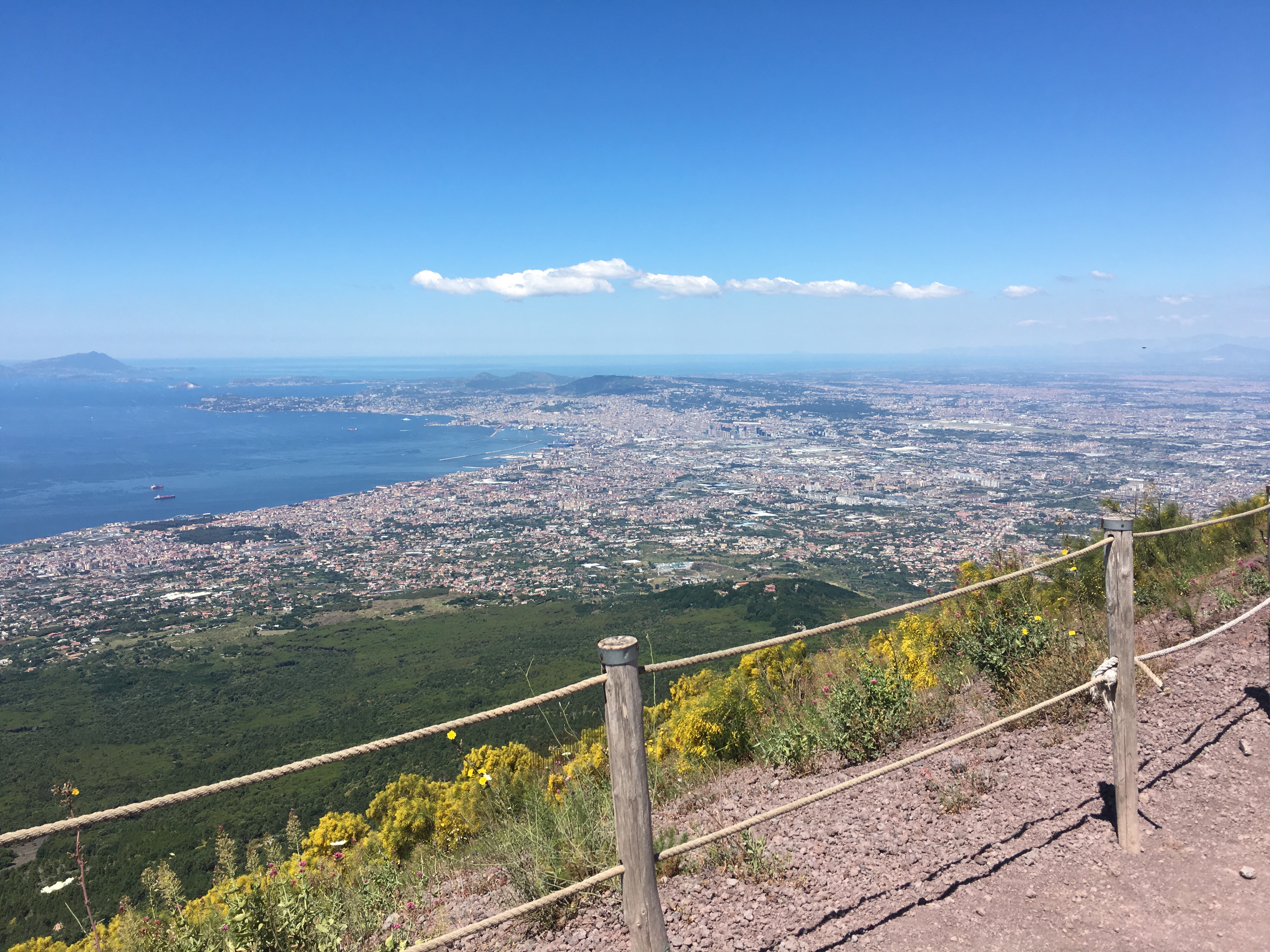
I say sprawling because Naples is today the most densely populated urban centre in all of Europe; some 8,500 people inhabiting one square kilometre in a metropolis of nearly four million people — making it the third largest city in Italy, and the ninth most populous urban area in the entire European Union.
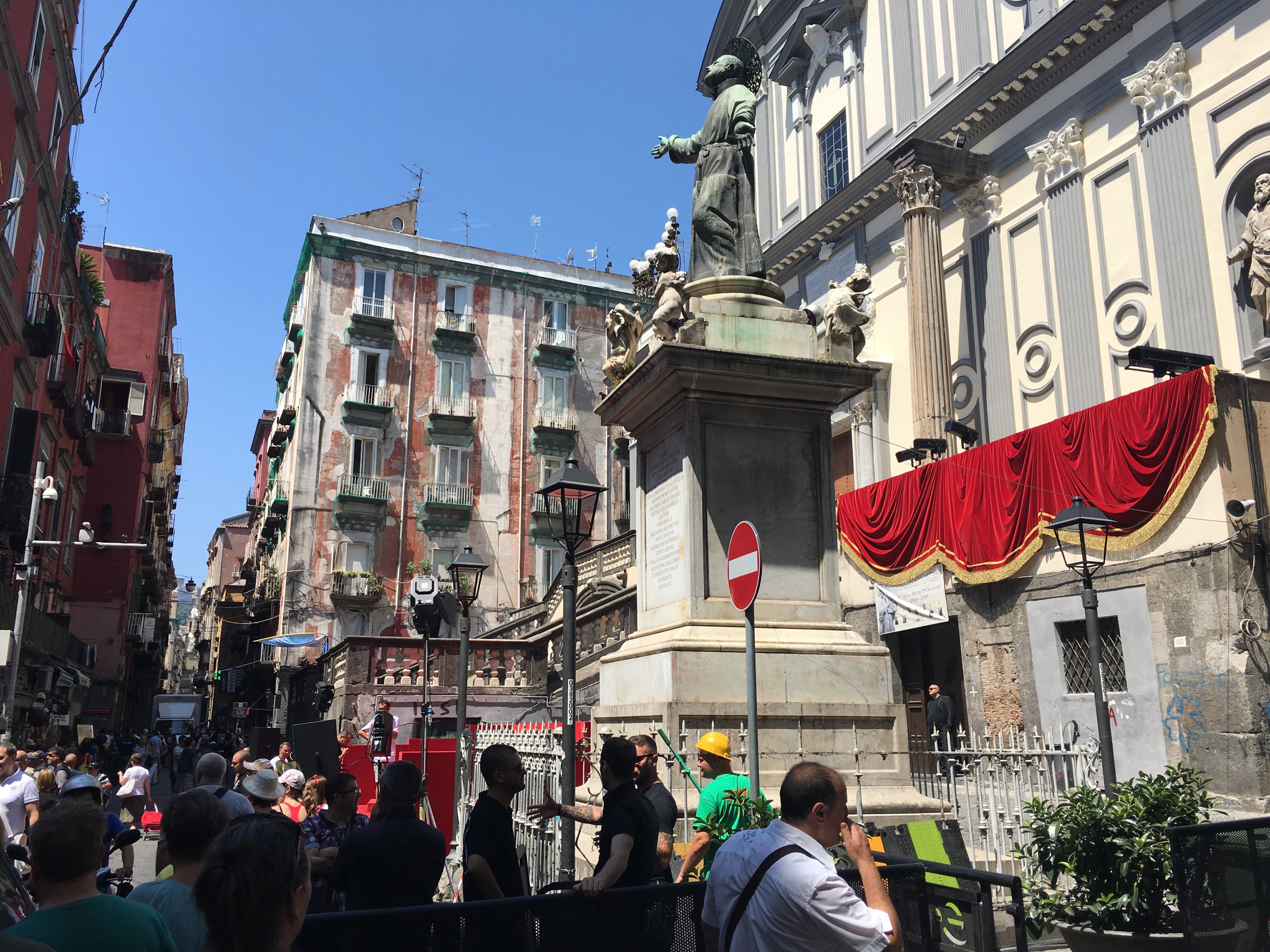

The noise was overwhelming: the hustle and bustle of pedestrians, car horns beeping, motorcycles and mopeds buzzing, shouting street vendors, impassioned conversations, two-toned emergency sirens, barking street dogs, screeching tires.

In conrast, the neo-Gothic styled ‘duomo’ in Naples offered a welcome break to this outside clamour. 

The expansive interior spaces of this main cathedral embraced silence and only hushed speech. You could occasionally hear the squeak of rubber-soled shoes and someone dropping a book on the stone and marbled flooring as people sat and wandered solemnly throughout the holy spaces.

Perhaps the most significant feature of this cathedral is the baptistery, which is the oldest baptistery in the world, built in the fifth century, C.E. It is remarkable to connect with such an ancient symbol in a material form. 
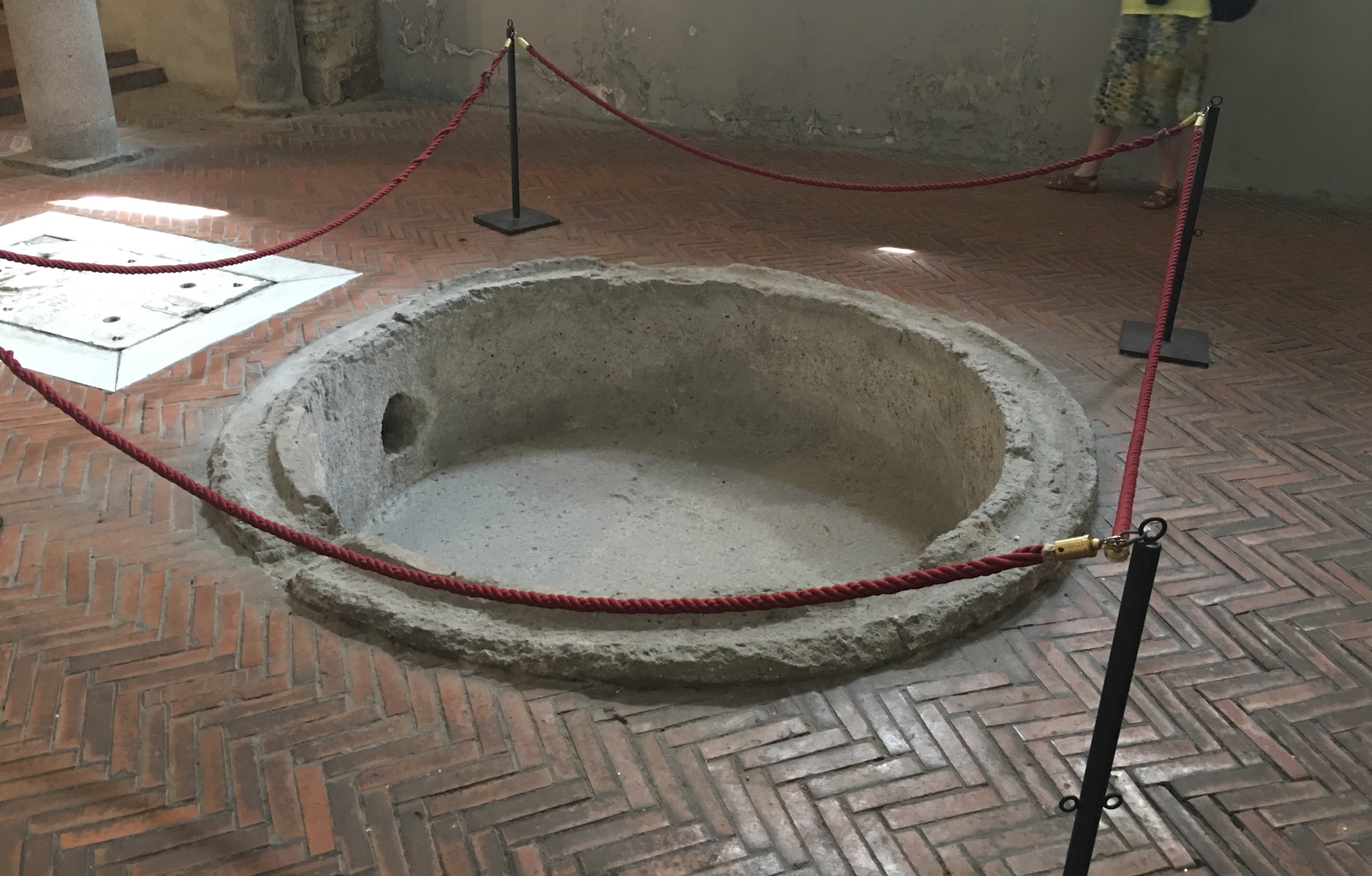
When the baptized emerged from the water, looking upward at the ceiling, they would be encouraged in their faith; the first images they saw after being baptized were scenes from the Gospel expressed in Byzantine, mosaic art: Jesus saving Peter from drowning, the women at the empty tomb, the miracles of the multiplied fish, an image of Saint Paul, the Apostle, etc.

Seeing with my own eyes and touching with my own hands this font that was built by human hands only a few hundred years after Jesus, affirmed my conviction in the longevity and validity of the sacrament which has endured as profoundly meaningful for Christians throughout the millennia. 

I felt that faith is not just about the good old days when I was young, but the good old days when the Christian faith was younger. We are part of something much larger than our immediate reality. And, when we connect with that broader history, we realize it wasn’t always peaches ‘n cream and rose-coloured a history.

If you are movie watcher, you might recognize another cathedral we visited — the Duomo in the Umbrian, medieval town of Orvieto. 


This cathedral was featured in the opening scenes of Under the Tuscan Sun. This cathedral’s highlight is the Chapel of San Brizio, featuring Luca Signorelli’s brilliantly lit frescoes of the Day of Judgment and Life after Death. 

Although the frescoes refer to themes of resurrection and salvation, they do so through images not from the bible (that is, stories from the Gospels or Old Testament) but from the turbulent political and religious atmosphere of Italy in the late 1400s. Signorelli told the story of faith through his contemporary human events, rather than the traditional symbols (such as Jesus, God, the Trinity, the Apostles, disciples and other biblical characters) that we see in most other places.

Those frescos in the Orvieto cathedral chapel were snapshots of an historical era particular to a specific time and geo-political reality (i.e. 15th century Italy). And the impression of faith put ‘on it.’ Historical to us. Yet current to those who built that Cathedral in the Midlle Ages.

Faith is more than merely appealing to our past. Coming to worship today is not just about being reminded of something or someone from a long time ago. What we do here today is not just an exercise in recalling historical facts. As if decisions we make today are really not about faith. When we talk about our building renovations, worship practice and art, musical choices, communion, budgets, outreach initiatives  — these issues are very mcuh about the Christian faith ‘in the real world’, so to speak. All of these real things do reveal what we believe in, our values, what is important to us, who we are. How do these ‘mundane’ decisions reflect the Christian Gospel, faith, kindgom values in this time and place?

Lutherans make a similar mistake, I believe, when we define ‘Lutheranism’ as a belief/doctrinal system that is limited to the words and conceptual formulations of sixteenth century Germans. When we say that to be Lutheran is merely to ‘turn the clock back’ to 1537 when the Book of Concord was finally assembled including Luther’s Small and Large Catechisms, the Augsburg Confession, and the Apology to the Augsburg Confession.

I prefer a view that is reflected in the Evangelische Kirche Deutschland’s (EKD) logo for 2017, “Celebrating 500 years of Reformation”. Five hundred years of Reformation. In other words, Reformation started happening — in our tradition — with Martin Luther, yes. 

But, Reformation continued through the 500 years following, and continues to this day and beyond. We are always reforming the forms and means by which we express our evangelical, Gospel-centred faith. Always finding new and creative ways to tell the story of God.

What can we say, then, about Christian history? If we can apply a macro view over the ages, we can say that the history of the Christian faith is about a God who loves us. Christian history is about a God whose compassion never fails, who “will not come in wrath” (Hosea 11:9) — even though the people of God continue to keep “sacrificing to the Baals and offering incense to idols” (v.2).

The history of the Christian faith is about our lives being “hidden with Christ in God”, being “revealed with Christ in glory” (Colossians 3:3-4), dying daily to ways of sin and being renewed daily in Christ who “is all and in all!” — even though we are imperfect and sin as long as we hold breath. Christ is all and in all — despite us!

The history of the Christian faith is about how each moment of history — including this one right now — reflected Jesus’ love in the fifth century, the fourteenth century, the 21st century in Palestine, Egypt, Italy, Canada, etc. God for all times and places!

We validate the Christian faith by our lives today, now. This is where the rubber hits the road. This in-the-moment approach fuelled the generosity of medieval Catholicism represented in the magnificent building projects for worship as much as it did the passion and commitment of European Christians during the Reformation era.

We do not leave the practice of faith for some distant, utopic and dreamy future. Neither do we rest on the laurels of the tremendous sacrifices made by our forebears in Canada. 

Now is the time. Now is the time to live out of the conviction of God’s grace and love, despite the many and various ways Christians have messed up in history, and continue to do so today. Now is the time to live out of the faith that is full of hope, that despite our waywardness and unfaithfulness, God is faithful. Now is the time to claim God loves us, not because we are good, but because God is good. God is so good!

You know Jesus’ familiar exhortation, most often translated as “be perfect as your heavenly Father is perfect” (Matthew 5:48). Christians have often interpreted this word ‘perfection’ as being made whole. 

A much better translation might be: “be merciful.” Because this verse comes right at the end of a passage calling Christians to “love your enemies” (v. 43-48). Only God is perfect. But we can participate in God’s perfect mercy, God’s all-inclusive and impartial love.

Echoing Saint Paul’s words from the Epistle today (Colossians 3:11 — “Christ is all and in all”) St. Bonaventure later said, “Christ is the one whose centre is everywhere and whose circumference is nowhere.” [1] 

Christ’s mercy is everywhere evident in history. This is the Wholeness, the forgiveness, the grace, that holds you forever and everywhere. You can’t figure this Wholeness out rationally, nor can you control it. All you can do is fall into this Wholeness that holds you when you stop excluding, even the dark parts of yourself. [2] And that, my friends, is the Gospel — good news — for all times and places.

Thanks be to God!

1- Alan of Lille, ‘Regulae Theologicae’, Reg. 7 as quoted by Bonaventure, translated by Ewert Cousins, “The Soul’s Journey into God”, Classics of Western Spirituality (Paulist Press: 1978), p.100

2- Richard Rohr, “Daily Meditation on the Spirituality of Imperfection” Week 2 – Perfection of Wholeness, Thursday, July 28, 2016

Funeral sermon for an astronomer

Read Psalms 136:1-9 & 19:1-8

Rolf worked at many things. My impression is that he accomplished so much. Rolf was always on a project, whether clearing large rocks off his land, growing grapes, gardening, building structures, star-watching and -tracking.

His scientific mind, inductive reasoning and clarity of thought all translated into a degree of productivity not many of us will ever achieve. His gentle, methodical approach to his work reflects a state of mind that mirrors the great, spiritual giants of history.

Yes, spiritual.

Often science and religion have been pitted against each other in the philosophical and doctrinal wars of the contemporary age. And yet, in the lives of common people, we can begin to see that the two are not opposites in the seesaw battle for truth. Science and religion, in all truth, go hand in hand.

Some argue that besides the bible, no other book has likely influenced the course of western history more than the Rule of Benedict from the sixth century of the Common Era. Only some 13,000 words long, The Rule outlines instructions for the monastic tradition including prayer and work. In The Rule, Saint Benedict ordered the monks not only how to pray the Psalms, but how to work.

This work involved primarily manual, physical labour — fixing things, gardening, building. This work also evolved, happily, into artisan endeavours — wine-making, beer-producing, food preparing, and the such. Finally, the intellectual work of scribing and reading.

With singular attention focused on one task at a time, work becomes a contemplation. Even, you could say, a prayer. When it is done with joy and thanksgiving in each given moment. When we are present to our work, it is an offering of the natural rhythms of life, unfettered by distraction and self-consuming narcissism, which is often characterized by the demands and expectations of a hurried, anxious immediacy.

We remember and celebrate a precious life today. We recall moments that reveal a story of a person who reflects some of the best of what life and work is all about. Creation is indeed beautiful. God did good! And it will take eternity for us humans to begin to even scratch the surface of the brilliance and wonder of all that is.

The spirit of expansion, I would say, characterized Rolf’s life — a moving outward to include all, to embrace all, to reach to the farthest limits of all that we can know in God’s creation.

When Rolf was baptized at St James Anglican Church in Gatineau a few months after his birth, he was not only baptized into that particular faith community. His baptism signified his connection to the vast communion of saints. This community of faith spans the globe in all times and in all places. His baptism connected him to what Christians often call the ‘Body of Christ’ which has many members and includes all the baptized around the world: Starting here in the Ottawa region, and expanding outward.

In the funeral liturgy, one of the traditional prayers acknowledges the ‘mystical communion’ we all share in the Body of Christ. It speaks to the connectivity among all creatures.

Rolf’s passion for astronomy demonstrates this expansive spirit beautifully. The stars, of course, symbolize the mystery of heaven and God, and our human yearning for the unknown to become known. To connect to this great mystery, Rolf built his own observatory in the backyard of his house. 

And in 2005 he took a superb photo of Mars, his favourite planet. This image, which you see displayed here today, was possible because in 2005 Mars was in a close approach to earth at a high elevation — which means the angle at which viewing the red planet from the earth’s surface was exceptional.

Apparently Mars doesn’t behave like this every year. But in 2016, this year of Rolf’s death, Mars has again dipped close to the earth. Almost as if it was coming in to scoop Rolf up and connect his spirit once again to the vast universe, where now Rolf can see with his own eyes the expansive realm of God, whose love, mercy, and grace knows no limits.

Although we grieve a particular connection we have known with Rolf on earth these past six-plus decades, we touch today on the truth of the eternal connection we share with Rolf, all people, with all of creation and with God, forever.

Thanks be to God.

Bread for all

After the old doctor died, his sons emptied the house in order to sell it. In the living room on the shelf above the fireplace they found a box with a slice of bread in it.

It was dried up hard and obviously had sat in the box a long time.

“He really kept every thing!” said one of the sons amazed. The doctor’s assistant who worked for the doctor for many years stood beside the sons silently. And then said: “Let me tell you the story of the slice of bread:

“You know that after the war your dad became very ill. He was weak, and near death. A friend, who had visited him told him, ‘If you don’t eat enough to regain your strength, it looks very bad for you.’ But where was one to get enough to eat? Everyone was starving. Many simply cooked potato peels and considered it a rich soup.

“The friend returned after some hours and brought some bread. Where he found it, he didn’t say. Surely he must have paid a fortune for it.

“But your dad did not eat it,” continued the assistant. “Your dad told me to take it to the neighbour; their daughter had been ill for a long time too. ‘I am an old man already who does not need the bread as much!’ your Dad said. ‘Take it to the neighbours!’

“As it later turned out, the neighbours did not eat it either, but passed it on to a family of refugees with three little children that lived in a small shack in the backyard of the neighbours’ house. They were overjoyed for they had not seen bread for more than three months. 

“But as they were about to eat, they remembered that the doctor, who had helped their children at no charge when they had been struck by a dangerous fever, was ill and weak and really needed something that would make him stronger.

“So when the bread came back after a day,” said the assistant, “we recognized it at once. Your dad was in tears, as they found out about the wandering piece of bread and where it had been.

Your Dad had said, “as long as there is love between us – I am not afraid about anything, not even dying”. So he divided it evenly and sent me out again. His share he kept; he put it in this box to always remember what had happened.”

The three children took the old bread, broke in in three pieces and decided to keep it in order to remember the story, to tell it to the next generation, and to teach them about the power of love and the wonder of sharing.

Something like this can only happen when there is a communal consciousness — more than one person that participates in a community of love and trust. That all will have enough. That all will benefit. That the needs of the whole outweigh the needs of the one.

This is the Gospel call. The kingdom call. Not for individual enlightenment or edification. Not for our sake alone. Dear Confirmands, your baptism as a baby was not valid on account of your own individual strength or decision. It was the community — your parents, sponsors and everyone in the church long ago — whose faith surrounded you at your baptism. Even your confirmation is not done for your own sake — but for the sake of others around you.

And that’s why you participate in leading and assisting in your own confirmation service: To practice this truth, that affirming your baptism is a call to deeper commitment in the life of the church. You may doubt the strength of your faith. That’s ok. In fact, I would be worried if you didn’t. God can work with just a tiny bit.

I must admit when we planted that tiny four-inch tall spruce on church grounds last Fall, I didn’t have a lot of hope that it would survive the winter. This was our first tree planted in response to the Reformation challenge for our national church to plant 500,000 trees by the end of 2017 — the 500th anniversary of the Reformation. It was a small tree. A humble start. Could it live, and even bear fruit? I had my doubts.

For one thing it was exposed, and not easily visible, to the many pedestrians that use this property to cross through and the many children who play in this space. For another thing, since receiving the sapling, I had not seen signs of new life on it. So I wasn’t sure it there was anything new to come out of it.

I was in for a pleasant surprise. Throughout the coming months, our neighbours put a tall chicken-wire type fence around it and staked it. We watered it. People walked around it. God took care of it over the cold winter. And voila, look at the new shoots of life sprouting now! There is hope.


It does take a community committed to sharing, committed to kingdom values, and the Gospel of Jesus Christ. Today is just as much about celebrating the church of all times and places as it is about our part in the kingdom of God on earth. We are not loners on this path. We don’t walk by ourselves. It’s not all up to us, individually. 

It’s amazing to see the fans of “We the North” cheer on the Toronto Raptors as they advance through the NBA playoffs this post-season. They are true fans who gather in “Jurassic Park” outside the ACC in downtown Toronto, even during away-games in the pouring rain. You might say, they are ‘fan-atics’ of their team. 

Yes, fans can be fanatics — exuberant, dedicated, passionate, sometimes even over-the-top. Imagine the fans in heaven — the faithful gathered as the grand host of heaven, cheering you on this day. These may be your loved ones, long gone now, or recently died. These may be the saints throughout the ages. These may be other Christians not here today yet praying for you nonetheless. These are your fans of faith. Fans. Fanatics. Fantastic!

You are not alone, making this decision today. Pentecost, and Confirmation Sunday, is also about trusting in God’s initiative, God’s work, God’s love and mercy. Through the Holy Spirit God comes to us in so many ways we sometimes don’t even recognize. 

In a few minutes, God comes to us in bread. This bread, the body of Jesus, is broken bread. It is broken from the One, so that all may eat. There is always enough for all, for the sake of our broken lives in this broken world that God so loves.

Better is not what you think

What happens when doors close and we don’t see other doors open? Life is full of closed doors: unemployment, failure to graduate, illness, tragedy, lost friendships, divorce — the list goes on. What happens when you are stuck in the middle of that transition and can’t see a way through? For whatever reason, doors close. The fact we sometimes don’t know why may make it harder to take.

Paul wanted and “attempted” to go to Asia. The lectionary doesn’t include the verses (6-9) immediately prior to the first text today (Acts 16:9-15). For some inexplicable reason, the Holy Spirit “did not allow” Paul and his cohort to travel there. A door is closed. 

But you’ve heard the cliche: When God closes a door, another one opens. Which is, presumably, a better deal.

After the door to Asia, and Paul’s ‘wants’, closes, he then goes to Macedonia after a convincing vision and on to Philippi where he meets Lydia. The result of their encounter is that “she and her household were baptized”. Good things happen. This open door was a successful mission. Even though, originally, this mission-field was not for-seen, planned, even desired.

The church finds itself in an uncomfortable situation these days. The glory days of ethnically-defined church planting and building are long gone. We still yearn for those good-old-days, the hey day of the kind of church we still try to maintain when Lutherans from Germany were streaming off the boats, church budgets were growing and pews were filled. For the institutional reality, it feels like a door is closing. And we don’t see a clear picture of what it is changing into.

It’s not a comfortable place to be, when doors close. Where’s the open door?

Earlier this year a couple members of a Lutheran church in Southern Ontario, decided to partner with a neighbouring church to organize a refugee sponsorship initiative. They complied with all the regulations, began a fundraising appeal, and the word got out.

Before long they had attracted fourteen people from the community to work alongside them. They found unprecedented success at mobilizing resources and motivating people to help. Tens of thousands of dollars was raised in no time. An apartment was secured and furnished without problem. A Syrian family was on the way.

The Lutherans on the committee made sure their own congregation was brought up to speed with regular reports, appeals for help and updates. To their surprise, and dismay, all but a couple on that growing committee were members of their church.

The gentleman who had initiated this refugee work lamented to one of the Synod staff who was close to the community, “What’s the point of doing all this work, when the people working on the committee don’t come to church on Sundays and put offerings in the plate?”

“Are others aware you are a Christian from a local congregation?”

“Are people being helped?”

“Is good coming out of all your efforts?”

“Are you doing this from your conscience as a Christian?”

“Do you feel God is calling you to do this work?”

All these questions were answered in the affirmative. So, what’s the problem? Maybe a door is closing, and maybe another has opened? It just isn’t what we may expect or think we want. The Holy Spirit is active in the world and among people. The question is, are we willing to walk through that open door? Congratulations to that Lutheran who took the initiative to do something when there was a need.

When a door closes, it can feel like you are unprepared for whatever may be. In life transitions, especially, the in-between ‘close door / open door’ time can be unnerving. When a baby is born, for example, no manual comes out with the baby. Being a parent is feeling your way to make decisions with each passing moment. Preparation — you can throw that out the door!

Of the top three major festivals of the church year, the Day of Pentecost comes up almost unexpectedly. Did you know it’s two weeks from today? Unlike Christmas and Easter which have long weeks of preparation (Advent and Lent, respectively) leading up to these high, holy days, Pentecost does not.

We only have Jesus’ words in the Gospel of John (14:23-29) to his disciples, these days, preparing them for his departure. And giving the promise of the Holy Spirit.

Occasions like this should be sad, unnerving, disquieting, too sudden. And, on some level, it is. It cannot be denied. After all, the disciples will no longer have Jesus physically present with them any more. In a way, they are losing something precious and dear to them: their leader, their confidant, their friend. The common reaction to a loved one’s leaving is sorrow and despair. We can understand. Sympathize.

And yet, Jesus tells them to “rejoice” that Jesus is going back to the Father. Be glad, that Jesus is leaving them? It doesn’t make sense. Be glad, that you are going? – You can probably hear the disciples murmur under their breath, trying to figure it out.

In coping with his absence, Jesus nevertheless gives them something even better. The door of his physical presence is closing. But another, better door, is opening. This is unexpected, never-before-seen, and unplanned (from the disciples’ point of view):

After he leaves, Jesus’ presence will be within them: Earlier in this chapter (v.20), Jesus says: “I am in my Father, and you in me, and I in you.” Through the gift of the Holy Spirit, they will have the power and the grace to do great things in the name of Jesus. “Very truly, I tell you, the one who believes in me will also do the works that I do and, in fact, will do greater works than these, because I am going to the Father” (14:12).

In order for the new door to open, the old door must close. The only way the disciples of Jesus can receive the Holy Spirit and do and be all that they are meant to be and do, is only after Jesus leaves them and returns to his Father in heaven.

The promises of God are rich. We may not see the outcome or how it will all turn out, in the end. Yet, it is true: Once a door closes, another will open. And it will not be what we think. It will be better!

Easter: Jesus on the loose, now!

A mother was putting her young, eight-year-old girl to bed one night. The girl, accustomed to saying her prayers as part of her bedtime ritual, said to her Mom:

“I want to die so I can see Jesus.”

Taken aback, the mother realized in that moment that everything her daughter had heard to that point about Jesus was about eternal life — how Jesus came to earth to save us from our sins so that after we die we will go to heaven. 

No wonder the girl, who had faith, thought that the only way to see Jesus was to die first.

Quick thinking, the mother put her hand in her child’s, looked her in the eye and said, “Jesus is alive. Jesus lives in you and in me. If you want to see Jesus, look for him in the people you meet in the church, in your school and wherever we go. If you want to see Jesus, sweet child, just open your eyes. And live your life!”

Jesus is alive, today. Right now. That is the message of Easter. And the foundation of our faith as Christians.
A few weeks ago the Jewish Rabbi who met with our confirmation class answered a question about who he thought Jesus was. His answer made me think. He said, “Jesus was and is a very important and significant person for Christians.”

I wondered if someone asked me, “Who is Jesus?”, what would I say? I think my first response would be: “Jesus is alive.” Not dead. Not just a great teacher who walked the earth over two thousand years ago and died a criminal on a cross outside Jerusalem. Not just a healer of the sick and prophet who spoke God’s good news to the people of his time. All those things, yes. But more. So much more.

You notice the traditional Easter acclamation is NOT: “Alleluia! Christ was risen! He was risen indeed! Allelulia!” He IS risen!

When we come to worship God, we are not just praising a man from the past, studying an important historical figure, or reading a great story from history. We are not just about being a bunch of ‘talking heads’ who like to debate religion, theology and doctrine, but go on living as if nothing really needs to change in our lives in this world, today. 

We cannot turn this great story of Jesus’ death and resurrection into a platitude that just makes us feel good on a holiday long weekend in Spring. There’s too much at stake. The Easter proclamation means something for our lives today. Our job is no different from the first disciples who met the risen Jesus.

Jesus, outside the garden tomb, had to shift Mary’s focus away from the past to the future. After calling Mary’s name, Jesus rebuffs Mary’s attempt to ‘hold on’ to Jesus as if he were the same as before he died (John 20:17). In that encounter with Jesus, Mary learns from her Teacher that she is being caught up into a larger drama that includes not only Jesus’ death and resurrection, but also his ascension — and beyond!

In other words, Mary learns that this is not merely a story about the re-union of friends with tears and hugs all around, case solved. It is about ultimate destinies: (1) Jesus’ and Mary’s — and the disciples’ destinies too. The story has not concluded; it is still unfolding. She must relate that to the rest of the disciples. Her story, and Jesus’ story, his experience and hers, cannot be anchored in the past. The story of Jesus, then and now, must move on.

That’s where our sights are focused on Easter morning. Where are we going? Where are you going, in your faith? The promise of new life in Christ Jesus means something special for you, now. It means something very special for the church, today. To live out of the Easter message, we must look forward, to where the risen Jesus awaits our following.

It seems so many people these days are reading Rumi, the great 13th century Sufi poet. Sufi described an image of a mirror in the hands of God. It fell, and broke into billions of pieces of glass strewn all across the face of the earth. Everybody took a piece of it, and thought at first they had the Truth — the whole Truth, and nothing but the Truth.

Let’s imagine that each shard represents a unique reflection of God’s being, God’s will, God’s presence. Let’s imagine that each piece of glass represents one who has faith. Each piece of glass reflects the beauty and light of God’s creation, manifest in the individual person or congregation — however you want to look at it.

God is, over time, restoring all the pieces back into wholeness, into the original mirror. God also seeks our cooperation in mending what has been divided. 

We are like that little girl who wants to see the face of Jesus. And is learning that we don’t have to wait until we die, to experience a fullness of the Lord’s presence. Using the words of the Apostle Paul, We may see as in a mirror dimly while we live on earth (1 Cor 13:12), for sure. But slowly, surely, God is also already at work reflecting the love, the light and presence of the living Christ in each and everyone one of us. Who in gospels was not changed after encountering the Lord?

We are, as Paul also describes, the “Body of Christ” (1 Cor 12:27), on earth. The tradition of Christianity since the Resurrection of the Lord has claimed that the church together is the Body of the Living Jesus. We are the living representation of Jesus on earth. As Martin Luther stated, in our baptism we are “little Christs”. 

Jesus is on the loose! Jesus can show up as a cashier in the grocery store, the young man who changes the oil in our car, a coworker in the office, our doctor, a good friend or even our spouse, child or grandchild. You may even find him looking back at you in your bathroom mirror! (2)

Paul concludes, “All of us … are being transformed” (2 Cor 3:18). God is already at work, in the power of the resurrection, healing what has been broken, bringing together what has been divided, restoring to completion a glorious transformation of our very lives. This is our hope. This is our Easter joy.

Alleluia! Christ is risen! He is risen indeed! Alleluia!


(1) Gregory A. Robbins & Nancy Claire Pittman in David L. Bartlett & Barbara Brown Taylor, eds., “Preaching the Revised Common Lectionary: Feasting on the Word” WJK Press, Kentucky, 2009, p.377

(2) Sr Bernadette Gautreau, “Jesus is Loose!” in Holy Week Reflections 2016 published by On Eagle’s Wings, p.9

I am loved, therefore I am

During this season of Epiphany – which means ‘revelation’ – we will again uncover the identity of God made flesh in Jesus.

How will we do that? While Epiphany is a positive celebration of the meaning of the “Word made flesh” (John 1:14), this season also introduces an identity crisis swirling around Jesus throughout the centuries. It also confers that same identity crisis upon his followers. Who is this Jesus? And who are we?

Who is Jesus? It may comfort, or disturb, us to realize that even while Jesus walked the earth over two thousand years ago, those around him didn’t always ‘see’ him for who he was. Even at spectacular events such as the transfiguration or after Jesus performed miracles of healing, some confused him for the prophet Elijah who in the tradition was promised to return (Mark 9:9-13; Matthew 11:2-15). Some mistook Jesus for a political Messiah who was expected to liberate the oppressed Jews from Roman occupation of the Holy Lands (Matthew 21:1-11). And, even when Jesus appeared to his disciples after his death and resurrection, “some doubted” (Matthew 28:17). The scriptures do not hide this confusion about Jesus’ identity.

So Christians today need not be perplexed nor overly hard on themselves if they, too, struggle to understand this Jesus whom God announces at his baptism: “You are my Son, the Beloved, with you I am well pleased” (Luke 3:22). Paradoxical doctrines claiming that Jesus is fully divine and fully human, are not easy for the human mind to grasp.

Which suggests to me that to understand Jesus’ identity is not so much to get vexed and lost in doctrines about Jesus. It is rather to see what he does and listen to what he says. Brother David Vryhof of the Society of the Saint John the Evangelist writes, “If you would know what God is like, discover what Jesus is like. Listen to his words, observe his actions, notice his values and priorities, see how he lives his life. And follow him.” (1)

French philosopher and mathematician Rene Descartes’ famous claim, “I think, therefore I am”, is not helpful here. More appropriate for the Christian today is, “I do, therefore I am”. Or, better yet, “I am loved, therefore I am.” This latter statement especially reflects the values demonstrated in Jesus’ life. I am loved, therefore I am.

Vryhof goes on to tell a story by Soren Kierkegaard: “Once upon a time, there was a powerful and wise king who fell in love with a beautiful maiden who lived in his kingdom. The king’s problem was this: how to tell her of his love?

“He called for the best and brightest of his consultants and asked their advice. He wanted to do this in the best and most proper way – and, of course, he hoped his love would be cherished by the maiden and returned. But when all of his advisors had had their say, the king was left disappointed. For every one of them had counselled him in the same way:

“‘Show up at the maiden’s house,’ they said, ‘dressed in all your royal finery. Dazzle her with the power of your presence and with your riches. Overwhelm her with expensive gifts. What girl could resist? Who would reject such an opportunity, or turn away from such an honor? Who would possibly refuse a king? And if need be,’ they added, ‘you can always command her to become your wife.’

“But the king, being wise, was unhappy with this advice. He wanted the maiden to love him for himself and not for his position and power. Love freely given must be freely returned or it isn’t really love. Certainly, the girl could be impressed, even overwhelmed. And of course she could be coerced and might even ‘learn’ to love the king eventually. But the king saw that if he followed this counsel he would never know if she really loved him for himself or simply for the comforts and privileges that queenship offered.

“So the king decided against the advice of his counsellors. He chose instead to strip himself of his glory and power. He put on the clothes of a poor peasant and walked to the maiden’s cottage to declare his love for her.” (2)

This story by Kierkegaard parallels closely the meaning of Christmas — of why Jesus came, and what kind of person Jesus is — “who, though he was in the form of God, did not regard equality with God as something to be exploited, but emptied himself, taking the form of a slave, being born in human likeness” (Philippians 2:6-7). 

Who is Jesus? Jesus is God in love with us, and in us. And how do we know Jesus lives with and in our lives today? These questions lead to: Who are we?

We are who we are because of Jesus’ love for us. We are beloved, because of what God did in Jesus. Therefore, we are given the gift of God’s presence in Christ through the Holy Spirit. We have it in us. Yes, we do! And we exercise that gift in relationship with others. Who we are with, with whom we spend most of our time, where we commune with others — these are vital questions of spiritual, personal growth.

Who we are in Christ also begs the question of our nature — our growth, our changing, our transforming: Do we change? Can we change, for the better? Does being a Christian change our lives? Do you believe that?

I have over the years heard some argue that we do not change, really. We are locked in for life, the way we are, regardless of circumstance, regardless of where we are and with whom we live our lives. Nature. 

Others are more optimistic. On my good days I believe in the capacity of humans to change for the better. But this depends, I believe, on the quality of our relationships. Whether or not we change for the better depends largely with whom we spend most of our time. Nurture.

I believe most of us contain all the parts necessary for a healthy existence. Even a faithful one. At my baptism as an infant I believe God gave me the gift – the seed – of the Holy Spirit. At which times, or to which degree, that seed would mature and be expressed has depended largely on with whom I spend my time. 

Our families, our friends, our communities have a great influence over our lives. Because just by being with them, they will bring out of us the good and/or the bad. Their presence in relation to us hooks into some aspect of our life and pulls that aspect out. It is the quality of the ‘links’ between us that will determine what emerges from our souls. The old adage is true: “Show me your friends, and I’ll know who you are.”

Which also signifies the importance of hanging out with Jesus, in prayer. Jesus is integral to our relational world. Being intentional is critical here. The more you spend time with Jesus in the Body of Christ – the church, the more you spend time with Jesus in prayer and contemplation, the more you connect with Jesus in his mission to care for the poor — all of these things will over time bring out the good that is already in you.

The bottom line message of Christianity is that all creation matters because of God’s creative love in Jesus. We are created each of us from the spilling out of God’s love to the world. Therefore we are. Therefore we do.

(1) Br. David Vryhof, posted on the front page of the website of The Society of Saint John the Evangelist (www.ssje.org) on Tuesday, January 5, 2016

(2) cited by Br. David Vryhof, “God Has Spoken to Us By a Son”, posted on December 25, 2009 on the website of The Society of Saint John the Evangelist (www.ssje.org)

An Epiphany reflection

Two kings stand amid the sand dunes under the star speckled desert sky dressed in their regal attire. Their camels peer over their shoulders at the third ‘wise man’ holding the hand of Frankenstein. Yes, Frankenstein. 

The two confront the third, pointing accusatory fingers at what they do not understand: “Right, we’ve picked up the gold and the myrrh … What on earth is THAT?!”

We know the story (Matthew 2) of the magi who visited the infant Jesus bearing gifts of gold, frankincense and myrrh. Yes, frankincense. 

We might have an idea of what gold is. But frankincense and myrrh? Basically, these are fragrant spices. But they are not the kind of gifts we would normally give anyone today, let alone a king or queen, president or prime minister. Because we are not familiar with these kinds of gifts, we get tripped up over the words and confuse them with other things. Today we know more about Frankenstein than we do about frankincense. Yet, in Jesus’ day, these were very special gifts.

Let me show you a gift I received this Christmas season. It is three bars of hand-made soap. One of the bars of soap actually has gold flecks in it, as well as frankincense and myrrh essential oils. It is called the “Gift of the Magi Soap”. I suppose there are other things about this gift that can remind me of God, the Christmas story, and the reason Jesus came to the world. 

For example, three bars of soap stand for the Trinity: God is the Father who created everything and everyone; Jesus is the Son who came to wash us clean from our sin; and the Holy Spirit gives us the strength to be the people God has called us to be — to love and care for all people. Of course, the three bars also remind me of the three wise men bearing their special gifts for the baby Jesus.

These days, we will not bring frankincense or myrrh to give to Jesus. Some may bring gold. But the point is not what kind of gift it is. It is that we are willing to bring something special from our own lives to give back to God. It is our offering, whatever it is — our love, our passions, our money, our time, our talents. Maybe even myrrh and frankincense, who knows? 

In this new year, let’s spend some time first thinking about what we can give to God. And then do it. We don’t need to be kings, queens, presidents or prime ministers to give anything of value to Jesus. Because in our baptism we are all princes and princesses in God’s kingdom. And, because our various gifts are important to Jesus and his mission on earth today.

Pentecost: A tangled mess

The tangled mess that is this long, electric cord takes me time whenever I cut the grass. I stand there pulling the ends through loops and ties, slowly unravelling the serpent-like wire until it stretches straight. Each time I cut the grass. Sometimes I am impatient and frustrated. But I do it time and time again. How can I resolve this problem of a tangled cord?
Sometimes our lives may feel tangled. In truth, our youth and those teenage years often may feel quite tangled, as you sort out sometimes messy contradictions and conflicts in your life — figuring out your sexuality, clarifying your vocation, discerning what you want to do “when you grow up”, finding your place in this world, and navigating the often bumpy road of relationships and friendships.
Dear confirmands, you are entering a most complicated, challenging and exciting period of your life. And through it all, your life may sometimes feel, frankly, a tangled mess. How to even begin un-tangling it?
Today, the colours in the church are passionate, powerful, fiery red, because it is Pentecost Sunday — the birthday of the church. It is the day we commemorate the coming of the Holy Spirit upon the disciples gathered in Jerusalem, in dramatic fashion I might add: Tongues of fire alighting upon peoples’ heads, and a sound like the “rush of a violent wind” crashing around them (Acts 2:2-3). Then, when the disciples address the diverse crowd in their native languages, Peter quotes from the prophet Joel describing what is happening in these “last days” — when God will show “signs on the earth below: blood, and fire, and smoky mist. The sun shall be turned to darkness and the moon to blood, before the coming of the Lord’s great and glorious day” (v.19-20). Indeed, we are seeing red!
Living amidst all this drama could feel kinda tangled, messy, chaotic. But, I thought being a Christian was supposed to be all neat and tidy, ordered and predictable, comfortable and nice. The coming of the Holy Spirit into our lives suggests something altogether different! Birthdays are supposed to recall who we are, our identity. How do we even begin un-tangling meaning and purpose of our existence as a church, from this crazy picture?
I purposely did not iron my red chasuble for today’s service to remind myself that following Jesus sometimes feels ‘dis-ordered’. And, I purposely left alone two small holes in this old, Pentecost garment to remind myself of something Saint Paul gets at in the second reading for Pentecost Sunday: “the Spirit helps us in our weakness”; and, that the whole creation, including you and me “groan inwardly while we wait for adoption, the redemption of our bodies. For in hope we were saved. Now hope that is seen is not hope. For who hopes for what is seen? But if we hope for what we do not see, we wait for it with patience” (Romans 8:22-27). 
What I often ‘see’ in my life are a lot of holes — many weaknesses. What I often see in other peoples’ lives are their weaknesses. What I often see is me trying so hard to keep my life untangled, compared to others. What I see is all my toiling and fretting and striving to make things right and straight. But, hope that is seen is not hope. If I pretend how good everything is — or ought to be — all of the time, that’s not hope. That’s just me toiling in vain pretending I will be saved by my own efforts.
You might have heard illustrations of some old cathedrals in Europe especially built with holes in the ceiling. They were built purposely so, in order to provide an ‘imperfect’ entry point for the Spirit of God to descend into the lives of the Body of Christ on earth — the church. The entry point of the Spirit of God is precisely through the imperfections, the tangled messes, of our lives — not through our vainglorious, self-righteous, pull-myself-up-by-the-bootstraps efforts. Remember, the Spirit of God helps us in our weaknesses. At ground zero. When on our knees we fall and confess, “I need help and I cannot do it on my own.”
We don’t find God by doing it right. God finds us by our doing it wrong. That’s not to say we ought to go out and try to sin. It is to say that when we find ourselves — as we all will — in moments of our greatest weakness, that’s when Grace happens, when we provide entry points through the ‘holes’ of our ego, our bravado, our pretences of ‘being right when everyone else is wrong’.
You would think that after fifteen years of home ownership and being the person who cuts the lawn in our household; and after ten years of cutting the lawn with an electric, corded, lawn-mower, I would have already figured this out and just purchased one of those roller-thingies for the cord. The strange thing is, I haven’t and after I am finished cutting, I still just crumple the cord and throw it into the garage on top of the mower.
Maybe that says something about the reality and truth of our lives. No matter how much we may grow, and mature — I would hope — over life, we are still stuck in some ways, and will still get into messes from time to time. Youth is just the beginning!
The scriptures for Pentecost are very clear that the disciples of Jesus did not ‘invoke’ the Spirit or earn God’s coming by saying and doing the right things. The Spirit came to them, freely, surprisingly and despite their weaknesses. And what is more, Saint Paul further specifies how that Spirit comes — when we do not know how to pray as we ought (v.26). Not a very impressive picture of humanity. And yet, God still has faith in us, and comes to us!
On the cross, as Jesus hung dying, he said, “It is accomplished” (John 19:30). The victory is won. In Jesus’ human suffering and death, he says this. Not on Easter Sunday, when we celebrate his resurrection. But the victory is won in the moment of God’s fullest identification with human humility, shame, vulnerability, weaknesses — at the moment of what signifies and is in reality our greatest defeat: death. There, “It is accomplished.”
Jesus, God, identifies with us in our tangled messes. In some ways — although this may not be comforting — being a teenager is the best time of our lives to know God, precisely because it is a time in our lives when we have permission to be most honest about the struggles of our identity and purpose in life. 
Even when you feel most distant from God. Even when you feel your faith is not ‘all there’, and you wonder if you have any faith in God at all. Even when you make a mistake, which you will. Being confirmed today is not a perfect ‘affirmation’ of baptism and faith you are making. And it never will!
These are the ‘holes’ so important that we acknowledge — not deny! — and we see as the entry points of the Spirit of the living God into our hearts. It is exactly at those moments of greatest vulnerability and honest weakness that Jesus walks closest to us: That was the purpose of the Cross, the accomplishment of the Cross. That in human suffering and entanglement, God’s grace and power abound. It is God who saves us. Not our work at being ‘good’ or ‘perfect’.
Traditionally during the liturgy of Pentecost, and specifically right after the reading of the Holy Gospel, the “Paschal” light is extinguished. You will recall that this candle was first lighted at the Great Vigil of Easter fifty days ago. And for each of the subsequent Sundays of Easter it has remained lighted — a sign of Christ’s living, resurrected and eternal presence.
Now it is extinguished. Would anyone suggest, why? Isn’t Jesus still alive? Where is he now? With the coming of the Holy Spirit into the church, and with Jesus ascended into heaven, the presence of God and Christ Jesus through the Holy Spirit alights in our own hearts. Through the ‘holes’ of our ego, in the imperfection of our lives, the flame of God’s Spirit washes over us in patience and in gentleness. The Spirit purifies and clarifies our hearts upon which God’s stamp still rests from our baptism. The Spirit encourages and reminds us of who we are and whose we are, forever, and no matter what.

It’s ok to fall (1): Jesus lets us

There’s a bouncy feel to the rhythm of Mark’s story-telling. I can track the Gospel of Mark on a chart in terms of highs and lows:

The highs are the remarkable, miraculous, inexplicable even sensational events witnessed by story-tellers. Beginning with the baptism of Jesus in the first chapter (v.9-11) — voices from heaven, clouds parting, dove descending.

Then, mid-way through the Gospel Jesus goes atop a mountain and turns into this divine, ethereal being before the disciples’ eyes (Mark 9:2-9). Giants from Hebrew history — Moses and Elijah — appear out of thin air, clouds roil and again a voice from heaven. And, in the last chapter (16:9-20), of course, the brief but significant mention of Jesus’ glorious resurrection from the dead. These are definitely ‘highs’.

The lows are a bit more tricky. They represent the down-side of Jesus’ ministry — the temptation after forty impoverished days in the desert, the scrutiny of the Pharisees, all culminating in the Passion of Christ: his betrayal, arrest, torture, crucifixion, death and burial. Some original manuscripts of the Gospel of Mark end on a ‘low’: “So [the disciples] went out and fled from the tomb, for terror and amazement had seized them; and they said nothing to anyone, for they were afraid” (v.8).

Talk about bouncy, like what often happens with the outdoor temperature when seasons change!

These lows are tricky, because, as we shall see, they are not really ‘lows’. At least, they are not the final word in the story of faith. There is always an upside past the low. The troubling truth is that the high will not happen without the necessary, preceding low. In other words, before we rise we must know to fall.

I told this story already once before but it bears repeating. It illustrates the point rather well. And it is a summer-time, water-play story — and my imagination goes there frequently at this frozen time of year.

I was learning to water-ski. In fact, it was the first time I ever tried it, at age thirty. Jessica and I visited with some friends who had a cottage on a small lake nestled in the Bruce Peninsula north of Owen Sound.

It was a good lake to learn on. Few cottagers, even fewer boaters. A quiet, round lake. And my friend, John who drove the boat, assured me that we would just circle the lake a few times and when I wanted to stop, just to wave my arm and he would bring me close to shore.

John’s family, gathered with Jessica at shore to watch me. They assured me that it was normal to fall the first time on skis. In fact, they said they didn’t remember anyone ever being able to lift up and out of the water the first time without falling, when the boat accelerated. I think my friends were getting ready for a long afternoon of fits, stops and starts.

Well, were they in for a surprise. Including myself. Well, not really. Because, darn it all, I would employ all my strength and stamina NOT TO FALL!!!!

I was sitting with my skis submerged in the water, when John hit the gas and I felt the first tug. I gripped the tow rope handle with all my power and pulled myself out of the water, and voila! I was skiing! I briefly heard the cheering of my friends on the shore behind me before we were out on the open water and the waves were peeling off the sides of my skis. I enjoyed it for a few minutes.

But then, my back started cramping up, and my thighs began to seize up. We were around the lake a dozen times before I fully realized I was in some incredible pain. But I never wiped out once! It wasn’t until afterward that I came to the conclusion — after impressing everyone, I think — that I never relaxed into the experience. I was so tight because I didn’t want to fall.

And yet, I needed to fall. I needed to just let go into the water to know how it felt. My enjoyment of the experience was dampened because of an unrealistic, and inhuman (I might add) expectation of myself. Even though I never fell waterskiing that first time, even though I was ‘perfect’ at it — have I ever wanted to go again? No.

When I recall, as a child, those times that I truly enjoyed playing in the water — it was those times whenever a huge wave caught me off balance and threw me head over heels onto the beach. Those were the times I jumped up and ran back in with glee. It’s the same thing with water slides, and why we will run back up the steps all afternoon long. There is something important about sliding under the surface of the water, losing control, falling into grace, letting go into the sometimes tumultuous waters of our baptism.

This is the first movement of anyone’s true, journey of faith. The pull of the current is downward. Austrian poet, Rainer Maria Rilke, writes: “How surely gravity’s law, strong as an ocean current, takes hold of even the smallest thing and pulls it toward the heart of the world … This is what the things can teach us: to fall, patiently to trust our heaviness” (cited in Richard Rohr, “Falling Upward”, Jossey Bass, San Francisco, 2011, p.153).

What I am learning over time is that we are the cause of our sinning more than anything or anyone else. Because it is natural to fall, from time to time. But we don’t allow ourselves, give ourselves permission, to do just that. We resist, deny, suppress this movement downward. Part of the Lenten journey, I believe, is to reflect on why it is we don’t allow ourselves to just let go into the arms of God, and simply trust.

Admittedly our human nature is such, that we would rather avoid the low and shoot straight for the high. I get that. It is also true, we are up against a giant. We build our lives up against the fear of falling. We are a success-oriented culture. We construct our fortress of security, we incessantly compare ourselves to others and measure our self-worth against some notion of success plastered on the front covers of magazines and echoed through the voices of our sports’ heroes and business tycoons. We are an upwardly mobile culture, valuing even yearning for this trending in our own lives. ‘Up’ is the only way to go! What else is there to do?

So, beware of this prejudice against falling before we start! I ask you to consider all these real and important concerns we have in our culture against falling — whether they are physical, emotional, spiritual — and hold them before you, carefully, during the coming “down” season.

The glorious, divine vision of Jesus is hard to explain. It is a miracle way beyond human understanding. We may say that this event was meant to encourage and empower Jesus for his coming journey to the cross. We may say that we need to be reminded again of the divine nature of Jesus. We may say that what this text tells us is to be obedient, and “listen” to, Jesus, the Holy One of God.

But I like how the story ends. Mark, in his brevity nonetheless, does take intentional note of the movement of the disciples with Jesus “down the mountain” (v.9). This is the sounding bell for Lent. We are now ready to begin the journey downward, into the valley. We are now on a downward trajectory.

And the real question is: What will we do with that? Will we distract ourselves even more? Will we intensify our addictive behaviour and buy more toys to keep the pain at bay? Will we pretend that ‘all is well’ when it is not?

Or, will we face our fears, confront our internal poverty and our crisis, with courage? And I say, with courage, because there is reason to hope when we stand on the edge of the abyss. There is reason to persevere through the fall.

In Matthew’s version of the story of Jesus’ Transfiguration (17:1-8), describing with even more detail than Mark all that happened in this incredible mountain-top scene, the disciples who go with Jesus to see this heavenly vision and hear the voice of God from the bright, overshadowing cloud — what do they do? “When the disciples heard this, they fell to the ground and were overcome by fear” (v.6). They fall to the ground. And not only that …

Jesus’ lets them. He doesn’t scold them for falling down by saying something like, “Hey, buck up; you are standing on holy ground before Elijah, Moses and my divine being! Don’t fall down and grovel in the dirt! Pull yourself together! You’re my disciples, after all! Show some respect!” No, he doesn’t.

Instead, Jesus let’s them be humbled before his divine presence. If but for a short moment, Jesus allows them their humanity. And then he says with encouraging, inviting words, “You don’t have to be afraid, get up” (v.7).

I hope you can join me in the coming Lenten journey, taking great comfort in the Good News of Jesus. I can almost hear Jesus’ loving voice whisper in my ear, next time I risk getting on water skis again, “It’s okay to fall, you know. You don’t have to be afraid.”

Back to the Future: Borderland spirituality

2015 is the year of “Back to the Future”, did you know? When Marty McFly, played by Michael J. Fox, travelled ‘Back to the Future’ in the 1980’s pop culture film, the year they went to, in the future, was 2015.

As a kid I enjoyed the movie, partly because the year 2015, at the time, seemed some unrealistic, arbitrary and irrelevant point in the future; the number only represented some distant benchmark unconnected to my present reality.

Today, 2015 no longer means some far-off, futuristic fantasy. It is reality, now. And if I watch ‘Back to the Future’ today, the movie represents more of an historical curiosity — I’m only looking ‘back’.

In faith, it’s like we simultaneously look back, forward, and both from the grounding of the present moment. Balancing all three is good theology. For its sesquicentennial anniversary, the Eastern Synod (ELCIC) employed the motto: “Remembering for the Future”. Celebrating an important event in the present day by integrating past with the future is important. And a good way to interpret the Bible.

But it an also cause dismay if we only insist on a certain, chronological ordering of events in an absolute kind of way. For example, at Jesus’ baptism in the Gospel for today (Mark 1:4-11) there is the matter of the Holy Spirit, which descends in the form of a dove upon Jesus (v. 8, 10). John the Baptist preaches that Jesus will baptize with the Holy Spirit.

But Jesus never performs one baptism in his ministry that we know of. And, according to the time-line of the Gospels, the Holy Spirit doesn’t descend on the church until after Jesus’ resurrection (John 20:19-23) and at the Day of Pentecost (Acts 2) — these Holy Spirit events do not occur during Jesus’ ministry of healing, teaching and praying on earth. Curious, since many understand Jesus’ baptism as his ordination or commissioning to his call as the beloved Son of God. How do we make sense of this?

To understand many of the stories we read, like the Gospel for today, we would do well, I believe, to employ a ‘Back to the Future’ hermeneutic. This way of interpreting does not deny the truth of all of the events outlined above. For one, it reveals something about how the bible was put together:

The actual writing of the New Testament was done decades after these events took place. Therefore, we say, that we, today, are ‘post-resurrection’ Christians. We can best understand what happens at Jesus baptism from the perspective of the future. Because when these stories were written down for the first time, and from today’s perspective — the Holy Spirit has already come. Jesus is alive. Even as we recall, as a matter of history, what happened in the moments of Jesus’ life on earth some two thousand years ago.

And it’s not just a pointing forward that we need to keep in mind. It is a reverence and respect for the past.

If you look at the geography of the Baptism of our Lord, we can conclude at least a couple of things: First, it takes place in the wilderness, the desert. That is through which the river Jordan runs, basically north to south separating lands that are for the most part destitute, rugged, dangerous even.

Second, that river forms a boundary between two worlds — on the east and south, the world of the ancient Israelites tracking through the desert for decades on their way to the Promised Land flowing with milk and honey, which is on the other side.

John the Baptist comes to this border land, which is significant in the history of the prophets. In fact, John the Baptist stands in line with the prophets of old. His speeches are associated with Isaiah (Mark 1:1-8); he is also mistaken for Elijah because of what he wears (2 Kings 1:8) and because he foretells of the coming Messiah (John 1:21). John’s presence and ministry at the Jordan River in the wilderness brings the past (an identification with history and the prophets) together with the future (Jesus Christ, and the coming Holy Spirit) together into the present moment.

How can we keep ourselves from getting lost and totally confused in the plot line of “Back to the Future?” We remain grounded in the present moment. We look to our immediate surroundings. Like the beasts of the field, we scuff the earth with our heal, and snort and spit, before we look up.

And this is the beauty and wisdom of these Scriptures: their insistent if not peculiar emphasis on details. Yes, God acts in creation. Yes, God redeems sinners. Yes, God has a plan for salvation.

But this ‘spiritual’ talk is always, in the Gospel, tied to material — real water, real bread, real time, inexpensive wine, locusts, honey, sand, camel’s hair, wind, birds and the clouds being rent asunder. This is the nitty-gritty of life, and it can never be separated from matters of the Spirit.

Keeping grounded in the present awareness of life, ‘as is’, helps us track the sometimes confusing plot-line of ‘Back to the Future’. Because it is there that Jesus stands — on the borderland, at the edge of the Kingdom of God. Jesus stands there, and invites us to live into the now-and-not-yet reality of it (Ted Smith, “Feasting on the Word” WJK Press, Kentucky, 2008, p.239).

The Gospel of John identifies Jesus as a ‘lamb’. T.S. Elliot describes Jesus as a ‘tiger’. In C.S. Lewis’ ‘Narnia’ books, Jesus is personified in Aslan, the ‘lion’. Nancy Rockwell, in her post, “Tracks” (blog: The Bite in the Apple) suggests the ‘camel’, for Jesus who identified with lepers and prostitutes, difficult people, estranged members of right society, people who are spat upon. All these images for Jesus throughout history reveal unique elements about his truth.

But, standing in the desert beside John the Baptist, Jesus identifies with the lowly who are on a journey of transformation. Jesus invites the lowly in us to go on a journey that does not reject the past, and tradition, and history but doesn’t allow us to remain stuck there. Because this journey through borderland brings us eventually into a land flowing with milk and honey — a land of healing, restoration and justice for all who seek these gifts of the Holy Spirit.

This means that we cannot use our tainted and troubled past as an excuse for not doing the right thing, now. At the same time, we cannot wait until an ideal future when circumstances are perfect to do the right thing, now.

Back to the Future brings the present moment into sharp focus. A good theology will always ask, “What is going on right now in my life and world?” “Who do I meet today?” And act, now, accordingly. A spirituality of the borderland will always draw my attention to the divine importance of the present moment which is supported by history, and hope-filled for the future.