Building for Christ – Part 3

Harbour Breton, South coast of Newfoundland 2021, photo by Simon Lieschke
“Building for Christ – Part 3” audio sermon by Martin Malina

They had a vision. But perhaps it wasn’t quite the way they had expected it to turn out. But was it worth the risk? Now that is the question.

They wanted fireworks for the wedding reception. When we arrived a couple days before the wedding at our friends’ home, the father of the groom opened his shirt at the table. And with jaws dropped, we saw a large, purple bruise circling most of his chest area. What happened?

The groom wanted fireworks in the backyard where the wedding was going to take place the next day. In setting it up the night before, the groom, brother-in-law and father were careful to follow the instructions. Except they must have missed something. 

Beause when they tested the fireworks, the riggings exploded and the fireworks shot out in every direction but upwards. The groom and brother-in-law dove for safety to avoid the flaming projectiles. But one hit the father in the chest with force and knocked him over. He was fortunate not to have sustained greater damage to his body!

Was it worth the risk? That is the question.

On some Advent wreaths, the third candle is pink because rose is a liturgical color for joy. This third Sunday of Advent is called “Gaudete” Sunday, from the Latin, and is meant to remind us both of the joy that the world experienced at the birth of Jesus, as well as the joy that the faithful have reached the midpoint of the Advent journey.

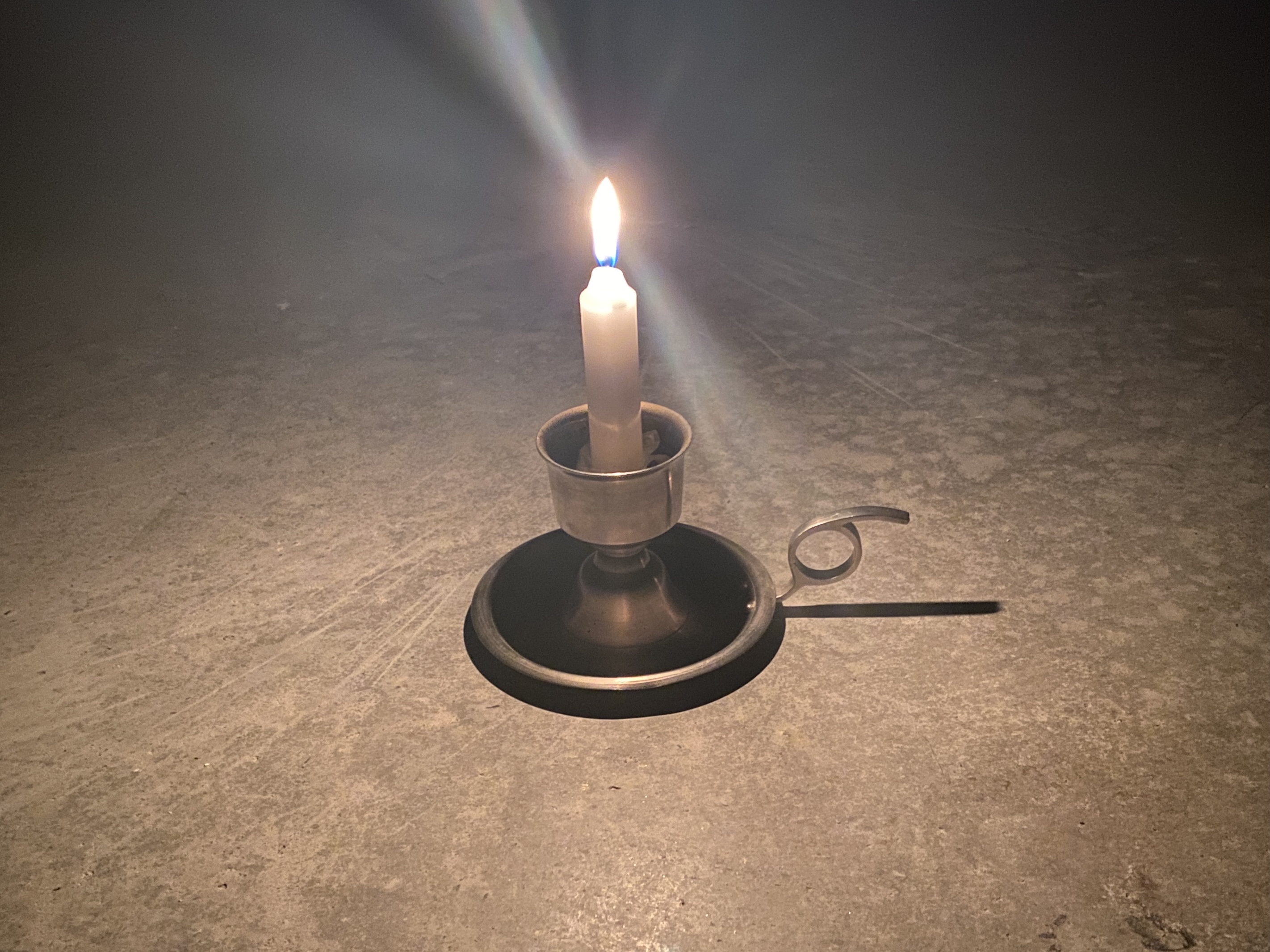
Today, we place a star over the open frame of the house built on love, for Christ. The star of Bethlehem gives light, a shining beacon in the dark night. And so the candles are lighted, now three of them on the Advent wreath. We begin to notice the light that is given off. After all, an Advent wreath isn’t really doing its job unless the candles are lighted, showing their albeit tiny flames.

It is the Sunday of celebration, not unlike the fourth Sunday in Lent called “Laetare”. In all our preparing, keeping on track, and our work we now anticipate and expect the end of the journey which is near! So, what do we do now that we are almost there? Waiting, after all, is so difficult.

The crowds asked John the Baptist, “What should we do?” now that the Messiah was very near, closer than they thought! With all the upheaval, fear and anxiety about the future, what to do, whom to trust? Is John the Messiah? When the big picture seems uncertain, and society as a whole feels like it’s on the brink, what do we do? “As the people asking John the Baptist were filled with expectation”[1], so are our hearts. What should we do in this short time before Christmas?

Gaudete and Laetare both mean “Rejoice!”. But some suggest a subtle difference.[2]  First, this work happens on the inside of our lives. This is the work of Gaudete. This work is self-reflective. We examine our own expectations. We consider our own desires and acknowedge our own restlessness. What are we waiting for? What are your desires this Advent? How is that you expect Jesus to arrive in your life this Christmas? How are you watching and waiting? These are important Advent questions to ask yourself.

But what is the outside work—Laetare—from which we pause to celebrate? What is it that keeps our noses to the ground, so to speak, and hands in the dirt, to get ready, spiritually?

John the Baptist gives practical advice if not delivered with much fire and brimstone. John tells them: Give what you have to someone who doesn’t have. Share what little we have with others. Be fair and just in your daily transactions. Don’t threaten anyone. And be content with what you have.[3] Small acts of kindness. Paying loving attention to the little things. Sounds like a good prescription for unsettling times, and for good mental health. Just focus, one day at a time, one small act of kindness at a time.

And sometimes doing these small things for God is a bit of a risk. Whenever we move out of our comfort zones, consider another point of view, whenever we refrain from reacting out of anger, fear or anxiety—we know the risk because things are changing. Yes. But we do so primarily responding to something moving in our hearts. Something powerful and good drawing us forward.

The season of waiting expectantly gives permission for us to acknowledge our restlessness and our desires despite the tensions and suffering those desires and expectations can create for us. This is part of our humanity, a humanity not denied by the journey of faith, especially the journey to Bethlehem. 

The Magi and the Shepherds took great risks to pursue their longings—dealing with Herod, for example.[4] Despite this adversity, they nevertheless responded to the movement of their restless and adventurous hearts to follow the light in the sky.

Christian hope is not really the belief that tomorrow is necessarily going to be better, or that the future will turn out the way we expect it to or even desire it to. Christian hope is not the belief that as Christians we won’t ever meet with adversity.

All that Jesus seems to be saying is that even if one mustard seed is sprouting, or one coin found, or one sheep recovered[5] that is reason enough for a big party. “Even a small indicator of God is still an indicator of God—and therefore an indicator of final reason, meaning, and joy. A little bit of God goes a long way.”[6] A tiny flame on a simple candle.

At the outdoor wedding feast when we danced the night away, what joy it was to see those firecrackers going off at midnight, once they got it right. I thanked God for the risks my friends took to have firecrackers at this wedding. Those risks gave us the gifts of light and joy in the night. It was worth the risk.

Unless we let go of the familiar, the safe, the secure—and this is what the pandemic has forced upon us to an extent; unless we take the risk of becoming vulnerable, we cannot grow. 

So much of the bible, and from other writings that stand the test of time, underscore this important theme. From the story of Abraham in Genesis, to the great epic stories of the Odyssey, the Iliad, the Lord of the Rings.[7] They all require leaving everything and going on a journey that will lead to a new life, a new identity, and newfound joy.

They all took risks. And they all experienced joy. Let it be for us as well. Amen.


[1] Luke 3:10,15

[2] https://gezemiah.wordpress.com/2018/12/15/gaudete-v-laetare/

[3] Luke 3:10-14

[4] Matthew 2:1-12

[5] See Luke 15

[6] Richard Rohr, “The Gift of Confidence” Mystical Hope (Daily Meditation, www.cac.org, 6 December 2021)

[7] Br. Geoffrey Tristam, Society of Saint John the Evangelist, “Risk” in Brother Give Us A Word (www.ssje.org, 10 December 2021)

Building for Christ – Part 2

Lake of Bays, Dwight Beach, Ontario, photo by Martin Malina
“Building for Christ – Part 2” audio sermon by Martin Malina

“… and all flesh shall see the salvation of the Lord” concludes the Gospel for this Second Sunday of Advent.[1]

All flesh.

We continue today to construct the home for the coming of Jesus. Last week we started with the foundation of love, which defines all that we do to build for Christ.

This week, our house takes form by creating space. This space is not just on a one- or two-dimemsional plane, but in three dimensions. The house grows upward from the ground. Our building creates space in height, depth and breadth. Our building leaves a footprint on the earth. It claims a part of the ground upon which we live, breathe and have our being.

As soon as we place candles on the circular, evergreen form, the Advent wreath takes shape. The candles give it height and form. You have to make space for it wherever you place it. Because when those candles burn, there needs to be enough room above the wreath as well.

And the candles are what really give your wreath character. Because there are thin, tapered candles, there are round, bulb-shaped candles, there are stalwart, pillar candles of varying height and thickness. Some wreaths have purple candles, others have red candles, more are now blue candles. And with any of the above options, some will have one pink candle thrown in, and even others, add a white one in the centre. There are no two advent wreaths alike. And every one has an important meaning to convey, an important truth to demonstrate, a part of the story of Advent to share.

As we build for Christ coming, then, who will occupy this space? Only those who are alike? Only those who will express their faith in the same way?

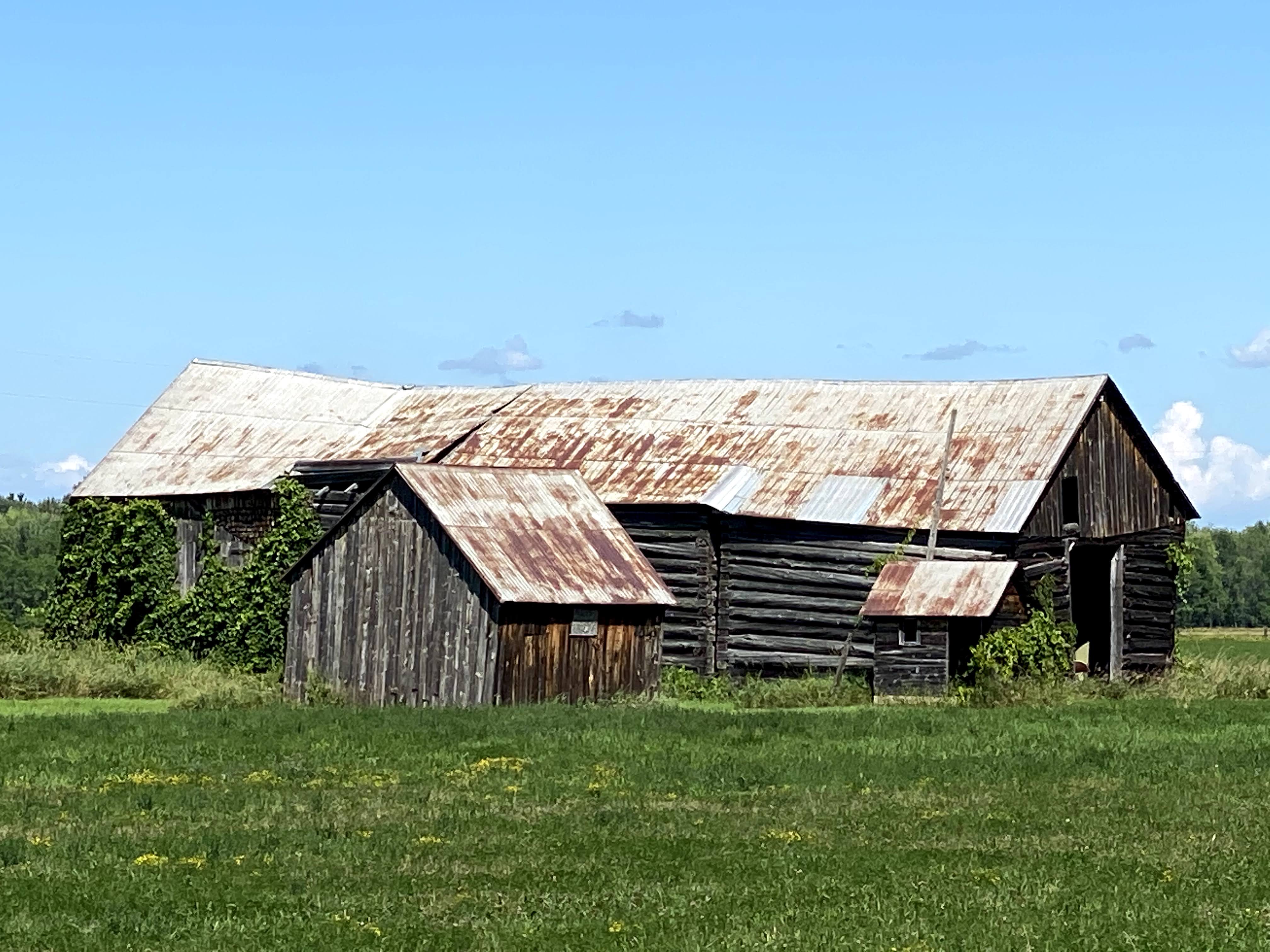
When I look at the frame of this house we are building, I notice that it is not just for people. It is a barn. A stable, where animals feed and find shelter. It is their home. Some of my favourite children’s Christmas books are told from the perspective of the animals in whose barn Jesus was born.[2] Those who witness the holy birth are not just people. But all creatures great and small. 

Who will occupy this space? All flesh shall see the salvation of the Lord.

Which means, different perspectives. Different life experiences from which to receive the good news of Christ coming. Different needs, different takes, a multitude of ways of appreciating the glory of God in simple, ordinary lives.

And not just for one. Not just for the elite, and the privileged. The house we build for Christ includes all flesh, all creation is welcome to witness the glory of God.

Because animals are an important part of the story of Jesus’ birth in Bethlehem—the sheep, the camel, the cows and other barnyard creatures, I’d like to tell you now about a duck who can teach us something about living in stormy times—not unlike the treacherous times under “Emperor Tiberius, when Pontius Pilate was governor of Judea, and Herod was ruler of Galilee”[3]

Here’s a poem called “The Little Duck”, written by poet and professor at the University of New Hampshire, Donald C. Babcock:

“Now we are ready to look at something pretty special. 

It is a duck riding the ocean a hundred feet beyond the surf,

And he cuddles in the swells.

There is a big heaving in the Atlantic.

And he is part of it.

He can rest while the Atlantic heaves, because he rests in the Atlantic.

Probably he doesn’t know how large the ocean is.

And neither do you.

But he realises it.

And what does he do, I ask you.

He sits down in it.

He reposes in the immediate as if it were infinity – which it is.

That is religion, and the duck has it.

I like the little duck.

He doesn’t know much.

But he has religion.”[4]

The duck’s way of being way out there beyond the surf reveals to us how to live faithfully in a time of watching and waiting, in a time of disruption and upheaval, amidst the storms and waves that threaten to upturn and drown us.

The little duck must be dwarfed in the face of the vastness rising and falling around it. But not only does the duck seem unconcerned; the duck “cuddles in the swells”. It is as if the duck embraces where it is, tender in the midst of it all, a part of it. The duck belongs and can rest while the Atlantic heaves. Here we witness the “wondrous juxtaposition”[5] of the restlessness of the ocean and the peace that remains possible for the duck.

In the scriptural imagination of Jewish and Christian traditions, the ocean signifies chaos—the forces of disorder that threaten to overwhelm the bounds within which our lives are secured.[6] The ocean can also signify the vastness of God’s being which we cannot know nor see the limits of.

In the face of this oceanic, boundless bigness of both God and chaos, what is our puny existence? Like the duck’s, our lives are towered over by forces we have no capacity to contain, by storms we cannot master. What is our response?

Our inclination, when we realize our situation, is to panic or struggle. Yet, the duck does neither of these things. For there it is, far out from shore, cuddling in the swells, and at rest. The duck is not fighting it, the duck is in communion, at one, with the whole.

Knowing is not the point. Our strength to fight it is not the point. Trusting is, and being in the present moment with all that is, is.

Because all of it belongs. We are all—all creation—held in God. Every perspective. Every experience we and others have. Every place and time. The ocean is vast and all flesh belongs. And the Psalmist reaches time and time again for this truth, to comfort us, to deepen trust as “deep calls to deep”: There is no place on earth, nowhere I can go, no one removed, “no where to flee from your presence”, O God.[7]

“If I take the wings of the morning and settle at the farthest limits of the sea, even there your hand shall lead me and your right hand shall hold me fast.”

When I travelled through the Judean wilderness on the road from Jericho up to Jerusalem years ago, we stopped along the way as groups of nomads made their way across the desert. And the interesting thing was the way their tents were constructed. 

These tents had walls like any tent. But every wall was also a doorway—you could roll up the canvas to make it look like an open patio canopy. Among other reasons, I learned that semitic people consider eating together as a sign of reconciliation and forgiveness.

The more you could have in your tent at mealtime, the better it was for the whole community wandering through the desert: A house with no walls, and many ways in.As we build a house for Christ to come this Christmas, we build by creating space for everyone. The space we occupy, therefore, has room—room for all who find their way here. This is also room that beckons us not to circle the wagons but to widen the circle. And we do so trusting that God is in it all, even in the waves, that God is present in love for all.


[1] Luke 3:1-6

[2] Eve Bunting, We Were There: A Nativity Story (New York: Clarion Books, 2001); Jean Little, Listen, Said the Donkey (Toronto: North Winds Press, 2006); Jean Little, Pippin the Christmas Pig (Toronto: North Winds Press, 2003); Martin Waddell, Room for a Little One: A Christmas Tale (Toronto: Margaret K. McElderry Books, 2004); Karma Wilson, Mortimer’s Christmas Manger (Toronto: Margaret K. McElderry Books, 2005)

[3] Luke 3:1

[4] Donald C. Babcock cited in Sarah Bachelard, Poetica Divina: Poems to Redeem a Prose World (Singapore: Meditatio, 2021), p.57

[5] Sarah Bachelard, ibid., p.60-61

[6] Ibid.

[7] Psalm 42:7; 139:7-10

Building for Christ

Building for Christ – audio sermon by Martin Malina

I hold in my hands two pieces of fencing to begin building a home for Christ to come this Christmas. Many of you might know what this project will eventually look like, come the Fourth Sunday of Advent. For those who are not sure, I encourage you to check in every Sunday right here to witness the building emerge before your very eyes, piece by piece.

These fences suggest both something necessary, and something of the downside in human behaviour. It is in our nature to build fences after all—whether in our neighbourhoods between homes, between nations and tribes, between individuals and families.

Boundaries are good and important. They define who we are as individuals and people. They clarify and bring focus to relationships, roles and functions. Boundaries are especially important for young people as they discover who they are and explore the limits of possibility for their lives.

Boundaries are not meant to be divisive. Yet, division is often a consequence of drawing a line in the sand. Fences can divide and keep people apart, at war, in acrimonious conflict. Fences can entrench people in opposition to each other. Building fences can hurt and damage relationships for the long term.

Despite the ambiguous image of a fence, we start anyway. We begin to build something from scratch. And maybe that is a grace. I wonder if that isn’t a recurring theme of the pandemic: rebuilding and restarting from the ground up considering everything we may have taken for granted before the pandemic. Whether in our friendships, our hobbies, our leisure acitivity, our work and even our church. We seem to be pressing the reset button: From our practice of Communion, to the way we do meetings, to our outreach activities, music and mission in the community—everthing requires all the assumptions to be laid out on the table again, to be re-examined and re-purposed.

And that can be unsettling–to start over, to start from scratch.

Not only do we begin Advent today, today is the start of a new church year, a new cycle, a new round: Advent, Christmas, Epiphany, Lent, Easter, Pentecost with Ordinary Times mixed in throughout the cycle of the church year. And then it all begins again, next year. We symbolize today the start of a new cycle by lighting candles, progressively—four of them for the four weeks leading to Christmas—on an Advent wreath.

As we build for Christ-coming each week with a new part of his home, I’d like to look carefully at different parts of the Advent wreath to describe something important about how we begin again.

And the first thing we notice with most Advent wreaths is the foundational part—the circular form of the Advent wreath. Fences tend to be square, or rectangular, coming together at right angles. But the wreath is round. And around the circular form of the Advent wreath we place boughs of spruce or pine from trees that we will notice outside especially during the cold and grey winter months when nothing else appears to be alive.

In the Psalm today, the refrain is a prayer to God: “Remember, O Lord, your compassion and love, for they are from everlasting.”[1] And, in the Gospel today, Jesus says, “Heaven and earth will pass away, but my words will not pass away.”[2] [emphasis mine]

The good news–gospel– that threads throughout both of these scriptures appointed for the First Sunday of Advent is the lasting and indestructible nature of God’s compassion and love. Nothing in all of history, all of creation nor anything in the future can shuck the love of God. Nothing. No division, no enmity, no strife, no walls that divide. The loving presence of God is eternal, timeless, unending—just like evergreens wrapped in a circle on a wreath. A circle has no beginning and no end. It goes on, forever.

Perhaps you remember when you were a child and an adult said something like, ‘OK, kids, gather around, it’s circle time’. Circles are natural to us. And sacred.

When we gather in a circle, the praying has already begun. When we gather in a circle, we communicate with each other and with God, even without a word being spoken. That’s what I love most about this building in which some of gather in person this morning: The building here at Faith Lutheran is round, circular.

The circle has no beginning and no end, so one can enter at any place or stage. The circle can explain stages of life, cycles of maturity, values, and different groups of people. The symbolism of the circle is one of the oldest in Canada, having been found in various parts of the country in ancient petroglyphs. It is included in various Indigenous traditions. Many of the ceremonies and dances are fashioned intentionally in a circle. 

Circles are found in nature. Circles can explain the seasons, how they all continue on to create harmony and balance. In observing the outdoors, the circle is a common and natural shape. Trees, rocks, whirlpools, tornadoes, and flowers all bear a common resemblance to circular objects more than triangles, rectangles or squares do.[3]

We may need to establish those fences. We may need to enforce personal boundaries and sometimes even assert where the line must be drawn. Sometimes we do have to close a door. We are human, after all.

But God is beyond any boundary, even one drawn by the circle. God is not bound by any material or mental boundary we may devise for God. What we construct may or may not be helpful. But these boundaries are not ultimate. Thirteenth century Italian theologian, Saint Bonaventure, spoke of God as one “whose center is everywhere and whose circumference is nowhere.”[4]

What is ultimately important is to know that it was out of great love that God chose to take on human form and flesh[5]—take on the boundaries defined by our humanity, good and bad. Here we make a house for Christ to dwell, for this word is true and will not pass away: “The home of God is among mortals. God will dwell with them, and they will be God’s people.”[6] Because of compassion, a love that is everlasting.[7]

This is the first and necessary part, the foundation, for building a home for Christ. When we press the re-start button on anything we do, this is where to begin.


[1] Psalm 25:6 NRSV

[2] Luke 21:33 NRSV

[3] The last few paragraphs starting with “Perhaps you remember …” are adapted from Richard Rohr, “Sacred Circles” in Daily Meditations (www.cac.org, 13 October 2021).

[4] Bonaventure, Bonaventure: The Soul’s Journey to God, 1,14, trans. Ewert Cousins (Paulist Press, 1975) p.5,8,100

[5] Philippians 2:5-8

[6] Revelation 21:3

[7] See also Psalm 103:8-14

Who’s coming to dinner?

photo: Martin Malina
“Who’s coming to dinner” – audio sermon by Martin Malina

When I was a child, a cherished Christmas Eve tradition in our family was setting an extra place at the dinner table — an extra chair, plate and cutlery. We also decorated this place setting with fresh boughs of evergreens to make it special. 

After all, Jesus was being born into the world this special night. We had to make room for him in our house since there was no room for Mary, Joseph and the Christ child in the inn at Bethlehem that first Christmas. And, my parents suggested, you never knew who might actually show up at our door. Would we find it in our hearts to let them in and serve them a Christmas Eve dinner?

There was a part of me that didn’t believe anyone would show up. After all we didn’t advertise. We didn’t put out a sign on the front lawn announcing: “One free dinner, come at 4pm, first come first serve”. No one actually knew we did this. It was merely an in-house ritual, something to stimulate our faith, to make room in our hearts for Jesus and make us think about the true meaning of Christmas, of Christ coming.

Another part of me secretly hoped someone actually would show up — an unexpected visitor, someone we didn’t invite but who came by anyway. Would they be homeless? A traveller journeying through town, looking for a place to eat a hot meal on a cold, winter’s night? Or, would it be a friend, someone in the neighbourhood just stopping by? 

And, then, how would we react? Would they like the food, or have any dietary restrictions? How would we adapt on the fly? Would they stay long? Would they come to worship later in the evening, or go home after eating? Would we become best friends for the rest of our lives? 

All those possibilities. All these thoughts swirled in my mind. This part of me actually wanted to experience the tradition, and mean something concrete beyond the personal reflections. Deep down I wanted someone in the flesh to show up. That would be cool.

Well, today is not Christmas Eve. On this last Sunday in the church year a month before Christmas, we celebrate the Reign of Christ or Christ the King Sunday. 

To celebrate the reign of Christ, nevertheless we first need to be clear about who we are actually celebrating and what kind of reign, or rule, Christ is all about. 

There seems to be some confusion among those who first encountered Jesus in the flesh, back in the day.

In pronouncing verdict over Jesus, Pilate needs clarity. In the Gospel text for the Reign of Christ Sunday this year, Pilate asks Jesus point blank: “You are a king?”[1] You don’t look like it! Your kingdom is not of this world? Well, then, who are you? 

Earlier, the disciples had been in discussion with Jesus about his identity. It is obviously unclear to the general populace. “Some say John the Baptist, Elijah or one of the prophets.”[2] Repeatedly Jesus presents as someone not easily recognized, pigeonholed, defined, nor understood. And people ask over and over again: “Who are you?”[3] From a human perspective, and even as people of faith, we may honestly struggle with this question from time to time. If it was challenging for those who met Jesus in person, then what about us, some two thousand years removed from that primary experience of the early disciples?

We have to deal with our expectations more than anything. And our expectations may not always be in line with the God of the Gospel. 

So, what kind of God is coming to you, and to me? 

If anything was clear to me about our tradition at home on Christmas Eve, it was that I was missing something. My expectations were not in line with what I actually experienced. The empty plate was not filled. The empty chair remained vacant throughout our Christmas Eve dinner. 

Ought I be disappointed? Was Jesus not coming? Was there no stranger around to knock on our door and receive our hospitality? Was the effort in vain, a wasted ritual?

There was something about my expectations that was amiss. Would the disconnect and dis-ease I felt after dinner somehow spill over into the Christmas Eve service later on, I wondered?

Maybe the problem starts with what image of the Messiah we hold in our minds and hearts. Is our image of God in Christ Jesus fuelled more by notions of earthly power and kingship? If so, that image might need some dismantling. 

For, in Jesus Christ, we meet a God “who is not armed with lightning bolts but with basin and towel, who spewed not threats [and lies] but good news for all, who rode not a warhorse but a donkey … In Christ, God is supreme, but not in the old, worldly sense: God is the supreme healer, the supreme friend, the supreme lover, the supreme life-giver who self-empties in gracious love for all. The king of kings and lord of lords is the servant of all and the friend of sinners. The so-called weakness and foolishness of God are greater than the so-called power and wisdom of human regimes.”[4]

As was often the case so many years ago, the little country church where I was confirmed was packed with Christmas Eve worshippers. When the lights went down and the candlelight was passed, the sanctuary became bright with the joyously expectant faces of worshippers reflecting the flickering light. 

As I surveyed the room around me singing “Silent Night”, my eyes stopped on the face of one person. In the far corner of the back pew, I recognized someone I didn’t expect to see there. It was Rick, my public school friend. He went to another church, but not one that normally held mid-week Christmas Eve or Christmas Day services. Just then I remembered that I had invited Rick to come to Christmas Eve service several weeks earlier, even before Advent began that year. 

After the service, my brother and I invited Rick back to our home for a short visit that we enjoyed as he waited for his ride. Later I wondered if my school friend was the surprise visitor for me, the Christ, who came to our home that Christmas Eve. Not someone I expected — not anyone who fit the figments of my imagination, neither celebrity nor unknown poor — just an ordinary friend who surprised me by his gracious presence.

Who is Jesus whom we praise this day, who comes to reign in this world, who comes to you with love, at the end?


[1] John 18:33-37

[2] Mark 8:27-30

[3] John 8:25

[4] Richard Rohr, “God’s Supremacy in Love” Daily Meditations (www.cac.org, 22 October 2021).

From stones falling to love rising

audio for “From Stones Falling to Love Rising” by Martin Malina
On the Algonquin Trail in Renfrew County, photo by Martin Malina

“Look, Teacher, what large stones and what large buildings!”[1] the disciples express to Jesus their amazement at the glorious temple in Jerusalem.

In response Jesus asks a rhetorical question: “Do you see these great buildings?” I mean, do you reallysee them? See them for what they are and what they represent—the authority of earthly power wrapped up in heroic, human efforts to appear glorious and right? These are the stones upon which we build our lives. And they are going to crumble, topple and fall. “All will be thrown down,” Jesus says.

The end of the pandemic is not what we expected. A few months ago I assumed it would be more cut-and-dry. One moment we are living under the threat of COVID with all the attending lockdowns and restrictions. And, then, when it’s over, it’s back to normal and we can do things the way we have always done them.

But that’s not the way it’s really going, is it? To a large degree things are better. Most people are vaccinated, and therefore groups can gather in public spaces to do the things we want to do together. But the truth is, being vaccinated doesn’t mean we aren’t susceptible to getting the virus, doesn’t eradicate the virus. It doesn’t mean we can’t still pass it on even with lowered risk. After so many have suffered significant loss of health and well-being, and facing significant health challenges, nothing is cut-and-dry. It’s hard to make long-term plans, make decisions and commitments more than a few days in advance. 

It already feels like the building blocks of our lives—the places of certainty that have guided us our life-long are crumbling. How will we know what to do, and when to do it? We, like the disciples, may be looking for signs to determine the path forward in uncertain, fast-changing times. “Tell us, when will this be, and what will be the sign?” This may be your prayer, too, these days.

What will replace the stones that are thrown down? What will be our guide? What will be the measure of our faith if not what we have built?

To help them experience God amid all that competes for their attention and obedience, Jesus first pulls the rug out from under their expectations. 

Put yourself in the disciples’ shoes: How would you feel if Jesus said these words to you sitting outside on the ground level looking up at the impressive 45-storey Claridge Icon building in Little Italy, here in west-end Ottawa? Seems unbelievable, improbable at best.

Jesus’ audacious words in the Gospel text at first create confusion and maybe distress. Jesus’ words upset any pretense of stability we might seek especially during a time of disruption. If anything is thrown down, it is our certainty. Which, it seems, makes it even more difficult, more challenging, maybe more impossible to discern anything let alone make decisions and plan for the holidays and beyond.

But maybe that’s the starting point. Maybe that’s where what Jesus is all about must begin. The birth-pangs. The uncertainty. The disruption of ‘normal’ life. The present moment, however turbulent, is the necessary pivot towards embracing the expansive vision of God.

Because at this pivot we are most vulnerable, honest, and true to ourselves. At this point we have nothing to hide, nothing to prove, nothing to pretend we are. And maybe that’s where we need to be, if for a moment.

Because if we believe that what will happen in the future is largely dependent on our success, on achieving greatness, or solving all the problems on the planet, we will get stuck at best, despair at worst. And perhaps we already have gotten stuck, to some extent, with some issue or problem we face in our lives. Perhaps we are already locked down in despair.

The truth is, something is going to happen whether or not we make a decision. Something is going to happen whether we decide to do ‘x’ or decide to do ‘y’ or decide to do nothing at all. Doing nothing is a decision that has consequences. Something will happen. And that’s the point of life in faith. 

Knowing that the future does not ultimately depend on our getting it right. Knowing that what really matters in life is beyond our compulsion to be perfect and make something glorious of ourselves. Knowing this can free us to move forward in faith, making decisions and taking risks in good faith. And trusting in the love of God who holds us no matter what.

So it’s not like we’ve got this, “Here’s God; here’s us. God’s just waiting till we get our act together and then we’ll all be well.” That’s not God. That’s a religion based on our egos. And those stones are tumbling down.

Rather, God is alive. God is love. Love is the measure. Love will guide us. Whatever is loving, gracious, kind and merciful—this is the way of the Gospel, the way of Christ Jesus.

“Love is pulling us on to do new things and we need to trust the power of God in our lives to do new things.” When we experience an unwiring of ourselves— this is a painful process, yes — we recognize that it is “the God of Jesus Christ [who] is … the power beneath our feet, the depth of the beauty of everything that exists, and the future into which we are moving.”[2]

We can then roll with the stones that are tumbling down and join the rising movement of love that holds us all together and brings us hope for a better future.


[1] Mark 13:1-8

[2] Richard Rohr, “Love Is All There Is” in Daily Meditations (www.cac.org, 16 September 2021)

Candle-lighting faith

photo by Martin Malina
audio sermon for “Candle-lighting faith” by Martin Malina

Why do we light candles in the church? When there is enough natural and electrically generated light to help us read and hear the scriptures, the music and each other—why do we need candles? Why act in this rather impractical, ritualistic way? It may seem odd to us who abide so often by the common-sense rule of life. Why do we bother?

One reason is to honour a historically based tradition: From centuries ago and before, when Christians didn’t have electricity and they depended on candlelight to be able to read the scripture during worship.

Moreover, early Christians often met underground. They met in hiding. They burrowed in secret places. Persecuted and outlawed, they gathered in the catacombs, away from the sunlight. They needed light even during the daytime. So, they lighted candles. 

Candle lighting honours the history of Christianity born out of division and beset by war through the centuries — Christian fighting Christian, Christians fighting everyone else, for that matter. Most of the letters in the New Testament—the Epistles—were written to fledgling churches held in the grip of division, in-fighting and conflict.

We light candles every time we worship to recall this turbulent history and honour the memory of our forbearers who needed light in a world full of hostility, war, death and evil.

So not only did they light candles for practical reasons to help them worship. Their act of lighting candles declared their faith, their common faith, in God. Lighting a candle meant that God’s light shines even in the face of death, “where the shadows lengthen and when the evening comes.”[1]

There isn’t a Halloween that goes by that I don’t get asked at least once what Christians should do or not do about Halloween. Many Christians are ambivalent towards this annual, cultural festival of dressing up in costume, playing spooky music, going trick-or-treat-ing, and otherwise celebrate being frightened. Why, where so much of the imagery surrounding Halloween focuses on devils and demons would Christians even go there? There’s enough evil in the world, we say. Why participate in a cultural event that only appears to fuel what’s wrong in the world? And so, many Christians have boycotted dressing up and being spooky and all.

Now, if death does have the last word, then we are indeed all lost and it doesn’t matter whether we participate in Halloween or not. If there is no one we can trust, no words of hope we can believe in, no story of redemption, promise and resurrection, then it is indeed a despairing world we live in. And there is no good news to speak of.

Maybe we forget that Halloween is a “hallowed-eve”, the eve before All Saints Day. Just like Christmas Eve precedes Christmas Day, just like Good Friday precedes Easter. The eve of All Saints—hallowed eve—is not the end of the story. Halloween does not have the last word.

Our Christian ancestors would therefore recognize Hallowe’en as the night when you stared at, and stared down, death. “Just as we know the answer to Good Friday is not despair but Easter, so the answer to Hallowe’en is not fear but All Saints.”[2] The answer to Hallowe’en is the joy and promise and unity of All the Saints in light!

We can face our fear of death and trust in the promise of the next day. Halloween can simply function as an exercise of our faith! We don’t need to succumb to the shadows. We don’t need to give in to despair. But we must face our fears honestly and courageously. This is what we do when we light a small candle of faith.

We light candles today and every Sunday as an act of faith. Because while we don’t need extra lumens to help us follow the music, read the text, and watch the screen, we confess that the word of God is given to a world shrouded in fear, hatred and anxiety. The word, as the assigned scripture for All Saints announces, is given precisely to those who are “thirsty”[3] and who come to the water to drink. 

We are the needy and vulnerable. We live with our own shadow and perceive the evil in the world around us. We are burdened by our own sin and weighed down, even lost, in this divided world. We grieve our losses and feel deeply the pain of death. 

And we are not alone.

We light candles to remember those in the past who have made it to the finish line faithfully, despite the warring factions and struggles in their lives. We light candles to celebrate the gift of life and love given to them in this divided world. We light candles to affirm our faith that the smallest flame can ignite our imaginations and our hope in the vision of God — “the new heaven and the new earth,” where God shall be and where God isat home with us, where all divisions will cease, and no one will be alone. Ever.

Indeed, a small flame we light. And faith is born. This is a vision that is trustworthy and true.

So, we light candles out in the open. Jesus said, “No one after lighting a lamp puts it under the bushel basket, but on the lampstand, and it gives light to all in the house. So let your light shine before others, so they may see your good works and glorify your Father in heaven.”[4] We will not hide it under a bushel, oh no. We will shine brightly, share God’s love and light to the world. And we will live into our baptismal call to love others and give of ourselves to the vision of God.

“This little light of mine, I’m going to let it shine. This little light of mine, I’m going to let it shine. This little light of mine, I’m going to let it shine. Let it shine. Let it shine. Let it shine.”[5]


[1] Prayer at the time of death, “Funeral” Evangelical Lutheran Worship (Minneapolis: Augsburg Fortress, 2006), p.284

[2] Br. James Koester, “Halloween”, www.sje.org, 31 October 2017

[3] Revelation 21:1-6, reading for All Saints Sunday, Year B, Revised Common Lectionary.

[4] Matthew 5:15-16

[5] “This Little Light of Mine” Evangelical Lutheran Worship, ibid. #677

Reformation-Murmuration

audio version of sermon, “Reformation-Murmuration” by Martin Malina

“…you will know the truth …”[1]

I stopped there. How will we know the truth? Is ‘truth’ even possible? When we don’t believe someone – a family member, a politician, the media, a friend – when we don’t believe what they say is true, how can we believe what was written down thousands of years ago to be true? How can we believe anything?

When Jesus says these promising, affirming words to his disciples two thousand years ago – “…you will know the truth …” – I’m not sure we do.

Maybe because our post-Enlightment mind regards truth exclusively as doctrinal, contractive, individualistic and competitive rather than something more intuitive, collective and freeing in our nature.

In the post-Reformation era, we have become like chickens, scrapping and scraping only for ourselves, ruffling another person’s feathers, or another church’s, so we feel better or superior. That truth is what I have, but you don’t.

And it’s not even what Martin Luther wanted—a separate, autonomous denomination. He wanted to reform the church, not split it into what is today some 30,000 Protestant denominations worldwide.

Maybe we need to look upward. Rather than be like the chickens, maybe the birds can show us the truth. Have you heard what the birds do when they fly together?

It rhymes with Reformation … Murmuration. So, whenever you hear the word ‘reformation’ from now on, I hope you think of ‘murmuration.’. What is ‘murmuration’?

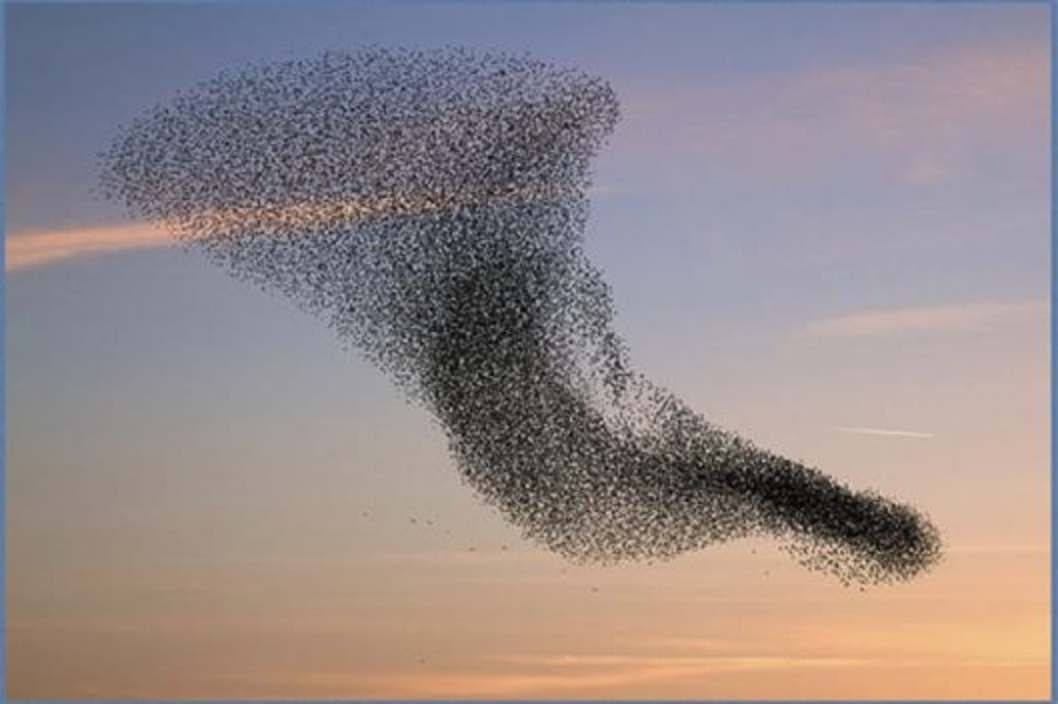
Murmuration happens when the flock of birds—specifically starlings—move like synchronized swimmers or a well-choreographed dance troupe. Like bird ballet, they fly dark flowing against the white clouds. 

And when they fly together and swirl in a repeating, coordinated ever-changing pattern they seem to be connected somehow. They twist and turn and change direction at a moment’s notice.

Wired Magazine described murmuration like this:

“Each starling in a flock is connected to every other. 

When a flock turns in unison, it’s a phase transition.

 When a neighbor moves, so do you.

At the individual level, the rules guiding this are relatively simple.

 Depending on the flock’s size and speed and its members’ flight physiologies, the large-scale pattern changes. 

What’s complicated, or at least unknown, is how criticality it is created and maintained.” 

How does the murmuration begin? Often the starlings gather as night approaches. In the twilight, the dance begins with a few birds, but gradually other starlings arrive, then more and more, until they all join together in one massive flock. Their movements create patterns, streams, circles, and trails. Suddenly they plunge downward then swoop and sail skyward. As they twist and turn in tight formation, amazingly they swirl but never collide.

“What music do they hear? Who leads them? Who taught them such grace? …Maybe God is dancing with them and that is unknown, there, and unseen.”[2]

“I know all the birds of the air, and all that moves in the field is mine.”[3]

So, to God, each starling is important to creating the murmuration. The result, however, is a whole that is greater than the sum of individual parts. It’s the story of the bible.

Recall, then:

God was saving Israel, not just Abraham.

God was saving Israel, the nation, not just Joseph, Isaac, or Jacob.

God was always saving people, not just individuals. And, in the last two thousand years,

God was saving the church, not just Martin Luther, John Calvin, Ulrich Zwingli, or Henry the VIII’s marriage.

God was saving the church for all time—the people as a whole—and not just individuals of the 16th century. Nor just individuals today.

Reformation is “historical and social, and not just individual.”[4]

Martin Luther, the individual, was important in God’s story. Martin Luther inaugurated the Protestant Reformation on October 31, 1517—exactly 504 years ago today—by pinning up a sheet of paper on the large, wooden doors of the Wittenberg Castle Church in Germany. That piece of paper contained some 95 arguments against what Martin Luther believed were abuses in the religious practices and beliefs of the Roman Catholic Church at the time.

Fuelled by geo-political forces and social unrest in Europe. Power struggles between Pope and Princes, Emperor and economies — all these helped shape the course of what happened with the church, far beyond what Martin Luther was essentially all about. Because Reformation, in the end, is a movement in history and a movement of Spirit in the hearts of people continually changing and transforming, and going somewhere. Reformation was and is a gift—reforms in the 16th century were needed and good. But Reformation is also given to us as a calling—something we continue to work at and move towards. Never perfect, yet aspiring towards the vision of God.

Not negative. Not stuck, static. Not fixated, nor constricted. Not divided, autonomous nor conflicted out of some sentimental view of the past. But dynamic, transformative, unitive and flowing towards God’s vision, God’s future.

What is truth, then? Christ is the truth.[5] And Reformation, like murmuration, is participation in Christ. Each of us is a character inside of a story that is being written in cooperation with God and the rest of humanity. Christ in, and through us.

God is not ‘out there’. We don’t look at reality, we look from reality. We’re in the middle of it now; we’re a part of it. The murmuration. We are being chosen. We are being led. We are an instance in both the agony and ecstasy of God that is already happening inside you and inside of me.[6]

“You will know the truth and the truth will make you free.” This is the language of the bible. It describes what already is happening in us and around us. We already know it. And maybe now, only intuitively. But God is there. God is here.

And all you can do is say yes to it. And join in the never-ending dance.


[1] The Gospel for Reformation Day, from John 8:31-36.

[2] Jean Wise, “Mystical Murmuration” (www.healthyspirituality.org, 6 February 2014), https://healthyspirituality.org/mystical-murmuration/

[3] Psalm 50:11

[4] Richard Rohr, “Participation is the only way” Life as Participation (Daily Meditations, http://www.cac.org), 10 Sept 2021

[5] “I am the way, the truth and the life,” Jesus said. (John 14:6)

[6] Richard Rohr, “Being Instruments of God”, ibid., 5 Sept 2021

Where two or three are gathered

audio for “Where two or three are gathered” by Martin Malina
Where we gather to worship & serve, photo by Martin Malina

When sitting in a living room with family, playing a game or in a sports team or when joining a club online or in person, we instinctively want everyone to participate. The church is no different. We want everyone to participate!

But participation is not domination. This is one of the main rules for healthy group dynamics: ‘Participation is not domination’. 

When I work with small group leaders, I usually start with this theme, because while we want everyone to feel free to participate, any one person cannot dominate the conversation. Domination will undermine the group process by only one individual’s opinion, concern, worldview and blow-by-blow telling of the book they read over the weekend, or the menu planned for Thanksgiving.

There is an exception to this rule. When someone who participates regularly in the group suffers a person crisis, a crisis that in some form is common to all of us. Then everyone, almost by intuition, wants to give that person the floor for as much time and as many words as they need to tell their story. Telling your story is integral to the healing process.

Bartimaeus has been suffering a personal crisis most of his life, it seems. He is visually impaired. He has carried and lived through the challenges facing a person who cannot see. How does he process his suffering?

What strikes me in this reading is that he does not hide. He does not squirrel away his pain by staying on the outskirts of Jericho in the desert under a proverbial rock. The Gospel text opens by locating him “on the roadside.”[1] Because “large crowds” travelled along this road from Jericho, we can say this was the main road from Jericho leading up to Jerusalem.

In other words, Bartimaeus shows us how to lament. In times of suffering that may feel like a lifetime, a suffering that doesn’t end – we all know this feeling when it comes to the pandemic – he does not take his spirituality and hide it under a rock. His faith journey, his relationship with God, is not privately dealt. He takes it out into the open— into the public— and sits himself by the main road where large crowds will pass him by.

Psalm 126 is entitled “A Harvest of Joy” and is a song of ascent – one of those Psalms sung by the ancient Israelites to lift their sights upward. 

Blind Bartimaeus, when Jesus heals him, is on the road up to Jerusalem. There is quite an elevation gain, topographically, between Jericho and Jerusalem. Like the ancient Israelites returning from exile, Bartimaeus, now freed from his suffering was heading in an upward direction, literally. Like the ancient Israelites, freed from exile, Bartimaeus was one of “those who go out [leaving Jericho] weeping” and “will come again [into Jerusalem] with joy.”[2]

But in a Psalm that is supposed to lift our spirits and be about restoration, there’s enough weeping and tears here to make me want to skip over those words. We need, though, to come to terms with the parts that do not feel like they belong — the weeping and tears part.

When circumstances bring cause for weeping – all the disruption, isolation, social restrictions, mental anguish and loss of jobs, health and stability—what do we do? How do we live into the post-pandemic reality? Do we ignore the difficult realities, the realities that instinctively make us want to turn away? The Gospel suggests we embrace both states of our heart. Both are important:

Both weeping and lamenting, dreaming and rejoicing. We tend to want to go either/or, don’t we? Either we are sad, or we are happy. Problem is, doing only one or the other all the time leads to despair on the one hand, delusion and denial on the other.

We may be tempted to think we need to be either/or in the church. COVID times have tempted us to entrench in this dualistic thinking, either/or: Either we sing or we don’t sing; either we meet in person or watch on YouTube; either it’s ‘perfect’ the way it used to be, or it’s not worth going to at all.

It’s an extraordinary challenge in life to balance all these tensions:

Because at one moment we are like those who dream, our mouths full of laughter and tongues with shouts of joy when things go well; and then, we are also those who sow in tears, those who go out weeping when things don’t. 

God has something to say to a people torn in two, a people who go out weeping and crying but who also dream of restoration, a people who are tempted to fall into despair but are also presented with a promising vision of God.

God has something to say to a people who are tempted to believe in cut and dry answers, who are tempted to believe that truth only comes in certain and sure ways, either/or.

Today, more than ever, I believe what we need in the church is less “either/or” and more “both/and.”

“Both/And” thinking means that when it is tough going, and we don’t deny that, people of faith don’t just give up meeting together. Like Bartimaeus we don’t hide our faith under a rock, o no! We may go out weeping but we still bear the seed for sowing. We still keep on, keeping on. We still do our work faithfully, whatever it may be, however small. Bit by bit, we still go out. Even though it’s not perfect. Even though it’s not like it used to be.

God says, where two or three are gathered, there is Christ with them (Matthew 18:20). Where two or three are gathered, our voice is heard, others hear us and pay attention. 

Where two or three are gathered, other people are not either/or. Where two or three are gathered, there is “no longer Jew or Greek, there is no longer slave or free, there is no longer male and female; for all of you are … heirs according to the promise.”[3] Where two or three gathered, we are are not either/or people, we are all children of God.

Where two or three are gathered, Jesus hears our calls for help. And with an unconditional love, mercy and grace, Christ comes to us and opens the eyes of our heart. Christ hears us and gives us vision, purpose and courage for the long road ahead.

The big challenge now in the church, I believe, as we do both/and – both online and onsite meetings— is particularly to restore confidence in meeting together, in person, again. That doing so is safe, a public act of faith, and an act that will lead us on the road to our healing and restoration.


[1] Mark 10:46-52

[2] Psalm 126:6

[3] Galatians 3:27-29

We are about life, not the other way around

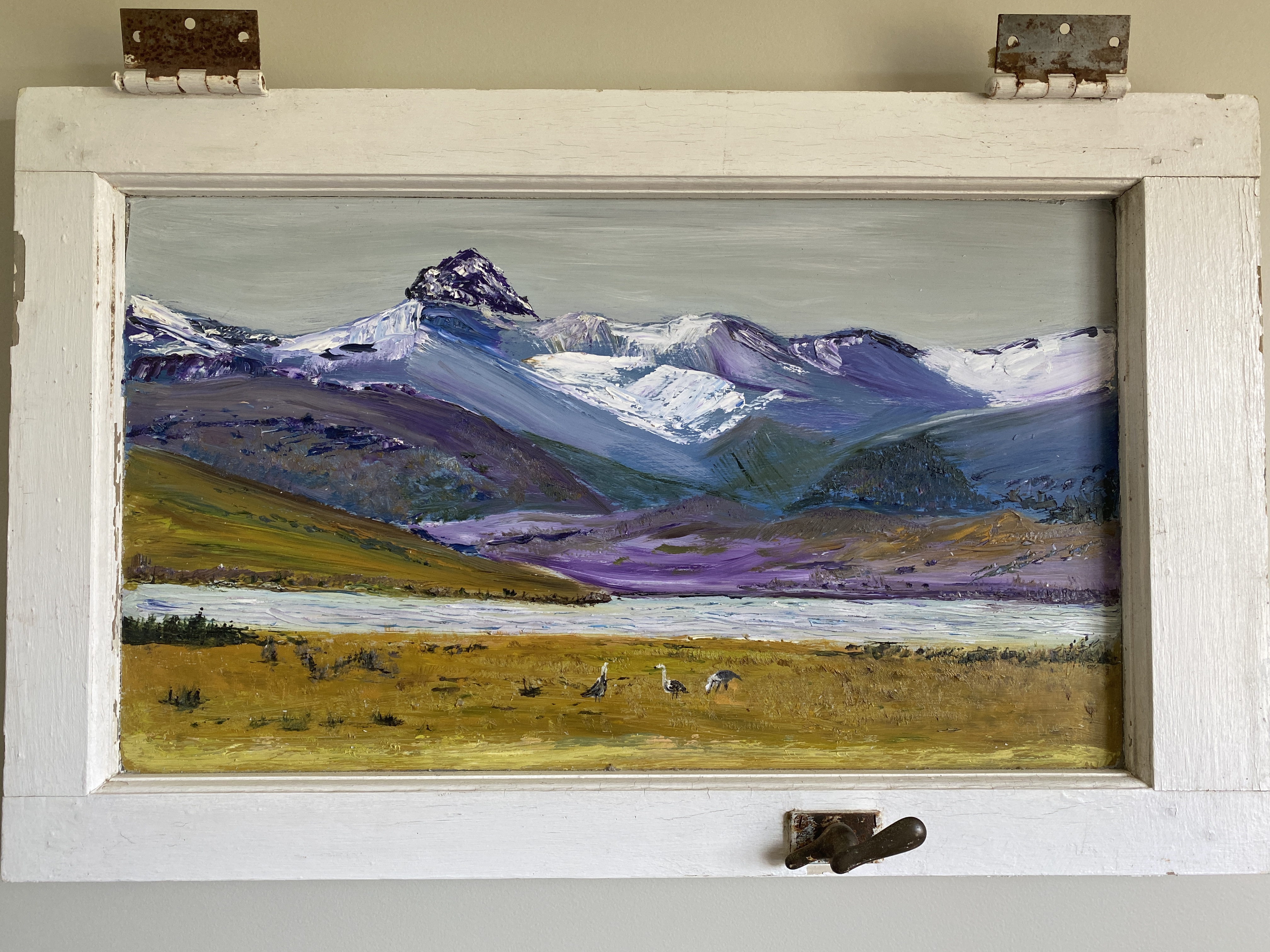
“By the River”, painting and frame by Lois O’Brien
sermon audio “We are about life, not the other way around” by Martin Malina

The NHL season began this past week. And the Ottawa Senators hope not to repeat last year’s start, which saw them losing all but two of their first fifteen games. Even though they ended the regular season last Spring one of the hottest teams in the league—winning ten of their last fifteen games—they still didn’t have enough points to make it into the Stanley Cup playoffs.

They say teams can lose the Stanley Cup in the first month of the season, meaning those first few games are crucial to the team’s prospect of making the playoffs. So, there’s a lot riding on each game, especially early on.

Yet the opposite is also very true: You can’t win the Stanley Cup in the first few games of the season either. Many teams have to build resiliency and overcome adversity on the road to ultimate success. And that means losing some games and surviving those slumps which inevitably come to all successful teams at some point in the season.

In other words, accepting our limits and checking our ambitions is very much integral to the overall arc of one’s life. Not just for professional sports teams.

In the Gospel text for today,[1] James and John go for it. To run this race, they are out of the starting blocks at full gallop. Believing they need to compete on the ladder of success with the other disciples, believing they need to vy for a privileged seat in some hierarchy of God’s reign, believing they’ll get ahead only by denying the other disciples this privilege—they demand from Jesus “to do for us whatever we ask of you …grant us to sit, one at your right hand and one at your left, in your glory.”

No wonder the other disciples were angry with James and John.

I was being opportunistic. I knew the market was hot for used canoes. So I went for it. I sold my favourite canoe for a good price. With the money from the sale I decided to buy a new kayak. They would have to build one because – you guessed it – there were none in stock. That was July 1st.

Originally they said it would take two months until I could pick it up. Ok. In September I could still get out on the water several times. In retrospect, I could have been out on the water every day this past week with the warm, summer-like temperatures we have enjoyed to date.

But in mid-August I received a letter from the owner of the canoe company apologizing and advising that my kayak’s production was running behind schedule about six-weeks. There was now very little if any chance I would be in the water in my new kayak before winter. I would likely have to wait until Spring to enjoy my new toy.

My ambition ran into a brick wall. What started out as a great plan to maximize my enjoyment of paddling, and take advantage of the resources at my disposal, ended in disappointment, you could say. I’d have to gain some perspective to keep from slipping into regret and ingratitude.

Gus, the main character in David James Duncan’s bestselling novel, The River Why, reflects on his passion and calling to be on the river and to be the best fly-fisher he could be. As you get to know this character, you very quickly realize how much his life is defined and motivated by fishing and spending time on the river.

But he soon also realizes that immersing himself fully into his passion without boundaries and without limits, and pursuing his ambition unchecked, was actually driving him mad. He had to find balance in his life. He had to find other activities and build relationships with neighbours. He had to take care of himself.

Gus muses, “The once-monthly fisherman adores his rare day on the river, imagining that ten times the trips would yield ten times the pleasure. But … I learned that not fishing is crucial to the enjoyment of fishing: fishing is a good thing, but too much of a good thing is a bad thing.”[2]

Jesus turns the tables on James and John. They expected that their ambition would be rewarded. Well, it often is in the world of purusing self-gratification, what’s-in-it-for-me lifestyles and me-first relationships. Indeed we are often rewarded by a world that values going-for-it, and looking-out-for-oneself and one’s-own, a world motivated by uninhibited, individual ambitions.

Jesus suggests another strategy, one that realizes peace and contentment through acknowledging one’s limits, a lifestyle that finds meaning and purpose by respecting one’s place in the larger scheme of things.

When Jesus talks about giving his life, what he means is that we are part of a much bigger whole. Jesus asserts not just by his words but by what he does that “life is not about us, but we are about life.” 

We are not our own. We are an instance of something much bigger than us. Life is living itself in us. This thinking is revolutionary to our brains which have been trained to believe otherwise. As Richard Rohr confesses, Jesus’ message is “an earthquake in the brain, a hurricane in the heart.”[3]

As it was, and as I waited, I still got out on the water a handful of times this summer in our other, older fifteen-footer canoe and by borrowing demo models at lakeside outfitters in Algonquin Park.  Paddling on the water a couple of times was pure joy. And enough. 

I learned that regardless of how many times I’m on the water doesn’t gaurantee a ‘perfect’ experience every time: bad weather, faulty gear, unexpected high winds. So, I discovered that not paddling is crucial to the enjoyment of paddling: paddling is a good thing, but too much of a good thing can also be a bad thing.

In the want, in the suffering, in embracing the lack of things, we learn to live in the moment, a moment still infused by God’s grace. We learn to pay attention, even in the want, to what God is bringing to you this very day, and at this very moment. Even amidst the pain, we more readily bind our hearts with others and look beyond our present circumstances.

One of the main turning points in The River Why happens when Gus, a miserable and unhealthy man, begins to emerge from his self-consumed life. He decides to meet his neighbours living along the river. 

And that is when his life changes for the better.


[1] Mark 10:35-45

[2] David James Duncan, The River Why (New York: Back Bay Books, 2016), p.75-76

[3] “Your Life Is Not About You” Reality Initiating Us: Part One  (Daily Meditations, www.cac.org, 1 April 2020)

True thanksgiving

Oxtongue Lake, Algonquin Highlands, 24 Sept 2021, photo by Martin Malina
“True Thanksgiving” audio sermon by Martin Malina

“Is not life more than food and the body more than clothing? … Look at the birds of the air …

Are you not of more value than they?” 

(Jesus, Matthew 6:25-26) 

This text is the Gospel assigned for Thanksgiving Day.[1] What I find curious is that on Thanksgiving we give thanks, normally, for the material things we have – shelter, food, and the abundance of physical blessings …

And I don’t hear Jesus saying that food and clothing are unimportant to people of faith. Jesus isn’t downplaying our material world. Jesus isn’t saying we should not pay attention to the ‘stuff’ of this world. 

Yet, Jesus seems to be saying more, here. That true thanksgiving goes beyond being grateful for what we have; that true thanksgiving is celebrating who we are: Look at the birds of the air … Are you not of more value than they?” 

In this text, Jesus draws attention to our hearts and seeks to build us up as beloved children of God, created in God’s very own image. We have, if anything, value in who we are and the faith we express “genuinely”; who we are is “more precious than gold.”[2]

I was reading about one of the quietest rooms on earth at Orfield Labs in Minneapolis. Originally these ‘dead rooms’ were built in the Second World War to test communications systems. Basically, you step into one of these rooms and it’s much more, or less literally, than getting a bit of peace and quiet away from a hectic, noisy day in the city.

A typical room you sleep in at night that is quiet measures about 30 decibels. Even when we perceive it to be quiet, there is still sound bouncing off walls and surfaces around us. But the ‘dead room’ in Minneapolis measures at negative (-) 9 decibels. In this room there is absolutely no echo as the walls of the chamber absorb any and all sound. The effect on a human being is startling, to say the least.

The longest anyone has ever lasted in this room is 45 minutes. All you will hear inside this room are your organs—your heart beating, air and blood rushing through your system. After about 30 minutes of only hearing your body normally functioning and nothing else, you will begin to hallucinate. The negative silence can drive you, literally, crazy.

When you remove any external source of sound, and only hear what’s coming from within you, it’s too much for us to handle. It’s like we cannot bear for long facing, confronting and dealing with what comes from inside of us when there is nothing coming at us from without.

It’s like at best we feel uncomfortable facing ourselves; at worst, we only see bad things inside of us—our sin. At worst, we would do harm by the negative and judgemental words we tell ourselves, and the habits we fall into that are often unhealthy. If it’s only about what’s inside of us would God take delight in us?

Living in a world where so much of who we are is defined and determined by our external circumstances presents a real challenge to our faith. Jesus knows this. If there is anything in the New Testament about which Jesus speaks harshly, or dualistically (either-or), it’s about money. “You cannot serve both God and wealth; you cannot serve two masters,” Jesus says in the verse immediately preceding the Gospel text for today. 

Jesus speaks absolutely about money because he knows what we are going to do. He already knows our natural inclination to place most of our worth and value on those external things. He already knows that we are primarily motivated by counting, weighing, measuring and deserving – these are activities whose motivation comes from outside of us. And he already knows that as long as we ally ourselves with this world of earning and losing, we’ll always be comparing, competing, envying, or climbing.[3] We will continue to be driven from without. And be continually restless and discontented. 

So, he says: 

“Is not life more than food and the body more than clothing? … Look at the birds of the air …Are you not of more value than they?”

Our value, our worth, is based not on what we have, but who we are. Not on bank accounts, investments, clothes and financial portfolios. And Jesus says this not only that we would love ourselves first, but so that we would confer the same value on others. So, our love and care for others is not based on what they have earned but on who they are in God’s eyes.

So, Jesus is about re-calibrating the engine of our hearts. Contrary to the lure of material wealth, success and meritocracy, the generating motor that keeps us going in this life is inside of us, where God’s Spirit indwells. The primary engine is neither a lure or a threat from outside us. Rather, we are drawn from within, where the Spirit nudges us and strengthens us.

We are of more value than the birds of the air. God does take delight in us, as we are. We are of more value without needing to store up riches on earth. Because we know we have an inherent dignity within, a dignity shared with all human beings.

“Deep calls to deep”, the Psalmist sings.[4] Our inner source is not to be feared nor tolerated nor ignored in our externally over-stimulated lives. And if ever you find yourself twisting in the winds of material concerns and worries, just stop to listen to your heart beat. Do you hear it now? Stop to listen to the involuntary rush of air, breathing into your lungs and breathing out. Do you feel it?

Our hearts continue to beat and pump blood, faithfully, even when we don’t notice. Our lungs continue to draw air, faithfully. We don’t need quiet rooms to appreciate that. Our inner source is beloved. And it is a gift. It is at this deeper level where we find our place and our true connection with others in this world.

A cause for humble and true thanksgiving.


[1] Matthew 6:24,25-34

[2] 1 Peter 1:7

[3] Richard Rohr, “We Cannot Serve Two Masters” in What Do We Do With Money? (Daily Meditations, www.cac.org, 20 September 2021)

[4] Psalm 42:7