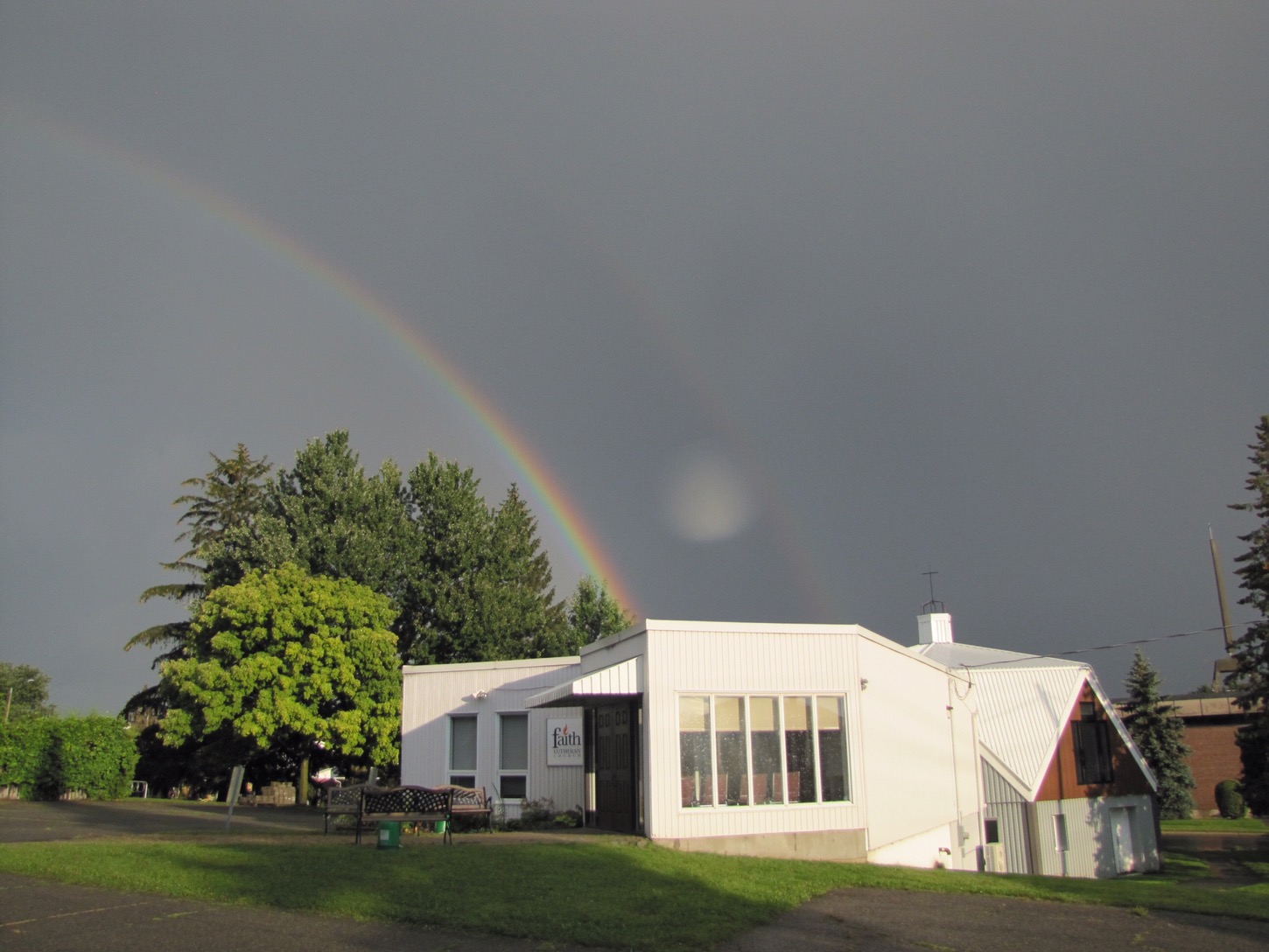
Reforming Remembrance

In the last couple weeks, we have worn our poppies and have been challenged to remember.

There is little to question about what actually happened in the First, Great War, the Korean War, The Second World War and all the military conflicts in the last century including Afghanistan. We have the numbers, the maps, the results, the casualties. We honour the soldiers and veterans who made sacrifices in service to their country. We recall the horrors of war and pledge to be agents for peace in the world.

Remembering is important to do. How we remember and what we remember is another question worth pondering.

In recent years whenever my twin brother and I have gotten together we are intentional to remember times especially with my Father, growing up, travelling, spending ordinary days doing ordinary things. As with any life, there are lots of stories to remember.

And what is almost always the case, is that David remembers one aspect of the same event that I don’t; and, I remember a completely different part of that event – which David doesn’t. For example, David remembers the imaginative story Dad told us when we were about ten years old about Mr. Black fighting Mr. White. While he remembers more the content of the story, I remember that when Dad told us that story we were sitting on the back porch after having gone for a bike ride together.

We spend these times reminiscing by ‘filling in’ each other’s gaps in memory. Same event. Just different things remembered. And different things forgotten or overlooked.

In this 500th anniversary year of the Reformation, the Lutheran and Roman Catholic churches have attempted a different tact from the way we have ‘celebrated’ Reformation anniversaries in the past. Listen to what the Lutheran World Federation scholars and Roman Catholic leadership wrote together recently about the task of how we remember the Reformation events of the sixteenth century:

“What happened in the past cannot be changed, but what is remembered of the past and how it is remembered can, with the passage of time, indeed change. Remembrance makes the past present. While the past itself is unalterable, the presence of the past in the present is alterable. In view of 2017 [the 500th anniversary of the start of the Reformation] the point is not to tell a different history, but to tell that history differently.”[1]

That same history, you will know, was used for centuries to incite conflict and division between our churches. Reformation was traditionally a time to celebrate how good we are and how bad they are. Today, in a changed context reflecting globalization, ecumenism and a pile of new research and study about Martin Luther, his times and his theology — these have yielded fresh approaches that emphasize unity rather than division.

Perspectives have changed. And continue to change.

This year in Canada we are also celebrating our 150 years of history with more of a critical eye. We acknowledge publicly, perhaps in a new way, the fact that Canada was already occupied by people long before the first Europeans settled here. This understanding may be challenging for us settlers because for so long we have reaped the vast material benefits of settling and working here.

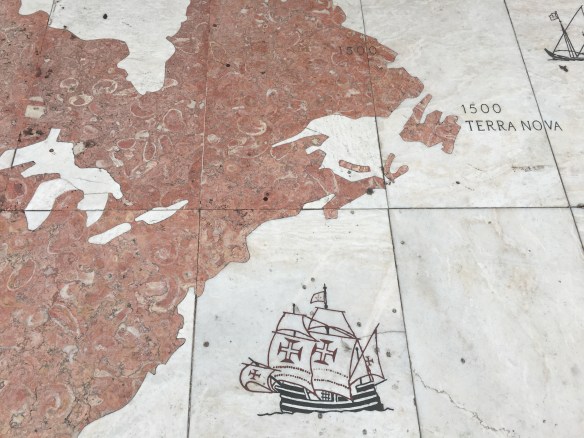
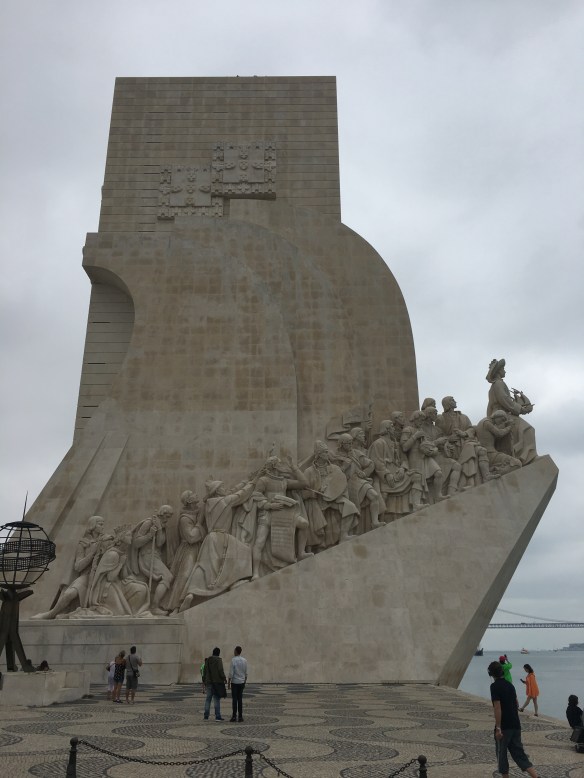
Part of my sabbatical journey took me to Lisbon, Portugal. On the far westernmost coast of continental Europe, Lisbon was a natural launching point for the various expeditions and voyages made by Europeans during the “Age of Discovery”.
IMG_6630

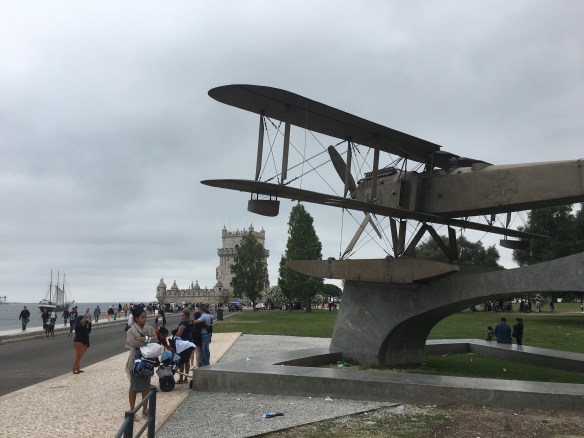
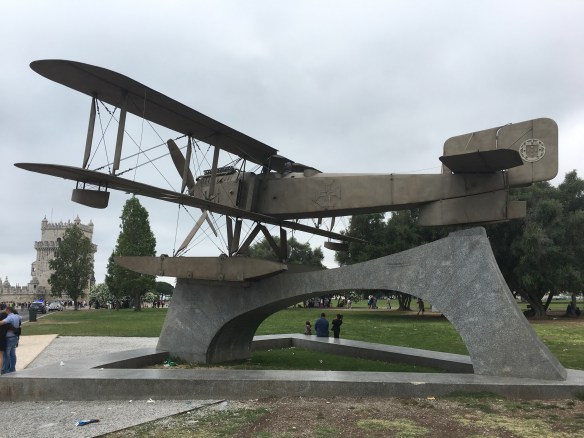
On Lisbon’s extensive waterfront at least a couple of impressive monuments stand in celebration of the achievements of European explorers and aviators. There is the looming Monument of Discovery which depicts the personalities of various explorers making their way across the ocean.

IMG_6632

IMG_6633

IMG_6631

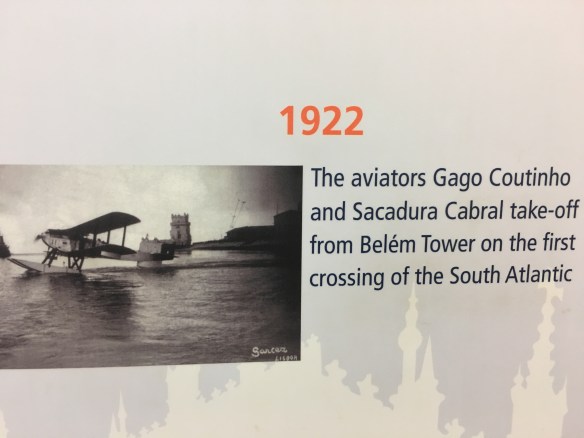
And there is an airplane monument commemorating the historic first south Atlantic crossing in 1922 flown by Gago Coutinho and Sacadura Cabral.
IMG_6628

IMG_6629

IMG_6634

In the decade following Coutinho’s and Cabral’s inaugural south Atlantic flight, another adventuring aviator, Antoine de Saint-Exupéry who is perhaps most well-known for writing the children’s book “The Little Prince”, reflected on what flying did to our understanding of the land upon which we live:

The airplane, he writes, “has revealed to us the true face of the earth. Through all the centuries, in truth, the roads have deceived us … They avoid barren lands, great rocks and sands, they are wedded to the needs of men and go from spring to spring …But our perspective has sharpened, and we have taken a cruel step forward. Flight has brought us knowledge of the straight line. The moment we are airborne we leave behind those [winding] roads …  It is only then, from high on our rectilinear course, that we discover the essential bedrock, the stratum of stone and sand and salt…

“Thus do we now assess man on a cosmic scale, observing him through our cabin windows as if through scientific instruments. Thus we are reading our history anew.”[2]

As we retell our history, as we seek understanding of what and how it happened, do we take the winding road, or do we take to the skies?

Amos the reformer was a prophet in ancient Israel. He challenged especially the northern kingdom in the eighth century B.C.E. to accept a new way of worshipping God. No longer where they to worship at the old shrines established by earlier prophets Samuel, Elijah, and Elisha at Beer-sheba, Bethel and Gilgal. Now, they would have to learn to worship God in a central location, at the temple in Jerusalem.[3]

In order to persuade them, he railed against the rituals and heartless pomp often associated with worship in that day.[4] The Israelites’ understanding of their own history needed changing. Without denying or changing the history itself, Amos helped them grow into an appreciation of the centralized worship which was not inconsistent with the Hebrew faith, a faith that had always emphasized care for the poor, the widow, the destitute. As such, Amos was “an agent of reformation”[5].

Whether we speak of ancient Israel, or the Reformation, or the Age of Discovery, or World War Two, or present day Canada, our remembrance is being reformed.

This first week of November is Treaties Recognition Week in Ontario. Listen to what perspective is offered in the writing of our history. Again, this perspective is not untrue. It simply offers a fuller understanding of what happened when Europeans ‘discovered’ this land:

“This native land was the home of many peoples, who have lived here for centuries and millennia. There is extensive archaeological evidence to confirm this statement. North America was occupied long before European strangers from across the ocean ‘got lost’ on their way to India and ignorantly named the inhabitants ‘Indians’.

“The residents of this new land had a deep regard for the practice of hospitality. So they welcomed the strangers to come ashore and opened their lives to these ‘lost’ explorers. This invitation to step out onto the land conveyed a message that did not make sense to the newly-arrived who had their own primary interests; wealth and resources.

“These alien visitors were nominally Christian. They were supported by ‘Christian’ interests intermingled with commercial and imperial motives. The biblical foundations and the practice of hospitality had been lost or buried under the exercise of abusive power that appears to be the inevitable companion of empires seeking to expand their influence and control. Equally forgotten or ignored was the fundamental biblical concept of covenant whose goal is establishing and nurturing respectful relationships that honour the Creator.

“These European strangers had been told by their highest authorities that any people unlike themselves actually were nobodies. The Doctrine of Discovery … reminded the newly-arriving aliens that they were superior to the ‘nobodies’ greeting them in hospitality. The rest is history and now we are trying to ‘get it right’ so that we can discover what it means to live in peace and mutual respect. It is time to set aside suspicion and abuse so that we can again become hospitable to one another as well as to contemporary visitors.”[6]

This anniversary year we sing “O Canada” and this Remembrance Day we’ve worn our poppies. It is important that we remember. It is important that we commemorate our history, good and bad.

How we remember is important, too. What aspects of our remembrance we emphasize speak loudly about the kind of people we are and aspire to be.

Amos presented a pretty bleak picture of Israel’s plight in the eighth century B.C.E.  The tone of his message is harsh, doom-and-gloom. It seems the Israelites can do nothing to avoid the inevitable calamity that awaits. It’s easy to lose hope and despair in the present circumstances. It doesn’t look good, what with all that’s going on in the world today.

From the perspective of history, though, we know how the story ends for them. We know the people of God are headed to the trials of Babylonian exile a couple of centuries later. We also know that one day, they do return to Jerusalem to restore the temple worship and re-build their lives at home.

Antoine Saint-Exupéry tells the story of when he and his friends from northern Europe invited some north Africans from the Sahara to visit with them in France.[7] These Bedouin, up until this point in their lives, never left the desert; they only knew the scarcity of water that defined so much of their lives and perspective.

When they climbed in the foothills of the French Alps they came across a thunderous waterfall. The French explained to their astounded friends that this water was enhanced by the Spring run-off of melting snows high above them. After minutes of silence during which the Africans stood transfixed before the bounteous and gorged scene before them, the Europeans turned to continue on their mountain path.

But the Africans didn’t move.

“What are you waiting for?” Saint- Exupéry called back.

“The end. We are waiting for the water to stop running. A stream of water always runs out. We are just curious to see how long it takes.”

They would be waiting there a long time. The prophet Amos concludes his diatribe by doing what so many other prophets of Israel do: They call on the people to have faith in God’s action in the world, God’s righteousness and justice. “Let justice roll down like waters, and righteousness like an ever-flowing stream.”[8]

God’s justice never runs out. The waters of God’s grace, mercy and truth never cease flowing. Our perspectives, our experience, our opinions are limited and sometimes scarce, if we rely on these alone.

But God’s work continues to gush forth in and all around us. Let us trust and have faith in the never-ending flow of God’s love and presence in the world today. So we may grow into the fullness of God’s vision for us all.


[1]  “From Conflict to Communion: Lutheran-Catholic Common Commemoration of the Reformation in 2017” (Leipzig: Evangelische Verlagsanstalt/Paderborn: Bonifatius, 2013), p.16

[2] Antoine Saint-Exupéry, “Wind, Sand and Stars” trans. by William Rees (New York: Penguin Classics, 2000), p.33-34.

[3] Wil Gafney in David L. Bartlett & Barbara Brown Taylor, eds., “Feasting on the Word: Preaching the Revised Common Lectionary Year A Volume 4” (Kentucky: WJK Press, 2011), p.266-270

[4] Amos 5:18-24

[5] Wil Gafney, ibid., p.268

[6] Reconciling Circle: reconcilingcircle@execulink.com, Daily Readings for Treaties Recognition Week: 5-11 November 2017, Day 1 “Have You Ever”

[7] I summarize and paraphrase his telling from “Wind, Sand and Stars”, ibid., p.54-55

[8] Amos 5:24
God-talk

Last week in the Canadian Football League (CFL), Ottawa RedBlacks receiver Diontae Spencer set a CFL record in a game against the Hamilton Ticats for most overall yardage gained — just under 500 — in one game. His incredible feat was truly remarkable in a game where his team didn’t score any points in the first quarter.

When asked afterwards about his record-setting accomplishment, Spencer mentioned God several times. He emphasized that the praise was ultimately for God. He couldn’t have succeeded along with his team in that game without God. God was the reason and source of his victory.

Such a witness gets a lot of mileage, especially on national TV covering a professional sports league in Canada. It is true: the public, general impression of Christians is their often-exuberant witness to an all-powerful, almighty God who authors and reflects anything and everything that is glorious, successful, impressive and spectacular. This is the dominant belief and main flavour of the kind of God-talk in the public arena when it comes to Christian witness.

Years ago, a parishioner in a former parish declined my invitation to her to give a testimony of faith during a mid-week Lenten program. I knew she was struggling with some personal challenges at the time. When I asked her why she said no, especially as I recognized in her the strong gift of faith, she said she wanted to wait until things were going better in her life before sharing her faith.

While I understood her reasoning, and was mindful of the delicate situation in her life, I wondered to myself if her attitude didn’t reflect a more general disposition among Christians today. As if you could only give public testimony of faith when you could talk about how good your life was. As if you could only give public testimony of faith when you could point to external circumstances that were favourable, impressive, even enviable.

After all, how could you get up in front of people and talk about God when all was not well in your life? How could you talk about God if you had nothing impressive to show for it? More to the point, would you be giving faithful testimony to God if everything in your life was broken, damaged, failed?

Is God only mentioned when humans achieve something great? Is God only a God who wins contests on the football field and battlefield of life? Can God be talked about only among folks who have succeeded and are healthy and rich? Only when things are going super well?

Or, could God also be present and real to us when we fail, when we are down, when we lose our earthly battles? It seems to me Christians call themselves Christian because we follow the way of Christ. And so, don’t we believe in the God of the Cross? God, by all human standards, failed — being branded public enemy number one and condemned to death. Jesus’ broken body is the iconic symbol for Christians. It is precisely in the suffering of life where God finds us.

On this All Saints Sunday, we understandably focus on what human beings have accomplished: the saints on earth and the saints in heaven. Blessed are those who demonstrate the qualities we read in the Beatitudes[1] — the Gospel text for this festival in the church calendar.

“Blessed” is not the word we might associate with being poor, persecuted peacemakers especially if we use the often-translated English word, “Happy”. I prefer the translation of the first word in the Psalms[2] also often translated to “Happy are they …”:

The Hebrew word here is ‘ashar, which means, literally, “to find the right road.” So, in providing the first beatitude, Jesus is saying: “You are on the right road when you are poor in spirit.”[3] I prefer this translation because it implies a direction rather than a moral state.

Should we take these beatitudes as moral rules for living, as with the Law, we can never fulfill it perfectly. And therefore, we can easily despair and give up. Being on the way, however, gives the long view and big picture. It implies the need for trusting that we are headed in the right direction even if the present circumstances in our lives suggest otherwise.

What is more, as much as we want to make the Beatitudes into the Ten (or rather, Nine) Commandments of the New Testament, this speech from Jesus — given at the beginning of his Sermon on the Mount in Matthew’s Gospel — is not primarily about ‘rules for moral behaviour’ as it is facts about God. These Beatitudes really and fundamentally describe God.

Matthew’s narrative builds towards this awareness, if you can appreciate the classic reversal that Matthew sets up in the first five chapters of his Gospel:

In the first chapter, Matthew’ genealogy firmly plants Jesus “the Messiah” in the lineage of the great Israelite King David. In the second chapter, exotic magi from the East come to pay homage to the newborn king. In the third chapter, King Herod takes seriously this threat to his power and tries to eliminate a contestant to his throne by killing innocent, Hebrew two-year-old boys in Bethlehem. Then, John the Baptist comes on the scene, announcing that he was making way for one who was greater than he. Finally, Matthew has Jesus ascend a mountain where he, like his predecessor Moses, would dispense the Word of God and give his inaugural address.[4]

You can see the build-up, I hope, of an expectation that Jesus would come to bring justice to the wicked and set things right. He, the Messiah, would turn back Roman oppression and occupation of Palestine. But, these words from Jesus’ mouth announcing who is “blessed” pull the rug from under our expectations of who God is. “The one who was supposed to lead revolutionary armies or bring down heavenly fire shows up in Galilee building hospitals and telling people not to hit back.”[5]

Can you imagine the surprise and shock among his disciples! Even the imprisoned John the Baptist does a double-take on his faith and later questions Jesus: “Are you the one who is to come, or shall we keep looking?”[6] It is no wonder, then, that Peter later rebukes Jesus when he talks of his impending death: “God forbid it, Lord! This must never happen to you!”[7]

These beatitudes must have seriously disappointed his listeners and most ardent followers who had such ‘high’ expectations of their would-be Messiah King. How could they now continue following this man?

Is the reason why we may have trouble conforming our lives to the way described in the beatitudes is that we really don’t believe in these words as giving an accurate and trustworthy understanding of God? This is, after all, Jesus, who we know was persecuted and reviled as the prophets were before him.[8]

Do we believe in a God who chooses to be revealed in human flesh, born a vulnerable baby to a teenage couple? Do we believe in a God who chooses to be revealed dying a grotesque and brutal death on a cross showing the world a bruised, beaten, broken and bloody body?

If we did, perhaps we would hear more from the losers in our society. Perhaps TSN would hear the faithful witness of locker room players talking of a God who knows how it is to lose a big game and still keep faith. Perhaps we would hear more from street people, addicts and the impoverished, vulnerable people talk of their simple yet honest faith in a God who walks with them. Perhaps we would hear more from children declare their love of a playful God who carries our burdens for us, freeing us to be who and how we are without judgement and punishment.

Perhaps we would listen more to the murmurs of our own hearts whisper the love of God for us especially when we suffer the turmoil of life. Then, I gather, the world will open its eyes to the God of grace and love.

Because they will see people who live in hope. They will see people who know they have found the right road where they find God most present in helping people who suffer loss and pain, a road on which Jesus has walked himself, a road upon which God will always first find us.


[1] Matthew 5:1-12, NRSV

[2] Psalm 1:1, NRSV

[3] Earl F. Palmer in David L. Bartlett and Barbara Brown Taylor, eds., “Feasting on the Word: Preaching the Revised Common Lectionary Year A, Volume 4 (Kentucky: WJK Press, 2011), p.238

[4] Allen Hilton in ibid., p.239

[5] ibid., p.239

[6] Matthew 11:3

[7] Matthew 16:22

[8] Matthew 5:11-12

Faith in the dark

Sixteenth century Reformer Martin Luther claimed we are “justified by faith”. That means, we are in a right relationship with God because of the gift of faith in us.

Anyone and everyone, therefore, can live in faith. And there is nothing anyone of us can do to earn good favor with God.

Faith, to Luther, was to trust in God and God’s promises, despite your circumstance or any evidence to the contrary. What validates faith in you is not your external situation or material well-being, but God’s purposes, intentions, and promises for your life and the life of others.

Nevertheless, faith is not something you have. It is still something you do, but not to save ourselves. How do we deal with this paradox?

A brother once asked an older monk in a desert community, “Which is holier, someone who leads a solitary life for six days a week, giving himself much pain; or, another who simply takes care of the sick?”

The old man smiled and replied, “Even if the one who withdraws for six days were to hang himself up by his nostrils, he could not equal the one who serves the sick.”[1]

Self-denial and isolation never substitute for an active faith born out of love for our neighbour.

“Give to Caesar what belongs to Caesar,” Jesus answers the trick question posed to him by the Pharisees, “And give to God what belongs to God.”[2] The giving-to-God part, we get. But giving to Caesar?

Giving to Caesar ties us to this earth – to its politics, to its confusion, despair and hardship. Giving to Caesar, after all, was not popular among the Jews resisting Roman occupation in 2nd century Palestine. Giving to Caesar was fraught with political controversy – as it is today in the parlance of paying taxes. Giving to Caesar is not something we would normally associate with being faithful, being Christian.

But it is. Why? It certainly is not a perfect activity free from blemish and beyond reproach. But we do it anyway.

It is not a perfect thing to do faith. But when has it ever been? We give, in faith. We act, in faith. We love, in faith. Even though our response in faith is never perfect.

In faith, we always walk in the darkness. We see, using Paul’s language, “a mirror dimly” (1 Corinthians 13:12).

Medieval Spanish theologian, John of the Cross, called it “luminous darkness”. Because the darkness is also part of God’s creation. We need darkness in order to see the light.

Classical literature and art suggests the spiritual significance of darkness in one’s journey of life and faith. Parsifal’s quest for the Holy Grail begins by entering the forest at “the darkest place.” Dante begins his paradise journey “alone in a dark wood,” and it continues through purgatory and hell. Darkness is often the language of faithful, committed, spiritual people, a language and reality that cannot really be separated from light.[3]

Even in the beginning, as recorded in Genesis, the Bible brings the two together. In the first verses of Genesis, God names every day of creation “good”.[4] Except the first two days – the days when darkness is separated from light and when heaven is separated from earth. Darkness and light must not be separated. The real world, as Jesus teaches, is always a field of weeds and wheat and we can never presume to eliminate the weeds.[5] Light and dark belong together. You can’t have one without the other, to do faith.

In the Hebrew reading for today, the prophet Isaiah renders God’s words: “I create darkness”. God says that God will “give you the treasures of darkness … hidden in secret places.”[6]

This is the way of living without all the answers, living with ambiguity, living without denying or pretending away or even avoiding the contradictions of your life.

This is the way through the desert.

When King Cyrus of Persia conquered Babylon around 539 B.C.E. he let the exiled Israelites living there go back home to re-build Jerusalem. After living by the rivers of Babylon for decades, the people of Israel had a decision to make in response to their newfound freedom: Would they stay? Some did. But many – a remnant, we call them – decided to make the long trek through the desert back home.

What is more, King Cyrus of Persia did not even know God.[7] And yet, he was chosen by God to fulfill God’s purposes. God would even “go ahead”[8] of Cyrus to clear the way for God’s mission.

The way through the desert is not the way of certainty, security and safety, to be sure. The way through the desert is not an easy way. But the dark way, often in biblical times encountered in the harsh climate of the desert, is the way home. It is the way of healing, transformation and the new, good thing God is doing for us and in us and the world.

The Israelites could not avoid the desert even though they were freed from exile. They had to trust not only the dark way, they had to trust the foreigner and pagan King Cyrus to believe what he was doing for them, to believe he was in truth an instrument of God.

Talk about contradiction and ambiguity in faith! Would we, today, confer such a trust in someone outside the traditional community of faith? Would we, for example, take to heart Gord Downie’s medium of pop rock to advocate for better relationships with Indigenous People? Would we trust the revelation of God’s purposes in people of other religions, newcomers to Canada who bring with them different cultures from ours? Could these people and others also be instruments of God and God’s purposes, for us today?

The Israelites were faced with such a conundrum. And we know what they decided to do. They had to walk home in the desert, in the darkness, and trust that even through Cyrus, God’s unknowing servant, the mighty God of Israel was moving behind the scenes of everything that was transpiring.[9]

The way to healing and resolution of whatever troubles you today is a desert way of darkness. Yet, as someone once said, “In every cross we bear, therein lies a great treasure.”

A group of white settlers learned the hard way in the fall of 1849 as they set out from the Utah Territory toward gold fields in the San Joaquin Valley of California.

Taking a shortcut recommended to them by the leader of a passing pack train, they headed into a 140-mile long stretch of desert waste known to us today as Death Valley. It was a tragic mistake.

Twenty-seven wagons started into that long desert valley east of the Sierra Nevada. Only one of them came out. A survivor of that misguided party spoke of the dreadful sameness of the terrain, the awfulness of the Panamint Mountains, remembering only hunger and thirst and an awful silence.

Two months later, as the only surviving wagon topped the westernmost crest of the distant mountains, one of the settlers looked back on the place that had nearly claimed them all, and said: “Goodbye, Death Valley.” That’s how the site received its name.

But there’s another name the Spanish used to describe this God-forsaken land. They referred to it as ‘la Palma de la Mano de Dios’, the very palm of God’s hand.[10]

Could it be that even in the midst of the most dangerous climate and terrain on earth, where it’s 134 degrees (57 degrees Celsius) in the shade exposed to winds in excess of one hundred miles (160 kilometers) an hour, wanderers have found God? It is God, actually, who finds us, in the darkest most arid times and places of our own lives.

It is during these times and places where people become accustomed to risk, vulnerability and brokenness that they build an unshakable trust in the other? It is during these dark times and places where you confront your inevitable loss of control and the specter of your own eventual demise head on. It is in these moments where we have to wait for God, ask God for help, and learn to trust God over and above anything we may be able to accomplish by the might of our own hand.

In the dark, desert journeys of our lives especially, we remain inscribed in palms of God’s hands.[11] La Palma de la Mano de Dios. You may not understand all the contradictions and ambiguities of your life, right now. You may not be able to figure out all the inconsistencies and paradoxes of life. You may not be able to resolve the problems of your life or in the world.

But, believe this: There is Someone who does. As you wander in the darkness of faith, never forget that God is bringing to resolution and completion all the confusion and contradiction of your life and the life of the world.

And, it is all good.


[1] Belden C. Lane, “The Solace of Fierce Landscapes: Exploring Desert and Mountain Spirituality” (.202

[2] Matthew 22:21

[3] Richard Rohr, “Adam’s Return: The Five Promises of Male Initiation” (New York: The Crossroad Publishing Company, 2016), p.39.

[4] Genesis 1:3-8

[5] Matthew 13:24-30

[6] Isaiah 45:3,7

[7] Isaiah 45:4-5

[8] Isaiah 45:2

[9] Carolyn J. Sharp in David L. Bartlett and Barbara Brown Taylor, eds., “Feasting on the Word: Preaching the Revised Common Lectionary” Year A Volume 4 (Kentucky: WJK Press, 2011), p.175

[10] Belden C. Lane, ibid., p.231-232.

[11] Isaiah 49:16

From Loss to Life

“I have learned to be content with whatever I have. I know what it is to have little … and of being in need. I can do all things through him who strengthens me.”

 -Paul, to the Philippians 4:11-13

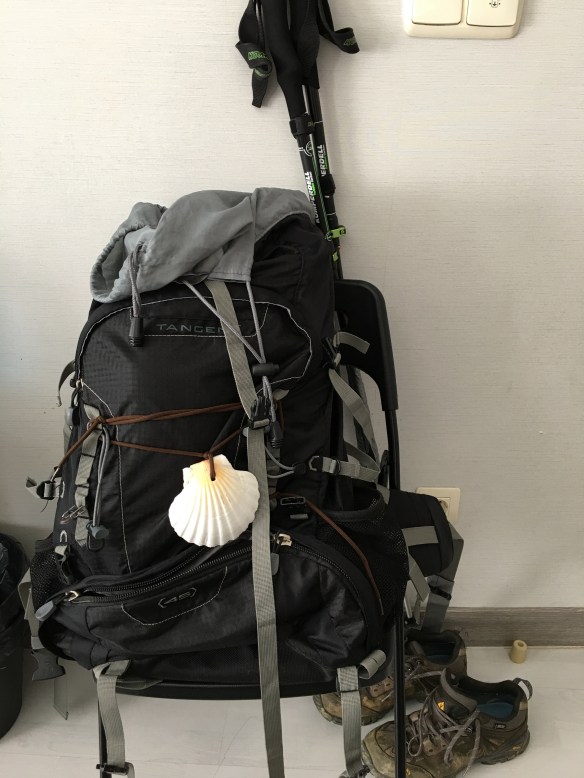
One of the basic truisms of pilgrimage walking is that first-timers usually pack more than they need for the journey. The general rule is ten percent of your body weight. For most people, that means no more than fifteen to twenty pounds in your backpack.

IMG_5303

I read in one of the Camino de Santiago guidebooks, in preparation for my walk last summer, that for most first-time pilgrims five pounds in their pack is unnecessary; these items amount to five pounds of fear: that extra sweatshirt, pajama onesie, that tub of moisturizing cream or the proverbial electric hairdryer. It is not long on the journey before at least five pounds are left behind or mailed home.

IMG_5285

If we use the pilgrimage as a metaphor for life, then the pilgrim on the journey of life, to be true to the journey, needs to learn how to let go.

IMG_5243

When I began I thought I had it down to the bare minimum. Nevertheless, I was still anxious. Those first few days I worried about where I was going to sleep that night. Not knowing how far I would walk, and not wanting to put the stress of expectation by booking ahead, I had to go with the flow and improvise in the moment. Even though I found a place every night, I was still preoccupied, distracted and fretting. Perhaps I had put too much faith in what I carried.

IMG_6116

Before I knew it, I lost some of my belongings those first days on the path. The first night I left behind my head lamp. The second or third night – I don’t know which – I lost my very expensive self-inflating bed roll for underneath my sleeping bag.

If the story ended there, you might say I was in an unwanted, growing state of crisis. If the story ended there you might say my pilgrimage was headed towards disaster, defeat, loss and failure. If the story ended there, you might say that everything was falling apart in my journey, collapsing into the rubble heap of destruction.

But the story didn’t end there. And it doesn’t end there.

The truth is, as Richard Rohr explains it best, that “through loss, through crisis, through stress, limitation, we move to a better place in our lives.

“Physicists today would say that loss is not real. There is only transformation. The metaphor of the liquid world is that this element simply moves from liquid to solid to vapor and back again.

“It looks like a death, a loss, in each case. But, in fact, it’s a becoming. Now we recognize that Jesus was saying this all along. In Christianity, it was called the ‘Paschal Mystery’. It was a phrase used by Saint Augustine that in fact dying leads to resurrection. Jesus became the icon, the living image, of that mystery – that his crucified body transformed into the risen Christ. That they are both the same person.

“Creativity, newness of life, has a cost. And the cost is what always looks like death. But really isn’t. The cost is loss. Which is perceived as an enemy, or affliction, which always looks like what we don’t want. Somehow to embrace loss, spiritually speaking, is to achieve eternity. Death allows us to be united with what is real. But, of course, it only looks like death from our side. Apparently from the other side – we call it heaven, or eternal life – is in fact the really real.

“The really real is already beginning now. And that’s what we need to trust. That’s what we need to allow. Fourteenth century Italian theologian Catherine of Siena once said: ‘It’s heaven all the way to heaven; and, it’s hell all the way to hell.’ And the way to heaven begins in this world, all the way to heaven.

“To avoid all loss, to avoid all letting go, is to avoid transformation into union with God. If you spend your entire life avoiding ‘dying’, Jesus would say you never get there. It’s hell all the way to hell.

“‘Unless the grain of wheat dies, it remains just a grain of wheat. But if it dies, it bears much fruit.’[i] We now know that this phrase was used in the initiation rites of Asia Minor. Perhaps one of Jesus’ most enigmatic lines is: ‘You must lose your life in order to find your life; you must lose your life in order to gain your life.’[ii] And if you don’t let it go, you will never find it.”[iii]

This is what Paul is talking about when he says he can do all things in Christ who strengthens him. That is, he can also ‘let go’. Not only does he know what it is to have plenty. He can also lose.

Philippians 4:13 is a popular well-loved verse in the New Testament: “I can do all things through him who strengthens me.” It is often used to bolster self-confidence in accomplishing heroic goals and aspirations. It is often quoted on posters, billboards and bumper stickers to indicate a glory, success and prosperity gospel message of human achievement more reflective of current self-help pop psychology. It is also used to undergird impressive mission goals in the church.

Moreover, the first nine verses of this chapter – the famous “Rejoice always!” text – are read on their own, as unfortunately prescribed in the Revised Common Lectionary, without including verses 10-13 for context. And the context is Paul’s suffering and need and persecution.

He is rejoicing and expressing his confidence in living precisely because he has travelled through the valley of the shadow of death. Precisely because he has learned to let go. You can’t have resurrection without death. You can’t experience the joy of transformation without first feeling the pain of loss. You can’t do mission unless you have let go, done without, lost — in some fundamental, real way.

Later this month on Reformation Sunday when all ELCIC Lutherans in Ottawa will gather to worship together, we will sing together Martin Luther’s well-known hymn: “A Mighty Fortress is our God.” Frederick Hedge’s English translation is closer to the original German when in the last verse we sing: “Let goods and kindred go, this mortal life also.”[iv]

Here, we get a peek into an under-emphasized aspect of Luther’s theology which included the practice of letting go. Not only is salvation realized at the moment of our mortal death, it is something that begins in the midst of living. That is, during our life we the practice the art of dying – of letting go, of losing – as an essential experience in the way of salvation, of transformation.

When I realized I had lost my head lamp and bed roll several days later, a couple of things were happening within me:

First, it took a while for me to notice these losses. I didn’t notice my loss right away perhaps because I really didn’t need those things. Second, and maybe more significantly, I was less stressed the farther I journeyed along the Camino. I was relaxing more into the pilgrimage, even without what I had deemed essential kit when I began.

Some Christians in the West today make the mistake, I believe, of confusing loss of privilege with persecution. Wealthy, financially advantaged Christians say they are being persecuted by a politically correct movement to recognize other religions and different people in a growing multi-cultural and pluralistic society, something Luther could never have envisioned in his day.[v]

We are not being persecuted. Rather, we are being confronted with the prospect of losing our privileged place in society, a status that we have admittedly enjoyed for centuries in our country. What the real issue is, is whether we will resist and avoid this loss, or whether we will accept it.

What is ending in your life? What are you facing that deep down you know is a loss? What are the failures and defeats and suffering in your life? Where is there suffering in the lives of the vulnerable, the underprivileged, the poor?

Pay attention, and wake up. These may, in truth, be invitations. Invitations to enter the gate of loss and letting go. Invitations to let go and trust that through dying, it is heaven all the way to heaven.


[i] John 12:24

[ii] Matthew 16:25, Mark 8:35, Luke 9:24, John 12:25

[iii] Richard Rohr, “The Art of Letting Go: Living the Wisdom of Saint Francis” (Boulder Colorado: Sounds True Audio CD Learning Course, 2010), Session Three.

[iv] Evangelical Lutheran Worship (Minneapolis: Augsburg Fortress 2006), Hymn 505

[v] The Rev. Dr. Gordon Jensen, “Luther’s Legacy” in Canada Lutheran (Volume 32, Number 6, September 2017), p.10-14

Thanksgiving builds commUNItY

Sometimes what I see in nature represents how I feel. For example: “The dark, thunder clouds looked angry,” we say. Or, “The deer leapt with joy across the meadow.”

Nature has a way of evoking feelings within us. When I stopped in this cove on Cape Disappointment, I couldn’t help but feel praise for the creator God, and thankful for the beauty of life.

IMG_6215.JPG

This particular photo conveys to me first a state of peace. After all, not far from this lone pine the swirling waters, changing tides and ravaging winds off the Cape constantly threaten to uproot the tree. And yet, the tree lives on looking very peaceful.

But more than that, thankful. The tree shoots to the sky, to the life-giving sun. It’s not just hugging the rock in defensive self-protection. It offers its praise to the Creator by aiming and growing upward, giving a faithful witness to all that will see this tree.

For me, a life lived grounded and united in peace, praise and thanksgiving to God, is indeed a life lived in the gracious community of God.

During this month when we reflect on the legacy of the 16th century Reformation and celebrate together the 500th year of Reformation, we cannot avoid nor deny the sad reality of conflict and division. It seems you cannot fully appreciate the nature of things, including the church, unless you acknowledge the role of conflict among people of all times and places.

This is why it is noteworthy that Luke in the Gospel text assigned for Thanksgiving Day tells this story, which is not found anywhere else in the New Testament.[1] What is unique about this healing story is the response of thanksgiving by a Samaritan. Jesus sets this “foreigner” apart from the others who were also healed.[2]

The Samaritan was the only one who “turned back” to give thanks to Jesus.[3] So, there is much more going on here than a physical, medical cure of a disease.

Since ancient times, a political and religious rift was growing between Israel and Samaria. Samaria became “foreign” after breaking off from the Davidic monarchy and the establishment of Samaria as the capital of the northern kingdom.[4] Then, after the Babylonian exile, tensions mounted between the people of Samaria and the Jews who returned to rebuild Jerusalem.[5]

Luke includes this story in his Gospel to emphasize the importance of looking to the positive witness of the outsider. In other words, the normal divisions separating us in our religious and cultural identities matter little in the larger scheme of things. Especially when it comes to the expression of faith.

Those who are different are often the very people we need to look to for a positive example of faithful living.

This summer a friend of mine visited the German town of Dinkelsbühl in Bavaria. During the Reformation Era in the 16th and 17th centuries, this town was the first of only a small number at the time who identified as bi-confessional; that is, roughly equal numbers of Roman Catholic and Protestant citizens were allowed to live and practice their faith, with equal rights for both sides.

After the Peace of Augsburg in 1555, a few years after Martin Luther’s death, land in Germany was divided into Protestant or Catholic regions. The religious adherence of a population in any region was determined by the religion of the ruling prince in that area.

Except for Dinkelsbühl. The Peace of Westphalia a century later enshrined the bi-confessional identity of this town by establishing a joint Catholic-Protestant government and administrative system, and ensured a precise and equal distribution between Catholic and Protestant civic officials.

When you consider the animosity, violence and warfare characteristic of those centuries between Catholics and Protestants, never-mind the twentieth century history in Ireland and the unfortunately enduring oppositional attitudes between Protestants and Catholics today – this is truly remarkable.

Bucking the dominant culture of dualistic either/or, right/wrong, in/out, black/white thinking, the leaders and citizens of Dinkelsbühl chose to follow a different path. We don’t need to point to present day efforts of ecumenism and unity building. Right in the middle of the conflict of the 16th, 17th and 18th centuries there were already efforts then to see a different way:

To see the good in the other. To search out and focus on common understandings first. To seek mutual understanding. Amidst everything around conspiring against such counter-cultural vision.

The point of decision for the Samaritan leper came when he realized he was healed, on the path as they went.[6] It’s important to picture this in your mind. Jesus didn’t snap his fingers and, voila! Yes, the lepers brought their belief in Jesus to the encounter, asking him for healing. Jesus then told them to go to the priest for certification of their healing.

It was on the way – after they had committed to doing something, even before any proof of their healing was given, amidst their still debilitating illness – they went. In doing something, on the way, they were healed. Healing is a process.

It was on this journey when the healed Samaritan had to make a decision.  He could have followed the other nine who were clearly pursuing their self-interest. Against the conforming pressures of the majority, he turned back to follow his heart, full of thanksgiving. We may wonder whether he was also motivated by avoiding potential ridicule and discrimination as a Samaritan appearing before Jewish authority in Jerusalem.

Nevertheless, the Samaritan made thanksgiving a priority. It is to him that Jesus ascribes the affirmation: “Your faith has made you well”; or, as other translations have it: “Your faith has saved you.”[7]

Faith without gratitude is no faith at all. There is something life-giving about thanksgiving. Grateful people are more hopeful. Indeed, there is evidence now of a correlation between gratitude and the immune system. People who are grateful have a health edge. For example, an attitude of gratitude, reduces stress. So, your mother was right when she made you call your grandmother and thank her for the birthday card.[8]

A true expression of faith is complete when it includes thanksgiving. Coming to worship on Sundays is not validated because “you get something out of it.” Attending worship is not about the self-centered search for “what is in it for me?” Worship is not “me-first” exercise. Let’s be clear.

Rather, coming to worship is about offering thanksgiving, first and foremost. Sunday worship is an opportunity to give thanks to the God who gives all, for all. It is no wonder that the Holy Communion is traditionally called “The Holy Eucharist”, translated from the Greek as “The Great Thanksgiving”. We come to the table to offer our gifts of thanksgiving to God. Every week.

Thanksgiving changes the character of a community and its work. Stewardship is transformed from fundraising to the glad gratitude of joyful givers. The mission of the church changes from ethical duty to the work of grateful hands and hearts. Prayer includes not only our intercessions and supplications, but also our thanksgiving and praise of God’s good gifts to us at the Table.[9]  Thanksgiving builds bridges among people who are different.

We come to Communion to offer thanks to God not because we are good, but because God is good. And we see God reflected in all of creation, in all people, in the good they are.

We pray the legacy of the next 500 years of Reformation reflects the growth of unity among a people that are grateful for the good gifts God brings to us all.

Amen.


[1] Oliver Larry Yarbrough in David L. Bartlett & Barbara Brown Taylor, eds., “Feasting on the Word: Preaching the Revised Common Lectionary” Year C, Volume 4 (Kentucky: WJK Press, 2010), p.169

[2] Luke 17:17-19

[3] Luke 17:15

[4] 1 Kings 12, 16

[5] Nehemiah 4, Yarbrough ibid., p.167

[6] Luke 17:14-15

[7] Luke 17:19, Yarbrough, ibid., p.169

[8] John M. Buchanan, ibid., p.169

[9] Kimberley Bracken Long, ibid., p.168

Take a knee

IMG_5385

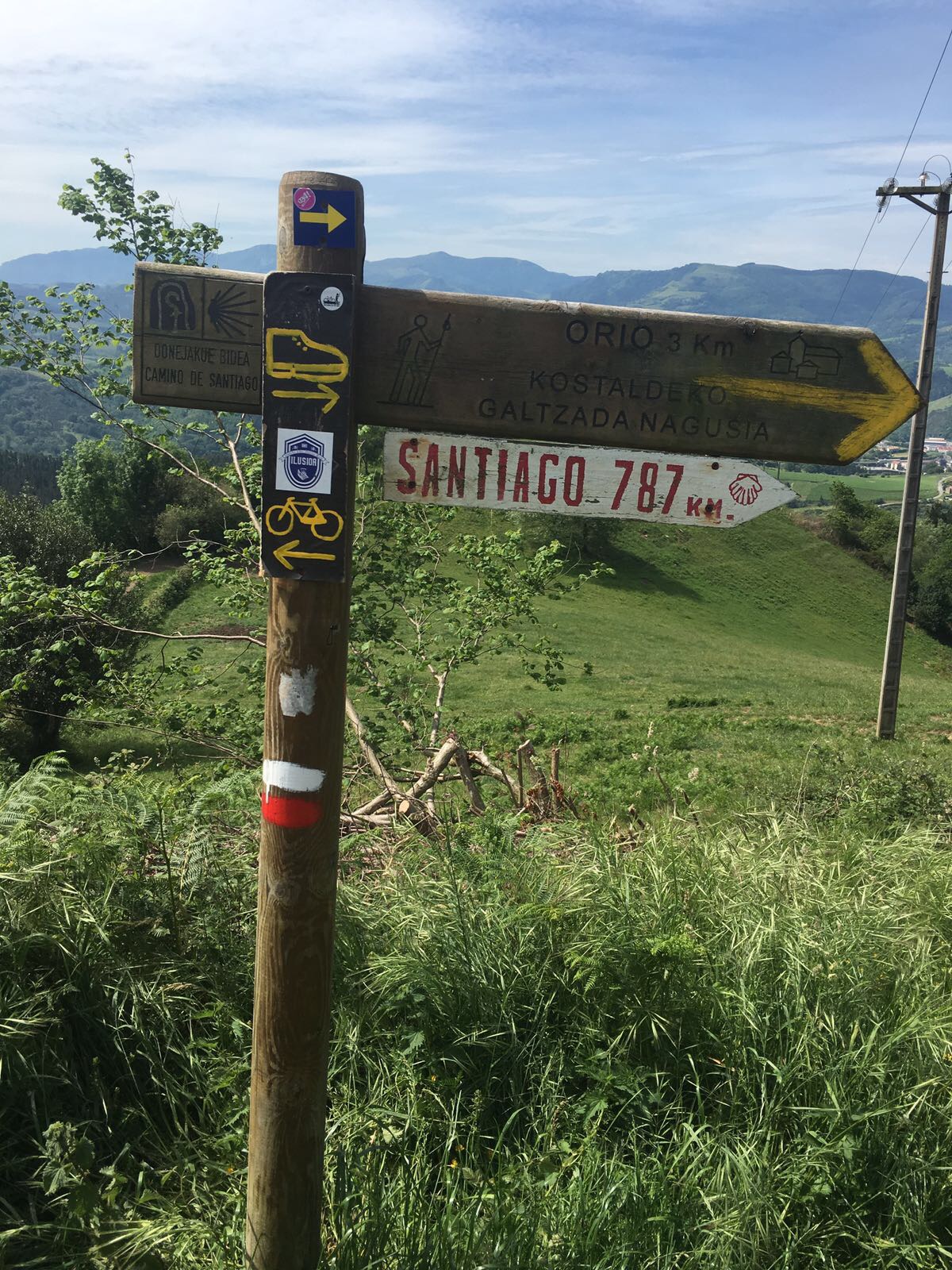
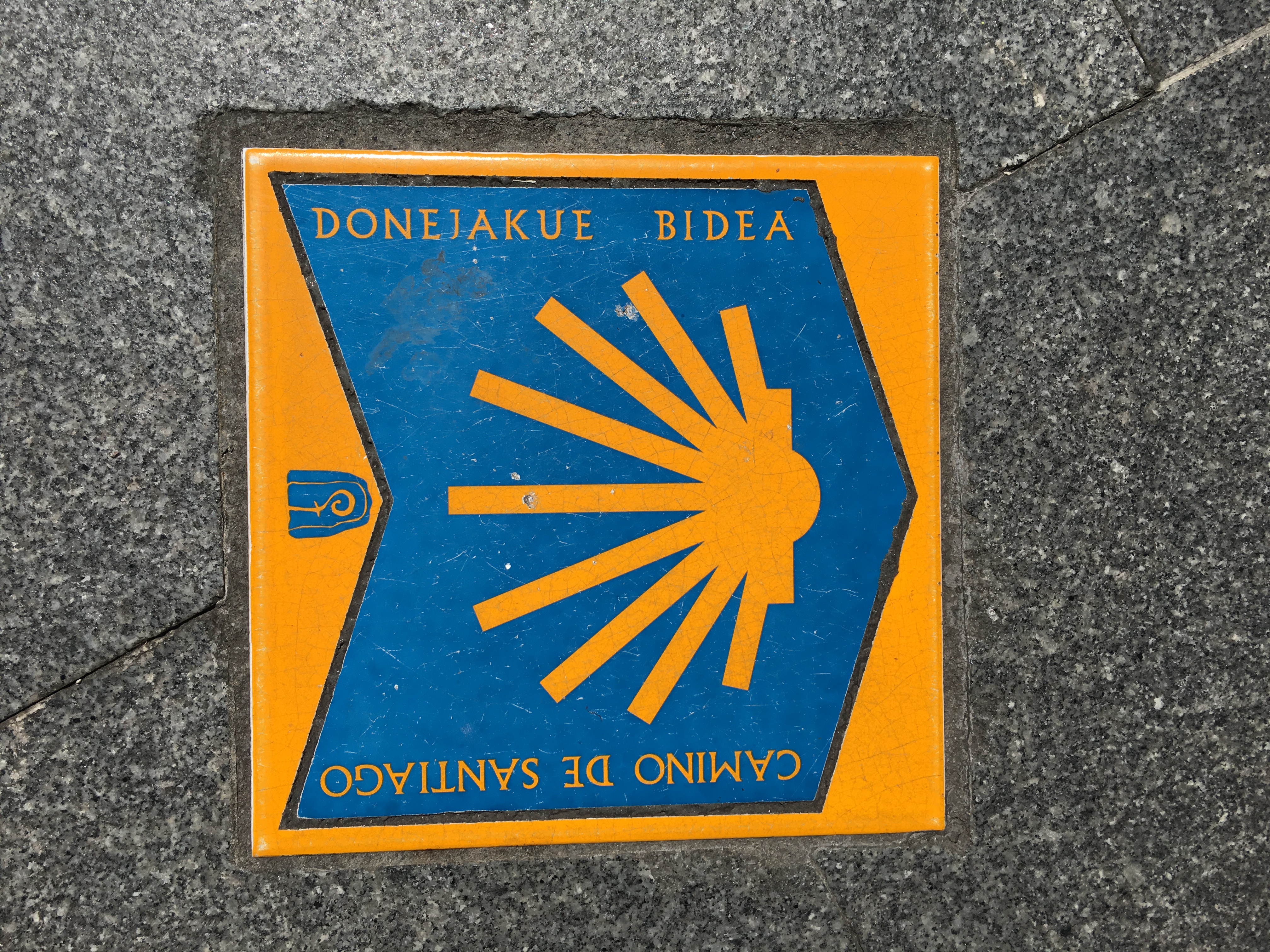
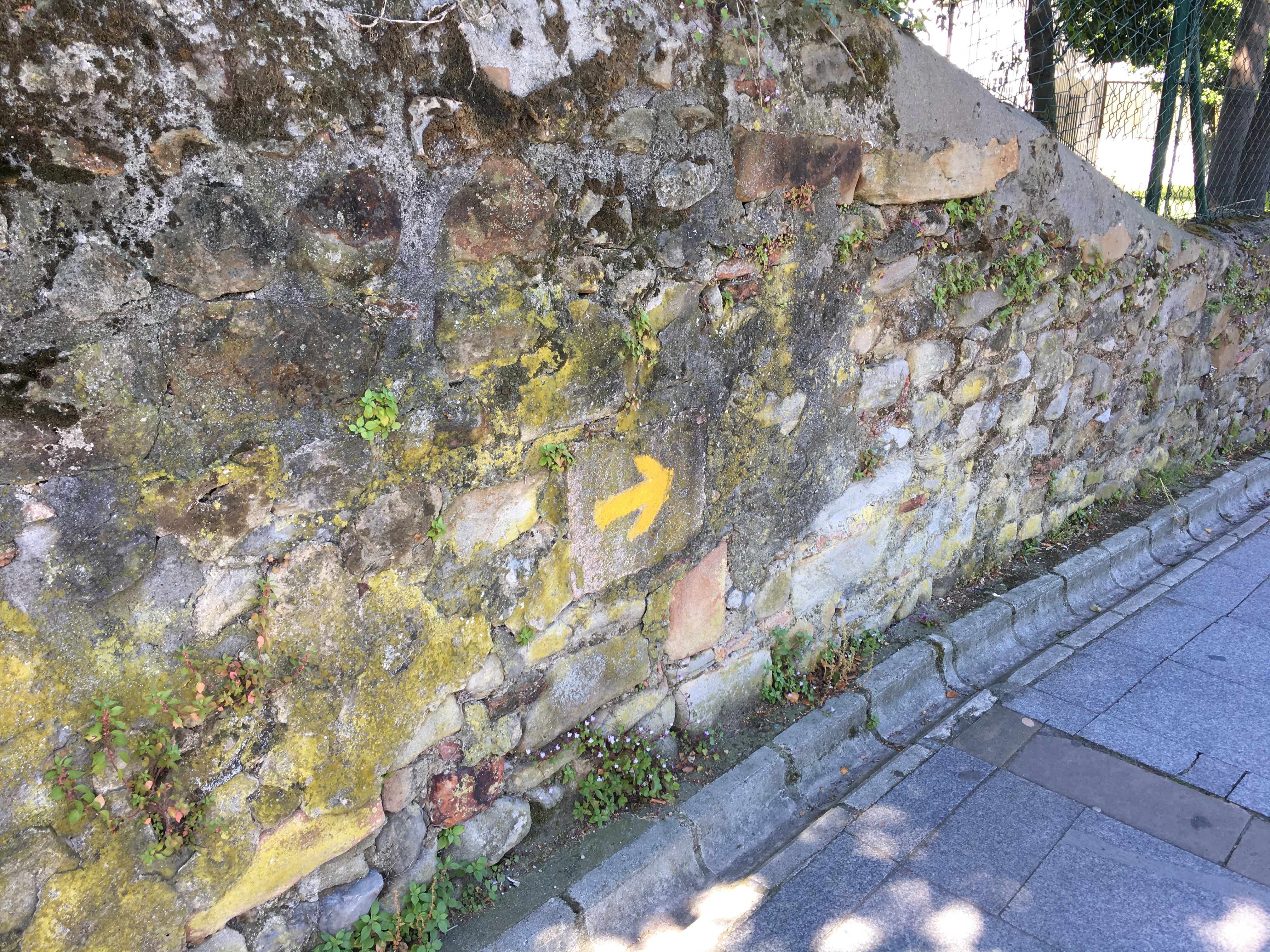
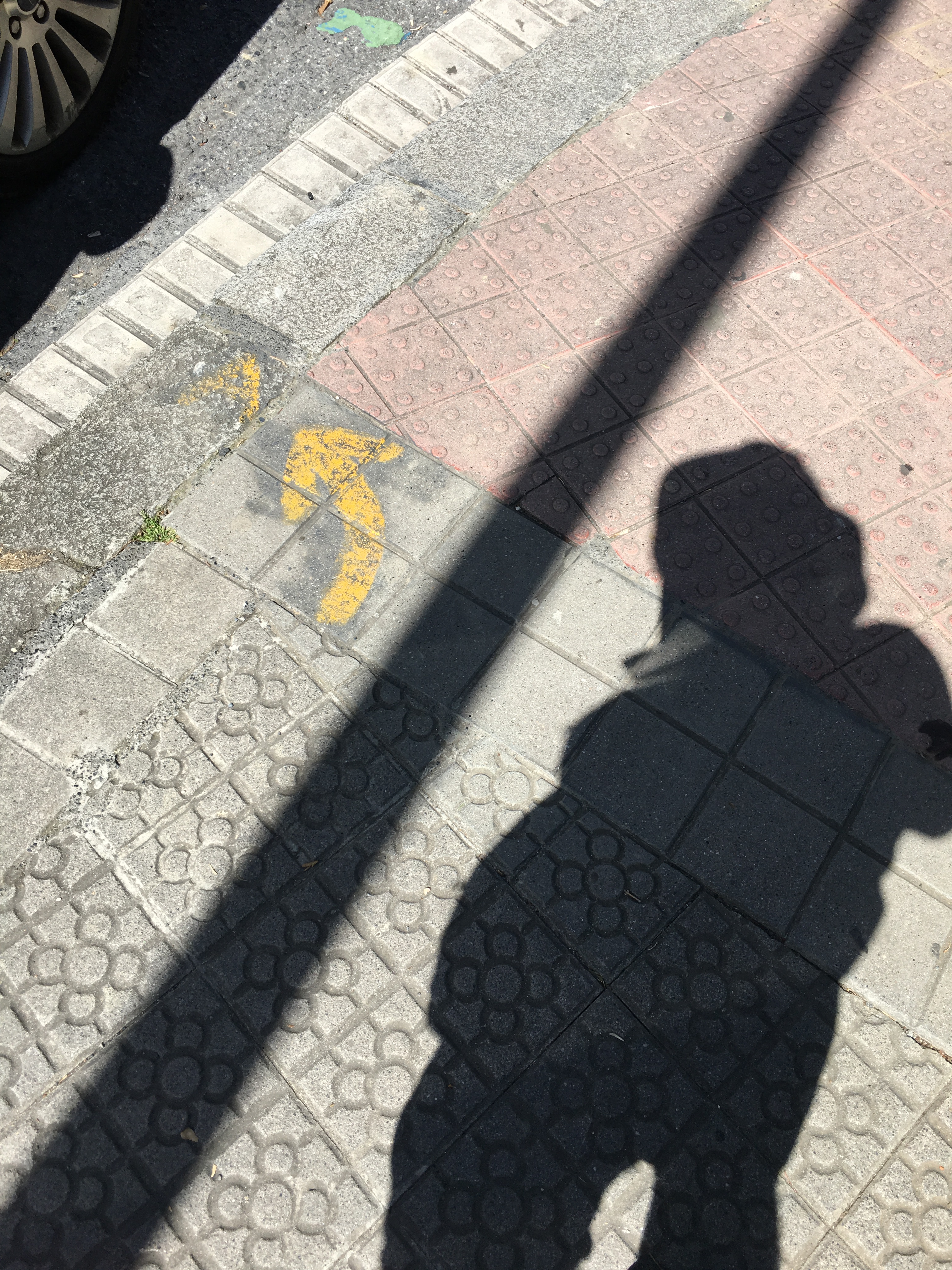
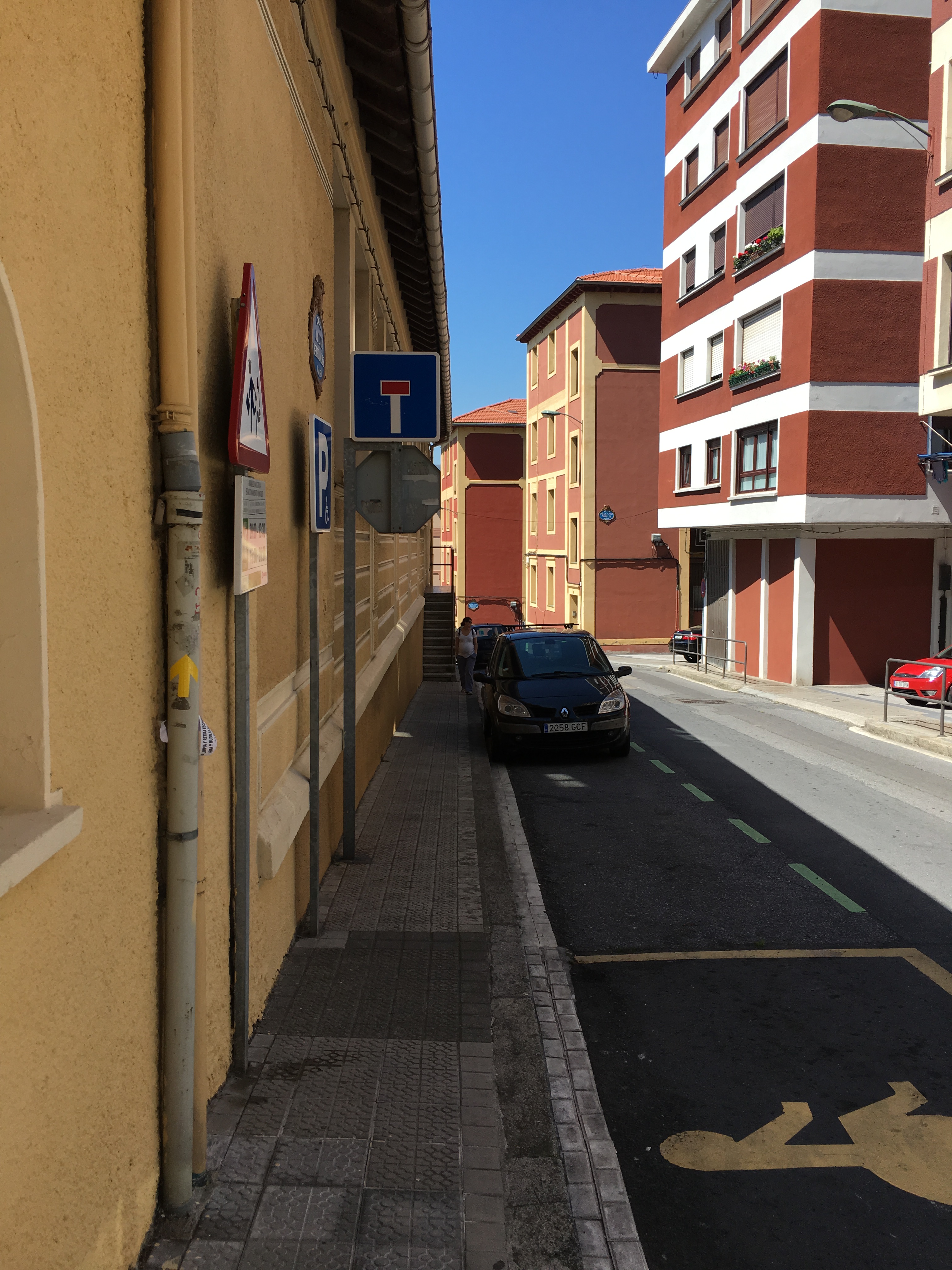
On the Camino de Santiago, you had to take care to follow the signs. Yellow arrows were common and well-known markers to all pilgrims along the path.

IMG_5368

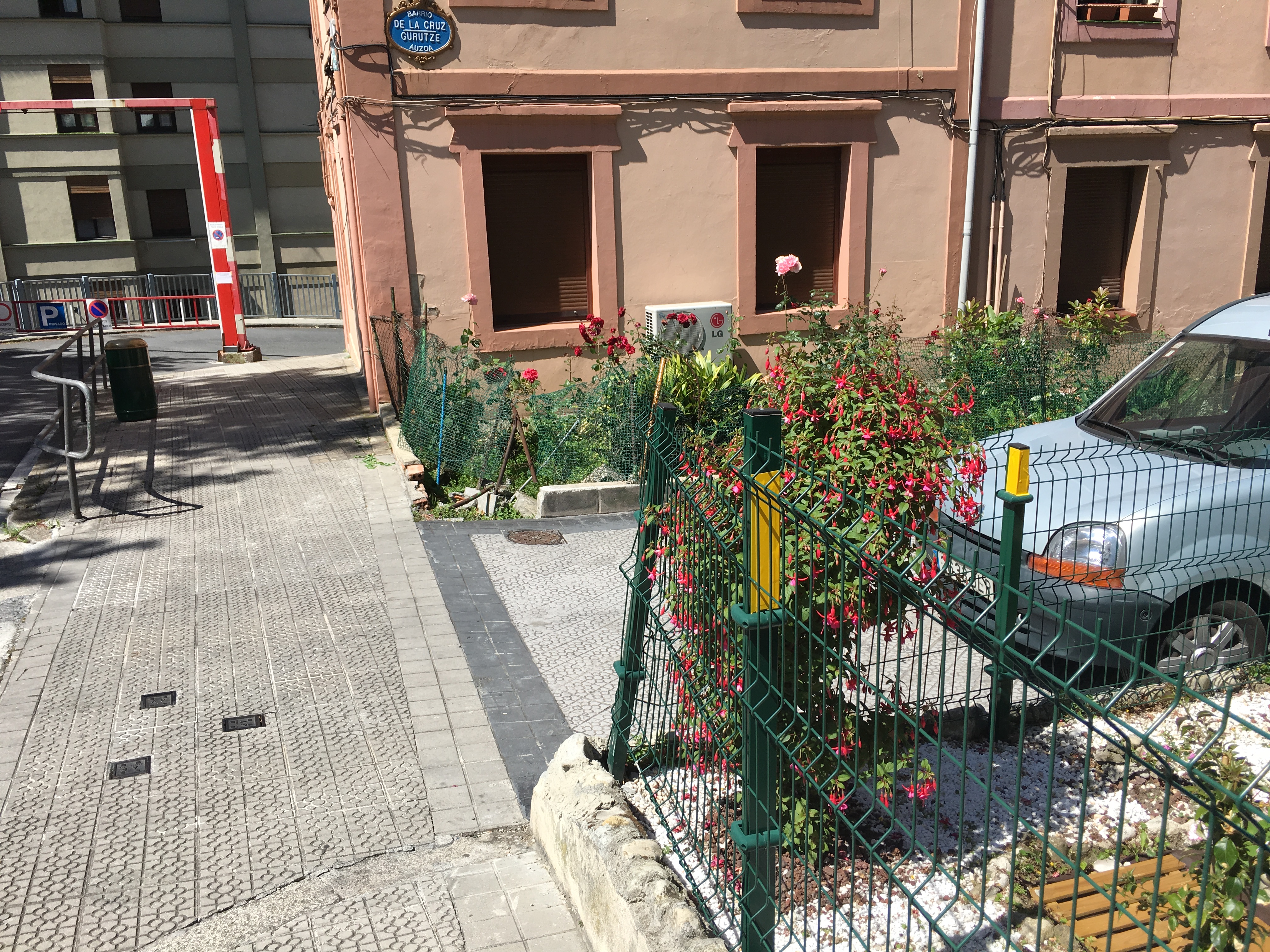
It was easy to get lost, especially in the big cities, if you missed one of these markers. But also at critical junctions in the forests, the fields or roadways where if you were not paying attention, you could lose hours on the journey and have to double back.

I learned, sometimes the hard way, to pay attention to what others might consider obvious. Some markers are easy to notice.

Some are sort of easy to notice:

But often it was a challenge to find that yellow marker:

AF9FA91C-7D0D-4D54-B2CD-F933EDE6260A7692EB83-1AA5-499D-AE9B-A64B6A5678C8IMG_5363IMG_5364

The signs — like the sacraments of baptism and holy communion — are reminders of what kind of journey we are on. These signs are embedded in the journey itself, on earth. These holy signs don’t stay in some other-worldly realm; they are very much a part of this world: Baptism uses common water; Communion uses bread and wine – basic, earthly elements which remind us of what God is all about on earth.

The signs are part of our daily, ordinary lives. The signs are already there, along the way, before we even commit to the journey. We only need to open the eyes of our heart and mind, and pay attention. Because the signs are too easy to miss. And when we do miss them, we get lost and go down other paths, paths that lead to division in the Body of Christ, the church.

I remember when our then 12-year-old son started playing football I first learned what it meant to ‘take a knee’. According to the tradition, if a player on the field was injured everyone ‘took a knee’. And it didn’t matter which team the injured player was from; that is, all the players from both teams knelt down and waited there until the injured player either walked off the field on their own strength, or was carted off on a stretcher.

Tim Tebow and Colin Kaepernick have both attracted world-wide media attention for ‘taking a knee’ in the last couple of years, although for very different reasons. Both have made a public display of their faith. Both are prayerful, and devout. One grew up the son of Baptist missionaries to the Philippines. The other was baptized Methodist, confirmed Lutheran, and attended a Baptist church during college.[1]

Tim Tebow, however, is a darling of the church while Colin Kaepernick has been reviled. Their differences reveal much more about the brand of Christianity preferred by many in the church today. Tebow is known for his signature move – dropping to one knee on the field, his head bowed in prayer, his arm resting on his bent knee. He’s clean cut, polite, gentle, respectful.

Colin Kaepernick, starting last year already, refused to stand to attention during the playing of the American national anthem. Originally, he did so in support of Black Lives Matter and to protest police violence against black people. Kaepernick was voted most disliked player in the National Football League (NFL). People posted videos of them burning his jerseys. He was called “an embarrassment” and “a traitor”. Of course, with recent events in the NFL, his witness gains momentum nonetheless.

Two players, two brands of Christianity:

Tim Tebow represents personal piety, gentleness, emphasis on moral issues. Colin Kaepernick represents social justice, community development and racial reconciliation. One version of Christianity is kneeling in private prayer. The other is kneeling in public protest. One is concerned with private sins like abortion. The other is concerned with public sins like racial discrimination. One preaches a gospel of personal salvation. The other preaches a gospel of social transformation. One is reading Paul’s letters. The other is reading the Minor Prophets.

Are these versions of Christianity mutually exclusive? Much of Christian history, especially since the Reformation, would suggest, ‘yes’, even among Lutherans. The proliferation of Christianity into some thirty thousand different denominations by the 500th anniversary of the Reformation in 2017 would suggest, ‘yes.’ The divisions within Christianity is leaving the church all the poorer, with each side needing to be enriched by the biblical vision of the other.

Bible scholar Walter Brueggemann expresses it well: He writes that Christianity should be “awed to heaven, rooted in earth.” We should, as he says, be able to “join the angels in praise, and keep our feet in time and place.”[2]

Christianity, sadly, remains on its knees because of our divisions, when all along the vision of the Gospel, expressed best by Paul himself, is that “every knee should bend, in heaven and on earth”[3]. How do Christians today, regardless of background and orientation, contribute to this vision in ways that actually make a difference on earth?

In the second reading for today, we learn about the essential character of the biblical God. In the Hebrew Scriptures, all of God’s acts, blessings, and delights in creating are for the sake of others. This is typical of God, “who is intimately concerned with justice, peace, and the flourishing of all creatures.” This is typical of God, “who is ‘on high’ but never remote, who is ‘over all’ but faithfully and dramatically invested in life on earth.”[4]

God does not embrace hierarchy. Nor does God rest in privileged autonomy, according to some deist idea of a distant and uncaring God. God is love. And the New Testament witness continues this description of a God who cares intimately about our humanity, in the incarnation of Jesus Christ. God is Immanuel, God-with-us and for us.

In setting up this wonderful hymn that Paul includes in his letter to the Philippian church, Christians are called to exemplify a humble regard for others, seeing them as “better than yourselves”; we are not to primarily serve our own interests, but the interests of those who are different.[5]

These may be an impossible task for us in our self-centred, me-first culture. Nevertheless, we are encouraged, as Paul encouraged the early church in Philippi, to “work out our salvation with fear and trembling”[6]. Why even bother?

Because God is already at work in us.[7] God is already at work in the world, as difficult as it can be to spot those signs of God’s grace, God’s justice, God’s good work. As Martin Luther insisted, matters of salvation revolved around God’s actions, not human activities. Justification — being placed into a right relationship with God — is totally God’s activity. After all, as Paul wrote earlier in his letter to the Philippians, we need to believe – despite what appears to be everything to the contrary – in the promise and the vision that God “who began a good work among you will bring it to completion.”[8]

God’s grace precedes all. Just like the signs on the journey before us and around us. Even though we may miss them from time to time doesn’t mean they aren’t there, waiting for us to notice. God’s grace continues to guide us and point in the right direction.

We therefore have nothing to lose, to take a knee for the sake of those who do not have a voice. To take a knee for the sake of others who are silenced by discrimination and abuse. To take a knee for all God’s creatures who long for a better day.

We pray for and support agency to help the refugees today escaping violence and oppression in Myanmar. We pray for and support agency to help victims of Hurricane Maria in Puerto Rico. We, so, ‘take a knee’, in the spirit and mind of Jesus Christ who took a knee for us all.

[1] I thank Michael Frost, “Colin Caepernick vs. Tim Tebow: A Tale of two Christians on their knees” (The Washington Post, September 27, 2017) for much of the content I use in this section of my sermon

[2] cited in Michael Frost, ibid.

[3] Philippians 2:10, NRSV

[4] William Greenway in David L. Bartlett & Barabara Brown Taylor, eds., “Feasting on the Word: Preaching the Revised Common Lectionary” Year A Volume 4 (Kentucky: WJK Press, 2011), p.112.

[5] Philippians 2:3-4

[6] 2:12

[7] 2:13

[8] 1:6

Cape Disappointment

How do we learn to deal with disappointment?

When health concerns mount? When there are cutbacks in the company you work for? When a relationship breaks down? When someone betrays you? When you fail to meet your goal? When you lose something precious?

How, as people of faith, do we learn to deal with disappointment? When what has happened does not make sense, when we can’t understand ‘why’?

In 1788 Captain John Meares named the spot of land overlooking the confluence of the Columbia River and the Pacific Ocean, Cape Disappointment. He was disappointed that the Columbia River was simply thus, a river, instead of the fabled Northwest Passage which he was intending to find.

IMG_6125.JPG

Mr. Meares was obviously well off-course to his goal. We know today that the Columbia River begins its journey at Columbia Lake in central British Columbia, Canada, and winds itself south hundreds of kilometres into the states of Washington and Oregon before spilling into the Pacific.

IMG_6201

In keeping with the rather downer of name, the lighthouse on Cape Disappointment overlooks the hundreds of shipwreck sites off the coast. The United States Coast Guard recognizes this large area of water as the most dangerous among all the river outlets along the continental shores of the United States.

IMG_6123

Both the strong outflow of the broad and mighty Columbia competes with the powerful tides and winds generated by the largest ocean on earth. Crisscrossing currents of water create constantly shifting sand bars and opposite flow wave action that can confuse, disorient and ultimately undo any mariner navigating this passage.

IMG_5932

IMG_6320

IMG_6322

Add to this mayhem the fog which has an uncanny knack of coming in unexpectedly on the north breeze, disappearing under the burning sunshine as quickly as it appears. I stood bewildered in such a fog jam on the beach one day, unable to comprehend how a perfectly cloudless sky in beautiful sunshine can change so quickly. Signs are staked at entrances to the shores along the thirty-eight mile stretch of contiguous sand beach north of the Cape warning unsuspecting swimmers of rip currents and unstable sand conditions above and below the surf.

In short, while ascetically beautiful to the eyes, this small part of the world contains hidden, life-threatening dangers beneath the surface of things. Disappointing is an understatement when considering the potentially dire consequences of a mariner’s failed attempt at moving around the Cape, let alone dealing with the failure of not arriving at one’s goal.

IMG_6204

In the first reading for today[1], God responds to Jonah by asking questions, rhetorical though they are. Jonah expresses his anger at God for sparing the “great” city of Nineveh. God’s actions did not make sense to Jonah, even though Jonah confesses his belief in a gracious God who is “merciful, slow to anger, and abounding in steadfast love, and ready to relent from punishing.”[2] He obviously did not think much about the people of Nineveh regardless of God’s mercy. Yet he is internally divided, unable to reconcile his belief with his feelings. He can’t figure it out. He is depressed. And wants to die.

If God says anything toward Jonah’s healing, it starts with a question: “Is it right for you to be angry?” And when God provides a bush to protect and save Jonah’s life, a bush that then dies, Jonah is angry again. What does God say to Jonah’s outburst? Another question. “Is it right for you to be angry about the bush?” And to top it off, the entire book of Jonah ends rather abruptly, again with a question from God.[3] Questions. Not pat, cut-and-dry answers. Questions.

I wonder if we have tended to make God and religion into something and someone to give us quick and final answers. We demand ‘what’ from God when all along Jesus, in the wisdom tradition, is primarily teaching ‘how’. Out of the total of the one hundred and eighty-three questions that are asked of him in the Gospel, Jesus only directly answers three of them.[4] In the New Testament, Jesus’ very first words spoken to his disciples was a question: “What are you looking for?”[5]

Jesus turns the tables on the disciples, as he does time and time again. Rather than give them what they are looking for in a neat and tidy package of an easy answer, he throws it back at them. What do you want?

The first call of Jesus in our lives is a call to be honest with ourselves. Before we can do anything, we need to be true to ourselves. And commit to that lifelong struggle to move beyond our intellect and its insatiable compulsions for answers, towards actions that reflect a trusting heart. Because following Jesus in this world does not, most of the time, make a whole lot of intellectual sense. If we are being faithful.

It is not our job to know everything. God knows all. We don’t have to. Ours is a call to hold, not rid ourselves of, all the messy contradictions of our lives. Abraham, Jacob, Rebekah, Moses, David, Job, Esther, Jonah, Elijah, the disciples, Paul – they were not people who had all the easy answers to life’s complex questions. But they were trusting, obedient, and they acted. Sure, they objected to God at times. Yes, they made mistakes. If anything, the story of Jonah ought to reinforce the importance of a real, personal, topsy-turvy relationship with God. That is the stand-out characteristic of all the faithful.

During the years following the Council of Nicea in the fourth century, a common heresy re-emerged under the leadership of Eunomius, a bishop in Cappadocia (in modern day Turkey). Eunomius argued that we can understand the nature of God simply and clearly. Reflecting on what was the mystery of the Trinity, he implied that God was perfectly accessible to human intelligence.[6]

The Cappadocian Fathers, as they are called, reacted to Eunomius. Basil the Great, his brother Gregory of Nyssa along with John Chrysostom insisted on the incomprehensibility of God to the human mind, and the necessary limits of theological discourse. Their position became the orthodox, Christian stance, ever since.

I wonder, ever since the Reformation, the industrial, scientific revolutions and enlightenment era of the last few centuries in especially the western world, haven’t we slipped back into this heresy once again? Pretending, even though we may not be aware of it, that we should have answers to all of life’s important questions.

It is our natural humanity to strive to know everything. But if we are honest, our minds certainly cannot grasp fully such incomprehensible realities as the mysteries of love, suffering, death and God. Here, we must trust and let go of all our pretenses. “For,” in the words of the prophet Isaiah, “my thoughts are not your thoughts, nor are your ways my ways, says the Lord.”[7]

Disappointment in life is a doorway to a deeper awareness of God’s truth and presence in our lives. Our varied expressions of worship, of living out God’s call, our prayer lives – all these are not so much, then, a matter of petition, of doctrine, of rule-setting-and-following, of solving the discrepancies and inconsistencies of the bible and theological discourse.

Rather, our complex lives with all the joys and disappointments become the tableau, the canvas, upon which we discover we are not alone. And that God is ever present and faithful, regardless of what we do or think. You can’t make God love you one ounce more – by all your right thinking and having all the right answers – than God already loves you right now.

Often, the disappointments of our lives bring us to this realization more than all of our accomplishments and successes. Because if we are going to get anywhere in our lives, we need to hope and believe, despite the disappointing circumstances of our lives.

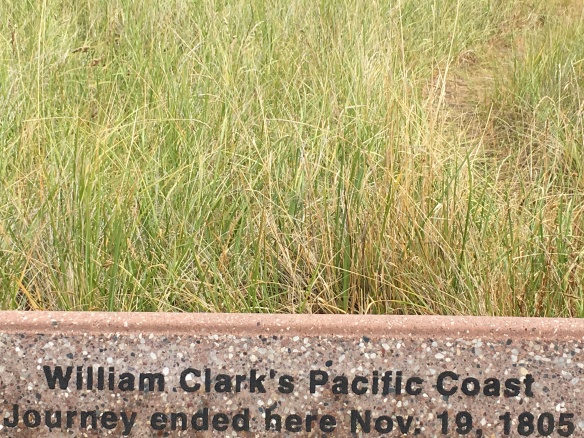
Cape Disappointment marks another very important place in the history of North America. It is not just a place that signifies disappointment, tragedy and danger. It is also the very spot where the famous Lewis and Clark expedition reached the Pacific Ocean in November of 1805. Yes, Lewis & Clark met with many a disappointment and setback along the 3700-mile route up the Missouri River, across the American Midwest, over the Rocky and Cascade mountains and down the Columbia River Gorge that took them a year-and-a-half to accomplish.

IMG_6400

On the journey, were they ever absolutely certain they would make it? As it was, they must have taken their disappointments in stride. For on an uncharacteristically calm day in a stormy November, they made their final push around the western Cape and finally met the limitless horizon.

Significantly, the Lewis and Clark Expedition was called the Corps of Discovery. Today, a 10-mile-long, well-groomed paved path winds through the dunes of Long Beach Peninsula and up into the forest of the Cape. It is called the “Path of Discovery”.

IMG_5994

Cape Disappointment is intricately tied to the Corps of Discovery, where both failure and success are entwined in a rich and diverse history of exploration. The spirit of questing celebrated on these shores includes and transcends both the unique events of human tragedy and human achievement. You cannot have one without the other. In one place. In one human being. Each of us is invited to the journey that includes, embraces and transcends disappointment and failure.

At some point along the journey, you need to have hope in order to continue. Even in the midst of all our unknowing, we can believe and trust in the solution, before it happens.

It’s called faith.

IMG_5922.JPG


[1] Jonah 3:10—4:11, NRSV, Proper 20A/Ordinary 25A/Pentecost+16

[2] Jonah 4:2

[3] Jonah 4:4,9,11, NRSV

[4] Richard Rohr, “Adam’s Return: The Five Promises of Male Initiation” (New York: The Crossroad Publishing Company, 2004), p.112

[5] John 1:38, NRSV

[6] Belden C. Lane, “The Solace of Fierce Landscapes: Exploring Desert and Mountain Spirituality” (New York: Oxford University Press, 1998), p.105

[7] Isaiah 55:8, NRSV

photos by Martin Malina IMG_5940

Forgiveness: from transaction to wholeness

We ran all-out with back packs and walking poles to catch the bus. Yes, we were on a walking pilgrimage. But a few of us didn’t feel up to walking through one of northern Spain’s downtown city streets. After hiking a couple days already through the beautiful, peaceful hills along pristine trails with spectacular ocean views, the thought of breathing gas fumes and hitting the hard top sidewalks in an urban jungle just didn’t appeal. It was only three or four kilometres, and a city bus conveniently would take us to the other side where we could pick up the pilgrimage trail out in the open again.

As I clambered onto the bus behind my Dutch walking partners with all my gear, mindful of not clobbering someone with the swing of my bulky pack, I realized I did not have the correct change for the single fare ticket. Without any hesitation, my pilgrim friends dropped enough euros to cover my ticket. I expressed a deep-felt thanks to them, making a mental note to treat my friends later on. “I owe you coffee,” I said as the bus wove through San Sebastian’s downtown core.

IMG_5341

There’s a culture on the trail among pilgrims that doesn’t operate according to the normal etiquette of life back home. You see, early the next morning, my friends wanted to get going right away. I, on the other hand, wanted to stay at the hostel of my name’s sake (San Martin) a little longer to enjoy the view and the home made breakfast offered by the hosts. Off they went, and I never saw them again. I didn’t have a chance to ‘repay’ their good deed done unto me.

At the same time, there were other pilgrims to whom I’d catch up a few nights later at another hostel. Everyone walks at a different pace. Paths would cross, un-cross, and cross again. Sometimes I’d meet someone on the trail and never see them again. Other times I’d bump into the same group every other day, or so, somewhere along the way. Because of the nature of the pilgrimage community, I looked for opportunities, therefore, to treat another fellow pilgrim at a roadside café whenever the opportunity arose.

The economy of quid pro quo – paying back another individual and keeping the economic scales even on an individual basis – just couldn’t operate neatly on the Camino. It didn’t matter to whom you were being gracious. Only that you were gracious – that you offered help when help was needed, to whomever, regardless of whether or not they had earned your favour in some way earlier on.

The challenge was to receive the gift when it was offered, and give a gift when it was needed. Period. It was as if, on pilgrimage, we were all in the same boat. Which, of course, we know before God we are. It’s just in our daily lives we are not often able to appreciate that reality clearly.

Forgiveness is the theme in the Gospel text for today[1]. I’ve wondered why the servant who was forgiven his debt didn’t do likewise when given a chance. A more general question, is:  Why do we find it so difficult to forgive one who ‘owes you’ an apology for some wrong committed against you. I think it’s important to understand first some elements of the Gospel story. Because this story first tells us something very important about God and God’s ways.

To begin with, the servant owes the master ten thousand talents. ‘Ten thousand’ here signifies an absurd amount of money.[2] In that day and age, even if the servant lived three life-spans working full-time, there was no way he could ever repay that amount. The master has pity on him because the servant pretends that he can somehow work hard enough, in his plea for mercy, to repay the debt. The absurdity of the extra-ordinary amount should tip us off to something vital in our understanding of God forgiving us:

There is nothing we can do to make our lives right before God. And what is more, God has already forgiven us, and reminds us over and over again that we are forgiven before we do anything. Yes, we can say we ‘owe’ God. But no matter how hard we try, no matter all the things we can do to make it right, this effort will never, ever be able to erase what is stacked up against us – all our moral failing, our mistakes, our brokenness.

We puff ourselves us up in embarrassing, false piety when we pretend we can. As if forgiveness was simply a matter of paying our dues. But it isn’t. Like true love, forgiveness is a function of grace. And, oh, the Lord has compassion on us, even in all our futile toiling and striving.

I suspect one reason why the forgiven servant does not ‘pay it forward’ to his own slave, is because what the slave owes the forgiven servant was not as large an amount. In other words, the slave could technically repay his debt.

It’s so easy not to apply God’s economy of extraordinary grace to our ordinary lives. It’s so easy to slip into the transactional ways of our world, and apply the values of the culture to our life of faith. Meaning, we don’t really forgive others when they have to ‘earn’ our attention, our love, and our friendship. We will not really forgive others when they don’t behave in a way that meets our approval.

We live in a transactional economy – even in our spirituality – where people have to pay for their sins. We are to a large extent products of our culture. Our view of justice, therefore, is naturally retributive. Whereas God’s economy is about transformative justice. To move from one to another calls for a monumental shift in our thinking.

God’s grace, indeed, “surpasses all our understanding” (Philippians 4:7). God’s economy of grace does not make sense in our quid pro quo culture of transaction and merit. God’s love crosses all these boundaries and systems of our making. The gift is simply given. Will we receive it, freely? Will we pass it forward, freely, without any expectations nor strings attached?

In God’s economy of grace, we move from transaction to wholeness. Love and forgiveness – these functions of grace – expand outward. There are no losers in this economy. Only winners.

A transactional economy goes something like this: If I have twelve, gold coins and you take six, I will only have six left. I’ve lost. You’ve won. And so it goes with everything we do with others in life. Someone described our culture this way, sadly: We love things and we use people.

In an economy of grace, in contrast, we love people and use things. It’s as if I had planted twelve lily bulbs. I can divide my bulbs and give you twelve and I will still have twelve left. Then you can plant your bulbs and eventually you can give away twelve more. Grace multiplies. Everyone gets more. Grace is infinite, in truth. The win-lose economy changes into a win-win economy.[3]

Moreover, forgiveness is not just about evening the score between just two individuals. It’s not entirely a private act. Forgiveness is communal.[4] When, in the Gospel text, the others saw how unjustly the servant treated his own slave who owed him money, they didn’t simply wipe their hands in denial and avoidance of the injustice before them. They went back to the master and told him. The proverbial whistle-blowers, they were involved in the process of forgiveness.

This is necessary, because sometimes individuals are guilted into forgiving someone who is left unchallenged, unaffected, and unaccounted for their misdeed. Sometimes victims are not able to easily forgive the one who has hurt them. It took Joseph all the way to the last chapter in Genesis to finally forgive his brothers for throwing him into a well and selling him to slave-traders.[5] As they say, it takes a village. And sometimes time. Lots of it.

Forgiveness is validated in community. Because sin is something we all participate in. If we are human and live on this earth, we will sin. No matter the colour of our skin, no matter our creed, our ethnic background, no matter where we were born or what our political stripe. We will make mistakes. We will all contribute to the problems we face. As Paul wrote, “since all have sinned and fall short of the glory of God”.[6] No one is immune to the complicity and consequence of sin. It is woven into the fabric of our common existence.

And so is forgiveness. When forgiveness is offered and received, it becomes part of a wider field of responsibility and accountability. We are not alone. We need the community of faith. We need to be real. Forgiveness does not mean enabling sinful behavior to continue by excusing it, or letting it happen over and over again. Forgiveness means people of faith seek the justice of the matter. Forgiveness can only happen when people see their own lives as part of the human condition, just like everyone else.

People will not be changed in their hearts for God unless they are loved unconditionally, freely. Martin Luther believed that we would be so overcome by God’s unearned, unconditional love that we would be so moved to spontaneously and unconditionally love others in the same way.[7]

May our hearts be moved to forgiveness and justice for all.

Our Father in heaven …. forgive us our sins, as we forgive those who sin against us.

Amen.


[1] Matthew 18:21-35

[2] David L. Bartlett and Barbara Brown Taylor, eds., “Feasting on the Word: Preaching the Revised Common Lectionary”, Year A Volume 4 (Louisville Kentucky: WJK Press, 2011), p.71

[3] Janet Hagberg uses the gold coin versus lily bulb analogy to describe transitions in power, in “Real Power: Stages of Personal Power in Organizations”, 3rd Edition, Salem Wisconsin: Sheffield Publishing, 2003, p.77

[4] Susan E. Hylen, “Forgiveness and Life in Community,” Interpretation, Volume 54, Number 2 (April 2000), p.146-57.

[5] Genesis 50:15-26

[6] Romans 3:23

[7] cited in Bartlett & Brown Taylor, eds., ibid., p. 70

Love: The Body speaks

I jumped out of bed Labour Day Monday ready for action: I had my traditional ‘to do’ list around the house, tasks reserved only for that most auspicious of holidays: Labour Day. Neatly positioned at the beginning of a new school year, Labour Day promises the beginning of a new season of programs, commitments, work, setting goals, ideals and visions of our aspiring.

I only did certain jobs on this day of the year. You know, like Spring cleaning, these were things that needed to be done once in a while, but aren’t really activities that are particularly pleasurable, to say the least. So, I put it off to Labour Day. I need that annual calendar day to help me stay disciplined. And that is good.

One of those jobs was cleaning the HRV – the Heat Recovery Ventilator. This is the contraption attached to the furnace that recycles the air in your house. On the sticker inside the ventilator, it suggests that the filter should be cleaned once every three months. Yeah, right. Who has time for that?

So, on Labour Day every year, I dutifully remove the heavy box containing the filter, and hose it down. I wash the spongy fabric and hang to dry. I meticulously wipe out the interior of the ventilator with a damp cloth. I vacuum out all the cobwebs, dead wasps, flies and dust mites. I use pipe cleaners to clean the plastic, transparent drain tubes. And when everything is done I put it all back together. Usually it takes me a couple of hours. And then it’s on to the next item on my Labour Day ‘to do’ list. You get the idea.

I knew I had a full day’s agenda of those odds and sods sort of jobs.  Jess and I had just pulled the stove away from the wall to clean the floor underneath (yuck!) when all-of-a-sudden the doorbell rang.

With beads of sweat trickling from my forehead stinking of sweat in dirty clothes, I looked up with ‘surprise’ at who was smiling and waving through the front door pane: my parents-in-law! They were inviting us out for lunch at the local truck stop.

With herculean effort to switch gears and rush into ‘receive-and-respond-to-guest’ mode, I quietly complained to Jess in the bathroom as we quickly washed up that I didn’t appreciate this interruption to the day’s agenda of hard work. Likely all the work wouldn’t get done. And how long were they going to stay at our place after lunch? Throughout the lunch hour I fought the impulse to be resentful and angry at this unplanned, unwelcomed intrusion to the important Labour Day work.

Nevertheless, have to say I enjoyed lunch out. It was a treat. And the conversation helped take my mind off other pressing matters. After only about an hour, we came home, and my parents were off to complete errands. I was surprised by how just one hour of gift, of grace, of unscheduled act of love actually gave me the energy to finish all my Labour Day tasks in a shorter amount of time than I had originally anticipated.

Love has a way of doing that. Love does not steer clear of the structures, agendas, immediacies of our lives. Love does not exist on some surreal, other-worldly plane, dis-associated from ordinary life. Love is not a fantasy trip. Love operates right in the middle of the messy, honest reality of our lives.

We call it other things, which leave us empty:

Whenever we project our wants onto something or someone we don’t have. We delude ourselves in believing we will experience love when we yield to this mirage of desire. This is the ego’s impulse. But if we are honest, getting what we want only sets the ground for wanting more and more. This strategy for life is a prescription for perpetual unhappiness bereft of true joy, because pursuing this frantic desiring is predicated on the assumption that it is never good enough. We are always wanting what we don’t have. Wanting and desiring do not fulfill love.

Neither does the law. We skim the surface of love when we try to please God by merely following the rigor of the law. This is the ego’s attempt to prove one’s self-worth by measuring it up against some ideal. But if we are honest, this effort at loving God and others is really self-centred and only exposes our failure to live up to that ideal. This strategy for life can lead to a stifling legalism, judgmental attitudes towards others and self-hate. Our success at following all the rules is not love. Paying attention to another person is. “Love is the fulfilling of the law,” Paul writes.[1]

Love is free. It is not bound by our ability to control outcomes. Love happens when we are not in charge. Love is a gift, given and received freely. There is no guarantee, from our human perspective, that all our good efforts and good works will make things right. Author and teacher Belden Lane writes: “We love and are loved by God in the act of relinquishing every guarantee of love.”[2] In truth, when we stop our striving if only for a moment, when we release our need to be in control, then we are in the position to experience God’s grace and love. Through others. In ourselves. And from the least expected of places and people. Indeed, as C.S. Lewis expressed, we are surprised by joy.[3]

The ego doesn’t like this because the ego wants to get in the way.  But, love is expressed to another without preconceived expectations of what the other person needs. Love is expressed without giving what we imagine to be best in the situation for them. True love is not striving for what particular results we want to engineer in a relationship. True love, as Belden Lane describes so well, is “a love finally purged of the ego’s calculating desires, a love without strings.”[4] We simply be with the other, and listen to them. And go from there.

Love starts here. It is hard work to love. It is a labour of love – for self, others, creation and God. And it is a work in progress – a journey – that can last a life-time and beyond.

Paul continues in the Epistle text for today, that we are to “make no provision for the flesh, to gratify its desires.”[5] Here, it is helpful to substitute the word, ‘ego’ for flesh. Christianity is an incarnational religion. God is, for Christians, a human being in Christ. The divine entered humanity. God knows the human body intimately. We do our faith a dis-service when we neglect, shame or deny our physical bodies as well as the human dignity of others. Our flesh is not bad. Your physical body is, according to Paul, “a temple of the Holy Spirit.”[6]

We exercise the love of God by paying attention and listening to our own bodies and paying attention and listening to the suffering of humanity all around us. “The glory of God,” Saint Irenaeus said in the 2nd century, “is the human being fully alive.” We celebrate human beauty and strength, yes, but also not ignore its pains.

I sat alone in the Bilbao hotel room looking at my body. On the surface, everything looked fine. Even great. In eight days I had walked one hundred and thirty kilometres through the Basque hills along the coast of the Bay of Biscay in northern Spain. I had even lost several pounds and buffed up a bit.

My feet were fine. So many pilgrims on the Camino de Santiago develop serious problems with blisters and tendonitis. Not I. Now, I did give regular attention to my feet: I made periodic breaks during my hiking, taking my shoes and socks off and gently, lovingly, applying moisturizing cream around my toes, under the ball of my foot and around the heels. They say foot care is paramount to the successful completion of any Camino pilgrimage. I was the poster boy for that piece of advice.

Yet, these superficial indicators did not reveal the truth of the matter. You see, even before I had left Canada to fly to Barcelona, I was coughing.

Besides the cough, I was feeling fine when I headed out of Irun at the start of the Camino del Norte, near the French-Spanish border. But eight days later, a few kilometres outside of Guernica, my right knee blew out. And, in that moment, I realized that I was in trouble. The systematic repetition of hefting my 200-pound body weight and additional 20 pound pack, leading with my right knee finally screamed protest. At first, my pilgrim friends suggested what I was thinking: A few rest days in Bilbao would renew me enough to continue my pilgrimage across northern Spain.

But after three days of rest in Bilbao, I was feeling worse. Not only did I continue to cough, all my muscles were aching not just my knee. I didn’t even feel like travelling to visit with my extended family in Germany.

My body hath spoken. And I was going to listen to it. When I saw my doctor in Ottawa a few days later, she ordered an x-ray and ultrasound which confirmed the diagnosis of pneumonia. I had, literally, ‘walking’ pneumonia on the Camino. All the medical staff, my family and friends complemented me in being able to ‘listen to my body’. And even though I didn’t realize and know how sick I really was at the time, I didn’t push it for the sake of some higher, abstract goals or principles. I came home to heal. My body was telling me something I needed listening to: Stop. Stop the frantic desiring. Stop the restless striving. Just stop. And be still, for a while.

They say the body never lies. We can deceive ourselves in our heads, play all kinds of mind games with ourselves, providing ceaseless self-justifications and employing conniving self-defense mechanisms that would confound any therapist. But what the body presents – the physical manifestation of who we are – is the truth indicator. What the body proclaims is truer than what anyone says.

Any journey towards health and love begins by paying attention to what your body is saying. And go from there. We may slow down. We may pray. We may embark on a journey to search out meaning in our lives, to explore the multi-layered regions of our hearts and souls. We may seek medical help, and rely on the gifts of medical science. We may even make major changes in our lives. In other words, we learn the truth about ourselves. Beginning with what the body says.

Someone asked me what I learned about myself during the sabbatical. You could say, I had the chance to just be myself. I experienced my humanity without the usual trappings of roles, titles and responsibilities. I met with and explored myself as a human being. I am human. Not just a talking head. I don’t just live out of my head. I live out of my body, too.

And, to be honest, I didn’t always like everything I saw, there, in my human nature. Yet, I will confess that in that mess of my humanity I re-discovered Jesus. It wasn’t so much in the usual places but in those other pilgrims I met, the help I received along the way, and in my own, ordinary self – stripped away from all the usual distractions, comforts and busy-ness of life – that grounded me in a love that endures.

Out of this awareness has grown a deep thankfulness for all the gifts of life. Gifts over which I don’t have ultimate control in having received: The gift of physical health and ability; The gift of this sabbatical – about which I express heartfelt thanks to the congregation; The gift of colleagues who take up the torch so to speak — thank you to Pastors Diane and Ted and musician, David: The gift of capable lay leaders who show remarkable abilities administratively and creatively when given a chance – Beth, Julia and Megan, especially; The gift of lay preachers who in their diverse expression reflect something beautiful about God and God’s ways – Jessica, Beth, Christa and Jann; The gift of a spouse and children who model the love of God by ‘letting me go’ for a while.

In Christianity, the word, ‘body’, takes on a broader meaning: The Body of Christ is the church, the community, the network of relationships. I am ever so grateful and encouraged. I learned another thing out of this sabbatical experience: There is love in the Body of Christ, to be sure.


[1] Romans 13:10

[2] Belden C. Lane, “The Solace of Fierce Landscapes: Exploring Desert and Mountain Spirituality”, New York: Oxford University Press, 2007, p.201.

[3] C.S. Lewis, “Surprised By Joy”, New York: Harper Collins, 1966

[4] Belden C. Lane, ibid.

[5] Romans 13:14

[6] 1 Corinthians 6:19

Sabbatical reading list

I enjoyed reading during my sabbatical. Here is a list and brief commentary on seven of the books that I particularly liked:

1. Saroo Brierly, “Lion” (previously published as “A Long Way Home: A Memoir”), Toronto: Penquin Books, 2013.

This memoir was also made into a motion picture under the title, “Lion”. The author documents his traumatic story of becoming separated from his family and lost as a child in India. Miraculously he finds help at the right time and the resources he needs to escape an impoverished and dangerous life on the street in Calcutta, and start his life over in Australia. Under the care of loving foster parents, he responds to an inner longing. His journey home is about finding the roots of his life in India. The story is about death and resurrection, relationships, and journeys of longing, searching, and finding.

2. Charles Foster, “Wired for God? The Biology of Spiritual Experience”, London: Hodder & Stoughton, 2010.

I find Charles Foster to be both delightful and humorous, as well as serious and respectful of the Christian faith. This is not an easy balancing act to perform in one book. He nevertheless provides a thorough academic and scholarly background to his arguments. He suggests that both belief and experience are essential to the journey of faith. But he does not give glib and easy answers to complicated questions and paradoxes of life and truth. Particularly, I enjoyed learning more about the biology of our brains and how the mechanisms of neurotransmitters and other functions of the cortex relate to near-death, out-of-body, mystic and intensive care experiences. Pointing to historical and current examples, Foster weaves a rich and (shall I say) entertaining read. I first encountered Richard Foster reading his “Sacred Journeys” published around the same time.

3. Adam Shoalts, “Alone Against the North: An Expedition into the Unknown“, Toronto: Penquin, 2015.

A Fellow of the Royal Canadian Geographic Society, Adam Shoalts writes about his recent wilderness expeditions to the Hudson Bay Lowlands. In his gripping true tale of adventure, he tells the story of persistence, human resolve, success and failure. Relating his personal experience Shoalts comments on the nature and passion of exploration. He exemplifies the survivalist par excellence who depends on the land, water and air and with simple means survives life-threatening dangers in unsuspecting waterfalls and killer polar bears. Despite all the obstacles, he is pulled forward by an unrelenting motivation to complete the journey.

4. Phil Cousineau, “The Art of Pilgrimage: The Seeker’s Guide to Making Travel Sacred”, San Francisco: Conari Press, 1998.

A classic tome on pilgrimage, Cousineau’s book gives a comprehensive summary of what pilgrimage means. He suggests the idea of pilgrimage is more than just going to a traditional site. Pilgrimage could land someone anywhere on the planet — not just Jerusalem, Rome and Santiago (for Christians). Cousineau supplies in two hundred pages all the well-known quotes and citations about pilgrimage. So, I regard this book as a go-to resource for finding anything ever written on the theme of going somewhere to find meaning. I particularly liked how he helped the reader define for themselves what kind of pilgrimage to make, based on the reader’s own passion, longing and need to go somewhere. He makes the reflection both personal and historically sound, and suggests practical ways of making travel something more than just being a tourist.

5. Eca de Queiroz, “The Relic”, London: Dedalus, 2003.

Originally published in Portugese in 1887, this fiction is a European classic. It tells the story of a young university student who pretends at being pious and devoted to his Christian practice, motivated only by impressing his rich aunt so he would inherit the family fortune upon her death. Set in Lisbon, “The Relic” is about the journey of a man who crosses boundaries of moral behaviour in his secret/true life but shows off in order to please and meet the expectations of others. After a fantastical trip to Jerusalem to find a relic to bring home to his aunt, our hero experiences the folly of his hypocrisy. And, through the pain of defeat and untold embarrassment, he learns in the end to hold both the good and bad in his life.

6. Richard Rohr, “Adam’s Return: The Five Promises of Male Initiation”, New York: The Crossroad Publishing Co., 2016.

My favourite author/mentor, Richard Rohr continues in this book to make the case for authentic, real, and healing experiences for men in Western society. Drawing from cross-cultural and historical examples, Rohr describes what happens in male initiation rites, and what is hoped for through these transformational rites. It should be no secret that men suffer emotionally in our culture that give little space for men to be real, vulnerable and honest. Rohr reflects on Scripture and describes what is, in my reading, a summary of the Gospel: Only by accepting what is real, painful and honest about one’s life, only by entering the Paschal Mystery of Christ crucified and risen in one’s own life, can men rise into the resurrection of new life and hope.

7. Beldon C. Lane, “The Solace of Fierce Landscapes: Exploring Desert and Mountain Spirituality”, New York: Oxford University Press, 1998.

This was my favourite book on my sabbatical. A dense read (I had to re-read sections), Lane offers a historical overview of mystic/contemplative tradition, citing the likes of Gregory of Nyssa, Evagrius, Cassion, Julian of Norwich and other desert mothers and fathers. He also emphasizes the importance of geography in expressing one’s journey of faith, comparing for example the experiences of hiking up Mount Sinai compared to Mount Tabor. He makes the case for a healthy spirituality that includes both apophatic (no words, letting go, release, loss, mystery, disorder, contemplation, silence, solitude, stillness) and kataphatic (language, community, structure, order, images, action) modes of relating with God. You can’t have one without the other. Observing regular contemplative forms of prayer leads to a renewed engagement with community. Essentially, nevertheless, this is a book describing the process of grief. Lane writes about this stage in his midlife dealing with the loss and deaths of his parents, and how the experience of the nursing home and caring for his dying mother contributed to his inner and outer journeys. And his healing.

You may follow me on Goodreads.com for a listing of all the books I have read.