Mirage gates

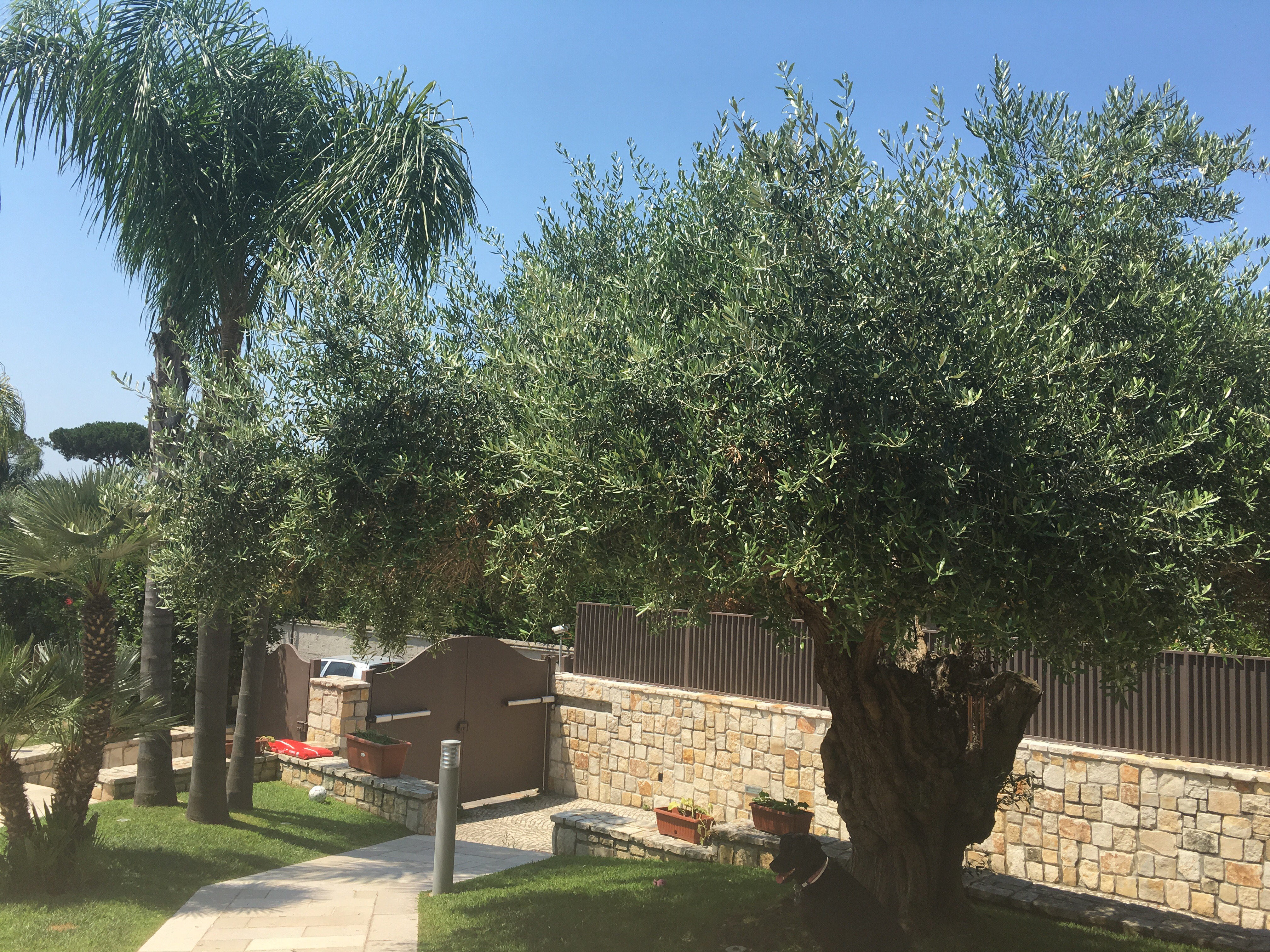
When we stayed at our friends’ house in Lago Patria — a suburb of Naples — we felt safe in the gated community in which they lived. Nearly a dozen homes lined the little neighbourly and upscale street where mostly stationed officers and NATO personnel lived during their posting to the base there. We called it, ‘the parco’ — the Italian for ‘park’. An oasis it truly was.
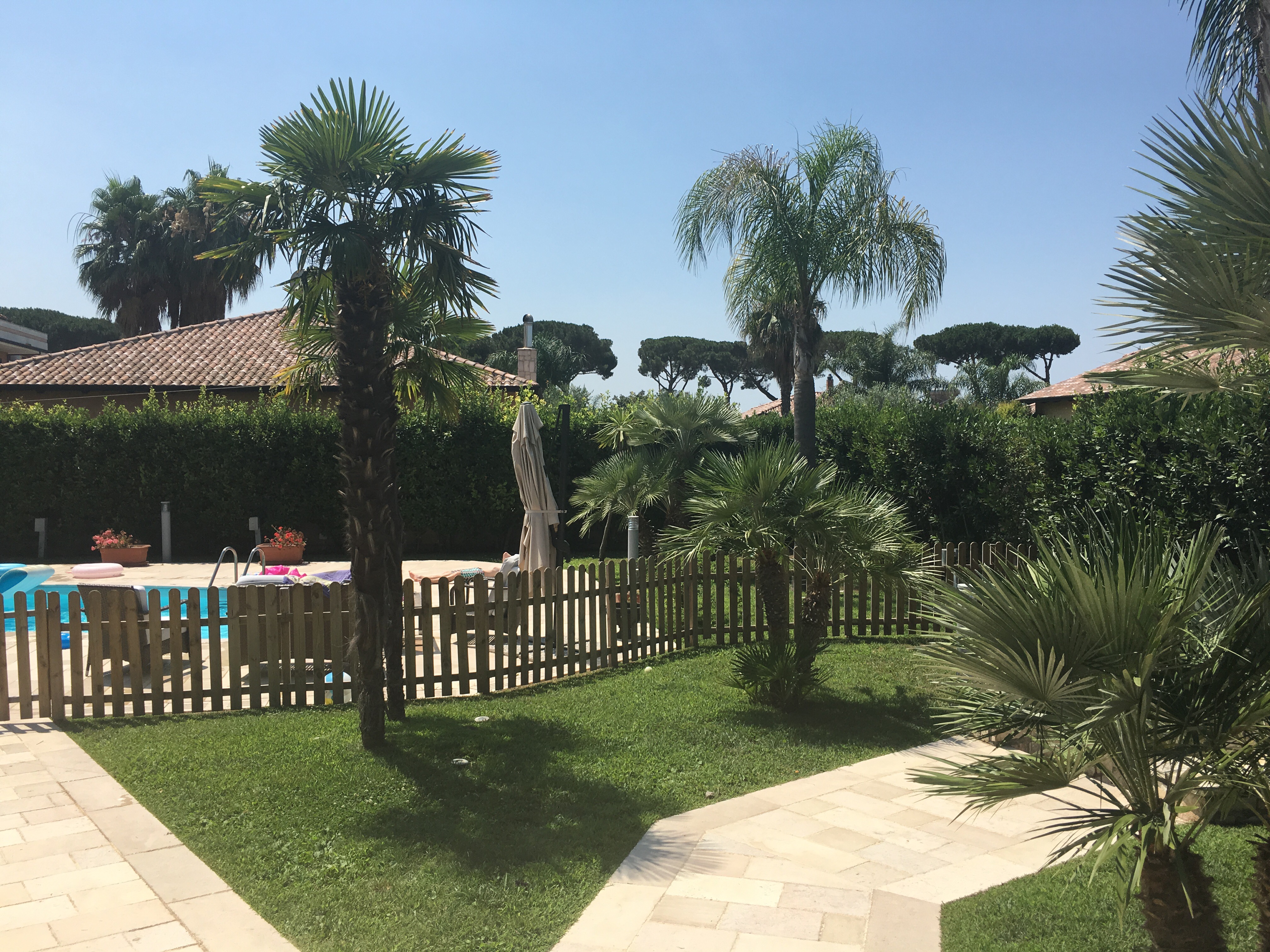

Lining the perimeter of the parco was a tall wall. A large sliding metal door would guard entrance to this haven, and then release us again to the urban jungle that is Naples, where stray dogs roamed and garbage lined the roadways. You get the picture.

In Robert Frost’s poem, “Mending Wall”, he wrestles with our desire to have clearly defined boundaries of what is my place and what is yours; and, why we divide ourselves so. He concludes his poem with a challenge: “Before I built a wall I’d ask to know what I was walling in or walling out” (1). Good advice.

Indeed, fences and walls serve to keep us from seeing ‘what’s out there’ — and perhaps we want it that way. We don’t want to see what might disturb our comfort. We don’t want to see who might be out there, lurking on the perimeter of our safely constructed lives. We don’t want to see because we are afraid of what truly seeing them might do to change, disrupt and unravel us.

The Gospel text today (Luke 16:19-31) can unravel us, for sure! A poor man named Lazarus makes his temporary home at the gate of a rich man’s house, eating crumbs off the rich man’s table.

The story suggests that the rich man never even sees Lazarus is there, begging, at his gate. Even in the afterlife, as the rich man burns in hell, he doesn’t talk directly to Lazarus, referring to him only in the third person (v.23-24). Even serving his due in hell, the rich man still hasn’t learned his lesson!

Indeed, as Jesus says later in Luke, “it is easier for a camel to go through the eye of a needle than for someone who is rich to enter the kingdom of God” (18:25). How can the rich and the poor bridge the gap? How can we break down the barriers that separate us? How can we ‘see’ better — by this I mean: develop the eye of the heart and mind?

My brother tells the story of what happened at the beginning of the CLAY gathering this past August (Canadian Lutheran-Anglican Youth gathering). All nine-hundred participants did a certain exercise in the large group gathering that unnerved him:

They were asked to find someone they did not know; and then, to go over to that person, sit next to them; and then turn to look directly into their eyes…. and keep looking into their eyes for as long as possible, without turning away.  It’s hard enough to do this sort of thing with someone you know well… let alone a complete stranger!!
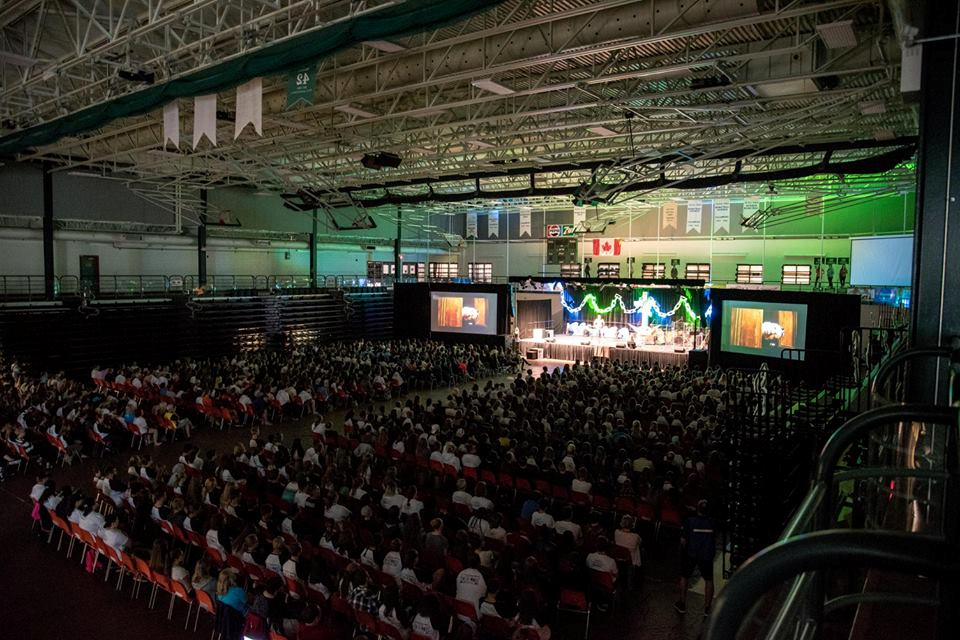

So, my brother David found a young person he didn’t know. And the two of them – complete strangers – began to look into each other’s eyes. It was unnerving! He felt vulnerable. Exposed.

While this was happening, the leader at the front said something like: “The person before you has a story, and has experienced happiness, as well as sadness, perhaps even deep hurt and pain. Who knows? Life may’ve been very hard on the person in front of you.”

As these words were being said, David noticed the slightest hint of tears welling up in his partner’s eyes. And he wondered…. He wondered …. What’s my partner’s story?

It’s said that the eyes are the ‘window into the soul.’ In a sense, they were peering into ‘each other’s souls’.

A natural connection is formed. Two people, connecting on a human level, affirming the fact that we’re all united in our common humanity and life’s experiences – of sadness and laughter and humour – which we all go through at some point in our lives … no matter our differences in age, ethnicity, language, sexual orientation or religion.

I’m reminded of a quote attributed to Philo of Alexandria: “Be kind to everyone you meet — you don’t know the battle they are fighting.”

Author and theologian Diana Butler Bass tells the touching story of what happened in an airport when she was flying from Albany, New York, to Washington D.C.

As you know, typically airports can be cold, heartless places, where everyone seems absorbed in their own rushing around, wrapped up in their private worries, nerves or plans, ignoring others around them.

This time, as passengers milled around in the gate area before boarding the plane, there sat alone at the far end of the row of seats, a middle-aged man.

He looked distraught, perhaps ill. Maybe, he needed help.

His whole demeanor was one of sorrow, and he was bent over, slumped in his chair as if falling toward the ground.

Diana walked over to him, and sat down beside him. She gently began asking him questions and listening to him.

With deep, heavy sobs, he told her how he buried his wife that morning, and now he was going home. To nothing.

For the next half hour, he told Diana about his wife, her illness and untimely death.

The man and his wife had no children.

She had been his best friend since high school.

Their parents had all passed away.

He had taken her to be buried where they had grown up in New York State, a place they both loved.

Most of their childhood friends had moved away.

There had been no funeral, just him and a priest at a graveside to say a few prayers and good-bye.

Now, he was going home, back to work. Other than a few friends, he was alone.

Diana listened, and then went to get him some water.

On the way back, she found a flight attendant, and told her about the man and his wife, how he had buried her that day. The flight attendant thanked her for sharing, and said ‘they’d take care of him.’

There were only about fifteen people on the flight that day on that small plane.

Somehow word got around, and soon everyone knew about their fellow passenger in mourning.

By the time everyone was boarding the plane, people were going out of their way to be kind to the man.

A crew member escorted him aboard.

With courtesy and attention, they seated him at the back of the plane to be alone with this thoughts and whatever tears might come.

When they landed, some silent agreement formed between the passengers to let him exit first.

Instead of the usual rush and urgent calls on cell phones, everyone stood silently, forming two lines of respect, as he walked down the aisle toward the cabin door…

Some nodded respectfully as he passed.

One woman reached out and touched his shoulder.

When he reached the front of the plane, he turned back, and looked at everyone, to acknowledge the sympathy offered.

The pilot came out of the cockpit, and took the man’s hand, and together they descended the steps to the tarmac.

All the passengers followed in silence.

A private car, dispatched by the airline, waited there beside the plane, to deliver him home. (2)


The irony is that no amount of gates, fences, walls or clearly defined dividing lines however constructed will keep us separated from each other. When there is love. When we can ‘see.’

Boundaries are important. But they don’t guarantee the self-serving security we seek. Shortly after they were posted to Naples a couple of years ago, our friends’ house was broken into despite the impressive protection their gated community seemed to provide.

These kinds of gates are really only illusions — like the proverbial mirage in the desert. Gates and fences that separate the rich from the poor, the privileged from the underprivileged, the employed from the the unemployed, the bum on the street and the senior executive in the top floor corner office are at best a mediocre interpretation of reality. Because they are constructed out of fear.

Jesus is about breaking down those barriers. And we are called to bridge the apparent chasm separating us from each other. Better now in this world while we can still do so, then whine about it like the rich man does in hell after it is too late.

We are called to look into each other’s eyes, and see the connection we share with all humanity, in the love of God. We are called to work together, like the community of care that formed on that short plane trip. We do not do this work individually, by ourselves. Not separately, but we work together at this task of reaching out and mending what has been broken.

We do this in the mission of God who broke down the greatest divide between God and human: when Jesus was born a human child. When God became human the ultimate gap was bridged. And now, we live in that flow of God’s love, continually binding us together, and all people.

(1) Robert Frost cited in David L. Bartlett & Barbara Brown Taylor, editors, “Preaching the Revised Common Lectionary; Feasting on the Word” Year C, Volume 4; Louisville Kentucky: Westminster John Knox Press, 2010, p. 118-120

(2) Diana Butler Bass, “Grounded: Finding God in the World: A Spiritual Revolution”, HarperOne, 2015, p.256

Relationships over Resources

A member of this congregation sent me an email including a list of short phrases called paraprosdokians.

A paraprosdokian, according to my online dictionary, is a derivative of a Greek word which means, ‘beyond expectation’. It is a wordplay, a figure of speech in which the latter part of a sentence is unexpected. Here’s a smattering:

 · A neighbour knocked on my door and asked for a small donation towards the local swimming pool, so I gave him a glass of water.

 · Take my advice — I’m not using it.

 · Ever stop to think, and forget to start again?

 · He who laughs last, thinks slowest.

 · I was going to give him a nasty look, but he already had one.

 · Change is inevitable, except from a vending machine.

 · I was going to wear my camouflage shirt today, but I couldn’t find it.

 · If at first you don’t succeed, skydiving is not for you.

 · No matter how much you push the envelope, it’ll still be stationery.

 · Money is the root of all … wealth.

Indeed, the Gospel today (Luke 16:1-13) has at least one major, unexpected twist. And unlike most of these paraprosdokians, this twist is not humorous. 

A manager has been wasteful of his boss’ riches, and consequently will lose his job. So, the manager figures on a scheme to look out for his own interests in his impending unemployment. The ‘dishonest manager’ — as some bibles entitle this parable — puts himself first at the seeming expense of his boss: he will go to his boss’ debtors and demand only half of what they owe. He shrewdly seeks to curry favour with them, and anticipates to be in their good books, once he is unemployed.

Smart move, you might say, eh? But what will Jesus say? Especially keeping in mind that this passage comes to us on the heels of the ‘golden’ chapter of the bible, Luke 15. Therein we read the familiar and heart-warming stories of the lost being found, of celebration and belonging, of unimaginable grace and mercy shown to the poor, the wayward, those who are not easily counted in the economy of the day. 

In Luke 15, we get the strong impression that the values of God’s kingdom — mercy, inclusion of others, unconditional love — stand in sharp contrast to the values of the world — competition, self-centredness, individualism. And, now, in Luke 16, the set up leads me to anticipate Jesus will come down hard on the ‘dishonest’ manager. I expect Jesus to say how unjust, unethical, and selfish the manager was. Don’t be as self-centred as he is!

In verse eight, the rug is pulled out from underneath me: “And his master commended the dishonest manager because he had acted shrewdly.” What ?!! Commended?

And yet, I should expect that the bible does that to us from time to time. The bible does not present a tightly knit, unequivocally clear and coherent storyline. You can justify anything from the bible, if you want — even murder. But that is not what we are about, when we approach the bible. 

After all, there is an important reason why the New Testament includes four, different, renditions of the life and times of Jesus. If uniformity was the goal in the inspiration behind putting together the bible, then we would have only had one Gospel, not four. Matthew, Mark, Luke and John — the first four books of the New Testament — basically follow a similar plot line about Jesus’ birth, baptism, calling, choosing disciples, healing, teaching, passion, death and resurrection stories.

And yet, each presents variations, slightly different orders, and yes, sometimes even these unexpected twists and turns in what needs to be emphasized. There are, after all, different people listening in — the religious leaders of the day, his disciples — people like you and me who live different lives and face different challenges. Each of us needs to hear something unique to what our needs are, apart from our neighbour. And each faith community needs to hear a unique word spoken to them.

So, while the story of the dishonest manager twists and puts our expectations on their head, perhaps there is something here worth paying attention to. “You cannot serve God and wealth” concludes the passage. And yet, the manager was looking out for his own material well-being in his shrewd and commendable actions.

Well, what is the wealth that is talked about here? For what treasure do we Christians — called the “children of the light” in this text (v.8) — search? What is the golden nugget that we seek, above all else? Again, perhaps the broader context can help us, again.

As I said, the previous stories of the lost sheep, lost coin and lost sons suggest that what is valuable in the economy of God, stands in sharp contrast to what is valuable in the economy of the world. These are treasures that are worth uprooting what is hidden, putting in the light what is shrouded in darkness, lifting up what is normally considered not worth the effort, forgiving what is unforgivable.

What does the shrewd manager value, even more than making money? He values relationships. He values keeping connected with others even though he loses what the world values — jobs, financial security and material wealth:

He reduces the amount of debt owed by the amount of his commission — as some biblical commentators suggest. He reduces the amount of interest owed, according to the Torah Law in Deuteronomy 23:19-20 — as other commentators suggest. Regardless of how we interpret the manager’s actions, we can see how much the manager values being in relationship, above all else.

The wealth described here is the treasure of being inter-related in a season of loss and disruptive change. Relationships over Resources, you could say (1).

And this truth hits us unexpectedly in the telling of the Gospel. Another classic reversal. I started this sermon with a Greek word to describe a form of speech that ends unexpectedly. Of course, the New Testament was written in Greek and influenced by Greek culture.

Greek culture often reflects this image of having a feast in the midst of famine. Another contrast of expectations, when during a famine you would not expect people to throw a large feast, and celebrate. Remember, after finding the lost sheep, the lost coin and when the Prodigal returns home, there is much rejoicing. And a feast is prepared for the whole community.

This does not make sense. To have a feast in the midst of famine. And yet, this is what we are called to do. To be children of the light, in the midst of darkness. Not to be a slave to our circumstances and meagre resources, as we may see them to be. But to release them, distribute them, relinquish our seeming control over them, all for the purpose of maintaining and strengthening our relationships.

Celebrating the gift of each other and those we meet. Relationships first, then resources. The horse before the cart, not the other way around.

We may by lying in the gutter of our lives, but we keep our gazed fixed upon the stars. We may be wallowing in an ocean of despair, regret, fear or pain — but we begin with a spoonful of water. In other words, there is always hope. There is always room to grow, to change, to something — anything — in order to make things better. This is the quality of faith.

We are never lost, abandoned and left for dead in the economy of God’s grace. After all, the rich man gives his irresponsible manager a second chance. Normally when charges are brought against an employee, charges that incriminate and prove wrong-doing to the degree of ‘squandering’ the owner’s property, the person in question is fired immediately, without question.

But something odd happens here: The rich man allows his soon-to-be-fired worker to continue doing his job for a while. The rich man gives his delinquent employee some ground, some space, to do something — anything — in order to make things better. The rich man demonstrates some grace in a relationship that has gone awry. 

Not only are the relationships in life our priority over everything else including our material resources, the quality of those relationships — according to the New Testament — are defined by grace, compassion, and love. 

An unexpected twist of the stories of our lives in the world, perhaps. Yet, these are the hallmarks of the children of light following Christ in the world.

Thanks be to God!

(1) David L. Bartlett & Barbara Brown Taylor, eds., Preaching the Revised Common Lectionary; Feasting on the Word, Year C Vol 4, WJK Press; Louisville Kentucky, 2010, p.92-97

Rooted in the earth, rising to the sun

Recently I have been reading about people’s experiences on the Camino de Santiago — the eight hundred kilometre walking pilgrimage through northern Spain. This walk has become more and more popular among Christians of all stripes over the past couple of decades. It seems Christians around the globe are finding the pilgrimage a good place to work through personal issues, find focus in life again and seek re-connection with God, the world and themselves.

This past week I met with one such pilgrim from Ottawa who goes at least once a year to walk some part of the Camino; in fact he is leaving today for Barcelona. I sought his experienced advice for some practical considerations for the trek. His first rule of thumb: Pack only ten percent of your body weight. For me, that would mean no more that 20 pounds in my back pack — of all that I would need for the thirty to forty day hike. Twenty pounds is not a lot!

His second rule of thumb: What you wear on your back, put only one in your pack. That’s all. For example, if you are wearing a t-shirt, pack only one other t-shirt in your back-pack. If you are wearing a pair of shorts, pack only one other pair of shorts. And so on.

He laughed when he told me that about four days in — some one hundred kilometres into the journey — you find bins and bins full of personal items people left behind. These pilgrims had realized, thankfully sooner than later, that they were simply carrying too much — stuff they didn’t really need (extra shirts, pants, sweaters, books, jackets, bed mats, blankets, etc.). A final rule of thumb from my friend: If you do take something extra, then you need to have a good reason for it besides, “I might need it.”

This discipline reflects the quality of being able to let go. It can be described as a total self-surrendering, a giving up. The term “Kenosis” has been used among Christians throughout the ages to connote this sense of releasing that which we normally feel we need to hold onto tightly.

Fourteenth century German theologian Meister Eckhart said, “God is not found in the soul by adding anything, but by a process of subtraction.” (1) In our consumer culture, religion and spirituality have very often become a matter of addition: earning points with God, attaining enlightenment, producing moral behaviour. In the ‘prosperity gospel’ so popular in North America, we often hear the message that Jesus approves of you when your material and financial wealth increases; the more you have, the more in favour you are in God’s eyes.

Yet authentic, Christian faith is not about getting, attaining, achieving, performing or succeeding. The solution is not just “work harder” or “get more” of something. Our culture and economy, indeed, is based on more and more. Whereas true faith suggests: less is more. Martin Luther’s theology of Justification by Grace through Faith suggests the very same: We cannot by our own efforts achieve anything worthy of God.

So, stop trying. In fact, start doing the opposite: Let go of your pretence to manage your life according to the creed: Bigger and More is Better. Let go of a paralyzing negative body image. Let go of the inner talk that is putting yourself down, that tells you you are no good. Let go of attitudes of hatred against people who are different from you. Let go of those material aspirations that tease you into a false sense of security. Let go of being paralyzed by fear.

Instead, focus on what is essential. Appreciate that you already have enough, all that you need. When Jesus gives instruction in the Gospel text for today (Luke 14:25-33) he is travelling out on a public road, on his pilgrimage to the Cross. Remember, ever since Luke 9:51, he is already on the way to Jerusalem, his final destination. When Jesus is walking towards his death and resurrection in Jerusalem, he offers what sounds rather harsh to our ears. What is called-for here is a ‘single-mindedness’ that is needed when you travel with Jesus.

Discipleship is about being single-minded about the purpose, the goal and the mission of Jesus in the world. It is about prioritizing what is important to life in the public realm where culture, consumerism and a whole host of other distractions can keep us from this focus.

This single-mindedness demands that we think ahead, and anticipate the cost of our journey. Setting out on the road to follow Jesus requires at least a little forethought and reflection. This journey is not a light matter. Sit down and think about it a bit. Reflect.

There is not only the blessing of the assets promised, but there are the liabilities, too. Discipleship is not just one more hobby or extra-curricular activity to add to a well-rounded, prosperous life. It is not merely “a matter of pure passion and abandon” (2).

Followers of Jesus should count the cost, but also realize this is not just about counting the cost of a church building renovation or a church fund-raising project. The cost of discipleship, as Dietrich Bonhoeffer first coined the term, is about prioritizing our whole lives, not just our “church” or “Sunday morning” lives.

If someone told me a year ago that I would spend four days cut off from civilization, in the bush without cell-phone service, hauling all my food and everything I need to survive in a canoe that I would have to navigate through rapids and rocky, snake-infested portage routes — I would say they were dreaming … or talking about someone else.

Well, that’s precisely what I did last week, along the French River Provincial Park between North Bay and Sudbury. Fortunately I was not alone; I journeyed with a more experienced wilderness survivalist. 

We ended up taking more than we needed. We could have packed less food, and less clothing. The exercise, nevertheless, was confident-building for me in realizing I really don’t need that much stuff.

Jesus says, “None of you can become my disciple if you do not give up all your possessions.”

To live life well, and faithfully, is to recognize one’s place in the world, and not to over-reach, over-extend, to be someone you are not — all on the basis of wanting more and more, bigger and better. To live faithfully, we are called to examine our dependencies, count the cost of it all, focus on what is important, and then make room in our lives for what is important by letting go.

A sojourn into the wilderness may indeed by the antidote to visions of self-aggrandizement embedded in the prosperity gospel message. Try doing without, for some time, what you may have taken for granted for too long. Try doing without what you always have believed you needed in order to live. Try Letting go. Releasing. Forgiving. 

This is not about doing away with personal boundaries. Letting go is not about condoning injustice or cruelty. Kenosis/letting go is not about being blind optimists, repressing or denying or not caring, or ‘giving up’ in frustration.

Forgiveness is a good example of letting go of the misery caused by holding on to the pain of resentment or holding a grudge. This kind of letting go brings a positivity that is based in honest struggle and prayer born out of compassion and love for self, the other, and God. The end result is a freedom and peace that cannot ever be realized through a program of simply working harder or getting more.

The German poet, Rainer Maria Rilke, wrote about the contrast between the law of gravity and the rising of the trees. He writes about the gift of letting go into a place of trust: Trusting that the gift in you is enough. So that you can rise up, rooted like trees: 

How surely gravity’s law,

strong as an ocean current,

takes hold of even the smallest thing

and pulls it toward the heart of the world.


Each thing —

each stone, blossom, child —

is held in place.

Only we, in our arrogance,

push out beyond what we each belong to

for some empty freedom.

If we surrendered

to earth’s intelligence

we could rise up rooted, like trees


Instead we entangle ourselves

in knots of our own making

and struggle, lonely and confused.

So, like children, we begin again

to learn from the things,

because they are in God’s heart;

they have never left God.

This is what the things can teach us:

to fall,

patiently to trust our heaviness.

Even a bird has to do that

before he can fly. (3)

In the poetry of scripture, the Psalmist describes beautifully the blessing we are, created in the image of God — so “wonderfully made” (Psalm 139:14). God would know intimately each part of our lives only if we were valuable to God and to the rest of creation. Otherwise, why would God care?

In other words, we are and have everything we need to enjoy and live to our fullest potential. We are beautiful. We don’t have to strive and strive to become someone we are not. We don’t have to ‘add’ anything to our lives to be well. In fact, when we have the courage to risk letting go, and “fall”, as Rilke poetically expresses, trusting in our “heaviness”, we will find a freedom and peace that will be the joy of all creation, and the glory of God.

We will live our lives at the same time rooted in the earth, and rising to the sun.

(1) Translated by J. Clark & J. Skinner, “Meister Eckhart: Selected Treatises & Sermons Translated from Latin and German with an Introduction and Notes”, Faber & Faber: 1958, p.194

(2) David Schnasa Jacobsen, Commentary on Luke 14:25-33 in “WorkingPreacher.org”, 2016

(3) Rainer Maria Rilke, “Rilke’s Book of Hours: Love Poems to God” translated by Anita Barrows and Joanna Macy, Riverhead Books: 1996, p.116-117; cited with permission in Richard Rohr’s Daily Meditation for August 28, 2016

Burn, fire, burn


I bought this t-shirt in Italy last month — featuring Andy Warhol’s artistic depiction of an erupting Mount Vesuvius.

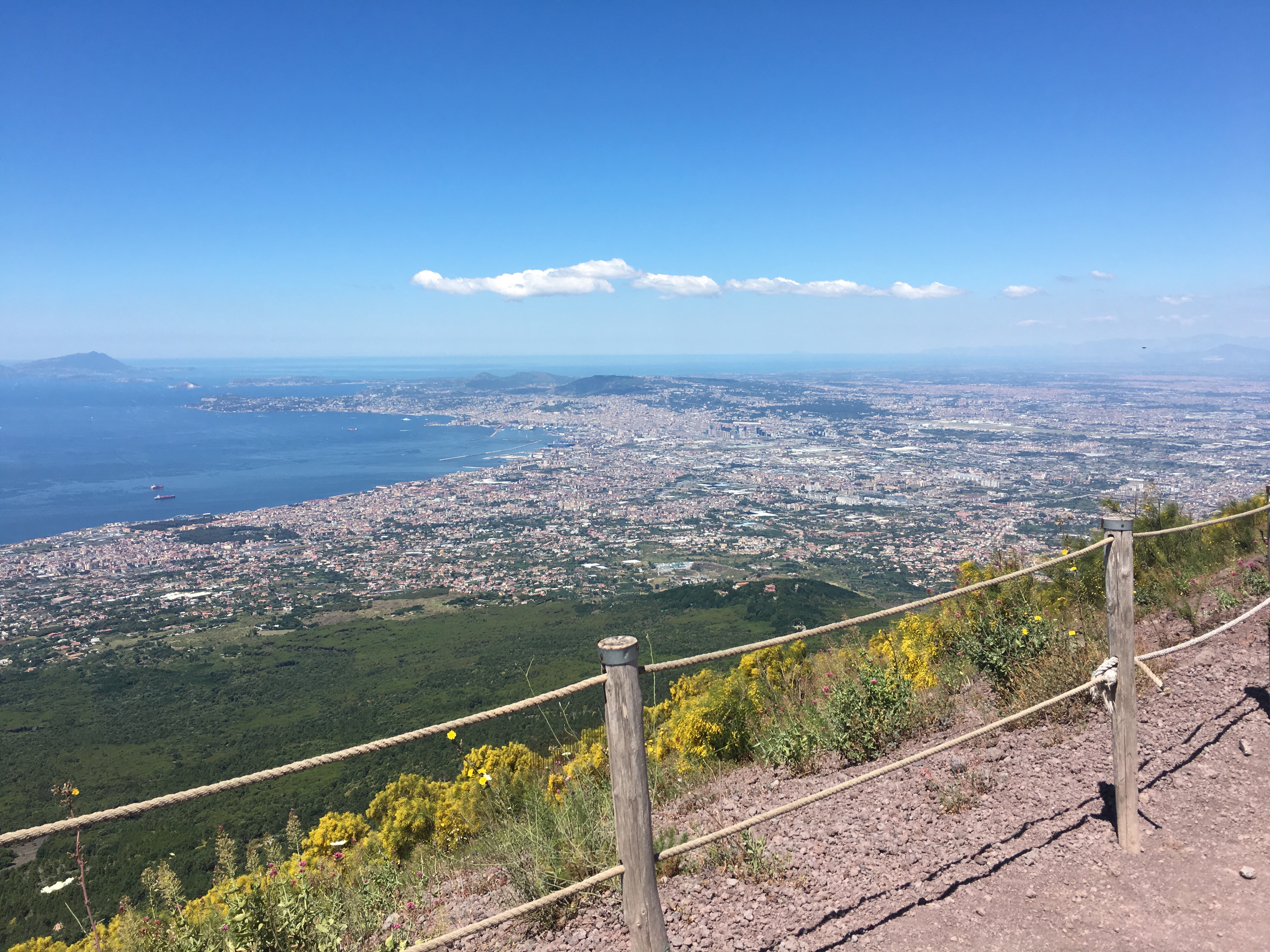
There really isn’t anywhere you can go in and around Naples, Italy, without being in eyeshot of Mount Vesuvius. Whether you are boating off the Mediterranean coast around the islands of Ischia and Procida, landing or taking off from the international airport there, or driving one of the many autostradas intertwining a metropolis of almost four million people, the unique double-mound character of this famous mountain is never out of sight, from any direction.

Of course it is still considered one of the most, if not the most, active volcano in Europe. Since the catastrophic, violent eruption that levelled Pompeii in the first century, it has erupted about three dozen times, significantly once in the 17th century and most recently in 1944.

Geologists and volcano experts today expect another eruption from Vesuvius, and believe they will have about a 4-week warning period before the first signs lead to the eruption.

So, you can imagine the horror we felt when we saw smoke pouring from the peak of Mount Vesuvius. Just a couple days after climbing the famed Mount and learning all this history, we were driving into Naples from the north. After holding a sudden, collective breath, we exclaimed together: “It’s going to blow!”

Some of us with phones quickly called our friends. Of course I kept driving, but in Naples it seemed everyone smoked, talked on the phone and held their child in their lap while driving at 130 kms/h. You will be happy to know I kept both my hands on the wheel while my passengers did some quick research to find out that a grass fire on the south side of Mount Vesuvius was sending smoke over the top which made it look, from our point of view, like the warning signs of an immanent eruption.

Indeed we are terrified of fire when it is out of our control. I’m not talking here about the pristine and contained burn of a campfire at the end of a day of leisure play on a lake or in the backyard. People who have seen and witnessed the raging inferno of a forest fire — earlier this year in Fort McMurray, for example — can speak of the palpable terror of a consuming fire.

In the text from Hebrews for today (12:18-29), the writer describes God as a “consuming fire.” Indeed, the writer describes the religious awe from Exodus in the Old Testament as a terrifying experience: “Indeed, so terrifying was the sight that Moses said, ‘I tremble with fear.'”

What does fire mean, in the context of faith? When we experience and confront hellfire in our lives — describe it however you will, reflecting on the greatest challenges in your life now — what does the consuming fire mean? 

In the DC Comics recent film, “Suicide Squad”, our super heroes each have a special gift they use for the cause of good. One of them has the gift of fire. El Diablo is his name, and he describes his ability as the “gift of the devil.” Indeed, we make a direct association, through culture, between fire and sin, fire and evil. In Dante’s epic 14th century poem, Inferno, there are references to fire to be sure. But considering all the degrees of hell described therein, fire is not the singularly predominant symbol of hell.

In the last century, Scots preacher George MacDonald in one of his sermons poses a more nuanced reflection on the purpose of fire: “Can it be any comfort to us to be told that God loves us so that God will burn us clean?” How many of us want to be tortured? MacDonald goes on, “We do not want to be clean and we cannot bear to be tortured.” So, the natural, human tendency kicks in — better the devil we know than the devil we do not know. And we take the easy road: we remain stuck in our unhealthy life styles and viewpoints that are far from the honest truth of it all.

Part of the problem, I believe, is that for many of us, fire means punishment.

Either we want it to mean punishment, or we imagine other people do. So, we avoid the all-consuming fire of God’s presence in our lives. We don’t believe we can stand it. In the words of a famous movie line delivered in “A Few Good Men” by Jack Nicholson: “We can’t handle the truth!” And so, in our hearts at least, we run away from God.

But the bible (in Hebrews, Revelation, Exodus, and the Gospels at least) reveals that fire is not God’s punishment; fire is not meant to be torture. 

Fire is purification.

Fire is used to refine metals. The smelter melts and pours off the gold or silver, then skims off the dross until she can see her own face reflected in the molten metal — not a bad metaphor for God’s judgement. The question is, what gets purified? And the answer has to go further than merely ‘sin’. Because sin is so embedded in our lives, and will always be as long as we walk this earth. We have to go deeper. The purification of God goes to that place deep in our hearts that causes sin, that generates those unhealthy behaviours and thoughts:

Our false selves. All the excuses, the lies, the fictions, all the rationalizations, self-justifications, all the official versions and self-diagnoses we attempt to sell to others, all the self-adaptations and defensiveness to escape criticism, all the motivations that are fuelled more by selfish ambition and fear than an honest concern for the other. All these will be consumed in the fire of God’s love.

Ironically, what I often call ‘religiosity’ is also a target for God’s fire. When we are honest about our true motivations for coming to church: Is it to look good, to make a good impression, to merely reflect the group’s ideals taking on manners of speech, dress, belief, common sense, even political opinions that make us fit and feel good about ourselves? The mournful fragmentation of the Christian Church into a plethora of denominations today is an unfortunate testimony to this truth, I believe. Yet, God’s fiery love will clean us from that sort of religiousness as well.

And when all that happens, this is the joyous promise: When God’s presence breaks into our awareness, when we feel ourselves being utterly known, embraced, and accepted as we are. The embraced and accepted self is not the false self that reflects only our perfected self image; it is the real self that God created. In that moment, the false self becomes ashes. In the end, I believe that the harshest judgement of God’s consuming fire (read: mercy, love and grace) is friendlier than our own most lavish self-praise.

But do we want to go there? Do we want to change? Or, are we afraid of what we will find when we take off the masks of our false selves?

Perhaps we cannot do this. Perhaps we are too weak to confront the consuming fire on our own willpower. Perhaps our fear is too great, and we are trapped in cycles of self-delusion. Like the point of view in our sighting of smoke on Mount Vesuvius: It looked like an immanent eruption but in truth it wasn’t. Better the devil you know than the devil you don’t know. In that case, it was better the devil you knew! We choose how we want to look at things. What is our response?

I see a connection with the parable of the Wedding Banquet (Matthew 22:2-14) where you might recall the king threw out a guest who wore no wedding robe even though the guest had clearly not anticipated attending a wedding when leaving home that day. However, a little know fact: it was up to the host to supply suitable robes to invited guests in that time and culture. The truth of the matter was that this man refused the offer, likely insisting he was OK as he was. Invited, yes. Fit to be present, not yet.

The invitation to the marriage feast is given to us. The joy and freedom is promised. Perhaps the consuming fire of God is an unavoidable mercy. And the only thing we can count on, is that this mercy will be offered to us over and over again throughout our lives regardless of how we respond to the events, people and circumstances of our lives. And so, all we can do is take the next step on the pilgrimage with our God, the all-consuming fire.

For that alone, then, thanks be to God.

Much of this sermon is adapted from Gray Temple’s fine piece in David L. Bartlett & Barbara Brown Taylor, eds, “Feasting on the Word; Preaching the Revised Common Lectionary” Year C Volume 3 (Louisville Kentucky: Westminster John Knox Press, 2010), p.376-380

Faith’s fire & water

Please read Psalm 82, and Luke 12:49-56 — the appointed biblical texts for Pentecost+13, Year C (Revised Common Lectionary)

You may have heard some of the old rhymes of how outdoors’ enthusiasts and mariners have interpreted the appearance of the sky: For example,  

“Red sky at night, sailor’s delight; Red sky in morning, sailors take warning.” Or, “Rainbow in the morning sailors take warning; Rainbow towards night, Sailor’s delight.” How about, “If smoke goes high (from a campfire), no rain comes by; If smoke hangs low, watch out for a blow.”

Indeed we have our ways of predicting and managing our lives, based on beliefs and observations over time. We then convince ourselves of the truth of the things we repeat, like the rhymes, in our minds over and over. Even if, like the weather, we can be totally off.

If anything, our ability at self-deception is huge. For one thing, we have convinced ourselves that Jesus and Christianity is not about justice for the weak. If you don’t believe me, just examine our attitudes towards Indigenous First Nations people — how quickly we resort to condemning them as lazy drunkards, self-justifying our own greed and fearing the loss of our own power and property. Even though we are the rich and powerful, and they are the people in our communities who are the weakest, the lowly and the destitute. 

How long will you judge unjustly and show partiality to the wicked? Give justice to the weak and the orphan; maintain the right of the lowly and the destitute (Psalm 82:2-3)

When God calls us to give justice to the weak, who then are the wicked? Not the weak, the lowly and the destitute. Given the structure and spacing of these verses from Psalm 82 — the wicked are those who occupy the opposite end of the socio-economic spectrum: those who are strong, who are in power, who have wealth and security.

Why is that?

Most of Jesus’ teaching in the New Testament indeed focuses on issues (and problems) of power, prestige and possession. 

And yet, how quickly and easily we avoid those and focus on issues that Jesus spent little if no time on — homosexuality and abortion, to name a couple recent hot topics in the church.

It’s not that sexuality, addictions and ‘family values’ are not important. But these do not form the core of Jesus’ teaching.

The core of Jesus’ teaching reflects in such notions as: Blessed are the poor and the peacemakers; parables about rich men, selling all, the widow’s mite, the lost sheep, rendering to Caesar, he who has no sin throw the first stone, bigger barns, eating with sinners, praying to be seen vs the humble stance — the list goes on. I remember attending a stewardship event years ago when the main speaker asserted that most of Jesus’ teaching centred, in fact, on money.

And yet, how much these days a disproportionate amount of energy in the church is spent on anything but. We want to avoid talking about money in the church, especially if it means a sacrifice on our part.

You know how to interpret the appearance of earth and sky, but why do you not know how to interpret the present time? (Luke 12:56).

That’s what Jesus is saying in the conclusion of the Gospel text: You have fancy ways of reading the sky but you can’t even discern the truth of your very own lives and the truth of what I’m all about!

We need to hear again the words of scripture and the Lord God:

Rise up, O God, judge the earth. For all the nations belong to you! (Psalm 82:8).

Ultimately the question is: To whom do we belong? To whom does all of creation belong? We have all sorts of acceptable answers to that: We belong to our spouses, to our families, to our parents and grandparents. We belong to the church. We belong to the nation. Sounds righteous, does it not?

And, we go on: creation belongs to us! Natural resources belong to us. In this line of thinking, belonging morphs into ownership and the commodification of basic things, like water. As long as you have enough money to buy it, you have a right to it.

Speaking of water, these last few days those of us on municipal water in Arnprior were not permitted to use water for anything. Anything — not only drinking. We couldn’t boil it, or wash in it, take a shower or bath in it, wash laundry, do the dishes, even touch it!

The house was a complete mess by the weekend. We were driving into the city to take showers and to buy lots of bottled water. I felt just a little of what it must be like for the First Nations communities in northern Ontario who on a regular basis do not have adequate access to safe, drinking water.

I read here an excerpt from the online description (www.claygathering.ca) of the National Youth Project from 2012-2016 which will culminate in PEI this week at the Canadian-Lutheran-Anglican-Youth (CLAY) gathering:

“What is water? Although this may seem like an obvious question, the answers that we provide often depend on our cultural and religious backgrounds. Traditionally, western cultures, like ours, have treated water as a common property, meaning that water is owned equally by all of us.

“In recent years, however, western cultures have shifted their understanding of water. Now, water is viewed like any other natural resource, like natural gas, oil, or gold, and unfortunately, for the right price, it can be bought and sold by individuals and corporations. But who owns it? The water from the tap, the river, the rain… who owns it?

“As you might expect, this new western understanding of water differs strongly from that of many Indigenous communities. Instead of treating water as a resource that can be bought, it is viewed it as a living being with which all creation has a relationship and a responsibility to protect. 

“For the Ojibway, water is a source of purification, and for the Iroquois, it is a gift from the stars integral to medicine, prayer, and cleansing. In many Indigenous cultures, women have a special association with water: they are the keepers of water, and it is their responsibility to lead water ceremonies which demonstrate a community’s respect for water. What we can learn from our Indigenous brothers and sisters is that water is a force that sustains, and requires respect and protection.

“Although western culture may treat water as a resource that can be used and abused, as Christians we know that it is a very important component of our spiritual life. We know that in the Bible, water is recognized as divine and life-giving. In Genesis 1, we see that the shape and content of all bodies of water are creations of God. In Revelation 21, we are told that, through Jesus, we are freely given a kind of water that sustains our lives and in John 3, we learn that those who enter the Kingdom of God are those who are born of water and the Spirit. Indeed, our very baptism is validated by the Word and Water.

“These parts of Scripture and sacramental practice show examples of the importance of water to us as Christians. It reminds us that, just as our practical life depends on water, so too does our spiritual nourishment.

“Many Indigenous communities do not have access to this vital resource: even where there is access, the quality of water is poor. Understanding that water is important and is a human right, what happens if you have access to water but it isn’t clean, useable, or safe? As Christians, we recognize that water nourishes and cleanses, and now we need to care for it as much as it cares for us; we need to be good stewards of the earth.”

We don’t ‘own each other’ as property to be traded on the open market as much as we don’t own anything in creation. Creation is meant for all people to share and hold in common, for the common good.

That means, in God’s view, no one is alone, no one is left behind, and no one falls through the cracks. This is the Good News: Everyone belongs. Everything belongs. Where we are weak, we belong. When we fail, we belong. When others are weak, they belong. When others fail, they belong. To God.

This Gospel, while good, is not popular for those who have it all we need and more. For us who are fortunate — all things being equal — we have a tough pill to swallow, here.

God’s presence and God’s truth must permeate through our sinful greed, materialism, and lust for control and power. A fire it is, that God sends upon our lives, (“I came to bring fire to earth” – Luke 12:49) to burn through the false thinking, false beliefs. A baptism by fire, some call it.

Like my experience in the dunk tank last week: It’s both thrilling and scary, to let go of control, not knowing when the ball will hit the target and I go for a total immersion plunge.

This is the baptism into which we are called: A lot of turbulence and uncertainty before it gets better; humility comes after being humbled; forgiveness and mercy only after confrontation, honesty and truth; a letting go before new life, new beginnings. Pain before the gain.

A sunset and long darkness in the sky before the brilliance of the sunrise to start a new day.

This is our hope.

Talking about toast

“I want butter on my toast, but not too much.””You’ve spread it on too thinly. I want a whole wad of it.”

“You’re being wasteful. You’ll use up the tub in a couple of days.”

“If you didn’t burn the toast to a crisp all the time …”

“I don’t like my toast slightly warm.”

” … the butter would melt into the bread.”

“Toast is toast. A slice of bread is a slice of bread. There’s a difference.”

“Lighten up. Just slather it on.”

Of course, the words alone in this dialogue do not tell the whole story. There are other ways that we communicate, that animate the message. They say seventy percent of communication is non-verbal. What does the tone of our voice communicate? What are our eyes looking at when we speak? And, most significantly, what are our bodies doing? What is our body language?

I was attuned more to this truth in Italy during our family vacation. Every culture presents uniquely in the manner of body language during a conversation, to the point of caricature and over-generalization. Of course, not every English person speaks with a stiff upper lip; not every Italian gestures wildly with their hands; not every Canadian looks downward and apologizes. The exercise, nevertheless, of paying attention to a cultural tendency is helpful in bringing awareness to the way we communicate.

We played a little humorous game, somewhat irreverent, whenever we drove by or saw in a distance a couple of Italians speaking to each other — their bodies close, hands waving on either side of their partner’s ears as if guiding a plane on the tarmac to its docking at the gate, eyes piercing the other with intensity, even spittle flying from their mouths. We couldn’t hear what they were talking about. But we made up a dialogue about something the opposite in nature to their serious, even combative, style. We would try to convince ourselves that they were talking about toast.

Communication is essential to any relationship. And it’s not just the words we speak. It’s our behaviour. What we do. How we act. What our bodies are telling ourselves, and the other who is in our presence.

In other words, communication is real. It is not just reserved to the realm of ideas and theory and abstraction. Communication involves our whole lives, our whole selves. We are not by ourselves in the ideas we express and the words we use. 

When we speak about God, and our relationship with God, we dare not relegate our relationship with God to the realm of words alone — whether those words are printed on a page, or spoken during worship in a detached manner as if those words hold power on their own without context or embodiment.

Our God is real. Our God wants relationship with us. And, in the Isaiah text today, we read that invitation: “Come, let us argue it out!” says the Lord (1:18). God is having an argument with the people of Judah and Jerusalem during the reigns of kings Uzziah, Jotham, Ahaz and Hezekiah.

It is not a dialogue that is calm and reserved. It is not a cool, collected, disassociated manual of instruction. It is not a legal text. It is throwing down the gauntlet! Come on! You are messing up! But I make an offer. Let’s have it out! says the Lord! You have something to say? Then say it! The Lord can take it. Let’s negotiate. Let’s hear each other out. Let’s be real.

I wonder about our image of God when we shy away from such boldness. Is it because we imagine a God who is passive? Who only does our bidding, or should? Or a God whose job it is only to direct us, judge us and basically order us around?

But what about a God who is more vulnerable than that? There is no more direct and clear message of this vulnerable God than Jesus hanging crucified and dying on the Cross. So, what about a God who seeks our attention by being vulnerable? Who wants us to engage with God in an honest, self-disclosing way? Because the message of Scripture suggests time and time again: 

Not only is God’s company available and deeply important to us, but our company might very well be important to God. Could it be that God seeks our companionship? Could it be that God desires to have us as friends, and that the God who so patiently works with us in every moment rejoices upon occasion to have our undivided attention — even when our attentions are directed to the many particular concerns of our lives? (1) 

God is, indeed, the “great companion” (2). God is present with us, interested in us, and trustworthy. God’s love is receptive and responsive. In other words, we do not pray to an impassive, unmoved mover.

God is in relationship with us. God invites us, when we have a bone to pick about life, about whatever is happening in the world, to “Come, let us argue it out.”

It’s not that God always wants a fight. I will define a “fight” in this context as a bold yet non-combative, mutually-respecting exchange of unique perspectives. What this kind of arguing or fighting reveals is passion, real feelings, and the truth about ourselves. 

And this is a sign of any healthy relationship whether we talk about relationships in marriage, or work, church, community or play. Honesty. Truth. And in the exchange of honest discourse, we bring all that we are, not just our words. Our hearts. Our minds. Our bodies. 

We may not change God’s mind about whatever. But that is not the point. God wants to hear what we have to say. God wants to feel our passion, hear our cries, sense the beating of our strained hearts. God wants to understand us. This is what Jesus was all about. 

God sent Jesus in our flesh so that God could begin to truly understand what it means to be human. And in that humanity, in seeking us, God can bring an outpouring of love, grace and mercy — time and time again.

So, any subject is on the table. Thanks be to God! Anything is on the table, in all honesty. Including talking about toast.
Amen.

1 – Nancy Campbell & Marti Steussy, “Process Theology and Contemplative Prayer: Seeking the Presence of God”, p.87

2 – Clark Williamson, “Learning How to Pray,” in Adventures of the Spirit: A Guide to Worship from the Perspective of Process Theology with Ronald Allen (Lanham: University Press of America, 1997), p.162

Gospel, Italian style

On the Sunday before I left for a family vacation to Italy, you encouraged me to — “know your history”. I think that message came to me mostly during the children’s chat when we talked about the Canadian flag on my backpack, and why Canadians had been so well appreciated and admired in western Europe, especially, over the past several decades.

The conversations then, as well as following the service over coffee, reinforced to me the value you place upon ‘history’ in general. 

Well, Italy is not exactly the hotbed of Reformation, Protestant Christian history as such. At the same time, the buildings there stand clearly as testimony to the dedication of Christians in certain times and places in history.

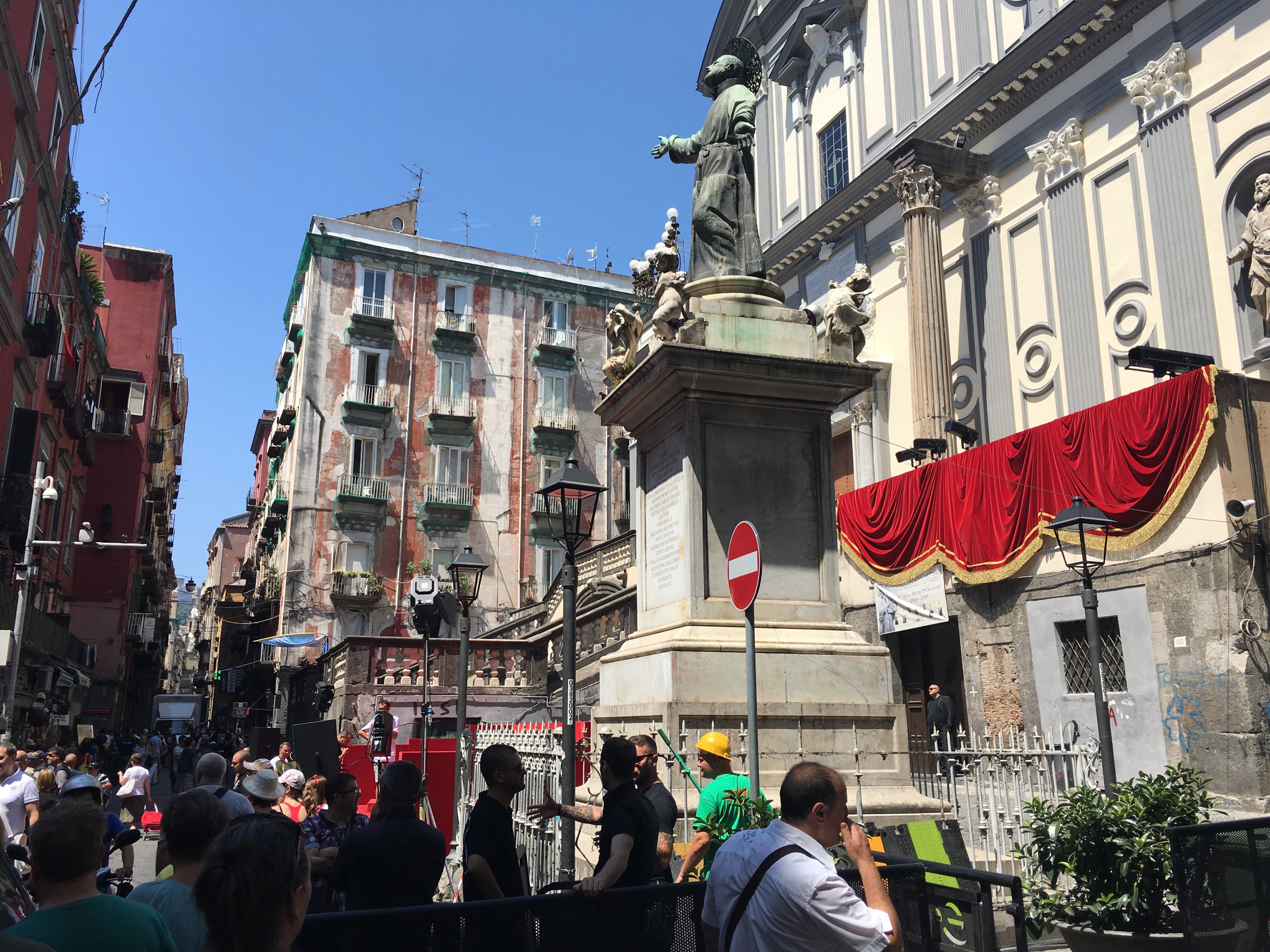
It was the first day we walked in the older section of Naples — a sprawling metropolis at the base of Mount Vesuvius on the Mediterranean coast — when I began to feel this history pressing in the air all around me.

I say sprawling because Naples is today the most densely populated urban centre in all of Europe; some 8,500 people inhabiting one square kilometre in a metropolis of nearly four million people — making it the third largest city in Italy, and the ninth most populous urban area in the entire European Union.


The noise was overwhelming: the hustle and bustle of pedestrians, car horns beeping, motorcycles and mopeds buzzing, shouting street vendors, impassioned conversations, two-toned emergency sirens, barking street dogs, screeching tires.

In conrast, the neo-Gothic styled ‘duomo’ in Naples offered a welcome break to this outside clamour. 

The expansive interior spaces of this main cathedral embraced silence and only hushed speech. You could occasionally hear the squeak of rubber-soled shoes and someone dropping a book on the stone and marbled flooring as people sat and wandered solemnly throughout the holy spaces.

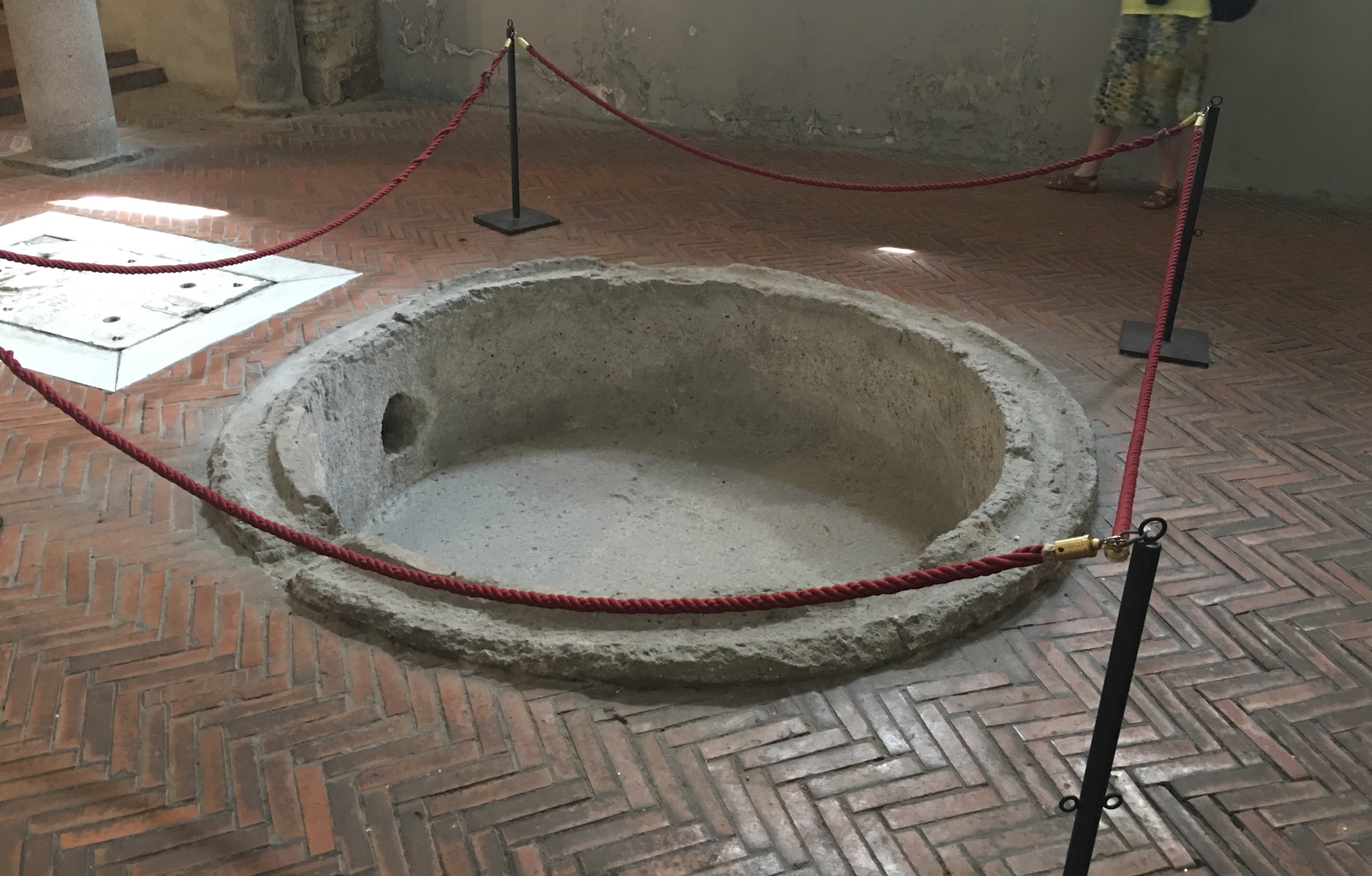
Perhaps the most significant feature of this cathedral is the baptistery, which is the oldest baptistery in the world, built in the fifth century, C.E. It is remarkable to connect with such an ancient symbol in a material form. 

When the baptized emerged from the water, looking upward at the ceiling, they would be encouraged in their faith; the first images they saw after being baptized were scenes from the Gospel expressed in Byzantine, mosaic art: Jesus saving Peter from drowning, the women at the empty tomb, the miracles of the multiplied fish, an image of Saint Paul, the Apostle, etc.

Seeing with my own eyes and touching with my own hands this font that was built by human hands only a few hundred years after Jesus, affirmed my conviction in the longevity and validity of the sacrament which has endured as profoundly meaningful for Christians throughout the millennia. 

I felt that faith is not just about the good old days when I was young, but the good old days when the Christian faith was younger. We are part of something much larger than our immediate reality. And, when we connect with that broader history, we realize it wasn’t always peaches ‘n cream and rose-coloured a history.

If you are movie watcher, you might recognize another cathedral we visited — the Duomo in the Umbrian, medieval town of Orvieto. 


This cathedral was featured in the opening scenes of Under the Tuscan Sun. This cathedral’s highlight is the Chapel of San Brizio, featuring Luca Signorelli’s brilliantly lit frescoes of the Day of Judgment and Life after Death. 

Although the frescoes refer to themes of resurrection and salvation, they do so through images not from the bible (that is, stories from the Gospels or Old Testament) but from the turbulent political and religious atmosphere of Italy in the late 1400s. Signorelli told the story of faith through his contemporary human events, rather than the traditional symbols (such as Jesus, God, the Trinity, the Apostles, disciples and other biblical characters) that we see in most other places.

Those frescos in the Orvieto cathedral chapel were snapshots of an historical era particular to a specific time and geo-political reality (i.e. 15th century Italy). And the impression of faith put ‘on it.’ Historical to us. Yet current to those who built that Cathedral in the Midlle Ages.

Faith is more than merely appealing to our past. Coming to worship today is not just about being reminded of something or someone from a long time ago. What we do here today is not just an exercise in recalling historical facts. As if decisions we make today are really not about faith. When we talk about our building renovations, worship practice and art, musical choices, communion, budgets, outreach initiatives  — these issues are very mcuh about the Christian faith ‘in the real world’, so to speak. All of these real things do reveal what we believe in, our values, what is important to us, who we are. How do these ‘mundane’ decisions reflect the Christian Gospel, faith, kindgom values in this time and place?

Lutherans make a similar mistake, I believe, when we define ‘Lutheranism’ as a belief/doctrinal system that is limited to the words and conceptual formulations of sixteenth century Germans. When we say that to be Lutheran is merely to ‘turn the clock back’ to 1537 when the Book of Concord was finally assembled including Luther’s Small and Large Catechisms, the Augsburg Confession, and the Apology to the Augsburg Confession.

I prefer a view that is reflected in the Evangelische Kirche Deutschland’s (EKD) logo for 2017, “Celebrating 500 years of Reformation”. Five hundred years of Reformation. In other words, Reformation started happening — in our tradition — with Martin Luther, yes. 

But, Reformation continued through the 500 years following, and continues to this day and beyond. We are always reforming the forms and means by which we express our evangelical, Gospel-centred faith. Always finding new and creative ways to tell the story of God.

What can we say, then, about Christian history? If we can apply a macro view over the ages, we can say that the history of the Christian faith is about a God who loves us. Christian history is about a God whose compassion never fails, who “will not come in wrath” (Hosea 11:9) — even though the people of God continue to keep “sacrificing to the Baals and offering incense to idols” (v.2).

The history of the Christian faith is about our lives being “hidden with Christ in God”, being “revealed with Christ in glory” (Colossians 3:3-4), dying daily to ways of sin and being renewed daily in Christ who “is all and in all!” — even though we are imperfect and sin as long as we hold breath. Christ is all and in all — despite us!

The history of the Christian faith is about how each moment of history — including this one right now — reflected Jesus’ love in the fifth century, the fourteenth century, the 21st century in Palestine, Egypt, Italy, Canada, etc. God for all times and places!

We validate the Christian faith by our lives today, now. This is where the rubber hits the road. This in-the-moment approach fuelled the generosity of medieval Catholicism represented in the magnificent building projects for worship as much as it did the passion and commitment of European Christians during the Reformation era.

We do not leave the practice of faith for some distant, utopic and dreamy future. Neither do we rest on the laurels of the tremendous sacrifices made by our forebears in Canada. 

Now is the time. Now is the time to live out of the conviction of God’s grace and love, despite the many and various ways Christians have messed up in history, and continue to do so today. Now is the time to live out of the faith that is full of hope, that despite our waywardness and unfaithfulness, God is faithful. Now is the time to claim God loves us, not because we are good, but because God is good. God is so good!

You know Jesus’ familiar exhortation, most often translated as “be perfect as your heavenly Father is perfect” (Matthew 5:48). Christians have often interpreted this word ‘perfection’ as being made whole. 

A much better translation might be: “be merciful.” Because this verse comes right at the end of a passage calling Christians to “love your enemies” (v. 43-48). Only God is perfect. But we can participate in God’s perfect mercy, God’s all-inclusive and impartial love.

Echoing Saint Paul’s words from the Epistle today (Colossians 3:11 — “Christ is all and in all”) St. Bonaventure later said, “Christ is the one whose centre is everywhere and whose circumference is nowhere.” [1] 

Christ’s mercy is everywhere evident in history. This is the Wholeness, the forgiveness, the grace, that holds you forever and everywhere. You can’t figure this Wholeness out rationally, nor can you control it. All you can do is fall into this Wholeness that holds you when you stop excluding, even the dark parts of yourself. [2] And that, my friends, is the Gospel — good news — for all times and places.

Thanks be to God!

1- Alan of Lille, ‘Regulae Theologicae’, Reg. 7 as quoted by Bonaventure, translated by Ewert Cousins, “The Soul’s Journey into God”, Classics of Western Spirituality (Paulist Press: 1978), p.100

2- Richard Rohr, “Daily Meditation on the Spirituality of Imperfection” Week 2 – Perfection of Wholeness, Thursday, July 28, 2016

Turning into the wind

We were just down the street from Pearson International Airport in Toronto. Late in the evening after the first day’s sessions at the Synod Assembly last week, I walked along Dixon Road which goes right to the airport. 

At one point on a bridge you can stand directly underneath the path and roar of landing planes. You look west in the direction of the landing, and you see the long runway lighted brilliantly for the descending jets touching down. You look in the opposite direction towards the east, and you can see a long line of planes taking their turn in the landing rotation, the dots of their lights extending in a straight line far into the distant sky.

It was a windy day, the gusts reaching over 50 km/h from the south. What impressed me was how each plane’s nose was turned slightly to the left, towards the south, as they made their final approach. The planes were coming in on a straight line, yes, but turned towards the wind in order to keep their landing true. At the last second before touching down, the jet would straighten out.

Wind, like currents in the water, is a significant if not main factor in affecting the flight or sail of the airborne or water craft. In order to land safely and soundly, the planes had to face the challenging issue head on. In the words of Paul in his letter to the Galatians, the problem must be “detected” (Galatians 6:1) and exposed. 

You will get nowhere in a plane or boat unless you ‘dance with the devil’ so to speak. Unless you look your problem square on, face it and name it, and change your position accordingly. If the landing planes insisted on keeping their plane aligned straight on their approach, they would not have made their landing on the runway, but somewhere to the north of it!

Our guest at the Synod Assembly, Bishop Munib Younan (president of the Lutheran World Federation) spoke of Lutheranism. He warned us, that in these Reformation Anniversary years, we do not celebrate ourselves. We do not pretend that God couldn’t have done anything good without us. We are not the perfect church, but always reforming.

Being Lutheran, he said, is a call to humility, not a spirit of triumphalism. We dare not make an idol out of Martin Luther or his legacy in us.

Paul strongly exhorts the Galatian church to proceed with one another in humility and gentleness, not lording it over others who are ‘sinners’. Because we ourselves are no better. We must learn to face our own demons. This is what is meant by his words: “All must test their own work … for all must carry their own loads (v.4-5).” We dare not point fingers without first acknowledging our own stuff.

This is then, how we bear one another’s burdens. Amidst the conflict wreaking havoc in the early church in Galatia, Paul encourages the people to persist in not losing heart, to have courage and not give up.

As the Gospel text for today describes (Luke 10:1-11), the work of the church doing God’s mission in the world will result in friction and struggle. You cannot follow Christ and not encounter conflict and adversity in your life. 

The famous Psalm 23 so often associated with bringing comfort and evoking peaceful, calming images includes this disturbing verse: “You prepare a table before me in the presence of mine enemies” (Psalm 23:5). It feels like this verse doesn’t belong beside still waters and green pastures along paths of righteousness. But it does belong! It means that God gives us the gift of grace in the presence of all that challenges us, all our demons internal and external, everything that we may not like in our lives — not apart from it.

Paul concludes his letter to the Galatians by focusing our attention on the cross of Christ (6:12,14) — the symbol of death and suffering of a God who goes the distance to love us. This is the only reality about which to “boast”. Why?

There is a treasure in the midst of the suffering. We may not see it right away. Yet, our struggle does yield something good, something meaningful, something liberating. Yes, we are liberated by God’s grace. 

Liberated however not by ‘nicey-nicey, goody-goody’ — a phrase our Bishop Michael Pryse used at Synod to describe an approach to church life that just keeps us stuck. Liberated not pretending to live a charmed life. Not by everything working out perfectly. But liberated through what may be a terrible suffering, a loss, the very pain that would otherwise destroy a person altogether. There is a treasure therein.

That is why we boast of the cross, and nothing else. How can God be found in the painful letting go that marks the various stages of life? How can we even sense or feel God’s presence in the midst of a grief too heavy to bear? How can we move on through the turbulence of change and transformation?

In his short book, “Rules for a Knight”, actor-writer Ethan Hawke recounts the last words of instruction by a renowned knight, Thomas, to his children:

“There is a memory that won’t let me go,” Thomas begins. “Last summer all you children were playing by the ocean. We were with your mother and her sister’s family, do you remember? The weather was sublime, streaks of sun and a deep blue sky. You four and all your cousins were building castles with the warm, muddy sand. Each of you kept your castle separate, announcing, ‘This one is mine!’ ‘That’s yours!’ ‘Stay away from mine!’

“When all the castles were finished, your cousin Wallace playfully stepped on Cven’s. Lemuel, you flew into a protective rage. You were only looking out for your sister, I know. Mary-Rose, you thought Lemuel was over-reacting, and you threw him to the ground. Next, everyone was fighting, throwing sand, howling with tears, and pushing one another. Young Wally had to be taken home, sobbing in your aunt’s arms.

“When he was gone, you all went back to playing with your castles for a little while but quickly moved on to swimming. It grew cloudy, and soon it was time for us to begin the journey home. No one cared at all about their castle anymore. Idamay, you stamped on yours. Cven, you toppled yours with both hands. We all went home. And the gentle rain washed all the castles back into the surf.

“Please be kind to one another,” Thomas concludes. (1)

What are the castles in your life? Things or issues that in five to ten years won’t really matter anymore? Things for which you might lay your life down now in heated, compulsive reaction, but really won’t endure — material possessions, opinions that merely shore up a vulnerable ego, beliefs that have outlasted their use? A spirit of judgement and condescension towards people who do not experience life like you do? A reputation to defend at all costs? etc. etc. What are your castles in the sand?

“My friends,” writes Saint Paul, “if anyone is detected in a transgression, you who have received the Spirit should restore such a one in a spirit of gentleness.” Around the same time Philo of Alexandria wrote: “Be kind: Everyone you meet is fighting a hard battle.”

Turning into the wind may be a basic operation for landing a plane. When I face the wind and continue paddling or cycling into it, tears will come to my uncovered eyes. There are tears that come in the face of God’s Spirit, a Spirt that will blow down castles built in the sand.

This wind also has the power, like the Spirit of God, to build endurance, strengthen my inner life and take me where I need to go. If I stay with it, often more rapidly than I would on my own!

May God’s wind blow surely and true in your life this summer. May you receive grace in turning to the wind.

(1) – Ethan Hawke, “Rules for a Knight”, Alfred A Knopf, New York, 2015, p.148-149

No life insurance

It’s like the spirited game parents play with their young children.

I remember years ago when the kids were still in diapers tossing our little ones up into the air, and then catching them on their way down. What makes this game so delightful is to watch the expression on the face of the child. If you slow-motioned the activity and zoomed in on the facial reactions of the child at each stage of the ‘throw and catch’ game, you would see a contrast of emotions:

From the catch to the upward toss, a smile and squeal of joy; from the falling motion to moment of catch, a growing sense of alarm as the eyes widen in concern and fear begins to creep into the picture. But, then, again the catch. And the grin returns. And the game resumes.

Can you imagine being the widow in the Gospel story (Luke 7:11-17) who has just lost her only son? Having lost her husband is one thing. You think it cannot get any worse. Yet, as is often the case in life, it does. Now her son. She feels the sharp edge of grief once again. Perhaps more deeply for the child she gave birth to, and raised with all her mother’s love.

Not only a personal grief, but the prospect of living in extreme need. Being a widow in 1st century Palestine was usually a ticket to poverty and low social status. A woman’s economic worth was almost always tied up in the men of her household — her husband or eldest son. This was much more than personal, emotional grief. This was a complete life-style change, from top to bottom, in a heart beat.

After meeting Jesus, however, things change so rapidly. From a season of mourning and grief, to the astonishment and wonder of joy: Her son is no longer dead, but alive! No longer is she alone, vulnerable, a burden on society, worthless in the economy and social structures of the day. Now, she has her son back. She has family. And that means the world to her!

Although something has changed. This new thing is also scary. All who witnessed the miracle were filled with fear (v.16). What does this second chance at life mean? Things will be different now. No longer like the good old days.

The rapid and extreme change of emotions could make her feel like a yo-yo. Maybe life sometimes feels like that for you. From moments of exquisite satisfaction, pleasure and joy, to the dark caverns of grief, depression, loss, suffering, fear and pain. Life. Death. Life. Death. Life. Death. Life. 

In my first parish, which was in rural southern Ontario, burials were conducted (except during winter months) immediately following the funeral service in the cemetery right beside the church building. The recessional with casket proceeded to the grave side where the words of committal, prayers and scripture readings were offered. 

But then, the family stood by as the grave-diggers and funeral attendants lowered the casket, suspended up until that point on winches and ropes, down into the hole. In some cases, I had to assist by moving the casket into place as it slowly lowered. Once resting on the ground inside the hole, a family member used a spade to throw the first shovel-full of earth onto the casket — a symbol of the family participating in burying their loved one.

Today, especially in urban centres where funeral services are highly managed by market-driven professionals, most often the family leaves the grave-side before the casket is lowered and actually buried. I wonder about how the smallest of acts reflects our attitudes towards death and loss. 

Perhaps we can’t ‘go there’ emotionally so soon after losing a loved one and have to insulate ourselves in order to cope. The funeral rite therefore serves more as an anesthetic against the harsh reality of death and loss. I wonder: Does the experience and ritual of funerals only end up buffering the hard, emotional impact of loss?

Perhaps we are not used to ‘losing’, letting go, failing, surrendering, being powerless, vulnerable, at ground zero. We have little in life to practice this letting go before the final experience of losing a loved one. And perhaps healthy religion, as Richard Rohr claims, is about showing us what to do with our pain.

Is this too difficult an expectation of our faith? Because in making religion only about ‘feel good’ ‘warm fuzzies’ we might maintain our denial of life’s realities and only distract ourselves from truth. And that’s not what Christian faith is about — distracting us and keeping us from the rhythms of life, death, life, death, life.

Because in avoiding death, we also ironically, avoid life. And Jesus is about life. When we say this Gospel story is first and foremost about a miracle, we may be missing the point. It’s understandable that we do, because it is sensational. It captivates our imagination.

Focusing only on the miracle may just play into our fear and avoidance of death. As if to say Jesus performing this miracle was done for the boy’s sake. The enemy, death, was conquered! Therefore we can go on denying death. As if the boy will never eventually die an earthly death. As if to say Jesus performed this miracle solely to convince us to ‘believe’ in him — because no one else could do so (even though there were magicians/soothsayers and other miracle workers who performed incredible acts in Jesus’ day).

But the miracle, per se, is not the point of the story. Jesus raised the son from death not merely to show his divine power but to express his love and concern for the widow. He had compassion on her (v.13). And he couldn’t stand the thought that she would have to go it alone in a culture that marginalized the widow. Jesus brought the son back to restore a relationship, for living in the world.

God tosses us into the air. God throws us into the thick of life with all its challenges, disappointments, failures, weaknesses, joys, hurts, loves, pleasures and pain, satisfactions and accomplishments. God throws us into the air to experience fully this life we have been given. Life, death, life, death, life, death …

Then, to our happy amazement, God catches us again at just the right moment. God cares about what happens to us in our lives. God is interested in every minute detail and event in our lives — even those things we would rather cover up and hide in the darkest recesses of our hearts. God’s light exposes those secrets, even. We may feel vulnerable, challenged, unsettled for a time. And we may even wonder if we won’t just crash and burn on our way down.

Have faith in the One who’s tossing you. Because it’s part of life, for one thing. But most importantly, because God loves you and will quite unexpectedly be the One to catch you, at just the right moment.

Better together

The story is told of a wide-eyed enthusiast who visited Mother Theresa in Calcutta. Over the last century, Mother Theresa has been admired by Christians worldwide for her dedicated, self-giving work for the poorest of the poor in India.

The young man approached Mother Theresa and said, “You couldn’t pay me a million dollars to do what you do.”

Mother Theresa, not missing a beat, replied, “You couldn’t pay me a million dollars to do what I do either. I do this because I was made to do it.”

When we speak about the Holy Spirit in this season after Pentecost, we speak about the breath of God breathing in us. The Greek word for “spirit” is pneuma, which means “breath.” 

Breathing is one of those automatic, biological responses that we don’t even have to think about. It is natural and does not really take any effort at all. We are seldom aware of our breathing. And yet, it is vital to our health. Breathing is critical to our very life and purpose.

You could say, we are made to breath.

And yet, though breathing is integral to our life we may forget the gift that is in us: The gift of the Holy Spirit. We forget that living in the Spirit is as natural as breathing.

The Spirit of God is like our breath. “God’s spirit is more intimate to us that we are to ourselves,” writes Henri Nouwen. “We might not often be aware of it, but without it we cannot live a spiritual life. It is the Holy Spirit of God who prays in us, who offers us the gifts of love, forgiveness, kindness, goodness, gentleness, peace, and joy.” (1) 

Breathing is so essential for life that we only think about it when something is wrong with it. When disease, shock or accident leaves us without breath. When breathing becomes laboured. When oxygen levels are critically low in our bodies. When something we have taken for granted for so long no longer works, then what?

The way to arrive and remain in the Holy Spirit of God is both very simple and very hard: We have to remain in love. Breathing the Spirit of God’s love nips negativity, hatred and violence in the bud. It begins by retraining our initial thoughts.

We can’t risk walking around with a negative, or resentful, or gossipy, or critical mind. Because if we let the mind operate in a paranoid, angry, and resentful way, we aren’t going to breathe the Spirit of God. We won’t be breathing. We can’t be God’s usable instrument. 

That’s why Jesus commanded us to to love. It’s that crucial for life. Like breathing. That love can begin in the mind. As Eleanor Roosevelt apparently said: “Watch your thoughts; they become words. Watch your words; they become actions. Watch your habits; they become character. Watch your character; it becomes your destiny.” (2)     

In Jewish tradition only the consonants for Yahweh were printed in the Hebrew text – YHWH. As such, this most holy name for God was unspeakable. Interestingly, even the Hebrew consonants used in YHWH do not allow you to close your lips when you try to speak them.

We cannot confine God in one place as much as we cannot contain breath. We cannot point to one specific place and say, “God is there!”, turn around, point in the opposite direction and say, “And God isn’t there!” We can’t dare try to close our lips over breathing and pretend we have God all figured out! Identifying with God since ancient times was simply the intake and exhalation of breath. The great “I AM” was the breath itself.

It is the great mystery we enter into when we follow Jesus. Someone said, “life is a mystery to embrace, not a problem to be solved.” God is always beyond us but totally around us, within us and outside of us. And we all share in that same air and that same breath. It is the first thing we did coming out of our mother’s womb, and there will come that moment when we will do it for the last time.

But in between, we continue to take in the breath of God and exhale the breath of God – the totally accessible One, the totally given One, who like breath just waits to be received. Waits to be engaged. In bold acts fuelled by love for the other.

The late Swedish Lutheran bishop, New Testament scholar, and pioneer in Lutheran-Jewish relations, Krister Stendahl, gave helpful advice in this regard. How is it we can love others who are so different from us, so unlike us? Because it is easy to ignore, write off, dismiss and be critical of them.

To Christians living in a diverse and multi-religious environment, Stendahl encourages us to cultivate an attitude of ‘holy envy’ (3) towards the other. That is, we first recognize the gifts, the positives, that the other offers by their life. Rather than thinking first we need to persuade them that ‘they are wrong’, we first seek understanding based on admiring a gift they have. What does the other offer that I/We do not have? Because others have gifts I/We do not have. So, what is it the other has, that is good?

In such a way we begin to see the image of God reflected in creation — in others who are different. We begin to practice seeing Christ in the other. We begin to see the unity we share in the purpose of God, the mission of God. It takes us working together, each with their gifts, to make it happen.

This mysterious God we worship chooses to self-reveal as the Trinity — three persons in one. In other words, this one God we worship is a holy relationship. God the Father, God the Son, and God the Holy Spirit must function together by nature.

So, too, we must learn, practice, be intentional, about being in relationship with one another: working together, breathing in together and breathing out together the love and purpose of God on earth.

Once there was a Washer-man (a man who washes others’ clothes for hire) who was raising two donkeys. One he called Donkey-A and the other Donkey-B.

Donkey-A felt he was more energetic and could do better than the other donkey. He always tried to get the Washer-man’s attention by taking more of the load and walking as fast as he could in front of him.

Donkey-B was just a normal donkey. He tried as hard as he could, but he couldn’t carry as much as Donkey-A or impress the Washer-man by walking in front of him.

One day Donkey-B was crying and asking Donkey-A to help. He said, “Dear friend, it is only the two of us. Why do we compete against each other? If we worked together we could carry an equal load at a normal speed.”

Donkey-A became even more competitive after that. The next day he boasted to the Washer-man that he could carry more and run faster than Donkey-B, and he did.

Under the pressure Donkey-B collapsed in great fatigue and quietly passed away. As a result of the collapse, Donkey-A felt like he was on top of the world, having proved his superior skills and abilities. 

But now he also had to carry Donkey-B’s load.

For a short time Donkey-A was able to carry both loads, but he eventually became fatigued and weak. Finally the day came when the Washer-man was tired of this fatigued and no good donkey. He put him to pasture, and went searching for some other pack donkeys to get his work done.

The moral of this story is, you can’t do it alone. If we are made to breathe the Spirit of the triune God, we are by nature ‘relational’. It is important to learn how to work well together.

Worrying more about individual performance, taking all the credit and trying to do more than you are capable of doing eventually comes back and bites us one way or another. Christians, at their best, are team players.

Donkey B may not have been the strongest nor the fastest, but he was consistent. Everyone brings something valuable to the table. And so do you. Just because you may be different from others, doesn’t qualify you or them to be in competition nor be shunned.

Stronger together. Better together. This is what we were made for.


(1) Henri Nouwen, “Bread for the Journey; A Daybook of Wisdom and Faith”, HarperSanFrancisco, 1997, May 18

(2) cited in “Richard Rohr’s Daily Meditation” Centre for Action and Contemplation, May 19

(3) cited in Kristin Johnston Largen, “Interreligious Learning and Teaching: A Christian Rationale for a Transformative Praxis” Fortress Press, 2014,page 4