Behold, your servant!

A few weeks before Christmas, little Benjamin was thinking about what he really wanted for Christmas. This year, it was a Star Wars Lego set. All his friends had this, and he really wanted one.

And Benjamin wanted to write a letter to Jesus for this gift. His mother said he should really be writing a letter to Santa, but no, Benjamin was serious. Better Jesus; he thought, better chance he’d get this gift by communicating directly to Jesus instead of Santa.

So, Benjamin starts writing: “Dear Jesus, I’ve been a very good kid, and …”

He stops. No, Jesus won’t believe that.

He crumples up the paper, throws it away, and starts again: “Dear Jesus, most of the time, I’ve been a good kid…” He stops again. No, Jesus isn’t going to buy this.

 He starts again: “Dear Jesus, I’ve thought about being good…” He thinks a bit, then decides he didn’t like that one either. Benjamin throws on his jacket and heads outside, frustrated and upset.

He walks to the church around the corner. In front of it is set up a large manger scene. And he has a brilliant idea: He grabs the wooden figurine of Mary in his arms and rushes home with it!

He wraps the sculpture in blankets and stuffs it under his bed, then heads over to his desk and starts writing a new letter: “Dear Jesus, if you ever want to see your mother again, send me that Lego set! Your friend, Benjamin.”

At least Benjamin was honest. Before God in all our vulnerability, as the light of God’s gaze rests on us, we may feel inadequate and not good enough. We, then, will stay stuck in negative self-talk and complacent in-action. “How could God use me?” “Not only a sinner but quite unexceptional. Doesn’t God see all the dirt in my life, all the dark corners that even I don’t want to look at?” “Not me!”

“Behold, your servant.”[1]Mary’s first words after hearing the angel’s call for her to bear God’s Son. The New Revised Standard Version replaced the older English “Behold” with the phrase, “Here I am”. Of course, “Here I am”, based on Mary’s initial response to the angel as a precursor to her Song of Praise[2], is now a popular song in our worship book. “Here I Am, Lord.[3]

Interesting that Mary begins her prayerful response to God simply by acknowledging God’s astonishing choice of her: a common, teenager with no pedigree, status or exceptionality to her name. “Behold, your servant.” Yes, God sees her. God favors her. God beholds whom God created, in Mary.

“Behold, your servant” is a statement of profound love. Mary’s very being is seen by God. The light of God’s love shines upon her common, fragile, vulnerable nature. Yes. But the dirt doesn’t matter to God. She is deemed a worthy recipient of God’s good intent and purpose.

As God first beholds Mary, we see in her what is true about God’s relationship to us. As God be-holds, Mary holds the Christ child within her. As God be-holds us with unconditional acceptance and love for who we are, so we hold the presence of the living Lord within us. Not only are we called to receive Jesus, we are called to conceive Jesus in our lives.

A truly remarkable message at Christmas, every year! We become Christ-bearers, to give birth to Jesus’ life and love for this world through how God has uniquely created each one of us–through our words, eyes, hands and heart.[4] We need to be reminded of this truth often.

A pre-Reformation era tradition in Germany has recently gained more popularity: It is a ritual that has been practiced mostly in small towns, villages, and rural areas. What happens before Christmas is that each family brings a small statue of Mary to a neighbouring family, where that statue remains in a central location in the household until Christmas day.[5]

This ritual reminds everyone who participates a few important truths: First, your neighbour gives you a statue; you don’t get one for yourself. This part of the ritual is meant to convey that before we say or do anything in response to God, we must acknowledge, as Mary did, that God’s gift first comes to us. Jesus himself later told his disciples a lesson in love: “You did not choose me, but I chose you.”[6]

And secondly, perhaps more importantly, the statue is a visual reminder that each of us is Mary, preparing a place in our own hearts for the presence of Jesus in the Holy Spirit.

You see, when Mary was pregnant with Jesus in that small place within her where the light of the world was gestating and growing – there was a pure heart. Yes, Mary was sinful as any human being. But within her, too, was a holy place where sin had no power, where she reflected the image of God.

Is that not so, with us, too? Each one of us holds the capacity, within ourselves, to carry the presence of the living God in Jesus. What difference would that conviction make in, not only appreciating the place in our own lives where God’s Spirit indwells, but in others?

The statue of Mary in these households reminds families, that despite all the conflict, stress, misunderstandings and sin so obvious in every kind of family, especially at this time of year, we can also look for a place of peace, stillness, and true joy amongst and within our very selves.

We are, at Christmas, reminded by this holy birth and through those familiar biblical characters like Mary, that we can see one another now with what Saint Paul calls the strength of our inner nature, or being.[7]

We can regard one another, though we are different and unique, with a knowledge and belief that each of us holds a space and a place within that is being renewed, transformed and united in God.

Someone once said that to be of help to anyone, you must first be able to see the good, however small, in that person.[8]  Then, and only then, can you be effective and genuine in your caregiving. Can we see, first, the good in others? Can we practice doing so this Christmas?

We can be strengthened in this course, nourished at the Table and emboldened in faith to know that God, before anything, “beholds” us in God’s loving gaze, just as we are. God sees the preciousness in each of our lives before dealing with the dirt, and loves us anyway.

So rather than right away assume the worst in us and others, and then like little Benjamin act out on that vision; rather than initially write off others who annoy us because they are different—those strangers and people we don’t understand and maybe even fear …

Perhaps we need Mary to remind us again of her response to God’s beholding of each of us. Perhaps we need to appreciate anew the gift in others that may not on the surface of things be always apparent.

Perhaps God is coming to us again this Christmas, in the guise of a stranger yet one who is truly a lover – one who comes because “God so loved the world”.[9]

Indeed, love is coming. Alleluia! Thanks be to God! Amen!


[1]Luke 1:38

[2]The Magnificat, Luke 1:46-55

[3]“Here I Am Lord”, Daniel L. Schutte (Fortress Press: Evangelical Lutheran Worship, 2006), #574.

[4] Curtis Almquist, Society of Saint John the Evangelist (SSJE) “Brother-Give Us A Word” (22 December 2018), http://www.ssje.org

[5]For more information about the tradition of ‘carrying Mary’ at Christmas, please read Anselm Gruen, “Weihnachten — Einen neuen Anfang” (Verlag Herder Freiburg, 1999), p.39-41

[6]John 15:12-17

[7]2 Corinthians 4:16-18; Ephesians 3:16-19

[8] Yuval Lapide: “Bis du nicht das Gute in einem Menschen siehst, bist du unfähig, ihm zu helfen.“

[9] John 3:16
Game of Thrones and the Throne of Grace

As I watched, thrones were set in place, and an Ancient One took his throne .. (Daniel 7:9)

There appears to be something different about the throne of the Ancient One. Among all the thrones, when the Ancient One sits down we are to take notice. What is it about God’s throne that stands out?

At this time of the year, we still ought to be saying: “Winter is coming.” Although it is obvious now that we can, with all “Game of Thrones” fans, be asserting those ominous words that indeed, “Winter has arrived”!

Fans of the epic TV series “Game of Thrones” need still to wait until the final season airs next year. In the symbolic centre of this miasma of twisting plot lines and characters constantly fighting for supremacy sits the imposing throne at the front of the grand hall of the capital city in George RR Martin’s fantasy world of ‘Westeros’.

Who will finally succeed in claiming the throne? Who IS the rightful heir? And how will each of the so-called ‘pretenders’ manage to usurp ultimate power in the Seven Kingdoms? These are the questions swirling around this throne, highlighted by spiked swords and jagged edges—a dark, cold symbol reflecting the heart, it seems, of what it takes to succeed in this place.

… and an Ancient One took his throne …

When Jesus stands before Pilate hours before Jesus dies a criminal of the state on a bloodied cross, he tells Pilate that his kingdom is not of this world.[1]The cross stands as a counterpoint to the world’s thrones. The cross stands as a symbol, not of cold-hearted power-plays and world domination where the end justifies any, bloodied means. No, the cross is a sign of the God who failed according to the world’s rules, who found defeat at the hands of the worldly mighty.

The throne that Jesus sits on is indeed very different from all the others. When Jesus said ‘my kingdom is not of this world’ he meant its values are at odds with how power is exercised among humans, in all its brutish ways. We may be alarmed, and despair; yet, we accept that the ‘Game of Thrones’ world is quite similar to our reality on earth, more so than the kingdom of God.

I find at least two ways we fail to see and realize God’s ways on earth:

First, I suspect, for Christians, the temptation is to go the other way: to deny God’s kingdom on earth. The problem is that, without even consciously, we may delegate God’s values to some fantasy world. To practice genuine humility, forgiveness, grace, mercy and unconditional love not just to family and friends but to people we don’t know—well, we say, that’s reserved for ‘heaven’ someday; it has no place in the ‘real world’, we way.

But God’s throne is not in a different world than ours. God’s throne is not ‘up there’ or ‘over there’ or in some fantasy world far removed from our own.

The truth, and our hope, is that God’s way can be realized on earth. Not only has Jesus enabled people of all time and place to face the truth about ourselves, our relationships, our faith, and the world in which we live, Jesus is saying that his kingdom is also present — in part — upon the earth, in all our relationships.[2] Wherever grace is given and received, wherever forgiveness is practiced, wherever mercy and love are shown. There, is God.

I’m finishing up this week teaching a course on Martin Luther, prayer and the legacy of the Reformation (at the Ottawa School of Theology and Spirituality). In teaching this course, the students and I have returned time and time again to the notion of movement. Semper Reformanda–the Latin phrase popularized by Karl Barth in the last century: Always reforming. The legacy of the Reformation is that we are a church that is continually changing, and moving, and becoming. And, in what ways?

Here, I want to bring in the Rev. Riitta Hepomaki, assistant to Bishop Pryse (Eastern Synod–Evangelical Lutheran Church in Canada). She said at the workshop the council attended last weekend that what we lack, today, as a church of the Reformation is this sense of movement. Our western church, and especially our generation, has adopted a “we have arrived” mindset.

This is the second way in which we fail to realize God’s ways, God’s reign on earth.

If we have arrived, we don’t need to move. If we don’t move, we are stuck. The feeling of being stuck often leads to hopelessness. And, we are not talking here about physical movement from one street address to another, per se. We can make little moves: from the church hall to the streets, from our own kitchen or garden to a community kitchen or garden—wherever God is sending you.

Giving up the ‘we have arrived’ mindset means also that we are willing to move from my little world to other people’s worlds. It is challenging. But we can do it because we have faith, even faith the size of a miniscule mustard seed. And we have each other. We have fellowship. We have a new way of life. And because we are confident that our God will guide and provide.

So, let’s try to change our mindset from ‘having arrived’ to ‘being sent’, and ‘being in movement’. After all, if we don’t move, we cannot follow. Aren’t we called “followers of Jesus?”[3]And, today, we proclaim, that Jesus is the Lord of our lives. And that we are followers not of the ways of the world, but of the Reign of Christ.

In another vision of God, this time from a major prophet[4]in the Hebrew scriptures, God sits on his throne, yet the primary image is of the hem of God’s robe filling the temple. God’s presence permeates and fills all.

The world will indeed separate and set a boundary between the most powerful ‘at the front on the throne’, and the rest of us on the floor down below. Not so with God. In Christ, that boundary has been severed. Moments after Jesus died on that symbol of death and defeat—the cross—the curtain in the temple was torn.[5]The dividing line between where God is and where the rest of us are was opened.

No longer are we divided, violent, fighting, them-and-us. No longer need we compare, compete and kill. These are the actions and behavior of those who bow to the world’s thrones.

Rather, we are all enfolded in the robes of God’s grace forever. There are no boundaries, no limits, to the love of God in Christ Jesus our Lord. And, as the writer to the Hebrews expresses, we can therefore approach the “throne of grace” will confidence.[6]No longer afraid that God will rebuke, punish and condemn us. No longer condemned by our faults, sins and weaknesses.

We can approach this throne with boldness, assured that God will embrace us in mercy, forgiveness, and love.


[1]John 18:33-37, Gospel for the Reign of Christ Sunday, Year B, Revised Common Lectionary (RCL).

[2]Robert A. Bryant in David L. Bartlett & Barbara Brown Taylor, eds., Feasting on the Word, Year C Vol.4 (Kentucky: WJK Press, 2009), p.337.

[3]Riitta Hepomaki, The Eastern Synod Lutheran Volume 44, Sept 25, 2015 (Kitchener: Eastern Synod of the Evangelical Lutheran Church in Canada), p.1

[4]Isaiah 6:1-8

[5]Matthew 27:51; Mark 15:38; Luke 23:45

[6]Hebrews 4:16

Surrender, to be free indeed: a sermon for Reformation Sunday

I am grateful that by some coincidence the choir sang today a piece whose title was, “I surrender to Jesus”. And, indeed, the thread that runs through the whole song is the act of of surrendering. This theme might, on the surface, appear incongruent and disconnected with Reformation Sunday.

As a child, I remember Reformation Sundays in the Lutheran Church were indeed ‘celebrations.’ As if we were remembering and celebrating a victory on the battlefield of religious truth. Against our opponents in the religious marketplace.

When we retold the stories of Martin Luther who five hundred years ago stood up to communicate his theological emphasis — that we are saved by grace alone through faith alone in Christ alone according to scripture alone — the upshot was that those who didn’t believe this were lost, even despised. Worthy of our judgement. Illumination translated into pressure to conform, need to compete and become embroiled in violent conflict.

Indeed the history of the Reformation in the decades and centuries following Martin Luther’s assertions reflects violence. Wars, based more on political and economical divisions, were fought in the name of Protestant or Catholic truth. Blood was shed. Common folk lost their livelihoods even their lives in the upheavals of the so-called religious wars across Europe. Marching into battle to defend truth became the vision and basis for ‘celebrating’ the Reformation.

Martin Luther’s unfortunate anti-semitism whose words the Evangelical Lutheran Church in Canada repudiated became grounds for hatred against Jewish people to this day, such as in Pittsburgh yesterday. Indeed hatred and violence are as much a legacy of the Reformation as anything else.

Surrendering is indeed counterpoint to the flavour of victory. The cross always stands in contrast to the wiles of glory-seeking fanatics. It is not an easy path: Waving a white flag in the wind may feel like we are ‘giving up’ on who we are, or not caring anymore, or losing our identity. And, here, it doesn’t matter whether we surrender spiritually to Jesus or surrender to anyone on earth. It is the act of surrender that offends our sense of being. And scares us.

That is why, perhaps, we react to this notion that surrender is a good thing. And so, we keep fighting, defending, being all self-righteous. And violent against others, in word and deed. When all along, the truth of it and the real problem is: We find it difficult to admit that in some things we were, and are, wrong.

Martin Luther didn’t want to create a new church. If he knew today that his actions resulted not only in the proliferation of some 30,000 Christian denominations and a plethora of Protestant churches across the globe, but that there was even a church named after him—he would be rolling around in his grave. And yet we trust that despite Luther’s good intentions to merely reform the Roman Catholic Church of which he wanted to remain a member, what has happened is part of something much larger than Luther himself.

The truth is, when we take the risk to do what we are called to do, we fall into a larger reality, a larger good, that is beyond our control. Do we do good, or even pray, in order to control the outcome? Do we do good, and pray, so that what we want to happen will turn out? And if it doesn’t, there’s something wrong with the prayer, or God? Is the religious life about an escape plan from this world into heaven? Because following Jesus is not management-by-objective. We don’t pray and do good to get an insurance policy for heaven.

Rather, we do what we must do because we are stepping into the flow of a greater good in which we participate. We move into active response to God’s love and grace because whatever we do is not for our sake alone. When we do good and pray, for example, it is not my prayer or our prayer. Following Jesus is like walking along a path on the banks of a fast-flowing river and frequently stepping into the water.

The current is strong. It is moving in one direction. We immerse ourselves into presence, the presence of Christ. It enlivens us with refreshment and purpose. We fall into the river of prayer that continues, the prayer of the living, resurrected Jesus, whose destination is the ocean of complete, loving union with God.

We can also learn from the example of Jesus. In the Gospel text for Reformation Day (John 8:31-36) , those who oppose Jesus try to draw him into an argument. Jesus suggests they are not free. They are slaves to sin. His opponents reply by saying they are descendants of Abraham and therefore have never been slaves to anyone.

They are blind to their own inner captivity. They can’t see how enslaved they actually are. Indeed they are not free to grow, in Christ. Because they are right. And everyone else is wrong. They are their own worst enemy.

When Jesus hangs on the cross, and prays to God, “Into your hands I commend my spirit,” (Luke 23:46) he expresses a profound and deep surrender, a letting go, into the immeasurable vastness that is God. From his moment of ‘forsakenness’ (Mark 15:34) that we all must one day experience we learn that faith is not about belief at all. It is about trust and love.

This is a surrendering that does not compromise in any way who we are. Letting go is not ‘giving up’, as if we don’t care anymore about whatever it is we’ve been so inclined to manage and control.

Surrendering to God is releasing our managerial faculties. It is like forgiveness, when we let go of the resentment that keeps us trapped in wanting revenge and retribution. Surrendering to God is an expression of complete trust in that which is wonderfully greater than anything we can imagine let alone accomplish on our own.

Over twenty years ago, Carl Sagan’s book, Contact, was made into a movie. This is basically a story of aliens who send the makings of an interstellar vehicle to earth. Engineers and scientists figure out how to complete this egg-shaped pod that would transport one person through gateways and wormholes to other worlds in the universe.

It is during the inaugural flight that the character played by Jodie Foster discovers a solution to a serious problem. She discovers that what humans think is a sensible, reasonable thing to do actually is the problem.

You see, in this orb that would be Jodie Foster’s mode of travel, there was at first no chair, or anything to keep her in place. And how could someone travel at untold speeds to unimaginable, unknown places without some way to secure her body? Otherwise she could seriously hurt herself tumbling about inside.

So the engineers and scientists construct an elaborate chair which they fasten to the inside of the capsule.

As expected, during the initial flight, Jodie Foster’s character experiences an excruciating degree of turbulence and vibration, to the point where she might expire from the stress of it.

At the height of the extreme shaking, a pendant that had been around her neck comes loose. And floats in front of her eyes. Surprisingly it isn’t subjected to the violent turbulence. It isn’t moving at all. Just floating, suspended in space. It is still. Peaceful.

An idea comes to her in a flash. Without hesitating she unbuckles her chest strap, and releases her body from the chair. From that moment on, her body is finally free from being confined to the chair. She could then fully appreciate, enjoy and embrace the wonder of her interstellar experience.

She understands now that the aliens knew what they were doing in sending a chair-less vessel to earth. They had indeed done their homework before coming to make contact with humans. In unbinding herself, she discovers she can trust them, the experience, and the greater good of what was happening to her.

Had she fixated on remaining bound in the chair, she would not have been able to discover the wonders of the universe to its fullest. Worse, she could have died.

She had to let go. She had to surrender any notion of security to survive. She had to take the risk to unbind herself. She had to trust, and have faith, that in the letting go, she would find peace. And be free.

We don’t have to be right. Only faithful. That when we surrender to Jesus we express in our praying and in our work a trust that we, and the whole universe, are held in the loving embrace of God.

From the scrap heap of metal, we find two pieces. These pieces are ready to be disposed of. The bare bones. The raw material. Broken pieces. These pieces represent our broken, common humanity.

We can do something with these pieces, to be sure. These scraps of metal can be used to brace structures of our own doing—reinforce supporting walls, strengthen sides in a piece of furniture, cover holes and be painted over in appealing colours.

But when these scraps are left alone, God makes something out of nothing. From the ‘scrap’ consciousness. You see, it is no good when these pieces are already made into something by our own hands. But in our dissembled lives, when either the world only sees just scraps and/or we only see the broken dissembled pieces of our lives.

It is only when we let go and let be ‘just as we are’ that God does something with us through the cross. We then become part of the greater flow of love running forever towards God.

Pilgrims rising

Don was a husband and father who one day was commuting home after work in a bad thunder storm, when the car he was driving was struck by lightning. Don was okay, and he managed to get home. Sitting down with his teenaged children, he relayed to them his harrowing experience.

Expecting at least a small degree of sympathy from them, Don was perplexed when his eldest interrupted: “Quick, let’s go buy a lottery ticket because they say the chances of being struck by lightning are like the chances of winning the lottery.”

The disconnect we feel in how Jesus’ disciples often responded to him is not dissimilar. He tells them he must die a horrible death. And they respond by demanding seats of power, authority and glory beside Jesus. His disciples continually seem out of sync with their leader’s meaning.

The Gospel for today[1]must be read in the larger context of Mark’s writing here. In Mark, we see that this is the third time Jesus announces his death, the third time the disciples respond in perplexing ways, and the third time Jesus responds to them by giving them a commentary on true discipleship.[2]

By looking at the what comes immediately before this text, we also discover that the disciples who followed Jesus were afraid.[3]It’s fair to presume, then, their desire and request to secure positions of glory once Jesus took his rightful throne on earth and/or in heaven was born out of fear.

The connection between fear and striving for security is common in all of us, to this day.

We are afraid. We fear the changing realities which make new demands on our time, energy and resources in the church. We fear the outcome of our health concerns. We fear the effects of an uncertain future, in our nation, our world and in our personal lives. In the fear of the unknown, it is a natural knee-jerk to secure anything down. Do something, anything, to give yourself the illusion of control. An insurance policy.

Let’s give the disciples the benefit of the doubt, to suggest perhaps they were aware that Jesus’ path was going to lead to his arrest, torture and death. And they knew that likely they, too, would be caught in the crossfire. They were probably aware that Jesus was causing an uncomfortable stir among the powers that be, religiously and politically, in Jerusalem. They saw the writing-on-the-wall.

And in the midst of this fear, the Sons of Zebedee tried to insure some benefit for all the sacrifices they were already making and would likely continue to make. Perhaps if they didn’t understand something, it was they couldn’t yet grasp the depths of the sacrifices they would make as a community of faith.

What Jesus stands for is a different way altogether from the way of the world. The disciples are caught up in the power plays of the world. They have in mind a hierarchy, a pecking order, of who’s on top. There is this Machiavellian feel to the debate amongst themselves, as if relationships of power must only be a win/lose scenario, a zero-sum game where in order to get ahead some people have to be left behind.

The way of Jesus, in contrast, is the way of the Cross. Jesus exposes the false way of the world by surrendering to it and dying by it. The way of the cross exposes our folly and calls us to a deeper more inclusive way.

Martin Luther first coined the phrase in his Heidelberg Disputation written in 1518. He called it, “A theology of the cross.” It is a way of understanding and imagining God. That is, God was, and is, being revealed to us in all truth most clearly and unequivocally in suffering. In the vulnerability and pain of death on the cross, Jesus revealed—and continues to reveal—the God who suffers alongside us wherever there is pain and suffering in the world.

Luther thus criticized a “theology of glory” which presumes God validates faith, and is only validated by, success, measures of progress and triumphal conquering over any weakness or adversary. This theology dominates not only in our society, but sadly also in the church.

A theology of glory reflects an unbridled, Pollyanna optimism that avoids and resists places of defeat, failure, vulnerability and weakness as having anything to do with divine identity or purpose. A theology of glory undermines real people and a God who is known in the darkest times and places of life. It despises our common humanity and the losses we all endure.

The way of Jesus is for all people, not just for those who make it to the top. The way of Jesus is for all people, because we all have our crosses to bear. We can share in our common suffering. And grow together. It is therefore in community, the Body of Christ, the body ‘broken for all’ we say in the Communion, where Christ is revealed and where our true purpose is born.

#OttawaRising is the hashtag used, announced and displayed on Ottawa Senators Hockey club promotional material. The vision is of the team rising out of the ashes of disappointment from last season. That was the season from hell, when they finished second-to-last place in the league standings, suffered through a broken, conflicted locker room and as a result had to trade away star players.

But it is only standing in the ashes that you can claim the vision of ‘rising’ again. The Stanley Cup champion Washington Capitals wouldn’t declare resurrection as their identity, this season. It only makes sense to proclaim the resurrection in the midst of the defeat of the cross.

The Gospel abounds with a promise. The disciples may not hear it as such. But Jesus has great compassion on them. He does not rebuke them for being out of sync with him. He affirms that they will indeed drink the cup that he must drink and be baptized with the baptism that he must endure.

Jesus will continue to offer this promise and hope to us, that we will not always need to act and respond out of our fear. That what we do as a community does not need to be knee-jerk platitudes that only keep us stuck in cycles of fear, self-preservation and defensiveness. Jesus will continue to call us into deeper expressions of serving others and of paying attention to the needs of others not just our own.

If there was anything the disciples should have known with any amount of certainty, is that Jesus’ promise is secure and very sure. Because by being in last place, and losing it all, those first disciples would one day rise.

And so will we.

[1]Mark 10:35-45

[2]C. Clifton Black in David L. Bartlett & Barbara Brown Taylor, eds., Feasting on the Word: Preaching the Revised Common LectionaryYear B Volume 4 (Louisville Kentucky: WJK Press, 2009), p.189.

[3]Mark 10:32

The great un-doing

This past week I heard from someone how they overcame their addiction to smoking. A middle-aged man, he said he had been a smoker for many years until he started feeling the ill-effects of the habit. He had tried many gimmicks and treatments to quit, to no avail.

It wasn’t until he let go of his need to control the outcome of his efforts, that he succeeded. In other words, when he was able to tell himself: “I can’t do this on my own,” he finally found the capacity within himself to quit. He was able to stop smoking only when he accepted his own limitations, when he released the false notion that he was the master of his own destiny. Even to do something healthy, good.

He didn’t need to accomplish this on his own. What he wanted (to quit smoking), he needed to let go of. What he sought, he needed to release control over.

Whatever you want, you first need to let go of. Counter-intuitive, isn’t it? Usually when you want something, you go for it. And you don’t let up until you have it, eh?

So, what’s going on here?

What did the rich young man in the Gospel story want (Mark 10:17-31)? He wanted to prove that he was a righteous, good man. He wanted to show Jesus and others that he had fulfilled all the rules of his religion and therefore he was worth his religious beans. And who could compare?

The rich man approached Jesus thinking he had it in the bag. His question—”What must I do to inherit eternal life?” (Mark 10:17)—sounds disingenuous, inauthentic. In a manipulative, self-congratulatory way, he thus approached Jesus, even kneeling before him.

He had self-righteously fooled himself into believing he already knew the answer. The gospel writer doesn’t even assign the rich man a name, underscoring the fake, artificial nature of the man’s attitude.

But Jesus cuts through the crap, skims the fat off the top, and goes to the jugular! Indeed, “the word of God is living and active, sharper than any two-edged sword” (Hebrews 4:12). Jesus sees through the rich man’s pretense, and uncovers the real, authentic person beneath the surface. There he finds an enslaved heart, and brings to light the truth:

In order for the man to be liberated and set free, he has to surrender what owns him, what captivates and grips his soul: For him — it’s material possessions. For someone else, it might be different. But he has to learn, if he wants to grow, to let go and not hold on to those things that keep him stuck in false beliefs about himself, God, and the world around him.

What he wasn’t expecting, was an answer from Jesus that undid him. The one thing that he wanted to get—an unscrupulous, beyond reproach reputation as a religious superman—he would now have to let go of. He would have to let go of everything that made him, that put him in a position of power and wealth in his community and that gave him the grounds to boast.

He would now have to sell his reputation, literally, and become poor. And what do the poor have to show for their religious prowess? Wasn’t (and isn’t) being impoverished a sign of God’s dis-favour?[1]

All the texts assigned for today reflect the nature of relationship with God. Relationship with God is at the root of our spirituality, our church lives, our purpose in life and the meaning of our lives. Relationship. Relationship. Relationship.

And what the lectionary offerings are inviting us to consider today, is the nature of our relationship with God. They ask us to be honest, first, about who this God is we are supposed to relate to.

Let’s say, we want God. Well, detach from what we want. That is the key. Let go of our false conceptions about God. For example, an underlying assumption we will make about God is a transactional, mechanized God. Such assumptions were criticized by reformers like Martin Luther in the 16thcentury but also those before him like Meister Eckhart in the 14thcentury. This image they condemned, was God the “reward machine”.[2]It goes something like this:

God is the great rewarder-in-the-sky. And, if you put enough quarters in the slot, God will send down the candy-bar. In Martin Luther’s world, the criticism focused on the sale of indulgences—the more money you paid to the church, the more spiritual benefits you accrued.

These false beliefs about God then generated attitudes and actions that placed the onus all on us and our capacities and resources as individuals. That it was up to us to garner favour with God and so we would earn, and deserve, our salvation and even prosperity on earth.

I believe this is what is behind the rich, young man’s presumption and approach to Jesus. Certainly, he of all people deserves God’s favour.

And Jesus’ response is, essentially: If that’s what you want, you need to let go of it. And, it’s going to hurt before it gets better again.

Whether it’s a bad habit or false understanding of God or anything else that puts you in the driver’s seat of your life, God is looking you in the eye and challenges you to let go of that pretense. Whatever it is you want, first let go of it, and feel the pain of it. Detach yourself from your attachments if you truly want to be healed. It ain’t easy.

And the image is apt: Putting a camel through the eye of a needle is meant to communicate impossibility. And we say that in our own way every day. “Bah, I can’t change; people can’t change.” “We don’t change.” “People stay the same.” And so, we continue to get mired in unhealthy and self-destructive life-journeys. Transformation is inconceivable, we believe.

Maybe, before anything, our image of God needs transformation. If God is not a reward machine high in the sky, who and what is God all about?

It’s hard to believe with all the rain we’ve had in the past month that earlier this summer the lawns were brown, and the ground was bone dry. We’ve seen a lot of rain, lately. I’ve noticed local creeks are flowing again, and the grass on our yard is thicker and a dark, rich green.

I was reminded this week when I read that waterdrops in the atmosphere are created when water vapour condenses. That part I knew. But what popped out at me was the following sentence: water vapour condenses on tiny particles of dust. At the very centre of every raindrop is a particle.[3]

Our relationship with God is not between entities, to begin with. We don’t relate to being, a God among various God-beings out there in a religious marketplace.

We relate to God as the ground of our very being. Our connection to God already exists. Before we do, say, or think anything. Whether we know it or not. God is already connected to us, in our innermost being.

Saint Paul writes: “Do you not know that you are a temple of God and that the Spirit of God dwells in you?” (1 Cor 3:16); and, “I pray that, according to the riches of his glory, he may grant that you may be strengthened in your inner being with power through his Spirit, and that Christ may dwell in your hearts through faith, as you are being rooted and grounded in love (Eph 3:16-17).

We don’t add God to our lives, like filling a shopping cart in the grocery store. We don’t need to relate to a transactional God-the-rewarder-in-the-sky with our consumer mindset. The Reformation should have put that mechanistic view of our relationship with the Lord to rest. We still need the Reformation!

We don’t add God to our lives. We add our lives to God. Who is already there, at the very centre of our lives.

Imagine rain, falling. The raindrops have a way to go before reaching the ground. It may feel like a free-fall. Unnerving, dis-orienting, it is to let go of our deepest attachments. We experience like Jesus did a painful, momentary ‘forsaken-ness’ (Psalm 22:1). I wonder if the rich, young man had the courage to sell all he had to give it to the poor.

I would love to meet him, especially if had gone through with it. I have many questions to ask him. I suspect, however, that if he did it, if he did what Jesus called him to do — that in the letting go he opened his heart, confronted his greatest fear and experienced a free fall … right into the love of God at the very centre of his life. What a joyous surprise, to find the presence that will always be there, and has always been there!

It may seem impossible to do—this letting go—but in Christ all things are possible. And we discover in the journey: there really isn’t anything to lose that is of any enduring, lasting value.

[1]Today’s so-called ‘prosperity gospel’ implies that when you have it right with God, you will be blessed with material riches; the converse is true, too: according to the prosperity gospel, when you sin, God will withdraw blessing and you will be impoverished.

[2]Bernard McGinn, Praying with the Masters Today, Volume 2 (Meditatio Talks Series CD B, Track 5), 2018.

[3]Richard Rohr, “The God Particle” Daily Meditation 10 Oct 2018 (cac.org /Center for Action and Contemplation)

A New Way to Pray: Tracking the Trajectory of the Reformation

What follows are the lecture notes for Week Three in the course I am giving at the Ottawa School of Theology and Spirituality (www.osts.ca) this Fall. Reformation Sunday is on the last Sunday in October, October 28, 2018. It is a time for Lutherans and all Christians to reflect on the legacy of Reformation, commemorate its contributions, and to pray for unity among all who try to follow in the Way of Christ Jesus today.

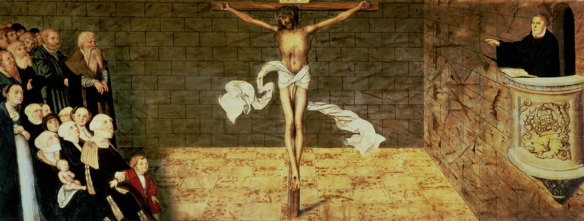
Lucas Cranach was a Renaissance painter and printmaker in woodcut and engraving. He was a friend of Martin Luther and his wife Katharine von Bora. In one of his paintings (1547) focusing on the Cross of Christ, Cranach depicts Martin Luther preaching to the congregation. I remember this particular painting vividly as it hung above the bookshelf in my house growing up.

image.png

It shows Martin Luther standing in a pulpit perched high on the wall of the chancel at the front of the medieval church. One of Martin Luther’s hands rests on the bible. And he points with his other hand to a cross with Jesus hanging bloodied bruised planted in the floor space between Luther and the crowd gathered in the church. Jesus hanging on the cross forms the center of this work of art.

Today this painting comprises one of the plates surrounding the altar in the Wittenberg church where Luther preached. As such, we often recognize and associate this painting with the ‘Reformation altar’.

Its prominence in Lutheran history suggests how poignantly this painting describes Luther’s theological bias: The Cross stands at the center. And Christ crucified informs everything in the church and even our reading of the bible.

Before we can embrace deeper understanding of Martin Luther’s theological claim that we find salvation by God’s grace—which finds us— through faith, we must first encounter the centrality of the Cross in Luther’s thinking and prayer.

In the seminary that I attended[1], we used the term, “Theology of the Cross”. Martin Luther first coined the phrase in his Heidelberg Disputation written in 1518. A theology of the cross is a way of understanding and imagining God. Fundamentally, in addressing God, we need to ask the questions: What is my image of God? Where is God primarily revealed? How is God best known?

Luther provided an answer: God was, and is, being revealed to us in all truth most clearly and unequivocally in suffering. In the vulnerability and pain of death on the cross, Jesus revealed—and continues to—the God who suffers alongside us wherever there is pain and suffering in the world. It is no wonder, then, that the longest sections in each of the four Gospels in the New Testament are dedicated to the various passion narratives[2]of Jesus.

Therefore, the Cross is theologically vital not just to Luther but to the Apostle Paul (the central figure of the Acts of the Apostles and some of the earliest Christian writings and Epistles) who central theme is: “God’s power is shown in human weakness.”[3]

The Theology of the Cross is contrasted to a Theology of Glory. Especially today among spiritually materialistic cultures in the West, what has been coined ‘a prosperity gospel’ has grown in popularity. This theology of glory presumes God validates faith, and is only validated by, success, measures of progress and triumphal conquering over any weakness or adversary.

A prosperity gospel fueled by unbridled optimism avoids places of defeat, failure, vulnerability and weakness as having anything to do with divine identity or purpose. A theology of glory undermines real people and a God who is known in the darkest times and places of life. It compromises and even derides a common humanity and the losses we all endure.

Prayer, as I have said, is the act of letting go. If prayer begins with God, and our address of God, we must presume before all else who this God is, and how this God is revealed—in scripture, in tradition and in our own experience.

One of the first creeds that circulated among the earliest Christians is from a hymn imbedded in Paul’s letter to the Philippians 2:5-11. The poetry first describes the descent of God. This is the primary movement of God, and of faith: downward. The Almighty chose to enter the lower and lowest regions of human birth, life and death. Only after this primary downward movement can the rising out of the depths happen.

Theologians over the centuries have used the term kenosis, from this text in Philippians, to capture the primary movement of faith. It starts with Christ’s self-emptying and letting go of God’s pure, divine nature. In God’s humility, Jesus compromised a perfect divinity in order to take on the fullness of a human existence.

Our God is a God who lets go, releases, self-empties what has become part of the God-self. This calls for a descent of the soul which in the words of St John of the Cross entails, indeed, a ‘dark night’ of the soul. Prayer is not easy, in so much as it may very well be simple.

Prayer, in the words of Laurence Freeman, “… always involves us in the paradoxes of growth, the cycle of losing so that we can find and then of having to let go of what we have found.”[4]

Prayer is a continual process of detaching and dislodging from places of comfort, stability and strength. Prayer is a deconstructive process. It is disruptive. In prayer we begin first to detach our self from all that we are attached to, all that has defined our identity and lives, all our constructs—mental and material—that constitute the construction and containment of our ego. All of this, in prayer, is placed on the precipice of loss.

All is not lost, however. Because in action and contemplation prayer’s aim and understanding is the prayer of God and for the sake of the God of the Cross. “Prayer calls the active person to a life of interiority and soul discovery … by detaching from all the fruits of action and doing everything purely for the love of God.”[5]In letting go, we discover our true self in God which includes and transcends all that we have been and are becoming.

By kenosis we resolve the Lutheran paradox. Some complain that the grace of God is cheap, such as Dietrich Bonhoeffer last century who sacrificed his life for a greater cause of justice in the Nazi regime. He wrote a book entitled, “The Cost of Discipleship”. Bonhoeffer argued that the theology of the cross ought not lead the Christian to rest on their laurels and not do anything. Just because we are saved by grace and since Christ lost everything for everyone once and for all doesn’t mean there isn’t a point doing anything. There is a cost of discipleship.

In prayer, we move into response because prayer is not for our sake. When we pray, it is not my prayer or our prayer. Praying is like walking along a path on the banks of a fast-flowing river and frequently stepping into the water. The current is strong. It is moving in one direction. We immerse ourselves into presence, the presence of Christ. We fall into the river of prayer that continues, the prayer of the living, resurrected Jesus, whose destination is union with God.

It is in Christ’s name we pray, and for the sake of our God who chose to be revealed in the humility and defeat of the Cross, in the most desperate human condition possible: death. We step maybe timidly yet faithfully into the water, fast flowing towards the great hope of new love and life in God. 

Questions for reflection and discussion:

  1. When you pray, after considering your image of God, what is God doing? What is God’s purpose—a purpose that is consistent with that image of God? Construct your prayer by strengthening the connection between image and function. If God is revealed in human suffering, where does that suffering lead? If God is compassionate, why? If God is patient, for what purpose? If God forgives and heals, to what end? Practice making this relationship between image and function as clear as possible before you make any petition to God. And write down some examples of the connection you make between image and function of God, to share with others next time (See copies of “Prayers of the Day” in Evangelical Lutheran Worship for good examples of how short prayers can be constructed).
  2. What is one non-negotiable spiritual practice and/or belief you would hold onto, if everything else had to be take away? (Ask yourself this, after visiting a place of worship other than your own)
  3. If time was short, what is most important to you in the end? Have you had this crucial conversation with those closest to you? If not, why not?

[1]Martin Luther University College (formerly, Waterloo Lutheran Seminary)

[2]The last several chapters of Matthew, Mark, Luke and John describe in detail the last days of Jesus leading to his arrest, torture and death on the cross. These passion narratives form nearly half the total lengths of the Gospels.

[3]1 Corinthians 1-2

[4]Laurence Freeman, Christian Meditation Newsletter, June 2005.

[5]Richard Rohr, Daily Meditation, 17 August 2018

Faith in the dark

Sixteenth century Reformer Martin Luther claimed we are “justified by faith”. That means, we are in a right relationship with God because of the gift of faith in us.

Anyone and everyone, therefore, can live in faith. And there is nothing anyone of us can do to earn good favor with God.

Faith, to Luther, was to trust in God and God’s promises, despite your circumstance or any evidence to the contrary. What validates faith in you is not your external situation or material well-being, but God’s purposes, intentions, and promises for your life and the life of others.

Nevertheless, faith is not something you have. It is still something you do, but not to save ourselves. How do we deal with this paradox?

A brother once asked an older monk in a desert community, “Which is holier, someone who leads a solitary life for six days a week, giving himself much pain; or, another who simply takes care of the sick?”

The old man smiled and replied, “Even if the one who withdraws for six days were to hang himself up by his nostrils, he could not equal the one who serves the sick.”[1]

Self-denial and isolation never substitute for an active faith born out of love for our neighbour.

“Give to Caesar what belongs to Caesar,” Jesus answers the trick question posed to him by the Pharisees, “And give to God what belongs to God.”[2] The giving-to-God part, we get. But giving to Caesar?

Giving to Caesar ties us to this earth – to its politics, to its confusion, despair and hardship. Giving to Caesar, after all, was not popular among the Jews resisting Roman occupation in 2nd century Palestine. Giving to Caesar was fraught with political controversy – as it is today in the parlance of paying taxes. Giving to Caesar is not something we would normally associate with being faithful, being Christian.

But it is. Why? It certainly is not a perfect activity free from blemish and beyond reproach. But we do it anyway.

It is not a perfect thing to do faith. But when has it ever been? We give, in faith. We act, in faith. We love, in faith. Even though our response in faith is never perfect.

In faith, we always walk in the darkness. We see, using Paul’s language, “a mirror dimly” (1 Corinthians 13:12).

Medieval Spanish theologian, John of the Cross, called it “luminous darkness”. Because the darkness is also part of God’s creation. We need darkness in order to see the light.

Classical literature and art suggests the spiritual significance of darkness in one’s journey of life and faith. Parsifal’s quest for the Holy Grail begins by entering the forest at “the darkest place.” Dante begins his paradise journey “alone in a dark wood,” and it continues through purgatory and hell. Darkness is often the language of faithful, committed, spiritual people, a language and reality that cannot really be separated from light.[3]

Even in the beginning, as recorded in Genesis, the Bible brings the two together. In the first verses of Genesis, God names every day of creation “good”.[4] Except the first two days – the days when darkness is separated from light and when heaven is separated from earth. Darkness and light must not be separated. The real world, as Jesus teaches, is always a field of weeds and wheat and we can never presume to eliminate the weeds.[5] Light and dark belong together. You can’t have one without the other, to do faith.

In the Hebrew reading for today, the prophet Isaiah renders God’s words: “I create darkness”. God says that God will “give you the treasures of darkness … hidden in secret places.”[6]

This is the way of living without all the answers, living with ambiguity, living without denying or pretending away or even avoiding the contradictions of your life.

This is the way through the desert.

When King Cyrus of Persia conquered Babylon around 539 B.C.E. he let the exiled Israelites living there go back home to re-build Jerusalem. After living by the rivers of Babylon for decades, the people of Israel had a decision to make in response to their newfound freedom: Would they stay? Some did. But many – a remnant, we call them – decided to make the long trek through the desert back home.

What is more, King Cyrus of Persia did not even know God.[7] And yet, he was chosen by God to fulfill God’s purposes. God would even “go ahead”[8] of Cyrus to clear the way for God’s mission.

The way through the desert is not the way of certainty, security and safety, to be sure. The way through the desert is not an easy way. But the dark way, often in biblical times encountered in the harsh climate of the desert, is the way home. It is the way of healing, transformation and the new, good thing God is doing for us and in us and the world.

The Israelites could not avoid the desert even though they were freed from exile. They had to trust not only the dark way, they had to trust the foreigner and pagan King Cyrus to believe what he was doing for them, to believe he was in truth an instrument of God.

Talk about contradiction and ambiguity in faith! Would we, today, confer such a trust in someone outside the traditional community of faith? Would we, for example, take to heart Gord Downie’s medium of pop rock to advocate for better relationships with Indigenous People? Would we trust the revelation of God’s purposes in people of other religions, newcomers to Canada who bring with them different cultures from ours? Could these people and others also be instruments of God and God’s purposes, for us today?

The Israelites were faced with such a conundrum. And we know what they decided to do. They had to walk home in the desert, in the darkness, and trust that even through Cyrus, God’s unknowing servant, the mighty God of Israel was moving behind the scenes of everything that was transpiring.[9]

The way to healing and resolution of whatever troubles you today is a desert way of darkness. Yet, as someone once said, “In every cross we bear, therein lies a great treasure.”

A group of white settlers learned the hard way in the fall of 1849 as they set out from the Utah Territory toward gold fields in the San Joaquin Valley of California.

Taking a shortcut recommended to them by the leader of a passing pack train, they headed into a 140-mile long stretch of desert waste known to us today as Death Valley. It was a tragic mistake.

Twenty-seven wagons started into that long desert valley east of the Sierra Nevada. Only one of them came out. A survivor of that misguided party spoke of the dreadful sameness of the terrain, the awfulness of the Panamint Mountains, remembering only hunger and thirst and an awful silence.

Two months later, as the only surviving wagon topped the westernmost crest of the distant mountains, one of the settlers looked back on the place that had nearly claimed them all, and said: “Goodbye, Death Valley.” That’s how the site received its name.

But there’s another name the Spanish used to describe this God-forsaken land. They referred to it as ‘la Palma de la Mano de Dios’, the very palm of God’s hand.[10]

Could it be that even in the midst of the most dangerous climate and terrain on earth, where it’s 134 degrees (57 degrees Celsius) in the shade exposed to winds in excess of one hundred miles (160 kilometers) an hour, wanderers have found God? It is God, actually, who finds us, in the darkest most arid times and places of our own lives.

It is during these times and places where people become accustomed to risk, vulnerability and brokenness that they build an unshakable trust in the other? It is during these dark times and places where you confront your inevitable loss of control and the specter of your own eventual demise head on. It is in these moments where we have to wait for God, ask God for help, and learn to trust God over and above anything we may be able to accomplish by the might of our own hand.

In the dark, desert journeys of our lives especially, we remain inscribed in palms of God’s hands.[11] La Palma de la Mano de Dios. You may not understand all the contradictions and ambiguities of your life, right now. You may not be able to figure out all the inconsistencies and paradoxes of life. You may not be able to resolve the problems of your life or in the world.

But, believe this: There is Someone who does. As you wander in the darkness of faith, never forget that God is bringing to resolution and completion all the confusion and contradiction of your life and the life of the world.

And, it is all good.


[1] Belden C. Lane, “The Solace of Fierce Landscapes: Exploring Desert and Mountain Spirituality” (.202

[2] Matthew 22:21

[3] Richard Rohr, “Adam’s Return: The Five Promises of Male Initiation” (New York: The Crossroad Publishing Company, 2016), p.39.

[4] Genesis 1:3-8

[5] Matthew 13:24-30

[6] Isaiah 45:3,7

[7] Isaiah 45:4-5

[8] Isaiah 45:2

[9] Carolyn J. Sharp in David L. Bartlett and Barbara Brown Taylor, eds., “Feasting on the Word: Preaching the Revised Common Lectionary” Year A Volume 4 (Kentucky: WJK Press, 2011), p.175

[10] Belden C. Lane, ibid., p.231-232.

[11] Isaiah 49:16

From Loss to Life

“I have learned to be content with whatever I have. I know what it is to have little … and of being in need. I can do all things through him who strengthens me.”

 -Paul, to the Philippians 4:11-13

One of the basic truisms of pilgrimage walking is that first-timers usually pack more than they need for the journey. The general rule is ten percent of your body weight. For most people, that means no more than fifteen to twenty pounds in your backpack.

IMG_5303

I read in one of the Camino de Santiago guidebooks, in preparation for my walk last summer, that for most first-time pilgrims five pounds in their pack is unnecessary; these items amount to five pounds of fear: that extra sweatshirt, pajama onesie, that tub of moisturizing cream or the proverbial electric hairdryer. It is not long on the journey before at least five pounds are left behind or mailed home.

IMG_5285

If we use the pilgrimage as a metaphor for life, then the pilgrim on the journey of life, to be true to the journey, needs to learn how to let go.

IMG_5243

When I began I thought I had it down to the bare minimum. Nevertheless, I was still anxious. Those first few days I worried about where I was going to sleep that night. Not knowing how far I would walk, and not wanting to put the stress of expectation by booking ahead, I had to go with the flow and improvise in the moment. Even though I found a place every night, I was still preoccupied, distracted and fretting. Perhaps I had put too much faith in what I carried.

IMG_6116

Before I knew it, I lost some of my belongings those first days on the path. The first night I left behind my head lamp. The second or third night – I don’t know which – I lost my very expensive self-inflating bed roll for underneath my sleeping bag.

If the story ended there, you might say I was in an unwanted, growing state of crisis. If the story ended there you might say my pilgrimage was headed towards disaster, defeat, loss and failure. If the story ended there, you might say that everything was falling apart in my journey, collapsing into the rubble heap of destruction.

But the story didn’t end there. And it doesn’t end there.

The truth is, as Richard Rohr explains it best, that “through loss, through crisis, through stress, limitation, we move to a better place in our lives.

“Physicists today would say that loss is not real. There is only transformation. The metaphor of the liquid world is that this element simply moves from liquid to solid to vapor and back again.

“It looks like a death, a loss, in each case. But, in fact, it’s a becoming. Now we recognize that Jesus was saying this all along. In Christianity, it was called the ‘Paschal Mystery’. It was a phrase used by Saint Augustine that in fact dying leads to resurrection. Jesus became the icon, the living image, of that mystery – that his crucified body transformed into the risen Christ. That they are both the same person.

“Creativity, newness of life, has a cost. And the cost is what always looks like death. But really isn’t. The cost is loss. Which is perceived as an enemy, or affliction, which always looks like what we don’t want. Somehow to embrace loss, spiritually speaking, is to achieve eternity. Death allows us to be united with what is real. But, of course, it only looks like death from our side. Apparently from the other side – we call it heaven, or eternal life – is in fact the really real.

“The really real is already beginning now. And that’s what we need to trust. That’s what we need to allow. Fourteenth century Italian theologian Catherine of Siena once said: ‘It’s heaven all the way to heaven; and, it’s hell all the way to hell.’ And the way to heaven begins in this world, all the way to heaven.

“To avoid all loss, to avoid all letting go, is to avoid transformation into union with God. If you spend your entire life avoiding ‘dying’, Jesus would say you never get there. It’s hell all the way to hell.

“‘Unless the grain of wheat dies, it remains just a grain of wheat. But if it dies, it bears much fruit.’[i] We now know that this phrase was used in the initiation rites of Asia Minor. Perhaps one of Jesus’ most enigmatic lines is: ‘You must lose your life in order to find your life; you must lose your life in order to gain your life.’[ii] And if you don’t let it go, you will never find it.”[iii]

This is what Paul is talking about when he says he can do all things in Christ who strengthens him. That is, he can also ‘let go’. Not only does he know what it is to have plenty. He can also lose.

Philippians 4:13 is a popular well-loved verse in the New Testament: “I can do all things through him who strengthens me.” It is often used to bolster self-confidence in accomplishing heroic goals and aspirations. It is often quoted on posters, billboards and bumper stickers to indicate a glory, success and prosperity gospel message of human achievement more reflective of current self-help pop psychology. It is also used to undergird impressive mission goals in the church.

Moreover, the first nine verses of this chapter – the famous “Rejoice always!” text – are read on their own, as unfortunately prescribed in the Revised Common Lectionary, without including verses 10-13 for context. And the context is Paul’s suffering and need and persecution.

He is rejoicing and expressing his confidence in living precisely because he has travelled through the valley of the shadow of death. Precisely because he has learned to let go. You can’t have resurrection without death. You can’t experience the joy of transformation without first feeling the pain of loss. You can’t do mission unless you have let go, done without, lost — in some fundamental, real way.

Later this month on Reformation Sunday when all ELCIC Lutherans in Ottawa will gather to worship together, we will sing together Martin Luther’s well-known hymn: “A Mighty Fortress is our God.” Frederick Hedge’s English translation is closer to the original German when in the last verse we sing: “Let goods and kindred go, this mortal life also.”[iv]

Here, we get a peek into an under-emphasized aspect of Luther’s theology which included the practice of letting go. Not only is salvation realized at the moment of our mortal death, it is something that begins in the midst of living. That is, during our life we the practice the art of dying – of letting go, of losing – as an essential experience in the way of salvation, of transformation.

When I realized I had lost my head lamp and bed roll several days later, a couple of things were happening within me:

First, it took a while for me to notice these losses. I didn’t notice my loss right away perhaps because I really didn’t need those things. Second, and maybe more significantly, I was less stressed the farther I journeyed along the Camino. I was relaxing more into the pilgrimage, even without what I had deemed essential kit when I began.

Some Christians in the West today make the mistake, I believe, of confusing loss of privilege with persecution. Wealthy, financially advantaged Christians say they are being persecuted by a politically correct movement to recognize other religions and different people in a growing multi-cultural and pluralistic society, something Luther could never have envisioned in his day.[v]

We are not being persecuted. Rather, we are being confronted with the prospect of losing our privileged place in society, a status that we have admittedly enjoyed for centuries in our country. What the real issue is, is whether we will resist and avoid this loss, or whether we will accept it.

What is ending in your life? What are you facing that deep down you know is a loss? What are the failures and defeats and suffering in your life? Where is there suffering in the lives of the vulnerable, the underprivileged, the poor?

Pay attention, and wake up. These may, in truth, be invitations. Invitations to enter the gate of loss and letting go. Invitations to let go and trust that through dying, it is heaven all the way to heaven.


[i] John 12:24

[ii] Matthew 16:25, Mark 8:35, Luke 9:24, John 12:25

[iii] Richard Rohr, “The Art of Letting Go: Living the Wisdom of Saint Francis” (Boulder Colorado: Sounds True Audio CD Learning Course, 2010), Session Three.

[iv] Evangelical Lutheran Worship (Minneapolis: Augsburg Fortress 2006), Hymn 505

[v] The Rev. Dr. Gordon Jensen, “Luther’s Legacy” in Canada Lutheran (Volume 32, Number 6, September 2017), p.10-14

Thanksgiving builds commUNItY

Sometimes what I see in nature represents how I feel. For example: “The dark, thunder clouds looked angry,” we say. Or, “The deer leapt with joy across the meadow.”

Nature has a way of evoking feelings within us. When I stopped in this cove on Cape Disappointment, I couldn’t help but feel praise for the creator God, and thankful for the beauty of life.

IMG_6215.JPG

This particular photo conveys to me first a state of peace. After all, not far from this lone pine the swirling waters, changing tides and ravaging winds off the Cape constantly threaten to uproot the tree. And yet, the tree lives on looking very peaceful.

But more than that, thankful. The tree shoots to the sky, to the life-giving sun. It’s not just hugging the rock in defensive self-protection. It offers its praise to the Creator by aiming and growing upward, giving a faithful witness to all that will see this tree.

For me, a life lived grounded and united in peace, praise and thanksgiving to God, is indeed a life lived in the gracious community of God.

During this month when we reflect on the legacy of the 16th century Reformation and celebrate together the 500th year of Reformation, we cannot avoid nor deny the sad reality of conflict and division. It seems you cannot fully appreciate the nature of things, including the church, unless you acknowledge the role of conflict among people of all times and places.

This is why it is noteworthy that Luke in the Gospel text assigned for Thanksgiving Day tells this story, which is not found anywhere else in the New Testament.[1] What is unique about this healing story is the response of thanksgiving by a Samaritan. Jesus sets this “foreigner” apart from the others who were also healed.[2]

The Samaritan was the only one who “turned back” to give thanks to Jesus.[3] So, there is much more going on here than a physical, medical cure of a disease.

Since ancient times, a political and religious rift was growing between Israel and Samaria. Samaria became “foreign” after breaking off from the Davidic monarchy and the establishment of Samaria as the capital of the northern kingdom.[4] Then, after the Babylonian exile, tensions mounted between the people of Samaria and the Jews who returned to rebuild Jerusalem.[5]

Luke includes this story in his Gospel to emphasize the importance of looking to the positive witness of the outsider. In other words, the normal divisions separating us in our religious and cultural identities matter little in the larger scheme of things. Especially when it comes to the expression of faith.

Those who are different are often the very people we need to look to for a positive example of faithful living.

This summer a friend of mine visited the German town of Dinkelsbühl in Bavaria. During the Reformation Era in the 16th and 17th centuries, this town was the first of only a small number at the time who identified as bi-confessional; that is, roughly equal numbers of Roman Catholic and Protestant citizens were allowed to live and practice their faith, with equal rights for both sides.

After the Peace of Augsburg in 1555, a few years after Martin Luther’s death, land in Germany was divided into Protestant or Catholic regions. The religious adherence of a population in any region was determined by the religion of the ruling prince in that area.

Except for Dinkelsbühl. The Peace of Westphalia a century later enshrined the bi-confessional identity of this town by establishing a joint Catholic-Protestant government and administrative system, and ensured a precise and equal distribution between Catholic and Protestant civic officials.

When you consider the animosity, violence and warfare characteristic of those centuries between Catholics and Protestants, never-mind the twentieth century history in Ireland and the unfortunately enduring oppositional attitudes between Protestants and Catholics today – this is truly remarkable.

Bucking the dominant culture of dualistic either/or, right/wrong, in/out, black/white thinking, the leaders and citizens of Dinkelsbühl chose to follow a different path. We don’t need to point to present day efforts of ecumenism and unity building. Right in the middle of the conflict of the 16th, 17th and 18th centuries there were already efforts then to see a different way:

To see the good in the other. To search out and focus on common understandings first. To seek mutual understanding. Amidst everything around conspiring against such counter-cultural vision.

The point of decision for the Samaritan leper came when he realized he was healed, on the path as they went.[6] It’s important to picture this in your mind. Jesus didn’t snap his fingers and, voila! Yes, the lepers brought their belief in Jesus to the encounter, asking him for healing. Jesus then told them to go to the priest for certification of their healing.

It was on the way – after they had committed to doing something, even before any proof of their healing was given, amidst their still debilitating illness – they went. In doing something, on the way, they were healed. Healing is a process.

It was on this journey when the healed Samaritan had to make a decision.  He could have followed the other nine who were clearly pursuing their self-interest. Against the conforming pressures of the majority, he turned back to follow his heart, full of thanksgiving. We may wonder whether he was also motivated by avoiding potential ridicule and discrimination as a Samaritan appearing before Jewish authority in Jerusalem.

Nevertheless, the Samaritan made thanksgiving a priority. It is to him that Jesus ascribes the affirmation: “Your faith has made you well”; or, as other translations have it: “Your faith has saved you.”[7]

Faith without gratitude is no faith at all. There is something life-giving about thanksgiving. Grateful people are more hopeful. Indeed, there is evidence now of a correlation between gratitude and the immune system. People who are grateful have a health edge. For example, an attitude of gratitude, reduces stress. So, your mother was right when she made you call your grandmother and thank her for the birthday card.[8]

A true expression of faith is complete when it includes thanksgiving. Coming to worship on Sundays is not validated because “you get something out of it.” Attending worship is not about the self-centered search for “what is in it for me?” Worship is not “me-first” exercise. Let’s be clear.

Rather, coming to worship is about offering thanksgiving, first and foremost. Sunday worship is an opportunity to give thanks to the God who gives all, for all. It is no wonder that the Holy Communion is traditionally called “The Holy Eucharist”, translated from the Greek as “The Great Thanksgiving”. We come to the table to offer our gifts of thanksgiving to God. Every week.

Thanksgiving changes the character of a community and its work. Stewardship is transformed from fundraising to the glad gratitude of joyful givers. The mission of the church changes from ethical duty to the work of grateful hands and hearts. Prayer includes not only our intercessions and supplications, but also our thanksgiving and praise of God’s good gifts to us at the Table.[9]  Thanksgiving builds bridges among people who are different.

We come to Communion to offer thanks to God not because we are good, but because God is good. And we see God reflected in all of creation, in all people, in the good they are.

We pray the legacy of the next 500 years of Reformation reflects the growth of unity among a people that are grateful for the good gifts God brings to us all.

Amen.


[1] Oliver Larry Yarbrough in David L. Bartlett & Barbara Brown Taylor, eds., “Feasting on the Word: Preaching the Revised Common Lectionary” Year C, Volume 4 (Kentucky: WJK Press, 2010), p.169

[2] Luke 17:17-19

[3] Luke 17:15

[4] 1 Kings 12, 16

[5] Nehemiah 4, Yarbrough ibid., p.167

[6] Luke 17:14-15

[7] Luke 17:19, Yarbrough, ibid., p.169

[8] John M. Buchanan, ibid., p.169

[9] Kimberley Bracken Long, ibid., p.168

Take a knee

IMG_5385

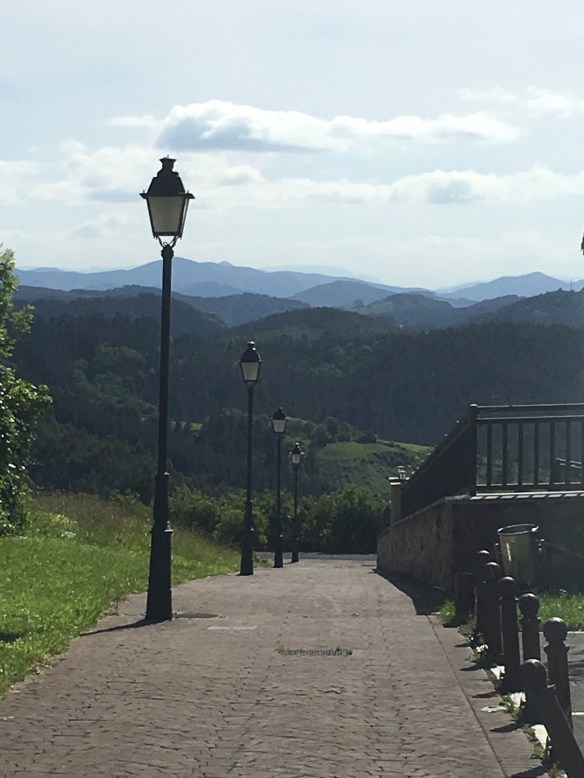
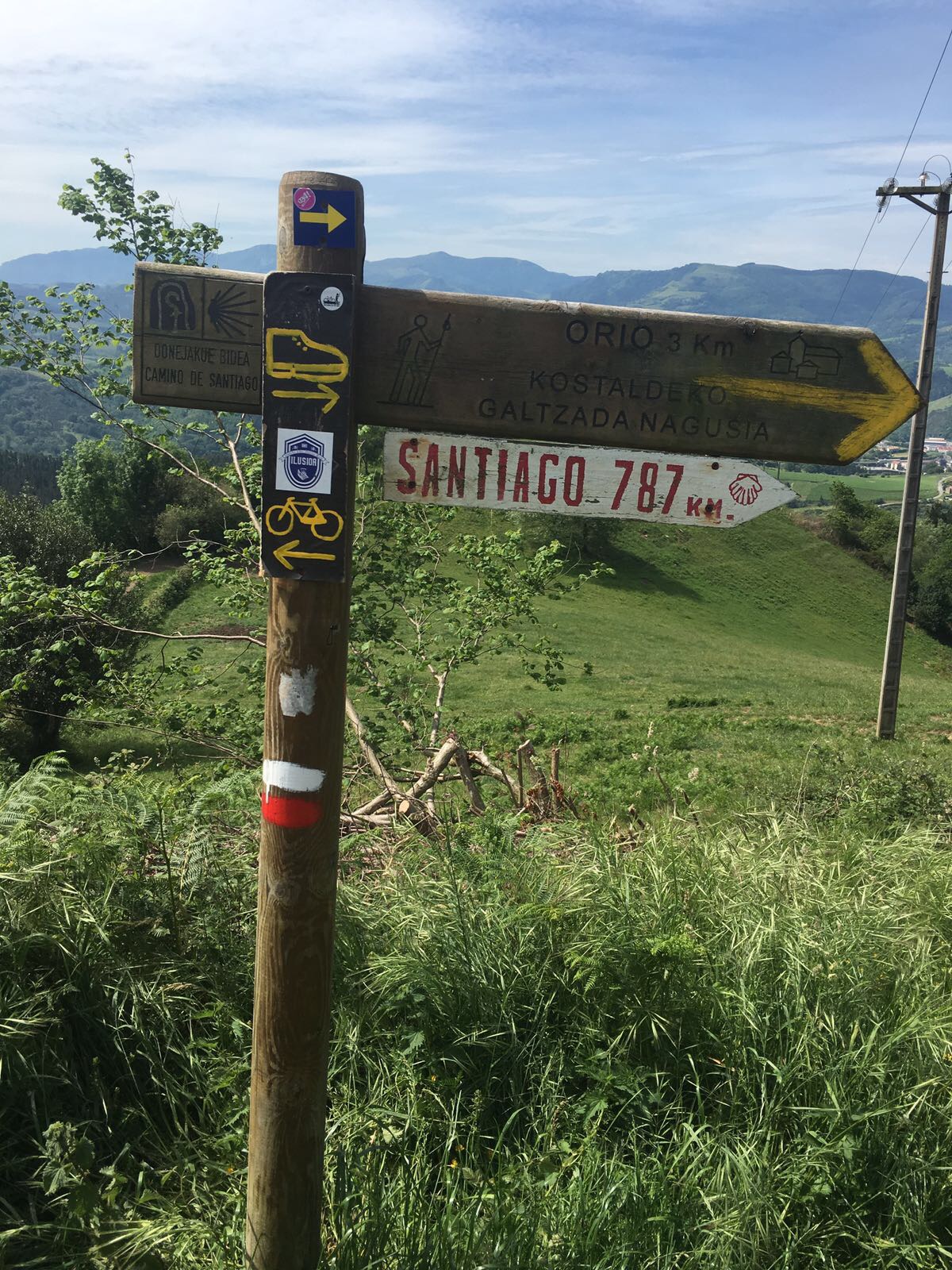
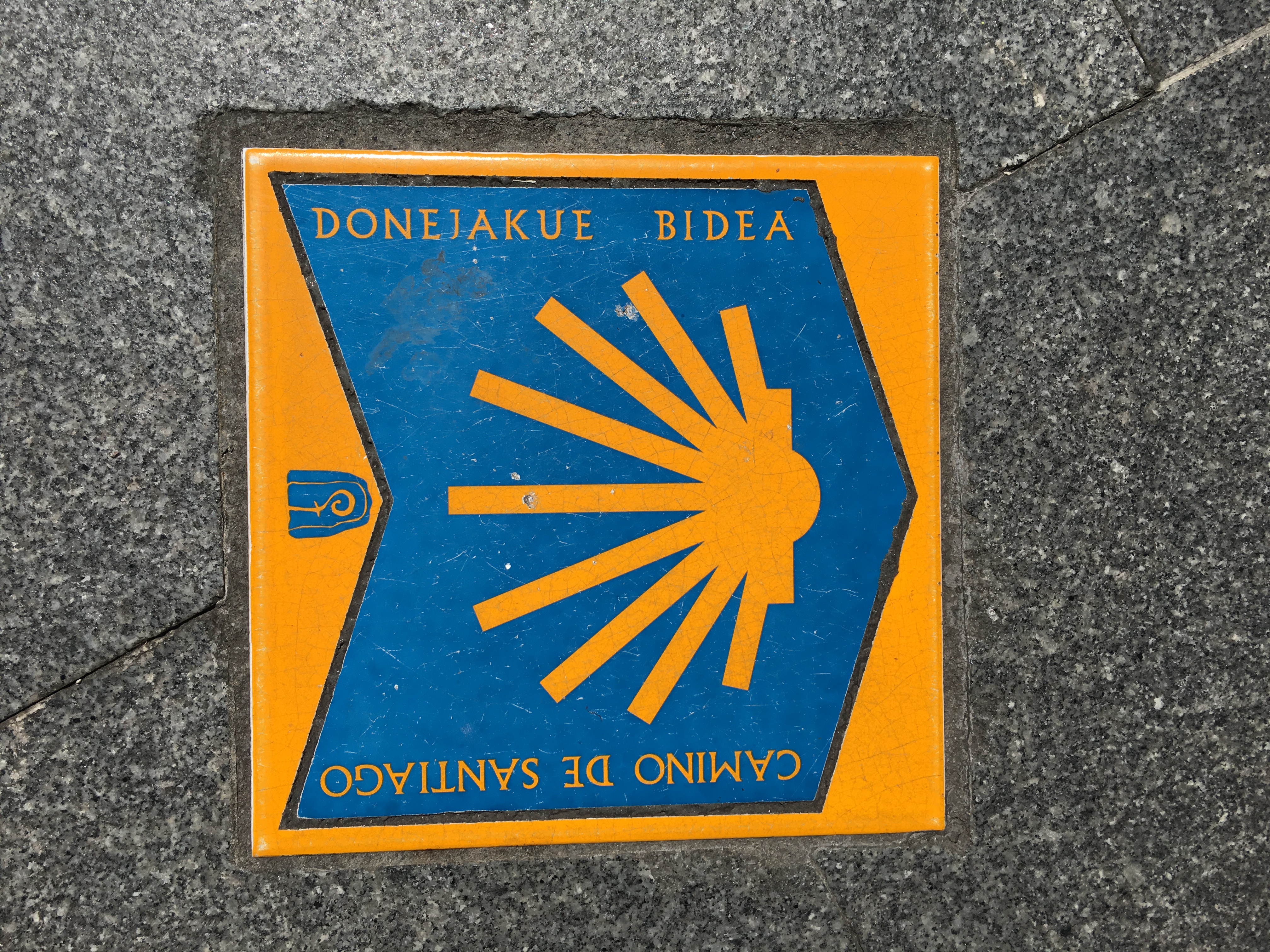
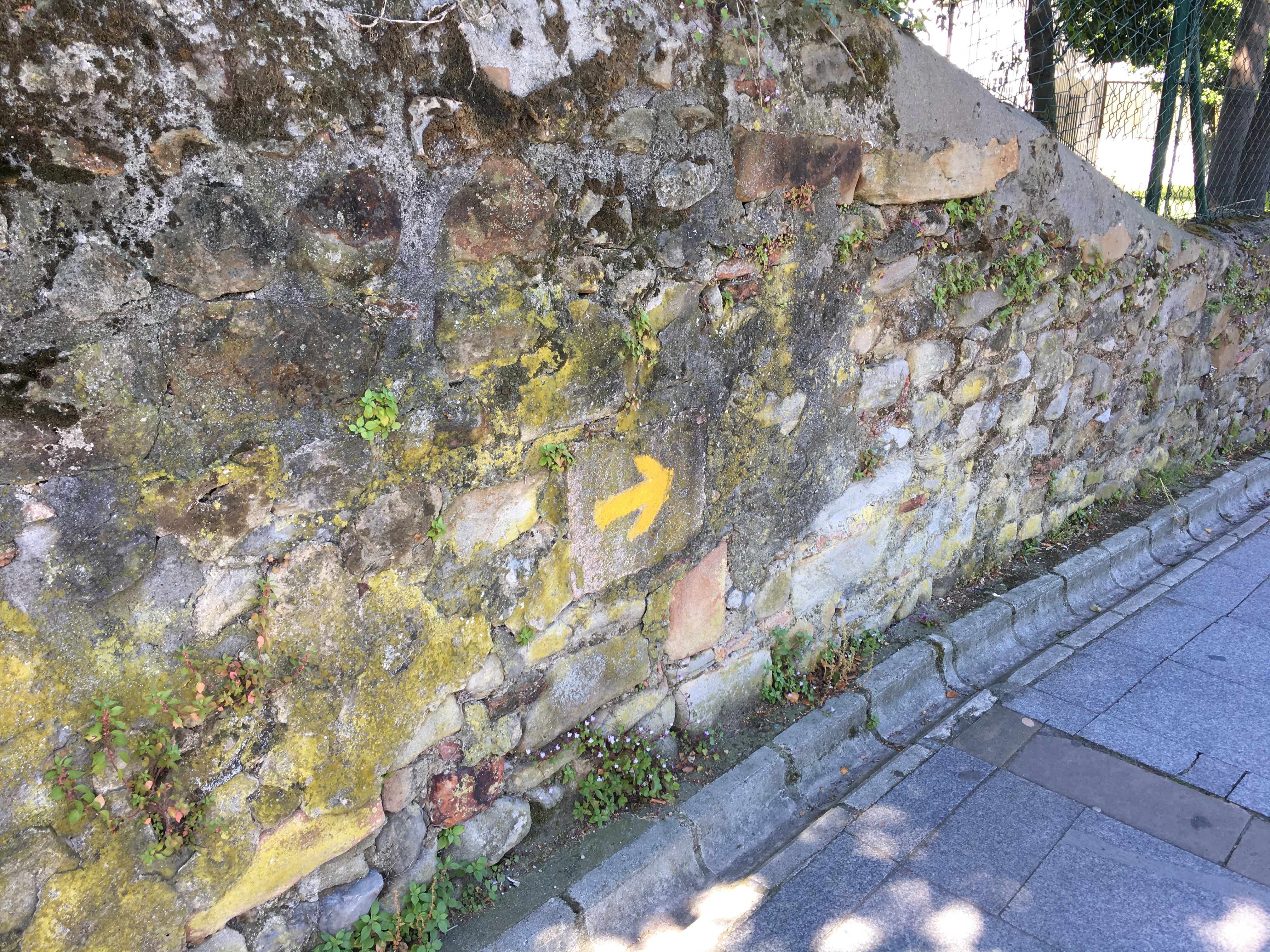
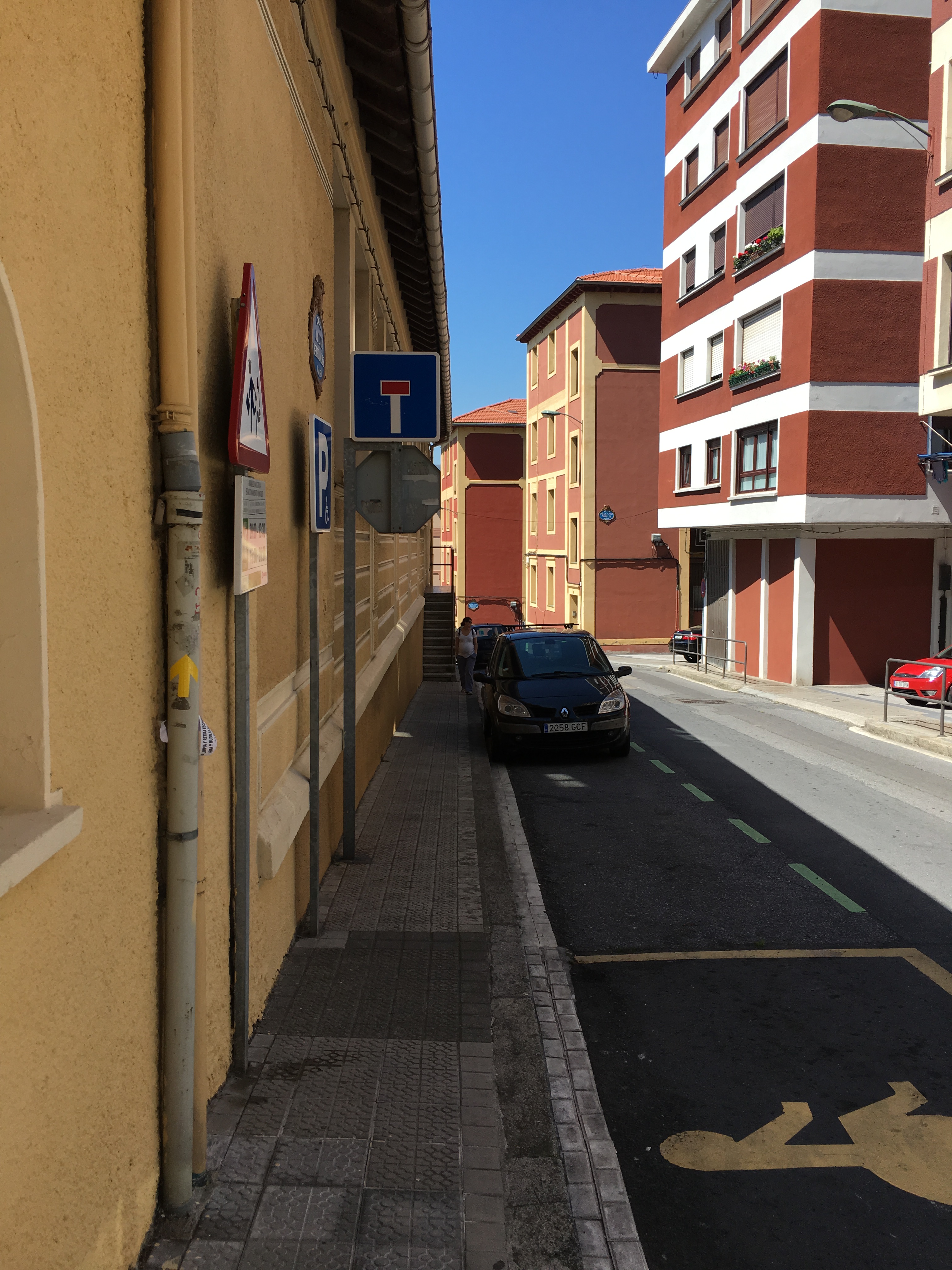
On the Camino de Santiago, you had to take care to follow the signs. Yellow arrows were common and well-known markers to all pilgrims along the path.

IMG_5368

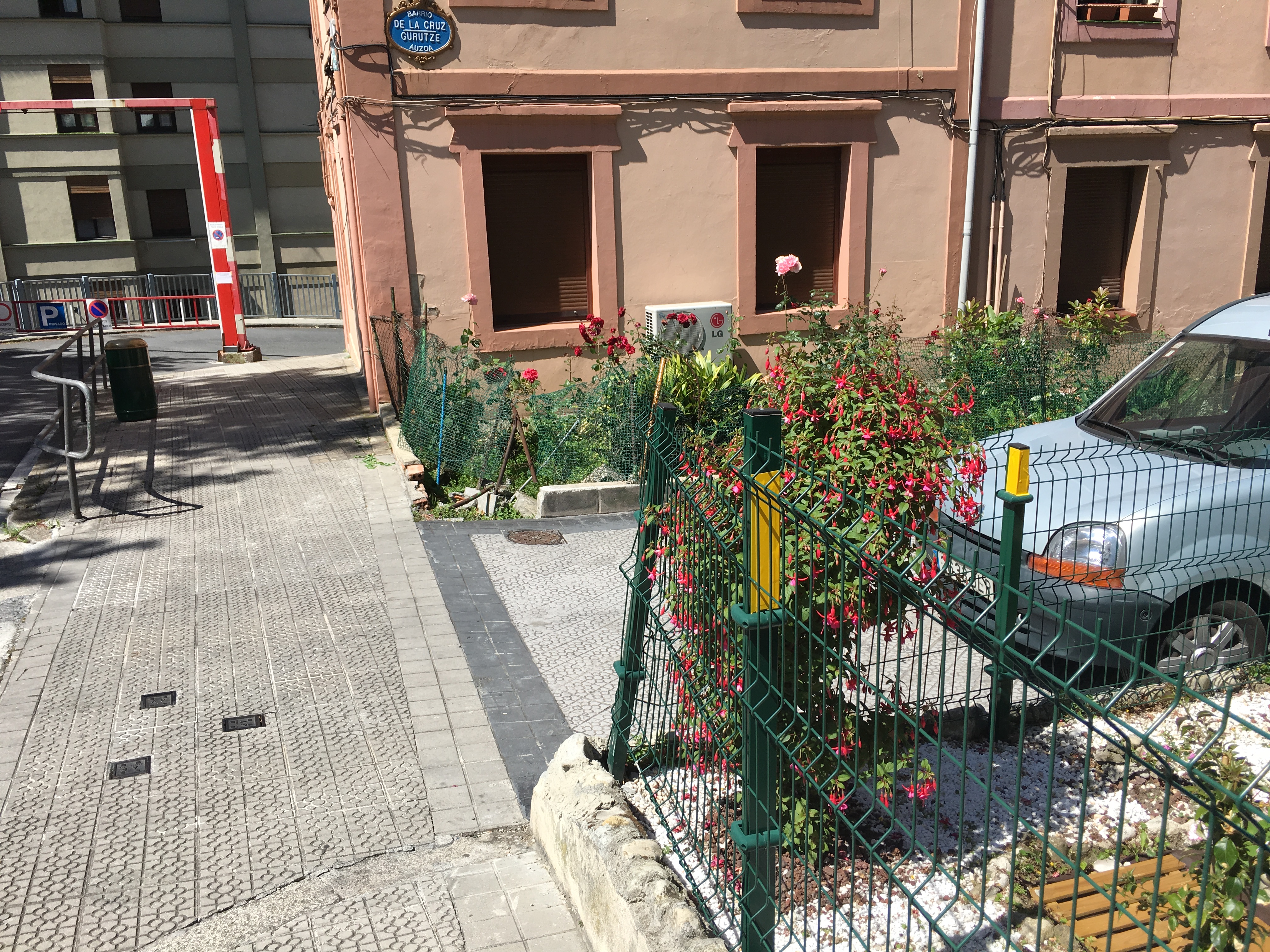
It was easy to get lost, especially in the big cities, if you missed one of these markers. But also at critical junctions in the forests, the fields or roadways where if you were not paying attention, you could lose hours on the journey and have to double back.

I learned, sometimes the hard way, to pay attention to what others might consider obvious. Some markers are easy to notice.

Some are sort of easy to notice:

But often it was a challenge to find that yellow marker:

AF9FA91C-7D0D-4D54-B2CD-F933EDE6260A7692EB83-1AA5-499D-AE9B-A64B6A5678C8IMG_5363IMG_5364

The signs — like the sacraments of baptism and holy communion — are reminders of what kind of journey we are on. These signs are embedded in the journey itself, on earth. These holy signs don’t stay in some other-worldly realm; they are very much a part of this world: Baptism uses common water; Communion uses bread and wine – basic, earthly elements which remind us of what God is all about on earth.

The signs are part of our daily, ordinary lives. The signs are already there, along the way, before we even commit to the journey. We only need to open the eyes of our heart and mind, and pay attention. Because the signs are too easy to miss. And when we do miss them, we get lost and go down other paths, paths that lead to division in the Body of Christ, the church.

I remember when our then 12-year-old son started playing football I first learned what it meant to ‘take a knee’. According to the tradition, if a player on the field was injured everyone ‘took a knee’. And it didn’t matter which team the injured player was from; that is, all the players from both teams knelt down and waited there until the injured player either walked off the field on their own strength, or was carted off on a stretcher.

Tim Tebow and Colin Kaepernick have both attracted world-wide media attention for ‘taking a knee’ in the last couple of years, although for very different reasons. Both have made a public display of their faith. Both are prayerful, and devout. One grew up the son of Baptist missionaries to the Philippines. The other was baptized Methodist, confirmed Lutheran, and attended a Baptist church during college.[1]

Tim Tebow, however, is a darling of the church while Colin Kaepernick has been reviled. Their differences reveal much more about the brand of Christianity preferred by many in the church today. Tebow is known for his signature move – dropping to one knee on the field, his head bowed in prayer, his arm resting on his bent knee. He’s clean cut, polite, gentle, respectful.

Colin Kaepernick, starting last year already, refused to stand to attention during the playing of the American national anthem. Originally, he did so in support of Black Lives Matter and to protest police violence against black people. Kaepernick was voted most disliked player in the National Football League (NFL). People posted videos of them burning his jerseys. He was called “an embarrassment” and “a traitor”. Of course, with recent events in the NFL, his witness gains momentum nonetheless.

Two players, two brands of Christianity:

Tim Tebow represents personal piety, gentleness, emphasis on moral issues. Colin Kaepernick represents social justice, community development and racial reconciliation. One version of Christianity is kneeling in private prayer. The other is kneeling in public protest. One is concerned with private sins like abortion. The other is concerned with public sins like racial discrimination. One preaches a gospel of personal salvation. The other preaches a gospel of social transformation. One is reading Paul’s letters. The other is reading the Minor Prophets.

Are these versions of Christianity mutually exclusive? Much of Christian history, especially since the Reformation, would suggest, ‘yes’, even among Lutherans. The proliferation of Christianity into some thirty thousand different denominations by the 500th anniversary of the Reformation in 2017 would suggest, ‘yes.’ The divisions within Christianity is leaving the church all the poorer, with each side needing to be enriched by the biblical vision of the other.

Bible scholar Walter Brueggemann expresses it well: He writes that Christianity should be “awed to heaven, rooted in earth.” We should, as he says, be able to “join the angels in praise, and keep our feet in time and place.”[2]

Christianity, sadly, remains on its knees because of our divisions, when all along the vision of the Gospel, expressed best by Paul himself, is that “every knee should bend, in heaven and on earth”[3]. How do Christians today, regardless of background and orientation, contribute to this vision in ways that actually make a difference on earth?

In the second reading for today, we learn about the essential character of the biblical God. In the Hebrew Scriptures, all of God’s acts, blessings, and delights in creating are for the sake of others. This is typical of God, “who is intimately concerned with justice, peace, and the flourishing of all creatures.” This is typical of God, “who is ‘on high’ but never remote, who is ‘over all’ but faithfully and dramatically invested in life on earth.”[4]

God does not embrace hierarchy. Nor does God rest in privileged autonomy, according to some deist idea of a distant and uncaring God. God is love. And the New Testament witness continues this description of a God who cares intimately about our humanity, in the incarnation of Jesus Christ. God is Immanuel, God-with-us and for us.

In setting up this wonderful hymn that Paul includes in his letter to the Philippian church, Christians are called to exemplify a humble regard for others, seeing them as “better than yourselves”; we are not to primarily serve our own interests, but the interests of those who are different.[5]

These may be an impossible task for us in our self-centred, me-first culture. Nevertheless, we are encouraged, as Paul encouraged the early church in Philippi, to “work out our salvation with fear and trembling”[6]. Why even bother?

Because God is already at work in us.[7] God is already at work in the world, as difficult as it can be to spot those signs of God’s grace, God’s justice, God’s good work. As Martin Luther insisted, matters of salvation revolved around God’s actions, not human activities. Justification — being placed into a right relationship with God — is totally God’s activity. After all, as Paul wrote earlier in his letter to the Philippians, we need to believe – despite what appears to be everything to the contrary – in the promise and the vision that God “who began a good work among you will bring it to completion.”[8]

God’s grace precedes all. Just like the signs on the journey before us and around us. Even though we may miss them from time to time doesn’t mean they aren’t there, waiting for us to notice. God’s grace continues to guide us and point in the right direction.

We therefore have nothing to lose, to take a knee for the sake of those who do not have a voice. To take a knee for the sake of others who are silenced by discrimination and abuse. To take a knee for all God’s creatures who long for a better day.

We pray for and support agency to help the refugees today escaping violence and oppression in Myanmar. We pray for and support agency to help victims of Hurricane Maria in Puerto Rico. We, so, ‘take a knee’, in the spirit and mind of Jesus Christ who took a knee for us all.

[1] I thank Michael Frost, “Colin Caepernick vs. Tim Tebow: A Tale of two Christians on their knees” (The Washington Post, September 27, 2017) for much of the content I use in this section of my sermon

[2] cited in Michael Frost, ibid.

[3] Philippians 2:10, NRSV

[4] William Greenway in David L. Bartlett & Barabara Brown Taylor, eds., “Feasting on the Word: Preaching the Revised Common Lectionary” Year A Volume 4 (Kentucky: WJK Press, 2011), p.112.

[5] Philippians 2:3-4

[6] 2:12

[7] 2:13

[8] 1:6