Reforming Remembrance

In the last couple weeks, we have worn our poppies and have been challenged to remember.

There is little to question about what actually happened in the First, Great War, the Korean War, The Second World War and all the military conflicts in the last century including Afghanistan. We have the numbers, the maps, the results, the casualties. We honour the soldiers and veterans who made sacrifices in service to their country. We recall the horrors of war and pledge to be agents for peace in the world.

Remembering is important to do. How we remember and what we remember is another question worth pondering.

In recent years whenever my twin brother and I have gotten together we are intentional to remember times especially with my Father, growing up, travelling, spending ordinary days doing ordinary things. As with any life, there are lots of stories to remember.

And what is almost always the case, is that David remembers one aspect of the same event that I don’t; and, I remember a completely different part of that event – which David doesn’t. For example, David remembers the imaginative story Dad told us when we were about ten years old about Mr. Black fighting Mr. White. While he remembers more the content of the story, I remember that when Dad told us that story we were sitting on the back porch after having gone for a bike ride together.

We spend these times reminiscing by ‘filling in’ each other’s gaps in memory. Same event. Just different things remembered. And different things forgotten or overlooked.

In this 500th anniversary year of the Reformation, the Lutheran and Roman Catholic churches have attempted a different tact from the way we have ‘celebrated’ Reformation anniversaries in the past. Listen to what the Lutheran World Federation scholars and Roman Catholic leadership wrote together recently about the task of how we remember the Reformation events of the sixteenth century:

“What happened in the past cannot be changed, but what is remembered of the past and how it is remembered can, with the passage of time, indeed change. Remembrance makes the past present. While the past itself is unalterable, the presence of the past in the present is alterable. In view of 2017 [the 500th anniversary of the start of the Reformation] the point is not to tell a different history, but to tell that history differently.”[1]

That same history, you will know, was used for centuries to incite conflict and division between our churches. Reformation was traditionally a time to celebrate how good we are and how bad they are. Today, in a changed context reflecting globalization, ecumenism and a pile of new research and study about Martin Luther, his times and his theology — these have yielded fresh approaches that emphasize unity rather than division.

Perspectives have changed. And continue to change.

This year in Canada we are also celebrating our 150 years of history with more of a critical eye. We acknowledge publicly, perhaps in a new way, the fact that Canada was already occupied by people long before the first Europeans settled here. This understanding may be challenging for us settlers because for so long we have reaped the vast material benefits of settling and working here.

Part of my sabbatical journey took me to Lisbon, Portugal. On the far westernmost coast of continental Europe, Lisbon was a natural launching point for the various expeditions and voyages made by Europeans during the “Age of Discovery”.

IMG_6630

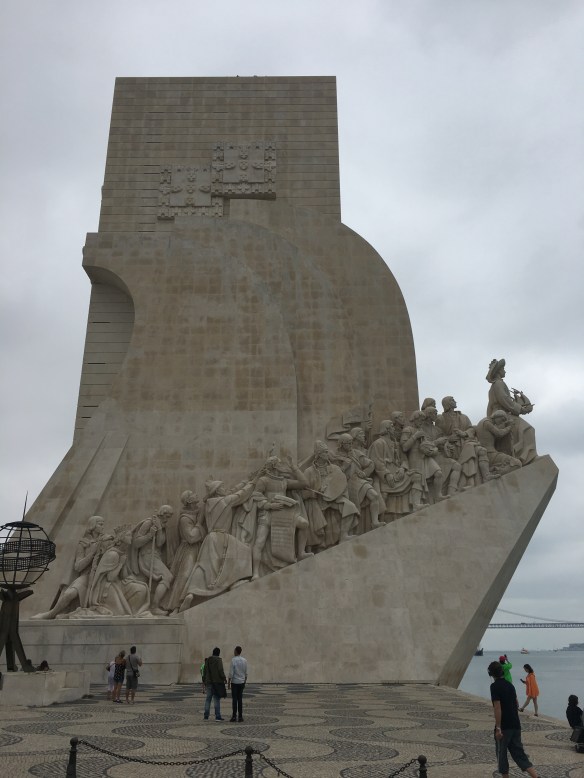
On Lisbon’s extensive waterfront at least a couple of impressive monuments stand in celebration of the achievements of European explorers and aviators. There is the looming Monument of Discovery which depicts the personalities of various explorers making their way across the ocean.

IMG_6632

IMG_6633

IMG_6631

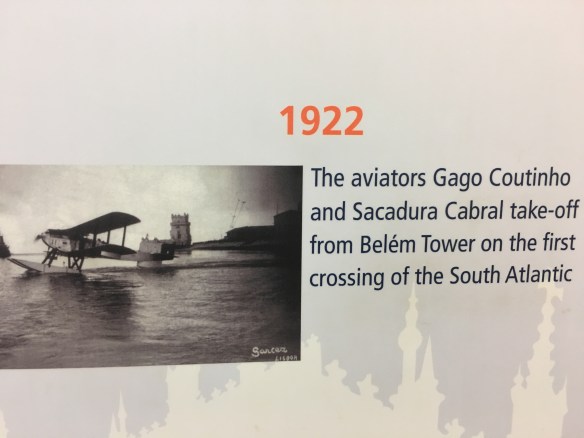
And there is an airplane monument commemorating the historic first south Atlantic crossing in 1922 flown by Gago Coutinho and Sacadura Cabral.

IMG_6628

IMG_6629

IMG_6634

In the decade following Coutinho’s and Cabral’s inaugural south Atlantic flight, another adventuring aviator, Antoine de Saint-Exupéry who is perhaps most well-known for writing the children’s book “The Little Prince”, reflected on what flying did to our understanding of the land upon which we live:

The airplane, he writes, “has revealed to us the true face of the earth. Through all the centuries, in truth, the roads have deceived us … They avoid barren lands, great rocks and sands, they are wedded to the needs of men and go from spring to spring …But our perspective has sharpened, and we have taken a cruel step forward. Flight has brought us knowledge of the straight line. The moment we are airborne we leave behind those [winding] roads …  It is only then, from high on our rectilinear course, that we discover the essential bedrock, the stratum of stone and sand and salt…

“Thus do we now assess man on a cosmic scale, observing him through our cabin windows as if through scientific instruments. Thus we are reading our history anew.”[2]

As we retell our history, as we seek understanding of what and how it happened, do we take the winding road, or do we take to the skies?

Amos the reformer was a prophet in ancient Israel. He challenged especially the northern kingdom in the eighth century B.C.E. to accept a new way of worshipping God. No longer where they to worship at the old shrines established by earlier prophets Samuel, Elijah, and Elisha at Beer-sheba, Bethel and Gilgal. Now, they would have to learn to worship God in a central location, at the temple in Jerusalem.[3]

In order to persuade them, he railed against the rituals and heartless pomp often associated with worship in that day.[4] The Israelites’ understanding of their own history needed changing. Without denying or changing the history itself, Amos helped them grow into an appreciation of the centralized worship which was not inconsistent with the Hebrew faith, a faith that had always emphasized care for the poor, the widow, the destitute. As such, Amos was “an agent of reformation”[5].

Whether we speak of ancient Israel, or the Reformation, or the Age of Discovery, or World War Two, or present day Canada, our remembrance is being reformed.

This first week of November is Treaties Recognition Week in Ontario. Listen to what perspective is offered in the writing of our history. Again, this perspective is not untrue. It simply offers a fuller understanding of what happened when Europeans ‘discovered’ this land:

“This native land was the home of many peoples, who have lived here for centuries and millennia. There is extensive archaeological evidence to confirm this statement. North America was occupied long before European strangers from across the ocean ‘got lost’ on their way to India and ignorantly named the inhabitants ‘Indians’.

“The residents of this new land had a deep regard for the practice of hospitality. So they welcomed the strangers to come ashore and opened their lives to these ‘lost’ explorers. This invitation to step out onto the land conveyed a message that did not make sense to the newly-arrived who had their own primary interests; wealth and resources.

“These alien visitors were nominally Christian. They were supported by ‘Christian’ interests intermingled with commercial and imperial motives. The biblical foundations and the practice of hospitality had been lost or buried under the exercise of abusive power that appears to be the inevitable companion of empires seeking to expand their influence and control. Equally forgotten or ignored was the fundamental biblical concept of covenant whose goal is establishing and nurturing respectful relationships that honour the Creator.

“These European strangers had been told by their highest authorities that any people unlike themselves actually were nobodies. The Doctrine of Discovery … reminded the newly-arriving aliens that they were superior to the ‘nobodies’ greeting them in hospitality. The rest is history and now we are trying to ‘get it right’ so that we can discover what it means to live in peace and mutual respect. It is time to set aside suspicion and abuse so that we can again become hospitable to one another as well as to contemporary visitors.”[6]

This anniversary year we sing “O Canada” and this Remembrance Day we’ve worn our poppies. It is important that we remember. It is important that we commemorate our history, good and bad.

How we remember is important, too. What aspects of our remembrance we emphasize speak loudly about the kind of people we are and aspire to be.

Amos presented a pretty bleak picture of Israel’s plight in the eighth century B.C.E.  The tone of his message is harsh, doom-and-gloom. It seems the Israelites can do nothing to avoid the inevitable calamity that awaits. It’s easy to lose hope and despair in the present circumstances. It doesn’t look good, what with all that’s going on in the world today.

From the perspective of history, though, we know how the story ends for them. We know the people of God are headed to the trials of Babylonian exile a couple of centuries later. We also know that one day, they do return to Jerusalem to restore the temple worship and re-build their lives at home.

Antoine Saint-Exupéry tells the story of when he and his friends from northern Europe invited some north Africans from the Sahara to visit with them in France.[7] These Bedouin, up until this point in their lives, never left the desert; they only knew the scarcity of water that defined so much of their lives and perspective.

When they climbed in the foothills of the French Alps they came across a thunderous waterfall. The French explained to their astounded friends that this water was enhanced by the Spring run-off of melting snows high above them. After minutes of silence during which the Africans stood transfixed before the bounteous and gorged scene before them, the Europeans turned to continue on their mountain path.

But the Africans didn’t move.

“What are you waiting for?” Saint- Exupéry called back.

“The end. We are waiting for the water to stop running. A stream of water always runs out. We are just curious to see how long it takes.”

They would be waiting there a long time. The prophet Amos concludes his diatribe by doing what so many other prophets of Israel do: They call on the people to have faith in God’s action in the world, God’s righteousness and justice. “Let justice roll down like waters, and righteousness like an ever-flowing stream.”[8]

God’s justice never runs out. The waters of God’s grace, mercy and truth never cease flowing. Our perspectives, our experience, our opinions are limited and sometimes scarce, if we rely on these alone.

But God’s work continues to gush forth in and all around us. Let us trust and have faith in the never-ending flow of God’s love and presence in the world today. So we may grow into the fullness of God’s vision for us all.


[1]  “From Conflict to Communion: Lutheran-Catholic Common Commemoration of the Reformation in 2017” (Leipzig: Evangelische Verlagsanstalt/Paderborn: Bonifatius, 2013), p.16

[2] Antoine Saint-Exupéry, “Wind, Sand and Stars” trans. by William Rees (New York: Penguin Classics, 2000), p.33-34.

[3] Wil Gafney in David L. Bartlett & Barbara Brown Taylor, eds., “Feasting on the Word: Preaching the Revised Common Lectionary Year A Volume 4” (Kentucky: WJK Press, 2011), p.266-270

[4] Amos 5:18-24

[5] Wil Gafney, ibid., p.268

[6] Reconciling Circle: reconcilingcircle@execulink.com, Daily Readings for Treaties Recognition Week: 5-11 November 2017, Day 1 “Have You Ever”

[7] I summarize and paraphrase his telling from “Wind, Sand and Stars”, ibid., p.54-55

[8] Amos 5:24

Something always has to die …

(The following is taken from Richard Rohr’s commentary in his book “Wondrous Encounters; Scriptures for Lent”, with my added words.)

The crowds were gathered in Jerusalem for the Passover Festival. This ritual is described in Exodus 12, and provides the basis of the Holy Communion in Christian practice.

In the original ritual, people were to procure a small year-old lamb for each household. They were to keep it for four days — just enough for the children to bond with it and for all to see its loveliness — and then “slaughter it during the evening twilight”! Then they were to take its blood and sprinkle it on the doorpost of the houses. That night they were to eat it in highly ritualized fashion, recalling their departure from Egypt and their protection by God along the way.

This practice was meant to be a psychic shock for all, as killing always is. Thank God, animal sacrifice was eventually stopped. The human psyche was evolving in history to identify the real problem and what it is that actually has to die.

The sacrificial instinct is the deep recognition that something always has to die for something bigger to be born. We started with human sacrifice (Abraham and Isaac), we moved here to animal, and we gradually get closer to what has to be sacrificed — our own beloved ego — as protected and beloved as a little household lamb! (1)

We will all find endless disguises and excuses to avoid letting go of what really needs to die for our own spiritual growth. And it is not other humans (firstborn sons of Egyptians), animals (lambs or goats), or even ‘meat on Friday’ that God wants or needs.

It is always our beloved passing self that has to be let go of. Jesus surely had a dozen good reasons why he should not have to die so young, unsuccessful (sentenced to death, a criminal), and the Son of God besides!

By becoming the symbolic Passover Lamb himself, Jesus makes the movement to the human and personal very clear and quite concrete. It is always “we” — in our youth, in our beauty, in our power and over-protectedness and self-preservation instinct that must be handed over. Otherwise we will never grow up, big enough to ‘eat’ of the Mystery of God. In short, we have to ‘get over ourselves’, individually and collectively as the church, before we can be effective and authentic followers of Jesus in the world today.

Good Friday is really about “passing over” to the next level of faith and life. And that never happens without some kind of “dying to the previous levels.” This is an honest day of very good ritual that gathers the essential but often avoided meaning of Good Friday: Necessary suffering; that is, something always has to die for something bigger to be born.

One of the Gospel stories repeated every year during Holy Week is the anointing of Jesus by a woman named Mary at Bethany (John 12:1-11). Even though the text does not identify her as a sinner, this has been the common understanding. This alone should reveal our rancid preoccupation with sin.

The point in this story, again, is not the sin but the act of love towards Jesus, whom the woman correctly accepts (unlike the twelve disciples) the coming death of Jesus. She anoints Jesus’ feet with expensive nard, which is the anointing oil for death. Jesus’ favourable response to Mary’s act clearly suggests her act of love trumps any failing on her part, or the part of the poor, or on our part!

As always, love of Jesus and love of justice for the neighbour are just two different shapes or sides to the one Love, that gets us beyond our over-thinking sin. A simple act of love gets us beyond our negative self-obsession, which only keeps us stuck in selfish, egoistic preoccupation.(2)

May our praise of God this day, in Jesus’ acceptance of his death on a Cross, invite each of us into commitments and acts of love toward God, toward one another, and to the world in need. Then, we get the point of the story. And we affirm, that something bigger indeed is just around the corner.


1 — Richard Rohr, “Wondrous Encounters; Scriptures for Lent” (Cincinnati, Ohio: Franciscan Media, 2011), p.133-135

2 — ibid., p.126-127

From memory to presence

Whenever we suffer the stress of living, we naturally reach for ways of coping. Memory can be a healing salve. Not only remembering loved ones and friends from our past. But when it comes to observing traditions and special occasions — at Thanksgiving, Christmas and Easter for example — we bring the expectations of good times had long ago to bear on the moment.

Indeed, our memory of pleasant past experiences can even act as a narcotic for dealing with current challenges and stresses. We may make it a habit of escaping into our mind’s eye; we linger with a memory until we feel the peace.

While our memories are a key to understanding what is meaningful to us, we get stuck, however, in the rut of our problems if we try creating an exact imitation of the past. Escaping into the past isn’t always the best way for addressing present day problems. The path to healing and wholeness is not about making a simulation of past experiences.

I heard about a man who, in middle age, purchased a Harley-Davidson to try to live in the myth of the youthful, unfettered individual who is free to go anywhere at any time. He felt unsatisfied, however, after his solitary road-trips. Something was missing.

After more reflection, what he was remembering on a deeper level was the positive experience in his youth of the friends he made in a bike shop where he worked a job one summer. The meaning of memory was found in the relationships more so than the motor-cycles. He didn’t sell the Harley-Davidson. But he did inquire about local riding groups of folks his age. His interest shifted to making friends. (1)

Memories of past Christmases, Easters, friendships or treasured experiences can transform each new, present day moment. For example, a memory of a family bike ride on an Easter Monday decades ago can lead to a family train trek through the Rockies. A friendship born from intellectual and emotional stimulation long ago can lead to a rediscovery of a hobby or commitment to personal growth. What’s important is not to re-create the past, but to transform it so it’s meaningful for the present. Not simulation, but translation.

The point, is to recognize and accept the present moment as the most important time and place of our lives. Because even if we are not able to remember any good in our past, or remember anything at all for that matter, God is about the now.

In last week’s Gospel story about Jesus meeting the Samaritan woman at Jacob’s well (John 4:5-42), Jesus leaps beyond all boundaries of time to announce God’s intent for humanity is taking place in the present time. Three times in the passage, the words “already” and “now” highlight the importance of now. “Open your eyes and see!” Jesus says. “The fields are shining for the harvest, the reaper can collect his wages now, the reaper can already bring in the grain of eternal life” (v.35-36). Jesus is excited at the possibilities. Why? Partly because it is all happening now! (2)

In today’s Gospel, the Pharisees are interested in formulations of the mind which rest on the past. The blind man provides a focus for their cerebral machinations; they want an explanation for his condition: “Who sinned, this man or his parents, that he was born blind?” (John 9:2). A biblically sound question, since the Torah suggests that the “iniquity of the parents is visited upon the children and the children’s children to the third and fourth generation” (Exodus 34:6-8).

Jesus avoids this kind of biblicism that seeks only to make historical, technical arguments that focus only on our righteousness or lack thereof. Jesus turns our sight away from ourselves and onto God’s work in the present. “We must work the works of Him who sent me while it is day …” Jesus countered (v.4).

The purpose of our lives, including our suffering, is to point to God. If we are to remember anything from the past, it is to remember God’s mighty acts in relation to the people of God, including you and me. When the Psalmist delights in the past, his memory focuses on what God has done: “I remember the days of old, I think about all your deeds, I meditate on the works of your hands” (Psalm 143:5).

God’s vision is expansive and eternal, abounding in steadfast love. Before talking about the iniquity imparted to the third and fourth generations, when the Lord spoke to Moses, he said first: “The Lord is a God merciful and gracious, slow to anger and abounding in steadfast love and faithfulness, keeping steadfast love for the thousandth generation” (Exodus 34:6-7) — which is a lot longer than four!

And as we know, generations ago the world was a lot different than what it is now. Recently I was watching on Netflix a show that I remember watching avidly in the 1990s. One detail caught my attention, when the characters talked to each other holding the old, large, clunky ear pieces connected by a spiral, rubber cord to a hand-dial phone. In one generation, so much has changed and people are doing things in different ways.

And yet, one thing remains: The steadfast love of God. Whatever we do in God’s mission today, and however we do it, we can be assured that God is faithful to us, that God is abounding in love for us. After all, God doesn’t look on outward appearances, our resume, our list of past sins, etc. God looks at our heart. When David was chosen to be king of Israel, God wasn’t looking for the one who appeared to have all the desirable qualities; God wasn’t looking for the tallest, the strongest, the best-looking one to be their leader. God was looking at the heart of David (1 Samuel 16).

We can be courageous, then, and bold to reach out and be the hands and feet of Jesus in the world today. After all, it’s not, in the end about us or our past. We find healing and wholeness for our lives by doing the will of God. It is for God’s sake that we throw ourselves fully into life, in the present moment. It is for God’s sake that we are healed and restored.

We come to the Table of Communion each week, a diverse group of people. But we come as equals on a level-playing field feeling together the weight of our past sins, yet forgiven and showered with God’s mercy and grace, as one. We are empowered through the broken body of Jesus to be his broken body for the world, today.

How that memory shapes us today may be different from decades ago. But memory continues to form us, and reform us. In our lives, the Gospel is translated for the world today.


(1) Alan J. Roxburgh and M. Scott Boren in “Introducing the Missional Church: What it is, why it mattes, how to become one” (Baker Books, Michigan, 2009), chapters 2-3
(2) Richard Rohr, “Wondrous Encounters: Scripture for Lent” (Franciscan Media, Ohio, 2011), p.60-61

The case of the missing pulpit

As we worship this morning, the sanctuary at Faith Lutheran Church building is gutted — empty, a shell. Not only is the cork on the walls now removed and the old carpet disposed. The light fixtures, most of the furniture, liturgical items and holy hardware is stowed away for the time being to be recovered, restored and positioned again in their proper place once the renovations are completed.

I know some of you who have been at the site in the last day or so helping to get it ready for the workers, have been asking the question: “Where is the pulpit?” I can see the title of the next best-selling mystery novel: “The Case of the Missing Pulpit.” Where is it?

What a mystery! Well, this is what happened …

Last Sunday afternoon as I was helping members of our altar care committee removing certain items, we ran into a little problem. Our pulpit is mobile; it sits on wheels. So, depending on the needs of the day, we move it around. 

Well, we moved it alright — all the way to the door of the sacristy where we were hoping to store it. Without doing serious alterations (and damage!) to the door frame, there was no way that pulpit would get through. And the cloakroom, where we normally store the pulpit at Christmas, was going to be filled with stacks of chairs. Where on an already compact floor space would we store a rather heavy and cumbersome piece of teak-wood furniture?

It was the spur of the moment when I offered to put the pulpit in my car. I had the back seats down anyway at the time, and the rear hatch opened just wide enough to allow the pulpit to slide in fairly easily. And I drove away with church’s pulpit in the back seat of my car! Truth be told!

During the 45 minute drive home to Arnprior, my mind raced: What would I say to someone who would behold this mystery! I was also wondering where on earth I would put it. I had no clue. There was room in our garage, but most of that space was already tagged for bikes, tires, canoes and garden implements for the winter season.

My wife and I sat in the living room that evening scratching our chins and trying to come up with solutions. But to no avail. I guess I would drive around with a pulpit in the back seat of my car for three months! A mobile preacher who comes with his own pulpit! What a deal!

Barbecuing on the back deck that evening, I looked above the tree line and my eyes rested on the steeple of a church, just around the corner from our place. After making a phone call, and depending on the good will of their pastor and the muscle of a couple of their men from that community — and our pulpit now has a resting place. 

So, if anyone asks: Our pulpit is in the safe-keeping in the building of the good people of St John Lutheran Church in Arnprior. Let it be heard! “The case of the missing pulpit” … mystery solved!

I’m usually the kind of person who wants to have a plan, to know how things ought to go and what the end result should be, before doing anything. This is also usually a good thing. Driving away with the pulpit without any clue as to where it should go, was a little unnerving for me. It was, nevertheless, a good exercise for letting go and trusting that a solution would present itself. And it did, in a most gracious, natural and expedient way.

Some of you know that I am planning to go on a sabbatical next year. The theme of my sabbatical is ‘pilgrimage’. And part of the experience is to walk an ancient path, some eight hundred kilometres long, on the north coast of Spain on the famous Camino de Santiago de Compostela. I’ve read that a majority of people who start the pilgrimage — hundreds of thousands every year — don’t finish it. Many pilgrims give up, some even just 25 kilometres into it. 

What many successful pilgrims learn is that all that is required is to remain committed to the journey itself. What is needed, is to unlearn deep-seeded attitudes about what justifies us, as human beings. To persevere in that un-learning process over six-weeks, even against all the challenges of the trail. To learn that all that is required is simply to put the next foot forward. To not give up, to not lose heart. And to pray always.

To dial it down to accepting that it’s all about taking the next step faithfully — nothing more, nothing less. Although simple, it is not easy for most of us to comprehend let alone do: Just walk. Eight hundred kilometres. Because it’s not about our ability and resourcefulness in the end. It’s not about rushing to the next distraction, checking off the next thing on our list in a busy, hectic lifestyle. It’s about something much bigger than us and our ‘stuff.’ A pilgrimage can teach us that.

That was the message from last week’s Gospel from Luke 18:1-8, to pray always. The most important thing is to remain focused on staying the course, to do the prayer. The solution — the answer, the benefit — will present itself as long as we remain committed to the journey, the adventure. 

Last week, we learned to persevere in prayer. This week in the story that follows we learn how to pray. And I want to reflect David Lose’s perspective here (1), to watch for the trap that Luke sets for us readers. Remember, the Gospel of Luke is full of reversals — the song of Mary, the beatitudes in the sermon on the mount, Jesus’ conversation with the thief hanging beside him on a cross, etc. Luke, it seems, delights in setting up his readers with presumed expectations, and then pulling the rug from under our feet.

It’s too easy merely to paint the bad guy as the Pharisee. Because don’t forget, the Pharisee is law abiding, has fulfilled all the demands of his religion, lives a pure and righteous life. Isn’t this what faithful living looks like? After all, we shall know others by their fruits, no? The Pharisee does a lot of things right. Except for one thing:

The Pharisee, while living the right life, has forgotten the source of his life and all the good in it. Otherwise, he would not despise another whom God loves. He falsely believes it’s all about him and his efforts alone. He falsely believes others who are not like him, need to be, in order for them to be good people.

And, it’s too easy to side with the ‘humble’ tax collector. Let’s not let him off the hook too easily. The tax collector only recognizes that all he is about is depending on the mercy and forgiveness of God. That’s in good contrast to the Pharisee, yes. And that’s the challenging starting place, to be sure.

But nowhere do we see a sign of his repenting. Does he desire to have his life turned around? He may very well be as self-engrossed as the Pharisee. Just the other side of the same coin. The tax collector strikes me as one who might remain stuck in cycles of self-pity, negative self-talk and depression. 

He might be one who goes back every Sunday to remind himself how bad he really is. A false humility, we may call it, where it feels good, actually, to put yourself down before others. “I’m not good enough.” “I don’t have a strong faith.” “I can’t do this or that.” 
Will he not hear that God’s forgiveness can lift him out of what may appear a chronic negativity? Will he not hear that he is not all of the time all worms and dirt and badness within? Will he not hear that God has given him a great gift within himself, in himself?

No matter with whom we relate, or cheer for, in this text — the Pharisee or the tax collector — we run into a wall with both of them. And I believe this wall is meant to test to what degree we focus too much on ourselves in the practice of our faith and in our prayer, and not on God.

The trap is to call us out whenever what we do or what we decide as communities of faith is more about our own stuff, than about the bigger picture, the holy and wonderful mystery that is God.

At least one item from our worship practice is not in storage, but stands in this place alongside yours — the Paschal Candle. It is called, ‘paschal’, because it describes the ‘mystery’ of Jesus life, death, resurrection and ascension. We call it, ‘the Paschal Mystery’. 

We are not talking here about a mystery like ‘the case of the missing pulpit’, where it is simply a question of information about something that is already known, just not to everyone. “Mystery isn’t something that you cannot understand”; A mystery, in the holy sense, is as Richard Rohr puts it: something you can “endlessly understand” (2). We never ‘arrive’ at a complete knowing, this side of eternity, of what God is all about. We never completely ‘get it’. We are always growing, changing, discovering, adventuring.

It is natural to seek signs. The Pharisees and disciples demanded Jesus: Give us a sign! And the only ‘sign’ that Jesus was willing to give them, was the “sign of Jonah” (Luke 11:29). Many of us know that story from the Old Testament, where Jonah fights against God’s will, refuses to follow where God calls, doesn’t want to do it! 

Only by spending time in the belly of a whale for a few days, where he can do nothing, does Jonah become aware and accept that it’s not about him, or his mission, but about God’s purpose, God’s call, God’s mission. Doing God’s mission will call us beyond our own agendas, preferences, and even personalities. Not that those things are bad. But this is about something a lot bigger than our resumes, list of accomplishments, or even our baggage and painful histories.

We are on a journey moving forward, a pilgrimage, to discover what God is about in this holy space and in the world around us, now. We already received signs of God grace — your authentic and heartfelt welcome and accommodating us, for starters. This beautiful space and hospitality we can share. This is God’s good work among us and through you. Thank you!

We might not know what this will look like at the end of the journey together as Faith Lutheran Church worships alongside Julian of Norwich Anglican Church over the next few months. “I’ve got this pulpit in the back seat of my car, and I have no idea where it’s going!”
We might not know where this adventure leads.

But we don’t go alone. We travel this uncertain road together, side by side. We may suffer through some moments together as we figure things out, as we feel our way into this journey, as we learn and perhaps go through some growing pains together on these first few steps.

But let us be encouraged by the Paschal Mystery, which points to the way of Christ, the self-emptying and giving that leads to a marvellous and wonderful resurrection from all that is passing away, transforming us into the new thing that God is doing. The light of Christ shines ever and ever, even in the darkness and through our most challenging journeys. 

Thanks be to God! Amen.


(1) David Lose, “The Pharisee, the Tax Collector, and the Reformation”; Monday, October 21, 2013; http://www.workingpreacher.org 

(2) Richard Rohr, “The Divine Dance: The Trinity and Your Transformation” (Whitaker House Publishing, Pennsylvania, 2016)

Funeral sermon – Thanksgiving

Isaiah 25:6-10 —

On this mountain the Lord of hosts will make for all peoples a feast of rich food, a feast of well-matured wines, of rich food filled with marrow, of well-matured wines strained clear. 

And he will destroy on this mountain the shroud that is cast over all peoples, the sheet that is spread over all nations; he will swallow up death for ever.

Then the Lord God will wipe away the tears from all 

faces, and the disgrace of his people he will take away from all the earth, 

for the Lord has spoken. It will be said on that day,

   Lo, this is our God; we have waited for him, so that he might save us.

   This is the Lord for whom we have waited; let us be glad and rejoice in his salvation. For the hand of the Lord will rest on this mountain. 

It is not insignificant, I believe, that Peter died on Thanksgiving. It’s a paradox of the utmost to grapple with this most grievous reality — on a day when we are supposed to be thankful for all good things, someone beloved is taken away from us. The pain of loss digs sharply into our hearts to have to face death when this loss occurs on Thanksgiving weekend, of all times.

How can we be thankful in such circumstances? Is this possible?

We say that a funeral service is about a “celebration of life”. When we name it such, we choose to focus on life. Then, perhaps we can begin to approach the notion of giving thanks even amidst the turmoil of grief.

Because “death does not end our relationship with those who have died. Relationships at their deepest level are not of the body, but of the spirit. And in that sense, they are never over. The crux of a relationship lies not in its form, but in its content.” (1) Living into heaven, but starting on earth.

It is our work on earth, especially now that Peter has died, to tap the gift of faith in us and deepen our understanding of the eternal nature of relationships, and the eternal nature of love. This understanding, I believe, can bring peace to even a tormented heart.

We need to use our imaginations, and examine our beliefs honestly. The gift of faith grants those who wish to exercise it a rich imagination that is filled with God’s good promises, and the blessing of love lived out.

The image the prophet Isaiah paints is rich indeed! A feast on the mountain where there is more than enough good food and wine for all people! What a beautiful image of heaven, a promise to those who can imagine such a thing. And to all people, not just to those whose faith seems impressive on the outside, not just to those who appear spiritual. But to all.

Since Peter, I hear, was quite a cook, he would appreciate the attention to detail required to put on such a scrumptious and generous gift of food for all. I can imagine him today, one of the cooks in God’s kitchen!

Thanksgiving, as I’ve said before, is not a feeling that presumes all is well all of the time. In truth, thanksgiving is an action that stems from a belief in the never-ending power and unconditional nature of God’s love, forgiveness and presence — especially in the darkest and most trying of times.

“Faith, hope and love remain. And the greatest of these is love,” writes Saint Paul to the Corinthian Church. “Your anger, O God, lasts for but a moment; your love and mercy endureth forever,” sings the Psalmist. Again, Saint Paul to the Romans: “Nothing can separate us from the love of God, through Jesus Christ our Lord — not even death, nor principalities, nor things to come.”

These promises of God’s enduring love can be an anchor for you in a tumultuous, stormy sea of life. Such visions of God’s generosity are like salve to the troubled soul.

As you grieve the death of a dear husband, son, brother, brother-in-law and friend, I pray your thanksgiving for his life leaves a legacy of God’s love amongst yourselves, and in the world, for the days ahead.

Peace be with you,

Amen.

(1) Marianne Williamson, “Tears to Triumph; The Spiritual Journey from Suffering to Enlightenment” (HarperOne, New York, 2016), p.123-127

Sanctuary

For a year and a half my wife and I took dance lessons. We learned Latin dances such as the Salsa, Rumba, Samba, Triple-Step, Merengue, and the Cha-Cha. 

I was motivated, at the start, by a beautiful vision in my imagination: I could see my wife and I swinging to the music, sweeping across the dance floor, effortlessly. I had a vision of us moving in complete sync with one another, twirling and swaying together in perfect rhythm and harmony. What a vision!

When I first proposed we take these lessons together, she was all game. So, every week we dutifully went to our lesson and met with our dance instructor who showed us the steps and taught us the moves. We were doing this together!

After a few lessons, however, I was becoming a little bit disappointed. My vision was not panning out. We weren’t always in sync with each other. Indeed, more often than not, we were stepping on each other toes! Oh yes, we giggled about our missteps, but it seemed we were not getting anywhere.

Our instructor calmly yet persistently reminded us that we needed to practice. Before the fun would come, she said, we had to master the steps. And for me, the lead, I had to memorize the patterns and in my mind always be one step ahead, knowing where we were going with each and every move. And this took work! And persistence. And time. The fun would come later, I held on to the promise.

It wasn’t as easy as I imagined it would be, working towards that vision. In fact, it was my wife who grew into the love of the dance and often had to cajole and encourage me to keep up with the program.

The Gospel text (Luke 18:1-8) today describes a woman who is persistent in her pursuit of justice. Jesus tells this parable to illustrate what it means not to lose heart. In the story, persistence is not just about building up the courage to do something beyond one’s comfort zone just once, and then give up because it doesn’t turn out. 

How often, isn’t that how we operate when trying something new for the first time? Something doesn’t please us the way we expected or wanted the first time we try, and so we just give up on it. No, in the story, she goes back “continually”. The vision of justice never wavers in her commitment to do the hard work.

This relentless pestering is accomplished in adversity, and really against all odds. Why the woman would even consider trying, up against someone in power who has no fear of God and no respect for anyone, is remarkable. At the onset, we would say she is hardly setting herself up for success!

Setting up a contrast of visions to describe God, is what Jesus is up to in telling this story. The place where we meet God is a place of mercy, of sanctuary. People, in the course of history, could enter a church and find respite from the condemnation of the law. The police, the authorities, the powers that be, even the force of the law could not touch you in the holy space. Here, you found immediate relief and mercy, just by entering the space.

The place where we exercise our prayer is a place where we receive forgiveness, despite the imperfection and sordid realities of our lives in the world. That is why Jesus tells of a woman receiving justice, not because she goes to the temple per se, but a court of law in the secular world: Even there, you can find justice, despite the unjust and sinful people involved. God’s love is greater even then the most powerful, unjust judge.

Indeed, this is our challenge today. God is not just in one, holy place that we have cherished for the past fifty-five years. God is out there, too! In the imperfection of our Monday-to-Saturday lives. In the imperfection of our secular world. In the seat of government. In the marketplace. And, would you believe it, also in other churches. The truth of the Gospel resides in a worshipping community that is far from perfect. That, in fact, has weakness and brokenness imbedded in our very being together.

When Jacob wrestled with God on the banks of the River Jabbok (Genesis 32:22-31), he didn’t hold back any punches, so to speak. He let God have it, and prevailed! His encounter with God, nevertheless, left him with a physical reminder of relationship with God: A bad hip. He would live the rest of his days, “limping because of his hip.” 

To be in communion with the Holy One is to bear the physical, real mark of sacrifice, of weakness, of imperfection. Followers of Christ, if you want to know them, are not perfect people. And if you meet Christians who appear to be perfect — or you want them to be — you are missing the truth of it I am certain. In fact, we would throw our lot in with the unjust judge, more than anyone else in these stories I would guess.

I read recently a story told by Marianne Williamson in her most recent book: “Tears to Triumph”. It’s “about a chimpanzee troop in which a portion of the population displayed depressed behaviour. They didn’t eat with the rest of the chimps, play with the rest of the chimps, or sleep with the rest of the chimps.

“A group of anthropologists wondered what effect the absence of these depressed chimps would have on the rest of the troop and removed them for six months. When they returned, they found that all of the other chimps, those who remained in the troop, had died! Why?

“According to one analysis, the chimps perished because the so-called depressed chimps among them had been their early warning system. The depressed chimps had been depressed for a reason; they registered that a storm was coming or snakes, or elephants, or disease. The presence of the depressed chimps had been an aid to the survival of the entire population … ” (1)

We need each other. We need our faults, you could say, just as much as we need our strengths. To remind us of what it’s all about. To point us to the Cross and the Empty Tomb. To help us remember that the church is not about our mission, but about God’s mission. To emphasize the grace of God under which all of us stand. To encourage us to work together with others that appear different from us. Going to, and persisting with, people that do things differently from us — in some ways better, in other ways not so much — is vital for the health and survival of the whole church.

So, after today we begin an adventure. Worship and faith and life-in-our-community does not stop now because this particular space becomes a construction zone for a couple months. We will continue to worship as a community, as Faith Lutheran Church. Yes we will! 

Our prayer will continue, and we will persist with others who are different from us (and I suspect we will soon discover they are not that much different from us!) at Julian of Norwich Anglican Church. Being outside our comfort zone is a critical, healthy, spiritual exercise. Should we persist together in this adventure, I believe we will grow in ways that are both vital and healthy to the future of Faith Lutheran Church; persisting together in this adventure will also deepen our walk with God.

I want to encourage you over the next two months to embrace this challenge, not shy away form it, maintain the vision, not lose heart, and pray always! Because God is already and always merciful and just.

(1) Marianne Williamson, “Tears to Triumph; The Spiritual Journey from Suffering to Enlightenment”, HarperOne, New York, 2016, p.84-85

Blueberries where the forest was

A congregational treasurer once asked God how long a million years was to Him. God replied, “A million years to me is just like a single second in your time.”  

Then the treasurer asked God what a million dollars was to Him. God replied, “A million dollars to me is just like a single penny to you.” Congregational finances being what they were, the treasurer got her courage up and asked: “God, could I have one of your pennies?”  

God smiled and replied, “Certainly, just a second.”

I think it’s more often the case in our spiritual journeys that we do not simply get what we ask for, or want. The faith life just doesn’t work like that. Even though in popular religion we often joke about it.

When people banter with me about having a special connection to God when we want better weather, I like to remind them that I’m in sales, not management. Indeed, in the popular mindset we live with this idea that somehow we ought to manage what really is the purview, the domain, of God.

And in tough times we struggle with it. Why doesn’t God do what WE think is the solution to our problem: Cure our illness, give us money to make ends meet, solve our problems, etc.? Of course we hear stories that are exceptions to this. But even then, the answers to the prayer request don’t come in precisely the way we expected they would.

It reminds me of a Valentine’s day card that I’ve seen. On the outside of the card is the catchy phrase “You’re the answer to all of my prayers.” On the inside of the card are the words “You’re not what I prayed for, but you’re the answer to all of my prayers. You’re what I got!” 

It is true: everything we have in life is ‘what we got’ whether we like it, want it, or not. We run into spiritual and emotional trouble whenever we feel like we must control the outcome of all that we do and are. How much do we miss what’s there because we are expecting to see what’s not there? What we don’t have? What we’ve lost? What isn’t any longer?

At the ‘generous giving’ practicum I attended this past week in Orillia with other clergy from the Eastern Synod, several speakers spoke to us about the nature of giving. The general secretary of the Anglican Church of Canada, the Ven. Dr. Michael Thompson, told of the time when he and his wife hiked a challenging trail in Lake Superior National Park last summer.

Coming over a rise they descended into a valley devastated by a forest fire a couple years back. The contrast from the lush pine and spruce forest they had just left was stark. Now, they walked gingerly among the burnt out stumps in a moonscape land. The birdsong had disappeared into an eerie silence. The rustle of underbrush caused by scampering chipmunks yielded to wind gusts sweeping across the vast, exposed earth.

Where were the tall trees? Would they ever return? How long would it take? Michael and his wife began to despair as they hurried to leave the depressing scene and return into the cover of mature forest once again.

Then by their feet a blueberry caught their eye. As they lifted their vision, they saw not just one blueberry but a bush, and not just one blueberry bush but actually the whole place was teeming with blueberry bushes surrounding the base of the tree stumps and fallen timber.

They stopped to consider the gift of abundance that lay at their feet in the blueberries: the sweet taste, the healthy nutrition, the food for many creatures of land and air. And then the possibilities of scrumptious blueberry pies and jams. All of a sudden their mood shifted, and they began to see and talk not about what was missing anymore. But the new thing that was appearing out of the ruins of fire and loss.

Indeed, especially on Thanksgiving weekend, it can be hard to feel thankful, especially when we focus either in the direction of deficit and scarcity, or in the delusion that we are the reason of all that we have. When we lean either way we may have trouble understanding what it means to live by Paul’s words in his letter to the Philippians: “Rejoice always, again I will say rejoice!” (4:4). 

How can we rejoice always, when we focus on scarcity on the one hand, or pretend it’s all up to us on the other? Either way, we remain depressed or stressed to the hilt and cannot, in the words of the Deuteronomist, “celebrate with all the bounty that the Lord your God has given to you and to your house” (26:11).

The Lord instructs the people, when they enter the Promised Land, to bring their basket of offerings to the priest at the altar. The giving doesn’t stop there, however. They need to be reminded again and again that it was God who listened to their prayer and brought them out of slavery in Egypt to freedom in the Promised Land (Deuteronomy 26:1-11). In the Gospel for Thanksgiving Day, we read Jesus’ words reminding his listeners again, that it is his “Father in heaven” who is the source of the bread we need (John 6:33).

Perhaps the secret to thanksgiving is in seeing what is actually there, what God has actually given, and not fixate on what is “missing” all the time? Perhaps Thanksgiving is not only about giving, but also about receiving. What if the secret to thanksgiving is noticing the blueberries where a forest should of /could of/ would of been, if not for the fire?

It is our nature to give and to receive with joy. As Christians we have a choice. It is a matter of belief, and intention. We can submit to our ego cravings to keep ‘what we got’ for ourselves, pretending we are the source of all the good in our lives. Or, we can give ‘what we got’ for the benefit of the world which God so loved (John 3:16). And rejoice!

Thanksgiving is not a feeling. It is an action. It is intention, and practice, and discipline. Why do people give, today? There are some cultural changes we need to recognize. If you are of a certain age, born before the latter part of the last century, you likely give because of duty, responsibility and commitment. That’s not the case in recent decades, if you haven’t already noticed, among younger people. Only 29% of Canadian donors in 2013 reported donating to fulfill religious obligations. (1)

The reality, today, is that younger generations will give of their time, talent and treasures when they feel compassion in the community and hope towards their giving. They need to be inspired, not guilted. In other words, people today give when they believe in the mission of whatever group or activity — including the church’s work and programs — if they are inspired and compelled by a belief that their engagement with the church will make a positive difference in the world.

Statistics Canada reports that the vast majority of Canadian donors today (91%) said that the reason they donate is that they feel compassion towards people in need (2013 General Social Survey released in Dec 2015); other reasons for donating often cited include the idea of a helping cause in which they personally believe (88%) and wanting to make a contribution to their community (82%).

There is much for us to be thankful. Giving levels in Canada between 1984 and 2010 have steadily grown, contrary to what you might think; charitable giving peaked in 2010 (the last year this was tracked) with a gross amount of $15 billion. In other words, over the last couple decades people are giving more, not less. And what is good news for us in the church, is that 60% of this $15 billion was faith-based.

This community of faith has given generously to the refugee sponsorship, to Lutherlyn Camp and Conference Centre, to our youth initiatives. This community of faith has given of its time, talents and treasures for the last quarter century to the Carlington Community Chaplaincy. This community of faith has always been generous, giving at least 10 percent to the work of the wider church in benevolence offerings. And, I’ve just scratched the surface.

You people are very generous in your giving. And this culture of generosity, of compassion and commitment, is the heart of what we are all about as Christians, as followers of Jesus who gave his all, for us.

And so, on this Thanksgiving Sunday in Canada, on behalf of all the people in Ottawa, in Canada and in the world who have benefited in small and big ways over the years from your generous giving — I want to say a heartfelt “Thank you!”

Let’s pray together “The Prayer of Thanksgiving” written by Walter Rauschhenbusch:

For the wide sky and the blessed sun,

For the salt sea and the running water,

For the everlasting hills

And never-resting winds,

For trees and the common grass underfoot.

We thank you for our senses

By which we hear the songs of birds,

And see the splendor of the summer fields,

And taste of the autumn fruits,

And rejoice in the feel of the snow,

And smell the breath of the spring.

Grant us a heart wide open

To all this beauty;

And save our souls from being so blind

That we pass unseeing

When even the common thornbush

Is aflame with your glory,

O God our creator,

For ever and ever.

Amen.
(1) Kerilyn Voigt, “Generosity – What Moves Us to Give?” Canada Lutheran Vol 31 No 5 July/August 2015, p.10-14; also, from the Eastern Synod ‘Generous Giving Practicum’ October 2016

Burn, fire, burn


I bought this t-shirt in Italy last month — featuring Andy Warhol’s artistic depiction of an erupting Mount Vesuvius.

There really isn’t anywhere you can go in and around Naples, Italy, without being in eyeshot of Mount Vesuvius. Whether you are boating off the Mediterranean coast around the islands of Ischia and Procida, landing or taking off from the international airport there, or driving one of the many autostradas intertwining a metropolis of almost four million people, the unique double-mound character of this famous mountain is never out of sight, from any direction.

Of course it is still considered one of the most, if not the most, active volcano in Europe. Since the catastrophic, violent eruption that levelled Pompeii in the first century, it has erupted about three dozen times, significantly once in the 17th century and most recently in 1944.

Geologists and volcano experts today expect another eruption from Vesuvius, and believe they will have about a 4-week warning period before the first signs lead to the eruption.

So, you can imagine the horror we felt when we saw smoke pouring from the peak of Mount Vesuvius. Just a couple days after climbing the famed Mount and learning all this history, we were driving into Naples from the north. After holding a sudden, collective breath, we exclaimed together: “It’s going to blow!”

Some of us with phones quickly called our friends. Of course I kept driving, but in Naples it seemed everyone smoked, talked on the phone and held their child in their lap while driving at 130 kms/h. You will be happy to know I kept both my hands on the wheel while my passengers did some quick research to find out that a grass fire on the south side of Mount Vesuvius was sending smoke over the top which made it look, from our point of view, like the warning signs of an immanent eruption.

Indeed we are terrified of fire when it is out of our control. I’m not talking here about the pristine and contained burn of a campfire at the end of a day of leisure play on a lake or in the backyard. People who have seen and witnessed the raging inferno of a forest fire — earlier this year in Fort McMurray, for example — can speak of the palpable terror of a consuming fire.

In the text from Hebrews for today (12:18-29), the writer describes God as a “consuming fire.” Indeed, the writer describes the religious awe from Exodus in the Old Testament as a terrifying experience: “Indeed, so terrifying was the sight that Moses said, ‘I tremble with fear.'”

What does fire mean, in the context of faith? When we experience and confront hellfire in our lives — describe it however you will, reflecting on the greatest challenges in your life now — what does the consuming fire mean? 

In the DC Comics recent film, “Suicide Squad”, our super heroes each have a special gift they use for the cause of good. One of them has the gift of fire. El Diablo is his name, and he describes his ability as the “gift of the devil.” Indeed, we make a direct association, through culture, between fire and sin, fire and evil. In Dante’s epic 14th century poem, Inferno, there are references to fire to be sure. But considering all the degrees of hell described therein, fire is not the singularly predominant symbol of hell.

In the last century, Scots preacher George MacDonald in one of his sermons poses a more nuanced reflection on the purpose of fire: “Can it be any comfort to us to be told that God loves us so that God will burn us clean?” How many of us want to be tortured? MacDonald goes on, “We do not want to be clean and we cannot bear to be tortured.” So, the natural, human tendency kicks in — better the devil we know than the devil we do not know. And we take the easy road: we remain stuck in our unhealthy life styles and viewpoints that are far from the honest truth of it all.

Part of the problem, I believe, is that for many of us, fire means punishment.

Either we want it to mean punishment, or we imagine other people do. So, we avoid the all-consuming fire of God’s presence in our lives. We don’t believe we can stand it. In the words of a famous movie line delivered in “A Few Good Men” by Jack Nicholson: “We can’t handle the truth!” And so, in our hearts at least, we run away from God.

But the bible (in Hebrews, Revelation, Exodus, and the Gospels at least) reveals that fire is not God’s punishment; fire is not meant to be torture. 

Fire is purification.

Fire is used to refine metals. The smelter melts and pours off the gold or silver, then skims off the dross until she can see her own face reflected in the molten metal — not a bad metaphor for God’s judgement. The question is, what gets purified? And the answer has to go further than merely ‘sin’. Because sin is so embedded in our lives, and will always be as long as we walk this earth. We have to go deeper. The purification of God goes to that place deep in our hearts that causes sin, that generates those unhealthy behaviours and thoughts:

Our false selves. All the excuses, the lies, the fictions, all the rationalizations, self-justifications, all the official versions and self-diagnoses we attempt to sell to others, all the self-adaptations and defensiveness to escape criticism, all the motivations that are fuelled more by selfish ambition and fear than an honest concern for the other. All these will be consumed in the fire of God’s love.

Ironically, what I often call ‘religiosity’ is also a target for God’s fire. When we are honest about our true motivations for coming to church: Is it to look good, to make a good impression, to merely reflect the group’s ideals taking on manners of speech, dress, belief, common sense, even political opinions that make us fit and feel good about ourselves? The mournful fragmentation of the Christian Church into a plethora of denominations today is an unfortunate testimony to this truth, I believe. Yet, God’s fiery love will clean us from that sort of religiousness as well.

And when all that happens, this is the joyous promise: When God’s presence breaks into our awareness, when we feel ourselves being utterly known, embraced, and accepted as we are. The embraced and accepted self is not the false self that reflects only our perfected self image; it is the real self that God created. In that moment, the false self becomes ashes. In the end, I believe that the harshest judgement of God’s consuming fire (read: mercy, love and grace) is friendlier than our own most lavish self-praise.

But do we want to go there? Do we want to change? Or, are we afraid of what we will find when we take off the masks of our false selves?

Perhaps we cannot do this. Perhaps we are too weak to confront the consuming fire on our own willpower. Perhaps our fear is too great, and we are trapped in cycles of self-delusion. Like the point of view in our sighting of smoke on Mount Vesuvius: It looked like an immanent eruption but in truth it wasn’t. Better the devil you know than the devil you don’t know. In that case, it was better the devil you knew! We choose how we want to look at things. What is our response?

I see a connection with the parable of the Wedding Banquet (Matthew 22:2-14) where you might recall the king threw out a guest who wore no wedding robe even though the guest had clearly not anticipated attending a wedding when leaving home that day. However, a little know fact: it was up to the host to supply suitable robes to invited guests in that time and culture. The truth of the matter was that this man refused the offer, likely insisting he was OK as he was. Invited, yes. Fit to be present, not yet.

The invitation to the marriage feast is given to us. The joy and freedom is promised. Perhaps the consuming fire of God is an unavoidable mercy. And the only thing we can count on, is that this mercy will be offered to us over and over again throughout our lives regardless of how we respond to the events, people and circumstances of our lives. And so, all we can do is take the next step on the pilgrimage with our God, the all-consuming fire.

For that alone, then, thanks be to God.

Much of this sermon is adapted from Gray Temple’s fine piece in David L. Bartlett & Barbara Brown Taylor, eds, “Feasting on the Word; Preaching the Revised Common Lectionary” Year C Volume 3 (Louisville Kentucky: Westminster John Knox Press, 2010), p.376-380

Talking about toast

“I want butter on my toast, but not too much.””You’ve spread it on too thinly. I want a whole wad of it.”

“You’re being wasteful. You’ll use up the tub in a couple of days.”

“If you didn’t burn the toast to a crisp all the time …”

“I don’t like my toast slightly warm.”

” … the butter would melt into the bread.”

“Toast is toast. A slice of bread is a slice of bread. There’s a difference.”

“Lighten up. Just slather it on.”

Of course, the words alone in this dialogue do not tell the whole story. There are other ways that we communicate, that animate the message. They say seventy percent of communication is non-verbal. What does the tone of our voice communicate? What are our eyes looking at when we speak? And, most significantly, what are our bodies doing? What is our body language?

I was attuned more to this truth in Italy during our family vacation. Every culture presents uniquely in the manner of body language during a conversation, to the point of caricature and over-generalization. Of course, not every English person speaks with a stiff upper lip; not every Italian gestures wildly with their hands; not every Canadian looks downward and apologizes. The exercise, nevertheless, of paying attention to a cultural tendency is helpful in bringing awareness to the way we communicate.

We played a little humorous game, somewhat irreverent, whenever we drove by or saw in a distance a couple of Italians speaking to each other — their bodies close, hands waving on either side of their partner’s ears as if guiding a plane on the tarmac to its docking at the gate, eyes piercing the other with intensity, even spittle flying from their mouths. We couldn’t hear what they were talking about. But we made up a dialogue about something the opposite in nature to their serious, even combative, style. We would try to convince ourselves that they were talking about toast.

Communication is essential to any relationship. And it’s not just the words we speak. It’s our behaviour. What we do. How we act. What our bodies are telling ourselves, and the other who is in our presence.

In other words, communication is real. It is not just reserved to the realm of ideas and theory and abstraction. Communication involves our whole lives, our whole selves. We are not by ourselves in the ideas we express and the words we use. 

When we speak about God, and our relationship with God, we dare not relegate our relationship with God to the realm of words alone — whether those words are printed on a page, or spoken during worship in a detached manner as if those words hold power on their own without context or embodiment.

Our God is real. Our God wants relationship with us. And, in the Isaiah text today, we read that invitation: “Come, let us argue it out!” says the Lord (1:18). God is having an argument with the people of Judah and Jerusalem during the reigns of kings Uzziah, Jotham, Ahaz and Hezekiah.

It is not a dialogue that is calm and reserved. It is not a cool, collected, disassociated manual of instruction. It is not a legal text. It is throwing down the gauntlet! Come on! You are messing up! But I make an offer. Let’s have it out! says the Lord! You have something to say? Then say it! The Lord can take it. Let’s negotiate. Let’s hear each other out. Let’s be real.

I wonder about our image of God when we shy away from such boldness. Is it because we imagine a God who is passive? Who only does our bidding, or should? Or a God whose job it is only to direct us, judge us and basically order us around?

But what about a God who is more vulnerable than that? There is no more direct and clear message of this vulnerable God than Jesus hanging crucified and dying on the Cross. So, what about a God who seeks our attention by being vulnerable? Who wants us to engage with God in an honest, self-disclosing way? Because the message of Scripture suggests time and time again: 

Not only is God’s company available and deeply important to us, but our company might very well be important to God. Could it be that God seeks our companionship? Could it be that God desires to have us as friends, and that the God who so patiently works with us in every moment rejoices upon occasion to have our undivided attention — even when our attentions are directed to the many particular concerns of our lives? (1) 

God is, indeed, the “great companion” (2). God is present with us, interested in us, and trustworthy. God’s love is receptive and responsive. In other words, we do not pray to an impassive, unmoved mover.

God is in relationship with us. God invites us, when we have a bone to pick about life, about whatever is happening in the world, to “Come, let us argue it out.”

It’s not that God always wants a fight. I will define a “fight” in this context as a bold yet non-combative, mutually-respecting exchange of unique perspectives. What this kind of arguing or fighting reveals is passion, real feelings, and the truth about ourselves. 

And this is a sign of any healthy relationship whether we talk about relationships in marriage, or work, church, community or play. Honesty. Truth. And in the exchange of honest discourse, we bring all that we are, not just our words. Our hearts. Our minds. Our bodies. 

We may not change God’s mind about whatever. But that is not the point. God wants to hear what we have to say. God wants to feel our passion, hear our cries, sense the beating of our strained hearts. God wants to understand us. This is what Jesus was all about. 

God sent Jesus in our flesh so that God could begin to truly understand what it means to be human. And in that humanity, in seeking us, God can bring an outpouring of love, grace and mercy — time and time again.

So, any subject is on the table. Thanks be to God! Anything is on the table, in all honesty. Including talking about toast.
Amen.

1 – Nancy Campbell & Marti Steussy, “Process Theology and Contemplative Prayer: Seeking the Presence of God”, p.87

2 – Clark Williamson, “Learning How to Pray,” in Adventures of the Spirit: A Guide to Worship from the Perspective of Process Theology with Ronald Allen (Lanham: University Press of America, 1997), p.162

Laetere!

“This is the day that the Lord has made. Let us rejoice and be glad in it!” (Psalm 118:24)

Lent is a journey through the desert. It is dry. And there’s little for comfort. Let alone luxury. It is a time of self-reflection, of letting go, of pacing ourselves through disciplines that humble us and peel back the layers of our habits and beliefs.

The famine provides a turning point in the parable of The Prodigal Son (Luke 15:11-32). His wasteful, dissolute, squandering of money — his lifestyle — is brought to an end by a famine, probably caused by drought.

Up to this point the Prodigal continued down the course of his delusion, believing he could be happy by pursuing this lifestyle, even when he runs out of money. His mistaken and self-indulgent strategy for fulfillment is derailed and heightened by the onset of famine.

After the famine grips the land and its people, he has to work among the pigs. He might have had to do this anyway. But because of the famine, nobody can even spare change to throw at his feet when he begs. This famine-ridden reality leads him to a place of brutal honesty. And he falls on his knees in confession.

This is not the only time a famine in the land affects the course of the history of the relationship between God and God’s people. The famine illustrates a pervasive motif in the bible: The famine acts as a significant motivator for people to move in their lives, physically and in their hearts as well (1).

Famine is the reason that Abraham and Sarah leave Ur for Canaan. Once they are there, famine is also the reason they leave again for Egypt (Genesis 12). Famine appears twenty times just in Genesis (eg, Genesis 26). The story of Joseph and Jacob revolve around the reality of the famine.

Famines represent those times in life when forces beyond our control dictate the course of our lives. Famines remind us that we are not the masters of our own destiny. Famines expose the truth of our own poverty. Famines make us honest for our own need. Famines cause us to reach out for help, and let go of our pretence of self-sufficiency and self-reliance.

Famines will lead us to confession – honesty about what we need, what we lack, what limits us. Famines will move us to depend on something/someone beyond our capabilities and industry. Famines will bring us to our knees at the throne of God’s grace (Hebrews 4:16).

Maybe that’s why famines happened a lot in scripture.

The famine, otherwise not usually considered an important part of the parable of the Prodigal Son, serves to underscore the central message of Scripture: It’s not about us, it’s about God. We can act irresponsibly like the Prodigal, or we can follow all the rules of life and be good citizens and good people like the resentful elder son — this has no bearing on the freedom of God to dispense grace as God will.

It almost doesn’t feel fair, what happens. We can sympathize with the elder son, I suspect. Yet, whenever we feel the pangs of ‘It’s not fair’ — how much of that objection, when we are honest, is based on the presumption of our own righteousness, our own ability, our own deserving, our own industry to earn our rightful place?

There’s this delightful short book by Francois Lelord, which was translated into English and adapted for the big screen starring Simon Pegg, called “Hector and the Search for Happiness.” Simon Pegg’s character, Hector, goes on a journey around the world to observe what makes people happy. As he travels to distant places and meets different people, he writes down in his little notebook a short list of what makes people happy.

His very first observation — the first lesson he learns about what makes people happy — is: “Making comparisons can spoil your happiness” (2). Is that not what the elder son does — compare his righteousness to the wayward squandering of his younger brother? He is justifying himself, based on the less-than-stellar behaviour of another.

“Making comparisons can spoil your happiness.” This is Gospel truth, in fact. Remember the other parable Jesus tells of the workers in the vineyard? The ones who work the shortest amount of time earn the same wage as the ones who worked from early morning (Matthew 20:1-16). The ones who worked all day grumble that they made the same wage as those who only worked a short time, even though the early workers had already agreed on the rate they would receive.

Another characteristic of people who are not grateful for what they have, and who continually make comparisons: Resentful people do not feel like a party. People who are continually comparing themselves to others who have more, keep themselves from enjoying life and having fun from time to time. People who are judging others and pointing fingers, will not easily relax and accept the good in them and others.

The Father begs the resentful elder son to join the party he has thrown for the Prodigal. What the Father reminds the elder son are words from God to us and the church today: “Son, you are always with me, and all that is mine is yours.” In other words, rather than incessantly compare our lot with others, focus on the gifts, the resources, the passions, the energy, the interests we have already been given to you. And we have been given much, indeed!

We have musical gifts in this congregation, and talented singers and instrumentalists. We have people passionate about social justice, and caring for the poor nearby. We are well-read, educated and earnest in our pursuit of truth. We are warm-hearted and dedicated to one another.

Moreover, we have an abundance of material resources. Yes, we do! A building assessment was done last year. And the replacement cost of this small building alone was valued at $1 million. With the property around the building, the value is much higher.

We have been given so much in this community alone. Imagine the potential human and material resource we have here for the purpose of God’s mission in the world today!

Accept with thanksgiving what we have been given. And, when it comes to what others have received, rejoice in God’s generosity and grace towards them. After all, God is free to do what God will.

And we are free, to do what we must do. Whether we make mistakes, or do good. Whether we are led astray for a time in our lives, or we keep the faith through thick and thin — God says, “You count! You are beloved! I am with you always. I will go the distance for you. I will wait for you — no matter what you have done, good or bad. You count!” So much so, it’s worth throwing a party — an extravagant party.

There is cause to celebrate. And be happy! For God is good, and God’s love endures forever.


(1) Lutherans Connect, Lenten devotional, Day 6 — found at lc2016lentdevotional.blogspot.ca
(2)Francois Lelord, “Hector and the Search for Happiness”, Penguin Books, Toronto, 2010, p.19