Over mangoes

IMG_7760

Mercy Lawluvi’s first days in Canada were met by the famous ice storm. Arriving from Ghana a young woman in 1997, Mercy had never seen first-hand, touched nor felt snow, let alone freezing rain that made moving about a danger and terror for slipping and falling.

Mercy was alone. And she felt lonely, surrounded by the four walls of her apartment. She couldn’t even see her backyard garden bushes and trees buried and drooping under the heavy, thick accretions of ice.

Nevertheless she decided to slip-and-slide over to the nearby Loblaws. Surviving this first test of Canadian living, she made her way to the fresh produce section. Mercy was delighted to find some mangoes, her favorite fruit.

And as she was standing there, turning over a small reminder of her homeland, a woman came up to her looking for mangoes herself. “Hello,” she smiled. “The mangoes look good. What’s your name?” she asked.

“Mercy,” she responded.

“Where are you from?” the woman asked. “Ghana, in Africa. And these are my favorite fruit. I am so happy they are here.” And so, the two stood there for a long time chatting and exchanging mango recipes. Finally, the other woman asked, “What is your occupation?”

“I am a teacher.”

“I know the administrator of an ESL (English as a second language) school in Ottawa. Let me get the name of my friend to you. Maybe you see where that goes?”

“Thank you so much!”

Twenty-one years later, Mercy stands before us during the “Welcoming the Newcomer” session hosted by the Ottawa Lutheran Refugee Sponsorship Committee[1]this past Thursday, to tell us this story of her first welcome to Ottawa.

Because of the kindness shown by that nameless woman in Loblaws twenty-one years ago, whom she has never since met again, Mercy was able to find the emotional strength and resources to settle well and grow in her new country.

She said how much that simple encounter by the mango display made all the difference in the world to her, not only on that first day during the ice storm to help her through the loneliness and fear. But how important that encounter was for her development, networking and success-finding in her new home in Canada. Someone—a stranger to her— acknowledged her. And was genuinely interested in her.

Twenty-one years later she stands before us as the executive director of “Immigrant Women Services Ottawa”.[2]

And it all started by a caring, open-hearted person asking, “What is your name?”

Indeed, what is our name?  We have a family name sign in front of our house. In my first parish twenty-one years ago in the heart of farmland in southwestern Ontario, every house along the long and straight rural concession roads had one of these kinds of signs hanging or posted in the front yard.

IMG_7762

Fast forward to today, I believe we are the only house in Arnprior, maybe even the whole of Ottawa, who has one. Obviously, it’s not a thing.

I understand Millennials prefer their private, cocooned lifestyles. I understand that, fueled by fear, we are hyper-sensitive about things like identity-fraud and being targeted by criminals. So, if there’s anything we can do NOT to be publicly identified or exposed, the better.

I wonder, though, how much we have, because of this attitude, dampened, even snuffed out, any collective heart-filled reaching out. Because before newcomers, or anyone for that matter, can get to know us and trust us, we need to be available, visible, transparent, accessible to them. In other words we cannot hide from others, and then say that we are welcoming.

I read this week that the first step to building an ethical culture in churches, in business and in society in general, is to let people be who they are. Without needing to persuade, sell something, impose our opinion or argue a point. Without believing they first need to conform before I/we will give them any time. Without needing to protect, defend and uphold my or ‘our’ way of thinking, fearful that any such approach means a loss of integrity or personal safety.

Letting people be who they are, first. Means an open heart. Means, listening first. Means, asking questions first. Means, listening for points of similarity – mangoes. And, then, when trust begins to build, going from there.

“I will pour out my thoughts to you; I will make my words known to you,” Wisdom says.[3]I have the image of a couple of friends getting together at the end of a long day over drinks. And each takes turn pouring out their hearts to the other. Arms waving. Voices rising and falling with each impassioned response. Laughter. Silence. A mutual-inpouring!

I heard recently that each human being requires these two things to survive and thrive: unconditional love, and complete understanding. Both are met in this image from the Wisdom writings of the Bible. An intimacy that affords love and understanding to the partners involved in relationship.

Intimacy. God promises a deep and lasting connection within us. Despite our foibles, our missteps, our compulsions. God promises a deep connection within us despite our mistakes and failures.

Transparency, on the surface, goes only so far to the truth of who we are. You may see the name sign outside my home. You may see my license plate on the highway or city streets. This may be a good first step, I believe, to an honest transparency and invitation for conversation. But, that only goes so far.

When Jesus asks his disciples who they say he is, the question reveals more about the disciples than it does about Jesus. “Who do you say that I am?”[4]Jesus ask them, not because Jesus doesn’t know the answer himself but because the disciples are on a journey of growth with Jesus. These wayward disciples don’t often get it right on this journey. They miss the point of Jesus time and time again.

Jesus’ rebuke of Peter is consistent with how the disciples are portrayed by the Gospel writer.[5]And while Peter might I.D. Jesus correctly, while Peter can give Jesus his proper title and name—the Messiah—he still doesn’t understand what that name actually means in Jesus:

That this Messiah will suffer and die; that this Messiah will be rejected by the powerful, scorned by the knowledgeable, that this Messiah will be arrested a criminal, tortured and die a brutal death by capital punishment. And that this Messiah will rise again three days later. The disciples, Peter among them, do not really understand Jesus.

Just because we may know God’s name, doesn’t necessarily mean we know what is called of us under that name. Just because we can name Jesus and say the right words of faith doesn’t mean we get the follow-through right all the time. In another Gospel, Jesus says, “Not everyone who says to me, ‘Lord, Lord,’ will enter the kingdom of heaven, but only the one who does the will of my Father in heaven.”[6]

Because, ultimately, our titles and our names only give us an entry point into who we are. Words, titles and names cannot capture the totality of who we are. As James so pointedly writes, the words we say by our tongue will get us into trouble; “though small, [the tongue] stains the whole body.”[7]

Getting it right verbally isn’t what faith is about. It’s rather about experiencing God in our own lives and in relationship with others. Wisdom pours out her thoughts into us, not at us. God writes God’s law upon our hearts, deep within, despite our mistakes.[8]This faithful following of Jesus is not just a function of our brains.

Intimate relationship with God and with others in Christ is a matter for the heart. We know God and we know truth not by the words we say or the names with which we identify, but by a deeper knowing marked by deeds and experiences of faith, hope, trust and love.

When the heart is in a good place, we start simply, in small ways, to see the other, reach out to them with a smile and a question: “What is your name?”

And God replies, “Mercy.”

[1]olrs@bell.net

[2]http://www.immigrantwomenservices.com

[3]Proverbs 1:23 NRSV

[4]Mark 8:29

[5]Mark 6:51-52; Mark 8:21; Mark 9:32; Mark 10:23-32,38; Mark 16:13

[6]Matthew 7:21 NRSV

[7]James 3:1-12 NRSV

[8]Jeremiah 31:33
Into the deep end

I’d like you to meet Harry Truman, at the end of his life.

This is not Harry Truman the 33rdpresident of the USA. This is Harry Truman, the eighty-three-year-old who, in March 1980, refused to budge from his home at the foot of Mount Saint Helens near Olympia, Washington State, where the volcano began to steam and rumble.

A former World War 1 pilot and Prohibition-era bootlegger, he’d owned his lodge on Spirit Lake for more than half a century. Five years earlier, he’d been widowed. So now it was just him and his sixteen cats on his fifty-four acres of property beneath the mountain.

Three years earlier, he’d fallen off the lodge roof shoveling snow and broken his leg. The doctor told him he was “a damn fool” to be working up there at his age.

“Damn it!” Truman shot back. “I’m eighty years old and at eighty, I have the right to make up my mind and do what I want to do.”

An eruption threatened, so the authorities told everyone living in the vicinity to clear out. But Truman wasn’t going anywhere. For more than two months, the volcano smoldered. Authorities extended the evacuation zone to ten miles around the mountain. Truman stubbornly remained.

He didn’t believe the scientists, with their uncertain and sometimes conflicting reports. He worried his lodge would be looted and vandalized, as another lodge on Spirit Lake was. And regardless, this home was his life.

“If this place is gonna go, I want to go with it,” he said. “’Cause if I lost it, it would kill me in a week anyway.” He attracted reporters with his straight-talking, curmudgeonly way, holding forth with a green John Deere cap on his head and a tall glass of bourbon and Coke in his hand. The local police thought about arresting him for his own good but decided not to, given his age and the bad publicity they’d have to endure. They offered to bring him out every chance they got.

He steadfastly refused. He told a friend, “If I die tomorrow, I’ve had a damn good life. I’ve done everything I could do, and I’ve done everything I ever wanted to do.”

The blast came at 8:40am on May 18, 1980, with the force of an atomic bomb. The entire lake disappeared under the massive lava flow, burying Truman and his cats and his home with it.

In the aftermath, he became an icon – the old man who had stayed in his house, taken his chances, and lived life on his own terms. The people of a nearby town constructed a memorial to him at the town’s entrance that still stands to this day, and there was a TV movie made based on the story.[1]

Opinions may be divided as to whether he did the right thing, by staying and dying so violently. Some herald his gritty resolve. Others shake their heads considering the effect of his decision on his loved ones, and the public resources expended on his behalf to inform and keep the community safe about the impending danger.

What would you have done?

4 Say to those who are of a fearful heart,
‘Be strong, do not fear!
Here is your God.
He will come with vengeance,
with terrible recompense.
He will come and save you.’

5 Then the eyes of the blind shall be opened,
and the ears of the deaf unstopped;
6 then the lame shall leap like a deer,
and the tongue of the speechless sing for joy.
For waters shall break forth in the wilderness,
and streams in the desert;
7 the burning sand shall become a pool,
and the thirsty ground springs of water;
the haunt of jackals shall become a swamp,
the grass shall become reeds and rushes.[2]

This poetry from the prophet reads, generally, in a comforting, encouraging and promising tone. However, the second half of verse 4 feels out of place. God “will come with vengeance, with terrible recompense” and then God “will come and save you.”

It sounds like salvation will come only after an horrible, terrifying experience. Perhaps, Harry Truman’s salvation came on the heels of being drowned in the burning lava flow.

This interpretation can lead, however, to dangerous conclusions. Such as the only way to something good is create and go through untold suffering: Such as the ends justify the means; That it is ok to do something hurtful, cruel, and violent if the result of that violence is pleasing; That salvation can only come through terrible suffering.

We know life happens. We don’t need to search out and fabricate all the pain that is a natural part of life. We don’t need to choose suffering. Great suffering comes in different forms quite apart from any conscious decision to bring it on.

The better question is not whether or not we must suffer, but how do we respond and live in the midst of our suffering. That is the question of faith.

No doubt, Harry Truman had experienced some significant losses in the years leading to the eruption of Mount Saint Helens. No doubt at age eighty-three, his physical capacities were failing. He had lost his spouse. He had broken his leg. He was coming up against his very sure limitations. And, likely, grieving in his own way the passing of his event-filled and active life.

One can only have compassion on him.

The words of Isaiah are spoken to “those who are of a fearful heart.”[3]Ultimately, the war of all that divides and challenges us is waged on the battlefield of our own hearts. Any external fight on our hands is really a fight happening in our own hearts. Do you fight against a circumstance beyond your control? Are you so terrified that you can’t even speak of it?

At the centre of that odd, out-of-place verse is a word I do not like much: “vengeance” (in Hebrew, naqam), because I struggle to link this promise with Gospel good-news.

And then I came across what Biblical scholar Hendrik Peels showed about this word, naqam, in the Bible. This word refers to a retribution by a legitimate authority. And especially in this text from Isaiah, the emphasis is a retribution that brings liberation to those who are oppressed, and freedom from a situation or need. Its meaning is closer to a restoration rather than to vengeance of any kind.[4]

We tend, naturally, first to react to our fears by targeting some outside source. We blame others, when all along we hold the source of our trouble in our own hearts by refusing to examine our attachments and address our own sense of loss and fear.

It’s not easy to learn how best to let go at the endings of our lives. Most of us, unfortunately, confront these deeper questions and challenges at the end of our lives when we face a critical crisis: our health fails and all that we have been attached to in life we lose, suddenly.

We can do ourselves a favour. But it takes exercise, and some pain during the course of our lives when we are not yet at this life-ending crisis time. Learning to die before we die is the point. When we meet with common challenges of life – a physical move, a changed relationship, a job loss, a surgery, a life-changing experience, daily challenges – we can practice how to die to what has been (in the past) and welcome the feeling of terror about the unknown future. We learn how to surrender to what cannot be controlled; or, find the courage to throw off the weight of internalized oppression. This is all serious heavy-lifting.[5]

Following Jesus provides a way through, so we don’t get stuck in despair or denial. The wisdom of the inspired Word of God has something to say about this journey of heavy-lifting:

It is to turn to our neighbor and help them on their journey. It is seeing with the mind’s eye and the heart’s passion that we share a common humanity with those who suffer, who are oppressed, who are vulnerable and needy. To look, and go, beyond ourselves. And not give up.

“Compassionate Justice” is therefore one of the four vision priorities of the Evangelical Lutheran Church in Canada (ELCIC).[6]Of course, making statements and standing up in the public sphere for the sake of the poor, the newcomer, the homeless, creation, the marginalized and weak can get us into trouble. Of course, we can spare ourselves a lot of trouble by shutting our eyes to the suffering.

But our closed eyes will also shut out God. The Word is spoken, indeed, to “those with fearful hearts”. To those who need to listen. And do something.

I’ve never met Harry Truman. I didn’t know him, personally. I didn’t know his family, his community, or his religious background.

But I wonder – what would have been in the last years of his life especially if someone he respected and trusted leant him an ear more than once-in-a-while.

What would it have been, if a friend offered to shovel the snow from the roof of his lodge.

What would it have been like, if family or friends showed him unconditional, loving attention despite his bravado and curmudgeonly behaviour.

I wonder if his ending could have somehow been less violent, less tragic.

Our hearts may be fearful. And yet hearts also race in expectation of something good. Something better. Hearts race in hope.

And hope never fails.

God of compassion and justice, bring justice to those who hunger for bread. And give a hunger for justice to those who have bread. Amen.


[1]Atul Gwande, “Being Mortal: Medicine and What Matters in the End” (Anchor Canada, 2017), p.66-67.

[2]Isaiah 35:4-7a, Revised Common Lectionary for Pentecost 16B

[3]Isaiah 35:4

[4]Hendrik G. L. Peels, The Meaning of the Root NQM and the Function of the NQM-Texts in the Context of Divine Revelation in the Old Testament (Leiden: Brill, 1995), 265-66.

[5]Brie Stoner, A Reflection: Into the Deep End in The Mendicant Volume 8 Number 3 (Center for Action and Contemplation, Summer 2018).

[6]http://www.elcic.ca

A spirituality of fierce landscapes

The Lord is king! Let the earth rejoice; let the many coastlands be glad! Clouds and thick darkness are all around him; righteousness and justice are the foundation of his throne. (Psalm 97:1-2)

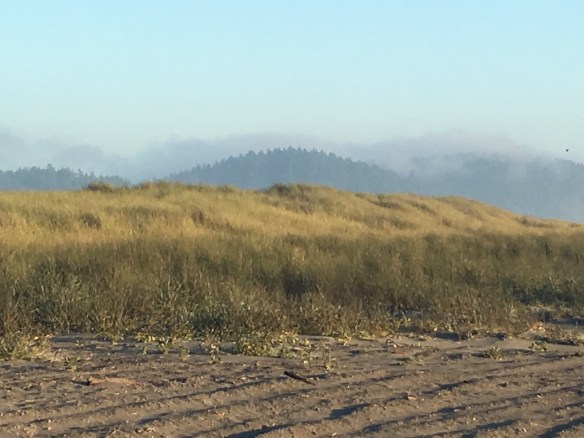
Which is mountain? And which is cloud?

Sometimes it’s difficult to distinguish one from the other. When cooler air temperatures carried by strong wind collide with a warm land mass in wide open, exposed landscapes, what we see is not always clear. The lines between the two are not certain.

I am reminded of Moses meeting God in a could atop Mount Sinai in the wilderness. I imagine the dove dropping from the heavens and God’s voice booming at Jesus’ baptism. I sympathize with the disciples seeing Jesus change before their very eyes atop the Mount of Transfiguration. Biblical stories of God colliding and communicating with creation and humanity in a volatile mix of potent energies, some clashing and some joining in a mysterious dance of meaning and purpose.

And we’re not always sure what to make of it. Can we trust what we see? Is our perspective clouded? What is real?

Mountains convey a sense of certitude and stability, a rock and fortress we can count on and lean on. What are the rocks in our lives? Those things, beliefs and people that anchor us in the construct of our lives?

Clouds are ethereal. We cannot grasp the cloud. It is there and yet it isn’t. It is not solid. It is a vapour that we can see, yes, but that which we cannot contain. A cloud is free to form and reform, free to move, free to be and not to be. After all, it belongs in the sky. What are the clouds in our lives? Events, circumstances and situations that have arisen quite outside the realm of our control, good and bad?

Then, as we reflect on the journey of our lives, with all the twists, turns and unexpected happenings, which has more sway in the course of our lives? The mountain? Or, the cloud?

While the mountains of our lives give us a sense of security and well-being, comfort and confidence — all important in life — what role do the clouds play? The bible shows that God speaks through the cloud, even when our main characters find themselves on top of the mountains! Despite all the securities we afford in our lives, those things we strive for to make us feel in control, God clouds those places.

Not that God is against those things, per se. But that the only way God can get into our hearts and bring meaningful change is from the cloud. An anonymous fourteenth century spiritual writer called her work, “The Cloud of Unknowing”, to talk about a way of prayer in which God encounters us in the depths of our hearts.

It may feel, at times, like we don’t know much. It may feel, in these out-of-our-control experiences of life, that we don’t know anything. And we ask, “Why me?”, and “Why this?”

It is in the cloud of our unknowing, nevertheless, where our re-birth and renewal begins. It is here, in the cloud, where all we need to do is not turn around and go home. In the cloud of unknowing, we must not give up. It is called faith.

Faith, to know, that in the fiercest landscapes of our lives where everything seems uncertain, there is hope. We are held in a greater, larger purpose of which we cannot see the whole, big picture right now. We are held in a loving Mystery. And that’s ok.

Because the very reason we can ask the questions, struggle in the uncertainties and take the next, tentative, step on the path is because the sun gives the light for all this to be possible in the first place.

There’s a hole, PART 1: Meant to be

The Lord God took the man and put him in the garden of Eden to till it and keep it. And the Lord God commanded the man, “You may freely eat of every tree of the garden; but of the tree of the knowledge of good and evil you shall not eat, for in the day that you eat of it you shall die” Genesis 2:15-17).

“There is a hole inside you. It’s been there a long time. Longer than you even knew. But chances are great these days this hole reappears on almost a daily basis, reminding you that something is missing in your life.”

It shouldn’t come as a surprise, really, to say that there is lots that’s wrong with the world. We don’t have to look far and wide to notice the brokenness in our lives, the violence in creation and in relationships of all kinds.

Christians have pointed to the creation stories in Genesis — in the Bible — to locate the beginnings of all that has gone wrong in this world. “The Fall” we have called it.

But all the doctrine-making explanations do not take away the problem.

All that’s not right, all this reminds each of us that something is missing in our lives. Like a hole right at the bottom of your heart.

One of the first camp songs I learned was one that’s called: “There’s a hole in the bottom of the sea.” Right off the bat, that image suggests permanence, because a hole at the bottom of the sea has likely been there a very long time.

But the song goes on in repetitive fashion: “There’s a log in the hole … there’s a log … there’s a bump … there’s a frog … there’s a wart … there’s a fly … there’s a flea — all in the hole in the bottom of the sea.”

So even though that hole is an integral and permanent part of the landscape, it’s fun to imagine that hole filled! From a young age we learn that having a hole is not good. It’s better to have it filled, somehow. What is the hole in the bottom of your heart? What is missing in your life?

“It may involve a relationship. It may involve a yearning for intimacy in the relationships you have. Maybe it’s an issue related to health, a problem that has become chronic. Maybe it’s a loved one who died and left a huge hole in your heart.

“Maybe the thing that’s missing has to do with being fulfilled in your life’s work, or vocation, or job. Or, maybe the hole has to do with a dream that has been just out of reach.

“If we had time and courage, we would turn to each other and share what is the hole in our lives. And we would have to listen, because all the holes are different; they’re not quite the same.

“The only thing that is the same, is that everybody is missing something.

“As Christians, we would pray about it. So we claim such verses as: ‘Ask and you will receive, seek and you will find, knock and the door will be open unto you’ (Matthew 7:7, Luke 11:9). Over the years, there has been plenty asking, seeking and knocking … and still this thing that is missing persists.

“Oh, we learn eventually to cope with it. Our favourite coping mechanism is to rush back to work and get busy enough to not have to think about it. Others prefer to distract themselves through entertainment. Some of us come to church precisely in search of spiritual distraction from the hole that remains in our hearts.

“But at the end of the day, when you are too tired to remain distracted, when you are trying to get to sleep, the pain of this hole returns. Maybe the pain is so great you well up with tears, and you can’t sleep. You think about all the choices you’ve made in your life and you wish you could do it all over again.

“There is nothing that will keep us up at night like fear. We try to talk ourselves out of anxiety with rational reasons why we shouldn’t be afraid. But as soon as we figure out why what we fear wont happen, we find three more ways it will happen. If only I had ….

“Some will say that God does not desire this for us. That God doesn’t desire us to live with any holes in our lives at all. That God wants us to be complete, whole.

“I’m not sure about that, actually.

“The opening of the bible is very important for us. It gives a short glimpse into what God had in mind for us. It’s only two pages in my bible. That’s all we get, in terms of what God had in mind from the very beginning. The entire rest of the bible is … the recovery plan.

“We cherish these first two pages. They’re critical to us. In these brief glimpses into what God had in mind for us we’re told we were created by God — which means we are creatures, not the creator — we were placed into a garden. And we were told that we could freely eat of almost every fruit of this garden. (Genesis 1-3)

“Because it was given to us by God. Even in taking the fruit we are partaking in doxology — we are saying, “Thank you” to God because it was given to us. We didn’t create the fruit, God created the fruit. We receive it. We receive all of this out of the bounty of God’s goodness to us. So, it’s not just thanksgiving for the knowledge of God, it is thanksgiving for being in this spectacular garden, to being able to work in it, be stewards of it and receive its fruit.

Almost all the fruit. But there was one tree whose fruit was forbidden. Fruit that was not given to us by God. And to desire this fruit is to desire it for its own end. Not as a means for saying thanks to God because God chose not to give us this fruit.

“Do you remember where that tree was planted in the garden? Right slap dab in the middle. The exact same place it is planted in your life. Right in the middle of your life. This meant, as the narrative goes, every day Adam and Eve had to walk past this thing that they did not have. A reminder that something was missing in the garden of their lives. Just as there is in ours. That it wasn’t all for the taking. And, that they were not supposed to have it.

“Keep in mind, this is God’s idea of paradise. This is not a result of the ‘Fall’. This is the garden God created for you and called “good”. God said, “It’s all for you except for this one thing right in the middle that you’re never going to have.” Now, this drives us nuts. Just like it did Adam and Eve. We think about this thing we don’t have every day. This hole that just keeps returning. We obsess over it. We want it. Other people have. Why can’t I?

“There can be 999 spectacular trees in our garden. But where do we pitch our tent? Right underneath this one thing we don’t have. We obsess over it. We yearn for it. We think about it constantly. Let the rest of the garden go to weed, but what am I going to do about this one thing I don’t have?

“As the narrative goes, it is in reaching further than we were meant to reach that we then lose the garden. On the way out, we discover that it actually was a pretty good garden. Only now it is paradise lost.

“There is nothing and no one that can do as much damage to your life as you can yourself. When we reach for more than we were created to have.”

The real miracle, however, is that despite all the pain and suffering and confusion, there is good in the world.

Now, hear this: there is good in our lives. There is good within us. There is good within you. And good that can come out of you in word and deed.

But that good only happens, that good is there only when we trust God. When we put our trust in that which is beyond us — in the power, grace and strength that is God and God’s alone. God created everything.

When we put our trust in God …

Not in our abilities to do the good because there is always something missing in our lives.

We put our trust in God. For we can also claim these verses from the bible, the words of Jesus who said, “Pick up your cross, and follow me” (Mark 8:34-35). Jesus, the God we follow, never promised to plug up that hole in our hearts.

We do have a choice. We can choose gratitude over despair. We can be thankful despite all that is wrong in the world. Despite all that is wrong in our lives. We may have pitched our tent underneath that one tree. But we can also build an altar there, an altar of thanksgiving right beside that hole in the bottom of our heart.

“Because the garden, you know, it’s pretty good. It’s not perfect. Something is missing. But we can choose gratitude, because it’s pretty good.”

Thank you, to Craig Barnes whose sermon is given, in quotations, from the Festival of Homiletics in Denver Colorado (Minneapolis: Luther Seminary Peach Media CD, 2015)

Fresh air

I am glad to be back to breathe the air in the Ottawa Valley. That is why I live here, truth be told. Even before the plane landed at Ottawa airport last evening, I could feel it in the air.

IMG_7127

There’s nothing in the world like catching the sweet breeze blowing down over James Bay, through the budding pine and spruce trees of the Laurentian’s and over the pristine waters of the Ottawa River.

Not only was the hotel room where my brother and I stayed sealed off to the outside, the air in Washington DC was heavy, stale and full of particle contaminants that caused us some coughing, wheezing and rubbing our itching eyes. You don’t have to be an environmentalist to know the Potomac River basin is ….well, not the Ottawa River and Valley.

Ottawa and Washington DC are both the capital cities of their respective nations. Each reflects by its monuments, memorials and geography the character of the nation it represents. One of the purposes of nationalism, like the rivers that surround the two capital cities, is to separate one from the other. Indeed, the work of creating divisions continues in earnest to this day.

In fact, walls are being built not only in the United States, but all over the world as the USA Today front page reported a couple of days ago.[1]Protectionism and isolationism fueled by fear are on the rise.

IMG_7120

So, the voices of a different vision need to be heard, once again.

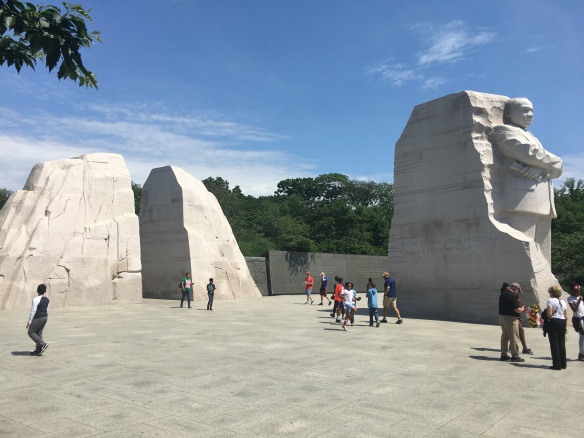
One of the most recently constructed memorials in Washington is on the shores of the Potomac River — the Martin Luther King Memorial.

IMG_6993

“No one is free,” said Martin Luther King, “until we are all free.” In other words:

What I want for myself can’t happen, until it can be so for everyone. If there is anyone who suffers in whatever way,

If there is anyone who is not free, in whatever way,

If there are people who are bound, captive to whatever vice, to whatever imprisonment of the soul or in prison because something they have done…

I am going to be healed of whatever ails me, only when I seek the healing of the other, the freeing of the other, the liberation of the other. The church holds up a different vision from that of the divisive, individualistic and exclusive nature of white nationalism in the world today.

You can see, I hope, why the consciousness of the church not only at Faith Lutheran, not only in Ottawa, or in the Eastern Synod or the Evangelical Lutheran Church in Canada, but in the United States of America and worldwide is moving to see not a division between things, not building walls between two perceived opposites, but building unity between them.

Not a division between politics and pastoral care,

Not a division between care for the soul and social justice,

Not a division between reaching out and reaching in,

Not a division between speaking out against injustice of whatever kind and speaking to the choir,

Not a division between contemplation and action.

Not an either-or, but a both-and.

Last week when Ken stood here and told you about the different ways we can support the financial health of the congregation, he introduced his well-delivered announcement by saying — “you’ve heard we in the church were never to talk about money, politics and sex (well, he didn’t actually say the last word, but I know you all were thinking it!).

And then a couple weeks before that, Mark stood here and told you about his upcoming trip to Ecuador to build homes in a community destroyed by an earthquake some years ago. And in his well-worded speech he said (I paraphrase): “In this mission trip the group he was going with was not doing mere charity, dollars sent to a far-off location, but directly helping them on the ground and making a real difference in the lives of those who suffer.” Check it out. He said it. I believe he has it all on a piece of paper.

I alone am not telling you all this. Your own members are. Your own church family is slowly but surely breaking down the walls that have divided, distanced and incubated our conversations in the church.

Limited our conversation. Limited our imagination. Limited the ways of God. NOT talking about these things, well, how has that worked out for the church in recent times?

NOT talking about the things that really matter in our daily life, NOT being open and honest, sharing the deepest secrets and burdens of our lives, NOT feeling safe in a community of faith to be who we humanly are, warts and all, imperfect, suffering, in need of God’s love. NOT being like that — how has that worked for the church? How has that worked for you?

It is not easy in the church (although everyone else in our real lives are talking about them!) to talk about money, politics and sex. It is not easy to talk about the real things that matter in this life. And so, the church for many decades has avoided having these conversations. Why? Because we were afraid? Because talking about sex, politics and money would put a mirror in front of us, exposing areas of our life that needed even a bit of God’s light shining upon it?

It’s not easy to talk about these things. I know. I feel it too. But I always thought that that’s what faith was supposed to be about — to confess, be honest, be real, and just do the work of God. How can we do the work of God when we can’t even be honest, and real, and confess ourselves to one another?

We can echo the prophet Isaiah’s complaint to the Lord: “Woe is me! I am lost, for I am a man of unclean lips …”[2]

But he doesn’t stop there. His confession is not just about himself. Faithfulness is not merely individualistic. We don’t come to church to make an individual contract with the Lord.

Isaiah continues in his confession: “Woe is me! I am lost, for I am a man of unclean lips, and I live among a people of unclean lips.”

Faithfulness drives towards the communal, the community, the well-being of the world. “No one is free, until we are all free.” Not just me, but we!

When we don’t include, welcome and affirm people who are different from us, we are a people of unclean lips.

When we refuse to include conversations about sexuality, money and political action, we are a people of unclean lips.

When we remain quiet in the face of injustice, we are a people of unclean lips.

In other words, this confession of Isaiah implies that he feels he should just ‘shut up and sit down.’ Not say anything. Because he is bad. And Israel is bad.

Maybe you feel this too. Not unlike Isaiah when confronted with a vision of God, you feel, deep down, the church is bad, and has nothing worthwhile to say in the public sphere. Millennials believe that. Just ask your children or your friend’s children. In the past, we church-going Canadians have conveniently said, “That sort of stuff is the government’s job.” We effectively, therefore, excuse ourselves from any social action in the name of Jesus. And continue the dividing.

Martin Luther King also said that in the church it’s alright to talk about the New Jerusalem (pointing to heaven, the afterlife), yes, but one day we also have to talk about the New York or the new Ottawa, the new community in the here and now.

What did Isaiah see in his vision?

Two details in this vision I want to focus on:

First, “the house was filled with smoke.”[3]

Here’s Isaiah who sees God in all God’s glory. How can I understand this vision by analyzing: Why the six wings folded over on various parts of the seraphim? What’s with that?

But the smoke fills the space. Usually, the image of smoke — like the cloud — in the bible is codeword for, “Can’t get this.” I can’t explain what’s going on in the presence of God. I can’t bring all the statistics, analysis, data and information the world can offer, to explain this rationally. But that’s ok. Because that’s not the point.

In 2018, in the wake of the internet revolution, did you know that more than 7 billion humans use the internet; and, that’s 7 and a half percent more, over 2016. Google now processes more than 40 thousand searches EVERY second. And remember, that’s only Google. Include all the other search engines out there, worldwide there are 5 billion searches EVERY day.[4]

We don’t need any more information! The church’s solutions are not found in accruing more data to solve our problems!

Because things happen in life that we can’t understand. The truth about God cannot be conveyed in data streams and pie charts and three point sermons.

Smoke in the house. Mystery. Might it be, that Isaiah and the bible is trying to say: We don’t need to understand everything. We don’t need to know how it makes sense for people of different races, colour, ethnic background, different social economic status, expressing a different sexuality, different ages, different abilities can form one, unified community. We don’t need to know how that can be.

Today is Trinity Sunday. I am not going to stand here and try to explain to you how three different persons can constitute one God. Because I don’t know. All I know is that those different persons are in a unified relationship. Relationship.

The third person, especially, confounds our Lutheran sensibilities. We’ve figured God the Creator. We’ve figured out God the Son, well, as much as we can. But the Holy Spirit throws a wrench into any rationalizations. A mystery, to be sure!

How does it all fit together? How can we analyze this even more? Shouldn’t we first have a detailed plan? Shouldn’t we try to draw a diagram?

We don’t need to know! All we have are the visions. The dreams. The imagination that describes in poetry and colourful words flashes and fragments of God’s kingdom and truth. We don’t need to know. We don’t need to reconcile all the contradictions. We don’t need to make sense of it. We don’t need to provide all the answers. We don’t need to put God in a box, nor explain God to anyone. God doesn’t need that from us.

Why?

Because even though Isaiah is a man of unclean lips (God doesn’t deny it!), even though God’s people have unclean lips, even though we are imperfect individuals in an imperfect church, that isn’t going to stop God. In Section Five of a recent Confession of Faith in a Time of Crisis called “Reclaiming Jesus” church leaders from across the United States wrote: “We support democracy, not because we believe in human perfection, but because we do not.”[5]

The realm of politics is imperfect. Who would think? Yet, our imperfection is the very reason politics happens. It is not something to avoid, it is something to embrace.

What does God do? Despite Isaiah’s complaints and resistance (just like all the rest of the people in the bible!) …

Despite us!

God reaches down from God’s throne and touches Isaiah’s lips with God’s holiness. God doesn’t steer uncomfortably away from the place of Isaiah’s greatest embarrassment, sin, weakness, brokenness, uncleanliness. God doesn’t avoid the uncomfortable places of our lives. God doesn’t even say anything to that uncleanliness.

God touches it. In the place of our greatest fear, shame, guilt, when we present ourselves in God’s almighty, mysterious presence, honestly and openly — not denying nor avoiding — we place ourselves in a position to be touched by God in the very place of our greatest weakness, to be healed, to be transformed, to be made new.

Even in the vision, the temple and the seraphim cannot contain the ‘bigness of God’. “The train of God’s robe filled the temple.”[6]The image is not meant to convey facts, figures, numbers, measurements, information.. Only our post-enlightenment, rational minds want to go there. But we can’t explain the vision of God. God’s kingdom doesn’t sit comfortably in our rationally justified common-sense policies.

God’s presence enfolds and goes to the edges and bunches up in the corner feeling like it needs to be stretched even beyond the walls of temple.

Whom shall I send? God asks.

Isaiah, transformed by God’s touch, can then say, “Here I am, send me.”[7]

Will we?

The Holy Spirit blows where it will. The wind does not stop at the border. The wind does not end at any walls we build to divide. The Holy Spirit brings fresh air into the stagnant, recycled, stuffy air of our temples. The Holy Spirit blows, fresh air at last, sending us into the world with God’s love, grace and power to change.

I don’t know how the fresh air of the Ottawa Valley is cleaner and sweeter than the air I breathed south of the border, really. But I don’t need to know how. I just know.

And give thanks.

[1]USA Today, May 24, 2018

[2]Isaiah 6:5

[3]Isaiah 6:4

[4]Bernard Marr, Forbes.com, May 21, 2018

[5]ReclaimingJesus.org

[6]Isaiah 6:1

[7]Isaiah 6:8

Lutherlyn skit: Listen to God’s voice

Narrator (N)

Camp Counselor (CC) – Serena

Camper 1 (C1) – Jordan

Camper 2 (C2) – Mikayla

N – It is a stormy night at Camp Lutherlyn. The sleep-out is cancelled due to the storm. Hurricane-force winds pound the old-growth pine forest surrounding the cabins, rubbing the tree branches against the windows and outside walls. The wind howls through the grove. The rain pelts the windows and forms pools of water in the walkways joining the cabins. Inside cabin “Faith”, the girls huddle in the semi-darkness. The only light comes from the glow of Mikayla’s iPhone. The Bluetooth speakers vibrate to the beat of K-Pop.

C1 – Really???!!! (She rolls over in her bunk, facing the wall. She tucks a pillow around her head)

C2 – At least the music is drowning out the storm outside. (She stands in the middle of the cabin, dancing to the music)

CC – It’s ok to be afraid of the storm.

C2 – I’d rather listen to music than the wind howling outside.

N – At that moment, a lightning bolt flashes. Thunder cracks.

C1 – I’d rather listen to the storm.

C2 – We all love the music, don’t we, girlfriends!

CC – We are kinda like the people in the bible.

C2 – Huh?

C1 – Turn the music down!

CC – When the young prophet Samuel was sleeping in the temple. (read 1 Samuel 3:1-20)

C1 – Well, we’re not sleeping. And I’m pretty sure he wasn’t listening to K-Pop.

C2 – What did they listen to back then?

CC – I’m not sure. The bible does mention harps and lutes and stringed instruments.

C2 – Bo-ring! Probably like the music my parents like.

C1 – What were prophets?

CC – Prophets were people who listened to God’s voice. They told the people what God had to say to them.

C1 – I can’t hear myself think in all this racket! Can’t we listen to some Daya?

C2 – You’re kidding, right? (She rolls her eyes. Music is still blasting. She still dances)

 CC – While Samuel was trying to sleep, God was trying to get his attention. But Samuel thought the interruption was the old priest, Eli, sleeping in the room next door. And this went on for half the night.

C1 – Did Samuel finally get that God was trying to talk to him?

CC – Samuel didn’t know it was God at first. He needed help.

N – A large branch crashes against the building.

ALL – Aaahhhh! (screaming)

C2 – Do you think God is trying to tell us something? Ha-Ha! (laughing)

CC – The old priest, Eli, told Samuel the next time he heard the voice of God …

C1 – What did God sound like?

CC – I don’t know.

C1 – Can we change the music, PLEASE!

C2 – Next song.

C1 – Wait! Do you hear that?

ALL – What? (C2 turns off the music)

C1 – Ssshhhh! The rain stopped!

C2 – It’s not windy anymore!

C1 – I think the storm is over!

C2 – Why is it so bright outside? (looking out the window)

 C1 – Let’s go see! (jumps out of her bunk)

 CC – Put on your rubber boots and raincoats, girls. And don’t forget your flashlights! Remember the buddy system!

N – Mikayla opens the door and the girls walk outside into the open.

C2 – Look! The moon!

C1 – It’s a full moon, tonight.

C2 – The stars are so bright!

CC – It’s beautiful to be in God’s creation. God is good. God has protected us through the storm. And we are not alone. We have each other.

C1 – Do you hear that?

C2 – What?

C1 – Listen!

Traveling stones: a pilgrimage lesson in letting go

In the sixth century Saint Benedict said, “A monk should have death always before his eyes.”[1] ‘Death’ doesn’t need to refer only to our physical demise at the end of life but to any loss experienced in life. There are many deaths we experience in life: the death of a cherished pet, the loss of friendship, the loss of a job, divorce, death of a loved one, moving into another home. Any significant change, even positive ones, involve something lost.

In the second reading for today written in the first century, Saint Paul admonishes the Corinthians to live in this world “as though not.”[2] He is advocating a certain disengagement from the attachments and claims of our lives, including some of our most cherished relationships. The likes of Paul and Benedict reflect, as well, the wisdom of the prophets and poets of ancient Israel: “The grass withers, the flower fades, but the word of God stands forever.”[3]

Our earth-bound attachments come under scrutiny here, no doubt. The question remains for each of us on our own journeys of faith and life – what are those things of which we need to let go in order to move on? After all, in the Lord’s Prayer the words, “Thy Kingdom come”, mean little unless we can also say: “My kingdom go.”[4]

Following Jesus means leaving things behind — as the first disciples did, in our Gospel reading for today (Mark 1:14:20).

You heard about the man who was hiking in the mountains when he slipped, and started to slide over the edge. Just as he was about to fall into the abyss, he grabbed a tree branch growing out of the rock ledge. He hung on perilously dangling in the air.

He didn’t know what to do. It was impossible to pull himself up since the branch stem was slippery and wet. He swung in the silence of the breeze contemplating his fate with growing terror. Finally he looked up to the sky and prayed: “If there is a God anywhere up there, I could do with some help, please.”

To his surprise and shock, he heard God’s voice respond instantly: “I will help you. But you first have to let go.”

The man was silent for a minute. He dared not look down. It was a long way to the jagged rocks of the canyon below. Again he looked up to the sky, and said: “Is there anyone else up there?”

A long-standing tradition in doing a pilgrimage is to bring a stone from home and lay it somewhere along the path. This home-stone represents a part of myself that I lose, and leave behind, where I have walked.

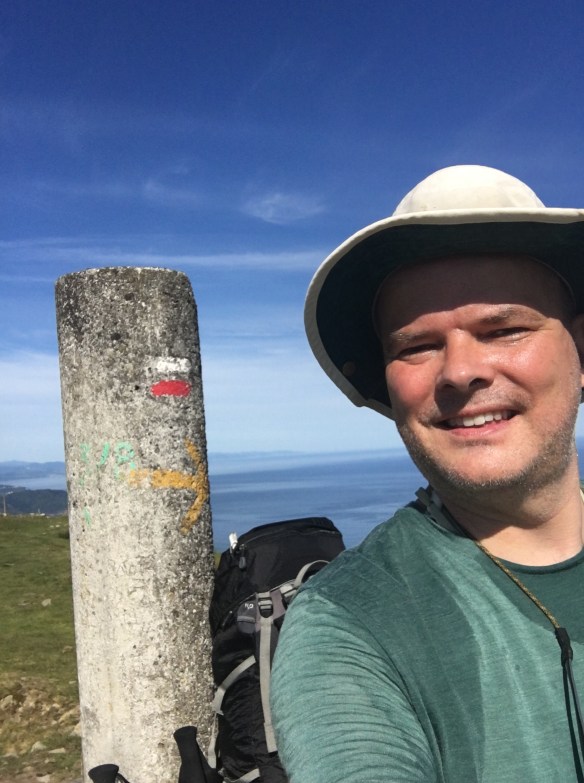
Last Spring when I walked a part of the Camino de Santiago, I wanted to leave my stone in the waters off the western coast of Spain, either in Fisterra or Muxia – both coastal towns are some one hundred kilometres west of Santiago.

I imagined this place a fitting resting place for my stone since I love walking by water and coastlines. Once, long ago, people believed the coastal town of Fisterra (French, for ‘the end of the earth’) was the physical limit of land – the farthest one could go. In my imagination, I saw myself facing the setting sun, having completed the 800-kilometer, two-month trek, looking west to the horizon line beyond which lies the land of my home in North America.

I imagined feeling satisfied at the end of a long journey, having reached my goal, grateful for the challenge and all the things the Camino taught me. In that moment of gratitude and joy, I would toss my stone as far as I could into the spume and depths of the Atlantic Ocean. That was the vision, anyway.

I found the perfect sized stone while wandering around my house one afternoon a week before leaving for Spain. Because I was running about making the last-minute preparations for the journey, I placed it temporarily on the landing railing in the garage, certain I would soon tuck it away in my backpack.

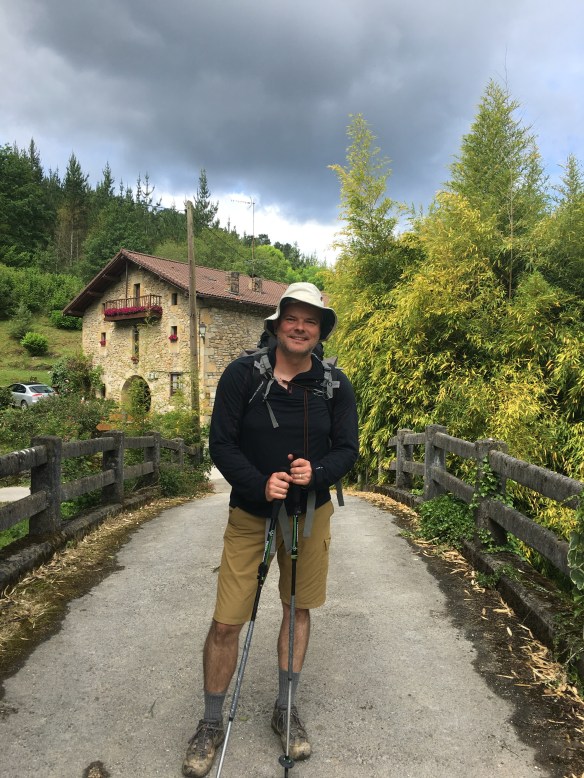
Two weeks later I was scrambling up a steep incline outside the town of Irun on the first day of my pilgrimage. As I expected that first day was incredibly tough going. The temperatures soared to above 25 degrees C and the sun shone brightly. Sweat pouring down my neck and back I struggled up that cliff wondering why on earth I chose to do this on my sabbatical. I dug my walking poles into the hard-caked sandy ground to make the next ledge and wondered sarcastically if I should have rather taken rappelling lessons in preparation for coming to Spain.

In that moment of physical and growing mental exhaustion, I realized I had forgotten to pack my stone. It was still sitting on the railing in the garage back home! I stopped in my tracks and exhaled deeply.

“What’s the matter?” my Dutch pilgrim friend asked me, huffing and puffing as I was.

“I forgot to bring my stone,” I confessed my failure.

“Don’t despair,” my co-pilgrim wanted to advise. “The Camino will give you an answer.”

IMG_5248

Several days later two significant things happened. The first was while I was walking down a slope towards the northern Basque town of Guernica, I thought I should take with me a couple stones from this path, as a keepsake from walking the Camino. So, I selected two small pebbles from under my feet where I stood beholding the town and valley below.

IMG_5299

That same day, my knee seized up, and I walked the remainder of my Camino in pain. Three days later, coughing and feeling very sick, I was on a plane homebound. Diagnosed with pneumonia back in Ottawa, I had to come to terms with my failure of not having reached my goal.

Not only had I not reached Santiago and Fisterra, I had done nothing with my stone which I had forgotten anyway. By forgetting the stone, had I already destined myself not to finish the pilgrimage? These dark thoughts swirled in my mind.

After having recovered a few weeks later, my wife and I flew to Lisbon for a week of vacation to celebrate our wedding anniversary. Originally, the plan had been for her to join me at the end of my pilgrimage, where I would meet her in Lisbon. Nevertheless, this time, I did bring my stone from home, renamed my ‘glory’ stone.

My glory stone represented all my aspirations, desires, longings which I knew deep down the Camino had taught me to let go of. I had to surrender even my human yearning and goals to God.

IMG_5853

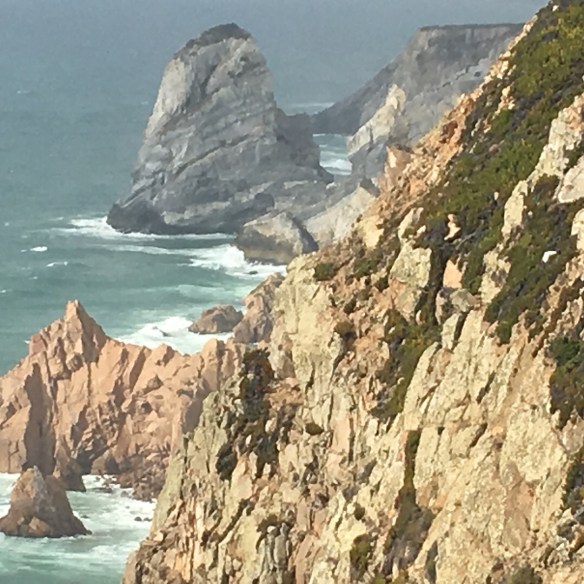
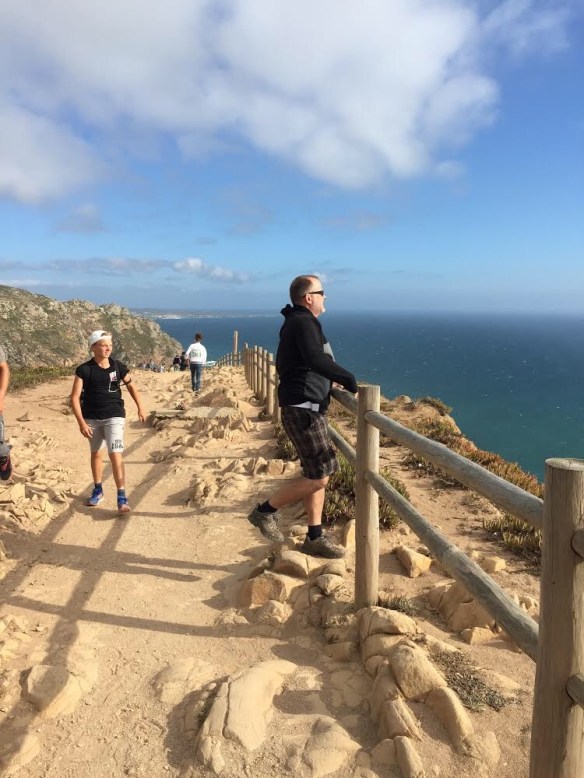
And so, at Cabo Da Roca near Lisbon, Portugal – the farthest most western point of land on continental Europe – I threw my glory stone into the Atlantic Ocean facing the setting sun. I had to practice letting glory go.

IMG_5812

It seems I was still bound to finish some kind of pilgrimage during my sabbatical. I didn’t have enough time to go back to Spain and finish the Camino de Santiago. But I did have enough time to walk the entire length of the longest contiguous sand beach in North America – fifty kilometres on Long Beach Peninsula in Washington State. There, my journey of letting go continued.

IMG_6200

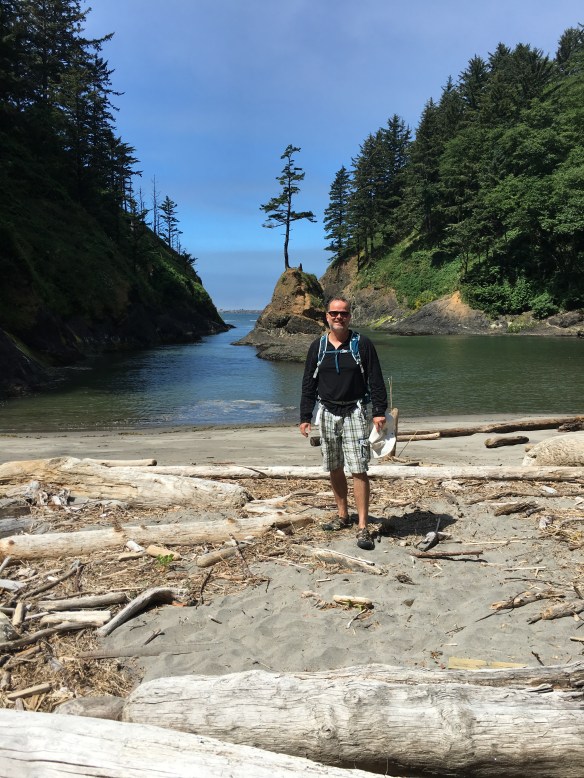
There, on “Cape Disappointment” – fittingly named – I brought the two pebbles that I picked up in Spain on the last day I walked on the Camino. One glorious afternoon, I scrambled down into Dead Man’s Cove – also fittingly named – on Cape Disappointment. After reflecting on my disappointments of late, I realized on my journey of life not only did I need to yield all my dreams but also all my regrets and suffering. And so, I threw those stones of disappointment into the Pacific Ocean. I let these go.


I realized life is not lived well when we obsessively hold on to all those things that cause us grief. I had to offer these to God as well. Later, while I sat on a park bench near the lighthouse on Cape Disappointment looking over the Pacific, I met a couple of Americans visiting from Portland. In our conversation, we were able to affirm that “all great spirituality is about learning to let go.”[5]

IMG_6217

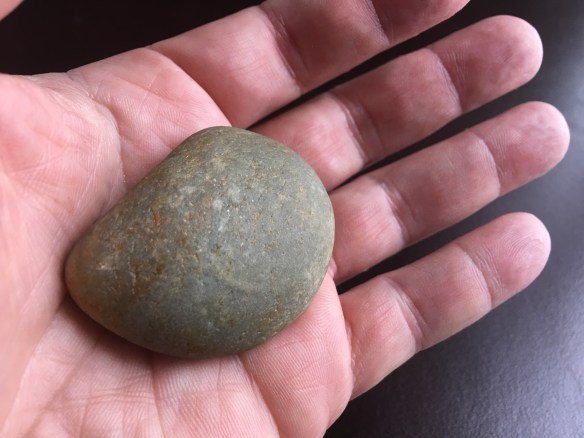
But I didn’t leave my pilgrimage empty handed. When I climbed out of Dead Man’s Cove that day, I picked up from the sand a smooth, round stone. Now, any rocks on the Peninsula are rare. Most of the fifty-kilometre stretch is sand, land created from the outflow of the mighty Columbia River as it spills into the Pacific Ocean. Most rocks you see on the Peninsula have been trucked in. So, I was delighted to take with me back home, a rare thing.

And hope is a rare commodity in this world of pessimism, denial, and despair. This is my “stone of hope”, that I hold forever, amidst all the human aspirations swirling in my life and all the disappointments and failures which I regularly need to practice letting go of.

IMG_6752

We hold not only that which we need to let go of, but we also hold hope throughout our lives. “We do not simply resign ourselves to the give-ness of the world, for we have planted within us a great hope that God’s kingdom will come on earth, as in heaven. This means we are a people who look to the future with trust and hope, confident that God is working God’s purposes out and that God’s realm is even now breaking into our world.”[6]

At this point in your journey of life, which stones are you holding — of dreams, of disappointments, of hope? Which ones do you need to let go of? Which do you need to hold on to? I suspect it is true when the likes of Saint Paul, and all the wise teachers over the ages, writes: “Hope does not disappoint us.” [7]

[1] cited in Ruthanna B. Hooke in David L. Bartlett & Barbara Brown Taylor, eds., “Feasting on the Word: Preaching the Revised Common Lectionary Year B Volume 1” (Kentucky: WJK Press, 2008), p.280

[2] 1 Corinthians 7:29-31

[3] Isaiah 40:8

[4] Richard Rohr, Daily Meditation, Thursday, January 18, 2018.

[5] Richard Rohr, Center for Action and Contemplation, cac.org

[6] Ruthanna B. Hooke, ibid.

7 – Romans 5:5

A wintery spirit

IMG_6730

The winter of 2018 has been record-setting, so far. And we are barely one week into the new year! Did you know it was Ottawa’s coldest New Year’s Day since records began in 1873? At 8am on January 1st, the mercury dipped to a frigid minus 30.2 degrees Celsius (-22 Fahrenheit); New Year’s Day also marked Ottawa’s sixth consecutive day with temperatures below -17 degrees Celsius (1 Fahrenheit), which made it the longest run in exactly one hundred years.[1]

IMG_0223

A full onslaught of winter can help us appreciate the meaning of Christianity. Though much of the bible’s stories and lessons were wrought out of the harsh desert climate surrounding the Mediterranean and Arabian seas, the winter realities we face in Canada are not that much different. I suggest, then, let’s take desert and winter as synonymous – meaning, essentially, the same things.

IMG_3529

American Lutheran theologian, Martin Marty, describes the importance of what he calls a “wintery spirituality”, defined by the shrill cry of absence, frost, and death. In contrast to a summer spirituality, winter is more given to being emptied than being filled. Winter is harsh and lean in imagery, beggarly in its gifts of grace and love.[2]

IMG_3524

Of course, Jesus goes into the Judean wilderness to be baptized in the Jordan River. And right after his baptism, he spends forty days and nights in the desert.[3] The desert is not a comfortable place to be. For one thing, it makes scarce and even denies the basic need for our survival – water. A desert is an arid region where annual rainfall remains miniscule. Some deserts average only one centimetre a year, with parts of the Sahara not receiving a drop of rain for more than twenty years.[4]

The word and image of water appears in each of the Hebrew readings assigned for this festival day in the church calendar, and is tied to baptism in the readings from the New Testament.[5] More to the point, water is given out of the chaotic void in the creation story, and in the arid wilderness as a gift and a grace. Water is thus a sign of God’s love amid the harsh winter or desert realities of our lives.

The prophets of old affirm that it is precisely in the desert where God expresses God’s love to the people. The grace of God cannot be received outside of winter. “Thus says the Lord: The people who found grace in the wilderness … I have loved you with an everlasting love …. I remember your love, how you followed me in the wilderness.”[6]

How, then, can we appreciate and even thrive, living out of this truth? How can we follow Jesus in his way? After all, the Baptism of our Lord is about Jesus beginning the journey to fulfill his God-given purpose in life. How he does it is of particular importance to us, if we are interested in following Jesus in our life-style.

Listen to a story first told by a nineteenth-century teacher, Awad Afifi the Tunisian, who drew his wisdom from the wide expanse of the North African desert:

A gentle rain fell on a high mountain in a distant land. The rain was at first hushed and quiet, trickling down granite slopes. Gradually it increased in strength, as rivulets of water rolled over rocks and down gnarled, twisted trees that grew there. The rain fell, as water must, without calculation. After all, water never has time to practice falling.

Soon, it was pouring, as swift currents of dark water flowed together into the beginnings of a stream. The brook made its way down the mountainside, through small stands of cypress trees and fields of lavender, and down cascading falls. It moved without effort, splashing over stones – learning that the stream interrupted by rocks is the one that sings most nobly. Finally, having left its heights in the distant mountain, the stream made its way to the edge of a great desert. Sand and rock stretched beyond seeing.

Having crossed every other barrier in its way, the stream fully expected to cross this as well. But as fast as its waves splashed into the desert, that fast did they disappear into the sand. Before long, the stream heard a voice whispering, as if coming from the desert itself, saying, “The wind crosses the desert, so can the stream.”

“Yes, but the wind can fly!” cried out the stream, still dashing itself into the desert sand.

“You’ll never get across that way,” the desert whispered. “You have to let the wind carry you.”

“But, how?” shouted the stream.

“You have to let the wind absorb you.”

The stream could not accept this, however. It didn’t want to lose its identity or abandon its own individuality. After all, if it gave itself to the winds, could it ever be sure of becoming a stream again?

The desert replied that the stream could continue its flowing, perhaps one day even producing a swamp there at the desert’s edge. But it would never cross the desert so long as it remained a stream.

The stream was silent for a long time, listening to distant echoes of memory, knowing parts of itself having been held before in the arms of the wind. From that long-forgotten place, it gradually recalled how water conquers only by yielding, by turning to steam in a natural cycle. From the depths of that silence, slowly the stream raised its vapours to the welcoming arms of the wind and was borne upward, carried easily on great white clouds over the wide desert waste.

Approaching distant mountains on the desert’s far side, the stream then began once again to fall as a light rain. At first it was hushed and quiet, trickling down granite slopes. Gradually it increased in strength, as rivulets rolled over the rocks and down the gnarled, twisted trees that grew there. The rain fell, as water must, without calculation. And soon it was pouring, as swift currents of dark water flowed together – yet again – into the headwaters of a new stream. [7]

Jesus instructs his followers to become the people they are called to be.[8] God is aware that our lives are like a journey through the desert. Or, as Canadians, we can say that our faith journey is not dissimilar from living through an Ottawa record-setting winter.

To thrive in this life is to see that this journey of becoming is not static. We are not called by Jesus to become mere swamp lands at the edge of the desert. Rather, the journey calls us to be vulnerable, to recognize what we may initially want to resist in us – like the stream that first struggled against yielding to the wind.

Our journey through life are journeys of vulnerability. Of taking little. Of trusting God. Of appreciating the value of small things. Of letting go into the Spirit wind of God. Then, we can, with the Psalmist see that, even in the wilderness, the Lord fulfills God’s promises and does indeed give strength to us and bless us with peace.[9]

IMG_3628

[1] Ottawa weather records, Twitter @YOW_Weather

[2] cited in Belden C. Lane, “The Solace of Fierce Landscapes: Exploring Desert and Mountain Spirituality” (New York: Oxford University Press, 1998), p.37

[3] Mark 1:12-13

[4] Belden C. Lane, ibid., p.38

[5] The Baptism of our Lord, Revised Common Lectionary Year B: Genesis 1:1-5, Psalm 29, Acts 19:1-7, Mark 1:4-11

[6] Jeremiah 31:3; 2:2

[7] as written by Belden C. Lane, ibid., p.20-21

[8] read the entire section from Matthew 10:5-42

[9] Psalm 29:11, NRSV

Pizza, sushi, pigs-in-a-blanket: It all matters

It’s an odd beginning.[1] You’d wonder why, if Matthew and Luke – and to some extent even John – begin with stories of Jesus’ birth, Mark starts his Gospel rather abruptly. And by reference to the Hebrew prophets of old.

During this Advent season as we prepare for and wait for God’s coming at Christmas, the Gospel text for today feels out of place. It shakes us out of our sentimental leanings and Hallmark expectations of pleasant Christmassy stories.

One of my favourite children’s exercises is finding the pattern in a row of numbers, words, pictures – and identifying which part doesn’t fit. Preparing a way in the dusty heat of the Judean desert by referring to Isaiah is a no-brainer for finding what doesn’t fit if we would line up and compare the first chapters of each of the four Gospels.

Compared to wordy John, for example, Mark is the master of brevity. The earliest of all four Gospels in the New Testament, Mark tells the story of Jesus by getting to the point. He appeals to our contemporary need to summarize concisely. Mark is short – only 16 chapters compared to Matthew’s 28, Luke’s 24 and John’s 21. In our digital video age where sound and video bytes must capture our attention in less than 15 second ads, Mark is the go-to Gospel. If you’ve got the time.

He opens by simply getting to the point: Jesus is the Son of God. And it’s good news. Amen. We’d go hear his sermons.

Unlike Matthew, Mark leaves out the juicy, vitriolic speech John the Baptist gives slicing up the Pharisees calling them a brood of vipers.[2] Instead, in a few short verses, Mark simply tells his audience that John the Baptist comes to herald Jesus’ coming. That’s John the Baptist’s only role: To announce and prepare the way of the Lord. Period. Next question.

Our three confirmands this year and their families have decided to meet in each other’s home once a month. Taking turns to host, each decides then what we will eat for supper. The first month it was pizza, perhaps no surprise there. The second month was sushi. And the third month we met this Fall, it was crescent pigs in a blanket. Pizza, sushi and pigs in a blanket.

Same group of kids and parents. Different culinary expressions. And I wondered how well this group found unity despite our differences. The detailed differences mark important aspects of our identity and perspectives on life. And yet, there we were, eating together and talking about God.

Which is why we must stop, pause and ponder Mark’s inclusion of certain details. If Mark wants to be brief and just tell the basic point, then why does he include what John the Baptist is wearing and what his diet is? There must be something very important about locusts, wild honey and camel’s hair.

I find a few good reasons for including only those details. First, Mark makes the connection between John the Baptist and prophets of old. We see, through these details that John the Baptist stands in line with Isaiah by citing his work.[3] John the Baptist is also mistaken for Elijah because of their similar attire,[4] and because he, like it is recorded in the other Gospels, foretells of the coming Messiah.[5]

Mark wants to be brief, but he also wants to add just enough detail to make those connections. Not only is this good writing, he conveys that it all matters. Not just the principles, the higher meanings, the abstract thoughts, the arguments, the beliefs. Material matters too. The locusts and wild honey that he eats, the camel hair that he wears – these all mediate God’s intent and message.

We can learn from Mark that “spiritual talk is always, in the Gospel, tied to material — real water, real bread, real time, inexpensive wine, locusts, honey, sand, camel’s hair, wind, birds and the clouds being rent asunder. This is the nitty-gritty of life, and it can never be separated from matters of the Spirit.”[6]

Because there is “nothing in all of creation that can separate us from the love of God in Christ Jesus”[7], then everything can mediate that love. There is nothing in all of creation that cannot communicate God’s goodness. All perspectives, all things, everyone – it all matters!

Those that created this library that we call “the Bible” in the fourth century could have tried to summarize the four Gospels – Matthew, Mark, Luke and John – into one definitive, authoritative account. No variations. No differences. No discrepancies.

No need to ask questions like: Was it the feeding of the 5000 or 4000? Were there two or was there just one angel in the empty tomb to speak to the disciples? Why does the Gospel of John contain stories not recorded in Matthew and Luke? One compilation would be enough, one that gets right the chronology of all the events, teaching and parables of Jesus. It would have made life easier!

But the wisdom of our forebears in the faith would keep the variations intact. Four similar yet different accounts were included in the New Testament. The diverse expressions and witnesses of Jesus Christ and his birth, life, teaching, healing, death, resurrection and ascension emerge as a critical element of faith.

In reflecting on the unitive diversity of Christian faith in the Bible, Richard Rohr wrote earlier this week in his daily meditation: “Scripture gathers together cumulative visions of the divine.”[8] Diversity is essential to who we are. It all matters.

It all matters because there is something good in everything. Everything in creation is just that: Created by God. And if everything was and is created by God, then despite the consequences of human misdeeds and the stain of sin in creation, despite all the religious and political differences in the world, there is still something redeemable and inherently good in this brokenness of creation. Including in us. This is the hope of Christian faith.

The Christmas season is a time when traditional gatherings occur in families, communities, friendship groups, and workplace teams. It would be too easy, and lazy on our part, to be dismissive and rush to make judgements of family members and co-workers with whom we differ. Some hesitate and complain about attending these gatherings because we can’t stand “grumpy uncle Stan” or “flakey aunty Molly”.

But even “grumpy uncle Stan” and “flakey aunty Molly” are beloved of God. There is something good about them. Will we take the time and effort to help make a safe place for them to express their true selves created in the image of God?

Richard Rohr has made many enemies in the Christian church for his provocative and progressive views. He has been a voice crying out in the wilderness for several decades now. And over all this time, he maintains that in conversation with those who differ from him, he follows a simple rule:

There is always at least ten percent of what he hears in their point of view that he can agree with. And it’s from that common ten percent that he begins his response to them.[9]

That calls for some work. And persistence. Because building relationships with those from whom we differ is not accomplished in one meeting, overnight, or after one phone conversation. It’s not easy work. It can take a life time.

It’s easier to give up and walk away. It’s easier to justify some narrative that paints them as evil or not worth spending any time with. The sad consequence of following this easy way we see in the world today.

We pray for peace on earth this Christmas season, as with the angels of old. The way of peace is to have hope. To have hope is to live into that which God calls us into being. And that hope requires us to take the narrow path.[10] To have hope is to work hard at practicing good listening skills. Hope requires us to work hard at not speaking first, but first asking questions and hearing the other. That hope requires us to work hard at listening with the aim of seeking understanding, to try to see things from the perspective of the other.

This doesn’t mean we will agree with the other. This doesn’t mean we will lose our integrity or that which defines us as Christians and as individuals. But it does lead us to a way of being with the other that honours them and respects them as beloved creatures of God.

We will continue eating together as a confirmation class into the new year. I look forward to the different culinary tastes that await. And what is better, I know the young women in the confirmation class are looking forward to this as well.

Hope.

[1] The Gospel for Advent 2B – Mark 1:1-8

[2] Matthew 3:7

[3] Isaiah 40:3

[4] 2 Kings 1:8

[5] John 1:21-23

[6] I wrote in my post from January 2015, “Borderland Spirituality”

[7] Romans 8:38-39

[8] December 4, 2017

[9] Richard Rohr, “The Art of Letting Go: Living the Wisdom of Saint Francis” (Boulder Colorado: Sounds True Audio CD Learning Course, 2010).

[10] Matthew 7:13-14; Luke 13:24

The hide-and-seek God

There is enough in the world today and in our own lives to seriously doubt the presence of a God, let alone a God who cares about what happens on earth.

“Where is God?” is a question that is emerging in our understanding of God in the modern era. It is a question, Diana Butler Bass asserts, that is growing in sad frequency in recent years:

“’Where is God?’” she writes, “arose from the rubble of the World Trade Center; from the inundated villages of tsunami-ravaged Thailand and Indonesia; from New Orleans, as the levees breaking swept all that was familiar out to sea; from African hamlets where the dead mount from Ebola; from the hidden, abused, and lost victims of human trafficking and slavery; from killing fields in any number of nations where war seems endless; and from native peoples watching their homelands sink into the earth or ocean due to melting tundra or rising seas.

“‘Where is God?’ has echoed from every corner of the planet in recent years… ‘Where is God’ is one of the most consequential questions of our times.”[1]

“The Jewish tradition tells a story of a rabbi whose young son once came running to him, crying inconsolably. Between huge sobs, he managed to say, ‘Father, I’ve been playing hide-and-seek with the other children. It came my turn to hide, but after I found a good place, I sat there in the woods for hours waiting for the others to find me. No one ever yelled into the woods to tell me to come out. They just left me there alone.’

“His father put his arms around the child and held him close, rocking him back and forth. ‘Ah, my son,’ he said, ‘that’s how it is with God, too. God is always hiding, hoping that people will come to look for him. But no one wants to play. He’s always left alone, wanting to be found, hoping someone will come. But crying because no one seeks him out.’”[2]

The very first words of God recorded in the Bible to human beings are: “Where are you?”[3] Adam and Eve seem to be looking for God in the wrong places in the Garden of Eden. I hear a tone of exasperated grief in God’s call to Adam and Eve: “Where are you?”

Why does God appear to disappear from our vision, when the going gets tough? Theologians have described God through the centuries as a God who hides.[4] Why is God a hidden God? Not to mention, a God who cries because no one is out looking for this God?

Such a vulnerable vision of God disturbs us to the core. We would rather have a powerful, mighty, superman vision of God. We want a God who will win on the battlefield, stand victorious over all enemies of the faith, triumph over all our adversaries, and solve all our problems in life. Indeed, when we meet with suffering, disappointment and despair in life – as we most surely do and will – our prayer to God resonates with Isaiah’s:

“O that you would tear open the heavens and come down, so that the mountains would quake at your presence – as when fire kindles brushwood and the fire causes water to boil – to make your name known to your adversaries so that the nations might tremble at your presence!”[5]

And so, when the Israelites return from exile in Babylon in 586 B.C.E. to a ravaged and desolate Jerusalem, they are at a loss. Ruins and devastation lie where once a mighty temple stood.

Isaiah reflects the mood of the people in his lament to God, a prayer that echoes on our lips today: Why, O God, are you now not visibly nor powerfully present as you once were long ago? Why, O God, do you refuse to act powerfully and dramatically to rescue us from our distress? How can we reconcile the ancient, miraculous stories of your powerful presence with our current experience of your absence?

God hides, so to speak, in order to deconstruct a distorted set of beliefs about who God is. When God enters our humanity as a vulnerable, dependent baby born to teenage parents in a backwater town served by the likes of the low-class shepherds, God declares who God is. The hiddenness of God is not a cloak of humility temporarily covering an awesome powerful glory – a kind of Clark Kent/Superman act.

Prime Minister Justin Trudeau revealed more than his wit last month on Parliament Hill when he unbuttoned his shirt in front of reporters exposing his Halloween costume underneath. He suggested a powerful image reflective of our belief and image of God.

So God hides to reveal the true, divine character. God is determined to relate to the world not as a superhero through domination and force. Instead, God is determined, even in our experience of God’s hiddenness, to demonstrate God’s way of non-coercive love and suffering service.

Listen to this rendition of hide-and-seek told reflectively by Belden Lane:

“When my daughter was very young, one of her favorite tricks in playing hide-and-seek was to pretend that she had run away to hide, and then to come sneaking back beside me while I was still counting – my eyes shut tight. She breathed as silently as she could, standing inches away, hoping I couldn’t hear. Then she’d take the greatest delight in reaching out to touch home base as soon as I opened my eyes and began to search for someone who’d never even left.

“She was cheating, of course, and though I don’t know why, I always let her get away with it. Was it because I longed so much for those few moments when we stood close together, pretending not to hear or be heard, caught up in a game that for an instant dissolved the distance between parent and child, that set us free to touch and seek and find each other? It was a simple, almost negligible act of grace, my not letting on that I knew she was there. Yet I suspect that in that one act my child may have mirrored God for me better than in any other way I’ve known.

Still to this day, it seems, God is for me a seven-year-old daughter, slipping back across the grass, holding her breath in check, wanting once again to surprise me with a presence closer than I ever expected. “Truly, thou art a God who hidest thyself,” the prophet Isaiah declared.[6] A playfulness as well as a dark mystery lies richly intertwined in that grand and complex truth.[7]

“Where is God?” Maybe God is right beside us. And if we can’t see, feel, or hear God’s presence, may this Advent Season of preparation and waiting and watching be dedicated to keep looking for God in our lives, who may very well be standing inches away.

“Keep calm, and keep looking” should be on a t-shirt worn by Christians in Advent. Because hidden amidst the décor, bustle and busyness of this season, you will find Jesus. This season of preparation is best served by slowing down, breathing and paying attention. Do you see? Do you perceive God?

Antoine de Saint-Exupery writes of waiting one night for a late flight to depart from a remote landing field in the Sahara desert. Feeling vaguely uneasy as he walked out into the desert air, he heard dragonflies striking their wings against an oil lamp nearby.

Back home in France, the flight of moths around a candle flame at night would have been perfectly common. No big deal. But in the desert the sudden presence of insects meant something entirely different. Swept hundreds of miles from their inland oases, the presence of dragonflies were clear signs of impending danger: A savage sandstorm was on its way, sweeping every living things before it.

Saint-Exupery was grateful for the warning that had come. But he was moved even more by the powerful experience of having been attentive: “What filled me with a barbaric joy was that I had understood a murmured monosyllabic of this secret language, had sniffed the air and known what was coming … it was that I had been able to read the anger of the desert in the beating of a dragonfly.”[8]

“Keep awake!” are Jesus’ words to his disciples, and the call sign for Advent. Keep calm and pay attention. Keep looking for the God who may not be hidden in our expectations of grandeur and spectacle. But in the beating of a bird’s wings.

God’s refusal to replicate a mighty Red Sea –dividing deliverance when Isaiah laments centuries later does not mean God has abandoned Israel, nor us. God’s mode of action looks more like that of an artist or parent than that of the superhero. Both the prophets Isaiah and Jeremiah use the image of God as the potter and we the clay.[9]

God, hidden in human form, comes not to inaugurate an apocalyptic cleansing of spectacular proportions. But God comes to reveal the power of the powerless in Jesus of the manger and Jesus on the cross. In so doing, Christ reveals the will of God, who is eternally and patiently molding and shaping the clay of creation into the New Jerusalem.

[1] Diana Butler Bass, “Finding God in the World: A Spiritual Revolution” (New York: Harper Collins Publishers, 2017), p.7-8

[2] Belden C. Lane – “The Solace of Fierce Landscapes: Exploring Desert and Mountain Spirituality” (Toronto: Oxford University Press, 1998), p.180 – cites Jerome R. Mintz in “Legends of Hassidim (Chicago: University of Chicago Press, 1968), p.344

[3] Genesis 3:9

[4] Martin Luther and Dietrich Bonhoeffer both describe God as ‘hidden’. See Scott Bader-Saye in “Feasting on the Word”, ibid., p.2-6; and, “Luther’s Works” edited by Jaroslav Pelikan (Saint Louis: Concordia Publishing House, 1964) Volume 4: Lectures on Genesis, chaps 21-25, p.115-122

[5] Isaiah 64:1-2

[6] Isaiah 45:15, KJV

[7] Belden C. Lane, ibid., p.181

[8] Antoine de Saint-Exupery, “Wind, Sand and Stars” (Toronto: Penguin Books, 2000), p.52-53; cited in Belden C. Lane, ibid., p.190

[9] Isaiah 64:8; Jeremiah 18