God-talk

Last week in the Canadian Football League (CFL), Ottawa RedBlacks receiver Diontae Spencer set a CFL record in a game against the Hamilton Ticats for most overall yardage gained — just under 500 — in one game. His incredible feat was truly remarkable in a game where his team didn’t score any points in the first quarter.

When asked afterwards about his record-setting accomplishment, Spencer mentioned God several times. He emphasized that the praise was ultimately for God. He couldn’t have succeeded along with his team in that game without God. God was the reason and source of his victory.

Such a witness gets a lot of mileage, especially on national TV covering a professional sports league in Canada. It is true: the public, general impression of Christians is their often-exuberant witness to an all-powerful, almighty God who authors and reflects anything and everything that is glorious, successful, impressive and spectacular. This is the dominant belief and main flavour of the kind of God-talk in the public arena when it comes to Christian witness.

Years ago, a parishioner in a former parish declined my invitation to her to give a testimony of faith during a mid-week Lenten program. I knew she was struggling with some personal challenges at the time. When I asked her why she said no, especially as I recognized in her the strong gift of faith, she said she wanted to wait until things were going better in her life before sharing her faith.

While I understood her reasoning, and was mindful of the delicate situation in her life, I wondered to myself if her attitude didn’t reflect a more general disposition among Christians today. As if you could only give public testimony of faith when you could talk about how good your life was. As if you could only give public testimony of faith when you could point to external circumstances that were favourable, impressive, even enviable.

After all, how could you get up in front of people and talk about God when all was not well in your life? How could you talk about God if you had nothing impressive to show for it? More to the point, would you be giving faithful testimony to God if everything in your life was broken, damaged, failed?

Is God only mentioned when humans achieve something great? Is God only a God who wins contests on the football field and battlefield of life? Can God be talked about only among folks who have succeeded and are healthy and rich? Only when things are going super well?

Or, could God also be present and real to us when we fail, when we are down, when we lose our earthly battles? It seems to me Christians call themselves Christian because we follow the way of Christ. And so, don’t we believe in the God of the Cross? God, by all human standards, failed — being branded public enemy number one and condemned to death. Jesus’ broken body is the iconic symbol for Christians. It is precisely in the suffering of life where God finds us.

On this All Saints Sunday, we understandably focus on what human beings have accomplished: the saints on earth and the saints in heaven. Blessed are those who demonstrate the qualities we read in the Beatitudes[1] — the Gospel text for this festival in the church calendar.

“Blessed” is not the word we might associate with being poor, persecuted peacemakers especially if we use the often-translated English word, “Happy”. I prefer the translation of the first word in the Psalms[2] also often translated to “Happy are they …”:

The Hebrew word here is ‘ashar, which means, literally, “to find the right road.” So, in providing the first beatitude, Jesus is saying: “You are on the right road when you are poor in spirit.”[3] I prefer this translation because it implies a direction rather than a moral state.

Should we take these beatitudes as moral rules for living, as with the Law, we can never fulfill it perfectly. And therefore, we can easily despair and give up. Being on the way, however, gives the long view and big picture. It implies the need for trusting that we are headed in the right direction even if the present circumstances in our lives suggest otherwise.

What is more, as much as we want to make the Beatitudes into the Ten (or rather, Nine) Commandments of the New Testament, this speech from Jesus — given at the beginning of his Sermon on the Mount in Matthew’s Gospel — is not primarily about ‘rules for moral behaviour’ as it is facts about God. These Beatitudes really and fundamentally describe God.

Matthew’s narrative builds towards this awareness, if you can appreciate the classic reversal that Matthew sets up in the first five chapters of his Gospel:

In the first chapter, Matthew’ genealogy firmly plants Jesus “the Messiah” in the lineage of the great Israelite King David. In the second chapter, exotic magi from the East come to pay homage to the newborn king. In the third chapter, King Herod takes seriously this threat to his power and tries to eliminate a contestant to his throne by killing innocent, Hebrew two-year-old boys in Bethlehem. Then, John the Baptist comes on the scene, announcing that he was making way for one who was greater than he. Finally, Matthew has Jesus ascend a mountain where he, like his predecessor Moses, would dispense the Word of God and give his inaugural address.[4]

You can see the build-up, I hope, of an expectation that Jesus would come to bring justice to the wicked and set things right. He, the Messiah, would turn back Roman oppression and occupation of Palestine. But, these words from Jesus’ mouth announcing who is “blessed” pull the rug from under our expectations of who God is. “The one who was supposed to lead revolutionary armies or bring down heavenly fire shows up in Galilee building hospitals and telling people not to hit back.”[5]

Can you imagine the surprise and shock among his disciples! Even the imprisoned John the Baptist does a double-take on his faith and later questions Jesus: “Are you the one who is to come, or shall we keep looking?”[6] It is no wonder, then, that Peter later rebukes Jesus when he talks of his impending death: “God forbid it, Lord! This must never happen to you!”[7]

These beatitudes must have seriously disappointed his listeners and most ardent followers who had such ‘high’ expectations of their would-be Messiah King. How could they now continue following this man?

Is the reason why we may have trouble conforming our lives to the way described in the beatitudes is that we really don’t believe in these words as giving an accurate and trustworthy understanding of God? This is, after all, Jesus, who we know was persecuted and reviled as the prophets were before him.[8]

Do we believe in a God who chooses to be revealed in human flesh, born a vulnerable baby to a teenage couple? Do we believe in a God who chooses to be revealed dying a grotesque and brutal death on a cross showing the world a bruised, beaten, broken and bloody body?

If we did, perhaps we would hear more from the losers in our society. Perhaps TSN would hear the faithful witness of locker room players talking of a God who knows how it is to lose a big game and still keep faith. Perhaps we would hear more from street people, addicts and the impoverished, vulnerable people talk of their simple yet honest faith in a God who walks with them. Perhaps we would hear more from children declare their love of a playful God who carries our burdens for us, freeing us to be who and how we are without judgement and punishment.

Perhaps we would listen more to the murmurs of our own hearts whisper the love of God for us especially when we suffer the turmoil of life. Then, I gather, the world will open its eyes to the God of grace and love.

Because they will see people who live in hope. They will see people who know they have found the right road where they find God most present in helping people who suffer loss and pain, a road on which Jesus has walked himself, a road upon which God will always first find us.


[1] Matthew 5:1-12, NRSV

[2] Psalm 1:1, NRSV

[3] Earl F. Palmer in David L. Bartlett and Barbara Brown Taylor, eds., “Feasting on the Word: Preaching the Revised Common Lectionary Year A, Volume 4 (Kentucky: WJK Press, 2011), p.238

[4] Allen Hilton in ibid., p.239

[5] ibid., p.239

[6] Matthew 11:3

[7] Matthew 16:22

[8] Matthew 5:11-12
Faith in the dark

Sixteenth century Reformer Martin Luther claimed we are “justified by faith”. That means, we are in a right relationship with God because of the gift of faith in us.

Anyone and everyone, therefore, can live in faith. And there is nothing anyone of us can do to earn good favor with God.

Faith, to Luther, was to trust in God and God’s promises, despite your circumstance or any evidence to the contrary. What validates faith in you is not your external situation or material well-being, but God’s purposes, intentions, and promises for your life and the life of others.

Nevertheless, faith is not something you have. It is still something you do, but not to save ourselves. How do we deal with this paradox?

A brother once asked an older monk in a desert community, “Which is holier, someone who leads a solitary life for six days a week, giving himself much pain; or, another who simply takes care of the sick?”

The old man smiled and replied, “Even if the one who withdraws for six days were to hang himself up by his nostrils, he could not equal the one who serves the sick.”[1]

Self-denial and isolation never substitute for an active faith born out of love for our neighbour.

“Give to Caesar what belongs to Caesar,” Jesus answers the trick question posed to him by the Pharisees, “And give to God what belongs to God.”[2] The giving-to-God part, we get. But giving to Caesar?

Giving to Caesar ties us to this earth – to its politics, to its confusion, despair and hardship. Giving to Caesar, after all, was not popular among the Jews resisting Roman occupation in 2nd century Palestine. Giving to Caesar was fraught with political controversy – as it is today in the parlance of paying taxes. Giving to Caesar is not something we would normally associate with being faithful, being Christian.

But it is. Why? It certainly is not a perfect activity free from blemish and beyond reproach. But we do it anyway.

It is not a perfect thing to do faith. But when has it ever been? We give, in faith. We act, in faith. We love, in faith. Even though our response in faith is never perfect.

In faith, we always walk in the darkness. We see, using Paul’s language, “a mirror dimly” (1 Corinthians 13:12).

Medieval Spanish theologian, John of the Cross, called it “luminous darkness”. Because the darkness is also part of God’s creation. We need darkness in order to see the light.

Classical literature and art suggests the spiritual significance of darkness in one’s journey of life and faith. Parsifal’s quest for the Holy Grail begins by entering the forest at “the darkest place.” Dante begins his paradise journey “alone in a dark wood,” and it continues through purgatory and hell. Darkness is often the language of faithful, committed, spiritual people, a language and reality that cannot really be separated from light.[3]

Even in the beginning, as recorded in Genesis, the Bible brings the two together. In the first verses of Genesis, God names every day of creation “good”.[4] Except the first two days – the days when darkness is separated from light and when heaven is separated from earth. Darkness and light must not be separated. The real world, as Jesus teaches, is always a field of weeds and wheat and we can never presume to eliminate the weeds.[5] Light and dark belong together. You can’t have one without the other, to do faith.

In the Hebrew reading for today, the prophet Isaiah renders God’s words: “I create darkness”. God says that God will “give you the treasures of darkness … hidden in secret places.”[6]

This is the way of living without all the answers, living with ambiguity, living without denying or pretending away or even avoiding the contradictions of your life.

This is the way through the desert.

When King Cyrus of Persia conquered Babylon around 539 B.C.E. he let the exiled Israelites living there go back home to re-build Jerusalem. After living by the rivers of Babylon for decades, the people of Israel had a decision to make in response to their newfound freedom: Would they stay? Some did. But many – a remnant, we call them – decided to make the long trek through the desert back home.

What is more, King Cyrus of Persia did not even know God.[7] And yet, he was chosen by God to fulfill God’s purposes. God would even “go ahead”[8] of Cyrus to clear the way for God’s mission.

The way through the desert is not the way of certainty, security and safety, to be sure. The way through the desert is not an easy way. But the dark way, often in biblical times encountered in the harsh climate of the desert, is the way home. It is the way of healing, transformation and the new, good thing God is doing for us and in us and the world.

The Israelites could not avoid the desert even though they were freed from exile. They had to trust not only the dark way, they had to trust the foreigner and pagan King Cyrus to believe what he was doing for them, to believe he was in truth an instrument of God.

Talk about contradiction and ambiguity in faith! Would we, today, confer such a trust in someone outside the traditional community of faith? Would we, for example, take to heart Gord Downie’s medium of pop rock to advocate for better relationships with Indigenous People? Would we trust the revelation of God’s purposes in people of other religions, newcomers to Canada who bring with them different cultures from ours? Could these people and others also be instruments of God and God’s purposes, for us today?

The Israelites were faced with such a conundrum. And we know what they decided to do. They had to walk home in the desert, in the darkness, and trust that even through Cyrus, God’s unknowing servant, the mighty God of Israel was moving behind the scenes of everything that was transpiring.[9]

The way to healing and resolution of whatever troubles you today is a desert way of darkness. Yet, as someone once said, “In every cross we bear, therein lies a great treasure.”

A group of white settlers learned the hard way in the fall of 1849 as they set out from the Utah Territory toward gold fields in the San Joaquin Valley of California.

Taking a shortcut recommended to them by the leader of a passing pack train, they headed into a 140-mile long stretch of desert waste known to us today as Death Valley. It was a tragic mistake.

Twenty-seven wagons started into that long desert valley east of the Sierra Nevada. Only one of them came out. A survivor of that misguided party spoke of the dreadful sameness of the terrain, the awfulness of the Panamint Mountains, remembering only hunger and thirst and an awful silence.

Two months later, as the only surviving wagon topped the westernmost crest of the distant mountains, one of the settlers looked back on the place that had nearly claimed them all, and said: “Goodbye, Death Valley.” That’s how the site received its name.

But there’s another name the Spanish used to describe this God-forsaken land. They referred to it as ‘la Palma de la Mano de Dios’, the very palm of God’s hand.[10]

Could it be that even in the midst of the most dangerous climate and terrain on earth, where it’s 134 degrees (57 degrees Celsius) in the shade exposed to winds in excess of one hundred miles (160 kilometers) an hour, wanderers have found God? It is God, actually, who finds us, in the darkest most arid times and places of our own lives.

It is during these times and places where people become accustomed to risk, vulnerability and brokenness that they build an unshakable trust in the other? It is during these dark times and places where you confront your inevitable loss of control and the specter of your own eventual demise head on. It is in these moments where we have to wait for God, ask God for help, and learn to trust God over and above anything we may be able to accomplish by the might of our own hand.

In the dark, desert journeys of our lives especially, we remain inscribed in palms of God’s hands.[11] La Palma de la Mano de Dios. You may not understand all the contradictions and ambiguities of your life, right now. You may not be able to figure out all the inconsistencies and paradoxes of life. You may not be able to resolve the problems of your life or in the world.

But, believe this: There is Someone who does. As you wander in the darkness of faith, never forget that God is bringing to resolution and completion all the confusion and contradiction of your life and the life of the world.

And, it is all good.


[1] Belden C. Lane, “The Solace of Fierce Landscapes: Exploring Desert and Mountain Spirituality” (.202

[2] Matthew 22:21

[3] Richard Rohr, “Adam’s Return: The Five Promises of Male Initiation” (New York: The Crossroad Publishing Company, 2016), p.39.

[4] Genesis 1:3-8

[5] Matthew 13:24-30

[6] Isaiah 45:3,7

[7] Isaiah 45:4-5

[8] Isaiah 45:2

[9] Carolyn J. Sharp in David L. Bartlett and Barbara Brown Taylor, eds., “Feasting on the Word: Preaching the Revised Common Lectionary” Year A Volume 4 (Kentucky: WJK Press, 2011), p.175

[10] Belden C. Lane, ibid., p.231-232.

[11] Isaiah 49:16

From Loss to Life

“I have learned to be content with whatever I have. I know what it is to have little … and of being in need. I can do all things through him who strengthens me.”

 -Paul, to the Philippians 4:11-13

One of the basic truisms of pilgrimage walking is that first-timers usually pack more than they need for the journey. The general rule is ten percent of your body weight. For most people, that means no more than fifteen to twenty pounds in your backpack.

IMG_5303

I read in one of the Camino de Santiago guidebooks, in preparation for my walk last summer, that for most first-time pilgrims five pounds in their pack is unnecessary; these items amount to five pounds of fear: that extra sweatshirt, pajama onesie, that tub of moisturizing cream or the proverbial electric hairdryer. It is not long on the journey before at least five pounds are left behind or mailed home.

IMG_5285

If we use the pilgrimage as a metaphor for life, then the pilgrim on the journey of life, to be true to the journey, needs to learn how to let go.

IMG_5243

When I began I thought I had it down to the bare minimum. Nevertheless, I was still anxious. Those first few days I worried about where I was going to sleep that night. Not knowing how far I would walk, and not wanting to put the stress of expectation by booking ahead, I had to go with the flow and improvise in the moment. Even though I found a place every night, I was still preoccupied, distracted and fretting. Perhaps I had put too much faith in what I carried.

IMG_6116

Before I knew it, I lost some of my belongings those first days on the path. The first night I left behind my head lamp. The second or third night – I don’t know which – I lost my very expensive self-inflating bed roll for underneath my sleeping bag.

If the story ended there, you might say I was in an unwanted, growing state of crisis. If the story ended there you might say my pilgrimage was headed towards disaster, defeat, loss and failure. If the story ended there, you might say that everything was falling apart in my journey, collapsing into the rubble heap of destruction.

But the story didn’t end there. And it doesn’t end there.

The truth is, as Richard Rohr explains it best, that “through loss, through crisis, through stress, limitation, we move to a better place in our lives.

“Physicists today would say that loss is not real. There is only transformation. The metaphor of the liquid world is that this element simply moves from liquid to solid to vapor and back again.

“It looks like a death, a loss, in each case. But, in fact, it’s a becoming. Now we recognize that Jesus was saying this all along. In Christianity, it was called the ‘Paschal Mystery’. It was a phrase used by Saint Augustine that in fact dying leads to resurrection. Jesus became the icon, the living image, of that mystery – that his crucified body transformed into the risen Christ. That they are both the same person.

“Creativity, newness of life, has a cost. And the cost is what always looks like death. But really isn’t. The cost is loss. Which is perceived as an enemy, or affliction, which always looks like what we don’t want. Somehow to embrace loss, spiritually speaking, is to achieve eternity. Death allows us to be united with what is real. But, of course, it only looks like death from our side. Apparently from the other side – we call it heaven, or eternal life – is in fact the really real.

“The really real is already beginning now. And that’s what we need to trust. That’s what we need to allow. Fourteenth century Italian theologian Catherine of Siena once said: ‘It’s heaven all the way to heaven; and, it’s hell all the way to hell.’ And the way to heaven begins in this world, all the way to heaven.

“To avoid all loss, to avoid all letting go, is to avoid transformation into union with God. If you spend your entire life avoiding ‘dying’, Jesus would say you never get there. It’s hell all the way to hell.

“‘Unless the grain of wheat dies, it remains just a grain of wheat. But if it dies, it bears much fruit.’[i] We now know that this phrase was used in the initiation rites of Asia Minor. Perhaps one of Jesus’ most enigmatic lines is: ‘You must lose your life in order to find your life; you must lose your life in order to gain your life.’[ii] And if you don’t let it go, you will never find it.”[iii]

This is what Paul is talking about when he says he can do all things in Christ who strengthens him. That is, he can also ‘let go’. Not only does he know what it is to have plenty. He can also lose.

Philippians 4:13 is a popular well-loved verse in the New Testament: “I can do all things through him who strengthens me.” It is often used to bolster self-confidence in accomplishing heroic goals and aspirations. It is often quoted on posters, billboards and bumper stickers to indicate a glory, success and prosperity gospel message of human achievement more reflective of current self-help pop psychology. It is also used to undergird impressive mission goals in the church.

Moreover, the first nine verses of this chapter – the famous “Rejoice always!” text – are read on their own, as unfortunately prescribed in the Revised Common Lectionary, without including verses 10-13 for context. And the context is Paul’s suffering and need and persecution.

He is rejoicing and expressing his confidence in living precisely because he has travelled through the valley of the shadow of death. Precisely because he has learned to let go. You can’t have resurrection without death. You can’t experience the joy of transformation without first feeling the pain of loss. You can’t do mission unless you have let go, done without, lost — in some fundamental, real way.

Later this month on Reformation Sunday when all ELCIC Lutherans in Ottawa will gather to worship together, we will sing together Martin Luther’s well-known hymn: “A Mighty Fortress is our God.” Frederick Hedge’s English translation is closer to the original German when in the last verse we sing: “Let goods and kindred go, this mortal life also.”[iv]

Here, we get a peek into an under-emphasized aspect of Luther’s theology which included the practice of letting go. Not only is salvation realized at the moment of our mortal death, it is something that begins in the midst of living. That is, during our life we the practice the art of dying – of letting go, of losing – as an essential experience in the way of salvation, of transformation.

When I realized I had lost my head lamp and bed roll several days later, a couple of things were happening within me:

First, it took a while for me to notice these losses. I didn’t notice my loss right away perhaps because I really didn’t need those things. Second, and maybe more significantly, I was less stressed the farther I journeyed along the Camino. I was relaxing more into the pilgrimage, even without what I had deemed essential kit when I began.

Some Christians in the West today make the mistake, I believe, of confusing loss of privilege with persecution. Wealthy, financially advantaged Christians say they are being persecuted by a politically correct movement to recognize other religions and different people in a growing multi-cultural and pluralistic society, something Luther could never have envisioned in his day.[v]

We are not being persecuted. Rather, we are being confronted with the prospect of losing our privileged place in society, a status that we have admittedly enjoyed for centuries in our country. What the real issue is, is whether we will resist and avoid this loss, or whether we will accept it.

What is ending in your life? What are you facing that deep down you know is a loss? What are the failures and defeats and suffering in your life? Where is there suffering in the lives of the vulnerable, the underprivileged, the poor?

Pay attention, and wake up. These may, in truth, be invitations. Invitations to enter the gate of loss and letting go. Invitations to let go and trust that through dying, it is heaven all the way to heaven.


[i] John 12:24

[ii] Matthew 16:25, Mark 8:35, Luke 9:24, John 12:25

[iii] Richard Rohr, “The Art of Letting Go: Living the Wisdom of Saint Francis” (Boulder Colorado: Sounds True Audio CD Learning Course, 2010), Session Three.

[iv] Evangelical Lutheran Worship (Minneapolis: Augsburg Fortress 2006), Hymn 505

[v] The Rev. Dr. Gordon Jensen, “Luther’s Legacy” in Canada Lutheran (Volume 32, Number 6, September 2017), p.10-14

Thanksgiving builds commUNItY

Sometimes what I see in nature represents how I feel. For example: “The dark, thunder clouds looked angry,” we say. Or, “The deer leapt with joy across the meadow.”

Nature has a way of evoking feelings within us. When I stopped in this cove on Cape Disappointment, I couldn’t help but feel praise for the creator God, and thankful for the beauty of life.

IMG_6215.JPG

This particular photo conveys to me first a state of peace. After all, not far from this lone pine the swirling waters, changing tides and ravaging winds off the Cape constantly threaten to uproot the tree. And yet, the tree lives on looking very peaceful.

But more than that, thankful. The tree shoots to the sky, to the life-giving sun. It’s not just hugging the rock in defensive self-protection. It offers its praise to the Creator by aiming and growing upward, giving a faithful witness to all that will see this tree.

For me, a life lived grounded and united in peace, praise and thanksgiving to God, is indeed a life lived in the gracious community of God.

During this month when we reflect on the legacy of the 16th century Reformation and celebrate together the 500th year of Reformation, we cannot avoid nor deny the sad reality of conflict and division. It seems you cannot fully appreciate the nature of things, including the church, unless you acknowledge the role of conflict among people of all times and places.

This is why it is noteworthy that Luke in the Gospel text assigned for Thanksgiving Day tells this story, which is not found anywhere else in the New Testament.[1] What is unique about this healing story is the response of thanksgiving by a Samaritan. Jesus sets this “foreigner” apart from the others who were also healed.[2]

The Samaritan was the only one who “turned back” to give thanks to Jesus.[3] So, there is much more going on here than a physical, medical cure of a disease.

Since ancient times, a political and religious rift was growing between Israel and Samaria. Samaria became “foreign” after breaking off from the Davidic monarchy and the establishment of Samaria as the capital of the northern kingdom.[4] Then, after the Babylonian exile, tensions mounted between the people of Samaria and the Jews who returned to rebuild Jerusalem.[5]

Luke includes this story in his Gospel to emphasize the importance of looking to the positive witness of the outsider. In other words, the normal divisions separating us in our religious and cultural identities matter little in the larger scheme of things. Especially when it comes to the expression of faith.

Those who are different are often the very people we need to look to for a positive example of faithful living.

This summer a friend of mine visited the German town of Dinkelsbühl in Bavaria. During the Reformation Era in the 16th and 17th centuries, this town was the first of only a small number at the time who identified as bi-confessional; that is, roughly equal numbers of Roman Catholic and Protestant citizens were allowed to live and practice their faith, with equal rights for both sides.

After the Peace of Augsburg in 1555, a few years after Martin Luther’s death, land in Germany was divided into Protestant or Catholic regions. The religious adherence of a population in any region was determined by the religion of the ruling prince in that area.

Except for Dinkelsbühl. The Peace of Westphalia a century later enshrined the bi-confessional identity of this town by establishing a joint Catholic-Protestant government and administrative system, and ensured a precise and equal distribution between Catholic and Protestant civic officials.

When you consider the animosity, violence and warfare characteristic of those centuries between Catholics and Protestants, never-mind the twentieth century history in Ireland and the unfortunately enduring oppositional attitudes between Protestants and Catholics today – this is truly remarkable.

Bucking the dominant culture of dualistic either/or, right/wrong, in/out, black/white thinking, the leaders and citizens of Dinkelsbühl chose to follow a different path. We don’t need to point to present day efforts of ecumenism and unity building. Right in the middle of the conflict of the 16th, 17th and 18th centuries there were already efforts then to see a different way:

To see the good in the other. To search out and focus on common understandings first. To seek mutual understanding. Amidst everything around conspiring against such counter-cultural vision.

The point of decision for the Samaritan leper came when he realized he was healed, on the path as they went.[6] It’s important to picture this in your mind. Jesus didn’t snap his fingers and, voila! Yes, the lepers brought their belief in Jesus to the encounter, asking him for healing. Jesus then told them to go to the priest for certification of their healing.

It was on the way – after they had committed to doing something, even before any proof of their healing was given, amidst their still debilitating illness – they went. In doing something, on the way, they were healed. Healing is a process.

It was on this journey when the healed Samaritan had to make a decision.  He could have followed the other nine who were clearly pursuing their self-interest. Against the conforming pressures of the majority, he turned back to follow his heart, full of thanksgiving. We may wonder whether he was also motivated by avoiding potential ridicule and discrimination as a Samaritan appearing before Jewish authority in Jerusalem.

Nevertheless, the Samaritan made thanksgiving a priority. It is to him that Jesus ascribes the affirmation: “Your faith has made you well”; or, as other translations have it: “Your faith has saved you.”[7]

Faith without gratitude is no faith at all. There is something life-giving about thanksgiving. Grateful people are more hopeful. Indeed, there is evidence now of a correlation between gratitude and the immune system. People who are grateful have a health edge. For example, an attitude of gratitude, reduces stress. So, your mother was right when she made you call your grandmother and thank her for the birthday card.[8]

A true expression of faith is complete when it includes thanksgiving. Coming to worship on Sundays is not validated because “you get something out of it.” Attending worship is not about the self-centered search for “what is in it for me?” Worship is not “me-first” exercise. Let’s be clear.

Rather, coming to worship is about offering thanksgiving, first and foremost. Sunday worship is an opportunity to give thanks to the God who gives all, for all. It is no wonder that the Holy Communion is traditionally called “The Holy Eucharist”, translated from the Greek as “The Great Thanksgiving”. We come to the table to offer our gifts of thanksgiving to God. Every week.

Thanksgiving changes the character of a community and its work. Stewardship is transformed from fundraising to the glad gratitude of joyful givers. The mission of the church changes from ethical duty to the work of grateful hands and hearts. Prayer includes not only our intercessions and supplications, but also our thanksgiving and praise of God’s good gifts to us at the Table.[9]  Thanksgiving builds bridges among people who are different.

We come to Communion to offer thanks to God not because we are good, but because God is good. And we see God reflected in all of creation, in all people, in the good they are.

We pray the legacy of the next 500 years of Reformation reflects the growth of unity among a people that are grateful for the good gifts God brings to us all.

Amen.


[1] Oliver Larry Yarbrough in David L. Bartlett & Barbara Brown Taylor, eds., “Feasting on the Word: Preaching the Revised Common Lectionary” Year C, Volume 4 (Kentucky: WJK Press, 2010), p.169

[2] Luke 17:17-19

[3] Luke 17:15

[4] 1 Kings 12, 16

[5] Nehemiah 4, Yarbrough ibid., p.167

[6] Luke 17:14-15

[7] Luke 17:19, Yarbrough, ibid., p.169

[8] John M. Buchanan, ibid., p.169

[9] Kimberley Bracken Long, ibid., p.168

Take a knee

IMG_5385

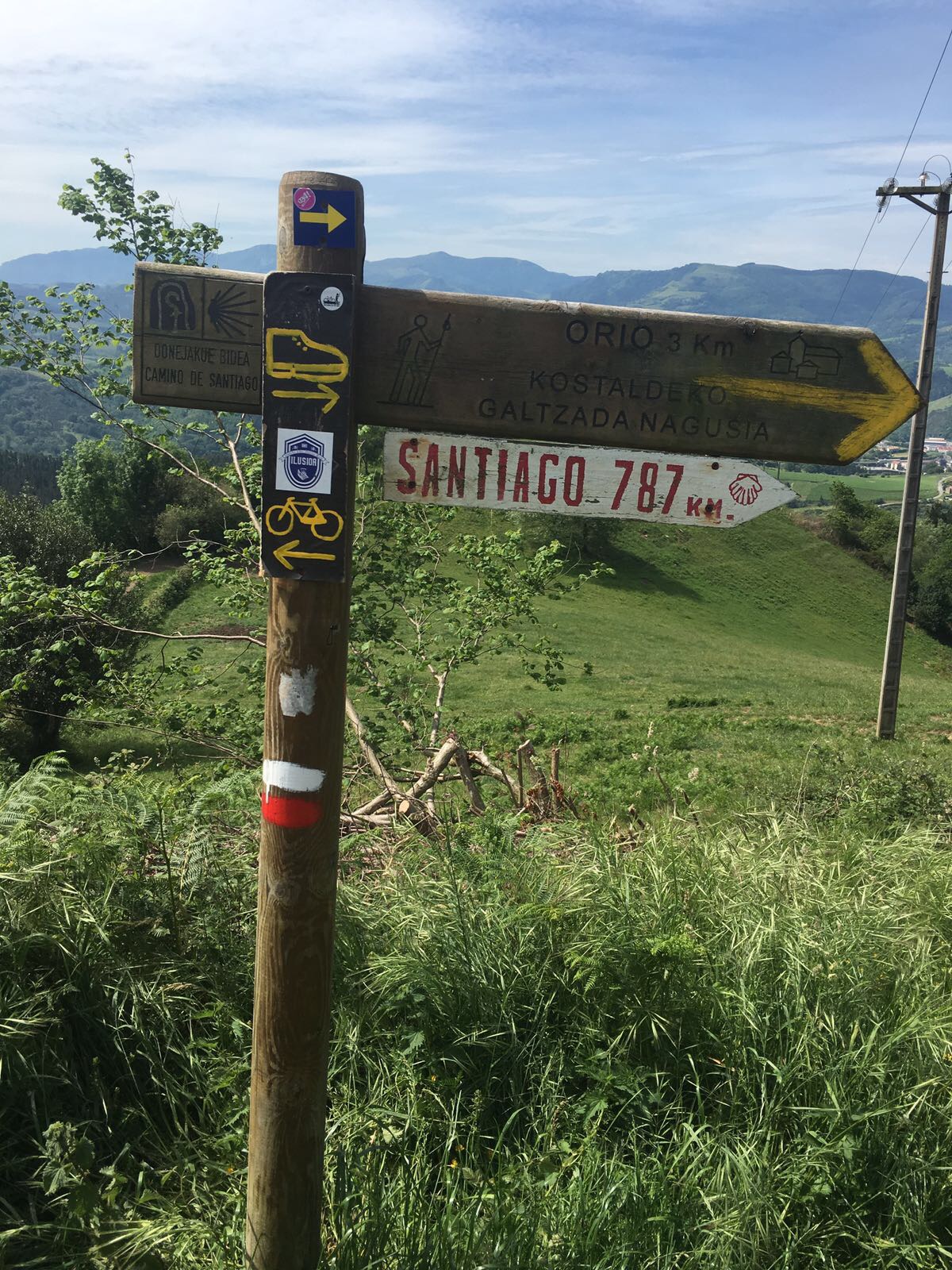
On the Camino de Santiago, you had to take care to follow the signs. Yellow arrows were common and well-known markers to all pilgrims along the path.

IMG_5368

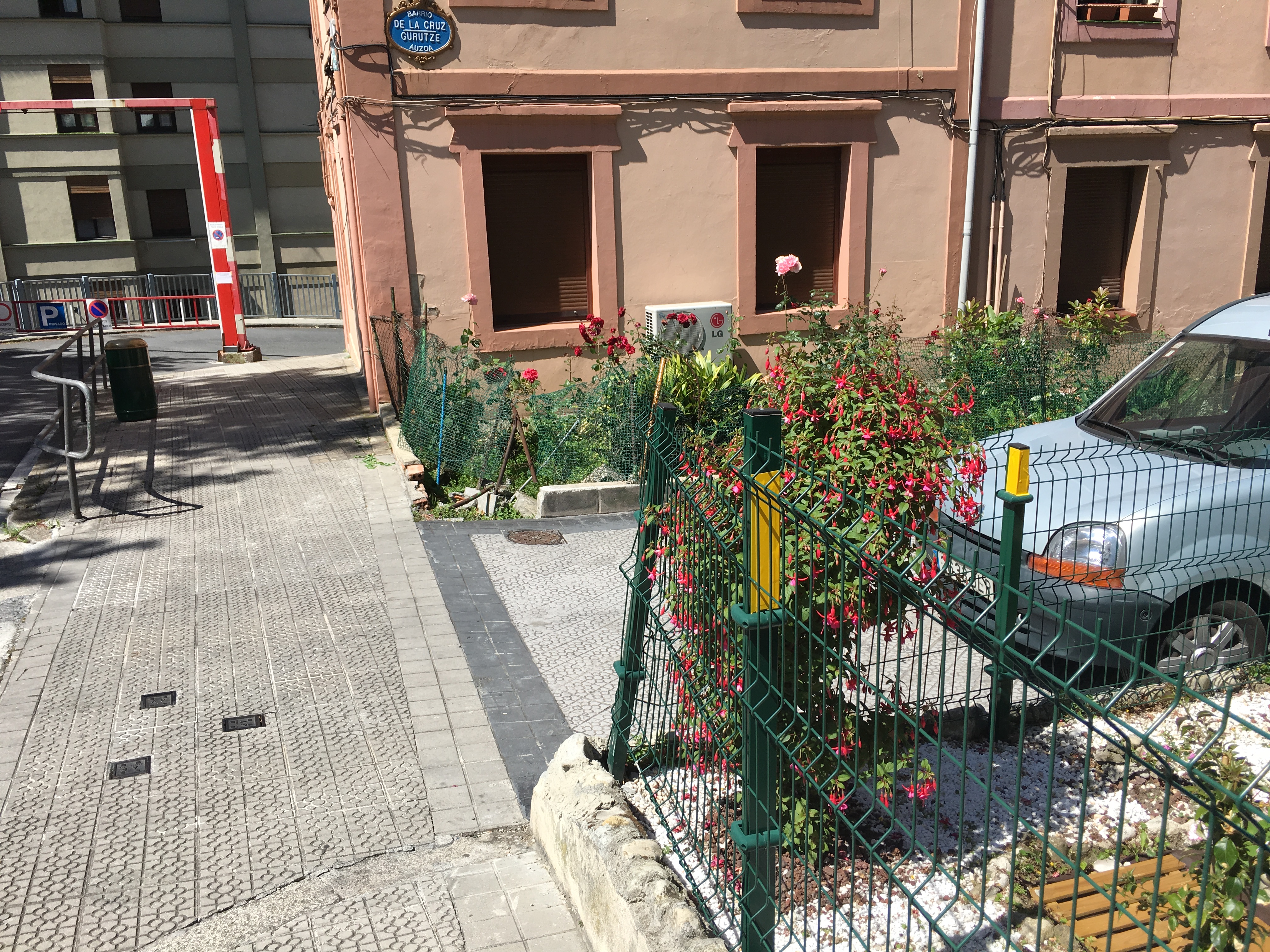
It was easy to get lost, especially in the big cities, if you missed one of these markers. But also at critical junctions in the forests, the fields or roadways where if you were not paying attention, you could lose hours on the journey and have to double back.

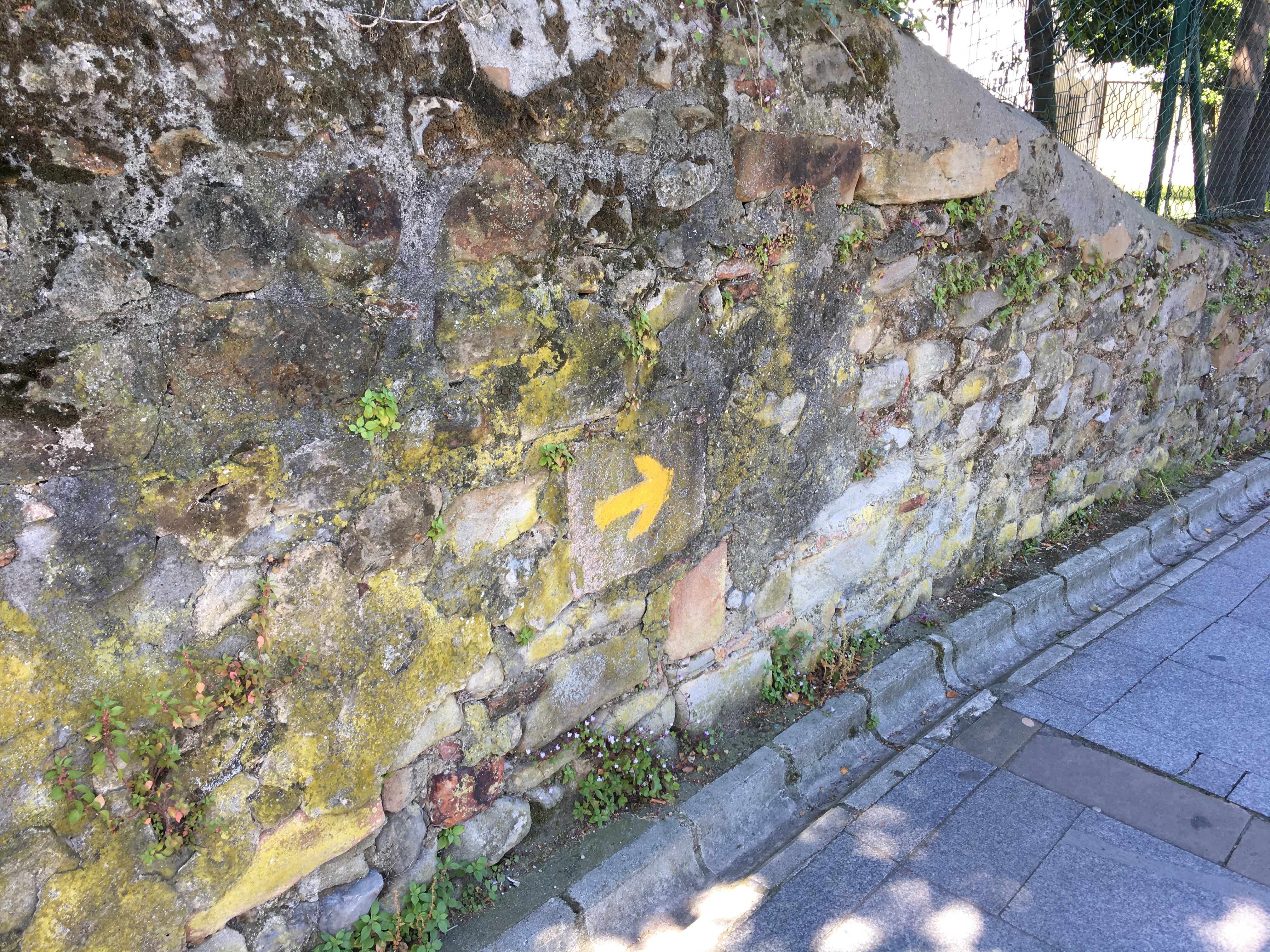
I learned, sometimes the hard way, to pay attention to what others might consider obvious. Some markers are easy to notice.

Some are sort of easy to notice:

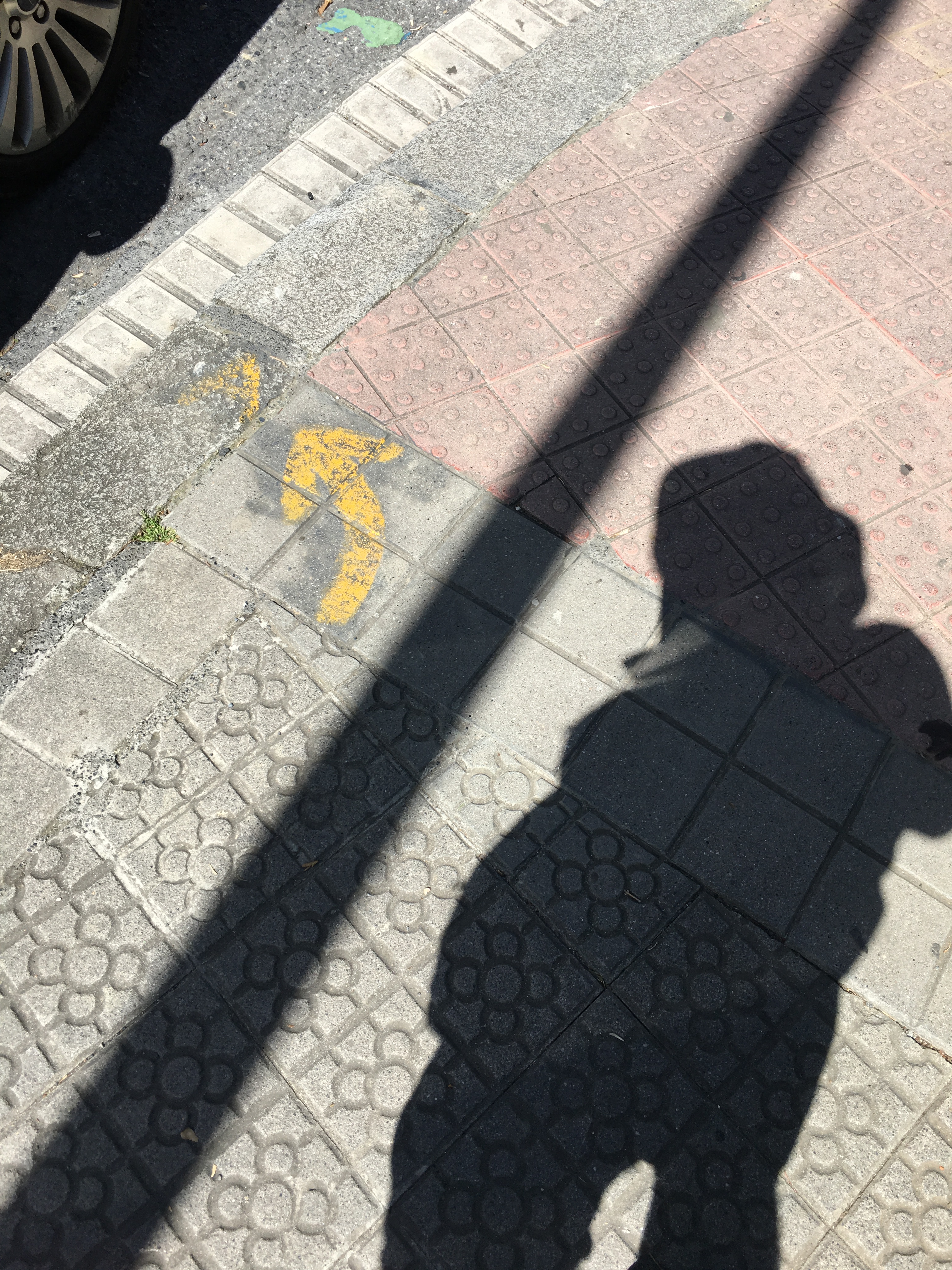
But often it was a challenge to find that yellow marker:

AF9FA91C-7D0D-4D54-B2CD-F933EDE6260A7692EB83-1AA5-499D-AE9B-A64B6A5678C8IMG_5363IMG_5364

The signs — like the sacraments of baptism and holy communion — are reminders of what kind of journey we are on. These signs are embedded in the journey itself, on earth. These holy signs don’t stay in some other-worldly realm; they are very much a part of this world: Baptism uses common water; Communion uses bread and wine – basic, earthly elements which remind us of what God is all about on earth.

The signs are part of our daily, ordinary lives. The signs are already there, along the way, before we even commit to the journey. We only need to open the eyes of our heart and mind, and pay attention. Because the signs are too easy to miss. And when we do miss them, we get lost and go down other paths, paths that lead to division in the Body of Christ, the church.

I remember when our then 12-year-old son started playing football I first learned what it meant to ‘take a knee’. According to the tradition, if a player on the field was injured everyone ‘took a knee’. And it didn’t matter which team the injured player was from; that is, all the players from both teams knelt down and waited there until the injured player either walked off the field on their own strength, or was carted off on a stretcher.

Tim Tebow and Colin Kaepernick have both attracted world-wide media attention for ‘taking a knee’ in the last couple of years, although for very different reasons. Both have made a public display of their faith. Both are prayerful, and devout. One grew up the son of Baptist missionaries to the Philippines. The other was baptized Methodist, confirmed Lutheran, and attended a Baptist church during college.[1]

Tim Tebow, however, is a darling of the church while Colin Kaepernick has been reviled. Their differences reveal much more about the brand of Christianity preferred by many in the church today. Tebow is known for his signature move – dropping to one knee on the field, his head bowed in prayer, his arm resting on his bent knee. He’s clean cut, polite, gentle, respectful.

Colin Kaepernick, starting last year already, refused to stand to attention during the playing of the American national anthem. Originally, he did so in support of Black Lives Matter and to protest police violence against black people. Kaepernick was voted most disliked player in the National Football League (NFL). People posted videos of them burning his jerseys. He was called “an embarrassment” and “a traitor”. Of course, with recent events in the NFL, his witness gains momentum nonetheless.

Two players, two brands of Christianity:

Tim Tebow represents personal piety, gentleness, emphasis on moral issues. Colin Kaepernick represents social justice, community development and racial reconciliation. One version of Christianity is kneeling in private prayer. The other is kneeling in public protest. One is concerned with private sins like abortion. The other is concerned with public sins like racial discrimination. One preaches a gospel of personal salvation. The other preaches a gospel of social transformation. One is reading Paul’s letters. The other is reading the Minor Prophets.

Are these versions of Christianity mutually exclusive? Much of Christian history, especially since the Reformation, would suggest, ‘yes’, even among Lutherans. The proliferation of Christianity into some thirty thousand different denominations by the 500th anniversary of the Reformation in 2017 would suggest, ‘yes.’ The divisions within Christianity is leaving the church all the poorer, with each side needing to be enriched by the biblical vision of the other.

Bible scholar Walter Brueggemann expresses it well: He writes that Christianity should be “awed to heaven, rooted in earth.” We should, as he says, be able to “join the angels in praise, and keep our feet in time and place.”[2]

Christianity, sadly, remains on its knees because of our divisions, when all along the vision of the Gospel, expressed best by Paul himself, is that “every knee should bend, in heaven and on earth”[3]. How do Christians today, regardless of background and orientation, contribute to this vision in ways that actually make a difference on earth?

In the second reading for today, we learn about the essential character of the biblical God. In the Hebrew Scriptures, all of God’s acts, blessings, and delights in creating are for the sake of others. This is typical of God, “who is intimately concerned with justice, peace, and the flourishing of all creatures.” This is typical of God, “who is ‘on high’ but never remote, who is ‘over all’ but faithfully and dramatically invested in life on earth.”[4]

God does not embrace hierarchy. Nor does God rest in privileged autonomy, according to some deist idea of a distant and uncaring God. God is love. And the New Testament witness continues this description of a God who cares intimately about our humanity, in the incarnation of Jesus Christ. God is Immanuel, God-with-us and for us.

In setting up this wonderful hymn that Paul includes in his letter to the Philippian church, Christians are called to exemplify a humble regard for others, seeing them as “better than yourselves”; we are not to primarily serve our own interests, but the interests of those who are different.[5]

These may be an impossible task for us in our self-centred, me-first culture. Nevertheless, we are encouraged, as Paul encouraged the early church in Philippi, to “work out our salvation with fear and trembling”[6]. Why even bother?

Because God is already at work in us.[7] God is already at work in the world, as difficult as it can be to spot those signs of God’s grace, God’s justice, God’s good work. As Martin Luther insisted, matters of salvation revolved around God’s actions, not human activities. Justification — being placed into a right relationship with God — is totally God’s activity. After all, as Paul wrote earlier in his letter to the Philippians, we need to believe – despite what appears to be everything to the contrary – in the promise and the vision that God “who began a good work among you will bring it to completion.”[8]

God’s grace precedes all. Just like the signs on the journey before us and around us. Even though we may miss them from time to time doesn’t mean they aren’t there, waiting for us to notice. God’s grace continues to guide us and point in the right direction.

We therefore have nothing to lose, to take a knee for the sake of those who do not have a voice. To take a knee for the sake of others who are silenced by discrimination and abuse. To take a knee for all God’s creatures who long for a better day.

We pray for and support agency to help the refugees today escaping violence and oppression in Myanmar. We pray for and support agency to help victims of Hurricane Maria in Puerto Rico. We, so, ‘take a knee’, in the spirit and mind of Jesus Christ who took a knee for us all.

[1] I thank Michael Frost, “Colin Caepernick vs. Tim Tebow: A Tale of two Christians on their knees” (The Washington Post, September 27, 2017) for much of the content I use in this section of my sermon

[2] cited in Michael Frost, ibid.

[3] Philippians 2:10, NRSV

[4] William Greenway in David L. Bartlett & Barabara Brown Taylor, eds., “Feasting on the Word: Preaching the Revised Common Lectionary” Year A Volume 4 (Kentucky: WJK Press, 2011), p.112.

[5] Philippians 2:3-4

[6] 2:12

[7] 2:13

[8] 1:6

Even there your hand shall lead me

Later this summer I will be going on a 10-day canoe-camping trip on the French River. Last summer my friend and I did three nights and four days on a smaller portion of the French; this summer we want to challenge ourselves to do the whole, or at least most, of the river all the way from Lake Nipissing to Georgian Bay.

Because the challenge is greater, I felt I needed to take a First Aid Course in preparation, so I could be of some use to the company with whom I travel.

I learned some interesting facts about providing First Aid. Did you know that in all of Canada, except Quebec, you and I are not legally obligated to provide First Aid to anyone experiencing a medical emergency? In Quebec, however, we are legally bound to help someone who is in distress. It is, from Quebec’s point of view, a basic human right for any person to receive first aid in an emergency.

In class we discussed reasons why we may choose not to give First Aid: For fear of hurting them more, for fear of harming oneself, and of course for fear of legal repercussions. Our instructor countered this latter objection by reminding us of the “Good Samaritan Act” which governs any attempt in good faith to help someone in an emergency. So, legally, we were off the hook.

But we may still hesitate to take the risk and commit ourselves to helping someone. It would be easier to pretend we didn’t see it, get on with our busy day and avoid the added stress and responsibility.

Every time I read the wonderful story of the so-called “Walk to Emmaus” (Luke 24:13-35), something else piques my interest and causes me to reflect. I believe there is so much depth to this story while it provides a summary of what we believe as Christians. Particularly, this time, I wondered what Cleopas and his friend had to do with this incredible encounter with Jesus.

It seems they really had nothing to do with making this encounter happen, when Jesus appeared to them on the road that first Easter day. As far as we can tell, they weren’t expecting to meet Jesus let alone praying for it. And, ironically, when they do finally recognize the living Lord Jesus at the breaking of the bread, Jesus disappears from their sight! Truly, this event happened to them.

But were they merely passive recipients of this encounter? There is one turning point in the story, where things could have gone one of two opposite directions. Up until that point, they had not yet consciously recognized the man walking with them as Jesus himself. After that point, the table was set — literally — for their full recognition of Jesus.

Had they not invited Jesus to stay with them, for the evening was nigh, they would have missed out on a wonderful conclusion to their day. “Abide with us, for it is evening,” they invited this still stranger to them into their home. They could have chosen to let the man on his way. They could have chosen not to pay attention to their burning hearts. They could have ignored the subtle yet real ‘promptings of the Spirit’ we may call it today, within them.

I learned some thought-provoking statistics on my First Aid course this week. There we were, some twenty-five of us stuffed into a tiny room above a car repair shop in Renfrew. We were from all walks of life. Local businesses paid for their employees to take this course; therefore, my class mates were prompt and motivated to learn their First Aid techniques, principles and procedures. Certificates were issued upon successful completion of two exam periods and practice with bandages, splints and manikins.

Then, our instructor posted these statistics after asking us: Presuming it was done properly, what was the success rate of providing only chest compressions (sets of thirty thrusts downward over the chest) to someone who was unconscious and not breathing? What was the success rate of doing just that? 1.2%.

Without the aid of an Automated External Defibrillator (AED), adding ventilation to the chest compressions (pinching the nose and breathing in sets of two into the casualty’s mouth) raises the chance of recovery to only 5%.

I thought to myself: There is hope to humanity! Because it would be easy to just not bother! No wonder we may feel unwilling to commit to providing First Aid to an unconscious stranger on the street! What’s the point of doing that, let alone learning how to do it?! The chances of success are so slim!

And yet, there we were. These classes, I am told, are usually full. Businesses and organizations require their employees who engage with the public to know First Aid. They employ resources to make sure their employees have this training. All this effort for at best a 5% success rate.

But the ethics of it would argue: It is worth trying. Better to do something, than do nothing at all.

Sometimes I wonder whether being the church feels a bit like that. We expect the church to function at a 100% success rate; and when we fail the odd time, well — the church is no good, don’t bother. What is the worth of it all?

People are still bad. Failures in humans abound and seem to persist against all good intentions and efforts to be good. The message of the Gospel doesn’t always seem to make any positive difference in our lives. So, what’s the point?

Driving on Clyde Ave the other day, I noticed the sign outside the Reformed Church that reads: “Growth doesn’t come without change. Change doesn’t come without some risk.”

Following the example of Cleopas and his friend on the road to Emmaus, the only thing we can do, it seems, is learn to pay attention to those rare moments whenever our hearts are burning with love. And then, practice making the invitation in response to that nudging of our hearts and open our lives to those moments when we sense something shift within us. We may not be able to put our finger on it just yet, but respond nonetheless.

And then the rest is up to God. God is free. God enters our lives and walks with us whether we know it or not. God then ‘disappears’ from our awareness whenever God wants. But whether we feel God near or far, God is there. “Am I a God nearby and not a God far off? Who can hide in secret places so that I cannot see them?” says the Lord. “Do I not fill heaven and earth?” (Jeremiah 23:23-24).

The God of Easter is alive and present with us no matter where on earth we go. This is the good news of the resurrection. God is alive, and so we are called to rise up in renewal and joy. “If I take the wings of the morning and settle at the farthest limits of the sea, even there your hand shall lead me and your right hand shall hold me fast” (Psalm 139:9-10).

It is worth it. Even though we fail time and time again. There is the hope. There is the promise. There is the opportunity. There is the constant presence of God.

Cornered?

Have you ever wondered why this building was designed to be more-or-less round? Well, don’t you know, “The devil can’t corner you in here!” we say.

Like in the boxing ring, the combatants in the corner are at either end of the victory-defeat spectrum: In the corner they either have the upper hand, literally. Or, they are on the verge of collapsing in a heap.

Being in the corner is an undesired position. Cornering someone is to put them at a disadvantage. The one being cornered is vulnerable. Being cornered is to admit there are no options left.

We also use the phrase to mock contractors and builders worried only about the bottom line when they ‘cut corners’. Cutting corners may serve the bottom line, but in the long run cutting corners is a prescription for guaranteed repair and reconstruction work sooner than later.

At the same time, the latest fashion in contemporary urban design values right angles and sharp lines. The new buildings are rather square and boxy, aren’t they? Meaning, lots of straight lines. But a straight line can’t go on forever. Therefore, lots of corners.

People in many non-Western cultures don’t build as many corners as we do. The Zulus in southern Africa, for example, live in a less-carpentered world. They live in a history and culture where straight lines and right angles are scarce, if not entirely absent. (1)

What would it be like to live in a non-linear world? Where our material culture presents more rounded, softer, curved constructions such as our building!

And yet, there is a gift in the message of a corner. Not only can corners get us stuck. But they also are an indisputable sign that there’s always a corner to be turned. In truth, this is what we say, don’t we, when things are just starting to get better: “We’ve turned the corner on this.” When things are not yet better, we wonder: “When will I turn the corner on my illness, my fear, my problem, my troubled feelings, my strained relationships?”

Turning the corner means, nevertheless, there’s no turning back. Once you’ve crossed the line, there’s no going back to the way it used to be. That could be good. It can also be scary. Corners are necessary to find a way through a predicament, such as in a maze. Corners define clearly where one eventually needs to go, like it or not.

The story of Jesus’ resurrection is a huge corner turned in the cosmos of all that was, and is, and is to come. History is forever changed by the empty tomb. The ether of our very existence is transformed into the triumph of good that can be, for all time, for all people, and in every place. All the evil forces that led to Jesus’s crucifixion no longer need to triumph in the world today.

They say any lead in playoff hockey is a dangerous lead, as the first few games of the NHL playoffs have shown. More often than not the lead does not stand. If a team does have the lead however small, they are coached to employ the killer instinct:

Don’t let up. Don’t get too comfortable. Don’t sit back. Finish off your opponent with indiscriminating, ruthless power. Once they’re down, make sure they stay down. Hate your opponent. Don’t give them a chance to come back. Don’t be merciful, kind, generous, compassionate. Above all, don’t feel sorry for your opponent’s misgivings.

This is the philosophy of competitive play in professional sports. Why professional athletes and teams are so popular and generate billions of dollars in our economy is precisely because we humans are really good at believing this philosophy if not doing it from time to time.

Easter is God’s come-from-behind victory. The way of non-violence, of loving self-giving, and of trust in God is a victory against all the odds. It is, frankly, an unbelievable, unexpected move from our human perspective. Jesus’ demonstration of non-violence, of loving self-giving, and of trust in God is validated and redeemed by his resurrection. The surprising, brilliant victory of Easter morning is a poignant witness to what God is really all about.

The way of violence of our will/my will over yours, of greedy acquisition for more, of cynical mistrust of others — this is the way of the world that crashes in a heap of defeat in the light of Jesus’ resurrection. Now, the way of God is before us.

Resurrection says a lot about the nature of God’s purposes. Because Jesus lives. And Jesus is Lord. We therefore gather today to affirm that God’s purposes are good. And, in the end, it is not all doom and gloom. In the end, God comes through.

One thing I like about the re-modelled communion rail around the chancel, is that we have those corners at both sides. Some have said they don’t like it at the corner, because they feel squeezed out. Well, we can help each other with that. What the corners force us to do is pay more attention to who is standing beside us; and make room for them. And that’s not a bad thing!

What these corners force us to do, is to face and look at each other when we are standing or kneeling at the altar. We are not just individuals coming to face the Lord God one-on-one in a straight line, not seeing nor even respective of who comes along beside us. Now, it’s no longer just about ‘me and sweet Jesus’.

It’s about ‘us’ and sweet Jesus. And Jesus is not always sweet. We are a community gathered around one table, a people who embody the living Body of Christ in the world today. We are also the broken body of Jesus, whose power is shown through human weakness (1 Corinthians 1:18-29). What better place than to see our sisters and brothers in Christ, eye-to-eye, and practice right here what it means to pray for others, to encourage them, to recognize our unity in the living God.

And then take in word and deed that awareness and message from this place, into the world out there: Christ is risen! Christ is risen indeed! Alleluia!

1 — Wayne Weiten & Doug McCann, “Psychology: Themes and Variations” 3rd Edition (Toronto: Nelson Education, 2013), p.168

Something always has to die …

(The following is taken from Richard Rohr’s commentary in his book “Wondrous Encounters; Scriptures for Lent”, with my added words.)

The crowds were gathered in Jerusalem for the Passover Festival. This ritual is described in Exodus 12, and provides the basis of the Holy Communion in Christian practice.

In the original ritual, people were to procure a small year-old lamb for each household. They were to keep it for four days — just enough for the children to bond with it and for all to see its loveliness — and then “slaughter it during the evening twilight”! Then they were to take its blood and sprinkle it on the doorpost of the houses. That night they were to eat it in highly ritualized fashion, recalling their departure from Egypt and their protection by God along the way.

This practice was meant to be a psychic shock for all, as killing always is. Thank God, animal sacrifice was eventually stopped. The human psyche was evolving in history to identify the real problem and what it is that actually has to die.

The sacrificial instinct is the deep recognition that something always has to die for something bigger to be born. We started with human sacrifice (Abraham and Isaac), we moved here to animal, and we gradually get closer to what has to be sacrificed — our own beloved ego — as protected and beloved as a little household lamb! (1)

We will all find endless disguises and excuses to avoid letting go of what really needs to die for our own spiritual growth. And it is not other humans (firstborn sons of Egyptians), animals (lambs or goats), or even ‘meat on Friday’ that God wants or needs.

It is always our beloved passing self that has to be let go of. Jesus surely had a dozen good reasons why he should not have to die so young, unsuccessful (sentenced to death, a criminal), and the Son of God besides!

By becoming the symbolic Passover Lamb himself, Jesus makes the movement to the human and personal very clear and quite concrete. It is always “we” — in our youth, in our beauty, in our power and over-protectedness and self-preservation instinct that must be handed over. Otherwise we will never grow up, big enough to ‘eat’ of the Mystery of God. In short, we have to ‘get over ourselves’, individually and collectively as the church, before we can be effective and authentic followers of Jesus in the world today.

Good Friday is really about “passing over” to the next level of faith and life. And that never happens without some kind of “dying to the previous levels.” This is an honest day of very good ritual that gathers the essential but often avoided meaning of Good Friday: Necessary suffering; that is, something always has to die for something bigger to be born.

One of the Gospel stories repeated every year during Holy Week is the anointing of Jesus by a woman named Mary at Bethany (John 12:1-11). Even though the text does not identify her as a sinner, this has been the common understanding. This alone should reveal our rancid preoccupation with sin.

The point in this story, again, is not the sin but the act of love towards Jesus, whom the woman correctly accepts (unlike the twelve disciples) the coming death of Jesus. She anoints Jesus’ feet with expensive nard, which is the anointing oil for death. Jesus’ favourable response to Mary’s act clearly suggests her act of love trumps any failing on her part, or the part of the poor, or on our part!

As always, love of Jesus and love of justice for the neighbour are just two different shapes or sides to the one Love, that gets us beyond our over-thinking sin. A simple act of love gets us beyond our negative self-obsession, which only keeps us stuck in selfish, egoistic preoccupation.(2)

May our praise of God this day, in Jesus’ acceptance of his death on a Cross, invite each of us into commitments and acts of love toward God, toward one another, and to the world in need. Then, we get the point of the story. And we affirm, that something bigger indeed is just around the corner.


1 — Richard Rohr, “Wondrous Encounters; Scriptures for Lent” (Cincinnati, Ohio: Franciscan Media, 2011), p.133-135

2 — ibid., p.126-127

Trust the down

I hate roller-coasters. It’s about the fear of letting go of control on the way down, that’s the problem. The couple times I’ve had the guts to go on a roller-coaster, I didn’t enjoy the experience because I couldn’t let go on the way down. Someone took a photo of me and my friend in the middle of one of those rapid descents: My friend who loves roller-coaster — his arms were up in the air and a big smile beamed across his face.

Sitting beside him, I was the opposite: My hands were glued to the bar in front of us, and my lips were pursed tightly and my eyes looked like they were going to pop out of their sockets. It looked as if I were staring death in the face, going down that roller coaster.

I read this week: “Humans are the only creatures who have knowledge of their own death. Its awareness creeps on us as we get older. All other animals, plants, and the cycles of nature themselves seem to live out and surrender to the pattern of mortality.

This places humans in a state of anxiety and insecurity from our early years. We know on some level that whatever this is that we are living will not last. This changes everything, probably more than we realize consciously. So our little bit of consciousness makes us choose to be unconscious. It hurts too much to think about it.” (1)

We humans find ingenious ways to avoid this journey, especially through Holy Week, that invites us to contemplate not only human death but the death of God in Christ Jesus. No wonder, especially among Protestants, attending services through Holy Week is not popular. This is not easy work, to face Jesus’s and our own mortality. No fun in that.

One way we avoid and deny this awareness of our own mortality is to find a scapegoat — by focusing all our negative energy on something or someone else. Our scapegoat is that which deludes us into believing that its destruction will somehow solve all our problems and make everything better again. Our scapegoat also shields us from taking responsibility for and dealing with our own problems.

Today, the scapegoats are easy to identify: The immigrants, the newcomers to Canada, the Muslims, the gays, the corrupt politicians, the government, the media, the church hierarchy — you name it. The blame game is alive and well, even in the church.

And then what happens is what many wise teachers through the ages have said: When we deny our own suffering we make others around us suffer. Which is unfair and unjust. Because the Gospel was given first and foremost to the followers of Jesus. 

“The time is fulfilled and the kingdom of God has come near,” The Gospel Mark thus records Jesus’s first words to his own people in Galilee. And to them he said, “Repent and believe in the Gospel” (Mark 1:15). We are the ones addressed by the Gospel — those who are already in the church, in the family of God. Not those so-called ‘bad’ people out there.

Jesus was the scapegoat whose destruction would solve the high-priestly authorities’ problems. By having Jesus put to death, the religious authorities could maintain their power and privileged position in Jerusalem, the Roman Emperor’s fears of insurrection would be temporarily alleviated, and the Pax Romana (the Roman rule) would continue in the land.

As unjust as killing Jesus was — for many even in authority including Pilate saw that Jesus was innocent — Jesus was the convenient scapegoat whose death on a cross would make it easy on those in power. And maintain the unjust status quo in the land.

After hearing of Jesus’ raising of Lazarus from the dead, the high priest, Caiaphas, advised the rest of the leadership in Jerusalem: “It is better for you to have one man die for the people than to have the whole nation destroyed” (John 11:50). Rather than do the right thing in the moment, the end — a false peace — justifies the unjust means. Classic scapegoat -ism: Jesus became the convenient victim in the human power play of first century Judean politics.

It’s ironic that our fear, denial and avoidance of death is actually that which keeps us stuck in scapegoating, in blaming others, in all the motivations for war and violence in the world. You could argue that all of what is bad in the world today stems from humanity’s continued ambivalence and denial of death.

What’s amazing is that Jesus, knowing all along this human condition, chose to become a victim to it. From his privileged unity with God the Creator, he chose to connect with humanity. The reading on Palm Sunday from Philippians 2:5-11 describes this downward movement of God in Christ into the “enfleshment of creation” (2), and then into humanity’s depths and sadness, and final identification with those at the very bottom, “taking the form of a slave” (Philippians 2:7), to death on the Cross.

Jesus represents God’s total solidarity with, and love of, the human situation. It’s as if God is saying: “Nothing human, now, is abhorrent to me.” This is incredible.

The Cross represents the divine choice to descend. It’s almost total counterpoint with our humanity that is always trying to climb, achieve, perform, justify and prove itself. The witness of the Cross is the divine invitation to each of us to reverse the usual process.

Christians worldwide have a great gift and witness in the Gospel of Christ crucified. The divine union with humanity suggests that everything human — including death, losing and letting go that is so much a reality in all our lives — is embraced by God’s love. The reason God loves even our shadow sides, is because God experienced the fullness of its brutal and unjust consequences, in the death of Jesus.

Jesus is like the human blueprint for our own transformation. Because who would have presumed that the way up could be the way down? It is, as Saint Paul writes, “the secret Mystery” (Romans 16:25).

Trust the down, and God will take care of the up. The hymn in Philippians 2:5-11 says that Jesus leaves the ascent to God, in God’s way, and in God’s time. Because Jesus went to the bottom of all that is human, “God lifted him up, and gave him the name above all other names” (Philippians 2:9-11).

Of course, they say the joy of a roller coaster’s twists, turns and rapid descents is knowing and trusting that the ride eventually and surprisingly goes up. What an incredible rush! Carl Jung wrote: “Not wanting to live is identical with not wanting to die.” (3) The roller coaster analogy suggests that when we refuse to descend, when we avoid facing our own mortality, and avoid taking responsibility for our own suffering, we also don’t really live.

Conversely, we can only truly live when we have faced and come to terms with the reality of our own mortal, imperfect human lives. Being fully human is being fully spiritual, faithful and alive. Saint Irenaeus was first to say in the second century that the glory of God is human being fully alive.

Trust the down, and God will take care of the up. When challenges, disappointments, defeats and failures come your way, don’t rush into avoidance techniques, distractions, denial of the problem or blaming others for the circumstance you find yourself in. What do these events have to teach you? Where is God in the midst of your suffering? What are the signs of grace therein? Christian faith asserts that God is revealed precisely in those lowest moments. Jesus believed this. It was trust in his Father that got Jesus through his passion, suffering and death.

Trust the down, and God will take care of the up. Resurrection was just around the corner.


1 — Richard Rohr, “Wondrous Encounters: Scripture for Lent” (Cincinnati Ohio: Franciscan Media, 2011), p.100.
2 — Rohr, ibid., p.123
3 — cited in Rohr, ibid., p.123.

The good crowd

I was ten years old when my parents shuffled me and my brother into one of the front rows of the main, outdoor theatre in the small, Bavarian town. The crowd pushed and shoved for privileged seating to watch the story of Jesus’s last days acted out daily by the town’s folk every ten years.

In fact, the crowd on the large stage did not appear any different than the tourists who got up very early in the morning for tickets to the Oberammergau Passion play.  

This coming Holy Week is rich with story. And when we read the stories about the last days of Jesus — full of drama, plot, and character — we will naturally identify with elements of the story-telling. Our worship is designed to help us identify, for example, with the crowds.

This morning, we sing “Hosanna” and wave our palm branches identifying with the enthusiastic crowd that first day when Jesus entered the city. “A very large crowd spread their cloaks on the road, and others cut branches from the trees …” (Matthew 21:8). Some years in Holy Week we dramatized and therefore simplify the trial scenes. We have individuals and groups speaking the various parts of the story. So, for example, ‘the crowd’ is played by the whole congregation who chants those lines together, such as “Crucify Him! Crucify Him!” (Matthew 27:23) and “He deserves death!” (Matthew 26:66).

Undergoing some mysterious metamorphosis sometime between Palm Sunday and Maundy Thursday, the crowd turns to the dark side. In a tradition that goes back centuries, Christians have most often portrayed the Jewish crowd around Jesus during his last days as rabidly and violently against him. We see it in Passion plays, the most famous of which is at Oberammergau in Bavaria. The evil crowd is also central to Mel Gibson’s film, “The Passion of the Christ.”

This over-interpretation has unfortunately led to harmful, anti-semitic justification against the Jewish people throughout the dark side of Christian history.

It may be easy to identify with these ‘bad’ crowds more than anyone else in the stories. Through the journey of Lent, we have struggled with the shadow self of our own lives, carrying our own cross so to speak, alongside Jesus. We have confessed our sin. Indeed, at the climax of Christ’s Passion, we pound nails into the cross on Good Friday. We so readily identify with the crowds, even saying that ‘we’ have crucified Jesus by our sin. It is little wonder why we come to these rather negative views, from Scripture.

What these portrayals fail to address, however, is this: Why, if the Jewish crowd was so against Jesus, was it necessary to arrest him in the darkness of night with the help of a traitor from among Jesus’s followers? Why not arrest him in broad daylight? And why do they need Judas?

What we discover is a positive, more balanced approach to the identity of the crowd. First we need to understand why the high-priestly authorities wanted to do away with Jesus.

“[The chief priests and Pharisees] wanted to arrest him …” (Matthew 21:46).

If the chief priests and Pharisees let him go on like this, everyone would believe in him, and the Romans would then intervene and execute them (John 11:48). Moreover, the authorities were not just afraid of the Roman Emperor, who was the recipient of Judean tax money and demanded political allegiance from those put in a position of power by the Emperor to keep the Pax Romana in the region. Insurrection in Judea would not be tolerated by Rome.

“… but they feared the crowds …”

Pilate and the high-priests also felt threatened by the whole crowd of people who, if they didn’t do something about Jesus, would eventually turn on them, which in 70AD (around the time most of the Gospels were written), did in fact happen. (1)

The Gospels reveal a clear disconnect between the high-priestly authorities who wish to execute Jesus, and the “whole crowd” who are “spellbound by his teachings” (Mark 11:18) and who “regarded him as a prophet” (Matthew 21:46).

This favourable support of Jesus by the predominantly Jewish crowd does not stop after the “Hosannas” of Palm Sunday. It continues throughout the days leading to the Passover Festival in Jerusalem.

The crowds aren’t perfect, to be sure. Their motivations for supporting Jesus may very well have missed the mark, especially those who still sought in Jesus a violent solution to the end of Roman rule in Judea.

Yet, they are captivated by his teachings. There is some good, therein. The ‘whole crowd’ can be personified by each of us. Which part of ourselves identifies with the crowd that is for the most part good and supportive of Jesus, even during his last days on earth?

I ask this question, especially in the midst of the most penitential season of the church year. I ask this question, and make this point as a spiritual antidote to what can easily, and so often does, slide into self-hatred on account of all our sinfulness.

We must remember we live in Christ Jesus, and the living Christ lives in us through the Holy Spirit. There is some good therein. We don’t need to be so hard on ourselves.

“The secret of life,” say the American Indigenous people, “is in the shadows and not in the open sun; to see anything at all, you must look deeply into the shadow of a living thing.” (2)

We may begin Lent and Holy Week — indeed our Christian pilgrimage on earth — by confronting our shadow self. It’s important to do so. But by the end of Holy Week we cannot avoid the open sun and see the empty tomb. The ending is always as it was in the beginning when God created everything and everyone, and said that it was good. “It was very good” (Genesis 1:31).

 
1 — Marcus J. Borg & John Dominic Crossan, “The Last Week: What the Gospels Really Teach About Jesus’s Final Days in Jerusalem” (New York: HarperCollins, 2006), esp. p.87-91

2 — cited in Joyce Rupp, “Walk In A Relaxed Manner: Life Lessons from the Camino” (New York: Orbis Books, 2005), p.161