Pilgrims rising

Don was a husband and father who one day was commuting home after work in a bad thunder storm, when the car he was driving was struck by lightning. Don was okay, and he managed to get home. Sitting down with his teenaged children, he relayed to them his harrowing experience.

Expecting at least a small degree of sympathy from them, Don was perplexed when his eldest interrupted: “Quick, let’s go buy a lottery ticket because they say the chances of being struck by lightning are like the chances of winning the lottery.”

The disconnect we feel in how Jesus’ disciples often responded to him is not dissimilar. He tells them he must die a horrible death. And they respond by demanding seats of power, authority and glory beside Jesus. His disciples continually seem out of sync with their leader’s meaning.

The Gospel for today[1]must be read in the larger context of Mark’s writing here. In Mark, we see that this is the third time Jesus announces his death, the third time the disciples respond in perplexing ways, and the third time Jesus responds to them by giving them a commentary on true discipleship.[2]

By looking at the what comes immediately before this text, we also discover that the disciples who followed Jesus were afraid.[3]It’s fair to presume, then, their desire and request to secure positions of glory once Jesus took his rightful throne on earth and/or in heaven was born out of fear.

The connection between fear and striving for security is common in all of us, to this day.

We are afraid. We fear the changing realities which make new demands on our time, energy and resources in the church. We fear the outcome of our health concerns. We fear the effects of an uncertain future, in our nation, our world and in our personal lives. In the fear of the unknown, it is a natural knee-jerk to secure anything down. Do something, anything, to give yourself the illusion of control. An insurance policy.

Let’s give the disciples the benefit of the doubt, to suggest perhaps they were aware that Jesus’ path was going to lead to his arrest, torture and death. And they knew that likely they, too, would be caught in the crossfire. They were probably aware that Jesus was causing an uncomfortable stir among the powers that be, religiously and politically, in Jerusalem. They saw the writing-on-the-wall.

And in the midst of this fear, the Sons of Zebedee tried to insure some benefit for all the sacrifices they were already making and would likely continue to make. Perhaps if they didn’t understand something, it was they couldn’t yet grasp the depths of the sacrifices they would make as a community of faith.

What Jesus stands for is a different way altogether from the way of the world. The disciples are caught up in the power plays of the world. They have in mind a hierarchy, a pecking order, of who’s on top. There is this Machiavellian feel to the debate amongst themselves, as if relationships of power must only be a win/lose scenario, a zero-sum game where in order to get ahead some people have to be left behind.

The way of Jesus, in contrast, is the way of the Cross. Jesus exposes the false way of the world by surrendering to it and dying by it. The way of the cross exposes our folly and calls us to a deeper more inclusive way.

Martin Luther first coined the phrase in his Heidelberg Disputation written in 1518. He called it, “A theology of the cross.” It is a way of understanding and imagining God. That is, God was, and is, being revealed to us in all truth most clearly and unequivocally in suffering. In the vulnerability and pain of death on the cross, Jesus revealed—and continues to reveal—the God who suffers alongside us wherever there is pain and suffering in the world.

Luther thus criticized a “theology of glory” which presumes God validates faith, and is only validated by, success, measures of progress and triumphal conquering over any weakness or adversary. This theology dominates not only in our society, but sadly also in the church.

A theology of glory reflects an unbridled, Pollyanna optimism that avoids and resists places of defeat, failure, vulnerability and weakness as having anything to do with divine identity or purpose. A theology of glory undermines real people and a God who is known in the darkest times and places of life. It despises our common humanity and the losses we all endure.

The way of Jesus is for all people, not just for those who make it to the top. The way of Jesus is for all people, because we all have our crosses to bear. We can share in our common suffering. And grow together. It is therefore in community, the Body of Christ, the body ‘broken for all’ we say in the Communion, where Christ is revealed and where our true purpose is born.

#OttawaRising is the hashtag used, announced and displayed on Ottawa Senators Hockey club promotional material. The vision is of the team rising out of the ashes of disappointment from last season. That was the season from hell, when they finished second-to-last place in the league standings, suffered through a broken, conflicted locker room and as a result had to trade away star players.

But it is only standing in the ashes that you can claim the vision of ‘rising’ again. The Stanley Cup champion Washington Capitals wouldn’t declare resurrection as their identity, this season. It only makes sense to proclaim the resurrection in the midst of the defeat of the cross.

The Gospel abounds with a promise. The disciples may not hear it as such. But Jesus has great compassion on them. He does not rebuke them for being out of sync with him. He affirms that they will indeed drink the cup that he must drink and be baptized with the baptism that he must endure.

Jesus will continue to offer this promise and hope to us, that we will not always need to act and respond out of our fear. That what we do as a community does not need to be knee-jerk platitudes that only keep us stuck in cycles of fear, self-preservation and defensiveness. Jesus will continue to call us into deeper expressions of serving others and of paying attention to the needs of others not just our own.

If there was anything the disciples should have known with any amount of certainty, is that Jesus’ promise is secure and very sure. Because by being in last place, and losing it all, those first disciples would one day rise.

And so will we.

[1]Mark 10:35-45

[2]C. Clifton Black in David L. Bartlett & Barbara Brown Taylor, eds., Feasting on the Word: Preaching the Revised Common LectionaryYear B Volume 4 (Louisville Kentucky: WJK Press, 2009), p.189.

[3]Mark 10:32
The great un-doing

This past week I heard from someone how they overcame their addiction to smoking. A middle-aged man, he said he had been a smoker for many years until he started feeling the ill-effects of the habit. He had tried many gimmicks and treatments to quit, to no avail.

It wasn’t until he let go of his need to control the outcome of his efforts, that he succeeded. In other words, when he was able to tell himself: “I can’t do this on my own,” he finally found the capacity within himself to quit. He was able to stop smoking only when he accepted his own limitations, when he released the false notion that he was the master of his own destiny. Even to do something healthy, good.

He didn’t need to accomplish this on his own. What he wanted (to quit smoking), he needed to let go of. What he sought, he needed to release control over.

Whatever you want, you first need to let go of. Counter-intuitive, isn’t it? Usually when you want something, you go for it. And you don’t let up until you have it, eh?

So, what’s going on here?

What did the rich young man in the Gospel story want (Mark 10:17-31)? He wanted to prove that he was a righteous, good man. He wanted to show Jesus and others that he had fulfilled all the rules of his religion and therefore he was worth his religious beans. And who could compare?

The rich man approached Jesus thinking he had it in the bag. His question—”What must I do to inherit eternal life?” (Mark 10:17)—sounds disingenuous, inauthentic. In a manipulative, self-congratulatory way, he thus approached Jesus, even kneeling before him.

He had self-righteously fooled himself into believing he already knew the answer. The gospel writer doesn’t even assign the rich man a name, underscoring the fake, artificial nature of the man’s attitude.

But Jesus cuts through the crap, skims the fat off the top, and goes to the jugular! Indeed, “the word of God is living and active, sharper than any two-edged sword” (Hebrews 4:12). Jesus sees through the rich man’s pretense, and uncovers the real, authentic person beneath the surface. There he finds an enslaved heart, and brings to light the truth:

In order for the man to be liberated and set free, he has to surrender what owns him, what captivates and grips his soul: For him — it’s material possessions. For someone else, it might be different. But he has to learn, if he wants to grow, to let go and not hold on to those things that keep him stuck in false beliefs about himself, God, and the world around him.

What he wasn’t expecting, was an answer from Jesus that undid him. The one thing that he wanted to get—an unscrupulous, beyond reproach reputation as a religious superman—he would now have to let go of. He would have to let go of everything that made him, that put him in a position of power and wealth in his community and that gave him the grounds to boast.

He would now have to sell his reputation, literally, and become poor. And what do the poor have to show for their religious prowess? Wasn’t (and isn’t) being impoverished a sign of God’s dis-favour?[1]

All the texts assigned for today reflect the nature of relationship with God. Relationship with God is at the root of our spirituality, our church lives, our purpose in life and the meaning of our lives. Relationship. Relationship. Relationship.

And what the lectionary offerings are inviting us to consider today, is the nature of our relationship with God. They ask us to be honest, first, about who this God is we are supposed to relate to.

Let’s say, we want God. Well, detach from what we want. That is the key. Let go of our false conceptions about God. For example, an underlying assumption we will make about God is a transactional, mechanized God. Such assumptions were criticized by reformers like Martin Luther in the 16thcentury but also those before him like Meister Eckhart in the 14thcentury. This image they condemned, was God the “reward machine”.[2]It goes something like this:

God is the great rewarder-in-the-sky. And, if you put enough quarters in the slot, God will send down the candy-bar. In Martin Luther’s world, the criticism focused on the sale of indulgences—the more money you paid to the church, the more spiritual benefits you accrued.

These false beliefs about God then generated attitudes and actions that placed the onus all on us and our capacities and resources as individuals. That it was up to us to garner favour with God and so we would earn, and deserve, our salvation and even prosperity on earth.

I believe this is what is behind the rich, young man’s presumption and approach to Jesus. Certainly, he of all people deserves God’s favour.

And Jesus’ response is, essentially: If that’s what you want, you need to let go of it. And, it’s going to hurt before it gets better again.

Whether it’s a bad habit or false understanding of God or anything else that puts you in the driver’s seat of your life, God is looking you in the eye and challenges you to let go of that pretense. Whatever it is you want, first let go of it, and feel the pain of it. Detach yourself from your attachments if you truly want to be healed. It ain’t easy.

And the image is apt: Putting a camel through the eye of a needle is meant to communicate impossibility. And we say that in our own way every day. “Bah, I can’t change; people can’t change.” “We don’t change.” “People stay the same.” And so, we continue to get mired in unhealthy and self-destructive life-journeys. Transformation is inconceivable, we believe.

Maybe, before anything, our image of God needs transformation. If God is not a reward machine high in the sky, who and what is God all about?

It’s hard to believe with all the rain we’ve had in the past month that earlier this summer the lawns were brown, and the ground was bone dry. We’ve seen a lot of rain, lately. I’ve noticed local creeks are flowing again, and the grass on our yard is thicker and a dark, rich green.

I was reminded this week when I read that waterdrops in the atmosphere are created when water vapour condenses. That part I knew. But what popped out at me was the following sentence: water vapour condenses on tiny particles of dust. At the very centre of every raindrop is a particle.[3]

Our relationship with God is not between entities, to begin with. We don’t relate to being, a God among various God-beings out there in a religious marketplace.

We relate to God as the ground of our very being. Our connection to God already exists. Before we do, say, or think anything. Whether we know it or not. God is already connected to us, in our innermost being.

Saint Paul writes: “Do you not know that you are a temple of God and that the Spirit of God dwells in you?” (1 Cor 3:16); and, “I pray that, according to the riches of his glory, he may grant that you may be strengthened in your inner being with power through his Spirit, and that Christ may dwell in your hearts through faith, as you are being rooted and grounded in love (Eph 3:16-17).

We don’t add God to our lives, like filling a shopping cart in the grocery store. We don’t need to relate to a transactional God-the-rewarder-in-the-sky with our consumer mindset. The Reformation should have put that mechanistic view of our relationship with the Lord to rest. We still need the Reformation!

We don’t add God to our lives. We add our lives to God. Who is already there, at the very centre of our lives.

Imagine rain, falling. The raindrops have a way to go before reaching the ground. It may feel like a free-fall. Unnerving, dis-orienting, it is to let go of our deepest attachments. We experience like Jesus did a painful, momentary ‘forsaken-ness’ (Psalm 22:1). I wonder if the rich, young man had the courage to sell all he had to give it to the poor.

I would love to meet him, especially if had gone through with it. I have many questions to ask him. I suspect, however, that if he did it, if he did what Jesus called him to do — that in the letting go he opened his heart, confronted his greatest fear and experienced a free fall … right into the love of God at the very centre of his life. What a joyous surprise, to find the presence that will always be there, and has always been there!

It may seem impossible to do—this letting go—but in Christ all things are possible. And we discover in the journey: there really isn’t anything to lose that is of any enduring, lasting value.

[1]Today’s so-called ‘prosperity gospel’ implies that when you have it right with God, you will be blessed with material riches; the converse is true, too: according to the prosperity gospel, when you sin, God will withdraw blessing and you will be impoverished.

[2]Bernard McGinn, Praying with the Masters Today, Volume 2 (Meditatio Talks Series CD B, Track 5), 2018.

[3]Richard Rohr, “The God Particle” Daily Meditation 10 Oct 2018 (cac.org /Center for Action and Contemplation)

A New Way to Pray: Tracking the Trajectory of the Reformation

What follows are the lecture notes for Week Three in the course I am giving at the Ottawa School of Theology and Spirituality (www.osts.ca) this Fall. Reformation Sunday is on the last Sunday in October, October 28, 2018. It is a time for Lutherans and all Christians to reflect on the legacy of Reformation, commemorate its contributions, and to pray for unity among all who try to follow in the Way of Christ Jesus today.

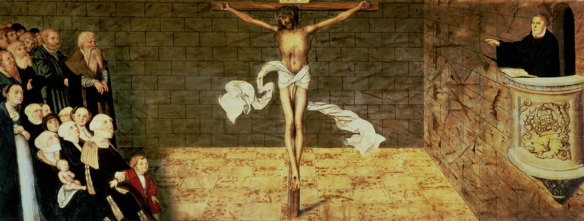
Lucas Cranach was a Renaissance painter and printmaker in woodcut and engraving. He was a friend of Martin Luther and his wife Katharine von Bora. In one of his paintings (1547) focusing on the Cross of Christ, Cranach depicts Martin Luther preaching to the congregation. I remember this particular painting vividly as it hung above the bookshelf in my house growing up.

image.png

It shows Martin Luther standing in a pulpit perched high on the wall of the chancel at the front of the medieval church. One of Martin Luther’s hands rests on the bible. And he points with his other hand to a cross with Jesus hanging bloodied bruised planted in the floor space between Luther and the crowd gathered in the church. Jesus hanging on the cross forms the center of this work of art.

Today this painting comprises one of the plates surrounding the altar in the Wittenberg church where Luther preached. As such, we often recognize and associate this painting with the ‘Reformation altar’.

Its prominence in Lutheran history suggests how poignantly this painting describes Luther’s theological bias: The Cross stands at the center. And Christ crucified informs everything in the church and even our reading of the bible.

Before we can embrace deeper understanding of Martin Luther’s theological claim that we find salvation by God’s grace—which finds us— through faith, we must first encounter the centrality of the Cross in Luther’s thinking and prayer.

In the seminary that I attended[1], we used the term, “Theology of the Cross”. Martin Luther first coined the phrase in his Heidelberg Disputation written in 1518. A theology of the cross is a way of understanding and imagining God. Fundamentally, in addressing God, we need to ask the questions: What is my image of God? Where is God primarily revealed? How is God best known?

Luther provided an answer: God was, and is, being revealed to us in all truth most clearly and unequivocally in suffering. In the vulnerability and pain of death on the cross, Jesus revealed—and continues to—the God who suffers alongside us wherever there is pain and suffering in the world. It is no wonder, then, that the longest sections in each of the four Gospels in the New Testament are dedicated to the various passion narratives[2]of Jesus.

Therefore, the Cross is theologically vital not just to Luther but to the Apostle Paul (the central figure of the Acts of the Apostles and some of the earliest Christian writings and Epistles) who central theme is: “God’s power is shown in human weakness.”[3]

The Theology of the Cross is contrasted to a Theology of Glory. Especially today among spiritually materialistic cultures in the West, what has been coined ‘a prosperity gospel’ has grown in popularity. This theology of glory presumes God validates faith, and is only validated by, success, measures of progress and triumphal conquering over any weakness or adversary.

A prosperity gospel fueled by unbridled optimism avoids places of defeat, failure, vulnerability and weakness as having anything to do with divine identity or purpose. A theology of glory undermines real people and a God who is known in the darkest times and places of life. It compromises and even derides a common humanity and the losses we all endure.

Prayer, as I have said, is the act of letting go. If prayer begins with God, and our address of God, we must presume before all else who this God is, and how this God is revealed—in scripture, in tradition and in our own experience.

One of the first creeds that circulated among the earliest Christians is from a hymn imbedded in Paul’s letter to the Philippians 2:5-11. The poetry first describes the descent of God. This is the primary movement of God, and of faith: downward. The Almighty chose to enter the lower and lowest regions of human birth, life and death. Only after this primary downward movement can the rising out of the depths happen.

Theologians over the centuries have used the term kenosis, from this text in Philippians, to capture the primary movement of faith. It starts with Christ’s self-emptying and letting go of God’s pure, divine nature. In God’s humility, Jesus compromised a perfect divinity in order to take on the fullness of a human existence.

Our God is a God who lets go, releases, self-empties what has become part of the God-self. This calls for a descent of the soul which in the words of St John of the Cross entails, indeed, a ‘dark night’ of the soul. Prayer is not easy, in so much as it may very well be simple.

Prayer, in the words of Laurence Freeman, “… always involves us in the paradoxes of growth, the cycle of losing so that we can find and then of having to let go of what we have found.”[4]

Prayer is a continual process of detaching and dislodging from places of comfort, stability and strength. Prayer is a deconstructive process. It is disruptive. In prayer we begin first to detach our self from all that we are attached to, all that has defined our identity and lives, all our constructs—mental and material—that constitute the construction and containment of our ego. All of this, in prayer, is placed on the precipice of loss.

All is not lost, however. Because in action and contemplation prayer’s aim and understanding is the prayer of God and for the sake of the God of the Cross. “Prayer calls the active person to a life of interiority and soul discovery … by detaching from all the fruits of action and doing everything purely for the love of God.”[5]In letting go, we discover our true self in God which includes and transcends all that we have been and are becoming.

By kenosis we resolve the Lutheran paradox. Some complain that the grace of God is cheap, such as Dietrich Bonhoeffer last century who sacrificed his life for a greater cause of justice in the Nazi regime. He wrote a book entitled, “The Cost of Discipleship”. Bonhoeffer argued that the theology of the cross ought not lead the Christian to rest on their laurels and not do anything. Just because we are saved by grace and since Christ lost everything for everyone once and for all doesn’t mean there isn’t a point doing anything. There is a cost of discipleship.

In prayer, we move into response because prayer is not for our sake. When we pray, it is not my prayer or our prayer. Praying is like walking along a path on the banks of a fast-flowing river and frequently stepping into the water. The current is strong. It is moving in one direction. We immerse ourselves into presence, the presence of Christ. We fall into the river of prayer that continues, the prayer of the living, resurrected Jesus, whose destination is union with God.

It is in Christ’s name we pray, and for the sake of our God who chose to be revealed in the humility and defeat of the Cross, in the most desperate human condition possible: death. We step maybe timidly yet faithfully into the water, fast flowing towards the great hope of new love and life in God. 

Questions for reflection and discussion:

  1. When you pray, after considering your image of God, what is God doing? What is God’s purpose—a purpose that is consistent with that image of God? Construct your prayer by strengthening the connection between image and function. If God is revealed in human suffering, where does that suffering lead? If God is compassionate, why? If God is patient, for what purpose? If God forgives and heals, to what end? Practice making this relationship between image and function as clear as possible before you make any petition to God. And write down some examples of the connection you make between image and function of God, to share with others next time (See copies of “Prayers of the Day” in Evangelical Lutheran Worship for good examples of how short prayers can be constructed).
  2. What is one non-negotiable spiritual practice and/or belief you would hold onto, if everything else had to be take away? (Ask yourself this, after visiting a place of worship other than your own)
  3. If time was short, what is most important to you in the end? Have you had this crucial conversation with those closest to you? If not, why not?

[1]Martin Luther University College (formerly, Waterloo Lutheran Seminary)

[2]The last several chapters of Matthew, Mark, Luke and John describe in detail the last days of Jesus leading to his arrest, torture and death on the cross. These passion narratives form nearly half the total lengths of the Gospels.

[3]1 Corinthians 1-2

[4]Laurence Freeman, Christian Meditation Newsletter, June 2005.

[5]Richard Rohr, Daily Meditation, 17 August 2018

There’s a hole, PART 2: For a purpose

I am a hole in a flute / that the Christ’s breath moves through – / listen to this /music.            -Hafiz

If you comprehend it, it is not God. -St. Augustine

Unlike the pounding of the surf a stone’s toss away, the ponding on the nearby creek made the surface of its water look pristine. A narrow creek made its lazy, winding way down the escarpment from Highway 21 and aimed to run into Lake Huron after finally crossing the stretch of sand on the beach at Point Clarke.

One of our favourite pastimes on those lazy summer days was to play around the area where the creek and lake met. As children, my brother and I would build castles, dig trenches and re-direct the flow of the creek’s water.

For a real challenge, we would try to dam up the creek’s flow, which took some planning, and extra material like drift wood and larger stones to block any outflow attempts. Once we contained it, the creek turned slowly into a large pond, comfortably remaining – for the time being – behind its fortress sand walls.

I’ve already talked about how in God’s creation, it is meant to be that each of us has a hole in our heart (see “There’s a hole, PART 1: Meant to be”). Moreover, it is God’s good intention that this hole is there for a purpose.

Paul writes in his second letter to the Corinthian church a confession that in all his accomplishments for the expansion of the Gospel across the Mediterranean, he was given a thorn in his side.[1]The proverbial ‘hole’. It is not important, although many have tried, to figure out what this thorn actually was.

We don’t know. Maybe that’s the point. It’s not important that we know, only that this thorn was given him in order to keep him humble. The text says that the thorn was given Paul to keep him from being ‘elated’ – to keep his ego in check, perhaps because he tended toward being too full of himself, over confident in his own ability.

How does the ego get the better of yourself? What is your compulsion? What drives you to achieve some illusion of perfection in your life? So, you don’t need to trust what is beyond your life, what is ineffable, what cannot be fully understood that is the Great Mystery (a.k.a. God)?

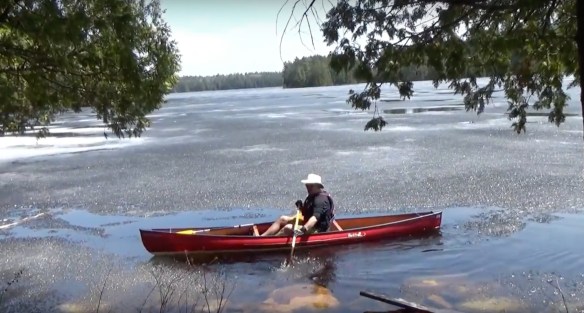
Let me show you an example of compulsion to achieve that which is beyond our capacity: On my fishing trip with colleagues last May to Algonquin Park, we tried everything to beat the ice on the lake. Despite the predominance of the ice-covered lake, we tried desperately to fight the odds against us catching some fish even to the point of risking our safety to break up the ice ourselves in our canoes.

Screen Shot 2018-07-07 at 2.29.00 PM

Yup, that’s me. And, yup, you guessed it: We caught no fish. The irony is that on the last day of our camp out, the wind and the sun did its job. When we woke that last day, we looked over a lake completely free of the ice.

IMG_6940.JPG

Was God sending us a message? Weren’t we the butt end of some divine humour?

The hole in our heart has a divine purpose: To keep us from being too sure of ourselves, over-confident in our ability and our capacity to have it all figured out. If we didn’t have this hole, might we put all our trust in our own autonomy, our independence, to lead our life without any need at all to trust anyone else let alone God.

Beyond Paul in the New Testament, the stories in the bible are about God lessening, even stopping, the compulsive drive of main characters, so the wind of God’s Spirit could draw them more gently and more effectively (Gideon and Moses in the Hebrew Scriptures are good examples).[2]

In the Gospel reading for today, Jesus instructs his disciples in going into the world to do God’s mission, “to take nothing for their journey … no bread, no bag, no money in their belts; but to wear sandals and not to put on two tunics.”[3]

God’s consolation is simple yet profound: “My grace is sufficient for you, for power is made perfect in weakness,” God tells Paul.[4]The making perfect here is not about getting rid of that vulnerability. Rather, whatever weakness we bear stays with us in order for us to complete our purpose as human beings. We are made complete in God’s love because of our hole, thorn, weakness – not without it.

In one of Martin Luther’s famous works entitled, “The Bondage of the Will”, he emphatically declared that we, as humans, can never work out our own salvation for ourselves. We will continually fail, even when, or especially when, we believe we are doing good in the world.

While some might find this realization depressing – and it would be helpful to know why that is, for yourself – perhaps the “bondage of the will” can be freeing. Because we don’t need to be driven to inaction because we are afraid of making a mistake. We don’t need to get stuck in the mud under the fear of imperfection. As Christians, we can be free to do good work in the world, imperfectly, knowing that what we do is for the benefit of others and not for ourselves.[5]

Author Brian McLaren in his recent book: “The Great Spiritual Migration”, describes this time in history as a transition in the church from “organized religion” to “organizing religion.”[6]

A Church in the flow of God’s Spirit pertains not only to wind and water over the earth, but also to spiritual movement. To purpose and mission. To going where we need to go as a people. To re-focus again on loving God, self and others as the primal energy of the church. To bring to life once again the old verse: “They will know we are Christians by our love …” … and not by our buildings, property, and concern for security, certainty and self-preservation.

Can we let go of these things for the sake of God’s mission, for the sake of the Gospel of life and love in Christ? As the prophet Amos so well put it, using the water imagery: “Let justice role down like waters, and righteousness like an ever-flowing stream … “[7]

By the time we had finally engineered the dam on the tiny creek aiming towards Lake Huron, the sun was setting and we had to go home. Inevitably, the next morning one of three things would have happened in our absence:

Either the creek would have found the weak spot in the sandy fortress wall we built, and escape through a tiny crack; or, increasing wind conditions over Lake Huron overnight would have created larger waves whose surf reached and destroyed the walls of our dam; or, someone would have been walking along the beach and, for the fun of it, just poked a tiny hole to watch as a slow trickle quickly turned into a strong, flowing stream.

In each case, a small hole was required in order for the creek to fulfill its mission and reach its destination – despite all the efforts of playful human beings to keep it contained.

After all, nothing was going to stop the flow. God’s Spirit and purpose will flow on because and through the holes in our lives.

[1]2 Corinthians 12:7-10

[2]Richard Rohr, “Dancing Standing Still; Healing the World from a Place of Prayer” (New Jersey: Paulist Press, 2014), p.18.

[3]Mark 6:8-9

[4]2 Corinthians 12:9

[5]Ross Murray, Senior Director, GLAAD Media Institute, LinkedIn July 2018.

[6]Brian McLaren, “The Great Spiritual Migration: How the World’s largest Religion is Seeking a Better Way to be Christian” (Massachusetts: Convergent Books, 2017)

[7]Amos 5:24

The Passion of Christ – a Good Friday sermon

The heaviness of it all weighs on our souls. Good Friday is a sombre day. The tormented images of the torture and death of anyone, let alone Jesus Son of God, flash across our minds-eye in the hearing of the texts describing the Passion of Christ.

We hear the lament from Isaiah’s poetry known as the Suffering Servant poems. If we let it, Good Friday pierces our denial of suffering and death. And we face squarely the reality of the situation. The very word, “Passion”, is from the Latin, one meaning of which is suffering.

If you, like me, have watched some contemporary video portrayals of Jesus’ Passion, probably the foremost image is the bloodiness of it all. Not only do we see the violence of the Jewish rebellion heating up during the Passover in Jerusalem, but we are intimately involved in the trial and torture of Jesus – beginning with the bloody cutting off of the servant’s ear in the Garden, to the whipping, flaying, kicking, slapping and piercing in Jesus’ torture while being held in Roman custody.

If that is not enough, we shiver at the pounding of the nails into his hands and feet, see the blood and water gush out of his side when the sword strikes him. Watch as blood trickles over his bruised face from the crown of thorns. Blood all over.

Blood all over. The blood of Christ given for you.

Suffering, Passion, is a great letting go. And acceptance of Christ suffering, even for us, is a great letting go. We cannot possess the gift of life. We cannot own or control this gift for us.

“For three days, the child bled profusely from the nose. She was six years old, and doctors had no idea what was causing the bleeding. What’s more, they understood that if the bleeding didn’t stop, her life was in grave danger.

“The year was 1913. The doctors knew little about transfusion, but they understood the importance of somehow getting good new blood back into the little girl’s system, so they asked her father, a preacher, to give his daughter some of his. He did, one of the first blood transfusions in the state of Michigan.

“The yellowed newspaper story is titled ‘Minister Saves the Life of Daughter By Giving Blood’, and ends by explaining how the father ‘was considerably improved and was able to dress.’ Then it adds, ‘The child was also considerably better and hopes are entertained for her recovery.’

“Two weeks later she was dead. Little Agnes Gertrude … succumbed once the hemorrhaging returned. For a time her father’s blood had brightened her face and her possibilities, but his gift – as unusual and strange to the newspaper readers as it must have been to him – wasn’t enough to save her life.

“Doctors knew very little, back then, about blood-typing. Her father … was as good as choice as the doctors could have made, but what coursed in his veins was not a match. Agnes Gertrude … died two weeks after that strange new procedure the doctors called ‘a transfusion.’

“Her father, a man of God, lay face down on the rug of the living room for almost a week after Agnes’ death, unable to move. Who could blame him – for an entire afternoon, he lay there beside his little girl, his blood flowing into her veins. He was lost in profound grief, was lethargic, depressed, his whole countenance darkened by the death of his child.

“Nothing changed … until he accepted a call to another congregation, a small country church up north. He and his family rode in a horse-drawn wagon up to that country church, their possessions packed up behind them. And there being greeted by the entire congregation there on the lawn, all of them waiting for the new preacher and his family.”[1]

The blood of Christ shed for you. Still, a mystery. Source of life. Beyond comprehension. The blood of Christ shed for you.

We hear these words during the Eucharist, Holy Communion. The word, Eucharist, from Greek, means “Thanksgiving”. Martin Luther, the great reformer, insisted that this sacrament is centrally about the gift of God, in Christ Jesus. The Holy Communion is God’s gift in Christ to us.

This, in contrast, to his contemporaries many of whom insisted that the sacrament of the table was more about what we humans must do to make sacrifice in order to appease God. Instead of making Holy Communion about what we must do for God, Luther preached that the Eucharist was what God does for us. It is a gift.

And a gift we cannot control, manipulate, engineer, manage. Only receive in thanksgiving.

On Good Friday, significantly, we abstain from the Holy Communion. It is one of the only days in the church year that calls for us to withhold collectively this gift. It, in our tradition, is the climax of the Lenten fast, the discipline to ‘do without’ and ‘let go’ and ‘surrender’ our claim on the gift. After all, we do not control God. God is free. And God gives what God will. When God wills. We are not in the driver’s seat of life and death.

Part of our lament, and suffering prayer, is to recognize that we are finite human beings, that we cannot do it alone. And can’t ever get it right. On this heavy day, the low point you might say of the Lenten journey, we put our ultimate trust and hope in God’s promise. As Jesus trusted his Father to the bitter end, we follow in his way, trusting that death has not the last word.

The blood of Christ shed for you.

Christ bled in his suffering, death and burial for three days. But God has other plans. The other meaning of the word “Passion” of course is love. Great suffering and great love. The Passion of Christ is ultimately about God’s great love for Jesus and for us. That is why God gives the gift of life to us. Love.

We will once again feast on the gift of life in Christ’s blood coursing through our veins. We will be transfused again with the life-giving spirit of God. It will be a perfect match! And our lament can become a song of praise and hope, bringing us home at last, as to a lawn on a bright day full of smiling people who open their loving arms.


[1] James Schaap, in Greg Pennoyer & Gregory Wolfe, eds., “God For Us: Rediscovering the Meaning of Lent and Easter” (Massachusetts: Paraclete Press, 2015), p.119-121.

There’s a wild-ness to God’s mercy

“Show me your ways, O Lord, and teach me your paths …

All your paths, O Lord, are steadfast, love and faithfulness

To those who hold on to your promise …”

(Psalm 25:4,10)

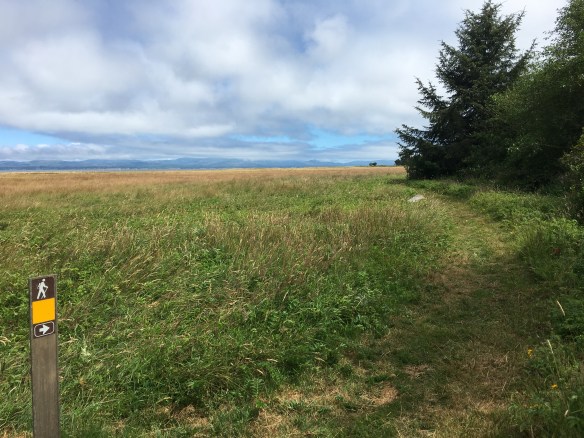
When I walked fifty kilometers on the sand last summer on Long Beach Peninsula on the coast of the Pacific Ocean in Washington State, I was obviously forging my own path.

IMG_5894

Even though the beach was not busy any time I walked it, it was also obvious to me that many had travelled this route – by foot and vehicle, since cars are allowed to drive portions on this way.

IMG_6237IMG_5889

I couldn’t trust these other paths, however, since I was by myself I had no idea how long the footprints or car tracks had been there. And with the dramatic shift of tides on the beach every twelve-or-so-hours, I could easily lose a path someone else made.

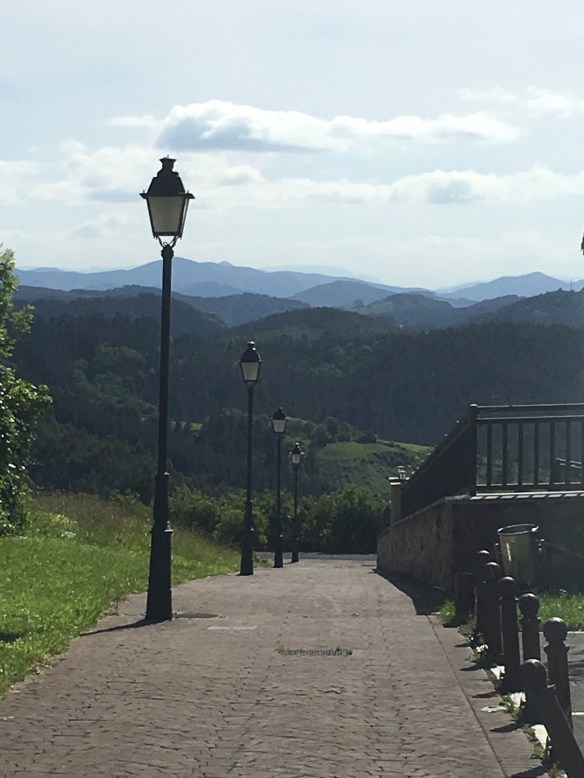
And, you might presume that my 130-kilometer hike on the Camino in Spain  a month earlier would have been harder on my feet. While I did not get one blister in Spain – no problems there whatsoever with my feet – walking on Long Beach Peninsula was brutal by comparison.

52238986157__0BB32B7D-A218-49B0-A0AB-CE5783F87119

Often, we make assumptions about our faith journeys. We presume things about following the way of Jesus that are, simply, untrue. And only experience can verify. The first myth is that this path is easy – a walk along the Rideau Canal among the tulips on a sunny, quiet Sunday in May.

I’m watching  Mark Burnett’s TV production of “The Bible” this Lent. And I was impressed by the actor playing Moses, who when he parts the Red Sea with water spraying all around in the tumult, mayhem and stress of the moment – when the Egyptian army is bearing down on the Israelites – he calls to them, “Follow Me!”

It’s like an invitation to a roller coaster ride. Or worse! A part of me wants to say, “Thank you. But, no thank you. I’ll take that walk by the canal.”

These short verses from Mark’s Gospel focus on Jesus’ personal experience of change, leading to a simple message to his listeners to follow in his way. And his way leads through disruptive changes in one’s life. True growth is a wild journey, to say the least, to follow the path of Jesus by making our own through the desert of our lives.

Jesus’ baptism by John is something which Jesus experiences by himself. Mark gives no indication whatsoever that Jesus’ baptism is some public event witnessed by many. It is intended for Jesus alone. Jesus is set apart to experience a deeply personal, largely private, and divine event in his life.

“And just as he was coming up out of the water, he saw the heavens torn apart and the Spirit descending like a dove on him.”[1]

This personally divine experience is not a pleasant, comforting event for Jesus. The word “torn apart” in Greek is used only at one other time in Mark’s short Gospel – at the moment of Jesus’ death on the cross, when the curtain in the temple was “torn apart.”[2] When Jesus experiences the blessing and call of his life, it’s not about gentle doves cooing from heaven. God does the ripping apart in both cases.

There’s a wild-ness and a danger in God’s grace. This is a disrupting affair. This is life and death stuff. You can only wonder whether Jesus didn’t see in a moment of churning clouds his own death – the end of the journey he was about to begin.

After Jesus’ baptism, the text takes a rapid shift, as Jesus is “immediately” driven into the desert. Mark does not go into the details of Jesus’ forty days in the wilderness. He does not reveal what it meant for Jesus to be with the “wild beasts”. His temptations are not described in detail, only that he was tempted by Satan. And, by the end of the time in the desert, the angels waited on him.

IMG_6315

Mark preserves these truths about anyone’s wilderness journeys: It is wild, for sure; and, no one else can make that human journey for us.

As Jesus was privy to his own struggle with the wild beasts, so is it with our journeys in the wilderness. Whenever we go through challenging times and transitions in our lives, whenever we experience the severity of life’s choices and consequences of our misdeeds, whenever we receive the blunt end of life’s punches in the death of loved ones, in the loss of any security, the pain of ill health – these are intensely personal demons we struggle with.

IMG_6236

No one else, really, can fully presume to understand this journey of ours. They are unique to us alone. Our temptations are unique to us as spiritual individuals on a human journey. We need, as individuals, to take ownership of our own wilderness journey.

IMG_6244

Some of you may have been surprised in the Ash Wednesday liturgy this year when I asked you to impose the ashes on your own forehead as I said the words: “Remember that you are dust, and to dust you shall return. Repent, and believe in the Gospel.”

For those of you who were here last Wednesday, I hope you reflected on the subtle change’s significance. If you are entering this forty-day journey, embracing the path of Jesus in some way, through the desert of your life – however you define your wilderness journey – then you need to own it yourself. No one else can do for you. At the start of this interior and life-changing journey, you will own your own ‘ash’, you will enter the desert of your own heart.

This journey is a journey of repentance. Repentance means, “a change of mind.” This is the original, basic meaning of the word – more than a renewing of the mind as Paul puts it,[3] repentance entails a radical turn around in thinking. This is largely an interior journey, in your mind and heart. “Rend not your garments,” the prophet Joel preached, “Rend your hearts.”[4] Will you go there, this Lent?

Martin Luther defined repentance as a returning to your baptismal waters. Returning to God’s grace, God’s love, God’s unconditional forgiveness and mercy upon your heart.

The Lenten journey can be taken by holding on to the promise of your baptism.  The path we make is only possible by the waters of faith. In the end, the waters of grace, of eternal presence of God, will wash away our delusions and give us sustenance for the journey. If we must forge our own path, we are not alone nonetheless. For, another has gone before us. One who loves us.

In his description of the journey of the Lenten season, American theologian Frederick Buechner wrote, “After being baptized by John in the river Jordan, Jesus went off alone into the wilderness where he spent forty days asking himself the question what it meant to be Jesus. During Lent, Christians are supposed to ask one way or another what it means to be themselves.”

He, then, outlines several questions for Christians to ponder during Lent. Among them:

  1. When you look at your face in the mirror, what do you see in it that you most like and what do you see in it that you most deplore?
  2. If you had only one last message to leave to the handful of people who are most important to you, what would it be – in twenty-five words or less?
  3. Of all the things you have done in your life, which is the one you would most like to undo?
  4. Which is the one that makes you happiest to remember?
  5. If you had to bet everything you have on whether there is a God or whether there isn’t, which side would get your money and why?
  6. Is there any person in the world, or any cause, that, if circumstances called for it, you would be willing to die for?
  7. If this were the last day of your life, what would you do with it?

“To hear yourself try to answer questions like these,” Buechner goes on, “is to begin to hear something not only of who you are but of both what you are becoming and what you are failing to become. It can be a pretty depressing business all in all. But if sackcloth and ashes are at the start of it, something like Easter may be at the end.”[5]

[1] Mark 1:10

[2] Mark 15:38; Stanley P. Saunders in David L. Bartlett and Barbara Brown Taylor, eds., “Feasting on the Word: Preaching the Revised Common Lectionary Year B Volume 2 (Kentucky: WJK Press, 2008), p.47.

[3] Romans 12:2

[4] Joel 2:13

[5] Frederick Buechner, “Wishful Thinking” (New York: HarperCollins, 1993).

Christmas – God blesses the dirt

Why do we celebrate Christmas? What is the reason we pull all the stops to mark this annual tradition in our lives?

As is the case when defining something, we can start by saying what it isn’t. So, Christmas is not about a little baby Jesus being born. That already happened two thousand years ago. The historical fact of Jesus’ birth is not why we bring so much energy, passion and personal sacrifice to making this happen today!

We do Christmas not because we are history buffs on a mission to generate public enthusiasm about a long- ago event no matter how enthusiastic we are about it. The church is not a history club. Christmas is not just about memory – because none of us were around two thousand years ago. Christmas is about reality, today.

We celebrate Christmas to welcome Jesus Christ again into the life of this world. The church is about what matters today. Because of that first Christmas, Christ is forever being born into the human heart. And, we do have to make room for this ongoing event, because right now there is no “room in the inn” for such a mystery; our lives are cluttered by distraction, compulsion, self-centeredness and selfishness. If anything, Christmastime in the public sphere exposes this narcissism of our collective soul.

We are human, after all. And we see things pretty much in their physicality, materiality. We have trouble, naturally, seeing the light shining through the ordinariness of material life. Francis of Assisi, who popularized the celebration of Christmas beginning in the 13th century, said that “every tree should be decorated with lights to show that it’s filled with light anyway.”[1]

A couple centuries later, Martin Luther dragged a pine tree into his house and placed lighted candles on its boughs. He told his children that he looked up at the starry sky whilst walking through the pine forest near their Wittenberg home. The sight was so beautiful that he wanted candles on the tree to remind them of Jesus, who left the stars of heaven to come to earth. To be entwined in the stuff of earth.

Thus, we have tangible reminders in our Christmas traditions today – tangible reminders, indeed, in the sacraments but also in everything – to remind us of this incredible move of God to be distant no longer, cut off, and separated from earthly existence no more. But, from that moment onward, God would be intimately invested and incorporated, literally, into every human body, heart and mind. Indeed, “The Word became flesh and lived among us.”[2]

And so, God continues to become flesh and live among us. Christmas in 2017 as it was last year and will be next year, again, is about waiting, watching for and celebrating God’s forever decision to say “yes” to the material world. To watch for how the Spirit of the living God is being manifested in our lives and in our world today. Through, in, around each of us. God said “yes” to physicality.

We need this celebration every year because we are still preparing to understand and enter this great mystery of our lives with each passing day. In this preparation, we need to celebrate not only Christmas on December 25, not only Christmas-in-July, but Christmas every day of every year!

Christmas announces that it is good to be human. It is good to be on earth. Why? Well, because God became human in Jesus Christ. God came to earth. I hear echoes in the creation story from Genesis; after each thing was created God said it was good.[3] The earth and the waters, the plants and vegetation, the sun and stars, sea monsters, every living creature and every winged bird, wild animals, cattle of every kind and everything that creeps upon the ground. “It was good!” Not once, but repeatedly, to emphasize the point. It is good! It is good! It is good!

Whenever we can see in the material world – humans, trees, sky, water, dirt, animals – the Spirit and presence of Christ – whenever that happens, we are celebrating Christmas. God blesses the dirt on earth, from which we all came and to which we all will return.

It is already so. And to a large extent, it is a matter of perspective. When the ordinary becomes extraordinary. When we recognize the good in that which is broken or imperfect. It is a matter of vision.

When you are invited to a family dinner gathering, the food always tastes better, doesn’t it? How is it that Grandma’s pumpkin pie – made straight from the recipe off the label on the canned pumpkin – tastes better than any other? And when you go home and use the same product and follow the same recipe, it’s not quite the same. The ordinary is made extraordinary because of a frame of mind which has somehow shifted into an attitude of thanksgiving, gratitude and appreciation in a certain context.

The ordinary is extraordinary with a change of mind, which is the true meaning of repentance[4]. When we begin to see the holy in the simple. When the basic stuff of life – including the blemishes, the brokenness, the weakness – is imbued with a vision of holiness. God blesses the dirt.

When a common teenage couple gives birth to a baby in the back shed of some inn in a non-descript rural town, surrounded by the lowly shepherds and visited by strangers from the East. God blesses the dirt.

When all of what makes us human – including our doubts, our failures, our misdeeds, our egos – is unconditionally loved and embraced and held in compassion and forgiveness. God blesses the dirt.

When our caring and loving moves beyond the self and ‘our own’ to include foreigners, animals, trees and those who go hungry this day. God blesses the dirt.

Because it is good to be human. It is good to be on earth. Today.

Merry Christmas!

[1] Cited in Richard Rohr, “An Advent Meditation” (Unedited transcript, Center for Action and Contemplation, 2017).

[2] John 1:14

[3] Genesis 1:10,12,18,21,25,31

[4] translated from the Greek word, metanoia, literally meaning “change of mind”, to turn around and face a new direction

The hide-and-seek God

There is enough in the world today and in our own lives to seriously doubt the presence of a God, let alone a God who cares about what happens on earth.

“Where is God?” is a question that is emerging in our understanding of God in the modern era. It is a question, Diana Butler Bass asserts, that is growing in sad frequency in recent years:

“’Where is God?’” she writes, “arose from the rubble of the World Trade Center; from the inundated villages of tsunami-ravaged Thailand and Indonesia; from New Orleans, as the levees breaking swept all that was familiar out to sea; from African hamlets where the dead mount from Ebola; from the hidden, abused, and lost victims of human trafficking and slavery; from killing fields in any number of nations where war seems endless; and from native peoples watching their homelands sink into the earth or ocean due to melting tundra or rising seas.

“‘Where is God?’ has echoed from every corner of the planet in recent years… ‘Where is God’ is one of the most consequential questions of our times.”[1]

“The Jewish tradition tells a story of a rabbi whose young son once came running to him, crying inconsolably. Between huge sobs, he managed to say, ‘Father, I’ve been playing hide-and-seek with the other children. It came my turn to hide, but after I found a good place, I sat there in the woods for hours waiting for the others to find me. No one ever yelled into the woods to tell me to come out. They just left me there alone.’

“His father put his arms around the child and held him close, rocking him back and forth. ‘Ah, my son,’ he said, ‘that’s how it is with God, too. God is always hiding, hoping that people will come to look for him. But no one wants to play. He’s always left alone, wanting to be found, hoping someone will come. But crying because no one seeks him out.’”[2]

The very first words of God recorded in the Bible to human beings are: “Where are you?”[3] Adam and Eve seem to be looking for God in the wrong places in the Garden of Eden. I hear a tone of exasperated grief in God’s call to Adam and Eve: “Where are you?”

Why does God appear to disappear from our vision, when the going gets tough? Theologians have described God through the centuries as a God who hides.[4] Why is God a hidden God? Not to mention, a God who cries because no one is out looking for this God?

Such a vulnerable vision of God disturbs us to the core. We would rather have a powerful, mighty, superman vision of God. We want a God who will win on the battlefield, stand victorious over all enemies of the faith, triumph over all our adversaries, and solve all our problems in life. Indeed, when we meet with suffering, disappointment and despair in life – as we most surely do and will – our prayer to God resonates with Isaiah’s:

“O that you would tear open the heavens and come down, so that the mountains would quake at your presence – as when fire kindles brushwood and the fire causes water to boil – to make your name known to your adversaries so that the nations might tremble at your presence!”[5]

And so, when the Israelites return from exile in Babylon in 586 B.C.E. to a ravaged and desolate Jerusalem, they are at a loss. Ruins and devastation lie where once a mighty temple stood.

Isaiah reflects the mood of the people in his lament to God, a prayer that echoes on our lips today: Why, O God, are you now not visibly nor powerfully present as you once were long ago? Why, O God, do you refuse to act powerfully and dramatically to rescue us from our distress? How can we reconcile the ancient, miraculous stories of your powerful presence with our current experience of your absence?

God hides, so to speak, in order to deconstruct a distorted set of beliefs about who God is. When God enters our humanity as a vulnerable, dependent baby born to teenage parents in a backwater town served by the likes of the low-class shepherds, God declares who God is. The hiddenness of God is not a cloak of humility temporarily covering an awesome powerful glory – a kind of Clark Kent/Superman act.

Prime Minister Justin Trudeau revealed more than his wit last month on Parliament Hill when he unbuttoned his shirt in front of reporters exposing his Halloween costume underneath. He suggested a powerful image reflective of our belief and image of God.

So God hides to reveal the true, divine character. God is determined to relate to the world not as a superhero through domination and force. Instead, God is determined, even in our experience of God’s hiddenness, to demonstrate God’s way of non-coercive love and suffering service.

Listen to this rendition of hide-and-seek told reflectively by Belden Lane:

“When my daughter was very young, one of her favorite tricks in playing hide-and-seek was to pretend that she had run away to hide, and then to come sneaking back beside me while I was still counting – my eyes shut tight. She breathed as silently as she could, standing inches away, hoping I couldn’t hear. Then she’d take the greatest delight in reaching out to touch home base as soon as I opened my eyes and began to search for someone who’d never even left.

“She was cheating, of course, and though I don’t know why, I always let her get away with it. Was it because I longed so much for those few moments when we stood close together, pretending not to hear or be heard, caught up in a game that for an instant dissolved the distance between parent and child, that set us free to touch and seek and find each other? It was a simple, almost negligible act of grace, my not letting on that I knew she was there. Yet I suspect that in that one act my child may have mirrored God for me better than in any other way I’ve known.

Still to this day, it seems, God is for me a seven-year-old daughter, slipping back across the grass, holding her breath in check, wanting once again to surprise me with a presence closer than I ever expected. “Truly, thou art a God who hidest thyself,” the prophet Isaiah declared.[6] A playfulness as well as a dark mystery lies richly intertwined in that grand and complex truth.[7]

“Where is God?” Maybe God is right beside us. And if we can’t see, feel, or hear God’s presence, may this Advent Season of preparation and waiting and watching be dedicated to keep looking for God in our lives, who may very well be standing inches away.

“Keep calm, and keep looking” should be on a t-shirt worn by Christians in Advent. Because hidden amidst the décor, bustle and busyness of this season, you will find Jesus. This season of preparation is best served by slowing down, breathing and paying attention. Do you see? Do you perceive God?

Antoine de Saint-Exupery writes of waiting one night for a late flight to depart from a remote landing field in the Sahara desert. Feeling vaguely uneasy as he walked out into the desert air, he heard dragonflies striking their wings against an oil lamp nearby.

Back home in France, the flight of moths around a candle flame at night would have been perfectly common. No big deal. But in the desert the sudden presence of insects meant something entirely different. Swept hundreds of miles from their inland oases, the presence of dragonflies were clear signs of impending danger: A savage sandstorm was on its way, sweeping every living things before it.

Saint-Exupery was grateful for the warning that had come. But he was moved even more by the powerful experience of having been attentive: “What filled me with a barbaric joy was that I had understood a murmured monosyllabic of this secret language, had sniffed the air and known what was coming … it was that I had been able to read the anger of the desert in the beating of a dragonfly.”[8]

“Keep awake!” are Jesus’ words to his disciples, and the call sign for Advent. Keep calm and pay attention. Keep looking for the God who may not be hidden in our expectations of grandeur and spectacle. But in the beating of a bird’s wings.

God’s refusal to replicate a mighty Red Sea –dividing deliverance when Isaiah laments centuries later does not mean God has abandoned Israel, nor us. God’s mode of action looks more like that of an artist or parent than that of the superhero. Both the prophets Isaiah and Jeremiah use the image of God as the potter and we the clay.[9]

God, hidden in human form, comes not to inaugurate an apocalyptic cleansing of spectacular proportions. But God comes to reveal the power of the powerless in Jesus of the manger and Jesus on the cross. In so doing, Christ reveals the will of God, who is eternally and patiently molding and shaping the clay of creation into the New Jerusalem.

[1] Diana Butler Bass, “Finding God in the World: A Spiritual Revolution” (New York: Harper Collins Publishers, 2017), p.7-8

[2] Belden C. Lane – “The Solace of Fierce Landscapes: Exploring Desert and Mountain Spirituality” (Toronto: Oxford University Press, 1998), p.180 – cites Jerome R. Mintz in “Legends of Hassidim (Chicago: University of Chicago Press, 1968), p.344

[3] Genesis 3:9

[4] Martin Luther and Dietrich Bonhoeffer both describe God as ‘hidden’. See Scott Bader-Saye in “Feasting on the Word”, ibid., p.2-6; and, “Luther’s Works” edited by Jaroslav Pelikan (Saint Louis: Concordia Publishing House, 1964) Volume 4: Lectures on Genesis, chaps 21-25, p.115-122

[5] Isaiah 64:1-2

[6] Isaiah 45:15, KJV

[7] Belden C. Lane, ibid., p.181

[8] Antoine de Saint-Exupery, “Wind, Sand and Stars” (Toronto: Penguin Books, 2000), p.52-53; cited in Belden C. Lane, ibid., p.190

[9] Isaiah 64:8; Jeremiah 18

Faith in the dark

Sixteenth century Reformer Martin Luther claimed we are “justified by faith”. That means, we are in a right relationship with God because of the gift of faith in us.

Anyone and everyone, therefore, can live in faith. And there is nothing anyone of us can do to earn good favor with God.

Faith, to Luther, was to trust in God and God’s promises, despite your circumstance or any evidence to the contrary. What validates faith in you is not your external situation or material well-being, but God’s purposes, intentions, and promises for your life and the life of others.

Nevertheless, faith is not something you have. It is still something you do, but not to save ourselves. How do we deal with this paradox?

A brother once asked an older monk in a desert community, “Which is holier, someone who leads a solitary life for six days a week, giving himself much pain; or, another who simply takes care of the sick?”

The old man smiled and replied, “Even if the one who withdraws for six days were to hang himself up by his nostrils, he could not equal the one who serves the sick.”[1]

Self-denial and isolation never substitute for an active faith born out of love for our neighbour.

“Give to Caesar what belongs to Caesar,” Jesus answers the trick question posed to him by the Pharisees, “And give to God what belongs to God.”[2] The giving-to-God part, we get. But giving to Caesar?

Giving to Caesar ties us to this earth – to its politics, to its confusion, despair and hardship. Giving to Caesar, after all, was not popular among the Jews resisting Roman occupation in 2nd century Palestine. Giving to Caesar was fraught with political controversy – as it is today in the parlance of paying taxes. Giving to Caesar is not something we would normally associate with being faithful, being Christian.

But it is. Why? It certainly is not a perfect activity free from blemish and beyond reproach. But we do it anyway.

It is not a perfect thing to do faith. But when has it ever been? We give, in faith. We act, in faith. We love, in faith. Even though our response in faith is never perfect.

In faith, we always walk in the darkness. We see, using Paul’s language, “a mirror dimly” (1 Corinthians 13:12).

Medieval Spanish theologian, John of the Cross, called it “luminous darkness”. Because the darkness is also part of God’s creation. We need darkness in order to see the light.

Classical literature and art suggests the spiritual significance of darkness in one’s journey of life and faith. Parsifal’s quest for the Holy Grail begins by entering the forest at “the darkest place.” Dante begins his paradise journey “alone in a dark wood,” and it continues through purgatory and hell. Darkness is often the language of faithful, committed, spiritual people, a language and reality that cannot really be separated from light.[3]

Even in the beginning, as recorded in Genesis, the Bible brings the two together. In the first verses of Genesis, God names every day of creation “good”.[4] Except the first two days – the days when darkness is separated from light and when heaven is separated from earth. Darkness and light must not be separated. The real world, as Jesus teaches, is always a field of weeds and wheat and we can never presume to eliminate the weeds.[5] Light and dark belong together. You can’t have one without the other, to do faith.

In the Hebrew reading for today, the prophet Isaiah renders God’s words: “I create darkness”. God says that God will “give you the treasures of darkness … hidden in secret places.”[6]

This is the way of living without all the answers, living with ambiguity, living without denying or pretending away or even avoiding the contradictions of your life.

This is the way through the desert.

When King Cyrus of Persia conquered Babylon around 539 B.C.E. he let the exiled Israelites living there go back home to re-build Jerusalem. After living by the rivers of Babylon for decades, the people of Israel had a decision to make in response to their newfound freedom: Would they stay? Some did. But many – a remnant, we call them – decided to make the long trek through the desert back home.

What is more, King Cyrus of Persia did not even know God.[7] And yet, he was chosen by God to fulfill God’s purposes. God would even “go ahead”[8] of Cyrus to clear the way for God’s mission.

The way through the desert is not the way of certainty, security and safety, to be sure. The way through the desert is not an easy way. But the dark way, often in biblical times encountered in the harsh climate of the desert, is the way home. It is the way of healing, transformation and the new, good thing God is doing for us and in us and the world.

The Israelites could not avoid the desert even though they were freed from exile. They had to trust not only the dark way, they had to trust the foreigner and pagan King Cyrus to believe what he was doing for them, to believe he was in truth an instrument of God.

Talk about contradiction and ambiguity in faith! Would we, today, confer such a trust in someone outside the traditional community of faith? Would we, for example, take to heart Gord Downie’s medium of pop rock to advocate for better relationships with Indigenous People? Would we trust the revelation of God’s purposes in people of other religions, newcomers to Canada who bring with them different cultures from ours? Could these people and others also be instruments of God and God’s purposes, for us today?

The Israelites were faced with such a conundrum. And we know what they decided to do. They had to walk home in the desert, in the darkness, and trust that even through Cyrus, God’s unknowing servant, the mighty God of Israel was moving behind the scenes of everything that was transpiring.[9]

The way to healing and resolution of whatever troubles you today is a desert way of darkness. Yet, as someone once said, “In every cross we bear, therein lies a great treasure.”

A group of white settlers learned the hard way in the fall of 1849 as they set out from the Utah Territory toward gold fields in the San Joaquin Valley of California.

Taking a shortcut recommended to them by the leader of a passing pack train, they headed into a 140-mile long stretch of desert waste known to us today as Death Valley. It was a tragic mistake.

Twenty-seven wagons started into that long desert valley east of the Sierra Nevada. Only one of them came out. A survivor of that misguided party spoke of the dreadful sameness of the terrain, the awfulness of the Panamint Mountains, remembering only hunger and thirst and an awful silence.

Two months later, as the only surviving wagon topped the westernmost crest of the distant mountains, one of the settlers looked back on the place that had nearly claimed them all, and said: “Goodbye, Death Valley.” That’s how the site received its name.

But there’s another name the Spanish used to describe this God-forsaken land. They referred to it as ‘la Palma de la Mano de Dios’, the very palm of God’s hand.[10]

Could it be that even in the midst of the most dangerous climate and terrain on earth, where it’s 134 degrees (57 degrees Celsius) in the shade exposed to winds in excess of one hundred miles (160 kilometers) an hour, wanderers have found God? It is God, actually, who finds us, in the darkest most arid times and places of our own lives.

It is during these times and places where people become accustomed to risk, vulnerability and brokenness that they build an unshakable trust in the other? It is during these dark times and places where you confront your inevitable loss of control and the specter of your own eventual demise head on. It is in these moments where we have to wait for God, ask God for help, and learn to trust God over and above anything we may be able to accomplish by the might of our own hand.

In the dark, desert journeys of our lives especially, we remain inscribed in palms of God’s hands.[11] La Palma de la Mano de Dios. You may not understand all the contradictions and ambiguities of your life, right now. You may not be able to figure out all the inconsistencies and paradoxes of life. You may not be able to resolve the problems of your life or in the world.

But, believe this: There is Someone who does. As you wander in the darkness of faith, never forget that God is bringing to resolution and completion all the confusion and contradiction of your life and the life of the world.

And, it is all good.


[1] Belden C. Lane, “The Solace of Fierce Landscapes: Exploring Desert and Mountain Spirituality” (.202

[2] Matthew 22:21

[3] Richard Rohr, “Adam’s Return: The Five Promises of Male Initiation” (New York: The Crossroad Publishing Company, 2016), p.39.

[4] Genesis 1:3-8

[5] Matthew 13:24-30

[6] Isaiah 45:3,7

[7] Isaiah 45:4-5

[8] Isaiah 45:2

[9] Carolyn J. Sharp in David L. Bartlett and Barbara Brown Taylor, eds., “Feasting on the Word: Preaching the Revised Common Lectionary” Year A Volume 4 (Kentucky: WJK Press, 2011), p.175

[10] Belden C. Lane, ibid., p.231-232.

[11] Isaiah 49:16

From Loss to Life

“I have learned to be content with whatever I have. I know what it is to have little … and of being in need. I can do all things through him who strengthens me.”

 -Paul, to the Philippians 4:11-13

One of the basic truisms of pilgrimage walking is that first-timers usually pack more than they need for the journey. The general rule is ten percent of your body weight. For most people, that means no more than fifteen to twenty pounds in your backpack.

IMG_5303

I read in one of the Camino de Santiago guidebooks, in preparation for my walk last summer, that for most first-time pilgrims five pounds in their pack is unnecessary; these items amount to five pounds of fear: that extra sweatshirt, pajama onesie, that tub of moisturizing cream or the proverbial electric hairdryer. It is not long on the journey before at least five pounds are left behind or mailed home.

IMG_5285

If we use the pilgrimage as a metaphor for life, then the pilgrim on the journey of life, to be true to the journey, needs to learn how to let go.

IMG_5243

When I began I thought I had it down to the bare minimum. Nevertheless, I was still anxious. Those first few days I worried about where I was going to sleep that night. Not knowing how far I would walk, and not wanting to put the stress of expectation by booking ahead, I had to go with the flow and improvise in the moment. Even though I found a place every night, I was still preoccupied, distracted and fretting. Perhaps I had put too much faith in what I carried.

IMG_6116

Before I knew it, I lost some of my belongings those first days on the path. The first night I left behind my head lamp. The second or third night – I don’t know which – I lost my very expensive self-inflating bed roll for underneath my sleeping bag.

If the story ended there, you might say I was in an unwanted, growing state of crisis. If the story ended there you might say my pilgrimage was headed towards disaster, defeat, loss and failure. If the story ended there, you might say that everything was falling apart in my journey, collapsing into the rubble heap of destruction.

But the story didn’t end there. And it doesn’t end there.

The truth is, as Richard Rohr explains it best, that “through loss, through crisis, through stress, limitation, we move to a better place in our lives.

“Physicists today would say that loss is not real. There is only transformation. The metaphor of the liquid world is that this element simply moves from liquid to solid to vapor and back again.

“It looks like a death, a loss, in each case. But, in fact, it’s a becoming. Now we recognize that Jesus was saying this all along. In Christianity, it was called the ‘Paschal Mystery’. It was a phrase used by Saint Augustine that in fact dying leads to resurrection. Jesus became the icon, the living image, of that mystery – that his crucified body transformed into the risen Christ. That they are both the same person.

“Creativity, newness of life, has a cost. And the cost is what always looks like death. But really isn’t. The cost is loss. Which is perceived as an enemy, or affliction, which always looks like what we don’t want. Somehow to embrace loss, spiritually speaking, is to achieve eternity. Death allows us to be united with what is real. But, of course, it only looks like death from our side. Apparently from the other side – we call it heaven, or eternal life – is in fact the really real.

“The really real is already beginning now. And that’s what we need to trust. That’s what we need to allow. Fourteenth century Italian theologian Catherine of Siena once said: ‘It’s heaven all the way to heaven; and, it’s hell all the way to hell.’ And the way to heaven begins in this world, all the way to heaven.

“To avoid all loss, to avoid all letting go, is to avoid transformation into union with God. If you spend your entire life avoiding ‘dying’, Jesus would say you never get there. It’s hell all the way to hell.

“‘Unless the grain of wheat dies, it remains just a grain of wheat. But if it dies, it bears much fruit.’[i] We now know that this phrase was used in the initiation rites of Asia Minor. Perhaps one of Jesus’ most enigmatic lines is: ‘You must lose your life in order to find your life; you must lose your life in order to gain your life.’[ii] And if you don’t let it go, you will never find it.”[iii]

This is what Paul is talking about when he says he can do all things in Christ who strengthens him. That is, he can also ‘let go’. Not only does he know what it is to have plenty. He can also lose.

Philippians 4:13 is a popular well-loved verse in the New Testament: “I can do all things through him who strengthens me.” It is often used to bolster self-confidence in accomplishing heroic goals and aspirations. It is often quoted on posters, billboards and bumper stickers to indicate a glory, success and prosperity gospel message of human achievement more reflective of current self-help pop psychology. It is also used to undergird impressive mission goals in the church.

Moreover, the first nine verses of this chapter – the famous “Rejoice always!” text – are read on their own, as unfortunately prescribed in the Revised Common Lectionary, without including verses 10-13 for context. And the context is Paul’s suffering and need and persecution.

He is rejoicing and expressing his confidence in living precisely because he has travelled through the valley of the shadow of death. Precisely because he has learned to let go. You can’t have resurrection without death. You can’t experience the joy of transformation without first feeling the pain of loss. You can’t do mission unless you have let go, done without, lost — in some fundamental, real way.

Later this month on Reformation Sunday when all ELCIC Lutherans in Ottawa will gather to worship together, we will sing together Martin Luther’s well-known hymn: “A Mighty Fortress is our God.” Frederick Hedge’s English translation is closer to the original German when in the last verse we sing: “Let goods and kindred go, this mortal life also.”[iv]

Here, we get a peek into an under-emphasized aspect of Luther’s theology which included the practice of letting go. Not only is salvation realized at the moment of our mortal death, it is something that begins in the midst of living. That is, during our life we the practice the art of dying – of letting go, of losing – as an essential experience in the way of salvation, of transformation.

When I realized I had lost my head lamp and bed roll several days later, a couple of things were happening within me:

First, it took a while for me to notice these losses. I didn’t notice my loss right away perhaps because I really didn’t need those things. Second, and maybe more significantly, I was less stressed the farther I journeyed along the Camino. I was relaxing more into the pilgrimage, even without what I had deemed essential kit when I began.

Some Christians in the West today make the mistake, I believe, of confusing loss of privilege with persecution. Wealthy, financially advantaged Christians say they are being persecuted by a politically correct movement to recognize other religions and different people in a growing multi-cultural and pluralistic society, something Luther could never have envisioned in his day.[v]

We are not being persecuted. Rather, we are being confronted with the prospect of losing our privileged place in society, a status that we have admittedly enjoyed for centuries in our country. What the real issue is, is whether we will resist and avoid this loss, or whether we will accept it.

What is ending in your life? What are you facing that deep down you know is a loss? What are the failures and defeats and suffering in your life? Where is there suffering in the lives of the vulnerable, the underprivileged, the poor?

Pay attention, and wake up. These may, in truth, be invitations. Invitations to enter the gate of loss and letting go. Invitations to let go and trust that through dying, it is heaven all the way to heaven.


[i] John 12:24

[ii] Matthew 16:25, Mark 8:35, Luke 9:24, John 12:25

[iii] Richard Rohr, “The Art of Letting Go: Living the Wisdom of Saint Francis” (Boulder Colorado: Sounds True Audio CD Learning Course, 2010), Session Three.

[iv] Evangelical Lutheran Worship (Minneapolis: Augsburg Fortress 2006), Hymn 505

[v] The Rev. Dr. Gordon Jensen, “Luther’s Legacy” in Canada Lutheran (Volume 32, Number 6, September 2017), p.10-14