Why? To melt hearts of stone

In a typical Canadian winter at this time of year, salt and light (Matthew 5:13-20), of course, serve a particular purpose.

It doesn’t matter how cold it can still get in February, if the sun is shining then the snow and ice will melt under the strengthening, radiant beams of warm light. And, with the occasional freezing rain still in the offing, that bag of salt sitting on the porch or in the garage can come in handy, to sprinkle on the walkways and driveways — to melt the ice.

Salt and light, in any given context, serves a specific purpose. I can remember when the kids were younger, one of ours had the habit of picking anything and everything up off the ground and putting it in her mouth.

I can remember needing to intervene when she was in her exploratory mode, walking down the sidewalk in the middle of winter. “Don’t eat it! That is road salt, dear. Not table salt.”

We are called to be like salt and light in the world. But that gift will serve a specific purpose, according to the context and circumstance of our lives.

How can we know what that gift is, and for what purpose it serves? It can be challenging to claim that gift for our lives, and then have the courage to use it. This can be difficult because the world and the dominant powers of culture may not support it. The gift and purpose may seem small in comparison to the dominant climate of coldness, hatred and violence so prevalent in the culture today.

Julian of Norwich in her first of Divine Revelations writes about the small hazelnut. She writes, that God “showed me a little thing, the quantity of a hazel nut, lying in the palm of my hand …. I marvelled how it might last, for I thought it might suddenly have fallen to nothing for littleness. And I was answered in my understanding: It lasts and ever shall, for God loves it. And so have all things their beginning by the love of God.”

It may seem pallid at first, even pointless. But there is power in small. Ezekiel writes, “A new heart I will give you, and a new spirit I will put within you; and I will remove from your body the heart of stone and give you a heart of flesh. I will put my spirit within you …” (Ezekiel 11:19;36:26-27).

In words that may make better sense in our Canadian winter, God is promising us that God will melt our hearts of stone-cold bitterness, resentment, fear and hatred. And put the warmth of God’s light in Christ and the loving power of the Spirit to change our lives, and the world around us.

Salt and light are gifts that are subtle and small, yes, similar to the smallness of the hazelnut. And yet, these are gifts you cannot easily hide. Nor will they go away. They are public gifts, not private, in scope. They affect the whole experience of living.

You cannot add salt to soup, and not notice a difference. You cannot throw ice-melter on the driveway, and not notice some change on the ground. You cannot stop the sun from shining, and not stop the smile that comes on a sunny day after weeks of dark, grey, cloudy existence.

Faith Lutheran has a renovated gift, the gift of a safe and modernized building — a gift, yes. But why will it be used? How will our (Faith Lutheran’s) soon return to that site on 43 Meadowlands Drive restore something that was missing in the neighbourhood while we were here (at Julian)? Or, does it? What difference does that gift make to the world around us?

Our gift has a purpose. And that purpose is meant to catch the attention of a world that is shrouded in cloudy days and numbed to the slippery vices of distraction, delusion and fear.

Why is this important? How is it worthwhile? In an age when the church in North America is facing challenge and change, perhaps it is time again to focus on the WHY. It has been argued that people don’t buy-in to the WHAT we do but the WHY we do it. (1)

We need to be clear about that. The only way we can know WHAT do do with our faith, the church and our buildings is first to claim, embrace and communicate clearly the WHY of our faith. The WHY.

In the aftermath of the tragic violence in Quebec last weekend, the premier challenged his province, indeed our whole society, to reflect and consider again how we treat one another in a culturally diverse community. How we treat one another through the changes and stresses of life that can be disruptive. How we treat one another who are different and come from different walks of life, religious experience and ethnic diversity.

Observing how we do what we do may also give us a clue to the WHY. I believe the church has a lot to offer this world of ours, as salt and light. St. Paul encourages the fledgling, conflict-ridden Corinthian church to claim their identity they already have, in Jesus: “We have the mind of Christ,” he concludes (1 Corinthians 2:16). And Jesus, in short, came to show the love and grace of God to a world so hung up on achieving, earning, competing, judging, proving themselves, excluding others and fighting.

I believe the church has a lot to offer this world. To reflect Christ, the light of the world: to receive the love of God, to accept the love of God, and then demonstrate that compassion and love to the world. It is behind everything we do in the church. Everything. Let’s not forget that.

To melt hearts of stone.
(1) Simon Sinek, “Start With Why” (New York: Penguin, 2009), p.58

The case of the missing pulpit

As we worship this morning, the sanctuary at Faith Lutheran Church building is gutted — empty, a shell. Not only is the cork on the walls now removed and the old carpet disposed. The light fixtures, most of the furniture, liturgical items and holy hardware is stowed away for the time being to be recovered, restored and positioned again in their proper place once the renovations are completed.

I know some of you who have been at the site in the last day or so helping to get it ready for the workers, have been asking the question: “Where is the pulpit?” I can see the title of the next best-selling mystery novel: “The Case of the Missing Pulpit.” Where is it?

What a mystery! Well, this is what happened …

Last Sunday afternoon as I was helping members of our altar care committee removing certain items, we ran into a little problem. Our pulpit is mobile; it sits on wheels. So, depending on the needs of the day, we move it around. 

Well, we moved it alright — all the way to the door of the sacristy where we were hoping to store it. Without doing serious alterations (and damage!) to the door frame, there was no way that pulpit would get through. And the cloakroom, where we normally store the pulpit at Christmas, was going to be filled with stacks of chairs. Where on an already compact floor space would we store a rather heavy and cumbersome piece of teak-wood furniture?

It was the spur of the moment when I offered to put the pulpit in my car. I had the back seats down anyway at the time, and the rear hatch opened just wide enough to allow the pulpit to slide in fairly easily. And I drove away with church’s pulpit in the back seat of my car! Truth be told!

During the 45 minute drive home to Arnprior, my mind raced: What would I say to someone who would behold this mystery! I was also wondering where on earth I would put it. I had no clue. There was room in our garage, but most of that space was already tagged for bikes, tires, canoes and garden implements for the winter season.

My wife and I sat in the living room that evening scratching our chins and trying to come up with solutions. But to no avail. I guess I would drive around with a pulpit in the back seat of my car for three months! A mobile preacher who comes with his own pulpit! What a deal!

Barbecuing on the back deck that evening, I looked above the tree line and my eyes rested on the steeple of a church, just around the corner from our place. After making a phone call, and depending on the good will of their pastor and the muscle of a couple of their men from that community — and our pulpit now has a resting place. 

So, if anyone asks: Our pulpit is in the safe-keeping in the building of the good people of St John Lutheran Church in Arnprior. Let it be heard! “The case of the missing pulpit” … mystery solved!

I’m usually the kind of person who wants to have a plan, to know how things ought to go and what the end result should be, before doing anything. This is also usually a good thing. Driving away with the pulpit without any clue as to where it should go, was a little unnerving for me. It was, nevertheless, a good exercise for letting go and trusting that a solution would present itself. And it did, in a most gracious, natural and expedient way.

Some of you know that I am planning to go on a sabbatical next year. The theme of my sabbatical is ‘pilgrimage’. And part of the experience is to walk an ancient path, some eight hundred kilometres long, on the north coast of Spain on the famous Camino de Santiago de Compostela. I’ve read that a majority of people who start the pilgrimage — hundreds of thousands every year — don’t finish it. Many pilgrims give up, some even just 25 kilometres into it. 

What many successful pilgrims learn is that all that is required is to remain committed to the journey itself. What is needed, is to unlearn deep-seeded attitudes about what justifies us, as human beings. To persevere in that un-learning process over six-weeks, even against all the challenges of the trail. To learn that all that is required is simply to put the next foot forward. To not give up, to not lose heart. And to pray always.

To dial it down to accepting that it’s all about taking the next step faithfully — nothing more, nothing less. Although simple, it is not easy for most of us to comprehend let alone do: Just walk. Eight hundred kilometres. Because it’s not about our ability and resourcefulness in the end. It’s not about rushing to the next distraction, checking off the next thing on our list in a busy, hectic lifestyle. It’s about something much bigger than us and our ‘stuff.’ A pilgrimage can teach us that.

That was the message from last week’s Gospel from Luke 18:1-8, to pray always. The most important thing is to remain focused on staying the course, to do the prayer. The solution — the answer, the benefit — will present itself as long as we remain committed to the journey, the adventure. 

Last week, we learned to persevere in prayer. This week in the story that follows we learn how to pray. And I want to reflect David Lose’s perspective here (1), to watch for the trap that Luke sets for us readers. Remember, the Gospel of Luke is full of reversals — the song of Mary, the beatitudes in the sermon on the mount, Jesus’ conversation with the thief hanging beside him on a cross, etc. Luke, it seems, delights in setting up his readers with presumed expectations, and then pulling the rug from under our feet.

It’s too easy merely to paint the bad guy as the Pharisee. Because don’t forget, the Pharisee is law abiding, has fulfilled all the demands of his religion, lives a pure and righteous life. Isn’t this what faithful living looks like? After all, we shall know others by their fruits, no? The Pharisee does a lot of things right. Except for one thing:

The Pharisee, while living the right life, has forgotten the source of his life and all the good in it. Otherwise, he would not despise another whom God loves. He falsely believes it’s all about him and his efforts alone. He falsely believes others who are not like him, need to be, in order for them to be good people.

And, it’s too easy to side with the ‘humble’ tax collector. Let’s not let him off the hook too easily. The tax collector only recognizes that all he is about is depending on the mercy and forgiveness of God. That’s in good contrast to the Pharisee, yes. And that’s the challenging starting place, to be sure.

But nowhere do we see a sign of his repenting. Does he desire to have his life turned around? He may very well be as self-engrossed as the Pharisee. Just the other side of the same coin. The tax collector strikes me as one who might remain stuck in cycles of self-pity, negative self-talk and depression. 

He might be one who goes back every Sunday to remind himself how bad he really is. A false humility, we may call it, where it feels good, actually, to put yourself down before others. “I’m not good enough.” “I don’t have a strong faith.” “I can’t do this or that.” 
Will he not hear that God’s forgiveness can lift him out of what may appear a chronic negativity? Will he not hear that he is not all of the time all worms and dirt and badness within? Will he not hear that God has given him a great gift within himself, in himself?

No matter with whom we relate, or cheer for, in this text — the Pharisee or the tax collector — we run into a wall with both of them. And I believe this wall is meant to test to what degree we focus too much on ourselves in the practice of our faith and in our prayer, and not on God.

The trap is to call us out whenever what we do or what we decide as communities of faith is more about our own stuff, than about the bigger picture, the holy and wonderful mystery that is God.

At least one item from our worship practice is not in storage, but stands in this place alongside yours — the Paschal Candle. It is called, ‘paschal’, because it describes the ‘mystery’ of Jesus life, death, resurrection and ascension. We call it, ‘the Paschal Mystery’. 

We are not talking here about a mystery like ‘the case of the missing pulpit’, where it is simply a question of information about something that is already known, just not to everyone. “Mystery isn’t something that you cannot understand”; A mystery, in the holy sense, is as Richard Rohr puts it: something you can “endlessly understand” (2). We never ‘arrive’ at a complete knowing, this side of eternity, of what God is all about. We never completely ‘get it’. We are always growing, changing, discovering, adventuring.

It is natural to seek signs. The Pharisees and disciples demanded Jesus: Give us a sign! And the only ‘sign’ that Jesus was willing to give them, was the “sign of Jonah” (Luke 11:29). Many of us know that story from the Old Testament, where Jonah fights against God’s will, refuses to follow where God calls, doesn’t want to do it! 

Only by spending time in the belly of a whale for a few days, where he can do nothing, does Jonah become aware and accept that it’s not about him, or his mission, but about God’s purpose, God’s call, God’s mission. Doing God’s mission will call us beyond our own agendas, preferences, and even personalities. Not that those things are bad. But this is about something a lot bigger than our resumes, list of accomplishments, or even our baggage and painful histories.

We are on a journey moving forward, a pilgrimage, to discover what God is about in this holy space and in the world around us, now. We already received signs of God grace — your authentic and heartfelt welcome and accommodating us, for starters. This beautiful space and hospitality we can share. This is God’s good work among us and through you. Thank you!

We might not know what this will look like at the end of the journey together as Faith Lutheran Church worships alongside Julian of Norwich Anglican Church over the next few months. “I’ve got this pulpit in the back seat of my car, and I have no idea where it’s going!”
We might not know where this adventure leads.

But we don’t go alone. We travel this uncertain road together, side by side. We may suffer through some moments together as we figure things out, as we feel our way into this journey, as we learn and perhaps go through some growing pains together on these first few steps.

But let us be encouraged by the Paschal Mystery, which points to the way of Christ, the self-emptying and giving that leads to a marvellous and wonderful resurrection from all that is passing away, transforming us into the new thing that God is doing. The light of Christ shines ever and ever, even in the darkness and through our most challenging journeys. 

Thanks be to God! Amen.


(1) David Lose, “The Pharisee, the Tax Collector, and the Reformation”; Monday, October 21, 2013; http://www.workingpreacher.org 

(2) Richard Rohr, “The Divine Dance: The Trinity and Your Transformation” (Whitaker House Publishing, Pennsylvania, 2016)

Rekindle what’s hidden


I am reminded of your sincere faith, a faith that lived first in your grandmother Lois and your mother Eunice and now, I am sure, lives in you. For this reason I remind you to rekindle the gift of God that is within you … (2 Timothy 1:5-6)

In his affectionate and encouraging letter to Timothy, Paul uses language that suggests Timothy’s faith is as yet undisclosed. Or, his faithfulness is in question. Paul uses a rhetorical, emphatic form of speech — “I am sure” — in the middle of his affirmation. In the letter Paul exhorts Timothy “not to be ashamed” of the gospel.

Paul then validates Timothy’s faith by appealing to his elders — his mother and grandmother. Surely theirs was a robust faith! Surely their faith was recognized by the community, evident by some religious standard:

Perhaps Eunice and Lois both worshipped every Sunday, in the community. Perhaps Eunice and Lois both were the generous type with their money, their time, and their treasures. Perhaps both women of the faith served as deacons, helped the poor, taught the young, reached out to the wayward. Surely, these were women of faith!

But, Timothy? He doesn’t seem to be doing the same things or in the same way his parents and grandparents did. What’s wrong? Is Timothy able to take on the mantle of leadership for which Paul is grooming him? Surely the apple couldn’t have fallen too far from the tree! Surely, this faith that so lived vibrantly in his family must also be somewhere in him. Paul even exhorts Timothy to take some responsibility in fanning the flame of faith in his own life — to ‘rekindle’ this gift of God hidden, up to this point in time. Bring it out to the open!

When we meet Timothy here, he has not yet expressed his faith in a way recognized by the community. Or in himself. And obviously he needs encouragement to get going. This first chapter in Paul’s second letter to Timothy is all about encouraging Timothy and building him up by reminding him of the seed hidden deep within his heart.

Retired pastor of our church and former chaplain general of the Canadian Armed Forces, the Rev Stanley Johnstone, wrote recently about something unexpected that was found during a restoration project of a Hawker Hurricane aircraft. A Hawker Hurricane was the main fighter aircraft of the Royal Air Force and other British Empire air forces early in World War Two.

During the restoration process of this aircraft, which had been recovered from the bottom of the English Channel, the workers found something in the engine compartment that was not supposed to be there. It certainly was not in the original technical specifications. On a small chain was a medallion of Saint Joseph — patron saint of travellers, workers and the universal church. This medallion had been very carefully installed such that it was not visible and would not interfere with the aircraft during its service life.

You can only imagine the day this aircraft was first assembled, when it received its engine: The worker had placed this medallion hidden deep in the engine compartment. She (the great majority of factory workers were women) did a very deliberate and purposeful thing. Had this addition been discovered by an inspector, no doubt she would have been seriously reprimanded about putting foreign objects into an airframe. 

She took a risk, and did it anyway. She had obviously thought through it carefully. Cleary, her prime concern was for those who would have to fly this machine under grim and stressful circumstances.

In a sense, this was the worker’s way of expressing her faith. She was offering, in her own way, a prayer for wartime pilots, many of whom were just out of high school. It’s wonderful to contemplate that we, some seventy-five years later, would be able to appreciate her prayer — her expression of faith — that at first did not go recognized. Even the pilots who flew that Hawker Hurricane didn’t know about the prayer being offered for them, but was still hidden close to them, in their most dire circumstances. (1)

In Paul’s letter to Timothy not only do we learn about the nature of faith — as a gift from God — we also are challenged to consider how this faith is demonstrated from generation to generation.


This morning we baptize baby Sebastian. Infant baptism is a practice that first and foremost recognizes faith as a gift from God, supported through the faith of parents, grandparents and the community of faith surrounding him. In time, and with support, we pray the seed of faith planted in Sebastian will grow and flourish. We may not be able to see this faith according to our adult standards as yet. But that doesn’t mean the seed isn’t there, or even that Sebastian isn’t expressing his faith in his own, baby way.

Many of us who have been around the church for decades are concerned that younger generations today aren’t doing their share anymore, or doing faith in a way we have come to recognize it.

Younger generations, we say, aren’t committed to the same projects we have always supported. Younger generations aren’t buying into ‘doing church’ in ways that for many of us have been a source of great comfort and meaning over the years.

But, as Marshall Goldsmith expressed in his book, “What Got You Here Won’t Get You There” (2). Perhaps we should borrow his title as a good mantra for the church today when it comes to the variety of ways we can express, and give form, to our faith, moving into the future.

Making adaptive change in the community of faith doesn’t mean the gift of faith is not present anymore, deep within the hearts of our children and youth. It doesn’t mean there isn’t a deep longing for connection with God among younger generations, to find meaning and making a difference in the world today.

We will sometimes confuse the form of faith with the function of faith. And, the church today may very well be challenged to consider a more public, outward/external expression of faith. Thinking, for example, of our programs as how they meet a public or specific community need rather than an internal need.

What our younger generations need is to be encouraged, like Timothy was by Paul, to appreciate the gift of faith within them. And to find ways of expressing that faith that are meaningful to them. And to support them in their initiatives. That’s a worthwhile cause! It starts by asking them: What would you like to do? And then supporting them in doing that.


I pray Sebastian will grow in a community of faith that will honour his gifts, his unique passions. I pray Sebastian will grow in a community of faith that will encourage the expression of his faith, even though it might look differently than what we are used to. I pray Sebastian will grow in a community of faith that he is not afraid of, because “God did not give us a spirit of cowardice”; rather, that each of us can be emboldened to express our faith in “a spirit of power, love and self-discipline” (v.7)

Because each of us has the gift of faith buried deep within our hearts. Yes. And this gift is just waiting to emerge and flower into a beautiful reflection of God’s love, power and truth in the world. The gift of faith is already given you. The gift of faith has already been offered. We have it. Each of us has it. It’s time we give each other permission to exercise that gift of faith.

(1) Stanley Johnstone, “Johanniter Herald” (Vol. XXXIII, No.3, 2016), p.3-4

(2) Marshall Goldsmith, “What Got You Here Won’t Get You There” (Hyperion, 2007)

Relationships over Resources

A member of this congregation sent me an email including a list of short phrases called paraprosdokians.

A paraprosdokian, according to my online dictionary, is a derivative of a Greek word which means, ‘beyond expectation’. It is a wordplay, a figure of speech in which the latter part of a sentence is unexpected. Here’s a smattering:

 · A neighbour knocked on my door and asked for a small donation towards the local swimming pool, so I gave him a glass of water.

 · Take my advice — I’m not using it.

 · Ever stop to think, and forget to start again?

 · He who laughs last, thinks slowest.

 · I was going to give him a nasty look, but he already had one.

 · Change is inevitable, except from a vending machine.

 · I was going to wear my camouflage shirt today, but I couldn’t find it.

 · If at first you don’t succeed, skydiving is not for you.

 · No matter how much you push the envelope, it’ll still be stationery.

 · Money is the root of all … wealth.

Indeed, the Gospel today (Luke 16:1-13) has at least one major, unexpected twist. And unlike most of these paraprosdokians, this twist is not humorous. 

A manager has been wasteful of his boss’ riches, and consequently will lose his job. So, the manager figures on a scheme to look out for his own interests in his impending unemployment. The ‘dishonest manager’ — as some bibles entitle this parable — puts himself first at the seeming expense of his boss: he will go to his boss’ debtors and demand only half of what they owe. He shrewdly seeks to curry favour with them, and anticipates to be in their good books, once he is unemployed.

Smart move, you might say, eh? But what will Jesus say? Especially keeping in mind that this passage comes to us on the heels of the ‘golden’ chapter of the bible, Luke 15. Therein we read the familiar and heart-warming stories of the lost being found, of celebration and belonging, of unimaginable grace and mercy shown to the poor, the wayward, those who are not easily counted in the economy of the day. 

In Luke 15, we get the strong impression that the values of God’s kingdom — mercy, inclusion of others, unconditional love — stand in sharp contrast to the values of the world — competition, self-centredness, individualism. And, now, in Luke 16, the set up leads me to anticipate Jesus will come down hard on the ‘dishonest’ manager. I expect Jesus to say how unjust, unethical, and selfish the manager was. Don’t be as self-centred as he is!

In verse eight, the rug is pulled out from underneath me: “And his master commended the dishonest manager because he had acted shrewdly.” What ?!! Commended?

And yet, I should expect that the bible does that to us from time to time. The bible does not present a tightly knit, unequivocally clear and coherent storyline. You can justify anything from the bible, if you want — even murder. But that is not what we are about, when we approach the bible. 

After all, there is an important reason why the New Testament includes four, different, renditions of the life and times of Jesus. If uniformity was the goal in the inspiration behind putting together the bible, then we would have only had one Gospel, not four. Matthew, Mark, Luke and John — the first four books of the New Testament — basically follow a similar plot line about Jesus’ birth, baptism, calling, choosing disciples, healing, teaching, passion, death and resurrection stories.

And yet, each presents variations, slightly different orders, and yes, sometimes even these unexpected twists and turns in what needs to be emphasized. There are, after all, different people listening in — the religious leaders of the day, his disciples — people like you and me who live different lives and face different challenges. Each of us needs to hear something unique to what our needs are, apart from our neighbour. And each faith community needs to hear a unique word spoken to them.

So, while the story of the dishonest manager twists and puts our expectations on their head, perhaps there is something here worth paying attention to. “You cannot serve God and wealth” concludes the passage. And yet, the manager was looking out for his own material well-being in his shrewd and commendable actions.

Well, what is the wealth that is talked about here? For what treasure do we Christians — called the “children of the light” in this text (v.8) — search? What is the golden nugget that we seek, above all else? Again, perhaps the broader context can help us, again.

As I said, the previous stories of the lost sheep, lost coin and lost sons suggest that what is valuable in the economy of God, stands in sharp contrast to what is valuable in the economy of the world. These are treasures that are worth uprooting what is hidden, putting in the light what is shrouded in darkness, lifting up what is normally considered not worth the effort, forgiving what is unforgivable.

What does the shrewd manager value, even more than making money? He values relationships. He values keeping connected with others even though he loses what the world values — jobs, financial security and material wealth:

He reduces the amount of debt owed by the amount of his commission — as some biblical commentators suggest. He reduces the amount of interest owed, according to the Torah Law in Deuteronomy 23:19-20 — as other commentators suggest. Regardless of how we interpret the manager’s actions, we can see how much the manager values being in relationship, above all else.

The wealth described here is the treasure of being inter-related in a season of loss and disruptive change. Relationships over Resources, you could say (1).

And this truth hits us unexpectedly in the telling of the Gospel. Another classic reversal. I started this sermon with a Greek word to describe a form of speech that ends unexpectedly. Of course, the New Testament was written in Greek and influenced by Greek culture.

Greek culture often reflects this image of having a feast in the midst of famine. Another contrast of expectations, when during a famine you would not expect people to throw a large feast, and celebrate. Remember, after finding the lost sheep, the lost coin and when the Prodigal returns home, there is much rejoicing. And a feast is prepared for the whole community.

This does not make sense. To have a feast in the midst of famine. And yet, this is what we are called to do. To be children of the light, in the midst of darkness. Not to be a slave to our circumstances and meagre resources, as we may see them to be. But to release them, distribute them, relinquish our seeming control over them, all for the purpose of maintaining and strengthening our relationships.

Celebrating the gift of each other and those we meet. Relationships first, then resources. The horse before the cart, not the other way around.

We may by lying in the gutter of our lives, but we keep our gazed fixed upon the stars. We may be wallowing in an ocean of despair, regret, fear or pain — but we begin with a spoonful of water. In other words, there is always hope. There is always room to grow, to change, to something — anything — in order to make things better. This is the quality of faith.

We are never lost, abandoned and left for dead in the economy of God’s grace. After all, the rich man gives his irresponsible manager a second chance. Normally when charges are brought against an employee, charges that incriminate and prove wrong-doing to the degree of ‘squandering’ the owner’s property, the person in question is fired immediately, without question.

But something odd happens here: The rich man allows his soon-to-be-fired worker to continue doing his job for a while. The rich man gives his delinquent employee some ground, some space, to do something — anything — in order to make things better. The rich man demonstrates some grace in a relationship that has gone awry. 

Not only are the relationships in life our priority over everything else including our material resources, the quality of those relationships — according to the New Testament — are defined by grace, compassion, and love. 

An unexpected twist of the stories of our lives in the world, perhaps. Yet, these are the hallmarks of the children of light following Christ in the world.

Thanks be to God!

(1) David L. Bartlett & Barbara Brown Taylor, eds., Preaching the Revised Common Lectionary; Feasting on the Word, Year C Vol 4, WJK Press; Louisville Kentucky, 2010, p.92-97

Faith’s fire & water

Please read Psalm 82, and Luke 12:49-56 — the appointed biblical texts for Pentecost+13, Year C (Revised Common Lectionary)

You may have heard some of the old rhymes of how outdoors’ enthusiasts and mariners have interpreted the appearance of the sky: For example,  

“Red sky at night, sailor’s delight; Red sky in morning, sailors take warning.” Or, “Rainbow in the morning sailors take warning; Rainbow towards night, Sailor’s delight.” How about, “If smoke goes high (from a campfire), no rain comes by; If smoke hangs low, watch out for a blow.”

Indeed we have our ways of predicting and managing our lives, based on beliefs and observations over time. We then convince ourselves of the truth of the things we repeat, like the rhymes, in our minds over and over. Even if, like the weather, we can be totally off.

If anything, our ability at self-deception is huge. For one thing, we have convinced ourselves that Jesus and Christianity is not about justice for the weak. If you don’t believe me, just examine our attitudes towards Indigenous First Nations people — how quickly we resort to condemning them as lazy drunkards, self-justifying our own greed and fearing the loss of our own power and property. Even though we are the rich and powerful, and they are the people in our communities who are the weakest, the lowly and the destitute. 

How long will you judge unjustly and show partiality to the wicked? Give justice to the weak and the orphan; maintain the right of the lowly and the destitute (Psalm 82:2-3)

When God calls us to give justice to the weak, who then are the wicked? Not the weak, the lowly and the destitute. Given the structure and spacing of these verses from Psalm 82 — the wicked are those who occupy the opposite end of the socio-economic spectrum: those who are strong, who are in power, who have wealth and security.

Why is that?

Most of Jesus’ teaching in the New Testament indeed focuses on issues (and problems) of power, prestige and possession. 

And yet, how quickly and easily we avoid those and focus on issues that Jesus spent little if no time on — homosexuality and abortion, to name a couple recent hot topics in the church.

It’s not that sexuality, addictions and ‘family values’ are not important. But these do not form the core of Jesus’ teaching.

The core of Jesus’ teaching reflects in such notions as: Blessed are the poor and the peacemakers; parables about rich men, selling all, the widow’s mite, the lost sheep, rendering to Caesar, he who has no sin throw the first stone, bigger barns, eating with sinners, praying to be seen vs the humble stance — the list goes on. I remember attending a stewardship event years ago when the main speaker asserted that most of Jesus’ teaching centred, in fact, on money.

And yet, how much these days a disproportionate amount of energy in the church is spent on anything but. We want to avoid talking about money in the church, especially if it means a sacrifice on our part.

You know how to interpret the appearance of earth and sky, but why do you not know how to interpret the present time? (Luke 12:56).

That’s what Jesus is saying in the conclusion of the Gospel text: You have fancy ways of reading the sky but you can’t even discern the truth of your very own lives and the truth of what I’m all about!

We need to hear again the words of scripture and the Lord God:

Rise up, O God, judge the earth. For all the nations belong to you! (Psalm 82:8).

Ultimately the question is: To whom do we belong? To whom does all of creation belong? We have all sorts of acceptable answers to that: We belong to our spouses, to our families, to our parents and grandparents. We belong to the church. We belong to the nation. Sounds righteous, does it not?

And, we go on: creation belongs to us! Natural resources belong to us. In this line of thinking, belonging morphs into ownership and the commodification of basic things, like water. As long as you have enough money to buy it, you have a right to it.

Speaking of water, these last few days those of us on municipal water in Arnprior were not permitted to use water for anything. Anything — not only drinking. We couldn’t boil it, or wash in it, take a shower or bath in it, wash laundry, do the dishes, even touch it!

The house was a complete mess by the weekend. We were driving into the city to take showers and to buy lots of bottled water. I felt just a little of what it must be like for the First Nations communities in northern Ontario who on a regular basis do not have adequate access to safe, drinking water.

I read here an excerpt from the online description (www.claygathering.ca) of the National Youth Project from 2012-2016 which will culminate in PEI this week at the Canadian-Lutheran-Anglican-Youth (CLAY) gathering:

“What is water? Although this may seem like an obvious question, the answers that we provide often depend on our cultural and religious backgrounds. Traditionally, western cultures, like ours, have treated water as a common property, meaning that water is owned equally by all of us.

“In recent years, however, western cultures have shifted their understanding of water. Now, water is viewed like any other natural resource, like natural gas, oil, or gold, and unfortunately, for the right price, it can be bought and sold by individuals and corporations. But who owns it? The water from the tap, the river, the rain… who owns it?

“As you might expect, this new western understanding of water differs strongly from that of many Indigenous communities. Instead of treating water as a resource that can be bought, it is viewed it as a living being with which all creation has a relationship and a responsibility to protect. 

“For the Ojibway, water is a source of purification, and for the Iroquois, it is a gift from the stars integral to medicine, prayer, and cleansing. In many Indigenous cultures, women have a special association with water: they are the keepers of water, and it is their responsibility to lead water ceremonies which demonstrate a community’s respect for water. What we can learn from our Indigenous brothers and sisters is that water is a force that sustains, and requires respect and protection.

“Although western culture may treat water as a resource that can be used and abused, as Christians we know that it is a very important component of our spiritual life. We know that in the Bible, water is recognized as divine and life-giving. In Genesis 1, we see that the shape and content of all bodies of water are creations of God. In Revelation 21, we are told that, through Jesus, we are freely given a kind of water that sustains our lives and in John 3, we learn that those who enter the Kingdom of God are those who are born of water and the Spirit. Indeed, our very baptism is validated by the Word and Water.

“These parts of Scripture and sacramental practice show examples of the importance of water to us as Christians. It reminds us that, just as our practical life depends on water, so too does our spiritual nourishment.

“Many Indigenous communities do not have access to this vital resource: even where there is access, the quality of water is poor. Understanding that water is important and is a human right, what happens if you have access to water but it isn’t clean, useable, or safe? As Christians, we recognize that water nourishes and cleanses, and now we need to care for it as much as it cares for us; we need to be good stewards of the earth.”

We don’t ‘own each other’ as property to be traded on the open market as much as we don’t own anything in creation. Creation is meant for all people to share and hold in common, for the common good.

That means, in God’s view, no one is alone, no one is left behind, and no one falls through the cracks. This is the Good News: Everyone belongs. Everything belongs. Where we are weak, we belong. When we fail, we belong. When others are weak, they belong. When others fail, they belong. To God.

This Gospel, while good, is not popular for those who have it all we need and more. For us who are fortunate — all things being equal — we have a tough pill to swallow, here.

God’s presence and God’s truth must permeate through our sinful greed, materialism, and lust for control and power. A fire it is, that God sends upon our lives, (“I came to bring fire to earth” – Luke 12:49) to burn through the false thinking, false beliefs. A baptism by fire, some call it.

Like my experience in the dunk tank last week: It’s both thrilling and scary, to let go of control, not knowing when the ball will hit the target and I go for a total immersion plunge.

This is the baptism into which we are called: A lot of turbulence and uncertainty before it gets better; humility comes after being humbled; forgiveness and mercy only after confrontation, honesty and truth; a letting go before new life, new beginnings. Pain before the gain.

A sunset and long darkness in the sky before the brilliance of the sunrise to start a new day.

This is our hope.

No life insurance

It’s like the spirited game parents play with their young children.

I remember years ago when the kids were still in diapers tossing our little ones up into the air, and then catching them on their way down. What makes this game so delightful is to watch the expression on the face of the child. If you slow-motioned the activity and zoomed in on the facial reactions of the child at each stage of the ‘throw and catch’ game, you would see a contrast of emotions:

From the catch to the upward toss, a smile and squeal of joy; from the falling motion to moment of catch, a growing sense of alarm as the eyes widen in concern and fear begins to creep into the picture. But, then, again the catch. And the grin returns. And the game resumes.

Can you imagine being the widow in the Gospel story (Luke 7:11-17) who has just lost her only son? Having lost her husband is one thing. You think it cannot get any worse. Yet, as is often the case in life, it does. Now her son. She feels the sharp edge of grief once again. Perhaps more deeply for the child she gave birth to, and raised with all her mother’s love.

Not only a personal grief, but the prospect of living in extreme need. Being a widow in 1st century Palestine was usually a ticket to poverty and low social status. A woman’s economic worth was almost always tied up in the men of her household — her husband or eldest son. This was much more than personal, emotional grief. This was a complete life-style change, from top to bottom, in a heart beat.

After meeting Jesus, however, things change so rapidly. From a season of mourning and grief, to the astonishment and wonder of joy: Her son is no longer dead, but alive! No longer is she alone, vulnerable, a burden on society, worthless in the economy and social structures of the day. Now, she has her son back. She has family. And that means the world to her!

Although something has changed. This new thing is also scary. All who witnessed the miracle were filled with fear (v.16). What does this second chance at life mean? Things will be different now. No longer like the good old days.

The rapid and extreme change of emotions could make her feel like a yo-yo. Maybe life sometimes feels like that for you. From moments of exquisite satisfaction, pleasure and joy, to the dark caverns of grief, depression, loss, suffering, fear and pain. Life. Death. Life. Death. Life. Death. Life. 

In my first parish, which was in rural southern Ontario, burials were conducted (except during winter months) immediately following the funeral service in the cemetery right beside the church building. The recessional with casket proceeded to the grave side where the words of committal, prayers and scripture readings were offered. 

But then, the family stood by as the grave-diggers and funeral attendants lowered the casket, suspended up until that point on winches and ropes, down into the hole. In some cases, I had to assist by moving the casket into place as it slowly lowered. Once resting on the ground inside the hole, a family member used a spade to throw the first shovel-full of earth onto the casket — a symbol of the family participating in burying their loved one.

Today, especially in urban centres where funeral services are highly managed by market-driven professionals, most often the family leaves the grave-side before the casket is lowered and actually buried. I wonder about how the smallest of acts reflects our attitudes towards death and loss. 

Perhaps we can’t ‘go there’ emotionally so soon after losing a loved one and have to insulate ourselves in order to cope. The funeral rite therefore serves more as an anesthetic against the harsh reality of death and loss. I wonder: Does the experience and ritual of funerals only end up buffering the hard, emotional impact of loss?

Perhaps we are not used to ‘losing’, letting go, failing, surrendering, being powerless, vulnerable, at ground zero. We have little in life to practice this letting go before the final experience of losing a loved one. And perhaps healthy religion, as Richard Rohr claims, is about showing us what to do with our pain.

Is this too difficult an expectation of our faith? Because in making religion only about ‘feel good’ ‘warm fuzzies’ we might maintain our denial of life’s realities and only distract ourselves from truth. And that’s not what Christian faith is about — distracting us and keeping us from the rhythms of life, death, life, death, life.

Because in avoiding death, we also ironically, avoid life. And Jesus is about life. When we say this Gospel story is first and foremost about a miracle, we may be missing the point. It’s understandable that we do, because it is sensational. It captivates our imagination.

Focusing only on the miracle may just play into our fear and avoidance of death. As if to say Jesus performing this miracle was done for the boy’s sake. The enemy, death, was conquered! Therefore we can go on denying death. As if the boy will never eventually die an earthly death. As if to say Jesus performed this miracle solely to convince us to ‘believe’ in him — because no one else could do so (even though there were magicians/soothsayers and other miracle workers who performed incredible acts in Jesus’ day).

But the miracle, per se, is not the point of the story. Jesus raised the son from death not merely to show his divine power but to express his love and concern for the widow. He had compassion on her (v.13). And he couldn’t stand the thought that she would have to go it alone in a culture that marginalized the widow. Jesus brought the son back to restore a relationship, for living in the world.

God tosses us into the air. God throws us into the thick of life with all its challenges, disappointments, failures, weaknesses, joys, hurts, loves, pleasures and pain, satisfactions and accomplishments. God throws us into the air to experience fully this life we have been given. Life, death, life, death, life, death …

Then, to our happy amazement, God catches us again at just the right moment. God cares about what happens to us in our lives. God is interested in every minute detail and event in our lives — even those things we would rather cover up and hide in the darkest recesses of our hearts. God’s light exposes those secrets, even. We may feel vulnerable, challenged, unsettled for a time. And we may even wonder if we won’t just crash and burn on our way down.

Have faith in the One who’s tossing you. Because it’s part of life, for one thing. But most importantly, because God loves you and will quite unexpectedly be the One to catch you, at just the right moment.

The gift of the White-breasted Nuthatch

I walk quickly. In the first hour of walking I can manage 6 kilometres. Pretty impressive, eh? Well, I was zipping through the treed park near our house the other day when I heard birds rustling and chirping in the branches above me. 

I stopped when I noticed a small bird scampering down the trunk of the tree head-first. This tiny bird caught my attention. It had a disproportionately long beak, a black cap and a white breast. I memorized the details of what I saw, and scurried home to consult my three, different bird books.

It was a White-breasted Nuthatch. I was so thrilled to have made that identification. I love birds, and I enjoy the challenge. Most of the time.

I’m by no means an experienced, knowledgeable birder. Because most often I forget the names of the birds I identify or mis-identify. Because I don’t carry around with me my bird books and note pads wherever I go, I have to hone my skills of observation and memory. There are times even when my bird books don’t display sketches or photos of what I think I saw. That’s really frustrating!

When Paul and Silas were thrown into prison after being flogged for disrupting the peace, their future was uncertain at best, an absolute failure at worse (Acts 16:16-34). They were done, or so it seemed. The prospects of continuing their missionary journeys looked bleak no matter how you looked at it. What could they do?

I bet no one expected that earthquake to come when it did. A natural disaster always comes unexpectedly. The severity and life-changing magnitude of an earthquake, for example, cannot be predicted. It’s only after-the-fact when assessments and conclusions of what happened can be made. 

No one could see it coming the way it did: The fires in northern Alberta around Fort McMurray, despite the dry hot Spring, could not be predicted. Who could forsee precisely how it’s actually played out, and continues to play out? It just happens. And people have to react to the moment, when it does.

Despite the life-changing magnitude of events unfolding around Paul, he still seems to find stride in his faith, and yes, even joy. He shows resilience in faith. Despite all the losses, earthquakes, imprisonments, floggings, shipwrecks, rejections, threats on his life, thorn in his side — he still demonstrates an incredible passion for, dedication to, and joy in his life in Christ.

They are in the Roman colonial city of Philippi when Paul and Silas are arrested. Paul’s famous letter to the Philippians was written, later, when Paul sat in a Roman prison cell. And it is in this letter where we find some of the most joyous and aspirational words from Paul’s hand: 

“Rejoice in the Lord always; again I will say: Rejoice! Let your gentleness be known to everyone. The Lord is near. Do not worry about anything, but in everything by prayer and supplication let your requests be made known to God. And the peace of God, which surpasses all understanding, will guard your hearts and your minds in Christ Jesus.” (4:4-7)

Paul is instructing his good friends in Philippi, and followers of Christ in all times and places, to rejoice — not when everything is perfect, not when your problems have been resolved, not when certain conditions have been met, not when we are prepared for rejoicing, not even when the stars are aligned.

But, to rejoice, precisely when things are chaotic and messy. Rejoice, precisely when things are not going well, nor planned, nor pre-conceived, nor forseen. How is this even possible?

When installing our new dishwasher recently, I screwed clamps into the cabinetry on both sides. Tightly.

When I ran a cycle for the first time, water started streaming out the side of the door. It’s as if the door wasn’t even sealed! I discovered later that because I had fastened the clamps too tightly, the whole unit twisted and warped the door in an unnatural way and therefore could not seal properly and do its job. 

As soon as I loosened the screws a bit so that the dishwasher could rest naturally, evenly and squarely on the floor, everything worked fine.

Indeed, to be faithful is to know how to celebrate, even in difficult, unpredictable times. Trying too hard without a break can actually damage our commitment in faith. 

When things don’t go well, is it that we are trying too hard? Or believe the solution is simply to work harder? And then do we get all tense, anxious, impatient and frustrated when nothing in our power seems to work or when things don’t always go the way we planned? And we don’t ask for help. Or recognize or confess openly our limitations. Who do we think we are?

Especially during the long journey of a dark night of the soul, it is vital for our health to pause from time to time, loosen the screws, and lighten up a bit. Doing so will improve our endurance, open our hearts, deepen our trust in the good Lord who comes to us, who is alive and lives in us.

It is the freedom of God who comes to us, quite unexpectedly. Like the gift of the White-breasted Nuthatch. All I needed to do, was to stop my rushed march through the woods. Stop my over-thinking, incessant mental machinations. 

Just stop, and look up.

Slo-mo prayer

Everyone’s happy for the extra time off in March. For those in school, children and teachers can enjoy some leisure and vacation time. Then, at the end of the month, comes the extra long, four-day weekend at a time when Spring and warmer weather brightens our days.

Indeed, the holy days are upon us. But it’s not really just party time. It looks like that on the surface or at the start: The singing of hosannas, palm branches waving, praising the coming of the Messiah into Jerusalem riding a … wait. A pony? Is this a joke?

Palm Sunday starts the final leg, so to speak, on our Lenten journey. And what seems on the surface like the start of a holiday (that is, to relax and enjoy some well-earned leisure and play) is in truth an invitation to go deeper and reflect not only on the good life, but to go underneath and look at our suffering and pain. In Christian language, we call it the crosses we bear.

It is time now to look at the big picture of our life without ignoring the present sometimes difficult reality. How can we do that?

This Holy Week we are invited to slow down. And take a deep breath. And be honest, with ourselves and the truth of our lives. Not to grovel in a depressive, morbid mire of self-hate. But to lift to the light everything that has been hidden, kept secret, denied, overlooked, suppressed in the shadows and dark recesses of our hearts. In the end, it can be cause of a deeper joy and freedom; at first, though, it can be distressing and anxious-filled.

The path of Jesus shows us the way through it all. Where Jesus goes and how he does it offers us a way to forgiveness, release and true happiness. But first we must bear our cross. As we slow down, we pray.

Pray. As Jesus, on the night of his arrest, commanded his sleepy disciples in the Garden of Gethsemane not once but twice: “Get up and pray, that you may not come into the time of trail” (Luke 22:40,46). Jesus not only shows us what to pray, but also how to pray.

I follow the Ottawa Senators NHL team on Instagram. And before every game they post a short video montage, lasting no more than 15 seconds or so, of the players getting ready for the big game.

What’s attractive about the video to me, is to see how they splice together several brief clips of various moves the players make on and off the ice: back-slapping a team mate, practising a slap shot, the goalie making a glove save, skating towards the puck, a pre-game ritual.

But what keeps my attention is where the editors choose to speed up and slow down a few of the segments. Strategically done in an appealing way, the montage goes back and forth between periodic slow-motion action clips and real-time moves.

The whole presentation is enhanced because the real time rapid action shots are interspersed with slow motion shots. In fact, because they slow down some of the action, I can appreciate and enjoy a particular move even more — for all the skill and intention it entails.

In other words, it’s not boring. Slowing down, from time to time, actually gives energy. Slowing down, from time to time, gives clarity, focus and meaning to the activity and the whole picture. Slowing down, from time to time, allows me to get a good look at what is actually happening in all that I do.

And that’s what we do when we pray as Jesus did. Throughout his life of ministry, Jesus moved around a lot in the region of Galilee — healing people and teaching them about God. He covered great distances by foot. He didn’t even have a home base. 

But as was his custom, even before suffering betrayal, arrest and branded a criminal to die a horrific death on the cross, Jesus slowed things down. He went to quiet places on a hillside, by himself usually, to pray.

The feeling I have every Palm Sunday is like I’m seeing a video montage of Jesus’ life, ministry, and Passion. Just short segments highlighted with the larger flow of the story. Certain shots are in real time, sometimes even sped up because we also see the cross on Palm Sunday. But then there are the segments that slow right down.

Jesus was already practised in the art of slowing down to pray, so that from the cross came two prayers that can not be rushed, denied, suppressed, hidden: There’s a prayer for forgiveness (“Father, forgive them; for they do not know what they are doing” – Luke 23:34) and a prayer of relinquishment/release (“Father, into your hands I commend my spirit” – Luke 23:46). (1)

Whom was Jesus forgiving? The disciples who deserted him, the Roman soldiers who killed him, the ruling religious elite who condemned him to death, yes. Was he forgiving us all forever, for all our sins? This is the Gospel.

Did they “know what they were doing”? Only in part. None of us knows the full extent of our sinning or the full harm we do. God’s forgiveness covers all.

In his prayer of relinquishment, Jesus offers to his Father – Abba – what he has been offering all along: his life into the hands of God who is ever faithful. Jesus quotes Psalm 31, an evening prayer which may very well have been the bedtime prayer for Hebrew children and their parents. It is the prayer of “letting go”.

And Jesus asks his disciples to do the same. So, we can say, especially bearing our own crosses: “O God, take my sticky fingers off the controls, and place my life and life of my loved ones in better hands than mine. In your hands.”

It’s in our nature not to want to slow down. It’s in our nature to go-go-go. Slowing down, being silent and still, forgiving and letting go, is especially difficult in our day and age when we are so used to being stimulated by rapid-fire activity, lots of noise, and when we have total control.

The irony is that our lives of activity and go-go-go will have even more effect should we also intersperse that activity with regular times of slowing down to pray as Jesus did.

It has always been a tradition for Christians to pray silently, to just be, in the presence of God. We pray without having to do a whole lot. And this reminds us that God is already with us, Jesus already loves us and is already doing stuff in the world — even before we do anything. The practice of prayer has given Christians through the centuries great energy and peace for life, even more so had they not made the time for prayer.

If someone would do a video montage of your life to date — reviewing all the things you have done, places you’ve visited, people you’ve been with — would it also include shots of you being silent, still, praying by yourself and with others?

I think that would make a really cool video!

(1) – H. Stephen Shoemaker in David L. Bartlett & Barbara Brown Taylor, eds “Preaching the Revised Common Lectionary: Feasting on the Word” Year C, Volume 2, WJK Press, Kentucky, 2009, p.183

Working for the public good

Ever so often in the lectionary a text comes to us, a text that I find particularly relevant for us today in the Christian church. On this Second Sunday after the Epiphany in Year C (Revised Common Lectionary) the first letter of Paul to the Corinthians shines a bright light on the church. And specifically on how we use our ‘gifts’ (1 Corinthians 12:1-11). 

This is the first Sunday in the calendar year that is ‘ordinary’ and liturgically coloured green — as during the long season after Pentecost in the summer when the focus is on the Holy Spirit’s activity in the lives of the faithful. During that time we read and reflect on how believers grow in the Spirit and expand the mission of God across the globe. 

It is fitting, at this start, to read those words of St Paul: “Now there are varieties of gifts, but the same Spirit; and there are varieties of services, but the same Lord; and there are varieties of activities, but it is the same God who activates all of them in everyone. To each is given the manifestation of the Spirit for the common good.” (1 Cor 12:4-6)

In George R.R Martin’s epic “A Game of Thrones” story, we witness the power struggles of several families vying for the throne in the fantasy kingdom of Westeros. The Lannister family is by far the current play-maker and leader of the pack. They have placed their caliph on the throne and fight tooth-and-nail to defend his reign.

In a scene early in the story when we first meet the father Lannister, Tywin, he speaks to his son Jaime who killed the former king according to their nefarious plans, and consequently now carries the reputation in the land as the ‘kingslayer’. Jaime has an inflated ego and often brandishes his glorious abilities with the sword and swagger.

But Tywin puts him in his place. The father, not incapable and unwilling himself to acts of betrayal and murder to achieve his ends, places their actions in a much larger context:

He says there were Lannisters that came before us, and there will be Lannisters that come after us. He brings Jaime down a notch or two not to dissuade him from ruthless means, but only to remind him that what they do is not merely to satisfy personal ego needs and compulsions. What they do is not just for the sake of private glory or personal gain. They have to keep the long view in mind to ensure the Lannister name lives on successfully beyond the confines of any individual Lannister’s life span.

This is a grim story that reveals the dark underside of human nature and enterprise. To flip it, however, would be to suggest something for the benefit of any human organization, including — and especially — the church.  

The current Pope Francis is known to have critiqued his own church for being far too ‘self-referential’ in matters of faith and practice. That is to say, the problem exists whenever we rely solely on ourselves; and, whenever we express our gifts, our opinions, our actions and decisions solely from the perspective of our own needs. That is, we act and speak out of our own, limited, life experiences without first thinking of what may exist beyond the boundaries of our own life. We can be so wrapped up in our private lives that we lose the value of the public good. We do things first to meet our own needs, rather than consider the needs of those we don’t yet know.

To a degree, admittedly, being self-referential is impossible to avoid completely. We cannot deny ourselves. Nevertheless, in our individualistic, narcissistic culture that is so rooted in me-first and what’s-in-it-for me economics and social order, we are particularly prone to this disease of the heart.  

Christianity is not a religion of Lone Rangers. Rather than nurturing a purely private ecstasy, the gifts of God are given in order to build up the church — not merely for our own pleasure and use, and for the span of our lives. The gifts of God are intended to be “publicly communicable, publicly shared, and publicly enjoyed” (1)  beyond our individual lives. In other words, we know and believe “the end” is beyond us. 

What would it look like if we started by trying to be ‘other-referential’? If we started by considering the other, first, what the Goal is, and work backwards from there — from the outside-in, from the future-vision to the present reality? 

In the introduction to Paul’s famous credal words from Philippians 2, he writes: “Let each of us look not to your own interests, but to the interests of others. Let the same mind be in you that was in Christ Jesus …” (4-5)
A pastor in today’s world, I see myself more and more as working for the public good in everything I do. Meaning, I surround whatever ministry activity I do with awareness and prayer for God’s Spirit in and around me and in others in and beyond the walls of the church, and for the sake of God’s mission (not mine own!) on earth. I try to appreciate the diversity of people in the variety of gifts expressed as valuable in some way to this overall, expanding mission of God.

All of us here receive gifts from God, not just an elite few. The Christian life and ministry are not the private, personal property of an exclusive class of spiritual superheroes. The Spirit is part of the life of every person who is in Christ. It is therefore incumbent on us to encourage each other to work together to find out what those gifts are, and how we can use them for the common, public good.

(1) Lee C. Barrett in David L. Bartlett & Barbara Brown Taylor, eds. “Preaching the Revised Common Lectionary; Feasting on the Word” Year C Volume 1, WJK Press Kentucky, 2009, p.258

You shall see the light

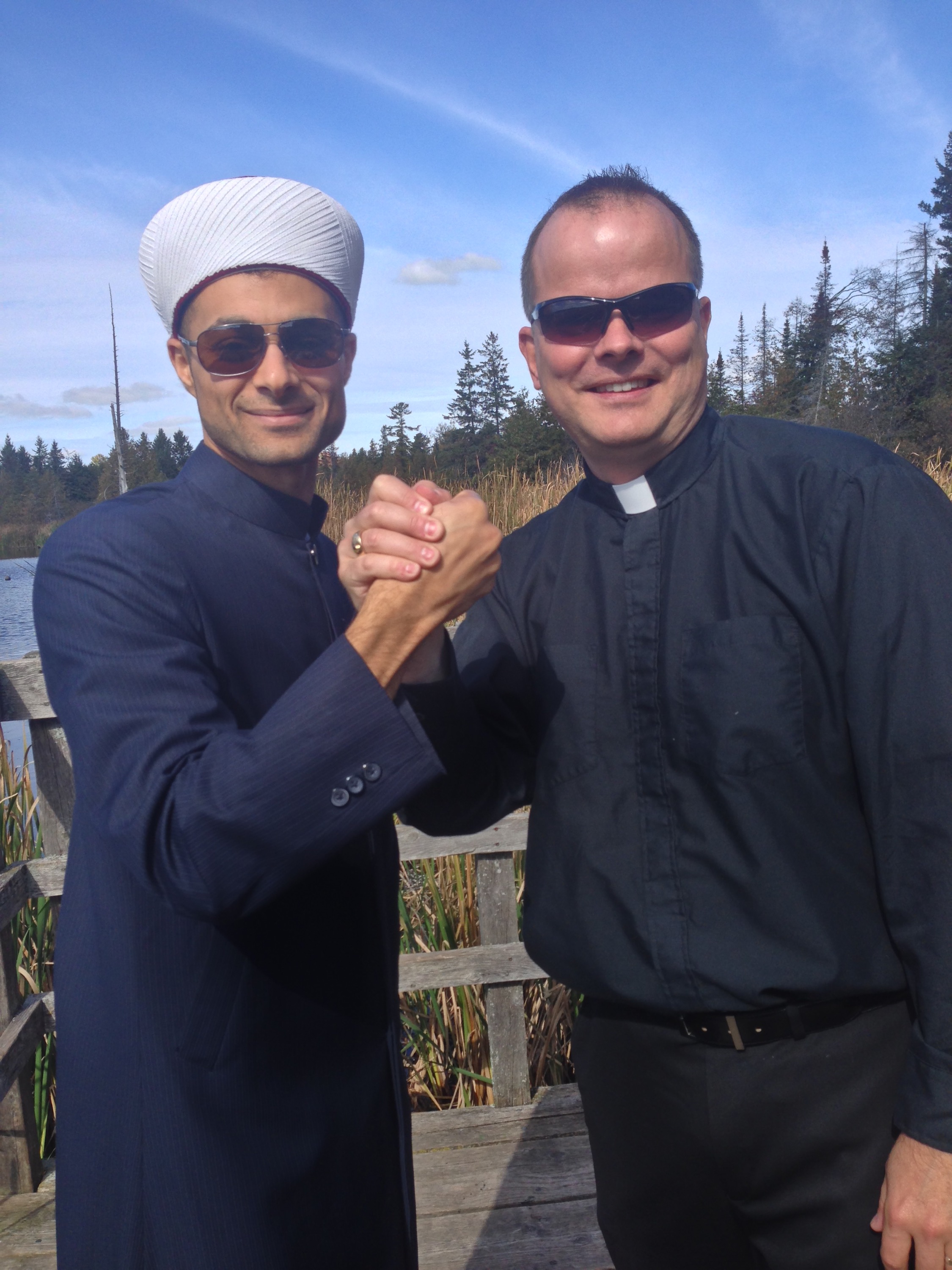
Jesus commanded that we shall love our neighbour as ourselves (Matthew 22:36-40). This commandment motivates me to participate this afternoon in the clerics’ cycling challenge (www.clericchallenge.com), initiated by Imam Mohamad Jebara.

  
Practically, then, what Jesus’ commandment means is that if you love someone, you want to know something about her or him. You want to know who she is, what he values, and how they orient their life. If you love someone, you take the time to talk to him, get to know her, and in so doing, you share yourself as well. 

  
Love shows itself in attention to another, in accepting another on their own terms — yes, and in a willingness to learn something new, to think about things in a new way, and to grow together in friendship and harmony. 

  
When I say Christians are called to love their Jewish or Muslim neighbours, for example, I mean we are called to develop relationships of mutual affection, understanding, and appreciation (Kristin Johnston Largen, “Interreligious Learning and Teaching” Fortress Press, 2014, p.59). Then, we love our neighbour as ourselves, thus fulfilling Jesus’ commandment.

  
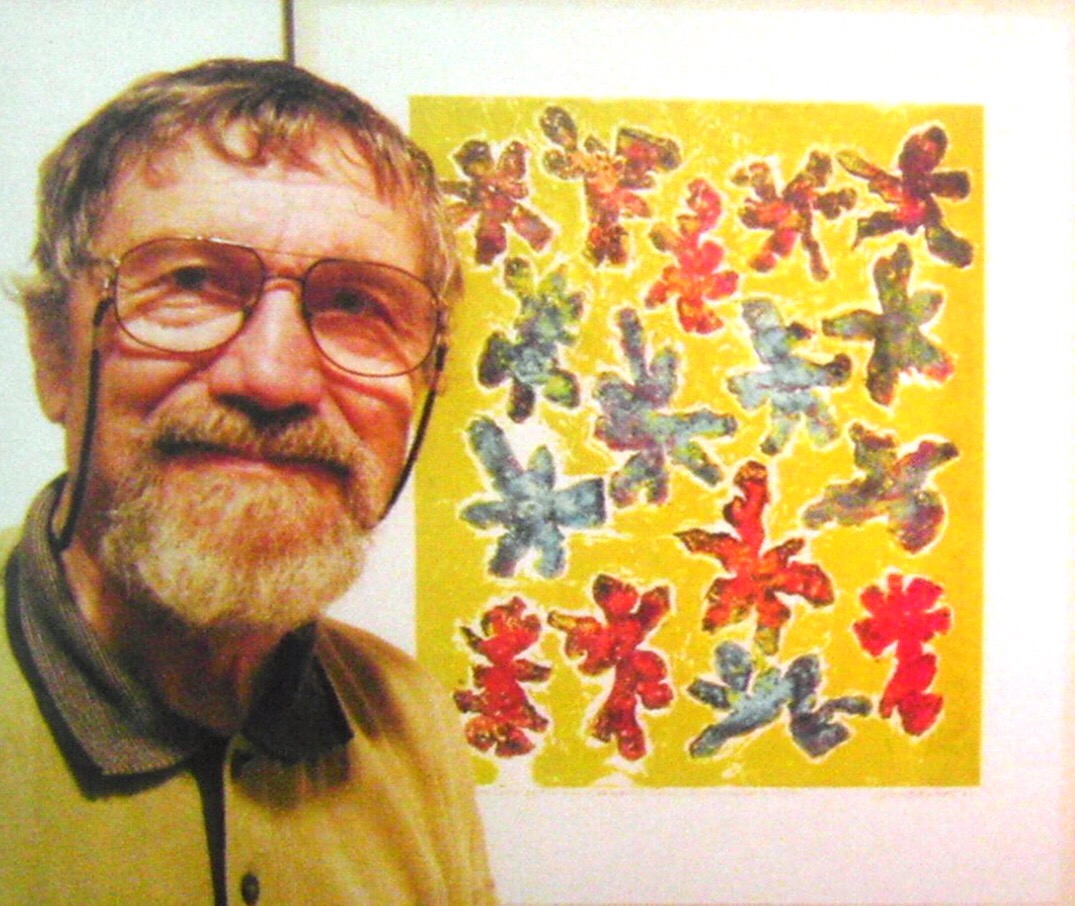
I had the pleasure of viewing some artwork this past week at the Rothwell Gallery on Montreal Road in Ottawa. The Gallery is presenting until October 24th the work of the late Leonard Gerbrandt (1942-2010) who travelled the world and created beautiful impressionistic watercolours and prints especially about the structures of various land and waterscapes. I was given a personal tour by Ute, his spouse, of the hundred pieces or so displayed in the gallery.

  
When we began the tour, she asked me to guess what colour appears and is prevalent in the vast majority of his art. With a twinkle in her eye, she confessed that this particular colour also happened to be his favourite. And so I went to work. At first, I suggested it was the earth tone greens, even maybe the rust, terracotta and orange/reds. No. No. And no.

As we reflected on one specific piece of art I marvelled how Leonard mixed the blues to distinguish sky and sea. Ute smiled, then said, it was blue indeed. I quickly travelled through the gallery looking anew at the paintings. And you know what? It was true! Now, I could see it — blue indeed found its way into almost all his paintings. Why didn’t I see that at first?

Blue, after all, is my favourite colour too (No political association, though!). And then I pondered further why I couldn’t see what had always been my favourite colour. Had I been distracted by the flashiness of other ‘colours’? Did I take ‘my colour’ for granted? What were ‘the blocks’ inside of me preventing me from seeing what was most important to me? Pride? Anger? Fear? Shame? Greed? Why couldn’t I appreciate fully the beauty that was staring me in the face, for me?

Of course, colours would not exist without the presence of light. In fact, it is how the light is represented in a work of art that brings out the textures and hues created by the paint brush. I also believe that art, like music, serves to reflect back to us an inner state — and that is why art and music can be so powerful conveyors of meaning and truth about ourselves and the world at any given moment in time.

The living Jesus is with us, and in our hearts through the Holy Spirit. The love of God propels the Spirit to move us in the the way of Jesus. And yet, we block our sight. We can’t see the light. What are those blocks that keep us from living out of our nature that is being renewed day by day? What keeps us from loving our neighbour? Is it fear of the unknown? Is it a shame that is deeply imbedded? Is it the fire of anger, the pain of regret, the poison of hatred, the paralysis of mistrust?

“Out of his anguish he shall see light” (Isaiah 53:11)

This phrase comes from a larger so-called suffering servant poem from the prophet Isaiah. Christians have read Jesus Christ into the role of the servant even though the text was originally heard among the people of Israel hundreds of years before Christ. The ‘servant’ could refer to the people as a whole suffering in Babylonian exile, or to a specific individual (i.e. Persian King Cyrus /Isaiah 45) who liberated the Israelites and led them home to Jerusalem.

This exegesis is important and we need to tread carefully in working with sacred texts that we share with our Jewish neighbours. We Christians know the sacrifice of Jesus on the Cross for our liberation, indeed for the whole world. Jesus fits the suffering servant-narrative from Isaiah. Let’s work with this.

The anguish Jesus experiences in his suffering and death reflects a God who is fundamentally relational. And God the Father, the Son and the Holy Spirit relates to us in our very own humanity. Thanks to Jesus who showed us the way not just in his divinity but especially in his very own humanity. ‘Anguish’ after all, is a human emotion grounded in love. That is, “to anguish over the loss of a loved one” (online dictionary definition).

Not only does Jesus know our suffering in a shared humanity, he feels for us because of God’s intense love for us. The author of Hebrews is therefore able to describe Jesus as the ultimate high priest, who “is able to deal gently with the ignorant and wayward, since he himself is subject to [this] weakness” (5:2). In short, Jesus helps us “see the light” because of God’s deep anguish-filled love for us. God grieves losing us to our sin, and will not stop short in going the distance — even sacrificing his own life — so that we too will see things as they truly are, in the brilliance of God.

In prayer, 14th century Christian mystic Julian of Norwich reflected the divine stance: “I am light and grace which is all blessed love.” May our words and deeds reflect the light of Christ to our neighbours, in all grace and love.