Seeking kin-doms: a funeral sermon

Byron was born at the beginning of the Easter season in 1974, on Easter weekend in fact. Byron died on the last weekend of the Easter season in 2025. His life, from beginning to end was held and embraced in the life of the resurrected Jesus. 

At the beginning of the Easter season, the beginning of Byron’s life, it is about the promise fulfilled. After months of waiting and expecting, your baby is born. New life has arrived, upturning regular routines, upsetting comfortable sleep patterns and shocking the family into a new, delightful part of life.

But at the end of the Easter season, at this unbidden moment, when the one we’ve grown to love and know and see in the flesh, leaves us. This is the difficult time for the disciples of Jesus, who now that Jesus is resurrected will leave them. They will no longer see him in the flesh. What will they do without him? This crisis of faith hits them like a gut punch.

Byron’s sudden and unexpected loss hits us like a gut punch. And we may very well still be trying to get our breath back from the shock of it.

The Easter season frames Byron’s life both in the promise of life and in the loss of it. Every funeral service, arising from the pain of death, is an Easter service no matter what time of year.

Loss is part of life. In his lifetime, Byron’s favourite team, the Indianapolis Colts only one the Super Bowl once, in 2007 under Payten Manning’s quarterbacking. For all the years that Byron was faithful to his beloved team, he endured all those losses, year after year – except for that one.

Losses and death can dominate even in the season of Easter, except for that one Win. Hope and faith stay alive despite the losses. The hope of life still to come, against all the odds. The colour of Easter is white, the colour signifying life ongoing, life eternal.

Hockey and football, two of Byron’s passions, are seasonal sports. For the most part, they happen during a defined season of every year. But I think there is something deeper going on here.

Notice in both cases we are talking about team play, with others. Football, like hockey, is a team sport. In few other sports do the players need to connect intuitively with everyone else. The better a team connects that way, the greater chance they have to win. Football players will often talk about their team-mates as family.

Byron, at heart, valued kinship. He was dedicated to family and to the network of people that made up his life. He never missed a family gathering, at Christmas and at Easter. In fact, this past Easter weekend was the last time some of you saw Byron face-to-face.

When Jesus counselled his disciples, prepared them, for his departure, he promised them he would always be with them, in them, through the Holy Spirit. He promised them that they would not be alone, and that they would always have access to him in their hearts, and in the world (John 14).

How so?

“It is God’s pleasure,” Jesus says, “to give you the kingdom” (Luke 12:32). The phrase, “kingdom of God” is mentioned some eighty times in the New Testament. It is what Jesus says is the goal, purpose and aim of the Gospel – the good news. “Seek ye first the kingdom of God” (Matthew 6:33).

But kingdom doesn’t mean empire-building, evoking images of might-makes-right, power-seeking kings that we have witnessed throughout human history. To help us get the true gist of the word, biblical scholars are now suggesting the word kingdom should drop the ‘g’. In other words, wherever we see the word ‘kingdom’ in the New Testament what we should be reading is ‘kin-dom’ (Butler Bass, 2022).

The reign of Christ is really about our kinship with God, with creation, with one another and with ourselves. The reign of Christ is really about valuing relationships over things. For wherever your treasure is, there your heart is also. Whatever you value, your treasure, what is most important to you, your heart will follow suit.

Put another way, whatever you value, you pay more attention to. Whatever you pay attention to, you love.

Jesus says, “Seek ye first the kingdom of God” (Matthew 6:33). Which means, pay attention, draw your attention, to what is already in front of your eyes, to what you have in your relationships. There you will find love. And there, you will find Jesus.

Because it’s not that we don’t already have access to the kin(g)dom. It’s not that we don’t have it and we have to somehow acquire it, possess it. It’s God’s good pleasure to give us the kingdom. We already have it. It is God’s good pleasure to raise up before us the value of our relationships.

For Byron, despite the challenges he met, or maybe better yet through the challenges he faced he remained true to his values of supporting his children and valuing those relationships more than material things. He didn’t live to amass wealth and prestige. He didn’t live to accumulate material resources and build investment portfolios.

He lived for his family. It wasn’t a perfect kinship all round. Like for all of us, relationships aren’t easy. And sometimes we fail. Yet, in all his humility, simplicity, and yes even in his passion where he found his juice and motivation, underlying all of that was his commitment and dedication to his kin.

God will not stop expressing pleasure in giving us the kingdom, despite and perhaps more because of our tendency to slip up and fail. God takes pleasure in giving us the kin-dom, offering us relationships where love and grace abound.

Connecting to the life of Christ, we all live in relationship. May the kinship of God, as it did and does for Byron, surround us with grace and fill our lives with love, forever.

Reference:

Butler Bass, D. (2022). Freeing Jesus: Rediscovering Jesus as friend, teacher, savior, lord, way, and presence.Harper One.
Love, in the book of life – a funeral sermon for losing someone you loved dearly

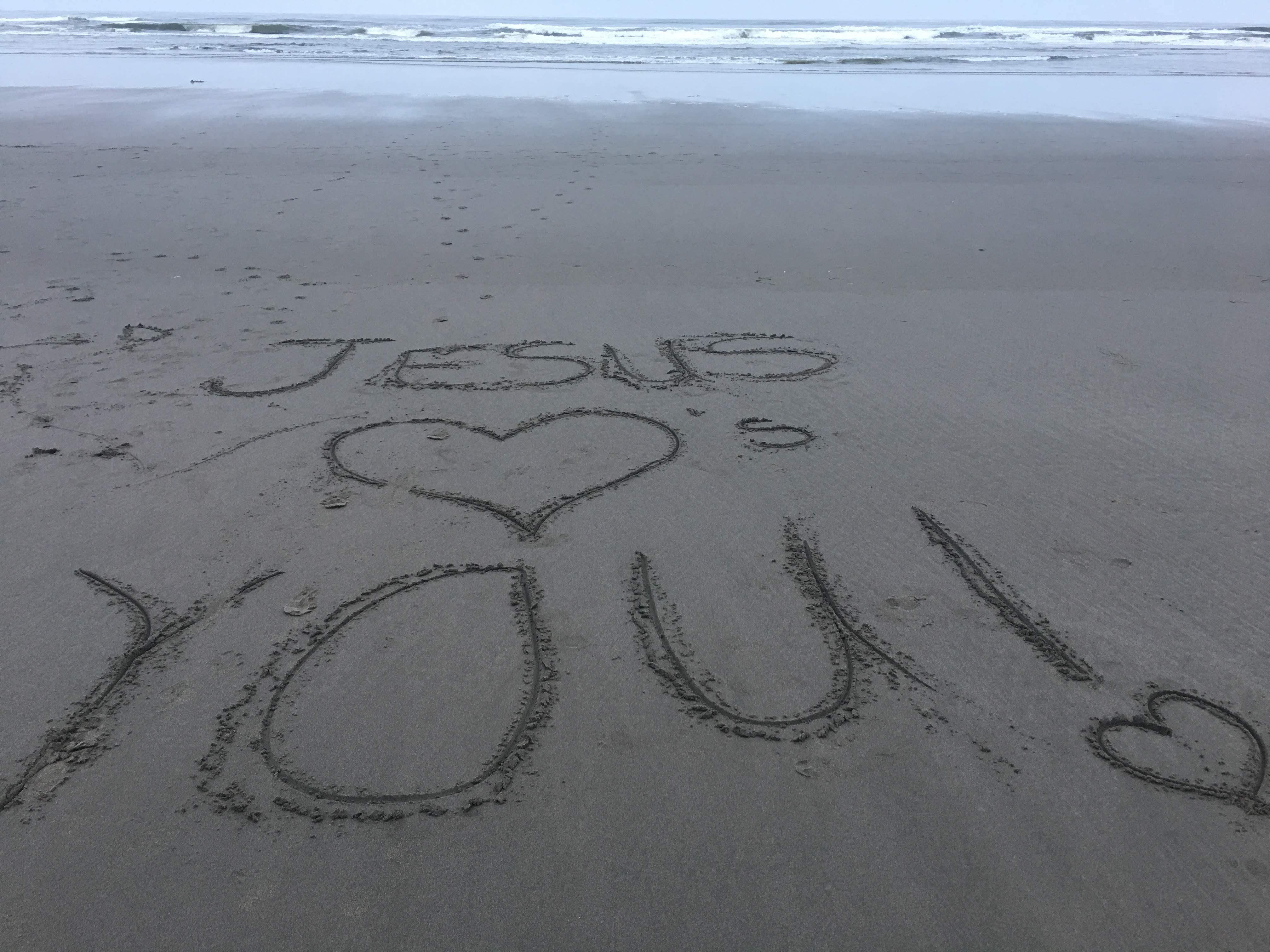
God’s love can’t be washed away (photo by Martin Malina, July 2018, Long Beach WS)

The ‘book of life’ is mentioned not only once in Revelation – this last book of the bible – but several times (3:5, 20:12, 20:15, 21:27), as well as in Philippians (4:3) and Exodus (32:32-33). The book of life is mentioned throughout the bible.

The book of life is an image that came to my mind after something you said to me recently that made me think about the length of the books we read.

Normally I don’t like reading big books with hundreds if not thousands of pages in it. I feel I don’t have time nor energy to plumb the depths and breadth of long books. I prefer short books, under a couple-hundred pages.

While a short book I can easily get a handle on, understand and keep track of all the characters, plot lines, and themes, there is one problem with short books. If it’s a good book, I don’t want it to end. When I reach the last page, I want more. So, it’s tough putting down a quick read that I really enjoyed.

Your beloved’s last words to you were, “I love you.” Indeed, you had a love story that ended too soon. In other words, the book was too short. And reading this love story, we all wanted more.

The thing about the book of life in the bible is that it is ongoing. People’s names are written in it. But it’s not closed, reserved only for the names of those who lived thousands of years ago. It is open, and names are continually added including, today, your loved one’s.

In the life of spirit, of faith, nothing ever ends. And while our flesh withers away on earth, our relations continue forever. While your relationship with your loved one changed at their death, it is not over. And therefore, your relationship with them is not lost. It has just changed. Their name, after all, is written in the book life, forever.

Your love story is not over. Another book in the series is being published. Part two. Because it is the book of life. Life and love never end.

Jesus said, “The hour has come for the Son of Man to be glorified. Very truly, I tell you, unless a grain of wheat falls into the earth and dies, the seed remains just a single grain; but if it dies, it bears much fruit.” (John 12:23-24)

Funeral sermon for an infant at Christmas

Let us pray. Heavenly God, you formed us in our mother’s womb and, in Jesus, welcomed children to come to you. Today we grieve the untimely end to a life that delighted you and us. Our hearts are torn, and we are burdened by our grief. Be with us as we walk this shadowed valley. Receive our tears. Hold space within us for hope’s return. Amen (All Creation Sings, 2020).

No words I can say will take the pain away. Our actions now must speak louder than any words. And what you are doing today, dear family, is showing up. And more than that you do an act of love, and an act of courage amidst this horrible loss. We are grieved, deeply saddened, our hearts are torn, as we prayed. Yet, you have given each other space and permission to feel what you must.

In this collective effort and in our humble actions today, we honour the life given to Leyla. We stake our ground, together today, and affirm that Leyla’s life made a difference in the world, and in the universe. Her life was a precious gift.

Recently I read (Coman, 2024) about a giant sycamore gap tree that enjoyed enormous popularity among visitors to Northumberland Park in England. This tree was used in many films. Because of its location it was a beautiful beacon and focal point in the park.

But in September 2023, the tree was felled in an act of vandalism. The outpouring of grief and anger was unprecedented, and a testament to the beauty and meaning it had offered many.

Was it over? Was this tree, that had offered such joy and beauty in the lives of many, no more?

In the following year seeds were harvested from the downed tree. Now, the seeds have grown to become saplings and are thriving. In a project called “Trees of Hope”, these tiny saplings from the felled tree are being given to people in prison, and many charities. In this way, the Sycamore Gap Tree will not only have its own offspring, but whose seeds are now being used for good.

When the tree came down, it wasn’t the end of it. It wasn’t over. And whatever is not over, is not lost. Never lost.

Dear family, you’ve experienced a seismic shift in your life these past weeks. The earth underneath you has opened up. And grief can sometimes feel like free-falling into the unknown abyss. It is true, life will never be the same again.

But when the ground shakes as in an earthquake, the trees shake. The pinecones fall to the ground. And the seeds within come out and are planted in the earth.

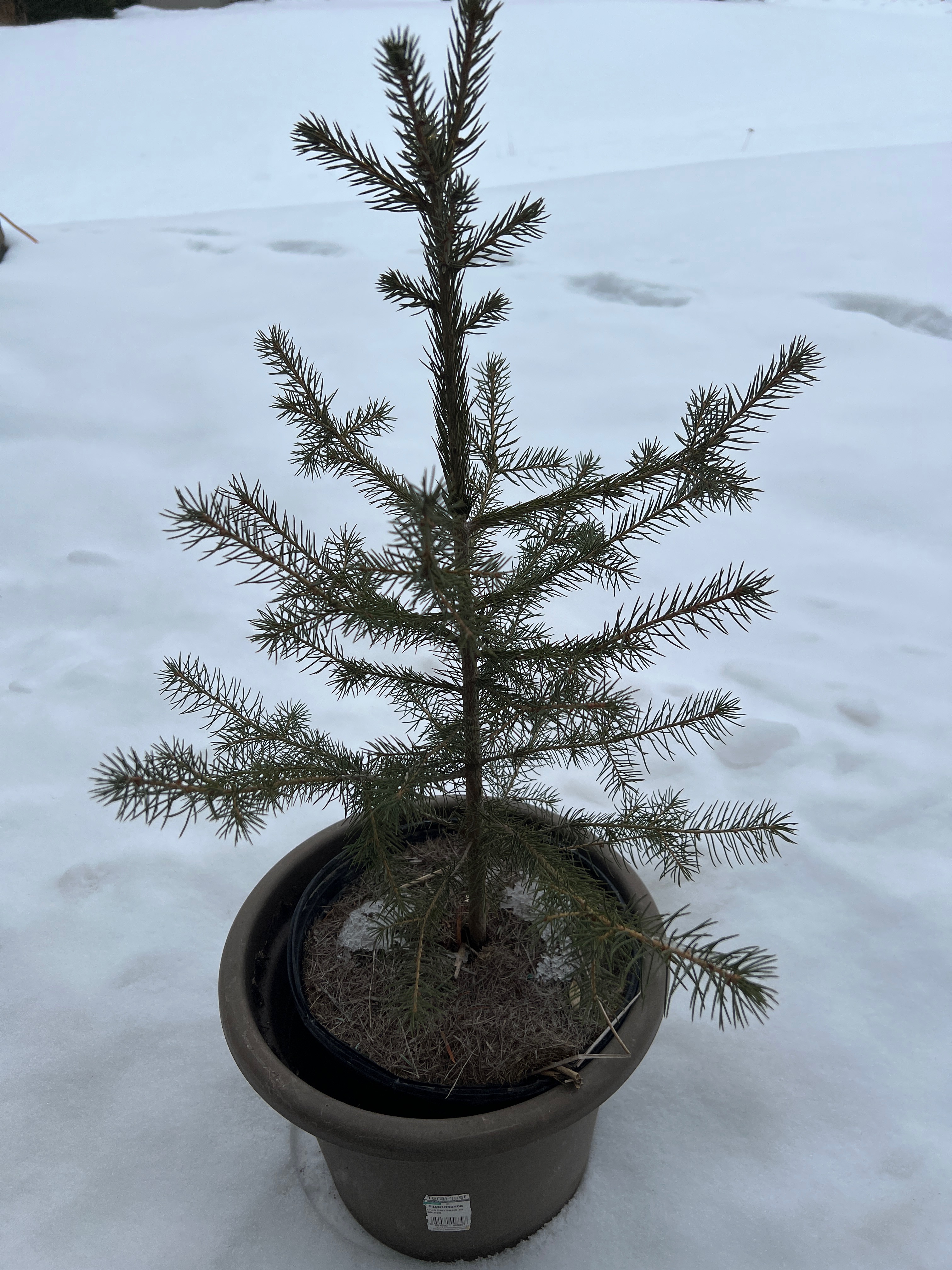
The Norway Spruce is common in Eastern Canada. One unique feature of this tree is its cones are the largest among all spruce varieties (Audubon, 2021). What does that mean? That means, lots and lots of seeds.

This sapling of Norway Spruce is now dormant for winter. It will need to be planted in the earth in the coming Spring. It needs lots of water, and it will grow. Perhaps during this wintertime, you can think of a place you’d like to plant it. In that simple act of planting a tree, there is this seed of hope that says maybe it’s not over; and because it’s not over, it’s not lost.

The cross of Christ, various legends have it, was made of varieties of wood ranging from dogwood to olive, to oak, to cypress. Whatever the blend or variety, the wood upon which Jesus died can be a sign and symbol of this close relationship between death and life. What dies finds a way to endure. What dies finds a way to live again. Our relationship with Leyla has changed, to be sure. But it isn’t over.

It is called the “tree of life”, both in the first book of the bible – Genesis (2:9) – and in the last book of the bible – Revelation (22:2). In the end, just as in the beginning, the tree of life promises that every ending marks a new beginning.

References:

All Creation Sings, Leaders Edition. (2020). Life passages and circumstances (p. 92) [adapted]. Augsburg Fortress.

Coman, S. (2024, December 9). Seeds of Hope: Day 8. Lutherans Connect. https://lcseedsofhope.blogspot.com/2024/12/day-8.html

National Audubon Society. (2021). Trees of North America. Knopf.

When the lights go out: an Epiphany funeral sermon

It’s sounds strange talking about Marcella in the past tense. All of this happened so quickly. It was such a sudden loss. So unexpected. One moment she is participating and enjoying the holiday with family. And the next, she is gone. 

It’s like when there’s a power outage and the lights go out. We may have some heads up – like at this time of year when the weather network puts up freezing rain, wind or snow warnings. These storms will threaten the hydro lines, and we know we could lose power at any given time. 

But usually when the lights go out, no matter the condition, it still catches us by surprise. We are caught in the shock of it. 

And we are left in the dark. When we are without power even for a relatively short amount of time, that’s usually when we realize all the things we take for granted. These creature comforts we call them, things we appreciate, like – running water if we are on a well, the stove, the fridge, the furnace. Generally, when the lights go out, we think of all those things that normally give us a sense of security and help us survive, especially in the harsh winter time. And how life is now without them.

It’s scary. We find ourselves in unchartered territory. The first thing we will likely do is reach instinctively for any light. Like a candle. Or a flashlight. And appreciate its simple brilliance more. Also, if we share a living space with others, likely the situation will bring us physically closer together as we huddle around the light. And, usually, although it may not initially feel like it, we eventually get through the harrowing ordeal – through the dark night – in one piece and okay.

The sudden death of Marcella feels like the lights going out. And we’re not talking about a house or a subdivision, but a whole city or half the country! Marcella was a bright light in our lives. Her energy, her spunk, her drive. Her light going out affects a universe. It feels like now something huge in our lives is gone. We feel truly in the dark without Marcella. Will it ever be bright again in our lives?

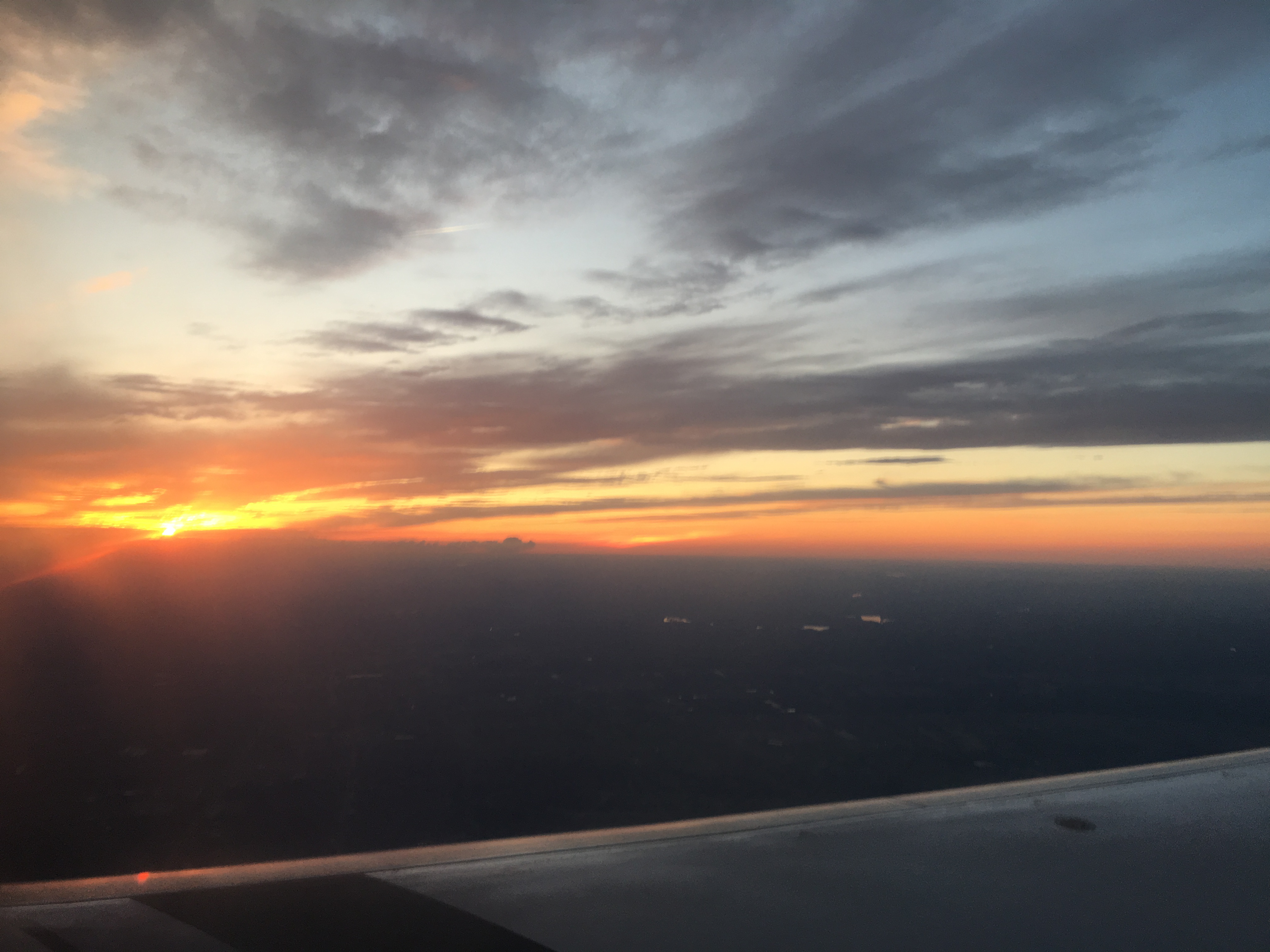
Marcella and David travelled a lot. So, you know that when flying from Ottawa to London or Frankfurt, the journey begins late in the evening. Almost immediately upon departure it is already night time. It is dark. And while most of the six-hour journey transpires in the dark of night, the flight over the Atlantic is heading eastward.

And that means that this journey we are on, dark as it stays for most of it, goes with the expectation—the promise—that we are heading into a new day. After five hours of complete darkness, a thin pinprick of light first lines the horizon ahead. It isn’t too long afterward that the journey is completed in the bright daylight.

You begin a journey these days. And it starts in the darkness of grief. This journey may take some time. It may feel like a very long time. This journey must acknowledge and embrace the darkness in which we walk and the time it takes. Because we can’t get to where we are going without moving through the night. We can’t avoid it. 

But you travel not alone. You are together, as family and friends, somewhere on the flight path. You may use the time you have to be reconciled to your losses and the suffering you bear.

Even though you carry the burden of grief and loss, you are nevertheless heading towards a new day. On this long journey in the dark you wait, as it were, for the sun to shine again. You look for the pale dawn’s light to begin brightening the day again. It may start small – a tiny candle flame, a moment of grace, a pinprick of starlight shining brightly in the dark sky.

May these moments give you hope and faith that Marcella’s light still shines. It still shines in the warmth, the light, the life and the love of God. Yes, we speak of her today in the past tense. But we can still use the present tense. Her light still shines. And your light will, one day, shine brightly again.

Prayer as Lament – Advent sermon series 3

Traditionally, the Third Sunday of Advent is known as Gaudete Sunday, a command to rejoice! Be joyful!

In all the furtive busy-ness of getting ready for the big day, in all the running around and striving to check off everything on the ‘to do’ list before Christmas, carrying all the pressure and responsibility …

The church says: don’t take yourselves too seriously on this journey. There are times when we need to not just listen up, but lighten up. Gaudete!

Yes, we are on the path of transformation. And this path requires us to be intentional and disciplined. After all, Christmas is coming; there is much to prepare! It was Ignatius of Loyola, a contemporary of Martin Luther in the 16thcentury, who urged the church to “pray as if everything depended on God, and work as if everything depended on us.”[1]

Not bad advice. Except we won’t survive this journey if we don’t also take the foot off the gas pedal from time to time. Can we let things be as they are? Can we accept ourselves and rejoice even at the imperfection of our lives – the cracks in who we are? Or, have we deluded ourselves into thinking that only when everything is perfect, and finished, and just the way it ought to be, then, and only then, can we rejoice?

How can we be authentically joyful, especially when things aren’t the way they are supposed to be in our lives and in the world?

In our ordinary lives as much as in our worship and prayer, we have to make room for lament. Lament? It seems odd to suggest that on Gaudete Sunday of all days – the Sunday during Advent when we are called to rejoice – we offer our laments to God in prayer.

I’d like to suggest this is the path to expressing true joy. Lament as a necessary step on the path to true acceptance, hope and joy. So that our rejoicing isn’t just an extension of our culture’s surface ‘good cheer’ which often only masks deeper needs.

The Psalms, which are the primary prayer book for the ancient Israelites and Jews of Jesus’ day, are filled with laments. We read one together this morning.[2]Even Jesus, after his triumphal entry into Jerusalem on Palm Sunday, expressed his disappointment and sorrow over Jerusalem[3]. And then in the garden of Gethsemane the night before he died, Jesus prayed to God if only his cup of suffering could be taken away.[4]Jesus wept for the death of his friend Lazarus[5], and on the cross he cried out, “O God, why have you forsaken me!”[6]quoting a Psalm. Jesus was familiar with, and used often, the prayers of lament on his journey to new life.

Perhaps we are afraid that if we do take the foot off the gas pedal during this season of rush-rush, we might not very much like what comes to the surface. In that moment when we are not driven by our compulsions and distractions, what scary thing might emerge?

This season can be difficult for those, for example, who grieve the loss of loved ones especially when it is the first Christmas celebrated without them. We are supposed to feel happy, but we are burdened by a deep sadness of loss. And all those messages that declare we are to be ‘joyful’ only serve to deepen our sorrow. How, then, can we be joyful?

In the Academy Award winning movie, “Inside Out”, eleven-year-old Riley has moved to San Francisco, leaving behind her life in Minnesota. She and her five core emotions, Fear, Anger, Disgust, Sadness and Joy struggle to cope with her new life.

In the movie, each of these emotions is a separate character in the control room of Riley’s mind. Until the big move, it was always Joy who was in the driver’s seat. Joy determined how Riley processed events and situations in her life. Even if Riley, who loved to play hockey on the family pond, missed a shot on goal, Joy would step in and emphasize the bright, positive side of the situation. Sadness would always stand nearby, trying to be more influential in defining Riley’s experiences. But, until the move to San Francisco, Joy always won out.

When big events in our lives happen – events that are happy or sad – these change us and the way we look upon life. By Joy insisting on dominating, even when Riley experienced significant challenges at school and at home after the move, she became worse and worse, shutting out her parents and isolating herself.

It was only when Joy let Sadness take control, did Riley turn the corner. Riley became better in her new life when no emotion was denied, but given its rightful place given the circumstance. The emotions – especially Joy and Sadness – discovered that both have to take turns in the driver’s seat from time to time. Both/And. Not Either/Or.

Christianity did not combine opposites into some kind of favourable blend. Neither does having faith exclude, deny nor avoid one in favour of the other. Rather, our faith holds all dimensions of the human, and all the dimensions of the divine in vibrant and furious tension.[7]Like, the tension of becoming truly joyful when we can also offer our lament. When we can let sadness take the driver’s seat for a bit of that journey especially when it seems it’s supposed to be all about being happy all of the time.

In the Advent study group on prayer, we reviewed the various characteristics of a lament by looking at some Psalms. One characteristic will often escape our notice, maybe because it doesn’t fit our expectations of what lamenting is. You know, we think it’s all tears and gnashing of teeth and breast-beating and woe-is-me kind of stuff.

But a lament is not a lament unless it also carries the one who is praying into a place of confidence and trust in God. Maybe that’s why Jesus lamented so much. Because he was so faithful to Abba. Trusting in God his Father. Besides the obvious grievances and plea for help expressed in the Psalm, did you not also hear and feel joy born out of confidence and trust from the Psalmist’s words this morning?

“Restore us, O God; let your face shine upon us and we shall be saved. You have brought a vine out of Egypt; you cast out the nations and planted it … Turn now, O God of hosts, look down from heaven; behold and tend this vine; preserve what your right hand has planted … Let your hand be upon the one at your right hand, the one you have made so strong for yourself. And so will we never turn away from you; give us life, that we may call upon your name. Restore us, O Lord of hosts; let your face shine upon us, and we shall be saved.”[8]

Prayer as growth. Prayer as Listening. Prayer as Lament. On the road to Christmas.

[1]Cited in Patrick J. Howell, David L. Bartlett & Barbara Brown Taylor, eds. Feasting on the Word: Preaching the Revised Common Lectionary Year A Volume 1(Kentucky: WJK Press, 2010), p.65-66.

[2]Psalm 80; see also Psalms 74, 79, 85, 90.

[3]Matthew 22:37; Luke 13:34

[4]Matthew 26:39

[5]John 11:33-35

[6]Matthew 27:46, citing Psalm 22:1

[7]Howell, ibid., p.64

[8]Psalm 80:7-8,14-15,17-19

Advent blessing for the journey

When flying from Ottawa to London or Frankfurt, you leave late in the evening. Almost immediately after departure it is dark. And while most of the journey transpires in the dark of night, the flight over the Atlantic eastward nevertheless goes with the expectation—the promise—that you are heading into a new day. After four or five hours of darkness, a thin pinprick of light first lines the horizon ahead. It isn’t too long afterward that the journey is completed in the bright daylight.

The journey of Advent recognizes the darkness in which we walk and the time it takes. We can’t get where we are going without journeying through the night. Each of us are somewhere on the flight path, using the time we have to be reconciled to our losses and the suffering we bear.

Whether we carry the burden of grief and loss, of suffering and pain, of anxiety and fear, we are nevertheless heading towards a new day. On this long journey in the dark we wait, as it were, for the sun to shine again.

May this journey of Advent be hope-filled, that as you make your way towards the new dawn, the expectant joy of the coming of the light will give you strength and courage to keep going in the grace, peace and love of God.

Pastor Martin

IMG_7127

funeral sermon: with 4 wheels on the ground

I remember that winter day. It was -20c and the roadways were covered with snow and ice. And yet, I was feeling pretty proud of myself. Coming into the west-end near Stittsville, the Queensway was empty. And it was mid-morning on a weekday!

I was powering it through! A little snowfall wasn’t going to impede me. I was going at my regular speed in the passing lane and was wondering why very few were venturing onto the highway. And then I saw a car had spun out, resting against the guardrail perpendicular to me at the side of the 417 in front of the Canadian Tire Centre. And a little farther I witnessed another car spinning out of control.

I decided to slow down, and tapped the brake. Mistake #1. I felt the wheels begin to float underneath me. I then stepped on the gas to try to get grip. Mistake #2. The fish-tailing was starting to feel like a swan dive. I was losing it!

Thankfully in that moment, I remembered what my drivers-ed teacher taught me thirty years ago: Step off the gas! I think we instinctively associate stepping on the gas with more control — in all circumstances; the more I give, the more I expend, the more I put myself out there — the better it’ll be.

But in this case, the solution was to let go and just keep the steering wheel pointed forward. And as soon as I let off the accelerator, the four wheels found purchase, and I was able to recover. It is a little bit counter-intuitive for us in our get’er done culture to divest ourselves of the belief that doing more about something will save us from whatever predicament we find ourselves in. Sometimes, in tough situations, we just have to let off the gas, a bit.

When a loved one dies, we must do what might feel counter-intuitive to what love is. We need to let go. To let-go takes love.

Life came to a crashing halt for you last week. The shock, the heaviness, the sudden change in your lives now that Mark is gone—all threaten to overwhelm you in grief. Maybe these days all you can do is bring to mind memories that stand out.

One very clear memory from your life with Mark is at the racetrack. Car racing—whether at Capital City before it closed, or Cornwall and Brockville—brought you together in the enjoyment of life.

God created each one of us to have 4×4 capability, to drive on the road of life. If you have four-wheel-drive, you normally have the option, when you need it, to engage all four wheels in the power-train instead of just the two front wheels. Four-wheel-drive comes in handy especially in snowy, icy winter conditions, or when you drive off-road in mud, over rocks and in fields.

Now, I believe most of us who have this four-wheel-drive option don’t really need it for 99% of the time we drive, even in winter. For most of our lives, things may go reasonably well for many of us. Life is good. We get by. We may even enjoy many of the blessings of a good life.

But there will still be times in our lives when we will suffer. There will be times in our lives when our health will fail and we come face to face with our limitations. We will suffer loss and even tragedy. We will suffer the pressures and stresses of family and work and the conflicts of being in relationships with others.

And when we do, we will need the four-wheel-drive option that is built right into our make-up. We do, so God created each of us, have the capability to engage the off-road bumps and potholes. We do, so God created each of us, have the capability to engage those slippery, icy, even dangerous road conditions.

Yes, using four-wheel-drive burns more gas. It’s not the most fuel-efficient way of driving. We use up more energy. It will be difficult, trying, even exhausting. Working through our grief pushes us past our comfort zones, to be sure. But we do have the capability, this gift, and we should use it. Try it.

And here’s the wonder of it: When we must engage the four-wheel-drive option and drive down that unknown, sometimes scary, road, being jostled about on the uneven, narrow way, we discover that God sits right beside us in the car.

You see, the engine won’t ever fail, because the capability for off-roading is a quality of God’s love. Love is the fuel, the energy, the power behind this effort. And this love is shown to us by God. God loves us, even when we make mistakes, when we falter, even when crash, even when we will have an accident. God is with us. And God’s love and unfailing presence sustains us.

In the scripture I read, I hope you heard those words from Saint Paul: “Salvation is nearer to us now, than when we became believers” (Romans 13:11). When we first become aware of the love of God for us, maybe a long time ago, that is great! This may be some significant turning point, or an incredible experience when the beauty, joy, peace and glory of life radiate all around us.

That was then, this is now. Since then, we may have thought little about God and dismissed any notions of participating in the life of the church.

It doesn’t matter, now. Because the point is, right now you are off-roading. And now that you may be using that 4×4 capability on the rough patches of the road of life, God is even closer to you.

Regardless of our past. Now that we may be suffering and enduring the pain of loss, God is even closer to us. It’s built right in. God “… will not forsake his people; God will not abandon the work of his hands” (Psalm 94:14).

God created Mark. God has not forsaken Mark in his time of greatest need. God has not abandoned Mark at his most vulnerable moment of life and death. And God will not abandon you.

After all, God is right next to you on the road of life.

funeral sermon – living with a Gospel bias

The last church activity in which Tony participated was the weekly bible study group. At that time I was asking the group to choose next week’s text for study. And the selection was one from either the Old Testament or the Psalms or from Paul’s letters in the New Testament or from a Gospel reading in Matthew, Mark, Luke or John—the first four books of the New Testament.

Tony always, always, always voted for the Gospel reading. The Gospel describes the story of Jesus—his life, death and resurrection. You could say Tony had a bias towards the Gospel. And especially the Gospel of John, for some reason.

The word, Gospel, means: Good News. Good news. Not bad news. Not about how we always fall short. Not about human folly. Not readings about our sinfulness, about what we should do to make it better. But about the grace of God. God’s forgiveness, mercy, love.

The example in today’s Gospel is typical: Jesus washes his disciples’ feet.[1]The Gospel, to recognize it, is always about what God does, as a gift to us. So, here’s the thing about the good news of God:

It’s about receiving more than it is about achieving. The grace of God must be received, not achieved. Normally at a funeral service we talk about what our loved one has achieved in life, as if somehow the more one has achieved the better.

And without second glance, Tony, on that measure, has achieved so much: publishing books in his retirement, building half a dozen houses, acquiring degrees in mathematics and engineering, qualifying himself in brick-laying and construction, even playing soccer into his 80thyear. He achieved a lot, if that’s how you want to look at it.

And certainly in our culture, it seems that’s what it’s all about.

But what a tribute to one who has learned to see, that in all that life has given him—good and bad—all that he received in life, there is grace. A gift of God’s love. To appreciate life as gift. This is right brain stuff. This is entering into the mystery that is God and life.

When he was young, he contracted Diphtheria which kept him isolated for some time, sequestered with the nuns in their abbey. Late in his life, Tony was able to confess that even having a disease was a gift, since it kept him from entering the war, a war that claimed the lives of his two brothers.

These traumatic events of life could have left him bitter. But, despite it all, he remained his true self—kind, loving and gracious.

The author bio on the back cover of both books he published in his retirement says the following about Tony: “Tony was always very interested in literature, history, religion, and cosmology.”

At the end of Act One in his book entitled About God, the World and People, the scene is set at an evening dinner party. Around the table sit different characters – a priest and a scientist among others. After covering such cerebral topics as ‘what is dark matter’, the origin of the universe and various forms of energy, the priest, Father Stengel, concludes with what I suspect is the author’s personal belief:

Father Stengel says, “I personally have no problem with what our diligent scientists discover. I clearly see in the development of our universe the guiding and loving spirit of our Father in heaven.”[2]

While working with numbers all his life and valuing their clarity and succinctness, Tony was also able to say, “They’re just numbers”, in light of God’s truth.

From the perspective of faith, analytics and left-brain thinking can obviously help with some things in life. But when it comes to the great mysteries of life, when we encounter great suffering or great love, when we experience death, or yearn for God, we need to access another ‘operating system’.

You can’t explain these realities adequately using the scientific method alone. It’s remarkable, for the mathematician and engineer that Tony was—that he was able to appreciate, discern and plumb those more intuitive and subtler depths of knowing as well.

It doesn’t make sense how grief works, really. I’ve told this to many grieving families over the years after a loved one died: That in a grieving process, it’s not just the pain of loss of that particular person that comes to the surface at that time. The death of a loved one triggers all the emotional baggage—if you will—of all previous losses you have experienced as well, all those unresolved issues in a family, everything. It can be quite overwhelming. I’ve recently experienced this truth myself. It’s not rational. But it’s very real.

And in those moments that can’t be explained, in the end, the only course of action is love. It’s the only way that does make sense in the turmoil of loss and pain. I think Tony knew that. Gospel bias towards love.

Tony’s teammates on the soccer team were well represented at the funeral home last evening. One of his teammates told me that Tony was the reason they kept playing together. He said that during a game teammates and the competition sometimes came to blows, emotionally if not physically. But Tony was always there trying to mend ways, trying to keep the group together, inspiring them to play on. Tony knew that. Gospel bias towards love.

Death changes some things. Death is final, in a way. And it hurts. Yes. But human death doesn’t mean the relationship is ended. Death merely changed the nature of our relationship with Tony.

Now, Tony is no longer physically present with us. But he lives on—in our hearts, in our minds, in our spirit, in our conscience, in our actions. He is still with us, albeit in a different way. Tony’s death leaves us a gift, an invitation to make what was important to him, important to us. Life as gift, a grace to do unto others as you would have done unto yourself. Gospel bias towards love.

“What we do for ourselves dies with us. What we do for others and the world remains and is immortal.”[3]Let what we do for others, be love.


[1]John 13:12-15,34-35

[2]Tony Bickle, About God, the World and People (Xlibris Corporation, 2008) p.48

[3]Most likely from Albert Pike, 19thcentury American attorney, soldier, writer, and Freemason. Sometimes this quote is attributed to 20thcentury American writer and biographer, Albert Paine.


Alone no more

Mary and Joseph mess up. Their only child, and they lose him. (read Luke 2:41-52) Aren’t parents supposed to know where their kids are, at all times?

Now, of course, this stuff happens all the time to the best of us—in large crowds, at amusement parks, sports stadiums, Disney World, the mall. Unintentionally we make mistakes. Each of us can likely relate to a time when we got lost and felt abandoned by our parents, and how that felt. Or, how as parents we lost track of our child. And how that felt. The fright. The embarrassment. The shame.

Maybe it’s a comfort to know that even Mary and Joseph parents of the Christ child didn’t get the parenting thing right, on occasion. Today, we would communicate that in social media as #parentingfail.

I’m reminded of the popular Christmas movie, Home Alone, when a family plans a European vacation for Christmas. The relatives all arrive for the big event. But in all the commotion the youngest son feels slighted. Expressing his frustration inappropriately, he is punished and sent to a room in the attic.

There, in a fit of anger, he wishes that his family would go away so he could be all alone. The next morning, in their rush to get ready and leave for the airport, the family overlooks the little boy in the attic. They get to the airport and board the plane, all the while believing he is with them. The boy gets his wish when the next morning he finds himself home alone.

The twelve-year-old boy Jesus experienced the feeling of abandonment by his parents. Perhaps this was a foretaste of the abandonment of the cross he would experience at the end of his life. It appears Jesus knew already from a young age what it felt like to be a human being. It appears he learned to accept the follies and misgivings of the human condition. For, he experienced it himself. At the end of the story, he felt the joy of being found and of not being alone anymore.

In the Judaeo-Christian tradition, the temple was a sign of God’s eternal presence. And so we have a clue as to why this story from Luke is read on the First Sunday of Christmas. Because, without the temple, how else would this story fit? After all, Christmas is about the birth of Jesus. And this story is about Jesus on the verge of adulthood, his ‘coming of age’ story from the bible.

Jesus was found in the temple, engaged with the learned in conversation about God. In his childhood experience of abandonment—in the midst of it—he was still in God’s presence. He was found in God’s presence.

Christmas is about the promise of God to be with us. It is about the grace and gift of God-with-Us, Immanuel. Immanuel is the name given to Jesus by the angel in the Christmas story. It is a name to give us hope.

God is with us, even in the darkness of grief. God is with us, even when we feel abandoned. God is with us, even when we are lost and forsaken. God is with us, even when we are confused and don’t know what to do. God is with us, in all our losses, pain and especially in our suffering. That is why this story, I believe, is included in the Christmas repertoire year after year: To remind us of this holy promise of hope at the darkest time of year: God is with us.

It feels like once we celebrate those first few days of Christmas, time seems to thrust forward in leaps and bounds. At one moment, we are cooing with the barn animals at the baby in the manger and singing hallelujahs with the angel chorus over the fields of Bethlehem.

And the next, we actually fast forward over a decade in the story of Jesus to this temple scene when he is almost a teenager. The Christmas message catapults us from the past, into the present and towards the future in a kaleidoscope of events that unite in the meaning of God-with-us.

A gift-giving tradition in our family is the exchange of books. I just finished reading a fiction which told its story by shifting forward and backward in time. In reading through the book from beginning to end, there were times when it felt a bit dis-jointed, where I asked myself especially early on: What does this detail or this person have anything to do with the story? Why is the author spending so much time and several pages describing this particular scene or detail? How does it all fit together?

This technique, of course, kept me hooked. I was committed to the journey. I had to trust that in the perplexing ‘set-up’ the author was providing, there would eventually be a satisfying ‘pay-off’. And I wanted to know, and feel, the resolution to the mystifying issues, sub-plot lines and character developments. I had to trust and hope that the longer I stayed with it, at some point, there would be some satisfaction to the bemusing chronology of the storytelling.

People will often say, there is a reason for everything. Even when bad things happen, they will say there was a divine purpose. I would sooner say, in everything that happens—good and bad—God is present, and there is reason to hope. Because we don’t know the mind of God.

As soon as we say ‘everything has a reason’ we presume our suffering is a consequence of our not knowing. But knowing ‘why’ is not our business. We cannot comprehend the fullness of the divine mystery and purpose. We can’t really pronounce on what God is up to in the evolution of reality and history. We can only make the next step. Our task is to become aware of God’s presence in all our circumstances.

In hope.

If we are not a people of hope, we are not human—just animals scavenging for survival and reacting to impulse. If we are not a people of hope, we are not the people of God who are called to see beyond the circumstances of the desert and darkness of this world with all its suffering.

In hope, time is really irrelevant. In hope, the past and future collapse into the present moment. That’s where we live, anyway. This time of year is not well-behaved, neat, and orderly. To be faithful in this time-tumbling season is to stick with it despite the disorderliness of our past, present and future, and not just give up.

We can appreciate the good in the past and can anticipate the good that is promised in the future. We can hope that no matter what lies before us or what happened behind us, there is good that still awaits. There is good that is here.

God is here. God is present. God is involved, now. That’s the meaning of Christmas—God is now with us, Immanuel. For now, and forevermore, God sheds tears and rejoices alongside us. God walks with us on this journey and will never abandon us in God’s love.

Hope is what keeps time. Hope is what connects the past and the future into the marvel of the moment. A moment in time infused with grace.

Where does hope reside in your life? In what activity? In which thoughts? What feelings are associated with hope, for you? How do your thoughts, your actions and your feelings reflect hope today?

May you be open to the blessing of God’s presence, in the New Year.

Children’s skit: A true Christmas cheer

This skit was presented by three puppets during the Christmas Eve service at Faith Lutheran Church on December 24, 2018, as the children gathered around the manger scene:

[the sound of Jingle Bells, Jingle Bells is heard …. ]

MACY: [singing] “Jingle all the way, oh what fun it is to ride on a one-horse open sleigh …” I love this time of year! Meeeeerrrrrrrrryyyy Christmas everyone!

JILL: [looking sad]

MACY: Hi Jill, how are you? You look sad. Is everything ok?

JILL: Oh well, you know …

MACY: Come on, Jill, put a smile on your face! Christmas is great! The lights, the songs, the snow, the presents, the ginger bread dough …

JILL: [sigh] I just find this time of year kinda hard to take, is all.

MACY: The message of Christmas is joy! We went with friends to church, remember?

JILL: I know the message of Christmas: [speaks quickly, like rattling off a list] God so loved the world, and sent Jesus to us, born a baby in Bethlehem. Mary & Joseph and no room in the inn. The stable and manger. The shepherds in the fields. The angels chorus. The magi from the East …

MACY: And that doesn’t help? God is with us. God is with you! I can’t wait for Christmas dinner!

JILL: Yeah. But last Christmas my grandma died. She always made the turkey. And my family always fights when we get together at Christmas. And they complain about everything: the traffic, the busy malls, not having enough money, the hypocrites at church, the flu, Donald Trump, etc. etc.

MACY: Let’s not get political here!

JILL: Not only does Christmas make me feel I miss my grandma, everyone around me gets really grumpy at this time of year. Stress, or something. [shakes head] I don’t know how the Christmas message has anything to do with all of that.

MACY: [trying to cheer up Jill with some distraction] I went Christmas shopping yesterday, and look at this! [displays ugly Christmas sweater]

JILL: Very nice [sulking]

MACY: I even found another sweater I like that I’ll wear on Christmas day: On the front is a picture of Jesus’s face and the caption reads: “Let’s party like it’s my birthday.”

JILL: [shakes head as ISMAEL comes onto the scene]

MACY [with enthusiasm] & JILL [softly]: Hi Ismael.

ISMAEL: Hi Macy! Hi Jill! I heard your great singing! Getting ready for Christmas?

MACY: Yes [looks at Jill questioningly]. At least, I am!

JILL: What are you doing for the holidays, Ismael?

ISMAEL:  We don’t celebrate Christmas, but my family gets together and we make a whole bunch of baklava to take to take to my uncle’s restaurant in the Market.

JILL: I love sweets!

MACY: What’s ba-kla-va? [tries to pronounce]

ISMAEL: In my religion we eat it during the holy days. It’s a layered pastry soaked in honey and served with walnuts.

JILL: Yum! [rubbing her tummy]

ISMAEL: My uncle opens his restaurant on December 25thfor anyone who doesn’t have a home, to come and have a meal. Baklava is very popular!

JILL: My grandma always had a baking day before Christmas. I went over to her house every year to make cookies for the Christmas meal.

ISMAEL: Hey, we’re making the baklava tomorrow. You’re welcome to come over and help us.

JILL: I’d love to learn how to bake it! [her head is held high, obviously happy now]. I can bring some to my family dinner.

MACY: Can I come, too?

ISMAEL: Sure! The more, the merrier!

MACY: How do you like the snow, Ismael?

ISMAEL: Love it!

MACY: Can I teach you a song? It goes like this ….

MACY, JILL & ISMAEL interlock arms and skip off stage singing together the first lines of “Jingle bells, Jingle bells” fading to the rousing applause of the congregation!