From memory to presence

Whenever we suffer the stress of living, we naturally reach for ways of coping. Memory can be a healing salve. Not only remembering loved ones and friends from our past. But when it comes to observing traditions and special occasions — at Thanksgiving, Christmas and Easter for example — we bring the expectations of good times had long ago to bear on the moment.

Indeed, our memory of pleasant past experiences can even act as a narcotic for dealing with current challenges and stresses. We may make it a habit of escaping into our mind’s eye; we linger with a memory until we feel the peace.

While our memories are a key to understanding what is meaningful to us, we get stuck, however, in the rut of our problems if we try creating an exact imitation of the past. Escaping into the past isn’t always the best way for addressing present day problems. The path to healing and wholeness is not about making a simulation of past experiences.

I heard about a man who, in middle age, purchased a Harley-Davidson to try to live in the myth of the youthful, unfettered individual who is free to go anywhere at any time. He felt unsatisfied, however, after his solitary road-trips. Something was missing.

After more reflection, what he was remembering on a deeper level was the positive experience in his youth of the friends he made in a bike shop where he worked a job one summer. The meaning of memory was found in the relationships more so than the motor-cycles. He didn’t sell the Harley-Davidson. But he did inquire about local riding groups of folks his age. His interest shifted to making friends. (1)

Memories of past Christmases, Easters, friendships or treasured experiences can transform each new, present day moment. For example, a memory of a family bike ride on an Easter Monday decades ago can lead to a family train trek through the Rockies. A friendship born from intellectual and emotional stimulation long ago can lead to a rediscovery of a hobby or commitment to personal growth. What’s important is not to re-create the past, but to transform it so it’s meaningful for the present. Not simulation, but translation.

The point, is to recognize and accept the present moment as the most important time and place of our lives. Because even if we are not able to remember any good in our past, or remember anything at all for that matter, God is about the now.

In last week’s Gospel story about Jesus meeting the Samaritan woman at Jacob’s well (John 4:5-42), Jesus leaps beyond all boundaries of time to announce God’s intent for humanity is taking place in the present time. Three times in the passage, the words “already” and “now” highlight the importance of now. “Open your eyes and see!” Jesus says. “The fields are shining for the harvest, the reaper can collect his wages now, the reaper can already bring in the grain of eternal life” (v.35-36). Jesus is excited at the possibilities. Why? Partly because it is all happening now! (2)

In today’s Gospel, the Pharisees are interested in formulations of the mind which rest on the past. The blind man provides a focus for their cerebral machinations; they want an explanation for his condition: “Who sinned, this man or his parents, that he was born blind?” (John 9:2). A biblically sound question, since the Torah suggests that the “iniquity of the parents is visited upon the children and the children’s children to the third and fourth generation” (Exodus 34:6-8).

Jesus avoids this kind of biblicism that seeks only to make historical, technical arguments that focus only on our righteousness or lack thereof. Jesus turns our sight away from ourselves and onto God’s work in the present. “We must work the works of Him who sent me while it is day …” Jesus countered (v.4).

The purpose of our lives, including our suffering, is to point to God. If we are to remember anything from the past, it is to remember God’s mighty acts in relation to the people of God, including you and me. When the Psalmist delights in the past, his memory focuses on what God has done: “I remember the days of old, I think about all your deeds, I meditate on the works of your hands” (Psalm 143:5).

God’s vision is expansive and eternal, abounding in steadfast love. Before talking about the iniquity imparted to the third and fourth generations, when the Lord spoke to Moses, he said first: “The Lord is a God merciful and gracious, slow to anger and abounding in steadfast love and faithfulness, keeping steadfast love for the thousandth generation” (Exodus 34:6-7) — which is a lot longer than four!

And as we know, generations ago the world was a lot different than what it is now. Recently I was watching on Netflix a show that I remember watching avidly in the 1990s. One detail caught my attention, when the characters talked to each other holding the old, large, clunky ear pieces connected by a spiral, rubber cord to a hand-dial phone. In one generation, so much has changed and people are doing things in different ways.

And yet, one thing remains: The steadfast love of God. Whatever we do in God’s mission today, and however we do it, we can be assured that God is faithful to us, that God is abounding in love for us. After all, God doesn’t look on outward appearances, our resume, our list of past sins, etc. God looks at our heart. When David was chosen to be king of Israel, God wasn’t looking for the one who appeared to have all the desirable qualities; God wasn’t looking for the tallest, the strongest, the best-looking one to be their leader. God was looking at the heart of David (1 Samuel 16).

We can be courageous, then, and bold to reach out and be the hands and feet of Jesus in the world today. After all, it’s not, in the end about us or our past. We find healing and wholeness for our lives by doing the will of God. It is for God’s sake that we throw ourselves fully into life, in the present moment. It is for God’s sake that we are healed and restored.

We come to the Table of Communion each week, a diverse group of people. But we come as equals on a level-playing field feeling together the weight of our past sins, yet forgiven and showered with God’s mercy and grace, as one. We are empowered through the broken body of Jesus to be his broken body for the world, today.

How that memory shapes us today may be different from decades ago. But memory continues to form us, and reform us. In our lives, the Gospel is translated for the world today.


(1) Alan J. Roxburgh and M. Scott Boren in “Introducing the Missional Church: What it is, why it mattes, how to become one” (Baker Books, Michigan, 2009), chapters 2-3
(2) Richard Rohr, “Wondrous Encounters: Scripture for Lent” (Franciscan Media, Ohio, 2011), p.60-61

The long journey – Lent 1A

We don’t often see the humour in the creation stories around Adam and Eve (Genesis 2-3). Perhaps because so many centuries of debate and dogma and doctrine-making put such a heavy burden on the sacred text.

But, if we can just lighten our approach a bit, a fresh perspective emerges. There are some funny aspects in the story of the Garden of Eden where the crafty serpent tempts Adam and Eve to eat the forbidden fruit, they disobey God, resulting in their rather undignified exit from Paradise.

Here’s a joke someone sent me this very week on the subject: Did you know the oldest computer can be traced back to Adam and Eve?
Surprise, surprise.
It was an Apple.
But with extremely limited memory.
Just one byte.
Then everything crashed.

That joke isn’t biblical in case you were wondering. But these story-lines are rather comedic: We have a talking snake (a la Harry Potter). If anyone is a parent or works with children, you will know that the surest way to get a child to do something, is to tell them not to do it (e.g. “You can eat anything you want from the fridge, but you dare not touch a cookie from that jar on top of the table”). It’s almost as if Adam and Eve were set up to fail. And then God warns them they will ‘die’ if they even touch the tree. They do touch the tree, but they don’t die.

Well, not for another several hundred years.

The scripture records Adam having lived a very long life (Genesis 5:5 suggests 930 years). The threat of death was therefore not a literal one tied to that one, particular transgression. In other words, there must have been a divine purpose in Adam living so long after their expulsion from the Garden of Eden.

We can assume, therefore, that when Adam and Eve left the Garden, they began a life of maturing and labouring under the weight of their broken humanity. The development and growth of any human being, we know, is bought by the price of pain and suffering. The wisdom writer from Ecclesiastes (1:18) expresses this truth: “For in much wisdom is vexation, and those who increase knowledge increase sorrow.” Suffering, then, must be part of God’s good, created order. Canadian theologian Douglas John Hall writes, “Life depends in some mysterious way on the struggle to be.” (1)

That God did not destroy them both immediately after their unfortunate decision, is an act of grace, of forgiveness. The writer of Genesis is emphasizing an important characteristic of God, here. Whether or not Adam lived, actually, 930 years is not the point; the point is it was a very, very long time. Perhaps the author is, at very least, emphatic in expressing the extent of God’s mercy: Adam and Eve have all the time in the world to practice making better decisions, and of experiencing more and more of God’s grace.

God is forgiving, even more so than we can be to ourselves. God is merciful, even more than we can be merciful to each other. God is gracious, even more than we can imagine being gracious to ourselves.

We begin today a journey of some forty days, which mirrors Jesus’ forty days in the wilderness (Matthew 4:1-11). In pursuit of various disciplines we observe the season of Lent, year after year, as we slowly and intentionally approach the most holy of Christian days — Easter, the resurrection of our Lord.

The only way to the Empty Tomb of resurrection is through the Cross of suffering. The symbolic destination of the Lenten journey is the Cross, on Good Friday. And so, right off the start, we know this can’t be an easy journey, when we have to face and bear our own cross. But this is what life is about, is it not?

Whenever hardship comes our way in whatever form it does — illness, loss, tragedy, disappointment, conflict and confrontation, failure, guilt, pain. We don’t have to seek it out; Suffering comes to us all. This is a reality we are called to accept.

When Adam and Eve failed God in the Garden, God gave them a chance to confess. As much as disobedience was the problem, so too was their impulse to try to ‘cover up’ their faults by blaming someone else; Adam blames Eve and then Eve blames the serpent (Genesis 3:12-13). 

Are we willing to embark on the sometimes harrowing yet intentional path of some kind self-discipline or challenge to change things for the better? Are we willing to take a long, hard look at our own lives? If so, Jesus’ vulnerability in the wilderness points to the authentic quality and honesty in all our relationships.

We are called to be honest about our brokenness. Being vulnerable is not a weakness, it is a strength. We do not need to pretend our weaknesses away. Our suffering can be a great teacher, an opportunity for growth and wholeness.

Suffering, in the words of Douglas John Hall, “is necessary to evoke the human potential for nobility, for love, for wisdom, and for depth of authenticity of being. A pain-free life would be a life-less life.” (2)

Lent is not a path to ultimate self-annihilation. Ultimately, Lent is not a downer. Because suffering can point to a new beginning. Followers of Jesus are not a people who suffer the pains of life without faith and hope.

This hope ought to give us endurance for the journey ahead. There will be temptations. There will be setbacks. There will be disappointments on the journey of becoming more authentic, more vulnerable, more open, more honest.

But God will not give up on us. Every moment we have is pregnant with the grace of God, even should we like Adam and Eve not always make the best decisions and then have to live with the consequences. But there is always hope. Always another chance. Always a new beginning coming up over the horizon of our lives.

We have every moment given to us — maybe not 930 years. But our faith can assure us that God will never, ever, give up on granting us mercy and forgiveness, no matter the many bad decisions we make over the course of our lives.

Our desert, Lenten journey, may seem long and arduous. But longer, still, is the span of time it takes for God to keep faith in us.


1 – cited in Terence E. Fretheim, “Is Genesis 3 a Fall Story?” in Word & World (Volume 14, Number 2, Luther Seminary, St Paul Minnesota, 1994), p.147
2 – Douglas John Hall, “God and Human Suffering: An exercise in the Theology of the Cross” (Minneapolis: Augsburg Publishing House, 1986), p.62-63

A Poem from Rainer Maria Rilke

“My eyes already touch the sunny hill

Going far ahead of the road I have begun.

So we are grasped by what we cannot grasp;

It has its inner light, even from a distance —

And changes us, even if we do not reach it,

Into something else, which, hardly sensing it, we already are.”


Rainer Maria Rilke, “A Walk,” quoted by Robert Bly, Iron Man (Cambridge, MA: DaCapo Press, 2004), p.49

One light in the dark world


The bible doesn’t always help alleviate a low grade angst growing at this time of year. Abduction-type images are splashed on the canvas of our imaginations: “one will be taken, one will be left” (Matthew 24:40-41). The notion of the Second Coming of Jesus can often arouse anxious feelings of impending doom and destruction. Certain Christian groups devise popular theologies that articulate with great detail and certainty how it’s all going to come crashing down on us some day.

And what is more, some will say the Bible contains implicit warnings (as in the Gospel for today, Matthew 24:36-44) that we can prevent it all from happening by our good works, by being ready, if only we can break the secret code, figure out the hidden message and solve the riddle — a la Dan Brown.

The way of Christ is never that easy. And the Gospel text will throw a wrench into any neat and tidy philosophy. In this image-rich text Jesus confronts our pretence. “You don’t know and you cannot know.” Neither did Noah when the flood came “unexpectedly.” “But about that day and hour no one knows … and they knew nothing …”

What is this ‘knowing’? If we cannot predict how it’s all going to shake down in the end – whether we are talking about world politics, climate change or our challenging personal relationships – what can we know? 

We do know certain things are best not known: How we are going to die. How the meat we are eating at the dinner table was actually produced. Many probably are better not to watch a YouTube video of the surgery they are preparing to undergo. In some facets of life, it’s simply best not to know.

And life will continue to remind us that it is futile to pretend we can: None of the pundits and polls — even early on election night in the U.S. a few weeks ago — could predict the actual result of the presidential race. 

And, in my generation it must have been the falling of the Berlin Wall which had divided Germany for over thirty years. Who could have predicted it, given the enduring and seemingly entrenched geo-political tensions of the Cold War, let alone begin in evening candlelight vigils held in German churches? A small, warm light started to melt the cold, dark and divided world.

The season of Advent fits like a glove; it gives warmth in the cold atmosphere of our lives. “Keep awake for you do not know on what day your Lord is coming … be ready, keep awake.” So we hear instruction from Jesus. Being ready and keeping awake are fundamentally about being aware. Awareness in the present moment.

What DO we know? Saint Paul, in an accompanying text for today writes: “you know now is the moment for you to wake from sleep; for salvation is nearer to us now that when we became believers … Put on the armour of light.” (Romans 13:11-14)

Putting on the armour of light is not a call to violent, combative behaviour, action which narrows the vision and snuffs out awareness. Putting on the armour of light does not constrict the soul into locked patterns of thought, but expands the scope to embrace the truth and vision of God right now.

You may have heard of the story: All along the Western Front in 1914, a few short months into a war that would eventually claim 17 million lives, a kind of miracle happened on Christmas Day – a rare moment of peace:

Trooper Graham Williams of the Fifth London Rifle Brigade, recalls that special night: “First the Germans would sing one of their carols and then we would sing one of ours, until when we started up ‘O Come, All Ye Faithful’ the Germans immediately joined in singing the same hymn to the Latin words Adeste Fideles. And I thought, well, this is really a most extraordinary thing ­– two nations both singing the same carol in the middle of a war.”
The next morning, in some places, German soldiers emerged from their trenches, calling out “Merry Christmas” in English. Allied soldiers came out warily to greet them. In others, Germans held up signs reading “You no shoot, we no shoot.” Over the course of the day, troops exchanged gifts of cigarettes, food, buttons and hats. The Christmas truce also allowed both sides to finally bury their dead comrades, whose bodies had lain for weeks on ‘no man’s land’.

It is estimated that over 100,000 troops from both sides honoured the Christmas Truce of 1914 that lasted some days.

Hearing the text today from the prophet Isaiah, you may have noticed some very familiar words and phrases. Because a few weeks ago, on All Saint’s Sunday, the words of Micah we heard: “they shall beat their swords into ploughshares and their spears into pruning hooks; nation shall not lift up sword against nation, neither shall they learn war anymore” (4:3). Sound familiar?

Isaiah 2:1-5 and Micah share precisely the same words. And, in Psalm 46 — the great “Lutheran” Psalm we heard on Reformation Sunday last month, and also on Christ the King Sunday last week — the Psalmist echoes the sentiments of the major and minor prophets: “God makes wars cease to the end of the earth, he breaks the bow, and shatters the spear; he burns the shields with fire” (v.9).

A major message throughout the Hebrew scriptures and reinforced by Jesus’ teaching in the New Testament envision wars to cease and violent divisions among people to end. “Blessed are the peacemakers,” Jesus preaches. (Mathew 5:9; Luke 6:27-31)

Knowing is not knowledge of facts and manipulation of data to suit one’s ideology. Knowing is not formulating intellectual and persuasive strategies that demonstrate airtight logic and rational impunity. Knowing is not about getting more information. This kind of knowing keeps one distracted, in the past or fretting about the future.

Knowing is more about living relationships of love, grace and peace in the present moment; this is the biblical understanding of ‘knowing’ – more a function of the heart than of thought.

Advent heralds the start of a new church year. This season calls us to watch, to wait and wake up to the reality of Christ in our lives, and Christ coming again. Like All Saints’ Sunday, in Advent the future and the past converge on the present moment. Now.

We can enter this season full of hope. Today, contrary to what the headlines imply, the earth is less violent than it was in the past. We are not living in dangerous times any more than what always has been. In fact, according to statistical trending over the past few decades, the world over is safer and more peaceful. (see Steven Pinker and Andrew Mack’s article “The World Is Not Falling Apart” (Slate: 2014), http://www.slate.com/articles/news_and_politics/foreigners/2014/12 )

“Now”, Paul writes, “we are closer to salvation than before.” And, now, we are called to love others, to strive for peace and an end to all divisions — in the world, and in our lives. Even when it might appear hopeless. We are called, like the Germans and English during the Christmas Truce of 1914, to cross the dividing lines of our lives and sing together of a holy night, a silent night, a night still and always shall be bathed in the light of Christ.

Pray for peace. Commit to one small, act of kindness and generosity, especially to one with whom, for whatever reason, you have been estranged. Without any strings attached, no expectations of any kind about how the other ‘should’ respond, commit to an act of unconditional love. Because God is bringing all of history into the vision of peace and harmony reflected in the prophets’ writings. This is our hope. This is the present reality.

Rekindle what’s hidden


I am reminded of your sincere faith, a faith that lived first in your grandmother Lois and your mother Eunice and now, I am sure, lives in you. For this reason I remind you to rekindle the gift of God that is within you … (2 Timothy 1:5-6)

In his affectionate and encouraging letter to Timothy, Paul uses language that suggests Timothy’s faith is as yet undisclosed. Or, his faithfulness is in question. Paul uses a rhetorical, emphatic form of speech — “I am sure” — in the middle of his affirmation. In the letter Paul exhorts Timothy “not to be ashamed” of the gospel.

Paul then validates Timothy’s faith by appealing to his elders — his mother and grandmother. Surely theirs was a robust faith! Surely their faith was recognized by the community, evident by some religious standard:

Perhaps Eunice and Lois both worshipped every Sunday, in the community. Perhaps Eunice and Lois both were the generous type with their money, their time, and their treasures. Perhaps both women of the faith served as deacons, helped the poor, taught the young, reached out to the wayward. Surely, these were women of faith!

But, Timothy? He doesn’t seem to be doing the same things or in the same way his parents and grandparents did. What’s wrong? Is Timothy able to take on the mantle of leadership for which Paul is grooming him? Surely the apple couldn’t have fallen too far from the tree! Surely, this faith that so lived vibrantly in his family must also be somewhere in him. Paul even exhorts Timothy to take some responsibility in fanning the flame of faith in his own life — to ‘rekindle’ this gift of God hidden, up to this point in time. Bring it out to the open!

When we meet Timothy here, he has not yet expressed his faith in a way recognized by the community. Or in himself. And obviously he needs encouragement to get going. This first chapter in Paul’s second letter to Timothy is all about encouraging Timothy and building him up by reminding him of the seed hidden deep within his heart.

Retired pastor of our church and former chaplain general of the Canadian Armed Forces, the Rev Stanley Johnstone, wrote recently about something unexpected that was found during a restoration project of a Hawker Hurricane aircraft. A Hawker Hurricane was the main fighter aircraft of the Royal Air Force and other British Empire air forces early in World War Two.

During the restoration process of this aircraft, which had been recovered from the bottom of the English Channel, the workers found something in the engine compartment that was not supposed to be there. It certainly was not in the original technical specifications. On a small chain was a medallion of Saint Joseph — patron saint of travellers, workers and the universal church. This medallion had been very carefully installed such that it was not visible and would not interfere with the aircraft during its service life.

You can only imagine the day this aircraft was first assembled, when it received its engine: The worker had placed this medallion hidden deep in the engine compartment. She (the great majority of factory workers were women) did a very deliberate and purposeful thing. Had this addition been discovered by an inspector, no doubt she would have been seriously reprimanded about putting foreign objects into an airframe. 

She took a risk, and did it anyway. She had obviously thought through it carefully. Cleary, her prime concern was for those who would have to fly this machine under grim and stressful circumstances.

In a sense, this was the worker’s way of expressing her faith. She was offering, in her own way, a prayer for wartime pilots, many of whom were just out of high school. It’s wonderful to contemplate that we, some seventy-five years later, would be able to appreciate her prayer — her expression of faith — that at first did not go recognized. Even the pilots who flew that Hawker Hurricane didn’t know about the prayer being offered for them, but was still hidden close to them, in their most dire circumstances. (1)

In Paul’s letter to Timothy not only do we learn about the nature of faith — as a gift from God — we also are challenged to consider how this faith is demonstrated from generation to generation.


This morning we baptize baby Sebastian. Infant baptism is a practice that first and foremost recognizes faith as a gift from God, supported through the faith of parents, grandparents and the community of faith surrounding him. In time, and with support, we pray the seed of faith planted in Sebastian will grow and flourish. We may not be able to see this faith according to our adult standards as yet. But that doesn’t mean the seed isn’t there, or even that Sebastian isn’t expressing his faith in his own, baby way.

Many of us who have been around the church for decades are concerned that younger generations today aren’t doing their share anymore, or doing faith in a way we have come to recognize it.

Younger generations, we say, aren’t committed to the same projects we have always supported. Younger generations aren’t buying into ‘doing church’ in ways that for many of us have been a source of great comfort and meaning over the years.

But, as Marshall Goldsmith expressed in his book, “What Got You Here Won’t Get You There” (2). Perhaps we should borrow his title as a good mantra for the church today when it comes to the variety of ways we can express, and give form, to our faith, moving into the future.

Making adaptive change in the community of faith doesn’t mean the gift of faith is not present anymore, deep within the hearts of our children and youth. It doesn’t mean there isn’t a deep longing for connection with God among younger generations, to find meaning and making a difference in the world today.

We will sometimes confuse the form of faith with the function of faith. And, the church today may very well be challenged to consider a more public, outward/external expression of faith. Thinking, for example, of our programs as how they meet a public or specific community need rather than an internal need.

What our younger generations need is to be encouraged, like Timothy was by Paul, to appreciate the gift of faith within them. And to find ways of expressing that faith that are meaningful to them. And to support them in their initiatives. That’s a worthwhile cause! It starts by asking them: What would you like to do? And then supporting them in doing that.


I pray Sebastian will grow in a community of faith that will honour his gifts, his unique passions. I pray Sebastian will grow in a community of faith that will encourage the expression of his faith, even though it might look differently than what we are used to. I pray Sebastian will grow in a community of faith that he is not afraid of, because “God did not give us a spirit of cowardice”; rather, that each of us can be emboldened to express our faith in “a spirit of power, love and self-discipline” (v.7)

Because each of us has the gift of faith buried deep within our hearts. Yes. And this gift is just waiting to emerge and flower into a beautiful reflection of God’s love, power and truth in the world. The gift of faith is already given you. The gift of faith has already been offered. We have it. Each of us has it. It’s time we give each other permission to exercise that gift of faith.

(1) Stanley Johnstone, “Johanniter Herald” (Vol. XXXIII, No.3, 2016), p.3-4

(2) Marshall Goldsmith, “What Got You Here Won’t Get You There” (Hyperion, 2007)

Relationships over Resources

A member of this congregation sent me an email including a list of short phrases called paraprosdokians.

A paraprosdokian, according to my online dictionary, is a derivative of a Greek word which means, ‘beyond expectation’. It is a wordplay, a figure of speech in which the latter part of a sentence is unexpected. Here’s a smattering:

 · A neighbour knocked on my door and asked for a small donation towards the local swimming pool, so I gave him a glass of water.

 · Take my advice — I’m not using it.

 · Ever stop to think, and forget to start again?

 · He who laughs last, thinks slowest.

 · I was going to give him a nasty look, but he already had one.

 · Change is inevitable, except from a vending machine.

 · I was going to wear my camouflage shirt today, but I couldn’t find it.

 · If at first you don’t succeed, skydiving is not for you.

 · No matter how much you push the envelope, it’ll still be stationery.

 · Money is the root of all … wealth.

Indeed, the Gospel today (Luke 16:1-13) has at least one major, unexpected twist. And unlike most of these paraprosdokians, this twist is not humorous. 

A manager has been wasteful of his boss’ riches, and consequently will lose his job. So, the manager figures on a scheme to look out for his own interests in his impending unemployment. The ‘dishonest manager’ — as some bibles entitle this parable — puts himself first at the seeming expense of his boss: he will go to his boss’ debtors and demand only half of what they owe. He shrewdly seeks to curry favour with them, and anticipates to be in their good books, once he is unemployed.

Smart move, you might say, eh? But what will Jesus say? Especially keeping in mind that this passage comes to us on the heels of the ‘golden’ chapter of the bible, Luke 15. Therein we read the familiar and heart-warming stories of the lost being found, of celebration and belonging, of unimaginable grace and mercy shown to the poor, the wayward, those who are not easily counted in the economy of the day. 

In Luke 15, we get the strong impression that the values of God’s kingdom — mercy, inclusion of others, unconditional love — stand in sharp contrast to the values of the world — competition, self-centredness, individualism. And, now, in Luke 16, the set up leads me to anticipate Jesus will come down hard on the ‘dishonest’ manager. I expect Jesus to say how unjust, unethical, and selfish the manager was. Don’t be as self-centred as he is!

In verse eight, the rug is pulled out from underneath me: “And his master commended the dishonest manager because he had acted shrewdly.” What ?!! Commended?

And yet, I should expect that the bible does that to us from time to time. The bible does not present a tightly knit, unequivocally clear and coherent storyline. You can justify anything from the bible, if you want — even murder. But that is not what we are about, when we approach the bible. 

After all, there is an important reason why the New Testament includes four, different, renditions of the life and times of Jesus. If uniformity was the goal in the inspiration behind putting together the bible, then we would have only had one Gospel, not four. Matthew, Mark, Luke and John — the first four books of the New Testament — basically follow a similar plot line about Jesus’ birth, baptism, calling, choosing disciples, healing, teaching, passion, death and resurrection stories.

And yet, each presents variations, slightly different orders, and yes, sometimes even these unexpected twists and turns in what needs to be emphasized. There are, after all, different people listening in — the religious leaders of the day, his disciples — people like you and me who live different lives and face different challenges. Each of us needs to hear something unique to what our needs are, apart from our neighbour. And each faith community needs to hear a unique word spoken to them.

So, while the story of the dishonest manager twists and puts our expectations on their head, perhaps there is something here worth paying attention to. “You cannot serve God and wealth” concludes the passage. And yet, the manager was looking out for his own material well-being in his shrewd and commendable actions.

Well, what is the wealth that is talked about here? For what treasure do we Christians — called the “children of the light” in this text (v.8) — search? What is the golden nugget that we seek, above all else? Again, perhaps the broader context can help us, again.

As I said, the previous stories of the lost sheep, lost coin and lost sons suggest that what is valuable in the economy of God, stands in sharp contrast to what is valuable in the economy of the world. These are treasures that are worth uprooting what is hidden, putting in the light what is shrouded in darkness, lifting up what is normally considered not worth the effort, forgiving what is unforgivable.

What does the shrewd manager value, even more than making money? He values relationships. He values keeping connected with others even though he loses what the world values — jobs, financial security and material wealth:

He reduces the amount of debt owed by the amount of his commission — as some biblical commentators suggest. He reduces the amount of interest owed, according to the Torah Law in Deuteronomy 23:19-20 — as other commentators suggest. Regardless of how we interpret the manager’s actions, we can see how much the manager values being in relationship, above all else.

The wealth described here is the treasure of being inter-related in a season of loss and disruptive change. Relationships over Resources, you could say (1).

And this truth hits us unexpectedly in the telling of the Gospel. Another classic reversal. I started this sermon with a Greek word to describe a form of speech that ends unexpectedly. Of course, the New Testament was written in Greek and influenced by Greek culture.

Greek culture often reflects this image of having a feast in the midst of famine. Another contrast of expectations, when during a famine you would not expect people to throw a large feast, and celebrate. Remember, after finding the lost sheep, the lost coin and when the Prodigal returns home, there is much rejoicing. And a feast is prepared for the whole community.

This does not make sense. To have a feast in the midst of famine. And yet, this is what we are called to do. To be children of the light, in the midst of darkness. Not to be a slave to our circumstances and meagre resources, as we may see them to be. But to release them, distribute them, relinquish our seeming control over them, all for the purpose of maintaining and strengthening our relationships.

Celebrating the gift of each other and those we meet. Relationships first, then resources. The horse before the cart, not the other way around.

We may by lying in the gutter of our lives, but we keep our gazed fixed upon the stars. We may be wallowing in an ocean of despair, regret, fear or pain — but we begin with a spoonful of water. In other words, there is always hope. There is always room to grow, to change, to something — anything — in order to make things better. This is the quality of faith.

We are never lost, abandoned and left for dead in the economy of God’s grace. After all, the rich man gives his irresponsible manager a second chance. Normally when charges are brought against an employee, charges that incriminate and prove wrong-doing to the degree of ‘squandering’ the owner’s property, the person in question is fired immediately, without question.

But something odd happens here: The rich man allows his soon-to-be-fired worker to continue doing his job for a while. The rich man gives his delinquent employee some ground, some space, to do something — anything — in order to make things better. The rich man demonstrates some grace in a relationship that has gone awry. 

Not only are the relationships in life our priority over everything else including our material resources, the quality of those relationships — according to the New Testament — are defined by grace, compassion, and love. 

An unexpected twist of the stories of our lives in the world, perhaps. Yet, these are the hallmarks of the children of light following Christ in the world.

Thanks be to God!

(1) David L. Bartlett & Barbara Brown Taylor, eds., Preaching the Revised Common Lectionary; Feasting on the Word, Year C Vol 4, WJK Press; Louisville Kentucky, 2010, p.92-97

Foolish advice

The following sermon is adapted from one preached by The Rev. Dawn Hutchings of Holy Cross Lutheran Church in Newmarket, Ontario. You can read her excellent sermon on pastordawn.com. In her introduction she thanks a couple of professors from whom we both learned — Eduard Riegert and Donna Seamone. Dawn writes that preachers today stand on the shoulders of those who have gone before; today, I will add that we also lean on each other as we journey together in the ministry of preaching! 

The ‘fool’ isn’t normally taken very seriously. In period books and films set in Medieval times especially, the court jester is the character to whom nobody pays attention beyond their ability to make people laugh. These are the fools we relegate to the realms of distraction and mindless entertainment. And then they are dismissed with an impatient wave of the hand.

Who are fools in our day and age? Who do we pay lip service to, or not take seriously? Who do we seek for a little distraction for entertainment purposes — but whose advice or thoughts or words we do not heed? Because they are fools!

In the recent home release of the film, “Now You See Me 2” starring Morgan Freeman, Mark Ruffalo and Woody Harrelson, the main characters reflect on the role of “the fool” symbolized on a playing card which figures significantly in the plot of the movie. No spoilers; you have to see it!

The whole movie is structured around the power of perspective. By the end of the movie, we are dazzled by how the same words spoken at the beginning of the movie can mean the total opposite by the end. At the end of the movie, here is what they say about “the fool” (I paraphrase): “The fool starts with a blank slate. Therefore, for the fool it’s not about who they are, it’s about who they are becoming.”

Let’s turn to the Gospel reading for today in Luke 15:1-10. Among the teachings of Jesus, the parables of the lost and found are so well known, so familiar that we are in peril of failing to hear the foolishness they advocate.

Today, we just focus on the lost sheep (but the parables of the lost coin and lost sons which follow in chapter 15 of Luke can also be understood in the same way — as foolish advice!): Whether we are relating to co-workers, clients, customers, students, friends, or children none but the foolish among us would leave ninety-nine to the perils and dangers of the wilderness in order to go looking for one idiot who’d been stupid enough to get themselves lost.

These parables of the lost and found are outrageous. None of us would get very far in life if we lived by these teachings. Because we live by a different code; you know it: It is better to put the welfare of the many above the needs of one. Sometimes its better to cut your losses and move on.

The wisdom of the world lurks in us down to every last maxim: – charity begins at home. – God helps those who help themselves. – Count the cost or pay the price. – “They should just pull themselves up, by the bootstraps.” You fill in the rest…

And yet along comes Jesus, spouting such foolishness that even we who are predisposed to agree with him, even we can sympathize with the self-righteous and wonder how anyone could be expected to live like this. The chaos that would ensue if we followed the teaching of these parables as law would be horrendous. What Jesus is advocating is foolishness itself. It makes no earthly sense.  

And so the foolishness that Jesus advocates remains on the pages of our Bibles, or in the sanctuaries of our churches, or in the halls of the academies where they busy themselves arguing of the historical minutia and we smile as the familiarity of the text washes over us from time to time.

But we know full well that this is not the way for any self-respecting, 21st century person to live in the world. These are just parables after all and we can’t be expected to live by them. We’d be fools to try. After all we are not Jesus! And anyway look what happened to him! So, the foolishness that Jesus taught is reasoned into irrelevance and confined to the recesses of our consciousness. 

But what if we didn’t approach these parables with the idea of pinning down their meaning. What if we approached these parables without feeling the need to wrestle the wisdom they contain to the ground so that we can extract from them rules to live by. 

What if we allowed these parables to simply touch us? What might the foolishness they prescribe evoke in us? How might we respond to their touch? In brushing up against these parables of the lost might we feel the touch of the ONE to whom they point?

I have come to believe that only those who have known the fear, the pain and the joy of losing and finding can really feel the touch the parables of the lost. But then again, I’ve come to know that it is impossible to go through life without knowing the fear, the pain and the joy of loosing and finding again and again and again. 

Jesus came teaching in parables. The parables of Jesus come to us to “show” us what God is like and to call us to a way of being in the world. These parables, simply, have about them a “ring” of foolishness.

Because not only would a fool leave ninety-nine sheep to look for the one lost. Not only would a fool leave the ninety-nine unguarded to wander aimlessly, to be ravaged by some unknown predator, to fall prey to God knows what. Not only would a fool leave to search for the stray who might be wounded, damaged, dying, not interested in being rescued. And not only would a fool risk a reputation as a wise shepherd, a careful guardian of the known and secure, to seek one lone sheep. 

But a fool would also find, restore, and be foolish to care enough to save the lost, the wandering, the lonely, the one outside the bounds of the flock. Jesus teaches by showing us in these parables: in such foolishness this God has broken into our world and does so again and again. 

The parable of the lost sheep points us in a direction of foolish and passionate abandon. The seeking shepherd who rushes off to find one sheep shows us the God who cares for us so much that the safety of the secure flock is risked so that the stray might be brought home. The mark of the reign of God will be foolishness such as this.

In the time of God’s reign shepherds will care less about flock security and principles of good management, and more about the vulnerability of the odd one out. In the time of God’s reign everyone will counted valuable enough to be cared for. In the time of God’s reign every stone, every clump of dirt, every thing, every one will be counted as valuable.

Today, as we do every Sunday, in worship, we gather in thanksgiving for the reign of God. In the retelling of the parables of the lost sheep and the lost coin we are called to a holy foolishness. To live toward the reign of God is, in some ways, to heed a call to reckless love that gives itself away for the sheer joy of loving. If only our lives could embody that spirit of abandoned self-giving and love.

In the telling of these parables, we remember that none of these stories is of the stuff of everyday fare. None of us can do this kind of relentless, reckless abandon constantly. But there are times, there are times when … The risk must be taken. The grasp on the known must be released to reach for, find and restore the lost the abandoned the wayward and yes even the self-righteous. Those we have every right to leave alone. 

In one frame of reference the shepherd should have been guarding the flock, faithful to home duties. But there is a moment that grips, a moment in which what might be choice is no choice. There is only abandon and care, compassion and joy… There is only a moment of foolishness; and then…. love.

These are not only words for individuals they are words for the collective, words for institutions and those of us who make up institutions. The parables were spoken to the Pharisees by Jesus whose comfort with the outcasts and sinners made those keepers of the gates of righteousness squirm in their holy seats. It was foolish action Jesus was about. 

The wisdom of the righteous was ossified righteousness. Theirs was the wisdom of those entrenched in their own role and task so deeply they could not see some new foolishness of God, as wisdom. These were people lost and in exile for most of their history over and over again called and delivered by God. These were the ones whose memory of deliverance could not release them to be deliverers. These people were very much like us.

The Apostle Paul tells us that God has chosen what is foolish in the world to shame the wise, God chose what is weak in the world to shame the strong (1 Corinthians 1:20-27). These parables challenge us to be reckless and relentless in our loving and in our witness.

We are called to be vulnerable in our ministry, vulnerable to those outside the boundaries of our private lives and our community of faith: to give with no expectation of reward, to love without demand for return, to reach out to those in need with unrelenting care, to release preoccupation with the cares and concerns of our own lives (or perhaps through these cares) to reach out in love to those who are not easy to love. We are called to do all this in delight and with joy and in so doing we mirror the foolishness of God. 

St Paul tells us that God has chosen what is foolish in the world to shame the wise, God chose what is weak in the world to shame the strong. By God’s grace we are the weak and the foolish. We are ‘the fool’; starting over again with a clean slate, becoming who God created us to be.

In the retelling of the parables of the lost sheep and the lost coin we are called to a holy foolishness. To live toward the reign of God is, in some ways, to heed a call to reckless love that gives itself away for the sheer joy of loving. We pray that our various ministries in the worlds in which we live will embody that spirit of abandoned self-giving and love. 

May we declare the foolishness of God by reaching out in love recklessly, and with great joy. Moment by moment….let it be so!

Rooted in the earth, rising to the sun

Recently I have been reading about people’s experiences on the Camino de Santiago — the eight hundred kilometre walking pilgrimage through northern Spain. This walk has become more and more popular among Christians of all stripes over the past couple of decades. It seems Christians around the globe are finding the pilgrimage a good place to work through personal issues, find focus in life again and seek re-connection with God, the world and themselves.

This past week I met with one such pilgrim from Ottawa who goes at least once a year to walk some part of the Camino; in fact he is leaving today for Barcelona. I sought his experienced advice for some practical considerations for the trek. His first rule of thumb: Pack only ten percent of your body weight. For me, that would mean no more that 20 pounds in my back pack — of all that I would need for the thirty to forty day hike. Twenty pounds is not a lot!

His second rule of thumb: What you wear on your back, put only one in your pack. That’s all. For example, if you are wearing a t-shirt, pack only one other t-shirt in your back-pack. If you are wearing a pair of shorts, pack only one other pair of shorts. And so on.

He laughed when he told me that about four days in — some one hundred kilometres into the journey — you find bins and bins full of personal items people left behind. These pilgrims had realized, thankfully sooner than later, that they were simply carrying too much — stuff they didn’t really need (extra shirts, pants, sweaters, books, jackets, bed mats, blankets, etc.). A final rule of thumb from my friend: If you do take something extra, then you need to have a good reason for it besides, “I might need it.”

This discipline reflects the quality of being able to let go. It can be described as a total self-surrendering, a giving up. The term “Kenosis” has been used among Christians throughout the ages to connote this sense of releasing that which we normally feel we need to hold onto tightly.

Fourteenth century German theologian Meister Eckhart said, “God is not found in the soul by adding anything, but by a process of subtraction.” (1) In our consumer culture, religion and spirituality have very often become a matter of addition: earning points with God, attaining enlightenment, producing moral behaviour. In the ‘prosperity gospel’ so popular in North America, we often hear the message that Jesus approves of you when your material and financial wealth increases; the more you have, the more in favour you are in God’s eyes.

Yet authentic, Christian faith is not about getting, attaining, achieving, performing or succeeding. The solution is not just “work harder” or “get more” of something. Our culture and economy, indeed, is based on more and more. Whereas true faith suggests: less is more. Martin Luther’s theology of Justification by Grace through Faith suggests the very same: We cannot by our own efforts achieve anything worthy of God.

So, stop trying. In fact, start doing the opposite: Let go of your pretence to manage your life according to the creed: Bigger and More is Better. Let go of a paralyzing negative body image. Let go of the inner talk that is putting yourself down, that tells you you are no good. Let go of attitudes of hatred against people who are different from you. Let go of those material aspirations that tease you into a false sense of security. Let go of being paralyzed by fear.

Instead, focus on what is essential. Appreciate that you already have enough, all that you need. When Jesus gives instruction in the Gospel text for today (Luke 14:25-33) he is travelling out on a public road, on his pilgrimage to the Cross. Remember, ever since Luke 9:51, he is already on the way to Jerusalem, his final destination. When Jesus is walking towards his death and resurrection in Jerusalem, he offers what sounds rather harsh to our ears. What is called-for here is a ‘single-mindedness’ that is needed when you travel with Jesus.

Discipleship is about being single-minded about the purpose, the goal and the mission of Jesus in the world. It is about prioritizing what is important to life in the public realm where culture, consumerism and a whole host of other distractions can keep us from this focus.

This single-mindedness demands that we think ahead, and anticipate the cost of our journey. Setting out on the road to follow Jesus requires at least a little forethought and reflection. This journey is not a light matter. Sit down and think about it a bit. Reflect.

There is not only the blessing of the assets promised, but there are the liabilities, too. Discipleship is not just one more hobby or extra-curricular activity to add to a well-rounded, prosperous life. It is not merely “a matter of pure passion and abandon” (2).

Followers of Jesus should count the cost, but also realize this is not just about counting the cost of a church building renovation or a church fund-raising project. The cost of discipleship, as Dietrich Bonhoeffer first coined the term, is about prioritizing our whole lives, not just our “church” or “Sunday morning” lives.

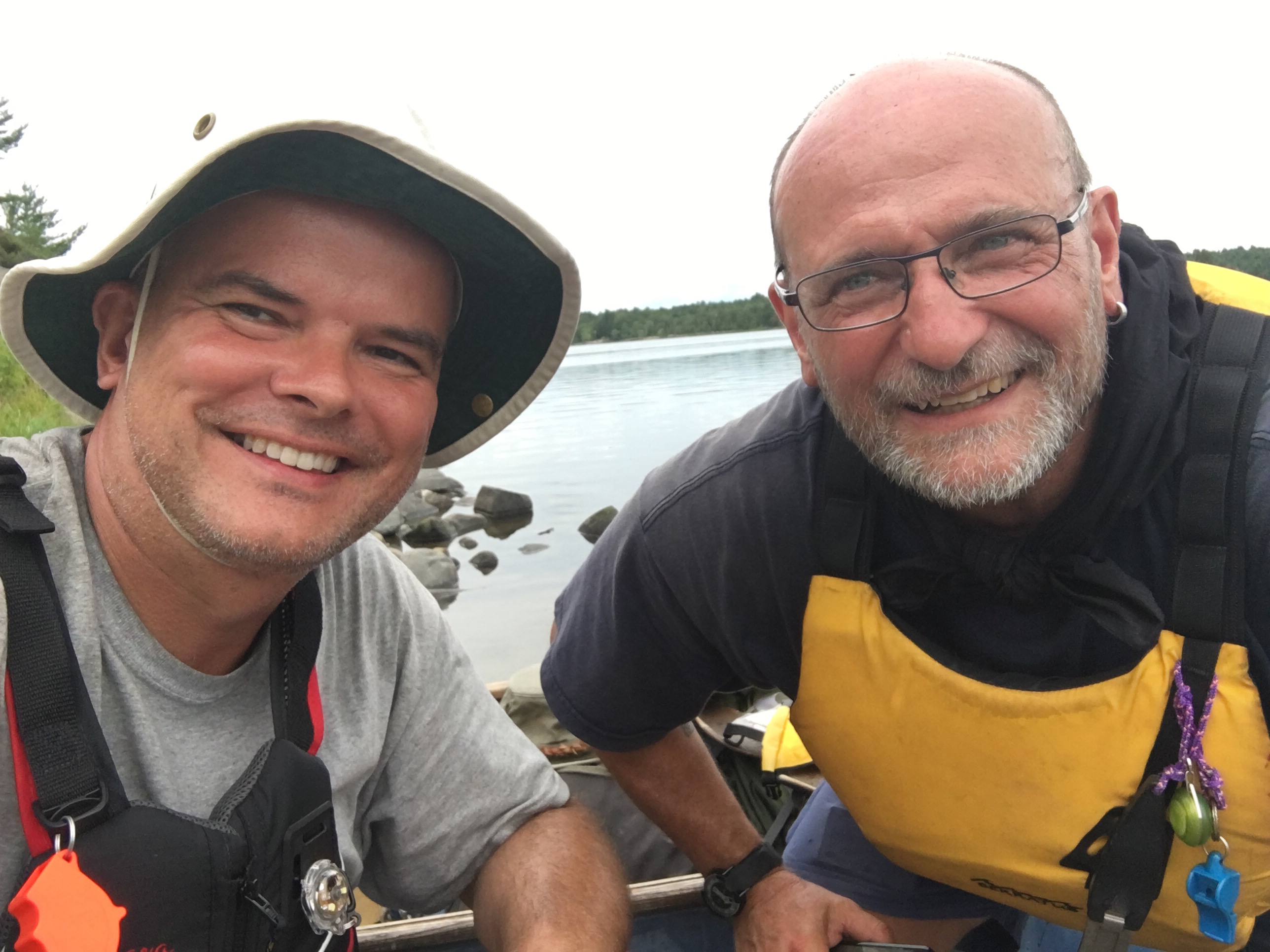
If someone told me a year ago that I would spend four days cut off from civilization, in the bush without cell-phone service, hauling all my food and everything I need to survive in a canoe that I would have to navigate through rapids and rocky, snake-infested portage routes — I would say they were dreaming … or talking about someone else.

Well, that’s precisely what I did last week, along the French River Provincial Park between North Bay and Sudbury. Fortunately I was not alone; I journeyed with a more experienced wilderness survivalist. 

We ended up taking more than we needed. We could have packed less food, and less clothing. The exercise, nevertheless, was confident-building for me in realizing I really don’t need that much stuff.

Jesus says, “None of you can become my disciple if you do not give up all your possessions.”

To live life well, and faithfully, is to recognize one’s place in the world, and not to over-reach, over-extend, to be someone you are not — all on the basis of wanting more and more, bigger and better. To live faithfully, we are called to examine our dependencies, count the cost of it all, focus on what is important, and then make room in our lives for what is important by letting go.

A sojourn into the wilderness may indeed by the antidote to visions of self-aggrandizement embedded in the prosperity gospel message. Try doing without, for some time, what you may have taken for granted for too long. Try doing without what you always have believed you needed in order to live. Try Letting go. Releasing. Forgiving. 

This is not about doing away with personal boundaries. Letting go is not about condoning injustice or cruelty. Kenosis/letting go is not about being blind optimists, repressing or denying or not caring, or ‘giving up’ in frustration.

Forgiveness is a good example of letting go of the misery caused by holding on to the pain of resentment or holding a grudge. This kind of letting go brings a positivity that is based in honest struggle and prayer born out of compassion and love for self, the other, and God. The end result is a freedom and peace that cannot ever be realized through a program of simply working harder or getting more.

The German poet, Rainer Maria Rilke, wrote about the contrast between the law of gravity and the rising of the trees. He writes about the gift of letting go into a place of trust: Trusting that the gift in you is enough. So that you can rise up, rooted like trees: 

How surely gravity’s law,

strong as an ocean current,

takes hold of even the smallest thing

and pulls it toward the heart of the world.


Each thing —

each stone, blossom, child —

is held in place.

Only we, in our arrogance,

push out beyond what we each belong to

for some empty freedom.

If we surrendered

to earth’s intelligence

we could rise up rooted, like trees


Instead we entangle ourselves

in knots of our own making

and struggle, lonely and confused.

So, like children, we begin again

to learn from the things,

because they are in God’s heart;

they have never left God.

This is what the things can teach us:

to fall,

patiently to trust our heaviness.

Even a bird has to do that

before he can fly. (3)

In the poetry of scripture, the Psalmist describes beautifully the blessing we are, created in the image of God — so “wonderfully made” (Psalm 139:14). God would know intimately each part of our lives only if we were valuable to God and to the rest of creation. Otherwise, why would God care?

In other words, we are and have everything we need to enjoy and live to our fullest potential. We are beautiful. We don’t have to strive and strive to become someone we are not. We don’t have to ‘add’ anything to our lives to be well. In fact, when we have the courage to risk letting go, and “fall”, as Rilke poetically expresses, trusting in our “heaviness”, we will find a freedom and peace that will be the joy of all creation, and the glory of God.

We will live our lives at the same time rooted in the earth, and rising to the sun.

(1) Translated by J. Clark & J. Skinner, “Meister Eckhart: Selected Treatises & Sermons Translated from Latin and German with an Introduction and Notes”, Faber & Faber: 1958, p.194

(2) David Schnasa Jacobsen, Commentary on Luke 14:25-33 in “WorkingPreacher.org”, 2016

(3) Rainer Maria Rilke, “Rilke’s Book of Hours: Love Poems to God” translated by Anita Barrows and Joanna Macy, Riverhead Books: 1996, p.116-117; cited with permission in Richard Rohr’s Daily Meditation for August 28, 2016

Burn, fire, burn


I bought this t-shirt in Italy last month — featuring Andy Warhol’s artistic depiction of an erupting Mount Vesuvius.

There really isn’t anywhere you can go in and around Naples, Italy, without being in eyeshot of Mount Vesuvius. Whether you are boating off the Mediterranean coast around the islands of Ischia and Procida, landing or taking off from the international airport there, or driving one of the many autostradas intertwining a metropolis of almost four million people, the unique double-mound character of this famous mountain is never out of sight, from any direction.

Of course it is still considered one of the most, if not the most, active volcano in Europe. Since the catastrophic, violent eruption that levelled Pompeii in the first century, it has erupted about three dozen times, significantly once in the 17th century and most recently in 1944.

Geologists and volcano experts today expect another eruption from Vesuvius, and believe they will have about a 4-week warning period before the first signs lead to the eruption.

So, you can imagine the horror we felt when we saw smoke pouring from the peak of Mount Vesuvius. Just a couple days after climbing the famed Mount and learning all this history, we were driving into Naples from the north. After holding a sudden, collective breath, we exclaimed together: “It’s going to blow!”

Some of us with phones quickly called our friends. Of course I kept driving, but in Naples it seemed everyone smoked, talked on the phone and held their child in their lap while driving at 130 kms/h. You will be happy to know I kept both my hands on the wheel while my passengers did some quick research to find out that a grass fire on the south side of Mount Vesuvius was sending smoke over the top which made it look, from our point of view, like the warning signs of an immanent eruption.

Indeed we are terrified of fire when it is out of our control. I’m not talking here about the pristine and contained burn of a campfire at the end of a day of leisure play on a lake or in the backyard. People who have seen and witnessed the raging inferno of a forest fire — earlier this year in Fort McMurray, for example — can speak of the palpable terror of a consuming fire.

In the text from Hebrews for today (12:18-29), the writer describes God as a “consuming fire.” Indeed, the writer describes the religious awe from Exodus in the Old Testament as a terrifying experience: “Indeed, so terrifying was the sight that Moses said, ‘I tremble with fear.'”

What does fire mean, in the context of faith? When we experience and confront hellfire in our lives — describe it however you will, reflecting on the greatest challenges in your life now — what does the consuming fire mean? 

In the DC Comics recent film, “Suicide Squad”, our super heroes each have a special gift they use for the cause of good. One of them has the gift of fire. El Diablo is his name, and he describes his ability as the “gift of the devil.” Indeed, we make a direct association, through culture, between fire and sin, fire and evil. In Dante’s epic 14th century poem, Inferno, there are references to fire to be sure. But considering all the degrees of hell described therein, fire is not the singularly predominant symbol of hell.

In the last century, Scots preacher George MacDonald in one of his sermons poses a more nuanced reflection on the purpose of fire: “Can it be any comfort to us to be told that God loves us so that God will burn us clean?” How many of us want to be tortured? MacDonald goes on, “We do not want to be clean and we cannot bear to be tortured.” So, the natural, human tendency kicks in — better the devil we know than the devil we do not know. And we take the easy road: we remain stuck in our unhealthy life styles and viewpoints that are far from the honest truth of it all.

Part of the problem, I believe, is that for many of us, fire means punishment.

Either we want it to mean punishment, or we imagine other people do. So, we avoid the all-consuming fire of God’s presence in our lives. We don’t believe we can stand it. In the words of a famous movie line delivered in “A Few Good Men” by Jack Nicholson: “We can’t handle the truth!” And so, in our hearts at least, we run away from God.

But the bible (in Hebrews, Revelation, Exodus, and the Gospels at least) reveals that fire is not God’s punishment; fire is not meant to be torture. 

Fire is purification.

Fire is used to refine metals. The smelter melts and pours off the gold or silver, then skims off the dross until she can see her own face reflected in the molten metal — not a bad metaphor for God’s judgement. The question is, what gets purified? And the answer has to go further than merely ‘sin’. Because sin is so embedded in our lives, and will always be as long as we walk this earth. We have to go deeper. The purification of God goes to that place deep in our hearts that causes sin, that generates those unhealthy behaviours and thoughts:

Our false selves. All the excuses, the lies, the fictions, all the rationalizations, self-justifications, all the official versions and self-diagnoses we attempt to sell to others, all the self-adaptations and defensiveness to escape criticism, all the motivations that are fuelled more by selfish ambition and fear than an honest concern for the other. All these will be consumed in the fire of God’s love.

Ironically, what I often call ‘religiosity’ is also a target for God’s fire. When we are honest about our true motivations for coming to church: Is it to look good, to make a good impression, to merely reflect the group’s ideals taking on manners of speech, dress, belief, common sense, even political opinions that make us fit and feel good about ourselves? The mournful fragmentation of the Christian Church into a plethora of denominations today is an unfortunate testimony to this truth, I believe. Yet, God’s fiery love will clean us from that sort of religiousness as well.

And when all that happens, this is the joyous promise: When God’s presence breaks into our awareness, when we feel ourselves being utterly known, embraced, and accepted as we are. The embraced and accepted self is not the false self that reflects only our perfected self image; it is the real self that God created. In that moment, the false self becomes ashes. In the end, I believe that the harshest judgement of God’s consuming fire (read: mercy, love and grace) is friendlier than our own most lavish self-praise.

But do we want to go there? Do we want to change? Or, are we afraid of what we will find when we take off the masks of our false selves?

Perhaps we cannot do this. Perhaps we are too weak to confront the consuming fire on our own willpower. Perhaps our fear is too great, and we are trapped in cycles of self-delusion. Like the point of view in our sighting of smoke on Mount Vesuvius: It looked like an immanent eruption but in truth it wasn’t. Better the devil you know than the devil you don’t know. In that case, it was better the devil you knew! We choose how we want to look at things. What is our response?

I see a connection with the parable of the Wedding Banquet (Matthew 22:2-14) where you might recall the king threw out a guest who wore no wedding robe even though the guest had clearly not anticipated attending a wedding when leaving home that day. However, a little know fact: it was up to the host to supply suitable robes to invited guests in that time and culture. The truth of the matter was that this man refused the offer, likely insisting he was OK as he was. Invited, yes. Fit to be present, not yet.

The invitation to the marriage feast is given to us. The joy and freedom is promised. Perhaps the consuming fire of God is an unavoidable mercy. And the only thing we can count on, is that this mercy will be offered to us over and over again throughout our lives regardless of how we respond to the events, people and circumstances of our lives. And so, all we can do is take the next step on the pilgrimage with our God, the all-consuming fire.

For that alone, then, thanks be to God.

Much of this sermon is adapted from Gray Temple’s fine piece in David L. Bartlett & Barbara Brown Taylor, eds, “Feasting on the Word; Preaching the Revised Common Lectionary” Year C Volume 3 (Louisville Kentucky: Westminster John Knox Press, 2010), p.376-380

Gospel, Italian style

On the Sunday before I left for a family vacation to Italy, you encouraged me to — “know your history”. I think that message came to me mostly during the children’s chat when we talked about the Canadian flag on my backpack, and why Canadians had been so well appreciated and admired in western Europe, especially, over the past several decades.

The conversations then, as well as following the service over coffee, reinforced to me the value you place upon ‘history’ in general. 

Well, Italy is not exactly the hotbed of Reformation, Protestant Christian history as such. At the same time, the buildings there stand clearly as testimony to the dedication of Christians in certain times and places in history.

It was the first day we walked in the older section of Naples — a sprawling metropolis at the base of Mount Vesuvius on the Mediterranean coast — when I began to feel this history pressing in the air all around me.

I say sprawling because Naples is today the most densely populated urban centre in all of Europe; some 8,500 people inhabiting one square kilometre in a metropolis of nearly four million people — making it the third largest city in Italy, and the ninth most populous urban area in the entire European Union.


The noise was overwhelming: the hustle and bustle of pedestrians, car horns beeping, motorcycles and mopeds buzzing, shouting street vendors, impassioned conversations, two-toned emergency sirens, barking street dogs, screeching tires.

In conrast, the neo-Gothic styled ‘duomo’ in Naples offered a welcome break to this outside clamour. 

The expansive interior spaces of this main cathedral embraced silence and only hushed speech. You could occasionally hear the squeak of rubber-soled shoes and someone dropping a book on the stone and marbled flooring as people sat and wandered solemnly throughout the holy spaces.

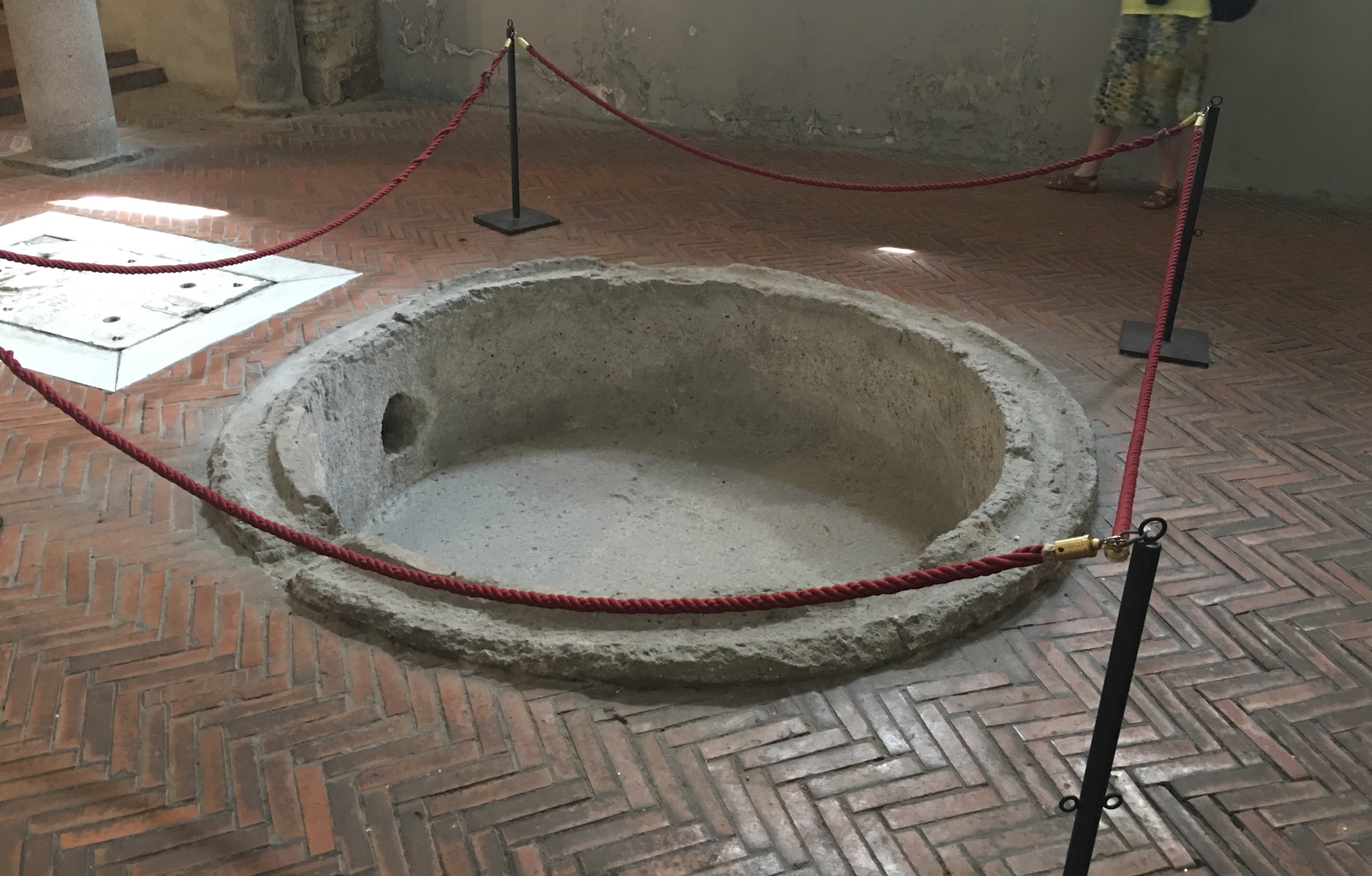
Perhaps the most significant feature of this cathedral is the baptistery, which is the oldest baptistery in the world, built in the fifth century, C.E. It is remarkable to connect with such an ancient symbol in a material form. 

When the baptized emerged from the water, looking upward at the ceiling, they would be encouraged in their faith; the first images they saw after being baptized were scenes from the Gospel expressed in Byzantine, mosaic art: Jesus saving Peter from drowning, the women at the empty tomb, the miracles of the multiplied fish, an image of Saint Paul, the Apostle, etc.

Seeing with my own eyes and touching with my own hands this font that was built by human hands only a few hundred years after Jesus, affirmed my conviction in the longevity and validity of the sacrament which has endured as profoundly meaningful for Christians throughout the millennia. 

I felt that faith is not just about the good old days when I was young, but the good old days when the Christian faith was younger. We are part of something much larger than our immediate reality. And, when we connect with that broader history, we realize it wasn’t always peaches ‘n cream and rose-coloured a history.

If you are movie watcher, you might recognize another cathedral we visited — the Duomo in the Umbrian, medieval town of Orvieto. 


This cathedral was featured in the opening scenes of Under the Tuscan Sun. This cathedral’s highlight is the Chapel of San Brizio, featuring Luca Signorelli’s brilliantly lit frescoes of the Day of Judgment and Life after Death. 

Although the frescoes refer to themes of resurrection and salvation, they do so through images not from the bible (that is, stories from the Gospels or Old Testament) but from the turbulent political and religious atmosphere of Italy in the late 1400s. Signorelli told the story of faith through his contemporary human events, rather than the traditional symbols (such as Jesus, God, the Trinity, the Apostles, disciples and other biblical characters) that we see in most other places.

Those frescos in the Orvieto cathedral chapel were snapshots of an historical era particular to a specific time and geo-political reality (i.e. 15th century Italy). And the impression of faith put ‘on it.’ Historical to us. Yet current to those who built that Cathedral in the Midlle Ages.

Faith is more than merely appealing to our past. Coming to worship today is not just about being reminded of something or someone from a long time ago. What we do here today is not just an exercise in recalling historical facts. As if decisions we make today are really not about faith. When we talk about our building renovations, worship practice and art, musical choices, communion, budgets, outreach initiatives  — these issues are very mcuh about the Christian faith ‘in the real world’, so to speak. All of these real things do reveal what we believe in, our values, what is important to us, who we are. How do these ‘mundane’ decisions reflect the Christian Gospel, faith, kindgom values in this time and place?

Lutherans make a similar mistake, I believe, when we define ‘Lutheranism’ as a belief/doctrinal system that is limited to the words and conceptual formulations of sixteenth century Germans. When we say that to be Lutheran is merely to ‘turn the clock back’ to 1537 when the Book of Concord was finally assembled including Luther’s Small and Large Catechisms, the Augsburg Confession, and the Apology to the Augsburg Confession.

I prefer a view that is reflected in the Evangelische Kirche Deutschland’s (EKD) logo for 2017, “Celebrating 500 years of Reformation”. Five hundred years of Reformation. In other words, Reformation started happening — in our tradition — with Martin Luther, yes. 

But, Reformation continued through the 500 years following, and continues to this day and beyond. We are always reforming the forms and means by which we express our evangelical, Gospel-centred faith. Always finding new and creative ways to tell the story of God.

What can we say, then, about Christian history? If we can apply a macro view over the ages, we can say that the history of the Christian faith is about a God who loves us. Christian history is about a God whose compassion never fails, who “will not come in wrath” (Hosea 11:9) — even though the people of God continue to keep “sacrificing to the Baals and offering incense to idols” (v.2).

The history of the Christian faith is about our lives being “hidden with Christ in God”, being “revealed with Christ in glory” (Colossians 3:3-4), dying daily to ways of sin and being renewed daily in Christ who “is all and in all!” — even though we are imperfect and sin as long as we hold breath. Christ is all and in all — despite us!

The history of the Christian faith is about how each moment of history — including this one right now — reflected Jesus’ love in the fifth century, the fourteenth century, the 21st century in Palestine, Egypt, Italy, Canada, etc. God for all times and places!

We validate the Christian faith by our lives today, now. This is where the rubber hits the road. This in-the-moment approach fuelled the generosity of medieval Catholicism represented in the magnificent building projects for worship as much as it did the passion and commitment of European Christians during the Reformation era.

We do not leave the practice of faith for some distant, utopic and dreamy future. Neither do we rest on the laurels of the tremendous sacrifices made by our forebears in Canada. 

Now is the time. Now is the time to live out of the conviction of God’s grace and love, despite the many and various ways Christians have messed up in history, and continue to do so today. Now is the time to live out of the faith that is full of hope, that despite our waywardness and unfaithfulness, God is faithful. Now is the time to claim God loves us, not because we are good, but because God is good. God is so good!

You know Jesus’ familiar exhortation, most often translated as “be perfect as your heavenly Father is perfect” (Matthew 5:48). Christians have often interpreted this word ‘perfection’ as being made whole. 

A much better translation might be: “be merciful.” Because this verse comes right at the end of a passage calling Christians to “love your enemies” (v. 43-48). Only God is perfect. But we can participate in God’s perfect mercy, God’s all-inclusive and impartial love.

Echoing Saint Paul’s words from the Epistle today (Colossians 3:11 — “Christ is all and in all”) St. Bonaventure later said, “Christ is the one whose centre is everywhere and whose circumference is nowhere.” [1] 

Christ’s mercy is everywhere evident in history. This is the Wholeness, the forgiveness, the grace, that holds you forever and everywhere. You can’t figure this Wholeness out rationally, nor can you control it. All you can do is fall into this Wholeness that holds you when you stop excluding, even the dark parts of yourself. [2] And that, my friends, is the Gospel — good news — for all times and places.

Thanks be to God!

1- Alan of Lille, ‘Regulae Theologicae’, Reg. 7 as quoted by Bonaventure, translated by Ewert Cousins, “The Soul’s Journey into God”, Classics of Western Spirituality (Paulist Press: 1978), p.100

2- Richard Rohr, “Daily Meditation on the Spirituality of Imperfection” Week 2 – Perfection of Wholeness, Thursday, July 28, 2016