A gateway at the edge

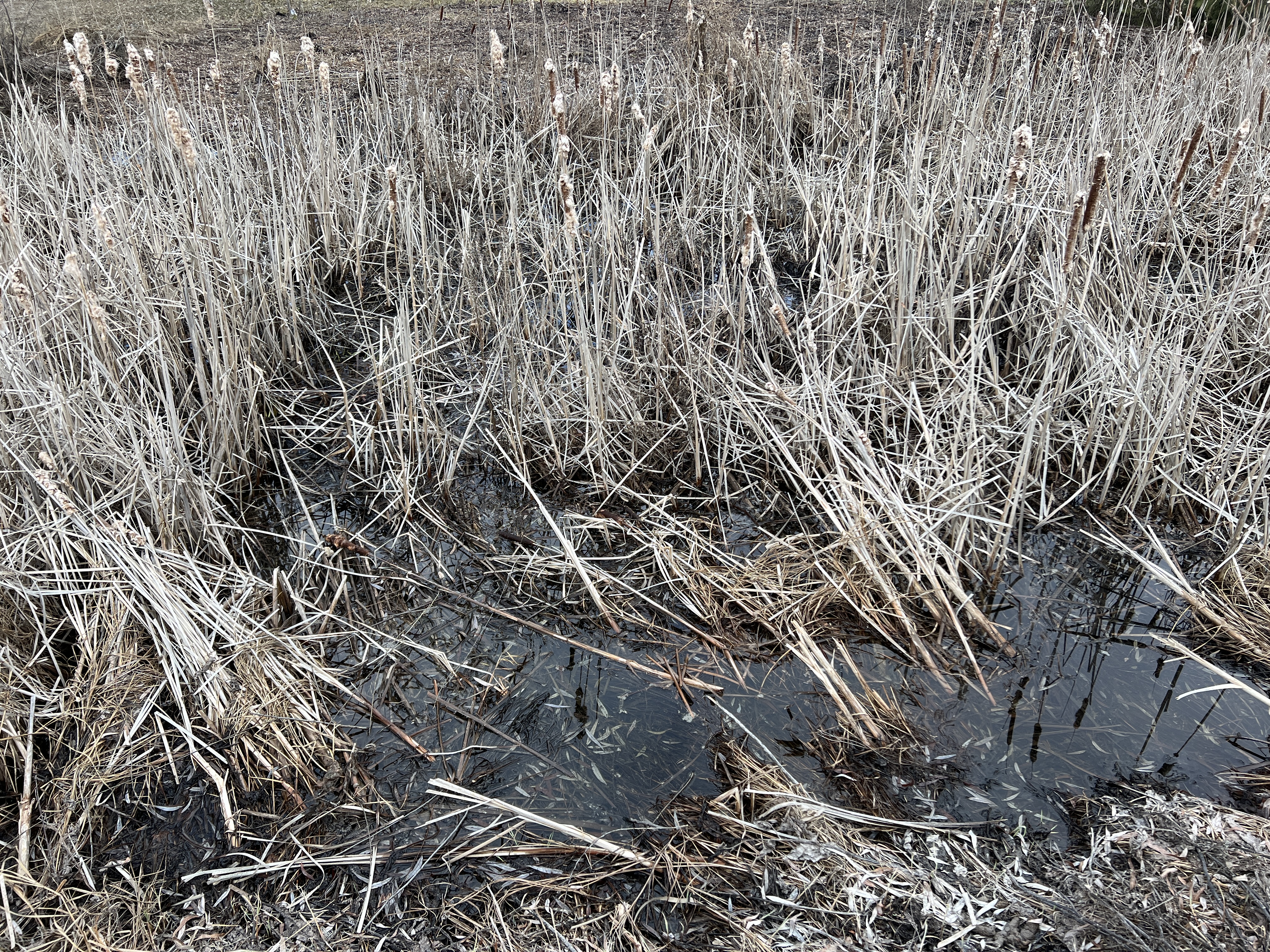
Photo by Martin Malina (Kalaloch Beach, WA, August 16, 2022)

Today, we stand with the women and disciples at the foot of the cross. We have arrived at the end of our Lenten pilgrimage. Or so we may feel.

We have come now to the base of the hilltop of Golgotha. We have come to the edge. We’ve made it.

We may have been carrying a heavy burden—our own cross. What do you bring? What have you carried? Maybe at this point you realize you can carry it no longer? Because the weight of it is just too much. Because, while at the start of this journey you thought perhaps you could carry it all, you now realize your own limits, your own complicity, your own misguided perceptions, your own sin.

“We come to the edge, when what we hold cannot be contained” (Mahany, 2023, p. 52), when we have to finally lay it down.

Golgotha stood at the edge of the city of Jerusalem. In order to leave the city, or enter it, you had to pass through the place crucifixion, of death. There is no bypass where truth is concerned. Pilate sought refuge in argument and exercising power — that was his bypass. “What is truth?” (John 18:38) he quipped, retreating into abstraction and perceived safety of his privilege and power.

“What is truth?” Jesus’ answer to Pilate? Watch me. Watch what I do. Watch the power of God’s love in the actions of Simon who will carry my cross (Luke 23:26), in the centurion’s cross-side confession (Matthew 27:54). Watch the power of God’s love in those who wait at the edge of the hilltop and witness the day turn to night (Mark 15:33), the curtain in the temple being torn in two (Luke 23:45). Watch the power of God’s love in the grace shown by Joseph to provide a tomb for my body (Luke 23:50-53). Watch what God does, then …

Jesus knew his path. Jesus’ path led through the challenge, the suffering, the cost – not around it. Dietrich Bonhoeffer, the famous Lutheran pastor who was executed by the Nazis 80 years ago this year for opposing Hitler, noted in one of his books, how Jesus fulfilled his call on earth.

But in this short reading, Bonhoeffer extended the example of Jesus into our own lives, as his followers, should we seek peace for our souls at edge of our journeys.

He writes, “Our hearts make sure that we only keep the company of friends, of the righteous and the respectable. But Jesus was to be found right in the midst of his enemies. That is precisely where he wanted to be. We should be there too. It is that which distinguishes us from all other … religions. In them, the pious want to be with one another. But Christ wants us to be in the midst of our enemies, as he was; it was in the midst of his enemies that he dies the death of God’s love and prayed: Father, forgive them for they know not what they do. Christ wants to win his victory among his enemies. Therefore, do not withdraw, do not seclude yourselves; rather seek to do good unto all. Make peace, as far as it depends on you, with all” (Bonhoeffer cited in Barnhill, 2005, p. 31).

This was Jesus’ path, to be in the middle of the tension, the conflict among his enemies. This had always been his way.

For example, Jesus could have avoided Samaria on his way to Galilee. Samarians were in tension and at odds with Jews. Jesus could have gone around. But instead, he travelled through the region, some 150 kilometres on foot. No wonder the Gospel writer reports Jesus as “weary” (John 4:6) when he stops at the well to talk with the Samarian woman. Many others would have gone around. But for Jesus, it is always important to go through even though it cost him. The path is hard.

We have a famous path in Canada. And it isn’t easy to follow. The Path of the Paddle is a series of portages between lakes and rivers from the western edge of Lake Superior into the bush of Northwestern Ontario. The path is part of the Trans Canada Trail. In one of its hardest sections, where in order to travel when the water is not frozen, the trail must be negotiated at the height of bug season, soon upon us. Portaging is not for the faint of heart: each portage means traveling twice – once to carry the canoe, and the other time to carry the gear from one lake’s edge to the next.

This path was first charted by Indigenous people as the Anishinaabe Trail, before it became a major route for Europeans interested in the fur trade. Today, this path is being restored in the hope of re-establishing the original route as it once was.

The 1200-kilometre journey was made by Carrie and John Nolan ten years ago. It involved 120 portages, and it took them 58 days. It was certainly a test of their fitness, endurance and physical and mental stamina (Coman, 2025, April 11).

When we come to the edge, when what we hold can no longer be contained, tears will often fall. Is it any wonder that God turned to water when making our tears? We can go to the water’s edge, when what we hold can no longer be contained. The water’s edge, like at the foot of the cross, is the place to let it all out, to lay it all down, to let it go. The baptismal waters, our place of identity forming in Christ, is sacred, this holy edge. Where we can be honest, vulnerable, and let the tears roll.

I walked only a small portion of the Camino de Santiago in Spain – some 800 kilometres long. It is one of the oldest trails on the planet, dating back over a thousand years to the 9th century. Last year, in 2024, the Camino attracted almost half a million pilgrims.

If you are walking, it could take months to cross the Iberian Peninsula in northern Spain towards the destination. The destination? Pilgrims will say, it is the city of Santiago de Compostella, in the shrine of Saint James.

But increasingly over the years, more and more pilgrims go through Santiago and travel an extra 100 kilometres to a town called Fisterra, whose name literally means, “the end of the world.” This town lies on the coast along the Atlantic Ocean which at one point in history was deemed to be situated literally at the edge of the known world.

Santiago becomes a way point on a journey to a more significant edge where the horizon is limitless and points our vision upward. This extended journey does not end at the Cross but continues beyond the original destination to a more expansive vision beyond the hardship of the trail.

The Cross is not really the end point. That is why Good Friday is good. Because the Cross, while necessary to go through, is merely a gateway to the edge of a new world coming.

References:

Barnhill, C. (Ed.). (2005). A year with Dietrich Bonhoeffer: Daily meditations from his letters, writings, and sermons. Harper One.

Coman, S. (2025, April 11). Streams of living justice [Blog]. Lutherans Connect. https://streamsoflivingjustice.blogspot.com/2025/04/day-33.html

Mahany, B. (2023). The book of nature: The astonishing beauty of God’s first sacred text. Broadleaf Books.

“Deliver us from evil …”

photo Martin Malina

We read today the Gospel from John’s account. As we learned last night, John’s gospel has a different emphasis compared to the other gospels who also tell the story of Jesus’ Passion.

In the Gospels of Matthew, Mark and Luke, Jesus took long journeys throughout Israel and the surrounding region, all of which ended in Jerusalem. However, John’s gospel is located almost entirely in Jerusalem and its Temple. The city itself is a thematic focal point even for the Passion of Christ (Shaia & Gaugy, 2021).

During one of the midweek Evening Prayer services this past Lent, we prayed for the victims of both sides of the violence in Gaza. Soon after this war on Gaza began last October, an ecumenical group of Palestinian Christian leaders sent an open letter to the Western Church. Here are some excerpts:

“Words fail to express our shock and grief to the on-going violence and war in our land. We deeply mourn the death and suffering of all people. We are also profoundly troubled when the name of God is invoked to promote violence and religious national ideologies …

“We find courage in the solidarity we receive from the crucified Christ, and we find hope in the empty tomb. We are steadfast in our hope, resilient in our witness, and continue to be committed to the Gospel of faith, hope, and love, in the face of tyranny and darkness. In the absence of all hope, we cry out our cry of hope.”

A working group from the United Church of Canada, the Mennonite Central Committee, The Presbyterian Church in Canada, Roman Catholic groups, the Anglican Church of Canada, and other ecumenical groups created a response to the Open Letter from the Palestinian Church.

In addition, Bishop Susan Johnson of the Evangelical Lutheran Church in Canada (ELCIC) wrote a letter last week to Bishop Azar of the Evangelical Lutheran Church of Jordan and the Holy Lands (ELCJHL). Here is an excerpt from that letter:

 I write to you today on behalf of the bishops, clergy and lay members of the Evangelical Lutheran Church in Canada. As we approach Holy Week, we want you to know that you are in our thoughts and prayers. As we follow our Lord’s journey from the table to the cross, we think of his suffering, and we remember your suffering, and the suffering and deaths of so many in Gaza.

“May we together be strengthened by the joy and hope that is found in Jesus’ resurrection from the dead and his assurance that he still walks with us all – in Jerusalem, in the West Bank, in Gaza, in Canada and indeed around the world.

“In the meantime, please know we accompany you, we are your partners, we pray for you, we advocate for peace in Gaza and the West Bank with our government and we continue to collect funds for your need.….” (Johnson, 2024).

Our advocacy for the victims of violence transcends divisions we have justified. Both sides. The Germans in World War One wore belt buckles with the inscription on them, Gott mit uns [God with us]. But God is in the foxholes of both sides. Both sides in every war. God is with all people crying out in their pain (Rohr, 2023 July 21).

“Deliver us from evil …”

When religion is used as a political tool for aggression, sin happens. Dividing people, separating them, forcibly by walls and using religion as a tool of war, that is evil. Evil is the result of division.

“Deliver us from evil …” we pray every time we gather as a church. The Cross of Christ, today’s focus, is the primary symbol of Christianity, a reminder of God’s victory over evil by becoming a victim of it. Evil, sin, violence, division—separation from God, separation from each other, separation from the earth — is overcome by the Cross. The Cross is the answer to our petition: “Deliver us from evil …”

In traditional Christian baptism the candidate answers three questions of renunciation: First, “Do you renounce the devil and all the forces that defy God?” Second, “Do you renounce the powers of this world that rebel against God?” Third, “Do you renounce the ways of sin that draw you from God?” (ELW, 2006, p. 229, emphasis mine).

Notice that only the last of the three questions focuses on individual sins. And yet, when we pray in the Lord’s Prayer for forgiveness of sins and deliverance from evil I suspect we tend to focus mainly on individual acts of sin. But the individual is only part of how evil is expressed.

Saint Paul himself spoke of “principalities and powers” (Ephesians 6:12). He equated sin and evil with systems in the world, ways in which we operate, things we take for granted, cultures and behaviours that we hardly notice half the time but which affect us immensely and even defend.

On Good Friday we read from the Gospel of John. The Cross joins two cross beams, two opposing directions. It can be a metaphor for the struggles we must endure, the divisions within us that we confess.

A clue to reconciling the paradox in the Cross of Christ lies in John’s unique emphasis in writing his Gospel. You see, by the time the Gospel of John was written, Jerusalem had become desolate and deserted. It had been largely abandoned after its destruction by the Romans in 70 CE.

However, it’s significance was not lost on people of faith. It continued as a symbol—one of the most powerful in biblical lore. After all, it was King David’s great accomplishment. In short, Jerusalem represented the historical, emotional, and spiritual centre of the Hebrew faith. It was the location of the First and Second temples.

The name of the city, too, has enduring significance. Jeru-Shalom translates as the City of Peace. However, the peace of shalom is complex, differing greatly from our normal English sense of the word.

Shalom comes from a root word that means “wholeness” (Shaia & Gaugy, 2021, p. 240). In the Hebrew language shalom has the connotation of joining opposites. That is the reason shalom is used as a greeting when meeting as well as leaving someone—occasions that contain both beginning and end, coming and going. Shalom unifies opposites, brings them together.

Jeru-Shalom, in its deepest meaning, is the preeminent symbol for “communion”—a place where all tribes, not just Jews, could live in harmony. Jerusalem is a place where opposites can reconcile and a new vitality reign.

A lasting impression that Jerusalem made on me when I visited the City of Peace many years ago was how close together, physically at least, peace-abiding Jews and Muslims and Christians actually lived, worked and worshipped. I witnessed a peaceful co-existence.

I met Palestinians who were Christian, and Israelis who didn’t agree with their government’s occupation of the West Bank. Not all Muslims are extremists. Just like not all Christians are extremists. Because there are peace-loving Muslims, as well as peace-loving Jews and Christians who continue to make the vision of peace a goal and a way of life not only in the holy lands but everywhere.

Jesus’ sacrifice was one of love for all people, on every side of every division. Jesus’ sacrifice breaks the oppressors rod because Jesus does not play by that game. He introduces a third way, a new way—a way for peace, hope and new life for all. A way of unconditional love. Thanks be to God.

References:

Evangelical Lutheran Worship Book. (2006). Augsburg Fortress.

Johnson, S. (2024). https://elcic.ca/2024/03/20/elcic-national-bishop-writes-pastoral-letter-of-support-to-elcjhl/

Rohr, R. (2023, July 21). God is on the side of pain. Daily Meditations. https://cac.org/daily-meditations/god-is-on-the-side-of-pain-2023-07-21/

Shaia, A. J. & Gaugy, M. L. (2021). Heart and Mind: The Four-Gospel Journey for Radical Transformation. Quadratos LLC.

The power of love: A Good Friday sermon

The Tree of Light (photo by Martin Malina in Gillies’ Grove Arnprior, 15 March 2023)

In Matthew’s account of the Passion, there was an earthquake not only on Easter Sunday when the rock blocking the tomb was opened.[1] But there was a spectacular earthquake at the moment of Jesus’ death two days earlier. The emphasis on rocks and hills is consistent with Matthew’s storytelling.

During the past season of Lent we have visited the mountains which were significant places of Jesus’ life and ministry—the five mountains of temptation, beatitudes, feeding, transfiguration and the Mount of Olives. Indeed, Matthew is the Gospel of mountains. But today, we can go no farther. 

Today, on Good Friday, Jesus makes his solitary journey of death. It’s his alone to make. He is deserted and abandoned, left alone to make the final crossing from life to death by himself. He is the Son of God who has followed his call to the end. This is the final step on his earthly path.

And we watch from a distance, from the foot of this final mountain: It’s the hill outside the city gates, called Golgotha.

The mountains have something to say in Matthew’s narrative. And today, we witness the incredible power unleashed at Jesus’ death. The death of Jesus is a force that cracks open the foundations of the earth. Literally.

The earth shook, and the rocks were split.[2]

We would think the rocks that cement the very structure of mountain ranges are impregnable, unbreakable. How can the physical make-up of igneous rock be split open? What power is this?

In the world of The Lord of the Rings by J.R. Tolkien, the Dwarves are the masters and hewers of stone. They live in the bowels of the mountains mining for precious, valuable metals. 

In a scene from the recent season-one prequel of the Rings of Power TV series, a young Elrond the Elf enters the Dwarven kingdom, later known as the Mines of Moria. But instead of getting a warm greeting from his old friend the Dwarf Prince Durin, Elrond receives a cold welcome from him. In order to remain in the Dwarves’ company, Elrond invokes an ancient rite, a competition to see who can smash more rocks with a giant hammer. Exhausted at the end of the dual, Elrond concedes when he fails at breaking his last rock into smaller pieces.

This is fantasy, of course. In the real world, average human beings don’t go around splitting apart large boulders of rock. Rocks cannot be split by the force of our hand alone. 

The mountains and rocks—symbols of majesty and glory on earth—bind all creation and all creatures together. We all share the same earth, despite all that divides us. The mountains and rocks which hold all together, have something to say to us this day. Because the earth itself grieved when Jesus died. The earth broke its heart open. What are we to make of this?

Perhaps we can consider all that contributes to death in our world, all that serves only to divide, separate and isolate us from each other: Violence, fear, anger, hatred. These are the rocks that seemingly cannot be broken, destroyed. Violence, fear, anger, hatred form part of our human condition that appears on the surface as insurmountable, impossible to overcome. These are the rocks that form the foundation of human character, human nature and society. It seems.

The effect of Jesus’ death exposes the rocks for what they are. The power of everything that separates us from God and from one another is destroyed. Jesus’ death destroys the power of death. Violence, fear, anger, hatred—the recipe for human division—are rendered impotent in the face of God’s love and mercy. The power unleashed by Jesus’ death is greater than anything imaginable or created by our own hand.

No longer are we separated from God. The death of Jesus inaugurates an age where fear and death will be no more.[3] This is God’s justice at work, here. We are united, brought into everlasting union with God through Christ.

It is ironic that the chair Pilate sits on is called the judgement seat. From the judgement seat, Pilate renders the final verdict upon Jesus.[4] It is ironic because in the end it is Jesus and his Father who renders not judgement but justice, not retribution but reconciliation. This is God’s justice at work.

What is righteous, what is good, what is just, what is loving—this is the power unleashed at Golgotha. Jesus died, not to change God’s mind about us; Jesus died to change our mind about God. God is all about reconciling creation—including us—to one another in a holy union. How we view God now must change because of Jesus’ death.

God is not a judge who brings punitive judgement, punishing us for what we did. We may be punished, yes, but not for our sins. We are punished by our sins. The consequences of our sins continue to bring us suffering for which we alone are responsible. Jesus’ death exposes those rocks in our lives that keep us shackled, imprisoned, stuck, and bound.

But Jesus’ death also splits open those very rocks so that we can now turn every new day to a God who loves us beyond any measure of our own undoing.

Thanks be to God. Thank you, Jesus, for what you did for us.


[1] Matthew 28:2

[2] Matthew 27:51

[3] Revelation 21:4; see also Romans 8:35-39

[4] Matthew 27:19

“The Power of Love” by Rev. Martin Malina

The fox and the hen

“A bruised reed he will not break” photo by Martin Malina April 2022
sermon audio for “The fox and the hen” by Martin Malina

This year we hear Luke telling the Passion of Christ. Since Luke is the only Gospel of the four in the New Testament who mentions Herod in the Passion story[1], I want to start here: The confrontation between Herod and Jesus before his crucifixion. Herod and then Pilate will determine Jesus’ fate, after all. This is the climax of the earthly conflict, so to speak.

Recall just as Lent was starting over forty days ago, we heard from Luke also when Jesus called Herod a fox: “Go and tell that fox for me …” Jesus instructs the Pharisees to address Herod.[2]

Herod—Jesus’ ultimate earthly enemy, at the climax of the drama of Jesus’ life—Herod is the fox. Herod is dangerous. Herod holds all the cards. And he comes out on top, so it seems. And Pilate and Herod become friends that day.

It’s incredible that God chooses to submit to this danger, be swept up in it, and die. How can God be like this—vulernable to the wiles of the power brokers of the day, subject to the abuse and torture of human evil? Many have rejected the Christian God on these grounds alone. Because to follow this God is risky if it doesn’t promise some protection from what is dangerous in the world. Protection from the foxes.

We would rather Jesus be the fox, the one with all the cards to play, the one aggressive, defensive and wily.  But, no, Jesus is the hen. In contrast to Herod, from that Lukan text we heard last month, Jesus described himself as a mother hen: “How often have I desired to gather your children together as a hen gathers her brood under her wings…” Jesus laments over Jerusalem.

Being a follower of Christ doesn’t take the danger out of life. Being Christian does not mean becoming magically immune to suffering. Being Christian does not mean being protected and secured against the foxes of this world.

But it does mean something more important: Being gathered under wing, nurtured and held in loving embrace. The fox may still have his way. The fox may still be a predator upon the mother hen and her chicks.

But in acts of violence and aggression the fox will never know love the way the mother hen will give it. In this image it is clear: Being with Jesus in times of danger is not about removing the danger. Being with Jesus in times of danger is about giving and receiving love in relationship.

On Good Friday, the poetry of the ‘servant’ poems from the prophet Isaiah are often read. But one of the first of these poems in the second half of Isaiah offers another vivid and meaningful image about who God is: “A bruised reed he will not break, and a dimly burning wick he will not quench; he will faithfully bring forth justice. He will not grow faint or be crushed, until he has established justice in the earth …”[3]

God, in the crucified Christ, is accomplishing justice. How so? In Jesus’ dialogue with Pilate[4], Jesus makes it clear that God’s ways are not violent. Let’s be clear: The poetry of Isaiah implies that God does indeed have the power, the capacity, to bruise a broken reed and snuf a dimly burning wick. But God doesn’t do it. A bruised reed he will not break; a dimly burning wick he will not snuff out.

God enacts justice by withholding the incredible power God has to wield. God chooses, in God’s freedom, not to use the full capacity of God’s might. Instead, God chooses mercy, gentleness, forbearance, patience and grace. God shows love by self-limiting himself.

At the brutal end of Jesus’ earthly life, I reflect on his life described in the Gospels and I go back to the beginning of Jesus’ ministry: he spoke in the synagogue in Nazareth. And he said that his mission would be “to let the oppressed go free.”[5] That was his mission: the ultimate freedom of people who were imprisoned, oppressed and stripped of privilege. He went to the public places, the city streets and gates. He healed the sick, brought sight to the blind, raised the dead. Jesus spent time with those who were despised. He loved those who were marginalized in a culture dominated by violence, aggression and retribution.[6]

Many of those around Jesus wanted a Messiah to liberate them from the Romans and restore a Jewish kingdom. Many, indeed, wanted Jesus to be the fox. No, he said to Pilate, that’s not what his kingdom is like, at all![7]

And when God’s justice is restored in the earth and Jesus returns in glory, where will his disciples find him? How will they know him? The disciples did ask these questions of Jesus before he died: “Lord, when was it that we saw you hungry and gave you food, or thirsty and gave you something to drink? And when was it that we saw you a stranger and welcomed you, or naked and gave you clothing? And when was it that we saw you sick or in prison and visited you?” And in Jesus’ usual parable-style story-telling, Jesus answered, “Truly I tell you, just as you did it to one of the least of these who are members of my family, you did it to me.”[8]

How do we love Jesus? How do we respond on holy, Good Friday, when we recall Jesus’ horrible death? What would Jesus have us do? 

Even as Jesus’ earthly path got him killed, his true legacy is the practice of enduring love, of doing unto others as you would have them do unto you. In God’s ways of love and mercy, we may give up our privilege and power to support those in need. By doing this, in our life on earth, we love Jesus. We respond on the day he died by recommitting ourselves to his mission, and remaining true to his legacy.

That is why the church today doesn’t merely go through ritual and liturgical motions, though helpful they may be. We didn’t just wave palm branches last Sunday to praise him and remember his journey to the cross. But we also collected clothing, basic needs for the poverty-vulnerable, the underprivileged, the less fortunate. Because we are Christians. And we follow Christ, and Christ’s ways, even and especially in difficult times.

And then God will raise us up with all the faithful. God will raise us up as a garden flourishing in the desert.[9] Let the words of Isaiah fill your imagination and your heart as you go this day …

An image from Isaiah, describing that day when justice is restored in the earth, when indeed the fox and hen will not be predator and prey. Rather, God’s vision is one in which “the wolf shall dwell with the lamb, and the leopard shall lie down with the young goat, and the calf and the lion and the fattened calf together; and a little child shall lead them …”[10]

Let Christ Jesus be our guide, over these coming days, and beyond to the realization of new life, a new beginning. Amen.


[1] Luke 23:1-49

[2] Luke 13:31-32, 34

[3] Isaiah 42:3-4, NRSV

[4] See John’s rendition of the Passion narrative; John 18:33-36 and 19:8-11

[5] Luke 4:18 NRSV

[6] Luke 6:27-36

[7] John 18:36

[8] Matthew 25:34-40 NRSV

[9] Isaiah 58:10-12 NRSV – “If you offer your food to the hungry and satisfy the needs of the afflicted, then your light shall rise in the darkness and your gloom be like the noonday. The Lord will guide you continually, and satisfy your needs in parched places, and make your bones strong; and you shall be like a watered garden, like a spring of water whose waters never fail. Your ancient ruins shall be rebuilt; and you shall rise up the foundations of many generations; you shall be called the repairer of the breach, the restorer of streets to live in.”

[10] Isaiah 11:6 NRSV

COVID truth and GOD’S truth

Jesus said, “Everyone who belongs to the truth listens to my voice.” Pilate asked him, “What is truth?”[1]

The Globe and Mail recently reported that Canadians who have already received the vaccine have ambivalent feelings about it.[2] And it’s not about being anti-vaccination. It’s about realizing that individually having the vaccine does not change much in the way of social interactions. The land borders are still closed. Travel restrictions continue indefinitely. Wearing masks, limited access to public buildings, social distancing – these all continue.

We’re sad, even when we get the vaccine because the vaccine doesn’t wipe away all our losses. We still need to grieve.[3]Why? Because we realize that the vaccine isn’t a silver bullet solution to dealing with the emotional, spiritual and physical pain in our lives today. 

At the molecular level what is happening inside our body is significant when we get our vaccine, in building immunity against a deadly virus. But, outside of us, nothing really changes in the social, material world. “My frustration at this point is outweighing my happiness,” confessed someone who just got their first dose. “Because when I go outside, I’m still in a COVID world.” 

Have we fooled ourselves into fantasizing that once we get the vaccine, everything at the snap of the fingers will be like it used to be? Here we touch on a truth, dare I say, a truth that reflects the way of Christ. And perhaps a way through the grief.

During the torturous hours leading to Jesus’ death on the cross, the Passion stories from the Gospels depict Jesus appearing before various authorities who stand in judgement over him: Judas who betrays him, the soldiers who arrest, beat and mock him, Peter who denies him, Caiaphus who questions him, Pilate who cross-examines him, the crowd who condemns him. 

And in all these scenes, Jesus appears by himself. The disciples have abandoned him. It seems Jesus’ Passion revolves around just one individual.

But he is not alone. That’s the truth. Throughout his ordeal, Jesus appeals to God. The Gospel of John, especially, emphasizes how connected he is to God the Father through it all. Multiple times in the midst of his suffering, Jesus mentions the heavenly realm, and the kingdom of God to which he belongs. “Yet I am not alone,” Jesus says, “because the Father is with me.”[4]  

Even when Jesus cries, “O God why have you forsaken me?”[5] he identifies with the words of the Psalmist, words that unite him to the expansive community of faith spanning centuries. Jesus identifies with his humanity in those words of grief, through which he connects our humanity to his, and to all the saints of every time and place.

We are not Jesus. I am not saying that because Jesus, Son of God, did this we also should, easily. I am not denying our own human limitations nor uniqueness. I am saying that we are in Christ, and therefore in his consciousness we too can appreciate the pattern of our own renewal and path to new life. That is, we don’t face our crisis alone. That our salvation is tied to a larger truth beyond our own individual perception.

On Reformation Sunday we often will read the words of Jesus from John’s Gospel: If you continue in my word, you are truly my disciples; and you will know the truth, and the truth will make you free.[6]

On Good Friday we confront the truth that we are not alone. No one is free until everyone is free. No one is safe until everyone is safe. The effects of COVID will not be subdued until eveyone is vaccinated.

The truth is, Jesus came to save all people. Not just the rich. Not just the privileged. Not just those who have political, social clout. Not only those who live in developed countries.

The truth is, Jesus came to save – using the Old Testament formula – “the stranger, the orphan, and the widow” which is code for the poor, the marginalized, the vulnerable, the weak.[7] The cross of Christ represents God’s love even for the enemy, those for whom you would not give the time of day.

For God so loved the world, that he gave his only Son…[8]

Our existence, our living and our dying, is not an episodic, indivualistic event. We are connected all to one another. The virus, if anything, is certainly teaching us this truth. The virus knows no human-made divisions. And any one individual who wishes to engage the community at any level, won’t be ‘free’ until everyone is.

Because at the end of the day expressing grief is recognized in the presence of another. The act of grieving allows us to see beyond our own, private interests. The tears of loss make room to see and strengthen the bonds of mutual love that connect us to a larger community in the reign of God. While our grief is our own, our healing comes in expressing it in the presence of another.

The cross cannot be the cross unless both directions are bound together as one. The symbol of the cross reminds us that we are not only in an up-and-down/vertical relationship (“me and Jesus”), but in a side-to-side/horizontal relationship (“me and you”). May the truth of the cross of Christ fill our hearts today.


[1] John 18:37-38

[2] https://www.theglobeandmail.com/canada/article-mixed-emotions-as-canadians-receive-their-covid-19-vaccine/?utm_source=Shared+Article+Sent+to+User&utm_medium=E-mail:+Newsletters+/+E-Blasts+/+etc.&utm_campaign=Shared+Web+Article+Links

[3] https://www.nytimes.com/2021/03/15/well/mind/grief-pandemic-losses.html

[4] John 16:32

[5] Psalm 22:1

[6] John 8:31

[7] Deuteronomy 24:19-21, Psalm 94:6;146:9, Jeremiah 7:6;22:3,  Zechariah 7:10

[8] John 3:16-17

God in the lowlands

These last moments of Jesus’ life stand in stark contrast to what is valued in the world.

I find it ironic that we read today a text that is normally read on Good Friday – the day Christians worldwide pause to recall and remember the brutal death of Jesus on the cross. It is the day Christians confront the God who is deeply humiliated, a man who suffers injustice to the extent of his gruesome and painful suffering and torturous, drawn-out dying.

It’s ironic because a text that is normally read on Good Friday comes just days before what North Americans call Black Friday. Despite the various reasons why that day has come to be called Black Friday – it is commonly known to be the day the malls and commercial districts are crowded, busy and congested bustling with deal seekers and shoppers. It is the day the consumer in us is stoked. Big time.

Indeed, these last moments of Jesus’ earthly, humanity all seem to be in vivid contrast to what is valued as great in our world – this world presented to us in colourful, catalogue-thick inserts and pop-up internet ads promoting incredible sales and savings.

It is not poor, but a world of glamour and glitz.

It is not selfless, but a me-first world of acquisition and accumulation.

It is not vulnerable and generous, but a miserly, defensive and self-preservationist world.

Today is also what the church calls, “Christ the King”, on the last Sunday in the church year. At the end of time, we assert in faith that Jesus is King and his reign lasts forever. But, what kind of king are we talking about here? Certainly not a kind of king the world knows.

In response to Pilate’s question “Are you the King of the Jews?”[1], Jesus answers, “My kingdom is not from this world. If my kingdom were from this world, my followers would be fighting to keep me from being handed over to the Jews. But as it is, my kingdom is not from here.”

That Jesus’ kingdom is not of this world is proved in what this ruler wants to happen and makes happen that other powerful rulers are not willing or able to do.

Let’s face it: Part of our inability to believe and trust the forgiving power of God’s grace and mercy is our inability to believe that other people deserve mercy. We want to judge whom God lets into heaven. Many of us are more comfortable not knowing what happened to the thief who scoffed at Jesus than knowing that an undeserving thief was let into paradise.

Would we not rather have had Jesus say that  God loves the people we like that God does not love the people we do not like? Would we not prefer it if God did not love the crackheads, the homeless, the refugee and Muslim immigrant? Would we not prefer it if God did not love the addicts, the adulterers, the thieves, the gays, the prostitutes, the rebellious and the disgruntled? Would we not prefer it if paradise were exclusively for the nice people, the clean people, the polite people, the well-behaved people, the right people?

How different is Jesus? There was a very strange novel published in England in the late 19th century called Flatlands. It is a story about a world that is flat, everything is two-dimensional. The chief character in the novel is Mr. Square, who is, of course, only in two dimensions.

One day, Mr. Square is visited by a Mr. Sphere who is, of necessity, in three dimensions. Square regards Sphere quite apprehensively. Sphere speaks to Square about a world of three dimensions, a world that is not flat. But Square is unconvinced. Living in a two-dimensional world, it is impossible for him to imagine another dimension. Eventually, Sphere is persecuted and driven out by the outraged flatlanders.

I propose to you that that is how different Jesus is from us. We are flatlanders. We live in a world of two dimensions, unable to grasp the possibility of a reality beyond that which we have experienced. We have been unable to believe, for instance, that love and forgiveness is a better response to evil than brute force. God’s power of love is three-dimensional to our two-dimensional thinking.

Notice with the second thief hanging beside Jesus on his cross, the thief does not ask to be saved, to be rescued. He only asks once, “Jesus, remember me when you come into your kingdom.” Perhaps his plea is meant to echo these words from the Psalm: “Do not remember the sins of my youth or my transgressions; according to your steadfast love remember me, for your goodness’ sake, O Lord!”[2]– which is to say: Do not remember me according to my faults, but remember me according to your goodness.

We have faith not because we are weak but because God is strong and God is love. There is grace for us and for the people we do not like. Our salvation is dependent on a loving, grace-filled God.

So why can we hope in this goodness when we look around us at all the evil? Because Mr. Sphere did come among all of us Squares and we did persecute him and drive him out.

But he wouldn’t and couldn’t stay away. No, his three-dimensional existence couldn’t be flattened out by us. He is alive! And he comes to us again today in this meal we are about to share.

Again, it’s so hard for us to understand because he is like three-dimensions to our two. But he comes again with a word of love and forgiveness that promises the power that will finally take care of all that’s troubling in this world. It won’t be easy. He predicted that, too. But it is the only way. He comes to us again today to lead the way. “I have seen the future,” he says to us. “The future is not some cold grave, some hard, lifeless tomb. The future is the glorious triumph of God’s love.”

This man whom we follow is the king not of the flatlands, but in the lowlands. Spheres always roll to the bottom of things. Christ is king in the lowlands because God does not want us to die and suffer in that dark and sad region. Maybe you are today in a sort of darkness. The darkness of grief, loss, physical pain or emotional pain.

But the Holy One is with you today and for you today in that darkness. And, therefore, you will be with him today, and forevermore, in paradise. Thank God! Amen.[3]

[1]John 18:36

[2]Psalm 25:7

[3]Thank you to the writers for ‘Proper 29 (Reign of Christ) Luke 23:33-43’ in David L. Bartlett & Barbara Brown Taylor, eds. Feasting on the Word: Preaching the Revised Common Lectionary Year C Volume 4(Kentucky: WJK Press, 2010) p.332-337 for many of the words and ideas expressed here.

The Passion of Christ – a Good Friday sermon

The heaviness of it all weighs on our souls. Good Friday is a sombre day. The tormented images of the torture and death of anyone, let alone Jesus Son of God, flash across our minds-eye in the hearing of the texts describing the Passion of Christ.

We hear the lament from Isaiah’s poetry known as the Suffering Servant poems. If we let it, Good Friday pierces our denial of suffering and death. And we face squarely the reality of the situation. The very word, “Passion”, is from the Latin, one meaning of which is suffering.

If you, like me, have watched some contemporary video portrayals of Jesus’ Passion, probably the foremost image is the bloodiness of it all. Not only do we see the violence of the Jewish rebellion heating up during the Passover in Jerusalem, but we are intimately involved in the trial and torture of Jesus – beginning with the bloody cutting off of the servant’s ear in the Garden, to the whipping, flaying, kicking, slapping and piercing in Jesus’ torture while being held in Roman custody.

If that is not enough, we shiver at the pounding of the nails into his hands and feet, see the blood and water gush out of his side when the sword strikes him. Watch as blood trickles over his bruised face from the crown of thorns. Blood all over.

Blood all over. The blood of Christ given for you.

Suffering, Passion, is a great letting go. And acceptance of Christ suffering, even for us, is a great letting go. We cannot possess the gift of life. We cannot own or control this gift for us.

“For three days, the child bled profusely from the nose. She was six years old, and doctors had no idea what was causing the bleeding. What’s more, they understood that if the bleeding didn’t stop, her life was in grave danger.

“The year was 1913. The doctors knew little about transfusion, but they understood the importance of somehow getting good new blood back into the little girl’s system, so they asked her father, a preacher, to give his daughter some of his. He did, one of the first blood transfusions in the state of Michigan.

“The yellowed newspaper story is titled ‘Minister Saves the Life of Daughter By Giving Blood’, and ends by explaining how the father ‘was considerably improved and was able to dress.’ Then it adds, ‘The child was also considerably better and hopes are entertained for her recovery.’

“Two weeks later she was dead. Little Agnes Gertrude … succumbed once the hemorrhaging returned. For a time her father’s blood had brightened her face and her possibilities, but his gift – as unusual and strange to the newspaper readers as it must have been to him – wasn’t enough to save her life.

“Doctors knew very little, back then, about blood-typing. Her father … was as good as choice as the doctors could have made, but what coursed in his veins was not a match. Agnes Gertrude … died two weeks after that strange new procedure the doctors called ‘a transfusion.’

“Her father, a man of God, lay face down on the rug of the living room for almost a week after Agnes’ death, unable to move. Who could blame him – for an entire afternoon, he lay there beside his little girl, his blood flowing into her veins. He was lost in profound grief, was lethargic, depressed, his whole countenance darkened by the death of his child.

“Nothing changed … until he accepted a call to another congregation, a small country church up north. He and his family rode in a horse-drawn wagon up to that country church, their possessions packed up behind them. And there being greeted by the entire congregation there on the lawn, all of them waiting for the new preacher and his family.”[1]

The blood of Christ shed for you. Still, a mystery. Source of life. Beyond comprehension. The blood of Christ shed for you.

We hear these words during the Eucharist, Holy Communion. The word, Eucharist, from Greek, means “Thanksgiving”. Martin Luther, the great reformer, insisted that this sacrament is centrally about the gift of God, in Christ Jesus. The Holy Communion is God’s gift in Christ to us.

This, in contrast, to his contemporaries many of whom insisted that the sacrament of the table was more about what we humans must do to make sacrifice in order to appease God. Instead of making Holy Communion about what we must do for God, Luther preached that the Eucharist was what God does for us. It is a gift.

And a gift we cannot control, manipulate, engineer, manage. Only receive in thanksgiving.

On Good Friday, significantly, we abstain from the Holy Communion. It is one of the only days in the church year that calls for us to withhold collectively this gift. It, in our tradition, is the climax of the Lenten fast, the discipline to ‘do without’ and ‘let go’ and ‘surrender’ our claim on the gift. After all, we do not control God. God is free. And God gives what God will. When God wills. We are not in the driver’s seat of life and death.

Part of our lament, and suffering prayer, is to recognize that we are finite human beings, that we cannot do it alone. And can’t ever get it right. On this heavy day, the low point you might say of the Lenten journey, we put our ultimate trust and hope in God’s promise. As Jesus trusted his Father to the bitter end, we follow in his way, trusting that death has not the last word.

The blood of Christ shed for you.

Christ bled in his suffering, death and burial for three days. But God has other plans. The other meaning of the word “Passion” of course is love. Great suffering and great love. The Passion of Christ is ultimately about God’s great love for Jesus and for us. That is why God gives the gift of life to us. Love.

We will once again feast on the gift of life in Christ’s blood coursing through our veins. We will be transfused again with the life-giving spirit of God. It will be a perfect match! And our lament can become a song of praise and hope, bringing us home at last, as to a lawn on a bright day full of smiling people who open their loving arms.


[1] James Schaap, in Greg Pennoyer & Gregory Wolfe, eds., “God For Us: Rediscovering the Meaning of Lent and Easter” (Massachusetts: Paraclete Press, 2015), p.119-121.

The human face of a vulnerable God

Jean-Paul Sartre once wrote a play entitled: ‘The Living Dead”. The climactic scene is set in the attic of a house in France during World War II, where a half dozen captured members of the Resistance are being kept. The prisoners anxiously await the morning, when they will be executed.

An unexpected thing happens, however. The attic door opens, and the Nazi soldiers throw in the leader of the Resistance. The Nazis don’t know who he is. As far as they are concerned, they simply caught a man out after curfew.

The prisoners’ anxiety turns to courage. They tell their leader, “Don’t worry. We will hold our tongues.” The leader responds, “I thank you, for myself, for the Resistance, for France. Your courage and your sacrifice will not be forgotten.”

Suddenly, one of the prisoners says, “Oh, shut up. Nothing you have to say could possible mean anything to us. I am not blaming you … the fact is that you are a living man and I am a dead woman after tomorrow morning. The living and the dead have nothing to say to each other …and that fact puts an impenetrable barrier between us.”[1]

The Leader of the Resistance is an example of who God is NOT. Until Jesus, there indeed stood an impenetrable barrier between the divine and the rest of us. This is precisely why God became human. If God couldn’t bridge that divine-human divide, how could we love God? How could God love us?

When we look at the world today, we may just the same want to get angry at our human leaders if they lack authenticity. Scenes of African poverty, the chaos of Middle Eastern refugee camps, the evil of human trafficking, the growing divide between rich and poor, the scandals and fake posturing in politics – these all make us angry.

Indeed, in life we sometimes feel like shouting at God: “Shut up!” And working through that anger is good, I believe, because we will realize that many of our gods are not God: The god of domination. The god of violence. The god of consumerism. The gods of competition and combat. The gods of politics and superiority. Which lead us in the opposite direction when it comes to the God of the cross, and God’s relationship with us and the world.

We arrive soon at the climax of Jesus’ earthly, very human story. And this man who reflects the face of God says something very different from the gods of this world.

German Reformed theologian, Juergen Moltmann, tweeted this week: “We discover his glory in his humbleness, his greatness in his poverty, his power in his self-surrender, from the wretched manger in Bethlehem to the desolate cross on Golgotha.”[2]

In today’s Gospel reading[3], Jesus says, “…My soul is troubled.” Jesus can say this. He is fully human and authentically relatable to us, as a human being. “Jesus had the full spectrum of emotion and experience. He was sad and had compassion for those who suffered. He wept with a broken heart including upon the death of his friend Lazarus. He got mad at injustice and hypocrisy (“you brood of vipers!”) and got frustrated at his disciples who were continually arguing and not getting his point. Jesus changed his way of thinking as with the surprising confrontation with a Syrophoenician woman. Jesus learned and developed. Jesus was human!”[4]

God does not bypass the humanity and death we too must endure. God is now capable, because God became fully human, of removing the inseparable barriers between God and the world. Our Leader is one of us!

“…My soul is troubled,” says Jesus. Thank God for these words! These are the kind of things Jesus said that reveals the truth of the Christian God. Jesus says this in response to the inquiry of Gentiles during the Passover Festival in Jerusalem, just days before Jesus dies on the cross. Everything has been accomplished in his ministry and mission, even now to all the nations represented by the seeking Greeks.

Nothing is left now for Jesus to do other than his final surrender to death. Jesus is now ready to succumb to the evil gods of the world which will condemn and crucify the upstart prophet from Galilee.

When Pilate, the regional governor of Palestine, later confronts Jesus during his trial, Jesus says that his kingdom is not of this world. If it were, his followers would be fighting to protect, defend and save Jesus.[5] Obviously, the method of God is not violence however justified. The way of God, is vulnerability and surrender. Not combat, not force-on-force, not physical strength, not invincibility nor violent justice.

Yes, we hear the human Jesus in that honest, vulnerable statement: “My soul is troubled.” In these words, Jesus crosses the divide between divine and human. He identifies with all our troubled souls however afflicted. He knows what is coming.

In Jesus, God was given a face and a heart. God became someone we could love. We don’t and we can’t fall in love with abstractions. So, God became a person “that we could hear, see with our eyes, look at, and touch with our hands”.[6] The brilliant Jewish philosopher Emmanuel Levinas (1905-1995) said the only thing that really converts people is “an encounter with the face of the other.”[7]

This is why to this day Christians have sought God among the faces of the poor, the destitute, the refugee, the homeless – and have tried to do their part in alleviating the plight of the disadvantaged and vulnerable. Because that is where God is discovered.

“Just giving people commandments on tablets of stone doesn’t change the heart. It may steel the will, but it doesn’t soften the heart like an I-Thou encounter can. We are mirrored into life, not by concepts, but by faces delighting in us, giving us the beloved self-image we can’t give to ourselves. Love is the gaze that does us in! How blessed are those who get it early and receive it deeply.”[8]

The prophet Jeremiah says it best: “I will put my law within them, and I will write it on their hearts; and I will be their God, and they shall be my people. No longer shall they teach one another, or say to each other, ‘Know the Lord’, for they shall all know me, from the least to the greatest, says the Lord; for I will forgive their iniquity, and remember their sin no more.”[9]

The good news is that the vulnerable God we worship and follow suffers with us. This vulnerable God in Christ Jesus lived in poverty and died in shame and torment. This God embraced our humanity. And has earned the right to ask us to hold on a little longer until morning comes … until resurrection.[10]

[1] Cited by Michael Battle in David Bartlett & Barbara Brown Taylor, eds., “Feasting on the Word: Preaching the Revised Common Lectionary Year B Volume 2 (Kentucky: WJK Press, 2008), p.141-142.

[2] @moltmannjuergen, March 15, 2018

[3] John 12:20-33, Lent 5B.

[4] Brother Luke Ditewig, “Brother Give us a Word”, daily meditations from the Society of Saint John the Evangelist (SSJE), 20 January 2018.

[5] John 18:36

[6] 1 John 1:1

[7] Cited in Richard Rohr, “Daily Meditations”, 15 January 2018.

[8] Ibid.

[9] Jeremiah 31:33-34

[10] Michael Battle, ibid., p.144.

Something always has to die …

(The following is taken from Richard Rohr’s commentary in his book “Wondrous Encounters; Scriptures for Lent”, with my added words.)

The crowds were gathered in Jerusalem for the Passover Festival. This ritual is described in Exodus 12, and provides the basis of the Holy Communion in Christian practice.

In the original ritual, people were to procure a small year-old lamb for each household. They were to keep it for four days — just enough for the children to bond with it and for all to see its loveliness — and then “slaughter it during the evening twilight”! Then they were to take its blood and sprinkle it on the doorpost of the houses. That night they were to eat it in highly ritualized fashion, recalling their departure from Egypt and their protection by God along the way.

This practice was meant to be a psychic shock for all, as killing always is. Thank God, animal sacrifice was eventually stopped. The human psyche was evolving in history to identify the real problem and what it is that actually has to die.

The sacrificial instinct is the deep recognition that something always has to die for something bigger to be born. We started with human sacrifice (Abraham and Isaac), we moved here to animal, and we gradually get closer to what has to be sacrificed — our own beloved ego — as protected and beloved as a little household lamb! (1)

We will all find endless disguises and excuses to avoid letting go of what really needs to die for our own spiritual growth. And it is not other humans (firstborn sons of Egyptians), animals (lambs or goats), or even ‘meat on Friday’ that God wants or needs.

It is always our beloved passing self that has to be let go of. Jesus surely had a dozen good reasons why he should not have to die so young, unsuccessful (sentenced to death, a criminal), and the Son of God besides!

By becoming the symbolic Passover Lamb himself, Jesus makes the movement to the human and personal very clear and quite concrete. It is always “we” — in our youth, in our beauty, in our power and over-protectedness and self-preservation instinct that must be handed over. Otherwise we will never grow up, big enough to ‘eat’ of the Mystery of God. In short, we have to ‘get over ourselves’, individually and collectively as the church, before we can be effective and authentic followers of Jesus in the world today.

Good Friday is really about “passing over” to the next level of faith and life. And that never happens without some kind of “dying to the previous levels.” This is an honest day of very good ritual that gathers the essential but often avoided meaning of Good Friday: Necessary suffering; that is, something always has to die for something bigger to be born.

One of the Gospel stories repeated every year during Holy Week is the anointing of Jesus by a woman named Mary at Bethany (John 12:1-11). Even though the text does not identify her as a sinner, this has been the common understanding. This alone should reveal our rancid preoccupation with sin.

The point in this story, again, is not the sin but the act of love towards Jesus, whom the woman correctly accepts (unlike the twelve disciples) the coming death of Jesus. She anoints Jesus’ feet with expensive nard, which is the anointing oil for death. Jesus’ favourable response to Mary’s act clearly suggests her act of love trumps any failing on her part, or the part of the poor, or on our part!

As always, love of Jesus and love of justice for the neighbour are just two different shapes or sides to the one Love, that gets us beyond our over-thinking sin. A simple act of love gets us beyond our negative self-obsession, which only keeps us stuck in selfish, egoistic preoccupation.(2)

May our praise of God this day, in Jesus’ acceptance of his death on a Cross, invite each of us into commitments and acts of love toward God, toward one another, and to the world in need. Then, we get the point of the story. And we affirm, that something bigger indeed is just around the corner.


1 — Richard Rohr, “Wondrous Encounters; Scriptures for Lent” (Cincinnati, Ohio: Franciscan Media, 2011), p.133-135

2 — ibid., p.126-127

Trust the down

I hate roller-coasters. It’s about the fear of letting go of control on the way down, that’s the problem. The couple times I’ve had the guts to go on a roller-coaster, I didn’t enjoy the experience because I couldn’t let go on the way down. Someone took a photo of me and my friend in the middle of one of those rapid descents: My friend who loves roller-coaster — his arms were up in the air and a big smile beamed across his face.

Sitting beside him, I was the opposite: My hands were glued to the bar in front of us, and my lips were pursed tightly and my eyes looked like they were going to pop out of their sockets. It looked as if I were staring death in the face, going down that roller coaster.

I read this week: “Humans are the only creatures who have knowledge of their own death. Its awareness creeps on us as we get older. All other animals, plants, and the cycles of nature themselves seem to live out and surrender to the pattern of mortality.

This places humans in a state of anxiety and insecurity from our early years. We know on some level that whatever this is that we are living will not last. This changes everything, probably more than we realize consciously. So our little bit of consciousness makes us choose to be unconscious. It hurts too much to think about it.” (1)

We humans find ingenious ways to avoid this journey, especially through Holy Week, that invites us to contemplate not only human death but the death of God in Christ Jesus. No wonder, especially among Protestants, attending services through Holy Week is not popular. This is not easy work, to face Jesus’s and our own mortality. No fun in that.

One way we avoid and deny this awareness of our own mortality is to find a scapegoat — by focusing all our negative energy on something or someone else. Our scapegoat is that which deludes us into believing that its destruction will somehow solve all our problems and make everything better again. Our scapegoat also shields us from taking responsibility for and dealing with our own problems.

Today, the scapegoats are easy to identify: The immigrants, the newcomers to Canada, the Muslims, the gays, the corrupt politicians, the government, the media, the church hierarchy — you name it. The blame game is alive and well, even in the church.

And then what happens is what many wise teachers through the ages have said: When we deny our own suffering we make others around us suffer. Which is unfair and unjust. Because the Gospel was given first and foremost to the followers of Jesus. 

“The time is fulfilled and the kingdom of God has come near,” The Gospel Mark thus records Jesus’s first words to his own people in Galilee. And to them he said, “Repent and believe in the Gospel” (Mark 1:15). We are the ones addressed by the Gospel — those who are already in the church, in the family of God. Not those so-called ‘bad’ people out there.

Jesus was the scapegoat whose destruction would solve the high-priestly authorities’ problems. By having Jesus put to death, the religious authorities could maintain their power and privileged position in Jerusalem, the Roman Emperor’s fears of insurrection would be temporarily alleviated, and the Pax Romana (the Roman rule) would continue in the land.

As unjust as killing Jesus was — for many even in authority including Pilate saw that Jesus was innocent — Jesus was the convenient scapegoat whose death on a cross would make it easy on those in power. And maintain the unjust status quo in the land.

After hearing of Jesus’ raising of Lazarus from the dead, the high priest, Caiaphas, advised the rest of the leadership in Jerusalem: “It is better for you to have one man die for the people than to have the whole nation destroyed” (John 11:50). Rather than do the right thing in the moment, the end — a false peace — justifies the unjust means. Classic scapegoat -ism: Jesus became the convenient victim in the human power play of first century Judean politics.

It’s ironic that our fear, denial and avoidance of death is actually that which keeps us stuck in scapegoating, in blaming others, in all the motivations for war and violence in the world. You could argue that all of what is bad in the world today stems from humanity’s continued ambivalence and denial of death.

What’s amazing is that Jesus, knowing all along this human condition, chose to become a victim to it. From his privileged unity with God the Creator, he chose to connect with humanity. The reading on Palm Sunday from Philippians 2:5-11 describes this downward movement of God in Christ into the “enfleshment of creation” (2), and then into humanity’s depths and sadness, and final identification with those at the very bottom, “taking the form of a slave” (Philippians 2:7), to death on the Cross.

Jesus represents God’s total solidarity with, and love of, the human situation. It’s as if God is saying: “Nothing human, now, is abhorrent to me.” This is incredible.

The Cross represents the divine choice to descend. It’s almost total counterpoint with our humanity that is always trying to climb, achieve, perform, justify and prove itself. The witness of the Cross is the divine invitation to each of us to reverse the usual process.

Christians worldwide have a great gift and witness in the Gospel of Christ crucified. The divine union with humanity suggests that everything human — including death, losing and letting go that is so much a reality in all our lives — is embraced by God’s love. The reason God loves even our shadow sides, is because God experienced the fullness of its brutal and unjust consequences, in the death of Jesus.

Jesus is like the human blueprint for our own transformation. Because who would have presumed that the way up could be the way down? It is, as Saint Paul writes, “the secret Mystery” (Romans 16:25).

Trust the down, and God will take care of the up. The hymn in Philippians 2:5-11 says that Jesus leaves the ascent to God, in God’s way, and in God’s time. Because Jesus went to the bottom of all that is human, “God lifted him up, and gave him the name above all other names” (Philippians 2:9-11).

Of course, they say the joy of a roller coaster’s twists, turns and rapid descents is knowing and trusting that the ride eventually and surprisingly goes up. What an incredible rush! Carl Jung wrote: “Not wanting to live is identical with not wanting to die.” (3) The roller coaster analogy suggests that when we refuse to descend, when we avoid facing our own mortality, and avoid taking responsibility for our own suffering, we also don’t really live.

Conversely, we can only truly live when we have faced and come to terms with the reality of our own mortal, imperfect human lives. Being fully human is being fully spiritual, faithful and alive. Saint Irenaeus was first to say in the second century that the glory of God is human being fully alive.

Trust the down, and God will take care of the up. When challenges, disappointments, defeats and failures come your way, don’t rush into avoidance techniques, distractions, denial of the problem or blaming others for the circumstance you find yourself in. What do these events have to teach you? Where is God in the midst of your suffering? What are the signs of grace therein? Christian faith asserts that God is revealed precisely in those lowest moments. Jesus believed this. It was trust in his Father that got Jesus through his passion, suffering and death.

Trust the down, and God will take care of the up. Resurrection was just around the corner.


1 — Richard Rohr, “Wondrous Encounters: Scripture for Lent” (Cincinnati Ohio: Franciscan Media, 2011), p.100.
2 — Rohr, ibid., p.123
3 — cited in Rohr, ibid., p.123.