The will of God – creation,incarnation,passion – March 25

In both Mel Gibson’s ‘The Passion of the Christ’ and, more recently, Mark Burnett’s ‘The Bible’, the devil stands by watching Jesus’ moments of agony.

Contemporary Jesuit writer, James Martin, SJ, describes three temptations facing Jesus during his Passion: The temptation of accommodation; the temptation of annihilation, and the temptation of abandonment.[1]

Jesus could have accommodated his opposition by not offending his listeners and telling them what they wanted to hear thereby avoiding his fate. When the Pharisees tested him time after time, Jesus could have appeased them.[2] But he didn’t.

Jesus could also have simply wiped out/annihilated his opponents by rallying the rebellious Jews against the Roman oppressors. Moreover, he could have called on divine power to protect him through force and violence.[3] But he didn’t.

Finally, Jesus could have left his ministry behind and the life God chose for him – abandoned it – in favor of a more conventional life. He could have settled down in the quiet sea-side town of Capernaum and taken on his earthly father’s carpentry business. But he didn’t.

Instead of doing all these things, he chose the path of surrendering to what came before him. He remained true to himself and his path.

Jesus chose the path of love and obedience. Jesus understood that the only way for God to fully embrace the human life and therefore the only way for God to love us, was the path of suffering and death. How did he come to align his will with God’s will? In the garden of Gethsemane, he prayed, “Not my will, but thy will be done.”[4] He prayed this as an affirmation that his deepest desires aligned with God’s purposes. “With you, all things are possible,” he prayed in his hour of anguish.

Indeed, what is God’s will? How do we discern God’s will for our lives? And when we are faced with the right path to follow, are we not also tempted to accommodate, to annihilate or to abandon? Early Christians, even before they were identified as such, were called, “Followers of the Way”, or “People of the Way”.[5] Jesus said, “I am the Way, the truth and the life…”[6]

This is the path of Jesus that we follow – a path that does not accommodate, annihilate nor avoid the reality of situation on the way to new life and resurrection. Life and death, light and dark, suffering and healing – the opposites are not excluded nor denied in the life of discipleship. It’s more both/and, than either/or.

March 25th is a significant date in Christian tradition, did you know? What we realize on the Sunday of the Passion / Palm Sunday is a liturgical convergence, an integration of meaning in the events of Holy Week, rather than a dissection and deconstruction into separate parts.

Some Christian denominations on March 25 celebrate the Annunciation – the day the angel Gabriel announced to Mary that she was pregnant with the Holy Spirit – nine months before Christmas Day. It is also the day ancient Christian believed Jesus was crucified. Finally, while now the calendar puts it on March 21, this time was associated with the creation of the world, on the Spring Equinox, the day when the day is divided equally between light and dark.

Creation, Incarnation (Christmas) and Passion (Crucifixion) – all collapse and converge on this day in Christian tradition.[7] The larger purpose of God come together to offer significant meaning on this one day: We recall the separation of day and night in Genesis during creation; the entering of God into the world in the person of Jesus; and, finally, the passion of Jesus brings to concrete and vivid reality the cross as the way to resurrection.

We live as we worship, and worship as we live.

Amidst the collisions of light and dark, hope and despair, love and suffering in our own lives, how do we discern God’s will for our lives? What are we supposed to do? Often when we ask these questions we assume that we have to figure it out. As if God’s will exists somewhere out there, detached or opposed to us, like clues we have to solve and decipher – a problem or mystery.

And yet, Christians have for centuries believed that God’s will was discerned within their  very own lives. Our own desires help reveal God’s desires for us. We look for signs of those desires in our own lives.[8] From ancient days, the Psalmist prayed: “May God grant you your heart’s desire and fulfill your plans.”[9]

Here are some pointers:

  1. Sometimes an obligation is an obligation, and you need to do it in order to be a good and moral person. But be careful your life is not simply one in which you only respond to shoulds or pushes that may not be coming from God. “When you feel pushed to do something – I should do this, I should do that – out of a sense of crushing and lifeless obligation or a desire to please everyone, it may not be coming from God.”[10] God’s ‘pulls’ are gentle invitations that beckon in love – that do not accommodate, annihilate nor abandon the reality you face.
  2. The desires of our heart are not the surface pushes and pulls of wishes and wants, neither are they tied to our compulsive, impulsive selves. The desires of our hearts are discovered deep within us. When getting water from the lake or river into a jar, we need to let all the sediment – twigs, leaves, sand – settle to the bottom. We can’t examine or use it right away. Even just waiting for a few minutes is really not good enough. We have to wait a good day, leaving it alone, still. Then, the water is at its best. Truly, it is the best of ourselves that will reveal our truest and deepest desires.
  3. Finally, the desires of our hearts as the way to discerning God’s will for us, are realized in the most ordinary tasks of the day. What God wills for us is presented in the problems, situations, people and events of our daily lives. God’s will for us is not found in any abstract principle disconnected from the reality of our simple, ordinary lives. If you want to find God’s will and God’s path for your life, start with the realities of your day-to-day, and discover the path of love and attention within the specifics of every moment you face.

Pray for what you desire, as the way of discovering God’s will for your life. Your will and God’s will may very well be closer than you imagined. When we follow in the Way of Christ, we discover that God is Immanuel – God is with us.


[1] James Martin, SJ, “The Jesuit Guide to Almost Everything; A Spirituality for Real Life” (New York: HarperCollins, 2010) p.299.

[2] Matthew 22:15-22; John 2:13-22

[3] John 18:36; Luke 23:39

[4] Mark 14:36

[5] Acts 24:14.

[6] John 14:6

[7] Beth Bevis in Greg Pennoyer & Gregory Wolfe, eds., “God For Us: Rediscovering the Meaning of Lent and Easter” (Massachusetts: Paraclete Press, 2015), p.155-157.

[8] James Martin, SJ, ibid., p.279-283.

[9] Psalms 20:4

[10] James Martin SJ, ibid., p.329.
The Passion of Christ – a Good Friday sermon

The heaviness of it all weighs on our souls. Good Friday is a sombre day. The tormented images of the torture and death of anyone, let alone Jesus Son of God, flash across our minds-eye in the hearing of the texts describing the Passion of Christ.

We hear the lament from Isaiah’s poetry known as the Suffering Servant poems. If we let it, Good Friday pierces our denial of suffering and death. And we face squarely the reality of the situation. The very word, “Passion”, is from the Latin, one meaning of which is suffering.

If you, like me, have watched some contemporary video portrayals of Jesus’ Passion, probably the foremost image is the bloodiness of it all. Not only do we see the violence of the Jewish rebellion heating up during the Passover in Jerusalem, but we are intimately involved in the trial and torture of Jesus – beginning with the bloody cutting off of the servant’s ear in the Garden, to the whipping, flaying, kicking, slapping and piercing in Jesus’ torture while being held in Roman custody.

If that is not enough, we shiver at the pounding of the nails into his hands and feet, see the blood and water gush out of his side when the sword strikes him. Watch as blood trickles over his bruised face from the crown of thorns. Blood all over.

Blood all over. The blood of Christ given for you.

Suffering, Passion, is a great letting go. And acceptance of Christ suffering, even for us, is a great letting go. We cannot possess the gift of life. We cannot own or control this gift for us.

“For three days, the child bled profusely from the nose. She was six years old, and doctors had no idea what was causing the bleeding. What’s more, they understood that if the bleeding didn’t stop, her life was in grave danger.

“The year was 1913. The doctors knew little about transfusion, but they understood the importance of somehow getting good new blood back into the little girl’s system, so they asked her father, a preacher, to give his daughter some of his. He did, one of the first blood transfusions in the state of Michigan.

“The yellowed newspaper story is titled ‘Minister Saves the Life of Daughter By Giving Blood’, and ends by explaining how the father ‘was considerably improved and was able to dress.’ Then it adds, ‘The child was also considerably better and hopes are entertained for her recovery.’

“Two weeks later she was dead. Little Agnes Gertrude … succumbed once the hemorrhaging returned. For a time her father’s blood had brightened her face and her possibilities, but his gift – as unusual and strange to the newspaper readers as it must have been to him – wasn’t enough to save her life.

“Doctors knew very little, back then, about blood-typing. Her father … was as good as choice as the doctors could have made, but what coursed in his veins was not a match. Agnes Gertrude … died two weeks after that strange new procedure the doctors called ‘a transfusion.’

“Her father, a man of God, lay face down on the rug of the living room for almost a week after Agnes’ death, unable to move. Who could blame him – for an entire afternoon, he lay there beside his little girl, his blood flowing into her veins. He was lost in profound grief, was lethargic, depressed, his whole countenance darkened by the death of his child.

“Nothing changed … until he accepted a call to another congregation, a small country church up north. He and his family rode in a horse-drawn wagon up to that country church, their possessions packed up behind them. And there being greeted by the entire congregation there on the lawn, all of them waiting for the new preacher and his family.”[1]

The blood of Christ shed for you. Still, a mystery. Source of life. Beyond comprehension. The blood of Christ shed for you.

We hear these words during the Eucharist, Holy Communion. The word, Eucharist, from Greek, means “Thanksgiving”. Martin Luther, the great reformer, insisted that this sacrament is centrally about the gift of God, in Christ Jesus. The Holy Communion is God’s gift in Christ to us.

This, in contrast, to his contemporaries many of whom insisted that the sacrament of the table was more about what we humans must do to make sacrifice in order to appease God. Instead of making Holy Communion about what we must do for God, Luther preached that the Eucharist was what God does for us. It is a gift.

And a gift we cannot control, manipulate, engineer, manage. Only receive in thanksgiving.

On Good Friday, significantly, we abstain from the Holy Communion. It is one of the only days in the church year that calls for us to withhold collectively this gift. It, in our tradition, is the climax of the Lenten fast, the discipline to ‘do without’ and ‘let go’ and ‘surrender’ our claim on the gift. After all, we do not control God. God is free. And God gives what God will. When God wills. We are not in the driver’s seat of life and death.

Part of our lament, and suffering prayer, is to recognize that we are finite human beings, that we cannot do it alone. And can’t ever get it right. On this heavy day, the low point you might say of the Lenten journey, we put our ultimate trust and hope in God’s promise. As Jesus trusted his Father to the bitter end, we follow in his way, trusting that death has not the last word.

The blood of Christ shed for you.

Christ bled in his suffering, death and burial for three days. But God has other plans. The other meaning of the word “Passion” of course is love. Great suffering and great love. The Passion of Christ is ultimately about God’s great love for Jesus and for us. That is why God gives the gift of life to us. Love.

We will once again feast on the gift of life in Christ’s blood coursing through our veins. We will be transfused again with the life-giving spirit of God. It will be a perfect match! And our lament can become a song of praise and hope, bringing us home at last, as to a lawn on a bright day full of smiling people who open their loving arms.


[1] James Schaap, in Greg Pennoyer & Gregory Wolfe, eds., “God For Us: Rediscovering the Meaning of Lent and Easter” (Massachusetts: Paraclete Press, 2015), p.119-121.

Traveling stones: a pilgrimage lesson in letting go

In the sixth century Saint Benedict said, “A monk should have death always before his eyes.”[1] ‘Death’ doesn’t need to refer only to our physical demise at the end of life but to any loss experienced in life. There are many deaths we experience in life: the death of a cherished pet, the loss of friendship, the loss of a job, divorce, death of a loved one, moving into another home. Any significant change, even positive ones, involve something lost.

In the second reading for today written in the first century, Saint Paul admonishes the Corinthians to live in this world “as though not.”[2] He is advocating a certain disengagement from the attachments and claims of our lives, including some of our most cherished relationships. The likes of Paul and Benedict reflect, as well, the wisdom of the prophets and poets of ancient Israel: “The grass withers, the flower fades, but the word of God stands forever.”[3]

Our earth-bound attachments come under scrutiny here, no doubt. The question remains for each of us on our own journeys of faith and life – what are those things of which we need to let go in order to move on? After all, in the Lord’s Prayer the words, “Thy Kingdom come”, mean little unless we can also say: “My kingdom go.”[4]

Following Jesus means leaving things behind — as the first disciples did, in our Gospel reading for today (Mark 1:14:20).

You heard about the man who was hiking in the mountains when he slipped, and started to slide over the edge. Just as he was about to fall into the abyss, he grabbed a tree branch growing out of the rock ledge. He hung on perilously dangling in the air.

He didn’t know what to do. It was impossible to pull himself up since the branch stem was slippery and wet. He swung in the silence of the breeze contemplating his fate with growing terror. Finally he looked up to the sky and prayed: “If there is a God anywhere up there, I could do with some help, please.”

To his surprise and shock, he heard God’s voice respond instantly: “I will help you. But you first have to let go.”

The man was silent for a minute. He dared not look down. It was a long way to the jagged rocks of the canyon below. Again he looked up to the sky, and said: “Is there anyone else up there?”

A long-standing tradition in doing a pilgrimage is to bring a stone from home and lay it somewhere along the path. This home-stone represents a part of myself that I lose, and leave behind, where I have walked.

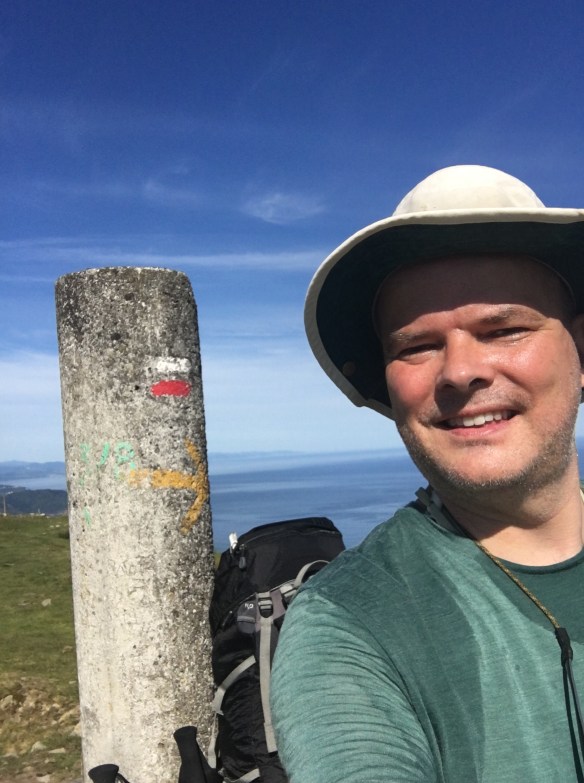
Last Spring when I walked a part of the Camino de Santiago, I wanted to leave my stone in the waters off the western coast of Spain, either in Fisterra or Muxia – both coastal towns are some one hundred kilometres west of Santiago.

I imagined this place a fitting resting place for my stone since I love walking by water and coastlines. Once, long ago, people believed the coastal town of Fisterra (French, for ‘the end of the earth’) was the physical limit of land – the farthest one could go. In my imagination, I saw myself facing the setting sun, having completed the 800-kilometer, two-month trek, looking west to the horizon line beyond which lies the land of my home in North America.

I imagined feeling satisfied at the end of a long journey, having reached my goal, grateful for the challenge and all the things the Camino taught me. In that moment of gratitude and joy, I would toss my stone as far as I could into the spume and depths of the Atlantic Ocean. That was the vision, anyway.

I found the perfect sized stone while wandering around my house one afternoon a week before leaving for Spain. Because I was running about making the last-minute preparations for the journey, I placed it temporarily on the landing railing in the garage, certain I would soon tuck it away in my backpack.

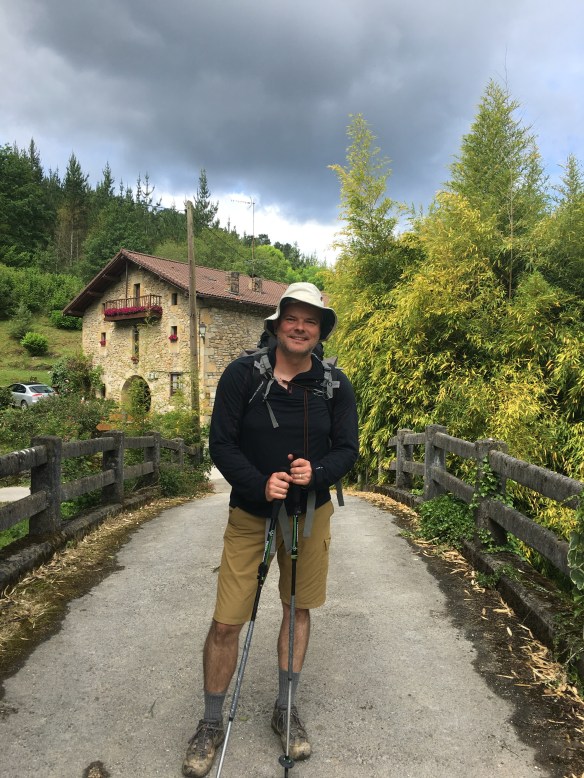
Two weeks later I was scrambling up a steep incline outside the town of Irun on the first day of my pilgrimage. As I expected that first day was incredibly tough going. The temperatures soared to above 25 degrees C and the sun shone brightly. Sweat pouring down my neck and back I struggled up that cliff wondering why on earth I chose to do this on my sabbatical. I dug my walking poles into the hard-caked sandy ground to make the next ledge and wondered sarcastically if I should have rather taken rappelling lessons in preparation for coming to Spain.

In that moment of physical and growing mental exhaustion, I realized I had forgotten to pack my stone. It was still sitting on the railing in the garage back home! I stopped in my tracks and exhaled deeply.

“What’s the matter?” my Dutch pilgrim friend asked me, huffing and puffing as I was.

“I forgot to bring my stone,” I confessed my failure.

“Don’t despair,” my co-pilgrim wanted to advise. “The Camino will give you an answer.”

IMG_5248

Several days later two significant things happened. The first was while I was walking down a slope towards the northern Basque town of Guernica, I thought I should take with me a couple stones from this path, as a keepsake from walking the Camino. So, I selected two small pebbles from under my feet where I stood beholding the town and valley below.

IMG_5299

That same day, my knee seized up, and I walked the remainder of my Camino in pain. Three days later, coughing and feeling very sick, I was on a plane homebound. Diagnosed with pneumonia back in Ottawa, I had to come to terms with my failure of not having reached my goal.

Not only had I not reached Santiago and Fisterra, I had done nothing with my stone which I had forgotten anyway. By forgetting the stone, had I already destined myself not to finish the pilgrimage? These dark thoughts swirled in my mind.

After having recovered a few weeks later, my wife and I flew to Lisbon for a week of vacation to celebrate our wedding anniversary. Originally, the plan had been for her to join me at the end of my pilgrimage, where I would meet her in Lisbon. Nevertheless, this time, I did bring my stone from home, renamed my ‘glory’ stone.

My glory stone represented all my aspirations, desires, longings which I knew deep down the Camino had taught me to let go of. I had to surrender even my human yearning and goals to God.

IMG_5853

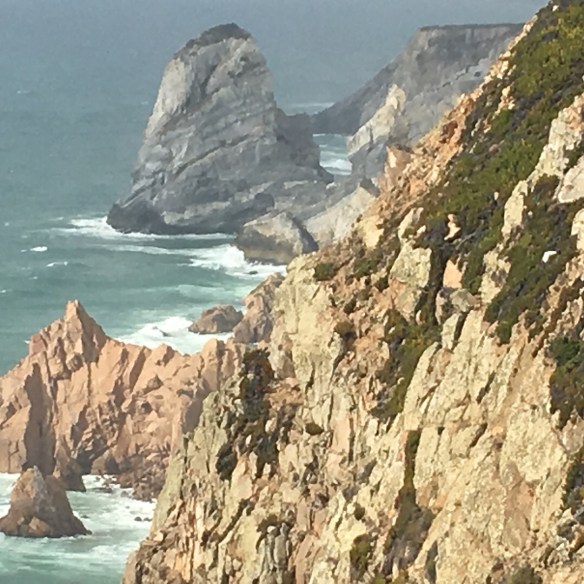
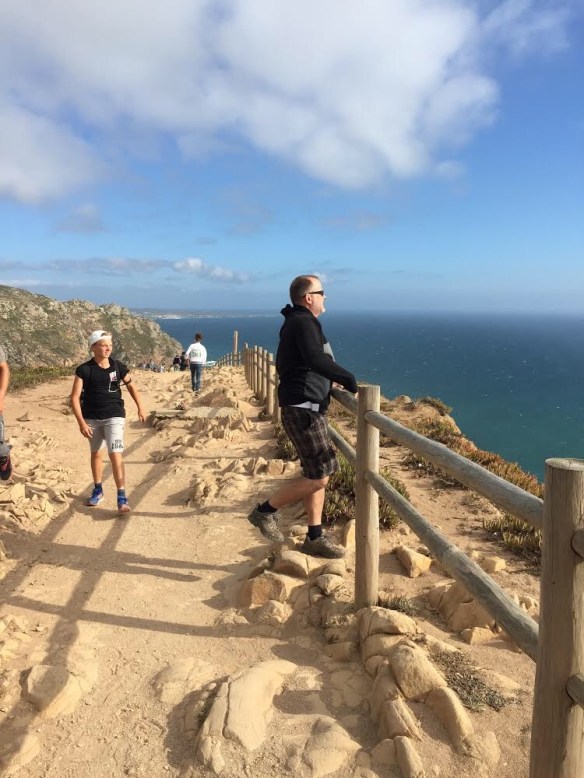
And so, at Cabo Da Roca near Lisbon, Portugal – the farthest most western point of land on continental Europe – I threw my glory stone into the Atlantic Ocean facing the setting sun. I had to practice letting glory go.

IMG_5812

It seems I was still bound to finish some kind of pilgrimage during my sabbatical. I didn’t have enough time to go back to Spain and finish the Camino de Santiago. But I did have enough time to walk the entire length of the longest contiguous sand beach in North America – fifty kilometres on Long Beach Peninsula in Washington State. There, my journey of letting go continued.

IMG_6200

There, on “Cape Disappointment” – fittingly named – I brought the two pebbles that I picked up in Spain on the last day I walked on the Camino. One glorious afternoon, I scrambled down into Dead Man’s Cove – also fittingly named – on Cape Disappointment. After reflecting on my disappointments of late, I realized on my journey of life not only did I need to yield all my dreams but also all my regrets and suffering. And so, I threw those stones of disappointment into the Pacific Ocean. I let these go.


I realized life is not lived well when we obsessively hold on to all those things that cause us grief. I had to offer these to God as well. Later, while I sat on a park bench near the lighthouse on Cape Disappointment looking over the Pacific, I met a couple of Americans visiting from Portland. In our conversation, we were able to affirm that “all great spirituality is about learning to let go.”[5]

IMG_6217

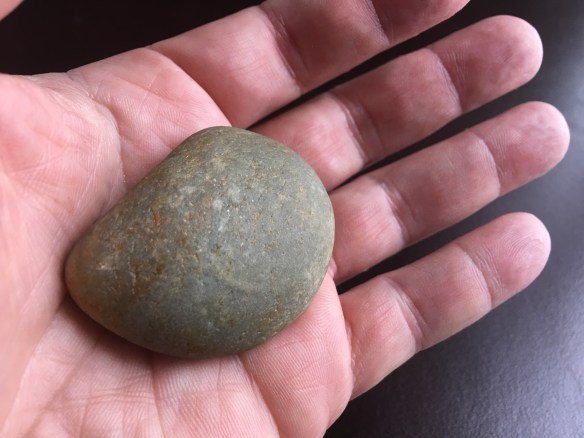
But I didn’t leave my pilgrimage empty handed. When I climbed out of Dead Man’s Cove that day, I picked up from the sand a smooth, round stone. Now, any rocks on the Peninsula are rare. Most of the fifty-kilometre stretch is sand, land created from the outflow of the mighty Columbia River as it spills into the Pacific Ocean. Most rocks you see on the Peninsula have been trucked in. So, I was delighted to take with me back home, a rare thing.

And hope is a rare commodity in this world of pessimism, denial, and despair. This is my “stone of hope”, that I hold forever, amidst all the human aspirations swirling in my life and all the disappointments and failures which I regularly need to practice letting go of.

IMG_6752

We hold not only that which we need to let go of, but we also hold hope throughout our lives. “We do not simply resign ourselves to the give-ness of the world, for we have planted within us a great hope that God’s kingdom will come on earth, as in heaven. This means we are a people who look to the future with trust and hope, confident that God is working God’s purposes out and that God’s realm is even now breaking into our world.”[6]

At this point in your journey of life, which stones are you holding — of dreams, of disappointments, of hope? Which ones do you need to let go of? Which do you need to hold on to? I suspect it is true when the likes of Saint Paul, and all the wise teachers over the ages, writes: “Hope does not disappoint us.” [7]

[1] cited in Ruthanna B. Hooke in David L. Bartlett & Barbara Brown Taylor, eds., “Feasting on the Word: Preaching the Revised Common Lectionary Year B Volume 1” (Kentucky: WJK Press, 2008), p.280

[2] 1 Corinthians 7:29-31

[3] Isaiah 40:8

[4] Richard Rohr, Daily Meditation, Thursday, January 18, 2018.

[5] Richard Rohr, Center for Action and Contemplation, cac.org

[6] Ruthanna B. Hooke, ibid.

7 – Romans 5:5

funeral sermon – Epiphany

Something of eternal consequence had already started the day before Derry died.

As is customary in the weekly bible study at Faith, we take turns reading the scripture for the day. And we read that same scripture over three times, in the tradition of lectio divina – a meditative, prayerful approach to the bible.

I think I speak for everyone in that group to say that we all wanted Derry to read. He read well. Derry articulated the words with nuance and meaning. His deep, rich voice brought the scripture to life.

The day before Derry died, he attended our last session before the Christmas break. We were reading, as you can imagine, the story of Jesus’ birth from Luke chapter two. At the beginning of our time together, I asked Derry if he would read that scripture. But he needed more time to get settled, and he would read it later. “We’ll get back to you,” I announced.

But, for whatever reason, we never did. Whether it was the turn of the conversation, the character of the group that day, or innocent forgetting, Derry didn’t get his turn to read that day.

A couple of us reflected briefly on this over Christmas. And we felt badly that we missed an opportunity to honor his gift one last time.

In retrospect, it feels like unfinished business, something left hanging, incomplete. On this side of death, we can’t yet fully realize and appreciate what Derry’s gift of faith means beyond death’s door.

Last summer in my travels I found this quote printed on the window of a restaurant: “Life is not measured by how many breaths you take, but by the experiences that take your breath away.”[1]

What are these experiences that ‘take our breath away’? When we behold something beautiful. When something outside of ourselves ignites and inspires something from within us, we taste glory. We are moved. Deep speaks to deep[2]. Emotions, memories, feelings stir within us.

This is the purpose of art. The creative impulse is to fashion something material outside of us to reflect the beauty and glory within. Our outer world and its inner significance – those moments that take our breath away – come together with resulting joy and a sense of coherent beauty.[3]

Art is not something that can be used. Its primary purpose is not functional. A sculpture cannot be part of a mechanism to make something work. Art does not bring water into a community, heat our homes, transport goods and services across the continent. Art isn’t meant to be a cog in the wheel of our economy. It’s not easy to make a good living in our culture doing only art. From this perspective, art is unproductive — even useless.

So, why do we bother to spend so much of our time in our flower gardens? Why do we exercise extraordinary patience in painting something that is called from within us? Why do we write poetry? Why do we travel across this globe to visit cathedrals and art galleries and artifacts that bespeak of unspeakable beauty?

Like a verdant garden bursting with variety and the fullness of life, Derry’s artwork was rich in diversity – sculpting, painting, ceramic and wood-carving and gardening. Derry’s gift of art not only reflect his astounding creativity but also the witness of one who reflected the light and glory of Christ to the world in his own, unique way. The ‘likeness of Christ’, we say.

Today is the church’s annual observance of the Epiphany. Every year on January 6th, Christians further contemplate the mystery of the incarnation, of word made flesh.[4] During the season of Epiphany that follows, we discover again how God is made flesh in Christ, in the world today.

Whether we want to believe it or not, we reflect the light of Christ, the light even the darkness of death cannot consume.[5] Today we stand in the shadow of death. We grope in the darkness of grief, trying to find our way forward but not sure because it is an unknown path. We mourn at this occasion of profound loss.

Yet, the light continues to shine. And what is more, that light shines within us. If Derry leaves a legacy, it is to witness to this light – the light of glory, the light of Christ risen, the light of life that is now, because of Christmas, in the world and in us. Second century bishop of Lyons, Irenaeus, said that “the glory of God is the human person fully alive.”

Derry, in his artistic expression, was surely ‘fully alive’. We can trust this. We may not feel it all the time, especially in grief. But not feeling God’s light within us doesn’t make it untrue.

Derry was also a teacher. He taught many student teachers at the university. Derry teaches us something important about life and death. Derry’s teaching to us now is to witness to the glory of God, reflected in each one of us.

The darkness does not overcome the light. The light endures forever. In God’s reign, there is no unfinished business. Derry continues to bask in the light and glory of God’s eternal reign. Today, Derry deepens his connection with the Word, reading and living the stories of God made flesh in Jesus Christ. In this time, God brings to completion the good work begun in Derry’s life with us.

Thanks be to God.

[1] T. Paul’s Restaurant in Astoria, Oregon

[2] Psalm 42:7

[3] Richard Rohr, Daily Meditation, January 1, 2018

[4] John 1:14

[5] John 1:5

Surprise ending

The Arnprior Rapids were destined to lose. If you asked me, midseason, to write the history of the 2017 Fall season of the Lanark-Renfrew Highschool Football League, it would sound completely different than it actually turned out in the end.

After playing five games, the Rapid’s opponent, the Almonte Thunderbolts, was undefeated. What is more, in all their games they did not have one single point scored against them. They were that good. By all counts, they were destined to be the League’s champion.

When a couple of weeks ago Almonte faced its arch rival and 2nd place Arnprior Rapids in the final championship game, many – even the players themselves deep down – felt this was a pointless exercise. Why bother even playing the game? Because the last time these two teams clashed Almonte thrashed Arnprior 40-0. And the time before that, 24-0.

So, you tell me. What will the history books have said about the outcome?

IMG_6618

These kids are learning an important life skill. Because as is often the case throughout life when things happen, it is easy to focus on what is wrong, what seems impossible, what appears a waste of time and energy. And give up.

Over the past several weeks, we have been reading some parables of Jesus recorded in the latter chapters of the Gospel of Matthew.[1]

These apocalyptic[2] parables sound somewhat harsh towards the human project: It seems human beings cannot help but eventually get it all wrong, whether it be the wicked tenants, the foolish bridesmaids or, as in today’s parable, the fearful investor.[3]

What is more, you get the feeling that the line between doing the right thing and the wrong thing is awfully thin. Even those that do get it right in Jesus’ telling are not that much different from those who get it all wrong – those who are doomed to the hell fires “where there will be weeping and gnashing of teeth.”[4] In short, there is a heavy, dark pall of negativity hanging over these stories.

It’s hard to remain enthusiastic about a life of faith when presented with these doom-and-gloom scenarios. It’s easier to become more fearful than hopeful.

When reading from this section in Matthew, I think we need to be mindful of the context of Jesus’ storytelling. We need to remember that Jesus told these stories while he was heading right into the middle of his own personal, high-risk venture, which led to arrest, torture, suffering and horrible death.

That is, he had decided to leave the relative safety of rural Galilee and head to Jerusalem, the capital city, where the authorities would regard Jesus as “a threat to the status quo and their own power.” The Romans would regard him as a “disturber of the peace” and condemn him to capital punishment on the Cross.[5]

We have the benefit of hindsight to help us better interpret these challenging parables. That is, because of the new life given to Jesus on Easter morning, we can now believe in resurrection, which is the end game of all of history. The benefit of Christ-faith is the hope and promise we discover on the other side of risk-taking, of losing, of failing and of taking responsibility. All the things that make us human.

Despite what may look impossible, a sure failure, a likely defeat and a waste of time and energy, this parable today encourages us to take heart and simply put our gifts, our talents on the line.

The sin described here is the sin of not risking anything, of not caring, not investing, of playing it safe and being overly cautious with what we have been given.

Whatever we have, “each according to their ability”[6], even if it’s only one, measly, tiny “talent” – when we risk giving it away to the world, allowing it to engage the world with positive intent, only then can good things happen. There are no guarantees good things will happen. But then again, we wouldn’t know unless we try. And take the risk.

But it’s well worth it! Because one talent is neither measly, neither is it tiny. One talent, according to some interpreters, was worth fifteen years wages or $1.25 million in today’s valuation. Just imagine the wealth of the entire property of the master who was placing it all in the care of his stewards.

Let’s take that to be God and us. When we can first appreciate all that wealth and riches that God has given us, and can begin to acknowledge the great faithfulness of God to entrust all that is God’s to us … now that’s something special about the God we worship. What a great joy! What a great responsibility!

In the end, this parable is not about money, essentially. Because even if the first two stewards who invested the little that was given them lost all that they invested on the market, Jesus would still have applauded them for trying. The attitude of risk-taking and putting it all on the line is the important thing, not the results of their monetary investment.

And then, when you try despite the odds stacked against you, you never know. How resurrection happens, and when, in the context of our own lives, will be a surprise.

When the Arnprior Rapids faced off against their arch rivals, the Almonte Thunderbolts in the Lanark-Renfrew Highschool Football League championship game, it was truly a David and Goliath show-down. The end looked bleak for Arnprior.

By all counts, Almonte should have won that game.

But, life is full of surprises. God is full of surprises. We can never know for sure what unexpected things await us when we put ourselves out there and invest our gifts on the playing field of life.

Not only did Arnprior score two touchdowns in the game – thus breaking Almonte’s bid for a clean sheet season – Arnprior did not allow a single point scored against them.

History is being written anew.

[1] Matthew 25:1-13, Matthew 22:1-14, Matthew 21:33-46; a parable is simply a fictional story Jesus tells to reflect some truth

[2] when the ‘end time’ promises of God are fulfilled

[3] Matthew 25:14-30

[4] Matthew 25:30

[5] John M. Buchanan in David L. Bartlett and Barbara Brown Taylor, eds., “Feasting on the Word: Preaching the Revised Common Lectionary Year A Volume 4” (Kentucky: WJK Press, 2011), p.308

[6] Matthew 25:15

Something always has to die …

(The following is taken from Richard Rohr’s commentary in his book “Wondrous Encounters; Scriptures for Lent”, with my added words.)

The crowds were gathered in Jerusalem for the Passover Festival. This ritual is described in Exodus 12, and provides the basis of the Holy Communion in Christian practice.

In the original ritual, people were to procure a small year-old lamb for each household. They were to keep it for four days — just enough for the children to bond with it and for all to see its loveliness — and then “slaughter it during the evening twilight”! Then they were to take its blood and sprinkle it on the doorpost of the houses. That night they were to eat it in highly ritualized fashion, recalling their departure from Egypt and their protection by God along the way.

This practice was meant to be a psychic shock for all, as killing always is. Thank God, animal sacrifice was eventually stopped. The human psyche was evolving in history to identify the real problem and what it is that actually has to die.

The sacrificial instinct is the deep recognition that something always has to die for something bigger to be born. We started with human sacrifice (Abraham and Isaac), we moved here to animal, and we gradually get closer to what has to be sacrificed — our own beloved ego — as protected and beloved as a little household lamb! (1)

We will all find endless disguises and excuses to avoid letting go of what really needs to die for our own spiritual growth. And it is not other humans (firstborn sons of Egyptians), animals (lambs or goats), or even ‘meat on Friday’ that God wants or needs.

It is always our beloved passing self that has to be let go of. Jesus surely had a dozen good reasons why he should not have to die so young, unsuccessful (sentenced to death, a criminal), and the Son of God besides!

By becoming the symbolic Passover Lamb himself, Jesus makes the movement to the human and personal very clear and quite concrete. It is always “we” — in our youth, in our beauty, in our power and over-protectedness and self-preservation instinct that must be handed over. Otherwise we will never grow up, big enough to ‘eat’ of the Mystery of God. In short, we have to ‘get over ourselves’, individually and collectively as the church, before we can be effective and authentic followers of Jesus in the world today.

Good Friday is really about “passing over” to the next level of faith and life. And that never happens without some kind of “dying to the previous levels.” This is an honest day of very good ritual that gathers the essential but often avoided meaning of Good Friday: Necessary suffering; that is, something always has to die for something bigger to be born.

One of the Gospel stories repeated every year during Holy Week is the anointing of Jesus by a woman named Mary at Bethany (John 12:1-11). Even though the text does not identify her as a sinner, this has been the common understanding. This alone should reveal our rancid preoccupation with sin.

The point in this story, again, is not the sin but the act of love towards Jesus, whom the woman correctly accepts (unlike the twelve disciples) the coming death of Jesus. She anoints Jesus’ feet with expensive nard, which is the anointing oil for death. Jesus’ favourable response to Mary’s act clearly suggests her act of love trumps any failing on her part, or the part of the poor, or on our part!

As always, love of Jesus and love of justice for the neighbour are just two different shapes or sides to the one Love, that gets us beyond our over-thinking sin. A simple act of love gets us beyond our negative self-obsession, which only keeps us stuck in selfish, egoistic preoccupation.(2)

May our praise of God this day, in Jesus’ acceptance of his death on a Cross, invite each of us into commitments and acts of love toward God, toward one another, and to the world in need. Then, we get the point of the story. And we affirm, that something bigger indeed is just around the corner.


1 — Richard Rohr, “Wondrous Encounters; Scriptures for Lent” (Cincinnati, Ohio: Franciscan Media, 2011), p.133-135

2 — ibid., p.126-127

Trust the down

I hate roller-coasters. It’s about the fear of letting go of control on the way down, that’s the problem. The couple times I’ve had the guts to go on a roller-coaster, I didn’t enjoy the experience because I couldn’t let go on the way down. Someone took a photo of me and my friend in the middle of one of those rapid descents: My friend who loves roller-coaster — his arms were up in the air and a big smile beamed across his face.

Sitting beside him, I was the opposite: My hands were glued to the bar in front of us, and my lips were pursed tightly and my eyes looked like they were going to pop out of their sockets. It looked as if I were staring death in the face, going down that roller coaster.

I read this week: “Humans are the only creatures who have knowledge of their own death. Its awareness creeps on us as we get older. All other animals, plants, and the cycles of nature themselves seem to live out and surrender to the pattern of mortality.

This places humans in a state of anxiety and insecurity from our early years. We know on some level that whatever this is that we are living will not last. This changes everything, probably more than we realize consciously. So our little bit of consciousness makes us choose to be unconscious. It hurts too much to think about it.” (1)

We humans find ingenious ways to avoid this journey, especially through Holy Week, that invites us to contemplate not only human death but the death of God in Christ Jesus. No wonder, especially among Protestants, attending services through Holy Week is not popular. This is not easy work, to face Jesus’s and our own mortality. No fun in that.

One way we avoid and deny this awareness of our own mortality is to find a scapegoat — by focusing all our negative energy on something or someone else. Our scapegoat is that which deludes us into believing that its destruction will somehow solve all our problems and make everything better again. Our scapegoat also shields us from taking responsibility for and dealing with our own problems.

Today, the scapegoats are easy to identify: The immigrants, the newcomers to Canada, the Muslims, the gays, the corrupt politicians, the government, the media, the church hierarchy — you name it. The blame game is alive and well, even in the church.

And then what happens is what many wise teachers through the ages have said: When we deny our own suffering we make others around us suffer. Which is unfair and unjust. Because the Gospel was given first and foremost to the followers of Jesus. 

“The time is fulfilled and the kingdom of God has come near,” The Gospel Mark thus records Jesus’s first words to his own people in Galilee. And to them he said, “Repent and believe in the Gospel” (Mark 1:15). We are the ones addressed by the Gospel — those who are already in the church, in the family of God. Not those so-called ‘bad’ people out there.

Jesus was the scapegoat whose destruction would solve the high-priestly authorities’ problems. By having Jesus put to death, the religious authorities could maintain their power and privileged position in Jerusalem, the Roman Emperor’s fears of insurrection would be temporarily alleviated, and the Pax Romana (the Roman rule) would continue in the land.

As unjust as killing Jesus was — for many even in authority including Pilate saw that Jesus was innocent — Jesus was the convenient scapegoat whose death on a cross would make it easy on those in power. And maintain the unjust status quo in the land.

After hearing of Jesus’ raising of Lazarus from the dead, the high priest, Caiaphas, advised the rest of the leadership in Jerusalem: “It is better for you to have one man die for the people than to have the whole nation destroyed” (John 11:50). Rather than do the right thing in the moment, the end — a false peace — justifies the unjust means. Classic scapegoat -ism: Jesus became the convenient victim in the human power play of first century Judean politics.

It’s ironic that our fear, denial and avoidance of death is actually that which keeps us stuck in scapegoating, in blaming others, in all the motivations for war and violence in the world. You could argue that all of what is bad in the world today stems from humanity’s continued ambivalence and denial of death.

What’s amazing is that Jesus, knowing all along this human condition, chose to become a victim to it. From his privileged unity with God the Creator, he chose to connect with humanity. The reading on Palm Sunday from Philippians 2:5-11 describes this downward movement of God in Christ into the “enfleshment of creation” (2), and then into humanity’s depths and sadness, and final identification with those at the very bottom, “taking the form of a slave” (Philippians 2:7), to death on the Cross.

Jesus represents God’s total solidarity with, and love of, the human situation. It’s as if God is saying: “Nothing human, now, is abhorrent to me.” This is incredible.

The Cross represents the divine choice to descend. It’s almost total counterpoint with our humanity that is always trying to climb, achieve, perform, justify and prove itself. The witness of the Cross is the divine invitation to each of us to reverse the usual process.

Christians worldwide have a great gift and witness in the Gospel of Christ crucified. The divine union with humanity suggests that everything human — including death, losing and letting go that is so much a reality in all our lives — is embraced by God’s love. The reason God loves even our shadow sides, is because God experienced the fullness of its brutal and unjust consequences, in the death of Jesus.

Jesus is like the human blueprint for our own transformation. Because who would have presumed that the way up could be the way down? It is, as Saint Paul writes, “the secret Mystery” (Romans 16:25).

Trust the down, and God will take care of the up. The hymn in Philippians 2:5-11 says that Jesus leaves the ascent to God, in God’s way, and in God’s time. Because Jesus went to the bottom of all that is human, “God lifted him up, and gave him the name above all other names” (Philippians 2:9-11).

Of course, they say the joy of a roller coaster’s twists, turns and rapid descents is knowing and trusting that the ride eventually and surprisingly goes up. What an incredible rush! Carl Jung wrote: “Not wanting to live is identical with not wanting to die.” (3) The roller coaster analogy suggests that when we refuse to descend, when we avoid facing our own mortality, and avoid taking responsibility for our own suffering, we also don’t really live.

Conversely, we can only truly live when we have faced and come to terms with the reality of our own mortal, imperfect human lives. Being fully human is being fully spiritual, faithful and alive. Saint Irenaeus was first to say in the second century that the glory of God is human being fully alive.

Trust the down, and God will take care of the up. When challenges, disappointments, defeats and failures come your way, don’t rush into avoidance techniques, distractions, denial of the problem or blaming others for the circumstance you find yourself in. What do these events have to teach you? Where is God in the midst of your suffering? What are the signs of grace therein? Christian faith asserts that God is revealed precisely in those lowest moments. Jesus believed this. It was trust in his Father that got Jesus through his passion, suffering and death.

Trust the down, and God will take care of the up. Resurrection was just around the corner.


1 — Richard Rohr, “Wondrous Encounters: Scripture for Lent” (Cincinnati Ohio: Franciscan Media, 2011), p.100.
2 — Rohr, ibid., p.123
3 — cited in Rohr, ibid., p.123.

The good crowd

I was ten years old when my parents shuffled me and my brother into one of the front rows of the main, outdoor theatre in the small, Bavarian town. The crowd pushed and shoved for privileged seating to watch the story of Jesus’s last days acted out daily by the town’s folk every ten years.

In fact, the crowd on the large stage did not appear any different than the tourists who got up very early in the morning for tickets to the Oberammergau Passion play.  

This coming Holy Week is rich with story. And when we read the stories about the last days of Jesus — full of drama, plot, and character — we will naturally identify with elements of the story-telling. Our worship is designed to help us identify, for example, with the crowds.

This morning, we sing “Hosanna” and wave our palm branches identifying with the enthusiastic crowd that first day when Jesus entered the city. “A very large crowd spread their cloaks on the road, and others cut branches from the trees …” (Matthew 21:8). Some years in Holy Week we dramatized and therefore simplify the trial scenes. We have individuals and groups speaking the various parts of the story. So, for example, ‘the crowd’ is played by the whole congregation who chants those lines together, such as “Crucify Him! Crucify Him!” (Matthew 27:23) and “He deserves death!” (Matthew 26:66).

Undergoing some mysterious metamorphosis sometime between Palm Sunday and Maundy Thursday, the crowd turns to the dark side. In a tradition that goes back centuries, Christians have most often portrayed the Jewish crowd around Jesus during his last days as rabidly and violently against him. We see it in Passion plays, the most famous of which is at Oberammergau in Bavaria. The evil crowd is also central to Mel Gibson’s film, “The Passion of the Christ.”

This over-interpretation has unfortunately led to harmful, anti-semitic justification against the Jewish people throughout the dark side of Christian history.

It may be easy to identify with these ‘bad’ crowds more than anyone else in the stories. Through the journey of Lent, we have struggled with the shadow self of our own lives, carrying our own cross so to speak, alongside Jesus. We have confessed our sin. Indeed, at the climax of Christ’s Passion, we pound nails into the cross on Good Friday. We so readily identify with the crowds, even saying that ‘we’ have crucified Jesus by our sin. It is little wonder why we come to these rather negative views, from Scripture.

What these portrayals fail to address, however, is this: Why, if the Jewish crowd was so against Jesus, was it necessary to arrest him in the darkness of night with the help of a traitor from among Jesus’s followers? Why not arrest him in broad daylight? And why do they need Judas?

What we discover is a positive, more balanced approach to the identity of the crowd. First we need to understand why the high-priestly authorities wanted to do away with Jesus.

“[The chief priests and Pharisees] wanted to arrest him …” (Matthew 21:46).

If the chief priests and Pharisees let him go on like this, everyone would believe in him, and the Romans would then intervene and execute them (John 11:48). Moreover, the authorities were not just afraid of the Roman Emperor, who was the recipient of Judean tax money and demanded political allegiance from those put in a position of power by the Emperor to keep the Pax Romana in the region. Insurrection in Judea would not be tolerated by Rome.

“… but they feared the crowds …”

Pilate and the high-priests also felt threatened by the whole crowd of people who, if they didn’t do something about Jesus, would eventually turn on them, which in 70AD (around the time most of the Gospels were written), did in fact happen. (1)

The Gospels reveal a clear disconnect between the high-priestly authorities who wish to execute Jesus, and the “whole crowd” who are “spellbound by his teachings” (Mark 11:18) and who “regarded him as a prophet” (Matthew 21:46).

This favourable support of Jesus by the predominantly Jewish crowd does not stop after the “Hosannas” of Palm Sunday. It continues throughout the days leading to the Passover Festival in Jerusalem.

The crowds aren’t perfect, to be sure. Their motivations for supporting Jesus may very well have missed the mark, especially those who still sought in Jesus a violent solution to the end of Roman rule in Judea.

Yet, they are captivated by his teachings. There is some good, therein. The ‘whole crowd’ can be personified by each of us. Which part of ourselves identifies with the crowd that is for the most part good and supportive of Jesus, even during his last days on earth?

I ask this question, especially in the midst of the most penitential season of the church year. I ask this question, and make this point as a spiritual antidote to what can easily, and so often does, slide into self-hatred on account of all our sinfulness.

We must remember we live in Christ Jesus, and the living Christ lives in us through the Holy Spirit. There is some good therein. We don’t need to be so hard on ourselves.

“The secret of life,” say the American Indigenous people, “is in the shadows and not in the open sun; to see anything at all, you must look deeply into the shadow of a living thing.” (2)

We may begin Lent and Holy Week — indeed our Christian pilgrimage on earth — by confronting our shadow self. It’s important to do so. But by the end of Holy Week we cannot avoid the open sun and see the empty tomb. The ending is always as it was in the beginning when God created everything and everyone, and said that it was good. “It was very good” (Genesis 1:31).

 
1 — Marcus J. Borg & John Dominic Crossan, “The Last Week: What the Gospels Really Teach About Jesus’s Final Days in Jerusalem” (New York: HarperCollins, 2006), esp. p.87-91

2 — cited in Joyce Rupp, “Walk In A Relaxed Manner: Life Lessons from the Camino” (New York: Orbis Books, 2005), p.161

Lent begins again: Why?

We begin a journey of some forty days, which mirrors Jesus’ forty days in the wilderness (Matthew 4:1-11). We continue to observe the season of Lent, year after year, as we approach the most holy of Christian days — Easter, the resurrection of our Lord.

But why do we do this? Why do we continue to do this, it seems, against the flow of society and the dominant culture today? As a child, I remember when it was more popular to ‘give up’ something for Lent; people actually did give something up, like dessert or TV. Some still do, I know.

And yet, it seems from the perspective of our economy and lifestyle today, that planning for March break, and sun-shine, escapist getaways get more attention and energy than any spiritual discipline might.

So, let’s begin our Lenten journey with a close look at why we need to go on this trip in the first place. Speaking of journeys, then, here’s a fascinating one from the history books:

“Early in the twentieth century, the English adventurer Ernest Shackleton set out to explore the Antarctic …. The land part of the expedition would start at the frigid Weddell Sea, below New Zealand …

“‘The crossing of the south polar continent will be the biggest polar journey ever attempted,’ Shackleton told a reporter for the New York Times on December 29, 1913.’

“On December 5, 1914, Shackleton and a crew of twenty-seven men set out for the Weddell Sea on the Endurance, a 350-ton ship that had been constructed with funds from private donors, the British government and the Royal Geographical Society. By then, World War 1 was raging in Europe, and money was growing more scarce. Donations from English schoolchildren paid for the dog teams.

“But the crew of the Endurance would never reach the continent of Antarctica.

“Just a few days out of South Georgia Island in the southern Atlantic, the ship encountered mile after mile of pack ice, and was soon trapped as winter moved in early and with fury. Ice closed in around the ship ‘like an almond in a piece of toffee,’ a crew member wrote.

“Shackleton and his crew were stranded in the Antarctic for ten months as the Endurance drifted slowly north, until the pressure of the ice floes finally crushed the ship. On November 21, 1915, the crew watched as she sank in the frigid waters of the Weddell Sea.

“Stranded on the ice, the crew of the Endurance boarded their three lifeboats and landed on Elephant Island. There Shackleton left behind all but five of his men and embarked on a hazardous journey across 800 miles of rough seas to find help. Which, eventually, they did.

“What makes the story of the Endurance so remarkable, however, is not the expedition. It’s that throughout the whole ordeal no one died. There were no stories of people eating others and no mutiny [to speak of …. Some have argued that ] “This was not luck. This was because Shackleton hired good fits. He found the right men for the job ….

“Shackleton’s ad for crew members was different [from the norm]. His did not say WHAT he was looking for. His did not say: ‘Men needed for expedition. Minimum five year’s experience. Must know how to hoist mainsail. Come work for a fantastic captain.’ Rather, Shackleton was looking for those with something more. He was looking for a crew that belonged on such an expedition. His actual ad ran like this:

“‘Men wanted for Hazardous journey. Small wages, bitter cold, long months of complete darkness, constant danger, safe return doubtful. Honour and recognition in case of success.’

“The only people who applied for the job were those who read the ad and thought it sounded great. They loved insurmountable odds. The only people who applied for the job were survivors. Shackleton hired only people who believed what he believed. Their ability to survive was guaranteed.” (1)

Year after year, the Gospel text from Matthew 6 is read on Ash Wednesday which marks the beginning of the Lenten journey. It is a journey, a pilgrimage, you might say. For those willing to embark on the sometimes harrowing yet intentional path, Jesus points to the authentic quality and honesty of community life.

Being the church in the world is not to give a false impression, to show how exceptional we are in the religious marketplace. Being the church to the world is to be authentic and true to what we believe and who we are, whether or not we measure up to some cultural standards of behaviour.

Maybe that explains why Lent is no longer popular in our day. Society has already been for a while losing ourselves in distractions. In 1985 Neil Postman claimed that we were “Amusing Ourselves to Death.” (2) Over a decade earlier, Ernest Becker wrote a book I read in seminary, entitled, “The Denial of Death” (3) which is a theological reflection on how we live in ‘modern’ North America.

Indeed, we in the West continue on a course of distracting ourselves to death — with stimulating toys, technological advance and even more addictive ways to keep the truth at bay. This strategy, with often tragic consequences, only serves to drive a deeper wedge and division from our true selves.

The symbolic destination of the Lenten journey is the Cross, on Good Friday. And so, right off the start, we know this can’t be an easy journey, when we have to face and bear our own cross. But this is what life is about, is it not? Whenever hardship comes our way in whatever form it does — illness, loss, tragedy, disappointment, conflict and confrontation, failure, guilt, pain. We don’t have to seek it out; Suffering comes to us all. This is a reality we are called to accept.

We are called not to deny that our message is for people who are honest about their brokenness, who in their vulnerability do not want to pretend their weaknesses away. Our suffering can be a great teacher, an opportunity for growth and wholeness.

Suffering, in the words of Canadian theologian Douglas John Hall, “belongs to an order of creation insofar as struggle … is necessary to evoke the human potential for nobility, for love, for wisdom, and for depth of authenticity of being. A pain-free life would be a life-less life.” (4)

Lent is not a path to ultimate self-annihilation. Ultimately, Lent is not a downer. Because suffering can point to a new beginning. Followers of Jesus are not a people who suffer the pains of life without faith and hope. We can face what life brings, with a conviction that together, we can do more than merely survive.

On this journey we can experience that the whole is greater than the sum of its individual parts. In accompanying each other through the difficult times, we can experience something greater than ourselves. Together we will realize more than we could ever have imagined on our own; transformation, resurection, a new beginning. Together, because God in Jesus goes with us. We are not alone on this journey.

God blesses this journey.

1 – Simon Sinek, “Start With Why” (New York: Penguin, 2009), p.90-93
2 – Neil Postman, “Amusing Ourselves to Death” (New York: Viking Penguin, 1985)
3 – Ernest Becker, “The Denial of Death” (New York: Free Press, 1973)
2 – Douglas John Hall, “God and Human Suffering: An exercise in the Theology of the Cross” (Minneapolis: Augsburg Publishing House, 1986), p.62-63

Transfiguration – a launching pad, not a destination

Last Fall, a member of council framed a few pieces of the original cork that lined our walls prior to the renovation. I now show you a piece of this cork as another reminder of what used to be a unique certainty every time worshippers gathered in this space, for over fifty years. Certainty no longer!

You notice, obviously, that this space is fundamentally the same. And yet what we see and what is invisible has changed. No longer cork, but drywall and insulation. No longer narrow windows placed as a trinity, but wider ones that let in more light! The reredos, the pulpit and the ceiling — all retain fundamental elements of the old, but are definitely and without a doubt new at the same time!

These are mysterious, hard to grasp perceptions that can help our understanding of the Transfiguration of Jesus — the same person, the same general shape and size, but different: not only fully human, but also fully divine!

The Transfiguration points to a truth in our lives we often, because of our sin, want to resist: Change happens; it is part and parcel of the process of life.

Before the transfiguration of this space that occurred over the last four months, did you know that this space experienced a previous transfiguration? Perhaps it was more a transfiguration of purpose, than actual bricks and mortar:

In 1965, the sanctuary was originally intended and designed to be the fellowship hall for the ‘new’ church to be built at some future date. The Annual Design Award for 1965 was given to the Schoeler Markham and Hector architectural firm by the Ontario Association of Architects, Ottawa Chapter, for the design of the “Faith Lutheran Fellowship Hall”, as it was originally named. (1)

Change in the church is the norm, not the exception. As we sit, stand and move in this space today, we know there is still work to be done. The narthex hallway is still under construction, and needs some time for its transfiguration to be completed.

Life is a process of change, of coming and going. The last four months were not a vacuum in our existence. Whether we are aware of it or not, we have changed in the time we were not here. Whether you worshipped with us at Julian, whether you worshipped elsewhere, whether you didn’t worship at all, we changed. And that is part of the reason that during midweek Lent gatherings, we will give ourselves time to process our learnings.

Much has been said and written about the extraordinary, supernatural experience of Jesus being transformed in the presence of a few of his disciples. Not only does Jesus’ countenance change, he appears with Moses and Elijah — a couple of Israel’s greats.

The relationship between these characters — Jesus, Moses, Elijah, Peter, James and John — is fascinating to ponder. What compels me in this reading is what happens shortly before they climb the Mount of Transfiguration, and what happens shortly after Jesus’ entourage heads back down the mountain. The movement up and down speaks of a rhythm not only evident in the bible, but in life: a rhythm of coming and going, of ups and downs, of death and resurrection.

Jesus took with him Peter, James and John up the mountain. Special treatment? After all, didn’t have twelve disciples? Were these Jesus’ favourites? I wonder. Well, Peter, in the verses prior to the text for today, gets a scolding from Jesus after Peter suggests Jesus ought not suffer and die; Jesus calls Peter “Satan” (Matthew 16:23) for expressing that opinion. So, Peter is not in Jesus’ good books. Or at least, that’s what James and John probably thought, hiking up that mountain.

And so, after the spectacular event atop the mountain, when they return with Jesus down into the valley of their regular lives, they want to keep and guard their special status among the other disciples. A few verses after the end of this text, they ask Jesus: “Who is the greatest in the kingdom of heaven?” (Matthew 18:1). The Gospeler Mark portrays James and John in a more aggressive manner, when he records James’ and John’s request more as an order, or demand of Jesus: “Teacher, we want you to do for us whatever we ask of you … Grant us to sit, one at your right hand and one at your left, in your glory” (Mark 10:35-37).

The disciples are fighting amongst themselves, and competing over who is the greatest. Of course, they use the world’s standards of greatness. Jesus brings to them children and the Cross, to show them who and what is truly great in God’s eyes.

“‘BANG!’ The gun fires and the race is on. The runners take off across the field. It rained the day before and the ground is still damp. The temperature is cool. It is a perfect day for running. The line of runners quickly forms a pack. Like a school of fish they come together as one. They move as one … As with any race, in a short period of time the stronger ones will start to pull ahead and the weaker ones will start to to fall behind.

“But not Ben Comen. Ben was left behind as soon as the starter gun sounded. Ben’s not the fastest runner on the team. In fact, he’s the slowest. He has never won a single race the entire time he’s been on the … High School cross-country track team. Ben, you see, has cerebral palsy.

“Cerebral palsy, a condition often caused by complications at birth, affects someone’s movement and balance. The physical problems endure a lifetime. Misshapen spines create a twisted posture. Muscles are often withered and motor reflexes slow. Tightness in the muscles and joints also affect balance. Those with cerebral palsy often have an unsteady gait, their knees knock and their feet drag. To an outsider, they may seem clumsy. Or even broken.

“The pack pulls farther and farther ahead while Ben falls farther and farther behind. He slips on the wet grass and falls forward into the soft earth. He slowly picks himself up and keeps going. Down he goes again. This time it hurts. He gets back up and keeps running. Ben won’t quit. The pack is now out of sight and Ben is running alone. It is quiet. He can hear his own laboured breathing. He feels lonely. He trips over his own feet again, and down he goes yet another time.

“No matter his mental strength, there is no hiding the pain and frustration on his face. He grimaces as he uses all his energy to pull himself back to his feet to continue running. For Ben, this is part of the routine. Everyone else finishes the race in about twenty-five minutes. It usually takes Ben more than forty-five minutes.

“When Ben Comen eventually crosses the finish line he is in pain and he is exhausted. It took every ounce of strength he had to make it. His body is bruised and bloodied. He is covered in mud. Ben inspires us, indeed.

“But this is not a story of ‘when the going gets tough, the tough get going.’ This is not a story of ‘when you fall down, pick yourself up.’ Those are great lessons to learn, without a doubt. But we don’t need Ben Comen to teach us those lessons. There are dozens of others we can look to for that … Ben’s lesson is deeper.

“…. What Ben teaches us is special … Ben starts every race with a very clear sense of why he’s running. [It’s not about how Ben relates to his ‘competitors’.] He’s not there to beat anyone but himself. Ben never loses sight of that. His sense of why he’s running gives him the strength to keep going. To keep pushing. To keep getting up. To keep going. And to do it again and again and again. And every day he runs, the only time Ben sets out to beat is his own.” (2)

Change is the norm, not the resisted exception. When we face changes in our lives, the only competitor we face is ourselves — individually, or as a group. When we face the changes of life, we misfire our energies if we find someone else to blame, some other entity out there that is the cause of all our problems. When we play that kind of game, we become part of the problem rather then part of the solution. The greatest and most significant competitor we face, is ourselves.

From the mountaintop experience, one must return to the valley, where the real work begins. We need to ponder, now that we have this beautiful space to gather, why indeed we gather here. We need to articulate for a new day in new language and different forms what is our purpose, our mission. What is the purpose of the building?

There is no recording of James, John and Peter ever running back to the place of worship atop the Mount of Transfiguration when things got tough. They didn’t go back there every Sunday, again and again. That’s because the purpose of worship is not a destination, but a launching pad to the world around.

The purpose of this space on Sunday morning is not a destination of our faith, but a launching pad, to go out there and live out our faith in our daily, Monday-Saturday lives. Ekklesia, the Greek word for ‘church’ means literally, ‘a people called out’. We keep going, moving forward, doing what we are called to be and do.

And we don’t give up. We keep in mind that when the stress of change seems overwhelming, there is no one or circumstance ‘out there’ to blame. We are our own greatest enemy, they say; it is true. We, also, are our greatest asset. We only have ourselves to challenge, to change, and to grow.

And Jesus goes with us, and before us, through all the ups and down. Thanks be to God. Ours is the task, now, to follow.

1 – from Church Anniversary 2011, Faith Evangelical Lutheran Church Ottawa, “Some Interesting Facts”.

2 – Simon Sinek, “Start With Why”, New York: Penguin, 2009, pages 222-224.