
I was amazed at the dark and rich red colour of the cardinals I saw in Gatineau Park last week. I’ve seen cardinals before, but for some reason my experience of these many cardinals I saw in the trees along the Gatineau River appeared differently to me.
At first, I wondered if I was encountering the scarlet tanager. But no, the peaked heads, black collars and red wings were give-aways. Definitely cardinals.
The Day of Epiphany is tomorrow, January 6. It is, every year. So, today, we celebrate Epiphany Sunday. Epiphany means something revealed for what it truly is. In other words, ‘revelation’.
When it comes to the bible, we normally associate Epiphany with the star shining over Bethlehem and the arrival of visitors from the East bearing gifts for the Christ child (Matthew 2). The light image of the star goes with a common phrase we use when we have an epiphany: A light bulb comes on.
Two other very important biblical stories we will encounter in this season of Epiphany reveal Jesus for who he truly is. The first one is the Baptism of our Lord; we will read that story next week (Luke 3). The second is the Transfiguration of our Lord on the first Sunday in March which is the last Sunday in the season after Epiphany this year (Luke 9).
These stories show Jesus is not just a son of a carpenter born in Bethlehem and raised in Nazareth with common human interests, relationships and activities. Jesus is also given a mission on earth as the Son of God.
There are several common elements in both stories. Perhaps the most obvious is the voice from heaven – from a cloud – God’s voice declaring Jesus as God’s beloved. In the baptism story, the drama is made complete by a descending dove. Epiphany is about a great uncovering, a revealing of something important and worth paying attention to.
Therefore, how we respond is important. Our response to the stars, the doves and voices booming from heaven influences when and if the proverbial light comes on. Do we expect God to be revealed in our lives? What will we believe about what happens? Will we reject it outright? Or, will we accept the signal, the sign, as God’s way of speaking to our hearts?
Often, God’s revelation catches us by surprise. Like when a bird visits us at our window, when we notice something we hadn’t before, or we receive an unexpected text or phone call from a friend, or a visitor drops by. An unexpected gift. These epiphany moments happen when our perception changes, in the moment.
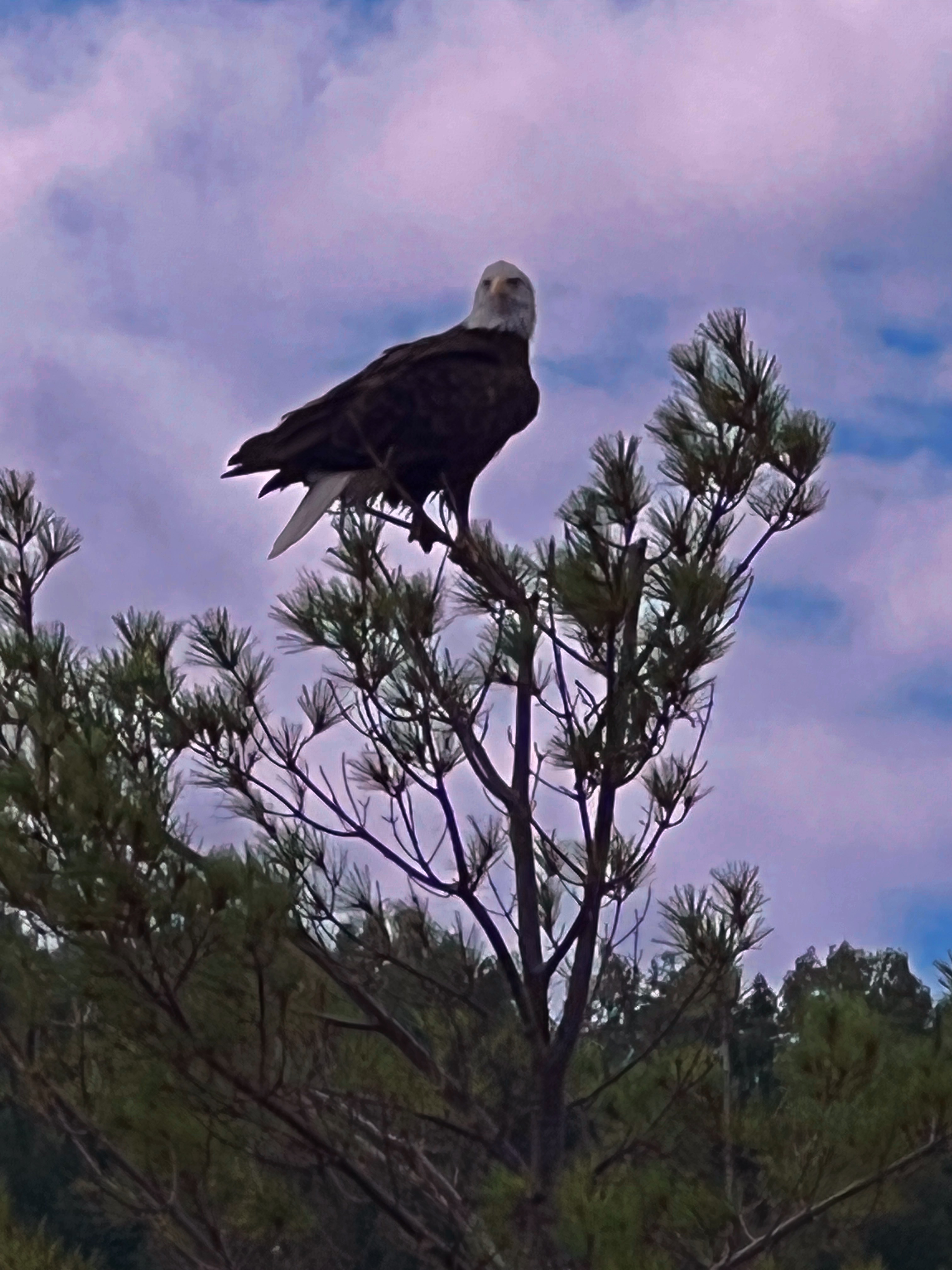
Terry Tempest Williams offered an astute observation about birds who will often catch our attention. Birds, he wrote, “mediate between heaven and earth”. But then he goes further to detail the eyes of certain birds:
“The eye of the cormorant is emerald. The eye of the eagle is amber. The eye of the grebe is ruby. The eye of the ibis is sapphire. Four gemstones mirror the minds of birds … We miss the eyes of the birds, focusing only on feathers” (Williams, 1998). About birds, why do we focus only on feathers, their coat, their tails, and colours? When was the last time you looked at a bird’s eyes? Can you get close enough to see them?
Our perspective can change. The Epiphany story that launches us into the season – the visit of the magi to Bethlehem – is about what happens once we encounter the newborn Jesus. Like the magi, we are called to search out Jesus. And that moment surprises us on our search. And changes our trajectory moving forward.
The wise ones cannot return to their country by the same road they used getting to Bethlehem. While they cannot go the same way because of Herod, we cannot go the same way once we’ve met Christ. We emerge from every encounter with Jesus changed people. The path ahead is now different.
Speaking of birds and their eyes, scientists studied how birds perceive colour in the world. Birds do not see ‘blue’ in the sky in the way we do. Instead, most birds see ultraviolet light, rendering the sky on a bright sunny day not in blue but in magenta tones (Coman, 2024).
Whose reality is truer? Is the sky blue or magenta? I guess that depends on whose perspective we take, the birds’ or the humans’.
Despite the question, God’s capacity for creating this diversity of perception holds all perspectives together. Indeed, God’s view knows no bounds and extends farther than we can ever imagine.
Epiphany for the church is a season in which we are invited to consider and experience Another’s perspective. It can be as simple as realizing it’s not all about us, or something isn’t in fact what we have always made of it.
From birds to cats. In the 18th century William Cowper wrote a poem entitled, “The Retired Cat” (2022). It’s a lengthy poem so I won’t read it but will summarize for you.
There was a cat who indulged in her master’s attention. The cat had full reign of the house wandering wherever she pleased whenever she pleased. It was a good life. She believed she was the centre of her universe.
It was cold one day in the winter, and the cat wanted to find a more comfortable place to lounge. So, going into the master’s bedroom where she assumed a snug spot would await, she noticed an open drawer atop the dresser and leapt into it.
As she sunk indulgently into the fine linen folded layer upon layer, suddenly the maid, not seeing the cat inside, shut the drawer closed!
There the cat remained the rest of the day, trapped inside, not able to escape. Certainly, someone would notice her absence and come find her. But no, time passed. And she was left alone. Day turned into evening. Fearing she would be there entombed, the cat remained unattended until in the middle of the night the master in bed heard a mewing and scratching. Alas, she sprung from her cage the moment the master opened the drawer.
Now modest, sober, cured of all her notions of self-conceit and hubris, now to her more ordinary place of rest downstairs she returned.
From that day on, the master noticed a change in the retired cat and reflected on the folly of the person who dreams themselves so great, and their importance of such weight.
Like the retired cat, we too can learn from our experience about the limitations of our perceptions and expectations. No perspective commands the complete corner on truth. Life experiences, good and bad, can be our epiphany moments because they allow us to enter a wider field if we choose to go there.
Life can teach us that while our individual perspective may be valid and true and good, we are part of a much larger and glorious web of relationships and perspectives. “The more perspectives we can learn to see, the greater our understanding” (Rubin, 2023). We are then no longer just seeing through our own narrow sliver, but broadening our scope so we can more accurately approach what truly is.
A bigger world is, after all, what God created us to live in. Let us, therefore, rejoice and be glad in it!
Glory be to God!
References:
Coman, S. (2024, December 5). Seeds of hope. Lutherans Connect. https://lcseedsofhope.blogspot.com/2024/12/day-5.html
Cowper, W. (2022). The retired cat. In J. M. Hunter (Ed.), A nature poem for every winter evening (pp. 25-29). B. T. Batsford, Ltd.
Rubin, R. (2023). The creative act: A way of being. Penguin.
Williams, T. T. (1998). Refuge: An unnatural history of family and place. In J. Gardiner (Ed.), The sacred earth: Writers on nature and spirit (p. 42). New World Library.




 Raspberryman