Dare we imagine

For my friend’s wedding over twenty years ago, I was asked to play Pachelbel’s Canon in D on my violin for the processional. We were to rehearse on the Friday evening. As I was running late, I drove over 120 km/hour on the Queensway from the west end all the way to Orleans. When I ran into the church, violin case in toe, the bride was waiting. I had made it just in time to set up and start the procession.

The notes lifted off the strings and the bridal party started down the aisle. But I was getting strange looks from them when all of a sudden the bride waved her hands and said: “Could we start over? Martin, did you tune your instrument?”

At that moment I actually heard the music I was playing – completely off key, sharp by at least three tones. “Ah, no,” I mumbled, even though the problem wasn’t that I hadn’t tuned my instrument. The problem was in my head.

You see, when I sat down to play, my mind was still travelling 120 km/h on the Queensway. My body may have been resting at that moment when I played the first note. But everything inside of me was still going. And going fast. No wonder I was playing sharp.

I learned from that experience, that before I play my guitar or violin, or sing any song, I must pause. I stop. And in my mind, before playing the first note, I hear what I want to play and how I want to play it. I need to imagine it first, before doing anything.

The truth is, you cannot even do something until you first have an image of it inside you. Albert Einstein, early 20th century inventor and scientist, once said, “I am enough of an artist to draw freely upon my imagination. Imagination is more important than knowledge …”[1]

Late 20thcentury author, surgeon, and inventor — Leonard Shlain – made the case that images come before our capacity to verbalize or name what we see.[2]We have to see it in our mind’s eye, first. Our imagination dictates our reality to a large extent.

Attending the Festival of Homiletics in Washington D.C. this week is a real treat, as I have had a little time in the busy schedule hopefully to visit the National Gallery of Art.

There, until mid-summer is an exhibition of paintings about Francis of Assisi. Francis of Assisi from the 13thcentury is an important figure in Christian history. He is, of course, known for his spirituality about nature and all of creation. Francis is also credited for putting Christmas on the annual Christian calendar. Christmas is the celebration of God’s incarnation into humanity.

I was impressed to learn that “Francis of Assisi has the longest, single entry in the bibliography in the Library of Congress, also in Washington D.C. He is the most written-about human being in history. Every day there is another biography, monograph, that they enter into their files, from another language, another culture, even other religions.

When the Pope some years ago wanted to gather leaders of all the world religions to have a respectful, inter-faith dialogue, the only city in the world that they could agree to meet in was Assisi, Italy. Because the memory of this man doesn’t carry much negative baggage at all. “[3]He was one of those rare human beings whose humility and stance towards others garnered respect and love. Truly, a saint.

In one popular painting of him, he is standing with arms open and the birds flocking around him. But instead of looking up – which you might expect – he is looking down at the earth.

In the season of Pentecost we are entering now, we read from Book of Acts that the Spirit of God “came from heaven” upon those gathered in Jerusalem.[4]The Spirit of God came down upon the earth. The Spirit of God descended to the place where humans were gathered.

Often we assume that to be spiritual, or to be holy, we have to gaze upwards towards heaven – somewhere away from the here and the now. We may therefore over emphasize our destination in the heavenly realms while paying little heed to the earthly journey.

In the optioned first reading for today[5], we encounter a dramatic vision of what happens in the valley of dry bones.[6]The prophet Ezekiel conveys to us a message using fantastic imagery, not unlike later apocalyptic visions from Daniel and the Book of Revelation in the Bible. I hope our imaginations are stirred by this reading, where skeletal human remains join together and begin to walk again.

Christians have traditionally understood this vision primarily to point to the resurrection of the dead, in light of Christ’s resurrection. This rising, then, would happen at the end of time, after our physical death.

Such an interpretation does not do full justice to the text, whose context is the community of exiles in Babylon, some six centuries before Christ. These exiles – the people of God – felt dead, like the dry bones. They had lost everything when Babylon conquered Jerusalem – their temple, their homes, their land.

The prophet Ezekiel with the exiles, conveys the word of God to the hopeless. The vision of new life in the dry bones is a promise of new life for the exiles. They are given hope, in a hopeless world.

Holy people in art are often depicted looking up to God. While this is certainly an appropriate stance to have in life, let us not miss the point of the Pentecost message, which is not fundamentally heavenward. The primary movement and message of Pentecost is downward. To the ground. God’s Holy Spirit blows upon the earth, in the earth, and in humanity.

God’s Spirit comes to us, wherever we are in life on earth. To whatever circumstance of our lives. Whether we are imprisoned in the exile of our own making or constrained by forces beyond our control. It is into the ordinary, the mundane even sordid realities of life to which God now comes.

Our lives on earth matter to God. How we live and what we do with what we have matters to God. How we live and what we don’t have matters to God. How we live with others matters to God.

While in the passing season of Easter our gaze may have looked upward to the glory of Jesus, our gaze and focus during Pentecost levels out upon the earth. We now watch for the presence of God among us. We go where the Spirit blows to do God’s will and mission.

We pause to imagine, like African American slaves did centuries ago on this continent, that ‘dem bones’ will rise again out of captivity. Dem bones will sing a new song. Dem bones will embrace freedom in the loving grace of God.

Dare we imagine.

[1]Cited in Leonard Shlain, “Art and Physics: Parallel Visions in Space, Time, and Light” (New York: HarperCollins, 2007)

[2]Richard Rohr, “Daily Meditation” 14 May 2018 (Center for Action and Contemplation), http://www.cac.org

[3]Richard Rohr, “The Art of Letting Go: Living the Wisdom of Saint Francis”, Session One/CD1 (Boulder Colorado: Sounds True, 2010)

[4]Acts 2:2 NRSV

[5]Day of Pentecost, Year B, Revised Common Lectionary

[6]Ezekiel 37:1-14

One part per billion

I’m going into the Algonquin Park region this coming week. As you can see outside the church, I’ve already strapped my canoe atop the car. I’m looking forward!

And when I’m paddling, I like to follow the river or lake banks. Of course, where I’m going, there are lots of little lakes and rivers, and therefore many riverbanks and rocky shorelines I will skirt (probably still breaking the ice!).

We live in a world where borders and boundaries are important. Whether these are borders between nations, continents, cities, regions, communities, families or individuals, they mark the line between separate and distinct realities. Without honouring certain boundaries, we can fail to distinguish who we are and lose a sense of our identity and purpose.

Last summer when I travelled through Spain and Portugal, I learned that he Portuguese-Spanish border is the oldest, unchanged national border on continental Europe. This surprised me because that border did not appear natural. Not unlike the border between Canada and the United States in North America, the Spanish-Portuguese border draws a counterintuitive line across the more natural flow of the continent’s geography.

For example, to see it from space, the North American continent flows more north-south: The mountains run north-south on the western half of the continent, the prairie and plains in the centre of the continent, and the Great Lakes basin spilling into both the Mississippi and St Lawrence River valleys in the eastern portion of the continent. The geography suggests more natural north-south lines.

Spain and Portugal share what looks like a giant square mass of land peaking in the northwest on what is called the Iberian Peninsula. The Atlantic Ocean hugs the northern and western edges of this square. And the Mediterranean laps up against the eastern edge and into the southern Straits of Gibraltar separating Africa from Europe.

Despite what looks like it should be a unified whole, this large land mass is divided between two nations with Portugal carving its small section on the south-western shoreline.

When the kids were toddlers — and sometimes even to this day — they often lingered on the thresholds of doorways separating outdoors from indoors. Standing or sitting on the threshold meant that the door remained open. Of course, we parents were concerned about them jamming their thumbs and fingers and toes. So, we would yell at them: “In our out! Make up your mind!”

Borderlands, as we know from German history (the Berlin Wall) and between North and South Korea, can be dangerous places. We call the space in the border “no man’s land.” At best, these thresholds are ambivalent to us; at worst, they leave us uncomfortable, unsettled, fearful. We feel we can’t rest in these places.

I learned recently about what is called the ‘riparian zone’ which is the border between land and water. The riparian zone can be the lake or riverbank that is a marsh, or a rocky or sandy, thin strip of land, a hardwood forest or stand of pine on the edge of the river.

This ‘in-between’ place of the riparian zone fulfills three, vital, ecological functions: First, the riparian zone functions as a natural filter, cleaning ground water as it flows into the larger watershed. It also protects the surrounding soil from accelerated erosion by slowing down wash effect of the river. In the process, riparian zones actually create new soil and provides for new habitats.

A NASA scientist called the river and its marshy edges the ‘sine qua non’ of life; that is, where water and land touch, these edges are necessary for life on earth.[1]

So, we agree that boundaries are important. Borders, whether political, relational or ecological are vital.

But we also say that the grace of God knows no boundaries. We say that God’s love crosses and surpasses all boundaries. Jesus says, “Abide in my love.”[2]Paul wrote that “nothing can separate us from the love of God.”[3]God’s love expands and grows and overcomes all obstacles.

How does this happen? How can we, on the one hand, honour the boundaries in our lives and, on the other hand, live into the boundary-busting, wall-breaking, division-crossing, far-reaching, limitless, boundless reality of God’s love? How can God’s love abide in us when we are separated from God and each other by sin?

We are human, after all.

Imagine you are at the ocean, and you’re standing in the ocean ankle-deep. It’s true, you are only ankle deep. But it’s also true you are in the ocean. It’s also true that if you keep going, it will get plenty deep soon enough. If not in the ocean you are standing in, certainly at the deepest point on earth — the Marianas Trench — because all oceans on earth are connected anyway.

What if the infinite depth of the ocean gives the totality of its depths to your ankle-deep degree of realization of it?[4]

During the Easter season, and because of the resurrection of Jesus, the church says God is everywhere. But then, we also say God is really in your soul. And God is really, really in the church. You have to go in the church to save your soul. And, in the church, God is really, really, really in the Holy Communion. And, then, God is really, really, really, really in heaven. And, here at Faith Lutheran in Ottawa, it’s like one part per billion!

But, Jesus is alive. Therefore, God is really, really, really, really, really, everywhere.

The truth is, when you’re connected to a little bit of it, you’re connected to the whole of it, the fullness of it.

Speaking of the Holy Communion, when we receive one grain, it belongs to the one bread; one grape, one cup. Many parts, one body. When you receive only one small part of the Communion, you receive the whole of Christ.

“Every piece of bread and sip of wine is precisely the same one: there is one bread, and that is Christ. We receive all of Christ in communion, not just a piece of him. If we break the loaf into a thousand pieces, there’s still only one Christ – and each of us receives all of him.”[5]

This logic extends on several levels. Our lives, for one, belong to God’s story. “We need to sense that all aspects of our history, of our experience, are part of the same story, even the bits that don’t make any sense or the meaningless parts …”[6]There is no part of us that does not, somehow, belong to the great story of God and God’s people. Every part of us — our history, our experiences — is valuable to God and to us, and to each other.

We are who we are. No part of us is wasted space, wasted DNA. No part of us is lost, no memory is gone. All parts of us and each one of us belong.


[1]Diana Butler Bass, “Grounded: Finding God in the World; A Spiritual Revolution” (New York: Harper One, 2015), p.68.

[2]John 15:9-17 speaks of the mutuality of divine love’s presence: We abide in Christ as he abides in us.

[3]Romans 8:38

[4]James Finley, Centre for Action and Contemplation, 28 April 2018 (audio, http://www.cac.org).

[5]Br. Mark Brown, Society of Saint John the Evangelist (SSJE), Brother, Give us a Word, 28 April 2018

[6]Laurence Freeman, Daily Wisdom (Word Community for Christian Meditation, Meditatio), 1 May 2018.

Value-added, Christians in the world

Love is not a gooey, “Come, kiss my boo-boo because I hurt myself.”

Love is not a warm-fuzzy blanket to wrap yourself when you’re feeling blue.

Love is not Valentine’s Day chocolates wrapped up in a big red bow.

That is, not love according to the Gospel of Jesus Christ.

Love can be many things. In our world, love has masqueraded in many forms. Do we even have the energy to reflect, talk and most importantly act in the love-sense of the Gospel?

The text from 1stJohn begins with an address to the “beloved”.[1]This is a better English translation than others that start with “Dear friends.” The word in the original Greek is agape. As the first readers and listeners to this word were, so we are addressed, the “beloved.”

This word appears several times in this text. Can you count them all?

And none of them mean what the world, and our compulsive, fearful selves might first imagine.

Agapeis a self-giving love. It is a love that reaches out for the good of the other, despite what the giver wants to do. “Not my will but thy will be done,” Jesus prays to his Father in heaven moments before he is arrested.[2]

I continue to be perplexed by Mother Theresa’s confession on her way to India as a young girl. From the start, when God’s call to go there was beginning to grow within her, I wonder if she really wanted to go.[3]If it were up to what she wanted alone, I don’t believe she would have sacrificed her whole life to the cause of the poor. And yet, we know of her incredible contribution to help the vulnerable and homeless on the streets of Calcutta over the decades that she lived there, served there, loved there.

And what a paradox it was. She discovered, in the giving, that she was being most fulfilled. It wasn’t a sacrifice in the sense of self-denial, self-hatred even, or repression. She was one of the most human of souls on this earth, say those who met her. She discovered that her greatest needs were met, in her self-giving.

In the Star Wars spin off TV series, “The Clone Wars”, a story is told of how Jedi younglings are trained in the Force in a ritual called “The Gathering”. In order to become full Jedi, they must build their own light sabers. Their light sabers are unique to the individual. Each one is built around a crystal which they have to retrieve on an inhospitable, cold planet.

A group of younglings is dispatched into an ice cave to harvest their crystal. In order to succeed, they must meet and overcome their deepest individual fear and greatest weakness: Fear of heights. Fear of monsters. Impatience. Being left behind. Their crystal becomes available to them once they endure this personal challenge, each to their own.

What is more, the clock is ticking. They must find their crystal and exit the cave in a few short hours before the entrance to it freezes over. Otherwise, they would have to wait a couple of weeks trapped inside without help until the next rotation of the sun would allow the ice entrance to melt open again.

It begins as an individual challenge. But it can only succeed as a group effort. Before sending the younglings into the cave, Jedi master Yoda gives them their final instructions: “Trust yourself and trust each other you must.”

For some, this is the biggest problem. Most of the younglings run into the cave and work together in smaller groups, at least in pairs. One helps the other, and vice versa.

But for Pedro, the young upstart, know-it-all youngling boy, he rushes in at breakneck speed and abandons the group immediately. He forges ahead giving the others the impression, again, that he doesn’t need anyone’s help.

Before you know it, he finds his crystal. Or so he thinks. He is the first one back outside the cave. But when Yoda inspects the crystal, it melts in his hand. It wasn’t a crystal he found on the tip of the cave’s stalactite, just some frozen water.

Pedro needs to go back in and do it all over again. But now, time is against him.
While he runs back through the main entrance of the cave, others are returning from their search. He is worried and anxious now that he won’t have enough time.

Feverishly sprinting down tunnels and turning corners Pedro doesn’t know what to do. Until he comes across one of his class mates, Ketuni, trapped behind a glass-like ice wall.

Ketuni had been rushing herself to get to the entrance after finding her crystal. She had followed what she thought was a short-cut from one of the larger caverns. Just as she was coming up the narrow passage leading to the main tunnel near the exit, she realized she was trapped. There was no way she had enough physical strength herself to break the translucent, ice wall. Neither did she have enough time to find another way around.

Ketuni is just about to give up, getting used to the idea of spending days alone in the cave when she notices Pedro rush by. Ketuni calls, “Help! Get me out! Help!”. Pedro faces her through the glass wall. “But I haven’t yet found my crystal. I can’t help you. I have to get going.” And so, preoccupied with his own agenda and needs, he darts off.

But seconds later, perhaps with a change of heart remembering Yoda’s initial instructions to work together, Pedro comes back to the trapped Ketuni. Still without a crystal himself, Pedro takes a sharp rock and breaks a hole through the glass wall big enough to let her out. “Thank you! I’ll help you find yours, now quick!” Ketuni says.

“No, No, you go. There isn’t enough time. Please, get yourself out!” Pedro cries. Reluctantly, yet realizing the truth of what he says, Ketuni runs to the exit. At that moment Pedro notices a crystal glimmering in the broken ice from the hole he made to help Ketuni escape. In his willing sacrifice for her sake, he finds what he is looking for himself. By the end of the story, of course, Pedro makes it out just in the nick of time.

One of the lessons learned from the story is the mutual blessing that comes from paying attention to the needs of the other as the way of discovering your own gift. Our little friend needed to learn the value of trust in working together.

Love, no matter how you define it, is relational. A healthy encounter is usually mutual. A basic definition of mutuality is: “What I want from you, I will first give to you.” If I want respect, I first need to give it. If I want your trust, I need to trust you. If I want you to listen to me, I first need to listen to you.

Mutuality is thus a rendition of the Golden Rule: Do unto others as you would have them do to you.[4]That is, love the other because that is what you seek from them. A primary and fundamental question in any loving relationship is: “How can I best love you?” This brings an interesting implication of living out our faith, in the world: Our deeper needs will be met when we meet the needs of others.

Giving and receiving. Like a vine that is connected to the source. Any part of that vine (the stem, the leaf, the sprig, the sprout) is at any given time both the receiver of nutrients and the giver. It is a conduit. There is constant motion. Stasis does not compute in this picture, this dynamic. Any part of that vine must know what it is like to be both receiver and giver, giver and receiver.

If you can’t trust another to give you help when you need it,

If you can’t receive the love of another, no strings attached,

Then, how can you give it?

Both receiving and giving. Mutuality is thus a hallmark of the agapelove strewn throughout the stories in the Bible.

And flowing in the life of the church today.

We are the beloved. And we are a conduit of that love to the world. Christians are called the world over to ‘add value’ to society. And that value and worth resides in each human being. William Sloan Coffin, in his reflection of love some decades ago, wrote, “God’s love does not seek out value, it creates value. It is not because we have value that we are loved. Because we are loved, we have value.”[5]

God does not love us after we prove somehow that we deserve it. God does not love us after we already prove our worth or value. God’s love in the world creates value in each of us and in those we meet whenever we share God’s love.

Whenever we receive love and give love, love is truly the energy that keeps the world going ‘round.


[1]1 John 4:7-21, NRSV

[2]Luke 22:42

[3]Greg Pennoyer, ed., “God For Us: Rediscovering the Meaning of Lent and Easter” (Massachusetts: Chalice Press, 2015), p.114-115.

[4]Matthew 7:12; Luke 6:31

[5]William Sloan Coffin, “The Courage of Love,” (New York: Harper & Row, 1982), p.11

The Shepherd, and Creation

In the midst of this season of Easter, the extreme winter weather that has plagued this part of the world recently has been the topic of conversation. Perhaps, then, it is appropriate that April 22 is Earth Day. The public, as well as Christians, are invited to pause and reflect on our relationship with all of creation.

Earth Day coincides with the Fourth Sunday of Easter, which is traditionally called “Good Shepherd Sunday”. Familiar readings from the bible populate the liturgies of this day.

The imagery from the Psalms, particularly Psalm 23, calls forth in me a context of creation that is stable, healthy. The Psalmist walks beside still waters, green pastures, verdant valleys. And if we expand the Psalmist’s repertoire we can include the hills and mountains (Psalm 121), the moon and the stars (Psalm 8), breaking waves (Psalm 42,89), expansive seas (Psalm 139) and sky-reaching trees (Psalms 1,148).

In scripture, grace is mediated through creation, not apart from it. The message of the Gospel cannot be communicated in spite of creation but in and with it. All of creation, like the Sacrament, is a beloved conveyor of God’s grace and purpose.

When in the Gospel Jesus says to his disciples that he is the “good shepherd” (John 10:11), we are invited to consider what it means to care for creation. The Greek word for ‘good’ in this text, kalos, means ‘model’. In other words, Jesus is the model shepherd. Jesus models for us, in his life-giving love, how it looks to be a follower of Jesus.

Jesus will stop at no cost to care for us and for the world that God created and so loved. What does it mean for us? What are we called to do, as followers of Jesus?

This weekend, as the weather finally warms up and feels more like Spring, please reflect and act on what it means to follows Jesus in today’s world. Start by reading the Earth Day statement prepared together by the ELCIC Bishop, the Rev. Susan Johnson, Anglican National Indigenous Bishop, the Rt. Rev. Mark MacDonald, and the Anglican Church of Canada Bishop, the Most Rev. Fred Hiltz:

Earth Day statement by church leaders

The will of God – creation,incarnation,passion – March 25

In both Mel Gibson’s ‘The Passion of the Christ’ and, more recently, Mark Burnett’s ‘The Bible’, the devil stands by watching Jesus’ moments of agony.

Contemporary Jesuit writer, James Martin, SJ, describes three temptations facing Jesus during his Passion: The temptation of accommodation; the temptation of annihilation, and the temptation of abandonment.[1]

Jesus could have accommodated his opposition by not offending his listeners and telling them what they wanted to hear thereby avoiding his fate. When the Pharisees tested him time after time, Jesus could have appeased them.[2] But he didn’t.

Jesus could also have simply wiped out/annihilated his opponents by rallying the rebellious Jews against the Roman oppressors. Moreover, he could have called on divine power to protect him through force and violence.[3] But he didn’t.

Finally, Jesus could have left his ministry behind and the life God chose for him – abandoned it – in favor of a more conventional life. He could have settled down in the quiet sea-side town of Capernaum and taken on his earthly father’s carpentry business. But he didn’t.

Instead of doing all these things, he chose the path of surrendering to what came before him. He remained true to himself and his path.

Jesus chose the path of love and obedience. Jesus understood that the only way for God to fully embrace the human life and therefore the only way for God to love us, was the path of suffering and death. How did he come to align his will with God’s will? In the garden of Gethsemane, he prayed, “Not my will, but thy will be done.”[4] He prayed this as an affirmation that his deepest desires aligned with God’s purposes. “With you, all things are possible,” he prayed in his hour of anguish.

Indeed, what is God’s will? How do we discern God’s will for our lives? And when we are faced with the right path to follow, are we not also tempted to accommodate, to annihilate or to abandon? Early Christians, even before they were identified as such, were called, “Followers of the Way”, or “People of the Way”.[5] Jesus said, “I am the Way, the truth and the life…”[6]

This is the path of Jesus that we follow – a path that does not accommodate, annihilate nor avoid the reality of situation on the way to new life and resurrection. Life and death, light and dark, suffering and healing – the opposites are not excluded nor denied in the life of discipleship. It’s more both/and, than either/or.

March 25th is a significant date in Christian tradition, did you know? What we realize on the Sunday of the Passion / Palm Sunday is a liturgical convergence, an integration of meaning in the events of Holy Week, rather than a dissection and deconstruction into separate parts.

Some Christian denominations on March 25 celebrate the Annunciation – the day the angel Gabriel announced to Mary that she was pregnant with the Holy Spirit – nine months before Christmas Day. It is also the day ancient Christian believed Jesus was crucified. Finally, while now the calendar puts it on March 21, this time was associated with the creation of the world, on the Spring Equinox, the day when the day is divided equally between light and dark.

Creation, Incarnation (Christmas) and Passion (Crucifixion) – all collapse and converge on this day in Christian tradition.[7] The larger purpose of God come together to offer significant meaning on this one day: We recall the separation of day and night in Genesis during creation; the entering of God into the world in the person of Jesus; and, finally, the passion of Jesus brings to concrete and vivid reality the cross as the way to resurrection.

We live as we worship, and worship as we live.

Amidst the collisions of light and dark, hope and despair, love and suffering in our own lives, how do we discern God’s will for our lives? What are we supposed to do? Often when we ask these questions we assume that we have to figure it out. As if God’s will exists somewhere out there, detached or opposed to us, like clues we have to solve and decipher – a problem or mystery.

And yet, Christians have for centuries believed that God’s will was discerned within their  very own lives. Our own desires help reveal God’s desires for us. We look for signs of those desires in our own lives.[8] From ancient days, the Psalmist prayed: “May God grant you your heart’s desire and fulfill your plans.”[9]

Here are some pointers:

  1. Sometimes an obligation is an obligation, and you need to do it in order to be a good and moral person. But be careful your life is not simply one in which you only respond to shoulds or pushes that may not be coming from God. “When you feel pushed to do something – I should do this, I should do that – out of a sense of crushing and lifeless obligation or a desire to please everyone, it may not be coming from God.”[10] God’s ‘pulls’ are gentle invitations that beckon in love – that do not accommodate, annihilate nor abandon the reality you face.
  2. The desires of our heart are not the surface pushes and pulls of wishes and wants, neither are they tied to our compulsive, impulsive selves. The desires of our hearts are discovered deep within us. When getting water from the lake or river into a jar, we need to let all the sediment – twigs, leaves, sand – settle to the bottom. We can’t examine or use it right away. Even just waiting for a few minutes is really not good enough. We have to wait a good day, leaving it alone, still. Then, the water is at its best. Truly, it is the best of ourselves that will reveal our truest and deepest desires.
  3. Finally, the desires of our hearts as the way to discerning God’s will for us, are realized in the most ordinary tasks of the day. What God wills for us is presented in the problems, situations, people and events of our daily lives. God’s will for us is not found in any abstract principle disconnected from the reality of our simple, ordinary lives. If you want to find God’s will and God’s path for your life, start with the realities of your day-to-day, and discover the path of love and attention within the specifics of every moment you face.

Pray for what you desire, as the way of discovering God’s will for your life. Your will and God’s will may very well be closer than you imagined. When we follow in the Way of Christ, we discover that God is Immanuel – God is with us.


[1] James Martin, SJ, “The Jesuit Guide to Almost Everything; A Spirituality for Real Life” (New York: HarperCollins, 2010) p.299.

[2] Matthew 22:15-22; John 2:13-22

[3] John 18:36; Luke 23:39

[4] Mark 14:36

[5] Acts 24:14.

[6] John 14:6

[7] Beth Bevis in Greg Pennoyer & Gregory Wolfe, eds., “God For Us: Rediscovering the Meaning of Lent and Easter” (Massachusetts: Paraclete Press, 2015), p.155-157.

[8] James Martin, SJ, ibid., p.279-283.

[9] Psalms 20:4

[10] James Martin SJ, ibid., p.329.

A wintery spirit

IMG_6730

The winter of 2018 has been record-setting, so far. And we are barely one week into the new year! Did you know it was Ottawa’s coldest New Year’s Day since records began in 1873? At 8am on January 1st, the mercury dipped to a frigid minus 30.2 degrees Celsius (-22 Fahrenheit); New Year’s Day also marked Ottawa’s sixth consecutive day with temperatures below -17 degrees Celsius (1 Fahrenheit), which made it the longest run in exactly one hundred years.[1]

IMG_0223

A full onslaught of winter can help us appreciate the meaning of Christianity. Though much of the bible’s stories and lessons were wrought out of the harsh desert climate surrounding the Mediterranean and Arabian seas, the winter realities we face in Canada are not that much different. I suggest, then, let’s take desert and winter as synonymous – meaning, essentially, the same things.

IMG_3529

American Lutheran theologian, Martin Marty, describes the importance of what he calls a “wintery spirituality”, defined by the shrill cry of absence, frost, and death. In contrast to a summer spirituality, winter is more given to being emptied than being filled. Winter is harsh and lean in imagery, beggarly in its gifts of grace and love.[2]

IMG_3524

Of course, Jesus goes into the Judean wilderness to be baptized in the Jordan River. And right after his baptism, he spends forty days and nights in the desert.[3] The desert is not a comfortable place to be. For one thing, it makes scarce and even denies the basic need for our survival – water. A desert is an arid region where annual rainfall remains miniscule. Some deserts average only one centimetre a year, with parts of the Sahara not receiving a drop of rain for more than twenty years.[4]

The word and image of water appears in each of the Hebrew readings assigned for this festival day in the church calendar, and is tied to baptism in the readings from the New Testament.[5] More to the point, water is given out of the chaotic void in the creation story, and in the arid wilderness as a gift and a grace. Water is thus a sign of God’s love amid the harsh winter or desert realities of our lives.

The prophets of old affirm that it is precisely in the desert where God expresses God’s love to the people. The grace of God cannot be received outside of winter. “Thus says the Lord: The people who found grace in the wilderness … I have loved you with an everlasting love …. I remember your love, how you followed me in the wilderness.”[6]

How, then, can we appreciate and even thrive, living out of this truth? How can we follow Jesus in his way? After all, the Baptism of our Lord is about Jesus beginning the journey to fulfill his God-given purpose in life. How he does it is of particular importance to us, if we are interested in following Jesus in our life-style.

Listen to a story first told by a nineteenth-century teacher, Awad Afifi the Tunisian, who drew his wisdom from the wide expanse of the North African desert:

A gentle rain fell on a high mountain in a distant land. The rain was at first hushed and quiet, trickling down granite slopes. Gradually it increased in strength, as rivulets of water rolled over rocks and down gnarled, twisted trees that grew there. The rain fell, as water must, without calculation. After all, water never has time to practice falling.

Soon, it was pouring, as swift currents of dark water flowed together into the beginnings of a stream. The brook made its way down the mountainside, through small stands of cypress trees and fields of lavender, and down cascading falls. It moved without effort, splashing over stones – learning that the stream interrupted by rocks is the one that sings most nobly. Finally, having left its heights in the distant mountain, the stream made its way to the edge of a great desert. Sand and rock stretched beyond seeing.

Having crossed every other barrier in its way, the stream fully expected to cross this as well. But as fast as its waves splashed into the desert, that fast did they disappear into the sand. Before long, the stream heard a voice whispering, as if coming from the desert itself, saying, “The wind crosses the desert, so can the stream.”

“Yes, but the wind can fly!” cried out the stream, still dashing itself into the desert sand.

“You’ll never get across that way,” the desert whispered. “You have to let the wind carry you.”

“But, how?” shouted the stream.

“You have to let the wind absorb you.”

The stream could not accept this, however. It didn’t want to lose its identity or abandon its own individuality. After all, if it gave itself to the winds, could it ever be sure of becoming a stream again?

The desert replied that the stream could continue its flowing, perhaps one day even producing a swamp there at the desert’s edge. But it would never cross the desert so long as it remained a stream.

The stream was silent for a long time, listening to distant echoes of memory, knowing parts of itself having been held before in the arms of the wind. From that long-forgotten place, it gradually recalled how water conquers only by yielding, by turning to steam in a natural cycle. From the depths of that silence, slowly the stream raised its vapours to the welcoming arms of the wind and was borne upward, carried easily on great white clouds over the wide desert waste.

Approaching distant mountains on the desert’s far side, the stream then began once again to fall as a light rain. At first it was hushed and quiet, trickling down granite slopes. Gradually it increased in strength, as rivulets rolled over the rocks and down the gnarled, twisted trees that grew there. The rain fell, as water must, without calculation. And soon it was pouring, as swift currents of dark water flowed together – yet again – into the headwaters of a new stream. [7]

Jesus instructs his followers to become the people they are called to be.[8] God is aware that our lives are like a journey through the desert. Or, as Canadians, we can say that our faith journey is not dissimilar from living through an Ottawa record-setting winter.

To thrive in this life is to see that this journey of becoming is not static. We are not called by Jesus to become mere swamp lands at the edge of the desert. Rather, the journey calls us to be vulnerable, to recognize what we may initially want to resist in us – like the stream that first struggled against yielding to the wind.

Our journey through life are journeys of vulnerability. Of taking little. Of trusting God. Of appreciating the value of small things. Of letting go into the Spirit wind of God. Then, we can, with the Psalmist see that, even in the wilderness, the Lord fulfills God’s promises and does indeed give strength to us and bless us with peace.[9]

IMG_3628

[1] Ottawa weather records, Twitter @YOW_Weather

[2] cited in Belden C. Lane, “The Solace of Fierce Landscapes: Exploring Desert and Mountain Spirituality” (New York: Oxford University Press, 1998), p.37

[3] Mark 1:12-13

[4] Belden C. Lane, ibid., p.38

[5] The Baptism of our Lord, Revised Common Lectionary Year B: Genesis 1:1-5, Psalm 29, Acts 19:1-7, Mark 1:4-11

[6] Jeremiah 31:3; 2:2

[7] as written by Belden C. Lane, ibid., p.20-21

[8] read the entire section from Matthew 10:5-42

[9] Psalm 29:11, NRSV

Christmas – God comes anyway

Do you remember ‘grumpy old uncle Stan’?

Eleven-year-old Nadia couldn’t believe that her recluse uncle fell asleep under the Christmas tree during the family gift exchange. He snored louder than any squeals of joy from other family opening presents.

Nadia complained to her Mom that she didn’t want to sit beside him at the Christmas dinner table any more. His burps and other inappropriate sounds coming from him embarrassed her to no end.

“I just don’t get it,” Nadia said. “Even though we make his favourite mash potatoes every year and wrap up all sorts of yarn for his knitting projects – he still acts all weird-like.”

“We only see him once a year, dear,” said her Mom. “We need to be patient.”

Nadia took a bite from left-over ginger bread. “Yeah. I don’t remember a Christmas without him.”

“You’re right,” Mom said. “He comes every year. He has a present for each of us. He listens to us more than he talks. I think he is just happy to be invited.”

“And sometimes he will ask me questions that make me really think.” Nadia continued eating her cookie. “I missed my cousins this year.”

“Yeah,” Mom sighed. “Other family members will sometimes find reasons for not coming. Uncle Stan comes anyway. Regardless of the weather. Regardless of who does or doesn’t have colds. Even when it would be better not to come. He comes anyway.”

“Christmas wouldn’t be Christmas without Grumpy Uncle Stan.”

Christmas teaches us how God is present to us. I believe that everything that Jesus says, everything that Jesus does, and everything that happens to Jesus reveals to us how God is present in our life. And the way Jesus responds to the situations and people in his life reveals to us how we are to respond to God’s presence in our life.

It is in that spirit then, that I read and hear again this holy night the Gospel story of Jesus birth: When Mary and Joseph arrived in Bethlehem the time came for Mary to give birth. And probably because of all the people in Bethlehem because of the census, there was no room in the inn. And so, they had to go to a small stable where Jesus was born. Mary wrapped him in swaddling clothes and put him in a manger. And he was born there out in the dark in the stable with the animals.

What does this story teach us about how God is present in our life? To me, it seems that a lesson is that there was no room in the inn, but God came anyway. The fact there was no room in the inn did not stop God from being born into this world, and that’s the lesson because that’s always true:

That sometimes in today’s world, whether it be through mass media or just the things that are going on internationally, and the way we as human beings treat each other, or sometimes just in our daily life, the hectic pace that we have to keep to just stay ahead of the day’s demands, along with the complexities of it all, it seems that there’s no room in the inn. That there is no hiatus from it all.

It’s true sometimes, not just in the world but in our own families, or sometimes just what we’re going through ourselves and all the ragged unfinished business of things. It seems that there’s no room in the inn. That it’s just all like closed up or too filled up with too much complexity and maybe things that shouldn’t even be there in the first place.

And as true as that might be we can take reassurance that God comes anyway. That God is being inexplicably born in our hearts moment by moment, breath by breath, as the interior richness of every little thing that happens to us and everyone around us.

As much as we may think it is all up to us – the good work we do, the important, business of our lives, striving after all that we believe is important – then come times and circumstances in our lives that confound and disrupt our self-inflated, self-constructed, neatly-tidied world –

A sudden death, a broken relationship, health problems, some failure, job loss, bad news, an unsolvable problem – and our neatly-packaged lives unravel.

And so, the Christmas message is really for those who seek more comfort than joy at this time of year. Some mercy. Some grace.

The Christmas message is for you who have tried oh-so hard to make things right but do not reap nor see the benefits of your toil; to you who by no fault of your own find yourselves in the middle of heart-ache; to you who continue to flounder in fields of despair when it seems there is no end in sight, no light at the end of the tunnel; to you who carry on, lifting head high despite the significant impairments of your lives. The Christmas message is for you. So, hear this: God comes anyway.

Christmas is not an escape from those hard realities, an escape we must engineer somehow by all the numbing stimulations of holiday ‘cheer’. But that God comes right into the midst of the darkness of our lives.

But here’s the thing: In order to discover the presence of God, we have to leave the hurly-burly of the inn, the superficiality and the chatter of it all, and find our way in the dark, back to the stable. That is, we have to enter into the humility and the simplicity and the patience and the delicate nature of what’s unfolding in our heart to discover where God is being born in our life.

And in this kind of prayerful attentiveness we are then asked to bring that delicate simplicity back out into the hurly-burly of the world. “It would be so much easier if we were asked to live a simple life in a simple world. But we’re asked to live a simple life in a complicated world.”[1] And I think this is how God is born in our hearts: In simplicity of heart we do our best to live with integrity in a complicated world.

James Finley relates one of his earliest memories of Christmas: His mother would take him to mass on Sunday and they always sat right up in the first couple of rows, off to the side altar. He was maybe three years old. He knew it was Christmas time because there were Christmas trees up in the sanctuary and there was a nativity scene.

He remembers the church was very crowded and a little baby started to cry near the back. And he remembers whispering in his mother’s ear: “Is that the baby Jesus crying?” His Mom leaned down and whispered in his ear, “Yes, it is.” And little James believed her. And today at 74 years old he still believes her. Not in the naïve way that a small child would believe it. But knowing that in Christ it is revealed to us that every child is worth all that God is worth.

And the truth is, for all the complexities and things of which that simplicity has been buried under, these so many things, there is in our heart this childlike purity, this childlike God-given Godly nature of who we simply are because God loves us.

And so, for us Christmas is us being awakened to this birthing of God in the simplicity of our hearts, in the depths of our life; and, into the awareness that despite the complexities of whatever each day might bring, we can take reassurance that God comes anyway.[2]

[1] Katagiri Roshi, Contemporary Zen master.

[2] I’ve adapted his words to my preaching context and am ever grateful to James Finley, “An Advent Meditation” (New Mexico: Center for Action and Contemplation, 2017), for sharing and emphasizing the Christmas Gospel message, that God comes anyway.

Pizza, sushi, pigs-in-a-blanket: It all matters

It’s an odd beginning.[1] You’d wonder why, if Matthew and Luke – and to some extent even John – begin with stories of Jesus’ birth, Mark starts his Gospel rather abruptly. And by reference to the Hebrew prophets of old.

During this Advent season as we prepare for and wait for God’s coming at Christmas, the Gospel text for today feels out of place. It shakes us out of our sentimental leanings and Hallmark expectations of pleasant Christmassy stories.

One of my favourite children’s exercises is finding the pattern in a row of numbers, words, pictures – and identifying which part doesn’t fit. Preparing a way in the dusty heat of the Judean desert by referring to Isaiah is a no-brainer for finding what doesn’t fit if we would line up and compare the first chapters of each of the four Gospels.

Compared to wordy John, for example, Mark is the master of brevity. The earliest of all four Gospels in the New Testament, Mark tells the story of Jesus by getting to the point. He appeals to our contemporary need to summarize concisely. Mark is short – only 16 chapters compared to Matthew’s 28, Luke’s 24 and John’s 21. In our digital video age where sound and video bytes must capture our attention in less than 15 second ads, Mark is the go-to Gospel. If you’ve got the time.

He opens by simply getting to the point: Jesus is the Son of God. And it’s good news. Amen. We’d go hear his sermons.

Unlike Matthew, Mark leaves out the juicy, vitriolic speech John the Baptist gives slicing up the Pharisees calling them a brood of vipers.[2] Instead, in a few short verses, Mark simply tells his audience that John the Baptist comes to herald Jesus’ coming. That’s John the Baptist’s only role: To announce and prepare the way of the Lord. Period. Next question.

Our three confirmands this year and their families have decided to meet in each other’s home once a month. Taking turns to host, each decides then what we will eat for supper. The first month it was pizza, perhaps no surprise there. The second month was sushi. And the third month we met this Fall, it was crescent pigs in a blanket. Pizza, sushi and pigs in a blanket.

Same group of kids and parents. Different culinary expressions. And I wondered how well this group found unity despite our differences. The detailed differences mark important aspects of our identity and perspectives on life. And yet, there we were, eating together and talking about God.

Which is why we must stop, pause and ponder Mark’s inclusion of certain details. If Mark wants to be brief and just tell the basic point, then why does he include what John the Baptist is wearing and what his diet is? There must be something very important about locusts, wild honey and camel’s hair.

I find a few good reasons for including only those details. First, Mark makes the connection between John the Baptist and prophets of old. We see, through these details that John the Baptist stands in line with Isaiah by citing his work.[3] John the Baptist is also mistaken for Elijah because of their similar attire,[4] and because he, like it is recorded in the other Gospels, foretells of the coming Messiah.[5]

Mark wants to be brief, but he also wants to add just enough detail to make those connections. Not only is this good writing, he conveys that it all matters. Not just the principles, the higher meanings, the abstract thoughts, the arguments, the beliefs. Material matters too. The locusts and wild honey that he eats, the camel hair that he wears – these all mediate God’s intent and message.

We can learn from Mark that “spiritual talk is always, in the Gospel, tied to material — real water, real bread, real time, inexpensive wine, locusts, honey, sand, camel’s hair, wind, birds and the clouds being rent asunder. This is the nitty-gritty of life, and it can never be separated from matters of the Spirit.”[6]

Because there is “nothing in all of creation that can separate us from the love of God in Christ Jesus”[7], then everything can mediate that love. There is nothing in all of creation that cannot communicate God’s goodness. All perspectives, all things, everyone – it all matters!

Those that created this library that we call “the Bible” in the fourth century could have tried to summarize the four Gospels – Matthew, Mark, Luke and John – into one definitive, authoritative account. No variations. No differences. No discrepancies.

No need to ask questions like: Was it the feeding of the 5000 or 4000? Were there two or was there just one angel in the empty tomb to speak to the disciples? Why does the Gospel of John contain stories not recorded in Matthew and Luke? One compilation would be enough, one that gets right the chronology of all the events, teaching and parables of Jesus. It would have made life easier!

But the wisdom of our forebears in the faith would keep the variations intact. Four similar yet different accounts were included in the New Testament. The diverse expressions and witnesses of Jesus Christ and his birth, life, teaching, healing, death, resurrection and ascension emerge as a critical element of faith.

In reflecting on the unitive diversity of Christian faith in the Bible, Richard Rohr wrote earlier this week in his daily meditation: “Scripture gathers together cumulative visions of the divine.”[8] Diversity is essential to who we are. It all matters.

It all matters because there is something good in everything. Everything in creation is just that: Created by God. And if everything was and is created by God, then despite the consequences of human misdeeds and the stain of sin in creation, despite all the religious and political differences in the world, there is still something redeemable and inherently good in this brokenness of creation. Including in us. This is the hope of Christian faith.

The Christmas season is a time when traditional gatherings occur in families, communities, friendship groups, and workplace teams. It would be too easy, and lazy on our part, to be dismissive and rush to make judgements of family members and co-workers with whom we differ. Some hesitate and complain about attending these gatherings because we can’t stand “grumpy uncle Stan” or “flakey aunty Molly”.

But even “grumpy uncle Stan” and “flakey aunty Molly” are beloved of God. There is something good about them. Will we take the time and effort to help make a safe place for them to express their true selves created in the image of God?

Richard Rohr has made many enemies in the Christian church for his provocative and progressive views. He has been a voice crying out in the wilderness for several decades now. And over all this time, he maintains that in conversation with those who differ from him, he follows a simple rule:

There is always at least ten percent of what he hears in their point of view that he can agree with. And it’s from that common ten percent that he begins his response to them.[9]

That calls for some work. And persistence. Because building relationships with those from whom we differ is not accomplished in one meeting, overnight, or after one phone conversation. It’s not easy work. It can take a life time.

It’s easier to give up and walk away. It’s easier to justify some narrative that paints them as evil or not worth spending any time with. The sad consequence of following this easy way we see in the world today.

We pray for peace on earth this Christmas season, as with the angels of old. The way of peace is to have hope. To have hope is to live into that which God calls us into being. And that hope requires us to take the narrow path.[10] To have hope is to work hard at practicing good listening skills. Hope requires us to work hard at not speaking first, but first asking questions and hearing the other. That hope requires us to work hard at listening with the aim of seeking understanding, to try to see things from the perspective of the other.

This doesn’t mean we will agree with the other. This doesn’t mean we will lose our integrity or that which defines us as Christians and as individuals. But it does lead us to a way of being with the other that honours them and respects them as beloved creatures of God.

We will continue eating together as a confirmation class into the new year. I look forward to the different culinary tastes that await. And what is better, I know the young women in the confirmation class are looking forward to this as well.

Hope.

[1] The Gospel for Advent 2B – Mark 1:1-8

[2] Matthew 3:7

[3] Isaiah 40:3

[4] 2 Kings 1:8

[5] John 1:21-23

[6] I wrote in my post from January 2015, “Borderland Spirituality”

[7] Romans 8:38-39

[8] December 4, 2017

[9] Richard Rohr, “The Art of Letting Go: Living the Wisdom of Saint Francis” (Boulder Colorado: Sounds True Audio CD Learning Course, 2010).

[10] Matthew 7:13-14; Luke 13:24

Driving me crazy

IMG_7227

There are times in life that come our way to remind us that something is ending. And even though at some deeper level we know it to be true, we hesitate to face that ending, whatever it is — the end of an era, the end of the life of a loved one, the end of a relationship, the end of a career, the end of youthful health and energy, etc.

How do we face these movements in life?

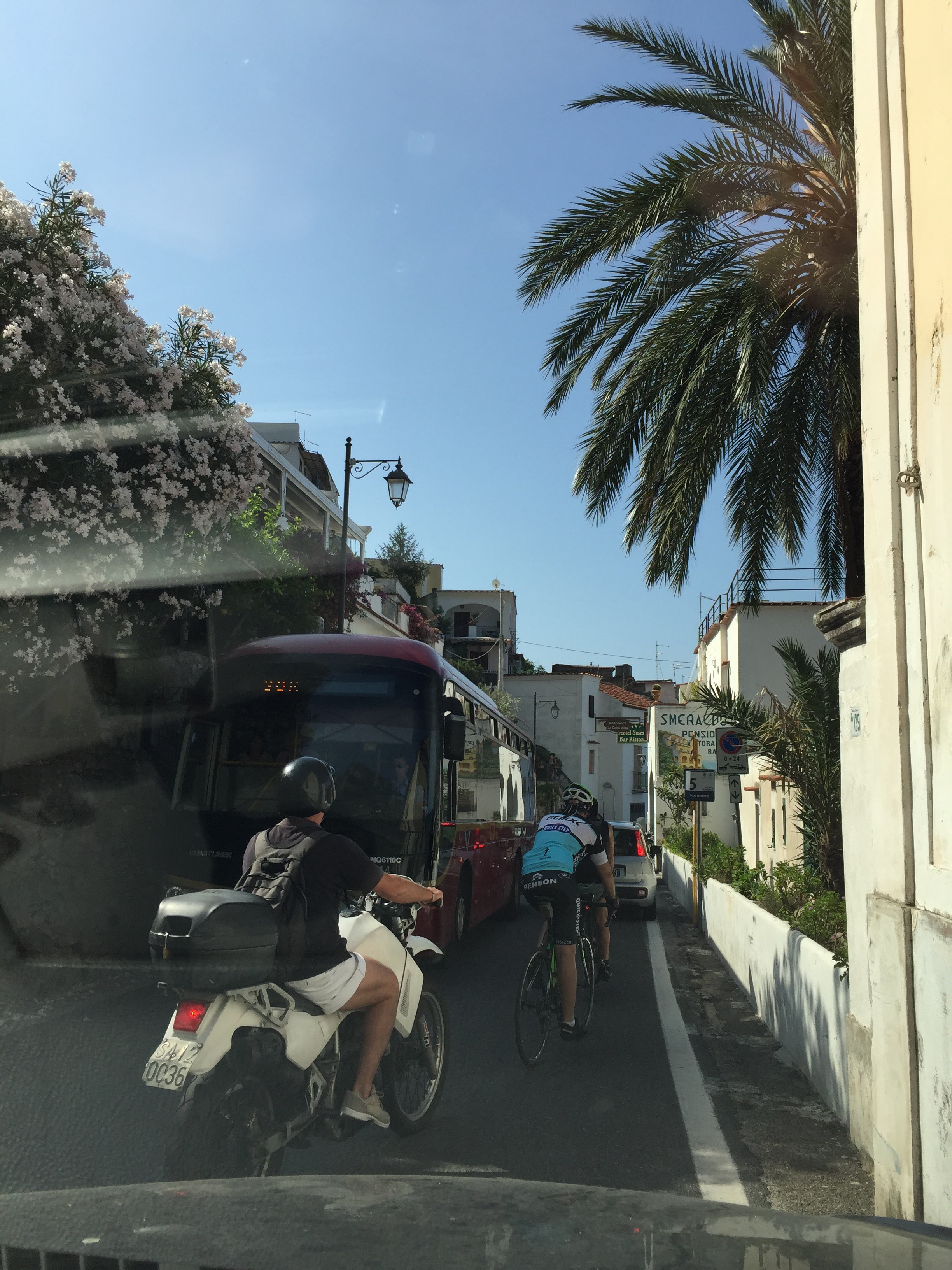
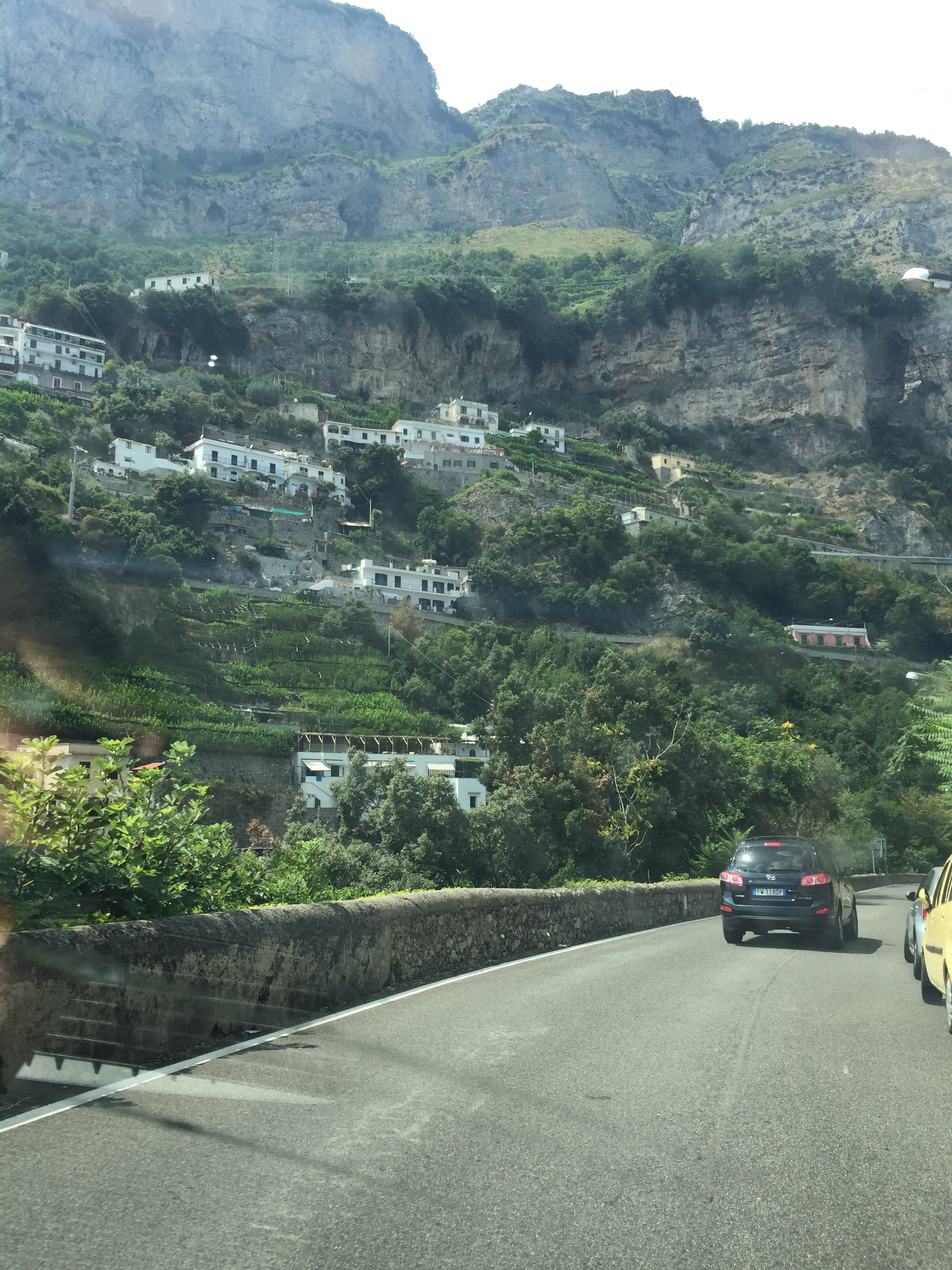
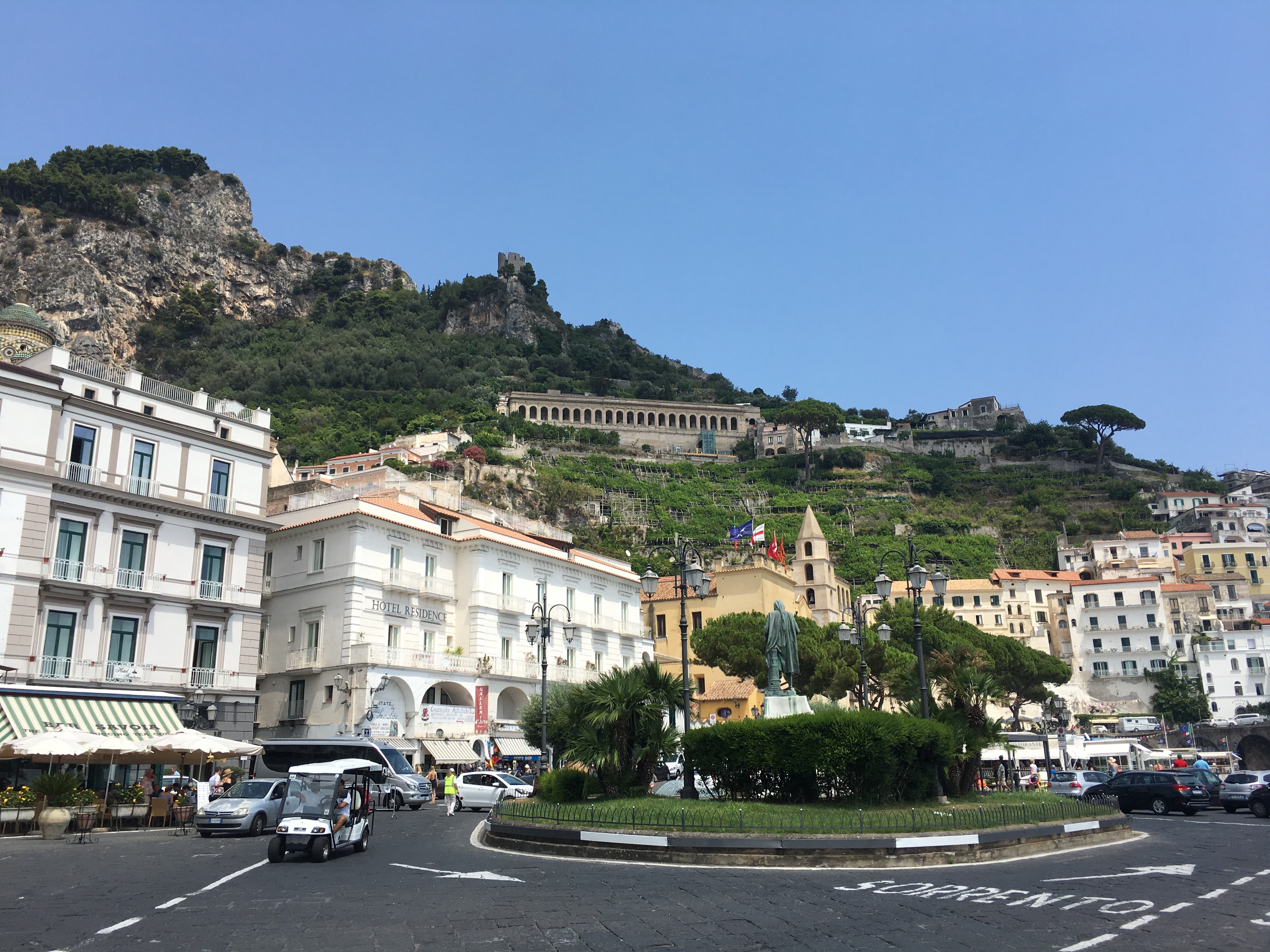
In planning our family vacation to Italy a couple summers ago, we decided to rent a car. Our host family lived in Naples. So, right off the plane, we jumped in our small Fiat, yours truly engaged the manual shift, and we immersed ourselves in the mayhem of driving in Naples.

What added to the heightened anxiety of driving in the sprawling metropolis, was that I had to follow our friends from downtown to the suburbs – no short jaunt ‘round the corner.

Not only did I have to deal with the speedy and crazy driving conditions, I had to slice through the haze of jetlag in my mind, and pay attention. I had to keep up to our host family already long acclimatized to the riotous driving culture there.

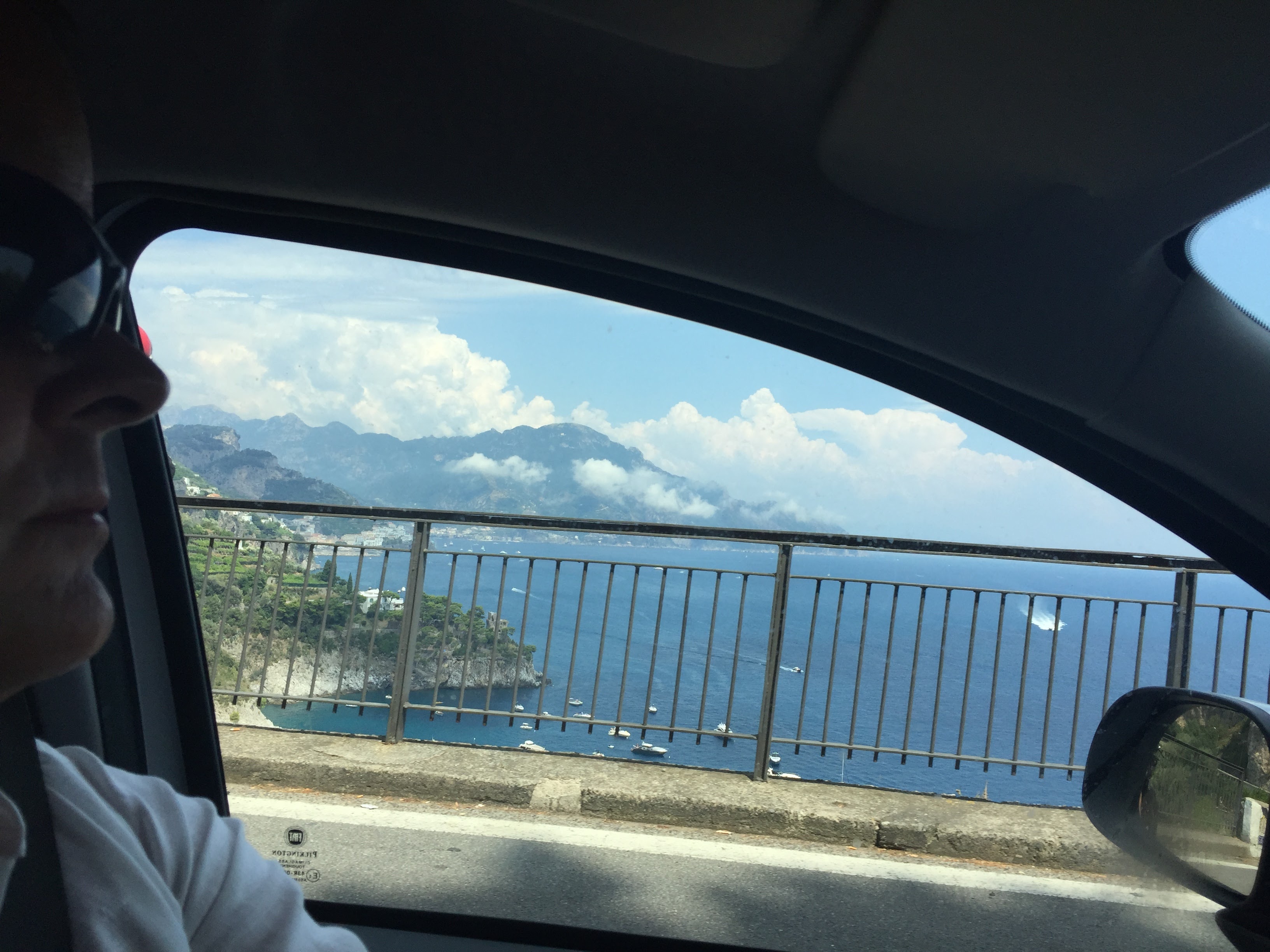
What is more, shortly after recovering from the stress and thrill of that first-day drive from the airport, the next day, in our separate cars we took to the winding and narrow road along the Amalfi Coast. To get there, we had to cross Naples first. Been there done that. No small feat.

IMG_5192

Then, once on the rocky Amalfi coastline, my face was practically pasted on the front windshield. I had to make constant reflexive maneuvers rounding blind, hairpin bends. At relatively high speeds I squeezed our little Fiat between oncoming Vespa scooters, ginormous tour buses and sleek, racing, tinted-windowed Audi sedans. All the while wiping the spittle from the glass in front of my mouth emitting profanity after profanity.


Caution thrown to the wind, I threw myself into it without thinking too much. Reactive, assertive and confident driving skills required! Since I didn’t exactly know the route we would take, I had to focus on what was directly in front of me. I had to pay attention and respond not only to the immediate conditions I found myself in. I also had to keep an eye on the dark blue Hyundai some car lengths in front, leading the way.

IMG_7315

Following someone in another car, requires certain skills best developed in the context of faith. Let me explain.

First, you have to trust. You must trust that the One you are following knows what they are doing and where they are going. You have to believe that following them faithfully will take you to where you want to go. At some gut level, you have to relinquish your claim to knowing better. And trust the other. And believe that they believe in you and your skill, too.

Second, you have to pay attention. You have to stay aware of your surroundings, even though the distractions and obstacles are frightening. As with driving in general, you can’t be looking inside the car or admiring the scenery to the side or behind you. Rather, you have to remain focused on the road ahead. Better yet, for as smooth a ride as possible, you have to envision yourself already being a certain distance down the road.

IMG_6661

Third, you need to act on in-the-moment decisions. Following another car is a whole different way of driving then when you are on your own. On your own, you can stop whenever you want, you can go however fast or slow you want to go, and you are not accountable in any way to another vehicle on the road.

IMG_7356

All that changes as soon as you say, “I will follow you.” If you don’t want to get lost, you have to keep up. You have to do it. You have to match the velocity of the lead car, whether they speed up or slow down. You have to drive in a way that will keep you within eyesight of the lead, which will affect how you negotiate traffic signals, lane changes, roundabouts, traffic jams, and toll gates.

IMG_4632

Finally, in order to follow another successfully, you have to take the primary focus off yourself. And fix it on whom you are following. There is no time to dwell on your past mistakes – the guy you cut off coming onto the expressway, your cursing a fellow driver weaving across multi lanes going 130 kilometres an hour, or the slight yet growing pressure you feel on your bladder from all the espresso you drank earlier in the day.

There is no time for self-indulgence of this kind. There is no time for regret, guilt or self-absorbed mental gymnastics. There is no time to stop to lick the wounds of obsessive introspection.

Because your energy is required now for the task at hand: trust, focus, action.

Jesus describes at least two opposing lifestyles in the Gospel reading for today.[1] The sheep are on Christ’s right hand – they are the good guys. The goats are on Jesus’ left hand – they are the bad guys. I suspect we can relate to being both a goat and a sheep at different times and conditions of our lives.

Either way, both groups are surprised to hear Jesus’ answer to their question: “When did we see you …?”[2] Both groups failed to see Jesus in the faces of the stranger, sick, hungry, thirsty, naked, and imprisoned.

The only difference is that the sheep already happened to be serving those in need, before they heard this news, before they had a chance to think about it too much, strategize and create impressive mission plans. That group was visiting the sick and tending to the needs of others as a matter of course, moved by a simple compassion for the needy. Doing so was part of their regular routine of life.

On the other hand, the goats apparently never thought nor believed that their very salvation depended on helping others, going to the poor, attending to the weak and vulnerable in society. Instead, they must have made life predominantly a game of ‘who can get the most stuff and be most comfortable and take care of their own first.’ Their faith must have been assigned to a God who existed only in their minds, in abstraction, a matter reserved only for intellectual discourse,polite company, and board room strategy sessions.

At this turning point in the calendar year, we shift gears and look ahead. We leave behind the relative calm and ease of the long summer season after Pentecost, and enter the fray of the holiday season. How we drive through and around the many distractions, noise, pace and twisting corners of our lives in the coming months will reveal a lot about who we follow or whether we are following anyone at all, let alone Jesus.

So, let’s not forget where Jesus goes. Let’s not forget what he was all about, whom he visited, whom he cared for and where he spent his time. This is our focus. Let’s trust that Jesus knows what he is talking about and the path he takes, even though God’s reign feels countercultural and unpopular in a season of getting more stuff and self-indulgent sentimentality.

Perhaps we will need to practice looking for Jesus on the streets, in the hospices, the safe-injection sites, the social housing units, the shelters, the refugee lines and immigrant ghettos in our city.

Let’s trust that Jesus’ way will lead to our resurrection and transformation in this life as much as in the next. Let’s pay attention to our surroundings and the various ways God encourages us on the way. Let’s not remain idle, nor get stuck in self-centred living. Let’s not coast nor ride the clutch too much. Because we’ll stall the car. And stopping is not good on the highway of life. In fact, it’s dangerous.

IMG_4253

Instead, let’s act faithfully in small, concrete ways that make a difference for the better in the lives of others in need.  Let’s do so assertively and confidently, knowing that we don’t travel alone; there are others in the car with us and on the highway around us. Because despite our many failings, and the mistakes we will make along the way, God continues to have faith in us.

There is too much at stake. And no time to lose. Still today, in our country – Canada – and in our nation’s capital, Ottawa, there are still over 10,000 households needing adequate, safe and affordable housing.[3] And, 15% of the population in the whole province of Ontario still lives in some kind of housing need.

Where is Jesus? The bible makes it very clear. The better question is: Will you follow?

Recently I came across this anonymous quote about the merits of volunteering in ways that can reflect the reign of Christ in our lives and in our world:

Volunteering is the ultimate exercise in democracy. You vote in elections … [once every four years], but when you volunteer, you vote every day about the kind of community you want to live in.

When you volunteer for good causes you add value to the vision of God in earth. The Reign of Christ is about the kind of world God wants us to live in. Where is Jesus? Will you follow?

We end today a church season. This annual observance can remind us that endings only herald a new beginning just around the corner.

[1] Matthew 25:31-46

[2] verses 37 and 44

[3] check out http://www.multifaithhousing.ca

Surprise ending

The Arnprior Rapids were destined to lose. If you asked me, midseason, to write the history of the 2017 Fall season of the Lanark-Renfrew Highschool Football League, it would sound completely different than it actually turned out in the end.

After playing five games, the Rapid’s opponent, the Almonte Thunderbolts, was undefeated. What is more, in all their games they did not have one single point scored against them. They were that good. By all counts, they were destined to be the League’s champion.

When a couple of weeks ago Almonte faced its arch rival and 2nd place Arnprior Rapids in the final championship game, many – even the players themselves deep down – felt this was a pointless exercise. Why bother even playing the game? Because the last time these two teams clashed Almonte thrashed Arnprior 40-0. And the time before that, 24-0.

So, you tell me. What will the history books have said about the outcome?

IMG_6618

These kids are learning an important life skill. Because as is often the case throughout life when things happen, it is easy to focus on what is wrong, what seems impossible, what appears a waste of time and energy. And give up.

Over the past several weeks, we have been reading some parables of Jesus recorded in the latter chapters of the Gospel of Matthew.[1]

These apocalyptic[2] parables sound somewhat harsh towards the human project: It seems human beings cannot help but eventually get it all wrong, whether it be the wicked tenants, the foolish bridesmaids or, as in today’s parable, the fearful investor.[3]

What is more, you get the feeling that the line between doing the right thing and the wrong thing is awfully thin. Even those that do get it right in Jesus’ telling are not that much different from those who get it all wrong – those who are doomed to the hell fires “where there will be weeping and gnashing of teeth.”[4] In short, there is a heavy, dark pall of negativity hanging over these stories.

It’s hard to remain enthusiastic about a life of faith when presented with these doom-and-gloom scenarios. It’s easier to become more fearful than hopeful.

When reading from this section in Matthew, I think we need to be mindful of the context of Jesus’ storytelling. We need to remember that Jesus told these stories while he was heading right into the middle of his own personal, high-risk venture, which led to arrest, torture, suffering and horrible death.

That is, he had decided to leave the relative safety of rural Galilee and head to Jerusalem, the capital city, where the authorities would regard Jesus as “a threat to the status quo and their own power.” The Romans would regard him as a “disturber of the peace” and condemn him to capital punishment on the Cross.[5]

We have the benefit of hindsight to help us better interpret these challenging parables. That is, because of the new life given to Jesus on Easter morning, we can now believe in resurrection, which is the end game of all of history. The benefit of Christ-faith is the hope and promise we discover on the other side of risk-taking, of losing, of failing and of taking responsibility. All the things that make us human.

Despite what may look impossible, a sure failure, a likely defeat and a waste of time and energy, this parable today encourages us to take heart and simply put our gifts, our talents on the line.

The sin described here is the sin of not risking anything, of not caring, not investing, of playing it safe and being overly cautious with what we have been given.

Whatever we have, “each according to their ability”[6], even if it’s only one, measly, tiny “talent” – when we risk giving it away to the world, allowing it to engage the world with positive intent, only then can good things happen. There are no guarantees good things will happen. But then again, we wouldn’t know unless we try. And take the risk.

But it’s well worth it! Because one talent is neither measly, neither is it tiny. One talent, according to some interpreters, was worth fifteen years wages or $1.25 million in today’s valuation. Just imagine the wealth of the entire property of the master who was placing it all in the care of his stewards.

Let’s take that to be God and us. When we can first appreciate all that wealth and riches that God has given us, and can begin to acknowledge the great faithfulness of God to entrust all that is God’s to us … now that’s something special about the God we worship. What a great joy! What a great responsibility!

In the end, this parable is not about money, essentially. Because even if the first two stewards who invested the little that was given them lost all that they invested on the market, Jesus would still have applauded them for trying. The attitude of risk-taking and putting it all on the line is the important thing, not the results of their monetary investment.

And then, when you try despite the odds stacked against you, you never know. How resurrection happens, and when, in the context of our own lives, will be a surprise.

When the Arnprior Rapids faced off against their arch rivals, the Almonte Thunderbolts in the Lanark-Renfrew Highschool Football League championship game, it was truly a David and Goliath show-down. The end looked bleak for Arnprior.

By all counts, Almonte should have won that game.

But, life is full of surprises. God is full of surprises. We can never know for sure what unexpected things await us when we put ourselves out there and invest our gifts on the playing field of life.

Not only did Arnprior score two touchdowns in the game – thus breaking Almonte’s bid for a clean sheet season – Arnprior did not allow a single point scored against them.

History is being written anew.

[1] Matthew 25:1-13, Matthew 22:1-14, Matthew 21:33-46; a parable is simply a fictional story Jesus tells to reflect some truth

[2] when the ‘end time’ promises of God are fulfilled

[3] Matthew 25:14-30

[4] Matthew 25:30

[5] John M. Buchanan in David L. Bartlett and Barbara Brown Taylor, eds., “Feasting on the Word: Preaching the Revised Common Lectionary Year A Volume 4” (Kentucky: WJK Press, 2011), p.308

[6] Matthew 25:15