Blueberries where the forest was

A congregational treasurer once asked God how long a million years was to Him. God replied, “A million years to me is just like a single second in your time.”  

Then the treasurer asked God what a million dollars was to Him. God replied, “A million dollars to me is just like a single penny to you.” Congregational finances being what they were, the treasurer got her courage up and asked: “God, could I have one of your pennies?”  

God smiled and replied, “Certainly, just a second.”

I think it’s more often the case in our spiritual journeys that we do not simply get what we ask for, or want. The faith life just doesn’t work like that. Even though in popular religion we often joke about it.

When people banter with me about having a special connection to God when we want better weather, I like to remind them that I’m in sales, not management. Indeed, in the popular mindset we live with this idea that somehow we ought to manage what really is the purview, the domain, of God.

And in tough times we struggle with it. Why doesn’t God do what WE think is the solution to our problem: Cure our illness, give us money to make ends meet, solve our problems, etc.? Of course we hear stories that are exceptions to this. But even then, the answers to the prayer request don’t come in precisely the way we expected they would.

It reminds me of a Valentine’s day card that I’ve seen. On the outside of the card is the catchy phrase “You’re the answer to all of my prayers.” On the inside of the card are the words “You’re not what I prayed for, but you’re the answer to all of my prayers. You’re what I got!” 

It is true: everything we have in life is ‘what we got’ whether we like it, want it, or not. We run into spiritual and emotional trouble whenever we feel like we must control the outcome of all that we do and are. How much do we miss what’s there because we are expecting to see what’s not there? What we don’t have? What we’ve lost? What isn’t any longer?

At the ‘generous giving’ practicum I attended this past week in Orillia with other clergy from the Eastern Synod, several speakers spoke to us about the nature of giving. The general secretary of the Anglican Church of Canada, the Ven. Dr. Michael Thompson, told of the time when he and his wife hiked a challenging trail in Lake Superior National Park last summer.

Coming over a rise they descended into a valley devastated by a forest fire a couple years back. The contrast from the lush pine and spruce forest they had just left was stark. Now, they walked gingerly among the burnt out stumps in a moonscape land. The birdsong had disappeared into an eerie silence. The rustle of underbrush caused by scampering chipmunks yielded to wind gusts sweeping across the vast, exposed earth.

Where were the tall trees? Would they ever return? How long would it take? Michael and his wife began to despair as they hurried to leave the depressing scene and return into the cover of mature forest once again.

Then by their feet a blueberry caught their eye. As they lifted their vision, they saw not just one blueberry but a bush, and not just one blueberry bush but actually the whole place was teeming with blueberry bushes surrounding the base of the tree stumps and fallen timber.

They stopped to consider the gift of abundance that lay at their feet in the blueberries: the sweet taste, the healthy nutrition, the food for many creatures of land and air. And then the possibilities of scrumptious blueberry pies and jams. All of a sudden their mood shifted, and they began to see and talk not about what was missing anymore. But the new thing that was appearing out of the ruins of fire and loss.

Indeed, especially on Thanksgiving weekend, it can be hard to feel thankful, especially when we focus either in the direction of deficit and scarcity, or in the delusion that we are the reason of all that we have. When we lean either way we may have trouble understanding what it means to live by Paul’s words in his letter to the Philippians: “Rejoice always, again I will say rejoice!” (4:4). 

How can we rejoice always, when we focus on scarcity on the one hand, or pretend it’s all up to us on the other? Either way, we remain depressed or stressed to the hilt and cannot, in the words of the Deuteronomist, “celebrate with all the bounty that the Lord your God has given to you and to your house” (26:11).

The Lord instructs the people, when they enter the Promised Land, to bring their basket of offerings to the priest at the altar. The giving doesn’t stop there, however. They need to be reminded again and again that it was God who listened to their prayer and brought them out of slavery in Egypt to freedom in the Promised Land (Deuteronomy 26:1-11). In the Gospel for Thanksgiving Day, we read Jesus’ words reminding his listeners again, that it is his “Father in heaven” who is the source of the bread we need (John 6:33).

Perhaps the secret to thanksgiving is in seeing what is actually there, what God has actually given, and not fixate on what is “missing” all the time? Perhaps Thanksgiving is not only about giving, but also about receiving. What if the secret to thanksgiving is noticing the blueberries where a forest should of /could of/ would of been, if not for the fire?

It is our nature to give and to receive with joy. As Christians we have a choice. It is a matter of belief, and intention. We can submit to our ego cravings to keep ‘what we got’ for ourselves, pretending we are the source of all the good in our lives. Or, we can give ‘what we got’ for the benefit of the world which God so loved (John 3:16). And rejoice!

Thanksgiving is not a feeling. It is an action. It is intention, and practice, and discipline. Why do people give, today? There are some cultural changes we need to recognize. If you are of a certain age, born before the latter part of the last century, you likely give because of duty, responsibility and commitment. That’s not the case in recent decades, if you haven’t already noticed, among younger people. Only 29% of Canadian donors in 2013 reported donating to fulfill religious obligations. (1)

The reality, today, is that younger generations will give of their time, talent and treasures when they feel compassion in the community and hope towards their giving. They need to be inspired, not guilted. In other words, people today give when they believe in the mission of whatever group or activity — including the church’s work and programs — if they are inspired and compelled by a belief that their engagement with the church will make a positive difference in the world.

Statistics Canada reports that the vast majority of Canadian donors today (91%) said that the reason they donate is that they feel compassion towards people in need (2013 General Social Survey released in Dec 2015); other reasons for donating often cited include the idea of a helping cause in which they personally believe (88%) and wanting to make a contribution to their community (82%).

There is much for us to be thankful. Giving levels in Canada between 1984 and 2010 have steadily grown, contrary to what you might think; charitable giving peaked in 2010 (the last year this was tracked) with a gross amount of $15 billion. In other words, over the last couple decades people are giving more, not less. And what is good news for us in the church, is that 60% of this $15 billion was faith-based.

This community of faith has given generously to the refugee sponsorship, to Lutherlyn Camp and Conference Centre, to our youth initiatives. This community of faith has given of its time, talents and treasures for the last quarter century to the Carlington Community Chaplaincy. This community of faith has always been generous, giving at least 10 percent to the work of the wider church in benevolence offerings. And, I’ve just scratched the surface.

You people are very generous in your giving. And this culture of generosity, of compassion and commitment, is the heart of what we are all about as Christians, as followers of Jesus who gave his all, for us.

And so, on this Thanksgiving Sunday in Canada, on behalf of all the people in Ottawa, in Canada and in the world who have benefited in small and big ways over the years from your generous giving — I want to say a heartfelt “Thank you!”

Let’s pray together “The Prayer of Thanksgiving” written by Walter Rauschhenbusch:

For the wide sky and the blessed sun,

For the salt sea and the running water,

For the everlasting hills

And never-resting winds,

For trees and the common grass underfoot.

We thank you for our senses

By which we hear the songs of birds,

And see the splendor of the summer fields,

And taste of the autumn fruits,

And rejoice in the feel of the snow,

And smell the breath of the spring.

Grant us a heart wide open

To all this beauty;

And save our souls from being so blind

That we pass unseeing

When even the common thornbush

Is aflame with your glory,

O God our creator,

For ever and ever.

Amen.
(1) Kerilyn Voigt, “Generosity – What Moves Us to Give?” Canada Lutheran Vol 31 No 5 July/August 2015, p.10-14; also, from the Eastern Synod ‘Generous Giving Practicum’ October 2016
Mirage gates

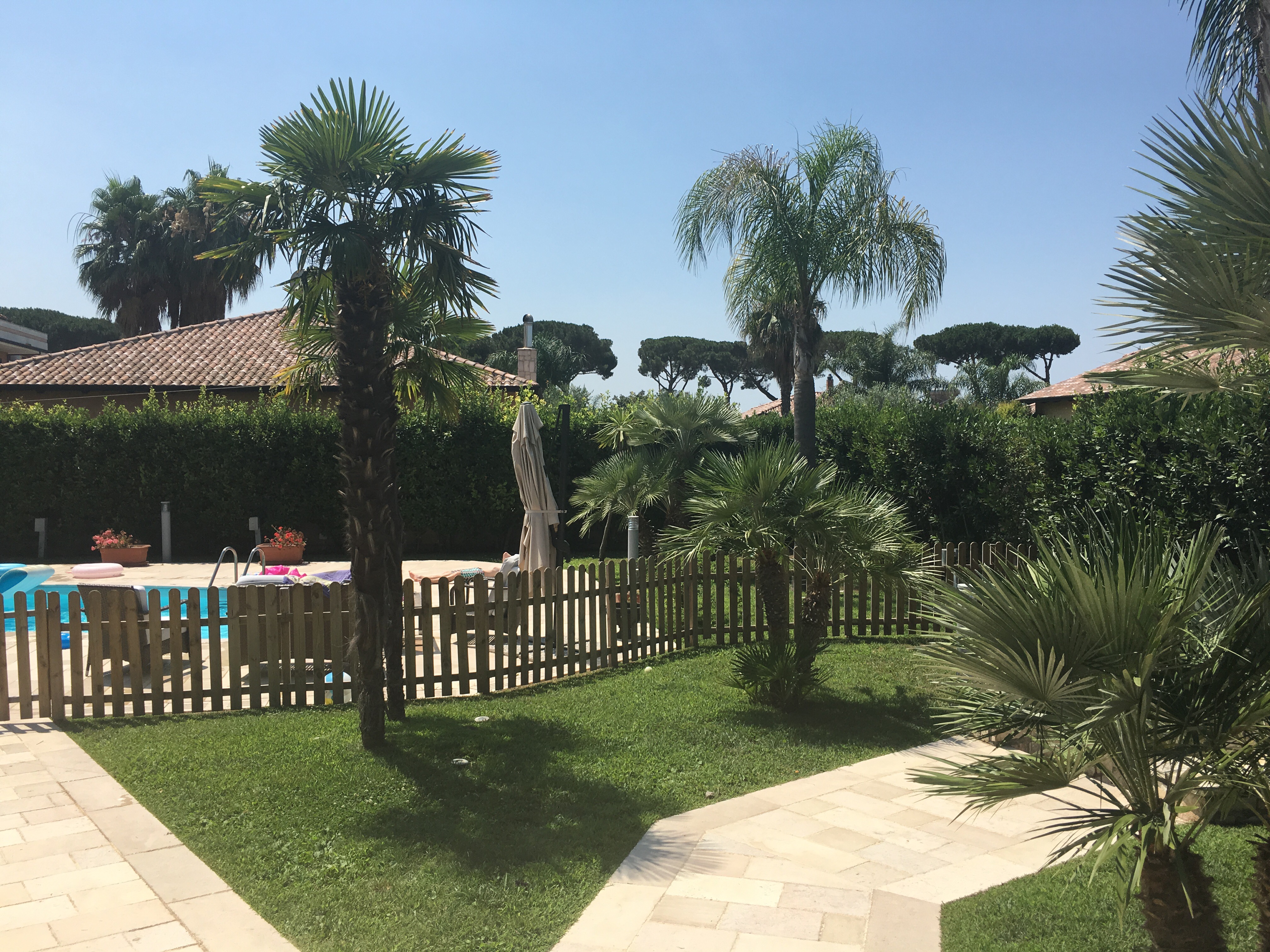
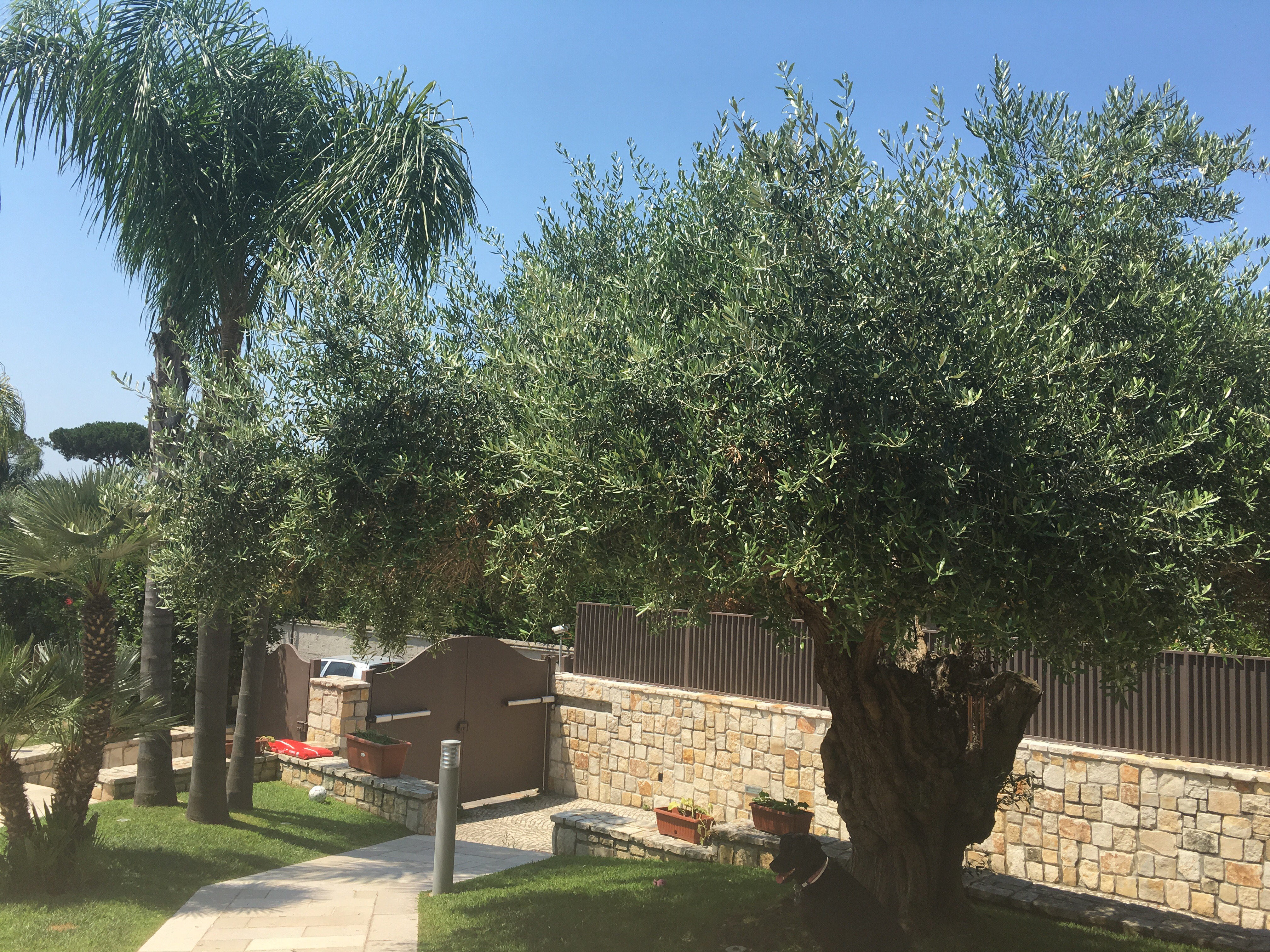
When we stayed at our friends’ house in Lago Patria — a suburb of Naples — we felt safe in the gated community in which they lived. Nearly a dozen homes lined the little neighbourly and upscale street where mostly stationed officers and NATO personnel lived during their posting to the base there. We called it, ‘the parco’ — the Italian for ‘park’. An oasis it truly was.


Lining the perimeter of the parco was a tall wall. A large sliding metal door would guard entrance to this haven, and then release us again to the urban jungle that is Naples, where stray dogs roamed and garbage lined the roadways. You get the picture.


In Robert Frost’s poem, “Mending Wall”, he wrestles with our desire to have clearly defined boundaries of what is my place and what is yours; and, why we divide ourselves so. He concludes his poem with a challenge: “Before I built a wall I’d ask to know what I was walling in or walling out” (1). Good advice.

Indeed, fences and walls serve to keep us from seeing ‘what’s out there’ — and perhaps we want it that way. We don’t want to see what might disturb our comfort. We don’t want to see who might be out there, lurking on the perimeter of our safely constructed lives. We don’t want to see because we are afraid of what truly seeing them might do to change, disrupt and unravel us.

The Gospel text today (Luke 16:19-31) can unravel us, for sure! A poor man named Lazarus makes his temporary home at the gate of a rich man’s house, eating crumbs off the rich man’s table.

The story suggests that the rich man never even sees Lazarus is there, begging, at his gate. Even in the afterlife, as the rich man burns in hell, he doesn’t talk directly to Lazarus, referring to him only in the third person (v.23-24). Even serving his due in hell, the rich man still hasn’t learned his lesson!

Indeed, as Jesus says later in Luke, “it is easier for a camel to go through the eye of a needle than for someone who is rich to enter the kingdom of God” (18:25). How can the rich and the poor bridge the gap? How can we break down the barriers that separate us? How can we ‘see’ better — by this I mean: develop the eye of the heart and mind?

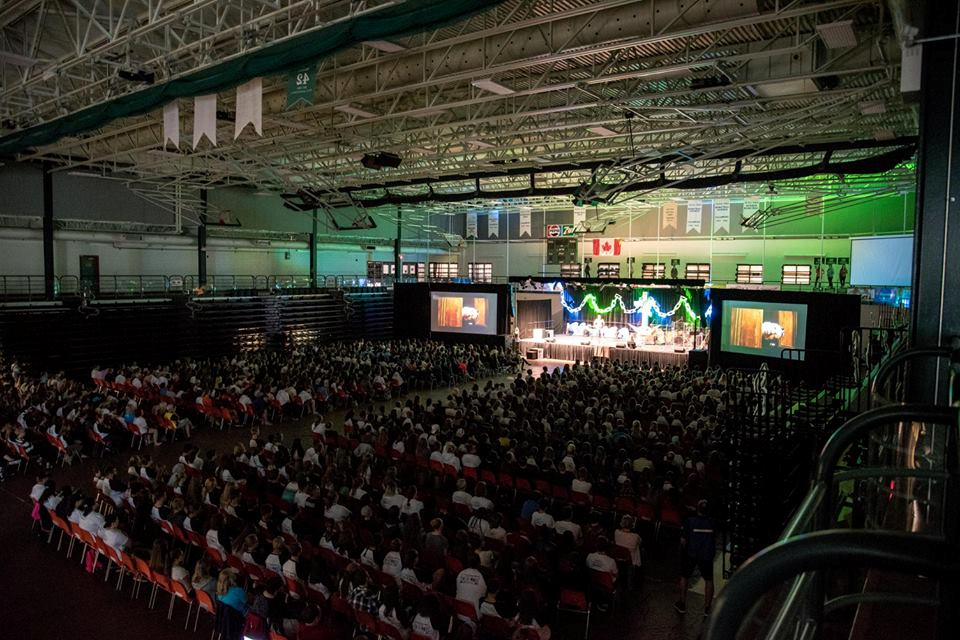
My brother tells the story of what happened at the beginning of the CLAY gathering this past August (Canadian Lutheran-Anglican Youth gathering). All nine-hundred participants did a certain exercise in the large group gathering that unnerved him:

They were asked to find someone they did not know; and then, to go over to that person, sit next to them; and then turn to look directly into their eyes…. and keep looking into their eyes for as long as possible, without turning away.  It’s hard enough to do this sort of thing with someone you know well… let alone a complete stranger!!


So, my brother David found a young person he didn’t know. And the two of them – complete strangers – began to look into each other’s eyes. It was unnerving! He felt vulnerable. Exposed.

While this was happening, the leader at the front said something like: “The person before you has a story, and has experienced happiness, as well as sadness, perhaps even deep hurt and pain. Who knows? Life may’ve been very hard on the person in front of you.”

As these words were being said, David noticed the slightest hint of tears welling up in his partner’s eyes. And he wondered…. He wondered …. What’s my partner’s story?

It’s said that the eyes are the ‘window into the soul.’ In a sense, they were peering into ‘each other’s souls’.

A natural connection is formed. Two people, connecting on a human level, affirming the fact that we’re all united in our common humanity and life’s experiences – of sadness and laughter and humour – which we all go through at some point in our lives … no matter our differences in age, ethnicity, language, sexual orientation or religion.

I’m reminded of a quote attributed to Philo of Alexandria: “Be kind to everyone you meet — you don’t know the battle they are fighting.”

Author and theologian Diana Butler Bass tells the touching story of what happened in an airport when she was flying from Albany, New York, to Washington D.C.

As you know, typically airports can be cold, heartless places, where everyone seems absorbed in their own rushing around, wrapped up in their private worries, nerves or plans, ignoring others around them.

This time, as passengers milled around in the gate area before boarding the plane, there sat alone at the far end of the row of seats, a middle-aged man.

He looked distraught, perhaps ill. Maybe, he needed help.

His whole demeanor was one of sorrow, and he was bent over, slumped in his chair as if falling toward the ground.

Diana walked over to him, and sat down beside him. She gently began asking him questions and listening to him.

With deep, heavy sobs, he told her how he buried his wife that morning, and now he was going home. To nothing.

For the next half hour, he told Diana about his wife, her illness and untimely death.

The man and his wife had no children.

She had been his best friend since high school.

Their parents had all passed away.

He had taken her to be buried where they had grown up in New York State, a place they both loved.

Most of their childhood friends had moved away.

There had been no funeral, just him and a priest at a graveside to say a few prayers and good-bye.

Now, he was going home, back to work. Other than a few friends, he was alone.

Diana listened, and then went to get him some water.

On the way back, she found a flight attendant, and told her about the man and his wife, how he had buried her that day. The flight attendant thanked her for sharing, and said ‘they’d take care of him.’

There were only about fifteen people on the flight that day on that small plane.

Somehow word got around, and soon everyone knew about their fellow passenger in mourning.

By the time everyone was boarding the plane, people were going out of their way to be kind to the man.

A crew member escorted him aboard.

With courtesy and attention, they seated him at the back of the plane to be alone with this thoughts and whatever tears might come.

When they landed, some silent agreement formed between the passengers to let him exit first.

Instead of the usual rush and urgent calls on cell phones, everyone stood silently, forming two lines of respect, as he walked down the aisle toward the cabin door…

Some nodded respectfully as he passed.

One woman reached out and touched his shoulder.

When he reached the front of the plane, he turned back, and looked at everyone, to acknowledge the sympathy offered.

The pilot came out of the cockpit, and took the man’s hand, and together they descended the steps to the tarmac.

All the passengers followed in silence.

A private car, dispatched by the airline, waited there beside the plane, to deliver him home. (2)


The irony is that no amount of gates, fences, walls or clearly defined dividing lines however constructed will keep us separated from each other. When there is love. When we can ‘see.’

Boundaries are important. But they don’t guarantee the self-serving security we seek. Shortly after they were posted to Naples a couple of years ago, our friends’ house was broken into despite the impressive protection their gated community seemed to provide.

These kinds of gates are really only illusions — like the proverbial mirage in the desert. Gates and fences that separate the rich from the poor, the privileged from the underprivileged, the employed from the the unemployed, the bum on the street and the senior executive in the top floor corner office are at best a mediocre interpretation of reality. Because they are constructed out of fear.

Jesus is about breaking down those barriers. And we are called to bridge the apparent chasm separating us from each other. Better now in this world while we can still do so, then whine about it like the rich man does in hell after it is too late.

We are called to look into each other’s eyes, and see the connection we share with all humanity, in the love of God. We are called to work together, like the community of care that formed on that short plane trip. We do not do this work individually, by ourselves. Not separately, but we work together at this task of reaching out and mending what has been broken.

We do this in the mission of God who broke down the greatest divide between God and human: when Jesus was born a human child. When God became human the ultimate gap was bridged. And now, we live in that flow of God’s love, continually binding us together, and all people.

(1) Robert Frost cited in David L. Bartlett & Barbara Brown Taylor, editors, “Preaching the Revised Common Lectionary; Feasting on the Word” Year C, Volume 4; Louisville Kentucky: Westminster John Knox Press, 2010, p. 118-120

(2) Diana Butler Bass, “Grounded: Finding God in the World: A Spiritual Revolution”, HarperOne, 2015, p.256

Gospel, Italian style

On the Sunday before I left for a family vacation to Italy, you encouraged me to — “know your history”. I think that message came to me mostly during the children’s chat when we talked about the Canadian flag on my backpack, and why Canadians had been so well appreciated and admired in western Europe, especially, over the past several decades.

The conversations then, as well as following the service over coffee, reinforced to me the value you place upon ‘history’ in general. 

Well, Italy is not exactly the hotbed of Reformation, Protestant Christian history as such. At the same time, the buildings there stand clearly as testimony to the dedication of Christians in certain times and places in history.

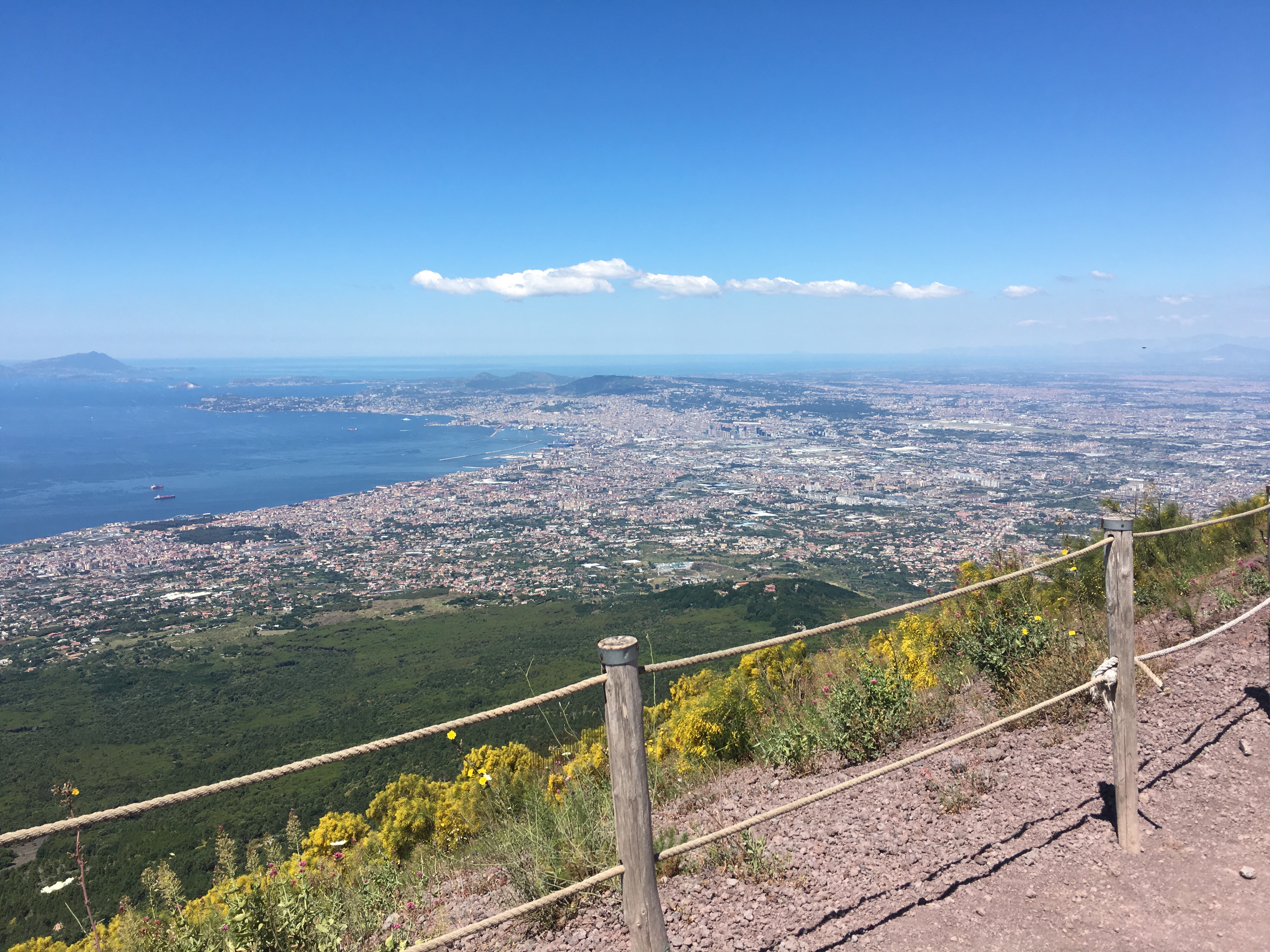
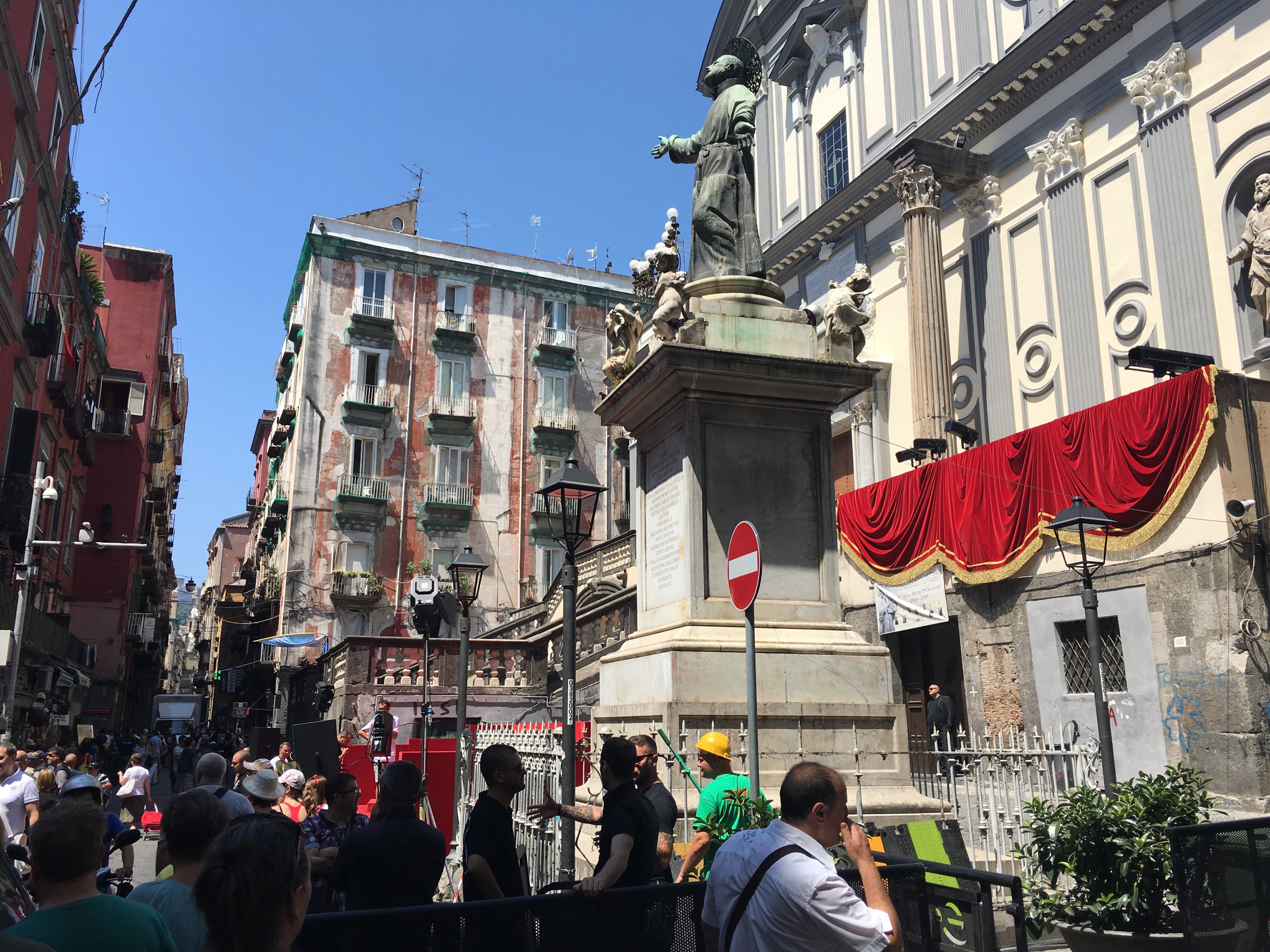
It was the first day we walked in the older section of Naples — a sprawling metropolis at the base of Mount Vesuvius on the Mediterranean coast — when I began to feel this history pressing in the air all around me.

I say sprawling because Naples is today the most densely populated urban centre in all of Europe; some 8,500 people inhabiting one square kilometre in a metropolis of nearly four million people — making it the third largest city in Italy, and the ninth most populous urban area in the entire European Union.


The noise was overwhelming: the hustle and bustle of pedestrians, car horns beeping, motorcycles and mopeds buzzing, shouting street vendors, impassioned conversations, two-toned emergency sirens, barking street dogs, screeching tires.

In conrast, the neo-Gothic styled ‘duomo’ in Naples offered a welcome break to this outside clamour. 

The expansive interior spaces of this main cathedral embraced silence and only hushed speech. You could occasionally hear the squeak of rubber-soled shoes and someone dropping a book on the stone and marbled flooring as people sat and wandered solemnly throughout the holy spaces.

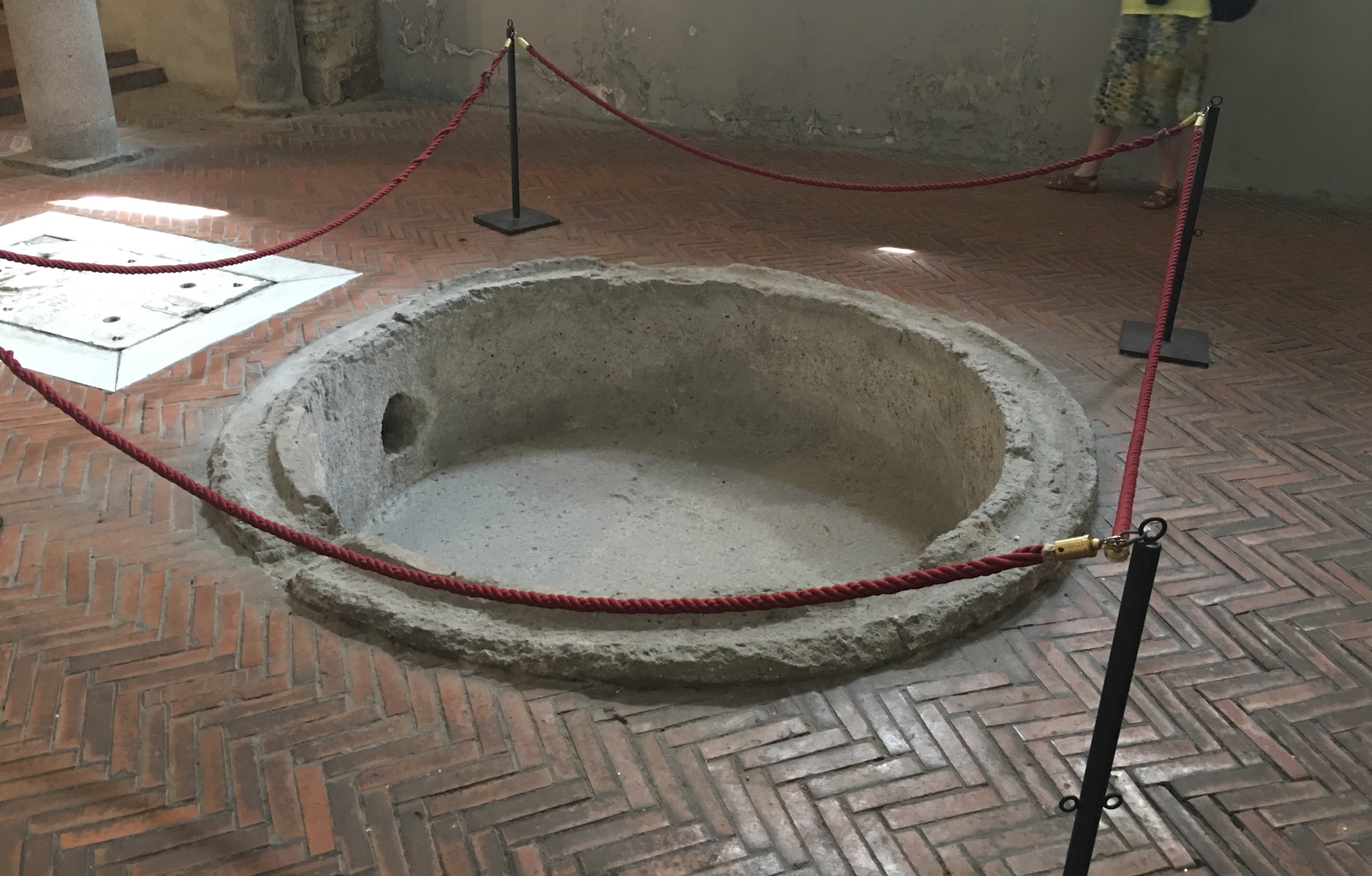
Perhaps the most significant feature of this cathedral is the baptistery, which is the oldest baptistery in the world, built in the fifth century, C.E. It is remarkable to connect with such an ancient symbol in a material form. 

When the baptized emerged from the water, looking upward at the ceiling, they would be encouraged in their faith; the first images they saw after being baptized were scenes from the Gospel expressed in Byzantine, mosaic art: Jesus saving Peter from drowning, the women at the empty tomb, the miracles of the multiplied fish, an image of Saint Paul, the Apostle, etc.

Seeing with my own eyes and touching with my own hands this font that was built by human hands only a few hundred years after Jesus, affirmed my conviction in the longevity and validity of the sacrament which has endured as profoundly meaningful for Christians throughout the millennia. 

I felt that faith is not just about the good old days when I was young, but the good old days when the Christian faith was younger. We are part of something much larger than our immediate reality. And, when we connect with that broader history, we realize it wasn’t always peaches ‘n cream and rose-coloured a history.

If you are movie watcher, you might recognize another cathedral we visited — the Duomo in the Umbrian, medieval town of Orvieto. 


This cathedral was featured in the opening scenes of Under the Tuscan Sun. This cathedral’s highlight is the Chapel of San Brizio, featuring Luca Signorelli’s brilliantly lit frescoes of the Day of Judgment and Life after Death. 

Although the frescoes refer to themes of resurrection and salvation, they do so through images not from the bible (that is, stories from the Gospels or Old Testament) but from the turbulent political and religious atmosphere of Italy in the late 1400s. Signorelli told the story of faith through his contemporary human events, rather than the traditional symbols (such as Jesus, God, the Trinity, the Apostles, disciples and other biblical characters) that we see in most other places.

Those frescos in the Orvieto cathedral chapel were snapshots of an historical era particular to a specific time and geo-political reality (i.e. 15th century Italy). And the impression of faith put ‘on it.’ Historical to us. Yet current to those who built that Cathedral in the Midlle Ages.

Faith is more than merely appealing to our past. Coming to worship today is not just about being reminded of something or someone from a long time ago. What we do here today is not just an exercise in recalling historical facts. As if decisions we make today are really not about faith. When we talk about our building renovations, worship practice and art, musical choices, communion, budgets, outreach initiatives  — these issues are very mcuh about the Christian faith ‘in the real world’, so to speak. All of these real things do reveal what we believe in, our values, what is important to us, who we are. How do these ‘mundane’ decisions reflect the Christian Gospel, faith, kindgom values in this time and place?

Lutherans make a similar mistake, I believe, when we define ‘Lutheranism’ as a belief/doctrinal system that is limited to the words and conceptual formulations of sixteenth century Germans. When we say that to be Lutheran is merely to ‘turn the clock back’ to 1537 when the Book of Concord was finally assembled including Luther’s Small and Large Catechisms, the Augsburg Confession, and the Apology to the Augsburg Confession.

I prefer a view that is reflected in the Evangelische Kirche Deutschland’s (EKD) logo for 2017, “Celebrating 500 years of Reformation”. Five hundred years of Reformation. In other words, Reformation started happening — in our tradition — with Martin Luther, yes. 

But, Reformation continued through the 500 years following, and continues to this day and beyond. We are always reforming the forms and means by which we express our evangelical, Gospel-centred faith. Always finding new and creative ways to tell the story of God.

What can we say, then, about Christian history? If we can apply a macro view over the ages, we can say that the history of the Christian faith is about a God who loves us. Christian history is about a God whose compassion never fails, who “will not come in wrath” (Hosea 11:9) — even though the people of God continue to keep “sacrificing to the Baals and offering incense to idols” (v.2).

The history of the Christian faith is about our lives being “hidden with Christ in God”, being “revealed with Christ in glory” (Colossians 3:3-4), dying daily to ways of sin and being renewed daily in Christ who “is all and in all!” — even though we are imperfect and sin as long as we hold breath. Christ is all and in all — despite us!

The history of the Christian faith is about how each moment of history — including this one right now — reflected Jesus’ love in the fifth century, the fourteenth century, the 21st century in Palestine, Egypt, Italy, Canada, etc. God for all times and places!

We validate the Christian faith by our lives today, now. This is where the rubber hits the road. This in-the-moment approach fuelled the generosity of medieval Catholicism represented in the magnificent building projects for worship as much as it did the passion and commitment of European Christians during the Reformation era.

We do not leave the practice of faith for some distant, utopic and dreamy future. Neither do we rest on the laurels of the tremendous sacrifices made by our forebears in Canada. 

Now is the time. Now is the time to live out of the conviction of God’s grace and love, despite the many and various ways Christians have messed up in history, and continue to do so today. Now is the time to live out of the faith that is full of hope, that despite our waywardness and unfaithfulness, God is faithful. Now is the time to claim God loves us, not because we are good, but because God is good. God is so good!

You know Jesus’ familiar exhortation, most often translated as “be perfect as your heavenly Father is perfect” (Matthew 5:48). Christians have often interpreted this word ‘perfection’ as being made whole. 

A much better translation might be: “be merciful.” Because this verse comes right at the end of a passage calling Christians to “love your enemies” (v. 43-48). Only God is perfect. But we can participate in God’s perfect mercy, God’s all-inclusive and impartial love.

Echoing Saint Paul’s words from the Epistle today (Colossians 3:11 — “Christ is all and in all”) St. Bonaventure later said, “Christ is the one whose centre is everywhere and whose circumference is nowhere.” [1] 

Christ’s mercy is everywhere evident in history. This is the Wholeness, the forgiveness, the grace, that holds you forever and everywhere. You can’t figure this Wholeness out rationally, nor can you control it. All you can do is fall into this Wholeness that holds you when you stop excluding, even the dark parts of yourself. [2] And that, my friends, is the Gospel — good news — for all times and places.

Thanks be to God!

1- Alan of Lille, ‘Regulae Theologicae’, Reg. 7 as quoted by Bonaventure, translated by Ewert Cousins, “The Soul’s Journey into God”, Classics of Western Spirituality (Paulist Press: 1978), p.100

2- Richard Rohr, “Daily Meditation on the Spirituality of Imperfection” Week 2 – Perfection of Wholeness, Thursday, July 28, 2016

Funeral sermon for an astronomer

Read Psalms 136:1-9 & 19:1-8

Rolf worked at many things. My impression is that he accomplished so much. Rolf was always on a project, whether clearing large rocks off his land, growing grapes, gardening, building structures, star-watching and -tracking.

His scientific mind, inductive reasoning and clarity of thought all translated into a degree of productivity not many of us will ever achieve. His gentle, methodical approach to his work reflects a state of mind that mirrors the great, spiritual giants of history.

Yes, spiritual.

Often science and religion have been pitted against each other in the philosophical and doctrinal wars of the contemporary age. And yet, in the lives of common people, we can begin to see that the two are not opposites in the seesaw battle for truth. Science and religion, in all truth, go hand in hand.

Some argue that besides the bible, no other book has likely influenced the course of western history more than the Rule of Benedict from the sixth century of the Common Era. Only some 13,000 words long, The Rule outlines instructions for the monastic tradition including prayer and work. In The Rule, Saint Benedict ordered the monks not only how to pray the Psalms, but how to work.

This work involved primarily manual, physical labour — fixing things, gardening, building. This work also evolved, happily, into artisan endeavours — wine-making, beer-producing, food preparing, and the such. Finally, the intellectual work of scribing and reading.

With singular attention focused on one task at a time, work becomes a contemplation. Even, you could say, a prayer. When it is done with joy and thanksgiving in each given moment. When we are present to our work, it is an offering of the natural rhythms of life, unfettered by distraction and self-consuming narcissism, which is often characterized by the demands and expectations of a hurried, anxious immediacy.

We remember and celebrate a precious life today. We recall moments that reveal a story of a person who reflects some of the best of what life and work is all about. Creation is indeed beautiful. God did good! And it will take eternity for us humans to begin to even scratch the surface of the brilliance and wonder of all that is.

The spirit of expansion, I would say, characterized Rolf’s life — a moving outward to include all, to embrace all, to reach to the farthest limits of all that we can know in God’s creation.

When Rolf was baptized at St James Anglican Church in Gatineau a few months after his birth, he was not only baptized into that particular faith community. His baptism signified his connection to the vast communion of saints. This community of faith spans the globe in all times and in all places. His baptism connected him to what Christians often call the ‘Body of Christ’ which has many members and includes all the baptized around the world: Starting here in the Ottawa region, and expanding outward.

In the funeral liturgy, one of the traditional prayers acknowledges the ‘mystical communion’ we all share in the Body of Christ. It speaks to the connectivity among all creatures.

Rolf’s passion for astronomy demonstrates this expansive spirit beautifully. The stars, of course, symbolize the mystery of heaven and God, and our human yearning for the unknown to become known. To connect to this great mystery, Rolf built his own observatory in the backyard of his house. 

And in 2005 he took a superb photo of Mars, his favourite planet. This image, which you see displayed here today, was possible because in 2005 Mars was in a close approach to earth at a high elevation — which means the angle at which viewing the red planet from the earth’s surface was exceptional.

Apparently Mars doesn’t behave like this every year. But in 2016, this year of Rolf’s death, Mars has again dipped close to the earth. Almost as if it was coming in to scoop Rolf up and connect his spirit once again to the vast universe, where now Rolf can see with his own eyes the expansive realm of God, whose love, mercy, and grace knows no limits.

Although we grieve a particular connection we have known with Rolf on earth these past six-plus decades, we touch today on the truth of the eternal connection we share with Rolf, all people, with all of creation and with God, forever.

Thanks be to God.

Happy Birthday! (funeral sermon)

“Jesus said to her, ‘I am the resurrection and the life. Those who believe in me, even though they die, will live, and everyone who lives and believes in me will never die. Do you believe this?’” (John 11:25-26)

It may seem strange to say this, today: On a day we mourn at the death and loss of a loved one. A loved one, nonetheless who lived to a 103! A loved one whose 104th birthday is today! “Happy birthday Wilma!”

When we say a funeral service is a ‘celebration of life’ we affirm this with mixed feelings, to be sure.

Kind of like the other paradoxes in our lives: Because, for example, we know that we are better fulfilled in giving rather than receiving. Because, as people of faith, we know that it is in dying that we live — on many levels.

That is why a funeral service is like an Easter service when we celebrate the resurrection of Jesus. That is why, the day Jesus died on the cross is called “Good” Friday. Talk about paradox.

So, with confidence, we gather today to have a birthday party. Because Wilma, a person of deep faith in the living Lord, lives today in heavenly glory! 

Happy birthday Wilma!

At birthday parties we often tell stories about the person’s life, to date. There is one story from early on in Wilma’s life that I wish to highlight: When she was five years old, the windows of the Halifax house she and her family were living in blew inward, planting shards of glass deep in the layers of the skin on her head. She and her family survived the famous Halifax explosion.

Until Wilma was well into her 40s she was pulling little pieces of glass from her skin. For a large chunk of her life, especially in her formative years, she had to live with this reminder of her near death experience at such a young age. She was, in the first part of her life, regularly made aware of the fragility of her life and the reality of her mortality. That with each step we take in life, death walks along close by. Maybe that’s why she lived so long.

We try to avoid death. We deny it at every turn. We don’t want to see it. And yet, in avoiding death we also avoid living. Living to the upmost. The key to a rich life is to be aware that our death is only one breath away. 

It is common knowledge that the most effective, greatest and skilled soldiers in history were men and women who were willing to die in giving themselves to engage each combat situation. When you accept your own death at any given moment, then you can truly live.

An incredible paradox, isn’t it? How can we live in the ambiguity, uncertainty and mystery of this reality?

Wilma, as I said, was a woman of deep and enduring faith — through it all. It’s amazing when you think about the history she lived through: the rise of the automobile; the radical advance of technology from wires to the digital age; the many wars and two world wars of the last century, the Depression and economic ups and downs, the social revolutions. Through it all, she nurtured, and was nurtured in, a life of faith in the God who died in order to live.

Perhaps a deep knowing of this leads one to bless others. Indeed, this is how I got to know Wilma in these last four years of her life. Mostly through touch. In the tradition of the church, a blessing of healing and grace was given primarily by the ‘laying of hands’. It was a challenge to communicate with her, and yet, experts affirm that 70% of communication is non-verbal.

Wilma’s image of God was of a gracious, giving, loving God. She bristled at me early in our relating when I said the version of the Lord’s Prayer that has the line: “Lead us not to temptation …” She stopped me right in the tracks of that prayer, right there: “Stop,” she said. “God does not lead us to be tempted!” she objected. So, we changed the words. And that is why you read a slight variation in that sentence in the liturgy today.

God is a God of compassion and caring. God loves. Even when we can’t. Even when our love is imperfect and fraught with our own sin and misgivings. God comes to us first with a word of compassion, healing and mercy. This is the God Wilma believed in.

Her mission in life, in the last few years, was to bless others who cared for her. I learned this when she was at Fairfield Manor in Kanata, that she would routinely bless the nurses that attended to her. 

And after our many visits there, she would lean close to me and kiss me on my forehead. She said: “That’s the kiss of Jesus, saying that he loves you. And I do too.”

I responded: “I love you too, Wilma.”

Then, ever true to her belief, Wilma said: “That makes the Holy Trinity — three loves!”

Perhaps, then, Wilma leaves us with the legacy of faith that doesn’t pretend life is meant to be perfect. Because she wasn’t. But life is meant to be lived as long as we are given breath, in order to be a blessing of love to one another, as best we can.

Because God does.

Amen.

Easter: Jesus on the loose, now!

A mother was putting her young, eight-year-old girl to bed one night. The girl, accustomed to saying her prayers as part of her bedtime ritual, said to her Mom:

“I want to die so I can see Jesus.”

Taken aback, the mother realized in that moment that everything her daughter had heard to that point about Jesus was about eternal life — how Jesus came to earth to save us from our sins so that after we die we will go to heaven. 

No wonder the girl, who had faith, thought that the only way to see Jesus was to die first.

Quick thinking, the mother put her hand in her child’s, looked her in the eye and said, “Jesus is alive. Jesus lives in you and in me. If you want to see Jesus, look for him in the people you meet in the church, in your school and wherever we go. If you want to see Jesus, sweet child, just open your eyes. And live your life!”

Jesus is alive, today. Right now. That is the message of Easter. And the foundation of our faith as Christians.
A few weeks ago the Jewish Rabbi who met with our confirmation class answered a question about who he thought Jesus was. His answer made me think. He said, “Jesus was and is a very important and significant person for Christians.”

I wondered if someone asked me, “Who is Jesus?”, what would I say? I think my first response would be: “Jesus is alive.” Not dead. Not just a great teacher who walked the earth over two thousand years ago and died a criminal on a cross outside Jerusalem. Not just a healer of the sick and prophet who spoke God’s good news to the people of his time. All those things, yes. But more. So much more.

You notice the traditional Easter acclamation is NOT: “Alleluia! Christ was risen! He was risen indeed! Allelulia!” He IS risen!

When we come to worship God, we are not just praising a man from the past, studying an important historical figure, or reading a great story from history. We are not just about being a bunch of ‘talking heads’ who like to debate religion, theology and doctrine, but go on living as if nothing really needs to change in our lives in this world, today. 

We cannot turn this great story of Jesus’ death and resurrection into a platitude that just makes us feel good on a holiday long weekend in Spring. There’s too much at stake. The Easter proclamation means something for our lives today. Our job is no different from the first disciples who met the risen Jesus.

Jesus, outside the garden tomb, had to shift Mary’s focus away from the past to the future. After calling Mary’s name, Jesus rebuffs Mary’s attempt to ‘hold on’ to Jesus as if he were the same as before he died (John 20:17). In that encounter with Jesus, Mary learns from her Teacher that she is being caught up into a larger drama that includes not only Jesus’ death and resurrection, but also his ascension — and beyond!

In other words, Mary learns that this is not merely a story about the re-union of friends with tears and hugs all around, case solved. It is about ultimate destinies: (1) Jesus’ and Mary’s — and the disciples’ destinies too. The story has not concluded; it is still unfolding. She must relate that to the rest of the disciples. Her story, and Jesus’ story, his experience and hers, cannot be anchored in the past. The story of Jesus, then and now, must move on.

That’s where our sights are focused on Easter morning. Where are we going? Where are you going, in your faith? The promise of new life in Christ Jesus means something special for you, now. It means something very special for the church, today. To live out of the Easter message, we must look forward, to where the risen Jesus awaits our following.

It seems so many people these days are reading Rumi, the great 13th century Sufi poet. Sufi described an image of a mirror in the hands of God. It fell, and broke into billions of pieces of glass strewn all across the face of the earth. Everybody took a piece of it, and thought at first they had the Truth — the whole Truth, and nothing but the Truth.

Let’s imagine that each shard represents a unique reflection of God’s being, God’s will, God’s presence. Let’s imagine that each piece of glass represents one who has faith. Each piece of glass reflects the beauty and light of God’s creation, manifest in the individual person or congregation — however you want to look at it.

God is, over time, restoring all the pieces back into wholeness, into the original mirror. God also seeks our cooperation in mending what has been divided. 

We are like that little girl who wants to see the face of Jesus. And is learning that we don’t have to wait until we die, to experience a fullness of the Lord’s presence. Using the words of the Apostle Paul, We may see as in a mirror dimly while we live on earth (1 Cor 13:12), for sure. But slowly, surely, God is also already at work reflecting the love, the light and presence of the living Christ in each and everyone one of us. Who in gospels was not changed after encountering the Lord?

We are, as Paul also describes, the “Body of Christ” (1 Cor 12:27), on earth. The tradition of Christianity since the Resurrection of the Lord has claimed that the church together is the Body of the Living Jesus. We are the living representation of Jesus on earth. As Martin Luther stated, in our baptism we are “little Christs”. 

Jesus is on the loose! Jesus can show up as a cashier in the grocery store, the young man who changes the oil in our car, a coworker in the office, our doctor, a good friend or even our spouse, child or grandchild. You may even find him looking back at you in your bathroom mirror! (2)

Paul concludes, “All of us … are being transformed” (2 Cor 3:18). God is already at work, in the power of the resurrection, healing what has been broken, bringing together what has been divided, restoring to completion a glorious transformation of our very lives. This is our hope. This is our Easter joy.

Alleluia! Christ is risen! He is risen indeed! Alleluia!


(1) Gregory A. Robbins & Nancy Claire Pittman in David L. Bartlett & Barbara Brown Taylor, eds., “Preaching the Revised Common Lectionary: Feasting on the Word” WJK Press, Kentucky, 2009, p.377

(2) Sr Bernadette Gautreau, “Jesus is Loose!” in Holy Week Reflections 2016 published by On Eagle’s Wings, p.9

‘One little word’

“Long ago your ancestors — Terah and his sons Abraham and Nahor — lived beyond the Euphrates and served other gods …. Now … choose this day whom you will serve, whether the gods your ancestors served in the region beyond the River or the gods of the Amorites in whose land you are living; but as for me and my household, we will serve the Lord.” (Joshua 24:2,15)

“Finally, be strong in the Lord and in the strength of his power. Put on the whole armour of God, so that you may be able to stand against the wiles of the devil. For our struggle is not against enemies of blood and flesh, but against the rulers, against the authorities, against the cosmic powers of this present darkness, against the spiritual forces of evil in the heavenly places … ” (Ephesians 6:10-12)

My mother told me the story of a dramatic stand made by Christians against Hitler on Easter Sunday 1942 in Norway: The Nazis had insisted that every Lutheran congregation praise God for Hitler’s rule over the Norwegians. The Lutheran Church considered this blasphemy, and refused. Every Norwegian Church closed that Easter Sunday morning. And instead they agreed to worship in the afternoon.

Later that day in one of the villages the people assembled in the market place. And because they were scared, they began singing what Lutherans have sung for over 400 years when they were afraid: “A Mighty Fortress is our God, a bulwark never failing …”

And they slowly began to walk to the steps of the village church — only to find the doors locked and guarded by a company of SS soldiers with submachine guns trained at them. When the Christians arrived at the front steps, having finished the first verse of Martin Luther’s famous hymn, an SS officer grabbed a woman holding a baby in her arms and said: “One more verse and she gets it first”, pointing the weapon at her head.

In the tense silence, the people, not knowing what to do, looked down at their feet.

And then, a single, soft, quivering voice began … 

“Though hordes of devils fill the land, all threatening to devour us, we tremble not, unmoved we stand, they cannot overpower us. Let this world’s tyrant rage … his might is doomed to fail. God’s judgement must prevail. One little word subdues him.”

It was the voice of the woman holding the baby. “One little word subdues him.” The soldiers were the ones in a moment of indecision who looked down at their boots. And then quietly they shuffled out of sight to let the worshippers enter the church.

One little word subdues him. Not a loud trumpet call. Not an explosion of spectacular proportions. Not an air strike obliterating the enemy. Not a bravado that denies human frailty and vulnerability. Not eloquent oration. Not a motivational speech rallying the crowd into a frenzy. One little word subdues him.

The themes of ‘standing up against evil’ and ‘taking a stand’ pervade the scriptures assigned for this Sunday. We must choose our god. We must stand up. Especially in the context of a multi-faith community. But how do we do this when all we want to do is stare down at our feet, immobilized with fear?

Because we are surrounded by diverse peoples. And that isn’t going to change. At least we can relate to the Ephesians. The Christians in Ephesus were probably taken to worship the emperor at the newly constructed temple of Domitian; Ephesus in the first century was also a thriving commercial city and the cultic centre of goddess Artemis. (Haruko Nawata  Ward, Feasting on the Word Year B Vol 3 Fortress Press, 2009, p.376). Christians were challenged to be confident in their faith amidst challenging times. Change some of the names, and it feels a bit like Canada in the 21st century!

And as simple as we sometimes may want to reduce the question of evil, the scriptures present a more subtle and systemic view of evil. In other words, evil is not just a little red man with a pitch fork sitting on your shoulder tempting you to do something bad. Evil is also, and more significantly, about forces beyond the immediately ‘individual’, into the realms of politics, world history, economics. 

More than against “flesh and blood” evil is also about certain patterns of thinking. Our attitudes and underlying beliefs and assumptions about people of other faiths and values.

Standing up against evil and taking a stand is just is as much to do with changing the way we think about ‘them’. Standing up against evil is about repudiating ways of thinking and unspoken assumptions that have only served to hurt and damage other people. Sometimes the way we think — the common sense assumptions of our culture — are downright evil and wrong. Let me give you an example:

This past summer at the national convention of the Evangelical Lutheran Church in Canada (ELCIC), the church voted to repudiate the “doctrine of discovery”. This doctrine is different from our normal understanding of a statement of faith. But it was a belief that resulted in untold damage to the aboriginal populations of North America. It was the reason aboriginal children were taken from their homes, families and communities to suffer — many of them — in the so-called Indian Residential Schools in the last century.

The doctrine of discovery was the underpinning belief that resulted in the first explorers labelling Aboriginal people as “beasts of the field and forest”, and prompted governments to justify “killing the Indian in the child.” The doctrine of discovery made the residential schools places where native children were not permitted to speak their own language, practice their own religion, nor attend with their own siblings or have any contact with their parents while they were at school. How evil is that!?

So what is this doctrine of discovery that the ELCIC repudiated? Basically, it was a system of belief based in the discovery of North America, as if nothing of inherent value existed here before ‘we’ arrived. When the explorers landed on the shores of Iceland and then Turtle Island (i.e. North America), the land appeared to be unoccupied in the ways of western Europe. The explorers therefore believed it was theirs to acquire and own. When the explorers encountered native bands, there was this immediate disconnected with their values and culture and relationship with the land, understandably. Still, the settlers felt superior in their relationship to the native culture, believing — “What we have is better for you.” And moving from that doctrine into practices and policies of assimilation and subjugation like the residential schools.

I can anticipate your objection: But what to make of the Great Commission in Matthew 28:19 — when Jesus instructs his disciples to “Go therefore and make disciples of all nations”? Isn’t this what we have been supposed to do? – make others, force others to be like us? Aren’t we supposed to impose our values on the world, using any means at our disposal? Another English translation of the word, disciples, changes the tone significantly. When we read, “Go therefore and make learners of all nations”, we can see our task as learning. Disciples are essentially ‘learners’. Learning involves challenging current patterns of thinking, and going out into the world to share our faith. (Kristin Johnston Largen, Interreligious Learning &  Teaching, Fortress Press, Minneapolis 2014, p.109)

When I visited Jerusalem years ago, I was surrounded by at least three different world religions day in and day out. Muslim minarets blared out regular calls to prayer; orthodox Jews bowed at the wailing wall. And I, with a small group of Christians found a little apartment in the old city to gather around bible, cup and bread, to pray  and sing together. Few other times in my life have I ever felt as confident and grateful for my Christian faith than in a context  where other faiths and cultures came and tried to live together, even clashed.

Sharing our faith is not about one-up-man-ship. Sharing our faith is not a competition. It is simply being confident to talk to others when appropriate about what is most important to you. And, giving the other the freedom to do likewise. I think we still need to work on that in the church because I think we still believe it’s about a competition. That we have to fight, even, if necessary, to defend God — or our ideas of God. Be the winner, not the loser, in a winner-takes-all kind of world. It was in Jerusalem when I first realized that if there was any evil in the world, it started in me and my selfish, materialistic, self-acquiring vision for life.

Paul’s armour-of-God metaphor, like all metaphors, has limits and can even be problematic. Such a text has been interpreted throughout two thousand years of church and world history often as justification for violence against others. It is challenging maybe even impossible for us today to engage this text without the lens of history and the development of society and human culture through the ages — particularly with respect to warfare.

And that is why, as Lutherans especially are taught to do, I would not want to interpret this text without placing it beside another text from Paul’s letters, in this case, to ‘let scripture interpret scripture’. Listen now to another clothing analogy, where Paul speaks of what we ‘put on’ in Christ:

“As God’s chosen ones, holy and beloved, clothe yourselves with compassion, kindness, humility, meekness, and patience. Bear with one another and, if anyone has a complaint against another, forgive each other; just as the Lord has forgiven you, so you also must forgive. Above all, clothe yourselves with love, which binds everything together in perfect harmony. And let the peace of Christ rule in your hearts to which indeed you were called in one body. And be thankful …. And whatever you do, in word and deed, do everything in the name of the Lord Jesus, giving thanks to God the Father through him.” (Colossians 3:12-15,17)

Indeed, in this light, the belt of truth is the Gospel. The helmut of salvation is God’s eternal promise of love for us. The breast-plate of righteousness is a heart of compassion. The boots are actions that bring peace and goodwill to the world. The shield of faith is trusting in God’s grace. The sword of the Spirit is proclaiming the word of forgiveness, mercy and love.

One little word subdues him. An act of humility, not military aggression nor forceful imposition.

One little word subdues him. A word of forgiveness rather than condemnation, racism and judgement.

One little word subdues him. Something unexpected, surprising and even looked down upon by the world’s winners — that changes history. One little word — not born of competition, comparison and control, but born of surrender, release and trust. One little word, “I love you”, changes everything.

One little word is Jesus. God becomes human. A baby. A prophet. A teacher. A lamb taken to slaughter. One little word is greater than anything the world lives by. One little word whispered in a storm. One little word sung softly into the barrel of a machine gun. One little word nudging gently our hearts, saying to you: I love you. I forgive you. You are free. You will forever more be a child of God.

Now, tell the nations of the world the same. And act like you believe it. Because it’s true. Thanks be to God.

Believe in God’s possibilities

Somewhat striking to me in Gospel text is the sense of urgency surrounding these miraculous, healing stories from Jesus’ ministry (Mark 5:21-43). At least three times in this text, we hear the word ‘immediately’. A frenetic pace describes Jesus’ work here. It’s important, and it happens right away. There’s no time to lose. No sitting back. It’s time for action. It’s finally time to do something.
I suspect the reason this jumped out at me, is that summer can be a tempting, dangerous time for people like me who depend on routines and regular disciplines to keep our lives balanced. Because the temptation may be to skip the healthy practice — whether it be prayer, physical exercise, healthy eating, or attending to friends and family.
This text comes to us at the beginning of the traditionally long summer slow-down in our country. It may be wise to guard against what the Christian desert fathers and mothers called the sin of acedia, sloth, laziness, or my favourite word to describe the problem — inertia. The challenge during seasons of comfort and repose is to keep the important disciplines of exercising mind, body and spirit — to hold the sense of urgency around those important things in life.
Because to have faith is to hold fast, to trust in God’s possibilities. And the time to do that is now. Not some ideal day in the future, and not some day in the golden years of our past. But now. To have faith. To believe in God’s possibilities in your life. In our life, together.
While both Jairus’ dying 12-year-old daughter and the woman haemorrhaging for 12 long suffering years come from very different socio-economic and social circles, what they have in common is that their faith had made them well. (In the case of Jairus’ daughter, it wasn’t her faith, but that of her father). 
It doesn’t matter how old you are. It doesn’t matter whether you can even express your faith in words. It doesn’t matter whether you are poor and marginalized in society — like the woman in the text. It doesn’t matter if you are wealthy, comfortable and have status in society — like Jairus, the leader of the Jewish synagogue.
What is the healing in your life that you seek? Where can God touch the deepest need in your life? What is the discontent rocking your life now? Have you named it? Have you asked God for healing? God, we know, doesn’t cure every disease just because we ask for it. And yet, do you believe that God can do anything God wants, even bring healing? 
Last week after our two-day intensive training in Toronto, the Lutheran Ottawa Ministry Area Leadership Team was rushing to the airport to catch our flight back to Ottawa. We knew this usually half-full flight across the Province — a short 50 minute plane ride — is, these days, packed. The Women’s FIFA knock-out stage had games in Ottawa; and, the Pan-Am Games are soon beginning in Toronto. Our flight to Toronto the day before was also sold-out. 
And, with airlines normally over-booking, we heard of folks being delayed because they waited to get to the airport before getting their boarding passes. So, we were a little anxious, especially since someone on our Team had to get to work on returning to Ottawa.
I was fortunately able to get a seat, along with everyone else on the Team. As was the case with the flight to Toronto, I was assigned the middle of a three-seat row. Okay. I can put up with that for an hour. What I didn’t know was that the row I was in was the first one behind Business/First Class, which on each side of the centre isle has only two, larger seats across.
One thing on a short flight that I will enjoy doing is watching the real-time map on the screen in front of me — showing the variables of outside temperature, miles travelled, distance to destination, altitude and speed. On the screen you can watch the little icon of the plane travel slowly towards your destination. I enjoy watching that. Call me a nerd.
Because I don’t fly very often, I forgot that I probably had one of those video screens folded up and tucked away in my arm rest. But I didn’t think of that. I only reacted by feeling I got the short end of the stick. Ba-humbug! 
Both my row partners had screens on the back of the seats directly in front of thhem, but not me. 

Both of them fell asleep immediately upon take off. I concluded quickly they probably were not interested in using their screens. So I watched out of the corner of my eye until the guy on my right had his jaw hanging open and breathing heavily before I snuck my arm across to his screen to turn it on. But just as I was about to tap on “Map”, he twitched in his sleep and came half awake. I quickly withdrew, and waited until he again fell asleep before finally getting it turned on.

It dawned on me why I didn’t just ask him whether I could use his screen. I’m fairly confident he would probably have been okay with that, or at least reminded me of the screen I had in my arm rest. But I didn’t. I was bent on trying to sneak in my intention, or put off the actual engagement.
One aspect of the faith of Jairus and the woman, is that both in words and actions, they took the risk, made themselves vulnerable and even interrupted Jesus. They came out. They asked. Granted, they were desperate and at the end of their rope. Are you? Are we?
There are seasons in our lives when it may be difficult to believe in God’s possibilities for us. We get trapped in our heads. I know I do. We get stuck in our pain, and circle back over and over again trying to rationalize and self-justify not doing anything differently. We think too much about the hard realities facing us that we end up either rejecting our faith outright; or, we sit back in the lounge chair of summertime-like complacency. 
We may give up too quickly. We get discouraged so easily. We may even delude ourselves into thinking that “time will heal”. 
I suspect the biggest reason we hold back when opportunity for healing comes our way is because, as I did in the plane afraid to ask, I knew deep down in stepping out in faith to ask for something, my nicely constructed world however imperfect would have to change: Who knows? Maybe the fellow next to me would have wanted to talk with me, inquire what I did for a living and we would end up talking about God and faith and all his problems. It would require some work, then, right?
Asking for help and healing in prayer to God means things might get a bit messy, disruptive. Energy-draining. It’s a risk. Our asking for healing may very well shake us out of our comfortable way of doing things. God may very well be calling us into a sense of urgency as we go about ‘being Christian’. Do we even want that?
Do we believe in God’s possibilities? Do we hold the vision of God to heal, to restore and give new life, new beginnings to us, despite our present circumstances? Because opportunities will come our way. Will we seize the moment, as the woman did to interrupt Jesus? Carpe Diem! Will we want to acknowledge our dire, desperate circumstances giving rise to the courage to ask?
In the next year, our church will face an opportunity to begin a 5-, 10- or 15- year-long journey. An opportunity, I believe, will come across our bow to begin this journey in the next year. I mention this today, because it is the last time I’m preaching before my summer break. And I want to leave you with something to contemplate. I have a feeling we will, I hope over the next year, want to talk about this more.
When you go home today, I invite you to drive to the intersection of Woodroffe and Baseline. There is an open field there now, a strip of land between the transitway and Woodroffe, across the street from College Square. And as I speak, imagine the opportunity for Christian mission and ministry in this prime piece of land, the gateway to Nepean and very close to significant institutions of business, education, health care and culture at Centrepointe.
Then, imagine, what maintaining the status quo here will result in, some ten to fifteen years from now. If we just carry on business-as-usual and try to continue doing it on our own. We just need to tally the percentage of people in this room today over a certain age to answer that question rather decidedly. The trajectory is clear if we just ‘maintain’.
Then, again, imagine the possibility of healing that can come to the local Christian community overburdened and exhausted by a complacency and resignation to reality-as-is. Imagine the restoration, the new life, new beginning, and vigour of church ministry and mission in Jesus’ name that can happen when we share this work, as Lutherans, with other willing and effective partners in faith — other congregations — who are primed to do the same. Imagine what exciting work can be done together when we can combine our assets and resources — not ‘do it alone’ — and be a powerful, significant Christian voice and presence in West Ottawa. Imagine God’s possibilities! We’re not down and out; there’s a bright future! Together.
Jesus doesn’t ask Jairus, a Jewish synagogue leader, for proof of right belief. Faith is not saying the right doctrine or articulating a ‘correct’ denominational theology. Jesus doesn’t question the woman’s rather superstitious character of her faith before healing her. In fact the healing is virtually done before Jesus talks to her! Jesus doesn’t demand any rationally expressed pre-condition for granting his grace and healing power. To us, too.
In all truth, it’s his heart, his compassion, his unconditional love first and foremost that drives him to heal those who just have the courage to express an urgent, desperate desire for a new beginning, for health and wholeness. And take that first, small step in Jesus’ direction.

Imagine God’s possibilities!

Twins in the womb story

Once upon a time, twin boys were conceived. Weeks passed and the twins developed. As their awareness grew, they laughed for joy: “Isn’t it great that we were conceived? Isn’t it great to be alive?”

Together the twins explored their world. When they found their mother’s cord that gave them life, they sang for joy! “How great our mother’s love is, that she shares her own life with us!”

As the weeks stretched into months, the twins noticed how much each was changing. “What does this mean?” one asked.

“It means our stay in this world is drawing to an end,” said the other.

“But I don’t want to go,” said one. “I want to stay here always.”

“We have no choice,” said the other. “But maybe there is life after birth.”

“But how can that be?” responded one. “We will shed our life cord and how can life be possible without it? Besides, we have see evidence that others were here before us, and none of them has returned to tell us there is life after birth. No, this is the end. Maybe there is no mother after all.”

“But there has to be,” protested the other. “How else did we get here? How do we remain alive?”

“Have you seen our mother?” said one. “Maybe she only lives in our minds. Maybe we made her up because the idea made us feel good.”

So the last days in the womb were filled with deep questioning and fear.

Finally, the moment of birth arrived. When the twins had passed from their world, they opened their eyes and cried for joy — for what they saw exceeded their fondest dreams. That is brith … and that is death.

(Anonymous, cited in Kim Nataraja, “Dancing with your Shadow”, Medio-Media 2010, p.163-164).

Hope in the scars

For people who are approaching retirement, or anyone else who benefits from higher interest rates, these last seven years or so has been brutal. Even in the slow recovery since 2008, the Governor of the Bank of Canada has maintained the prime lending rate at historically low levels. In a recent interview with a small business owner who has been trying to retire for several years now, cynicism was beginning to creep into his voice.

Because he told a CBC reporter that while for the last couple of years those in power have been hinting at interest rates going up, they have remained level — and could even still go down further. When asked if he believed the promise of an interest rate hike, which would better his investments for retirement, he said: “I’ll believe it when I see it.”

Indeed, we use this popular cliche often, especially about someone who does not have a good track record: A neighbour who constantly behaves in ways contrary to his stated good intentions — “I’ll believe it when I see it”; a teenage son or daughter who says they will complete their chores at home before going out — “I’ll believe it when I see it”; a politician who promises local infrastructure investment — “I’ll believe it when I see it”.

It seems apparent that cynicism fits like a comfortable old slipper or jacket. We go there naturally. Even though expressing it really doesn’t help the situation, and keeps us stuck in negativity and despair. Hope appears a distant relative when cynicism lives next door.

The cynic depends entirely on proof. If anyone or anything does not prove the point in question, I will not believe it to be so — especially if the proposition is positive.

So, I think we can very easily relate to the disciples of Jesus. Thomas the twin, the ‘doubting’ Thomas (John 20:19-31), is likely for us folk living in the first decades of the 21st century the most relatable character in the New Testament.

Perhaps we can relate to the men who came to the tomb after Mary’s announcement that the tomb was empty (John 20:1-18). It seems they didn’t hear the message of the angel that the risen Christ was to meet them in Galilee, and NOT at the tomb (Matthew 28:1-10). Maybe they didn’t listen because they were fixated on finding ‘proof’ of Mary’s claim: Her words “seemed to them an idle tale, and they did not believe them” (Luke 24:11).

Of course, they were disappointed. The ones who come to the tomb for answers don’t see Jesus there; they don’t get any proof in the empty tomb. They just find more fuel for the flames of cynicism and despair.

It is into the darkness of this mood that Jesus appears to his disciples. And when Jesus comes to them, what he does first is show them his scars. Thomas doesn’t need need to believe in propositions of glory based on proof; he needs to hear Jesus say, “Touch my wounds — see here the evidence of the lowest point of my human life, the time in my life when I was defeated and overcome and when I had been beaten down and I was myself questioning, ‘why would God forsake me’.” (Rev. Pam Driesell, http://www.day1.org “Beyond Bunnies and Jelly Beans)

This is what his wounds point to — not his triumph but his tragedy, not his victory but a time when he was vilified, a time of pain and struggle.

And this perspective turns the tables on ‘proof’. Seeking proof in the religious life is a hand-tool of ‘religion’, not of faith in a God who decided to die on a cross in order to release God’s greatest power of love for all people.

Imagine for a moment how else this story could have gone. Jesus could have said, “Look, friends, it is I — completely healed. Nothing the Romans and religious leaders did to me has any lasting effect. I am perfect again.”

Instead, Jesus said, “Hey, I am scarred and wounded. But these wounds will not keep the power and life of God from flowing through me to you! And guess what! Just as God has sent me into the world, so I send you, not to cover up your scars, not to deny your wounds, but to show people that the same power that raised me from the dead is alive in you.”

Easter is not a promise that your retirement fund and your investments will be like “it used to be” in the ’80s and ’90s when 20% was expected. Easter is not a promise that the church will be like “it used to be” in the ’60s and ’70s when everyone went to church. Easter is not a promise that your family will be like “it used to be” when the children were young and the world was so sweet and innocent. Easter is not a promise that you will be cured from all your disease and that your pulse will continue beating on this earth forever.

Easter IS a promise that the power that gave you that pulse will never abandon you. Easter IS a promise that the power that raised Jesus from the dead can raise you from despair and cynicism. Easter IS a promise that the power that raised Jesus from the dead is still at work in the world doing a new thing in you, and in the church, and in the world. Easter IS the promise that nothing in your past, present or future has the ultimate power to define you.

Because you are defined by the light, the life and the love of God that flows through you and that flows through all creation, making all things new!

We don’t find Jesus in the ‘tomb’ of proof, because proof won’t satisfy our longing for life anyway. You don’t prove love, you embrace it. You don’t prove power, you experience it. You don’t prove life, you live it. You don’t prove new life, you receive it — and share it with the world.

The divinity of our risen Lord is linked, as it was during his life and ministry on earth, with his willingness to empty himself with his radical humility (Philippians 2:5-11), and with his ready willingness to identify with “the least of these” (Matt 25:40,45). When he reveals – not hides – his scars as the risen Lord, God continues to confound the wisdom of the world by the ‘foolishness’ of the Cross (1 Cor 1:25-28). To this day.

In her short story entitled, “Revelation”, Flannery O’Conner describes a vision of souls climbing upward into the starry field, and shouting “hallelujah!” Wonder turns to shock as she discovers that all the people she had considered inferior to herself — those wounded, scarred and beaten up by life — are leading the procession. And that reputable people like her are pulling up the rear.

Perhaps Thomas’ confession of tears is a coming-to-terms with that Christ-like identity and mission. Perhaps when Thomas finally believes and on his knees worships the risen Lord, he understands that he is now called by name to join the triumphant procession to honour the crucified and risen Christ. Thomas is, as we are all, invited to join Jesus on a heaven-bound journey that requires the humility to join the back of the line, to be vulnerable with our wounds, and to give up our conceited, self-centred, and cynical ways.

Let us pray: Life-giving God, may the power that raised Jesus from the dead fill us anew this Easter season, that we might boldly embody your love in all the world that you so love. Amen.