Unknown's avatar

About raspberryman

I am a pastor in the Evangelical Lutheran Church in Canada, serving a parish in Ottawa Ontario. I am a husband, father, and admirer of the Ottawa Valley. I enjoy beaches, sunsets and waterways. I like to write, reflect theologically and meditate in the Christian tradition.

Baptismal Thanksgiving

9You visit the earth and water it abundantly; you make it very plenteous; the river of God is full of water. (Psalm 65)

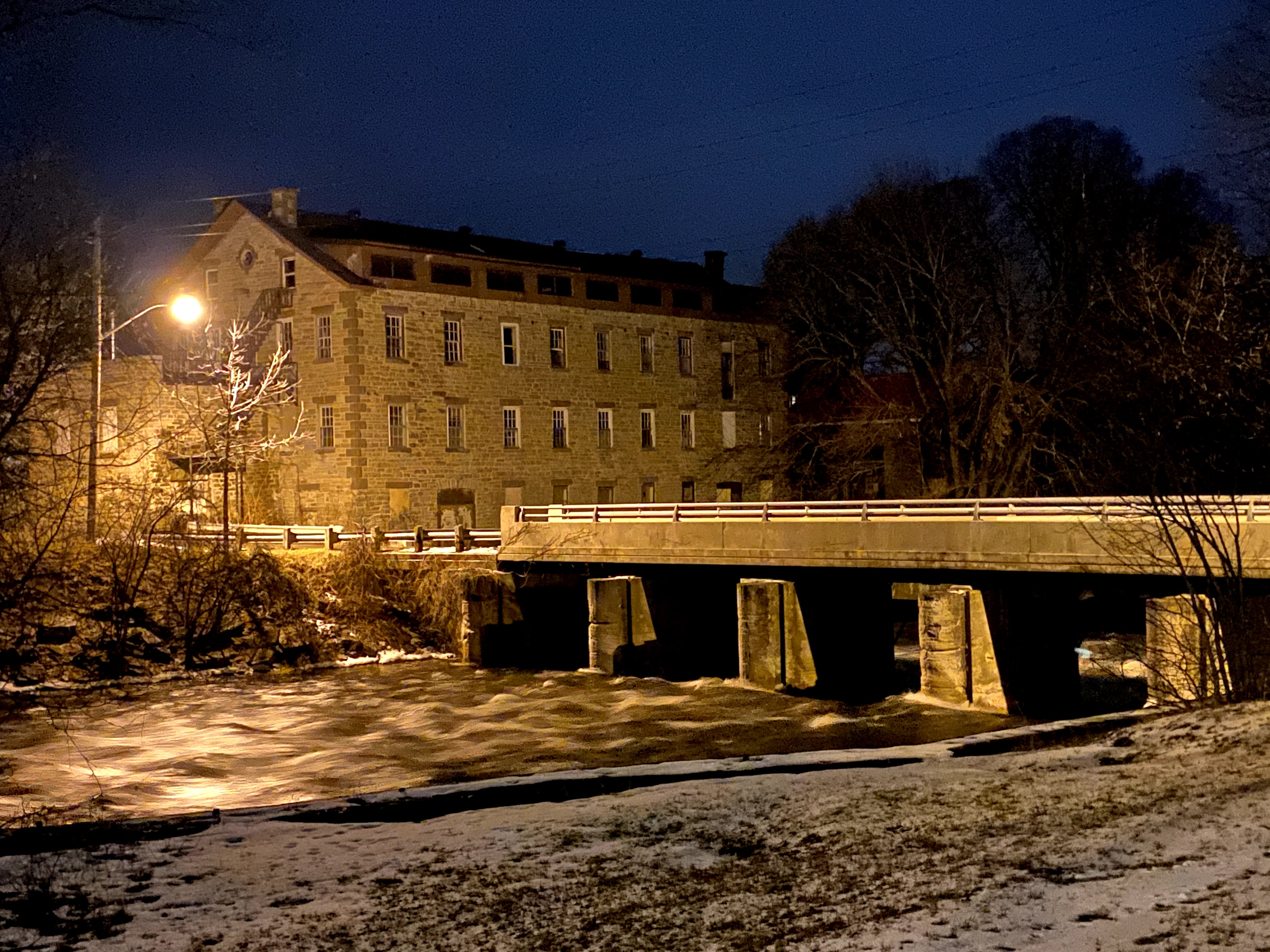
Last month, there was unprecedented flooding in eastern Libya from cyclone Daniel which roared across the Mediterranean. In Libya alone, thousands are missing and feared dead.

Where in some places the earth is arid and in desperate need of water, so many regions are being inundated with deadly amounts of too much water.

Water is like thanksgiving. It’s not just about one weekend in October to call to mind all those things for which we ought to be thankful for. It’s not even about being thankful only when we feel like it, or when conditions in our lives warrant it, or when we pretend to be.

Psalm 65 comes from a section in this book of the bible that are mostly laments, or prayers of anguish and petition for help in the midst of untold suffering. Nearly a third of all the Psalms are laments. And we sing Psalm 65 in the midst of all these laments.

The challenge before us is to consider thanksgiving in the midst of all that life brings. Our practice of thanksgiving may be a genuine response to the good in our lives, yes. But, as Diana Butler Bass suggests in her book on gratitude, thanksgiving is an ethic.[1] And therefore, must be a discipline. Something we work at despite the circumstances of our lives.

Thanksgiving is about practising gratitude in the moment. So, the practice of thanksgiving is not about some over-arching, theoretical conclusion about one’s life—whether it’s good or bad, or whether things have gone your way, or not. It’s not a one-time public observance as much as it is a quiet, continuous attitude towards life in general.

It’s more about learning to recognize each moment, good and bad, as holding the promise and potential of God’s loving presence. Thanksgiving is about paying attention to the grace of God now. And leaving everything else—thoughts, biases, prejudices, pre-conceived notions—leaving all that behind to embrace what is, without judgement.

There’s nothing better than being submerged in cold water to bring you into the present moment. What is the first thing you recognize when someone emerges out of the water after a surprisingly refreshing and perhaps unexpected dip: Their eyes are wide open. There’s no other place your mind, body, and spirit can be when the impact of water wakes you up to the moment.

Baptism is about water. Our tradition has been these tiny fonts. But Martin Luther—the great reformer of the 16th century—preferred full immersion. That was his bias, and for good reason: The whole body is involved, not just the head. Water brings us into the present moment.

There’s a stone baptismal font on the northwestern shore of Lake Galilee that I visited years ago. It dates to around the 5th century. What I like about this font is that the opening is shaped in a cross. This font is also deep enough for someone to be fully immersed in the water.

The baptized would have to sit down in one of the four sections and make the confession of faith before being submerged in the water. The font was in a church right beside seven springs whose water flows strongly, gushing to the surface.[2]

Baptism is one of the two sacraments in the Lutheran Church. The other one is the Holy Communion whose Greek word, “Eucharist”, means the “Great Thanksgiving”. Both sacraments are thanksgivings. We engage God and reality with hearts trained in thanksgiving, facing whatever direction our life has taken us.

The four directions of Indigenous spirituality support this wholistic approach to our work of thanksgiving. For example, in the smudging / sweetgrass ceremony, you pray turning to face all the compass directions: east, south, west, north. And facing each direction one offers a prayer of thanksgiving[3]:

When you face east, you are thankful for all good things that come from the east, typically the gift of the sun and its light and warmth that keeps life going.

When you face south, you give thanks for times of healing and restoration in your life, signified by the warm winds which blow from the south.

When you face west, you give thanks for our ancestors, those who have gone before us, those who have passed beyond the horizon into eternal life; we are all headed west towards the setting sun of our own life.

And finally, when we face north, we give thanks for the gift of wisdom because the north wind is always angry; hard things come from the north, and therefore we are encouraged in the path of discernment and wisdom.

Thanksgiving underlies all the directions of our lives, not just one or the other.

In a life of thanksgiving, we embrace all experiences. We meet all challenges with grace. We are present to each moment, realizing it is all grace. That is thanksgiving. It is a giving it up, a releasing of the heart into the ocean of love and life that holds us all.

American Indigenous theologian Randy Woodley expresses it best. He describes the sacred power of giving oneself over to nature. I can relate, when I’ve gone camping and slept in a tent on the ground, sleeping by the waterside or a river running over rapids nearby:

“Sleeping in the bosom of nature is not the same as sleeping in the safety of one’s own home. Not at all. As you lay your body down to become one with the Earth, reality shifts. In that state, you can sense that God, Creator, is listening to the intentions of your heart. Whatever the mysterious power is behind creation, it softens one’s mind. Great Mystery unscrews the tight lids of the jars of certainty that you hold too tightly, too fiercely. You realize, sometimes even trembling, that something greater than yourself is meeting you.

“There, in the restful unknown world between sleep and wakefulness, you give yourself to those elements, to Spirit, in the kind of vulnerability a newborn to the world must experience.

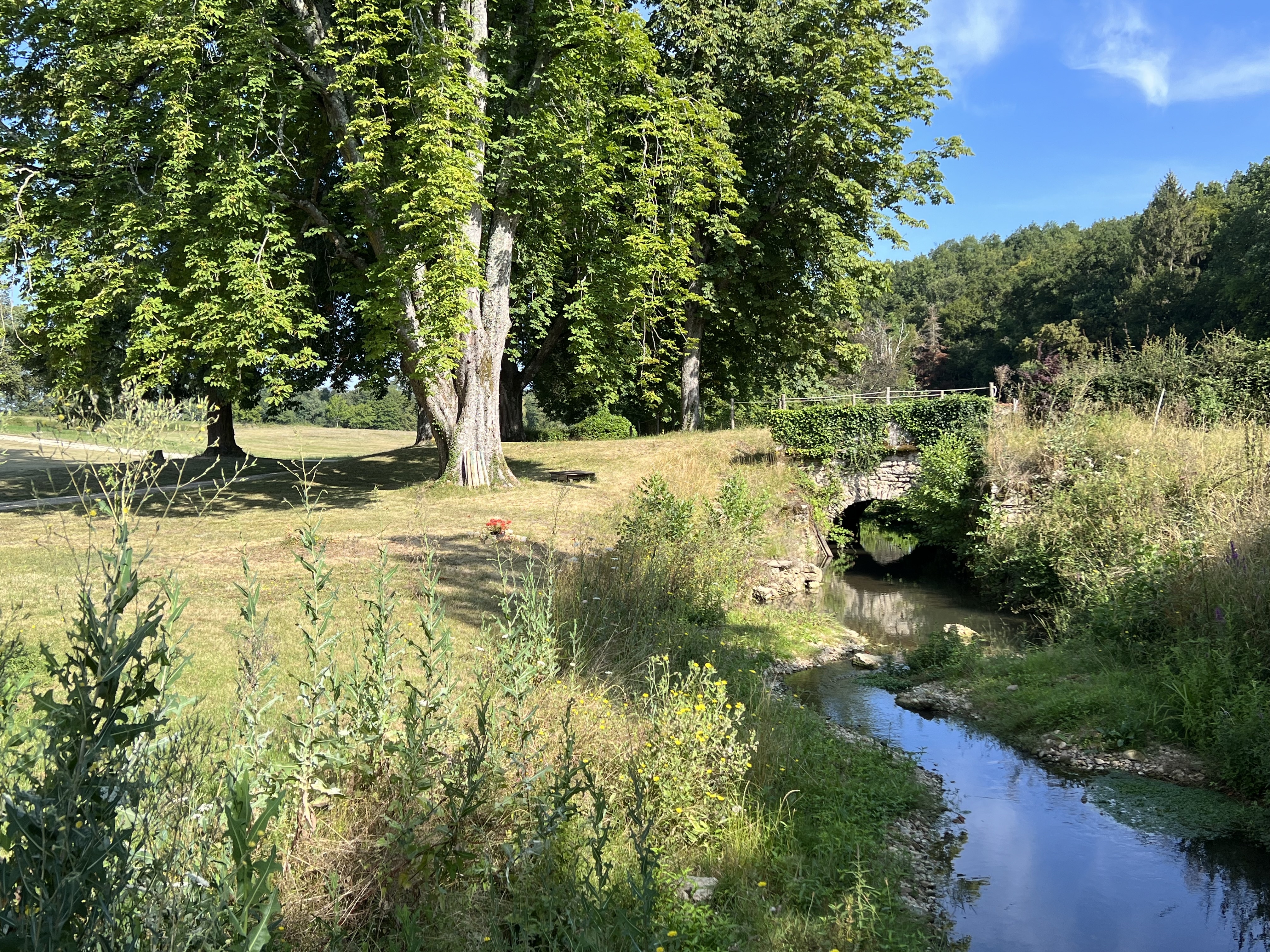
“As I dozed off into the realm of sacred beauty next to that stream, I listened to how the water responded to each rock, to every branch protruding from the creek bank, and to the swirl of every curve as it “meandered past me and into some other creature’s nap. With each contact, the water had a particular note and registry of sound.

Over the rocks, around the curve, and down the path of its sacred water journey. Sacred sleep. Sacred water. Sacred life.”[4]

It’s okay if you don’t feel thankful this weekend, for whatever reasons and burdens you carry with you. It’s okay, because while you don’t feel it now, you will someday. Religion is never a one-time, one-off, experience. It is something that grows, organically, in your heart through the good and the bad. And there will be times when the gift emerges with joy.

For Thanksgiving is a process, an attitude and a practice. It is a river that continues to flow deep within giving life and love.


[1] Diana Butler Bass, Grateful: The Transformative Power of Giving Thanks (New York: Harper One, 2018)

[2] In a Byzantine church at the Seven Springs of Tabgha. On the four directions in a Christian context, read Alexander John Shaia, Heart and Mind: The Four-Gospel Journey for Radical Transformation, Third Edition (New Mexico: Quadratos, 2021), p.183: “This form of the cross … was the shape that was venerated during the years these gospels were composed and it served–with rare exception–as the shape of the baptistry into the seventh century.”

[3] Raymond Aldred & Matthew Anderson, Our Home and Treaty Land: Walking our Creation Story (Kelowna BC: Wood Lake Publishing, 2022), p.28-29.

[4] Randy Woodley, Becoming Rooted: One Hundred Days of Reconnecting with Sacred Earth (Minneapolis: Broadleaf Books, 2022), p.16.

Baptismal thanksgiving — a sermon for Thanksgiving Day Canada by Rev. Martin Malina

The end of the line, on authority?

photo by Martin Malina (15 September 2023, Auschwitz-Birkenau, Poland)

“By what authority are you doing these things ….?”

The chief priests and elders question Jesus’ authority.[1] They ask Jesus a question in order to trap him. Jesus answers not in the way they anticipated or desired, by asking a question himself.

In the Gospels, Jesus asks many more questions than he answers. Answering a question with a question was the norm. In the four Gospels of the New Testament Jesus is asked 183 questions of which he only directly answers three. How can they believe what Jesus says, especially if he doesn’t answer their questions directly? On what is his authority based? What is the nature of Jesus’ authority?

While I was attending the Lutheran World Federation (LWF) assembly meeting in Krakow Poland last month, I met Lutherans from all over the world. The LWF is a global community consisting of 150 member churches.

And I enjoyed informal conversations with other pastors, advisors and bishops from countries who will soon hold elections. For example, Poland, Argentina and India will be electing governments in the coming months with all of them teetering towards hard-line approaches.

Governments are not our only authorities in life. Parents, doctors, police officers, school teachers, by-law officers, pastors–these are other authorities in our lives. A couple of months ago when Pastor Jennifer Hoover facilitated conversations with the council and other members of our congregation about the church today, we reflected on our attitude towards authority, in general. Our response to anyone in authority is one factor that has changed since the 1960s.

On the one hand, there is this sense today of not listening nor considering any voice of authority. Earlier this year I read a contemporary young adult fiction book similar to the Harry Potter series, in which young students attended a special, magical school.[2]

But there were no teachers in this school, at least not in the traditional sense. Contrary to what we might expect, teachers were not embodied persons interacting with the students. Instead, the magical building itself was the teacher, thus removing people from the role of having authority. This novel reflected a current-day attitude toward authority — that we don’t easily accept the authority of others as we did a century ago.

On the other extreme, and especially under stress and anxiety, some yearn for an iron-fist rule. With the high cost of living these days and inflation rates soaring worldwide, people naturally knee-jerk towards seeking a strong voice of authority that will enforce strict rules, as if forcing everyone to follow the same rules and being of the same mind will make things better.

These varied approaches suggest to me that authority needs to be redefined for our time. And while a total disregard for any authority on the one hand and those strong voices in politics on the other may be tempting, what the world needs today is the strong voice of the Gospel of Jesus Christ.

On one of the days during the Lutheran World Federation Assembly in Poland, the entire delegation visited Auschwitz and Birkenau—the death camps of the Nazis. The experience of seeing the remains of the gas chambers and shooting walls was deeply impactful. Hearing the stories of survivors and seeing pictures of a few of the one million people who violently died in these death factories was humbling, to say the least.

One story has stayed with me, of Father Maximilian Kolbe. He was a Catholic priest, himself a prisoner at Auschwitz who sacrificed his life in place of another person chosen to die. Eventually succumbing to the brutal horrors of Auschwitz and Birkenau, Kolbe maintained his belief that even in the midst of hell, God is present in the smallest act of love for another. “Don’t ever forget to love” was his undying testimony of faith.[3]

Facing his own prosecutor, Jesus told Pilate in no uncertain terms that the reign of God does not reflect the world’s definition of authority and power. “My power is not of this world,” Jesus said.[4] So, on what is Jesus’ ‘kingdom’ grounded?

After we returned from Auschwitz, we received a special guest who addressed the Lutheran World Federation Assembly. One of the few living survivors of Auschwitz, Polish historian and journalist Marian Turski, urged the LWF Assembly “to combat hate speech and turn fear of strangers into empathy for the other.”[5]

His presence and words challenged and moved me. After all, he was speaking to a large group of Lutherans and a church which was complicit and identified with the German church of the 1930s and 40s aligned with Hitler.

But what really touched my heart was why he decided to come to speak to us at all on that day — September 16. A Jew, Turski confessed that he debated whether he should join us on the first day of the Jewish new year, Rosh Hashanah. Normally he would have considered going to the synagogue to participate in the prayers and celebration there among his own.

And who were we to him – the other, the representatives of those who were his enemy eighty years ago? But, after speaking with his wife that morning, he decided to break the rules of his religion in order to meet with us. It was more important for him to follow the rule of love. “God is love,” our scriptures claim.[6] And God is our authority.

The Gospel reading today includes Jesus’ teaching on authority—the second part of the reading when he talks about two brothers who do opposite things; one doesn’t do what he says he’ll do, and the other does what he says he won’t do.

In the end, the action is more important. The critical measure is not what you say, but what you do. Any expressed belief, intention or doctrine means little if it is not paired with a behaviour and action that communicates a heart of love.

Compassion is the unique characteristic of true spiritual authority.[7] A compassion modelled by Jesus, by Maximilian Kolbe and Marian Turski. Compassion for others who are different from us. Compassion that results in loving action.

Celebrating Rosh Hashanah, Jews dip apples in honey to symbolize the hope for a sweet year to come. Turski invited the Lutheran Assembly to do the same later that day. It was to be a sign of the hope we all share that despite all the hellish, fearful, violent, divisive things going on all around us in the world today, God is present in acts of love for others outside our circles. Wherever love is practised between people, there God is. That is our sweet hope.

At lunch following Turski’s speech, we found plates of sliced apples with honey on all the tables in the dining hall. It was one of many cherished meals shared with others who were different from me, during my time abroad. God comes to us in the stranger who shows us love.


[1] Matthew 21:23-32

[2] Naomi Novik. A Deadly Education: A Novel (The Scholomance Book 1). New York: Del Rey, 2020.

[3] “Love in the Midst of Hate” Theology of the Heart – Life of the Saints

[4] John 18:36

[5] Marian Turski addresses LWF Assembly 2023

[6] 1 John 4:7-21

[7] Richard Rohr, “With Compassion We Change Sides” Compassion (Daily Meditations: www.cac.org, 22 September 2023)

sermon for Pentecost 18A (Rev Martin Malina)

How do you start a fire when the chips are down?

Fatwood (photo by Martin Malina 24 August 2023)

You want to start a fire. It’s cold. It’s wet. You’re outside. You need to eat. You need to stay warm. You need to start a fire.

But this fire is in your heart. It may only be a shimmering ember right now, or a small flame at risk of being snuffed out by the winds of despair, depression, disappointment, anxiety, fear or grief. You may feel you never even had that spark in your heart to begin with.

But you want to start. You are willing to try. You want to start up that fire again. But you don’t know how. What are you going to do?

How do we start over? What is our first move on the journey of transformation?

On a backcountry canoe camping trip, my fellow campers and I needed to get and keep a fire going—to cook our meals, to keep warm and to provide the ambiance we all cherish around a campfire. But we did not haul enough wood in our canoes for five days. We needed to start a fire with what we could find on our island site smack dab in the middle of the large Cedar Lake in Algonquin Park.

When campers go looking for firewood, we normally look for hardwood branches, twigs, dry bark. We look on the ground near the campsite for fallen trees and branches. Some campers will even bring saws to cut down trees and chop the wood themselves.

But that strategy was not going to work this time. August, as you may recall, was a wet month—lots of soaking rain. So, most of the wood and trees around us were water-logged, literally. Moreover, it was a very popular spot with the beach—we were fortunate to get it. But that also meant there were precious little scraps of firewood leftover in the immediate area around the site.

We did find something — a kind of combustible material that was plentiful. It’s called fatwood. Stumps from fallen trees covered the island. And some of these had roots still drawing water from the ground up towards the top of the stump. The build-up of sap in fatwood creates chunks of resin. This resin burns like turpentine.

When you burn fatwood, the fire crackles and pops and you don’t get a whole lot of smoke. But best of all, a small piece of fatwood burns for hours, longer than any other kind of firewood! It’s perfect!

Normally we wouldn’t look for dead stumps littering the forest floor to find the combustion we need. The fat wood does not look on the surface like good, burning wood. It is ugly, dirty-looking, wood. Campers usually ignore it, discard it, don’t even see it.

But it was the best thing ever to start and keep a fire going.

To start solving the problem of how to start a fire, we first needed to realize the limits of our usual strategy. We first needed to confess that the way we have normally done things will not work in the present circumstances. They may have worked well in the past and in other contexts. But no longer. The first step towards positive change is to admit we need to approach things differently at the start.

Where are we going to look for a way forward, when we confess the old ways of doing things in our personal lives and in the church no longer work today? Where are we going to look?

The Gospel of Matthew can help. It was written to Jewish Christians who also had to start over. This Gospel was written at the end of the first century right after Roman Emperor Vespasian completely destroyed the temple in Jerusalem. Those Jews who survived the brutal purge were demoralized and uncertain about how to move forward. “There is no known equivalent to what Rome did that day,” one scholar claims.[1]

The Jewish remnant escaped to Antioch in the north. Among them were the Messianic Jews who believed that the Messiah had already come in the person of Jesus, himself a Jew. What help does Matthew’s Gospel offer in a time of upheaval and dramatic change?

First, notice the tone of Jesus’ teaching in the Gospel. Several times in the Gospel of Matthew we hear this paradox from the mouth of Jesus—this tension between apparent opposites of “loosening” and “binding”, of “losing and finding”. It’s not just in our Gospel reading for today, but in at least three other places where we dance on fulcrum of both/and.[2]

Jesus says opposite kinds of things all the time—both comforting AND challenging: “Come to me all ye that are weary and carrying heavy burdens and I will give you rest”[3]; and then: “I have come not to bring peace but a sword.”[4] This Gospel like no other is full of paradox and seeming opposites. Why? To acknowledge the time of transition among first century Messianic Jews: from the pain of loss to the challenge of new beginnings.

Jesus seems to describe a life of faith as one in which we are always leaving something behind and starting something new, letting go of past strategies and learning new ones. It’s admitting that there are times when I have to look elsewhere and not necessarily where I’ve looked before in order to face a challenge.

Then we see Jesus in action as he encounters people on his travels. He meets, for example, the Canaanite woman. She persists and is relentless against Jesus who is rude to her and quite insulting. Because of the woman’s courage to challenge a rabbi, Jesus grants her what she asked—the healing of her daughter.[5]

The old strategy of reaching out only to Jews with the message of Christ needed to change. Our Lord Jesus himself models for us inner transformation, which is the starting point for our journey of faith towards healing and wholeness.

The biggest help Matthew offers, however, is the framing of the Gospel—how it begins, and how it ends:

Matthew begins with the story of Jesus’ birth. And Matthew is the only Gospel of the four that includes the visit of the Magi.[6] These wisdom-seekers from the far East were not Jews. They were Gentiles—using the language of the New Testament.

And, the Gospel concludes with the famous words of Jesus, the great commission to his disciples to go “to all nations” with the news of God’s love and saving promise.[7] “All nations” refers to the Gentiles. The term Gentile refers to people who were outside the pure, Jewish religion.

In the midst of a devastating loss, the Jewish Christians in Antioch were encouraged to engage and be with people outside their tradition. They were called to a journey that Saint Paul would later pick up and emphasize, a journey to include Gentiles in God’s loving embrace, making an ever-widening circle.[8]

Where do we look on the start of our journey of transformation, when we admit old strategies no longer serve us well? The Gospel of Matthew suggests we look beyond the bounds of our own perception which will often blind us to what is right in front of us. The Gospel of Matthew, in modelling for us this shift, suggests we confess our bias, and embrace a new path as yet untrodden.

There’s also a holy part to this journey that yields the warmth, radiance and beauty of a good-burning campfire. And we will discover that, too, along the Way.

The fatwood ain’t pretty. Yet God calls us to this journey of transformation not in spite of but because of the unattractive, broken parts of our lives. There’s something immeasurably valuable about fatwood. The journey will include all of it.

Thanks be to God.

With Us (photo by Martin Malina 25 August 2023)

[1] John Alexander Shaia, Heart and Mind: The Four-Gospel Journey for Radical Transformation (Sante Fe New Mexico: Quadratos LLC, 2021), p.74-75

[2] Matthew 10:39; 16:19, 21-28; 18:15-21

[3] Matthew 11:28

[4] Matthew 10:34

[5] Matthew 15:21-28

[6] Matthew 2:1-12

[7] Matthew 28:18-20

[8] Read Paul’s letter to the Galatians, for example. See, also, Matthew R. Anderson’s “The Purists: Laphroaig Single Malt Islay & The Gospel of Matthew” in Pairings: The Bible and Booze (Toronto: Novalis Publishing, 2021), p.89-98

a sermon for changing times, by Rev. Martin Malina

Beach presence

Beach front in Algonquin (photo by Martin Malina 26 August 2023)

27“For the Son of Man is to come with his angels in the glory of his Father, and then he will repay everyone for what has been done. 28Truly I tell you, there are some standing here who will not taste death before they see the Son of Man coming in his kingdom.” (Matthew 16:27-28)

The early church expected and hoped that Christ would return to earth in their lifetime. Christians have called this expectation: ‘the second coming’.

After the complete destruction of the Jerusalem temple by Roman armies in the late first century, the early followers of Christ found comfort in the promise of the glorious return of Jesus to earth. The last two verses of today’s Gospel reflect their belief and hope.

But what about us? How do we respond to these verses, two thousand years later?

I wonder if the passage of time and history has affected our understanding of God. I wonder, therefore, if we hear the Gospel for today[1] as threatening or punitive, as if Jesus is saying, “I’m coming back so you’d better watch out! You’d better do it right, or I’m going to get you.” Such a reaction reflects a God of vengeance, of punishment, does it not? Is that our dominant image of God—as someone who is ready to pounce on our every misdeed and mistake?

Peter, in the verses just preceding this Gospel for today, made a bold statement of belief in Jesus as the Messiah. And he got it right. But then he gets it wrong. Over and over again. Jesus even calls Peter “Satan” at one point.

If Jesus was all about judgement and punishment, Peter would not have been given the privilege and great responsibility of being the rock upon which Jesus would build the church.[2]  Would we entrust the fortunes of a new enterprise, company, or business to someone who demonstrates Peter’s kind of immaturity, impulsiveness, and lack of consistent mental clarity?

But Jesus is not talking about judgment. He’s not threatening us or talking about coming to punish us because we’ve been bad and our faith is weak; or, not coming to us because our faith is weak. He is not pointing a condemning finger at those who make big mistakes and who fail in life, time and time again.

Of course, two thousand years of history has proven those early Christians wrong, in the sense of a bodily return of Jesus as Messiah who would liberate them from Roman oppression. Jesus didn’t come back ‘immanently’ in the way they and Christians since the first century expected him. But that doesn’t mean Jesus was not true to his word.

Like reward and judgement, our perception and our image of God needs to change. Our understanding of God’s presence and return to us needs to deepen and grow. Rather than a dominant image of a vengeful God, what about a God who is about forgiveness, mercy, compassion, patience and love? How would we experience the presence of such a God?

At the beginning of this summer I was worried that I would miss out on one thing I love to experience every summer: Being on a sandy beach under the warm summer sun by the lapping waves. Despite all the wonderful travelling I’m doing, a beach was not in the plans.

You wouldn’t think that a backcountry canoe camping trip into the northern reaches of Algonquin Park would render a sandy beach experience. Most of this area is Canadian shield rock and pine. Along the portage routes and shoreline put-ins you’d be lucky to find a narrow space at any campsite to dock your canoe and disembark.

But to my happy surprise the camp site I found with my friends on Cedar Lake had a beach—and a big one—including a gently sloping sandy bottom into the refreshing water. Uncommon and incredible by Algonquin Park standards. And all for us!

So, on one afternoon when the sun was shining its brilliant warmth I lied down on the soft, white sand by the water, covered my face with my Tilley and just rested. I imagined being on a tropical island or resort in the Caribbean or some exotic place we Canadians like to escape during winter.

But something was wrong with that vision. It didn’t coincide with my experience of that moment. On that beach by Cedar Lake, I did not hear any human-generated sounds: no jet skis, no people laughing, talking, no highway traffic in the distance, no airplanes roaring overhead, no jack hammers or construction noise nearby, no background music. Just absolute, natural silence. I experienced reality in a much different way than I routinely do.

Even though at some level that moment was disquieting for me, I felt profoundly grateful for my summer beach experience. I felt thankful for the simple things in my life. I felt the joy of a divine gift and presence. God is in my life always. Even in unexpected places and different experiences.

Sunset over Cedar Lake, Algonquin Park (photo by Nick Forte, 23 August 2023)

In the Gospel, Jesus is not talking about a one-time, judgement-motivated coming of God out of the thunder clouds. He’s talking about the forever coming of Christ, the eternal coming of Christ … now … and now … and now.

Christ is always coming; God is always present. It’s we who are not! Jesus tells us to be awake, to be fully conscious and present to every moment we experience. It’s the key to all spirituality, because we usually are not.  

Most of us just repeat the same routines every day, and we’re upset if there are any interruptions to our patterns. Yet, “For those who want to save their life will lose it, and those who do, will find it.”[3] It’s ironic that to save our lives we need to stop our usual patterns and pay attention to those moments and places and people that take us off our routine and out of our comfort zone. This grace of God often comes to us unexpectedly.

Because God is found in the interruptions, the exceptions, the surprises, the space in-between the noise of our life. God has to catch us literally “off guard”![4]

When we are present, we will know the Presence. It is that simple and that hard. In the Garden of Gethsemane, the last words Jesus spoke to his apostles were, “Stay awake.” In fact, he says it twice.[5] We need to practice staying awake to recognize Jesus with us.

A word of caution: We need to practice being present to Presence, yes. But staying awake does not come from willpower but from a wholehearted surrender to the moment as it is. It’s largely a matter of letting go. We let go of our resistance to what the moment offers. We quit clinging to a past moment. It is an acceptance of the full reality of what is right here and now. Practising this is the task of a lifetime.  

We cannot get there by any willful method or any technical fixes whatsoever. We can only be there. The purest form of spirituality is to find God in what is right in front of us—the ability to accept what the 17th century French Jesuit Jean Pierre de Caussade called the “sacrament of the present moment.”[6]  

Let’s practice, shall we? Let’s practice the presence of Christ here, among the church, and especially now as we receive the sacrament of Christ’s presence at the holy meal.

Christ is with us. Because God is love. Thanks be to God!


[1] Matthew 16:21-28

[2] Matthew 16:18

[3] Matthew 16:25

[4] Richard Rohr, “Be Awake” A Contemplative Heart (Daily Meditations: www.cac.org) 29 August 2023

[5] Matthew 26:38-41

[6] Cited in Rohr, ibid.

“Beach Presence” sermon by Rev. Martin Malina

Following the water-way: a sermon at baptism

Images in this post depict the waterfall at Wilhelmshöhe Bergpark in Kassel Germany (photos by M. Malina on 16 July 2023)

I had to experience it for my own.

And that meant a rather long, not unenjoyable but challenging, hike up and down a tall mountain and tower in Kassel, Germany, on a sunny, hot day last month. This mountain park called “Wilhelmshöhe” covers an area of over 560 hectares. As such it is the largest of its kind in Europe.[1]

At first, up. We had to get to the top before the water started flowing so we could witness its spectacle. Years ago, I had visited the mountain, saw it from a distance, but for various reasons didn’t ‘experience’ the wonder of its water works.

You see, behind the Hercules monument atop the mountain lies a vast matrix of reservoirs and channels which supply water to mostly underground cataracts and chutes.

Only twice a week during the summer at a specified time of day, a loud horn signals the start. And then water begins to flow all the way down the mountain finishing its trek by fueling a spectacular 50-metre high fountain in a small lake at the bottom.

Visitors can follow the waterway all the way down just ahead of the rush of water, stopping at various viewing platforms to see the water as it first appears flowing over cliff faces, or rapids or over ancient aqueducts. You can time it just right on your march down the mountain to witness this incredible flow of water.

I couldn’t help but relate my experience to the imagery surrounding baptism. Baptism, for many of us, happens near the beginning of our lives. It involves water, the pouring of water over us. Water and baptism are inseparable.

Of course, water flows down the hill. Its trajectory is downward. The life of faith, flowing from our baptism has a similar trajectory. Following Jesus means going down into the valley of our lives. The meaning of faith really hits home when we respond to Jesus’ invitation to “come” and “follow” him, just like Peter did in our Gospel text today when he got out of the boat and into the storm to meet Jesus.[2]

And more often than not, the baptismal life leads to a place where we will be open to Christ’s invitation to follow the water-way and come off the mountain top of our securities and out of our comfort zones.

That is where baptism leads. Follow the water way. Downward mobility is the direction of growing our faith, paradoxically. That is what following Jesus means. This journey down the mountain is the way of love, grace, and acceptance.

In the Baptism liturgy we heard the water references from the bible: when God’s Spirit moved over the waters at creation, when God delivered Noah from the flood, when God led Israel through the sea, when Jesus was baptized by John in the river Jordan.[3] And, at the end of the Gospels when Jesus died on the cross, water flowed from his side.[4] Water dominates the stories of salvation throughout the Bible.

When he encounters people on his earthly journey, and us today, Jesus offers the “living water” that he says he is, an eternal spring that will flow from the hearts of all the faithful.[5]

In the Gospel text for today Jesus encounters his disciples during a storm on Lake Galilee. You get the impression that Peter doesn’t really know what he is getting himself into, when he wants to go to the Lord.

Well, he knows, intellectually. He is a fisherman, after all. He knows the lake. From inside the boat, he sees the waves growing, the winds intensifying. The storm is already unleashing its fury when Peter makes what amounts to his cerebral expression of faith: “If it is you, Lord, command me to come to you on the water.”[6]

But soon Peter will know what he’s getting himself into. “Come,” says Jesus.[7] The difference is that when he leaves the boat, Peter is investing more than just his mind. He is all-in, now.

Peter, in order to know the truth of Jesus, had to follow the way of the water. He had to immerse his entire self—mind, body and spirit. He had to get out of his head and experience a relationship with Jesus. He had to put his whole self on the line, not just what he thinks about Jesus. It’s when he first really notices the waves and is afraid that he knows for himself God’s saving act.

Truth is not an idea. It is a relationship.

Christ Jesus calls us to follow the waterway. Our baptism is neither a private affair occasioned in isolation, nor is it a debate. It is an experience of a relationship. It is conducted among the church—the people of God. We move en masse, together ‘down’ the proverbial mountain and into experiencing God in our daily lives which includes all the challenges of living.

Jesus doesn’t call us to escape the storms. Jesus doesn’t call us to get back into the harbour where it is safe. He calls us to meet the challenges of the world head on, out on the open water. And he calls us to trust in Christ who is present, there, when the storms come. And come they will.

Because especially amid the turbulent storms of life – and that is the message of the Gospel – we experience the love and intimacy of God who created us, lives in us, and invites us into adventures of faith. “Come” says Jesus to you and to me. “Come”, follow the water of life and love that flows on forever.

And Christ Jesus will be right there beside you.


[1] Bergpark Wilhelmshohe

[2] Matthew 14:22-33

[3] Evangelical Lutheran Worship, Pew Edition, Holy Baptism (Evangelical Lutheran Church in America: Augsburg Fortress Press, 2006), p.230

[4] John 19:34

[5] John 4:1-42; 7:38

[6] Matthew 14:28

[7] Matthew 14:29

“I am here, now” – a funeral sermon

cardinal in garden (photo by Martin Malina 6 August 2023)

It has been a year this month when we first heard of Marie’s diagnosis. It goes without saying this news came as a devastating shock.

This past year has been a journey to say the least, a journey of ups and downs, of hope and despair. And not just Marie’s suffering but ours as well especially you, Wayne and dear family.

The time seems to have gone by both quickly, and at the same time feels like a long haul. It’s as if time itself expanded in each moment of living: This year was only one, short year in the large scheme of things. But it contained billions of seconds that filled each day and place where Marie spent time – various rooms in the General Hospital, the apartment in Sarsfield, and the hospice in Kanata.

The meaning of this time played out in each ordinary moment. And each of those moments was a gift to us, each interaction with Marie and one another a blessing.

I have two Tim Horton’s mugs in front of me. Wayne told me the funny story of when Marie was selling mugs at the Tim Horton’s counter in the Canada Post building. Typical of Marie’s sense of humour, and trying to increase sales, she turned some of the mugs on display half-way around, so the handles were pointing the opposite way vis-à-vis all the other mugs.

And when potential customers came to take a closer look, she would, with a smile on her face and mischievous twinkle in her eye, announce that these were very special mugs because some of them were left-handed, and others were right-handed.

Her sense of humour caused and causes us to laugh. And laughter always gets us out of our heads and brings us into the present moment. Laughter is the key to an understanding of faith that Marie’s life exemplified.

Her jokes and humour not only brought people of the same mind together, but also people who are different in their beliefs, backgrounds and life experiences. That was her gift. Her presence brought us together into a moment in time that all of us shared, a moment in time that was quite common and ordinary for us all.

Indeed, Marie expressed her extraordinary faith in very ordinary situations and ways. Her faith was not sophisticated. Her faith was not born from a lot of book knowledge, education degrees nor ivory-tower language. Her faith was not so much about ideas and theories about which you could be ‘right or wrong’. It was more concrete and specific, formed in love.

We gather to celebrate Marie’s life today during Ordinary Time, in the church year. It is the ‘green’ season of church colour, signifying the simple life and growth of all creation.

Jesus told stories about ordinary life – planting seeds, harvest time, growing vines, losing coins and sheep, money and wages, the birds of the air, the flowers of the field; and ordinary people in the middle of it all. Jesus even laughed with others at a party.[1] Humour and laughter are the key to understanding something very important about God:

God comes to us “disguised as our life.”[2] Folks who get this are deeply spiritual people. Because they know God is revealed not in church services inside church buildings on Sunday mornings alone.

Rather, more importantly, God is revealed in every moment of ordinary living. God is revealed if we pay attention—and that is the work of our lives—in those moments of grace and beauty in the midst of it all, good and bad. That is where God is.

So, in the last year I’ve been on a birding kick. I’ve even gotten myself a fancy app to identify bird calls. It’s hard sighting a bird from the back deck or even in the woods walking. I hear the bird first, and then go looking wondering if I can spot it in the trees or bushes. Not easy.

But there is one bird that catches my attention time and time again without much effort on my part. Marie’s favourite. It’s almost as if the cardinal wants to be spotted. You don’t have to be a life-long birder whose memorized every page of some comprehensive archive of all North American birds. Because grace comes uninvited and often unexpected.

There it is, right before my eyes, whether I’m ready for it or not. There it is, contrasted against the green foliage of the maple, oak or spruce tree at this time of year. I can see it, the brilliant red covering its entire body, popping out at me. As if it wants to say to me— and probably is in its sweet song—the very words of a God who now embraces Marie under loving, caring, protective wings:

“I am here. I am with you, always. I will never leave you, no matter what.” Thanks be to God!


[1] Read through Matthew, Mark, Luke, John – the four Gospels in the Bible.

[2] Richard Rohr, Things Hidden; Scripture as Spirituality (Cincinnati, Ohio: St Anthony Messenger Press, 2008), p.17.

You do it

The Feeding of the Eight (CCMC meditation group Calgary, 28 June 2023, at Lake Minnewanka)

The parable of the feeding of the five thousand is very well known among Christians.[1] And I must admit to you, as the years go by, I find it increasingly challenging to preach on well-known texts. To find a new angle. But this story can be looked at in a variety of different ways.

You can look at it as a math problem: Twelve disciples, with five loaves and two fish. Five thousand people to feed, multiplied by a miracle we will call ‘x’. Divided and eaten in the amount of ‘y’ equals twelve baskets of leftovers. I hated doing problems like that in school.

Last month when I hiked with other Christians near Banff, our mountain and lake-side journey concluded with a picnic near the beach. Since I was the only out-of-province hiker who arrived late the night before I did not have time to put together a lunch. However, my hosts who put me up the night before had provided a hearty breakfast for me so I wasn’t really all that hungry. And, given the time change, I would be fine until we arrived back in Calgary later that afternoon.

When everyone sat down at the picnic table, out came the lunch packs: Individuals brought sushi, fruit, hummus, wraps and then began eating what they packed for themselves. I had my water bottle and during our lunch break was totally content simply to visit and behold the pristine mountain vista before our eyes.

But to my pleasant surprise, someone handed me a bun, then some sliced meat, with cut-up lettuce and mayo. Then someone else slid over some sliced apple and a container of cherries. Totally unexpected, I realized how hungry I actually was after the morning hike. And I appreciated the kindness and generosity of my friends to share their food with me.

The Feeding of the Five Thousand story emphasizes the compassion of Jesus, his heart for the crowd. It underscores, as well and once again, the reluctance and disbelief of the disciples. And of course, it’s a miracle story.

I think perhaps my favourite interpretation of this text is that the sharing of the five loaves and the two fish is the miracle. The sharing of the five loaves and two fish is the miracle.

I think the crowd is moved by seeing the disciples scrounging for their meagre supplies. And I think they get motivated and realize they have gifts to offer as well. So, someone finds they have a piece of cheese, and someone has some olives, and someone else has some dried meat and someone else has some wine. And one by one people bring forward what they have been hoarding and it becomes a giant potluck with twelve baskets left over. It’s like the hearts of the crowd are opened.

And maybe that is the miracle: that Jesus is able to bring out the best in those present. The generous, giving, selfless best. But there’s more.

I think perhaps the most important part of the text is when the disciples say, “This is a deserted place, and the hour is now late; send the crowds away so that they may go into the villages and buy food for themselves.”[2] They want to be let off the hook.

Don’t we all? They see trouble coming: an hangry crowd of five thousand, and they want to avoid it. But Jesus turns around and says, “You give them something to eat.”[3] You give them something to eat. You do it. It reminds me of the story of the raising of Lazarus. After Lazarus comes out of the tomb, Jesus tells his disciples, “You unbind him.”[4] You do it.

It was all fine and good to depend on Jesus to do everything when he was with them. But Jesus was preparing his disciples for the time when he would not be there. Not that he ever abandons them. We know his promise to be with them and us until the end of time.

But as Jesus called the disciples, they were being trained to carry on Jesus’ ministry after his time on earth.

We are Jesus’ called disciples. And now Jesus calls and asks us the same thing. Delegates to the Special Convention of the ELCIC earlier this summer in Calgary received that message: “You” do it. You address climate change. You feed the hungry. You take a stand on what it means to be in healthy relationships with all people, and not just with those who are like us.

It’s not someone else’s job. As Christians who worship Jesus Christ today, we are responsible, as Christ-bearers, for using the resources we have been given to do the mission of God in the world today. In whatever way we have been equipped and gifted to do it.

It won’t be easy. We will be vulnerable to others. We will make some mistakes. We have to be ready for that. But when the value, the measure and the goal is the love of God in Christ Jesus for all people, and for all God’s creation, then we can trust this God to see us through. Because Jesus will also bring out the best in us—the generous, giving, selfless best.

We may not recognize the gifts we have. We may at first be reluctant to use them. We may be blocked by some reason to release our gifts to the world. But when we try, take the first small step, in our vulnerability but out of a heart of love for others, Jesus will bring out the best in us. And then we, too, like the disciples of old shall behold the wonder of God.


[1] Matthew 14:13-21; This sermon was inspired by the words of national bishop Susan Johnson who preached on this story at the closing service of the special convention of the ELCIC meeting in Calgary (June 28-July 2, 2023).

[2] Matthew 14:15

[3] Matthew 14:16

[4] John 11:44

“You do it” sermon by Rev. Martin Malina, Pentecost 10A, 6 Aug 2023

Somewhere, someone is

photo by Martin Malina (Ottawa Rideau Ramble, Burritts Rapids, 20 June 2023)

They say Canadians are peace-loving people. I count myself among many Canadians whose personality style wants to avoid conflict. We would rather ‘go along to get along’ than engage in conflict.

That is why this Gospel text is troubling, to say the least.[1] It is rife with conflict, and not just in the public arena. Jesus suggests that conflict is a normal part of a faithful life, even within a family. That part, especially, I don’t like.

How do we receive this message which, I would like to presume, promises something healthy, hopeful and positive for the journey of faith?

Jesus says, “What I say to you in the dark, tell in the light; what you hear whispered, proclaim from the housetops.”[2]

Perhaps there is something that we don’t see amidst all the froth and flotsam of human conflict. Perhaps we may not appreciate it right away— something deeper, a connection between us all that runs true despite the surface turbulence of human interaction.

Maybe amidst the strife, the divisions and disagreements there lies a hidden reality that is very much worth “proclaiming from the housetops.” And we need to tap in on that bond, become aware of it, draw deeply from its power, especially when we disagree.

What is this bond?

When infants are baptized, we say that even though the individual baby cannot express cognition in the way adults do and therefore can’t say with words, “I believe”, it is the prayers of the faithful, the community, that validate the affirmation of faith at baptism. And their faith stands in for the infant. When the baby can’t, the grown-ups will.

During the early stages of the pandemic debate swirled around Eucharistic practice—whether it can be conveyed online or only in person. I was struck by the comment of a faithful pastor now retired, who said that while he individually didn’t attend in person to receive the sacrament, his faith was nonetheless encouraged simply to know that somewhere, in some place, the Holy Communion was happening “where two or three are gathered”. Somewhere, someone was.

Over the last couple of months I’ve helped start up noon hour meditation groups for staff at the Bruyère hospitals here in Ottawa. Last week some of the organizers and chaplains debriefed how it was going so far. During the meeting over zoom much was said about who was not attending. We reflected on the meaning of relationships and community.

And the conversation became more open-ended. One chaplain, a Christian, remarked that while she hadn’t worshiped on Sundays in a local church for a long time, her faith was encouraged nevertheless to know that somewhere, someone, was going to church every Sunday. It was important to her, never mind that she wasn’t attending, that it was happening somewhere.

Those of you who are here in person need to hear this: That knowledge alone has kept her faith going. A faith that is alive.

The prayers continue despite what individuals do or don’t do at any given time. Especially in grief, when God may feel distant; or, dealing with a personal tragedy; or, reeling from an accident or circumstance beyond your control that has disrupted your life– when you don’t feel like or can’t pray … perhaps it’s at those moments you need to know that someone, somewhere, is praying for you.

“This is my prayer to you, at the time you have set, O Lord.”[3]

The discipline of regular prayers, whether it be every Sunday morning in worship, or any other set pattern that people know, is a gift amidst the turmoil of life. And even if an individual in a unique situation cannot or does not participate in person, their physical absence doesn’t invalidate the prayer. In truth, the prayers of the community can encourage those very people.

In the Psalm for today (69:13), the Psalmist acknowledges “the time set” for prayers. For Christians, as for people of other religions, times set for prayer function as an anchor point in the day, the week, and the year.

When I took a world religion’s class in high school, I recall asking why Muslims prayed at five set times every day? The answer I received inspired me and expanded my understanding of the power of prayer. They followed that regimen of prayer so that people of the Islamic faith would know that prayers were always happening, given the various time zones, around the globe. That awareness can be very encouraging for faith. Even though individually I may not be saying any prayers right now, someone, somewhere, is.

When Luke describes the lifestyle of early Christians in the Acts of the Apostles, the early disciples made “the prayers”[4] part of each day. He doesn’t imply, “they prayed whenever and whatever.” He refers to “the” prayers–a definite article, and order of prayer implied. They observed common prayers at the times set aside. It was a discipline.

Whether it be Muslims praying five times a day or Christians following the Daily Office, called the “Hours” (for example: matins, vespers, compline, etc.) or meditating twice daily in the morning and in the evening, people of faith in their practice of prayer attest to the unceasing[5] nature of prayer, collectively. Prayer continues, around the globe at all times. Even if individuals aren’t praying unceasingly, the community is.

What we can’t do by ourselves, someone, somewhere, is. American writer Helen Keller wrote, “Alone we can do so little; together we can do so much.” And that goes for prayer—how we connect with God, with ourselves and with one another.

And I wonder, amidst all the turbulence of life in community, is it this awareness of what unites us, what gives us power from deep within, that releases us to do so much for God. And even though our faithful actions might result in ruffling some feathers? So be it.

I heard the story from the son of the late Art Sugden, who fought in the First World War as part of the 31st Alberta Battalion in the Canadian Corps. Ted told me of his father’s dramatic survival of the battle at Vimy Ridge.[6]

A bullet from tracer fire took out both his eyes, rendering him blind for the rest of his life.

Eventually Art returned to his hometown Calgary in 1929. He also returned to his favourite hobby: gardening. Though he was physically blind and couldn’t see the beauty of the flowers he tended, he kept on working in his garden. Though I suspect his other senses could enjoy the flowers’ gift, he couldn’t see for himself their blooms. Yet he continued during the Springtime, Summertime and Fall time of the year, caring for the earth and flowers that grew there. He did this work faithfully even though he couldn’t witness with his own eyes the fruit of his labour.

But he kept on, trusting that the flowers he tended would give the world a beautiful gift of vibrant colour and joy. And he was right. Others saw, saw the gift he nurtured and brought to life, saw the beauty that in turn gave the world joy and hope for tomorrow.

Somewhere, someone is.


[1] Matthew 10:24-39

[2] Matthew 10:27

[3] Psalm 69:13

[4] Acts 2:42

[5] 1 Thessalonians 5:17

[6] Edward Sugden, “A tribute to my father” in Esprit de Corps (Volume 16, Issue 10, November 2009), p.36-38.

“Somewhere, someone is” a sermon for Pentecost 4A by Rev. Martin Malina

Talkoot

“The harvest is plentiful, but the laborers are few; therefore ask the Lord of the harvest to send out laborers into his harvest.”[1]

Receiving lots of water (photo by Martin Malina 15 June 2023 at Faith Lutheran Ottawa)

Jesus gives instructions to his followers in today’s Gospel. And each of their names is listed: “Simon, also known as Peter, and his brother Andrew; James son of Zebedee, and his brother John; Philip and Bartholomew; Thomas and Matthew the tax collector; James son of Alphaeus, and Thaddaeus; Simon the Cananaean, and Judas Iscariot, the one who betrayed him.”[2] We must be careful, here …

Receiving instructions from the Lord can be hazardous to our spirituality when we mistake Jesus’s words to be meant for individuals. When we interpret the message of Christ only through the autonomy and separateness of individuals, we miss so much.

Whenever we read from the bible about sin and salvation especially, we may easily be tempted to make it all about me and Jesus; it’s up to me to make it right, to do the job. We read these sacred texts, admittedly, from our individual point of view.

A month or so ago, the confirmation class planted gladiolus bulbs in the ‘Faith Garden’, as we call it. On that day when the young teenagers put the flower bulbs into the ground and covered it with earth, we prayed, gave thanks for the gift of the earth, and blessed our act.

It also poured rain that day. So, we were pretty hopeful that those bulbs would take and grow.

But until a couple days ago it has not rained a drop. In fact, wildfires across Canada have burned to date an area larger than the entire land mass of Costa Rica. It has been dry, to say the least. If anything in our garden was to grow, let alone survive, someone would have to water it regularly.

I live a 45-minute drive from the church property and when I am in the city I normally don’t think of watering a garden as part of my work schedule. It struck me just recently that those bulbs may not have received a drop of water since the day we planted them.

And I despaired. I was catastrophizing: What a failure! What a poor showing if the confirmation class of kids from Ottawa would see that their flowers, dedicated to their faithful growth, not only didn’t grow but died in the ground.

When I took a walk to the garden the other day, however, I was shocked to see several of the bulbs bursting out of the ground. How did that happen? I learned that over the past month, other members of the church regularly went to the garden to water it.

If it were up to me alone, faith wouldn’t happen. If it were up to us, individually, to make it right, to grow in trust and faith and joy in the Lord, it can’t happen. The truth is we are connected one to each other in the bond of love, grace, and presence of God.

We often approach our life of faith, our daily practice of faith, however that looks like, as a solitary act, something we do by ourselves, alone. From the outside, that’s what one may see: I’m praying. I’m visiting others. I’m donating money. I’m doing this by myself. And it’s on me to make any good from it.

But Jesus addresses his disciples as a group. It’s the second person, plural, that is implied: “You”. And, Paul writes to churches, not to individual members of that church. Whether he is writing to the Thessalonians, the Galatians, the Ephesians, Corinthians or Romans, Paul addresses the community as a whole. And he writes in his letter to the Corinthians that we are the “Body of Christ”[3] with many parts serving a larger purpose.

It is the body that is the focus, and all that we do is for the “common good”.[4] Collectively we take responsibility for our faith.

Notice in the Epistle reading for today from Romans, Paul doesn’t use one singular pronoun. All the pronouns are plural: “us”, “we”, “our”.[5] We are in it together.

The gift of God’s grace and the love of God poured into our hearts is much greater than all our sins combined. The gift of God’s grace places us all on a level playing field. There are no superheroes – some better than others – in the land of God’s love, mercy and grace for all people. We are truly in it together.

For six years in a row, including the pandemic years, Finland has ranked No. 1 as the happiest country in the world.[6] There’s a beautiful concept expressed in the Finnish language. Talkoot is an old Finnish word that doesn’t have a one-word equivalent in English. Talkoot basically means: “working together to do something that one would not be able to do alone.”[7]

In agricultural times when someone had a big project at their farm, such as building a barn roof, they’d hold a talkoot. Here in Canada we’ve perhaps witnessed the Old Order Mennonites do a similar thing with a ‘barn-raising’. Neighbours gather voluntarily and put in a day’s work to help, then celebrate with a festive meal.

This kind of culture extends to why, for example, Finnish people often feel positive about their civic duties and helping the wider society by sacrificing their private comforts and desires of the moment. “They see it as essential for the good of the whole.”[8] Our faith is not about ‘what’s in it for me’ culture but rather, ‘how can I be part of the solution for the greater good’?

Paul uses the image of ‘pouring’[9] to describe how much we have to give. Not a trickle. Not a drop. When we’re in it together, we experience I believe the depth of grace. Just like the Faith garden receives an abundance of water from members who water it regularly and an abundance of rain, like it did just a few days ago when it poured, the grace and love of God has been poured into our hearts. Therein lies a deep reservoir of grace and love for the good of all.


[1] Matthew 9:37-38

[2] Matthew 10:2-4

[3] 1 Corinthians 12

[4] 1 Corinthians 12:7

[5] Romans 5:1-8

[6] http://worldhappiness.report

[7] From the world’s happiest country

[8] Ibid.

[9] Romans 5:5

Talkoot – a sermon for Pentecost 3A by Rev. Martin Malina

Following her heart – a funeral sermon

It was her life she lived. When I reviewed again Ida’s life story that you, dear family, wrote, I had the strong impression of a unique journey that only she could have lived. Though similar in scope to the general narrative of many people fleeing war-torn and post-war Europe in the last century, and though similar to the narrative of many immigrants to Canada from northern Europe, her story had its own flavour. For example, just recall with me all the places she called home after emigrating from Germany and landing in Quebec City:

Regina and Weyburn in Saskatchewan, Montreal in Quebec, back to Prince Albert in Saskatchewan, Kelowna in British Columbia, then to Vancouver and finally to Ottawa in Ontario—and that’s just her time in Canada! Who else would have covered so much ground in the second largest nation by land mass on the planet? Her life was her own. Not someone else’s.

She never just stayed in one place. She moved on. Even though many circumstances surrounding her emigration and personal life events were beyond her control, you don’t get the impression that she just followed along. Whether something good or bad happened, she saw an opportunity and took it—took the initiative, took a risk filled with hope. She didn’t follow a script. She followed her heart.

So it is, I think, with our grief. Today we express our sorrow at losing Ida. In many ways it is a sad day, like the day she died. We must acknowledge our own way of grieving. Each of us does it differently. We no longer live in a cookie-cutter world where everything is done the same way for everyone, and everyone must conform to a standard method.

The pandemic has only accentuated this truth, especially when it comes to how families process their grief and how they ritualize their memorials of loved ones. It isn’t done the ‘same way’ for everyone. Some will do everything they need to do in a week. Some will take years before they are ready to have a burial.

It has been over two years since Ida died at Granite Ridge Long Term Care Home in Stittsville Ottawa, on February 3, 2021. You took the time you needed before you were ready to take this next step. And that is good. We must learn to respect our diversity. But we’ve travelled this road together, not alone. I think Ida would approve.

If there is anything that summarizes for me the adventurous and Canadian-geography-encompassing breadth of Ida’s life journey is that she didn’t do it alone. At different times, and in different places, various people, including close family members, accompanied her. Though ‘home’ meant several different street addresses over time, she rarely if ever was all by herself at those pivot points.

Whether with one son or the other, or her husband at the time, close friends, her brothers in Germany, or churches or health care institutions where she worked, she was part of a community wherever she went. Relationships and relating were important to her no matter where she lived.

And, in fact, that is my last and enduring image of her: where she lived the last chapters of her life at Granite Ridge. Rarely, if ever, did I find Ida alone in her room when I went to visit her. She was always in the activity room surrounded by her floor mates watching the TV, or waiting with her table mates in the dining room for the next meal, or in the hallway by the nurses’ station where she could monitor the high-traffic crossroads on the busy “Lake House” floor.

And though her death ended something important for you, and though we cannot see her any longer in the flesh, we can be confident that those relational bonds endure to this day. With the gift of faith, we can affirm that while your relationship with her has changed it has not ended. Nor, ever will. She continues today to live, move and have her being in the God of all hope and the source of all life.

Jesus says that he goes to prepare room for you (John 14:1-3). He makes a promise not just to everyone, but to you, personally. There is a place not just for Ida, but for you, too. In the divine realm, the holy house, the family of God—however you want to define it—you belong.

The message of the Gospel is intensely personal. It is not some general comment for the collective human race—though it is that, too. But today, as we continue to mourn the death of your beloved Ida, everyone in this room and watching online needs to hear a personal word of comfort spoken just for you: You belong, forever.

This personal word also goes beyond the promise of making room for you. God takes pleasure in spending time with us. The prophet Zephaniah describes how God “will rejoice over you with gladness, he will renew you in his love; he will exult over you with loud singing as on a day of festival” (3:17–18). 

These verses provide us with a profound word picture in which we see the almighty God of the universe taking delight in each of us. 

It’s like never getting sick of chocolate and enjoying it forever. Can you imagine ever getting sick of eating chocolate? Though Ida got tired of the taste and smell of chocolate after working in a chocolate factory in Berlin before coming to Canada, maybe she will be surprised in heaven. Because the party never ends!