‘Will we be friends?’ Friendship, showing up – Pt4

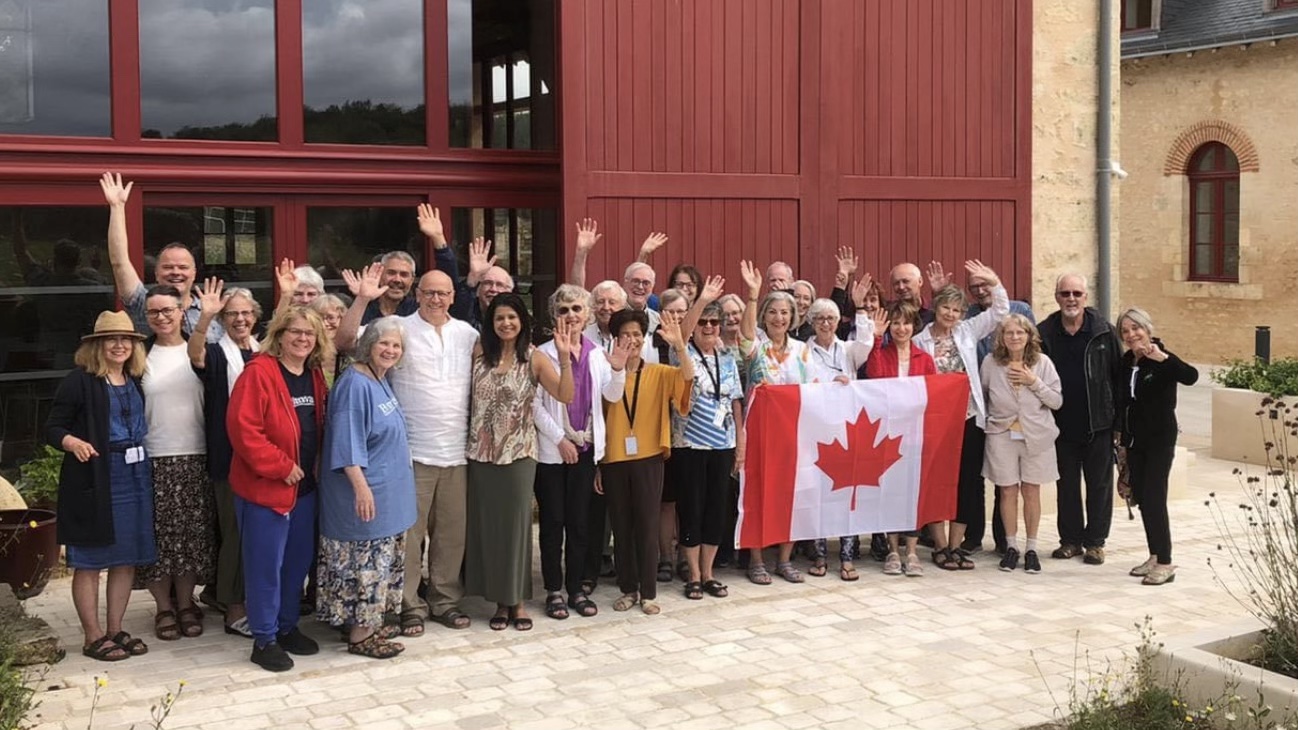
Canadians on a prayer retreat at Bonnevaux Centre for Peace, Marçay, France (photo by Andrea Siqueira, July 2023)

A group of thirty Canadians held a prayer retreat at the Bonnevaux Centre for Peace near Marçay, France, last summer. Of the half dozen people who live there permanently, one of them stood out for me. And to this day I’m still pondering how it is this person’s presence with us made such an impact on me.

Because this person wasn’t the charismatic and articulate leader of the retreat. He didn’t guide us expertly through the sessions. Unlike the other half dozen permanent residents, he didn’t provide AV support for the presentations, nor did he organize us for mealtimes or get us clean towels when we needed them. Neither did he lead in singing the liturgies. He wasn’t extroverted and the type of person keeping us in stitches all the time. He certainly wasn’t ‘the life’ of the party. And his face wasn’t plastered over all the glossy hand-outs promoting the retreat house.

Well, then, you ask, if he wasn’t all these things, who was he, what did he do, and why was he there?

When he was being introduced to us at the beginning of the retreat, I learned that Tomas was an organic farmer who lived in a tiny house on the other side of the forest with his wife. He farmed a small portion of the 160 acres belonging to the Bonnevaux retreat centre. I suspect he provided much of the produce we ate at mealtimes.

But there were only a few times during the week that I actually saw him: And that was whenever the whole community gathered for prayer in ‘the Barn’—a large gathering place and central meeting hall at Bonnevaux.

Wearing his work clothes, Tomas attended the daily prayer times with us, obviously joining us in the midst of a busy workday. I could tell by his dishevelled manner and muddied work boots that he was literally coming directly from working on the fields.

Tomas is a cherished member of this small community, even though his role wasn’t clearly defined. He just showed up to pray. And yet, of all the residents there, his presence at prayer made a lasting impression.

Tomas was there. And he continues to have a good, relationship with the community. After all, he and his wife were married in the ‘Barn’ the year previous.

Just showing up. I remember the advice of a seminary professor who counselled us newbie pastors decades ago: He said that at least 50% of doing something valuable in relationship-building is just showing up. If you show up, without saying or doing anything beyond that, you have already accomplished the most significant part of restoring, healing and even initiating health in a relationship. Because if you don’t show up, there isn’t even a chance something good can come of it.

Mary showed up. Mary and Elizabeth present one of the most beautiful friendships in all of scripture.[1] They are relatives, but you get the feeling their relationship runs deeper.

What does the scripture reveal about the nature of their friendship? The emphasis in Luke lies on qualities such as humble trust and surrender to a greater mission. The emphasis is on their honesty and unabashed joy. There is, to cap it off, Mary’s faithful response to God which begins by sharing the news of the angel with her friend.

In this relationship, there is no mention of any moral worthiness, social position, nor achievement. I don’t get the impression that Mary, nor Elizabeth for that matter, were prepared for their special encounter. There is no performance principle in operation here. They are not there to prove themselves to each other, or show-off their new maternity clothes. They are not in competition with each other. There’s no agenda.

There is just this simple, in-the-moment vulnerable trust, mutual love, admiration, and respect. In their interaction, they listen to each other, and affirm one another. Their minds, bodies and spirits are caught up in the love and joy of the moment.

At Christmas, the relationships and friendships especially within our families—whether good or not so good—are exposed for what they are. And if there is any kind of hardship in those relationships, you feel it.

It’s just that for most of the year, we can avoid certain people in our extended families, and go about our lives. But that’s what makes Christmas challenging for many: Because we are confronted with the question of whether we will show up this time, or not.

Maybe showing up means we will argue politics. Maybe showing up means we will renew old debates that have caused rancor and division in the family. Maybe showing up means more hard feelings. And, therefore, we will not show up.

We don’t know the background story of Mary and Elizabeth’s extended family relationships. It’s safe to assume, like in every family, there were tensions and personalities that clashed.

There is nevertheless something simple and ordinary about what they share in that one moment, that one interaction. The good happens, because Mary just shows up. And, as a result, their hearts become joyful for the gifts they both receive.

And maybe that is why Tomas is important for the community at Bonnevaux. He just shows up to pray. And that’s what we are doing today and every time we gather together, to pray. Simple, ordinary and different lives. Trying to make the best of it. But still, just showing up. Giving it a shot. And, sharing something special.

Nothing spectacular about the scene. Except for the gift of ordinary, simple love. Nothing to boast about. Except for what God is about to do in the hearts of simple, ordinary friendships.

God shows up – comes to us – as Friend for life, a friend who is faithful through it all, who meets us where we are, in the ordinary even unexpected moments.


[1] Read the entire first chapter of Luke to get the whole picture.
‘Will we be friends?’ Friendship, in place – Pt3

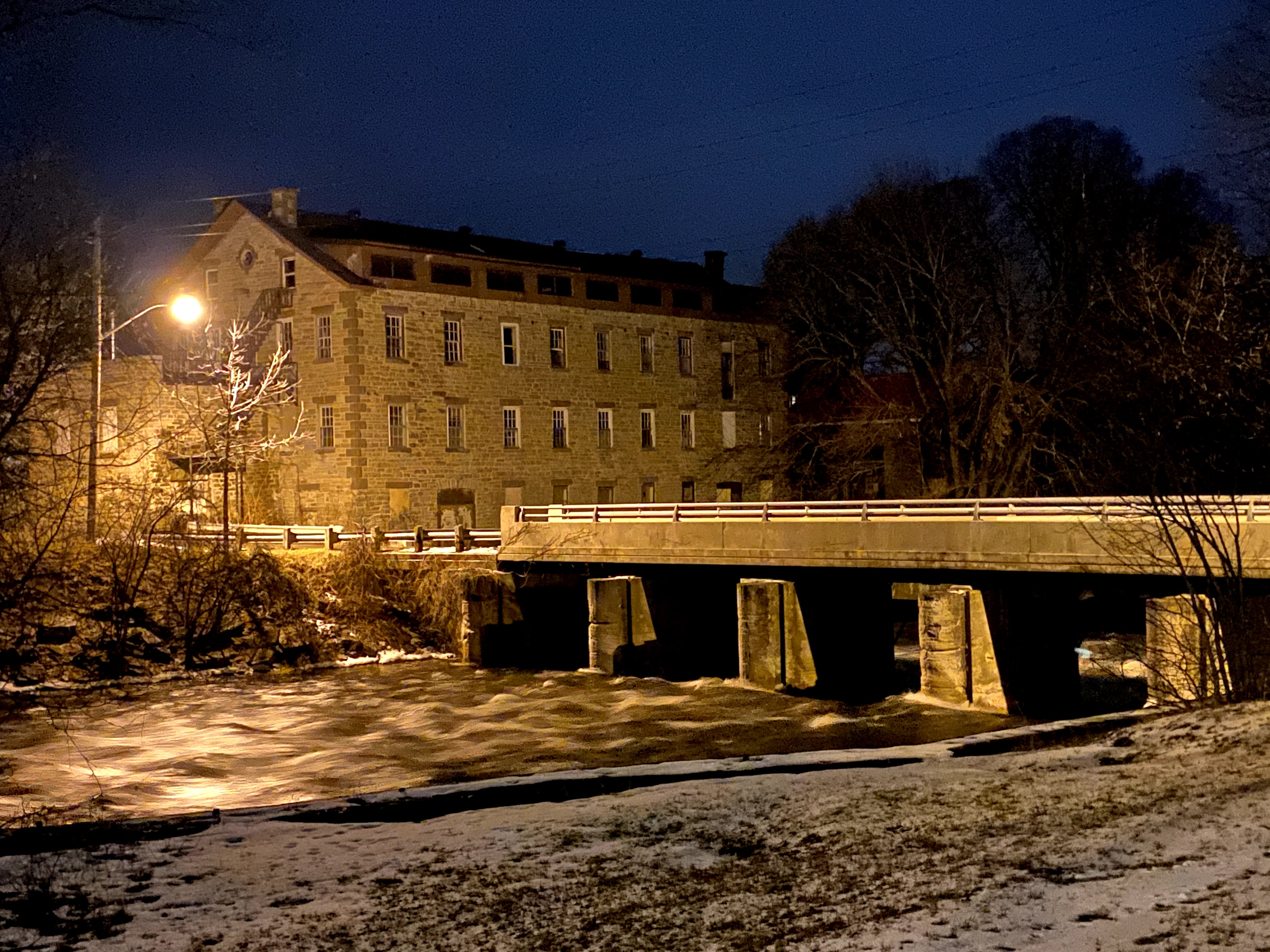
Let’s start the sermon today with a little quiz to test your knowledge of the Ottawa region. The photo below, I took in December of 2020. Where is this? Your clue: It is Sunday morning driving distance to the church, at 43 Meadowlands Dr West in Nepean (west-end Ottawa). At the end of the sermon, you will find the answer.

The Christian calendar makes times for Advent. Advent is an important season before Christmas starts. It’s important because in the wisdom of early Christians, people of faith have acknowledged that our deepest longings must have time and space for expression, without rushing headlong into celebration.

That’s why, here in the sanctuary at the church even though the Christmas Tree was put up a couple of days ago and decorated yesterday—we will refrain from turning on the lights until Christmas Eve.

This time is important to name our longing for connection, relationship. That is why we reflect in this sermon series on friendship from faith’s perspective. We have already identified aspects of true friendship—first, that friendship is for life; and second, that enduring friendship can stand the tests of disagreement and difference.

Today, we ask: Where do we find our friends? Where?

28This took place in Bethany across the Jordan where John was baptizing—the concluding verse from the Gospel text for this Third Sunday of Advent.[1]

I wouldn’t say the interactions recorded in the scripture today scream “friendship”, let alone true friends. In fact, the dialogue carries undertones and overtones of scrutiny, confrontation and cross-examinations. The priests and Levites are sent by the Pharisees to question John the Baptist, just like they would later try to dismantle Jesus with their combative language.

The Pharisees don’t know who John the Baptist is. Is he Elijah? Is he the promised Messiah? Is he some other prophet? Who is he? They send their minions into the desert. But they are not really ‘there’; they are not present to the moment and the situation. They come with an agenda, a strategy.

In short, the Pharisees are lost in their heads, in the realm of abstraction and ideas, trying to pin John the Baptist down, pigeon-hole him into some preconceived construct, trying to defend what is ‘right’ in their minds.

And that’s why they don’t understand. If they would only open their proverbial eyes and actually go and see who is standing before them, listen to him. It can be none other than John the Baptist, preparing the way of the Lord by the river Jordan, crying out in the wilderness. Literally.

We would not normally go into the wilderness to find our friends for life. And yet in all the scriptures we are reading this Advent about John the Baptist, we know that “people from the whole Judean countryside and all of the people of Jerusalem”[2]—very large crowds at least—travelled into the desert to be baptized by John.

They were drawn by this charismatic figure, to what he was doing and saying. And it’s a reasonable assumption to suggest there were friends among the crowds.

Where do you go, and where did you find your friends?

In this third sermon on the theme of friendship from faith’s perspective, we are drawn to the place where relationships happen. And the Gospel stories leading up to and including the birth of Jesus draw our attention on the specific place where all the holy happened—beginning in the wilderness and then in Bethlehem and the surrounding countryside.

In this sermon series I’ve also related the theme of friendship to my experience on a prayer retreat I attended last summer at the Bonnevaux Centre for Peace located in a sprawling valley near Marçay, France. At the centre of the valley lies a cluster of renovated buildings including the original abbey.

In the months leading up to the trip, I wondered, “What is Bonnevaux like?” I had a vision of some ideal, monastic setting, a pastoral vision of rolling fields, stained glass, cathedral ceilings and peaceful waters.

When I saw pictures online of the main building—called ‘the barn’— where our Canadian group would gather for the talks, for meditation and prayer, I formed a mental image and feeling of what it might be like to be in that space with others. Expansive. Ethereal. Set apart. In other words, ‘ideal’.

Well, this fantasy is only partly true. Because, in truth, it is a unique setting like no other. You can’t replicate it, in your mind nor on earth. Reality is not an abstraction. Experience is not a deduction. You have to start from the ground up. You have to place your body, physically, there.

When I first entered ‘the barn’ this summer, it was smaller than I had imagined. Moreover, I realized how close it was to the guest house, just across a cobbled-stoned path separating the two buildings. I was mindful and sometimes distracted by people coming and going through the barn’s massive and creaky doorways when meditating. It was still wonderful!

The Christian religion is rooted in the incarnation: “The Word became flesh and dwelt among us.”[3] Christ is present in one, hidden moment and place in time. Incarnation is always specific and concrete, here and now.

Friendships are born in a place. It starts with where you are: Neighbours who happen to live on the same floor or street, colleagues working in the same office building, life-long buddies who meet at the curling rink, parents using the same childcare, members of the same church, students attending the same school.

We don’t start with a concept of friendship, or concepts of anything for that matter. We don’t need to go to convents, monasteries, churches or any other “holy” place to find the right friend for us. Like any practise of faith, friendship is not what you think. It’s what you experience, here and now.

We may be surprised where we meet our true friends. We start with what or who is with us now, in the flesh, before our own eyes. To find a friend is to discover the gift of one already in your midst, wherever you are. Reality like friendship is not ideal, nor perfect. We are called to engage not the ideal, but what is.

If you’re looking for a friend, and a true friend, maybe start with noticing and appreciating where you are right now. Look around you. Consider with whom you have regular interaction in the place you are, or where you are going to be.

And then, engage. Get to know them. Pray for them. God may be opening your eyes to the gift of a new friend.

[Ok, any thoughts on where the location is, of the photo above? Answer: Rosamond Street at Gillies Bridge over the Mississippi River in Carleton Place]


[1] John 1:6-8,19-28

[2] Mark 1:5

[3] John 1:14

‘Will we be friends?’ Friendship and conflict – Pt2

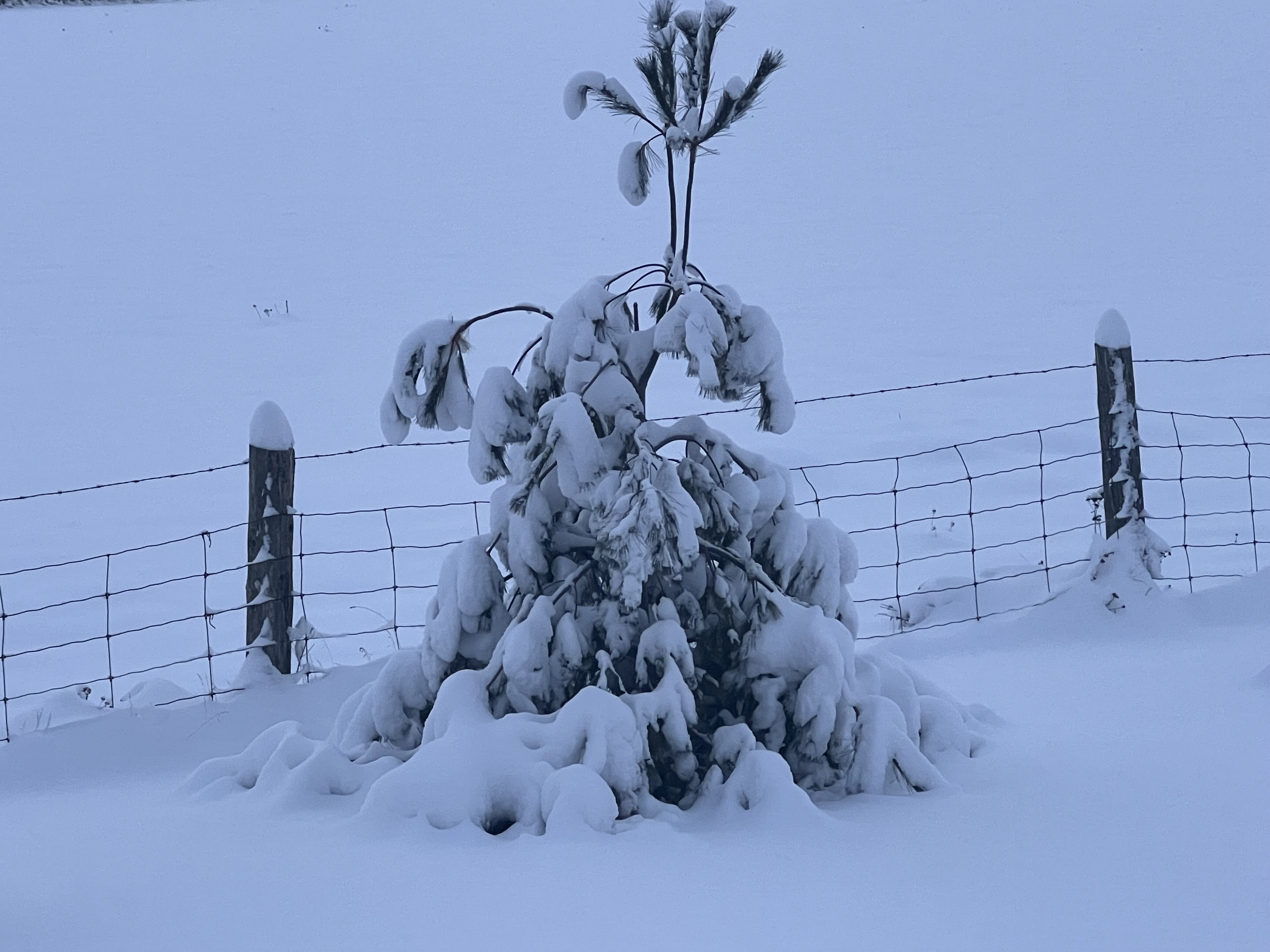
Pushing Back (photo by Martin Malina, 5 Dec 2023)

Last Sunday in the first of the series of sermons this Advent on friendship, we reflected on the enduring nature of true, spiritual friendship.

Well, we can’t talk about true friendship without also talking about feelings. We may initially associate feelings of peace, joy, love with friendship. But sooner or later conflict arises in all relationships. The conflict arises from strong feelings in our hearts, including anger.

And often underneath the anger lies a deep sadness, a grief, from a sense of injustice. So, lots of strong feelings flow through us often clashing and erupting all around us like a surf pounding on the shore in high winds.

How do we grow in relationship where we can express honestly our feelings to another? Do we have friends with whom we can lament, who will listen and who will engage our feelings with us? How can we learn acceptance of what is, in the context of a trusting relationship, and move forward?

John the Baptist was one of the most colourful characters in the New Testament. He is mentioned in all the Gospels as the one who prepares the way for the Lord. But he’s a pretty rough, messy kind of guy. We might know him to be piercingly direct if not unrefined in his communication style.

In Matthew’s account, he yells at the Pharisees calling them “a brood of vipers”.[1] His insults thrown aggressively, John the Baptist was definitely not a people-pleaser. He was not afraid of confrontation.

Reflecting on John the Baptist, I wonder if good friends only appease one another all of the time? Or, will a friend also challenge you from time to time, speak the hard truth? I wonder if deep down what we seek in a lasting friendship is authenticity. What are some of his characteristics that made John the Baptist authentic in how he came across?

Two characteristics stand out: First, he was not attractive in a worldly sense. For example, he did not dress according to the norms. The gospel writer goes to some detail to show this. John the Baptist did not conform to the expectations of one who would herald the Messiah. One could even question, on that basis alone, his credibility for that messenger role.

It’s not how he appeared on the surface; rather it’s what he did and what he said that attracted others. It was his heart, his mind, unfiltered and real.

It is not about what makes us attractive to the world that forms the basis of our faithfulness. God wants our hearts to shine. God wants us to be authentic, “Just as I am” goes the gospel song.

And if we will talk about attracting people, we need to remember another characteristic of John the Baptist that comes through in this gospel: Not only did he know his role, he knew and respected his limits. People aren’t attracted to control freaks who over-function. People aren’t attracted to those who make it all about themselves all of the time.

John the Baptist knew, using modern day parlance, his ‘boundaries’—where he began and where another ended; and, where he ended and another began. He understood it wasn’t all about him. He had an important job, to be sure; he had a part in the great odyssey of God’s story.

But he understood that life wasn’t about him; rather, he was about Life. He was about something bigger than him. Therefore, he knew when to stop, and hand over the torch.

Being authentic is not about people-pleasing and trying to do it all. It is about being true to yourself, and about knowing and behaving in ways that communicate you are part of something bigger than yourself.

This past summer when I attended the Christian Meditation retreat in France, at Bonnevaux Centre for Peace, I went with a group of Canadian Meditators from all across our country. However, the Canadian community ran into some problems after the first day at Bonnevaux.

You see, there was one sacred rule: Silence. There were scheduled times and designated places for silence during the retreat: At the noon hour meal, and coming to and going from the main hall, for example.

But we were so excited to be in person together after only seeing each other online for many years. So, as you can imagine, there was much talking and laughter even during times we were asked to be silent—we obviously broke the sacred rule.

The leaders of the core community challenged us. I could tell early on they were upset, even angry, that we continued to talk during silent times. We had to work through our feelings on both sides, justified positions. But we did. Our relationships grew deeper as a result. We knew, by the end of the experience, that holy silence introduced us and connected us to something important together, something much bigger than our private, individual desires even when we weren’t always good at it.

Friendship is more than coziness and warm fuzzies and like-mindedness. A friend gives what is hard to give, does what is hard to do, endures what is hard to endure. A friend doesn’t abandon you nor looks down on you when you make mistakes, when you open your heart in all honesty and vulnerability.

The disciple, Peter, is another colourful character in the New Testament. Peter and Jesus endured a lot together. Yet, at one point in their friendship, sparks flew. Jesus turned and said to Peter, “Get behind me Satan! You are a stumbling block to me!”[2] It’s hard to believe, just reading this one verse on its own, that Jesus and Peter were friends.

But true friends they were. Not only did their friendship endure over time, but their friendship was forged on the anvil of healthy conflict, of getting through the rough patches, together.

Peter, even though he had a falling out with the Lord, was given the “keys of the kingdom”. Peter, even though Jesus called him “Satan” for misunderstanding the Lord, is the person on whom Jesus would “build my church”.[3] Jesus and Peter are good models for us.

Christianity, because it is founded on relationships, is a social religion. You can’t do Christianity by yourself. Practising our faith in a group is essential to personal growth. In community, the holy space that we share and hold together in prayer and song, word and sacrament, opens up regions of our hearts previously unexplored. Friendships in faith don’t endure because they are always ‘nice’, and no one ever fights.

A point of clarification: Conflict, disagreement, differing points of view do not, in the end, define the relationship. Because there is an underlying faithfulness and commitment to the friendship, to the community and to God.

Nevertheless, difference and disagreement don’t need always lead to division and break-up. Sometimes it does. But I think in the church just as big a problem we have are these assumptions that everyone needs to agree all of the time and always be the same type of people and always be nice to each other in order to belong.

There is room in a community of faith and healthy friendships to experience moments of conflict. And working through those disagreements is a hallmark of friendship from faith’s perspective.

“Will we be friends?”, even though we are not alike, even though we don’t come from the same ethnic background, or grew up in the same country or share the same skin colour? “Will we be friends?”, even though we disagree over politics and our favourite things. “Will we be friends?” Again, admittedly a rhetorical question. Of course, we can.

But rather than see conflict as an obstacle to true friendship, let’s see conflict as a tool to deepen and grow not only our friendship but each of us in our personal lives. Because sometimes the Lord comes to us in situations rife with conflict, as Jesus did the first time, in Bethlehem. God’s not afraid of conflict. Jesus didn’t deny nor avoid it.

In the coming weeks as we ponder Jesus’ birth and the coming of the Savior to the world, let’s not forget the context. It was a pretty messy 1st century Palestine. But Jesus will come into those spaces and places of unrest and disruption, even in our own lives today.


[1] Matthew 3:7-12

[2] Matthew 16:23

[3] Matthew 16:17-20

‘Will we be friends?’ Friendship is for life – Pt1

31Heaven and earth will pass away, but my words will not pass away. (Mark 13)

If this Gospel was depicted in images on the big screen, you would get the sense that time is passing in an odyssey linking events and characters over days, weeks, months, years, decades, centuries. The video would speed up, showing clouds careening through the sky, daytime and nighttime running through several 24-hour cycles in a few seconds, a flower blooming from seed in a few, short frames.

The passage of time frames this Gospel text.[1] This story is told in a broad sweep encompassing all of history and eternity. Jesus says that life is like going on a journey whose way is not certain, but one thing is: God comes to us somewhere along the way. Somewhere in a particular situation, surprise! You can count on it. God comes to us, even where and when we least expect.

Have you had the experience of meeting an old friend after a long absence or being apart, someone you haven’t seen for years even decades? And then, whether by chance or by design your paths cross? Some confess it feels like a day hadn’t passed since the last time they met. You just pick up where you left off. It’s a delightful experience. And it serves to strengthen the relationship, doesn’t it?

That’s a taste of who a true friend of yours is. In this Advent sermon series, I want to explore important aspects of a friendship that endures. And the first such building block of spiritual friendship is that it is for life, and beyond!

Jesus said, “The water that I will give will become in them a spring of water gushing up to eternal life.”[2]

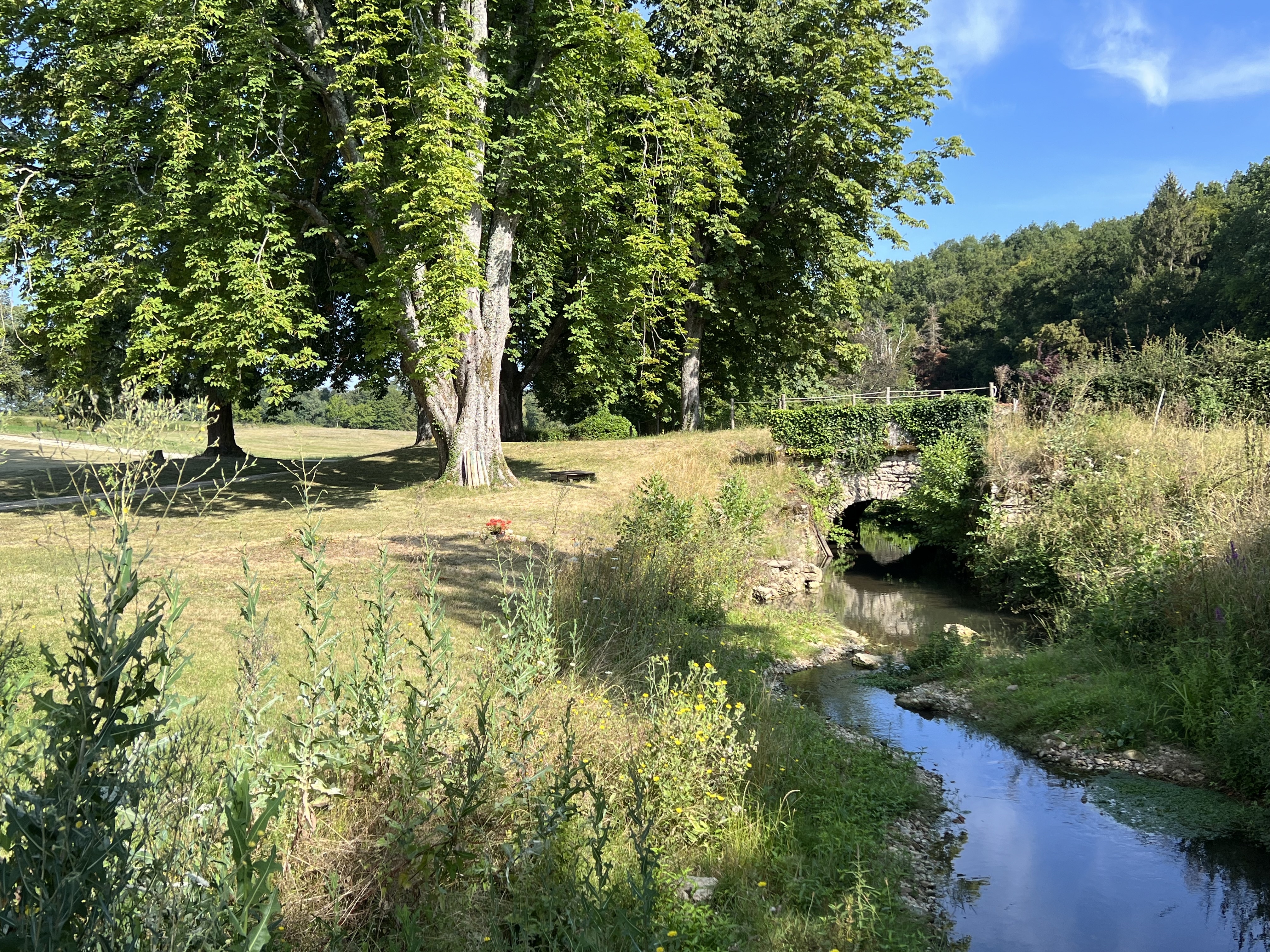
Spring-fed stream giving life (photo by Martin Malina at Bonnevaux, Centre for Peace, France, July 2023)

When I was on retreat in France this past summer, I visited three ancient springs found on the expansive grounds of the Bonnevaux Centre for Peace.[3] After centuries, these springs still bring forth water from deep in the earth and were probably the reason people originally gathered together in this pristine valley near the town of Marçay. In fact at least one of those springs has been flowing from the earth there for over a thousand years.

It is natural for humans to gather around sources for life. And we share in the blessings of the nourishment and growth that water provides. But human beings are not the only creatures these springs fed. Giant, sycamore maples trees hundreds of years old dot the landscape in that valley in France.

Green leaf, Sycamore life (photo by Martin Malina at Bonnevaux, Centre for Peace, France, July 2023)

The maple leaves hanging from these enormous trees reminded me of the symbol on the Canadian flag. Even though I was in France, far away from home, the maple leaf served to remind me of the many maple trees populating landscapes near my home (near Ottawa, Canada).

You don’t need to be in constant physical proximity for a friendship to endure over the years. Though it may certainly help, physical closeness is not the defining ingredient for lasting friendship.

In Christ, God calls us “friends”.[4] Yet, there may be times in our lives, even long stretches of time, when we don’t feel close to God. Our friendship may be blocked on our part, for whatever reason. But the water can only be dammed up for so long before it finds a way. Even another way. And water will find a way, like those ancient springs found a way to bubble up to the surface and flow to where the nurturing of all those trees could happen.

Because though we may be apart and not see each other for a while, we are still joined in a mystical union with one another as friends. The bond of unity runs deep and draws from the source of life, the living Christ, our eternal Friend.

I visited France in the summertime. The leaves I saw were not the colour we normally associate with the one on our Canadian flag. They definitely weren’t blue! But neither were they red, nor orange nor yellow. They were green. Green is the colour of life, life that continues and grows.

Friendship is for life. True, spiritual friendship never dries up. It is like an eternal spring that flows forever. It is full of life that continues to give and provide nourishment for all other creatures.

That is what we do in baptism today. Mikayla receives the water of life. And Christ Jesus comes to her today in the water and the word. In the bread of Communion. But not just today. Today is just the beginning, the beginning of a friendship with God and the church that will last a lifetime, and beyond!

“Will We Be Friends?” is the question I ask in this sermon series. It’s rhetorical, admittedly. Because the answer is an unequivocal, “Yes!”

Somehow, somewhere, sometime God comes to us: In a word, in a song, beholding a moment of nature’s beauty, and in actions of love and care from and for others.  God is near, even now, in this time. Thanks be to God!


[1] Mark 13:24-37

[2] John 4:14

[3] Bonnevaux Retreat Centre

[4] John 15:15

Singing through the turn

Today we sang Mary’s words – traditionally called ‘The Magnificat’ – in response to the angel Gabriel’s pronouncement to Mary that she will bear the Christ child. “My Soul Proclaims the Greatness of the Lord!” Mary sings. And so do we.

In that song[1], we find these verses describing a God who turns the social order upside down:

God has brought down the powerful from their thrones, and lifted up the lowly; God has filled the hungry with good things, and sent the rich away empty.[2]

This is what Jesus Christ is all about. The Advent of the Lord means things are turned and the rug is pulled from underneath all our expectations. 

One of my favourite hymns using the same tune as the one we just sang is called the “Canticle of the Turning”. It describes a God who keeps the world turning. The fourth verse goes:

Though the nations rage from age to age, we remember who holds us fast: God’s mercy must deliver us from the conqueror’s crushing grasp. This saving word that our forebears heard is the promise which holds us bound, till the spear and rod can be crushed by God, who is turning the world around. My heart shall sing of the day you bring. Let the fires of your justice burn. Wipe away all tears, for the dawn draws near, and the world is about to turn.[3]

The turning is not only turning things upside down. There is also a turning of direction. Often in the bible we hear the prophets, poets and preachers call people of faith to turn away from what is not good and turn toward God.[4]Turn. 

The act of turning speaks of movement that changes our direction. We turn, like paddling with or against a headwind, like following the centre line whilst driving around a bend in the road. Like leaning away or towards something or someone. Turning requires attention, intention and concentration. It is not going with the flow or giving up. It is hard work.

Significantly, then, when you turn, it is not sudden nor momentary. Not always but most often the turning is not pivoting in one spot. It covers some distance. And takes some time.

And, perhaps most importantly, the kind of turning that will have lasting effect, spiritually speaking, always happens in the dark and emerges from the dark. That’s why I like the words of that hymn. The Canticle or Song we sing at this time of year – in Canada around the winter solstice when darkness dominates each day and so much in our world is in crisis. Yet, it is during this dark time when we celebrate the light that is coming into the world, the light of the Christ that shines in the darkness. 

Perhaps the only thing we are now anxious to turn is the calendar. We are seeing a light at the end of a long, narrow and dark tunnel. The COVID-19 vaccine is slowly but surely trickling into the country starting a long immunization campaign that will last most of the coming year. The COVID-19 era is not over. It won’t be for a long time still.

The ship is turning, slowly. We might not immediately experience or feel the difference at the start of a new and promising year. But the turning is nevertheless happening. And we need to embrace, learn to live and work with it.

In the darkness of the times, we are like in the womb. And like gestation, the dawn cannot be forced. New life cannot be prescribed. In the womb, like Jonah in the belly of the whale, we can only support and watch for whatever happens, however small and however incomplete it may first appear.

Socially, we may be self-conscious of singing out loud in the physical presence of others. In a packed room we may feel uncomfortable with silence. Self-consciousness is the blight of the spiritual path. Learning a new spiritual skill is difficult when we are self-conscious. So, perhaps there is an opportunity here during a socially-restricted Christmas.

Perhaps you have this time now to exercise important yet simple spiritual skills this season. Spiritual muscles that have not often – or ever – been exercised. So at home alone, sing out loud. At home alone, sit in silence and stillness to pray. Exercise your innate spiritual capacity to be aware of God’s presence all around you. This is crucial, gestation time for God’s Spirit to energize you as we move and turn into a new season.

Each time we sing or pray in silence our hearts proclaim a steadfastness, a faithfulness, not only of our commitment to the long journey forward but of God’s. Because each time we pray we confess the God who is turning the world around. So, may our hearts sing … for the dawn draws near, and the world is about to turn.


[1]Luke 1:46-55

[2]Luke 1:52-53

[3]“Canticle of the Turning” #723 in Evangelical Lutheran Worship (Augsburg Fortress, 2006) OneLicense #A-732801.

[4]Psalm 85:8; Isaiah 45:22; Acts 3:19

You are not alone this Christmas

“A witness to the light … coming after me”[1]– two phrases from the Gospel reading today I invite you to consider: “Being a witness to the light … coming after me.” In the context of the reading, these words refer to John the Baptist, the prophet crying in the wilderness who prepared the way for Jesus. 

Of course, pretty much every year since that first Christmas Christians have celebrated Advent and Christmas. There’s something about Christmas that beckons to be repeated, that needs to be recognized again and again. We don’t just decide one year to suspend Christmas – even though 2020 would maybe qualify as one year to just forget it.

In one life we have only so many Advents and Christmases. Maybe especially because of COVID, this season calls us not to approach Christmas the usual way – with sentimentality or nostalgia. That approach might just make things worse. 

Instead, maybe this year it is time to slice through the superficial and lay hold of what is real and true about God coming to us. Maybe this year we are called to approach Christmas as a rediscovery and rebirth.

The word, Advent, literally means ‘coming towards’. I suspect when we first hear that phrase, ‘coming towards’, we see it from our viewpoint. We must go towards God in our preparation and diligence during the Advent season. It starts with us – getting ready, cleaning house, decorating, making it happen. If we didn’t do any of these things, would Christmas still happen?

Flip the meaning of the word to go the other way, in the opposite direction. Advent is essentially not about us coming towards Jesus or God. It is about God coming towards us.

How does God come towards us, year after year at Christmas?

The speed of light is incomprehensible. Light travels at 300,000 kilometres per second! It takes just one second for light to travel from the moon to the earth, just eight minutes for light to travel from our sun to the earth.[2]

Despite the incredible speed of light, the source – the starting point – first produced and sent its light long before we respond to it. Long before we can marvel at it. Long before we can choose to do anything about it – good or bad – it’s already been travelling towards us.

The important questions during Advent are not: What must I do to come towards Jesus? How do I find Jesus? These questions betray a way of thinking that suggests it’s up to me or us to generate the release of God’s love, a way of thinking that suggests we can never be good enough. That we don’t have what it takes. And never will. We are perpetually stuck.

Rather, as Henri Nouwen suggests, the better questions are: What am I doing that prevents me from recognizing this gift, a gift that has already been given to me, a gift that has been coming towards me year after year – long before I was even aware it was being granted to me? How am I blocking the light? How do I hinder myself and others from receiving it?[3]

The COVID pandemic of 2020 has exposed our resistance to this gift. It has exposed our self-absorption. By remaining stuck in ways of thinking that keep us fixated on beliefs that are not true. You are worthy, beloved, child of God! You have what it takes! Don’t let the voices in your head and in the world tell you otherwise!

Exposing such lies has ironically made many of us uncomfortable, edgy, unravelled. The social restrictions that have, to varying degrees, forced us to limit our urges and compulsions. We’ve needed to bring focus to what we are really all about – forced us to look in the mirror. And we are faced with whether or not to accept the truth that has always been there but for whatever reason we’ve put off. It would be easier to get back to normal so we may continue distracting ourselves.

As Bishop Michael Pryse writes, “One should never waste a good crisis!”[4]Don’t forget what you are learning about yourself and about our community during this desert experience. Because herein lies the key to a deeper receptivity of God’s coming to you and to me, and to us, as a church. Here is the opportunity to make the necessary and healthy changes, letting go of habits of thought and behaviour and traditions that keep us stuck and fixated.

Because what is coming at us this Advent, at the speed of light, is therefore already here. What does preparing for it mean, except realising the eternalbirth of the Word, the Son of God, within the historical birth in Bethlehem and, crucially, no less in our ourselves, and at this time. What is coming towards us is here already.[5]We need the ritual repetition of Advent and Christmas, year after year, to accept this truth over the course of a lifetime. We have every opportunity to slowly but surely melt our cold hearts and bask in the eternal, self-giving light and love of God.

In other words, we are not alone. Never were. Never will be. No matter how much darkness surrounds us in the foreground. The light of Christ lives and shines within and through you! The dawn comes again just over the horizon. This is good news, full of hope. 

So, we can risk it. We can do the right thing. Because God giving us love and light does not hinge, does not depend, on whether we get it right or wrong. We have nothing to lose. 

The two largest planets in the solar system, Saturn and Jupiter, have been aligning since this past summer. And on December 21st, the winter solstice, those two giants in our solar system will be the closest they’ve been together since the Middle Ages, hundreds of years ago. When they do so, they will form what looks, from our perspective, like a double planet. This celestial event has been dubbed the “Christmas star.”[6]

The universe, God’s creation, is communicating hope for us. Hope, that recognizes our need for a little more light. How about a lot more light in the darkness that seems especially heavy this year. The conjunction of planets provides a convergence that we cannot miss: 

The light of the world is trying again to get our attention, ye people of faith!


[1]John 1:7,27 – from the Gospel reading for the Third Sunday of Advent, Year B (Revised Common Lectionary)

[2]Eckhart Tolle, A New Earth; Awakening to Your Life’s Purpose (New York: Penguin Books, 2016), p.250.

[3]Henri Nouwen, “The Heart of God” in The Return of the Prodigal Son (Toronto: Image Random House, 1994), p.105ff.

[4]Bishop Michael Pryse,  “Return to different” in Canada Lutheran Volume 35 Number 7 (Winnipeg, ELCIC, Oct-Nov 2020), p.30.

[5]Laurence Freeman OSB, “First Week of Advent 2020”, https://laurencefreeman.me/2020/11/29/first-week-of-advent-2020/

[6]CTV news “Christmas Star”

The church is not closed this Christmas

Isaiah 40:1-11

    1Comfort, O comfort my people,
  says your God.
2Speak tenderly to Jerusalem,
  and cry to her
 that she has served her term,
  that her penalty is paid,
 that she has received from the Lord’s hand
  double for all her sins.

3A voice cries out:
 “In the wilderness prepare the way of the Lord,
  make straight in the desert a highway for our God.
4Every valley shall be lifted up,
  and every mountain and hill be made low;
 the uneven ground shall become level,
  and the rough places a plain.
5Then the glory of the Lord shall be revealed,
  and all people shall see it together,
  for the mouth of the Lord has spoken.”

6A voice says, “Cry out!”
  And I said, “What shall I cry?”
 All people are grass,
  their constancy is like the flower of the field.
7The grass withers, the flower fades,
  when the breath of the Lord blows upon it;
  surely the people are grass.
8The grass withers, the flower fades;
  but the word of our God will stand forever.
9Get you up to a high mountain,
  O Zion, herald of good tidings;
 lift up your voice with strength,
  O Jerusalem, herald of good tidings,
  lift it up, do not fear;
 say to the cities of Judah,
  “Here is your God!”
10See, the Lord God comes with might,
  and his arm rules for him;
 his reward is with him,
  and his recompense before him.
11He will feed his flock like a shepherd;
  he will gather the lambs in his arms,
 and carry them in his bosom,
  and gently lead the mother sheep.

Making a rough place level is not easy. To lay a railway bed across this country a couple centuries ago was a formidable task. To our modern sensibilities, even incomprehensible.

I remember driving through Rogers Pass in British Columbia just west of Revelstoke. Here, “The Last Spike” marks the place where the coastal railroad line finally in 1885 met up with the Canadian Pacific Railway whose armies of workers dug and blasted their way through the Rocky Mountains. Historians consider this joining of the line as the moment when national unity was realized. Establishing an economic and cultural link gave access to more and more people moving across this vast Canadian land.

The vision Isaiah puts before the people walking in the darkness of Babylonian exile 2500 years ago is similarly incredible. How could “every valley be lifted up and every mountain made low”? How could “the uneven ground become level and the rough places plain”? How could a small remanent return to Jerusalem across a vast and inhospitable land, not to mention leave a society in which they had grown accustomed over a generation?

It’s as if God was presenting a scenario that is without question impossible for human beings to accomplish on their own. They may have had resources – people power, willpower – to build impressive buildings and accomplish great things in their time. 

But as with so many if not all human achievements there is always that elusive element – call it luck, serendipity, grace – just out of reach of human agency, control and effort however impressive. Just ask anyone who is willing to give an honest answer to account for their success.

A.B. Rogers had to trek over the avalanche-prone Selkirk mountains not once but twice to confirm what he suspected: that there was a way just beyond the next ridge. After having to turn back the first time, he went back the following year from a different direction to verify that there was a tributary of the Columbia River in the valley beyond. Indeed, there was. That river valley had always been there. A given.

But we often find it hard to believe the grace is so close to us. The mental stumbling block for the exiled Israelites was this belief that they could only have a meaningful connection with the God of Abraham, Isaac and Jacob in Jerusalem, in the holy temple. The physical separation by a vast and dangerous desert – created, you can imagine, a great challenge and crisis of faith: “How could we sing the Lord’s song in a foreign land?”[1] they cried. How could they access their God, when they lived in exile so far away from their place of worship? 

These days when so many places of worship are empty, when gatherings are severely limited and space is not being used because of the pandemic, it’s common hearsay: “the church is closed for Christmas”. If we can’t gather together in one, specific place and sing the favourite carols at the top of our lungs, shoulder to shoulder; if we can’t light candles together in the darkened sanctuary; if we can’t give each other hugs and wish each other ‘Merry Christmas’ face-to-face … well, then, what’s the point? 

Indeed, it feels like our traditions are ‘like grass’, they have withered and faded in 2020. Despair remains a hair’s breadth away. COVID-19 has devastated all our good efforts in accessing what is important to us in connecting with God. If we can’t be physically in the building with other people to worship God, then it is lost. Our access to God cut off.

And then we hear voices saying that the church is not closed this Christmas. The buildings are closed. But not the church. Access to God continues in various ways. Of course, access to the church is not perfect, especially for those who do not connect with others on the internet these days.

But access to God and God’s people has never been perfect, even pre-COVID. Those who work shifts on Sunday mornings, people with physical disabilities not being able to access buildings with stairs and narrow halls and doorways. Others who don’t access places of worship because of perceived and real judgement laid against them by those who are there. Access to God has never been easy or perfect. We are like grass. Our efforts always fall short. 

But more than that, those voices today continue to say – do we hear them? – that access to God during COVID has never been so broad and far-reaching because of the internet. The people tuning into broadcasts, online services, live streams and zoom gatherings, the coming together of the faithful from different congregations for a weekly event – these far outnumber those who have ever sat in our chairs in the building. People are participating in the life of the church like never before!

What this COVID time is doing is challenging our perceptions and expectations of where we meet with God. The message of Advent is the call to work at re-defining the parameters for ourselves. Advent is this time of active waiting for God, doing different things to help pave the way through the mountain passes of our lives. It is a time for resilient, determined never-give-up-ness. 

How can we nurture this courage and resilience from within?

The latter part of the poetry in this passage from Isaiah contains a promise that we know to be true. Historically. But also, personally. We know that King Cyrus of Persia conquered Babylon and freed the people in the sixth century B.C.E. This liberation was not engineered by the people. And still, the exiles who had spent years far away from their place of worship were now free to return to Jerusalem. King Cyrus made that possible.

Personally, Isaiah’s poetry reflects imagery of the caring shepherd. We know that Jesus was the shepherd whose voice the sheep that follow him know. We know that Jesus is the shepherd who carries the lambs – the sheep who are most vulnerable, most in need, most in despair, most afraid and anxious – in his arms. And he will feed us, give us what we need.

Not only that, God has a special promise to those who feel responsible for others’ well-being. The shepherd will also “gently lead the mother sheep”. Isaiah’s message is not only to those who are dependent on others in dark times. Isaiah’s promise also includes a word to those who feel the emotional if not practical burden of responsibility for others when times are tough. That mothering instinct to find solutions, say the right things, solve problems and be there for others – here, too, God’s promises give permission to take a load off. God will enfold and carry the ones who normally lead.

In the end, the question is not so much about how we access God, and where we need to go. The Gospel message – the good news – is that God accesses us, wherever we are. God will come, God will find a way, into our hearts and into the hearts of those we care for this Christmas. We have to believe that.

We don’t have to have all the solutions, the strategies that work, the answers to what challenges us in COVID times. We don’t need to always feel that burden of responsibility for the fact that many church buildings are closed this Christmas. Because, we know and believe, the church remains open to hear God’s voice and trust in God’s promises – to come to us wherever we are.

Thanks be to God. Amen.


[1] Psalm 137:4