Live in the light of the resurrection

Dietrich Bonhoeffer defined Easter this way: “To live in the light of the resurrection – that is what Easter means” (Barnhill, 2005, p. 114). Live in the light of the resurrection.

In one of those contemporary movies about the life, death and resurrection of Jesus, one scene sticks in my mind. It is when the women who discover the empty tomb early that first Easter encounter there the “two men in dazzling clothes” (Luke 24:4).

But instead of actually meeting two men standing there, all we see over the empty shroud in the tomb is an eye-shielding brilliant light from which the divine voice speaks, “Why do you seek the living among the dead? He is not here, but has risen” (Luke 24:5). Surprise!

We are so fortunate in Canada to celebrate Easter each year during the Springtime in the Northern Hemisphere. Early 20th century New England writer, Henry Beston, called Spring, the “trumpet call of the return of light” (cited in Mahany, 2023, p. 62). In Spring the days grow longer, we get our first basking in the sunlight’s warmth, and new life starts emerging from the sleepy, cold earth.  We know, at least in Spring, that truly we live in the light. We need the light, to live.

Sometimes, as on that first Easter morning, the light actually changes people. Listen to the testimony of Rosemarie Feeney Harding (cited in Rohr, 2025, March 27) who describes her experience of how the Light impacted her life:

“I can’t say exactly where the Light entered,” she writes, “where it started from. Suddenly, it was just there with me. A white light, bright enough that it should have hurt to look. But it didn’t hurt. In fact, as the Light grew and enveloped everything in the room, I felt the most astonishing sense of protection, of peace. It surrounded me and I was in it, so joyfully…. 

“The Light became a kind of touchstone in my life. It was so much love. Like an infinite compassion. At the same time it was something very precious and intimate. It awed me, really. And when I walked out of the room, everything looked different. Clear. Even later, outside the house, in my classes and at my job, everything looked sharper. It was like a heightened sense of presence. Almost a shine.  

“I do believe that whole experience put me on a path. And the Light stayed with me a long time. It gave me a sense of security and deep internal connectedness to God, I would say …

“As I moved away from my family and struggled for years … I needed the grounding and shelter and strength of that Light. There is something in there, in that profoundly embracing energy, that allows you to come out with a kind of forgiveness, an absence of animosity … Help. Encouragement. A deep, deep encouragement in this life …” (Harding & Harding, 2015, pp. 1-3).

Living in the light. I wonder what it would be like to always live in that light. What would change in your life? What good things you already have and are would come to the surface? What would you see in others?

One icebreaker question I’ve always enjoyed answering is: “If you could be one animal, what would it be and why?”


Image by Airwolfhound

If I were answering that question today, I think I’d like to be an Arctic Tern. You see, these terns “spend the summer in the Arctic when the sun is available for almost 24 hours. Then they fly south during the Northern Hemisphere winter to join the summer season of the Antarctic regions, where the sun is also visible almost 24 hours a day.

“Scientists believe they follow the sun because the sun illuminates the water allowing them to find fish during their travel. As a result, Arctic Terns are believed to experience more daylight in their lifetime than any other creature. Right now is the time of the Arctic Tern’s return migration to the Arctic” (Coman, 2025, March 27).

Birders at Point Pelee and other bird sanctuaries on the migration routes over Ontario are actively lifting their heads to the heavens these days! And they are excited for what they might see. Surprise!

A large part of why Easter joy surprises us is that it is unexpected. The joy comes as a surprise because of the tough road that preceded Easter joy. Living in the light is so special because this joy grew out from the ashes of loss, of death. What seemed certain and final. It’s the contrast. It’s the surprising, unexpected answer to what was an impossible possibility.

The Christian narrative is essentially a rising-from-the-dead story that plays out in the wake of history’s darkest hours. Therefore, Easter brings a message of hope.

One of the most famous of these stories of emerging from history’s darkest hours is the miracle of the seed birthed in the inferno. It is the story of the seeds of Hiroshima, “when in the aftermath of the atomic fireball in August of 1945, the city staggered through never-before-witnessed devastation.

“As survivors scrounged for unburned rubble to try to patch together homes, word came from a prominent physician that nothing would grow there for seventy years, with all flora and fauna incinerated across a [near 10-kilometre] swath.

“[But] barely a month after the bombing, though, rising from the charred bits [about a kilometre] from the explosion’s radioactive center, red canna lilies and delicate wildflowers began to sprout and bloom amid the wasteland …

“What had happened, in part, was that the bricks of Hiroshima had been formed of clay from the mountains, where wildflowers grew. Walls throughout the city secretly had been harbouring long dormant seeds. And in the cataclysm of the bomb, the explosive power split open the seeds, and the mountain flowers sprouted [under the sun’s light].

“Out of horror, erupted beauty. [Out of darkness, blossomed new life exposed finally to the light.] Ever since, the survivor seeds of Hiroshima have been revered in Japan as ‘the faith that grew out of the ashes’” (Mahany, 2023, p. 39).

This message of new life is for us. Because now that Jesus is alive, every message about Jesus is a message about all of us (Rohr, 2025, April 20). All creatures on earth – including the birds and the seeds and the animals and us – all of creation – shout for joy when out of the tomb of suffering and death we can sprout, we can grow, we can fly.

Spread your wings. Follow the Sun. Live in the light.

For Christ is risen! Alleluia! Christ is risen indeed!

References:

Barnhill, C. (Ed.). (2005). A year with Dietrich Bonhoeffer: Daily meditations from his letters, writings, and sermons. Harper One.

Coman, S. (2025, March 27). Streams of Living Justice [Blog]. Lutherans Connect. https://streamsoflivingjustice.blogspot.com/2025/03/day-20.html

Harding, R. F. & Harding R. E. (2015). Remnants: A memoir of spirit, activism, and mothering. Duke University Press.

Mahany, B. (2023). The book of nature: The astonishing beauty of God’s first sacred text. Broadleaf Books.

Rohr, R. (2025, April 20). A universal message: Celebrating resurrection. [Website]. Daily Meditations, Center for Action and Contemplation. https://cac.org/daily-meditations/a-universal-message/

Rohr, R. (2025, March 27). A light that sustains: Centering, silence, and stillness [Website]. Daily Meditations, Center for Action and Contemplation. https://cac.org/daily-meditations/a-light-that-sustains/
Snowed in: Lent 4

IMG_8077

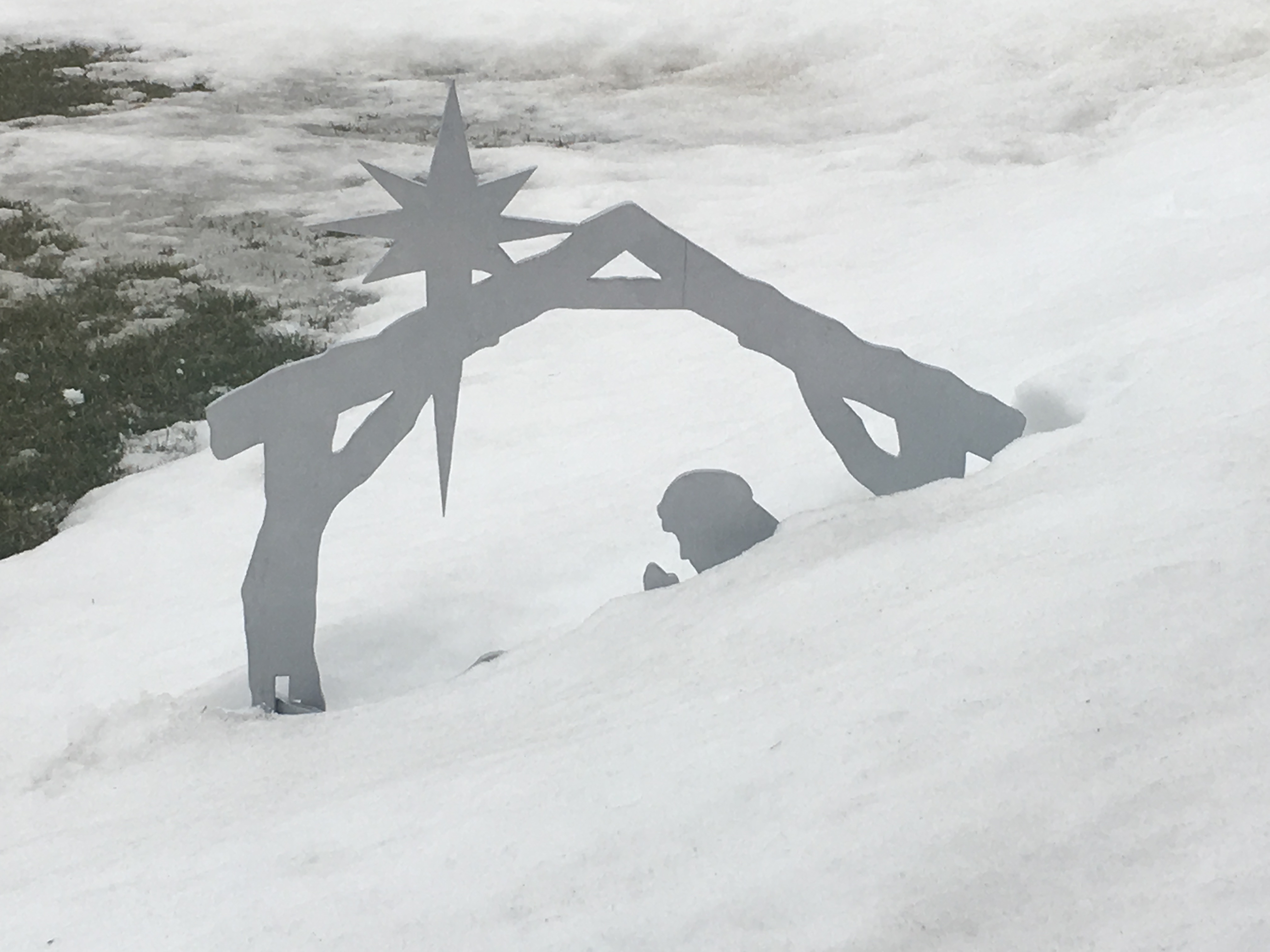
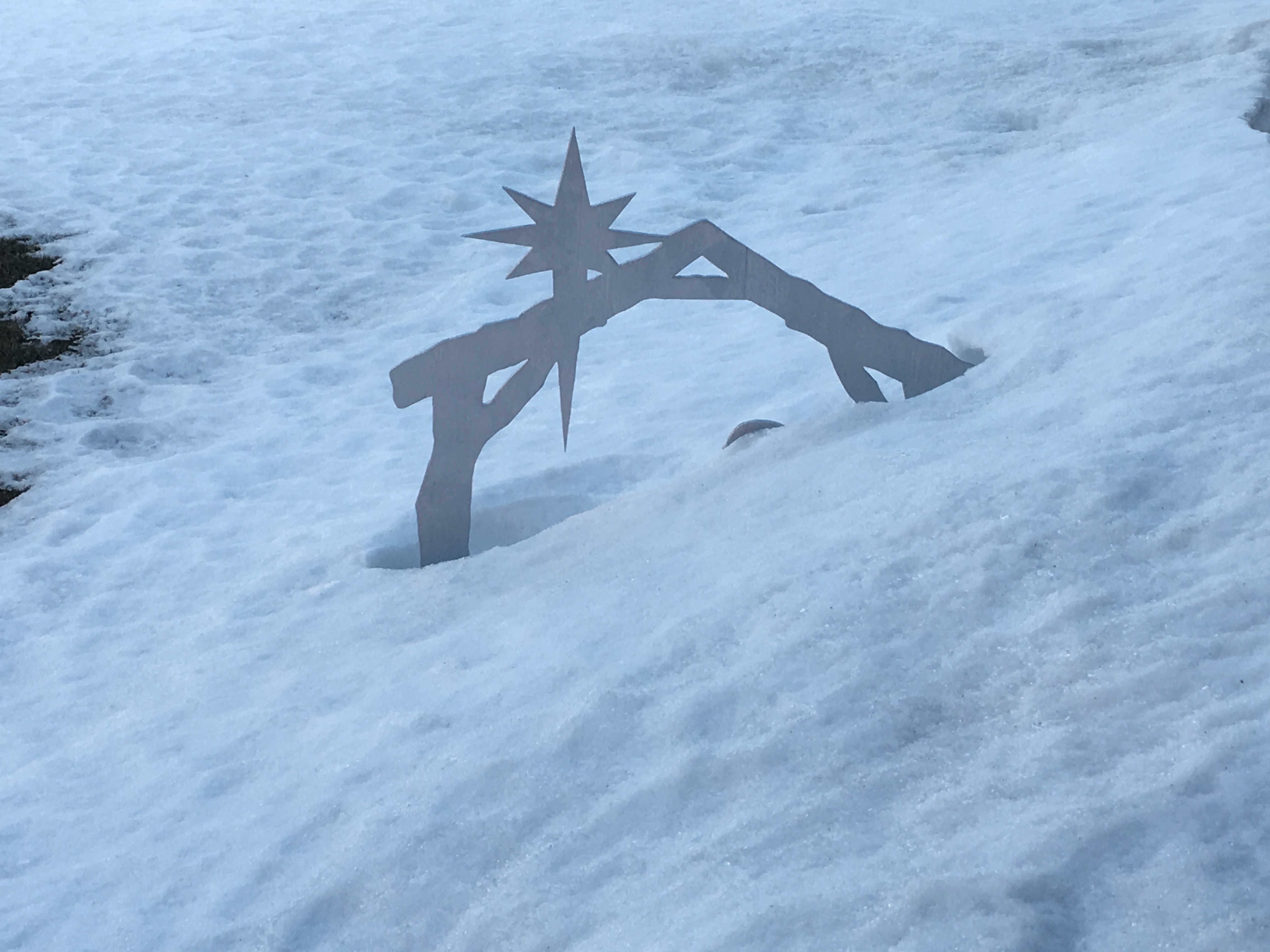
The snow still covers most of the story from our awareness. Buried deep within our hearts the fullness of all that makes us who we are is waiting to emerge. On the slow and steady movement on the Lenten journey to the springtime release and new life, we must embrace what is revealed, good and bad.

The first figure that I recognize is Joseph, praying. Joseph, the father of Jesus. Joseph, the father. What in my soul does ‘father’ mean to me? My father, Jan, died this winter. His memory resonates in my heart and I still feel the pang of grief. What is his legacy– as father, pastor, male– in my life? Faithfulness. Vulnerability. Physical strength. Passion. Feeling. Human-ness …

What does the revelation of the springtime structures within your heart tell you about you? About God? About your relationship with others, this earth, and Jesus still waiting to be released from what binds him on earth? Jesus, still waiting to be expressed and resurrected in your heart anew?

On the journey, even though the snow still covers so much (in Eastern Ontario anyway!), let us be buoyed by true signs, indeed, that the snow is surely melting away.

With us, snowed-in

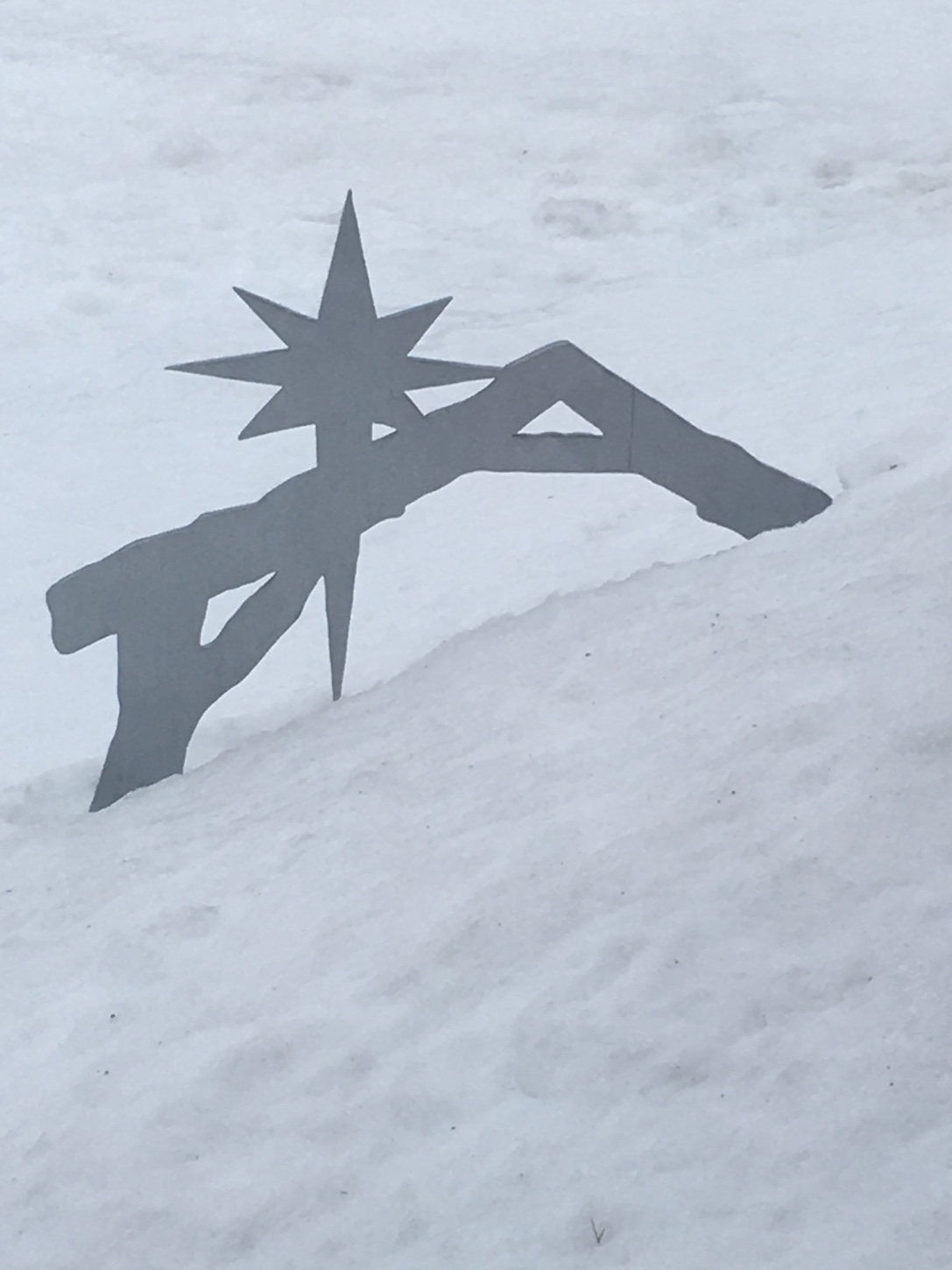
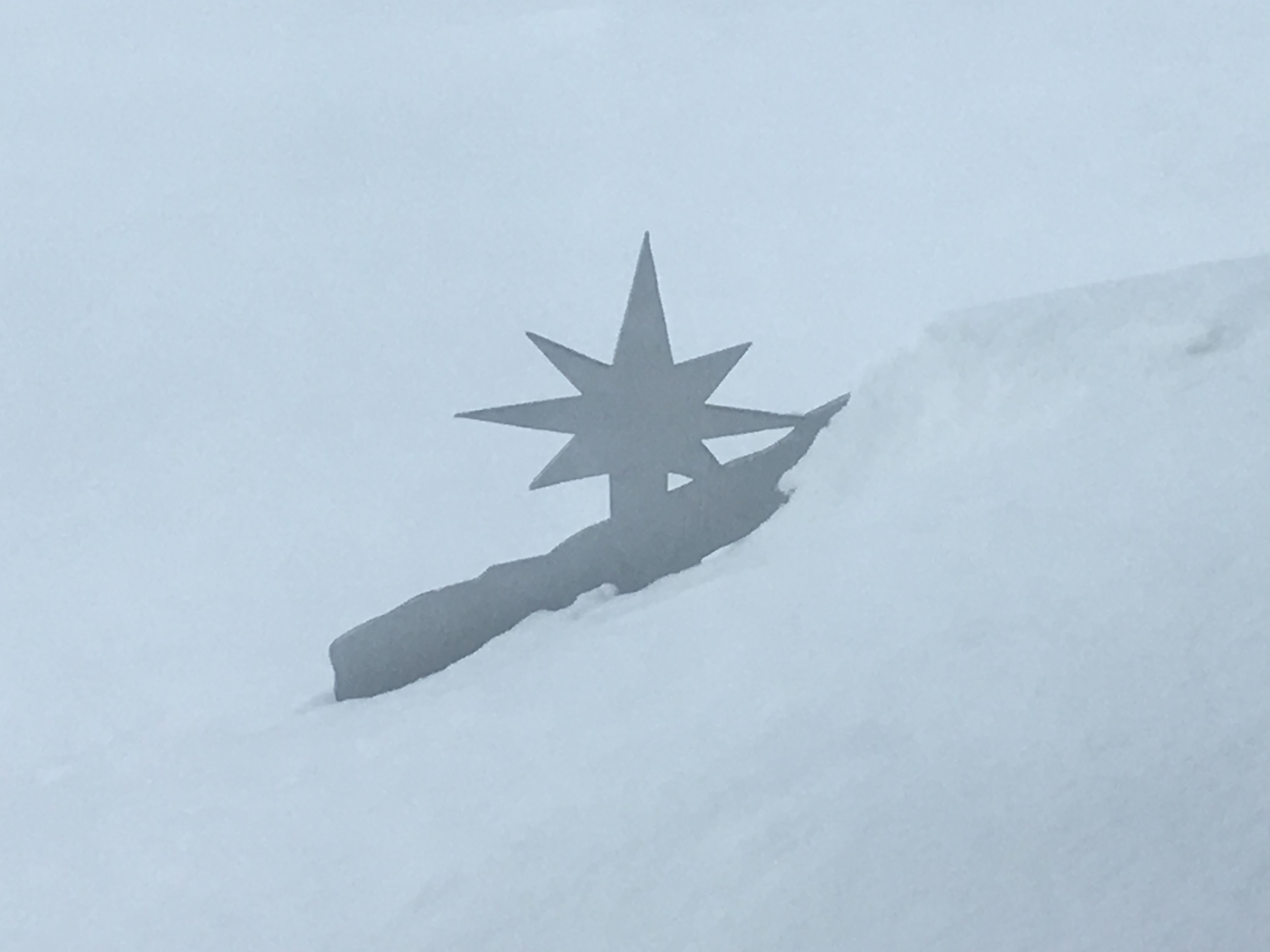
I wasn’t able to remove the Christmas manger scene from our front yard in time, before the snowstorms left everything buried. As we’ve approached Lent, the joke in our household is that Jesus, like us, is snowed-in.

IMG_8042

It likely won’t be until late April now when I will be able to remove the tableau from the frozen earth and its snowy cover. When will Jesus be set free from the tomblike confines of winter’s grip?

When exactly, no one knows. Meteorologists are calling for a cooler-than-normal late April /early May. It might be a while.

The Jesus story, for us, begins in winter around the winter solstice on Christmas Day. We begin again our Lenten pilgrimage in the throes of winter, when snow and ice cover everything. When will the sky brighten and warmer temperatures heat the ground again? When does the journey end?

The poet, Mary Oliver, who died in January of this year, wrote primarily about winter. In several pieces she twins snow with wisdom, the capacity to live with questions in silence, surrendering to its beauty. “I love this world,” she wrote, “but not for its answers.”[1]

I’ve considered Christianity to be a winter faith. We, as people of faith, live with many questions that are largely unanswerable. Why do we still live in a world beset by injustice, intolerance, hatred—despite all good effort in the name of Jesus to the contrary? Why death and disease? When will we find the answers to our deepest questions? Why? Why? Why? Winter is a time for questions.

And so, we continue to search, wander, and wonder with Jesus snowed-in, by our side.

But, is Jesus in over his head?

The temptation of Jesus—as this story is famously called—happens near the beginning of his divine calling and ministry.[2]He goes into the wilderness, the desert, for forty days. He goes into a place of harsh simplicity, stripped of all creaturely comforts, to serve a holy purpose.

We wonder, will he survive the challenge?

Given his life purpose on earth, he meets with what could be his greatest vulnerability—the seduction of power and its forceful implications. The man who is the Son of God, King of Kings, Lord of Lords, Almighty and Everlasting, the man whom people would look to for guidance and leadership, the man who many would lift onto a pedestal—would Jesus succumb to everyone’s expectation?

Would Jesus yield to the temptation that he, the Messiah, will now lead the revolt to free the suppressed and oppressed Judeans out from Roman occupation? Would he be the political rallying point around which the crowds would mobilize and generate an effective, political movement?

And, in fact, the evil one touches on this potential weakness. Notice in different ways each of the three temptations seduce Jesus to grab hold of power that would make him this kind of King: One who satisfies his every appetite and hunger using whatever means at his disposal; one who creates God in one’s own image by forcing God’s hands, one who offers blind obedience to those still ‘above’ them while climbing the ladder of ‘success’.

But that’s not what Jesus was going to be about. We know that. In order to embrace his true identity, what happens?

Jesus is first led by the Spirit into this vulnerable place, not away from it. He was to first meet this human, shadow side.

The point of Lenten discipline, whatever it may be for you, is to be led into that shadow place in our own lives that we, on our own, don’t want and even can’t go. The Spirit leads us to face that which we normally distract ourselves from, where we normally deny, avoid. What is that vulnerability for you?

What does the light and Spirit reveal in the dark corners of your life? Is it a fear? Is it a conversation you know needs to happen? Is it confronting a situation you have been trying to avoid? Is it coming to terms with what is really going on deep down in your heart?

How does Jesus respond to his temptation? How does he return to his identity in God?

The scriptural quotations he cites are signs of his true identity—his ‘touchstone’, if you will. The scriptures point to his true self. By citing the scripture, he reminds himself, he aligns himself, he allies himself, with what grounds him in who he is. By citing scripture he relies not on his own humanity and resources of his own making, but rather on God.

This text provides rich support for our own journeys of Lent. As we wander into the wilderness of our lives and continue to trudge through the snow wary of still slipping on the ice, as we wonder with our questions, we meet our own shadow sides. And are called to stay rooted in who and whose we are.

And what is your touchstone for remembering your identity in Christ? Is it scripture? Is it the bread and cup of the sacrament? Is it a song? Is it an act of repeated service for another? Is it a prayer?

In her poems about winter Madeleine L’Engle writes a word of hope for the journey:

“Snow does not obscure the shape of things. It outlines them, like an icy highlighter, revealing the deep structure of the world. We walk through the woods, seeing differently, and, when we glimpse the hidden structure, we ask questions even as we experience its stark beauty.”[3]

Writer-theologian, Diana Butler Bass takes it further: “Strangely I have found in my own life that it is only through a wintery spirituality that I am able to affirm summer and sunshine. A friend wrote me recently, ‘Winter reveals structure’. Only as the structure is firmly there are we able to dress it with the lovely trappings of spring, budding leaves, rosy blossoms. Winter is the quiet, fallow time when earth prepares for the rebirth of spring.”

The word, Lent, means ‘springtime’. While the Lenten journey begins in the frozen winter, we can say in faith that the purpose of the journey is to bring us to Spring. Because by the end of the Lenten season, the snow will be gone revealing the soft, verdant earth underneath where new life is just budding to sprout.

In the end, the disciplines of Lent, the questions we now pose and with which we struggle on the journey, these are gifts from God. They point us to God’s presence in our lives and in our world. In the end, that is what faithful observance of Lent is—“a grace-filled return to the Lord our God.”[4]

Who begins with us, snowed-in and under.


[1]Cited in Diana Butler Bass, The Cottage: A Winter Faith (January 18, 2019)

[2]Luke 4:1-13

[3]Madeleine L’Engle cited in Diana Butler Bass, ibid.

[4]Kimberly M. Van Driel, in David L. Bartlett & Barbara Brown Taylor, eds. Feasting on the Word: Preaching the Revised Common Lectionary Year C, Vol 2 (Kentucky: WJK Press, 2009), p.25.

Not all wanderers are lost and alone

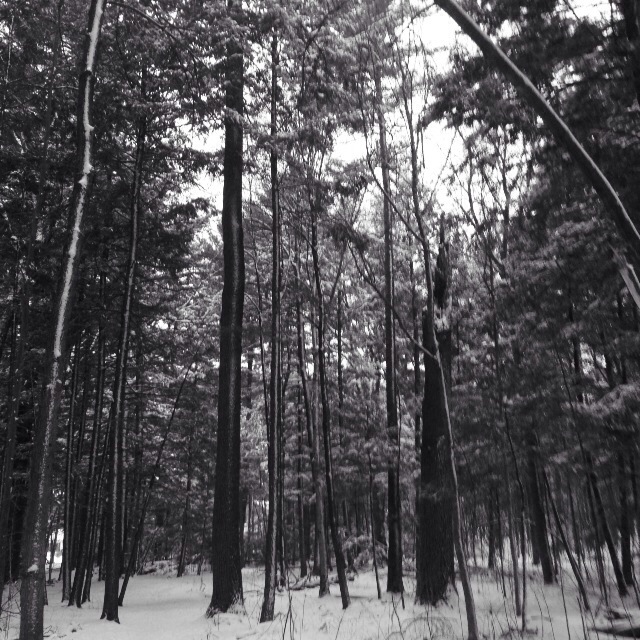
The pathways through the forest are tricky, these days. With winter and spring battling it out for seasonal supremacy, the snow-melt leaves walking paths uneven and icy. It’s a challenge simply to keep on the path.

I make my way through the Grove with a destination in mind. But the forested parkland is marked with a web-like array of criss-crossing trails of dog-walkers, ski-enthusiasts, snow-shoers and joggers. So I leave it up to the inspiration of the moment to choose which path I take, keeping in mind where I eventually hope to end up.

But there are options. I’m reminded of the Psalmist who doesn’t just talk of one path describing the Lord’s way, but of many: “All the paths of the Lord are steadfast love and faithfulness” (Psalm 25:9-10). And so I have some fun deciding which path to take; that is, which one is suited more to my abilities and interest on that day.

In describing the kingdom of God to Nicodemus, Jesus talks of salvation, and being born again (John 3:1-17). In case Nicodemus is tempted to believe life events such as birth and re-birth are something he can direct and control, Jesus talks about the nature of God’s work in the matter: “The wind blows where it chooses, and you hear the sound of it, but you do not know where it comes from or where it goes” (v.8). There’s a wild, free, untethered quality integral to the journey of life and faith.

To be sure, some pathways are easier — wide, flat and well-trodden. Others require me to focus more my attention on where I place my feet, lest I trip over an exposed tree root or sink into foot-deep snow. One thing is for sure: It’s very satisfying to discover a new path I never knew was there, a path that gives me a new perspective on the forest, regardless how uneven or narrow it is.

To the casual observer I may appear directionless, lost, wending my way around and through the Grove. Some may wonder what I’m doing in there. Is there not something more productive I should be up to rather than wandering in the forest? Sometimes going to worship, participating in activities of the church, engaging the ministry and mission of God in the community may seem rudderless, unproductive.

This faith journey can appear to some rather cavalier and pointless — a glorified hobby of self-indulgence and of no real consequence: Because Christians like everyone else suffer and experience the difficulties that everyone does. What sets us apart? Why bother?

When the hardships come as they do to us all, the journey of the faithful starts to nudge at something deeper inside us. Deep down, though on the surface it may look otherwise, we know we are not lost in our wandering. We look up, from time to time. When the journey gets difficult, it’s natural and rather tempting to look down all the time, to be constantly turned in on oneself, to see only one’s own problems and disregard altogether the world ‘out there’.

When the journey of life gets difficult, our hearts are nevertheless open and free to accept the gift of faith. This gift of faith declares in our hearts the conviction that: I am not alone, in this dark, dangerous forest of my life. I am not alone.

There is a broad consensus that Psalm 121 was not expressed in the faith life of ancient Israel by individuals, on their own, by themselves. In other words, these words weren’t spoken originally between one person and God. It’s not about ‘me and sweet Jesus’.

It was a song sung responsively as a congregation, an assembly, a caravan, on the road together from Jericho — some 1500 feet below sea level — up to Jerusalem where God’s presence awaited in the temple of the Lord. The structure of the poem suggests a question-answer kind of liturgy between various voices — voices assuring one another of the hope they had on this dangerous road. A hope they would find by lifting their gaze towards their destination.

In this stance to life, individuals would be guarded against falling into the trap of feeling isolated in their suffering. At the same time, the different voices would challenge any potential “misery-finds-company” quality in relationship. Ample differentiation in the community encouraged the paradox of ‘hopeful realism’ on the journey of life; that is, on the one hand not denying the pain of the journey; but, doing so in the conviction that ‘death has not the last word’.

The predominantly old-growth stand of Hemlock trees in the Grove through which I wander contrasts with the white of snow on the ground. Even during the brightest part of the day, this is a relatively dark spot in the forest. And I can’t see where the path leads through the thick, coniferous growth. Nevertheless, I can’t help but occasionally look up, with a smile on my face. The trees reach to the sky, reminding me of the direction of our faith.

When we step out on our journey — whatever that journey is — we can do so with confidence and trust in the One who calls us and sends us out on the path. You may be embarking on a new journey in your life — a journey to change jobs, move to a new home, a journey of exploring a new relationship, or renewing old ones; your journey may be a challenge to live with the reality of increased physical limits, or, dealing with a newly diagnosed illness. You may find yourself at a cross-road in your life. So, what do you do?

At those moments of decision and sometimes despair, think again when you are tempted to feel that you are lost, and that you are alone on this journey. Because you belong to the church — the Body of Christ — to share in prayer and song on this road we travel together. And you know, in faith, the end of the story, the end of the road — which is good.

Some helpful thoughts on the journey of faith come from Charles Foster’s “The Sacred Journey” and  Alan Roxburgh / M.Scott Borden in “Introducing the Missional Church”

20140311-110821.jpg