
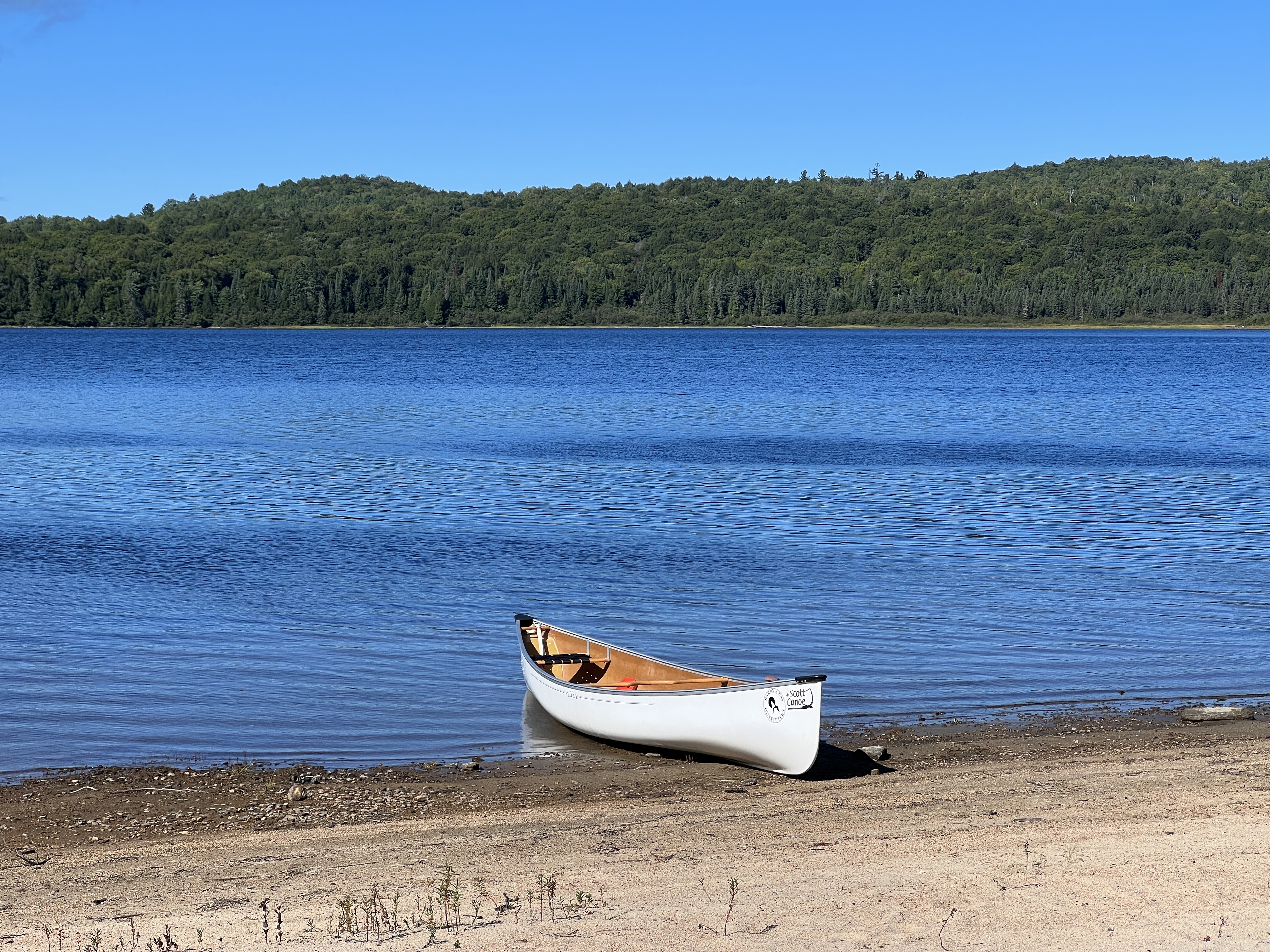
Peregrenatio

(photo by Martin Malina)

After receiving God’s blessing and vision at his baptism, Jesus is led into the desert. He is led into the wilderness by the Spirit of God where he spends the better part of a month and a half (Matthew 4:1). That’s a long time.

Who would go there? And for what purpose? Why would anybody, especially right after receiving a holy calling and divine blessing, wander into wastelands full of danger and unpredictability?

You would think Jesus would immediately go to launch his mission of healing and proclamation. You would think Jesus would go directly from the Jordan river where he was baptized to the highways and byways, the street corners and the seats of power around Jerusalem. Which, he eventually does.

But instead, the first thing he does is go alone into the desert. For a long time.

The season of Lent is upon us. The long weeks leading to Easter have been described as a pilgrimage, a journey (Pope Francis, 2025). Martin Luther opposed the concept of pilgrimage in the medieval sense because he deemed going on pilgrimage as “works righteousness”. But Luther kept Lent. He saw the season of Lent as an opportunity to reflect on the Passion and suffering of Christ.

Today Lutherans will frame the 40 days of Lent as a “journey to the cross” or a “spiritual journey,” a concept that aligns with Luther’s theology of the cross.

It is on the cross where God is revealed most clearly in Jesus’ suffering. The heart of the Gospel is the mercy and grace for humanity that God experienced in Christ crucified. The intention of Lent is to focus on the path Jesus took through the cross to the empty tomb. Lent acknowledges that the only way to a good, new beginning is by embracing and working through the losses in our lives. This journey through the desert – the cross – is not easy. It’s work, moving forward.

Another way of describing it is that it’s always three steps forward and two steps back, between the cross and the empty tomb, never a straight line. But it’s the backward that creates the knowledge and the energy for the forward. We have to allow it. The desert is necessary for our growth.

We have an aversion to the cost of this journey. And that’s why we avoid it. We distract ourselves with efforts to win and achieve glory. We are inclined to skip Good Friday and go straight from singing the hosannas of Palm Sunday to the alleluias of Easter Sunday. We would rather avoid the desert experience.

What’s this business of God dying on the cross, anyway, suffering defeat at the hand of Jesus’ enemies? Who would go into the desert, anyway? Who wants to associate with losers?

Jesus does. And many did and still do, follow him there. Who were these first desert mystics and contemplatives, as we’ve called them?

I think we have this notion that the early desert mothers and fathers were some sort of super saints or perfected hermits. We falsely presume these desert Christians were pious followers of strict religious rules who had purged themselves of all fleshly desire and pleasure. That is incorrect (Colón Delay, 2026).

In the year 313 of the Common Era and the Edict of Milan, Christianity became the official religion of the empire. While the edict granted religious freedom and presumably ended the persecution of Christians, many Christians at the time were concerned with how becoming yoked with political power would affect the message and meaning of Jesus Christ. Beginning in the 4th century, many Christians who wanted to genuinely live out the promises of Christ and deepen their walk with God left the empire, so to speak.

And so, they went out into the deserts of Egypt, Palestine, Syria and Arabia. These were women and men, rich and poor. Some of them had been working in royal courts, and some had been murderers. Some were people of high esteem in society while others were viewed by society as scoundrels, persons of ill repute, outsiders, misfits (Acevedo Butcher, 2026, February 15).

By shedding their securities, and courageously moving into the unknown and potentially dangerous desert they knew they would be transformed by the experience of trusting in the ever-presence of God alone. On the journey itself, without necessarily knowing the destination, they knew they would be changed for the better.

From the desert into the open sea.

Some of the first monastic missionaries, from the Celtic tradition, would put themselves out in a boat – without oars. These boats were built to be sturdy enough to sustain a long voyage, but they were still small and could not be called ships.

Trusting the currents and the winds, the voyagers would simply drift until they landed where God had called them to be. For them, trusting God required a complete surrender to God’s will in the present moment. While a ’pilgrimage’ has a clear end in sight, a ‘peregrenatio’ does not. It is a wandering or drifting without a known destination (Valters Paintner, 2018).

Who would go into the desert or out onto the open sea? A people following Jesus. A people wanting and preparing for meeting the risen Christ who travelled there himself, who had experienced the challenges and temptations of going on this kind of journey.

I’ve been on a journey during my practicum. But this journey really started when I began the master’s degree program in counselling / psychology over two years ago.

Early on it felt to me like a pilgrimage with all the attending ups and down and unexpected twists and turns along the way. Early on it felt like as long as I stayed on the path I would eventually arrive at the destination – which was the end of the course work and this practicum. And then, it would be back to being the same it was before I started the program.

As the journey continued, however, the experience caused a shift from that of pilgrimage to peregrenatio. I knew and trusted it was God’s leading because every step of the way was validated, and I was finding traction in moving forward.

But I was growing more and more unsure about exactly where this was leading me. I was asking more questions about the purpose of the journey.

At the same time I was beginning to sense how I was growing through the experience itself. The end wasn’t as important as the becoming.

The congregation, too, has been on a journey these past several months. You didn’t know what this experience would be like when we started on this journey last Fall. What have you learned about your relationship to this congregation? With God? What events, developments and experiences during this time stand out in your memory? And which of these events or experiences align closest to what you value?

The journey itself changes us – our minds, our perceptions, our awareness of who we are becoming. We are like the monk in the boat on the peregrenatio, drifting out on the sea, surrendering to the will of God, not knowing exactly the destination but hanging on, nonetheless. How different are you by the end of this journey than you were at the beginning?

So much on this journey calls us to pay attention to the present moment, not ruminating about the past nor worrying about the future. When you don’t have control over the outcome, you will need to learn to let go and surrender to the present moment and what it invites us to notice. The desert and the open sea call us to ‘stay awake’.

The monk in the boat, not knowing what tomorrow might bring, would be fully alive in the present moment. The monk would be scanning the horizon, paying attention to conditions, aware of what his body needed in the moment, ready to respond without judgement just acceptance to whatever came his way.

Although Martin Luther frowned upon the medieval pilgrimage, he was all about being in the present moment. He is known to have said that if he knew the world would end tomorrow, he would still go out today to plant an apple tree in the ground.

So, too, when we stand at the threshold of an unknown future, we may not know the outcome nor the precise destination of our travels.

But will we notice, as we continue doing what we do, the sprig of new life budding in the ground upon which we stand? Will we see and appreciate the signs of hope and life around us? And they are there! From this hope we are nourished and strengthened for the journey ahead.

Who goes into the desert? Who would go there anyway?

Jesus does, to enrich his own life, to embolden him in his mission and purpose. And we go to follow, this Lent, to prepare ourselves for meeting the new life springing up all around us (Isaiah 43).

Then the devil left him, and suddenly angels came and waited on him.

References:

Acevedo Butcher, C. in Richard Rohr (2026, February 15). Wisdom from the outside: Desert and transformation. Daily Meditations. Center for Action and Contemplation. www.cac.org/daily-meditations/wisdom-from-the-outside.

Colón Delay, L. (2026). The way of the desert elders: How the wisdom of ancient Christians sustains us today. Broadleaf Books.

Valters Paintner, C. (2018). The soul’s slow ripening: 12 Celtic practices for seeking the sacred. Sorin Books.

Vatican News. (2025). Pope Francis: Lent calls us to journey together in hope [Website]. https://www.vaticannews.va/en/pope/news/2025-02/pope-francis-lent-calls-us-to-journey-together-in-hope.html#:~:text=This%20journey%20is%20not%20merely,are%20pilgrims%20in%20this%20life.%E2%80%9D

The angel

I know an angel.

She’s the deli counter server who smiles when taking my order.

He’s the fourteen-year-old who dreams of winning $10 million to give to Parkinson’s research because his grandpa suffers from the disease.

They’re in the bus shelter laughing and giving hi-fives and kisses to friends who do not share the same skin colour, age, language and physical ability.

She’s the one who comes in the nursing home room to encourage with a soft and happy voice.

She challenges world leaders to pay attention to and do something about the climate crisis.

I know an angel.

Today, and every year on September 29, the church recognizes the annual festival, “Michael and all Angels”. In the bible, we acknowledge the popular ones: Gabriel, who brought news to Mary of God’s intention to give her Jesus. And, Michael the great protector whom we read about in Daniel and Revelation.

Herein lies one of those very grey areas for Lutherans who have, in our recent history, become increasingly nervous about the angels. Why is that?

In the Confirmation class which started this past week, we closed our time together by praying Martin Luther’s evening blessing: “I give thanks to you, heavenly Father, through Jesus Christ your dear Son, that you have graciously protected me today. I ask you to forgive me all my sins, where I have done wrong, and graciously to protect me tonight. Into your hands I commend myself: my body, my soul, and all that is mine. Let your holy angel be with me, so that the wicked foe may have no power over me. Amen.”[1][emphasis mine]

By the way he prayed, we can tell Martin Luther believed in angels. On the other hand, Luther didn’t care too much for those parts of the bible that suggested allegory—those so-called apocalyptic descriptions that described futuristic, other-worldly, colourful, image-rich portrayals of angels, arch-angels, cherubim and seraphim, of sword-wielding horseman, dragons and giant wheels in the sky. Luther consequently relegated these scriptures to a lower priority for the biblically literate.

“Angels cannot be our intermediaries between us and God,” we reformers insist. “There is only one mediator and that is Christ,” we claim. Christ alone, we’ve made things simple. Concrete. More about this in a minute …

And yet, at the same time, we cannot deny the reality and the truth, that just beyond the thin curtain of our awareness and perception there lies a dimension of reality in which we, too, participate—for good and for evil. Our highly trained, rational minds—thanks to the Reformation and Enlightenment eras of the last few centuries—have made us suspicious and skeptical of making such risky forays into those ambiguous, beyond-rational notions. We just don’t know what to do with that part. We just don’t know …

The Buddhist monk Thich Nhat Hanh tells a beautiful story about an experience he had following his mother’s death: “The day my mother died I wrote in my journal, ‘A serious misfortune in my life has arrived.’ I suffered for more than one year after the passing away of my mother.

‘But one night in the highlands of Vietnam, I was sleeping in the hut of my hermitage. I dreamed of my mother. I saw myself sitting with her, and we were having a wonderful talk. She looked young and beautiful, her hair flowing down. It was so pleasant to sit there and talk with her as if she had never died.

‘When I woke up it was about two in the morning, and I felt very strongly that I had never lost my mother. The impression that my mother was still with me was very clear. I understood then that the idea of having lost my mother was just an idea. It was obvious in that moment that my mother is always alive in me.”[2]

Perhaps you, too, can point to these subtle yet profound moments—especially following a loss or some great suffering or deepest love—when the cloud breaks, the sun streams through, a bird calls, an image flashes across your vision, a dream’s effect captivates you, a momentary feeling of peace and well-being engulfs you, a stranger impresses you in some unexpected, surprising way.

This is real. People talk to me about these experiences all the time. We can’t put our finger on it. We can’t rationalize our way through it. Well, we try, by talking about neural impulses and undigested fats in our bellies. But here we go again, dealing with our discomfort by reaching for yet another rational explanation. But can we explain away these experiences? Should we?

It’s easy to place religion into the esoteric realms of doctrinal outer-space. That’s our head space whose thoughts, theories and machinations serve to disconnect us from what is, right in front of us. And, sadly this state has almost exclusively defined the Reformation since the days of Martin Luther.

What about our bodies? What about our feelings? What about the natural occurrences in our daily lives? Are these not the purview of God as well?

Martin Luther insisted on the real, the tangible, as a valid and powerful expression of the divine. A faith that is characterized by the incarnation—Word becoming flesh—is a faith that cannot deny what we see, hear, taste and feel. When God became human in Jesus. When the Holy Spirit indwells in our hearts, our bodies. When we eat the body of Christ in the sacrament. God makes our reality God’s domain. Angels among us. The spiritual becomes tangible. Matter is, and has always been, the hiding place for God.

One of the clever jingles of the TSN1200 radio station in Ottawa is their oft-repeated phrase introducing whatever sport they broadcast: “The Sens play here” (NHL hockey); “The NFL plays here (football)”; “The RedBlacks play here”(CFL football); “The Fury play here” (soccer); “The 67s play here” (junior hockey).

That needs to be the church’s motto: “God plays here.” In real, tangible, visible, ways. “God plays here” among mortals, among real people in real situations. “God plays here” along with the angels and archangels.

We may not be able to figure it out completely. We may not know the mind and ways of God fully. We may not know this spiritual realm that interplays with our own. We may not even be able to rationalize it in the usual ways. And yet, we trust.

In the last line of the Evening Blessing from the Small Catechism, Martin Luther, after praying for the holy angel to be with him, he gives the following instruction:

“Then you are to go to sleep quickly and cheerfully.” And falling asleep quickly and cheerfully can only happen when, despite our inability to have all the solutions and figure out all our problems, we can feel that it will be well with my soul.

God will make God’s ways and purposes knowable to us, in the regular grind, routines and ordinary circumstances of our lives.

May you know some angels, too.

Trust.


[1]Martin Luther, “Small Catechism” in Evangelical Lutheran Worship (Augsburg Fortress, 2006), p.1162.

[2]Thich Nhat Hanh, No Death, No Fear: Comforting Wisdom for Life (Riverhead Books: 2002), p.5.

One part per billion

I’m going into the Algonquin Park region this coming week. As you can see outside the church, I’ve already strapped my canoe atop the car. I’m looking forward!

And when I’m paddling, I like to follow the river or lake banks. Of course, where I’m going, there are lots of little lakes and rivers, and therefore many riverbanks and rocky shorelines I will skirt (probably still breaking the ice!).

We live in a world where borders and boundaries are important. Whether these are borders between nations, continents, cities, regions, communities, families or individuals, they mark the line between separate and distinct realities. Without honouring certain boundaries, we can fail to distinguish who we are and lose a sense of our identity and purpose.

Last summer when I travelled through Spain and Portugal, I learned that he Portuguese-Spanish border is the oldest, unchanged national border on continental Europe. This surprised me because that border did not appear natural. Not unlike the border between Canada and the United States in North America, the Spanish-Portuguese border draws a counterintuitive line across the more natural flow of the continent’s geography.

For example, to see it from space, the North American continent flows more north-south: The mountains run north-south on the western half of the continent, the prairie and plains in the centre of the continent, and the Great Lakes basin spilling into both the Mississippi and St Lawrence River valleys in the eastern portion of the continent. The geography suggests more natural north-south lines.

Spain and Portugal share what looks like a giant square mass of land peaking in the northwest on what is called the Iberian Peninsula. The Atlantic Ocean hugs the northern and western edges of this square. And the Mediterranean laps up against the eastern edge and into the southern Straits of Gibraltar separating Africa from Europe.

Despite what looks like it should be a unified whole, this large land mass is divided between two nations with Portugal carving its small section on the south-western shoreline.

When the kids were toddlers — and sometimes even to this day — they often lingered on the thresholds of doorways separating outdoors from indoors. Standing or sitting on the threshold meant that the door remained open. Of course, we parents were concerned about them jamming their thumbs and fingers and toes. So, we would yell at them: “In our out! Make up your mind!”

Borderlands, as we know from German history (the Berlin Wall) and between North and South Korea, can be dangerous places. We call the space in the border “no man’s land.” At best, these thresholds are ambivalent to us; at worst, they leave us uncomfortable, unsettled, fearful. We feel we can’t rest in these places.

I learned recently about what is called the ‘riparian zone’ which is the border between land and water. The riparian zone can be the lake or riverbank that is a marsh, or a rocky or sandy, thin strip of land, a hardwood forest or stand of pine on the edge of the river.

This ‘in-between’ place of the riparian zone fulfills three, vital, ecological functions: First, the riparian zone functions as a natural filter, cleaning ground water as it flows into the larger watershed. It also protects the surrounding soil from accelerated erosion by slowing down wash effect of the river. In the process, riparian zones actually create new soil and provides for new habitats.

A NASA scientist called the river and its marshy edges the ‘sine qua non’ of life; that is, where water and land touch, these edges are necessary for life on earth.[1]

So, we agree that boundaries are important. Borders, whether political, relational or ecological are vital.

But we also say that the grace of God knows no boundaries. We say that God’s love crosses and surpasses all boundaries. Jesus says, “Abide in my love.”[2]Paul wrote that “nothing can separate us from the love of God.”[3]God’s love expands and grows and overcomes all obstacles.

How does this happen? How can we, on the one hand, honour the boundaries in our lives and, on the other hand, live into the boundary-busting, wall-breaking, division-crossing, far-reaching, limitless, boundless reality of God’s love? How can God’s love abide in us when we are separated from God and each other by sin?

We are human, after all.

Imagine you are at the ocean, and you’re standing in the ocean ankle-deep. It’s true, you are only ankle deep. But it’s also true you are in the ocean. It’s also true that if you keep going, it will get plenty deep soon enough. If not in the ocean you are standing in, certainly at the deepest point on earth — the Marianas Trench — because all oceans on earth are connected anyway.

What if the infinite depth of the ocean gives the totality of its depths to your ankle-deep degree of realization of it?[4]

During the Easter season, and because of the resurrection of Jesus, the church says God is everywhere. But then, we also say God is really in your soul. And God is really, really in the church. You have to go in the church to save your soul. And, in the church, God is really, really, really in the Holy Communion. And, then, God is really, really, really, really in heaven. And, here at Faith Lutheran in Ottawa, it’s like one part per billion!

But, Jesus is alive. Therefore, God is really, really, really, really, really, everywhere.

The truth is, when you’re connected to a little bit of it, you’re connected to the whole of it, the fullness of it.

Speaking of the Holy Communion, when we receive one grain, it belongs to the one bread; one grape, one cup. Many parts, one body. When you receive only one small part of the Communion, you receive the whole of Christ.

“Every piece of bread and sip of wine is precisely the same one: there is one bread, and that is Christ. We receive all of Christ in communion, not just a piece of him. If we break the loaf into a thousand pieces, there’s still only one Christ – and each of us receives all of him.”[5]

This logic extends on several levels. Our lives, for one, belong to God’s story. “We need to sense that all aspects of our history, of our experience, are part of the same story, even the bits that don’t make any sense or the meaningless parts …”[6]There is no part of us that does not, somehow, belong to the great story of God and God’s people. Every part of us — our history, our experiences — is valuable to God and to us, and to each other.

We are who we are. No part of us is wasted space, wasted DNA. No part of us is lost, no memory is gone. All parts of us and each one of us belong.


[1]Diana Butler Bass, “Grounded: Finding God in the World; A Spiritual Revolution” (New York: Harper One, 2015), p.68.

[2]John 15:9-17 speaks of the mutuality of divine love’s presence: We abide in Christ as he abides in us.

[3]Romans 8:38

[4]James Finley, Centre for Action and Contemplation, 28 April 2018 (audio, http://www.cac.org).

[5]Br. Mark Brown, Society of Saint John the Evangelist (SSJE), Brother, Give us a Word, 28 April 2018

[6]Laurence Freeman, Daily Wisdom (Word Community for Christian Meditation, Meditatio), 1 May 2018.