
You shall see the light

Jesus commanded that we shall love our neighbour as ourselves (Matthew 22:36-40). This commandment motivates me to participate this afternoon in the clerics’ cycling challenge (www.clericchallenge.com), initiated by Imam Mohamad Jebara.

  
Practically, then, what Jesus’ commandment means is that if you love someone, you want to know something about her or him. You want to know who she is, what he values, and how they orient their life. If you love someone, you take the time to talk to him, get to know her, and in so doing, you share yourself as well. 

  
Love shows itself in attention to another, in accepting another on their own terms — yes, and in a willingness to learn something new, to think about things in a new way, and to grow together in friendship and harmony. 
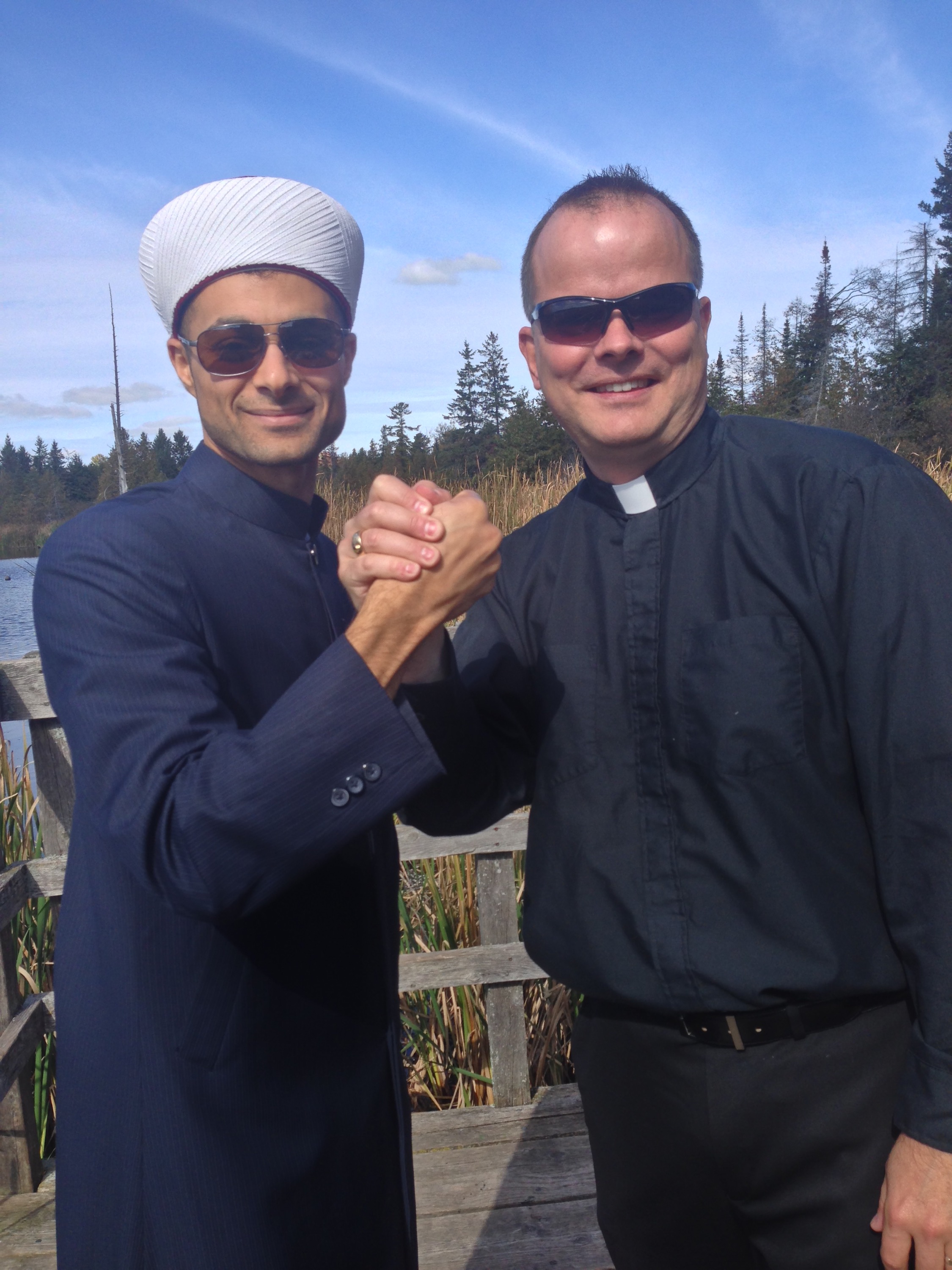
  
When I say Christians are called to love their Jewish or Muslim neighbours, for example, I mean we are called to develop relationships of mutual affection, understanding, and appreciation (Kristin Johnston Largen, “Interreligious Learning and Teaching” Fortress Press, 2014, p.59). Then, we love our neighbour as ourselves, thus fulfilling Jesus’ commandment.

  
I had the pleasure of viewing some artwork this past week at the Rothwell Gallery on Montreal Road in Ottawa. The Gallery is presenting until October 24th the work of the late Leonard Gerbrandt (1942-2010) who travelled the world and created beautiful impressionistic watercolours and prints especially about the structures of various land and waterscapes. I was given a personal tour by Ute, his spouse, of the hundred pieces or so displayed in the gallery.
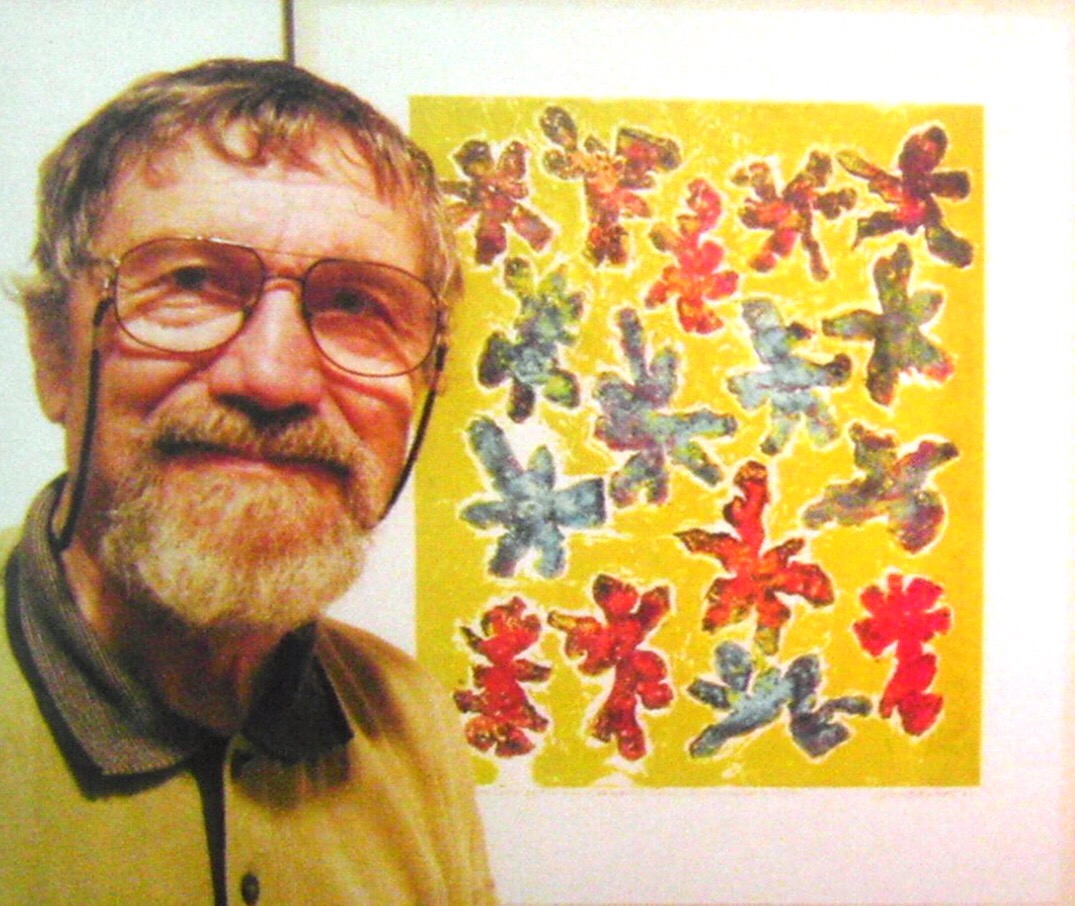
  
When we began the tour, she asked me to guess what colour appears and is prevalent in the vast majority of his art. With a twinkle in her eye, she confessed that this particular colour also happened to be his favourite. And so I went to work. At first, I suggested it was the earth tone greens, even maybe the rust, terracotta and orange/reds. No. No. And no.

As we reflected on one specific piece of art I marvelled how Leonard mixed the blues to distinguish sky and sea. Ute smiled, then said, it was blue indeed. I quickly travelled through the gallery looking anew at the paintings. And you know what? It was true! Now, I could see it — blue indeed found its way into almost all his paintings. Why didn’t I see that at first?

Blue, after all, is my favourite colour too (No political association, though!). And then I pondered further why I couldn’t see what had always been my favourite colour. Had I been distracted by the flashiness of other ‘colours’? Did I take ‘my colour’ for granted? What were ‘the blocks’ inside of me preventing me from seeing what was most important to me? Pride? Anger? Fear? Shame? Greed? Why couldn’t I appreciate fully the beauty that was staring me in the face, for me?

Of course, colours would not exist without the presence of light. In fact, it is how the light is represented in a work of art that brings out the textures and hues created by the paint brush. I also believe that art, like music, serves to reflect back to us an inner state — and that is why art and music can be so powerful conveyors of meaning and truth about ourselves and the world at any given moment in time.

The living Jesus is with us, and in our hearts through the Holy Spirit. The love of God propels the Spirit to move us in the the way of Jesus. And yet, we block our sight. We can’t see the light. What are those blocks that keep us from living out of our nature that is being renewed day by day? What keeps us from loving our neighbour? Is it fear of the unknown? Is it a shame that is deeply imbedded? Is it the fire of anger, the pain of regret, the poison of hatred, the paralysis of mistrust?

“Out of his anguish he shall see light” (Isaiah 53:11)

This phrase comes from a larger so-called suffering servant poem from the prophet Isaiah. Christians have read Jesus Christ into the role of the servant even though the text was originally heard among the people of Israel hundreds of years before Christ. The ‘servant’ could refer to the people as a whole suffering in Babylonian exile, or to a specific individual (i.e. Persian King Cyrus /Isaiah 45) who liberated the Israelites and led them home to Jerusalem.

This exegesis is important and we need to tread carefully in working with sacred texts that we share with our Jewish neighbours. We Christians know the sacrifice of Jesus on the Cross for our liberation, indeed for the whole world. Jesus fits the suffering servant-narrative from Isaiah. Let’s work with this.

The anguish Jesus experiences in his suffering and death reflects a God who is fundamentally relational. And God the Father, the Son and the Holy Spirit relates to us in our very own humanity. Thanks to Jesus who showed us the way not just in his divinity but especially in his very own humanity. ‘Anguish’ after all, is a human emotion grounded in love. That is, “to anguish over the loss of a loved one” (online dictionary definition).

Not only does Jesus know our suffering in a shared humanity, he feels for us because of God’s intense love for us. The author of Hebrews is therefore able to describe Jesus as the ultimate high priest, who “is able to deal gently with the ignorant and wayward, since he himself is subject to [this] weakness” (5:2). In short, Jesus helps us “see the light” because of God’s deep anguish-filled love for us. God grieves losing us to our sin, and will not stop short in going the distance — even sacrificing his own life — so that we too will see things as they truly are, in the brilliance of God.

In prayer, 14th century Christian mystic Julian of Norwich reflected the divine stance: “I am light and grace which is all blessed love.” May our words and deeds reflect the light of Christ to our neighbours, in all grace and love.


(Hoping for) A happy ending: Why not?

“God will come and save you.” (Isaiah 35:4)

When the prophet Isaiah promises salvation to the people, people who are “weak, feeble and fearful” (Is 35:3-4) what does he mean? What does he mean when he says: “God will save you”? Does he mean, the promise of heaven? Does he mean, remission of sins?

In the news this week we have seen images of desperate people risking their lives to escape the dire situation in Syria. Refugees are literally dying for the sake of finding a better life for themselves and their loved ones.

The prophet Isaiah spoke to a people dispersed from their homes. He spoke to a people who were displaced for political reasons. Emerging empires, such as Assyria, Babylon and then the Greeks, swept through the region in the centuries before Christ leaving those without power or privilege to fend for themselves in foreign lands. Sound familiar?

The Bible gives us Christians a broader perspective on ‘Salvation’. Because when we look carefully at texts such as Isaiah 35, salvation is not about heaven and remission of sins. The people who are exiled, lost and experiencing the worst circumstances of life, will be saved from those circumstances. In real time, earth-bound, flesh and blood realities.

From the perspective of Jesus Christ, of course, we can express, in all truth, the promise of heaven and remission of sins. For sure. And yet we cannot, if we engage the bible honestly, limit the concept of salvation to these albeit abstract notions of faith. Salvation in Christ has just as much to do with our lives on earth, and the lives of others, “in the flesh”.

We may despair, watching the news. What can anyone do to make the situation right for the millions of refugees now flooding Europe? How can there be a happy ending, in this mess? We can be paralyzed in our fear, and look away, despondent.

And yet we have this fantastic story of restoration. We know how the story ends for the remnant of Judah in Babylonian exile. We know that their earthly suffering ends happily. On earth. They eventually return to Jerusalem and restore their fortunes. We can get giddy with faith at this happy ending. Surely, this is the promised outcome for all who suffer in any way!

Listen to how Professor of Old Testament, Patricia Tull, writing in workingpreacher.org, expresses the puzzling truth of this story:

“Events as deeply woven into our history as Jerusalem’s restoration take on for us an air of inevitability. Yet they cannot be taken for granted. Other nations destroyed by great empires — including Aram, Moab, and the Northern Kingdom of Israel — failed to reestablish when their crises passed. We have Judah’s story only because it transcended destruction. Every time our scriptural reading brings us to Jerusalem’s phoenix-like restoration 2500 years ago is a moment to stop for gratitude and wonder. As Isaiah 34 and 35 vividly show, reversal of fortune isn’t guaranteed. But it is possible. Judah’s success story sets a precedent for hope, showing that happy endings have occurred and can occur.”

The first prime-minister of the modern state of Israel, David Ben-Gurion, said, “Anyone who does not believe in miracles is not a realist.” To be hopeless, however grave the circumstance, is unrealistic. It works both ways: To believe that there is a happily-ever-after for each and every person in every situation imaginable is unrealistic; we know that’s not the way life works. At the same time, to dismiss altogether the possibility of happy endings and miraculous turn of events is unrealistic as well. For God, all things are possible.

Franklin D. Roosevelt once said, “Some people see things as they are and ask, ‘Why?’ Others see things as they could be and ask, ‘Why not?’

As Christians, as people of faith, aren’t we a people of a ‘Why not?’ -capability?

Why not be grateful at the start and end of each day — grateful for all things that have gone well in life?

Why not focus on the blessings and abundance rather than the scarcity?

Why not celebrate the victories of God that you see in the world in the lives of others even if those victories don’t benefit you personally?

Why not rejoice with those who rejoice and weep with those who weep?

Why not sing a song of gladness when the underdog takes it all?

Why not see the face of Jesus in the stranger, the immigrant, the Muslim neighbour, the un-churched youth and mid-lifers?

Why not envision a future for your life and the life of the church that is better than what it is now? Why not? Why not? And then, see where that leads …

We are not in the business of faith for what we make of it or get out of it. We are in the business of faith for what God has done, and continues to do all around us, and even despite us.

We can be strong and do not need to fear because God keeps promises. God keeps God’s word. As Isaiah foretold, “the eyes of the blind shall be opened, and the ears of the deaf unstopped … the lame shall leap like a deer, and the tongue of the speechless sing for joy.” (Isaiah 35:5-6). 

In the Gospel today we read about Jesus doing precisely this: Jesus brings miraculous healing to the lives of those distraught and torn apart by illness and disease (Mark 7:24-37). Jesus is the glory of God shining through the brokenness of our lives. Jesus is the majesty of God embracing the sweat and tears of our lives. Jesus is the active presence of God working in us and through our poverty and pain, amidst the blood and grit and earthy, daily activity of our lives.

The story of the Quilt Holes inspired me recently at a funeral I attended. The preacher told the story of one who faced God at the last judgement, as spoken through the first person: “I knelt before God, as did everyone else. Our lives lay before us like the squares of a quilt in many piles. An angel sat in front of each of us sewing our quilt squares together into a tapestry that is our life.

“But as my angel took each piece of cloth off the pile, I noticed how ragged and empty each of my squares was: They were filled with giant holes. Each square was labeled with a part of my life that had been difficult, the challenges and temptations I had faced in every day life. I saw hardships that I endured, which were the largest holes of all.

“I glanced around me. Nobody else had such squares. They just had a tiny hole here and there. Their tapestries were filled with rich colour and the bright hues of worldly fortune. I gazed upon my own life and was disheartened.

“Finally the time came when each life was to be displayed, held up to the light, the scrutiny of truth. My gaze dropped to the ground in shame. There had been many trials of illness. I had to start over many times. I often struggled with the temptation to give up. I spent many nights in tears and on my knees in desperate prayer, asking for help and guidance that took a long time coming.

And now, I had to face the truth: My life was what it was, and I had to accept it for what it was. I rose and slowly lifted the combined squares of my life to the light.

An awe-filled gasp filled the air. I gazed around at the others who stared at me with wide eyes. Then, I looked upon the tapestry before me: Light flooded the many holes, creating an image, the face of Christ. Then Jesus stood before me, with warmth and love in his eyes. He said, “Each point of my light shone through the holes, the rips and ragged, empty squares of your life. When you were down and out, and honest and still trusting, my light continued shining through you.”

At the end of it all, we may be threadbare and worn. It may look like a failure, a sad ending. And yet, Christ in us is the end of the story, not us.

Why not, then, just be the Body of Christ in the world today? Why not be, together, the hands and feet of Jesus? Holes and all? What do we have to lose? Why not be the answer we are waiting and hoping for — for others who have no hope, for the refugees of the world? 

I recently read the story of a woman who had walked seven hundred miles as a refugee to escape a violent war. She was finally able to cross a national boundary out of the war zone. She walked all that way and brought with her an eight-year-old girl, who walked beside her. For seven hundred miles, the child held her hand tightly. When they reached safety, the girl loosened her grip, and the woman looked at her hand: It was raw and bloody with an open wound, because the little girl had held tightly in her fearfulness. This is no casual hand-holding. This is a life-or-death grip that does not let go. (Walter Brueggemann, “Sabbath as Resistance: Saying No to the Culture of Now”, WJK Kentucky, 2014, p.88-89)

God’s hands do not let go of us, even though we may fear, even though we may be scared to take the risk and do the right things. This is the promise that God will never break.

The Evangelical Lutheran Church in Canada (ELCIC) was onto something when in convention this past summer we adopted the Reformation challenges — one of which is to sponsor, by 2017 (the 500th anniversary of Martin Luther posting the 95 theses, or arguments, on the doors of the Wittenberg Church in Germany thereby launching the Reformation), 500 refugees coming to Canada.

We are the people we are waiting and hoping for. We have a responsibility, in faith, to be grace, forgiveness, mercy and compassion to those who are unloveable, undesirable, the outcasts, the downtrodden, the refugee, the marginalized. Can you imagine what a show of grace might do in the lives of those to whom the unexpected is given?

Why not?

Step off the gas

It was -20c and the roadways were covered with snow and ice. And yet, I was feeling pretty proud of myself. Coming into the west-end near Stittsville, the Queensway/417 (the main expressway through the city of Ottawa) was empty. And it was mid-morning on a weekday!

I was powering it through! A little snowfall wasn’t going to impede me. I was going at my regular speed in the passing lane and was wondering why very few were venturing onto the highway. And then I saw a car had spun out, resting perpendicular to me at the side of the 417 in front of the Canadian Tire Centre. It had struck the guardrail. And a little further on I witnessed another car spinning out of control.

I decided to slow down, and tapped the brake. Surely my four-wheel drive will keep me in control. And then I felt the wheels begin to float underneath me. I stepped on the gas to try to get grip. But the fish-tailing was starting to feel like a swan dive! I was losing it!

You drivers out there, what would you do? Thankfully in that moment, I remembered what my drivers-ed teacher taught me thirty years ago: Step off the gas! I think we instinctively associate stepping on the gas with more control — in all circumstances; the more I give, the more I expend, the more I put myself out there — the better it’ll be.

But in this case, the solution was to let go and just keep the steering wheel pointed forward. And as soon as I let off the accelerator, the four wheels found purchase, and I was able to recover. It is a little bit counter-intuitive for us in our get’er done culture to divest ourselves of the belief that doing more about something will save us from whatever predicament we find ourselves in. Sometimes, in tough situations, we just have to let off the gas, a bit.

Isaiah writes to a people in exile. Some six hundred years before Jesus, the people of God were taken to a far away land, in Babylon, where for some generations they made it their home. They had to let go of things precious, people beloved, and a way of life they believed to be sacrosanct.

But Babylon was not home. Jerusalem was. And now, gone was their temple worship. Gone were the symbols, rituals and constant reminders of who they were and who the God of Abraham, Isaac and Jacob was. Gone was their culture, their social structures, their familiar communities.

And, in its place were foreign languages, foreign gods and strange customs. The Psalmist recalls the tragic sense of their exiled life, where they lamented, and mourned their loss: (Psalm 137:1-6)

By the rivers of Babylon—
there we sat down and there we wept
when we remembered Zion.
On the willows there
we hung up our harps.
For there our captors
asked us for songs,
and our tormentors asked for mirth, saying,
‘Sing us one of the songs of Zion!’
How could we sing the Lord’s song
in a foreign land?
If I forget you, O Jerusalem,
let my right hand wither!
Let my tongue cling to the roof of my mouth,
if I do not remember you,
if I do not set Jerusalem
above my highest joy.

To address this despair, Isaiah (40:21-31) offers some strategies for coping. First he holds in beautiful tension a paradox about God — two aspects of God over which theologians over the centuries have sparred: God is BOTH transcendent AND immanent. Not only is God up there “sitting above the circle of the earth (v.22), God also calls each part of creation “by name” (v.26).

Not only is God some far-away all powerful being, God is also personal, and calls to you by your name. God values what happens ‘on the ground’ in our ordinary lives. God’s love for us is revealed not only in the extraordinary, but especially in the ordinary lives of you and me. God cares.

Second, the prophet Isaiah encourages the people in exile not to forget their story, not to forget their history, not to forget what God had done for them in the past. Twice in this text the prophet asks the rhetorical questions: “Have you not heard? Have you not known? Has it not been told … ?” (v. 21&28). Of course they’ve heard! Of course they have been told! The problem is, they have forgotten.

A re-membering of their story — of God’s story with them — could strengthen their sense of identity, and bring forward to the present circumstances a hope that would see them through their loss. In other words, remembering for the future is an integral part of having faith in God.

Part of what it means to believe in God, is to believe in your story — and remember it! Remember what brought you to be where you are, today. Recall the most difficult times in your lives, and how God brought you through. Picture in your mind the people who where there, helping you cope and manage — friends, doctors, family, spouses, neighbours — people who came into your life at that lowest point and were like God’s angels to you.

Claim this story as your story of faith in a God who still makes good on God’s promises. The very fact that you are sitting in this room today is testimony enough to say: You survived! And not only did you survive — in many ways you thrived! And will so, again!

Not only do we remember who we are, we must remember who God is. God is in charge and whose thoughts and actions are way beyond our own capabilities (Isaiah 55:8-9). Therefore, our first job, especially when we are down-and-out, is to be patient. “Wait” is the direction from the prophet Isaiah. Just let off the gas a little bit. Saint Augustine wrote that ‘patience is the companion of wisdom’.

You might not need to do anything right now. What you really might need to do is nurture an inner life, an attitude, of watchful presence. Wait upon the Lord! — echoes throughout the poetry of the Hebrew scriptures (eg. from the Psalmist 27:16; 37) to a people yearning to renew their courage and trust. God is God; and we are not.

Waiting pays off for the people. King Cyrus of Persia (Isaiah 45) frees the exiles from Babylonian captivity — and the remnant of Israel finally returns to Jerusalem. Some 70 years they spent in captivity. Not all the people who left Jerusalem at the start of it saw the end of it. Many died in Babylon. But salvation is not individualistic. It is given to a people.

So, finally, Isaiah reminds us that just as it was for the Israelites in exile, our identity is in the larger collective. The narrative of our faith spans centuries. Our identity is corporate. As Christians, we call it “The Body of Christ” of which each of us is a member.

That means, even when we do not, individually, have a faith to stand up to the worst of the worst in life, even when our individual faith wanes from time to time, even when individually “I” have a hard time believing in God, “I” am not lost. There’s still a chance.

One of the downsides of an individualistic spiritual culture in which we live today, is to place unwarranted onus on ‘MY faith’ and ‘YOUR faith’ as the critical condition for ‘MY salvation’ or ‘YOUR salvation’. As if we are independent, autonomous beings. Many a death-bed confession — and this is common — involves anxiety about whether or not ‘my’ faith is strong enough, good enough. In those situations, especially, we need to be reminded that it is not ‘my’ faith or ‘your’ faith alone that will get you through this trial. It is the faith we share.

It is our faith together that helps us through the tough times. It’s not dependent on how good I am, or how strong my faith is. There is a people of God — “a cloud of witnesses” (Hebrews 12:1-2) — around me and you. There is a church, a community of faith — whose collective faith gets us through. This is the faith of our fathers and mothers, our predecessors, our forebears, the current saints in light, and the faith of those who will come after we are gone. I don’t think anyone would question that kind of faith. It is the collective, communion of saints in heaven and on earth praying for you, upholding you, during your personal exiles.

And, ultimately, it is the faithfulness of God that gets us through. Throughout the scriptures, salvation is described in this way: It is not we that have loved God, but that God has loved us (1 John 4:7-11). This is an integral, vital, part our story together. Let’s believe in it. And believe that God starts it all, and ends it all, for us.

For those who can’t stand doing nothing, who are frustrated by the notion of being patient and waiting, there may be something for you, in fact, to do: Practice. In all that you do, be mindful, aware and intentional in your prayer life. Because prayer is about letting go in time and space, and listening to God. Prayer is not about me, it’s about God.

I realize that part of what saved me on the highway this past week, was that I had practiced. I recall all those times that whenever I’m in an empty parking lot — even coming during the week into the church parking lot — I’ll have a little fun with it: I’ll spin around a bit — not recklessly doing donuts all over the place. But I’ll just get the car going enough to do a bit of fishtailing. I get the feel of it. So I know what I can do in a crisis.

Stepping off the gas in a spin out, works. And it takes a bit of practice.

God dreams in us

This piece will be published shortly in an Advent devotion booklet written by leaders of the Eastern Synod of the Evangelical Lutheran Church in Canada. At the end of November, visit http://www.easternsynod.org to download your copy

” … we were like those who dream” (Psalm 126:1)

Especially at this time of year, it’s like we journey in a dreamworld. Coloured lights and candles burning speckle the long and dark nights. Symbols of the season evoke in us latent memory and soft sentiment. Are we dreaming, or what?

As Christians, we carry the mantle of God’s dreamers. This is our heritage — the dreams of the prophets and those who spoke God’s restorative vision to a people in exile, a people depressed, discouraged, downcast.

To this day and age. If God could inspire Jacob in the desert with a dream of a ladder reaching down from heaven (Genesis 28:10-17), God can dream in us. If God could give guidance to Joseph wondering what to do with Mary (Matthew 1:18-25), then God can dream in us.

In the 20th century Martin Luther King said, “I have a dream”, and ignited a vision for justice towards an uncertain future. A generation later, (the first African-American) President Barak Obama, tantalized a nation, and the world, with his eloquent words of hope. Today, Malala Yousafzai inspires us to support education for women, in a dark and conflict-ridden world.

God’s dreams of a just and peaceful kingdom are born in the visions of the people of God, and in the heart of each child of God. In the end, it is not ‘my’ dream, maybe not even ‘our’ dream alone; it starts with God’s dream — when the wolf shall live with the lamb (Isaiah 11:6;65:25), and swords will be beaten into plowshares (Isaiah 2:4).

Open our hearts, God of justice and truth, to dream your dreams. And give us courage, to live them out. Amen.

God is always up to something

“… you know what time it is, how it is now the moment for you to wake from sleep. For salvation is nearer to us now than when we became believers; the night is far gone, the day is near. Let us then lay aside the works of darkness and put on the armour of light” Romans 13:11-12

When the first spell of wintery weather hit last week, I instinctively plugged in the new lawn ornament we purchased for display during the holiday season. Normally, we wait until later in December to light it all up. But with the advent of the storm, and the dissipating daylight by mid-afternoon, I felt I needed a boost of light to distract me from the dark thoughts of coming winter.

We had a family gathering that afternoon. And as family members gazed  out the picture window at the front of our house onto the lawn now covered by a couple inches of snow, they laughed. I didn’t anticipate that this six-foot tall Christmas tree would blink in sequences and bright colours enough to light up the whole yard. “Looks like the Vegas strip now on Ida Street,” I joked, thinking of all the shopping still on my ‘to do’ list and all the things that needed to be done. I felt the shroud of stress envelope my being.

That’s why Advent, the four weeks leading up to Christmas, may be one of the most difficult seasons for Christians to observe. Most attempts in our culture to cover the darkness, literally and figuratively, only ramp up the anxiety, the fear and even the feelings of isolation that the festive season brings.

And yet, annual celebrations like Christmas are meant to transform our lives for the better. The message of God’s incarnation (Jesus, the Son of God, being born into human flesh) is transformative since now, in faith, we know God has entered our reality and changed forever the fabric of creation.

But how can the stress and incessant activity of the season contribute positively to our well-being, healing and growth? I don’t think it can, unless we give ourselves permission to hold off from fully embracing the joy of Christmas. Holding off may seem counterproductive and counterintuitive. Yet, the wisdom of the ages suggests that in order to see the new thing, we must first be willing to let go of what is not helpful. In other words, there’s some work we first have to do.

The prophet Isaiah announced the new thing which ushered Israel’s return to their homeland around Jerusalem. In order to start on that path, however, they would have to release their attachments to Babylon. “Do not remember the former things, or consider the things of old. I am about to do a new thing; now it springs forth, do you not perceive it? I will make a way in the wilderness and rivers in the desert” (Isaiah 43:18-19).

The Israelites, apparently, had a ‘vision’ problem. They, as the way opened for them to return home, could not visualize such a Godly freedom and transformation of their lives for the good; they could not see God at work making a way out of their problem for them.

This pattern of being blinded to God’s work has repeated throughout the sacred stories of scripture: The same we read when the Israelites, centuries before, escaped bondage in Egypt, but spent decades wandering in the desert to find their “promised land”. Rev. Riitta Hepomaki, assistant to the Bishop, quoted on twitter this week the words of Peter Steinke who wrote: “It took one year to get the Israelites out of Egypt, but forty years to get Egypt out of the Israelites. We like familiar patterns” (@RiittaHepomaki).

Perhaps we, too, are like those ancient Israelites. We get stuck in familiar patterns. We limit ourselves, therefore, from seeing what God is up to.

So, we have to practice letting go. This is what liturgical season like Advent, and practices of prayer like Christian Meditation offer to us: Opportunities to contemplate, reflect and surrender those habits of the ego that merely gloss over the darkness of our lives.

How do we let go of fear, isolation, cynicism and defensiveness? How can we lay aside those things that do not, in the end, satisfy? How can we put on that which is good and wholesome?

Well, we first have to embrace the darkness, not circumvent it. God will make a way through the desert, not around it. We need to acknowledge the fear, the defensiveness, the isolation and the cynicism which normally hides the true light from shining. Like a piece of clothing, in order to take it off, we first must get a good grip on it. We need to ‘own’ it in order to cast it away.

This is why Advent is the time for confession, silence, stillness, penitence, waiting and preparation. These weeks leading up to Christmas give us an opportunity to prepare our hearts for the true joy, the true light that always comes into the world — not to get distracted by the glitz and hustle that, in the end, only keep us stuck in those familiar patterns of blindness to the truth.

When we pause to take stock, and honestly confess the truth that we are afraid, that we are defensive, that we are cynical, that we are isolated, etc. — the true light and joy comes not because of anything we can muster up, fabricate, manipulate or engineer. True happiness does not come in me plugging in that blinking Christmas tree on the front lawn — as much as I thought instinctively it might.

True joy comes when we wait for it. In the slowing down, pausing, and calm presence of ourselves, we can see better the gift that comes to us in the moment. Saint Paul seems pretty adamant  in his letter to the Romans to stress that it is “NOW”, in this moment that our salvation has come. It is in the ordinary, commonplace, unspectacular activities of our daily lives that matters most to Christ’s coming to us. Do we not see it?

The story is told of a wise Rabbi who had many students come to him for advice. Once, a younger student came to the Rabbi and asked, “How can we tell when the dawn has arrived? How can we tell the difference between night and day?” It was a good question, the Rabbi acknowledged, since early in the morning the change is not easily perceptible: One moment it is night, the next it is already day — but when is the exact moment when it changes over?

“You know the night is gone, and the day has arrived,” the Rabbi responded, “when the faces of those around you in the dark are no longer mere shadows that all look the same, but when you can finally recognize who that person actually is, standing in front of you, when the light allows it.”

The Light of Christ is coming. God is always up to something good, even in the darkness. Even when we don’t feel like it. Even when the stress amps up for the season. Even when we have difficulty letting go of familiar patterns. God is up to something, always.

So, in the meantime as we struggle to let go, let us learn to wait in the darkness, standing together. And then rejoice, when the light does come to illuminate our way and the gift of those near to us. In Christ.