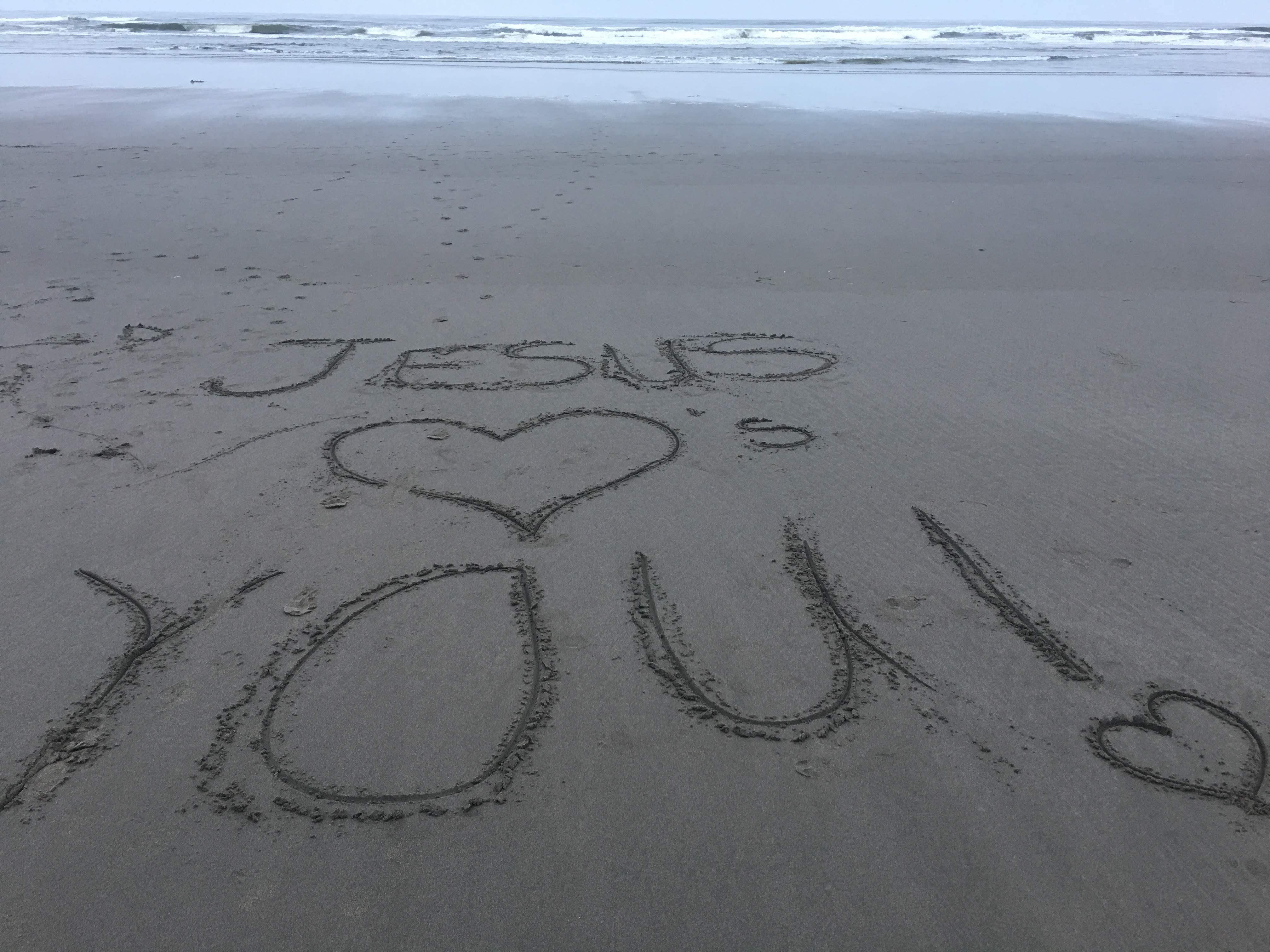
God’s love can’t be washed away (photo by Martin Malina, July 2018, Long Beach WS)
The ‘book of life’ is mentioned not only once in Revelation – this last book of the bible – but several times (3:5, 20:12, 20:15, 21:27), as well as in Philippians (4:3) and Exodus (32:32-33). The book of life is mentioned throughout the bible.
The book of life is an image that came to my mind after something you said to me recently that made me think about the length of the books we read.
Normally I don’t like reading big books with hundreds if not thousands of pages in it. I feel I don’t have time nor energy to plumb the depths and breadth of long books. I prefer short books, under a couple-hundred pages.
While a short book I can easily get a handle on, understand and keep track of all the characters, plot lines, and themes, there is one problem with short books. If it’s a good book, I don’t want it to end. When I reach the last page, I want more. So, it’s tough putting down a quick read that I really enjoyed.
Your beloved’s last words to you were, “I love you.” Indeed, you had a love story that ended too soon. In other words, the book was too short. And reading this love story, we all wanted more.
The thing about the book of life in the bible is that it is ongoing. People’s names are written in it. But it’s not closed, reserved only for the names of those who lived thousands of years ago. It is open, and names are continually added including, today, your loved one’s.
In the life of spirit, of faith, nothing ever ends. And while our flesh withers away on earth, our relations continue forever. While your relationship with your loved one changed at their death, it is not over. And therefore, your relationship with them is not lost. It has just changed. Their name, after all, is written in the book life, forever.
Your love story is not over. Another book in the series is being published. Part two. Because it is the book of life. Life and love never end.
Jesus said, “The hour has come for the Son of Man to be glorified. Very truly, I tell you, unless a grain of wheat falls into the earth and dies, the seed remains just a single grain; but if it dies, it bears much fruit.” (John 12:23-24)
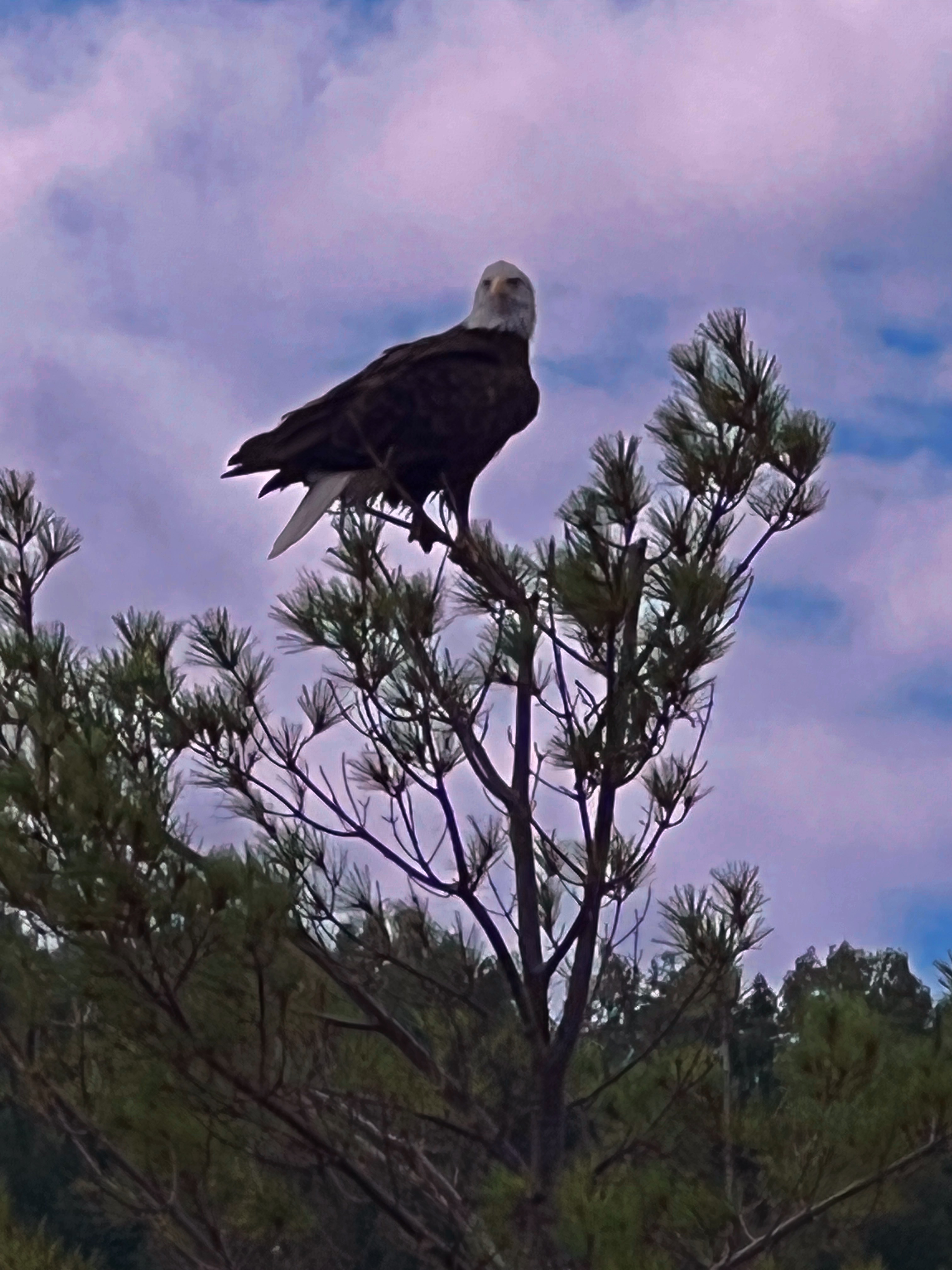
photo by Martin Malina (Aug 24, 2022, Driftwood Provincial Park, Ontario)
I was amazed at the dark and rich red colour of the cardinals I saw in Gatineau Park last week. I’ve seen cardinals before, but for some reason my experience of these many cardinals I saw in the trees along the Gatineau River appeared differently to me.
At first, I wondered if I was encountering the scarlet tanager. But no, the peaked heads, black collars and red wings were give-aways. Definitely cardinals.
The Day of Epiphany is tomorrow, January 6. It is, every year. So, today, we celebrate Epiphany Sunday. Epiphany means something revealed for what it truly is. In other words, ‘revelation’.
When it comes to the bible, we normally associate Epiphany with the star shining over Bethlehem and the arrival of visitors from the East bearing gifts for the Christ child (Matthew 2). The light image of the star goes with a common phrase we use when we have an epiphany: A light bulb comes on.
Two other very important biblical stories we will encounter in this season of Epiphany reveal Jesus for who he truly is. The first one is the Baptism of our Lord; we will read that story next week (Luke 3). The second is the Transfiguration of our Lord on the first Sunday in March which is the last Sunday in the season after Epiphany this year (Luke 9).
These stories show Jesus is not just a son of a carpenter born in Bethlehem and raised in Nazareth with common human interests, relationships and activities. Jesus is also given a mission on earth as the Son of God.
There are several common elements in both stories. Perhaps the most obvious is the voice from heaven – from a cloud – God’s voice declaring Jesus as God’s beloved. In the baptism story, the drama is made complete by a descending dove. Epiphany is about a great uncovering, a revealing of something important and worth paying attention to.
Therefore, how we respond is important. Our response to the stars, the doves and voices booming from heaven influences when and if the proverbial light comes on. Do we expect God to be revealed in our lives? What will we believe about what happens? Will we reject it outright? Or, will we accept the signal, the sign, as God’s way of speaking to our hearts?
Often, God’s revelation catches us by surprise. Like when a bird visits us at our window, when we notice something we hadn’t before, or we receive an unexpected text or phone call from a friend, or a visitor drops by. An unexpected gift. These epiphany moments happen when our perception changes, in the moment.
Terry Tempest Williams offered an astute observation about birds who will often catch our attention. Birds, he wrote, “mediate between heaven and earth”. But then he goes further to detail the eyes of certain birds:
“The eye of the cormorant is emerald. The eye of the eagle is amber. The eye of the grebe is ruby. The eye of the ibis is sapphire. Four gemstones mirror the minds of birds … We miss the eyes of the birds, focusing only on feathers” (Williams, 1998). About birds, why do we focus only on feathers, their coat, their tails, and colours? When was the last time you looked at a bird’s eyes? Can you get close enough to see them?
Our perspective can change. The Epiphany story that launches us into the season – the visit of the magi to Bethlehem – is about what happens once we encounter the newborn Jesus. Like the magi, we are called to search out Jesus. And that moment surprises us on our search. And changes our trajectory moving forward.
The wise ones cannot return to their country by the same road they used getting to Bethlehem. While they cannot go the same way because of Herod, we cannot go the same way once we’ve met Christ. We emerge from every encounter with Jesus changed people. The path ahead is now different.
Speaking of birds and their eyes, scientists studied how birds perceive colour in the world. Birds do not see ‘blue’ in the sky in the way we do. Instead, most birds see ultraviolet light, rendering the sky on a bright sunny day not in blue but in magenta tones (Coman, 2024).
Whose reality is truer? Is the sky blue or magenta? I guess that depends on whose perspective we take, the birds’ or the humans’.
Despite the question, God’s capacity for creating this diversity of perception holds all perspectives together. Indeed, God’s view knows no bounds and extends farther than we can ever imagine.
Epiphany for the church is a season in which we are invited to consider and experience Another’s perspective. It can be as simple as realizing it’s not all about us, or something isn’t in fact what we have always made of it.
From birds to cats. In the 18th century William Cowper wrote a poem entitled, “The Retired Cat” (2022). It’s a lengthy poem so I won’t read it but will summarize for you.
There was a cat who indulged in her master’s attention. The cat had full reign of the house wandering wherever she pleased whenever she pleased. It was a good life. She believed she was the centre of her universe.
It was cold one day in the winter, and the cat wanted to find a more comfortable place to lounge. So, going into the master’s bedroom where she assumed a snug spot would await, she noticed an open drawer atop the dresser and leapt into it.
As she sunk indulgently into the fine linen folded layer upon layer, suddenly the maid, not seeing the cat inside, shut the drawer closed!
There the cat remained the rest of the day, trapped inside, not able to escape. Certainly, someone would notice her absence and come find her. But no, time passed. And she was left alone. Day turned into evening. Fearing she would be there entombed, the cat remained unattended until in the middle of the night the master in bed heard a mewing and scratching. Alas, she sprung from her cage the moment the master opened the drawer.
Now modest, sober, cured of all her notions of self-conceit and hubris, now to her more ordinary place of rest downstairs she returned.
From that day on, the master noticed a change in the retired cat and reflected on the folly of the person who dreams themselves so great, and their importance of such weight.
Like the retired cat, we too can learn from our experience about the limitations of our perceptions and expectations. No perspective commands the complete corner on truth. Life experiences, good and bad, can be our epiphany moments because they allow us to enter a wider field if we choose to go there.
Life can teach us that while our individual perspective may be valid and true and good, we are part of a much larger and glorious web of relationships and perspectives. “The more perspectives we can learn to see, the greater our understanding” (Rubin, 2023). We are then no longer just seeing through our own narrow sliver, but broadening our scope so we can more accurately approach what truly is.
A bigger world is, after all, what God created us to live in. Let us, therefore, rejoice and be glad in it!
Cowper, W. (2022). The retired cat. In J. M. Hunter (Ed.), A nature poem for every winter evening (pp. 25-29). B. T. Batsford, Ltd.
Rubin, R. (2023). The creative act: A way of being. Penguin.
Williams, T. T. (1998). Refuge: An unnatural history of family and place. In J. Gardiner (Ed.), The sacred earth: Writers on nature and spirit (p. 42). New World Library.
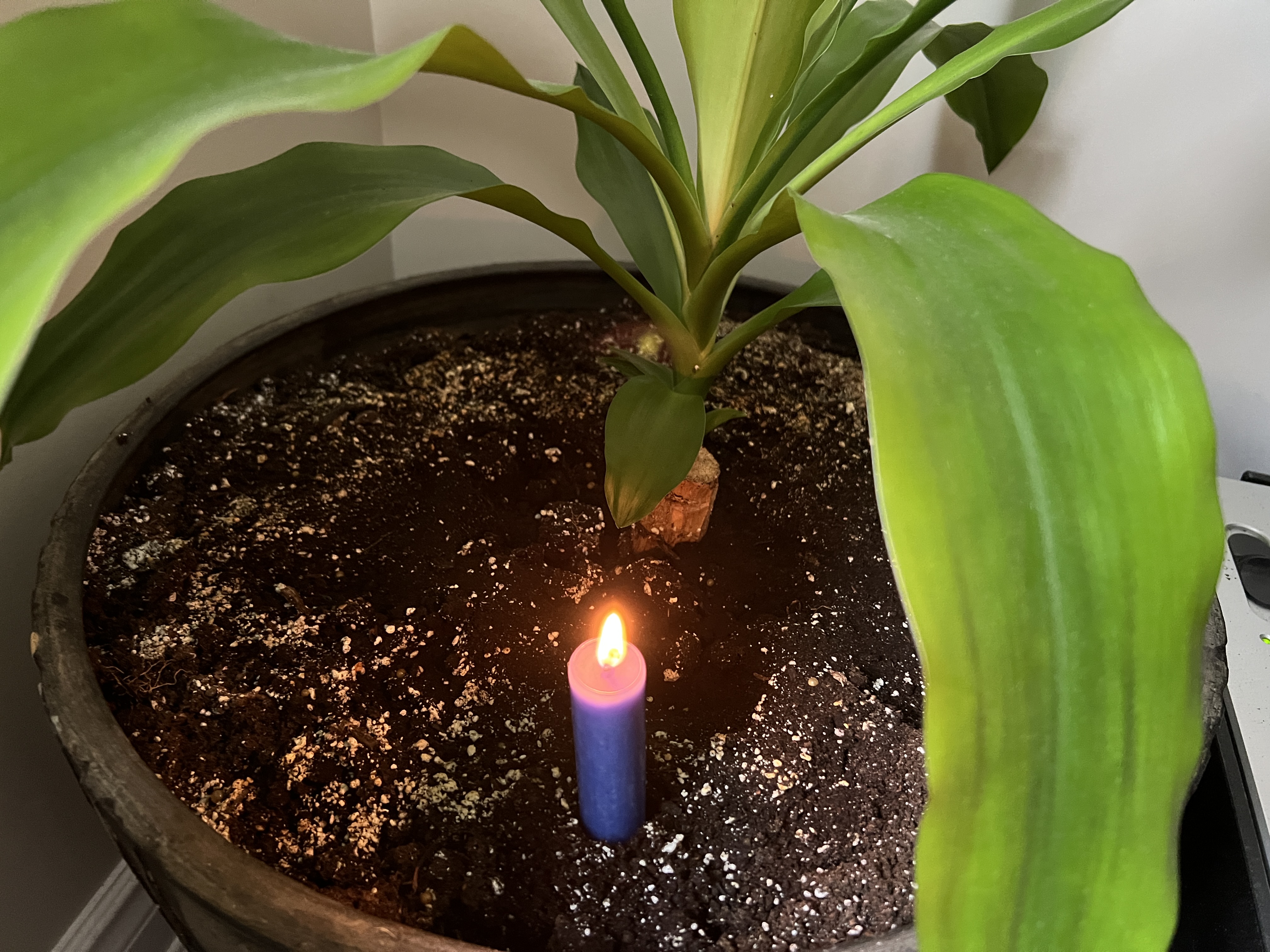
photo by Jessica Hawley Malina (July 16, 2024 / Hwy 4 between Ucluelet & Tofino BC)
It is a dark night. The cedars drape over the narrow, rocky path, blanketing out what dim starlight shines from the sky above.
A pregnant woman travels with her husband through dangerous territory in a tyrannical age, on the road to Ephrath – a small town on the outskirts of Jerusalem otherwise known as Bethlehem.
Who is this woman with her husband travelling at night?
This story is familiar in the bible. It is Rachel, going where the Lord God commanded. But the story doesn’t end well for Rachel. She dies in labour, on that road to Bethlehem, giving birth to Benjamin. And Rachel’s husband Jacob buries her by the road. He erects a grave in her honour and memory (Genesis 35:16-26).
Generations later, the lamenting prophet Jeremiah picks up the image of Rachel’s tomb on the road to Bethlehem, when the Babylonian captives are forced to march by it into exile (Jeremiah 31:15).
Tonight, Mary and Joseph follow the same path (Luke 2). After passing Rachel’s tomb on the way, Mary would no doubt have remembered the story of Rachel’s tragic end.
When she and Joseph make their anxious way on a dangerous road in the night to be registered in Joseph’s birthplace, what goes through Mary’s mind? Would she, like the faithful Rachel before her, also die on this road in labour? Would she, despite saying yes to God’s call, fail like the captives on their way to Babylon?
That dark night on the dangerous road to Bethlehem no doubt challenged her faith. Anyone who traveled on that rocky, darkened path to Bethlehem was reminded of the often-difficult realities facing God’s people throughout history.
You may be on an uncertain path, this Christmas. Thinking you are nonetheless on the right path, you still question your decision. Because there are reminders along the way from past experiences and memories, that cause you to doubt. And even though you believe you are on the right path, it is dark and hard to see the way. And you question God. Is God even there? Indeed, we travel a dangerous road tonight.
Like the prophet Isaiah, we complain God is nowhere in sight. We cry, O God, “You have hidden your face from us” (Isaiah 64:7).
When we find ourselves in the dark, what do we do?
Like Mary and Joseph making their way on the road to Bethlehem in the night, we can’t wait for sunny days. We keep moving forward in the dark, little by little. Like Mary and Joseph, we move, trusting that whatever challenges we face are already solved. The answer is out there, somewhere in the dark. We just haven’t come across it yet.
Let’s not forget, much of God’s created world relies on darkness as much as light. We need not fear the darkness. For plants and trees, seed germination takes place in the darkness of the soil below the ground. It is in darkness that the roots seek nutrients (Coman, 2024).
We require darkness for birth and growth in the human world as well, not just the seed in the ground, but the seed in the womb, the seed in our souls.
In the dark lie possibilities for intimacy, for rest, for healing. Although we may find journeying in the dark fearsome or confusing, it teaches us to rely on senses other than sight. In the process we learn that darkness bears the capacity for good, gives birth to the good.
What do we do when we find ourselves in the darkness of our own making or what the world has done?
Our work is to name the darkness for what it is and to find what it asks of us. What does the nighttime call us to do? Does the darkness ask a wrong to be made right, for justice to bring the dawn of hope to a night of terror? Does it ask for a candle to give warmth to the shadows, or for companions to hold us in our uncertainty and unknowing, or for a blanket to enfold us as we wait for the darkness to teach us what we need to know?
We need not fear the darkness of this Christmas Eve. It is a holy birth, after all, we celebrate this night.
At home this past Fall we installed LED sensor lights on the outside of the house. Our yard borders on a town pathway that leads into a back field. Sometimes people will take a short cut and walk down that path which has no lighting.
After being installed, two of the three sensor lights worked properly, coming on when sensing movement and shutting off after a minute or so. But the third one would not shut off. It remained on, even during the daytime. And no amount of fiddling with the settings could I get that light to turn off, apart from shutting down all three of them on the same breaker.
It was the light that would not turn off, the light that kept shining in the day when we didn’t notice it. The light was on, even when we didn’t see it.
“God came to us because God wanted to join us on the road, to listen to our story, and to help us realize that we are not walking in circles but moving towards the house of peace and joy.
“This is the great mystery of Christmas that continues to give us comfort and consolation: we are not alone on our journey [in the dark] … Christmas is the renewed invitation not to be afraid and let him – whose love is greater than our own hearts and minds can comprehend – be our companion” (Nouwen, 2004).
“In these … days of darkness and waiting, it may indeed seem that [at first] God’s face is hidden from our sight. But the sacred presence is there, breathing in the shadows” (Richardson, 1998, pp. 1-3).
It is a call to faith, darkness invites. A call to trust in the dawn and the sun that never stops shining. A call to trust in those who come alongside to travel with us to Bethlehem.
On that first Christmas Eve, indeed Mary was reminded of how not so well things turned out for the faithful people who went before her on that dangerous road to Bethlehem.
Yet, if anything, Mary was reminded of how God is there, in the darkness, once again, trying again. Trying again with people of faith to make a place in their lives for the coming of the Lord.
If anything, Mary was reminded that she was indeed on the right path in the dark, going in the direction God was making ready.
Mary Oliver, in her poem entitled “The Uses of Sorrow”, wrote:
Someone I loved once gave me a box full of darkness It took me years to understand that this, too, was a gift.
In the Christmas story, God’s face is revealed. The stars in the night sky over Bethlehem shine on a tiny baby’s face. In the midnight hours of that first Christmas, God came into the world in the face of a baby. The dark night gave birth to the greatest gift ever.
Hope is the theme of the first Sunday of Advent. It is the hope candle, the first one, we light on the Advent wreath today.
But I must admit after reading the scripture assigned for the start of thie new year in the church calendar (Luke 21:25-36), the Gospel from Luke did not initially feel like an Advent-themed scripture. For one thing, Jesus points to fresh leaves on a fig tree, a sign of coming summer. Summer? When winter in the northern hemisphere is bearing down upon us?
After all, shouldn’t we be reading Christmas stories and singing Christmas carols already, like they are doing in the malls? We’re getting our shovels out and snow blowers primed, not looking at green leaves. Admittedly, many of us might rather skip over Advent, its call to spiritual discipline, slower pacing, prayer and perspective, and rush headlong into the frenzy of the season.
The word, Advent, from Latin, means “coming” and refers to the comings of the Lord: the coming of Jesus at the first Christmas two thousand years ago; the second coming of Christ at the end of all time; and the coming of Jesus into our lives every day and in moments we perceive as grace-filled.
When we work at it a bit and unpeel the layers of this Lukan scripture we nevertheless find clues that plant it firmly in this season of preparation, anticipation and longing called Advent. In short, hope undergirds this Gospel.
“Then he told them a parable: ‘Look at the fig tree and all the trees; as soon as they sprout leaves you can see for yourselves and know that summer is already near’” (v.29-30).
One quick Google search reveals that figs are mentioned in the bible 50 times (Bolen, n.d.), because they were so common in that time and place, being a part of their economy and a staple of their diet.
A recent fig excavation in Ireland found 2,000-year-old remains of a fig, preserved because it had been burned (RTE Media, 2024). Among other things, this archeological discovery points to a lifestyle adopted so far north and so far away from Rome. Considered an exotic fruit, figs were enjoyed not just in regions governed by the Roman empire nearer the equator, but in areas of Europe not controlled by Rome. Figs found in the least expected places: Ireland.
Jesus often used fig trees as symbols and metaphors in his teaching. He used common, relatable images of people’s lives to make a point about living in God’s kingdom. But God’s kingdom on earth, not in heaven. “Your will be done on earth,” the Lord’s Prayer points us to focus here, on the ground.
Annie Dillard said, “The Gospel is less about how to get into the Kingdom of Heaven after you die, and more about how to live in the Kingdom of Heaven before you die.” If it were the other way around, why would Jesus spend so much time talking about coins, treasures buried in the earth, fig leaves and trees, lost sheep, seeds and mustard trees? The point of the Gospel is to point us to this life and finding hope and ways of relating to each other and the world that reflect kingdom values.
Admittedly, this perspective on faith requires some hard work. And maybe that’s why we shy away from that ‘kingdom on earth’ perspective. To nurture hope as a Christian is not to remain passive in facing seemingly hopeless situations. It is to be active in faith.
Perhaps the most striking reason for observing an intentional Advent season prior to the festivities of Christmas is the reality common to us all, the reality of death and grief. Approaching Christmas can be the most difficult for those especially experiencing this season for the first time without their loved one, or for those preparing for their last one.
In no other circumstance of life can Advent be such a gift. To slow things down. To temper expectations. To practice contemplation, value simplicity, and give permission to those who suffer, give them space, room to just be and do whatever – without the stringent expectations of the hustle culture and anxious disposition to doing what is expected. Here is an opportunity to say, ‘stop’. Breathe. And reset.
In dealing with grief, it is important to do something to acknowledge the holidays (Morris, 2018). Because grief is unique to each one of us, for some it might mean doing the same thing you’ve always done, or it may mean doing things a little bit differently this year.
The key is to do something, however simple and small – even if at first you might not feel like it. Being hopeful is not a feeling. It is doing the right thing for you.
So, on the one hand, don’t do what is expected. Don’t do what the world thinks you should do. Don’t pretend to be all joyful and happy. Don’t join the consumer frenzy and hustle or put pressure on yourself to be a certain way.
Lower your expectations. Tell yourself it’s okay to do less this year. Give yourself permission to be sad and cry during the holidays. On the other hand, do something. Don’t do nothing. Don’t wait for feelings to be your signal to act.
Many faith communities will offer a Blue Christmas service. A very valuable ministry, to introduce sacred text, Advent hymns, comforting social support, and to hold contemplative, accepting space to an otherwise loud and intense season. Perhaps you’ve once attended a Blue Christmas service. If you would like to attend one put on by Ottawa churches this month, I can give you a couple options where I know they are happening.
What are personal things people who struggle with loss and grief can do in the weeks leading to Christmas?
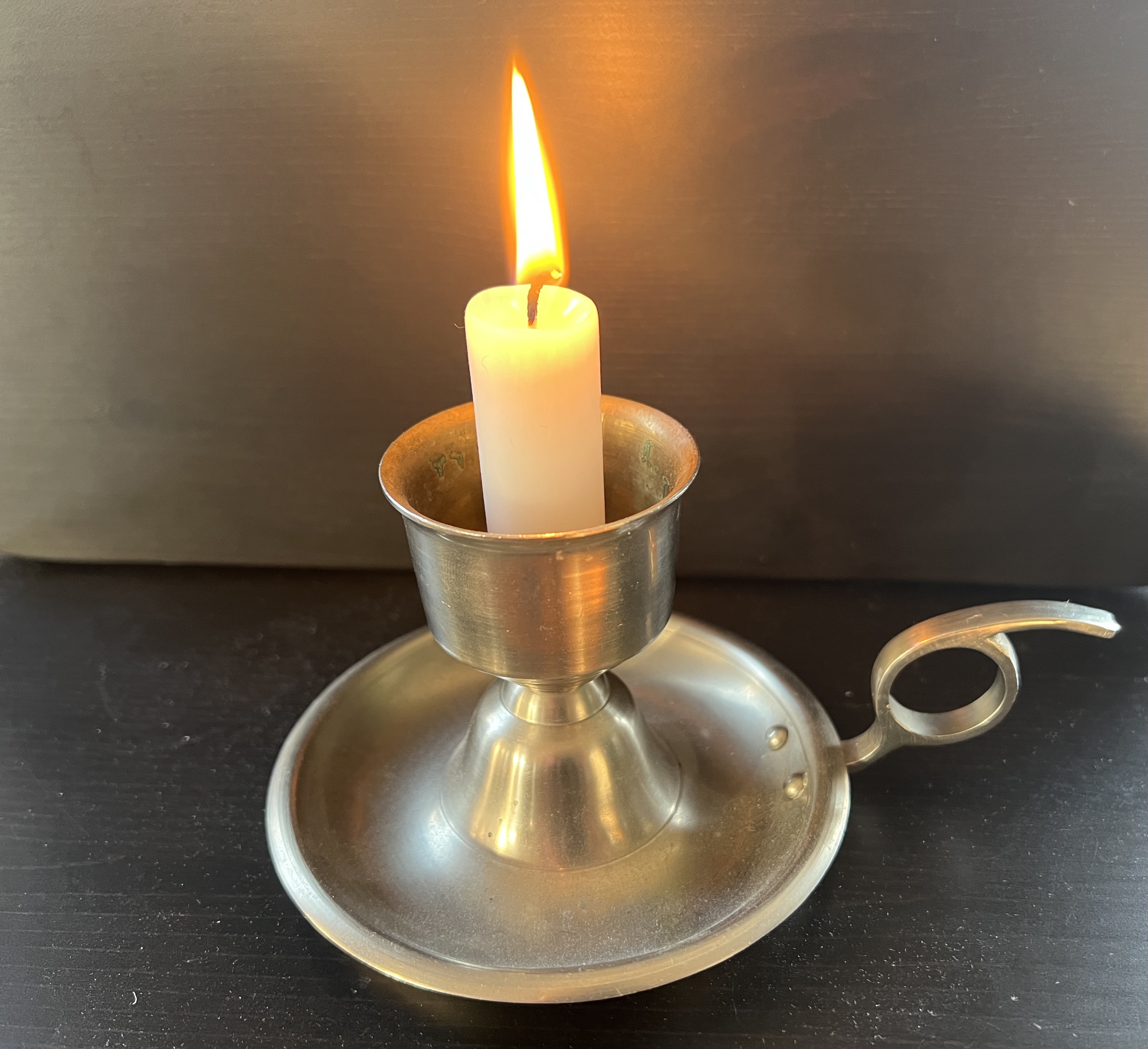
Lighting a candle in honour and memory of a loved one. Making or buying a special tree ornament or stocking you can hang on the tree. Asking everyone at a family gathering to write down a fond memory they have of a loved one and place those written memories in a special vase or keepsake box that you can read together later in the season. Making a donation to a charity in a loved one’s memory. Volunteering in a hospital, food bank or serving food at an Out of the Cold program. These are all meaningful activities to engage.
The point is, Advent is such an important season to observe, before launching mindlessly into the Christmas festivities and frenzy which, let’s be honest, are by and large self-serving and self-indulging. Especially in a time that feels hopeless, there are things you can do to shift that focus – meaningful things – to discover hope again.
Find green shoots of hope wherever you can. Look for the proverbial fig leaf, even if in places you might never have expected. And do something. And if, this year, you cannot …
Some people and communities are doing great things. Celebrate them. Others are doing small but important things. Thank them. Others are doing courageous things. Appreciate them. Keep hope strong. Keep hope alive (Reich, 2024).
Leyla is baptized today. The water in the font is not moving that much. But when we spilled it over her head, you could hear the splash and see the fall of water from her head back into the font. Water, even when it appears still, is still moving.
In baptism Water and Word come together. It is the word of promise, of hope, that amidst all the struggles and storms of life, God will never forsake Leyla. God will always, no matter what, travel with her on the life’s journey. God will always love her.
But you can’t have baptism without water. And if you think the Word part is difficult to understand, water, too, is a tricky thing, this primary conveyor of grace and meaning for us today.
On the one hand we dream and recite scripture about walking beside quiet and still waters (Psalm 23). We read about the river of life flowing through the new Jerusalem (Revelation). We consider the vital nourishment rainfall gives to the earth so desperate and dry. Water is a gift. It is necessary, required for life.
Yet, sometimes those waters can get rough. Indeed, being in the water can be dangerous business. In the Psalm today, the water mentioned is not some gentle, mountain stream or a placid pond. We’re not talking here about a dreamy Hallmark waterfall.
The pounding waves described in Psalm 93 are more akin to the weather bomb affecting the west coast of BC this past week. More like the deadly flood waters that devastated Spanish towns in a few terrifying hours, last month. The violent and deadly Noah’s flood from Genesis (chapter 7) describes this contrasting aspect of water images from the bible.
Getting into the water, we confront our fears. Getting into the water we become vulnerable. We know the dangers that lurk for humans who are not fish. We can even die, submerged under the water too long.
Waters, even baptismal waters, symbolize both peaceful religious experience as well as potential danger. Waters, even baptismal waters, take us out of our comfort zones as much as they bring comfort and joy.
Herein lies the paradox of faith, actually, between life and death. Two apparent extremes can co-exist on the same line at the same time. Both/And. Peaceful waters. Stormy waters. Same place.
The oceans on this planet represent the most mysterious and unknown region yet to be discovered. Its depths have not yet been fully plumbed. It’s a place of fear and danger, of mystery. As much as oceans determine our weather – la Nina or el Nino – and the amount of water we receive and need, they represent a vast unknowing.
What a beautiful metaphor for God. What a profound image for Jesus who invites us on the journey to follow him our whole life long. Baptism is the Christlike means to launch each of us on this journey of faith. Water and the Word combine to enrich our faith and give us hope.
Indeed, we sail over the tempestuous sea of life. Our world is in storm mode – it may be on a personal level but also on national, and definitely global levels. Danger threatens all about. No wonder we are afraid.
And yet, only when the water moves, and the more it moves, the more energy for life it gives. The powerful impact of waves gets us moving! The ocean, after all, is alive with energy: Roiling waves, crashing surf. According to CBC Radio’s The Current, scientists are now trying to harness the power behind those waves. And the impact could be staggering, providing electricity, experts believe, for up to a third of American homes (Galloway, 2024).
As we ride those turbulent seas, Christ is on the ship with us. We may be perplexed facing a great mystery. We may be afraid to move, to change. But Jesus is with us. Jesus is aware, he knows – even when from our perspective he seems to be asleep in the back of the boat (Mark 4: 35-40). With the Psalmist we can declare, “He who keeps watch will neither slumber nor sleep” (Psalm 121:3).
Today the church celebrates the reign of Christ. Christ is king. What does that mean? In the Gospel, Jesus tells Pilate that the kingdom of God is not of this world (John 18:33-37). Who and what Christ Jesus is about doesn’t look like the powers of this world.
The water images from the bible suggest the reign of Christ is not one-dimensional. Jesus is in it all – the rain that nourishes, the surf that pounds, the tsunami that terrifies, the floods that wash it all away, the waters that calm and refresh. The contrasts may befuddle and bewilder us. The journey of faith takes us right into the middle of the ambiguity. Yet, Jesus is right there, with us, giving us energy, giving us life – new life.
Jesus watches us and keeps us, no matter what storms we face, no matter how poor the prognosis is, no matter how uncertain the horizon looks, no matter how badly the waves threaten to wash us overboard. Jesus watches us because he loves us and sees us as we truly are. This is the baptismal promise.
Because even when we are submerged in water, the only way out is up. It is the first thing we do when coming out of the waters. To open our mouths and gasp for air we have no choice but to look upwards, to the hills, to the horizon, to the heavens, to the one who reaches out to us.
Christ will stay on board with us until there are no more seas to sail. Jesus will guide our days and travel with us on the journey until the storm clouds break, the sun’s rays shine through, and we can look up again.
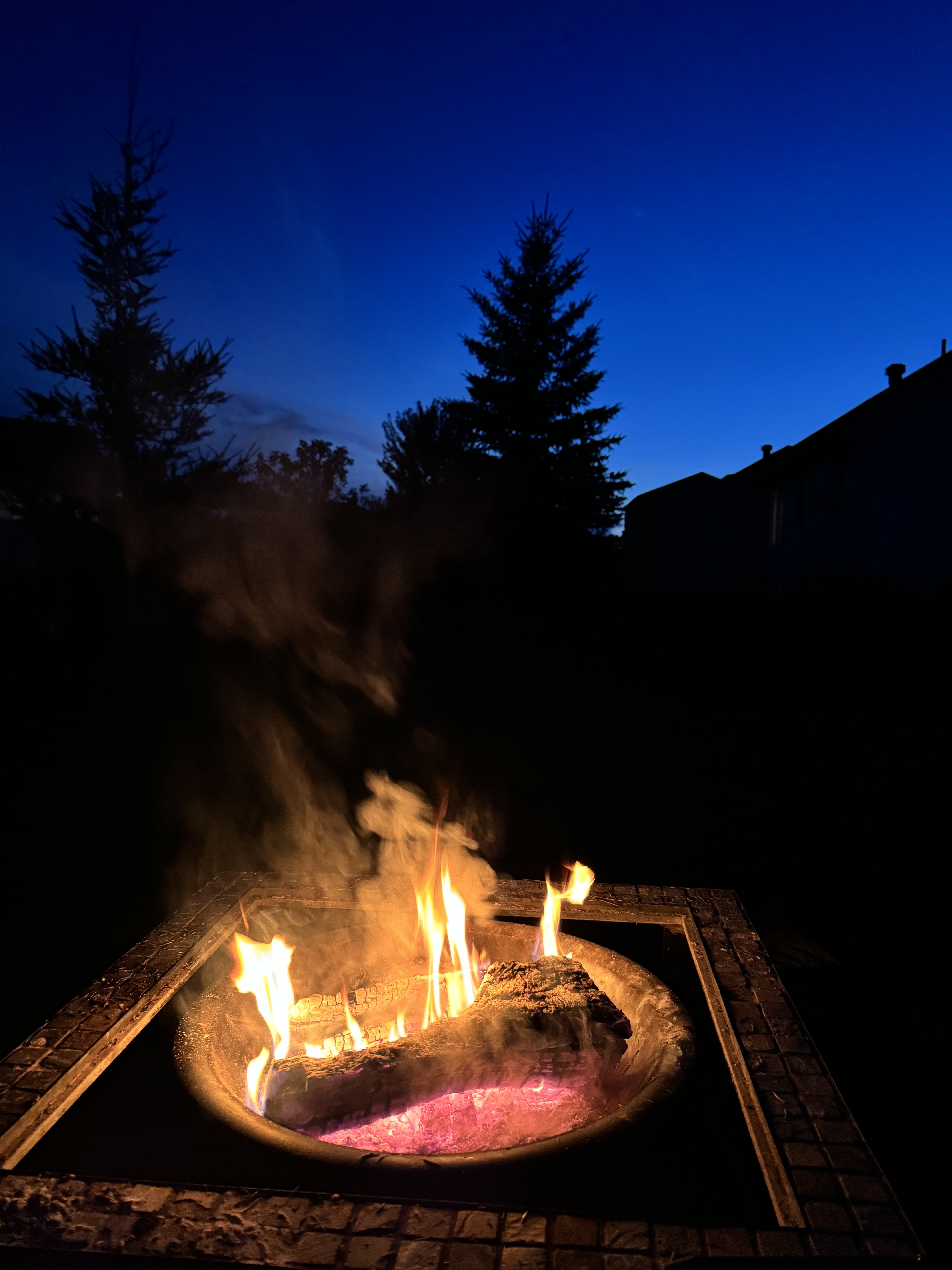
Towards the sun, through the flame (photo by Martin Malina, October 2024)
Despite condemnation of these acts by public leaders (Alhmidi, 2024), temples, synagogues, mosques and churches in Canada are burning.
A House of Commons report published in September catalogued a chart of statistics showing, by a breakdown of provinces and territories, how between 2010 and 2022 the number of police-reported cases of arson causing significant damage to religious institutions steadily increased from 13 incidents annually to 74.
These stats reflect not only damage to material property but acts of violence against people on site (Government of Canada, 2024 September 16).
Religion has become a target for people’s pain. A church near Eganville (Ottawa Valley) covered their building with tin late last century to protect it in the wake of suspicious fires that destroyed the Lutheran and Catholic church buildings in town at the time. They call it “the tin church”.
Visions of burning churches capture our imaginations. These visions stir up fear and despair. And one of the first things we want to do is to circle the wagons. What is the world coming to?
The Gospel for today (Mark 13:1-8) was first heard in the Jewish-Roman war of 66-70 C.E. Ultimately, in this war the temple in Jerusalem was demolished never to be rebuilt. It didn’t look good for the people of faith in the day, as the outward signs of their religion were torn down and burned.
It feels like ‘the end’ whenever the beloved symbols, forms, and outward appearances of our lives at best change, at worst are destroyed, especially in dramatic fashion and/or through violent conflict.
We feel like we are in the midnight hours of a life when we suddenly lose what we have cherished and become attached to over time. It is a trauma from which many do not recover. Some people struggle under the weighty pain of regret regarding past behaviours. Many today face incredible and what can often feel like and may actually be insurmountable obstacles.
We shake our heads in disbelief. How can the goodness of God prevail in the midst of this harsh reality? Is faith just a pipe dream? Is the kingdom of God merely some illusion to distract ourselves in one of many ways we amuse ourselves to escape from this reality? We look to the Black Friday deals.
There is word, a phrase and an image of Jesus the writer to the Hebrews uses that caught my attention. In verse 12 (Hebrews 10), “When Christ had offered for all time a single sacrifice for sins, he sat down at the right hand of God, and since then he has been waiting …”
The writer of Hebrews bears witness to God’s great acts in Jesus of overcoming death and the grave and rising to new life. And then the writer of Hebrews pictures Jesus as sitting down and waiting. You can almost hear a pin drop. There is Jesus dusting off his hands with an attitude of mission-accomplished and slumping into an easy chair with a satisfied grin (Wallace, 2009).
Is this a picture of Christ the first hearers of scripture needed to hear as their temple burned? Isn’t Jesus supposed to rescue people in trouble? Swoop down and pull us out of the hellfire? Doesn’t he care? We get a rather passive image of Jesus sitting, waiting, and doing nothing. We don’t want this Jesus – a God who waits!
Facing the craziness of this world today, trying to cope with all our losses, we want a strong man who will make things right and make us great again!
Hebrews (chapter 10) cites a beloved passage from Jeremiah (31:33-34) where the prophet announces God’s vision of writing God’s covenant, God’s promise, on our hearts and minds (Hebrews 10:16).
What is implied is that the life of faith is not a matter of living under external measures. Our minds, our hearts – that’s where God goes. The life of faith is not validated by blind compliance to the outside demands of the law. The life of faith, rather, is Spirit-driven and a Spirit-given ability to live into the new covenant (Fahey, 2009). In other words, people of faith are called to live a new life, a changed life, from the inside out.
The early church had to hear again the gracious word of God. That is the purpose of this letter to the Hebrews. In facing their losses, they needed to hear again the Gospel promise that God will be faithful (Hebrews 5:12). God has faith in us. God believes in us, trusts us to do our part, to make our move. To be loving. To see in the hearts of everyone we meet the face of God, to be gracious and compassionate, and generous.
This is not a cockeyed optimism. It is not a life based on emotional reactions to outward circumstances. Rather, it is a life practised in hope and trust.
Jesus waits for us to take responsibility for our actions – past and present. Jesus waits for us to forgive ourselves, show compassion to ourselves, as God has already forgiven us and first loved us. We cannot have outward renewal unless and until we experience for ourselves inner renewal and change.
We may not see the victory of God in Christ with the naked eye. But we can hear it again with the naked ear (Long, 2009). The message here is that if you want to know the truth, pay attention not to the evil you see out there, but to the Gospel you hear and receive in here.
We do not rely on external circumstances or outward legalities or protocols to validate our faith nor to justify our actions. Instead, we find, in and through God’s grace, a pathway through devastation and suffering to freedom and salvation.
The time of loss and change signifies an ending to be sure. It is also a new beginning for people of deep faith. To have new life, all things must grow and change. It is no accident that the final words of today’s Gospel are: “This is but the beginning of the birth pangs” (Mark 13:8).
The midnight hour feels heavy buried deep in the shadows. The nighttime of our lives hides all things true from view. But dawn is just a few hours away. In the concluding words of Hebrews 10 (25): “Encourage one another, and all the more as you see the Day approaching.”
We need to make the move, towards the light. Because the sun will rise. The son is coming. And that is the surest promise of faith.
Fahey, J. E. (2009). Hebrews 10:11-14 (15-18), 19-25; Theological perspective. In D. Bartlett & B. Brown Taylor (Eds.), Preaching the revised common lectionary; Feasting on the word; Year B, volume 4 (pp. 302-307). WJK Press.
Long, T. G. (2009). Hebrews 10:11-14 (15-18), 19-25; Exegetical perspective. In D. Bartlett & B. Brown Taylor (Eds.), Preaching the revised common lectionary; Feasting on the word; Year B, volume 4 (pp. 302-307). WJK Press.
Wallace, P. M. (2009). Hebrews 10:11-14 (15-18), 19-25; Homiletical perspective. In D. Bartlett & B. Brown Taylor (Eds.), Preaching the revised common lectionary; Feasting on the word; Year B, volume 4 (pp. 302-307). WJK Press.
View over the Ottawa River at CFB Petawawa, August 2023 (photo by Martin Malina)
One thing Garfield loved to do was drive. When he still lived in Ottawa, he was determined to drive to bible study every Monday even in freezing rain. And as long as he was able, he drove.
In Petawawa, it was his precious cart that he scooted around in the neighbourhood off Laurentian Drive, sometimes pushing the limits of its speed. It’s as if he had a secret override button, that when he pressed it, it would give him just a bit more torque, a little more juice. I think he loved that.
We started the service today with a thanksgiving for baptism. Water.
At a wedding reception I attended last week, I sat beside someone who worked on cruise ships for almost twenty years. I asked him about what stood out in his memory, working on a boat sailing the world over.
He said what stuck out for him were those few times “Man overboard!” was called, those horrifying instances when it was believed someone had fallen into the water.
He told me about a time when a pop music group was celebrating New Years. Its lead singer was especially exuberant and tried to dance on the railing at the back of the ship. His body was never found.
The contrast struck my reflective cruise ship manager. On the one hand going on a cruise symbolizes vacation and fun and good times. Those “man overboard” occasions, on the other hand, were tragic events. How one extreme could exist so close alongside its opposite bewildered him. And me.
Indeed, being in the water can be dangerous business. On the one hand we dream and recite scripture about walking beside quiet and still waters (Psalm 23). Yet, sometimes those waters can get rough. Noah’s flood (Genesis) was not a dreamy Hallmark waterfall. More like the deadly flood waters that devastated Spanish towns in a few terrifying hours, a couple of weeks ago.
Getting into the water, we confront our fears. Getting into the water we become vulnerable. We know the dangers that lurk for humans who are not fish. We can even die, submerged under the water too long.
Waters, even baptismal waters, symbolize both peaceful religious experience as well as potential danger. Waters, even baptismal waters, take us out of our comfort zones as much as they bring comfort and joy.
We gave thanks for baptism at the beginning of this funeral service for Garfield. I want to tell you a baptism story from his life. For the longest time Garfield expressed his desire to renew and reaffirm his baptism. And when A put in the in ground pool at their home, Garfield spent a lot of time over the last couple of summers lounging in that pool.
And so, last July we all got into the pool. I could still see Garfield’s face. He wanted to do this, but I could see a bit of fear in his eyes. And before I could say anything, he had steeled his energy and dipped under. He had just pressed that secret override button.
This was a beautiful experience for me to witness. Garfield expressed his baptismal faith amidst the growing physical challenges he faced. Garfield’s baptismal faith was the marriage between water, will, and divine promise.
Later in the summer he went into the pool again. In those same waters he had an episode that triggered his recent hospitalization. Herein lies the paradox of faith, actually, between life and death. Two apparent extremes can co-exist on the same line at the same time. Both/And. Peaceful waters. Stormy waters. Same place.
In scripture we find many such paradoxes; In First John, between fear and love: “Love casts out fear” (1 John 4:18). When love casts out fear, it is not to eliminate it. It is to put it in its proper place. As long as we live on this earth, we will have fear. But love puts our fears in perspective, in the larger perspective. As Garfield did so often, we need to press the love-override button.
While I could already see some trepidation in Garfield’s eyes on the day he reaffirmed his baptism, what carried us through that experience was an overriding love.
He knew the love of God for him. He believed in the promise of God to be with him. Tears came to his eyes every time he spoke of God’s love for him. And, of course, by that I also mean the deep and committed love he felt from his so-called angels – P & A – who lived with him these last years and watched over his days.
When you enter their pool down steps into the water, you basically face the Ottawa River direction, and just over the trees in that direction are the Laurentian Hills. I like to think that even as Garfield descended into the waters, even as he faced both the joys of faith and the fears of being human, he was also literally facing the direction of the hills. No wonder one of his favourite verses from the bible is from Psalm 121: “I look to the hills from whence is my help to come?”
Love calls us to take the long view. I think that’s why Garfield often mentioned wanting to get in a helicopter to see Petawawa from above. Did he ever do that? (Well, he is doing it today!)
Because looking to the hills means lifting our gaze upward. It is the first thing we do when coming out of the waters. To open our mouths and gasp for air we have no choice but to look upwards, to the hills, to the horizon, to the heavens.
Indeed, we sail over the tempestuous sea of life. Our world is in storm mode – it may be on a personal level but also on national, and definitely global levels.
But Christ is on the ship with us. Jesus is in command – even when he seems to be asleep (Mark 4: 35-40). With the Psalmist we can declare, “He who keeps watch will neither slumber nor sleep” (Psalm 121:3).
Jesus watches us to protect us and keep us, no matter what storms we face, no matter how poor the prognosis is, no matter how uncertain the horizon looks, no matter how badly the waves threaten to wash us overboard. Jesus watches us because he loves us and sees us as we truly are. This is the baptismal promise.
Christ will stay on board with us until there are no more seas to sail. Jesus will guide our days and travel with us on the journey until we have climbed the mountain of our lives and reached its peak.
And then, the sky will be the limit. For Garfield, today, it is so.
Many of us who love to read fiction, or watch movies, do so not only to find out whodunnit. We continue reading because we expect that a happy or at least satisfyingly good and appropriate ending awaits.
What is more, some hardened book lovers will toil through a dry and thick middle part of a book just to get to the ending trusting it will be well worth the work. Some people in this room today whom I know – not mentioning any names – will even have the audacity to cheat. They will peak ahead to the last page to determine whether or not it is worth their time and energy to plow through those sometimes-boring middle sections of the book.
The lectionary readings for this Sunday deserve a careful reading and re-reading. And you will note that the story of the widow at Zarephath feeding Elijah ends in abundance and promise fulfilled (1 Kings 17:8-16). The lecture in Hebrews about Jesus’ sacrifice for our sins ends in the promise of salvation for those who wait for God. That text ends by explicitly stating that when Jesus comes again it’s not to deal with sin, but to save people (Hebrews 9:24-28).
Judgement and sin are not the end of the story. Mercy, grace, salvation and promise-fulfilled are.
When we read this sacred text thousands of years after it was first written, what do we hear? What do we say? What do we believe about what’s important in our faith?
Last month, the father of liberation theology, Gustavo Gutiérrez, died at age 96. Once considered a revolutionary, his notion of God’s preferential option for the poor, his idea of empathy and advocacy for the poor, have influenced the social teaching of the church over the last century (Friskics-Warren, 2024 October 24).
According to Lutheran theology God is revealed most clearly in the suffering and death of Jesus. The cross therefore becomes the central metaphor for how God comes to us, and in what circumstances of life. God is revealed most profoundly not in glory, not in victory, not in riches, not in greatness, nor in prosperity.
But, rather, in conditions that are the exact opposite. Hence, the missional stance that suggests the voices of the poor, those on the margins, those who don’t have it all, in fact guide the church.
The cross shows us the way of Christ in the world and in the church. It is a humble way, a way of honesty. A way of being vulnerable. A way of asking for and receiving help and love from others. In receiving love we know who we truly are. At very least, we say God is revealed in all things, even in the tragic and sad.
In grief work, we say that sad is not bad (Morris, 2018). Sad may clue us, in fact, to the way forward in faith. What we initially ignore, dismiss, discard, pity, even despise in others and in ourselves may clue us, invite us into the truth of faith.
I think the woman gave her two cents worth, literally, because she trusted God. Hers was the faith in trusting that ultimately what awaited her at the end of her life was not judgement and sin. At the end, for her, was the embrace of a loving God for eternity. What has she to lose?
From his great sermon on the mount, we learn something important about Jesus verified in this Gospel today. Jesus’ eye is on the sparrow, on the littlest bird (Matthew 10:29). Therefore, we know that he watches, not to judge, not to put pressure on us to perform righteously, not to goad us to make a good example for others, not to make us great. No.
Jesus watches to protect us. To love us. To hold us through thick and thin.
The end of our story, your story, is good. Trust that life which God gives, reigns! Trust that love, which is still expressed from time to time in the world, reigns, in the end. Trust that God will not forsake you, that God will not forsake the little ones, that God will give voice in our weakness, that God will rise in the voices of the poor, in their example to us.
We ran into a crisis that, in the end, wasn’t a crisis. In fact, it could not have conveyed the meaning of today more appropriately.
It was the crisis of the candles. Every year, weeks before All Saints Sunday, we do an inventory of the candles that we light in memory and in celebration of the saints we name today. Of course, every year there is a different number of people we remember, and therefore a corresponding number of candles. And sometimes, depending on our stock, we might need to order more.
So, there is a bit of stress, especially if we need to order more and time becomes a factor. This year, our dedicated altar care group assured me that we had enough candles.
But, there was a catch. We had used them before, probably during All Saints Sunday worship last year. Though these candles were all uniform and about the same length, they were not new out of the box. Pause.
When we discussed the situation, I wondered out loud about this belief we have when it comes to celebrations – that every individual deserves their own, unburned candle. It’s like the fact that many people, like myself, share a birthday with someone else in the family. Don’t we deserve our own day? “It must be tough,” some have commiserated with me, “sharing the limelight with someone else!”
Indeed, we tend to centre meaning on the individual. That’s a whole lot of pressure we put on ourselves – to make it or break it! We therefore value self-reliance and seek reward for our individual achievements and successes.
When our faith is dependent on ourselves, individually, we at the same time create a culture in which people have a hard time asking for help. We resist relying on and learning from others. We see that as weakness.
This is one of the lingering legacies of the Reformation. While Martin Luther brought the bible to the people and encouraged a personal engagement with scripture and sacrament, his legacy also individualized faith. The lasting consequence was to leave us believing everything important hangs on the balance of individual decisions.
Consequently our sense of community erodes and our connection weakens not only with each other on earth but with the “mystical union” (Prayer of the day, n.d.) we have with all the saints in heaven, in Christ.
When you grieve the loss of someone special in your life, for example, what do you believe about your connection with that loved one right now? To what degree is the relationship over? And, if you believe it isn’t over, how has that relationship changed?
On All Saints Sunday we counter the tendency to individualize everything, and affirm instead that we stand on the shoulders of those who have gone before us. We light candles that have already burned before! In our baptism we unite with all the saints on earth and heaven. As Luther famously said, we belong to the priesthood of all believers, in every time and every place. Each of us belongs to and is part of something much bigger than ourselves.
The foundation of our faith is not our individual decision to follow Christ but rather our confession of being held in the communion of all the saints whose foundation is Jesus Christ. Our faith is not alighted on the merit of our own individual efforts. Our faith is lighted up because the flame has always been shining and showing us the way, going before us all.
My brother tells of a recent mystical experience of connecting with our dad who died five years ago. His telling of the story is published in the recent edition of “Eternity for Today” (Malina, 2024):
“I was going through a rough week,” he writes, “questioning a lot of things. It was two o’clock in the morning, and I had been tossing and turning in bed for hours. Just as I was finally drifting off, there he suddenly appeared before me, unquestionably my dad. I jolted in surprise. His smiling and jovial face had never seemed so vivid and warmly familiar.
“And he told me something I so needed to hear, words which not only encouraged me, but also affirmed my faith in an inter-connected universe where the eternal and material dimensions weave together in undetermined ways, where God’s love in Jesus binds us all in heaven and on earth: ‘Be at peace. Don’t be afraid. Just keep going. One step at a time. I am with you. God is with you’” (p. 30).
Even and especially when we grieve our losses, we discover other ways we are connected. We may even be able to affirm that the relationship is not over, it has only changed. And maybe then we discover new roles and new ways of being in relationship.
In their book, “Beyond Saints and Superheroes”, authors Allen Jorgenson and Laura MacGregor challenge readers to re-envision our identity in community to be like candleholders rather than trying to be the light ourselves (MacGregor & Jorgenson, 2023).
So, we hold others, especially those unlike us with needs different from our own. And we empathize with them. But true empathy is “not about imagining how you would think or feel in the given situation. Rather, it is about imagining how someone else feels in the situation they are in” (Morris, 2018, p. 171).
This shift in thinking moves us out of our individual self-preoccupation to an other-centred way of thinking. To do this, we first practice simply—but perhaps not easily—just being with another rather than compulsively doing for another. When we can simply hold space with others, the tiny flame has oxygen to breathe, so the light of Christ can shine brightly for the world to notice.
When we practice just being with someone else, we love them by meeting them where they are at. When they have that sense of being seen, that they matter. In that space of grace, then, we recognize the light of Christ which, although it may appear fragile and small, actually gives enough light in the night for all to see.
Listen to the words of Professor Jorgenson who wrote this poem called “Candleholders” :
“Yesterday was All Saints’ Sunday at church and candles lumined the nave to honor the departed, the beloved, the beleaguered.
“We were invited to light one for a soul deep in our heart, and I walked to the altar and lit a candle in honor of you… sadly missed…
“The candles were variously held by brass, by glass holders. Some votives sat free. I took one of these and tipped it toward the Christ light. As it flamed, I breathed a prayer of thanks. I set you – on fire – into a bed of sand, imagining holding your hand once again, but no, you were grasped by grains of sand without number.
“I pondered you then, with all the saints: each one different, each one the same, each one broken, each one whole – together a circle of support.
“As I made my way back to the pew, I thought I heard you say:
“Today is All Saints Sunday, but each day is holy, as are we, as we hold each other and so the Christ” (MacGregor & Jorgenson, 2023, pp. 110-111).
References:
MacGregor, L., & Jorgenson, A. G. (2023). Beyond saints and superheroes: Supporting parents raising children with disabilities: A practical guide for faith communities. Mad and Crip Theology Press.
Malina, D. (2024, October 22). My dad in my dreams. Eternity for Today: Daily Scripture Reading for Reflection and Prayer, 60(4), 30. Evangelical Lutheran Church in Canada.
Morris, S. (2018). Overcoming grief (2nd ed.). Robinson.
You will know the truth, and the truth will set you free (John 8:32).
In an online forum, fans of Leonard Cohen debate the title of his song, “One of us cannot be wrong” (leonardcohenforum.com). The song seems to be about a failing romantic relationship.
The term has also been used as a joke between two people who disagree on something. Any argument, it seems, presumes that someone must always be right. And, therefore, someone else must also always be wrong.
Saint Paul in his letter to the Romans throws a wrench into this kind of dualism. “For all have sinned and fall short of the glory of God” (Romans 3:23). Therefore, no one is right. And no one is wrong. No one, ultimately, can claim higher moral ground.
In today’s Gospel reading for Reformation Sunday, Jesus says, “Everyone who sins is a slave to sin” (John 8:34). In other words, human beings – we are all in the same boat. And, therefore, we need to learn to co-exist, peaceably, even with our enemies.
But only the truth will “set you free” (John 8:32).
Ok. So, what is truth? Pilate asked Jesus this question (John 18:38). It’s normal to go into our heads to figure that one out. In today’s Gospel, those who believed in Jesus misinterpreted his teaching by thinking they didn’t need to be made free because they were not slaves, literally.
We can, and have to this day two thousand years later, argued and debated what this truth is. Martin Luther in the 16th century, who launched the Reformation, offered his interpretation by focusing theological truth on the unconditional grace of God, which implies accepting, loving, and caring for everyone unconditionally.
But not every Christian feels comfortable with that message. We’d rather slip back into that comfortable dualism of believing “one of us cannot be wrong.”
Maybe the way to knowing the truth starts by examining how we receive the truth. Perhaps we first need to set the context for that truth giving and receiving. How is it given? Who is there? What’s going on?
In Martin Luther’s mother tongue, the German language, the word truth is “Wahrheit”. But German offers a helpful nuance by introducing a verb, an action word, for the word truth: “Wahrnehmen” loosely means perceiving, or as I’ve already mentioned, truth-receiving.
Truth is about how we receive it. It is not just a thought, or doctrine floating up here somewhere. It is contextual. It’s on the ground, in our lives. It is integral to what we do as much as what we think.
I can hear the wheels turning in your heads. You might argue with me here, saying the main theological point of Martin Luther’s Reformation is that we are made right with God not by doing good works. We are made right, or justified, with God by God’s grace alone. We can’t earn God’s favour because even the good we try to do has a downside. Nothing we do is a perfect thing with 0-negative consequence. We are truly dependent on God’s grace.
But because our actions – all of them – yield at least some negative consequence, doesn’t mean we remain passive or don’t try. Recognizing our sinful nature doesn’t translate to inactivity based in fear of making a mistake – because we will anyway no matter what we do! Proclaiming the primacy of God’s grace in everyone’s life doesn’t mean we don’t reach out, take risks, and express our faith in loving deeds.
It takes practice. Luther did say, “Sin boldly! But trust in God’s grace even more!” Wahrnehmen.
Mother Theresa said, “Love cannot remain by itself – it has no meaning. Love must be put into action, and that action is service” (Dyer, 2010, p. 99). In other words, love, compassion, mercy and forgiveness – all these grace-words mean absolutely nothing if we let them remain only in our individual lives, or only in our heads. Wahrnehmen.
What Jesus did for us on the cross and empty tomb was that he led the way for us, showed us the way and modelled for us the pattern, the way to follow. What Jesus did for us is not just for our intellectual benefit, not just for disputation in order to arrive at some level of doctrinal purity.
We are created and called for a purpose: To follow faithfully despite the mistakes we are bound to make on the way. It takes practice and exercising our spiritual muscles. Early in any exercise regime, it feels awkward.
In her book on overcoming grief, Sue Morris (2018) suggests writing with your other hand (pp. 26-27). Try writing your name and address with your non-dominant hand. Write as neatly as you can.
How does it feel? How does your writing compare to when you write with your dominant hand? Did you have to concentrate more? Did it feel strange?
“Being able to write effectively with your other hand would require a lot of practice … Even after many years of experience, writing with your non-dominant hand may never feel as effortless as writing with your dominant hand” (pp. 27-28).
A similar thing happens in grief, after a loved one has died. Even though you know how to live just like you know how to write, your life now feels awkward and unfamiliar. It takes more concentration, effort and energy. Any transition in life, even positive ones, involve loss and change. Transitions involve new learning and a period of adjustment.
As we practice, nevertheless, we can experience God’s loving presence. In the receiving of grace, we discover a deep source of strength flowing through us. We discover that in giving we begin to receive even more.
In practising faith, the truth frees us from the prisons of our own compulsive self-centredness. In practising faith, we learn again that, though the results are never perfect and even though our actions are always flawed, the truth of God’s grace is realized in deeds of love, serving others unconditionally, and courage to try something new.
And when we arrive one day at heaven’s gates, one thing we can be certain of: God will never fault us for loving too much, caring too much, showing mercy and compassion too much.
Thanks be to God, for the truth in Christ, who indeed sets us free.
Martin Luther, in his words, offers a blessing to us: “May God, who has led and called you to a knowledge of the truth, strengthen and preserve you to his praise and glory. To him and to his grace I commend you. Amen” (Owen, 1993).
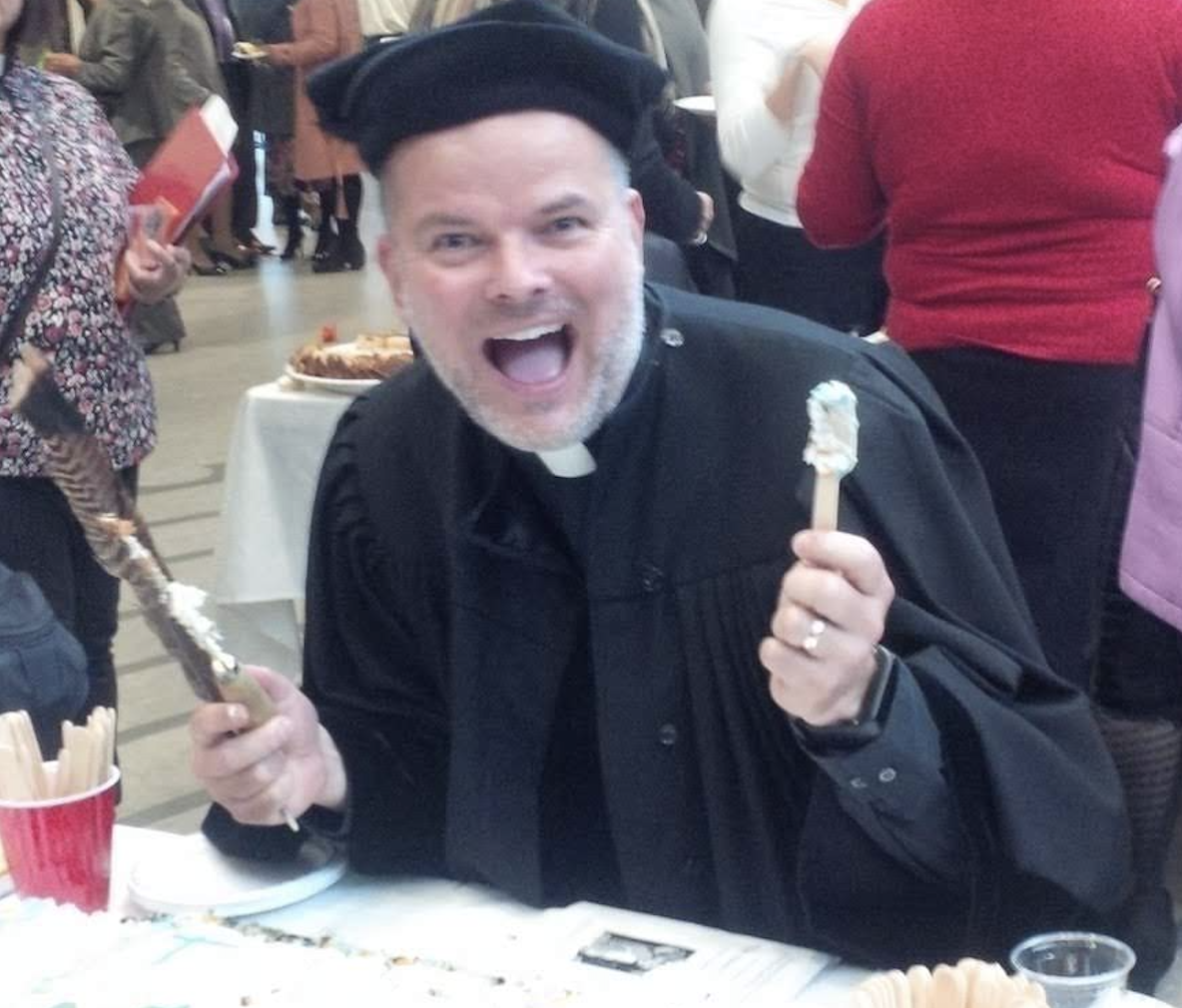
Blast from the past: Ottawa Lutherans celebrate 500 years of Reformation in 2017
References:
Iazariuk. (2007, December 25). I think the title gives the interpretation, but I may be wrong [Comment on the online forum post One of us can’t be wrong – interpretations please.]. leonardcohenforum.com. https://www.leonardcohenforum.com/viewtopic.php?t=9931
Dyer, W. W. (2010). The shift: Taking your life from ambition to meaning. Hay House, Inc.
Morris, S. (2018). Overcoming grief (2nd ed.). Robinson.
Owen, B. (Ed.). (1993). Daily readings from Luther’s writings. Augsburg Fortress.





 Raspberryman