Finding green shoots of hope – everywhere

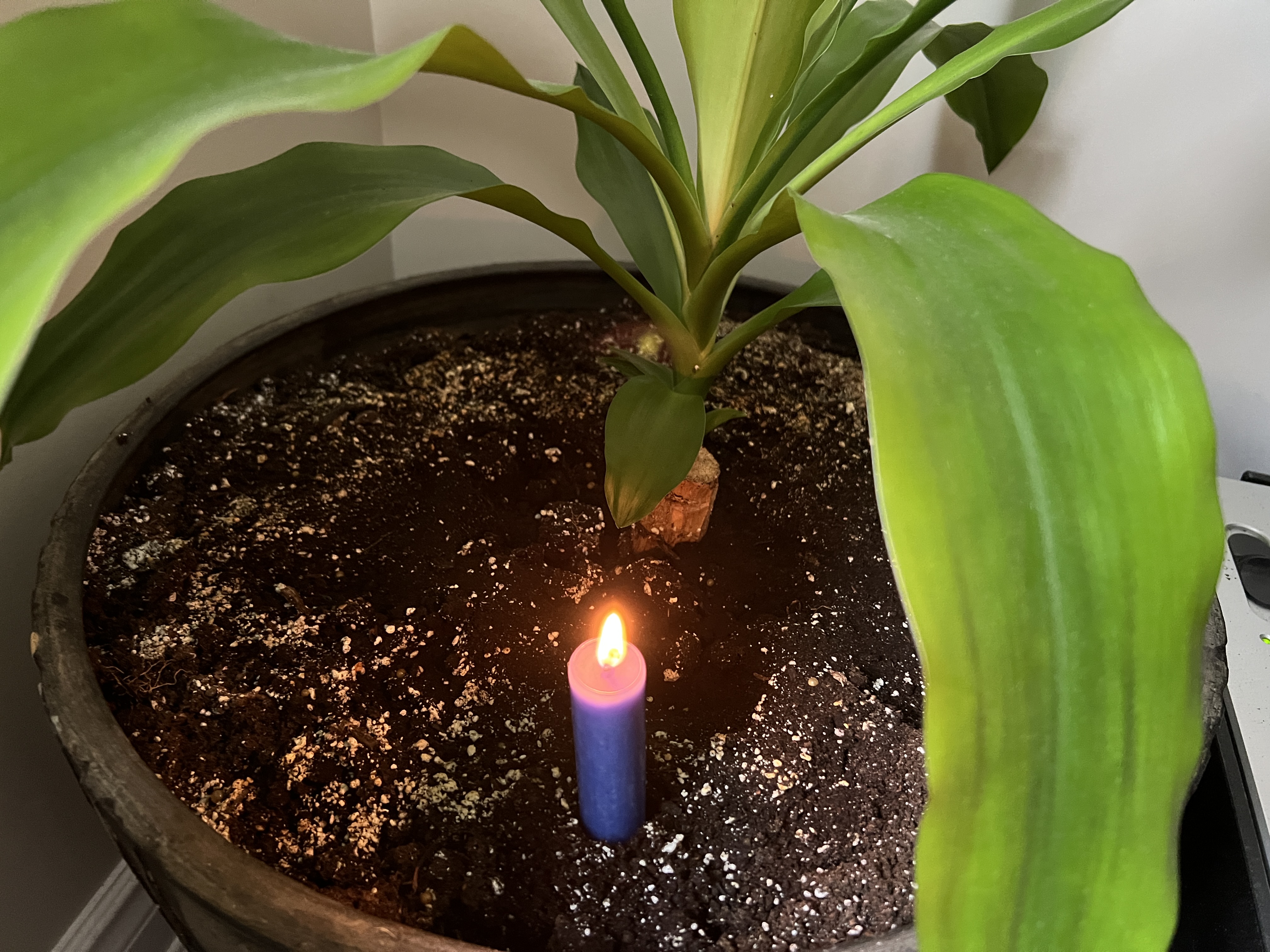
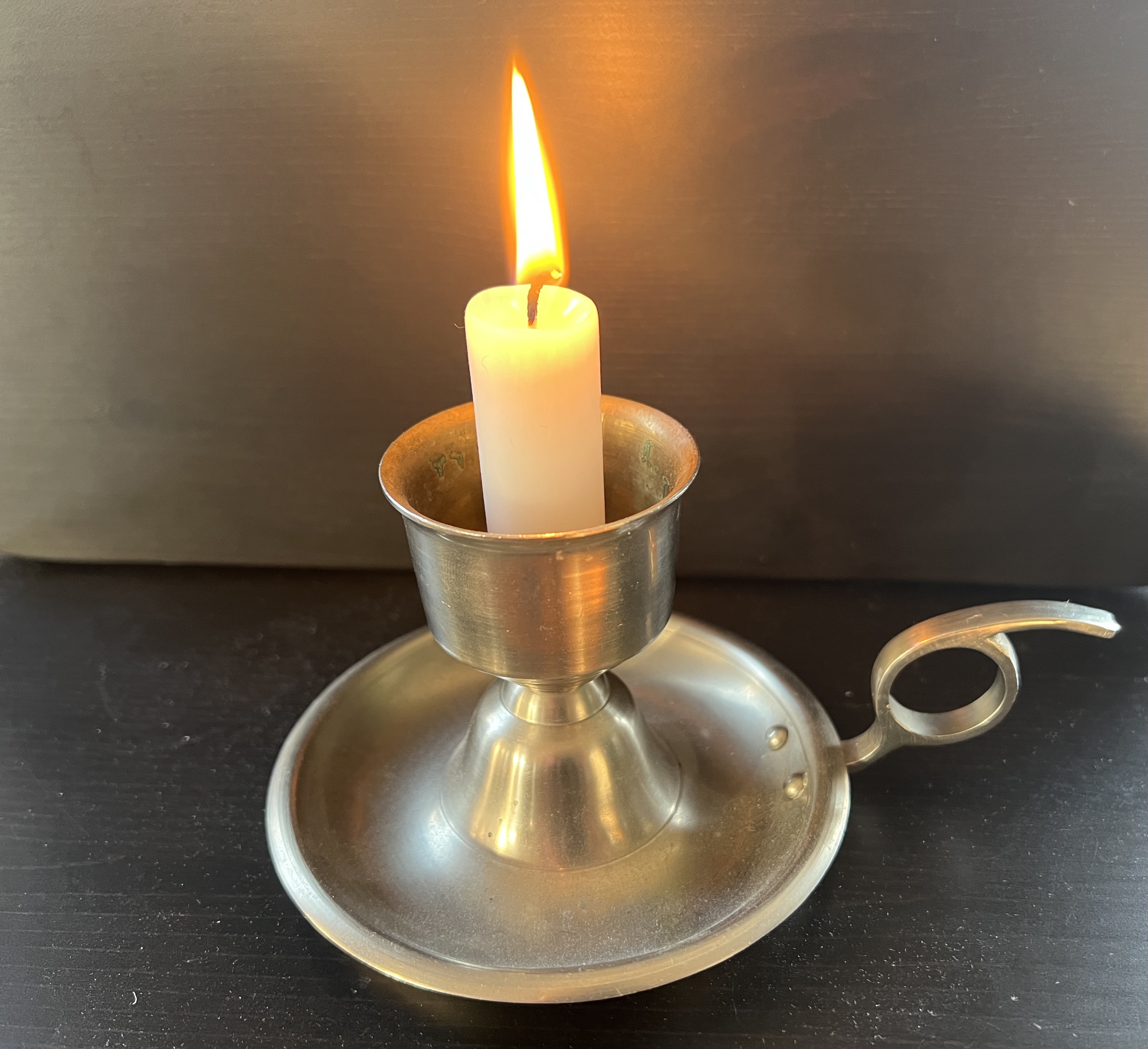
Hope is the theme of the first Sunday of Advent. It is the hope candle, the first one, we light on the Advent wreath today.

But I must admit after reading the scripture assigned for the start of thie new year in the church calendar (Luke 21:25-36), the Gospel from Luke did not initially feel like an Advent-themed scripture. For one thing, Jesus points to fresh leaves on a fig tree, a sign of coming summer. Summer? When winter in the northern hemisphere is bearing down upon us?

After all, shouldn’t we be reading Christmas stories and singing Christmas carols already, like they are doing in the malls? We’re getting our shovels out and snow blowers primed, not looking at green leaves. Admittedly, many of us might rather skip over Advent, its call to spiritual discipline, slower pacing, prayer and perspective, and rush headlong into the frenzy of the season.

The word, Advent, from Latin, means “coming” and refers to the comings of the Lord: the coming of Jesus at the first Christmas two thousand years ago; the second coming of Christ at the end of all time; and the coming of Jesus into our lives every day and in moments we perceive as grace-filled.

When we work at it a bit and unpeel the layers of this Lukan scripture we nevertheless find clues that plant it firmly in this season of preparation, anticipation and longing called Advent. In short, hope undergirds this Gospel.

“Then he told them a parable: ‘Look at the fig tree and all the trees; as soon as they sprout leaves you can see for yourselves and know that summer is already near’” (v.29-30).

One quick Google search reveals that figs are mentioned in the bible 50 times (Bolen, n.d.), because they were so common in that time and place, being a part of their economy and a staple of their diet.

A recent fig excavation in Ireland found 2,000-year-old remains of a fig, preserved because it had been burned (RTE Media, 2024). Among other things, this archeological discovery points to a lifestyle adopted so far north and so far away from Rome. Considered an exotic fruit, figs were enjoyed not just in regions governed by the Roman empire nearer the equator, but in areas of Europe not controlled by Rome. Figs found in the least expected places: Ireland.

Jesus often used fig trees as symbols and metaphors in his teaching. He used common, relatable images of people’s lives to make a point about living in God’s kingdom. But God’s kingdom on earth, not in heaven. “Your will be done on earth,” the Lord’s Prayer points us to focus here, on the ground.

Annie Dillard said, “The Gospel is less about how to get into the Kingdom of Heaven after you die, and more about how to live in the Kingdom of Heaven before you die.” If it were the other way around, why would Jesus spend so much time talking about coins, treasures buried in the earth, fig leaves and trees, lost sheep, seeds and mustard trees? The point of the Gospel is to point us to this life and finding hope and ways of relating to each other and the world that reflect kingdom values.

Admittedly, this perspective on faith requires some hard work. And maybe that’s why we shy away from that ‘kingdom on earth’ perspective. To nurture hope as a Christian is not to remain passive in facing seemingly hopeless situations. It is to be active in faith.

Perhaps the most striking reason for observing an intentional Advent season prior to the festivities of Christmas is the reality common to us all, the reality of death and grief. Approaching Christmas can be the most difficult for those especially experiencing this season for the first time without their loved one, or for those preparing for their last one.

In no other circumstance of life can Advent be such a gift. To slow things down. To temper expectations. To practice contemplation, value simplicity, and give permission to those who suffer, give them space, room to just be and do whatever – without the stringent expectations of the hustle culture and anxious disposition to doing what is expected. Here is an opportunity to say, ‘stop’. Breathe. And reset.

In dealing with grief, it is important to do something to acknowledge the holidays (Morris, 2018). Because grief is unique to each one of us, for some it might mean doing the same thing you’ve always done, or it may mean doing things a little bit differently this year.

The key is to do something, however simple and small – even if at first you might not feel like it. Being hopeful is not a feeling. It is doing the right thing for you.

So, on the one hand, don’t do what is expected. Don’t do what the world thinks you should do. Don’t pretend to be all joyful and happy. Don’t join the consumer frenzy and hustle or put pressure on yourself to be a certain way.

Lower your expectations. Tell yourself it’s okay to do less this year. Give yourself permission to be sad and cry during the holidays. On the other hand, do something. Don’t do nothing. Don’t wait for feelings to be your signal to act.

Many faith communities will offer a Blue Christmas service. A very valuable ministry, to introduce sacred text, Advent hymns, comforting social support, and to hold contemplative, accepting space to an otherwise loud and intense season. Perhaps you’ve once attended a Blue Christmas service. If you would like to attend one put on by Ottawa churches this month, I can give you a couple options where I know they are happening.

What are personal things people who struggle with loss and grief can do in the weeks leading to Christmas?

Lighting a candle in honour and memory of a loved one. Making or buying a special tree ornament or stocking you can hang on the tree. Asking everyone at a family gathering to write down a fond memory they have of a loved one and place those written memories in a special vase or keepsake box that you can read together later in the season. Making a donation to a charity in a loved one’s memory. Volunteering in a hospital, food bank or serving food at an Out of the Cold program. These are all meaningful activities to engage.

The point is, Advent is such an important season to observe, before launching mindlessly into the Christmas festivities and frenzy which, let’s be honest, are by and large self-serving and self-indulging. Especially in a time that feels hopeless, there are things you can do to shift that focus – meaningful things – to discover hope again.

Find green shoots of hope wherever you can. Look for the proverbial fig leaf, even if in places you might never have expected. And do something. And if, this year, you cannot …

Some people and communities are doing great things. Celebrate them. Others are doing small but important things. Thank them. Others are doing courageous things. Appreciate them. Keep hope strong. Keep hope alive (Reich, 2024).

References:

Bolen, T. (n.d.). Fig Trees. Retrieved from https://www.bibleplaces.com/fig-trees/

Morris, S. (2018). Overcoming grief (2nd ed.). Robinson.

Reich, R. (2024, November 19). How to hope in a hope-less time [blog]. https://robertreich.substack.com/p/how-to-hope-in-a-near-hopeless-time?

RTE Media. (2024, November 14). On a roll: Fig from 2,000 years ago found at Dublin archaeological site [website]. https://www.rte.ie/news/dublin/2024/1113/1480725-fig-excavation-dublin/

Water, water, everywhere – a sermon for baptism

Photo by Ernie Dickey (British Columbia Photos, posted November 15, 2024) https://www.facebook.com/groups

Leyla is baptized today. The water in the font is not moving that much. But when we spilled it over her head, you could hear the splash and see the fall of water from her head back into the font. Water, even when it appears still, is still moving.

In baptism Water and Word come together. It is the word of promise, of hope, that amidst all the struggles and storms of life, God will never forsake Leyla. God will always, no matter what, travel with her on the life’s journey. God will always love her.

But you can’t have baptism without water. And if you think the Word part is difficult to understand, water, too, is a tricky thing, this primary conveyor of grace and meaning for us today.

On the one hand we dream and recite scripture about walking beside quiet and still waters (Psalm 23). We read about the river of life flowing through the new Jerusalem (Revelation). We consider the vital nourishment rainfall gives to the earth so desperate and dry. Water is a gift. It is necessary, required for life.

Yet, sometimes those waters can get rough. Indeed, being in the water can be dangerous business. In the Psalm today, the water mentioned is not some gentle, mountain stream or a placid pond. We’re not talking here about a dreamy Hallmark waterfall.

The pounding waves described in Psalm 93 are more akin to the weather bomb affecting the west coast of BC this past week. More like the deadly flood waters that devastated Spanish towns in a few terrifying hours, last month. The violent and deadly Noah’s flood from Genesis (chapter 7) describes this contrasting aspect of water images from the bible.

Getting into the water, we confront our fears. Getting into the water we become vulnerable. We know the dangers that lurk for humans who are not fish. We can even die, submerged under the water too long.

Waters, even baptismal waters, symbolize both peaceful religious experience as well as potential danger. Waters, even baptismal waters, take us out of our comfort zones as much as they bring comfort and joy.

Herein lies the paradox of faith, actually, between life and death. Two apparent extremes can co-exist on the same line at the same time. Both/And. Peaceful waters. Stormy waters. Same place.

The oceans on this planet represent the most mysterious and unknown region yet to be discovered. Its depths have not yet been fully plumbed. It’s a place of fear and danger, of mystery. As much as oceans determine our weather – la Nina or el Nino – and the amount of water we receive and need, they represent a vast unknowing.

What a beautiful metaphor for God. What a profound image for Jesus who invites us on the journey to follow him our whole life long. Baptism is the Christlike means to launch each of us on this journey of faith. Water and the Word combine to enrich our faith and give us hope.

Indeed, we sail over the tempestuous sea of life. Our world is in storm mode – it may be on a personal level but also on national, and definitely global levels. Danger threatens all about. No wonder we are afraid.

And yet, only when the water moves, and the more it moves, the more energy for life it gives. The powerful impact of waves gets us moving! The ocean, after all, is alive with energy: Roiling waves, crashing surf. According to CBC Radio’s The Current, scientists are now trying to harness the power behind those waves. And the impact could be staggering, providing electricity, experts believe, for up to a third of American homes (Galloway, 2024).

As we ride those turbulent seas, Christ is on the ship with us. We may be perplexed facing a great mystery. We may be afraid to move, to change. But Jesus is with us. Jesus is aware, he knows – even when from our perspective he seems to be asleep in the back of the boat (Mark 4: 35-40). With the Psalmist we can declare, “He who keeps watch will neither slumber nor sleep” (Psalm 121:3).

Today the church celebrates the reign of Christ. Christ is king. What does that mean? In the Gospel, Jesus tells Pilate that the kingdom of God is not of this world (John 18:33-37). Who and what Christ Jesus is about doesn’t look like the powers of this world.

The water images from the bible suggest the reign of Christ is not one-dimensional. Jesus is in it all – the rain that nourishes, the surf that pounds, the tsunami that terrifies, the floods that wash it all away, the waters that calm and refresh. The contrasts may befuddle and bewilder us. The journey of faith takes us right into the middle of the ambiguity. Yet, Jesus is right there, with us, giving us energy, giving us life – new life.

Jesus watches us and keeps us, no matter what storms we face, no matter how poor the prognosis is, no matter how uncertain the horizon looks, no matter how badly the waves threaten to wash us overboard. Jesus watches us because he loves us and sees us as we truly are. This is the baptismal promise.

Because even when we are submerged in water, the only way out is up. It is the first thing we do when coming out of the waters. To open our mouths and gasp for air we have no choice but to look upwards, to the hills, to the horizon, to the heavens, to the one who reaches out to us.

Christ will stay on board with us until there are no more seas to sail. Jesus will guide our days and travel with us on the journey until the storm clouds break, the sun’s rays shine through, and we can look up again.

Thanks be to God.

Reference:

Galloway, M. (Host). (2024, November 21). Harnessing the oceans waves [transcript]. In The Current. CBC Radio. https://www.cbc.ca/radio/thecurrent/thursday-november-21-2024-full-transcript-1.7390604

Love – the override button (a funeral sermon)

View over the Ottawa River at CFB Petawawa, August 2023 (photo by Martin Malina)

One thing Garfield loved to do was drive. When he still lived in Ottawa, he was determined to drive to bible study every Monday even in freezing rain. And as long as he was able, he drove.

In Petawawa, it was his precious cart that he scooted around in the neighbourhood off Laurentian Drive, sometimes pushing the limits of its speed. It’s as if he had a secret override button, that when he pressed it, it would give him just a bit more torque, a little more juice. I think he loved that.

We started the service today with a thanksgiving for baptism. Water.

At a wedding reception I attended last week, I sat beside someone who worked on cruise ships for almost twenty years. I asked him about what stood out in his memory, working on a boat sailing the world over.

He said what stuck out for him were those few times “Man overboard!” was called, those horrifying instances when it was believed someone had fallen into the water.

He told me about a time when a pop music group was celebrating New Years. Its lead singer was especially exuberant and tried to dance on the railing at the back of the ship. His body was never found.

The contrast struck my reflective cruise ship manager. On the one hand going on a cruise symbolizes vacation and fun and good times. Those “man overboard” occasions, on the other hand, were tragic events. How one extreme could exist so close alongside its opposite bewildered him. And me.

Indeed, being in the water can be dangerous business. On the one hand we dream and recite scripture about walking beside quiet and still waters (Psalm 23). Yet, sometimes those waters can get rough. Noah’s flood (Genesis) was not a dreamy Hallmark waterfall. More like the deadly flood waters that devastated Spanish towns in a few terrifying hours, a couple of weeks ago.

Getting into the water, we confront our fears. Getting into the water we become vulnerable. We know the dangers that lurk for humans who are not fish. We can even die, submerged under the water too long.

Waters, even baptismal waters, symbolize both peaceful religious experience as well as potential danger. Waters, even baptismal waters, take us out of our comfort zones as much as they bring comfort and joy.

We gave thanks for baptism at the beginning of this funeral service for Garfield. I want to tell you a baptism story from his life. For the longest time Garfield expressed his desire to renew and reaffirm his baptism. And when A put in the in ground pool at their home, Garfield spent a lot of time over the last couple of summers lounging in that pool.

And so, last July we all got into the pool. I could still see Garfield’s face. He wanted to do this, but I could see a bit of fear in his eyes. And before I could say anything, he had steeled his energy and dipped under. He had just pressed that secret override button.

This was a beautiful experience for me to witness. Garfield expressed his baptismal faith amidst the growing physical challenges he faced. Garfield’s baptismal faith was the marriage between water, will, and divine promise.

Later in the summer he went into the pool again. In those same waters he had an episode that triggered his recent hospitalization. Herein lies the paradox of faith, actually, between life and death. Two apparent extremes can co-exist on the same line at the same time. Both/And. Peaceful waters. Stormy waters. Same place.

In scripture we find many such paradoxes; In First John, between fear and love: “Love casts out fear” (1 John 4:18). When love casts out fear, it is not to eliminate it. It is to put it in its proper place. As long as we live on this earth, we will have fear. But love puts our fears in perspective, in the larger perspective. As Garfield did so often, we need to press the love-override button.

While I could already see some trepidation in Garfield’s eyes on the day he reaffirmed his baptism, what carried us through that experience was an overriding love.

He knew the love of God for him. He believed in the promise of God to be with him. Tears came to his eyes every time he spoke of God’s love for him. And, of course, by that I also mean the deep and committed love he felt from his so-called angels – P & A – who lived with him these last years and watched over his days.

When you enter their pool down steps into the water, you basically face the Ottawa River direction, and just over the trees in that direction are the Laurentian Hills. I like to think that even as Garfield descended into the waters, even as he faced both the joys of faith and the fears of being human, he was also literally facing the direction of the hills. No wonder one of his favourite verses from the bible is from Psalm 121: “I look to the hills from whence is my help to come?”

Love calls us to take the long view. I think that’s why Garfield often mentioned wanting to get in a helicopter to see Petawawa from above. Did he ever do that? (Well, he is doing it today!)

Because looking to the hills means lifting our gaze upward. It is the first thing we do when coming out of the waters. To open our mouths and gasp for air we have no choice but to look upwards, to the hills, to the horizon, to the heavens.

Indeed, we sail over the tempestuous sea of life. Our world is in storm mode – it may be on a personal level but also on national, and definitely global levels.

But Christ is on the ship with us. Jesus is in command – even when he seems to be asleep (Mark 4: 35-40). With the Psalmist we can declare, “He who keeps watch will neither slumber nor sleep” (Psalm 121:3).

Jesus watches us to protect us and keep us, no matter what storms we face, no matter how poor the prognosis is, no matter how uncertain the horizon looks, no matter how badly the waves threaten to wash us overboard. Jesus watches us because he loves us and sees us as we truly are. This is the baptismal promise.

Christ will stay on board with us until there are no more seas to sail. Jesus will guide our days and travel with us on the journey until we have climbed the mountain of our lives and reached its peak.

And then, the sky will be the limit. For Garfield, today, it is so.

Thanks be to God.

Candleholders

We ran into a crisis that, in the end, wasn’t a crisis. In fact, it could not have conveyed the meaning of today more appropriately.

It was the crisis of the candles. Every year, weeks before All Saints Sunday, we do an inventory of the candles that we light in memory and in celebration of the saints we name today. Of course, every year there is a different number of people we remember, and therefore a corresponding number of candles. And sometimes, depending on our stock, we might need to order more.

So, there is a bit of stress, especially if we need to order more and time becomes a factor. This year, our dedicated altar care group assured me that we had enough candles.

But, there was a catch. We had used them before, probably during All Saints Sunday worship last year. Though these candles were all uniform and about the same length, they were not new out of the box. Pause.

When we discussed the situation, I wondered out loud about this belief we have when it comes to celebrations – that every individual deserves their own, unburned candle. It’s like the fact that many people, like myself, share a birthday with someone else in the family. Don’t we deserve our own day? “It must be tough,” some have commiserated with me, “sharing the limelight with someone else!”

Indeed, we tend to centre meaning on the individual. That’s a whole lot of pressure we put on ourselves – to make it or break it! We therefore value self-reliance and seek reward for our individual achievements and successes.

When our faith is dependent on ourselves, individually, we at the same time create a culture in which people have a hard time asking for help. We resist relying on and learning from others. We see that as weakness.

This is one of the lingering legacies of the Reformation. While Martin Luther brought the bible to the people and encouraged a personal engagement with scripture and sacrament, his legacy also individualized faith. The lasting consequence was to leave us believing everything important hangs on the balance of individual decisions.

Consequently our sense of community erodes and our connection weakens not only with each other on earth but with the “mystical union” (Prayer of the day, n.d.) we have with all the saints in heaven, in Christ.

When you grieve the loss of someone special in your life, for example, what do you believe about your connection with that loved one right now? To what degree is the relationship over? And, if you believe it isn’t over, how has that relationship changed?

On All Saints Sunday we counter the tendency to individualize everything, and affirm instead that we stand on the shoulders of those who have gone before us. We light candles that have already burned before! In our baptism we unite with all the saints on earth and heaven. As Luther famously said, we belong to the priesthood of all believers, in every time and every place. Each of us belongs to and is part of something much bigger than ourselves.

The foundation of our faith is not our individual decision to follow Christ but rather our confession of being held in the communion of all the saints whose foundation is Jesus Christ. Our faith is not alighted on the merit of our own individual efforts. Our faith is lighted up because the flame has always been shining and showing us the way, going before us all.

My brother tells of a recent mystical experience of connecting with our dad who died five years ago. His telling of the story is published in the recent edition of “Eternity for Today” (Malina, 2024):

“I was going through a rough week,” he writes, “questioning a lot of things. It was two o’clock in the morning, and I had been tossing and turning in bed for hours. Just as I was finally drifting off, there he suddenly appeared before me, unquestionably my dad. I jolted in surprise. His smiling and jovial face had never seemed so vivid and warmly familiar.

“And he told me something I so needed to hear, words which not only encouraged me, but also affirmed my faith in an inter-connected universe where the eternal and material dimensions weave together in undetermined ways, where God’s love in Jesus binds us all in heaven and on earth: ‘Be at peace. Don’t be afraid. Just keep going. One step at a time. I am with you. God is with you’” (p. 30).

Even and especially when we grieve our losses, we discover other ways we are connected. We may even be able to affirm that the relationship is not over, it has only changed. And maybe then we discover new roles and new ways of being in relationship.

In their book, “Beyond Saints and Superheroes”, authors Allen Jorgenson and Laura MacGregor challenge readers to re-envision our identity in community to be like candleholders rather than trying to be the light ourselves (MacGregor & Jorgenson, 2023).

So, we hold others, especially those unlike us with needs different from our own. And we empathize with them. But true empathy is “not about imagining how you would think or feel in the given situation. Rather, it is about imagining how someone else feels in the situation they are in” (Morris, 2018, p. 171).

This shift in thinking moves us out of our individual self-preoccupation to an other-centred way of thinking. To do this, we first practice simply—but perhaps not easily—just being with another rather than compulsively doing for another. When we can simply hold space with others, the tiny flame has oxygen to breathe, so the light of Christ can shine brightly for the world to notice.

When we practice just being with someone else, we love them by meeting them where they are at. When they have that sense of being seen, that they matter. In that space of grace, then, we recognize the light of Christ which, although it may appear fragile and small, actually gives enough light in the night for all to see.

Listen to the words of Professor Jorgenson who wrote this poem called “Candleholders” :

“Yesterday was All Saints’ Sunday at church and candles lumined the nave to honor the departed, the beloved, the beleaguered.

“We were invited to light one for a soul deep in our heart, and I walked to the altar and lit a candle in honor of you… sadly missed…

“The candles were variously held by brass, by glass holders. Some votives sat free. I took one of these and tipped it toward the Christ light. As it flamed, I breathed a prayer of thanks. I set you – on fire – into a bed of sand, imagining holding your hand once again, but no, you were grasped by grains of sand without number.

“I pondered you then, with all the saints: each one different, each one the same, each one broken, each one whole – together a circle of support.

“As I made my way back to the pew, I thought I heard you say:

“Today is All Saints Sunday, but each day is holy, as are we, as we hold each other and so the Christ” (MacGregor & Jorgenson, 2023, pp. 110-111).

References:

MacGregor, L., & Jorgenson, A. G. (2023). Beyond saints and superheroes: Supporting parents raising children with disabilities: A practical guide for faith communities. Mad and Crip Theology Press.

Malina, D. (2024, October 22). My dad in my dreams. Eternity for Today: Daily Scripture Reading for Reflection and Prayer, 60(4), 30. Evangelical Lutheran Church in Canada.

Morris, S. (2018). Overcoming grief (2nd ed.). Robinson.

Wahrnehmen: What do you do when the past visits you?

You will know the truth, and the truth will set you free (John 8:32).

In an online forum, fans of Leonard Cohen debate the title of his song, “One of us cannot be wrong” (leonardcohenforum.com). The song seems to be about a failing romantic relationship.

The term has also been used as a joke between two people who disagree on something. Any argument, it seems, presumes that someone must always be right. And, therefore, someone else must also always be wrong.

Saint Paul in his letter to the Romans throws a wrench into this kind of dualism. “For all have sinned and fall short of the glory of God” (Romans 3:23). Therefore, no one is right. And no one is wrong. No one, ultimately, can claim higher moral ground.

In today’s Gospel reading for Reformation Sunday, Jesus says, “Everyone who sins is a slave to sin” (John 8:34). In other words, human beings – we are all in the same boat. And, therefore, we need to learn to co-exist, peaceably, even with our enemies.

But only the truth will “set you free” (John 8:32).

Ok. So, what is truth? Pilate asked Jesus this question (John 18:38). It’s normal to go into our heads to figure that one out. In today’s Gospel, those who believed in Jesus misinterpreted his teaching by thinking they didn’t need to be made free because they were not slaves, literally.

We can, and have to this day two thousand years later, argued and debated what this truth is. Martin Luther in the 16th century, who launched the Reformation, offered his interpretation by focusing theological truth on the unconditional grace of God, which implies accepting, loving, and caring for everyone unconditionally.

But not every Christian feels comfortable with that message. We’d rather slip back into that comfortable dualism of believing “one of us cannot be wrong.”

Maybe the way to knowing the truth starts by examining how we receive the truth. Perhaps we first need to set the context for that truth giving and receiving. How is it given? Who is there? What’s going on?

In Martin Luther’s mother tongue, the German language, the word truth is “Wahrheit”. But German offers a helpful nuance by introducing a verb, an action word, for the word truth: “Wahrnehmen” loosely means perceiving, or as I’ve already mentioned, truth-receiving.

Truth is about how we receive it. It is not just a thought, or doctrine floating up here somewhere. It is contextual. It’s on the ground, in our lives. It is integral to what we do as much as what we think.

I can hear the wheels turning in your heads. You might argue with me here, saying the main theological point of Martin Luther’s Reformation is that we are made right with God not by doing good works. We are made right, or justified, with God by God’s grace alone. We can’t earn God’s favour because even the good we try to do has a downside. Nothing we do is a perfect thing with 0-negative consequence. We are truly dependent on God’s grace.

But because our actions – all of them – yield at least some negative consequence, doesn’t mean we remain passive or don’t try. Recognizing our sinful nature doesn’t translate to inactivity based in fear of making a mistake – because we will anyway no matter what we do! Proclaiming the primacy of God’s grace in everyone’s life doesn’t mean we don’t reach out, take risks, and express our faith in loving deeds.

It takes practice. Luther did say, “Sin boldly! But trust in God’s grace even more!” Wahrnehmen.

Mother Theresa said, “Love cannot remain by itself – it has no meaning. Love must be put into action, and that action is service” (Dyer, 2010, p. 99). In other words, love, compassion, mercy and forgiveness – all these grace-words mean absolutely nothing if we let them remain only in our individual lives, or only in our heads. Wahrnehmen.

What Jesus did for us on the cross and empty tomb was that he led the way for us, showed us the way and modelled for us the pattern, the way to follow. What Jesus did for us is not just for our intellectual benefit, not just for disputation in order to arrive at some level of doctrinal purity.

We are created and called for a purpose: To follow faithfully despite the mistakes we are bound to make on the way. It takes practice and exercising our spiritual muscles. Early in any exercise regime, it feels awkward.

In her book on overcoming grief, Sue Morris (2018) suggests writing with your other hand (pp. 26-27). Try writing your name and address with your non-dominant hand. Write as neatly as you can.

How does it feel? How does your writing compare to when you write with your dominant hand? Did you have to concentrate more? Did it feel strange?

“Being able to write effectively with your other hand would require a lot of practice … Even after many years of experience, writing with your non-dominant hand may never feel as effortless as writing with your dominant hand” (pp. 27-28).

A similar thing happens in grief, after a loved one has died. Even though you know how to live just like you know how to write, your life now feels awkward and unfamiliar. It takes more concentration, effort and energy. Any transition in life, even positive ones, involve loss and change. Transitions involve new learning and a period of adjustment.

As we practice, nevertheless, we can experience God’s loving presence. In the receiving of grace, we discover a deep source of strength flowing through us. We discover that in giving we begin to receive even more.

In practising faith, the truth frees us from the prisons of our own compulsive self-centredness. In practising faith, we learn again that, though the results are never perfect and even though our actions are always flawed, the truth of God’s grace is realized in deeds of love, serving others unconditionally, and courage to try something new.

And when we arrive one day at heaven’s gates, one thing we can be certain of: God will never fault us for loving too much, caring too much, showing mercy and compassion too much.

Thanks be to God, for the truth in Christ, who indeed sets us free.

Martin Luther, in his words, offers a blessing to us: “May God, who has led and called you to a knowledge of the truth, strengthen and preserve you to his praise and glory. To him and to his grace I commend you. Amen” (Owen, 1993).

Blast from the past: Ottawa Lutherans celebrate 500 years of Reformation in 2017

References:

Iazariuk. (2007, December 25). I think the title gives the interpretation, but I may be wrong [Comment on the online forum post One of us can’t be wrong – interpretations please.]. leonardcohenforum.com. https://www.leonardcohenforum.com/viewtopic.php?t=9931

Dyer, W. W. (2010). The shift: Taking your life from ambition to meaning. Hay House, Inc.

Morris, S. (2018). Overcoming grief (2nd ed.). Robinson.

Owen, B. (Ed.). (1993). Daily readings from Luther’s writings. Augsburg Fortress.

Of trees and radical love – a wedding sermon

From 1 Corinthians 13:4-8, 13 by Saint Paul:

Love is patient; love is kind; love is not envious or boastful or arrogantor rude. It does not insist on its own way; it is not irritable or resentful;it does not rejoice in wrongdoing, but rejoices in the truth. It bears all things, believes all things, hopes all things, endures all things.

Love never ends. But as for prophecies, they will come to an end; as for tongues, they will cease; as for knowledge, it will come to an end.

And now faith, hope, and love abide, these three; and the greatest of these is love.

From “Captain Corelli’s Mandolin”by Louis de Bernières:

Love is a temporary madness, it erupts like volcanoes and then subsides. And when it subsides you have to make a decision. You have to work out whether your roots have so entwined together that it is inconceivable that you should ever part. Because this is what love is.

Love is not breathlessness, it is not excitement, it is not the promulgation of eternal passion. That is just being “in love” which any fool can do.

Love itself is what is left over when being in love has burned away, and this is both an art and a fortunate accident. Those that truly love, have roots that grow towards each other underground, and when all the pretty blossom have fallen from their branches, they find that they are one tree and not two.

We are here today because you, Ryan and Kristina, have invited us to be with you in this very special moment in your lives. I count myself among those who feel very much honoured to witness the celebration of your love for each other, and the blessing of God upon your marriage.

Indeed, I suspect we are doing this because you want your relationship — which began years ago — to endure long after this day. You want your relationship of marriage to be strong and long-lasting. You want your marriage to be rooted, and grounded, in the love you share, and the love given to you.

We want to mark this beautiful moment in time because we know the challenges that will come to your marriage. The storms of life will come: Disappointments. Failures. Illness. Circumstances of life often beyond our control cause us anxiety, fear and suffering. And, deep down, we know that only love – truelove – will help you persevere through those storms.  

But what is true love? Can we describe it?

True love is radical. The word radical actually means the “root” of something, the “source” of it. How is this radical love shown in our lives? The reading from “Captain Corelli’s Mandolin” captures this sense of rooted love by comparing love to trees. What is it about trees that have survived countless wind storms through the years?

For one thing, healthy trees will stay connected even as they bend, yield, in adversity and in the storm. Some of the oldest trees, the Redwoods in California, I am told, intertwine their roots together; and elsewhere, even the tops of the trees offer mutual support through their branches being inter-connected. Reaching out to help, and receiving help.

True strength of character, in a relationship, comes not in remaining rigid and unmoving and stuck-in-a-rut. Otherwise, you’ll break. True strength of being is not about flexing power and muscle and bull-dozing through your point-of-view in an unyielding fashion. True love does not, in Saint Paul’s words, “insist on its own way” (1 Corinthians 13:5). 

The trees that survive the storms and endure over time are trees that are practiced in the art of give-and-take, flexibility and mutuality. They are used to bending, from time to time. And they realize they need each other. They need to meet the challenges of life together, not alone. Roots intertwined, interconnected.

Yet another characteristic of trees can teach us about love: Trees already have everything they need in the tiny seed that starts it all. The largest, tallest and oldest trees on earth started out as small seeds. And these seeds contain everything they are and will ever need. 

Often in marriage it’s easier to focus on the negative, especially when stress-levels rise, and those storms come. But that is a choice. Let’s not forget the positives. And they are many: you already have everything you need at the start of your married life in order to make this work. You already have everything you need, not only to survive, but thrive! Nurture those positive qualities you see in each other – you know what they are. Acknowledge the good in each other. Why? Because we already have “the technology” in us. As much as we are limited, broken people, we are also wired for goodness. Right from the start.

Finally, to love, is to be still. On occasion I have walked early in the morning through a forest. At dawn, a forest is normally quiet, and still. We behold the true beauty of the tree and forest in the stillness of the moment. In truth, we can admire the wonder and beauty of the trees only when they are still. 

In a storm of activity and distraction we aren’t normally admiring something or someone. Sometimes in our hectic, high-octane, busy lives, we distract ourselves to oblivion. We are moving constantly, rushing here and there, getting this and that, that we can forget to breath. We forget to be with ourselves and each other. To be still before the Lord (Psalm 46:10). 

In my marriage many of the precious, loving moments I spend with Jessica are those times in the canoe, paddling silently. Or, sitting quietly beside each other watching a sunset, or reading quietly together. To love, is to be still. Nurture the quiet and the still in each other. 

Trees that grow out of their roots, ultimately reach to the sky. People committed to each other in marriage grow out of this radical love, the love God, the glue in your marriage. Married couples ultimately reflect the love of God to the world. Like the tops of the trees reaching to the sky for light and life, our lives reflect and receive and yearn for God. As you grow in love and light, may your marriage reach for the sky.

To the coastlands

In the second of four, so-called ‘servant poems’ in this section of Isaiah,[1]we encounter a person who is called from before his birth for God’s purposes. But the servant is “deeply despised” and “abhorred by the nations” for something he had done that caused the people to heap judgement and even violence against him.

Whatever this servant had been doing was frustrating even for the servant. He complains that his work had been a complete waste of time, that he had “labored in vain.” Can you relate?

Have you “labored in vain”? Do you feel as if all the work you’ve put into something was in vain, wasn’t worth it, or it felt like it was all for naught and didn’t make any difference? Have you once felt the shame of futility, frustration and failure?

Mahatma Gandhi, during his student life, suffered from frequent panic attacks. He had a particularly agonizing experience during a speech he was asked to give to a vegetarian community in London. After reading one line from the message he had prepared, he could no longer speak and asked someone else to read the rest of the speech for him.

“My vision became blurred and I trembled, though the speech hardly covered a sheet of foolscap,” he recalled.[2]How can someone who is barely able to utter two sentences together in public lead an independence movement? You’d think he must have grieved his shortcomings and fear. Even doubted his ability to lead. 

What will God say to us? How will God answer our prayer born out of our frustration, feelings of futility and anxiety about the changing and scary world within and outside of us?

God’s answer surprises and is often counter-intuitive. We think, perhaps, the solution lies in scaling back, lowering expectations, isolating ourselves in cocoons of introspection and introversion. We think, perhaps, the solution lies in moving away from what causes our fears and anxieties in this changing and scary world out there.

But God’s way isn’t what we think! You thought the solution to your problems was to circle the wagons of your world, make it narrow and easily controlled. You thought the solution to your problems was to constrict your vision to stay within the walls you have constructed in your life between you, your loved ones and the changing and scary world around. To retreat into the safety of a like-minded ghetto behind fortress walls.

God’s answer is cued right at the beginning of this servant poem, in verse one: “Listen to me, O coastlands, pay attention, you peoples from far away!” The servant is not speaking to his own folk, nearby. The servant is not addressing his words to his like-minded cohort. The servant is not preaching to the choir. 

The servant may not realize it at the beginning, but buried in his first words is the seed for his own transformation, his own healing, the answer to his own problem. God only puts a punctuation mark at the end of the sentence: “I will give you as a light to the nations, that my salvation may reach to the end of the earth” (v.6). Not only are his sights set on raising up the tribes of Jacob and restore Israel; his destiny lies with people from far away, at the far reaches of his vision.

After God hears the servant’s lament, “God not only renews the servant’s original calling but enlarges the scope of it, so that it encompasses not only the restoration of Israel but the salvation of every nation on earth. Rather than looking upon the servant’s failures and adjusting the call downwards to meet diminished expectations,”[3]God offers an antidote to the servant’s inner struggles.

If the servant is to be healed from his inner turmoil and outer struggles, here is the antidote: reach out to others to meet them, serve them, learn from them and live together with them. Get out of yourself and the self-preoccupation born from too much navel-gazing, and meet God out there in that changing and scary world.

Gandhi found a cause that inflamed a passion in him so great that it overrode his anxieties and fears. His desire to see a free India moved him to stand up for what he believed in. Ghandi’s life echoed the expansive vision of God to care not just for those closest to him – in his family, village, township or province. But to care for the entire country!

Maybe when we’re anxious, we would do well to set our sights on the coastlands. Maybe, when are afraid, we would do well to consider a strategy that goes in another direction than ‘the way it used to be’. Maybe, when we feel all our work has been in vain, we would do well to try to reach out rather than just reach in. Maybe, when we are frustrated, we would do well to resist the temptation to retreat into the comfort zones too quickly.

Because maybe our healing lies in this expansive vision of God. Maybe our growth lies in setting our sights on the coastlands, to meet with people from far away, to make meaningful connections with peoples from all nations.

I think what we need to remember is that what has brought us here today—in the first place—is love. What brings us to this point of confession—confessing our sins, confessing our fear, feeling all those wants and unmet needs and grievances … we can only do that because love lives in our hearts. The small, spark of love – the love of God in us – opens our hearts to be who we are, warts and all.

But God doesn’t stop there. The love that brings us to honesty also sends us out to share God’s love in the world. The love of God will not stop in us but will radiate outwards, a centrifugal force that cannot be stopped, a force that will shine to the farthest corners. God won’t lower the bar with us, but raise it.

When we find the balance, when our outward reaching stems from the depths of our hearts in Christ, when the centrifugal force of the Spirit of God’s mission in the world emerges from the deep wells of God’s love within, then …

Our work will not be in vain. God will bring to completion the good work already begun in us.


[1]Isaiah 49:1-7

[2]https://visme.co/blog/amazing-leaders-who-once-had-crippling-stage-fright-and-how-they-overcame-it/

[3]Stephanie A. Paulsell, Feasting on the Word; Preaching the Revised Common Lectionary Year A Volume 1 (Kentucky: WJK Press, 2010), p.244-246

The mystic magi journey: discovering a new way of seeing

The word, ‘mystery’, Paul mentions four times in the text assigned for the Day of Epiphany.[1]He calls receiving God’s grace “the mystery of Christ.”

A mystery is not something that ought to scare us. Like how we feel when reading a whodunit and murder-mystery novels so popular. We have lived in a culture that sees mystery as something bad, something to avoid, something that is opposed to a life of faith. If something is mysterious, it can’t be of God.

That, what appears on the surface, at first sight, is division, discord, disharmony, a profound and inherent disconnection in our lives and in the world.

A negative view of mystery also implies that to know God means there is nothing more to know. To claim some cerebral notions of God—we call this doctrine—and to conform our knowing with others means there is no longer anything to learn. Change, growth, diverse thinking—the consequence of something that is difficult to understand—these have been an undesired mystery.

The journey of the magi suggests we need to take another look at “the mystery of Christ.” The prophet Isaiah, from another text assigned for the Day of Epiphany,[2]encourages us all to “lift up your eyes and look around … then you shall see and be radiant; your heart shall thrill and rejoice.” There is apparently a great benefit in seeing anew.

Isaiah speaks as if this ‘seeing’ is more than a mere observation of what is immediately in front of you. This spiritual seeing is about perceiving a deeper reality. Some would say it is seeing with the eye of the heart, or the mind’s eye. Sight, here, is not just a biological function of the eyes, but involves deeper more subtle capacities within us.

From the perspective of faith, mystery means, “endless knowability.”[3]Mystery is not something we cannot ever know; or, conversely, some riddle that we must solve once-and-for-all. Rather, mystery is a journey of learning more, growing, a continual expansion of our awareness, knowledge and perception.

The reason Matthew includes the story of the magi in his rendition of the birth of Jesus is to describe what is true for anyone on the journey of life and faith. 

For one thing, we never arrive at the fullness of truth on this journey we are on. That was the credo of the old science, that somehow once we figure something out, it never needs to be revisited or rethought. This approach affected the way of the church; that is, once you are confirmed or become adult or affirm your faith or join the membership … well, you’ve arrived. You are saved. And you don’t need to do anything more. Or change, or grow in faith, or explore different dimensions of the faithful life.

To say, “I don’t know”, in response to a question meant there is something wrong with you and your faith or your understanding. To confess “I don’t know” according to the credo of the old science was an admission of weakness, that something was not just right, or complete, with your faith. And this was shameful.

And yet, Paul challenges such arrogance (ironically since he was an arrogant guy himself) by focusing our attention on the “boundlessriches in Christ” whose intent is “to make everyonesee … the mystery hidden for ages in God who created all things.” [emphasis mine]

The magi of old studied the stars to gain understanding of God’s creation which included the boundless reaches of the universe. They sought the incarnation of God’s grace in Christ, and so followed the star. But when they arrived at the site of the nativity in Bethlehem—the apparent destination—was their journey over? Truly?

Far from it. Not only did they have to deal with Herod and his wiles, they continued by a different road. On earth, what is the destination of your faith? The destination of our yearning, searching, and endless knowing doesn’t mean the journey is over and done. And we have nowhere else to go. We continue on, seeking new expressions of God’s grace and God’s presence in Christ.

In a TV series called “See”, starring Aquaman superhero Jason Momoa, a post-apocalyptic humanity is blind. No one can see. Everyone is completely visually impaired (with few exceptions). The producers and actors do an excellent job of conveying to the viewer how individuals and communities arrange their lives to move and live without sight.

In a powerful scene, a ragtag group led by Jason Momoa is forging down a forest path, his sword cutting the air in front of them. It all seems to be a tranquil setting when suddenly he shoots out his arm to stop them from moving one step farther.

“What wrong?” another asks.

He shakes his head lifting his unseeing eyes ahead. “It doesn’t feel right. It is not safe.” Being physically blind has developed other, intuitive, senses – smell, the feel of the air, sound—to paint a picture of the truth in front of him.

As it turns out, they were walking into a narrow canyon ideal for an ambush. The ambushers, of course, were also blind. But as soon as they heard the subtle sounds of someone walking far below them—the scrape of a foot on stone, the crunch of dried leaves or the snapping of twig, they would aim their cross bows in the direction of the sound and shoot with deadly accuracy. Jason Momoa’s group was saved by a knowing that was deeper and richer than mere physical sight.

God has given us capacities beyond what we have known. There are unfathomable depths to our being in this universe and an immeasurable limit to our understanding. In describing a life of faith, Paul writes that we have confidence walking our journey of faith, “not by sight.”[4]There is more to it than a visual, observable certainty.

When someone asks you a question about your faith, and you find yourself saying, “I don’t know”, you need not say it as an admission of weakness. You can say, “I don’t know” with confidence because you are still on a journey of learning and discovery. Scientists today who study the stars will suggest with confidence that the universe is always expanding. New stars and solar systems are being discovered. We are endlessly knowing. The journey isn’t over. It never is.

And, what is more, scientists today will readily admit that there is indeed something at work in the universe that goes beyond the mere, yet important, crunching of numbers. Something they cannot put their analytical fingers on, yet something people of faith have been claiming since the beginning of time:

That our lives have purpose and meaning beyond the collision and interaction of molecules. That everything that happens in our lives is somehow intertwined, that there exists an almost imperceptible connection between ourselves, our past and our future, a connection that is leading somewhere, a connection that brings healing and wholeness to our lives.

A connection leading us somewhere eternally good.


[1]Ephesians 3:1-12

[2]Isaiah 60:1-6

[3]Richard Rohr, “Mystery is Endless Knowability” Paradox(Daily Meditations, www.cac.org, Tuesday, August 23, 2016)

[4]2 Corinthians 5:7

Christmas Eve – the greatest gift for getting it wrong

For over five centuries, Lutherans have asserted and proclaimed: grace is a gift. Meal time, especially during the holidays, is a great opportunity to experience grace.

Many of us will get together with friends, family, and coworkers for Christmas meals and potlucks. We sit at the same table and eat food that is shared among everyone at table. 

Where’s the grace? (besides the pre-meal prayer)

The grace in that experience, is being together. How often does that happen in today’s world? When family members are separated by vast distances unlike in any other time in human history. When coworkers can suspend their usual activities and work routines to just sit down and eat a meal together. When effort is made to make and/or bring food for all.

The grace is sharing food together despite the conflicts, the dislikes, the divisions and lines drawn between those around the table on account of political opinion, social standing, personality, past hurts.

The grace is found in those moments when, unexpectedly and surprisingly, a kind word is said between combatants, a genuine smile of thanksgiving is offered when ‘gifts’ are exchanged, or tears of forgiveness given and received are expressed.

On the surface, these moments may not change a whole lot, at least not immediately. But repeated often enough – Christmas comes every year – the seed sown deeply in the heart will one day sprout. ‘Mary treasured all these things and pondered them deeply in her heart’,[1]the scripture says. Sometimes, in the face of grace, all we can do is find a moment to appreciate and digest this gift. And let it grow in us. We are, each of us, the innkeeper who will decide whether or not to let Jesus in.

Celtic Thunder, the Irish, male group sings a powerful version of Silent Night that tells the story of Christmas at the Western Front in 1915. German and British soldiers stopped their fighting for a few moments Christmas Eve when one of the German soldiers – a lad of 21 years of age – started singing Silent Night.

Before long, combatants from both sides that had been avowed to killing each other were walking across no-man’s land. For a few moments they left their weapons behind, hugged each other and gave each other gifts of cigarettes and pots of wine.

But alas, the moment of grace passed. And before long they were shooting at each other again. And the 21-year-old soldier who had started the singing, did not make it to the morning.

Grace was given to those boys amidst the battle. In the singing of Silent Night, in the exchange of gifts, in the hugs and laughter, grace was still given.

Grace is a gift not for getting it right, but for getting it wrong.[2]And we human beings, throughout history, can get it awfully wrong. But this does not stop God.

God came into the world not at an ideal time when everyone was getting along. Herod was a paranoid despot about to wreak havoc in the land. In short, there was unrest in Palestine. Beneath the surface of all that might have appeared genteel in the little town of Bethlehem that holy night was broiling a call to arms by discontented zealots against Roman occupation. The military conflict would finally erupt some seventy years after Jesus’ birth with the destruction of Jerusalem.

God chose a particularly dark and disruptive time and place in history to enter in, as a vulnerable little baby boy born to a teenager in a barn for animals. Not a strategy for success, you might think, eh? On earth, nothing was going right.

But the grace of God knows no bounds. The grace of God enters into the thick of it. Not when everyone is getting along. But especially when everyone is getting it wrong.

The message of Christmas, in the end, is one of hope. Because no matter how bad or sad things get, it won’t stop God from prying into our consciences from time to time to tell us that God is never too far away. No matter how bad it gets, God is always with us. Emanuel. God with us.

Once we can accept that God is in all situations – not just the warm fuzzy moments decorated with visions from Hallmark – then everything becomes an occasion where some good can happen. God can and will use even bad situations for good.[3]This is the day God has made, let us rejoice and be glad in it!”[4]

Our task this Christmas – however you are observing it – is to look for and find the good, the true, and the beautiful in everything, even and most especially the problematic. Because the bad is never strong enough to counteract the good, however small or short-lived. “The light shines in the darkness, and the darkness cannot and never will overcome it.”[5]

Amen.


[1]Luke 2:19

[2]Richard Rohr, “Accountability Is Sustainability” Twelve-Step Spirituality: Part One (Daily Meditations, www.cac.org) Friday, December 13, 2019

[3]Richard Rohr, “Incarnation – Like Knows Like” Richard Rohr’s Daily Meditation (www.cac.org, Monday, December 23, 2019).

[4]Psalm 118:24

[5]John 1:5,9

Prayer as Lament – Advent sermon series 3

Traditionally, the Third Sunday of Advent is known as Gaudete Sunday, a command to rejoice! Be joyful!

In all the furtive busy-ness of getting ready for the big day, in all the running around and striving to check off everything on the ‘to do’ list before Christmas, carrying all the pressure and responsibility …

The church says: don’t take yourselves too seriously on this journey. There are times when we need to not just listen up, but lighten up. Gaudete!

Yes, we are on the path of transformation. And this path requires us to be intentional and disciplined. After all, Christmas is coming; there is much to prepare! It was Ignatius of Loyola, a contemporary of Martin Luther in the 16thcentury, who urged the church to “pray as if everything depended on God, and work as if everything depended on us.”[1]

Not bad advice. Except we won’t survive this journey if we don’t also take the foot off the gas pedal from time to time. Can we let things be as they are? Can we accept ourselves and rejoice even at the imperfection of our lives – the cracks in who we are? Or, have we deluded ourselves into thinking that only when everything is perfect, and finished, and just the way it ought to be, then, and only then, can we rejoice?

How can we be authentically joyful, especially when things aren’t the way they are supposed to be in our lives and in the world?

In our ordinary lives as much as in our worship and prayer, we have to make room for lament. Lament? It seems odd to suggest that on Gaudete Sunday of all days – the Sunday during Advent when we are called to rejoice – we offer our laments to God in prayer.

I’d like to suggest this is the path to expressing true joy. Lament as a necessary step on the path to true acceptance, hope and joy. So that our rejoicing isn’t just an extension of our culture’s surface ‘good cheer’ which often only masks deeper needs.

The Psalms, which are the primary prayer book for the ancient Israelites and Jews of Jesus’ day, are filled with laments. We read one together this morning.[2]Even Jesus, after his triumphal entry into Jerusalem on Palm Sunday, expressed his disappointment and sorrow over Jerusalem[3]. And then in the garden of Gethsemane the night before he died, Jesus prayed to God if only his cup of suffering could be taken away.[4]Jesus wept for the death of his friend Lazarus[5], and on the cross he cried out, “O God, why have you forsaken me!”[6]quoting a Psalm. Jesus was familiar with, and used often, the prayers of lament on his journey to new life.

Perhaps we are afraid that if we do take the foot off the gas pedal during this season of rush-rush, we might not very much like what comes to the surface. In that moment when we are not driven by our compulsions and distractions, what scary thing might emerge?

This season can be difficult for those, for example, who grieve the loss of loved ones especially when it is the first Christmas celebrated without them. We are supposed to feel happy, but we are burdened by a deep sadness of loss. And all those messages that declare we are to be ‘joyful’ only serve to deepen our sorrow. How, then, can we be joyful?

In the Academy Award winning movie, “Inside Out”, eleven-year-old Riley has moved to San Francisco, leaving behind her life in Minnesota. She and her five core emotions, Fear, Anger, Disgust, Sadness and Joy struggle to cope with her new life.

In the movie, each of these emotions is a separate character in the control room of Riley’s mind. Until the big move, it was always Joy who was in the driver’s seat. Joy determined how Riley processed events and situations in her life. Even if Riley, who loved to play hockey on the family pond, missed a shot on goal, Joy would step in and emphasize the bright, positive side of the situation. Sadness would always stand nearby, trying to be more influential in defining Riley’s experiences. But, until the move to San Francisco, Joy always won out.

When big events in our lives happen – events that are happy or sad – these change us and the way we look upon life. By Joy insisting on dominating, even when Riley experienced significant challenges at school and at home after the move, she became worse and worse, shutting out her parents and isolating herself.

It was only when Joy let Sadness take control, did Riley turn the corner. Riley became better in her new life when no emotion was denied, but given its rightful place given the circumstance. The emotions – especially Joy and Sadness – discovered that both have to take turns in the driver’s seat from time to time. Both/And. Not Either/Or.

Christianity did not combine opposites into some kind of favourable blend. Neither does having faith exclude, deny nor avoid one in favour of the other. Rather, our faith holds all dimensions of the human, and all the dimensions of the divine in vibrant and furious tension.[7]Like, the tension of becoming truly joyful when we can also offer our lament. When we can let sadness take the driver’s seat for a bit of that journey especially when it seems it’s supposed to be all about being happy all of the time.

In the Advent study group on prayer, we reviewed the various characteristics of a lament by looking at some Psalms. One characteristic will often escape our notice, maybe because it doesn’t fit our expectations of what lamenting is. You know, we think it’s all tears and gnashing of teeth and breast-beating and woe-is-me kind of stuff.

But a lament is not a lament unless it also carries the one who is praying into a place of confidence and trust in God. Maybe that’s why Jesus lamented so much. Because he was so faithful to Abba. Trusting in God his Father. Besides the obvious grievances and plea for help expressed in the Psalm, did you not also hear and feel joy born out of confidence and trust from the Psalmist’s words this morning?

“Restore us, O God; let your face shine upon us and we shall be saved. You have brought a vine out of Egypt; you cast out the nations and planted it … Turn now, O God of hosts, look down from heaven; behold and tend this vine; preserve what your right hand has planted … Let your hand be upon the one at your right hand, the one you have made so strong for yourself. And so will we never turn away from you; give us life, that we may call upon your name. Restore us, O Lord of hosts; let your face shine upon us, and we shall be saved.”[8]

Prayer as growth. Prayer as Listening. Prayer as Lament. On the road to Christmas.

[1]Cited in Patrick J. Howell, David L. Bartlett & Barbara Brown Taylor, eds. Feasting on the Word: Preaching the Revised Common Lectionary Year A Volume 1(Kentucky: WJK Press, 2010), p.65-66.

[2]Psalm 80; see also Psalms 74, 79, 85, 90.

[3]Matthew 22:37; Luke 13:34

[4]Matthew 26:39

[5]John 11:33-35

[6]Matthew 27:46, citing Psalm 22:1

[7]Howell, ibid., p.64

[8]Psalm 80:7-8,14-15,17-19