The power of the pause

photo by Martin Malina, October 10, 2025 (Ottawa River at Arnprior)

It’s my job to change the calendars hanging in various locations on the walls of our house. There are a few. And I’ve notice that when I flip the calendar to the next month, I feel this grumpy eagerness to get on with it, to the next month, with a kind of dismissive good-riddance attitude towards the passing month. Like I’m on a treadmill that’s hard work and I’m glad that the month is over and we can just move on.

When I catch myself changing the calendar and feeling this ‘let’s-just-get-on-with-the-next-month’, I know there is something off within me.

So, I decided to try changing my approach. I promised myself that when I turn the calendars next time, rather than happily/grumpily dismiss the previous month I would pause and bring more of a thankful, reflectiveness to that ritual. I will intentionally bring to mind, if not anything specific that happened, a general attitude of thanksgiving for having made it despite everything that’s happened good and bad, through another month in 2025.

What this exercise — this intention — does for me, I think, is slow me down a bit to stay in that changing moment, that ritual of transition, with more positiveness and a restful, gracious heart. This change-over becomes, in short, a prayer.

Advent underscores this pivotal place for me. To stay in the pause before getting on to the next thing. This journey of change – from one thing to the next – is worthwhile because it is a better way to live.

But it’s not easy to be ok in the in-between time of waiting. It’s not easy to practise the virtues of patience, of watching, of observing, of trusting what is promised.

This hustle culture we live in puts a whole lot of pressure on us to perform perfectly, and to ramp up our activity and consumption. How can we journey on without losing our minds, our faith, our well-being? How can we experience the power of the pause which Advent invites us to experience?

Before I went on my camino in northern Spain years ago, other pilgrims who had completed the 800-kilometre hike advised me to be scrupulous about how much weight I would haul on my back. They suggested I rip out and discard the pages of the novel or guidebook I was carrying with me after I was done reading them. Just to get the weight down with each passing step on the way.

At first, I thought this was crazy. I would just make sure I didn’t pack too much from the start. The thought of needing to shed backpack weight as I went along seemed absurd to me.

Needless to say, once I started the hike, I soon learned the wisdom of this advice, to make my journey a whole lot more manageable and easier. It’s during the journey, not arriving at the destination, where the most important lessons of life are learned.

And what are we to learn during this Advent journey, this year, as we pause together between what was and what is to come?

When the ancient Israelites took their circuitous route through the desert wilderness en route to the Promised Land, they navigated hunger and thirst, desert heat, and attacking armies. And while they met up with all these challenges on the way, they carried the holy ark containing the tablets — the ten commandments — Moses had received on the mountain inscribed by the hand of God.

“But those tablets were actually the second set that Moses received.” I read recently that “right beside them in the ark sat the broken shards of the first set, which Moses had smashed in his rage when he witnessed the people dancing mindlessly around the golden calf” (Brous, 2024, pp. 98-99). Both sets. The tablets and the broken tablets – both holy – rested together in the ark.

That’s a significant amount of extra weight, wouldn’t you say, to carry on a long journey?! Not very efficient packing for the long, desert journey! Why wouldn’t they have just taken the new, second set and discarded the broken pieces from the first set? Why would they have intentionally doubled their load to carry? You may think this is mere biblical trivia. But there’s nothing trivial about this.

The desert figures prominently in the readings for Advent. It’s in the desert where the prophets of God do their work. Isaiah preaches a future vision free of suffering (Isaiah 35:1-10). John the Baptist foretells the coming of the Messiah (Matthew 11:2-11). These proclamations all come from within the desert.

Biblically, the desert is the place of transition and transformation. The desert, for the ancient people of faith, was the way home – first the way out of slavery in Egypt to the Promised Land, then, centuries later, the way out of Babylonian exile back home to Jerusalem. In the Christmas story, the Holy Family also travelled through the desert from Egypt back home to Nazareth after the threat of Herod’s reign had passed. Through the desert. Back home.

That first journey through the desert out of Egypt was, by the way, a journey that could have taken the Israelites just 11 days on foot – the direct way to the Jordan River. You wonder if they couldn’t have been more efficient in their travel plans, especially because of all the hardship they met in the desert.

But instead, it took them 40 years. A journey that, at the time, could have taken just 11 days, took them 40 years. So, two conclusions we cannot ignore: First, the theme of journeying is vitally important to a life of faith.  And second, what we carry on that journey includes even the broken pieces of our lives!

Seasons of transition, these difficult times of change and challenge, from one place or situation to the next, these in between times need our attention. They give us permission and call us to explore the power of the pause in our lives individually and as a church. These times and places have something to tell us and call us to change our direction.

Maybe, to start, one lesson here is that in times of change, the broken pieces we carry have just as much value to us and our faith as do the more polished, perfected, certain and secure aspects of our lives.

In the Gospel today from Matthew 11, Jesus rebukes those who expected the word of God to come by means of “soft, plush robes in royal palaces” (v.8). The word of God comes by means of the desert, the wilderness, by the raw, rough and even harsh words of a less-than-polished, trouble-making John the Baptist.

Author Cole Arthur Riley writes, “There is no greater exhaustion than a charade of spirituality” (Riley, 2022, p. 186). The charade is maintained when celebrating Christmas ignores the wisdom of Advent preceding it.

Advent does not permit us to rush headlong into soft lights and mistletoe, cheery or sentimental Christmas music. Advent calls us into that pivotal space where we slow things down to find the “sacred fusion of sorrow and celebration” (Brous, 2024, p. 99). In so doing, we discover a way home to what God is preparing for us.

The pain cannot be hidden away, even at this time of year. The sorrowing world, the grief we bear, these changing times with all the suffering we encounter. Advent calls us not to dismiss and discard these realities. Rather to hold them all in the light. Even as we sing, Joy to the World.

The Gospel brings good news, yes. But it never minimizes the realness of our pain. “Rejoice with trembling” (Psalm 2:11, English Standard Version) the Psalmist instructs. Even when we’re rejoicing, we should tremble a little. In other words, be careful “not to … disconnect from [our] humanity that lives and dies, loves and loses, suffers and sometimes finds solace” (Brous, 2024, p. 102).

So maybe Advent is the simple invitation to try. Try to stay in the moment of in-between a little longer. In that in-between, try to embrace both the joy and the suffering. And maybe, in the desert, you too will witness the power of the pause as you discover God’s promise delivered, in and around you.

In a webinar a couple of weeks ago called “Conversations Across the Church” hosted by newly elected national ELCIC bishop, Larry Kochendorfer, he concluded by praying his favourite prayer from the ELW. It’s on page 76, the last one on that page, for those who would like to look it up later. Let us pray:

O God, where hearts are fearful and constricted, grant courage and hope. Where anxiety is infectious and widening, grant peace and reassurance. Where impossibilities close every door and window, grant imagination and resistance. Where distrust twists our thinking, grant healing and illumination. Where spirits are daunted and weakened, grant soaring wings and strengthened dreams. All these things we ask in the name of Jesus Christ, our Savior and Lord. Amen. (ELCA, 2006).

References:

Brous, S. (2024). The amen effect: Ancient wisdom to mend our broken hearts and world. Avery.

Evangelical Lutheran Church in America. (2006). Evangelical lutheran worship: Pew edition. Augsburg Fortress.

Riley, C. A. (2022). This here flesh: Spirituality, liberation, and the stories that make us. Convergent Books.
Colouring the world with love

After receiving the visit from the angel Gabriel announcing to her that she would bear the Christ child, Mary came in haste to meet with her cousin and friend, Elizabeth. In the midst of conversations between people – the angel and Mary, then Elizabeth and Mary (Luke 1:39-55) — the word of God comes. The Word doesn’t come outside of a conversation.

I read recently a definition for the Word made flesh as Conversation (Loorz, 2021). Yes, conversation. God speaks existence into being (Genesis 1-2). God creates by issuing forth a word.

But then that Word needs to be received. That word needs a response in order to take root and grow. The Word of God, Jesus Christ, as the Great Conversation, is given and received. The first Christmas didn’t happen without conversation, lovingly given and lovingly received. God spoke Christmas into being.

As they say, the world is black and white until you fall in love. Then you see the world in colour. In her book entitled Love in Colour cataloguing love stories and myths from around the world, Bolu Babalola (2021) wrote, “Love is the prism through which I see the world.”

If we will keep Christ in Christmas then we need to start with love, because “God so loved the world that He gave his only Son” (John 3:16).

Speaking of colours, then, what is your favourite Christmas colour? Red and green likely top the list. Others like white with gold. The classic debate in households is whether to go with multi-coloured lights on the tree or stick with pin-prick white to mimic the stars in the sky. Or, mix them all together? Which do you prefer?

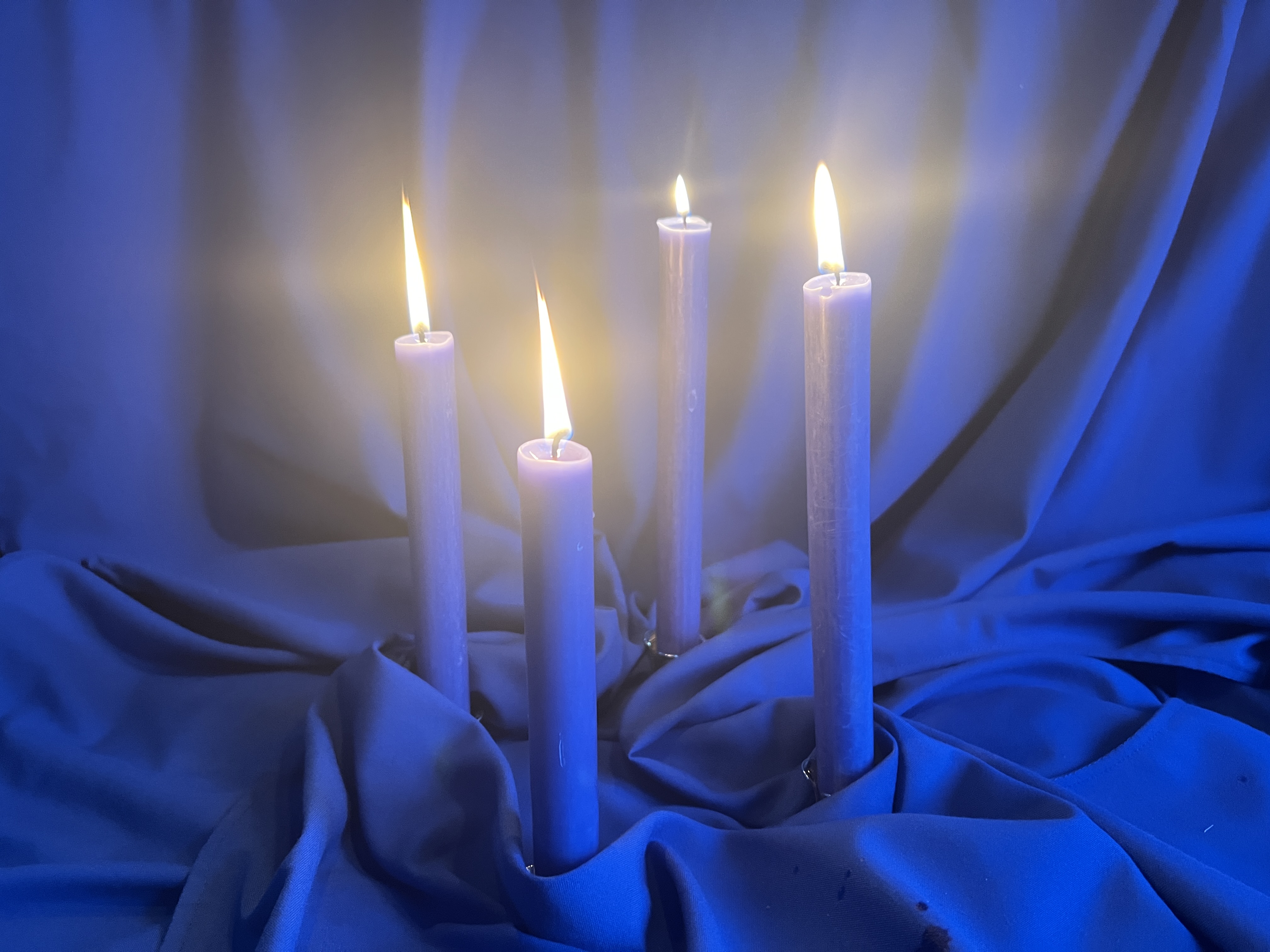
Blue is the colour now used in churches during the season before Christmas, the season called Advent. The colour blue is an interesting choice. Why, blue? At this time of year when the days are short, we hear the colour blue perhaps associated more with our mood – the winter blues.

Some believe blue is the colour of Advent because it represents the colour of the sky at the time of Jesus’ birth (Coman, 2024). The 13th century Italian artist, Giotto, tried to replicate blue in his depiction of the nativity:

https://www.worldhistory.org/image/12682/the-nativity-by-giotto/

We see blue whenever we look up and far into the distance towards the horizon where sea and sky meet. Looking into the distance likely means we are, from the perspective of feet on the ground, looking at a whole lot of blue, pointing us to the limitless expanse of the universe. And so, blue is the colour of hope, yearning and longing.

Yet, here on earth the colour blue is extremely rare in nature. Less than 10% of all plant species are blue and even so, most of the time their blue is an optical illusion.

It’s an optical illusion created by the refraction of light against what is actually red pigment. The only plant with genuinely blue leaves lives on the floor of the rainforest in South America.

But what really stands out is that while all other plant material changes colour when it dies, blue flowers are the only flowers that retain their colour in death. They retain their colour in death – maybe to remind the world that they haven’t gone away, that they have made their mark, that they, in some way we can’t explain or see with our eyes, live on. Blue is then also the colour of steadfastness. From everlasting to everlasting.

In the end, as we still walk by faith on this planet, it really doesn’t matter what colour you prefer. It doesn’t matter whether the Advent candles are all red or all blue, or all purple or some purple and one pink, or all blue and one white or all white.

The important thing is that you know why you are using the colours you are using. What is the story behind the colours you use? And how do those colours reflect a part of the Christmas story surrounding the arrival of God and God’s love to this earth?

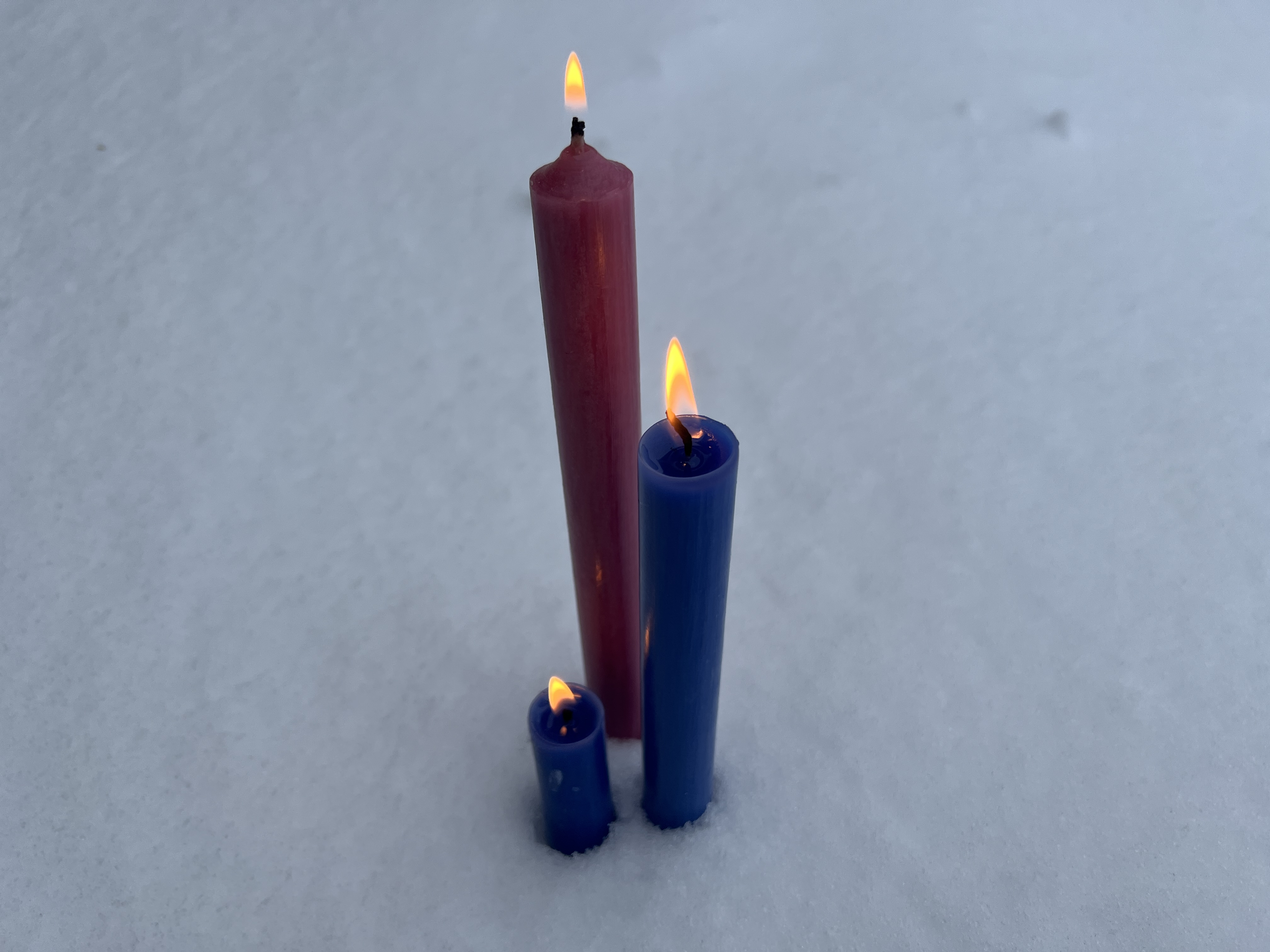
Today we lit the fourth and final candle on the wreath. This fourth candle is called the Love candle. When we know why we do certain things, we can then appreciate why others do it differently. We practice love. What are the reasons they have for the choices and decisions they make – regarding their traditions, their background stories?

We don’t love because others start behaving as we do. Love isn’t about making others conform to our way of doing things. Instead, love is appreciating and being genuinely curious about where the other person is coming from, and letting them know it!

And that’s how we respond in love. That’s how we keep the conversation going. Loving others is behaving in ways and saying things in order to keep the conversation going. The goal at Christmas is to love. The Christmas story lives in us when we keep the conversation going, when we don’t shut it down.

Mary said yes to the angel’s Word from God. Her heart opened even though her mind must have had many questions. Her heart expanded to include the Word of God into her life. She kept the great conversation of God’s love going in her. And her responses in love got the whole ball rolling. And Christmas happened. Thanks be to God!

References:

Babalola, B. (2021). Love in colour: Mythical tales from around the world, retold. William Morrow.

Coman, S. (2024). Seeds of hope: Day 5. Lutherans Connect. https://lcseedsofhope.blogspot.com/2024/12/day-5.html

Loorz, V. (2021). Church of the wild: How nature invites us into the sacred. Broadleaf.

Expected yet unexpected

The gift of Christmas is not what we first expect it to be.

Time seemed to accelerate beginning with Canadian Thanksgiving in October. Then before we knew it was Remembrance Day, then Black Friday, Cyber Monday, Giving Tuesday in November, then the planning for the Christmas holidays, decorating, making New Year’s reservations, attending the social office parties, family gatherings, choral concerts, organizing shopping days and finalizing all our lists in December. My head starts to spin just thinking about everything we associate with those markers on the calendar.

We wrap up our expectations of Christmas around these activities. Indeed, participating in all of it creates expectations about the destination, intended or not. What do you expect when Christmas Day finally arrives? What do you want Christmas to be for you?

Part of the challenge at this time of year is trying to match what we want with what we actually end up doing.

The Gospel today describes the people in first century Palestine as filled with expectation (Luke 3:15). What were they expecting? They were looking for someone to come and save them, a Messiah. They were a people who walked in darkness (John 1), in a troubled time in history. They yearned for a saviour to liberate them from oppression.

And they suspected that maybe this saviour was John the Baptist – a charismatic speaker with a magnetic personality that could captivate the crowds with shock-and-awe oration never-mind his poor taste in fashion.

The gift of Christmas is not what we first expect it to be.

When I think deeply about my favourite Christmas memories, they were moments that happened despite the planning and to-do lists. What sticks, what made the greatest impression on me from Christmas times past, they were all moments that were unexpected.

These precious memories came more as a surprise: a serendipitous encounter with a friend, an unexpected moment outside on a winter’s night under starlit skies, walking on snow-packed streets, delivering gifts, listening or singing to a certain piece of Christmas music, a smile and healing tears in the midst of sorrow and terrible loss.

The gift of Christmas is not what we first expect it to be. John the Baptist redirects the attention of his followers to the one who is the expected Messiah, but not in the way they expected. Jesus is the gift of Christmas who still surprises in the way he comes to us.

We’ve been taught to consider Jesus today not as a political leader to free people from military oppression. But we’ve also been taught that Jesus comes to us mainly as a ‘caring’ God, a God who is gentle, who cares, coddles, protects and watches over us.

But Jesus was also someone to reckon with. There was this no-nonsense, straight-from-the-shoulder truthfulness about the way Jesus related not just to his opponents, the Pharisees, but to his very own disciples as well.

And he was not always necessarily nice. Jesus called Peter, “Satan” in one sizzling exchange (Matthew 16:23). Jesus never said, “Blessed are the nice”. He publicly expressed his anger, causing a social ruckus on temple grounds. There he physically disrupted the unjust practices of the money changers (John 2).

The Christmas narrative is not just about coddling and comforting the privileged. John the Baptist, if no other character from the Christmas story does it better, calls us out of our comfort zone, and challenges us in our image of the Christ, the gift at Christmas. Jesus, both the expected and the unexpected one.

The true gift at Christmas makes us think twice about what we are receiving. In the One who comes to us at Christmas in ten short days, we may not expect what we actually receive. The gift may surprise us, catch us off guard. This may make us feel uncomfortable at first. That part of Christmas is unsung.

Yet, one other truth of Christmas gleaned from the biblical narrative: The gift came at the right time. God gave the people what they needed, when they needed it most.

The baby born in Bethlehem had a forerunner to get the people ready for the gift. Even though they were warned, they were still surprised and bewildered when the gift arrived: The messy stable. The crying infant. The bloody cross. The empty tomb.

Because what they got in Jesus was not a Messiah riding a chariot at the head of tens of thousands of warriors thundering up the Kidron Valley to Jerusalem. What they got was a vulnerable human who showed us the very face of God.

Today we lighted the ‘joy’ candle on the wreath. This third Sunday of Advent is traditionally called ‘Gaudete’, and it is rose coloured. ‘Gaudete’ is from Latin which means, “rejoice”, from Philippians (3:1/4:4) – “Rejoice, rejoice in the Lord always! Again I say rejoice!” Gaudete Sunday gives us permission to praise God and give God thanks for the gift, expected yet unexpected, that soon arrives.

Do you expect to be surprised? When you are, that experience brings the joy of Christmas.

Stoppage time: the waiting game

“Prepare the way of the Lord!” shouts John the Baptist in the wilderness (Luke 3:1-6).

There was a child who was asked to read a part in a Christmas pageant at church. She had the part of John the Baptist. She was perfect for the role, a firecracker of a personality, a born leader. She had many friends who listened to her and followed her on the playground.

But she was worried that she would make a mistake or forget her lines. She told her parents that she didn’t want to go in front of so many people. It made her stomach upset and she felt scared.

Her parents told her stage fright was normal and that the best way to deal with her fear was to be prepared. Being prepared meant going over her lines 10,000 times in the weeks leading up to the play until she could fall asleep reciting her lines perfectly.

She protested. What if her mind would blank out when getting on stage? What if all that practice would mean nothing if she froze under the lights? Why should she even bother trying?

Preparation is the virtue we hail in Advent, when we are called to watch and wait – and prepare! – for the coming of the Lord at Christmas.

But what happens when we don’t have time to prepare everything just right? What happens when we are not prepared, when it comes down to it?

The notion that during Advent we are to wait, at first seems ludicrous. There is no time. How can we wait when there is so much to do (to prepare!)?

But what if the key to being prepared is learning and practising the art of waiting?

Because the truth is, no amount of preparation can prevent a tragedy from happening just as no amount of preparation can have you ready for the birth of a child when it happens. When it happens, at some profound level, we know we can never be fully prepared. When it happens, we know that we could never have anticipated and controlled for every contingency. So, what if being prepared means we know how to wait for it? Could it be, maybe we need first to learn how to wait?

From the Gospel, waiting first means we need to slow down. When shopping malls, parking lots and highways in December indicate everything but, slowing down is vital to receiving the Word of God this season. To practice, notice how you read scripture. So, in the Gospel reading today resist the temptation to skip through the first couple of verses (Luke 3:1-2) – it’s a list of names we have difficulty pronouncing.

Yet, there is purpose here. Luke, the Gospel writer, is intentional about naming all the political and religious rulers of the day and the time they presided. Luke firmly plants the message in a particular place and time in history. We can’t rush through this. Read those words intentionally as if they were a prerequisite for what comes after. And this takes practise. Read slowly.

Every valley shall be lifted and every mountain made low. Not just one valley. Not just one mountain. Not just the valleys associated with Friday night. Not just the mountains confronted Monday morning. Not just the valleys and mountains experienced during worship. In every valley of our lives. On every mountain encountered in daily living.

God’s message needs to land in time and place. We need to slow it down in order to notice it everywhere.

Luke is also quite clear, and intentional, about placing John the Baptist in the wilderness. Not in the crowded confines of a stuffy boardroom or lecture hall. Not in the opulent chancels and temple sanctuaries. Not in the public square in the middle of the city. Not even around the kitchen table or comfy living rooms of our private homes.

In the wilderness, there is lots of space, open areas yielding infinite horizons and unexplored terrain. There is this expansiveness associated with receiving God’s word. We rarely give thought to these conditions when the message is delivered. But there is always context. Waiting is preparing the ground, turning the proverbial soil of our hearts in order to receive the gift. God works from the inside out as much as God works from the outside in. Those expansive contexts of our lives, inner and outer, must be nurtured and practised.

Here is something you can do this Advent to illustrate this practice of slowing it down. For example, I know exchanging and mailing Christmas cards is not as popular today as it was a few decades ago. But maybe some of you can relate.

So, when you receive a hand-delivered Christmas card or in the mail after the postal strike is over, don’t open it right away. If you live with someone else, wait until you can sit down with them for a meal or coffee later that day to open it together, read it and give thanks for the person sending it. Or, if you live alone, wait until your next devotional time, or quiet time to open it, read it and give thanks for whomever sent it.

Advent is about slowing down, opening up time and space, and marking time.

Finally, waiting is becoming aware that the message is for you. Not for someone else. Not for the wayward children or grandchildren. Not for those who disagree with you. Not for those from other parts of the world. Not for those who behave differently from you. Not some part of the culture you do not participate in.

When John the Baptist spoke of a baptism of forgiveness, his opponents – the Pharisees – didn’t at first think this baptism referred to them. They, after all, had already participated in the mikvah, the Jewish ritual of immersing into the purity bath.

The rug was pulled from underneath the Pharisee’s feet when the message that John the Baptist brought was meant for them. And not just for the Gentiles, but for Jewish people as well – everyone who does not receive the message of repentance and forgiveness for themselves.

Waiting opens up regions of the soul to admit the call of repentance and promise of forgiveness into each and every one of us. Waiting allows us to contemplate what that changed life means for us. It’s very personal.

But what if we are like the little girl preparing for the Christmas pageant? What if we can’t or don’t prepare? What if we insist, “It’s not for me.”

When we are not ready for what happens in life, when there is no amount of work that can adequately prepare us for whatever comes our way, God still puts extra time on the clock. Just like at the end of a 90-minute soccer match, there’s always stoppage time to account for injuries that delayed the play of the game during the first 90 minutes. There’s extra time added. Always.

God’s patience is infinite. God waits for us. Even when we get injured, are delayed, or for whatever reason can’t seem to get our ducks in a row. God’s pacing and timing operate on a different level which we cannot fully understand, except that God makes time and space for us. And God’s message is to each one of us, personally. That message is conveyed in love and mercy.

“I am confident of this,” writes Saint Paul to the Philippians, “that the one who began a good work among you will bring it to completion by the day of Jesus Christ” (1:6).

The second candle we light today is called the Peace Candle. When we wait for the Lord by slowing down, creating space, and we receive the message for us personally, we prepare in a way that brings peace into our lives. Because of God’s grace and love, peace reigns.

Zechariah, the father of John the Baptist, sings God’s praise in the temple at the news of John’s birth:

78 In the tender compassion of our God
  the dawn from on high shall break upon us,
79 to shine on those who dwell in darkness and in the shadow of death,
  and to guide our feet into the way of peace. (Luke 1)

Having peace is about living daily with ourselves and others in the mercy, forgiveness and love modelled by the one for whom we wait, Jesus Christ the Lord.

Finding green shoots of hope – everywhere

Hope is the theme of the first Sunday of Advent. It is the hope candle, the first one, we light on the Advent wreath today.

But I must admit after reading the scripture assigned for the start of thie new year in the church calendar (Luke 21:25-36), the Gospel from Luke did not initially feel like an Advent-themed scripture. For one thing, Jesus points to fresh leaves on a fig tree, a sign of coming summer. Summer? When winter in the northern hemisphere is bearing down upon us?

After all, shouldn’t we be reading Christmas stories and singing Christmas carols already, like they are doing in the malls? We’re getting our shovels out and snow blowers primed, not looking at green leaves. Admittedly, many of us might rather skip over Advent, its call to spiritual discipline, slower pacing, prayer and perspective, and rush headlong into the frenzy of the season.

The word, Advent, from Latin, means “coming” and refers to the comings of the Lord: the coming of Jesus at the first Christmas two thousand years ago; the second coming of Christ at the end of all time; and the coming of Jesus into our lives every day and in moments we perceive as grace-filled.

When we work at it a bit and unpeel the layers of this Lukan scripture we nevertheless find clues that plant it firmly in this season of preparation, anticipation and longing called Advent. In short, hope undergirds this Gospel.

“Then he told them a parable: ‘Look at the fig tree and all the trees; as soon as they sprout leaves you can see for yourselves and know that summer is already near’” (v.29-30).

One quick Google search reveals that figs are mentioned in the bible 50 times (Bolen, n.d.), because they were so common in that time and place, being a part of their economy and a staple of their diet.

A recent fig excavation in Ireland found 2,000-year-old remains of a fig, preserved because it had been burned (RTE Media, 2024). Among other things, this archeological discovery points to a lifestyle adopted so far north and so far away from Rome. Considered an exotic fruit, figs were enjoyed not just in regions governed by the Roman empire nearer the equator, but in areas of Europe not controlled by Rome. Figs found in the least expected places: Ireland.

Jesus often used fig trees as symbols and metaphors in his teaching. He used common, relatable images of people’s lives to make a point about living in God’s kingdom. But God’s kingdom on earth, not in heaven. “Your will be done on earth,” the Lord’s Prayer points us to focus here, on the ground.

Annie Dillard said, “The Gospel is less about how to get into the Kingdom of Heaven after you die, and more about how to live in the Kingdom of Heaven before you die.” If it were the other way around, why would Jesus spend so much time talking about coins, treasures buried in the earth, fig leaves and trees, lost sheep, seeds and mustard trees? The point of the Gospel is to point us to this life and finding hope and ways of relating to each other and the world that reflect kingdom values.

Admittedly, this perspective on faith requires some hard work. And maybe that’s why we shy away from that ‘kingdom on earth’ perspective. To nurture hope as a Christian is not to remain passive in facing seemingly hopeless situations. It is to be active in faith.

Perhaps the most striking reason for observing an intentional Advent season prior to the festivities of Christmas is the reality common to us all, the reality of death and grief. Approaching Christmas can be the most difficult for those especially experiencing this season for the first time without their loved one, or for those preparing for their last one.

In no other circumstance of life can Advent be such a gift. To slow things down. To temper expectations. To practice contemplation, value simplicity, and give permission to those who suffer, give them space, room to just be and do whatever – without the stringent expectations of the hustle culture and anxious disposition to doing what is expected. Here is an opportunity to say, ‘stop’. Breathe. And reset.

In dealing with grief, it is important to do something to acknowledge the holidays (Morris, 2018). Because grief is unique to each one of us, for some it might mean doing the same thing you’ve always done, or it may mean doing things a little bit differently this year.

The key is to do something, however simple and small – even if at first you might not feel like it. Being hopeful is not a feeling. It is doing the right thing for you.

So, on the one hand, don’t do what is expected. Don’t do what the world thinks you should do. Don’t pretend to be all joyful and happy. Don’t join the consumer frenzy and hustle or put pressure on yourself to be a certain way.

Lower your expectations. Tell yourself it’s okay to do less this year. Give yourself permission to be sad and cry during the holidays. On the other hand, do something. Don’t do nothing. Don’t wait for feelings to be your signal to act.

Many faith communities will offer a Blue Christmas service. A very valuable ministry, to introduce sacred text, Advent hymns, comforting social support, and to hold contemplative, accepting space to an otherwise loud and intense season. Perhaps you’ve once attended a Blue Christmas service. If you would like to attend one put on by Ottawa churches this month, I can give you a couple options where I know they are happening.

What are personal things people who struggle with loss and grief can do in the weeks leading to Christmas?

Lighting a candle in honour and memory of a loved one. Making or buying a special tree ornament or stocking you can hang on the tree. Asking everyone at a family gathering to write down a fond memory they have of a loved one and place those written memories in a special vase or keepsake box that you can read together later in the season. Making a donation to a charity in a loved one’s memory. Volunteering in a hospital, food bank or serving food at an Out of the Cold program. These are all meaningful activities to engage.

The point is, Advent is such an important season to observe, before launching mindlessly into the Christmas festivities and frenzy which, let’s be honest, are by and large self-serving and self-indulging. Especially in a time that feels hopeless, there are things you can do to shift that focus – meaningful things – to discover hope again.

Find green shoots of hope wherever you can. Look for the proverbial fig leaf, even if in places you might never have expected. And do something. And if, this year, you cannot …

Some people and communities are doing great things. Celebrate them. Others are doing small but important things. Thank them. Others are doing courageous things. Appreciate them. Keep hope strong. Keep hope alive (Reich, 2024).

References:

Bolen, T. (n.d.). Fig Trees. Retrieved from https://www.bibleplaces.com/fig-trees/

Morris, S. (2018). Overcoming grief (2nd ed.). Robinson.

Reich, R. (2024, November 19). How to hope in a hope-less time [blog]. https://robertreich.substack.com/p/how-to-hope-in-a-near-hopeless-time?

RTE Media. (2024, November 14). On a roll: Fig from 2,000 years ago found at Dublin archaeological site [website]. https://www.rte.ie/news/dublin/2024/1113/1480725-fig-excavation-dublin/

Prayer as Silence – Advent sermon series 4

In this concluding sermon in a series on prayer this Advent, I invite you to consider prayer as silence. In the first, we acknowledged prayer as growth – that there come times in our lives when God invites us into a deeper communion of prayer; and so, a different way of praying. In the second sermon, we considered that the fundamental work of prayer was to listen – listen to the other and listen to God. Last week, we reflected upon an important type of prayer that often is missed especially during times of the year we are called to be happy; the lament makes our relationship with God real and our ultimate joy authentic.

The eagle changes its flying posture depending on the state of the air around it.  When in flight it encounters noisy, turbulent air, the eagle folds its wings straight down and underneath, riding the agitated, unstable winds in as compact a body mass as possible.

But when the air is calm high above the earth, the eagle will spread its massive wingspan to its farthest limits. It will expand its body mass to its fullest potential as it coasts and glides on the silent, peaceful air.

Silence gets a bad rap in the Protestant church especially. Since the Reformation and Enlightenment, we are suspicious of anything that is interior or to do with experience. When we still our minds, we are afraid that we will let the devil in! 

And, we will straight away point to bad silence – like the violence percolating beneath the surface of giving someone ‘the silent treatment’. Or, we rightly condemn the complacent, fearful silence in face of injustice. In both cases, words must be spoken. And better loudly at that!

Yet, there is a silence that is healing, transformational. We find it in nature. We find it in the stillness of predawn dew resting on flowers and blades of grass. We experience it the first night in the bush after driving all day away from the loud, noisy city. 

We also find silence in the bold action born of convicted hearts, action that happens behind-the-scenes. Not in the spectacular, the sensational. Not in attention-grabbing largess of personality shock-and-awe. But in the quiet, dedicated, barely perceptible giving of those who know themselves and respond to the still, small voice speaking in their hearts.

This is Joseph. He appears, indeed, to be the strong, silent type. But not because he is afraid to say or do anything. But because he has the courage to respond. He begins his risky venture with Mary “after waking from sleep.” Even though he went to bed “considering in his mind” all the problematic aspects of his relationship with Mary, “resolving” to leave her, his course of action changed dramatically after he stopped the busy-ness of his mind, the activity of his consciousness – as good and righteous as it was – and went to sleep. And dreamt.[1]

There is a difference between the absence of noise and silence. Something is already happening in this holy silence. Something we’ve been too busy, too rushed, too loud, too distracted to notice. Where God already is, in between the words, in between the spaces defined by our cerebral, ego-driven impulses and imaginations.

This is good, Lutheran theology! The grace of God already exists in our lives. We don’t have to make it happen. Really, we don’t! God is in the world, already. It is given. God is present. God is waiting for us, in the silence of our hearts. God is waiting, already, in the circumstances and situations of the world. God is always listening to us. 

But are we always listening to God? Are we willing to step into the river of God’s action and Spirit? Will we immerse ourselves into the prayer already flowing in our lives, a prayer flowing into the ocean of God’s presence and love? The late Thomas Keating was known to have said, “Silence is God’s first language; everything else is a poor translation.”[2]

It is in silence where we can be fully and truly who we are. We don’t have to hide anything. We don’t have to meet anyone’s expectations, put on a good impression or please anyone. We can let go and let all that is there come to the surface in the confidence that all of it is held in God’s love – the good, the bad and the ugly. We can stretch to our fullest without judgement. We may be, in truth, letting the devil out, not in.

May we step into the spaciousness of God’s mercy, peace and joy just waiting for us in the silence of God’s ever-present love. May we learn to pray in the gift of silence, especially when we may so desperately need it.


[1]Matthew 1:18-25

[2]Cited in Theresa Blythe, Fifty Ways to Pray: Practices from Many Traditions and Times(Nashville: Abingdon Press, 2006) p.32

Prayer as Lament – Advent sermon series 3

Traditionally, the Third Sunday of Advent is known as Gaudete Sunday, a command to rejoice! Be joyful!

In all the furtive busy-ness of getting ready for the big day, in all the running around and striving to check off everything on the ‘to do’ list before Christmas, carrying all the pressure and responsibility …

The church says: don’t take yourselves too seriously on this journey. There are times when we need to not just listen up, but lighten up. Gaudete!

Yes, we are on the path of transformation. And this path requires us to be intentional and disciplined. After all, Christmas is coming; there is much to prepare! It was Ignatius of Loyola, a contemporary of Martin Luther in the 16thcentury, who urged the church to “pray as if everything depended on God, and work as if everything depended on us.”[1]

Not bad advice. Except we won’t survive this journey if we don’t also take the foot off the gas pedal from time to time. Can we let things be as they are? Can we accept ourselves and rejoice even at the imperfection of our lives – the cracks in who we are? Or, have we deluded ourselves into thinking that only when everything is perfect, and finished, and just the way it ought to be, then, and only then, can we rejoice?

How can we be authentically joyful, especially when things aren’t the way they are supposed to be in our lives and in the world?

In our ordinary lives as much as in our worship and prayer, we have to make room for lament. Lament? It seems odd to suggest that on Gaudete Sunday of all days – the Sunday during Advent when we are called to rejoice – we offer our laments to God in prayer.

I’d like to suggest this is the path to expressing true joy. Lament as a necessary step on the path to true acceptance, hope and joy. So that our rejoicing isn’t just an extension of our culture’s surface ‘good cheer’ which often only masks deeper needs.

The Psalms, which are the primary prayer book for the ancient Israelites and Jews of Jesus’ day, are filled with laments. We read one together this morning.[2]Even Jesus, after his triumphal entry into Jerusalem on Palm Sunday, expressed his disappointment and sorrow over Jerusalem[3]. And then in the garden of Gethsemane the night before he died, Jesus prayed to God if only his cup of suffering could be taken away.[4]Jesus wept for the death of his friend Lazarus[5], and on the cross he cried out, “O God, why have you forsaken me!”[6]quoting a Psalm. Jesus was familiar with, and used often, the prayers of lament on his journey to new life.

Perhaps we are afraid that if we do take the foot off the gas pedal during this season of rush-rush, we might not very much like what comes to the surface. In that moment when we are not driven by our compulsions and distractions, what scary thing might emerge?

This season can be difficult for those, for example, who grieve the loss of loved ones especially when it is the first Christmas celebrated without them. We are supposed to feel happy, but we are burdened by a deep sadness of loss. And all those messages that declare we are to be ‘joyful’ only serve to deepen our sorrow. How, then, can we be joyful?

In the Academy Award winning movie, “Inside Out”, eleven-year-old Riley has moved to San Francisco, leaving behind her life in Minnesota. She and her five core emotions, Fear, Anger, Disgust, Sadness and Joy struggle to cope with her new life.

In the movie, each of these emotions is a separate character in the control room of Riley’s mind. Until the big move, it was always Joy who was in the driver’s seat. Joy determined how Riley processed events and situations in her life. Even if Riley, who loved to play hockey on the family pond, missed a shot on goal, Joy would step in and emphasize the bright, positive side of the situation. Sadness would always stand nearby, trying to be more influential in defining Riley’s experiences. But, until the move to San Francisco, Joy always won out.

When big events in our lives happen – events that are happy or sad – these change us and the way we look upon life. By Joy insisting on dominating, even when Riley experienced significant challenges at school and at home after the move, she became worse and worse, shutting out her parents and isolating herself.

It was only when Joy let Sadness take control, did Riley turn the corner. Riley became better in her new life when no emotion was denied, but given its rightful place given the circumstance. The emotions – especially Joy and Sadness – discovered that both have to take turns in the driver’s seat from time to time. Both/And. Not Either/Or.

Christianity did not combine opposites into some kind of favourable blend. Neither does having faith exclude, deny nor avoid one in favour of the other. Rather, our faith holds all dimensions of the human, and all the dimensions of the divine in vibrant and furious tension.[7]Like, the tension of becoming truly joyful when we can also offer our lament. When we can let sadness take the driver’s seat for a bit of that journey especially when it seems it’s supposed to be all about being happy all of the time.

In the Advent study group on prayer, we reviewed the various characteristics of a lament by looking at some Psalms. One characteristic will often escape our notice, maybe because it doesn’t fit our expectations of what lamenting is. You know, we think it’s all tears and gnashing of teeth and breast-beating and woe-is-me kind of stuff.

But a lament is not a lament unless it also carries the one who is praying into a place of confidence and trust in God. Maybe that’s why Jesus lamented so much. Because he was so faithful to Abba. Trusting in God his Father. Besides the obvious grievances and plea for help expressed in the Psalm, did you not also hear and feel joy born out of confidence and trust from the Psalmist’s words this morning?

“Restore us, O God; let your face shine upon us and we shall be saved. You have brought a vine out of Egypt; you cast out the nations and planted it … Turn now, O God of hosts, look down from heaven; behold and tend this vine; preserve what your right hand has planted … Let your hand be upon the one at your right hand, the one you have made so strong for yourself. And so will we never turn away from you; give us life, that we may call upon your name. Restore us, O Lord of hosts; let your face shine upon us, and we shall be saved.”[8]

Prayer as growth. Prayer as Listening. Prayer as Lament. On the road to Christmas.

[1]Cited in Patrick J. Howell, David L. Bartlett & Barbara Brown Taylor, eds. Feasting on the Word: Preaching the Revised Common Lectionary Year A Volume 1(Kentucky: WJK Press, 2010), p.65-66.

[2]Psalm 80; see also Psalms 74, 79, 85, 90.

[3]Matthew 22:37; Luke 13:34

[4]Matthew 26:39

[5]John 11:33-35

[6]Matthew 27:46, citing Psalm 22:1

[7]Howell, ibid., p.64

[8]Psalm 80:7-8,14-15,17-19

Prayer as Listening – Advent sermon series 2

Last week we met the hermit crab who needs to find a larger shell to grow into. We considered prayer as personal growth. That when we come to various crossroads on the journey of life and faith, we can either give up on a life of prayer or we find another form of prayer.

Today, we consider how important our community is to that journey. Indeed, our relationships are critical and vital to our health and well-being. In truth we cannot do without a community of faith if we want to continue maturing in faith.

After last week’s first in the sermon series on prayer, I was made aware of howthese hermit crabs will find their new, larger shell. Apparently, they find a spot on the beach and line up, together, in a little community of crabs. When a new member of that community finds them on the beach, that new crab drops its old shell at the front of the line. Shell-less, it then goes to the back of the line to wait its turn in finding a larger shell.

The crab at the top of the line – who has waited the longest – has first dibs at the new shell freshly deposited. If it fits, great! Off it goes to resume its life, wherever. If it doesn’t fit, it will keep its place at the front of the line until a shell is left there that fits. The second in line will then try it on. And, in this way, the line moves forward over time until each crab in the community has found a new, larger shell for its growth.

According to this pattern, no crab is left on its own to find its new shell. In this little community no crab is left by itself on the journey of searching, seeking and finding. The hermit crab’s growth is supported by a community of crabs on the journey they share, even as each crab occupies its unique place in line. No two crabs are the same, after all.

Often we think that what glues us together in community is talking, saying words. When we feel we must assert ourselves aggressively. We impose our opinion about who we are about and what we believe about things. We think we are doing the right thing by initiating our opinion. “Speak up!” is the mantra that captures what we believe binds us in community.

Here, we must confess that at the root of this strategy is a fear that if we don’t first assert ourselves in a dog-eat-dog world, somehow we are betraying our own beliefs. We are afraid that if we listen first, we’re not advocating for own ideas and why those ideas matter; we are afraid we’re giving up on our convictions.[1]

“Samar Minallah Khan, the feminist Pakistani anthropologist and filmmaker, was enraged. Local tribal leaders were trading little girls as compensation for their male family members’ crimes.

“These leaders, responsible for settling legal disputes in their villages, act as local judges. A long-standing practice was to address major crimes by ‘compensating’ a harmed family with a daughter of the family doing the harm. The guilty father or uncle was then considered ‘free’ and the village was told this issue was ‘resolved.’ Samar thought this tradition, called swara, was horrendous: It forever changed a young girl’s life, through no fault of her own.

“But although Samar was angry, she realized she’d never get to the outcome she wanted if she led with that anger. So, she tried something else. First, she listened more than she talked. She listened to the religious (male) leaders explain the use of swara and its benefits interpreted by the Prophet Mohammad. She listened to the fathers and uncles who allowed their crimes to be expiated this way. And, by listening, Samar learned so much that it enabled her to bridge a seemingly unbridgeable chasm of difference.

“Samar had first assumed that the fathers whose crimes were being forgiven this way were happy to let their daughters suffer for their crimes. But when she listened to them, she heard that they were not. They wanted another way.

“She [also] heard from local leaders that they placed an extremely high value on tradition. She heard from religious Muslim legal scholars that swara was a form of ‘vicarious liability’, which is not allowed in Islam. And finally, she heard that in earlier times, disputes were also resolved by sending a girl to an enemy’s family, but she didn’t stay there permanently; instead, she would be given gifts and then sent back to her parents’ home. All of this, she taped.

“She convened local communities to watch these videos and talk with one another about the tradition and its implications. One by one, local tribal leaders changed what they considered true justice. They decided that swara could be replaced by monetary compensation. Samar created change not by selling her idea, but creating a way for everyone to arrive at a new idea, together. What Samar did was to ask people to share their perspective, without trying to convince them of hers.”[2]

This process took time and a whole lot of patience. If we do this thing together, as Saint Paul advocates in his letter to the Romans, we need to be like those hermit crabs lined up together on the beach waiting for and taking turns in finding our next, larger shell.

The values of sharing, of collaborating, of operating in harmony with others – these are at the root of Saint Paul’s description of a community of faith, in Christ: May the God of steadfastness and encouragement grant you to live in harmony with one another, in accordance with Christ Jesus, so that together you may with one voice glorify God.[3]

The search for God—this is our prayer life—begins with accepting our humanity. After all it was in the stable of Bethlehem, the stable of humanity that God has come in search of us. I like this translation of verse seven in chapter fifteen of Paul’s letter to the Romans: “Accept one another, therefore, as Christ has accepted you.”[4] We accept another by learning first to listen.

So, it’s not talking that binds us into community. It’s not needing to force our way in, somehow. In truth, when you think about your closest relationships, what binds you together—what functions as the cartilage—is the confidence and trust that the other truly listens to you. And therefore accepts you. Not, “Speak up!” but rather, “Listen up!” needs to be our mantra. Prayer is not primarily talking but listening.

I read that a true friend is someone who knows everything about you and still accepts you. Isn’t that our spiritual longing, our motivation to pray and connect with God? Isn’t that the dream we share? That one day each of us meets a person with whom we can really talk, who understands us and the words we say—who can listen and even hear what is left unsaid, and then really accepts us. God is the fulfillment of this dream.[5]And so, in prayer as in all our relationships, we listen to God whom we love as God listens to us.

In making room for another in the act of listening receptively, the irony – when we first listen well—is we find that we ourselves have found a place to be heard. Deeply heard, understood, and accepted. By others in community and by God who stands beside us in line and waits for us to find that larger shell.

[1]Nilofer Merchant, Mindful Listening: Emotional Intelligence Series (Boston: Harvard Business Review, 2019), p.75.

[2]Ibid., p.69-71.

[3]Romans 15:5-6

[4]Patrick J. Howell in David L. Bartlett & Barbara Brown Taylor, eds., Feasting on the Word: Preaching the Revised Common Lectionary Year A Volume 1(Kentucky: WJK Press, 2010) p.38.

[5]Ibid., p.38-40.

Advent blessing for the journey

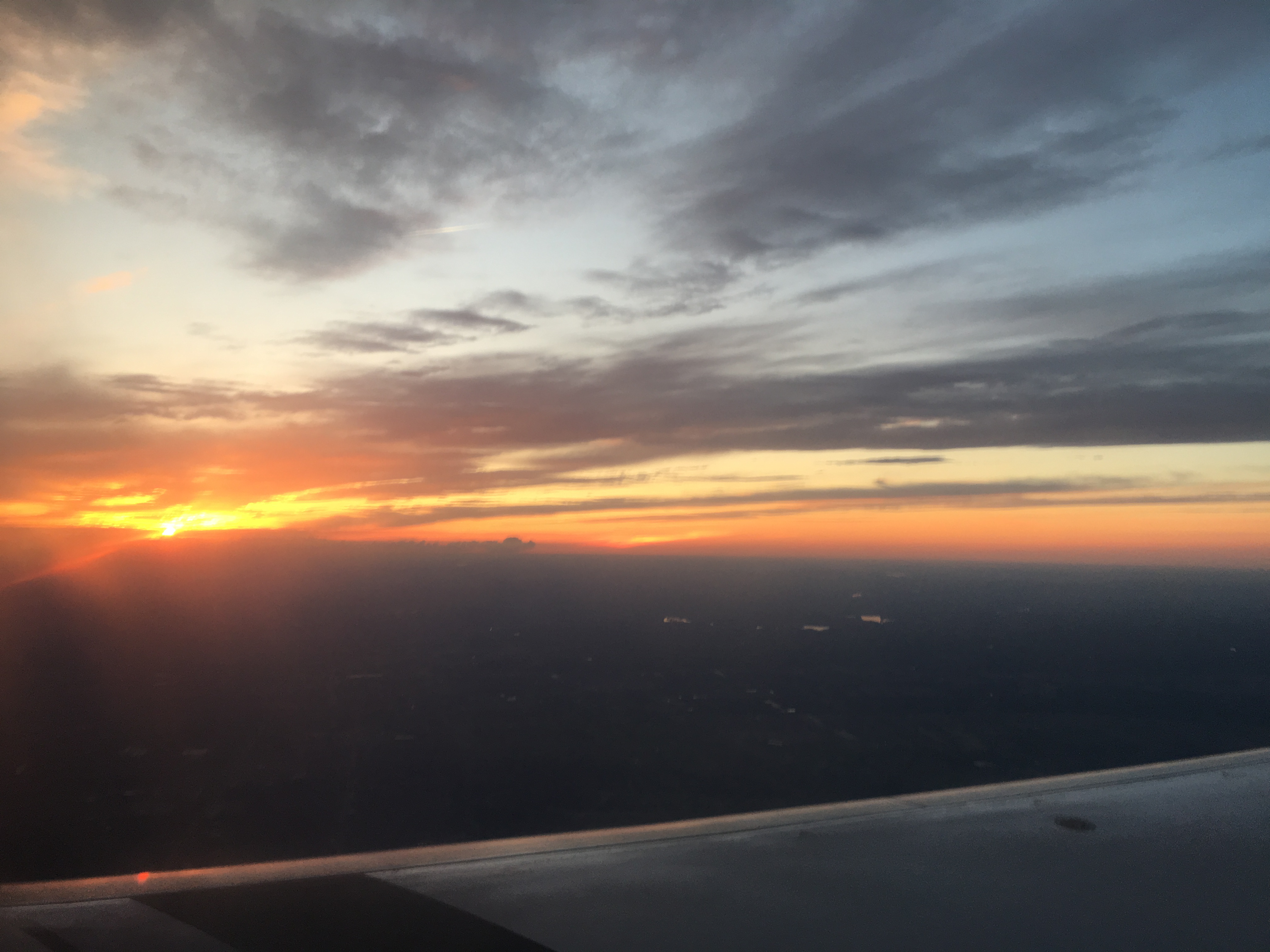
When flying from Ottawa to London or Frankfurt, you leave late in the evening. Almost immediately after departure it is dark. And while most of the journey transpires in the dark of night, the flight over the Atlantic eastward nevertheless goes with the expectation—the promise—that you are heading into a new day. After four or five hours of darkness, a thin pinprick of light first lines the horizon ahead. It isn’t too long afterward that the journey is completed in the bright daylight.

The journey of Advent recognizes the darkness in which we walk and the time it takes. We can’t get where we are going without journeying through the night. Each of us are somewhere on the flight path, using the time we have to be reconciled to our losses and the suffering we bear.

Whether we carry the burden of grief and loss, of suffering and pain, of anxiety and fear, we are nevertheless heading towards a new day. On this long journey in the dark we wait, as it were, for the sun to shine again.

May this journey of Advent be hope-filled, that as you make your way towards the new dawn, the expectant joy of the coming of the light will give you strength and courage to keep going in the grace, peace and love of God.

Pastor Martin

IMG_7127

Prayer as Growth – Advent sermon series 1

In the movie, “Good Boys”, three young friends explore the meaning of friendship and growth. On the journey towards maturity, Max, Lucas, and Thor discover what it means to be in a healthy relationship that can change over time.

Everything is going fine until each boy begins to pursue individual goals. At the same time, they realize that what one of them wants to do is not necessarily what the others like to do. It looks like they are going their separate ways. And the friendship group appears to dissolve.

When Lucas sits down with his parents in tears, bemoaning the breakup of his friendships, his parents offer some sage advice. They recall an old pet Lucas used to have – a hermit crab. But, when Lucas was much younger he wasn’t told how exactly his hermit crab had left them. His parents, now, tell him the truth:

The hermit crab had to find a new shell, they say. And died on its way to the beach. They explain that a hermit crab eventually outgrows its shell. And must find another shell that is larger into which it can continue to grow. If it doesn’t find a larger shell, it will die one way or another.

Lucas makes the connection that he is growing, and may need to find a larger shell to grow into – a larger social group, new friends, other activities. Leaning on this truth, Lucas is freed from the self-blame for the recent troubles with Max and Thor. It is normal and healthy to go through these growing pains in relationship. As it turns out, the boys learn to find a new way of relating with one another – a way that respects each other’s unique talents and personalities.

Throughout his letter to the Romans, Paul describes a healthy relationship to God.[1]And as we grow in this relationship, we change. And the way we relate to God changes.

In this first part of the series of sermons in Advent on prayer, I would like to underscore this theme: Prayer as growth, in our relationship with God.

There are times in our lives, events and circumstances, that give us this sense that our whole person–our deepest desires, the core of who we are–is actually waking up. At first some experiences may not feel particularly enlivening. Ironically, it is often difficult, challenging times in life that cause this re-birthing within us.

Paul writes in his letter to the Romans: “Wake from sleep, now is the moment! Shed your clothes of darkness and ignorance and be clothed with Christ.”[2]This imperative is a common theme in Paul’s writings; to the Ephesians he writes: “Sleeper, awake! Rise from the dead!”[3]

And in our Gospel text today, Matthew records Jesus’ instruction to “Keep awake!” especially at the time when you are in the darkness of not knowing, or in grief, or loss or some kind of suffering. This is the time to wake up, for God is doing a new thing for you.[4]Do you not perceive it? It is time to get up. It is time to slough off the old and make room for the new. It is time “to live into the reality of the new age about to dawn.”[5]

We hear the call at this start of a new church year and the first Sunday in Advent. We hear this call to spiritual renewal as we seek to deepen our lives of faith and wait upon the coming of the Lord into our lives. The call to renewal starts with prayer.

I started by saying there are occasions in our lives that become opportunities—divine invitation, you could say—to try a different way of praying.  Like spokes on a large wagon wheel, there are different ways to pray—intercessory praying, devotional prayer, prayers with lots of words, prayers without using any words, imaginative prayers, body prayers, sacraments, song, music, art.

A variety of prayer forms give us ways of growing and deepening our relationship with God in Christ. Because at the centre of every wheel—even one with several spokes—is the hub, which is Christ. The ever-present, living Lord, moves with us and in us down the road of life.

As we grow older, for many of us, the only real question is: Why doesn’t  God answer my prayers? Because of this conundrum alone, many of us frequently just stop praying and hope for the best. Hopefully on our life’s path, when we meet others we listen to them and discover that no two of us have exactly the same spiritual journey.[6]So, why would we believe there is only one way to pray or only one way of understanding what happens in prayer?

We are each like the hermit crab, seeking to find a larger shell to grow into.

But how can we be encouraged to find a larger shell? How can we even believe that we are growing, that our broken lives so weak and stained by life’s hardships be the place wherein Christ makes his home and through which Jesus’ light shines? How is this even possible?

I heard this week the story of someone recently walking through the woods. Without yet any snow on the ground to brighten things here in Ottawa, the landscape is shrouded in browns and darkish colours. Blah. While walking the forest path, she stopped at large, oak tree which still held its leaves.

But the leaves weren’t full and vibrant with life as you would see in late Spring. They were curled at the edges, no longer pulsing with life-sustaining chlorophyll. Like crumpled, dried paper, these leaves hung there, lifeless and dead. Just waiting for the inevitable drop to the ground.

In that instant, the clouds high above suddenly broke. And streams of sunlight immediately penetrated the darkened woods and shone upon these listless leaves. In that moment of brilliance the leaves were clothed in the light. They were animated in the sunshine and restored to an incredible vision of renewed life. They absorbed and reflected the light. Their previously deadened state was transformed.

In the darkness of predawn, it is indeed hard to believe there is anything but the night. But arise, awake! The light is coming. And when the son comes as it does every morning, we are transformed and renewed in the light. And our lives reflect again God’s grace and love.

[1]Patrick J. Howell in David L. Bartlett & Barbara Brown Taylor, eds., Feasting on the Word: Preaching the Revised Common Lectionary Year A Volume 1(Kentucky: WJK Press, 2010) p.18.

[2]Romans 13:11-14; ibid., p.16.

[3]Ephesians 5:14.

[4]Matthew 24:42; Isaiah 43:19.

[5]Howell, ibid., p.14.

[6]Ray Leonardini, Finding God Within: Contemplative Prayer for Prisoners (New York: Lantern Books, 2018), p.1,41.