And they shall grow

The prophet Isaiah writes,

10For as the rain and the snow come down from heaven,
  and do not return there until they have watered the earth,
 making it bring forth and sprout,
  giving seed to the sower and bread to the eater,

11so shall my word be that goes out from my mouth;
  it shall not return to me empty,
 but it shall accomplish that which I purpose,
  and succeed in the thing for which I sent it.
12For you shall go out in joy,
  and be led back in peace; 
  … and all the trees of the field shall clap their hands.[1]

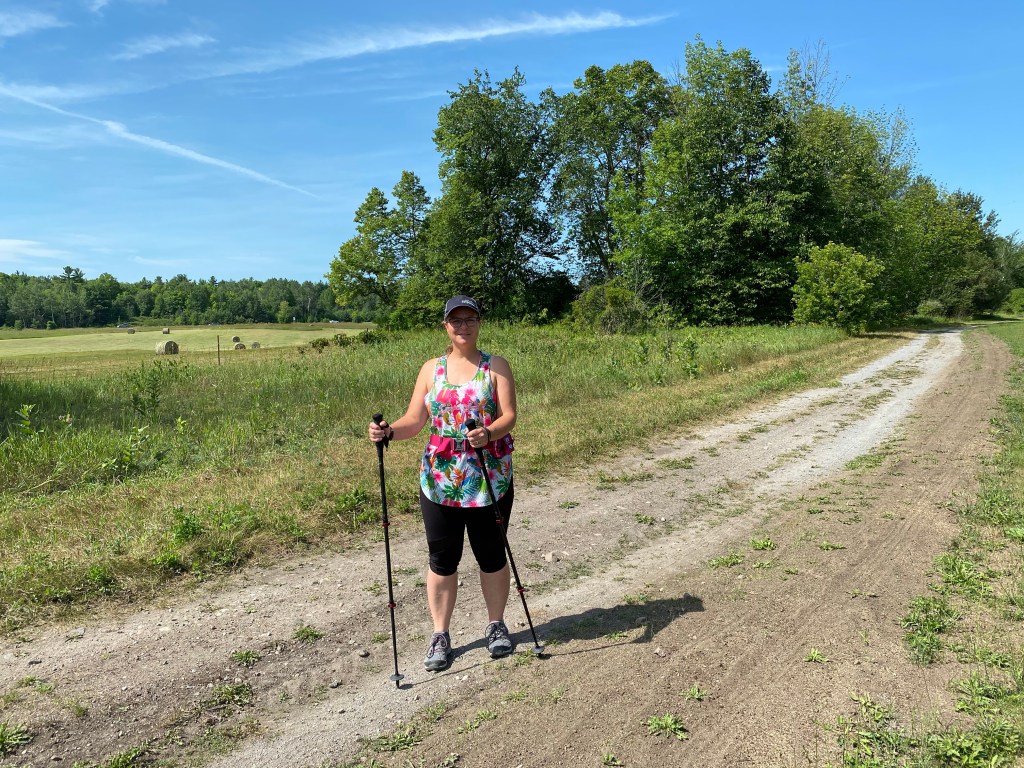
I am standing in Gillies Grove, Arnprior, right in the middle of an old-growth stand of Hemlock and White Pine trees beside the tallest tree in the whole of the Province of Ontario – measuring 47 metres (147 feet) high and more than 100 centimetres in breadth.[2]Right here.

It’s one of my favourite places because it makes me feel what the prophet Isaiah expresses about how we grow, and that the end result of that growth is unmeasured joy.

Jesus told a story about tiny seeds growing from the ground.[3]Here, I see Jesus describes, using the image of a farmer planting seeds, our healing, our growth, and our transformation. Our hearts are home to the seed of God’s truth and love whose purpose is to grow and bear fruit. 

But, he also speaks of the conditions that can inhibit our development and growth. Not all the seeds can grow to their fullest because the condition of our hearts do not make it possible. 

As Christians, our sickness of the soul comes from a profound lack of love in our lives – love for self, love for another, love for creation and love for God. 

How does love grow from our hearts? How do we heal the wounds and put down the barriers of hate, mistrust and greed that block the flow of God’s love through us? 

In the midst of the COVID 19 pandemic crisis, Richard Rohr recently said, “Love always means going beyond yourself to otherness.”[4]

During this time of social distancing from other humans, it is still possible for some of us to go outside. In truth, for me, making a connection with the beauty of creation out of doors has kept me sane, grounded, and connected with God. I have seen more people outside sitting, walking, visiting, exercising than ever before. I  have a feeling we will all have a newfound appreciation for the outdoors when this time of “sheltering in” is over. 

Fifteenth century Swiss physician and philosopher of the German Renaissance, Paracelsus, asserted: “The art of healing comes from nature, not from the physician.”[5]

Perhaps in a time of great rate of change, we can discover fresh ways of being in tune with ourselves, with others and with God by connecting a little with the wonder of creation.

In closing, I’d like to lead you through a short, meditation you can practice next time you are outside.

“The invitation is simple: Walk slowly [or sit still], while silently noticing what is in motion in the forest. There is always movement, even when things seem perfectly still. Strands of a web drift in the air, trees move in the breezes, birds fly by, and squirrels scramble in the branches, grasses bend, insects crawl. . . .

[Notice these subtle movements] until you become accustomed to it. 

Walking slowly [or sitting still] for more than a few minutes is, paradoxically, stressful. . . .[Normally, our minds and our bodies are going at high rates of speed, so slowing our minds down can cause us anxiety because we don’t know what we will find there. But] … because the mind and body are a single entity, slowing our body will also calm our mind. . . .

The eternal movement of the forest gives our minds something to engage with. Just as with sitting meditation the breath is always there and available for watching, in the forest there are always things in motion. Your mind will drift, and many other thoughts will arise. When they do, gently bring your attention back to noticing what’s in motion.

When you find you have automatically sped up, come to a complete halt for a moment. It’s an opportunity to fully give your attention to one thing, noticing how that thing is in motion. After a brief pause you’ll be ready to continue your slow walk.

I recommend that you walk [or sit] like this for at least 15 minutes. That’s enough time for your mind to go through several cycles of distraction and calming.”[6]

Like in the storytelling of the scriptures, being in nature is an actual experience of true presence. Some have suggested that creation was the first bible.[7]Saint Paul wrote in the opening chapter to his letter to the Romans, that “Ever since the creation of the world God’s eternal power and divine nature … have been understood and seen through the things God has made.”[8]

By ‘reading’ creation and focusing our attention in nature we can grow in appreciation of God’s truth and love. Because we experience it for ourselves. We feel it in our bodies. Creation thus offers us a wonderful expression of God’s love and truth growing in us.


[1]Isaiah 55:10-12

[2]https://www.natureconservancy.ca/en/blog/archive/look-to-the-sky-and-feel-the.html

[3]Matthew 13:1-9

[4]Richard Rohr, “Love Alone Overcomes Fear: A Message from Richard Rohr about COVID-19,” Center for Action and Contemplation (March 19, 2020), https://cac.org/love-alone-overcomes-fear-2020-03-19/

[5]Paracelsus, in Selected Writings (Princeton University Press: 1988), 50.

[6]M. Amos Clifford, Your Guide to Forest Bathing: Experience the Healing Power of Nature (Conari Press: 2018), 34–35.

[7]In the lives and works of Saint Francis of Assisi (1181-1226); St Bonaventure (1221-1274); Sr Ilia Delio; Fr Richard Rohr (see 19 May 2020, Daily Meditation, www.cac.org). 

[8]Romans 1:20

Love chooses us, so choose love

During my paddle on the Ottawa River last week, I encountered a mink for the first time. Its sleek, oily and—compared to a beaver or otter—rather tiny, narrow body was sunning on a rock, and then scampered into the water to get away from me as I approached. The top of its head bobbed above the water line for a while, keeping an eye on me, before it dove underneath and away from my sight.

I was reminded that during this time of ‘Great Pause—when the engines of a mighty and powerful economy have slowed down causing disruption and anxiety for many—especially the financially vulnerable, the poor and marginalized—the animals of the land and sea have populated areas that have quieted significantly from human activity.

My first-ever encounter with a mink made me think. Have you considered that we humans are one of very few species that can decide not to do something we are capable of doing.[1]That means, we have the innate capacity to change, like no other creature. We have the capacity to choose one way or another, to grow and stretch ourselves in a direction not governed merely by instinct nor compulsion.

In the Gospel reading, Jesus prays a thanksgiving for having shown his disciples the ways of God. And in so doing he draws a distinction between mere knowledge and wisdom. Knowledge, in our world, is power. But that’s not what Jesus is about. Jesus is about teaching us wisdom. Jesus prays, “You have hidden these things [… the ways of God]… from the wise and the intelligent and have revealed them to infants.”[2]

We are on the way to discovering the difference between having all the facts and information about God—and knowing God. Here is the starting point of wisdom. The wisdom writers and poets of the Hebrew scripture say that “the fear of the Lord is the beginning of wisdom.”[3]

I take that to read that it is receiving a real experience of, and encounter with, God in our daily, simple lives out of which we become wise people. Because this experience of, and encounter with, is not always an easy walk in the park. It isn’t always a euphoric, feel-good, out-of-body experience when we encounter God. In truth, an experience of God is grounded in the struggles of our lives and relationships.

Unfortunately, we often bring too much of ourselves, our egos, our mental fixations and baggage of hurt and past pain into such an encounter. We often get too much of ourselves in the way of God, to block a loving, challenging, healing encounter. That is why Jesus so often in this Gospel mentions the children, the infants, as models for coming to the Lord. The vulnerable. The innocent. Yes, maybe even the naïve—from the point of view of the world. 

Yet, at some point on the journey forward, we need to surrender. When Jesus counsels, “Take my yoke upon you”, and “Come to me you who are heavy laden”, he is saying, “put down your load.”[4]

Put down all the things that you think make you great. Put down all the striving, the restless agitations of our souls. There’s a time for everything.[5]And maybe now is the time, even if just for a moment, just to put it all down.

The heart of the story of Jesus in the bible is that a human being fully realized, fully divine, chose not to exercise the power that was his, to circumvent the cross. Jesus chose not to overcome Pilate, and the political and religious powerhouse, with force. Jesus stopped himself, Jesus lay it all down—‘not my will but thy will be done’ he said in his hour of agony.[6]He trusted his abba. Jesus took up God’s yoke in the assurance of God’s love for him in his time of trial.

Today, in this time of disruption, discomfort and upheaval in our world when it is all too easy to fall into despair, we may wonder why God does not exercise intervening power to make things right. Is God not all-powerful?

The power of God nevertheless is the power of love. God created us as an act of God’s love. The act of creating us in love is therefore a kind of divine self-restraint.[7]What does that mean? Why would God exercise self-restraint?

Let’s say as a parent we continue to make choices in place of our children as they grow into adulthood; that is, we understandably want to spare them from suffering the consequences of a choice they might have to regret. 

Yet it is a lack of love on our part to do so, since by not permitting them to risk we essentially try to shield ourselves from possible suffering—the pain we will feel each time our children commit themselves to a way different from the one that to us seemed best for them.

Alternatively, when we allow our children to make decisions, and therefore to take risks, we will worry, yes. We suffer the freedom we have given them.

We are God’s children. And God loves us. Therefore, God will suffer with us, as we are given the freedom to act. God sheds tears alongside us when we suffer the consequences of our misdeeds. God rejoices alongside us when we make meaningful steps forward in our lives. Such is the infinite power of love.

And this is the perfect love of God for us, without a trace of self-interest on God’s part. God wants us to be free to build our own lives. And take responsibility for our actions. And exercise a maturity of a creature who can change directions when necessary, who isn’t always a slave to our base impulses, our compulsive reactions.

We, who, can choose to love.


[1]Bill McKibben, Falter: Has the Human Game Begun to Play Itself Out? (Wildfire: 2019), 255, 256.

[2]Matthew 11:25

[3]Psalm 111:10; Proverbs 1:7; 9:10

[4]Matthew 11:25-30

[5]Ecclesiastes 3:1

[6]Luke 22:42

[7]Hans Jonas, “The Concept of God after Auschwitz” in Steven T. Katz, Shlomo Biderman & Gershon Greenberg, eds., Wrestling with God: Jewish Theological Responses during and after the Holocaust (New York: Oxford University Press, 2007)

Faith, for reward?

That word, ‘reward’, shows up all too often in this short Gospel for my liking. Because, in our world, a reward is something we get in return for our hard work. Right? Relationships are thus formed in transaction. You scratch my back, I’ll scratch yours.

We, therefore, get what we deserve. If we’ve been good, if we’ve followed all the rules, if we have tried so hard in whatever we endeavour, then there is a pay-off. Or, should be. 

And, if we’ve been bad, not only do our sins have natural consequences we must deal with, we try to understand it so that we are punished because of our sins. After all, bad things happen to those who don’t measure up in some way.

It is no wonder, then, that we frame our lives of faith in this language. And this transactional thinking saturates all our relationships, including our understanding of God and our relationship with God.

I like the children’s story about a couple of frogs who are best friends – Roger and Fergie. Roger meets someone else, however, who really impresses: This new friend is Bull, the frog. 

Roger and Bull spend all their time together hanging out. Roger says that he and Bull are now bestfriends. Until one day Roger’s Mom tells him that Fergie showed up earlier looking for Roger.

“Fergie’s not my friend anymore,” Roger states, ignoring his old friend. And runs out to play with Bull again.

One day, Bull meets someone else and falls in love with them. Bull starts spending all hours of the day and night with this new interest, leaving Roger all alone. “I guess Bull isn’t my friend anymore.”

Mom suggests Roger ask Fergie to come over for supper and a sleep over, which Roger does. Roger gulps, “I hope Fergie will want to be my friend.” To Roger’s surprise, Fergie does not hesitate and is so glad to spend time with Roger again.

The two old friends play hide-and-seek until the moon rises. Then, as the two frogs snuggle into the mud, Roger says, “Thanks for coming over tonight. Sorry I was so dumb to waste my time with Bull Frog lately. Still friends?”

“Sure,” says Fergie. “I always knew you were dumb, Roger. That’s why you’re my best friend. Same old Roger.”

“Same old Fergie!” Roger says.[1]

Jesus is like Fergie. The reward is that Jesus will always take us back, no matter what we have done. And we might have done terrible things that cause us shame and guilt. That’s the kind of friend Jesus is, one who takes us back even after we’ve let him down.

God is a friend who comes to share our joys, our pains, and our tears without expecting anything in return. God does not expect anything from us.

This is a difficult thing for us to accept, especially as we are bombarded by messages that say we must prove ourselves. We are bombarded by messages that say God wants us to perform to a certain level. Meet certain expectations.

But we’ve got that mixed up.

It’s not God wanting us to perform and achieve and accomplish in order to deserve something in return. It’s we who make that stuff up.

What would it be like once we free ourselves from this image of God who expects something from us? What would it be like, once we accept and receive the free gift of God’s love for us and for the world?

It is in the freedom of God’s unconditional, unmerited mercy that paves the way for genuine welcome of others. It is receiving God’s grace that we become authentically in touch with ‘these little ones’ of which Jesus speaks in the Gospel[2]– the little one within ourselves, the little one in church and in our circles of family and friends, and with those who are stranger to us. 

May we swim in the waters of that grace, and at the end of the day snuggle into God’s warm embrace.


[1]Adapted from Nancy Cocks, “Friends of the Lord” in Wild Goose Big Book of Liturgies (Iona Community UK, 2018), p.203-205

[2]Matthew 10:40-42

A funeral outdoors

Psalm 100

1 Make a joyful noise to the Lord, all the earth.
2 Worship the Lord with gladness;
come into his presence with singing.

3 Know that the Lord is God.
It is he that made us, and we are his;
we are his people, and the sheep of his pasture.

4 Enter his gates with thanksgiving,
and his courts with praise.
Give thanks to him, bless his name.

5 For the Lord is good;
his steadfast love endures for ever,
and his faithfulness to all generations.

Jesus said, “Look at the birds of the air; they neither sow nor reap nor gather into barns, and yet your heavenly Father feeds them. Are you not of more value than they?” (Matthew 6:26).

We remember today our beloved ‘Des’. He was a man who hummed with the vibrancy of life. He had a good ear for singing and playing music. His smile was infectious. He spoke with passion. He was constantly supplying me with jokes, unfortunately not many were church-appropriate. 🙂

Last March when Des celebrated his 85thbirthday he said he didn’t want anything big. “Wait till my 90th” he said, “then let’s pull all the stops.” Then, with a twinkle in his eye, he added in typical Des fashion: “And, if I’m not around, you go ahead without me.”

Well, we must now go ahead without him. Our paths diverge. We go our way, and Des enters the fullness of God’s presence. The Psalmist invites us to enter God’s city “with songs of thanksgiving.” I can imagine Des doing just that. 

Today we gather outside, at the place of his final resting. It’s appropriate that we do so, here during the first week of the summer season. Because Des was most at home in nature. I’m glad we can hear the birds chirping, the choir singing Des home to his creator.

Naturalists call it ‘animal altruism’: when a creature places another’s needs before its own. If you are walking through a forest during the day and without knowing it come too close to a nesting whip-poor-will baby bird, its mother will abandon its lone nestling and fly around you in circles and land on a branch away from the nest. It might even drag one wing, trying to make you think it had been injured so that if you happened to be a hungry predator, you would go after the ‘easy prey’ that was the parent rather than the newly hatched, more vulnerable child.

It is imbedded in nature, to love and go way beyond one’s own needs for the sake of the other.

You described to me one stand-out aspect of Des’ personality and giftedness to us: his willingness, his readiness to help out. At the drop of the hat, even if it inconvenienced him, he would offer whatever help he could. He put others’ needs before his own, often. He was all heart. And never stopped loving you.

Like the birds whose love and sacrifice for their children never end, God gives us examples from nature to show us how God is. That God will remain faithful to us, will offer help in times of grief and sorrow. God will provide for our needs in times of trouble. God will go the distance and will never stop loving us even in the face of death. As the Psalmist sings, “For the Lord is good; his steadfast love endures for ever, and his faithfulness to all generations.”

Our hearts can rest forever in the care of God. Today, Des is with his creator, in the full and loving presence of a God who never stopped loving him. For his life, we are grateful. For God’s love for us all, our hearts sing.

Amen.

A life of dying and rising

Now that we are officially into the summer season, the outdoors beckon with near perfect conditions these days. Indeed, we often experience our connection with God most profoundly in creation – 

With our feet on the earth, breathing the air, hearing the chirping birds and sounds of the forest and feeling the warm sunshine and breeze on our skin. In the peace and surrounded by beauty beyond words, we have a felt sense of God’s presence.

We embrace these moments because we also know this does not last forever.

I offered prayers for the church sitting by the Ottawa River as the season changed to summer. But I have been on those same shores in winter – when the winds howl and freezing temperatures and biting snow burn my skin, chasing me indoors.

The Gospel reading today reminds us that the death Jesus experiences, we too must endure. It doesn’t sound like good news. How can we live our faith, be aware of our life in Christ and follow Jesus according to his will, when we suffer, when we don’t feel well, when the circumstances of our life are far from perfect?

It isn’t easy to confront the truth of what we believe under the surface. It isn’t easy to come to terms with our real motivation for going to church, for associating with others. Is it only when the conditions, the circumstances of our lives are ideal? Is it only when we feel good that we can consider ourselves Christian and meet with others who say they are or aren’t?

In our home, the cleaning normally gets done according to the schedule of house guests. Pre-COVID, we would have friends or family over once every few weeks. And this reality would motivate me to vacuum and wash the floors. We wanted a clean house to entertain our guests.

When no guests at all were coming over the past few months, you can imagine what happened to the condition of our floors. I needed to make a shift within myself to realize that I was no longer going to wash the kitchen floors because we were hosting visitors to our place. But for different, more basic reasons. I needed to find a new motivation, a refreshed understanding from which to do things.

Maybe what some are calling this time of history as “The Great Pause” has given us all a little more time and space to address some deeper motivations around our faith practice. Are we Christian only because we are trying to get ourselves into heaven? Have we strived to impress others in the church, out-do others in our good works, or perform to some high level to prove something? 

All of these motivations may have been operating in our subconscious before we had to isolate. Before we had to pause everything. We may not have been aware of our true intentions until now. And, in all honesty, we might be alarmed and ashamed at what we confront within our hearts. 

The message of the New Testament is that new life can only sprout from death. The death of old patterns of thinking. The death of underlying beliefs and assumptions which may have been helpful at one point in life but don’t really work now anymore. 

Life with God in Christ makes that kind of shift. Life is a great teacher. Old ways will die. Things we have done in the past will never be the same in the future. When we receive and accept this, it is a kind of dying. We have been baptized into the death of Christ. A life in Christ will be a life of dying and rising.[1]

We need to find a new starting point within us. We need to embrace the new life of Christ emerging from within us, just waiting to be born.

A cartoon circulated on social media recently showing several executives of a large corporation huddled around the board room table. Their CEO stands before them giving a rather sobering analysis of recent sales amid the economic slowdown during COVID-19.

He says, “I’m afraid the news isn’t good. Word has it, the consumers are starting to find out what actually matters.”

What actually matters is that God values us beyond measure. We are more valuable to God than the smallest most insignificant things we see and have. Jesus uses the examples of the smallest sparrows and each, individual strand of hair on our heads to make this point.[2]We are infinitely more valuable than anything we can produce, more valuable than anything we may taste, touch, feel, smell, and see in this world. That is what actually matters!

The end result of all that Christ Jesus has done, is so that “we too might walk in newness of life.”[3]Notice, Paul says ‘walk’, not ‘think’ nor ‘believe’. But walk in newness of life. Here we arrive at the crux of it: The necessity of connecting faith with action. They will know we are Christians by our love.

If you feel you are losing your connection to faith these days, maybe God is calling to you examine yourself. Maybe God is calling you to a deeper understanding. Maybe God is calling you to be a blessing for others as you have been blessed in the past by God. Maybe God is calling you to do something.

When we consider ourselves as valuable, beloved creatures of God, when we consider ourselves as people motivated by God’s love for all, when we consider our faults and our dying in light of God’s unconditional loving regard for us, what do we have to lose? But “to do justice, and to love kindness, and to walk humbly with our God.”[4]


[1]Romans 6:3

[2]Matthew 10:29-31

[3]Romans 6:4

[4]Micah 6:8

To confess and affirm

The government of Ontario announced this week some lifting of restrictions for certain parts of the province, with implications for churches.

While this announcement gives hope especially to those of us yearning to meet again in person and in the building, the announcement can give a false hope that we are now all safe.

We are definitely not. We are not out of the woods yet. Just a couple of days ago the World Health Organization reported the highest number of infections in a single day worldwide since the pandemic broke earlier this year. There are signs and worries even in North America that a second wave or spike can strike this summer. Of course we don’t know for certain and when. 

But we do know that Toronto remains locked down. In the southern States new cases have been alarmingly rising over the past couple of weeks. These are sobering facts we cannot deny.

How do we respond, as a people of God, in faith?

We were treated by a special guest to our house this past week. A baby robin lingered on the back deck after being fed by her mother who kept watch nearby.

We like these images of protective wings. They remind us of the nurturing and comforting presence of God. We may feel privileged with God under the shadow of the Almighty. Chosen and held by a loving God. The image of God bearing us, as God bore the Israelites up out of slavery in Egypt, has found its way into hymns, songs and prayers that have sustained the people of God over the centuries.

We are chosen by God. But we are chosen to take responsibility in our privilege. Being called “a priestly kingdom and holy nation”[1]is not license to think exclusively of ourselves. We are not God’s pets, singled out for special favors and exempt from suffering and consequences of bad behavior. Being chosen and called by God is not permission to protect a life of comfort, luxury and privilege for ourselves without regard for others.

God does not love just me, and those like me. “Indeed, the whole earth is mine,” says the Lord.[2]God is always choosing all people on their very different journeys of faith and life. If there is anything we pray we have in common, it is that we can all share in an experience of being loved by  God. And we must care for others so they can too.

This text from Exodus precedes the giving of the Ten Commandments. The second half of the Commandments – the last five or six have to do with loving our neighbor. God’s promise of protection must extend through us and our responsibility to protect others.

The Israelites are parked at the base of Mount Sinai, ready now to receive instruction from God. They say all the right words: “Everything that the Lord has spoken we will do!”[3]

At least, good on them for that. But it’s not enough to say the right words. Because we know how the story goes for the ancient Israelites. They don’t always take care of the “alien, the orphan and the widow”[4]History shows the failure of God’s people “to do justice, and to love kindness, and to walk humbly with your God.”[5]

The Bible doesn’t end with that bold and righteous intention to do everything God has told us. Rather, the Bible ends up being a very long story of humanity’s failure, over and over again, to do God’s will.

That is why when the mother robin kept perch on the fence in our backyard, when she maintained distant yet vigilant watch over her chick, I thanked God. 

Sometimes God may seem distant, and literally in the case of the baby robin, physically distant. In these turbulent times of increased confinement and social upheaval, God may feel to us physically distant.

Yet God’s people will not rest from our responsibilities. In the decisions we make, in how we relate to one another, our behavior, our lifestyles we hold a great responsibility for the other.

And despite our failures to get it right, to do it perfectly, despite the words declared from podiums and over backyard fences, God is never too far away. Never too far away to watch over us and be faithful to us in the wideness of God’s mercy. Because if there is anything that endures throughout the bible’s story besides human brokenness and sin, it is more the never-ending story and promise of God’s grace and love for all the people.

The Psalmist takes God at God’s word. The Psalmist proclaims God’s faithfulness even at the farthest reaches of what is possible, and prays: “If I take the wings of the morning and settle at the farthest limits of the sea” – if I go beyond my comfort zone and let go of private privilege for the sake of the other, if I embrace my limitations – “even there your hand shall lead me and your right hand shall hold me fast.”[6]

So, what shall we do as a church? If you are rostered in the community of Faith Lutheran Church, you will receive a communication in the next couple of weeks outlining our plan. In the meantime, I would ask you to consider the following affirmations we can make as a church together:

  1. We affirm that during this time of pandemic lockdown the church has not been closed. Even though the building has been closed, the work of pastoral care, worship, prayer and other ways supporting the ministry of this congregation and the wider community has continued.
  2. We affirm that though this work uses imperfect and limited means, the grace of God sustains it as much as it did pre-COVID and will for all time to come.
  3. We affirm that that members of the church experience anxiety, fear, loss and anger during the pandemic. There is a longing for the way things were. This yearning speaks to our humanity held in God’s love; and, speaks to our need to grieve and express our losses.
  4. We affirm that as we move forward into an uncertain future, we want to love each other by upholding safe, social practices – even if it entails maintaining physical distancing and sheltering-in-place. In so doing, we consider everyone’s safety not just our own. We protect all people, especially those most vulnerable among us and in the wider community.
  5. We affirm our intention and hope that slowly but surely we will come to worship again together in person. Whether this begins in a couple of months and extends over a couple of years, we affirm that all our times are in God’s hands. Re-entering the building will be a process that will at first feel awkward and slow and sometimes rigid, especially at the beginning when we put into practice safe, physical distancing measures.

In closing I would like to pray one of my favourites from the old green book – the Lutheran Book of Worship:

“Lord God, you have called your servants to ventures of which we cannot see the ending, by paths as yet untrodden, through perils unknown. Give us faith to go out with good courage, not knowing where we go, but only that your hand is leading us and your love supporting us; through Jesus Christ our Lord. Amen.”[7]


[1]Exodus 19:6

[2]Exodus 19:5

[3]Exodus 19:8a

[4]Deuteronomy 10:18; 24:19; 24:20; 24:21; 25:7; 27:19

[5]Micah 6:8

[6]Psalm 139:9

[7]Lutheran Book of Worship (Minneapolis: Augsburg Fortress Press, 1978), p.137

Let others breathe

My neighbor sat glumly on his front porch looking out over the grass in his front yard, and the patch of municipal green area across the street from our homes.

He loves to play golf. In the nearly twenty years of his retirement he has made golf his passion.  A couple days before the government lifted restrictions on golf courses he called out to me from his melancholic perch on his front porch, “Hey, you can work a little harder, eh?” He flicked his eyes to the sky. “Sure would be nice to get out on the greens when the weather is like this.”

Presuming my neighbor meant “God” when he looked up, and presuming he believed my prayers had extra pull with God when it came to affecting government decisions, I just smiled. “I’ll get on that right away.” I paused, then added. “But let me know how you make out getting ready for that day when it comes, ok?” He winked, and smiled back giving me the thumbs up.

He obviously responded to my encouragement to get ready. The next day, he trimmed a spot in the grass across the street. Throughout the whole morning – he is an early riser—my neighbor was across the street chipping golf balls with a pitching wedge over the street and onto the front yard of his house.

In the scripture today,[1]Jesus empowers his disciples to “teach” to the “nations” everything he had taught them. This Great Commission, as we have come to know this text from Matthew’s Gospel, is meant for all Jesus’ disciples including all who follow Jesus today. 

“Teach the nations.”

The only distinguishing mark of Jesus’ ministry on earth was teaching. Only Jesus taught and his disciples did not. Long before this scene on the mountainside of Jesus’ final words to his disciples, and even long before the events surrounding Jesus’ death, resurrection and ascension, Jesus had already given his disciples the power to cast out demons, heal the sick and proclaim the kingdom of God has come near.[2]

For the longest time while Jesus was with his disciples, he had been doing the same kinds of things alongside them. Except teach. Now, as Jesus commissions the disciples at the end, he adds teaching to their mission.[3]

Today we know that people are different in how they learn something. Some learn best by doing it and being active about it. Some learn best first by reading about it in a book or on screen by themselves. Others learn best in a group or with others to help motivate them, like in a classroom. Others learn best by observing and watching others doing it. Others will learn best by associating certain smells and sounds to activate and reinforce the memory. Still others learn best visually using images and pictures. Etc. etc.

Beware of presuming one way or style of teaching will accommodate each and every human being. To say the least, teaching and learning is complex. One size does not fit all. Maybe that’s why Jesus left this specific commission to the end.

As if this was not hard enough to grasp, Jesus ups the ante by instructing his disciples to go to the “nations”. Nations here is not our modern understanding of nation-states. But rather, more like ‘foreigners’ and people who are not like us.[4]

Matthew was writing primarily to a first-century Jewish community. And he was echoing the Gospel message of extending the mission of God to the Gentiles. The nations, for us, represents anyone who is different from us, who doesn’t share our lifestyle choices, ethnic background, traditions, and race.

The Holy Spirit is blowing to and among all people.

At this time in history, especially, we are called to let others breathe. And, especially, others not like us. When George Floyd lost his life in Minnesota a couple of weeks ago, it was at the hands of someone who violently took away his ability, his freedom, to breathe. All because the colour of Floyd’s skin was not the same as the police officer’s.

When we build relationships with those who are different from us – because that is the call of Jesus – we can ‘teach the nations’ starting in our backyards, in our neighbourhoods and around our homes by simply letting those with whom we differ in some way breathe. Let them be who they are. Let them express what is important to them. Let them claim the space around them. Let them feel validated by your presence. Let them breathe.

I am not a golfer. Even though I tried on a few occasions, I never took to it for various reasons. Nevertheless I appreciated that even though my neighbor knows that golf is not important to me, he still reached out about his yearning to play golf after a long winter. He was still willing to be vulnerable with me.

A few days following our brief exchange about prayer and God and golf, the government announced that golf courses were to open the second last weekend of May. I have hardly seen him around the neighborhood since. I suppose he has been spending a lot of time at the local golf course several kilometres away.

But a couple of days ago I bumped into him in front of our houses. “How’s the golf going?” I asked. He wanted to let me know that golf was a game that you never perfected, that you always have to work at, that no matter how many years you’ve played it, it’s a process that never ends. 

“Some days you score a 76 when you could have scored a 68,” he said. “Other days you surprise yourself by doing better than you should have. There are so many factors and variables that go into each and every shot.” And the journey continues for him.

I think my neighbor taught me a thing or two about prayer, God and … well, golf. Jesus gives us a challenge. Being a disciple of Jesus feels overwhelming. We may resist its conferring upon us, as a result. The mission will disturb and take us out of our comfort zones. Life in Christ will continue to challenge us. And yes, we will at times doubt – as the disciples did even with Jesus standing right in front of them.[5]

Along the journey, however, let’s not succumb to the despair of assuming that being a faithful Christian, and teaching others about God, is a one-off, run-and-done deal. It’s not something we check-off a list. And let’s not assume it is our power that achieves God’s work. That strategy is sure to fail. 

I was going to tell my neighbor, even in a joking manner, that it was my hard work at praying for the golf courses to open early that made it so. But I didn’t. Because our life does not rest in our power and strength to preserve it, protect it, control the outcomes, or to make something happen. 

Being disciples is about relationship, the quality of each, unique relationship. Being disciples is a life-long journey of building relationships, of listening and watching, of risking and doing – a learning and a practice of letting others breathe and grow that never ends.

I didn’t do anything about my neighbour’s golf game except be present with him, to listen and affirm. Maybe our loving presence with another who is different from us can be an opening for the Spirit of God to enter and breathe into our relationships.

Because our life rests in God’s willingness and God’s power to be present with us, to sustain our lives and grow them with others who are different from us yet breathing alongside us. This, we can trust. Even to the end of this age.


[1]Matthew 28:16-20

[2]Matthew 10:7

[3]Stephen B. Boyd, “Matthew 28:16-20” in David L. Bartlett & Barbara Brown Taylor, eds., Feasting on the Word: Preaching the Revised Common Lectionary Year A Volume 3(Kentucky: WJK Press, 2011), p.44

[4]Thomas G. Long, ibid., p.47

[5]Matthew 28:17

Sent in, then out

We normally talk about the work of the Holy Spirit as a ‘sending out’. When the Holy Spirit works, it’s like a centrifugal force pushing us ever outward. When he first appears to his disciples following his resurrection, Jesus tells them, “As the Father has sent me, so I send you …”[1]

We have devised images to help us imagine this outward-destined power: The missional energy is likened to a rocket ship blasting from the earth into the limitless universe. We are quick to remind ourselves that our very identity based on the original Greek word for church – ecclesia– means “a people called out.” You have heard me and others preach about going beyond the walls of the church in the programs we offer and the services we provide.

Nonetheless, in all our missional enthusiasm around this truth the Holy Spirit is first given to us. Before we go out, we must go in. We must first traverse and discover the Spirit in the regions of our hearts. In order for the Holy Spirit to send us out into the world anew, the Holy Spirit must first come into us, as Jesus came to his disciples cowering behind locked doors.

The Gospel text assigned for this Pentecost Sunday focuses our attention on the image of Jesus breathing the Holy Spirit into his disciples. “He breathed on them and said to them, ‘Receive the Holy Spirit.’”[2]Before the disciples were sent out into the world, speaking in their native tongues, doing even greater deeds, and empowered by the Spirit of God, Jesus came to them. They had to receive and claim this gift within the containers of their own gifts, talents, abilities and personalities.

And Jesus enters into the locked rooms of our hearts. Locked by fear of the unknown future. Locked by anger for all our losses and hurts. Into the spaces of our most intimate lives. Into the homes and rooms of our daily work, play and rest. Where we are sheltered-in-place, where we are quarantined and secluded and physically distant. Into our inner beings – this is where the Spirit of the living God enters us – before anything else can happen.

It’s difficult to accept and receive the Holy Spirit, the peace and forgiveness of God at the best of times let alone when we are anxious, afraid and angry. While spending more time at home, more time by ourselves. It’s almost as if we will react against the possibility, the notion, that Jesus can come into the messiness and disorderliness of our inner sanctums, homes, rooms and hearts. We knee-jerk in reaction, saying that the sooner we can get back to ‘normal’, the sooner we can get ‘out there’ and be allowed together again, the better. 

Do we refuse to consider that the work of the Spirit can happen ‘in isolation’ or in minimalist ways – when we are by ourselves, or locked-down, or physically distant from each other?  Do we shackle God in constraints of our own imagination and belief?

One of the main upshots of Martin Luther’s Christian education was the primacy of the home. His popular ‘table talks’ were formed around the intention of making the home the primary place for spiritual formation. In fact the Small Catechismwas originally devised to be read and discussed among members of the household – not in the classroom, not in the church building, not in some large group gathering or Christian Education forum. But in the home. 

Perhaps this time of quarantine is inviting us to reconsider and reacquaint ourselves with what Martin Luther had really intended from the start. Here is an opportunity to rediscover and practice our faith – in good Lutheran tradition!

In a recent video conference call with other clergy, we talked about a scenario that someone had heard of. Whether it actually happened, or was being considered I am not sure. But a baby was born to first-time parents during the pandemic lockdown. And the parents wanted to have their newborn baptized. What to do when no one knows when the church can gather together physically again? It could be months.

So, they talked about it with their pastor. And they came up with this plan. The parents would hold their newborn in the foyer entrance inside their house, bowl of water at hand. The pastor would stand outside on the front step of the closed door. They could see each other and hear each other speak through the glass of the door. And while the pastor introduced a brief liturgy for baptism, the parents would then pour water over the tiny head of their newborn child, in the name of the Father, the Son, and the Holy Spirit. In their own home. Where two or three were gathered in God’s name and presence.

Life is not put on hold because of this pandemic. During this time of self-isolation, quarantine, sheltering-in-place, seclusion – whatever you want to call it – couples are still getting married, babies are still being born. Life is still happening.

The Spirit of God still blows in us and through us to be the imperfect yet beloved vessels, carriers, of God’s love, forgiveness in our homes. And, therefore, for the world. There is joy in that.


[1]John 19:21

[2]19:22

Answering Jesus’ prayer

The next time we will see each other face-to-face I’ll likely be wearing one of these. I have different colours and types for different occasions …. (you can see them by viewing the video sermon at http://www.faithottawa.ca on Sunday, May 24, 2020).

I know the mask may present a barrier. It covers half of our face. It’s uncomfortable. It may inhibit us from feeling normal in our interaction. It’s a telling symbol of the times we find ourselves in. That a physical barrier needs to be in place to protect us all.

Paradoxically, the mask underscores how inter-connected we are. In forming this new habit – wearing a mask every time we leave the home – we are becoming aware of how each of us is connected to others. 

The unity we experience is not just visible. It’s not just about those who are evidently symptomatic – who are coughing, riding high fevers, and are very sick. We now know that over 40% of COVID-19 is transmitted by people who don’t have any symptoms at all.[1]

Of course, we didn’t need COVID-19 to introduce us to the idea of our common humanity. Especially as Christians we have always affirmed our inherent connection, our ‘unity in Christ’. Whether we say we participate in the invisible, spiritual unity, or hopefully sometimes even participate in some wonderful visible expressions of unity, we are united nonetheless.

In this last Gospel selection in the Easter season, the lectionary invites us to reflect on some of Jesus’ last words to his followers when he was physically with them on earth. John 17 represents what is known as the High Priestly Prayer of Jesus for his disciples, his benediction, his blessing to them as a human being. This is his message to them – human to human. 

And he prays for our unity. His prayer affirms our connection in the Body of Christ which is the church. And on earth, we are interconnected, interdependent in Christ.

How do we live that interdependence, as Christians, as followers of Christ?

Jesus prayed, “And now I am no longer in the world, but they are in the world … Holy Father, protect them in your name that you have given me, so that they may be one, as we are one.”[2]

“I am no longer in the world,” Jesus says, “but they are…” Jesus is no longer in the world. But we are. We are the hands, the feet the heart of Christ in the world for each other. We participate in the answer to Jesus’ prayer. You could say, in a sense, we are the answer to Jesus’ prayer.

“We cannot jump over this world, or its woundedness, and still try to love God. We must love God through, in, with, and even because of this world.”[3]This is the message Christianity initiated, proclaimed, and encouraged, and what Jesus modeled. We were made to love and trust this world, “to cultivate it and take care of it”[4]. The answer to Jesus’ prayer is not in some far-off heavenly realm. The crux of it all lies here, right now, and in this place and time. 

The church has left the building these last few months.  But the church has not disappeared. We are in the world. And we need each other. We are our brother’s and sister’s keeper. There is no avoiding it, especially now. 

People wear masks not to protect themselves. We wear them to protect others from possibly catching the virus from us. That is why care-givers wear masks and all sorts of other Personal Protective Equipment (PPE).

May this mask-wearing season of our lives be a sign and symbol of our care for one another. We don’t just say, “Stay safe”. We practice it when we are together in whatever way. Our togetherness then becomes a Christ-sign of caring for the other. When we return to the building – the day will soon come – our main focus – as it always has been implied but now fully apparent – is the care for each other.

For now, every time you pick up the phone and call someone, we are the church.

Every time you send a short email to check in on someone else, we are the church. Every time you pray, read scripture, say words of compassion and nurture thoughts and feeling of love for another, we are the church.

Every time you don a mask – even though it is awkward and not very comfortable, but you do it anyway for the sake of others, we are the church.

Every time you do this for the wellbeing and care for another, we are the church. United in Christ Jesus. For all time. And in every place.


[1]Rachel Gilmore, “It’s now recommended that Canadians wear face masks”, CTV News (20 May 2020) http://www.ctvnews.ca

[2]John 17:11

[3]Richard Rohr, “Cultivation Not Domination”, Daily Meditations (Tuesday, May 19, 2020; http://www.cac.org).

[4]Genesis 2:15

God’s heart in us

I wonder many times these days how does a post-covid-19 world look like? A post-covid-19 church look like? And are we ready to tackle whatever the new normal looks like?

The honest answer – I don’t know. Does anyone? A church in Toronto has a sign in front of its building, and it now says: “Closed until God knows when.” True – only God knows when.

I’m video-recording this sermon in our home office.[1]And in my background are three doors. Not just one, nor two, but three. If you’ve never been here, you might not know which door you would use to leave, or enter into, the room.

Here’s a silly riddle … often humor is helpful in times of anxiety and fear: So, when is a door not a door? When it is a-jar. !

We may prefer the doors to remain shut always. We may prefer not only not to know what’s on the other side, but also prefer not to go there. We would rather avoid thinking about and avoid going through. We shut the doors of our imagination and willingness to wonder about what’s beyond. We would rather remain in the comfortable memories of the past – instructive and significant though they may be. But if we just stay there, scared of the unknown, uncertain future, we will refuse to take the steps of change forward.

How can we begin even to consider taking that first, tentative step – into the unknown, into a future without the certainties of the past to guide us?

I heard a podcast this week about Frank who lived out of a deep love for his son, Justin.[2]Even though his job was a fulltime professor, Frank made parenting his primary vocation for fifteen years. Frank described it this way: that during that time Justin became a person who had a part of his own, father’s heart. Frank’s heart did not belong completely to Frank alone anymore. 

No matter what happened in their relationship, Frank speculated, if Frank and his son had a falling out and they didn’t speak for twenty years, Justin was in Frank’s heart and Frank was in Justin’s heart. Justin’s joys gave Frank delight. Justin’s pain touched Frank like nothing else could. Literally, his experience was so deeply connected. Even though Justin had an identity apart from his father’s – he was his own person; he was not his father – there was nothing Justin could do that would make Frank not love him. Frank’s heart was completely embracing of him.

This is like the love between God and each of us. Like Frank with Justin, we can first experience a small taste, small glimmer of God’s all-embracing, unconditional, steadfast love in a human relationship – in marriage, in partnership with another, in parenting children, in families, among friends. In some relationship, may we come to know this feeling. And this understanding of God’s love.

Julian of Norwich wrote we are not just made by God we are made of God.[3]It’s like when God makes us, God gives a part of God’s heart into us. And God knows that feeling of no matter where we are or whatever situation we are in, no matter the highs or lows, or whether or not we’ve talked to God in months or years, God is achingly connected to us – deeply, intimately. And would have it no other way.

Rooted in being known, being met, being embraced in that blanket of love – despite and amidst all the suffering we encounter – that’s life.

In the scriptures assigned for Easter, Ascension, and Pentecost, there is a positive, affirmative and encouraging word. When Jesus prepares his disciples for when he will leave them, he tells them about the truth of our very existence: That he is in us as we are in him – or, to use Saint Paul’s oft-repeated phrase: “in Christ.”

On the surface, at first glance, it doesn’t look good for the disciples. Jesus is leaving them. When does it ever feel good to leave a friend, say goodbye, lose them or be forevermore separated from them? And then go on living, without them?

But the leave-taking of Jesus means that the power of God’s love and the energy of Jesus’ life-giving presence is now given to them. And to us. The truth is, because of Jesus’ bodily departure or absence, we will convey the power of God like never before witnessed.[4]What we leave behind turns into something wonderful we could never have imagined. Because the Spirit of God flows in and through us all. And we embody, the presence of Christ in whom we “live, move, and have our being”[5]for all time.

The Gospel message, in the light of the Easter promise, is fundamentally empowering to us. We are the bearers of Christ. Whether we see it in this moment or not. Whether we feel it or not. Whether we are able to muster our own meagre resources to realize it or not. 

But we don’t have to pull ourselves up by our own bootstraps. We don’t have to manufacture this love, this reality, on our own. We just need to step into the flow. We just need to embrace what already is! 

Because God comes through the closed doors of our hearts – opens those doors – not to scare us, not to frighten us nor shame us nor guilt us. But simply, wonderfully, to love us.


[1]Visit www.faithottawa.ca, Sixth Sunday of Easter, May 17, 2020

[2]“Conversation with Frank Rogers”, Academy Podcast, May 6, 2020 (an international ministry of The Upper Room).

[3]Cited in Richard Rohr, “Julian of Norwich” in Daily Meditation (www.cac.org, 13 May 2020).

[4]John 14:12

[5]Acts 17:28