When the star is broken

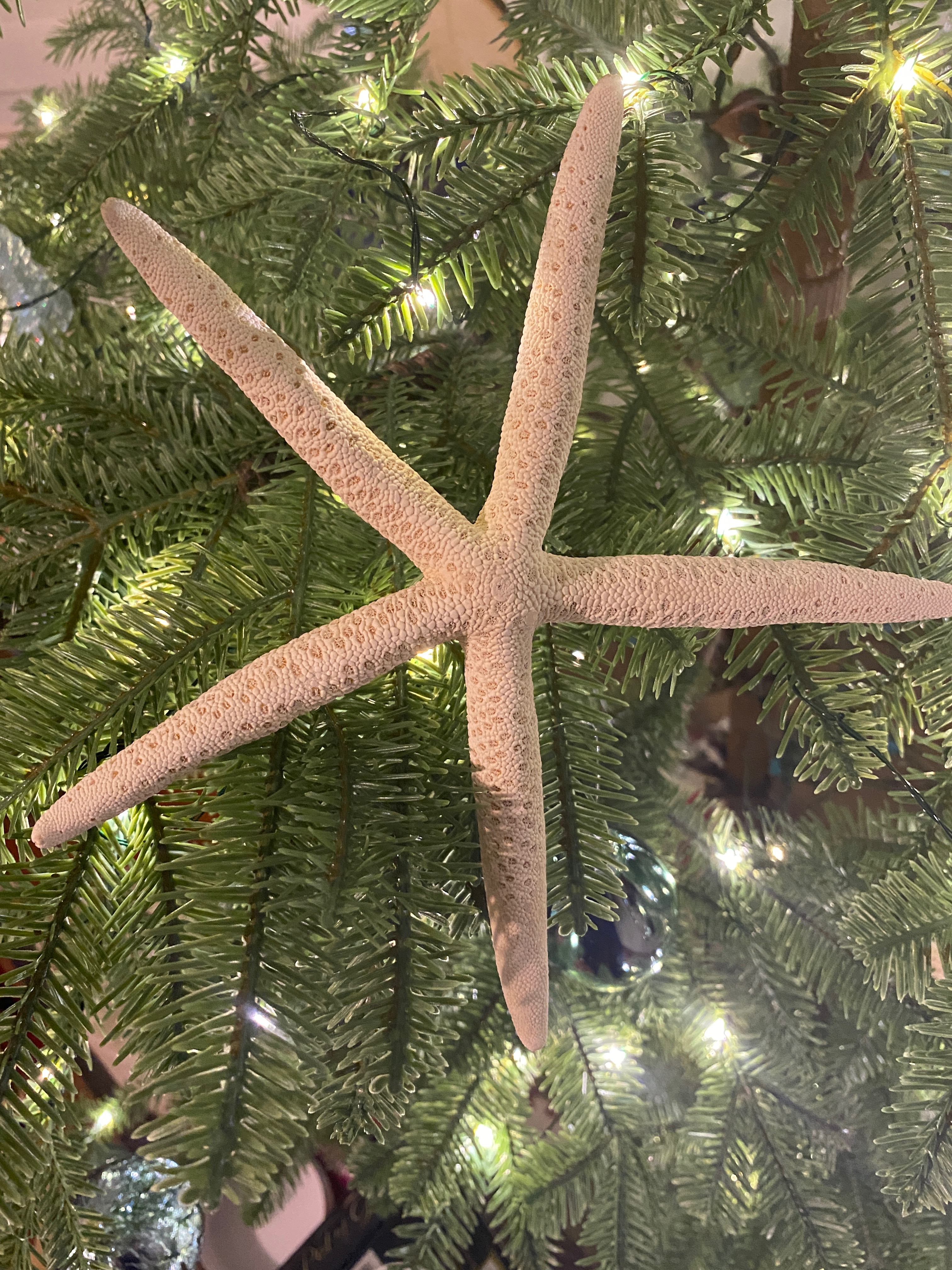
At one of our recent online confirmation classes, the students were to follow instructions given by Pastor Judith to make a Christmas star ornament – using a couple of sheets of white paper, some glue, a ruler, and a pair of scissors.

This is what it was supposed to look like when I was finished:

https://www.youtube.com/watch?v=ly8Pa0TwhNU

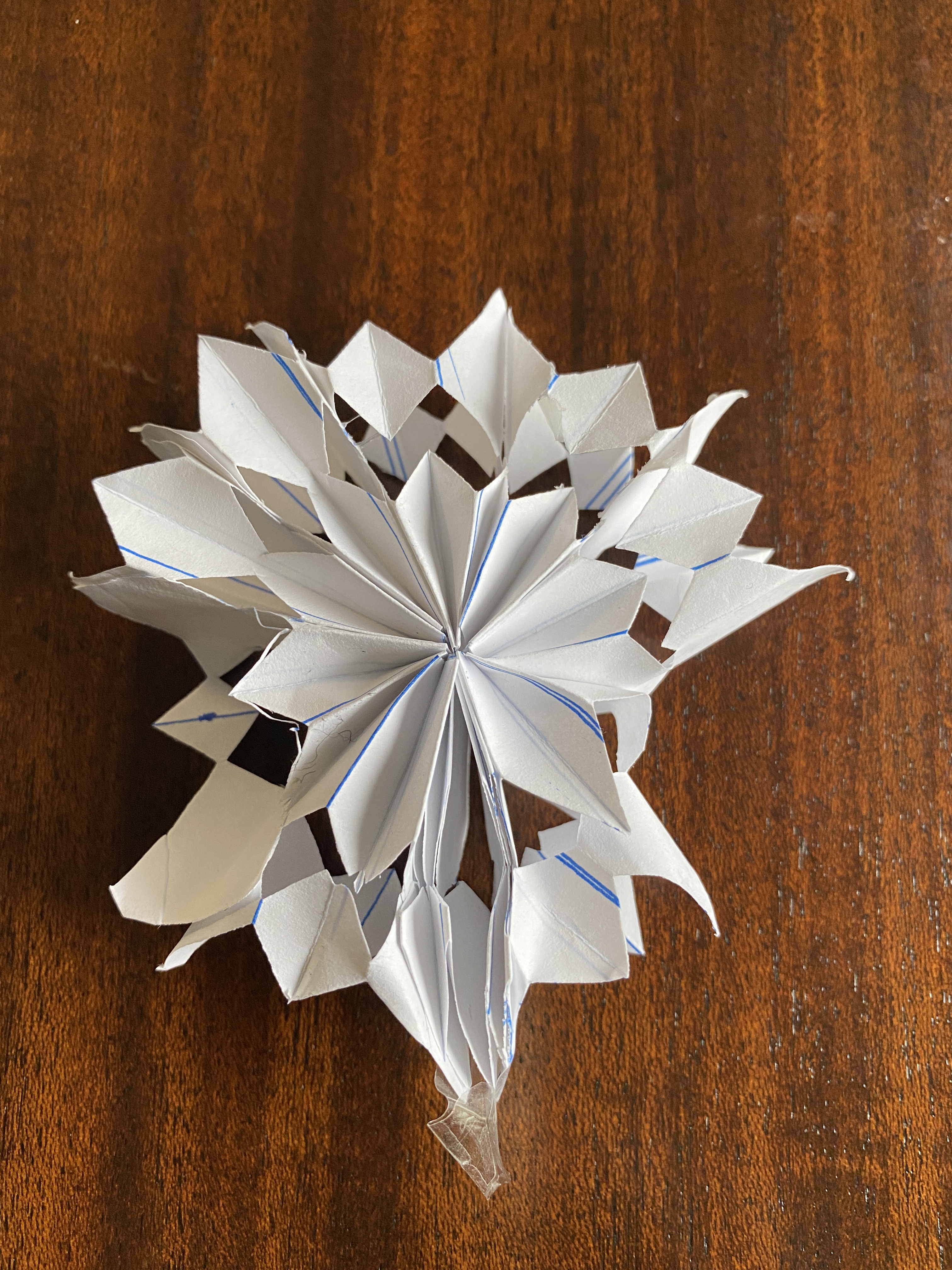
Well, after an hour of hard work, this is what I came up with: 

Not exactly what I had hoped for. At the time, even as the class was ending, I was tempted to keep at it, like the proverbial dog with a bone until I got it. But at the end, I had to accept and feel it, that it wasn’t going to work out for me, at that time.

In that class, there were about eight students. I guess I could take comfort in knowing I wasn’t the only one who didn’t get it right. But about four in that zoom room held up a properly made and beautiful star! Some did get it! And I could see and feel their joy at that sense of accomplishment. Even though the end result wasn’t ideal for me, individually, as a class it succeeded.

This might not be the Christmas you had wanted and desired: Family gatherings not happening the way you had always envisioned; Church events and services just not the same; That pall of fear weighing heavily over your soul about COVID-19; The grief over all the deaths; The worry about the ongoing pandemic danger threatening us all. It just might not be working out for you this holiday.

That first Christmas was not what anyone expected. It was quite simple and bare bones, close to earth. Literally. The holy night was indeed silent. No large gatherings and noisy parties. No one decking the halls and filling their bellies. 

And yet, somewhere, someone, experienced profound joy. Initially, just Mary, Joseph, the shepherds. And someone, somewhere, is experiencing the wonder of the season today in 2020. Somewhere, this year, children are having fun. Somewhere, someone is expecting their first child. Newborn babies bringing laughter to joy-filled homes. And yes, there are some whose hearts are filled with peace, gratitude and joy this Christmas.

Being a Christian is not being bound up in ourselves all the time. As Christians we don’t identify exclusively with our isolated selves. There is someone bigger, a greater love, that is part of us, the essential part of us, beyond our self-centred preoccupations. Following Jesus is never just about ‘me’, trapped inside myself. It’s difficult to get this, because we normally are totally identified with our own passing thoughts, feelings, and compulsive patterns of perception.[1]

Rather than finding meaning in my own self, Christianity is about finding meaning in my relationship within the Body of Christ, the whole. How I connect with and identify within the community is where I find purpose for life in Christ. 

Perhaps this Christmas, I need to be happy that some of the kids hit it out of the park with this star. Perhaps this Christmas, especially those of us who are struggling, need to rejoice that Christmas is still being celebrated and felt by others. And for some, there is inexplicable joy. Thanks be to God!

It may just start with one small act of kindness. It may just start with a generous act of love to surprise someone else with the unexpected from you.

And so, I can say: Have a Merry Christmas.


[1] Richard Rohr, “Self-Emptying – Letting Go of Our Very Selves” Daily Meditations (www.cac.org, 16 December 2020)

Singing through the turn

Today we sang Mary’s words – traditionally called ‘The Magnificat’ – in response to the angel Gabriel’s pronouncement to Mary that she will bear the Christ child. “My Soul Proclaims the Greatness of the Lord!” Mary sings. And so do we.

In that song[1], we find these verses describing a God who turns the social order upside down:

God has brought down the powerful from their thrones, and lifted up the lowly; God has filled the hungry with good things, and sent the rich away empty.[2]

This is what Jesus Christ is all about. The Advent of the Lord means things are turned and the rug is pulled from underneath all our expectations. 

One of my favourite hymns using the same tune as the one we just sang is called the “Canticle of the Turning”. It describes a God who keeps the world turning. The fourth verse goes:

Though the nations rage from age to age, we remember who holds us fast: God’s mercy must deliver us from the conqueror’s crushing grasp. This saving word that our forebears heard is the promise which holds us bound, till the spear and rod can be crushed by God, who is turning the world around. My heart shall sing of the day you bring. Let the fires of your justice burn. Wipe away all tears, for the dawn draws near, and the world is about to turn.[3]

The turning is not only turning things upside down. There is also a turning of direction. Often in the bible we hear the prophets, poets and preachers call people of faith to turn away from what is not good and turn toward God.[4]Turn. 

The act of turning speaks of movement that changes our direction. We turn, like paddling with or against a headwind, like following the centre line whilst driving around a bend in the road. Like leaning away or towards something or someone. Turning requires attention, intention and concentration. It is not going with the flow or giving up. It is hard work.

Significantly, then, when you turn, it is not sudden nor momentary. Not always but most often the turning is not pivoting in one spot. It covers some distance. And takes some time.

And, perhaps most importantly, the kind of turning that will have lasting effect, spiritually speaking, always happens in the dark and emerges from the dark. That’s why I like the words of that hymn. The Canticle or Song we sing at this time of year – in Canada around the winter solstice when darkness dominates each day and so much in our world is in crisis. Yet, it is during this dark time when we celebrate the light that is coming into the world, the light of the Christ that shines in the darkness. 

Perhaps the only thing we are now anxious to turn is the calendar. We are seeing a light at the end of a long, narrow and dark tunnel. The COVID-19 vaccine is slowly but surely trickling into the country starting a long immunization campaign that will last most of the coming year. The COVID-19 era is not over. It won’t be for a long time still.

The ship is turning, slowly. We might not immediately experience or feel the difference at the start of a new and promising year. But the turning is nevertheless happening. And we need to embrace, learn to live and work with it.

In the darkness of the times, we are like in the womb. And like gestation, the dawn cannot be forced. New life cannot be prescribed. In the womb, like Jonah in the belly of the whale, we can only support and watch for whatever happens, however small and however incomplete it may first appear.

Socially, we may be self-conscious of singing out loud in the physical presence of others. In a packed room we may feel uncomfortable with silence. Self-consciousness is the blight of the spiritual path. Learning a new spiritual skill is difficult when we are self-conscious. So, perhaps there is an opportunity here during a socially-restricted Christmas.

Perhaps you have this time now to exercise important yet simple spiritual skills this season. Spiritual muscles that have not often – or ever – been exercised. So at home alone, sing out loud. At home alone, sit in silence and stillness to pray. Exercise your innate spiritual capacity to be aware of God’s presence all around you. This is crucial, gestation time for God’s Spirit to energize you as we move and turn into a new season.

Each time we sing or pray in silence our hearts proclaim a steadfastness, a faithfulness, not only of our commitment to the long journey forward but of God’s. Because each time we pray we confess the God who is turning the world around. So, may our hearts sing … for the dawn draws near, and the world is about to turn.


[1]Luke 1:46-55

[2]Luke 1:52-53

[3]“Canticle of the Turning” #723 in Evangelical Lutheran Worship (Augsburg Fortress, 2006) OneLicense #A-732801.

[4]Psalm 85:8; Isaiah 45:22; Acts 3:19

You are not alone this Christmas

“A witness to the light … coming after me”[1]– two phrases from the Gospel reading today I invite you to consider: “Being a witness to the light … coming after me.” In the context of the reading, these words refer to John the Baptist, the prophet crying in the wilderness who prepared the way for Jesus. 

Of course, pretty much every year since that first Christmas Christians have celebrated Advent and Christmas. There’s something about Christmas that beckons to be repeated, that needs to be recognized again and again. We don’t just decide one year to suspend Christmas – even though 2020 would maybe qualify as one year to just forget it.

In one life we have only so many Advents and Christmases. Maybe especially because of COVID, this season calls us not to approach Christmas the usual way – with sentimentality or nostalgia. That approach might just make things worse. 

Instead, maybe this year it is time to slice through the superficial and lay hold of what is real and true about God coming to us. Maybe this year we are called to approach Christmas as a rediscovery and rebirth.

The word, Advent, literally means ‘coming towards’. I suspect when we first hear that phrase, ‘coming towards’, we see it from our viewpoint. We must go towards God in our preparation and diligence during the Advent season. It starts with us – getting ready, cleaning house, decorating, making it happen. If we didn’t do any of these things, would Christmas still happen?

Flip the meaning of the word to go the other way, in the opposite direction. Advent is essentially not about us coming towards Jesus or God. It is about God coming towards us.

How does God come towards us, year after year at Christmas?

The speed of light is incomprehensible. Light travels at 300,000 kilometres per second! It takes just one second for light to travel from the moon to the earth, just eight minutes for light to travel from our sun to the earth.[2]

Despite the incredible speed of light, the source – the starting point – first produced and sent its light long before we respond to it. Long before we can marvel at it. Long before we can choose to do anything about it – good or bad – it’s already been travelling towards us.

The important questions during Advent are not: What must I do to come towards Jesus? How do I find Jesus? These questions betray a way of thinking that suggests it’s up to me or us to generate the release of God’s love, a way of thinking that suggests we can never be good enough. That we don’t have what it takes. And never will. We are perpetually stuck.

Rather, as Henri Nouwen suggests, the better questions are: What am I doing that prevents me from recognizing this gift, a gift that has already been given to me, a gift that has been coming towards me year after year – long before I was even aware it was being granted to me? How am I blocking the light? How do I hinder myself and others from receiving it?[3]

The COVID pandemic of 2020 has exposed our resistance to this gift. It has exposed our self-absorption. By remaining stuck in ways of thinking that keep us fixated on beliefs that are not true. You are worthy, beloved, child of God! You have what it takes! Don’t let the voices in your head and in the world tell you otherwise!

Exposing such lies has ironically made many of us uncomfortable, edgy, unravelled. The social restrictions that have, to varying degrees, forced us to limit our urges and compulsions. We’ve needed to bring focus to what we are really all about – forced us to look in the mirror. And we are faced with whether or not to accept the truth that has always been there but for whatever reason we’ve put off. It would be easier to get back to normal so we may continue distracting ourselves.

As Bishop Michael Pryse writes, “One should never waste a good crisis!”[4]Don’t forget what you are learning about yourself and about our community during this desert experience. Because herein lies the key to a deeper receptivity of God’s coming to you and to me, and to us, as a church. Here is the opportunity to make the necessary and healthy changes, letting go of habits of thought and behaviour and traditions that keep us stuck and fixated.

Because what is coming at us this Advent, at the speed of light, is therefore already here. What does preparing for it mean, except realising the eternalbirth of the Word, the Son of God, within the historical birth in Bethlehem and, crucially, no less in our ourselves, and at this time. What is coming towards us is here already.[5]We need the ritual repetition of Advent and Christmas, year after year, to accept this truth over the course of a lifetime. We have every opportunity to slowly but surely melt our cold hearts and bask in the eternal, self-giving light and love of God.

In other words, we are not alone. Never were. Never will be. No matter how much darkness surrounds us in the foreground. The light of Christ lives and shines within and through you! The dawn comes again just over the horizon. This is good news, full of hope. 

So, we can risk it. We can do the right thing. Because God giving us love and light does not hinge, does not depend, on whether we get it right or wrong. We have nothing to lose. 

The two largest planets in the solar system, Saturn and Jupiter, have been aligning since this past summer. And on December 21st, the winter solstice, those two giants in our solar system will be the closest they’ve been together since the Middle Ages, hundreds of years ago. When they do so, they will form what looks, from our perspective, like a double planet. This celestial event has been dubbed the “Christmas star.”[6]

The universe, God’s creation, is communicating hope for us. Hope, that recognizes our need for a little more light. How about a lot more light in the darkness that seems especially heavy this year. The conjunction of planets provides a convergence that we cannot miss: 

The light of the world is trying again to get our attention, ye people of faith!


[1]John 1:7,27 – from the Gospel reading for the Third Sunday of Advent, Year B (Revised Common Lectionary)

[2]Eckhart Tolle, A New Earth; Awakening to Your Life’s Purpose (New York: Penguin Books, 2016), p.250.

[3]Henri Nouwen, “The Heart of God” in The Return of the Prodigal Son (Toronto: Image Random House, 1994), p.105ff.

[4]Bishop Michael Pryse,  “Return to different” in Canada Lutheran Volume 35 Number 7 (Winnipeg, ELCIC, Oct-Nov 2020), p.30.

[5]Laurence Freeman OSB, “First Week of Advent 2020”, https://laurencefreeman.me/2020/11/29/first-week-of-advent-2020/

[6]CTV news “Christmas Star”

The church is not closed this Christmas

Isaiah 40:1-11

    1Comfort, O comfort my people,
  says your God.
2Speak tenderly to Jerusalem,
  and cry to her
 that she has served her term,
  that her penalty is paid,
 that she has received from the Lord’s hand
  double for all her sins.

3A voice cries out:
 “In the wilderness prepare the way of the Lord,
  make straight in the desert a highway for our God.
4Every valley shall be lifted up,
  and every mountain and hill be made low;
 the uneven ground shall become level,
  and the rough places a plain.
5Then the glory of the Lord shall be revealed,
  and all people shall see it together,
  for the mouth of the Lord has spoken.”

6A voice says, “Cry out!”
  And I said, “What shall I cry?”
 All people are grass,
  their constancy is like the flower of the field.
7The grass withers, the flower fades,
  when the breath of the Lord blows upon it;
  surely the people are grass.
8The grass withers, the flower fades;
  but the word of our God will stand forever.
9Get you up to a high mountain,
  O Zion, herald of good tidings;
 lift up your voice with strength,
  O Jerusalem, herald of good tidings,
  lift it up, do not fear;
 say to the cities of Judah,
  “Here is your God!”
10See, the Lord God comes with might,
  and his arm rules for him;
 his reward is with him,
  and his recompense before him.
11He will feed his flock like a shepherd;
  he will gather the lambs in his arms,
 and carry them in his bosom,
  and gently lead the mother sheep.

Making a rough place level is not easy. To lay a railway bed across this country a couple centuries ago was a formidable task. To our modern sensibilities, even incomprehensible.

I remember driving through Rogers Pass in British Columbia just west of Revelstoke. Here, “The Last Spike” marks the place where the coastal railroad line finally in 1885 met up with the Canadian Pacific Railway whose armies of workers dug and blasted their way through the Rocky Mountains. Historians consider this joining of the line as the moment when national unity was realized. Establishing an economic and cultural link gave access to more and more people moving across this vast Canadian land.

The vision Isaiah puts before the people walking in the darkness of Babylonian exile 2500 years ago is similarly incredible. How could “every valley be lifted up and every mountain made low”? How could “the uneven ground become level and the rough places plain”? How could a small remanent return to Jerusalem across a vast and inhospitable land, not to mention leave a society in which they had grown accustomed over a generation?

It’s as if God was presenting a scenario that is without question impossible for human beings to accomplish on their own. They may have had resources – people power, willpower – to build impressive buildings and accomplish great things in their time. 

But as with so many if not all human achievements there is always that elusive element – call it luck, serendipity, grace – just out of reach of human agency, control and effort however impressive. Just ask anyone who is willing to give an honest answer to account for their success.

A.B. Rogers had to trek over the avalanche-prone Selkirk mountains not once but twice to confirm what he suspected: that there was a way just beyond the next ridge. After having to turn back the first time, he went back the following year from a different direction to verify that there was a tributary of the Columbia River in the valley beyond. Indeed, there was. That river valley had always been there. A given.

But we often find it hard to believe the grace is so close to us. The mental stumbling block for the exiled Israelites was this belief that they could only have a meaningful connection with the God of Abraham, Isaac and Jacob in Jerusalem, in the holy temple. The physical separation by a vast and dangerous desert – created, you can imagine, a great challenge and crisis of faith: “How could we sing the Lord’s song in a foreign land?”[1] they cried. How could they access their God, when they lived in exile so far away from their place of worship? 

These days when so many places of worship are empty, when gatherings are severely limited and space is not being used because of the pandemic, it’s common hearsay: “the church is closed for Christmas”. If we can’t gather together in one, specific place and sing the favourite carols at the top of our lungs, shoulder to shoulder; if we can’t light candles together in the darkened sanctuary; if we can’t give each other hugs and wish each other ‘Merry Christmas’ face-to-face … well, then, what’s the point? 

Indeed, it feels like our traditions are ‘like grass’, they have withered and faded in 2020. Despair remains a hair’s breadth away. COVID-19 has devastated all our good efforts in accessing what is important to us in connecting with God. If we can’t be physically in the building with other people to worship God, then it is lost. Our access to God cut off.

And then we hear voices saying that the church is not closed this Christmas. The buildings are closed. But not the church. Access to God continues in various ways. Of course, access to the church is not perfect, especially for those who do not connect with others on the internet these days.

But access to God and God’s people has never been perfect, even pre-COVID. Those who work shifts on Sunday mornings, people with physical disabilities not being able to access buildings with stairs and narrow halls and doorways. Others who don’t access places of worship because of perceived and real judgement laid against them by those who are there. Access to God has never been easy or perfect. We are like grass. Our efforts always fall short. 

But more than that, those voices today continue to say – do we hear them? – that access to God during COVID has never been so broad and far-reaching because of the internet. The people tuning into broadcasts, online services, live streams and zoom gatherings, the coming together of the faithful from different congregations for a weekly event – these far outnumber those who have ever sat in our chairs in the building. People are participating in the life of the church like never before!

What this COVID time is doing is challenging our perceptions and expectations of where we meet with God. The message of Advent is the call to work at re-defining the parameters for ourselves. Advent is this time of active waiting for God, doing different things to help pave the way through the mountain passes of our lives. It is a time for resilient, determined never-give-up-ness. 

How can we nurture this courage and resilience from within?

The latter part of the poetry in this passage from Isaiah contains a promise that we know to be true. Historically. But also, personally. We know that King Cyrus of Persia conquered Babylon and freed the people in the sixth century B.C.E. This liberation was not engineered by the people. And still, the exiles who had spent years far away from their place of worship were now free to return to Jerusalem. King Cyrus made that possible.

Personally, Isaiah’s poetry reflects imagery of the caring shepherd. We know that Jesus was the shepherd whose voice the sheep that follow him know. We know that Jesus is the shepherd who carries the lambs – the sheep who are most vulnerable, most in need, most in despair, most afraid and anxious – in his arms. And he will feed us, give us what we need.

Not only that, God has a special promise to those who feel responsible for others’ well-being. The shepherd will also “gently lead the mother sheep”. Isaiah’s message is not only to those who are dependent on others in dark times. Isaiah’s promise also includes a word to those who feel the emotional if not practical burden of responsibility for others when times are tough. That mothering instinct to find solutions, say the right things, solve problems and be there for others – here, too, God’s promises give permission to take a load off. God will enfold and carry the ones who normally lead.

In the end, the question is not so much about how we access God, and where we need to go. The Gospel message – the good news – is that God accesses us, wherever we are. God will come, God will find a way, into our hearts and into the hearts of those we care for this Christmas. We have to believe that.

We don’t have to have all the solutions, the strategies that work, the answers to what challenges us in COVID times. We don’t need to always feel that burden of responsibility for the fact that many church buildings are closed this Christmas. Because, we know and believe, the church remains open to hear God’s voice and trust in God’s promises – to come to us wherever we are.

Thanks be to God. Amen.


[1] Psalm 137:4

Don’t write off Christmas this year

In our weekly confirmation class on zoom, the students were first asked to imagine Christmas this year. What will it look like? What is the important message?

Then, we considered the first words of the angels to the shepherds: “Do not be afraid …”[1]What are we afraid of? The participants were asked to identify a picture they could find on the internet that represented their own fear. And we saw all manner of examples of what we are afraid of: large crowds, germs floating in the air, fire, accidents, the darkness. By the end of the discussion, it didn’t feel like we were talking about Christmas at all.

But maybe we were.

On the one hand, the Gospel reading for this First Sunday of Advent conveys to us a great faith that feels like certainty: “You know that summer is near as soon as the fig tree’s branch becomes tender and puts forth its leaves.”[2] Jesus puts this matter-of-factly. You should know. Read the signs. It is clear. And so, have faith. 

Our spirit may yearn to echo this conviction that speaks of unshakable hope. At the same time, we may confess that in all honesty we are afraid. And we feel insecure about a future that only appears dark on our horizon. Would that we could only have this confident faith in the midst of the darkness swirling about COVID-19.

I recently heard a wonderful story of a graveside funeral service held early during the first wave of COVID in southern Ontario.  Following social guidelines strictly, the mourners limited attendance to only ten people. But unexpectedly, just as the niece was about to start sharing words of tribute about her loved one, an eleventh person joined the group.

A large golden retriever jumped the fence lining the graveyard and bolted to the group standing by the open grave.  The dog’s owner, living right beside the cemetery, scrambled over the fence and chased the dog who went straight to the niece.

The niece’s eyes widened in amazement and she held up a hand to calm the mourners who were becoming visibly uncomfortable with the intrusion of the canine. 

But the dog, upon reaching the feet of the niece, sat on its hinds wagging its tail, and quietly looked up at her. “Let the dog be,” she said with a wide smile and tears glistening in her eyes. “I was just about to say how much my uncle loved dogs. And I believe this dog knew that to be true.” [3]

In times of grief and sadness, when all is dark – don’t miss out on these moments that arrive at what may appear on the surface the most inappropriate of times. Don’t fall asleep to these moments of grace. Keep awake! Pay attention, because the Lord is coming when you may least expect it. 

How about right now? Not two thousand years ago. Not during Herod’s rule of tyranny. Not even during the Jewish revolt when Roman armies brought down Jerusalem in flames in 70 C.E. – and when most of the New Testament scriptures were first written down. “The Son of Man coming in the clouds” is a direct quote from Daniel 7:13, and the “desolating sacrilege” refers to the Maccabean revolt a couple hundred years before Jesus’ time.[4]

The point is, Christmas doesn’t direct our vision only to one point in time – to that sweet image of baby Jesus born in a manger. We don’t read scripture. The scripture reads us. As the message of Christ coming to the earth resonated with people in all the historical contexts we read about in the bible, so the message of Christ coming must resonate with us, in our time. And, especially in this COVID time. 

Don’t write-off Christmas this year just because we aren’t doing it the way always have done it. Christmas will not lose anything this year. In truth, the meaning of Christmas will have a greater potential punch in our lives and in the world this year more than in our past. 

Because the message is meant precisely for times such as these. “Don’t be afraid, for I bring tidings of good news for all people!” sang the angels. Not when everything is warm and fuzzy and cozy, when everything makes sense. And all is well in the world. But “good news” especially for dark times. When the light is most needed.

I believe we can live in confidence of faith. Because as God remained steadfast and faithful to the people over the course of all history, so too God will remain faithful through these times as well. Our faith stands on the shoulders of thousands of years of people living through good times and bad times. 

COVID won’t stop Jesus from coming. Nothing will. Not our fear. Not our failure. Not our sin. Not our bad luck nor our misfortune. Nothing in all of creation can separate us from the love of God in Christ Jesus our Lord.[5]

Wherever and whenever love is shared between people living through dark times together, Christmas will happen. Wherever and whenever love guides those with privilege to reach out in mercy and welcome those who are on the margin, Christmas will happen. Wherever and whenever mutual love strengthens bonds of trust and forgiveness, Christ is born.

Advent is the call to action, a call to exercise this faith, this hope, that Christ will come: Come into this world, come into our lives and come through our loving deeds.

Thanks be to God. Amen.


[1] Luke 2:10

[2] Mark 13:24-37

[3] Adapted from the Rev. John Lougheed (The Delton Glebe Counselling Centre & Martin Luther University College, 2020).

[4] Christopher R. Hutson, “Mark 13:24-37” in David L. Bartlett & Barbara Brown Taylor, eds., Feasting on the Word: Advent Companion (Kentucky: WJK Press, 2014), p.63-64; the NRSV tones it down by translating it, “that suffering”.

[5] Romans 8:35-39

The Really Real

If there is one thing that stands out in my conversations with others about what people are learning from the pandemic, it is about the quality and honesty of relationships, especially with strangers. It’s like the pandemic has heightened our awareness of other people we pass on the street or in the mall, or even in our home. We have been re-introduced to what is important, what is real, in those relationships.

For example, folks have shared with me how strangers are often friendly towards them. And how they themselves feel more willing to return or initiate a kindness. Perhaps in times of social anxiety that we feel all around us, we know and behave out of a deepening awareness that we are all, indeed, in this together.

Physician Ruth Martin received the Governor General’s Award in 2015[1] for her work with incarcerated women in British Columbia. Half of the women she helped were Indigenous.  And most of these women struggled with addiction to drugs and alcohol. 

Challenging the assumption that addicted people make irresponsible choices, Ruth listened to the women’s histories—the physical and sexual abuse they endured as children, young teenagers and women. She said, “I would put my pen down and listen, and I realized that if I had been dealt the same cards, I might have been sitting in their chair. I would often place the Kleenex box close to the woman who was sharing her history, but also close enough to me that I could reach for a Kleenex for myself.”[2]

In the Gospel reading for this Reign of Christ Sunday[3], Jesus is the judge who separates the sheep from the goats – those who loved from those who cared less. For the early Christians who first heard and read this text, not only did the story call them to love “the least of these” in their midst. For they, themselves, were the persecuted and the hungry, too. 

“All the nations” gathered before the king; and the roles between those who love and those who need love are not fixed. They apply to Christians and non-Christians alike. 

This vision includes all people. And therefore, there is a call to respect the mutuality and common humanity we share with all people. As Ruth Martin experienced in her care for Indigenous women, she admitted the line separating her from the women for whom she cared was thin.

God identifies with the side of ourselves we normally don’t want to show to others: our weakness, our neediness, our vulnerability. Simone Weil said that we give not out of our strengths, but out of our weakness. What separates us, distinguishes us, are our strengths; but what unites us is our weakness.

Not only is this text about our role in giving and receiving care in mutual, loving relationships, it’s really about God. And “God is not a remote supreme being on a throne up there above the clouds or out there somewhere in the mysterious reaches of the universe.”[4]

If we are looking for God in our world, we need to look in our midst through the lives of our neighbors. “Jesus articulates in rather blunt terms that how you treat another child of God in this life is in actuality how you treat God. By seeing the infinite worth in our neighbor, we keep God as our center and focus.”[5] By seeing Christ in the face of those in need we give ourselves permission to connect with God in the brokenness of our own hearts.

But what’s the point of doing all this hard work when we are heading to heavenly kingdom in glory? Isn’t that our eternal aim anyway? Why worry about what happens on earth?

But the Reign of God is not only about eternal life, or where we go after we die. That idea is disproven by Jesus’ own prayer: “Your Kingdom come, your will be done, on earth as in heaven”.[6]

“Your Kingdom come” means very clearly that God’s realm is something that enters into this world, or, as Jesus puts it, “is close at hand”.[7] It’s futile mental energy to project it into another world. What we discover in the New Testament, especially in Matthew’s Gospel, is that the Kingdom of God is a new world order, and a promised hope begun in the teaching and ministry of Jesus—and continued in us.

I agree with Richard Rohr to think of the Kingdom of God as the Really Real (with two capital Rs). That experience of the Really Real—the “Kingdom” experience—is the heart of Jesus’ teaching. “It’s Reality with a capital R, the very bottom line, the pattern-that-connects. It’s the experience of what is.”[8]

God gives us just enough tastes of God’s realm, just enough joy and grace to feel the blessing of God and therefore to believe in it and to want it more than anything. In the parables, Jesus never says the Kingdom is totally now or totally later. It’s always now-and-not-yet. When we live inside the Really Real, we live in a “threshold space” between this world and the next. We learn how to live between heaven and earth, one foot in both worlds, holding them precious together.

The Reign of Christ begins in community – in relationships – beyond our private, self-centred preoccupations. That is where Jesus finds us. It’s when we risk reaching beyond our own concerns, to think about the needs of another who is also vulnerable, weak and suffering, that we meet the Lord – in the pattern-that-connects, in the mutual love that we experience together.

The Kleenex box is never out of reach for both of us. And when both hands reach for the Kleenex, both find healing.


[1] Status of Women Canada – government website

[2] Cited in Ken Shigematsu, Survival Guide for the Soul; How to Flourish Spiritually in a World that Pressures Us to Achieve (Michigan: Zondervan, 2018), p.153-154.

[3] Matthew 25:31-46; the Gospel for Christ the King/Reign of Christ Sunday, Revised Common Lectionary (RCL), Year A.

[4] John M. Buchanan, “Matthew 25:31-46”, in David L. Bartlett & Barbara Brown Taylor, eds., Feasting on the Word Year A Volume 4 (Kentucky: WJK Press, 2011), p.334

[5] Br. Jim Woodrum, “Center” – Brother, Give Us a Word (Society of Saint John the Evangelist, Nov 6, 2020), www.ssje.org

[6] Matthew 6:10

[7] Matthew 10:7

[8] Richard Rohr, “Jesus and the Reign of God” in Daily Meditations (Center for Action & Contemplation, Nov 15, 2020) www.cac.org

In the open light of day

In a scripture assigned for this Sunday from Paul’s letter to the Thessalonians, Paul instructs Christians to ‘keep awake!’[1]

Stay awake! Every new day we need to awake from sleep. We need to wake up. Martin Luther suggested we splash water on our face every morning not just to clean ourselves but to remind ourselves in so doing that we are baptized. We need to remember God’s promises to us. 

What does this mean? Well, it means we don’t just wash ourselves once in our lives. Conversion is not a one-off. Moreover, as “children of the light”[2], it’s not that we are the awakened ones while everyone with whom we disagree are all in the dark. 

As in our daily ablutions, we need continuous repentance, transformation and renewal. As Christians, we constantly stand in need of reawakening from the sleep of our darker side – our wounds, our faults, our sins, our brokenness and however that is expressed. This word is meant for us, not for our enemies.

The command in 1stThessalonians to ‘keep awake’ is directed at Christians, echoing from the Garden of Gethsemane where the disciples slept instead of watching and waiting with Christ. In short, we are called to appeal to the higher self – the best – within us in the decisions we make and how we relate to those around us. We are called to live in the light.

But how can we do that, especially when times are tough, as they are now in the throes of a world-wide pandemic? When the fissures in our lives seem bigger and our problems are magnified?

The early Christians grappled with their expectations of Jesus’ immanent return. They were convinced that Christ’s return corresponded with the end of history. Therefore, these writings emerged out of anticipating the end of time. That’s the context: expecting that the world was going to end soon and very soon in a flaming ball. How could those early Christians deal and cope with the anxiety and fear of ‘the end’?

Paul wrote his letter to the Thessalonians a few short decades after that first Easter morning. And as the early writings of the New Testament show, the way these Christians made sense of the mystery of Christ’s resurrection was an image of light. 

In his own conversion experience on the road to Damascus, for example, the only way Paul could describe the risen Christ was “a light from heaven” that flashed around him, and from which the voice of Jesus spoke.[3]Beforeencountering the light of Christ, Saul was breathing threats and killing Christians. Afterseeing the light, Saul became Paul and the most influential apostle for Christ, for all time.

For the early Christians, before literal, bodily descriptions of Jesus’ resurrection took hold in their imaginations, their experienceof the living Lord played a larger role. Their experience was more a vision and inner connection to light. They were indeed, “children of the light”. On this basis, then, they could follow in the way of Christ and not fear the tumult and suffering of the end.

Ivan Ilyich, the main character in Leo Tolstoy’s 1886 novella, The Death of Ivan Ilych, is a lawyer who climbs the social and economic ladders of success. He prides himself on being cheerful, capable and dutiful.

One day, he has an accident hanging curtains and hurts himself while falling awkwardly. Over time, the pain grows worse and although he is only forty-five years old, it becomes apparent that he is dying from his wound. The end is nigh.

As he lies in bed at home, he realizes how unhappy he has become. His professional success now feels trivial, and his family life and social interests seem fake. Ivan notices also that his wife loathes him, and both his daughter and son are distant. He becomes resentful, and on his deathbed the thought occurs to him, “Maybe I did not live as I ought to have done?”

Suddenly, Ivan feels a strong jolt in the chest and side, pushing him into the presence of a bright light. In this light, his bitterness toward his family falls away, and he is filled with compassion. With a sigh and a burst of joy, Ivan stretches out and dies.[4]

It is God who awakens in us this light. “Whether we are awake or asleep we may live with him,” Paul promises.[5]In the end, the point isn’t whether we are asleep or awake, or who’s in and who’s out. Because we all struggle in the tension between darkness and light. And because God’s ultimate aim is for all of us to live and die in the light. 

And we have something to do about that, this side of eternity. In order to live in the light, God gives us the gifts of faith, hope and love. The community of faith is awakened by using these gifts in the world. These gifts are powers that allow us to move from a self-centred, private existence out into the open. 

In the open light of day, we accept responsibility to do our part for the good. In the light of day, we don’t hide. In the light of day, we accept the responsibility for exposing and unmasking the powers of darkness – all the lies and false ways in which we live – starting with ourselves. In the light of day, we act boldly in faith, hope and love.


[1]1 Thessalonians 5:6, Epistle reading for the 24th Sunday after Pentecost, Year A (Revised Common Lectionary)

[2]1 Thessalonians 5:5; Paul’s term for those who follow Christ

[3]Acts 9:3-4

[4]As described by Ken Shigematsu in Survival Guide for the Soul: How to Flourish Spiritually in a. World that Pressures Us to Achieve (Michigan: Zondervan, 2018), p.178-179; Leo Tolstoy, The Death of Ivan Ilych (Waking Lion Press, 2006).

[5]1 Thessalonians 5:10

God is free, and so are we

In this part of Matthew’s gospel, Jesus spoke to his disciples near the end of his life. And so, his preaching here considers the end of things and how to live with the end in mind.

This story about bridesmaids waiting for the bridal couple to arrive to the wedding reception party can lead us down tricky paths if were not careful.

For one thing, it’s not about remaining in a constant state of vigilance. Because those five who had enough oil for their lamps had just enough for themselves. They hadn’t stockpiled oil enough to cover more than one night. Even these ‘prepared’ ones didn’t take into account all the contingencies. What if the bride groom wasn’t going to make it till the next day? What if the guests got their days mixed up? 

Clearly, in the story, the bridegroom is delayed. But for how long? No one knows. The Gospel’s point, in the end, is that “you know neither the day nor the hour.”[1] God is free.

At the same time, the story here revolves around how we live in a time of unknowing. There’s something to be said about looking ahead and getting ourselves ready to the best of our ability for an unknown future. 

It’s not uncommon to have heard this assessment about resilient individuals and resilient communities during the pandemic:

Those individuals who had already been practising healthy lifestyles before the lockdown earlier this year – such as regular exercise, diet, personal hobbies, prayer practices – were better poised to endure the limitations on social gatherings and sheltering in place. In contrast to those who were ‘forced’ into doing some of these things after the restrictions were imposed.

Also, those communities, organizations, businesses, charities and churches who were already ‘pro-active’ in best practices and ahead of the curve in terms of financial and technological innovations were better positioned to weather the storm and not only survive but thrive. In contrast to those organizations who had to do a whole lot of catching up to implement technology, websites and procedures in the midst of the crisis.

One of the best pieces of advice I’ve heard for folks who are grieving is never make a major decision about changing something significant in your like – like selling property or moving – when the pain of grief is still raw. Making changes to your normal way of doing things in the midst of a crisis is never nearly as effective as continuing best practices and healthy disciplines that you already were doing to some extent before the crisis. 

They say how you die reflects the way you lived; that is to say, the attitudes under the surface that have always been there but never maybe addressed, or the values on which we have oriented ourselves in all our activity – these are exposed and emerge at the end. Unresolved issues will catch up to you. So, it’s best to start putting into practice now life practices that you know are healthy and good but for whatever reason may be tempting to leave until later. Because, “you know neither the day nor the hour.”

It is how we live in uncertainty, that is the point of the Gospel. The story Jesus tells suggests it is wise to bear down and do what we can to meet the day given to us with the best of our consciences and abilities. But it is here where our Lutheran instincts kick in, and we may object: We are not saved by our good works; we cannot earn God’s favour by working harder. And I agree.

Because God doesn’t need the product of our labour. We delude ourselves in believing that God needs the results of our hard work. But God doesn’t. What God does care about deeply, I believe, is what we do with the freedom we have. God is free, yes. But so are we. 

And so, our focus then becomes not whether what we accomplish is worthy or perfect; rather, we pay more attention to our intentions, and how we live, in truth, and do the work we do.

Otherwise, we do nothing. The striving after perfection often keeps us paralyzed from the good. No matter what we do we can never completely solve the problems in the world and in our lives. In all our preparations, there is always a space left incomplete, imperfect. And this gap is what God alone can fill. And will, one day.

The bridegroom’s delay doesn’t mean he will not come. The bridegroom’s freedom also means the party will not really start until he arrives. The Gospel asks us to live in hope for what has been promised and what will be but is not yet. 

While it is wise to fill our lamps with good things, these good things are for use this side of eternity. There is, after all, enough light for everyone at the banquet. So, for now, let us do good. Let us work with the uncertain future in mind using the good tools of knowledge, faith and love.[2]

And let God be concerned about the rest.


[1] Matthew 25:1-13

[2] Mark Douglas “Matthew 25:1-13” in David L. Bartlett & Barbara Brown Taylor, eds., Feasting on the Word Year A Volume 4 (Kentucky: WJK Press, 2011)  p.284-288.

God of disorder

In the last couple of weeks of October walking around our neighborhood, Jessica and I noticed how many people had already put up Christmas lights on their front yard trees and on their houses. I don’t think I can remember a year that folks were already decorating for Christmas to this degree when Halloween hadn’t yet happened.

I suspect many of us are eager to get on with it. In this pandemic when so many of our cherished, social routines have been dismantled, we just want 2020 to be over. Maybe the sooner Christmas can come and go, the better. It could be like pressing hard on the gas pedal even when you know there isn’t much gas left in the tank; a give-it-all-you’ve-got just to get to the finish line of 2020. I wonder if hanging up Christmas lights now is also about trying hard to resist staying in the moment of this disordered time. 

It’s like frantically paddling in a rapid, thinking that the harder and faster we paddle the sooner we can get through the rough patch intact. Doesn’t matter how you paddle or what skill you bring to bear on the situation, just park your brain and book it.

But sometimes the best thing to do is the counter-intuitive thing – to loosen our grip, relax our compulsion and breathe into the moment, even if that moment is mired in the chaos of rapidly changing times. 

When I celebrated my birthday last week I didn’t know how I could enjoy the day and week which was packed full with zoom meetings, appointments and visits. And especially when we weren’t setting aside time to go out to eat at a new restaurant, catch a movie in the theatre or attend a concert at the NAC like we normally would pre-covid.

Even though I didn’t celebrate in the usual way, I was surprised by the joy I felt in simply seeing the faces of people I knew on the computer screen who were sharing an imperfect yet cherished moment together. I was truly grateful.

I agree with Bishop Pryse who told some of us on one of these zoom calls that physical distancing doesn’t mean we have to be socially distant nor ‘soul’ distant. To get there, though, we need to appreciate, in a new, perhaps previously unrecognized way, the gift hidden within the disorder.

The Gospel text for All Saints’ Sunday this year are the Beatitudes from Matthew 5 (1-12). These sayings from Jesus at the beginning of a long sermon he gives don’t get as much air time as the Ten Commandments from the Hebrew bible. It is no wonder the Commandments are more popular because they point to ‘order’, or an ordering of life. Lutherans have traditionally lifted up the value of ‘good order’ to justify the roles of ordained leaders and the general functioning of the church and society.

The Beatitudes, on the other hand, even though these are words from Jesus, almost encourage disorder, with their weeping, longing, poverty and the endurance of persecution.[1]The words that follow each “Blessed are …” statement describe states of being in a disordered life or circumstance. We are not naturally drawn to these situations.

And yet, these Beatitudes may come to us today as a gift in these times of pandemic fatigue and physical restrictions. The Beatitudes suggest that God is also in the disorder. Perhaps if we placed more emphasis on the Beatitudes of Jesus we could begin to believe in the valuable lessons and experiences that come out of times of dismantling and disruption.

Generally speaking, disorder is the second stage of a three-part journey. Life moves dynamically from order, to disorder, to re-order – again and again. The Christian dynamic is true: Life, death, resurrection – again and again. It happens. It is true – in nature, in the changing seasons, in the economy, in all human institutions, relationships and lives. Order, disorder, reorder.

There is hope in the disorder. If you read on in chapter 5 of Matthew’s Gospel, as Jesus continues his Sermon on the Mount, Jesus reinterprets the Law. Six times in a row he says: “The Law says … but I say”[2]Jesus takes what he has been given, and makes something new out of it.

In this time of disorder, God is reinterpreting our lives. God is cleansing our intentions, exposing our weaknesses, making us honest and pressing the reset button on our lives. After all, Christianity has used the language of being born again. The first birth is not enough. We not only have to be born, but re-made. “The remaking of the soul … has to be done again and again.”[3]

There’s never a going back to the way things were. Never was. Grief over a loss of a loved one is the hard school of learning that truth. The past is not rejected nor obliterated from the landscape of our lives; we don’t forget our loved ones who have died. It’s more that we grow, like a plant, out of the past into the new thing that emerges in our lives. It is a growth that includes and transcends the past. 

In this time of disorder, we can have hope that we are on the way, however slowly this happens, to a new dawn and new beginning. And it will start with love, and loving others in the disordered places of our world.


[1]Richard Rohr, What Do We Do With The Bible? (New Mexico: CAC Publishing, 2018), p.37

[2]Matthew 5:21-48; see Rohr, ibid., p.49.

[3]Richard Rohr, ‘Order, Disorder, Reorder: Part Two’ Daily Meditations (www.cac.org, Sunday, August 16, 2020)

Love in the balance

“You will know the truth, and the truth will make you free”

–Jesus (John 8:31)

Are you ‘covid-careless’; or, ‘covid-paranoid’? – two expressions I’ve heard used quite often.

Do you lean towards hyper-vigilance, and self-preservation-ism? Are you overly paranoid? Do these pandemic times stoke your battle cry (which has always been there, just underneath the surface) for hunkering down and keeping that big, bad world out there, out there? It certainly helps if your life circumstances allow you to cocoon.

Or, does that needle lean towards a denial or avoidance of the problem? Do you believe things are normal and criticize the ‘cancel culture’ of limiting economic and social interaction these days? Do you defy the mask-wearing practice, calling this a large-scale hoax?

Before pointing fingers of judgement upon others, we are well first to recognize our own tendency, and locate ourselves on that spectrum between those polar opposites. Confessing our own bias, we are making our bid to change for the better. We recognize our need to grow from our fear to be more faithful and trusting, grow from our self-centredness to love another.

Are we willing to change and grow?

I’d like you to imagine with me a tightrope, a long one, fastened at both ends. At each end, identify for yourself opposite responses to a problem you face. For example, above, I gave the difference between being covid-paranoid and covid-careless. The key, I believe, in our maturity in faith is to recognize where we are on that line, and move towards the opposite pole.

Many scriptures are actually constructed to contain both the problem and its resolution. But not everyone will see it the same way, depending on your perspective. Some will see first the problem; for them, they need to work hard towards a resolution. Others will first see a sunny disposition; for them, they need to work towards acceptance of hard truth. Neither is bad; just a different starting point.

You can see this tensive balance in the famous Reformation Psalm, 46. Here are the words that Martin Luther used to compose the well-known hymn, A Mighty Fortress is our God. While the words of Psalm do not literally equate God with a ‘mighty fortress’, Martin Luther made that interpretative leap, and his powerful image has stuck with us for the past five hundred years.

But the “city of God” is not ‘the city is God’. The city belongs to God. God is present in the city. But a bricks-and-mortar fortress of impregnability and impressive show, God is not. At least not according to the Psalm.

God is our refuge and strength and a very present help in trouble. But, it is fair to ask, how is God our refuge? A vengeful warrior on the battlefield? A fortress building? How do we see God? How is God revealed to us? We can’t be too hard on Martin Luther for his loosey-goosy interpretation in the words of his hymn. Because he gets it right almost everywhere else where it comes to our relationship with God.

We can stay with the Psalm in order to find a way of knowing God amidst the trials of life. Because towards the end of the Psalm, another image of God is resolved: Not as military buttress and fighting machine against evil. But someone who makes peace: He makes wars to cease to the end of the earth; he breaks the bow and shatters the spear …

On the one end of the spectrum we see the fulcrum of might and earthly power in all its dazzling display of strength against the opposition. On the other end of the spectrum we begin to tread into unknown spiritual territory for many of us: Be still, and know that God is.

Again, the question is: in which direction, to which end of the spectrum, do you lean? And, having confessed this in all honesty, the spiritual path, the path of growth and maturity in faith, calls you to see the good on the other end of the spectrum. And go in that direction. Rather than merely judge others on the other side, we move towards them!

If we imagine a tightrope, a long one, I wonder about where along this tightrope, this spectrum, you can bounce higher? It’s in the middle isn’t it? But if you stay very close to either extreme end of the tightrope, you’re not going to bounce very high at all. You might never fall off, but you won’t really ever live, either. Because the purpose of walking on that line of tension in the first place, is to follow Christ, and follow that path to growth and the joy of living in God’s love.

The love of God resolves the either/or tensions in our lives. Whether you tend toward being covid-paranoid or covid-careless. Whether you see a glorious, all powerful God waving a victory flag on the battlefield of life, or a bleeding, tortured and dying man on a cross bearing the world’s evil.

If you are more covid-paranoid, maybe for you the challenge is to move your attention away from self-preoccupation toward another, and to practice safe ways to connect nonetheless with others. Thus loosening the grip of fear over your life.

If you are more covid-careless, maybe for you the challenge is to consider your own potential contribution to the problem. Maybe you need to consider others’ health and well-being, especially those who are vulnerable. Communal health is just as important as your own. Thus putting a few more limits on yourself and sacrificing your own pride a bit.

In both cases, the starting point is your own bias. And, the practice of love is at stake. Love hangs in the balance. And love is an expression both of God’s freedom and ours.

The love of God is non-possessive; we don’t own the other and we don’t control the other’s behaviour. This is a difficult practice, because we don’t want to start with ourselves. We’d rather first point at someone else’s problem or fault.

Let’s say as a parent we continue to make choices in place of our children as they grow into adulthood; that is, we understandably want to spare them from suffering the consequences of a choice they might have to regret.

Yet it is a lack of love on our part to do so, since by forbidding them to risk aren’t we essentially trying to shield ourselves from possible suffering? Aren’t we being selfish? Aren’t we really trying to protect ourselves from the anguish we will feel each time our children do something different from what to us seemed best for them?

Alternatively, when we allow our children to make decisions, and therefore to take risks, we will worry, yes. We suffer the freedom we have given them. It’s being a parent.

We are God’s children. And God loves us. And God will free us. “The truth will make you free,” Jesus said.[1] Therefore, God will suffer with us, as we are given the freedom to act. God sheds tears alongside us when we suffer the consequences of our misdeeds. God rejoices alongside us when we make meaningful movement forward in our lives. Yes, this is risky. But that is love.

The Psalmist has good advice: “Be still.” When we are still before God, and we slow down our compulsive, impulsive ways of thinking and behaving, love sinks into and germinates in our open hearts. In our stillness, we learn to pay attention to others. In the love of Christ, we move freely to love others as we are so loved.


[1] John 8:31